

Dolby to take on IMAX with its own premium theatre experience

Dolby is a brand synonymous with high quality, eardrum-rattling audio, but that's starting to change with the recent introduction of Dolby Vision technology into the 4K television market.
Dolby Vision technology involves the displaying of High Dynamic Range (HDR) video which can reproduce light as it's seen in real life. The company boasts unprecedented contrast and colour quality.
Now the company is branching out even further, with plans to combine Dolby Vision with its Dolby Atmos audio technology in a large-format theatre experience called Dolby Cinema.
With Dolby Cinema, the company aims to take on the well known IMAX theatre chain and claim a piece of the premium movie-going market.
Wowing your peepers
With the first Dolby Cinema rolling out in the Netherlands later this month, the theatre experience promises to be a slick one, with a dynamic audio/video wall pathway that reflects the film you're about to see, and a clean and minimal interior design.The cinema will be launching temporarily with 4K laser projectors until it's fitted with proper Dolby Vision projectors later in the year.
Now the company just has to convince movie studios to have their films undergo the Dolby Vision post-production process to make them compatible with the format, much like many other films do when being converted for IMAX presentation.
The Hollywood Reporter believes that Disney will probably be an early adopter, with its big upcoming films Star Wars: The Force Awakens and Tomorrowland to likely take advantage of the Dolby Cinema experience.

Read More ...
Ezyflix.TV ditches the Australia tax with new release titles at U.S. prices

Australian video entertainment services haven't historically been bastions of good value, which is part of the reason so many Aussies use a VPN to access Netflix.
It's especially confronting when you compare prices on an Apple TV between the Australian and U.S. iTunes stores.
Video on Demand upstart EzyFlix.TV knows that Australians feel ripped off for local streaming services, and has launched a promotion this month to charge for some new release films in U.S. dollars.
America is better... For pricing
Ezyflix announced last week that it would be aggressively pricing selected titles to match the current U.S. market.The promo, running in Australia until Christmas, will allow consumers savings of up to 33% on major titles when compared to current AU pricing on iTunes and Google Play.
Guardians of the Galaxy, Mrs. Browns Boys D'Movie and Dawn of the Planet of the Apes will all be part of a range that will be available to buy for $16.99.
EzyFlix head honcho Craig White has stated that the promotion would be be operating under a loss-leading strategy, with the idea that it may prove to studios that reasonably priced content would deter many from downloading it illegally.
With titles like Transformers: Age Of Distinction and The Inbetweeners 2 listed under the promotion, they also appear to be attempting to snap up an early market share.
With Netflix launching into Australia early next year and new developments with Presto, the space is expected to undergo some dramatic changes over the next six months.
- Want to watch your Ezyflix purchases on a big screen? Check out the Google Chromecast

Read More ...
Netflix arrival prompts Presto pre-emptive strike

After years of substandard service, the streaming media situation continues to improve in Australia. Today, Presto Entertainment – a new service originating from a joint venture between Foxtel and Seven West Media – will see a massive library of subscription on-demand television content made available to customers in early 2015.
The Presto Entertainment service will complement the existing Presto Movies service, giving subscribers a wide range of locally commissioned and internationally acquired television content from both companies.
Presto Entertainment and Presto Movies will be available to customers as stand-alone services or bundled together.
Pricing for the service has yet to be confirmed, but will be revealed closer to launch. It's worth noting that Presto Movies recently dropped its subscription price by half.
Perhaps this was to make this separate Presto Entertainment subscription a more desirable prospect, though that's just conjecture at this point. It's also unclear if bundling both services will result in a reduced price point.
Crossing the streams
The addition of television content into Presto's streaming repertoire will act as the final piece of the puzzle for the previously movie-centric service.Subscribers will now have access to the best of both worlds, putting the service more in line with local competitors Quickflix, the recently announced streaming service Stan and the much-publicised upcoming local version of Netflix, which will arrive on our shores in March 2015.
The joint venture puts the Presto streaming service in a better position to compete with Netflix, which will be launching in Australia without many of its popular U.S. commissioned exclusive shows, like House of Cards and Orange is the New Black, as Foxtel currently owns the Australian rights to both.
While Foxtel has announced that it will not be showing the third season of House of Cards, it will still hold the rights to the first two seasons.
Whether or not these Netflix-created shows will be available on the Foxtel-backed Presto Entertainment service remains to be seen, though one can imagine that it would be embarrassing for Netflix to have to give its most popular original shows over to the competition.
- Check out our review of Foxtel Presto

Read More ...
Review: Updated: Nintendo 3DS XL (2014)

Nintendo 3DS XL (2014): Overview
Nintendo delivered two surprises back in August: one, that it planned to release a new iteration of the market leading Nintendo 3DS handheld by the end of the year, and two, that it would release in Australia before Europe and North America.The first is surprising because no one expected it. A 3DS with a more powerful CPU and better 3D support isn't something the masses have been baying for.
The second is surprising because traditionally, Australia is usually among the last major regions to receive hardware releases.

Releasing a new 3DS is a typically opaque business decision for Nintendo: the 3DS, 3DS XL and 2DS models all have a substantial user base and all operate the same software.
The New Nintendo 3DS line up seems to commit the same messaging error as the Wii U: casual customers may be confused by the subtle rebrand, or not realise it's a new product at all. While previous 3DS iterations have served only to expand Nintendo's audience, this one threatens to divide and confuse it.
Additionally, the New Nintendo 3DS range exhibits no substantial leap over its predecessors – none that can be discerned with the naked eye, at least.

Whether Nintendo's audience is prepared to pay for a system which seems to offer as much evolution as a smartphone generation is yet to be seen.
Cosmetically the New Nintendo 3DS XL does not alter the series' core design. The laptop-aping dual screen setup is intact, though the screens are marginally larger than those on the vanilla 3DS XL.
The biggest change is the addition of a second analog stick on the right hand side of the console: a small nub absent on earlier devices unless you owned the CirclePad Pro peripheral.
Nintendo 3DS XL (2014): Features

Arguably the most useful change to the New Nintendo 3DS XL is the new analog stick, or nub. Rather than a smaller replica of the left hand nub, it's a tight, unmoving rubber protrusion just above the X button.
While its inclusion is an advantage, it really ought to have been included in the original 3DS models, so its appearance here feels like a much needed fix rather than a fancy new feature.
Even then, it's not particularly user-friendly. Those with big thumbs will find themselves grazing the top half of the unit with the tip of their finger, while the nub's general lack of give can prove uncomfortable.

By contrast, the two new bumper buttons, previously exclusive to the CirclePad Pro peripheral, are comfortably situated on the inside of the standard bumper buttons.
Meanwhile, the faster CPU is currently lacking software that can demonstrate any noticeable benefits: the New 3DS XL is backwards compatible of course, but at the time of publishing there is no software exclusive to it, compounding the general feeling that the product as a whole is a bit unnecessary at this point in the 3DS's life cycle.
New Pokemon games, in addition to the forthcoming Xenoblade Chronicles, will work exclusively with the new 3DS and 3DS XL, but they won't arrive until 2015.

As for the 3D itself, well, it is noticeably more… three-dimensional than its predecessors, which is fantastic if you actually use it.
In 2014, 3D is no longer the drawcard it was back in 2011, but there's little doubting Nintendo has improved the feature. It's no longer as nauseating with extended play, and Super Smash Bros. looks especially radiant.
But Nintendo has a habit of not including at least one standard feature in its products (see previously: second circle pad) and the New 3DS XL is no exception: it doesn't come with a charger.

While those upgrading from previous models can use their existing charger, parents buying their children a New 3DS XL this christmas should be made aware of this omission lest Christmas goes sour by 10am.
Storage wise, the device comes with 1GB internal flash storage but also accepts MicroSD cards. While the upgrade is to be expected, it does mean you won't be able to use your standard SD cards from previous 3DS models.
The New Nintendo 3DS XL (2014) also supports NFC compatibility with the company's new Amiibo figurines, though we have so far been unable to test these. The console itself can be personalised with snap on covers, if making things look prettier is your thing.
Nintendo 3DS XL (2014): Performance

We tested three games with the New Nintendo 3DS XL (2014): Super Smash Bros., Mario Golf: World Tour and Zelda: A Link Between Worlds. As we expected, no performance issues were encountered, indicating that older software runs on the newer hardware with no discernable issues.
In 3D mode, the 3DS XL is best viewed with at least 30 centimetres between the user's eyes and the screen: any closer and the image blurs.
As with previous models, it's necessary to view the screen from a frontal position, as any angle on the view will affect the 3D output. Given that it's a handheld, this should not present any problems.

One fancy addition is the camera facial tracking, which reduces some of the problems associated with image blur when viewing the screen from different angles.
Battery-wise, expect up to four hours of continuous play on this model, with the 3D and brightness turned to its fullest settings. Expect double that if you choose to play without 3D and with no online play.
We left the 3DS XL (2014) on continuously for several days in standby mode and noticed only an incremental decrease in battery life, which is welcome news for anyone who wants to pick up the console and be playing games within seconds.

Navigating the 3DS XL's clunky interface is no more enjoyable than it has been in the past, with the included stylus making the finicky touch interface a little more bearable.
It's not horrible - and compared with the PS Vita's front end it's quite nice – but iOS this ain't. Navigating to the Nintendo eShop and then finding specific software can be a chore.
Browsing is by certain predetermined categories ('new releases', 'special offers' etc), and it would have been nice to have a simple alphabetised list of all software.
While it doesn't come close to matching the usability of an iPad Air 2, using the 3DS XL (2014) as a web browser is a more user-friendly, quick and manageable affair than on previous iterations, though you'll only use it if another device is out of reach and you want to consult an online game guide.
YouTube operates beautifully, with videos playing at full screen on the top screen, while options and the scrub bar is accessible on the bottom screen.
Nintendo 3DS XL (2014): Verdict
Nintendo's 3D handheld has overcome many of its early hurdles, but with this update it seemingly hasn't addressed all of the issues we had with the console when it launched three years ago.Still, it's far from a bad device, and is still a more enjoyable commuting partner than the hungover drunkard you inevitably end up sitting next to on the bus.
We liked
The New Nintendo 3DS XL (2014) certainly feels like a higher market product than any of its predecessors, and the 3D is much improved. The battery life is generous and the ability to leave the console on standby for extended periods of time is helpful for those who like short but meaningful gameplay sessions.The 3DS XL is the best handheld on the market, so for those arriving for the first time to Nintendo's stable, this is a go-to purchase.
We Disliked
The right hand control nub isn't perfect, and nor is the 3DS's user interface. The latter still feels primitive during an era where user experience has turned into its own fine art, but it's nothing a small child can't operate so consider the complaint minor.The lack of hefty internal storage in the 3DS XL (2014) disappoints. Having to purchase a Micro SD to purchase games digitally seems absolutely backwards in 2014, though it's not like Sony's Vita offers any better alternative.
Verdict
If you don't already own a 3DS this new version is a no brainer. It's sleeker, the 3D is improved and it will operate forthcoming software its predecessors cannot.The 3DS really is the best handheld console on the market, and its software line-up features some of the best first-party Nintendo titles ever. At this price point the 3DS remains as strong a product as ever, after an initially shaky start.
If you do own a 3DS then there's no reason to update immediately. Anything can happen between now and when Nintendo finally releases software which requires the new CPU power - for instance, a price drop.
That seems unlikely, but even so there's no reason to pack your old unit away when all current software will still operate on it.
Overall, it's a curious decision for Nintendo to release such a minorly iterative console, but all things considered, it's cheaper than what many people pay to update their smartphone every two years. If you're a Nintendo diehard you'll want one even if your current unit is in mint condition.

Read More ...
In flame: Google fixing Captcha is the best tech news of the decade
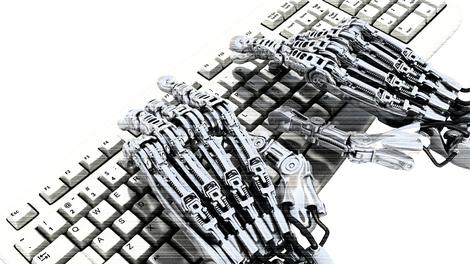
Google's having another shot at solving one of the biggest problems of the modern age -- the tiny pain in the arse that is the Captcha human verification text check system.
You know, the one that makes you try to identify what a toddler has been scrawling on the walls with its own poo before being allowed to carry on conducting your important internet business. That thing.
The big new idea is to replace wonky letter examination skills with a simple question: are you human? The clever stuff is all done prior to that click, though, with Google suggesting a mysterious combination of mouse speed, click accuracy, computer stats and IP details are used to work out if you're a person or a data-harvesting software routine before you click.
Only then, if you fail, is there a back-up test involving clicking on photographs of cats.
The problem is, if we really are all just software people living in a simulated universe, won't we all be picked out as robots? Introducing this could bring about the realisation that everything we believe in is a lie.
Terminator Clickonthis
On Wired, the argument quickly turned into a debate about the privacy implications of the new Captcha system, with reader Symplectic pointing out there's a lot more at stake than just knowing if we're made of meat or silicon, saying: "Google is using your browsing history and your mouse pattern to identify you as human. It's not the fact you're human that privacy-conscious users won't like being reminded of -- it's the fact that Google knows what websites you browse and which images you hovered over without clicking."Commenter Velocipedes thinks there's not much more Google needs to know about us, quipping: "If you're using any of Google's services, you're voluntarily providing that information."
Grover Nilkvist thinks the effort should be being made by the robots anyway, asking: "Why are WE always the ones to have to make the effort? Why can't THEY just click the 'I'm a robot' checkbox? Anyone who thinks we're going to get the same preferential treatment when they're in charge is just delusional. Wake up people."
Click farmers
Readers on The Verge turned their attention to the cat photos, questioning how the vagueness of the images could be used by Google to fine-tune its own photo recognition and categorisation tools.Commenter Outerwave claims the cat-matching game is deliberately vague, posting: "The message being somewhat ambiguous is part of the system. These captchas also improve Google's search. What is considered 'similar' to the original picture is probably different from person to person. But after 100 people take the test, Google (or whoever) would have an improved idea of what 'similar' meant to most people by comparing what was selected most of the time."
Which made some clipart of a lightbulb appear over the head of reader Miku, who replied: "Ah! This is not really about making Captcha better, this is about harvesting Captcha to improve their image search results. That makes sense."
So Google's not interested in reworking the Captcha system, it's simply come up with a front for a method of harvesting our spare seconds to process its photos. Google's turned the whole world into an enormous complimentary data processing farm.
Bot matrix
The Register reader Irongut has already had his feelings hurt by rogue AI, claiming to be a constant failure at existing Captcha technology, and therefore life. He posts: "I usually find I have to ask for a different image at least 3 times because I can't make sense of the first few. Even when I get an image I think I can read I'm usually wrong. Generally a CAPATCHA will take me about 5 minutes to get an answer the site will accept, assuming I can be arsed to keep trying."Commenter I Ain't Spartacus was the first to pick the low-hanging fruit here, replying with: "If it takes you 3 tries, and 'today's artificial intelligence technology can solve even the most difficult variant of distorted text at 99.8 per cent accuracy' - then does that mean you're actually not a human?!"

He continued: "I've never been able to get my Captcha ratio much above 1 in 3 either. So does that mean I'm some sub-standard part of the Matrix?"
Performing worse than a bot is indeed something to be quite ashamed of, although the bot at least has the advantage of being programmed to do only the one task and isn't managing 20 tabs of streaming video in the background.
There Is An Advert That Never Goes Out
Commenters beneath TechCrunch's story about the new crowd-computing system Google's come up with were mostly of the serious type, debating how people with disabilities could cope, especially if they have some sort of software helper.Stephen Hawking, for example, would be locked out of Ticketmaster's shopping basket were he to order his computer assistant to attempt to buy tickets to see Morrissey at the O2.
The ethics of Google using people power to sort cat photos was also called into question, with reader Wesley Joseph asking: "How is it ethical to ask people to type a word or click on a picture for 'security' or 'non-robot verification' purposes and then use that information for corporate financial gain? If I'm doing something that makes them money and they are lying to me about what I am doing, that's wrong."
Derek Williamson thinks that's a bit hypocritical of an opinion to have, though, saying: "Digitizing books and identifying road numbers for Maps/Streetview are both fairly useful to society as a whole as well, though. So you were okay with it when it was completely useless, but it's wrong if it's actually somewhat useful?"
And Sebastian Vidal further heaped shame upon Wesley, with his bitter: "Newsflash: Google uses everything for corporate financial gain - it's kind of their thing."

Read More ...
Review: HP ZBook 17

Introduction and design
HP's ZBook family of high-end mobile workstations provide desktop-like performance in a business laptop. The ZBook 17 is the largest model in the range, and can accommodate more powerful components than the smaller variants. It comes with an Intel Core i7 processor, up to 32GB of DDR3 memory and an Nvidia Quadro graphics card.It's mainly aimed at people who work in fields such as graphic design, 3D modelling and engineering, who use power-hungry visual design software such as 3DS Max, AutoCAD and the Adobe CS suite, which need both processing and graphics power.
The ZBook's optional 1,920 x 1,080 DreamColor display is of particular interest then, since it's a bright and vivid colour-accurate screen that not only looks good, but ensures red, green and blue levels are a closer match to NTSC, sRGB and AdobeRGB colour spaces than you get with a standard laptop screen.
A hefty price of £2,950 (around US$4,630 or AU$5,500) accompanies this ultra-high-end portable computer, which isn't surprising given the performance it provides, although as always, a slightly less beefy configuration cuts the price considerably. With less memory, a standard laptop display and an entry-level Quadro K610M graphics card, the price falls to £1,545 (around US$2,415 or AU$2,885).

Design
Like arch-rival Dell's Precision M6800 workstation, the ZBook 17 puts performance ahead of portability. This is not a thin or light laptop - it weighs 3.48kg, and its chassis measures 3.4cm. It stretches the definition of portable, since it really isn't the easiest thing to carry around.But the large frame means the ZBook 17 has enough battery and thermal headroom to be kitted out with top-end components that are unsuitable for smaller systems. You wont find a 13-inch laptop with an Nvidia Quadro K4100M graphics card, or a quad-core 2.4GHz Intel Core i7-4700MQ, which were included in the ZBook 17 HP sent me for review. You can choose an even faster Core i7-4900MQ processor and Nvidia Quadro K5100M if you want, or downgrade to less powerful components.
And while it may be portly, HP has ensured the ZBook 17 carries a stylish design that looks sleek and professional. The logo on the top of the lid is surrounded with aluminium, covering a dark grey solid plastic chassis. The keys are the common chiclet style, but large enough and providing enough travel for comfortable typing regardless of your finger size.

Connectivity
This notebook's large frame also ensures a good selection of ports - three USB 3.0, one of which is for charging gadgets, with another for USB 2.0. There are video outputs for DisplayPort and a legacy analogue connector, Ethernet and a 2x2 Intel 6235 802.11ac wireless adapter. Audio support is somewhat lacking - there's only a single 3.5mm jack for both input and output, and no digital connector.A Blu-ray writer, optional ExpressCard and an SD card slot cater for external storage while there's a flexible range of internal storage options. You can have two 2.5-inch hard disks, up to 1TB in capacity, along with a 128GB mSATA SSD, or any other combination you like, including larger 2.5-inch SSDs.
The 2.4GHz Core i7-4700MQ processor is from Intel's first generation of 22nm Haswell processors, rather than this year's refresh. It's still one of the fastest mobile CPUs around, with 8 execution threads and a Turbo frequency of 3.4GHz. It's an order of magnitude more powerful than the processors in more portable laptops, but its 47W TDP puts a real strain on battery life.
Nvidia's Quadro K4100M is a similarly high performance DirectX11 GPU with 1152 shaders and 4GB of video memory, enough for rich, detailed models and scenes in 3D applications. It has certified drivers that are tested for use with graphic design software, unlike the GeForce series, which are better for gaming. Cuda-accelerated software, such as Nvidia's iRay renderer for 3DS Max, will see a major boost with this powerful GPU.
Performance
With such a high price and high-end specification, nothing less than superb performance is to be expected from the ZBook 17, and that's precisely what it delivers, rivalling mid-range desktop workstations.In Cinebench 15 the ZBook 17 managed a frame rate of 83.24 FPS in the OpenGL test, and 616 points in the CPU test. The OpenGL results are particularly impressive, not just a leap ahead of laptops with less powerful GPUs, but even some desktop workstations with Quadro cards. The CPU result is excellent too, but this matches, rather than beats, its rivals. It's a whisper higher than the result from Dell's 15-inch Precision M4800 mobile workstation.
PCMark 8 is a standard benchmark I run on practically any computer I see, but it's not always the best way to judge workstation performance, as it only tests general tasks rather than graphics-heavy visual design. The ZBook 17 still delivered an excellent result of 3631, compared with 3158 for the Dell Precision M4800 and 2632 for the particularly thin Dell Precision M3800.
Likewise 3DMark is a test to evaluate gaming performance, and won't take full advantage of the K4100M. The ZBook 17 puts in a good show though, with a respectable 3123 points in the Fire Strike section, a test that quickly brings most graphics cards to their knees.

As an example of the difference between the ZBook 17 and an Ultrabook, the integrated graphics in the svelte Asus Zenbook UX301LA scored 693 in the same test. The ZBook is over four times faster.
Benchmarks of professional software offer a better example of the ZBook 17's power. In 3DS Max 2015 I rendered the Underwater demo scene, in its standard resolution of 800 x 451, in 5 minutes 15 seconds, and at 1080p resolution in 23 minutes 54 seconds. That is a pretty quick time, but
slightly disappointing compared with the Core i7-4900MQ in the Dell M4800, which took a minute less to render both scenes. Given the choice, we'd opt for a processor upgrade to the same Core i7-4900MQ for the ZBook 17.
Battery life
Since both mobile workstations and gaming laptops come with high-end components that guzzle power, it makes less sense to ask about the "best" battery life than to ask which laptop is least awful. While ultra-portable laptops and tablets can offer double-digit battery life, with mobile workstations, three hours is roughly average, and any more than four is an excellent result.Using PCMark's built-in battery test, with the screen brightness set to 80%, I measured 1 hour 54 minutes, one of the worst scores I've seen. With the same brightness and looped playback of Avatar, it conked out after 2 hours 15 minutes.
It's no coincidence that the ZBook 17 is also one of the most powerful mobile workstations around. Despite energy-saving technology, any high-end software, video encoding or drawing complex 3D scenes will force the ZBook 17 to be connected to a mains power supply.

Display
The last aspect of the ZBook 17 I chose to test was the accuracy of the screen, the component that's arguably the real star of the show.Using a Spyder 4 colorimeter, I looked at brightness levels, colour gamut and accuracy. The DreamColor display measured up fantastically. It captured 100% of the sRGB colour space, 95% of NTSC and 98% of AdobeRGB. Its brightness of 320cd/m2 is likewise excellent, with an average Delta E of 1.4. These results are matched only by standalone colour-accurate displays. HP's own Z1 G2 all-in-one workstation has a lovely screen, but it only offers 76% NTSC and 84% AdobeRGB coverage.
If you aren't yet sure that the ZBook 17's DreamColor display is simply awesome, the results from the Spyder's screen uniformity test may convince you. Screen uniformity is of most interest to professional graphic designers, where a difference in white levels on parts of the screen affects colour accuracy. Consumer-grade monitors with cheap backlights can vary by as much as 30%. Even expensive models sometimes dip by 20%.
Only the top of the screen on the HP ZBook 17 exhibited much of a brightness drop, with 11%. The rest of the scores were within 5%, a great result that really shows the class the ZBook 17 competes in. This type of colour-accurate display doesn't come cheap, but if you really need something like this, you'll find the budget for it.
Verdict
We liked
The ZBook 17's high-end performance is its most obvious positive feature. This is a laptop that's faster than many desktops. The flexible storage options are also a great thing to have. You can stuff two hard disks inside this machine and still have an SSD for the operating system.HP's DreamColor display puts just about every other laptop screen to shame. It's gorgeous. If you're going for a more high-end ZBook configuration, a screen upgrade is a good idea.
It's also nice to see such a wide range of ports and expansion options.
We disliked
While our review model's CPU performance was excellent, we'd opt for the slightly faster 2.6GHz Core i7-4900MQ.The price is also above the level of most budgets, so the ZBook 17 is more likely to be purchased by business users, while the rest of us wish we could afford such a nice computer.
Although its performance is excellent, the monstrous size is unfortunate. The thick chassis and heavy weight will put a lot of people off.
The great performance of the ZBook 17 would make it a useful machine for high-end audio software, but the single analogue jack means you'll probably want a USB sound card.
Final verdict
The ZBook 17 is one of the most powerful mobile workstations on the planet, and it will be unfazed by any software you throw at it. Expect it to chew through video encoding jobs, render scenes as quickly as a desktop workstation, and perform any number crunching you ask of it.It's well built, offers oodles of storage and has plenty of expansion options. There are very few laptops on the market with colour-accurate screens, and even fewer with screens as good as HP's DreamColor display. That alone should pique the interest of any graphics professional.
However, despite all the lovely aspects of the ZBook 17, it's hard to see this category of ultra-powerful, ultra-heavy and ultra-expensive laptop ever becoming more than a niche. The sheer size of it makes this machine more of a desktop replacement than a portable computer.

Read More ...
Driverless cars within two years? Not a chance, says Volvo top bod

Launching Volvo's Vision 2020 project, head of R&D Peter Mertens had a few choice words for self-driving automobiles. Actually he had one choice word on the idea that there will be self-driving cars on roads within two years: "Bullshit".
In response to a picture of a woman reading a newspaper while her car drove her to her destination, he said: "If you look at the picture of having a person sitting behind a steering wheel, and doing emails and reading whatever, that kind of stuff is not what we want to see in a car.
"This is a very, very long term vision. And others are talking that they will have fully autonomous driving in every road condition and under any weather condition in any kind traffic condition in a couple of years. I think that's bulls**t. We think that that is something which is just not telling the truth."
As Peter tells it, the benefits of auto-driving are more to do with enhanced safety. "We are very, very serious about autonomous driving," he continued, "not for having people making their emails, but for making us get to our vision of 2020."
Back-seat driver
Specifically, Volvo plans to abolish road deaths (or at least those involving new Volvos) by the decade's end. "Our vision of 2020: we don't want to have anybody seriously hurt or injured or even killed in a new Volvo," according to Mertens.It's a "target" rather than a guarantee, of course, but Volvo is serious about reaching it, using a combination of "passive" safety: manufacturing as much strength as possible into the car's construction, so in the event of a collision, the chassis protects you.
The auto-driving tech comes in with the more "active" safety measures, primarily sensor-controlled brake assist and object avoidance systems.
The car the Swedish giant was using to showcase its new gamut of safety widgets was the hybrid XC90, a handsome-looking ride primed to take on Audi's Q7 and Beemer's X5 – at a significantly lower price, to boot. For Mertens, though, it's "the most important next stepping stone and milestone on our way towards 2020."

Read More ...
In Depth: Up close with the games that will define the PS4 in 2015

Introduction: Tearaway Unfolded and Until Dawn
Having just celebrated a year of existence, the PS4 has a lot to be happy about right now. Sony has been shifting consoles by the truckload and sales promise to keep rocketing through the Christmas period.The PS4 certainly has some top titles but it's fair to say it's a bit weak in the AAA exclusives department, somewhere the Xbox One and Wii U are leading the charge. Hopefully, that's set to change in 2015 with a lineup of huge platform-showcasing titles on the horizon, and no doubt plenty more games we still don't know about.
We were fortunate to recently get our hands on four of the games coming from Sony's in-house development teams: Tearaway: Unfolded, Until Dawn, Bloodborne and The Order: 1886.
Here's what you need to know about four potential system sellers for next year.
Tearaway Unfolded
When Media Molecule took the stage at Gamescom 2014 to announce Tearaway Unfolded we were pretty excited, but we also had a concern: would this end up as a half-arsed port or would it truly be rebuilt with the PS4 in mind? Luckily, it's looking more like the latter.Unfolded loses none of the original's charm. The fundamentals are the same: you control a tiny character in a world made of paper, with the mission of delivering a unique message. But now you do so in an expanded version of Media Molecule's gorgeous, pulpy world.

Yes it exists at 1080p, 60fps, but who cares? We already know it looks great, it's how the game's central ideas unfurl on the more powerful platform that we're interested in.
The original Tearaway played on the idea that its quirky world took place physically inside the Vita, and Media Molecule has transitioned that same idea to the PS4 version, the events now transpiring inside your TV. For example, you can now chuck objects from the television "into" the DualShock 4 to then fire back into the screen, made more convincing thanks to the pad's inbuilt speakers and vibrations.
In the same way that the first game was a showcase for the myriad of ways developers and gamers could interact with the Vita, Unfolded demonstrates the many possibilities of the PS4 hardware, particularly the controller.
Our short demo took place inside a giant paper barn where we were searching for a mysterious pumpkin. Scattered about the level were 'bounce' pads that could be activated by pressing the touchpad - useful for jumping to higher platforms or, as it later transpired, diverting an avalanche of cauliflowers.

Without the touchscreen, certain interactions are limited. One guy needed a new moustache - we used the analogue sticks to carefully (but in the end, clumsily) cut out something that looked awful, but he loved it anyway. In the world of Tearaway, everyone's a winner.
There are other ways Media Molecule rips apart the fourth wall. Swiping a finger across the touchpad will create a gust of wind, while using the PlayStation Eye will let you customise the world with photos. In one part of the demo we shone a virtual light into the screen by holding L2 and R2 and then moving the DualShock around to scare our foes into a nasty trap.
It's cutesy and twee as hell, but you can't help falling in love. Unfolded clearly serves its purpose of showcasing the possible ways to play the PS4, but beyond that it's promising to be a great game in its own right.
Release date: TBC
How it'll define the PS4: by showing developers and players how much they can do with the PS4.
Until Dawn
The home invasion horror has given birth to some real gems in recent years, but is it a genre that can translate to gaming? Supermassive Games hopes to do it with Until Dawn, its choose-your-own-fate survival thriller.Once intended for the PS3, Until Dawn follows a group of eight teenagers pursued by a serial killer in a remote mountain retreat. Within the game you'll be faced with a multitude of multiple-choice scenarios and zero checkpoints. Once a character dies they're gone for good, and you then take control of another of the eight victims.

We started out playing as Sam, a girl with a surprising talent for getting through action-heavy sequences wearing nothing but a towel. Meanwhile the game's masked invader weds the looks of Stephen King's It with the voice of Saw. In fact, the developers are pretty candid about the influences on Until Dawn: an early scene takes place in a home theatre in which the walls are decorated with posters for House of the Devil, Bitter Feast and other slasher favs.
The game takes full advantage of the PS4 hardware. Along the way you'll use the DualShock as a flashlight among other things; at one point in the demo we had to slide the controller right to lock a door, and later push it towards the screen to knock another door open. Then there are moments where you need to keep it perfectly still so as to not give away your position.

ou don't just choose your outcomes in Until Dawn, you also choose your own fear. At the very start the game asks a number of questions about your personal dispositions. 'I hate creepy crawlies' or 'I hate blood and gore'; 'I hate needles' or 'suffocation scares me'. Only the second of those had any bearing on our short time with the game, with our foe branding a rather nasty-looking syringe when we picked the former option. When we chose suffocation he was lugging around a gas canister that would make No Country of Old Men's Anton Chigurh proud.
Beyond the enemy's pick of accessory, those choices had no further effect during our time with the game. But as the developers have hinted, these small early decisions branch out into a much bigger web of outcomes, so we're crossing our fingers that there's a lot of variation to come in the finished game. We want Until Dawn to be the game that really offers a different experience every time, not another Mass Effect 3.
Release date: Q2, 2015
How it'll define the PS4: by (we hope) delivering a journey in the vein of Heavy Rain, where the consequences of our decisions are more than skin-deep.
Bloodborne and The Order: 1886
Bloodborne
Look, we really don't want to start this by saying Bloodborne is difficult because you already know it's difficult, and everyone else is going to say the same thing. But it is difficult. Damn difficult. This is for the "hardcore" players. This is one for the no-mercy, no-hand-holding, no-checkpoints-allowed gamers.Or maybe we're just a bit crap.
But however challenging Bloodborne may be, this is one extremely gruesome, and damn pretty, gothic nightmare. Those good looks don't stop at the resolution and framerate either; in everything from the weather effects to the finely-crafted designs of your cockney enemies, Bloodborne feels like a proper next-gen game.

But from what we've played and seen so far, Bloodborne's Victorian world seems a lot more interesting than Dark Souls' rather dreary environs. It's still bleak as hell, mind, just more varied. And you have a gun this time.
The combat mechanics are slightly different this time too, with more of a focus on offense. It's not as simple as charging your enemies Dynasty Warrior-style, attacking takes thought and attention to timing, especially when you're facing off with a crowd.
Those points aside, Bloodborne looks and feels just like Dark Souls, from the on-screen status bars down to the fact you're inevitably going to spend a lot of your time dead. It's pretty much the antithesis of Tearaway.

But Bloodborne feels like the most accessible game of the franchise so far. This is a Dark Souls game as we know it, but faster, better-looking, and, so far, promising to be a tad more forgiving to those who didn't have the patience for the last two. Just a tad.
Release date: March 24, 2015 (US), March 27 (UK)
How it'll define the PS4: by being the first truly hardcore game to grace the platform.
The Order: 1886
Bloodborne may be beautiful, but it's The Order: 1886 that walks away with the award for best looking PS4 game right now. And we're glad, because when Ready at Dawn first revealed The Order we worried we had been fooled by the smoke and mirrors of yet another over-promising demo, not to mention how concerned we became when the game was delayed.The reason for that delay is still unclear, but with next-gen mustaches that look this good we doubt it could have anything to do with the graphics, so could it have been a matter of gameplay? Early criticism from gamers was targeted at The Order's heavy cinematic elements, but we felt there was a good balance in the section we played.

The demo took place on a zeppelin - an aircraft that didn't actually take flight until 1900, but then the game is also filled with monsters, so we'll cut it some slack - from which our protagonist Galahad hopes to smoke out some nefarious rebels. Of course it's not long before things go haywire, bullets start flying, smoke grenades begin exploding, and people start yelling "bloody" a lot.
The demo started with a lot of stealth, with us sneaking around enemies who have a habit of announcing exactly what they plan to do, but these moments soon opened up into full-scale shootouts with a cover-based action system that felt fairly conventional.

In fact, the game encourages you to use the cover system quite a lot. As we discovered, running into a battle guns blazing ends up getting you killed most of the time. While these action scenes played out like any other, what was more noticeable was how well the frame rate held during moments of intense combat. Even at 30fps (which has, naturally, attracted a lot of criticism from the gaming community) there was no obvious drop in quality.
There were more than a couple of moments where the transition from cutscene to gameplay was so seamless that it took us a few seconds to realise we were in control again. Where the developers probably have more of a challenge is in balancing the cinematic moments with gameplay throughout the rest of The Order. Games like Resident Evil 4 and Uncharted (one of Ready at Dawn's big inspirations) have proven it can be done, but with so many massive set pieces in The Order we just hope that we're given enough freedom. Our demo was very linear, but then it did all take place on a zeppelin, so it's hard to predict how much this reflects the rest of the rest of the game.

What we do know for sure right now is that The Order: 1886 looks wonderful, basking in its gothic Victorian loveliness. GTA 5 for next-gen might have had jaws dropping, but The Order was built from the ground up on the PS4 and it shows. The lighting and materials, the performance-capture character animations, the effects of elements like smoke... if nothing else, this is the game you'll buy to show off just how good the PS4 can look.
Release date: February 20, 2015
How it'll define the PS4: by being one of, if not the, best-looking game on the platform. If games can look this good at this point in the PS4's lifecycle, imagine how things will be in five years time.

Read More ...
Week in Gaming: Zelda Wii U, Street Fighter 5 and No Man's Sky impress, but they're no Shopper Simulator

The Game Awards, previously The Spike Awards before it lost Spike, has been a massive showcase for future games over the years. But, naturally, there have been some awards given out too. So before we move onto anything else, here's who won what on Friday night...
Game of the Year: Dragon Age: Inquisition
Best performance: Trey Parker, South Park: The Stick of Truth
Best online experience: Destiny
Best score: Destiny
Trending Gamer: Total Biscuit
Composition Award: Martin O'Donnell
Best mobile game: Hearthstone
Best fighting game: Smash Bros Wii U
Industry Icon: Roberta and Ken Williams
Developer of the year: Nintendo
Best eSports: Matthew 'NaDeSHoT' Haag
Best sports or racing game: Mario Kart 8
Best Remaster: GTA V
Best shooter: Far Cry 4
Game for change: Valiant Hearts
Best narrative: Valiant Hearts
Best action game: Shadow of Mordor
Best Indie Game: Shovel Knight
For me, an appearance from Reggie Fils-Aime on the night was worth all the game previews in the world, but he wasn't just there to let us bask in his radiant glow, as we were quickly transported to Japan for a gameplay preview of Zelda Wii U - and hot damn does it look nice.
With Shigeru Miyamoto and Zelda lead producer Eiji Aonuma giving commentary, we were treated to a closer look at Link's next big console adventure, with a particular focus on the size of the new world. Everything we saw took place in the map's lower right corner. Having set a beacon marker to the point he wanted to travel, Aunomua proceeded to show off the ways he could get there, which included the sailcloth and Link's horse Epona, who now appears to ride in autopilot mode. "Real horses don't run into trees very often," quipped Aonuma. I guess has a point.
It took at least five minutes to traverse a small section of the map, suggesting that this world is going to be huge when the game arrives next year (yes, Aonuma also confirmed that). And then there were all the other little details like the apples growing on trees which you can pick and eat, and the fact Link can now jump off his horse and attack enemies in slow motion.
Finally, Miyamoto stole some of the limelight to confirm Star Fox Wii U would arrive before Zelda in 2015. Chump move, Shiggy.
Now, do you still need an excuse to buy a Wii U?
So what else happened on the night?
Well, no Man's Sky still looks awesome, still has no release date.
'Metal Gear Online' is actually Metal Gear Solid V's co-op multiplayer, and looks hella fun.
Fullbright has a new game called Tacoma, which is set on the moon.
Xbox One takes a c-c-c-combo
After it was announced that Microsoft had secured Rise of the Tomb Raider as an Xbox One exclusive, I suspected we'd see a lot more of these power moves in the future. Sure enough, this week someone at Capcom accidentally set its Street Fighter V trailer live a bit earlier than intended, and while the teaser only offered a few tiny morsels of detail, one morsel turned out to be a big middle finger to Xbox. Street Fighter V will be a PS4 and PC exclusive.
Now, in my eyes, this is a bigger deal than Rise of the Tomb Raider, and here's why: although Street Fighter's exclusivity might also be timed, it's going to push serious players, and probably the beat-em-up community, to the PS4 while the console is still young. This move could potentially lock down the PS4 as the platform for fighters.
Whether or not you think I'm exaggerating the point, there's no doubt that this is an excellently-timed move from Sony that could have a big sway. Much more so than Lara Croft could ever dream of having.
I played Shopper Simulator and now it's my GOTY
On a more cheerful note, UK retailer Game this week launched a title of its own, Christmas Shopper Simulator, and I can tell you now that it's as hilarious and dull as it promises to be.Drawing inspiration from the cultural touchstone that is Goat Simulator, CSS lets you control a rag-doll Christmas shopper as you navigate your way around a shopping centre to complete menial tasks. Or, if you're like me, you'll just spend your time hurling reindeers at people and kicking in Santa.


Read More ...
Industry voice: Why Small Business Saturday is about more than the high street

Small businesses are undoubtedly the lifeblood of our economy. The private sector almost exclusively consists of SMBs. They generate a cumulative turnover of over £1.6 billion each year and they employ over 60% of the UK's work force.
Our country's economy would crumble without them. Whilst the government has always appreciated their contribution, the politicians now start to take action to support this vital sector of our economy. Just this week during the Autumn Statement Chancellor George Osbourne presented an additional £900m lending package for small businesses. The sometimes forgotten powerhouse of our economy is getting the recognition it deserves.
One initiative is taking this even further and receives support from all over the UK. Small Business Saturday should be an important day in the business year for many of us. It is the day which shines a light on all of the great businesses across the UK that don't necessarily make the headlines.
More than the high street
On Small Business Saturday we shouldn't just focus on the high street though. Small businesses come in many forms. They are your local fishmonger, your favourite regional restaurant or a trendy app developer at Silicon Roundabout.They bring variety to the table, both in terms of offering and experience. And everyone appreciates the role they play in their communities. So let's make sure we continue supporting local businesses and keep them alive.
Any initiative that aims to raise their profile and supports their growth should be greeted enthusiastically across the business world. But what's in it for the businesses themselves? Apart from additional revenue, it most importantly gives them the opportunity to come together to learn from each other and share their business expertise.
Be it through initiatives like Small Business Saturday or our recent Big Digital Skills Tour, a series of workshop sessions across the UK focussing on developing and sharing digital skills. But sharing knowledge isn't just limited to SMBs. Big businesses can learn from the forward thinking and agility that huge communities of SMBS display, as we at Virgin Media Business found through events like 30:30 Vision. And the government is taking and increased interest in them.
It is great to see that industry and government are coming together. But there is a lot that still needs to be done to empower small businesses even further. We need to continue exploring ways of providing further support - be that access to funding, mentoring, digital skills - until every day is a great day for small businesses.
- By Mike Smith, Head of SME, Virgin Media Business

Read More ...
Industry voice: Excessive 'privilege' is still a gaping security hole

Brian, for the uninitiated, what exactly are 'admin rights' and privilege management?
For most purposes, admin rights can be loosely defined as being the set of rights granted to either a root user (Linux, Unix, Mac OS X) or an administrator account (Windows), as opposed to standard user rights.One of the biggest security issues in organisations is that admin rights are given too often and for a couple of common reasons: first, many users want to have control over their own desktops (who wants to wait until the IT department can get around to installing that vital piece of application software that you need?). Second is the perception that putting the onus on the user also reduces overall IT support costs (for example, fewer calls to the IT helpdesk), but the truth here is actually quite the opposite.
Privilege access or privilege identity management is the name given to the process of managing those rights: in other words, who has access to what. It matters because admin rights open up gaping security holes, however careful a company might think it is being. It's one thing to have a multi-layered investment in security software, but if Miss Jones in accounts is allowed to download a piece of software that turns out to contain malware that wreaks havoc all over the organization, then those big investments are in vain.
Do you have any insight into what the scale of the problem is?
Over 70% of known vulnerabilities in Windows 7 require admin privilege to be exploited. In a survey by BeyondTrust in late 2013, it was discovered that 44% of respondents knew that there were users in their company with excess account privilege, 65% had implemented so kind of control for this privilege and 54% knew that their users could circumvent those controls.Forrester reported a couple of years ago that around 43% of data breaches are from internal sources. A Verizon report states that in 2011, 98% of data breaches came from external agents, but goes on to suggest those attacks were successful because they were enabled in part by human error or ignorance. By 2012, this had only dropped 6% to 92%. In short, as long as there are users with excessive privilege, companies are leaving the door wide open for this to happen each and every day.
Of course, those figures are going to vary but I'd argue we haven't seen much improvement. There have been some pretty high profile examples of where admin rights or excessive privilege have enabled data to be leaked or security breached, Target being one of the most recent examples.
Can you provide some examples of what actually goes wrong?
A hacker gaining access to a company network has to be extremely lucky to find themselves with access to a system with sensitive or valuable data as their initial point of entry. Most exploits happen on a system that has lower security, usually because it's not holding any sensitive data. Once on that system the hacker needs to find a privileged account to allow them to make lateral moves through the system until they find some useful data.Once they've got that privileged account they aren't hacking any more: they start acting like an internal employee. So they're inside the organisation and behaving like – and treated like – anyone else with that level of admin rights. It's a bit like allowing a guest into the company foyer, not bothering with a security pass and while you're at it, giving them a set of keys to all of the doors, desks and file cabinets in the building. All this can stem from just a simple innocuous action, such as downloading an unauthorised application that brings in malware and gives the attacker a way into the organisation.
And of course, let's not forget that the 'insider threat' isn't just about allowing external attackers to imitate internal users: there have been some cases where employees have abused their privilege to access or distribute sensitive and confidential information.
So what are the barriers to companies dealing with this better?
Many feel they left with little option other than to give admin rights. The security systems we have to work within Windows, Linux, Unix and Mac OS X give us two options primarily: standard user and super user (root or administrator). When you exceed the capabilities of the standard user we are only left with giving them admin rights to keep them productive.IT is there to help our employees be more productive. A secure environment is currently seen as being one in which productivity is impacted by the coarse level at which we can apply user rights. Many companies have invested time and effort in tooling and processes to help them manage the excess privilege through direct controls through to user training and assessment. User rights management is ingrained in many organisations and it's hard to let go.
What do you think needs to change?
Quite simply, we need to stop trying to manage the problem and start eliminating it. At the base level, it isn't the user that needs the additional rights/privileges, it's the applications and processes they are running. We need to move away from thinking about user privilege and move toward managing application privilege. Allowing us to move to a place where privilege is explicit, not implicit as it is with admin rights. That would remove a wide variety of vulnerabilities straight away.So what kind of practical processes could companies look at adopting – can you share some best practice suggestions?
Privilege management becomes more digestible when you think more in terms of applications, rather than users. Even in big organisations, there are probably only a couple of thousand apps and the need to apply privilege to these probably only applies to a small number. The privileges around that application are likely to be fairly constant, whereas privilege around users – who change jobs or leave the company – is more fluid.The principle of Least Privilege, as first stated by Jerome Saltzer in 1974 ("Every program and every privileged user of the system should operate using the least amount of privilege necessary to complete the job."), gives us an approach that we can actually deliver on today. By starting with a standard user, adopting the approach of application privilege (the least privilege necessary for the application or process to run productively) and looking to assign the ability to run privileged applications explicitly we reach control through empowerment.
Without plugging any of your own software, how can tools help companies manage privilege better?
The complexity of our IT environments only seems to be increasing, but within that we do see very important technologies that can help us manage privilege better. Single-sign-on allows us to have a consistent single identity across many applications within our working environment. Technologies that allow you to use a single identity across multiple operating system platforms further reduces the number of identities we need to operate and manage.This reduction in the number of identities in the environment aid in the most important aspect that tooling can deliver: visibility. The more clear the visibility we have across our environments, the better the decisions we can make to move them forward, to make them more secure while still giving our customers (our users) the facilities they need to be productive. We cannot lose sight of the objective of the technology it's not there for its own sake, its there to help deliver productivity.
How might this fit into an overall security and IT risk management strategy?
Privilege management is one element of having a solid security strategy. Vulnerability management is another (hackers use vulnerability and privilege to exploit company networks) and good configuration management is also vital.These all contribute to building a solid foundation on which to construct your broader technology services and security. There's no point investing in lots of technology tools to manage security if you haven't got the foundations right. Companies need a solid base of the right policies and processes, together with different security tools (there is no silver bullet) that don't just deal with security problems as they arise, but help to prevent them happening in the first place.
- Brian Chappell is Director of Technical Services for BeyondTrust in EMEA and APAC

Read More ...
Opinion: Will the iPad Pro be the next blockbuster enterprise device?

Introduction
In a move that would have surprised even the most ardent fans of Apple a decade ago, the computing giant has become the darling of the enterprise landscape – and in a big way. Through the iPhone, and then the iPad, Apple has positioned its products as a staple item within the world of companies, from the Fortune 500 to startups, creating software custom-built for the touchscreen and enabling businesses to successfully use tablets for tasks previously assigned to a laptop.And it isn't just Apple that is producing software for the 'new era' of enterprise. A whole host of software developers – from Microsoft to smaller companies – have built apps for the iPad, putting an end to the idea that the iPad is simply a content consumption device and opening the platform up to serious content creation.
Companies like the Omni Group have created high-end apps for the iOS platform, selling OmniFocus for $29.99 (£20.99). Speaking to Ben Thompson of the Stratechery blog, Omni Group founder Ken Case said that "the lesson I've drawn is that it's important for us to build higher-value apps" which will ultimately be aimed at businesses or those who use an iPad as a productivity tool, not just a device to waste time on.
Coffee tablet
While it is true that the iPad is still primarily a 'coffee table' device, used for more casual tasks such as browsing the web or reading, there is a contingent of users who are starting to replace their laptop with an iPad. MG Siegler, a partner at Google Ventures, has been vocal about his use of an iPad for writing, replacing his MacBook Pro.Elsewhere, artists and designers have taken to using Paper by FiftyThree to draw, and a whole wave of executives are now giving PowerPoint presentations using an iPad, as opposed to a laptop. However, there are still some who are sceptical of whether the iPad can be used as a work device – and Apple may be about to prove them wrong.
The company that has been pursuing the 'work tablet' for the longest is, surprisingly, Microsoft. Having laid the foundations with the original Surface Pro, Microsoft has led the way for hybrid laptop/tablets, creating a 'slate' with the internals of a laptop. The very first Surface Pro was bulky, underpowered and suffered from a painfully short battery life, but as a proof-of-concept Microsoft succeeded in proving that it was at least partially possible to cram a laptop into the body of a tablet.
Fast forward to 2014 and we have the Surface Pro 3, the "tablet that can replace your laptop" as Microsoft's promotional materials proclaim. While this claim may not be entirely true (I, for one, still prefer the rigidity of having the screen attached to the keyboard by more than a magnet), Microsoft has made some significant improvements to the Surface Pro, creating a hybrid that could replace the most low-hanging functions of a tablet or laptop.
iPad meets MacBook
It is from this basis that Apple needs to start for the iPad that will combine an iPad and a MacBook (which, for ease, I shall call the iPad Pro). Rumours originally appeared in the Wall Street Journal, claiming that Apple was testing an iPad with a 12.9-inch display (the Surface Pro 3's screen is 12-inch) which, if sold, would place it in direct competition with the Surface Pro and MacBook Air, boasting iPad-like internals and, presumably, a version of iOS. (Note that the most recent iPad Pro rumours have pointed to a 12.2-inch display).While many will point to this as Apple "copying" Microsoft, it must be remembered that Apple is rarely the first to a product category – be it smartphones, tablets or watches – but its implementation is usually the most polished and, thus, has the most commercial success. The Apple Watch is not the first smartwatch on the market, but the implementation will likely be the most well thought out and thorough, and so will likely sell in the most bulk (the jury is, of course, out until "early 2015").
The actual implementation of the iPad Pro is unknown as yet. From a software standpoint, it is unlikely that Apple will implement a version of OS X into an iPad, especially after ploughing so much time and resources into creating a large ecosystem of apps specifically designed for the iPad, many of which are focused around enterprise use cases.
Versions of both the iWork suite and Office are available on the iPad, as well as a host of other productivity apps that have had iPad-specific versions created (examples include Things, a to-do list app; iA Writer, a text editor; OmniFocus, a task-planning app; and Evernote, the note-taking service). All of these apps have been well received and, crucially, are designed with the finger in mind, not the mouse.
Telling demos
On stage during the iOS 8 announcement, Tim Cook played up the raw processing power of the new iPad Air 2 which uses the new A8 chipset, showing off demos of Pixelmator and a video editing app called Replay, which can implement real-time video effects and editing. It is telling that Apple is choosing to show off apps that perform functions that were historically the domain of the laptop or desktop.Having owned a Surface Pro 3, MacBook Air and iPad, the experience on the Surface Pro 3 often feels a little mismatched. Windows 8 is, in many regards, a well-made operating system that successfully transcends the complexity of many different input types. It is with legacy apps that the problems arise, requiring delicate presses of a finger or a dedicated mouse. Unfortunately, many productivity apps – such as Photoshop – are only available in the desktop mode, creating an uneven experience. Apple will undoubtedly be wanting to avoid this foible, and so will likely be working on a single OS platform to deliver a coherent experience.
One device
Having only one device is a huge plus for businesses and for those who only have to fit a single device in a bag. The iOS range, from the iPhone 5c all the way up to the iPad Air 2, has become more and more entwined over recent years. The iPhone 6 Plus has blurred the lines between what is an 'iPhone' and what is an 'iPad,' leading to many users ditching their iPad (especially the iPad mini) in favour of an iPhone 6 Plus. This 'one device' mentality will endear users to the iPad Pro, which would reduce the need to carry around a laptop – a much larger inconvenience than carrying around an iPad mini and iPhone.Apple also has a full stable of iPad-ready apps that are aimed at creating rather than consuming, setting the iPad Pro apart from its contemporaries from launch. Businesses are much more likely to pick the iPad Pro over a Surface Pro when there are already 250,000 apps that are entirely relevant and, moreover, made for the device. Here, Apple could finish what Microsoft has started, endearing itself even further to the enterprise market.

Read More ...
AT&T's LTE throttling is more rampant than previously thought

There were reports in September that AT&T throttles "unlimited data" customers when its networks are particularly congested, but apparently congestion actually has nothing to do with it when it comes to LTE.
AT&T's 3G and non-LTE (that means 4G HSPA+ to AT&T) subscribers are slowed down at the 3GB mark when the networks are busy, but LTE users are throttled after 5GB in a billing cycle regardless of network traffic.
That's better than the policy AT&T once held of simply throttling unlimited users' data automatically as a rule, but still. Come on.
Ars Technica spoke with one AT&T subscriber who noticed his speeds slowing and confirmed the policy with the carrier, and a customer service representative reportedly told him there's nothing they can do about it.
AT&T's own support site confirms that this is the case for users with "legacy unlimited data plans," and it's not uncommon among other carriers, either - the T-Mobile plan I signed up for in November has severe throttling after 3GB, but at least they were upfront about it.
Hopefully the federal government's efforts to take AT&T to task for its "deceptive and unfair" policies has some lasting effects on this industry, as things appear to be getting worse, not better.

Read More ...
Cortana for Windows 10 makes first public appearance

The latest rumor regarding Cortana in Windows 10 is that the virtual personal assistant might first pop up there in January 2015.
With a Windows 10 Technical Preview that includes Cortana supposedly right around the corner, you'd think an example or two of her in action would leak - and as of today you'd be right.
Windows news site WinBeta seems to have got its hands on a test version of Windows 10 with a very unfinished Cortana built in, and they published the video below.
Looking good
"Before we dive in I must stress that this is an in-development version of Cortana running on pre-release software," the video's narrator says. "That means the user interface isn't finished and features are very buggy."As the video demonstrates the Windows 10 version of Cortana can do almost everything the Windows Phone version can do, from placing Skype calls to setting reminders and much more.
The site doesn't seem to have any more clues as to when Cortana will actually arrive in a public build of Windows 10, but the existence of this mostly-functional test version suggests that January might be a good guess after all.

Read More ...
Updated: Galaxy S6 and LG G4 facing delays thanks to Snapdragon 810 defects?
Update: A Qualcomm spokesperson sent TechRadar a statement to debunk this report, though he wouldn't go into detail.
"We won't comment on any of the rumor or speculation you referenced but I can tell you that everything with Snapdragon 810 remains on track and we expect commercial devices to be available in 1H 2015," the spokesperson said.
With that all we can do is wait and see what the future holds for Qualcomm and the phone makers that rely on it.
Original story follows…
Planning for Samsung's and LG's next flagships is undoubtedly well underway already, but their releases might not be as close as one might hope.
There are problems with Qualcomm's newest chip, the Snapdragon 810, reports Business Korea, that might cause delays for the Samsung Galaxy S6, LG G4 and others.
Qualcomm is reportedly having trouble producing the new chip due to problems with "overheating and a decline in speed," the site says.
A source told the site that "the Snapdragon 810 overheats when it reaches a specific voltage" and "slows down owing to problems with the RAM controller connected to the AP," and that "there is an error in the driver of the Adreno 430 GPU."
Up the creek
Qualcomm's chips have become the gold standard for mobile devices, so if they've having trouble then smartphone makers will too.This report suggests Samsung may solve the problem by using its own Exynos chips in the Galaxy S6, and a rumor earlier this week indeed said that the S6 will come with a 1.8GHz octa-core Exynos 7420 processor - a chip that hasn't even been announced yet.
But that won't help LG and the other companies looking to Qualcomm for their next generations of flagship phones.
Other phones that are supposed to pack the 810 - or are rumored to at least - include the Sony Xperia Z4, the HTC One M9, Motorola's next Droid, the Xiaomi Mi 5, and others. Where all these phone makers will come up with alternative processors if Qualcomm really is struggling is anyone's guess.
We've asked Qualcomm for an update on the Snapdragon 810, and we'll update if we hear back.

Read More ...
Mid-range SM-E700H could be part of Samsung's big 2015 restart

We've been hearing for a little while now that Samsung will "press reset," so to speak, on its smartphone lineup in 2015, and now there's a tiny tidbit of new evidence of what that might mean.
It comes in the form of a mysterious model number that appears in the page info on Samsungmobile.com, which might mean anything - or nothing at all.
But if you click that link and turn your eyes about 15 lines down in the text you'll see "
These specs include a 720p 5.5-inch screen, a 1.5GHz CPU and Android 4.4 KitKat.
A fighting chance
Obviously these aren't mind-blowing specs, but Samsung may very well turn more of its attention toward the middle-of-the-road market if its flagships can no longer compete with the likes of the iPhone 6, Nexus 6 and others on the high end.And judging by what's been going on at Samsung lately and its disappointing Galaxy S5 sales, they clearly can't - at least not on their current path.
The model number SM-E700H doesn't really match with any of Samsung's existing product lines, so it's probably not the Galaxy S6, and its true nature will remain a mystery for now.
But with Samsung planning to release far fewer different devices in 2015, this mid-range phone - whatever it is - may have a fighting chance.

Read More ...
buying guide: Best set-top box: top 5 streaming systems reviewed

Our 'try harder next time' picks
If you're only here because you want to cut the cord and stop the rich, monopolistic cable overlords from siphoning your hard-earned dollars every month, I only have one thing to say to you: You've come to the right place.Look, we believe that paying for great TV shows and movies shouldn't cost more than your groceries, and that there's no better way to save some green every month than ripping that money-sucking cord out of the wall and delivering that long-winded "you're fired" speech to the cable company.
We're here to help you make that next buying decision the best one possible by ranking the five best set-top boxes from worst-to-best and, in very clear writing, tell you which one will feel right at home in your home entertainment center. From the gold-standard Roku 3 to the recently released Fire TV Stick, all the set-top players have come out for the final showdown, but only one (OK, maybe two) can leave with the crown.

5. Nexus Player
Coming in at the end of the list is the beautiful, but ultimately barren, Nexus Player. If you're an Android user you'll love the icon-heavy interface and ability to easily send web pages, videos and music directly to the big screen via Google Cast. We liked its ability to play AAA games thanks to its optional $40 controller, as well as its well-groomed storefront. It even has a great search function that makes finding the next show to watch a breeze.What ultimately hurts the value of the Nexus Player is its lack of an ethernet cable, essential for a steady connection, and missing content services like HBO Go and Amazon Instant Video. At $100 it's not the best value, either. Roku has the market cornered on sheer amount of apps, and Chromecast comes in at the top of the pile for lowest cost. Nexus Player is just a middle child that may one day find success if it manages to set itself apart from its kin.
Quick verdict
"Ideally, every set-top box would have access to every streaming service, game library (both iOS and Android) and music collection. Sadly, this is not a perfect world.Google, however, made the best of the situation with the Nexus Player. It gets full marks for its simplistic, it'll-fit-anywhere design and sharp-looking interface. It does a decent job of putting the right specs in while keeping cost down and making a complementary platform for Android 5.0 Lollipop. But, unfortunately, it takes a huge loss when it comes to streaming services like HBO Go and Amazon Instant Video, which are completely absent on the device."
- Read our Nexus Player review

4. Amazon Fire TV
There's a soft-spot in my heart for the Amazon Fire TV - a set-top player from the e-commerce giant that single-handedly thrust the concept of cord cutting into the limelight.It scores full points for having some of the best internal components this side of a game console (which, I'd be remiss if I didn't tell you that both the PS4 and Xbox One make for fantastic streamers, too), and plays very nicely with everything sporting the name Amazon in the title.
The Fire TV is snappy, fun and probably the best bet if all you want from your system is content from Amazon Instant Video. It has more games and apps than you can shake a Fire TV Stick at, but most of them aren't worth the five to ten seconds it takes to download. And worse, while it works wonderfully with an Amazon Prime account, take it away and you're left with a lifeless plastic shell that can access Netflix and peruse the endlessly expensive Amazon Video Store.
Quick verdict
"The Amazon Fire TV is simple to use and works well. If you are significantly bought in to Amazon's services, it's hard to go wrong with this box. However, if you are not an Amazon customer or even an Amazon customer who doesn't have or want Amazon Prime, then you might think twice. The device is clearly tilted toward Amazon customers, and nothing short of a full UI overhaul is going to change that. We'd like to at least see Amazon allow some kind of user customization in the interface. Until then, we're calling this device great, but not perfect."If you want everything the full-size player has to offer (minus the remote with a built-in mic) at half the price, consider picking up the Amazon Fire TV Stick instead.
- Read our Amazon Fire TV review
Our top 3 picks

3. Google Chromecast

Too often, there's a discrepancy between a product's price (what it costs) and its value (how much it's really worth). Thankfully, Chromecast isn't one of those products: it's worth every penny.
Coming in $32 (£30), the petite, USB-powered Chromecast offers all of the functionality of boxes three times it price at half the size. Like other pint-sized streamers - the Roku Streaming Stick and the Amazon Fire TV Stick - Chromecast hides behind your entertainment center by directly plugging into the TV's HDMI and USB ports. Once seated, all that's left is to pull out your phone, install the Chromecast app and before you know it you'll have HBO Go on the big screen.
Plus, if you're an Android user, you'll even be able to mirror your screen via the built-in cast functionality. The product's biggest weak spot is its failure to support every app natively, and while most of the big names are all here, you won't find Amazon Instant Video or any of the niche programming that Roku has available on its platform.
Quick verdict
"Chromecast is an inexpensive, easy-to-use way of accessing streaming on your TV. All the major video streaming apps are compatible and you soon find yourself using it on a daily basis.If it cost more, we'd say it might be worth looking at the Amazon Fire TV or the Nexus Player, but at this price how can you possibly argue? Chromecast is fun enough, robust enough and has enough potential that thoroughly recommend it to anyone without a smart TV."
Read our Google Chromecast review

1. (Tie) Apple TV
OK, OK, it's kind of a cop out by giving two products the top spot, but hear me out. If you've bought into the Apple ecosphere - i.e. owning a Macbook Air, iPhone 6 and/or iPad Air 2 - then the Apple TV is the only way to go. It simply works flawlessly with Apple's name brand-tech.In combination with any of the products mentioned above you'll be able to peruse selected Internet content natively like YouTube, Vimeo, Netflix, iCloud and Podcasts and, thanks to Apple's AirPlay system, mirror any other content you'd like to see from a Mac, PC or iOS device and play it on your television.
Unlike the other sets, though, it's not the best stand-alone solution. Apple hasn't opened app development to anyone outside of the company, which means that third-party content is practically non-existent. You're essentially stuck in Apple's walled-garden (sound familiar?) until they see fit to give you more viewing options.
Quick verdict
"If you've already got some Apple devices in your home then Apple TV is a natural fit and at this price you should really consider getting one because it integrates wonderfully with your current setup. But until Apple sorts out integrating iPlayer, 4OD and ITV Player into the menu system and makes AirPlay a little less restrictive, the Apple TV isn't a must-have product for everyone."- Read our Apple TV review

1. (Tie) Roku 3
When it comes to channels, more is always better. Sure, I may never watch a spaghetti western on the Six Gun Cinema channel, but it's great that Roku gives me that option. And if the niche movies aren't your scene, you'll find every major player here as well - Netflix, HBO Go, Amazon Instant, Google Play Movies & TV, Hulu, Sky News, ESPN, MLB.TV, Spotify, Pandora...the list goes on and on. But, best of all, you're not limited to one ecosphere: Roku is the agnostic Switzerland of streaming sets. It doesn't care whether you download a video from Amazon, Google Play Movies & TV, or spend your money somewhere else, all it wants to do is get you the content you want to watch.The Roku 3 isn't perfect - it's missing apps from the ABC network as well as a decent game library. But between the almost ludicrous amount of content available out of the box and the subtle tweaks like a remote with a built-in audio jack for private listening, if you haven't bought in to any one service, there's no better player around than the Roku 3.
Quick verdict
"At the $100 level, the Roku 3 is your best option, unless you're significantly bought-in to Amazon or Apple's proprietary content ecosystems. It's responsive, simple and not beholden to a proprietary content library (system-level emphasis on M-Go notwithstanding). Whether you're looking for a streaming box to help you cut the cord, or augment your cable subscription, the Roku 3 has the features, build quality and simplicity you're looking for."- Read our Roku 3 review
What's your favorite set-top box? Should Amazon Fire TV be the king of the castle or was Roku the way to go? Let us know what you think in the comments below!

Read More ...
In Depth: Going mobile: Toyota heads to Silicon Valley to rekindle our love of cars

The days of rolling up shirtsleeves to work on a car are a thing of the past for many 21st Century dwellers, with the relationship between man and machine shifting to man and mobile phone.
Toyota is aiming to change that, or at least create a connection between consumer, car and smartphone rather than excluding one for the other. To help do this, the Japanese firm is bringing its connected car initiative to Silicon Valley this weekend with the Onramp 2014 Challenge and Conference, a two-day event in San Mateo, Calif. featuring a 24-hour hackathon, technology fair and business conference attended by the likes of PlayStation, Sony Mobile, GoPro and a host of car-tech companies.
"For me, doing this open innovation project, it was thinking, 'How do we get generations not interested in cars and driving anymore, people who would rather use ride sharing and so forth, how do we get young people interested in driving?'" Toyota's Open Innovation Project Manager Yas Kohaya told TechRadar. "We think cars and driving can still be exciting and fun and we're exploring a new way to bring interest to driving."
The Onramp Challenge is fairly open-ended; developers will have access to the CAN-Gateway ECU, a unit currently available only in Japan that gathers data from a vehicle's sensors, to develop any mobile or web app that enhances the driving experience. The top app will receive a $10,000 prize, and awards will be handed out to the best apps built around the themes of "Safe," "Fun" and "Green."
Several Scion FR-S models will be on hand to test the application creations, professional driver included.
Robert Evans, organizer of the Onramp Challenge, described a number of possibilities for how developers could turn dry car data into a better overall driving experience, such as tying a playlist to the status of a car - whether it's moving quickly or stopped - driving more safely by checking speed and braking, and driving more efficiently by measuring gas efficiency and encouraging better driving skills.
"We even have Kyosho radio-control cars to drive around," Evans added. "There's a way to connect data from Toyota cars to Kyosho cars, so the radio-control cars will replicate whatever the Toyota car is doing. I'm not sure what the practical application of this is, but it's fun and it's creative."
The CAN-Gateway ECU was developed for the FR-S, but it is car agnostic. Developers can bring any device they like to the event, including Android Wear smartwatches, and connect it to any service they choose.
Adopting a start-up approach
Toyota is one of the world's largest car brands and is famous for its safety and efficiency, so hosting an event that embraces the Silicon Valley's start-up culture seems at odds with the firm's starchy reputation."Toyota, as a whole, we're very conservative, very concerned about safety and reliability," said Kohaya. "Not everyone in the company is thinking, 'How do we leverage this new technology?' But we do have people in the company who think differently, and I'm here to support that."
One such person is Tetsuya Tada, chief engineer of the Scion FR-S and creator of the CAN-Gateway ECU. Kohaya relayed that Tada developed the FR-S in 2007, right when the iPhone was coming out. Tada, who owned a software company before coming to Toyota, witnessed a new culture begin to emerge. He wanted in.
"He wanted to come up with a way to connect the real world of cars to the virtual world of phones," Kohaya said.

Evans comes from the Silicon Valley side, where turnaround is quick and trying and failing encouraged.
"That Silicon Valley approach doesn't quite fit in the world of cars, but we want to import the benefits of that into the safer and more regulated world of cars," he said.
"Most major auto companies are here in Silicon Valley," he continued. "We're trying to make connections with start-ups, where development lead-time is quite different. Where it takes 3-4 years to develop a new car, even one year in Silicon Valley is too long."
Kohaya added: "We're trying to make the connection between the start-up world and the automotive world, and I don't think anyone has figured out the formula. Toyota's approach is to be here, bring our own technology, bring our own cars, get Silicon Valley people in the cars, open it up to them and make something that is interesting to them. We want to open that connection. We're trying different approaches to see what works."
Playing with the big boys, too
Recent months have seen the introduction of Android Auto and Apple CarPlay, marking the entry of tech's heaviest hitters into the connected car space."[Google and Apple making connected car solutions] has an impact because consumers want to have that same experience on their smartphones as in their car, and we just don't have that now," Kohaya said. "Toyota and most other companies are trying to figure out how to make a more seamless experience in the car."
He noted Toyota is addressing the problem with multiple options, including engaging with Apple and Google to provide a better in-dash navigation experience, though he's not involved in that particular project.
"In this testing space, we'll continue to offer multiple choices because that is the best for consumers," he said.
For more on the Onramp 2014 Challenge and Conference, visit www.onramp2014.com/ and follow @OnrampEvents on Twitter.
- Know who'll be at CES 2015? Toyota, that's who

Read More ...
Updated: Fitbit is releasing a limited number of Charge HR and Surge trackers early

Update: A Fitbit spokesperson has informed TechRadar that this promotion is limited to the US only.
Hopeful Fitbit Surge and Fitbit Charge HR fans in other regions will have to wait until early 2015, but at least that isn't too far away.
Original story follows…
Fitbit is amping up its fitness tracker game with two new devices, the Fitbit Surge and Fitbit Charge HR, that are scheduled to release in 2015.
But a limited number are about to go on sale to certain customers early, the company has revealed.
They'll offer the Surge and Charge HR this month to customers who signed up on Fitbit's website to be notified about their availability, and a small number will also go on sale in select retailers. This may be US only, and we've asked Fitbit to clarify.
"The Fitbit team is excited to be able to make this limited release available before the holidays; we are releasing the products now because we were able to complete development a bit early and get our manufacturing cranking early," a spokesperson told TechRadar.
Well that's just super
The Fitbit Charge HR is an updated Fitbit Charge with a heart rate monitor, caller ID and more, while the Surge has so many additional features that Fitbit has labelled it a "superwatch."For anyone who doesn't grab one this month the new bands are still scheduled for an unspecified early 2015 release.
They aren't offering pre-orders, but you can still sign up to get notified about them on Fitbit's website.

Read More ...
Blip: Turns out the Apple garage was a 'myth' all along

We knew the "Apple garage" - where Apple co-founders Steve Wozniak and Steve Jobs are said to have created the first Apple products - is a legend, but now it turns out it's actually more of a "myth."
That's what Wozniak told Bloomberg Businessweek this week, saying he actually designed and assembled the Apple I and other "side projects" in his cubicle at Hewlett-Packard.
"The garage is a bit of a myth," he said. "We did no designs there, no breadboarding, no prototyping, no planning of products. We did no manufacturing there. The garage didn't serve much purpose."
There's a kernel of truth in the legend, though. "It was something for us to feel was our home," Wozniak continued. "We had no money. You have to work out of your home when you have no money."
More blips
You can read more of TechRadar's blips no matter where you're working.- Remember Gangnam Style? It just broke YouTube
- Microsoft has finally closed the curtain on Clip Art
- The Star Wars: Episode VII trailer has just debuted on iTunes

Read More ...
Available Tags:Nintendo , Google , HP , Volvo , PS4 , security , iPad , Windows , Galaxy , LG , Toyota , Apple ,


No comments:
Post a Comment