Showing posts with label HP. Show all posts

Wednesday, May 11, 2016

IT News Head Lines (AustralianIT) 12/05/2016

AustralianIT.com.au


Research backs blocking
The Australian association representing movie houses is stepping up its campaign to block pirate movie sites.

Read More ...


Tesla plugs into subsidy demise
The demise of the solar energy subsidy in NSW is a selling point for home battery technology.

Read More ...


Unleashed Software raises $3m
Inventory management start-up continues global push with backing from MYOB founder.

Read More ...


WhatsApp delivers desktop app
Facebook’s popular mobile messaging service has announced a desktop app for Windows and Mac.

Read More ...


Amazon launches YouTube rival
The online retailer’s new ad-supported video service will let anyone upload clips.

Read More ...


HP to invest in start-ups
HP, a descendant of Silicon Valley’s original start-up, plans to bet on the next generation of entrepreneurs.

Read More ...


Uber, Lyft back out of Austin
Uber and Lyft stalled in Austin yesterday after residents rejected their effort to rewrite local ride-sharing rules.

Read More ...


Facebook rebuts bias claim
The social networking platform said it has ‘rigorous guidelines’ to ensure neutrality.

Read More ...


Nokia falls to surprise loss
Sluggish mobile-network sales and charges related to acquisition of Alcatel-Lucent hit Finnish firm.

Read More ...


Transforming Australia’s cities
Imagine a city that automatically collects information of all its processes, accumulating data for full visibility of its operations, so no resource is misallocated.

Read More ...


Available Tags:Amazon , YouTube , HP , Facebook , Nokia

Thursday, May 5, 2016

IT News Head Lines (Tech Report) 06/05/2016


Fallout 4 gets more love from Bethesda with Far Harbor expansion
Hot on the heels of Bethesda’s announcement last week that Fallout 4 would officially begin supporting mods, the company has given fans of the series another reason to rejoice. On May 19, the company will be releasing an expansion called Far Harbor for its popular post-apocalyptic RPG.
...
Read more...


Read More ...


Intel debuts embedded Skylake-R CPUs with Iris Pro graphics
Intel is set to launch its 65W Skylake R-series CPUs this quarter in the form of the Core i5-6585R, the Core i5-6685R, and the Core i7-6785R. These new chips are all quad-core CPUs paired with Iris Pro graphics, which means we get three Skylake Gen9 GPU slices. Those three slices offer up 24 execution units (EUs) each, for a total of 72 EUs. That setup should make for a solid entry-level graphics solution. The highlight of these CPUs for enthusiasts may be the 128MB of eDRAM that Iris Pro brings with it, though. Intel's ARK indicates that these CPUs include improved turbo boost speeds and an L3 cache that matches that on board the Skylake K-series chips, an improvement over Broadwell R-series chips.

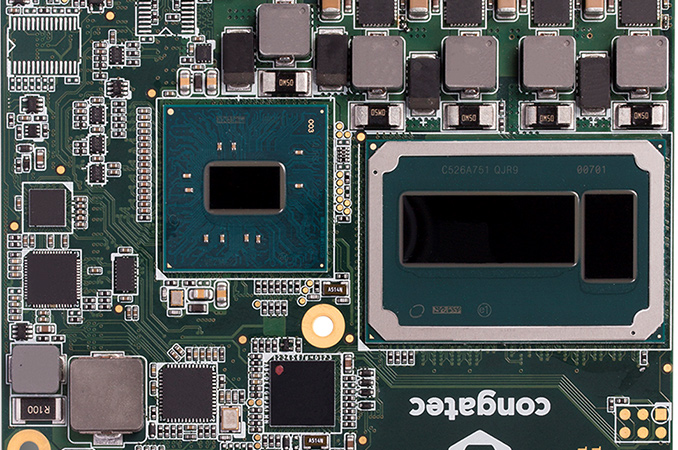
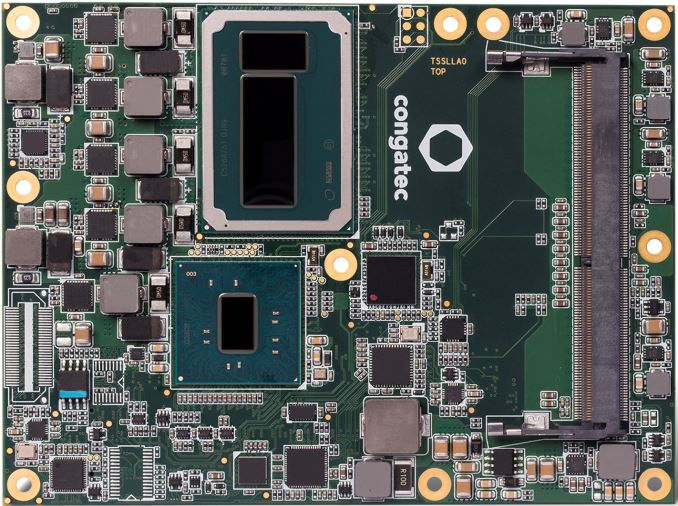
Congatec's TS170 , an embedded system that uses Intel's Xeon E3-1515M v5 CPU ...
Read more...


Read More ...


AMD adds refresh-rate ranges to its FreeSync monitor page
AMD is making it easier to figure out the details of compatible monitors on its FreeSync page. A recent update added refresh-rate ranges and panel types for a large number of FreeSync monitors from Acer, LG, and Samsung, among others. AMD now includes the following details to help make picking a FreeSync monitor easier: manufacturer, model, size, panel type, resolution, refresh-rate and FreeSync range, inputs, and low-framerate-compensation support.
...
Read more...


Read More ...


Rumor: Early Broadwell-E benches hint at solid performance gains
Over at the Overclock.net forums, user Maintenance Bot has apparently run a couple of tests on a Core i7-6850K engineering sample. In case you aren't already aware, yes, that's a Broadwell-E chip from Intel's upcoming high-end desktop product line. He compared the chip's multi-core Cinebench results to his own Core i7-5820K at the same overclocked speed—4.2GHz—and came away with an impressive performance improvement: a score of 1311 with the Broadwell-E chip, versus 1191 with the Haswell-E CPU.
...
Read more...


Read More ...


HP refreshes Pavilion consumer PC lineup
Everyone's doing a little spring cleaning lately, and HP is no exception. The company is refreshing its entire consumer-oriented Pavilion series of PCs, with all-new desktops, all-in-ones, laptops, and convertibles. The focus for the new line seems to be on saving space and establishing a coherent design. The new Pavilions stay the course for the most part, but these machines have a few new features worth mentioning.
...
Read more...


Read More ...


Nvidia teases Pascal GeForces amid GTX 1000-series rumors
Well, looks like the rumor mill may have gotten the June reveal date of Pascal-based gaming cards wrong. A mysterious new site called "Order of 10" has popped up, completet with a countdown timer and imagery of gray polygons heading towards Earth. Look familiar? It should. The countdown ends Friday, at which time these mysterious polygons will land.
...
Read more...


Read More ...


Philips' new 43-inch monitor might make native 4K practical
Philips is releasing the BDM4350UC in the United States and the UK today. This 43-inch 4K IPS display supersedes the company's BDM4065UC monitor, which was a little smaller and used a VA panel. Thanks to its relatively large size for a PC monitor, this display offers a relatively standard 103-PPI density—about the same as that of a 27" 2560x1440 display. That PPI figure might make the BDM4350UC a good choice for folks who want the information density of a 4K display without the eyestrain of running smaller 4K screens without a scaling factor.
...
Read more...


Read More ...


Alleged Kaby Lake CPU shows its face in SiSoft Sandra database
Back in March, we reported on the demise of Intel’s long-held “tick-tock” product development strategy. For years, Intel has predictably released a line of CPUs with a new manufacturing process one year, and a line on the same process with a new architecture the next. This cadence is changing with the current 14-nm process node. Under the tick-tock schedule, we would have seen products made on a new process node—10-nm—this year. Instead, we are looking at an optimization of the 14-nm process, called "Kaby Lake." Now we have purported benchmarks of a Kaby Lake processor, courtesy of an anonymous posting in the SiSoftware Sandra database.
The leaked benchmark shows a four-core, eight-thread processor with 3.6GHz base and 4.2GHz Turbo clock speeds, along with 8MB of L3 cache. That base clock puts it about in the middle of the i7-6700 (3.4GHz) and i7-6700K (4.0GHz), and the 4.2GHz Turbo speed aligns with the i7-6700K. Even if this benchmark does actually represent a Kaby Lake processor, it ...
Read more...


Read More ...


Dell will become Dell Technologies after its EMC buyout
Last fall, Dell announced that it was acquiring major business storage and services corporation EMC. The $67 billion deal is moving forward, and Dell has now revealed details about how the combined businesses will be branded and organized.
The combined company, with its entire family of brands, will be known as Dell Technologies. There will be two primary sub-brands: Dell and Dell EMC. The company's client PC and technology business will continue to operate ...
Read more...


Read More ...


Nvidia and Samsung settle long-running patent litigation
It's been well over two years since Nvidia tried to block all shipments of Samsung's Galaxy phones and tablets, claiming that these devices infringed on a number of Nvidia's patents. Now, it appears that the story has come to a close. According to Nvidia, the two companies have agreed to settle all pending litigation.
The settlement agreement covers cases in a number of courts. Nvidia initially filed complaints against Samsung with the U.S. District Court in Delaware and the U.S. International Trade Commision (ITC). Shortly thereafter, however, Samsung filed a countersuit with the ITC and another in ...
Read more...


Read More ...


Oculus Rift demos go on the road starting May 7
Oculus announced a program today that should allow more potential VR customers to get some hands-on time with the company's Rift headset. Starting May 7, some Best Buy stores will have the Oculus Rift in stock, both for purchase and as a demo.
...
Read more...


Read More ...


Antec's P9 Window is a mid-tower case with a view
Antec's newly minted P9 Window mid-tower case provides an unobstructed view of its interior through a large side-panel window, as its name suggests. Visible on the inside are cooling vents on the top, bottom, front, and back and tool-less expansion trays, bays, and slots. Not so obvious are the mounts for fans or radiators and hidden cable routing areas behind the motherboard tray.
...
Read more...


Read More ...


Nvidia 365.10 drivers are Game Ready for MOBAs and Forza Apex
Variations on MOBA games are everywhere these days. There's Blizzard's Overwatch, Epic's Paragon, and 2K's Battleborn. And, of course, there are new Nvidia graphics drivers geared up for all this multiplayer action. Please welcome Nvidia's WHQL-certified 365.10 driver release.
If it's not clear by now, Nvidia says the new release is "Game Ready" for the titles mentioned above. Our own Nathan "Jr. Damage" Wasson has given his preliminary seal of approval to Overwatch and Battleborn in particular. There's also good news for ...
Read more...


Read More ...


Intel cancels Broxton and SoFIA smartphone SoCs
Intel has had a rough go of the last couple of weeks. Following its April 19 earnings report, Intel announced a plan to lay off 12,000 workers, representing about 11% of its workforce. The company also said it would be re-aligning its operations as it transitions from "a PC company to one that powers the cloud and billions of smart, connected computing devices." We now have word about the product lines under the axe, as well as some clarification of those that aren’t, courtesy of a Forbes.com report.
According to Patrick Moorhead from Forbes, the biggest takeaway from his conversations with Intel is that the company is continuing its focus on the products that TR gerbils will be most concerned with. Moorhead says the company’s bread-and-butter processor lines ...
Read more...


Read More ...


The Tech Report attends Silicon Valley Virtual Reality 2016
I spent a few days last week at the Silicon Valley Virtual Reality Expo in San Jose. SVVR is a fairly small convention that showcases the latest developments in VR. The Turris VR chair that we covered last week was at the convention, but since it got its own article already, I won't talk about it here other than to say that it was subjected to nearly non-stop use for three days and got plenty of positive feedback. Turris aside, here's what I did and saw at the event.

Luckey and I were some of just a few attendees ...
Read more...


Read More ...


Available Tags:Intel , AMD , HP , Nvidia , GTX , rumors , Philips , CPU , Dell , Dell , Samsung , smartphone

IT News Head Lines (AnandTech) 06/05/2016

AnandTech


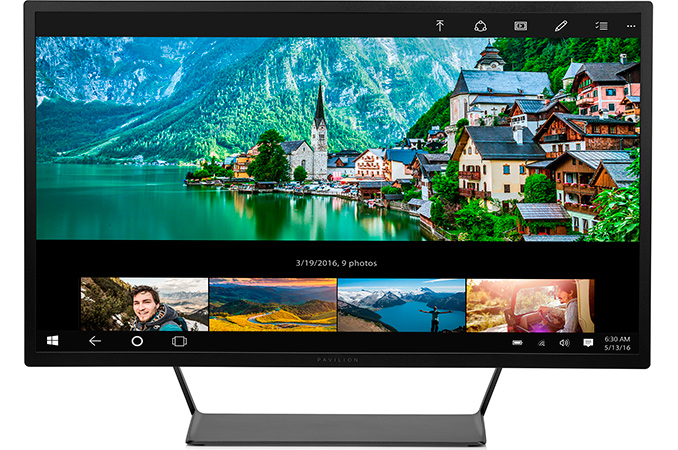
HP Announces 32” Pavilion Display for Everyone: QHD for $399
HP has introduced its Pavilion 32 display (V1M69A), which promises to combine large size, QHD resolution, VA panel and affordability. The Pavilion 32 monitor may not appeal to professionals or hardcore gamers, but for mainstream users this one could be a game changer because of its price-point. The monitor will hit the market late next month as a part of HP’s back-to-school product refresh.

Modern day desktop workloads involve a lot of multitasking as well as long documents, large spreadsheets and high-resolution images. For many tasks, big displays are not a luxury, but rather a necessity. However, it is not easy to find a monitor that boasts with a large size, a good quality panel and an affordable price. There are relatively inexpensive 24” and 27” monitors with IPS or VA panels available, but when it comes to models with diagonals like 30” and larger, then it is not easy to find a good quality affordable display. While there are low-priced 32” monitors from unknown brands, they usually feature cheap TN panels and can hardly boast with good quality. Meanwhile, well-known suppliers charge $500 and up for their 32” models, which is more than many people are willing to spend on a display. With its Pavilion 32, HP wants to address the market of affordable monitors with an offering that is currently not available from its rivals.
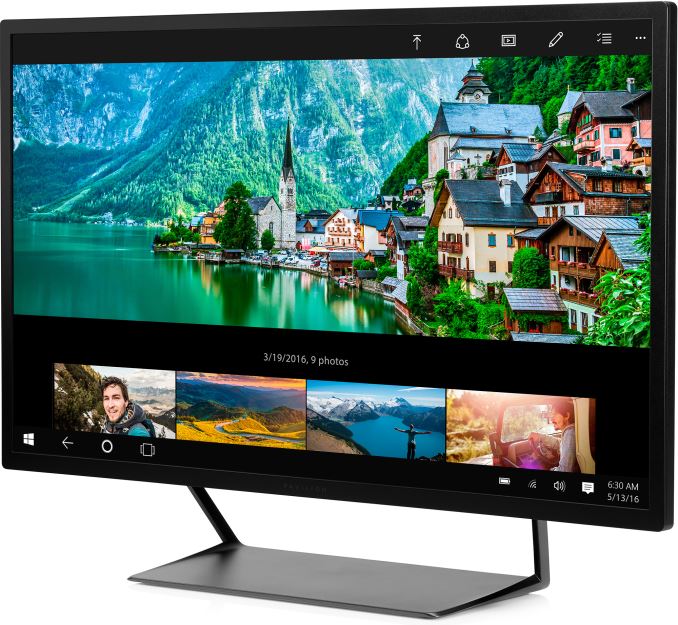

The HP Pavilion 32 (V1M69A) display uses a 32" WVA+ panel with 2560×1440 resolution, 300 cd/m2 brightness, 3000:1 static contrast ratio, 178°/178° horizontal/vertical viewing angles as well as 60 Hz refresh rate. WVA stands for wide viewing angle, which is a general term to describe various types of panels (including *VA and PLS) used by display makers in their products. HP does not disclose exact type of the panel that powers the Pavilion 32”, but confirms that this is a VA panel (though, we have no idea whether this is AH-VA, A-MVA, etc.), not a TN (which is typically used for low-cost displays). In many ways, the Pavilion 32 resembles the Envy 32 monitor, which HP introduced several months ago. The Envy 32 has a similar WVA+ panel, but features stereo speakers as well as AMD’s FreeSync to appeal to gamers, but it is also more expensive.

Specifications of HP Pavilion 32 and HP Envy 32
HP Pavilion 32

V1M69A
HP Envy 32

N9C43AA
Panel 32" WVA+ 32" WVA+ with Anti-Glare
Resolution 2560 × 1440
Refresh Rate 60 Hz 60 Hz with AMD FreeSync
Response Time 7 ms gray-to-gray
Brightness 300 cd/m²
Contrast 3000:1
Viewing Angles 178°/178° horizontal/vertical
Color Saturation 100% sRGB
Pixel Pitch 0.276 mm
Pixel Density 91.8 pixels per inch
Inputs 2 × HDMI

1 × DP 1.2
1 × HDMI

1 × MHL

1 × DP 1.2

3.5 mm stereo-in
USB Hub 2-port USB 2.0 hub
Audio None Stereo speakers with Bang

& Olufsen enhancements
Launch Price $399.99 $499.99

The new Pavilion 32 display from HP is equipped with two HDMI and one DisplayPort 1.2 connectors (cables are included in the package). In addition, it has an integrated USB 2.0 hub, which should be enough to connect a keyboard, but which will not be sufficient for modern external USB flash memory drives that support USB 3.0 transfer rates. Keeping in mind that the hub is located on the backside of the monitor, it looks like it was not intended for removable storage in general. The design of the Pavilion 32 allows adjusting tilt, but not height. Asides from that, the monitor cannot be used in portrait mode, which is hardly a problem for the vast majority of its potential buyers.

Select retailers as well as HP’s online store will start to sell the HP Pavilion 32 on June 26 for $399.99. The monitor is covered by a one- or three year-limited warranty.

The key selling points of the HP Pavilion 32 are its relatively low price as well as its VA panel. Right now, the majority of 32” displays with QHD resolution from well-known suppliers cost over $500. By making its product available for $400, HP appeals to a broader audience of users, who currently buy smaller monitors. What remains to be seen is whether other display makers follow HP with their inexpensive 30” QHD parts.


Read More ...


The ASRock E3V5 Performance Gaming (C232) Motherboard Review
If you want to run a Skylake E3 Xeon, it needs to be placed in a motherboard with either the C232 or C236 chipsets. This is a change from the last generation, and as a result most of the motherboard manufacturers are bringing some of their consumer expertise to new products in order to get a slice of the casual Xeon user pie. We explored a server-like C236 based motherboard in the previous review, and in this review we are taking the latest edition from ASRock’s Gaming range, based on the C232 chipset, for a spin.


Read More ...


Comtrend PG-9172 Powerline Adapter Review: G.hn Gets Primed for Retail Push
The battle between HomePlug and HomeGrid to emerge as the de-facto powerline networking standard was quite interesting between 2010 and 2013. However, despite silicon getting demonstrated at various trade shows, G.hn was unable to get a retail product out for a long time. This changed last summer, when Comtrend introduced the PG-9172, a 1200 Mbps G.hn powerline adapter. In this review, we take a look at the performance of the Comtrend PG-9172, and how it compares to some of the HomePlug products already in the market. With Arris launching a suite of G.hn networking products under the RipCurrent branding last month, we also analyze whether G.hn is finally ready for retail prime time.


Read More ...


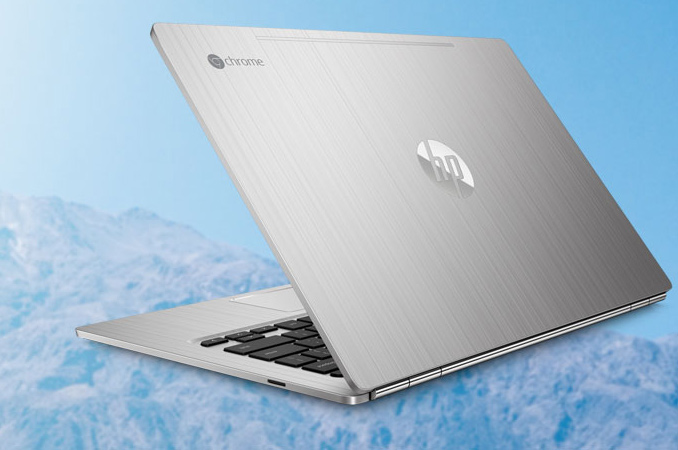
HP Unveils Premium Chromebook: 3K Display, Intel Core M, 16 GB of RAM and USB-C
HP has announced a new family of Chromebooks, which  are powered by Intel’s high-performance processors and feature stylish design, aluminum body, high-resolution display and even Bang & Olufsen speakers. The new laptops will not be as affordable as many other mobile PCs running Google Chrome OS and will not be as powerful as Google’s Pixel, however, this is what HP believes to be the right balance between performance, style, portability and price.

When Acer and Samsung introduced their first notebooks based on Google’s Chrome OS in mid-2011, they praised their low price and mainstream computing capabilities. At the time, Chrome OS was a mystery for most people, netbooks were relatively popular and it made sense for the aforementioned PC makers and Google to address the entry-level segment of the market with something very affordable. As Chrome OS gained traction, PC makers began to install higher-performing components into their Chromebooks. However, they were still not ready to address the high-end market segment with such PCs, which is why Google released its Pixel laptop in 2013. The Chromebook Pixel is one the most advanced and stylish Chromebooks ever made because of its Core i7 “Broadwell” CPU, a display with 2560×1700 resolution and 3:2 aspect ratio. But, the Pixel costs $999 and not all users are ready to invest that sum in a Chromebook. Fortunately, different PC makers offer various systems that attempt to replicate some of the Pixel’s features. HP decided to build its own competitor for Google’s Pixel and while the product is not exactly affordable, it has a better screen than most Chromebooks and a number of other advanced features.
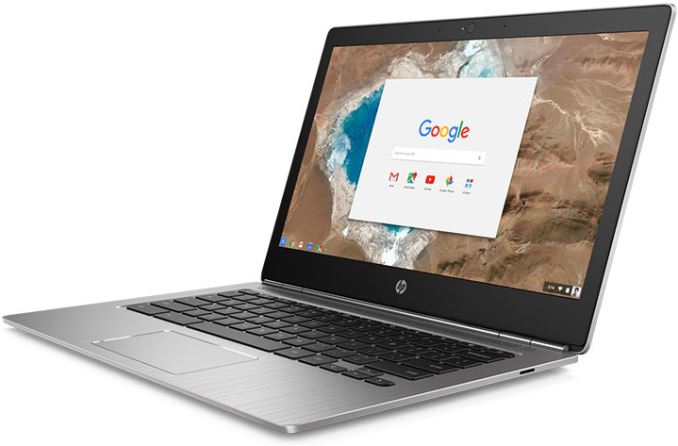

The HP Chromebook 13 sports a 13.3” IPS display with 3200×1800 resolution (QHD+), 170-degree viewing angles and 16:9 aspect ratio, which is good for multimedia applications and video. HP’s latest Chromebook comes in brushed anodized aluminum chassis, it is 12.9 mm thick and weighs 1.29 kilograms (2.86 pounds), which is thinner and lighter than Apple’s MacBook Air 13”. Despite the very high resolution screen, the laptop works up to 11.5 hours on one charge of its 45 Wh battery, according to the manufacturer.


To enable long battery life, HP used Intel’s Skylake-Y system-on-chips to build its Chromebook 13. Various versions of the system are powered by either Pentium or Core M SoCs with two cores, Intel’s HD Graphics 515 (Gen9) core with 24 EUs (execution units) as well as 6W or 4.5W TDP. The system will likely be considerably faster than other Chromebooks running Atom, Celeron or Pentium processors because of the high-performance CPU architecture.

HP Chromebook 13 Specifications
Screen Resolution 3200×1800
CPU Intel Core m7-6Y75 Intel Core m5-6Y57 Intel Core m3-6Y30 Intel Pentium 4405Y
Graphics Intel HD Graphics 515 (Gen9, 24 execution units)
RAM 16 GB 8 GB 4 GB
Storage NAND flash storage
Wi-Fi 2x2 MIMO 802.11ac Wi-Fi module (?)
Bluetooth Bluetooth 4.2 (?)
USB 2×USB-C, 1×USB-A ports
Other I/O Microphone, stereo speakers, audio jack
Thickness 12.9 mm/0.5 inch
Weight 1.29 kilograms / 2.86 pounds
Price $1029 $819 $599 $499

Depending on the model and price, the HP Chromebook 13 can be equipped with 4, 8 or 16 GB of RAM, an unknown amount of solid-state storage as well as wireless connectivity technologies (a 802.11ac Wi-Fi module with Bluetooth 4.2 is likely, but is not confirmed by HP). HP notes that its system has a full-sized backlit keyboard as well as Band & Olufsen-tuned speakers, which is something new for a Chromebook. The system also has a webcam, three microphones, a 3.5 mm audio port, a SD card reader, one USB Type-A port as well as two USB Type-C ports. The Chromebook 13 uses USB-C for charging and is therefore compatible with a variety of third-party chargers.


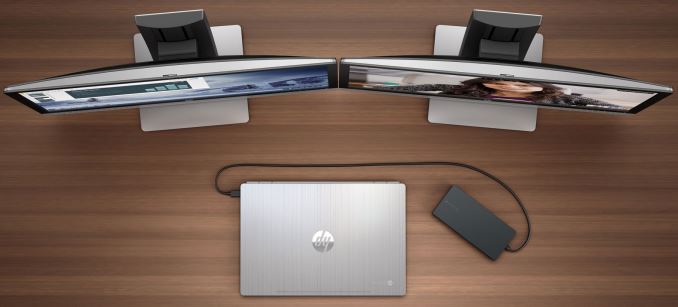
With its advanced Chromebook 13, HP offers its Elite USB-C Docking Station ($149), which plugs in to a USB-C port on the PC and enables to connect up two Full HD displays, Gigabit Ethernet as well as multiple USB Type-A devices, such as keyboards or mice.

Four versions of the HP Chromebook 13 should hit the U.S. retail shortly. The most basic model running the Intel Pentium 4405Y processor and equipped with 4 GB of RAM will cost $499, whereas the top-of-the-range system featuring the Intel Core m7-6Y75 and 16 GB of RAM will cost $1029, which is even more than Google’s Pixel.

Sources: HP and Engadget.


Read More ...


NVIDIA Releases 365.10 WHQL Game Ready Driver
With more game releases and open betas coming down the pipe this spring, driver developers are getting busy preparing our graphics cards for the new games. This time NVIDIA brings us a handful of fixes and a suite of game ready support updates.

NVIDIA driver version number 365.10 is a continuation of the 364 driver branch. Included are several bug fixes, including one for when one daisy-chained monitors, FPS drops in games with the previous driver build, and SLI control panel issues under Windows 10. Also, Dark Souls III performance has been fixed under Windows 7, 8 and 8.1, as performance under that game was sometimes poor in earlier driver releases.

Moving on to game ready support we have a few upcoming games. On the list we have Battleborn by Gearbox Software which is seeing release this week. Following along we have Forza Motor Sport 6: Apex by Turn 10, Overwatch by Blizzard and Paragon by Unreal Studios which all will have beta’s open this week.

Anyone interested can download the updated drivers through GeForce Experience or on the NVIDIA driver download page.


Read More ...


NVIDIA & Samsung Settle All Patent Infringement Disputes
Roughly a year and a half ago, NVIDIA opened up a patent infringement case against Samsung and Qualcomm, claiming that the various GPUs used by the two firms violated various NVIDIA patents. In response, Samsung opened up their own counter-suit, claiming that NVIIDA and its partners were violating Samsung patents. Since then, things have not progressed well for NVIDIA, with the US International Trade Commission (ITC) ruling that Samsung’s GPUs don’t infringe on NVIDIA’s patents, while also ruling that NVIDIA’s GPUs did infringe on Samsung’s patents.

Now with the final ruling on Samsung’s counter-suit originally scheduled for today, NVIDIA has announced that they have buried the hatchet with Samsung, ending all litigation between the companies. In their announcement, NVIDIA notes that both companies have ended their suits with the US courts, US ITC, and the US Patent office, effective immediately. In turn, both companies have agreed to cross-license “a small number of patents by each company to the other,” while noting that this is not a broad cross-licensing agreement. All other terms of the deal – such as any potential payments – are not being disclosed.

As noted by Bloomberg, NVIDIA faced a potential import ban on some of their products should they have lost the final ruling on the Samsung counter-suit, so combined with their earlier losses at the ITC, there was a clear need for NVIDIA to settle the case rather than waiting on ITC and court rulings. This, in turn, seemingly puts a wrench in NVIDIA’s overall mobile patent licensing efforts, as the Samsung case was their best opportunity to get a ruling that other mobile GPUs were violating their patents. That there is some cross-licensing going on between Samsung and NVIDIA does mean that NVIDIA holds at least some patents that Samsung believes they need, but that this is being settled quietly out of court means that it’s hard to imagine that NVIDIA has a strong position for further patent licensing efforts.


Read More ...


Intel Adds Crystal Well-based Skylake-R Processors: 65W with 128MB eDRAM
Intel has added three new microprocessors for embedded and highly-integrated applications into its lineup. The new CPUs are based on the Skylake microarchitecture and feature high-performance integrated graphics cores with an added eDRAM cache called Crystal Well. The new products should offer high performance in memory bandwidth applications due to Skylake’s updated 2nd generation cache architecture.
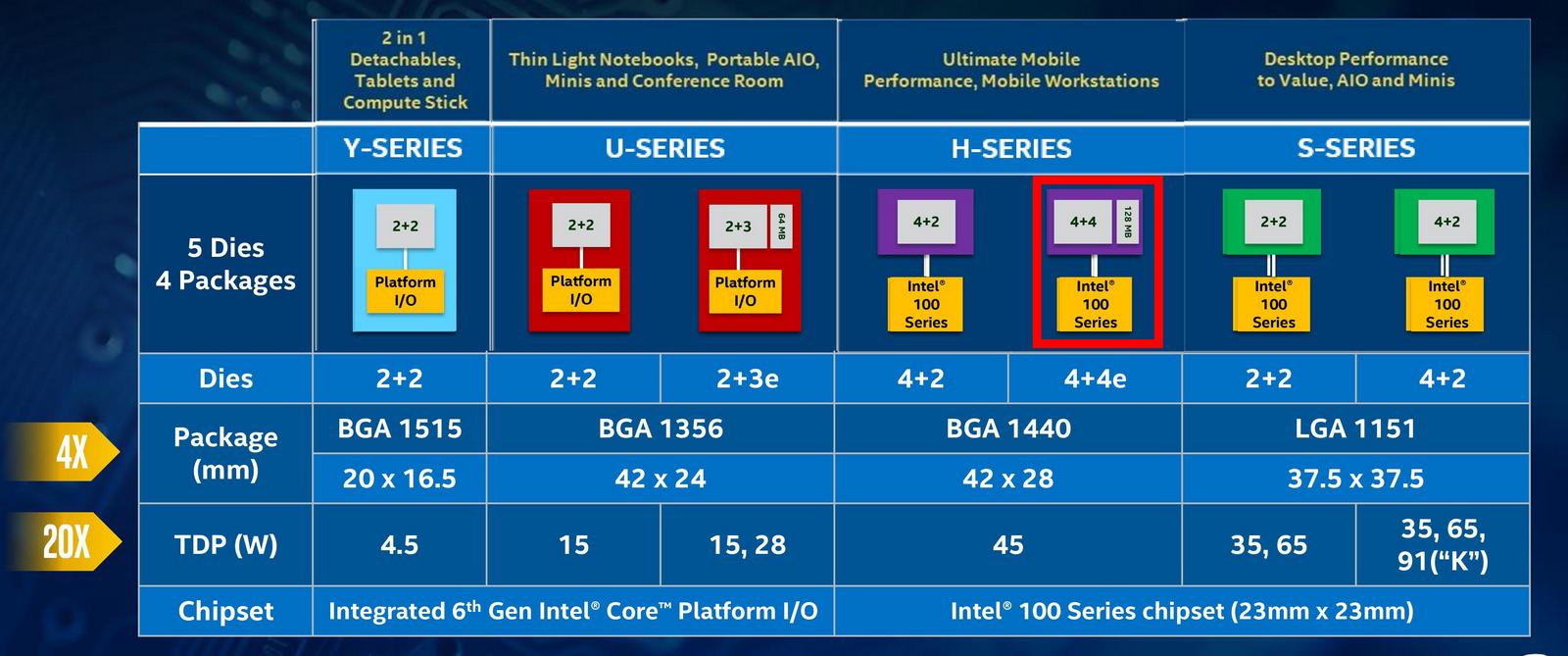


In red is the 4+4e die with 128MB eDRAM

The chips that Intel has added to its price list are the Core i7-6785R, the Core i5-6685R, and the Core i5-6585R. The new processors are designed to fit in all-in-one PCs, small form-factor and other types of highly-integrated PCs that can satisfy the 65W TDP over the mobile Crystal Well variants that run at 45W. The new desktop chips from Intel are based on the Skylake-H silicon in its most advanced configuration: with four general-purpose cores as well as the GT4e integrated graphics. Not all the specifications of the processors are known at this point, but we are talking about quad-core processors with Generation 9 Iris Pro graphics and 72 execution units (as well as 128 MB of eDRAM), a dual-channel DDR4-2133 memory controller, a PCI Express 3.0 interface and three display outputs. The power consumption of Intel’s new embedded products for desktops does not exceed 65 W, which is typical for R-series offerings, and offer a potential upgrade path by OEMs for any equivalent systems that used an equivalent Broadwell-based R-series processor.

Intel unveiled its Skylake-H silicon in its full glory earlier this year when it released its mobile Xeon E3 v5 processors with the Iris Pro Graphics P580.


Several makers of industrial computer modules (such as Congatec) already use chips like the Intel Xeon E3-1515M v5 for their products, which is why we know what they look like. The die of the Skylake-H processor looks rather long and the lion’s portion of its transistor budget was spent on the mammoth iGPU. The extra on package die is the eDRAM, and the silicon underneath the CPU is the chipset (it's the Y/U series CPUs that have integrated chipsets).

Comparison of Intel's Embedded CPUs
i7-6785R i5-6685R i5-6585R i7-5775R i5-5675R i5-5575R
Microarchitecture Skylake Broadwell
Cores/Threads 4 / 8 4 / 4 4 / 4 4 / 8 4 / 4 4 / 4
L2 Cache 1 MB (256 KB × 4)
L3 Cache  8 MB 6 MB 6 MB 4 MB
eDRAM 128 MB 128 MB
CPU Frequency default 3.30 GHz 3.20 GHz 2.80 GHz 3.30 GHz 3.10 GHz 2.80 GHz
maximum 3.90 GHz 3.80 GHz 3.60 GHz 3.80 GHz 3.60 GHz 3.30 GHz
GPU Iris Pro 580 Iris Pro 6200
EUs 72 48
TDP 65 W 65 W
GPU Frequency 350 MHz to 1150/1150/1100 MHz 300 MHz to 1150/1100/1050 MHz
DRAM Support DDR4-2133/1866

DDR3L-1600/1333
-

DDR3L-1866/1600/1333
Packaging FCBGA1440 FCBGA1364
Process Technology 14 nm
Price $370 $288 $255 $348 $265 $244

The new parts feature higher clock rates compared to the Broadwell processors, although slightly lower than their K series counterparts. The processors have a number of important architectural improvements which will affect the performance of these CPUs in real-world applications. It is interesting to note that Intel retained the full L3 cache size in its new R-series CPUs: in the Broadwell models part of the L3 was used for eDRAM tags, reducing their capacity by 2 MB, but the new Skylake parts are now in line with their i7 and i5 naming due to the way the eDRAM is implemented. This means that the i7-6785R has 8 MB of L3, similar to the i7-6700K, and the i5-6685R/6585R has 6 MB of L3, similar to the i5-6600K.

Intel’s Skylake processors feature an upgraded microarchitecture with better parallelism and improved IPC, which means better performance almost across-the-board. An important capability of Skylake is its Speed Shift technology, which can quickly increase frequency for a short amount of time in a bid to rapidly perform an operation (~1-3 milliseconds rather than 30-100 without Speed Shift), thus providing better user experience and ultimately saving power. Intel’s Speed Shift requires support by the operating system and right now Microsoft’s Windows 10 can take advantage of the technology in a bid to improve its responsiveness.
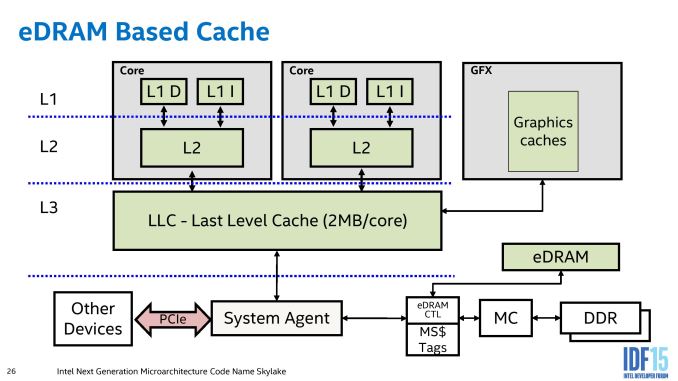

Another important aspect of Intel’s Skylake CPUs with high-end iGPUs is their eDRAM, which means the processors also gain the code name 'Crystal Well'. The eDRAM for Skylake is different to that found in previous Crystal Well implementations: in the last generation, the eDRAM acted as a victim cache to the L3 cache, meaning that evicted cache lines from L3 would add up in the eDRAM and be quick for re-reading without having to access main memory. The downside to this is that data could not end up in eDRAM without being used first, giving initial data read latencies the same performance as previous processors. Ultimately this is still good for graphics and gaming, where textures are re-read from memory frequently. The new arrangement for the eDRAM in these Skylake processors has placed the eDRAM in a different part of the chain, between the System Agent and the DDR memory. This means that the eDRAM acts as a DRAM buffer, with 50 GBps bandwidth in each direction to the LLC, but is also accessible for early reads/writes by any device that needs memory access through the system agent (i.e. anything through PCIe). Previously this was not possible, but now it means that Skylake's eDRAM implementation should offer a speedup in many more scenarios that before.

The final noteworthy improvement of the Skylake processors compared to previous-generation offerings is revamped graphics core as well as increased amount of execution units. Based on our findings last year, real-world performance of Intel's high-end Iris Pro 6200 graphics core (Broadwell’s top iGPU) is higher than that of entry-level discrete graphics cards. Meanwhile, the highest-performing GT4e graphics core of Intel Skylake contains 72 EUs, up from 48 in the case of the Broadwell. Compute performance of Intel's contemporary top-of-the-range iGPU (Iris Pro 580) is around 1.1 TFLOPS depending on its frequency, so, this one should be tangibly faster than its predecessor. Last, but not least, Skylake’s iGPU has a revamped multimedia engine, which supports hardware decoding and encoding of UHD videos using HEVC or VP9 codecs.

Intel’s new Core i7-6785R, Core i5-6685R, and Core i5-6585R are already available at a tray price of $370, $288 and $255 respectively. Partners of the chipmaker will likely use the new processors to build their new systems in the coming months.

Image Sources: Congatec, Intel's IDF presentations.


Read More ...


Available Tags:HP , ASRock , Gaming , Intel , NVIDIA , WHQL , Driver , Samsung

IT News Head Lines (HEXUS.net) 06/05/2016

HEXUS.net


IBM makes quantum computing available to the public

Via a five-qubit IBM quantum processor connected to the cloud.

Read More ...


Lian Li launches PC-Q34 flip-open fanless SFF chassis

Providing easy access to components. Available in four colours; silver, black, red, or gold.

Read More ...


An Interview with Rockchip brand manager YanYan Xing

Following the launch of a flagship SoC, Rockchip provides key insight into the firm's success.

Read More ...


Dishonoured 2 will be released on 11th November

PC, PlayStation 4 and Xbox One gamers will get to enjoy supernatural assassinations.

Read More ...


AMD releases Radeon R3 SSD range

Competitively priced SSDs use TLC NAND and Silicon motion SM2256KX controller.

Read More ...


Tougher approach to broadband service price claims on the way

Advertising Standards Authority (ASA) says broadband ads must be clearer from October.

Read More ...


HP updates Pavilion PC portfolio

Introduces updated laptops, convertibles, desktops and All-in-Ones.

Read More ...


The next iPhone will make you ask "how did I live without this?"

Says Apple's CEO Tim Cook, hoping to stop the longest share price decline in 18 years.

Read More ...


Nvidia GeForce Game Ready 365.10 WHQL drivers available

Optimised for Battleborn, and the Forza Motorsport 6 Apex, Overwatch, and Paragon betas.

Read More ...


Gigabyte upgrades EL-20 series IoT Gateway solution processors

New 14nm Braswell D SoCs offer a speed boost without eating up any more power.

Read More ...


Available Tags:IBM , AMD , Radeon , SSD , HP , iPhone , Nvidia , GeForce , WHQL , Gigabyte

Tuesday, April 26, 2016

IT News Head Lines (AnandTech) 27/04/2016

AnandTech


Drobo 5D with BeyondRAID - Protected Direct-Attached Storage Made Simple
Drobo's direct-attached and network-attached storage units are quite popular in the market, but we have never had the opportunity to evaluate them on AnandTech. At CES 2016, we met with Drobo and they pitched to us the advantages of Drobo's BeyondRAID technology. BeyondRAID is used in both their DAS and NAS lineups, and we took the easier option to evaluate it by going the direct-attached route. Read on for our review of the Drobo 5D, a 5-bay DAS unit with support for seamless SSD caching.


Read More ...


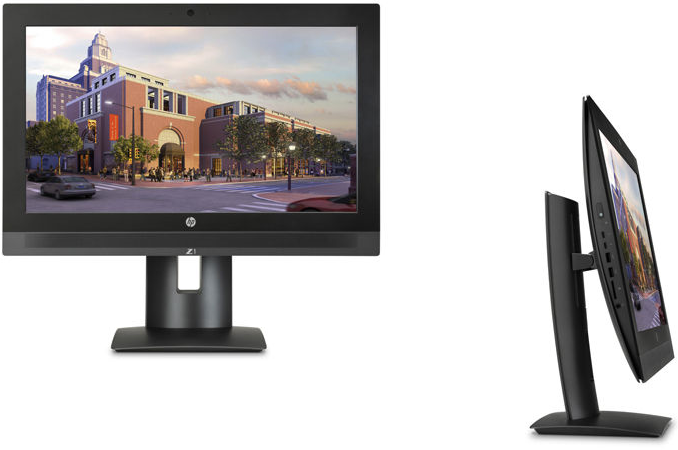
HP Unveils Third-Gen All-In-One Z1 Workstation: 4K Display, Intel Xeon, Professional Graphics
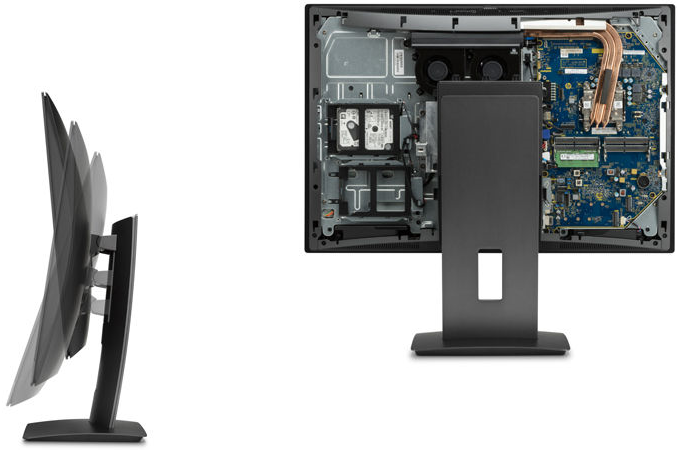
HP last week introduced its third-generation HP Z1 all-in-one workstation. The new system offers higher performance than its predecessor as well as a 4K resolution display. The new Z1 is also significantly more compact compared to prior two generations of HP’s Z1 machines, but retains upgradeablility and a serviceable design. In a bid to make the system smaller and slimmer, HP had to shrink the size of the display and move to a purely M.2/2.5-inch storage platform.

The HP Z1 G3 AIO workstation features 23.6” IPS display panel with 4K (3840×2160) resolution at a 60 Hz refresh rate, a rated 300 nits maximum brightness, 1000:1 contrast ratio as well as 178°/178° horizontal/vertical viewing angles. For comparison, the first and the second generations of HP’s Z1 featured 27” monitors with 2560×1440 resolution, but with the new incarnation of its AIO workstation the company preferred to install a smaller display panel to make the system more compact, increasing the PPI from 108.8 to 186.7.

Specifications of HP's Z1 Workstations
Z1 G2 Z1 G3
Display Panel 27" IPS 23.6" IPS
Display Resolution 2560 x 1440 3840 x 2160
CPU Intel Xeon E3-1281v3

Intel Xeon E3-1246v3

Intel Xeon E3-1226v3

Intel Core i7-4790

Intel Core i5-4590

Intel Core i3-4160

Intel Core i3-4170
Intel Xeon E3-1270 v5

Intel Xeon E3-1245 v5

Intel Xeon E3-1225 v5

Intel Core i7-6700

Intel Core i5-6500

Intel Core i3-6100
Chipset Intel C226 Intel C236
GPU Intel HD Graphics 4400 (Core i3)

Intel HD Graphics 4600 (Core i5)

Intel HD Graphics P4600 (Xeon E3-12x5v3)

NVIDIA Quadro K610M 1 GB

NVIDIA Quadro K2100M 2 GB

NVIDIA Quadro K3100M 4 GB

NVIDIA Quadro K4100M 4 GB
Intel HD Graphics 530 (Core)

Intel HD Graphics P530 (Xeon E3)

NVIDIA Quadro M1000M 2 GB

NVIDIA Quadro M2000M 4 GB
RAM Up to 32 GB of DDR3L-1600 Up to 64 GB of DDR4-2133

ECC with Core i3 and Xeon
Storage 2 x 2.5" or 1 x 3.5" HDDs

1 x mSATA SSD
2 x 2.5"

2 x M.2-2280
ODD Blu-ray or DVD burner

(if no Thunderbolt module installed)
No
Slots 1 MXM

2 mini-PCIe/mSATA (full-length)
1 MXM

2 M.2 for SSDs

1 M.2 for WLAN
Gigabit Ethernet Intel I217LM Intel I219LM
Wi-Fi and BT Intel 2x2 7260 802.11ac

w/ BT4.0, mini-PCIe
Intel 2x2 8260 802.11ac

w/ BT4.2 PCIe
USB 2 x USB 3.0

4 x USB 2.0
6 x USB 3.0

2 x USB 3.1 Type-C
Thunderbolt Thunderbolt 2

2 ports (if no ODD installed)
Thunderbolt 3

2 ports via Type-C
Audio 4 built-in speakers, microphone, audio connectors 4 built-in speakers with DTS Studio Sound, microphone audio connectors
Webcam 1080p
Power Supply 400 W 330 W
Dimensions (HxWxD) 20.8 x 26 x 16.5 inches

52.83 x 66.04 x 41.91 cm
23.5 x 8.3 x 21.5 inches

59.69 x 21.08 x 54.61 cm
Weight 47 lbs

21.3 kilograms
23.2 lbs

10.51 kilograms
Starting Price from $1999 from $1498
Launch 2014 2016

The new HP Z1 G3 is based on the Intel Xeon E3 v5/Core i3/i5/i7-series (Skylake) processorsas well as the Intel C236 PCH (platform controller hub). The new AIO workstation can be equipped with up to 64 GB of DDR4-2133 SO-DIMM memory (ECC is supported only by the Xeon and the Core i3 CPUs), up from 32 GB of DDR3 supported by the previous-gen model. The graphics sub-system of the new HP Z1 G3 relies on either Intel’s HD Graphics 530/P530 cores (Gen 9, 24 EUs), NVIDIA’s Quadro M1000M 2 GB (512 stream processors) or M2000M 4 GB (640 stream processors) professional graphics adapters. Since the predecessors of HP’s Z1 G3 relied on low-power professional graphics adapters from NVIDIA in MXM 3.1 form-factor, it is not surprising that the company decided to install similar cards this time.


Storage in the HP Z1 G3 is something that was significantly redesigned compared to previous generations. The new workstation supports up to two 2.5” HDDs or SSDs with SATA 6 Gbps interface as well as up to two HP Z-Turbo Gen 2 NVMe SSDs in the M.2 2280 form-factor and both with PCIe 3.0 x4 interface. As a result, the Z1 G3 has inherently faster storage system than its predecessors (which did not support PCIe 3.0 SSDs), albeit without the opportunity for a large 3.5-inch mechanical. When it comes to storage space, not everything is that easy. HP itself installs SSDs and HDDs with up to 1 TB capacity, hence, it can equip its Z1 G3 machine with up to 4 TB of storage. However, since there are M.2 SSDs and 2.5” HDDs and SSDs with over 1 TB capacities, end-users could install such drives themselves due to tool-less upgrade and maintenance capabilities. Hardware RAID is supported only for 2.5” HDDs and not everything is clear with software RAID for M.2 drives. Moreover, the system no longer has an internal optical drive.

As for input/output capabilities, the new HP Z1 supports two Thunderbolt 3 ports (the number of controllers is unknown, could either be one controller per port or one controller for both) to connect USB-C and TB3 peripherals as well as external displays. There are also six USB 3.0 ports (one supports charging), one SD 4.0 media card reader, a DisplayPort 1.2 connector and a TRRS connector for headsets. Networking and wireless capabilities look standard for today’s workstations: one Intel I219LM Gigabit Ethernet controller as well as one Intel 8260 Wi-Fi 802.11ac with Bluetooth 4.2 module (installed into its own M.2 slot, thus, does not impact storage options). The system also has four internal stereo speakers with DTS Studio Sound software enhancement.


HP announced its first-generation Z1 AIO workstation back in early 2012. The machine was based on the Intel Xeon E3 v3 or the Intel Core i3/i5 processors (Ivy Bridge), NVIDIA’s mobile Quadro graphics and featured a 27” display panel, an optical drive (or an optional Thunderbolt module) module, desktop-class DDR3 DIMMs, SATA HDDs and so on. The HP Z1 G1 received the first ever 10 out of 10 AIO repairability score from iFixit because it was possible to replace all internal components (even its display panel) fairly easy. The downside of Z1’s architecture was its weight and cost. The maximum weight of the system with stand was around 21.3 kilograms and the cost started at $1899. The HP Z1 G2 followed its ancestor in many ways. However, its weight was still around 21.3 kilograms and the price started at $1999.

When designing the third-generation of its Z1 workstations, HP engineers tried to make the system lighter, thinner and more affordable. They decided to go with a smaller (yet, higher-resolution) display panel, SO-DIMMs rather than full-sized memory modules, removed the optical drive and also lost the 3.5” HDD bay. The result is evident: the system weighs 10.51 kilograms and is two times thinner than its predecessors. The cost of the workstation starts at $1498 in its basic configuration, which is lower compared to the Z1 and the Z1 G2. HP advertises tool-less upgrades and maintenance, but it remains to be seen whether the Z1 G3 is as easy to repair as its predecessors.

The HP Z1 workstation will be available from May.


Read More ...


Available Tags:HP , Intel

Thursday, April 21, 2016

IT News Head Lines (Tech Report) 22/04/2016


This is your three-month warning for the "second-10th" TR BBQ
I know what you're thinking after reading that headline: what the heck does "second-10th" mean? It's pretty simple, really. We started hosting The Tech Report BBQ in 2004, and it took place near Detroit for its first three years. From the fourth BBQ onward, the venue for our annual get-together has been my family's cottage on the big lake in Holland, Michigan. We celebrated our 10th BBQ with style in 2013, but this summer will mark the 10th year since the move to Holland. I want to go overboard all over again.
The date for this year's event is Saturday, July 23 , but BBQ regulars know that you can make a whole weekend out of it. The TR BBQ is a family-friendly event open to all friends and readers of The Tech Report. ...
Read more...


Read More ...


Lian-Li DK-04 case doubles as a powered standing desk
Lian-Li's DK-04 was properly unveiled today after being shown in an early state at CES this year. This is (somewhat ironically) the fifth case in Lian-Li's series of desk cases and its largest to date. None of these desk enclosures are cheap, but this version may present the best value for the money. It doubles as piece of furniture that's pretty expensive on its own: a motorized standing desk. Using buttons on the front of the desk, the height of the desktop can be adjusted between 31" (78 cm) and 46" (117 cm).
...
Read more...


Read More ...


April showers Surface Book and Surface Pros with updates
Microsoft released a range of updates for the Surface Pro 3, Surface Pro 4, and Surface Book this morning. The Surface Pro 4 and the Surface Book both get new system firmware, camera drivers, audio drivers, and graphics drivers. Unique to the Surface Pro 4 is an embedded controller firmware update that improves thermal tuning. For gamers on the Surface Book, the Nvidia GeForce graphics driver update adds support for some of the latest popular games, too. The Surface Pro 3, Surface Pro 4, and Surface Book should all exhibit improved stability and compatability with external monitors and passive video adapters when they're plugged into the Surface Dock after these updates.
...
Read more...


Read More ...


Asus' ROG GT51CA desktop blends power and panache
Asus' ROG GT51CA gaming desktop first made an appearance at CES 2016, and now it's coming to market. This high-end desktop can be configured with overclockable Intel CPUs, a range of Nvidia graphics cards, and NVMe PCIe SSDs. It also features aggressive styling and an optional NFC module that works with Asus' ROG Band wearable to trigger included system tuning and security features.
...
Read more...


Read More ...


Nvidia pulls out the silicon chainsaw to make the Quadro M2000
Nvidia has pulled out the world's smallest chainsaw again. Last time we heard of this mythical tool, Nvidia split the GM204 inside the GeForce GTX 980 to produce the GM206 of GeForce GTX 960 fame. This time, the workstation-oriented GM204GL found inside the Quadro M4000 and M5000 is on the chopping block. When the silicon sawdust clears, we're left with the GM206GL and the shiny new Quadro M2000.
AIDA64's patch notes effectively spilled the beans on the lineage of the GPU inside the newest Quadro a little over a week ago. The Maxwell GM206GL GPU in the M2000 has 768 CUDA cores, roughly half of the M4000's GM204GL GPU with 1664. The ...
Read more...


Read More ...


Intel cuts its workforce by 11% as it releases Q1 financial results
Intel announced its first-quarter 2016 financial results today. The company made $2.6 billion in operating income on $13.7 billion in revenue. Profits were unchanged compared to this time last year, but the company grew its revenue by 7% compared to the year-ago quarter. Net income remained flat at $2 billion, and gross margin fell 1.2 points to 59.3%. Here's a table of the company's results for easy reference:
The company said that it'll be eliminating as many as 12,000 positions worldwide—or 11% of its workforce—by mid-2017 as it transitions from "a PC company to one that powers the cloud and billions of smart, connected computing devices," according to a separate press release . Intel says its growth is coming primarily from ...
Read more...


Read More ...


Razer deploys its Turret living-room lapboard
PC gaming in the living room has always been subject to compromises, and Valve's Steam Controller is just the most recent example. Those compromises often leave the hardcore keyboard-and-mouse enthusiast wanting. Razer thinks the real solution to living-room PC gaming is a lapboard, and its take on the formula is the Turret. Like similar products from competitors Corsair and Roccat, the Turret is essentially a keyboard with an attached mousepad, although the Turret appears to be sleeker than the competing offerings.
...
Read more...


Read More ...


Nvidia's GTX 1080 cooler may have leaked on Chinese social media
Things are already a little smoky in the TR newsroom lately with the volume of next-gen graphics card rumors floating around, but we might have to call the fire department this morning. A user on Chinese social media site Baidu Tieba has posted an image that purports to show the reference cooler for Nvidia's GeForce GTX 1080 graphics card. Behold:

Image: ...
Read more...


Read More ...


World of Warcraft's Legion invasion arrives August 30
Blizzard's iconic antihero Illidan returns to Azeroth this summer.  The demon armies of the Burning Legion will invade on August 30, and pre-orders are now available. In this new expansion to the ever-popular World of Warcraft, players will have access to a new continent called the Broken Isles, a new hero class, and, of course, a new set of dungeons and raids.
...
Read more...


Read More ...


Updated MacBooks make Skylake Core M pretty in pink
It's been a little over a year since Apple introduced the ultra-thin MacBook, so that means it's about time for a refresh. For its spiced-up MacBook, Apple retained the overall design from last year's model while upgrading a few key pieces of hardware and adding a new color option.
...
Read more...


Read More ...


Western Digital refinishes its RE hard drives in Gold
Western Digital's RE series of data center hard disks has been renowned for its top-tier performance and durability for some time now. Buyers will need to stop looking for the RE branding and start looking for Gold in the near future, though. The RE series of drives will soon be superseded by a new product line called WD Gold.
...
Read more...


Read More ...


Cooler Master MasterLiquid Pro coolers dare to be different
Cooler Master's next generation of all-in-one liquid CPU coolers is here. The company's MasterLiquid Pro 120 and MasterLiquid Pro 240 coolers incorporate a number of design changes over the Nepton 120XL and Nepton 240M that could potentially improve their performance and durability. As their names imply, the MasterLiquid Pro 120 uses a 120-mm, 1.5"-thick (or 38-mm-thick) radiator, while the Pro 240 is built with a 240-mm, 1"-thick (or 27-mm-thick) radiator.
...
Read more...


Read More ...


Huawei VR goggles turn compatible smartphones into VR portals
Huawei is bringing its latest flagship smartphones on par with Samsung's in an important respect. At the Shanghai launch of its P9 smartphone Friday, the Chinese mobile giant announced its plans for "Huawei VR."  This plastic shell with optics inside looks outwardly similar to Samsung's Gear VR. Both devices cradle a smartphone inside to take the wearer inside 360-degree videos or other VR experiences. Huawei says there will be two different versions of the Huawei VR: one for the P9 smartphone and one for the company's Mate 8 phablet.
...
Read more...


Read More ...


Toshiba cuts over 14,000 jobs worldwide
Over the past few months, we've been reporting on financial troubles at Toshiba. In December, the company announced its intent to lay off 7,800 workers in 2016 as part of a plan to stabilize its business. That news was bad enough on its own, but according to Nikkei Asian Review, Toshiba has announced that it now plans to cut over 14,000 jobs, or almost double the number it projected in its December announcement.
7,610 of the jobs on the chopping block come from Toshiba's "lifestyle" division, which handles consumer electronics and PCs. Most of the remaining cuts come from the company's semiconductor division. Nikkei Asian Review says 4,590 employees ...
Read more...


Read More ...


HP refreshes Z1 all-in-one workstation PCs
Tower workstations are very nice, but sometimes what one needs is a powerful piece of machinery that takes up less space. Enter HP's Z1 G3 all-in-one (AIO) workstations. The Z1 G3 machines, as you might have guessed, are a refresh of the previous Z1 G2 models. HP claims the newcomers are 47% smaller, 51% lighter, and about 20% cheaper when compared to the previous generation. I bet you're dying to hear about the hardware, though.
...
Read more...


Read More ...


Available Tags:Asus , Nvidia , Intel , GTX , Western Digital , Cooler Master , Toshiba , HP