

Blip: Grand Theft Auto V online will let you buy in-game stuff with real money

Grand Theft Auto V has made tons of money and is continuing to rake in the green with sales - and the company plans on making more money in-game.
Rockstar released a blog post today detailing the game's "Reputation and cash flow" system where both are earned through various shady deeds online. But if you want to gain mo' money fast, you can buy it from the in-game Store:
"You don't have to spend real money to attain the cars, guns, clothes, flash and style of a high-roller in Los Santos, but can if you wish to get them a little quicker."
Cash from single player mode cannot transfer to online mode and vice versa however, so spend wisely if you choose to do so.
More blips!
Our blips are free but rich with tidbits information.- Grand Theft Auto lives up to hype, rakes in $800 million in 24 hours
- Apple refunds Breaking Bad final season pass holders on iTunes
- Archos GamePad 2 gets a sultry makeover in leaked shots

     |
Read More ...
iOS 7 downloaded to over 50% of Apple devices, but gives users motion sickness?

The big Apple's iOS 7 has been out in the wild for a bit now and has made it onto quite a lot of iOS devices.
We previously reported on the high adoption rate of iOS 7 on launch day but now a little over a week later, ad network Chitika has some more data to share.
The site states iOS 7 has been downloaded onto 51.8% of all North American Apple devices as of today.
The site tracked the number of iOS 7 "adoption rates" and compared the data with last year's iOS 6 downloads over a period of seven days from launch to find that the latter only made it to 47% of Apple devices.
Global numbers were not included, but on Sept. 23, Apple reported iOS 7 had been downloaded a whopping 200 million times.
iOS 7 is dizzyingly troublesome
Though iOS 7 has been widely downloaded, it has seen its fair share of issues from buggy lock screens to hacks - and now it seems to be causing quite a stir on an Apple forum.A surprisingly large amount of users have asked for help alleviating motion sickness caused by the parallax effect and animations of iOS 7.
For owners of the iPhone 4S and iPhone 5, "Reduce motion" can be enabled, but according to one commenter, for those using anything below, it appears you're out of luck and can't get rid of the animations.

| |
Read More ...
No secrets here: Nvidia outs itself as SteamOS collaborator

Valve is keeping us all guessing with its tri-part Steam reveals this week, and one of the mysteries to come out of the announcements so far is just who Valve is partnering with on SteamOS and Steam Machines.
Thankfully, Nvidia decided to take away some of the uncertainty, outting itself as partner in the SteamOS process.
Nvidia's Mike Smith outlined the chipmaker's collaborative contributions in blog post, writing Nvidia engineers were embedded at Valve while SteamOS work went on.
Those entrenched engineers worked to improve driver performance for OpenGL, optimized performance on Nvidia's own GPUs, helped port Valve's content library to SteamOS and tuned SteamOS to lower latency between the controller and onscreen action, Smith explained.
Why would Nvidia stick its resources out for Valve? Apparently it too believes strongly in open-platform gaming.
Let's go Linux
Without naming it specifically, Nvidia appears committed to supporting Linux, the open-source platform on which SteamOS is based."The collaboration makes sense as both companies strongly believe in the importance of open-platform innovation, and both companies are committed to providing gamers with a cutting-edge visual experience," Smith wrote.
We still don't know what SteamOS looks like, what it's features are or what how it performs, though Valve promised to reveal more details soon.
Smith, meanwhile, gave a little notion of what we're in for: "SteamOS is an elegant way to get your PC games into your living room and onto your biggest screen."
There are more questions than answers, but with Nvidia on board, we can take a little assurance that Valve isn't just blowing smoke about SteamOS.
- OK, but what the heck is SteamOS? Allow us to explain.

| |
Read More ...
Is 12 inches the sweet spot for Apple's larger iPad?
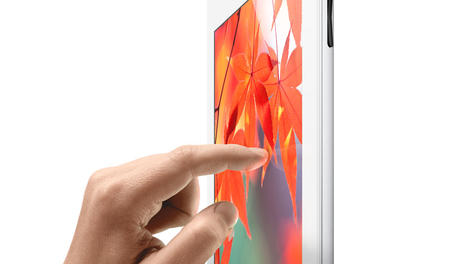
While rumors of space grey iPad 5s and iPad mini 2s swirl, another bit of tablet-related twitter has Apple working with a familiar face on an over-sized slate.
According to Chinese site United Daily News (by way of MacRumors), Apple teamed up with Quanta Computer to develop its larger iPad, what the publication refers to as a 12-inch device.
Quanta is a current supplier for Macs and iPods, so it's no stranger to collaborating with Cupertino. It doesn't make tablets however; that's territory marked by Foxconn and Pegatron.
Still, Quanta is said to be looking to diversify, so perhaps a larger iPad is the perfect product for it to broaden its portfolio?
Is 12 the magic number?
Of course, take this all with plenty of salt grains as we can't confirm the report without Apple's official word.Still, evidence is mounting that Apple is at least kicking around the idea of a super-sized iPad.
In July, the Wall Street Journal reported Apple was testing prototypes of a tablet with a display "slightly less than 13-inches." The same report said Apple was also looking into smartphone screens bigger than the iPhone 5, too.
Thirteen inches is chunk of real estate, and 12 isn't that much smaller. Weight would certainly be an issue as would thickness, two things Apple is known for keeping at a minimum with its tablets.
The rumors may not pan out into the real thing, and we're unlikely to learn more at Apple's rumored Oct. 15 iPad event. However, with an ever-growing number of competitors chomping at its market share, Apple could be eying some diversifying of its own as well.
- Read our hands on Surface 2 review and Surface Pro 2 review right here!

| |
Read More ...
HTC One Max 'tester' outs potential new camera features

An alleged tester with access to the HTC One Max released a couple of pictures yesterday that appear to show off the unannounced phablet's new camera features.
Like the HTC One, the One Max will reportedly sport a 4-"UltraPixel" camera that HTC says is scientifically better than its megapixel-based competition.

But the enlarged HTC One Max will also feature camera improvements like a "beauty mode" with three levels of blemish correction and a panorama mode, according to the leakster.
The HTC One Max will also feature HDR video recording, if the screenshots are anything to go by.
Let the fingerprint wars begin
We're used to leaks upon leaks in this industry, but the HTC One Max seems to be subject to even more than your average Hot New Device.The device's fingerprint scanner has been well publicized by now, and the tester who released the camera images yesterday on China's Weibo forum also confirmed its existence.
The tester said it's proved accurate so far, with a "very high" recognition rate and "no awkward situation."
Phone Arena says it appears to be the same fingerprint recognition technology found in Apple's iPhone 5S, making the HTC One Max likely the second phone to feature it.
That's barring any trademarks disputes between Apple and HTC, which - let's be honest - doesn't seem farfetched.
Anything else?
Other HTC One Max rumors have outed a possible release date this year, a full specs lowdown including Android 4.3 and a flood of pictures.At the mo', we're expecting to see a 2.3GHz quad-core Snapdragon 800 chip, a 5.9-inch 1080p display and 2GB of memory on the HTC One Max.
Should we expect an announcement soon as well? Now that remains to be seen.

| |
Read More ...
Updated: AMD showcases its next generation GPU, the Radeon R9 290X

It's been several years since AMD's last big PC product announcement, but today in Hawaii the company announced several new cards based on their latest GPU architecture.
Having achieved a veritable coup by providing the essential technology underpinning both the Xbox One and PS4, AMD underscored its commitment to PC gaming today with its latest flagship GPU, the Radeon R9 290X.
In addition to the flagship Radeon R9 290X graphics card, AMD announced a top-to-bottom line of graphics cards that it believes offers something for every gamer.

The Radeon R7 250 is an $89 part that boasts 1GB of DDR memory, and according to AMD is able to achieve 3DMark Firestrike scores greater than 2000. The Radeon R7 260X sports 2GB of DDR memory, exceeds 3700 in 3DMark Firestrike and will be priced around $139.
Following the R7 250 and R7 260X are the R9 270X and the R9 280X. The R9 270X is a $199 card replete with 2GB of DDR memory that is capable of exceeding 5500 in 3DMark Firestrike. Finally, there's the R9 280X, a $299 card with 3GB of DDR memory that scores more than 6800 in 3DMark Firestrike.

Last night on board the USS Missouri, AMD's Matt Skynner showed off the card. While details are minimal, a few things jump out at us.
AMD shows its cards
Notably, the Crossfire connectors are gone. Crossfire will now be handled via PCI Express. Additionally, the Radeon R9 290X will sport two DVI outputs, a DisplayPort output, and an HDMI output.
A closer look at the card raises more questions than answers.
More to follow...

| |
Read More ...
In case of emergency... sign up for Twitter Alerts

Twitter announced a new alert service today that will notify users by SMS when a there's an emergency situation developing in their locale.
The new Twitter Alerts tool allows users to sign up for alerts from reputable organisations and receive crucial information via text message, rather than having to check their Twitter timeline.
Texts, which will also appear as pop-up notifications for users on iOS and Android, will be sent whenever a group like the Federal Emergency Management Agency or the American Red Cross in the United States mark a tweet as an alert.
Twitter Alerts builds on the Lifeline service Twitter debuted last year, in response to the devastating Japanese earthquake and tsunami.
Expanding the lifeline
In a post on its official blog, Twitter wrote: "Today, we're launching Twitter Alerts, a new feature that brings us one step closer to helping users get important and accurate information from credible organisations during emergencies, natural disasters or moments when other communications services aren't accessible."We know from our users how important it is to be able to receive reliable information during these times. With that in mind, last year we announced Lifeline (a feature that helps Japanese users find emergency accounts during crises), and since then, we've been working on a related feature for people around the world."
Currently the organisations involved are limited to the United States, Japan and Korea, but Twitter plans to expand the initiative to more countries in due course.

| |
Read More ...
Surface 'Mini' may not rear its tinier frame until early next year

Microsoft's Surface lineup has received a mixed reception (to say the least) so far, and there's still one noticeable gap in the lineup: a Surface "Mini."
With the success of Apple's iPad mini it would surprise no one if Microsoft does have a Surface Mini in the works, but today word is that the smaller Surface could still be months away.
According to ZDNet's Mary Jo Foley, the Surface Mini may not arrive until spring 2014. The timing reportedly has to do with Microsoft's desire to launch it with the next General Distribution Release, a minor update that will follow Windows 8.1. It's reportedly being called "Spring 2014 GDR."
Microsoft is apparently hoping the stars will align and allow it to release the Surface Mini alongside the update, as well as Windows Phone Blue. That update, which may or may not be called Windows Phone 8.1 at launch, would land on Microsoft's mobiles.
Thanks a lot, Xbox One
There's another reason for the Surface Mini "delay," if you want to call it that (many have taken the tablet's existence as a given, and expected it out by now), and that's a little something called the Xbox One.Word is Microsoft is dead set on getting the Surface Mini out with the Spring 2014 GDR update, and much of the team responsible for that update has reportedly been reassigned to help make sure the Xbox One operating system is shipshape before the console launches on Nov. 22.
And there's still the general availability release of Windows 8.1 to worry about, not to mention the GDR 3 update for Windows Phone 8 that's due before the proper Windows Phone 8.1 update.
Bottom line, there's plenty to do, and the Surface Mini is reportedly tied tightly to the Windows update scheduled for spring 2014.
A mini void
Not much is known about the Surface Mini, and different rumors have pegged it anywhere from 7- to 8-inches.That's a significant downgrade from the Surface Pro and Surface RT's 10.6-inch displays, but like the iPad mini, a smaller Surface could appeal with lower price points and improved portability.
The Surface Mini will likely stick with Windows RT, despite the OS' difficulties. Foley reported the loyalty, if misguided, is spurred on because Microsoft likes how locked down machines running the OS tend to be. The newly-announced Surface 2 will keep it going, too.
That would make the Surface Mini the sole smaller-form tablet running the stripped-down Windows OS.
TechRadar previously predicted that smaller tablets from Asus and Acer could fill that void, but those companies and others backed off from Windows RT as soon its fortunes started to turn.

| |
Read More ...
Updated: Nokia event set for Oct. 22 in Abu Dhabi, Lumia 1520 probably dropping in

Update: It appears that Nokia is planning a pretty big show come Oct. 22.
Sources told The Verge that there will be six (yes, six) Nokia devices presented at the event. If the claims are true, then the company deserves some applause for keeping such a tight lid on the four mysterious gadgets.
The two we suspect will show up are the Lumia 1520 phablet and the purportedly newly named Lumia 2520 tablet, formerly codenamed Sirius.
Tune back to TechRadar on launch day as we're sure to have the announcement covered inside out.
Original article ...
The sand dune teaser image from a Tweet last week was just a sliver of a hint, as today Nokia confirmed it's hosting a Nokia World event Oct. 22 in Abu Dhabi, capital of the United Arab Eremites.
Aside from naming the city, event details are still sparse. However, it's likely that the rumored 6-inch screened Lumia 1520 will finally be unveiled.
The phablet would be the first from the Finnish firm, along with the first to reportedly hold a full HD display and quad-core processor.
The 1520 would also be the first release since Microsoft bought Nokia's device division, a reality that may be hinted at with the hashtag "wayforward."
Tablets also on the horizon?
A Nokia tablet codenamed "Sirius" is also making the rumor rounds with details claiming the tablet will boast a 10.1-inch full HD IPS display, 2GB of RAM, up to 10 hours of battery life and come with 32GB of native storage expandable via microSD.Perhaps we'll see the Sirius join the Lumia 1520 in the Nokia World announcements. It sounds like a long shot, but it could also be a big day of firsts for Nokia.
- Microsoft has announced the Surface 2 and Surface Pro 2.

| |
Read More ...
Is Dell ditching Windows RT with XPS 10 sale stoppage?

The Dell XPS 10 isn't the best tablet on the market, and Windows RT didn't do it any favors in gaining traction.
It seems like Dell has noticed this and decided to discontinue the 8-inch slate, but whether this move is for good is still up in the air.
When visiting the XPS 10 purchase page on Dell's site, users are confronted with the message, "This product is unavailable. Below we have suggested a comparable system," pointing to the Dell Latitude 10, which runs the full Windows 8.
What's the haps Dell?
We asked Dell for a comment on the missing XPS 10, and though they wouldn't confirm or deny the permanence of the tablet's disappearance.However, the rep did say, "We're going to be announcing our full tablet portfolio at our event in New York next week [Oct. 2] and will be providing full details then."
It looks like we'll have to wait until October to find out the tablet's fate, plus where it stands on Windows RT.
During IDF a few weeks ago, Dell outed a new tablet, the Venue 8 Pro, running the latest Windows 8.1 OS. We're in for more next week, but it looks like Dell is shifting its focus to newer, and better, OSes.
- Speaking of Windows, we had some hands ons time with Microsoft's Surface 2 and Surface Pro 2.

| |
Read More ...
More than a year after launching, Apple Maps sends drivers onto airport runway

FAA rules usually don't apply to motorists, but drivers using Apple Maps near Alaska's second largest airport are best advised to turn off all personal electronics.
That's because the notorious iPhone app is directing them onto the Fairbanks International Airport runway, according to the Alaska Dispatch.
Incidents in which drivers had their head in the clouds there occurred twice in the past three weeks as motorists followed Apple Maps by driving down "Taxiway B."
"These folks drove past several signs. They even drove past a gate," Melissa Osborn, chief of operations at the Fairbanks International Airport, told the newspaper.
"None of that cued them that they did something inappropriate."
Thankfully, Maps stops short of directing drivers onto the airport's main runway, which the paper wrote is regularly used by large, commercial aircraft like 737s.
Apple Maps a frequent flyer, offender
This isn't the first time that the year-old Apple Maps has been decried as "dangerous."Australian police have called the app a "potentially life-threatening issue" at the end of last year because it left motorists stranded in the Outback without life essentials: food, water and cell phone reception.
At other times, Apple Maps has had the opposite problem of being too accurate, revealing aerial photographs of high-security military installations that were supposed to be classified.
All of these issues caused Apple CEO Tim Cook to apologize for the Apple Maps chaos and led to the reported firing of the company's senior vice president in charge of the mapping team.
Apple Maps is improving planned mass transit functionality, but this month's incidents in Alaska further prove why Google Maps is still so popular on iOS devices.

| |
Read More ...
Blip: Stay out of royalty-riddled minefields with YouTube's new music library

Worried about finding music for your next vlogging adventure? Or perhaps your short film? Or maybe you need the perfect soundtrack for your cat montage but don't want to get in trouble with the music industry?
Well fret no more - YouTube announced the launch of the YouTube Audio Library today, where more than 150 royalty-free instrumental tracks are available for download right now, and it's all free to use - even outside of YouTube.
The video giant even collaborated with a bunch of musicians from all over, and will continue to add more music with the help of your feedback.
More blips!
Tune in to our blips for more quick news notes about tech.- Smartphone goldrush: Samsung Galaxy S4 goes for gold
- Popular Science kills online comments because they're 'bad for science'
- Archos GamePad 2 gets a sultry makeover in leaked shots

| |
Read More ...
Valve takes lid off Steam Machines, its hardware beta program for Steam Box

The ticker hit 00:00:00 and Valve delivered. The company powering Steam is out with another announcement today, revealing it's working with multiple partners to produce Steam Machines, a.k.a. gaming devices running SteamOS.
"A powerful new category of living-room hardware is on the horizon" read the second special Steam page in as many days.
Because entertainment isn't a one-size-fits-all proposition, Valve explained it wants consumers to "choose the hardware that makes sense" for them, hence its decision to work in conjunction with others to create a "variety of Steam gaming machines."
These devices are due to hit the market in 2014.
Valve's Steam Box
But before these SteamOS-powered products start whistling, Valve's own gaming machine, generally referred to as the Steam Box, continues to work through the prototype stage.Calling it a "high-performance prototype that's optimized for gaming, for the living room, and for Steam," Valve revealed a little more, though not much, about its hardware.
"The specific machine we're testing is designed for users who want the most control possible over their hardware," it explained. "Other boxes will optimize for size, price, quietness, or other factors."
Valve promised to reveal specs, dimensions and even what the darn thing looks like soon, though it put out a friendly reminder that its Steam Box won't be the only box, meaning we're in for varying specs, prices and performance levels.
And those machines won't just come from official partners - users will be able to create their own SteamOS boxes, plus hack, port, rework and reboot their boxes to their heart's content.
Valve wants you
Because real-world testing is vital to its Linux gaming endeavor, Valve is extending Steam Box prototype testing to Steam users, and will ship 300 boxes to them this year.A beta box will land on your doorstep free of charge if you're selected. Interested parties can join the candidate pool by completing the Eligibility Quest on Steam. The semi-epic undertaking (it involves a bit more than simply filling out an application) must be completed before Oct. 25.
"Your help is critical to our design process," Valve wrote. "Your feedback will shape both the new OS version of Steam and the new category of gaming machines that will run it."
A noble undertaking, indeed.
Look for plenty of info from these folks as Valve isn't discouraging public commentary during testing. In fact, it wants everything from bug reports to 3D prints to "very publicly stated opinions" to hit the airwaves.
One more
As expected, yet another countdown has begun, and in less than 48 hours, we'll have another kettle to take off the stove. Valve may have even given us a plump hint in its FAQ:"We have some more to say very soon on the topic of input."
Stay tuned.

| |
Read More ...
Hands-on review: Updated: Samsung Galaxy Note 3

Introduction
We're currently putting the Samsung Galaxy Note 3 through its paces in our in-depth review process. While we flog the battery, twiddle the S Pen and continue to stretch the pockets of our skinny jeans here's what we make of it so far...The Samsung Galaxy Note 3 is looking to continue in the same vein as the original Galaxy Note and Galaxy Note 2, offering you a phone which could almost be mistaken for a tablet and wants you to believe it's both.
Let's get one thing straight before we dive into this review though, the Galaxy Note 3 is only going to appeal to a narrow segment of users, it's certainly not going to have the broad appeal of the Galaxy S4, nor catch the eye of the fashion-conscious iPhone 5S purchaser.
The Note 3 isn't pretending to be anything it's not. It knows it's a big, some may say huge, smartphone and Samsung understands that form factor won't be for everyone.
That said, with big size comes big price, and the Galaxy Note 3 will set you back a wallet-busting £600 (around $950, AU$1,000) SIM-free.
The hefty price tag can be softened if you choose to pick the Note 3 up on a two year contract, but you'll still be paying a relatively high amount a month for the privilege - upwards of £35 per month in the UK if you want a free phone.

In terms of competition there's not a great deal which compares to the Samsung Galaxy Note 3, but its closest competitor is currently the Sony Xperia Z Ultra which boasts a massive 6.4-inch which dwarfs even this handset.
A quick glance over the Galaxy Note 3 and it does exactly what we thought it would do: takes over the mantle as the world's most powerful smartphone, although the advantage is a lot smaller this time.
First up we have to mention the display - it's grown again since the 5.5-inch offering on the Note 2 to a palm busting 5.7 inches complete with a full HD, 1080 x 1920 Super AMOLED display.

That's the same resolution as the Galaxy S4, but as the screen is larger on the Galaxy Note 3 the pixel count isn't as great at 386ppi, so it's not quite as pin sharp as its smaller brother. It still looks pretty impressive though - and so it should for the price Samsung is asking.
We're still waiting for Samsung to embrace the full metal chassis we've enjoyed on the HTC One and the iPhone 5, but it is trying something slightly different with the Note 3.
The Galaxy Note 3 has retained the metal frame from the Galaxy S4 running around the edge of the device providing a rigid body and a more premium look, but it's on the rear where Samsung has tried something new.

Lay the Note 3 face down, take a quick glance at the handset and it appears the rear is made of leather.
It isn't, of course, it's that famous plastic Samsung is so fond off. The finish is textured to give it the appearance of leather and this actually provides some much needed grip.
Those stitches running round the outside of the back cover? Well that's just a pattern formed in the plastic. It may not be everyone's cup of tea and it looks a bit tacky upon closer inspection, but the Note 3 does feel like a solid, well built device.

On the plus side the plastic cover can be removed giving you access to the Note 3's sizable 3,200mAh battery as well as the microSD slot which is cleverly stacked on top of the microSIM port - allowing Samsung to save some space.
Somehow Samsung has managed to make the Galaxy Note 3 slightly smaller than its predecessor, measuring 151.2 x 79.2 x 8.3 mm. That's still quite a sizable device, but considering it's got a slightly larger display, beefier processor and more powerful 13MP camera it's an impressive feat.
Those of you blessed with smaller palms will still struggle to hold the Note 3 in one hand, especially when typing is involved, but thanks to its reduced weight (it's 168g, down from 183g on the Note 2) it's certainly the most manageable Note smartphone to date.

The sheer size of the Galaxy Note 3 means you'll be constantly shuffling it up and down your palm as you try and reach the volume rocker and power/lock keys located towards the top on the left and right sides of the handset and the menu keys below the screen.
While the buttons are responsive, we found we tended to employ our second hand to help us out when moving from the power/lock key down to the home, menu and back buttons.
Under the hood of our review unit sat an insanely powerful 2.3GHz quad-core processor, although a select few markets will be treated to an octa-core option which houses two quad-core chips.

You also get 3GB of RAM and the option of 32GB or 64GB of internal storage in the Samsung Galaxy Note 3, while the latest version of Google's operating system - Android 4.3 Jelly Bean - runs merrily on top of all this.
From the front you'll note there's a pleasingly slender bezel running down either side of that monster 5.7-inch display, while below you get the customary physical home key flanked by two touch keys - menu on the left and back on the right.
You can't see the touch keys when the Note 3 is idol, as their backlights are only displayed when you unlock the handset or tap the area they're located in.

They are incredibly responsive though, and you don't have to worry about getting your finger right on the logo, the area of recognition is wide enough to pick up even the most misguided stabs.
Apart from the questionable leather-effect rear the Samsung Galaxy Note 3 offers up little in terms of design. Sure it looks a little more premium than the Galaxy Note 2, and it does feel well made - but at the end of the day it's a little uninspiring.
Those will petite palms or a penchant for skinny jeans will struggle with the size of the Note 3, but if you've been taken with its predecessors then you'll be happy to hear this is the best looking Note smartphone to date.
Interface
The Samsung Galaxy Note 3 rocks up with the latest version of Google's mobile operating system on board - Android 4.3 Jelly Bean - and of course the Korean firm has slapped its TouchWiz overlay over the top.Only a handful of smartphones are actually running Android 4.3 at the moment, with the latest instalment of Jelly Bean limited mainly to Nexus devices for now - so it's pleasing to see it make its way onto a non-Google branded handset.
With a 2.3GHz quad-core processor and 3GB of RAM under the hood the Galaxy Note 3 is giving our laptop a run for its money in terms of power, and unsurprisingly Android is one smooth operator thanks to this.
This means skipping through homescreens, scrolling through the app list and generally dicking around with the notifications bar, settings menu and myriad of widgets is seamless.
If we're picky the transition of returning to the homescreen after pressing the physical button below the display is a touch slower than the other movements, but it's certainly not an issue.
While general operation is noticeably quicker than its predecessor (the Galaxy Note 2) there's no obvious step up in performance when you compare the Note 3 to the likes of the Galaxy S4 or HTC One.
We've pretty much hit the top speed for navigating operating systems now and even though the Galaxy Note 3 has a massive processor squashed inside its plastic and metal frame, there isn't really any way for it to show off in the everyday interface.
Applications open promptly, holding down the home button furnishes you with the multi-tasking menu in next to no time and we could happily have over ten applications all fizzing around in here with no effect on performance.
There's a few options surrounding the lockscreen and these can be found in the 'Device' section of the Settings menu.
From there you can choose whether or not you want the time, date and weather displayed along with a personal message and app shortcuts when you hit the power/lock key on the right of the Note 3.
You can have five shortcuts on the lockscreen and these can be customised to any applications installed on the Galaxy Note 3.
Samsung appears to have merged its water-ripple unlock effect from the Galaxy S3 and the shard of light from the Galaxy S4 to provide what it's calling a 'watercolour' effect when you drag your finger across the lockscreen.
It may not be anything special, but it's an attractive animation which we spent time just playing with, partly because the Note 3 can detect your finger even when it's not touching the screen.
This allowed us to hover our digit over the handset and still create the effect on screen, without unlocking the Note 3. Sometimes it's the simple pleasures in life which are the best.
Get past the lockscreen and you're greeted with several widget-heavy homescreens as standard. We deleted a lot of the widgets as they simply got in the way and we had no need for them - although with the vast selection on board you'll probably find a couple of things you'll want.
As with many Android handsets these days you can edit the number of homescreens you have, with a maximum of seven on offer, by simply pinching the display.
The 5.7-inch Super AMOLED display itself is as bright and colourful as you'd expect from a Samsung device, yet the quality isn't quite as good as the One, S4 or LG G2.
It may be full HD, but due to the Galaxy Note 3's larger screen the pixel density isn't as high and on comparison with other flagship handsets it's lack of clarity is noticeable.
If you don't have another top of the range smartphone nearby though you probably won't have any complaints with the screen on the Samsung Galaxy Note 3.
Pull down the notification bar from the top of the Note 3 and you'll see Samsung's usual quick settings bar persists here - allowing you to toggle features such as Wi-Fi, Bluetooth and NFC without having to visit the main settings menu.
We're big fans of quick settings and we've even seen Apple adopt a similar setup in iOS 7 with the inclusion of Control Center - but Android is where is happened first.
Hit the button in the top right of the notification panel and you'll be able to see all the quick settings available. There's a massive choice, with 22 options provided on the Galaxy Note 3.
You can edit which ones display in the bar on the main notification page by clicking the pencil icon at the top of the screen and then dragging and dropping the settings you want instant access to.
We've already mentioned about the Note 3's unwieldy size for one handed use in the introduction, but dive into the main settings menu and under 'Controls' you'll find the 'One-handed operation' option.
Hit this and you're severed up with various ways to customise the interface on the Galaxy Note 3 to improve usage if you commonly use just the one hand to hold your phone.
The Note 3 can adjust the position of the keyboard, dialling keypad, lock pattern and even the calculator to make things easier if you've only got one hand free.
We found this was a helpful feature, although the keyboard became smaller and thus we needed to ensure we were hitting the correct keys as travel between them was greatly reduced.
There's still the issue of actually being able to hold the Note 3 in one hand and for some of you that just won't be possible, with two hands required for a steady and secure experience.
Hands on gallery


Official gallery and early verdict


Early verdict
The Galaxy Note 3 is very much an evolution, with the specs starting to top out. The 3GB of RAM, the 13MP camera and octa-core processor are all nice additions, as well as things like superfast 4G on board.It's excellent sonically, can display superbly crisp images, and has a number of tweaks to the camera that mean it can take decent snaps. Those are the things we want to judge the Note 3 on, not the ability to click the S Pen in a different manner.
We're not sold on the design of the back, nor the high price - but there still seems to be an appetite for the Note range, so perhaps this is just the handset Samsung needs.

| |
Read More ...
Review: Western Digital My Passport Slim review

The Western Digital My Passport Slim is the latest external hard drive in a long line of impressive drives from Western Digital. External drives such as the Western Digital My Passport Studio and Western Digital My Passport Essential have impressed us in the past with solid build quality, good portability and fast data transfer rates. The Western Digital My Passport Slim is in good company then, but how does it compare?
The first thing to note about the Western Digital My Passport Slim is that it's remarkably small and light – much smaller than the Western Digital My Passport Essential or the Freecom Mobile Drive Sq TV, and about the same size as the compact Toshiba Stor.E Canvio. It's actually not much larger than an internal 2.5-inch laptop hard drive, with just a slim shell offering protection against knocks and drops.
A frequent criticism of small external hard drives, which we pointed out in our Stor.E Canvio review, is that manufacturers often sacrifice protection in the pursuit of making the smallest body possible. Thankfully the Western Digital My Passport Slim doesn't suffer from this, with a metal enclosure and cobalt casing around the sides that keeps the drive safe. Even with this added protection, the Western Digital My Passport Slim remains light and easy to carry, and the metal case even looks pretty stylish.
As with other Western Digital external hard drives, a number of apps are included on the hard drive to help you quickly back up your files, along with tools for configuring the drive and checking on its health. There is also an app called WD Security which allows you to password-protect the entire drive. This app is clear and easy to use, taking you step-by-step through the process of securing your data, whilst warning you about the consequences of losing the password once it is applied to the hard drive.
The Western Digital My Passport Slim is USB 3.0, which means we expected high speeds when transferring data to and from the disk. The 120.9MB/s read and 120.8 MB/s write speeds don't disappoint, and are much higher than the 80.57MB/s and 80.5MB/s respective speeds of the older My Passport Essential. In a real world test a 1GB file transfers in just 10 seconds.
Final verdict
Overall the Western Digital My Passport Slim is a very impressive portable hard drive. It manages to combine a light and easy-to-carry design with a robust shell that protects it from damage when you're out and about. The selection of software included with the drive is simple to use, yet still useful, and the transfer rates over USB 3.0 are very good. It is one of the more expensive external hard drives out there, but with large 1TB and 2TB capacities, along with the excellent transfer speeds, we believe the price is more or less justified.
| |
Read More ...
Review: Freecom Tough Drive 3.0 1TB review

Portable hard drives are specifically designed to be carted about, but that opens them up to all kinds of dangers, like accidental drops and bumps. Freecom's USB 3.0 Tough Drive is housed in a rubberised silicone cover with an anti-shock mechanism that provides protection against such scrapes.
It also features an integrated USB cable that, along with providing power as well as the necessary means of data transfer, neatly plugs into the top of the case. The end result is a drive that, while not exactly good-looking, does stow away neatly into a small package for transport.
The first issue with the drive immediately presents itself when you unhook the chunky, resilient cable – its length is around the same as the width of the drive, just 8cm. That's not necessarily an issue if you're plugging it into a laptop, but try hooking it up to a desktop and you'll need to provide some kind of extra surface for it to sit on close to the requisite USB port. It would have been nice to have seen an extension cable provided to give you more flexibility in such circumstances.

Performance
This gripe aside, there's a lot to like about this unfussy, sturdy drive, not least of which is its performance. Its synthetic benchmarks aren't as fast as desktop drives, but more than a match for other portable drives, with peak read and write times around 115MB/s.In real-world tests, it performs more competitively with its desktop cousins, transferring 60,000 files (around 36.5GB in total) in under 24 minutes, and copying seven large files (totalling 54.8GB) in under 17 minutes, which compares well with desktop as well as portable drives.
In terms of added extras, the drive comes with plenty of useful software. PC users gain Nero Backup Express, while the drive is compatible with Time Machine on the Mac. Both platforms also get energy management, file-wiping and password-protection software too.
The box also claims support for USB recording and playback, which is a little disingenuous as all USB drives support this. Besides, the length of the Tough Drive's cable makes USB recording a little impractical.

We liked
This is clearly a drive for those who have clumsy fingers. Its rubberised design helps with grip as well as providing protection against shocks, and means it can be stowed away less carefully than other drives. Yet despite this extra protection it remains relatively light and easily stows away in your back pocket. Performance is also impressive considering this is a portable, self-powered model.We disliked
While the cable tucks neatly into the back of the drive, it's far too short to make the drive as versatile as it should be considering it's a portable drive. Extension cables are widely available, but it would have been nice to have included one in the box, especially given the premium being charged.Final verdict
A good choice if your butter fingers are making you think twice about investing in a portable hard drive for travel purposes, but you'll need an extension cable to make the most of it.
| |
Read More ...
Microsoft prepping 7.5-inch Surface tablet to take on iPad mini?

Microsoft's recent Surface event birthed new Surface 2 and Surface Pro 2 tablets, but its long rumoured 8-inch Surface was nowhere to be seen.
That's because it's still in the works, according to CNET, which points to analysts from IHS iSuppli and NPD DisplaySearch that reckon a Surface with an unconventional 7.5-inch display could land next year.
Surface tablets to date have all featured a 10.5-inch display, and Microsoft could be cooking up a smaller version to compete with similar sized devices such as Apple's iPad Mini, Samsung's Galaxy Note 8 and Google's new Nexus 7.
RT gamble
Interestingly, one of CNET's sources claims that the Surface 'Mini' will feature Windows RT, the cut-down version of Windows 8.That would make it the only 8-inch device on the market to run RT. It would also be just one of three devices in the world still on sale that run the beleaguered operating system (the other two being Microsoft's Surface RT and Surface 2 tablets) after Dell recently removed the XPS 10 tablet from its online store.
Acer and Toshiba have both outed 8-inch Windows 8 devices (in the form of the Iconia W3 and Encore respectively), but both run the full-fat version of Windows 8, rather than RT.

| |
Read More ...
Updated: Windows 8.1 release date, news and features

Microsoft has revealed full details about the comprehensive update to Windows 8, now known as Windows 8.1 and formerly known as Windows Blue.
The Windows 8.1 release date is October 17 - it will be available to existing Windows 8 users for free on Windows Update. It will be available to buy in retail from October 18 and has already been released to manufacturers (this stage is known as RTM). Volume licencees will be able to get their hands on it ahead of the update, too.
We've also had plenty of time with the new update and are running it every day, so check out our brand new Hands on: Windows 8.1 review. To whet everybody's appetite, Microsoft has released a preview version, called the Windows 8.1 Release Preview. It's now available to download.
The first Windows 8.1 laptops and Windows 8.1 tablets have already been announced, with numerous devices being launched already including Toshiba's Encore tablet, Dell Venue 8 Pro and Microsoft's Surface Pro 2. Surface 2 runs the new version of Windows RT, which is also known as Windows 8.1 RT.
The official confirmation from Microsoft came back in the Summer: "Today we are excited to share that starting at 12am on October 18 in New Zealand (that's 12:00pm in the UK and 4:00am in Redmond - October 17th). Windows 8.1 will begin rolling out worldwide as a free update for consumers on Windows 8 through the Windows Store. Windows 8.1 will also be available at retail and on new devices starting on October 18 by market."
October will mark a year since Windows 8 was released.
The big headline news is that the Start button has returned to Windows 8 with Windows 8.1, although it still goes to the Start screen rather than the Start menu. There is also more integration between the desktop and Start screen to stop the jarring of the two interfaces.
On stage at the Microsoft Build developer conference in San Francisco, Steve Ballmer said that in coffee terms, Microsoft was "refining the blend" between the desktop and Modern UI interfaces and a lot of Windows 8.1 enhancements have been designed to make the change between the two interfaces far less jarring.

Ballmer also promised plenty of new, smaller Windows 8 tablets would be released as well as new apps from Flipboard, Facebook and the NFL - though we didn't see any screenshots of these in action.
In our own hands on review, Mary Branscombe sums the new release up as a moderate success. "Windows 8.1 isn't a whole new operating system: it isn't the same leap as Windows 7 to 8. But it's more than a service pack as well.
"Performance feels generally faster, even for simple things like zipping up files. The interface changes won't please everyone, especially if you liked the Windows 8 Start screen and don't feel you need for yet another Windows key on screen - or if you were hoping for the Windows 7 Start menu back.
"Some things, like customising tiles on the Start screen, feel a little more long-winded until you get used to them. But generally the interface feels more consistent and easier to learn. And the expanded PC Settings gives the mass of control panel options a clean, simple interface that Windows has needed for years."
- Windows 8 review
- Windows 8 vs Windows 7: 8 ways it's different
- 50 Windows 8 tips, tricks and secrets
- Windows 8 tablets: all we've reviewed
- Making sense of the Windows 8 versions
- All our Windows 8 content

Leblond is Head of Windows Program Management and references the marked change of tune that TechRadar detected earlier this year: "Not only will Windows 8.1 respond to customer feedback, but it will add new features and functionality that advance the touch experience and mobile computing's potential." The feedback he's talking about is surely the mellowing of the Start screen dream and the reintroduction of a Start button of some sort.
"We're only a bit more than seven months into [a] new, bold approach to computing," continues Leblond. "The response to Windows 8 has been substantial - from new devices to strong app growth to key enhancements to the OS and apps. We've learned from customers in how they are using the product and have received a lot of feedback. We've delivered hundreds of updates to the product and to apps. We're just getting started, and the potential ahead is tremendous.
"We've been watching, we've been listening"
We've picked out the top enhancements in Windows 8.1 along with some quotes from Leblond about each one.
1. Lock screen slideshow
"As people started using Windows 8, we found that people were using their Lock screens to show pictures of their families," Leblond says. So in Windows 8.1, you can turn your PC or tablet into a picture frame by making your Lock screen a slide show of your pictures - either locally on the device or photos from Microsoft SkyDrive.You can unlock the camera or answer a Skype call quickly without needing to fiddle with a password. If small tablets get popular, that will be useful.
2. The Start screen evolves
Windows 8.1 offers more colours and backgrounds for the Start screen - including some with motion. You can also choose your desktop background as your Start screen background.However, it's still perfectly possible to get a really garish looking Start screen, like this - does anybody actually use these patterns?

3. Different tile sizes
As in Windows Phone 8, the Windows 8.1 Start screen features a variety of tile sizes including a new large and new small tile. It's also even easier to name groups and rearrange tiles, says Leblond: "We found people were accidentally moving tiles on their Start screen so in Windows 8.1, you press and hold (or right click) to move things around."You can even have large double-size tiles (check the weather in the picture above) but apps need to be written specifically to take advantage of this.
To select a tile, you now need to press and hold it. You can now select multiple apps all at once, resize them, uninstall them, or rearrange them into a group: "View all apps just by swiping from the bottom to view all apps, and we've added the ability to filter your apps by name, date installed, most used, or by category.
"You want the Start screen to be about all the things you love. So when you install a new app from the Windows Store, we no longer put that app on your Start screen. Instead, you'll find these apps under apps view as mentioned above and marked as 'new' where you can choose to pin the apps you want to your Start screen."
The Start screen has also been refined to work with all screen sizes more effectively - Microsoft believes Windows 8.1 really can scale from 8-inch tablets to 27-inch devices.

4. Aggregated search
Instead of having to select an app and then search when you go to the Search charm, Bing now powers an aggregated search system from the web, your files, SkyDrive and elsewhere. Leblond says: "We think this will really change the way you interact with the Web and with Windows making it quicker and easier to get things done. It is the modern version of the command line! Results from local files, apps, and settings are easily accessed in the same convenient view by scrolling to the left."In the Desktop, the Search charm now overlays a Search pane on the desktop rather than chucking you over to the Start screen. More evidence that Microsoft is 'refining the blend' between desktop and Modern apps.

5. Enhanced apps
New app enhancements are also coming to all the built-in apps like Mail and Xbox Music, while there are new apps for food and fitness and there is a 'modern' version of Office that's set to launch.The Photos app now has some new editing features that let you quickly edit or adjust photos when you view them in the Photos app or open them from other places like the Mail, SkyDrive, and Camera apps - you can now create Photosynth panoramas directly within the app.
Mail includes some clever extra options for filtering mails, while there's also a Reading List to gather links from Internet Explorer. The Photos app now has a lot more editing options.

6. More snap views
If, like us, you use Windows 8 a lot, you'll have been frustrated by the lack of 50:50 split snap views. This is the game-changer for Windows 8 apps. "You will have more ways to see multiple apps on the screen at the same time," says Leblond. "You can resize apps to any size you want, share the screen between two apps, or have up to three apps on each screen if you have a multiple displays connected, you can have different Windows Store apps running on all the displays at the same time and the Start Screen can stay open on one monitor (yes!).This is one of the fundamental changes in Windows 8.1 and makes multi-tasking and multi-monitor use a lot easier. Also in Windows 8.1, you can have multiple windows of the same app snapped together - such as two Internet Explorer windows." We're really looking forward to that.

7. An enhanced Windows Store
The Windows Store gets a new look in Windows 8.1, designed to make it easier for you to find new and interesting apps. Instead of having to guess what the featured apps at the front of the Store do, a carousel flips through large images and descriptions of each of the six featured apps in turn (swipe down if you don't want to wait for it to flip).App updates will now install automatically in the background as they come through the Store. And search is available in the upper right hand corner for finding the apps you want. Leblond elaborates: "The improved Windows Store is designed to show more info than before in Windows 8 with detailed lists of top free apps, new releases, and picks for you on the homepage. The app listing is more descriptive and informative and includes an area for related apps to help with app discovery."
8. Save direct to SkyDrive, plus offline files
In Windows 8.1 your files can be saved directly to SkyDrive - it's completely integrated into the OS. The SkyDrive app has also got a new update so that files are available even when offline - as in the desktop version.There's no longer a separate desktop interface for picking folders to sync.

9. You no longer need the desktop Control Panel
The updated PC Settings in Windows 8.1 gives you access to all your settings on your device without having to go to the Control Panel on the desktop. "You can do things like change your display resolution, set power options, see the make and model of my PC, change the product key, let me do Windows Update, and even join a domain – all from PC Settings," says Leblond. You can also manage SkyDrive from PC Settings as well.10. A new Internet Explorer
Internet Explorer 11 will ship with Windows 8.1. "IE11 will offer even better touch performance, faster page load times and several other new features we think you will enjoy," says Leblond. "For example, you can now adjust the appearance of modern IE11 to always show the address bar and you can have as many open tabs as you like. And you can access your open tabs in sync across your other Windows 8.1 devices."11. Better with a mouse and keyboard
For devices without touch, Windows 8.1 features a number of improvements for easier navigation using a mouse and keyboard. "PCs today are evolving for a world of mobile computing where people interact with their devices through touch, and we designed Windows 8 for this," explains Leblond. "But we also recognize there are many non-touch devices in use today - especially in the commercial setting."12. A change to the Start 'tip' and the Start button
You've already heard about this one, right? Leblond adds that there are also options to change what the corners do, and options to boot into alternate screens: "For example, if you prefer to see the Apps view versus all the tiles, you can choose to have the Start screen go directly to Apps view."Here's a picture of the new Start button on the desktop.

13. Improvements to the Desktop and All programs
Your tiles will overlay over your desktop background when you access the Start screen from the desktop, while you can now swipe up from the Start screen to access your All programs view. This really is a game changer.14. Changing app switching
You can now also change the settings for the hot corners and App switching, so you can prevent the Charm bar or app switching bar from appearing if you don't want them to.
15. Changes to Windows Explorer
File libraries no longer show up in Explorer automatically, even though they're still the way you put media into the Xbox Music and Video apps and the first place Mail looks when you add attachments.To avoid filling all the storage on a tablet with a small drive, all you get by default is the Documents and Pictures folders from your SkyDrive.
You can see your other folders and the names of all the files in them and when you click on a file Windows 8.1 automatically pulls it down from SkyDrive and caches it offline and syncs changes to it.
When you right-click on folders in Explorer the option to add them to a library is still on the context menu, but if you want to find and work with them in Explorer you have to turn them back on in the navigation pane. Instead you see This PC where you're used to seeing Computer, along with SkyDrive which is installed as part of Windows (in both 8.1 and Windows RT 8.1) and syncs some of your files automatically.

16. Native 3D printing support
Windows 8.1 also includes baked-in support for 3D printing. It's still niche, of course, but it's an interesting development.Here are our earlier Windows 8.1 rumors
Windows 8.1 release date
The final Windows Blue release date is late 2013, while there will also be some new Windows Blue hardware.In a post on the official Windows blog early in May, Tamy Reller, Microsoft's chief marketing office and chief financial officer, confirmed what we already knew - the update will be available "later this year", and certainly by Christmas.
Reller went on to say that the update will provide "more options for businesses, and give consumers more options for work and play". Microsoft now has more than 70,000 Metro/Windows 8-style apps in the Windows Store.
Reller later confirmed the Windows 8.1 name during a conference call with J.P. Morgan, where plans for the operating system were discussed.
Quite how the upcoming preview release will work in practice remains to be seen, but you might not be able to install it straight into an existing Windows 8 install.
If you happen to be one of the small number of users who have a Windows RT device like Surface RT, we're sure you'll be thrilled to know that the Windows 8.1 update will also be coming to your device.
There aren't likely to be too many massive surprises from Blue, which our writer Kate Solomon says "we feel a bit guilty for passing off as a minor Windows update" now that we've seen plenty of Windows Blue screenshots.

Windows Blue is actually Windows 8.1
Windows Blue, we now know for sure that Windows Blue will not be the software's official name. Shame. Instead Windows Blue is just the internal name for the software.Windows Blue will officially be deemed Windows 8.1, first revealed in early April. Mary Jo Foley of ZDNet's All About Microsoft blog said the original Windows 8.1 tip came from a reliable source and screenshots of the About Windows screen also appeared on Twitter - see below.
In stores, the update will still be called simply Windows 8 - that means Microsoft isn't about to start naming its incremental OS refreshes like Apple does (like OS X 10.8 Mountain Lion). But it does indicate a new attitude to the type of software updates that it has previously called Service Packs.
One thing we definitely would say, it's unlikely that Windows Blue will mean the merging of Windows 8 and with Windows Phone 8 into a single product.

Windows 8.1 Start menu
There has been a lot of speculation over whether Windows 8.1 will actually introduce a Start Button and on May 30 we saw a preview of what the brand new button will look like, thanks to Paul Thurrott at Windows SuperSite.However, we'd like to point out a big caveat with this screenshot - the new button shown by Thurrott looks awfully like Stardock's Start button replacement tool Start8. Will we actually get a Start button in Windows 8.1?

Credit: Windows SuperSite
New Windows 8 apps
As well as the operating system itself, Microsoft is apparently building some new Windows 8 apps, looking at new ways to run apps side-by-side on smaller-screened devices without needing hefty black-box-level resolution. That's in addition to the March updates for standard Windows 8 apps.Blue is also bringing in new Snap Views so you can share your screen 50:50 between different apps rather than the current 70:30, including across multiple monitors.

As expected, Microsoft is upping the Sky Drive integration, with some new treats like auto-camera uploads and more back-up options, as well as tab sync which will see your tabs mirrored across devices.
The grabs also reveal the inclusion of IE11 but not much detail on the next iteration of browser beyond that.
And for the personalisation fans, the grabs show a quick and easy menu of options for customising your desktop background and other design elements

Windows Blue desktop
Could Windows Blue enable users to boot straight to the desktop? Some rumours think so. You can't boot straight to the desktop in Windows 8, though you can resume to it.Some coden supposedly includes an option that disables the start screen so users would jump straight to the desktop layout - known as "CanSuppressStartScreen".
Certainly there are no plans to ditch the desktop any time soon. In an interview with TechRadar, Windows Product Manager Ian Moulster was candid about the desktop's important role in Windows.
"To be honest I don't have an answer because I don't know. I'm loathe to speculate. It seems highly unlikely to me. I haven't seen anything either way. I'd be surprised, but that's my personal view."
"I think it's a continuation of us always building on what's there. Windows 8 is built on Windows 7 and starts from where Windows 7 stops, and I don't think there will be a change to that approach. We'd be crazy to throw anything away.
"But what form that takes we'll have to wait and see I suppose. I think we have said that we'll be releasing updates more frequently, but precisely what that means I don't know. There's the apps as well, we've released plenty of updates to our apps."
Windows Blue sync
It seems that more features
will be synchronized between PCs and your user account with Windows
Blue. It looks like this will extend to the Start screen as well as
device associations and Internet Explorer tabs.
Further Windows developmentAccording to a February 15 job posting on the Microsoft Careers site, the software giant is seeking an engineer to join its Windows Core Experience Team.
That part of the operation will be working on improving the centrepiece of the new Windows UI, including the start screen, application lifecycle, windowing and personalisation, according to the post.
This seems to suggest that Windows Blue will bring more than a few tweaks under the bonnet and offer tangible visual enhancements to the Windows 8 software.
Indeed, the post mentions Windows Blue by name and says the updates will look to "build on and improve Windows 8" as time goes on.
An excerpt reads: "We're looking for an excellent, experienced SDET to join the Core Experience team in Windows Sustained Engineering (WinSE). The Core Experience features are the centerpiece of the new Windows UI, representing most of what customers touch and see in the OS, including: the start screen; application lifecycle; windowing; and personalization. Windows Blue promises to build and improve upon these aspects of the OS, enhancing ease of use and the overall user experience on devices and PCs worldwide."
Windows Blue will extend to other platforms
It is also thought that Windows Blue updates will be extended to multiple Microsoft platforms, including Windows server, the mobile OS Windows Phone 8 and applications like SkyDrive and Outlook.com.Indeed, another post on Microsoft's job site mentions Windows Phone Blue by name, so that is definitely on the horizon.
The plan from Microsoft's point of view is reportedly to move towards a more regular update pace, rather than the three year gap that separated Windows 7 and Windows 8, with little improvements in between.
Apple has enjoyed great success in this arena, gradually adding new strings to the bow of Mac OS X every year, through its feline-themed updates.

| |
Read More ...
What, no gold iPad? iPad 5 casings show off silver and 'space grey' again

While the iPhone 5S gets sidetracked by shining, glittering gold, the new iPad and iPad mini 2 are set to rock up in such shades as 'silver' and 'space grey'.
Serial leaker Sonny Dickson is back with some new shots of two new iPad casings, one in each shade of grey, and a handful of components to keep your rumour lust at bay.
We've already seen the iPad mini 2's new grey togs. Apple seems to be bringing its iOS line-up in, er, line by ensuring that each device is available in the same shades. The silver also matches the MacBook range, so that's nice.
Monochrome
Perhaps we'll even see the iPad mini 2 in a range of cheery colours like the iPhone 5C's afternoon salmon and offensively acidic green.We're hoping to see invites to Apple's iPad 5 and iPad mini launch event go out soon with the event itself taking place in October.
Still, one question remains: how grey is space?
- Are you ready for a new iPad? Find out everything we know about the iPad mini 2 and iPad 5

| |
Read More ...
Updated: OS X 10.9 Mavericks release date, news and features
The latest version of OS X has been announced and will launched very soon.
The release - dubbed OS X Mavericks and numbered 10.9 - brings more than 200 new features over and above those in OS X 10.8 Mountain Lion. As with Mountain Lion, there's further integration with the company's mobile operating system iOS.
Explaining the thinking behind the name, Apple's Senior Vice President of Software Engineering Craig Federighi joked that the company had ran out of cat-related names, and decided to turn to "our backyard", Apple's home state of California, for its next round of names.
OS X 10.9 is shaping up to be an update that Mac power users are going to benefit from the most, especially in the area of controlling multiple displays.
Mavericks isn't a huge leap forward in terms of features, but it sees Apple tweaking and introducing content related apps and services such as Maps and Notifications synchronizing across all Apple devices and iBooks now coming to OS X. Also going are the irritating and outdated interface elements such as leather/paper-style backgrounds.
Everyone will see improvements in the way full-screen apps work plus the ability to open multiple tabs in Finder windows, apply tags to file for easier organization and reply within notifications.
OS X 10.9 release date
Speaking at WWDC 2013, Federighi confirmed that Mavericks will be available in Autumn. That confirms our prior prediction - we're expecting it in very soon. The OS X Mavericks release date will probably be October.This would be in line with the previous two Mac OS X updates, Lion and Mountain Lion, which released the day following an Apple earning results release in the summer of 2012 and 2011.
Apple's fourth quarter numbers are also expected in the second half of October.
The web is also awash with information on how devs can install Mavericks from a USB stick - so without borking your main OS X install.
The latest beta, Developer Preview 7, has been seeded to testers, as the expected October release date nears.
The October OS X Mavericks release date dispels previous rumors that it was going to launch alongside iOS 7 and the iPhone 5S and iPhone 5C in September.
Instead, OS X 10.9 may share the stage with the announcements of the iPad 5 and iPad mini 2. The tablets are expected to be refreshed with tighter dimensions and a Retina display, respectively.
A MacBook Pro with Haswell's all-day battery life is also thought to be due out in October, meaning Apple employees and fans might be in for a busy Christmas season.
OS X Mavericks price
Previous releases of OS X have been low priced and Mountain Lion was even cheaper at GBP £14, USD $20, AUD $21. We're expecting the OS X 10.9 price to be similar.OS X 10.9 multi-monitor support
The previous major release of OS X, Mountain Lion, was largely a hit, boosting the system's feature set and security. More than three million people downloaded the OS during its first four days on sale.However, it also mangled some iOS features into the mix that didn't work terribly well, such as iCloud documents, and a sub-standard full-screen mode, which Apple looks to have fixed by baking multi-monitor support into Mavericks.
The update now makes the dock and menu bar follow the user on whatever screen they're working on, and each display can be shown independently. The new OS has also added the ability for desktop activity to be wirelessly beamed to a HDTV via an Apple TV box and Airplay.
OS X 10.9 performance
Apple claims the latest version of OS X has made several tweaks under the hood to improve performance the energy efficiency and responsiveness of Macs. This includes grouping together "low-level operations", which the company says allows the CPU to spend more time in a low-power state.This has been twinned with two new features, the first being "App Nap", which reduces the power consumed by apps that aren't in use. The second, "Compressed Memory", makes Mavericks automatically compress inactive data until it's needed again, at which point it's instantly uncompressed.
OS X Mavericks Finder
Other features making an appearance in the latest version of OS X include the Mac OS 9-style Finder Tabs. This positions a plus symbol to the top right of Finder that allows new tabs to be opened or dragged into other positions, with similar behaviour to a web browser. Users can customise views for individual tabs, move files between tabs, and run the Finder with multiple tabs open in full-screen.Tags have also made an appearance in Maverick, which appear in the Finder Sidebar to enable users to view files by project or category. They can be added to files or folders within Finder or iCloud to simplify locating documents.
OS X Safari
Apple has also made several tweaks to Safari, claiming that the browser has smoother scrolling, is nippier than before, and outperforms its rivals in energy efficiency, memory efficiency and JavaScript performance. It now uses what Apple describes as a "new process-per tab architecture", which it claims makes Safari more responsive, stable and secure.Another new feature dubbed iCloud keychain stores login information, Wifi password, and credit card details within Safari for users' convenience when making purchases online
Additionally, the browser now houses a new quick launch screen with a column for bookmarks, which can be reordered using drag and drop. It has also received a hefty dollop of social love in the form of "shared links", which collects URLs posted by Twitter and LinkedIn contacts to display them in a single stream in Safari's sidebar.
iOS X Mavericks Maps and iBooks
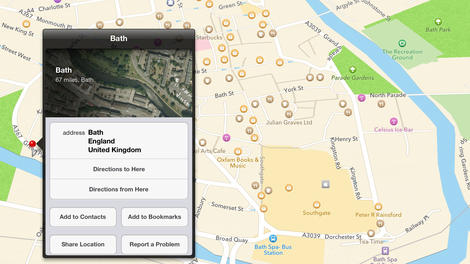
Two apps from iOS, Maps and iBooks, have made their way to Mavericks. Maps includes features such as interactive flyover data, vector graphics, and 3D views. It also provides the ability to send map coordinates to iPhones with a button push for voice navigation on the move.Maps now integrates with OS X's Calendar app too, giving users the ability to look up travel times between two locations to prevent them from scheduling anything in that period. Users don't have to go directly to the Maps app for such navigational wizardry either, as Apple has integrated maps into Mail, Contacts and Calendar. Developers can do the same with their own apps using the Map Kit API.
Meanwhile, Apple has brought iBooks and its 1.8 million titles to the desktop, including any books users have previously purchased. The company gave an interactive demonstration of iBooks' new features at WWDC, which include zooming in, changing font sizes, and adding annotations. Seamless integration across iPhones and iPads means users can pick up books where they left off too.
OS X Mavericks notifications
Notifications were a welcome addition when they were introduced in Mountain Lion last year. This year, they have been beefed up with advanced capabilities that let users do anything from replying to messages or answering FaceTime calls from directly within the notification.Handily, Apple has also made it so that iOS notifications sync with OS X, meaning users can check alerts sent to a Mac or mobile device, and vice versa.
Curious to know what we wanted to see in OS X 10.9 before today's event? Read on for our wishlist that we first posted earlier this year.
1. iBooks and Newsstand for OS X
OS X Mountain Lion was largely about bringing relevant features from iOS to the Mac, but Apple should go further. It's bizarre that both of Apple's major iOS apps for reading are not available on the Mac.With OS X 10.9, Apple should release both iBooks and Newsstand for OS X, enabling you to read your favourite books and magazines on any Apple device, rather than restricting them to the iPad, iPhone and iPod touch.

2. Siri for OS X
Although Siri's not quite the revolutionary feature that was once promised, it nonetheless continues to improve. It's now finally useful outside of the USA, and once you've trained it to your voice, Siri can be used to rapidly speed up many tasks.OS X already has plenty of built-in accessibility clout, and a number of different playback voices, and so it seems like a no-brainer to integrate Siri into the system.
3. Maps for OS X
When it first arrived on iOS, Apple Maps was rightly slammed, not least for its boneheaded assumptions when it came to directions. But the service continues to improve and is great for turn-by-turn.On the Mac, it would be less useful, but we'd nonetheless like to see it, not least for researching and planning routes and journeys that could subsequently (along with favourite places) seamlessly sync to your iOS devices via iCloud.

4. A more usable Contacts app
People bang on about skeuomorphism in OS X, and also confuse it with texture-oriented graphic design, which isn't really the same thing. In many cases, these approaches also happen to be a matter of taste (Calendar's leather, for example), but in Contacts, Apple's created a usability disaster.Half-way house between digital book and app, Contacts is just a mess. We hope whatever Jonathan Ive brings to the OS X 10.9 party in terms of human interface leadership, it includes a firm emphasis on usability and not merely a hankering for minimalism. (More attention to detail regarding bugs would also be nice — Game Center remains an ugly, unusable, broken mess on OS X and needs some serious help.)

5. An enhanced Finder
Finder remains a straightforward way to get at your files, and recent updates have improved inline previews. However, we'd still like to see changes. For power users, the addition of tabs would be great to cut down on clutter; and for everyone, an emphasis on speed and performance would be welcome.Spotlight could also do with a kick up the bottom speed-wise, which would improve Finder window searches, the standalone Spotlight menu and any app it's integrated into (such as Mail).
6. A broken-up iTunes
On iOS, iTunes is just a shop. Individual apps take care of other things: Music and Videos for media playback, App Store for buying apps, Podcasts for playing podcasts, and so on.The mess that is iTunes for OS X could benefit from a similar approach, although with the app also having to exist for Windows, we doubt this is a wish on our list that Apple will ever fulfil.
7. Better window management
Window management on Mac OS and OS X has always been weak and Windows zoomed past with Aero Snap and related features. Third-party utilities exist on OS X for managing windows, but Apple appears hostile towards them.Really, it should enable you to more easily and rapidly place windows side-by-side and in other common layouts, rather than making you move/drag/move/drag like it's 1984.

8. Improved iCloud document management
Apple's iCloud still seems very much like a work-in-progress, with the company feeling its way regarding what the system can do. In terms of document management, it's great for people working on their own and who produce relatively few files.For anyone else, it's problematic at best - OS X 10.9 really needs to improve filing, sharing and collaboration regarding this aspect of iCloud.

9. Interface improvements
It's possible to argue all day about the direction in which Apple's interface should head, but two major widespread problems are apparent that really need fixing. First, Apple's infatuation with desaturation needs to end - people use colour to navigate and spot things, and that's now a problem in some apps (notably Finder and iPhoto sidebars).Secondly, the company must address scalability. What works on an iPad and just about works on a MacBook Air frequently looks ridiculous on an iMac, such as full-screen apps with acres of space, sickness-inducing animated transitions, and the Fisher-Price-style Launchpad.
10. More cross-device intelligence
Our final wish is that Apple's operating systems would be a little more intelligent when it comes to cross-device purchases. In some cases, Apple gets it right: buy a song and you can (optionally) have it sent to all your Apple kit; buy an app on your iPhone and it'll download in iTunes and be sent to your iPad.Great. But why can't we browse the Mac App Store (which, after all, is simply a web browser wrapper) on an iPad, buy an app and have it waiting on a Mac the next time we use it? It's almost like Apple doesn't really want us using a Mac any more, once we're comfy with an iPad…

| |
Read More ...
Review: Adobe Photoshop CC

Introduction
Starting from Photoshop CC, Photoshop is no longer available under a 'perpetual licence'. You don't just pay a single up-front cost and use the software for as long as you like. Instead, you must take out an Adobe Creative Cloud subscription and choose a plan that includes the applications you need. These are then available to you for as long as your subscription continues.If all you want is Photoshop, that's fine, but the cheapest deal you can get works out at £17.58/$19.99 per month (if you take out an annual subscription). That's pretty hard to swallow when you're used to software licences you buy outright, and bad news for users who like to save a little cash by skipping a couple of versions between upgrades.
On the upside, that's less than most people pay for their phone contracts, and if you're a Photoshop professional, why shouldn't it be just a routine business cost, like paying rent or leasing vehicles? It also makes it possible to get started with Photoshop for a lot less outlay.
What else is new
The arguments over Adobe's subscription plans aside, what else has Photoshop CC got to tempt new users and upgraders?For a start, it has two new ways to achieve sharper images. One is an all-new Smart Sharpen tool designed to maximise clarity and reduce noise, and the other is Adobe's new Camera Shake Reduction tool.

It analyses the direction of movement ('trajectory') and then attempts to reverse the blur digitally. On Adobe's sample images it works really well, but not all shots provide the right kind of blur, so don't expect it to be a fix for every shaky shot.

Photoshop CC's 'Intelligent Upsampling' feature helps you scale up pictures for big prints without the image degradation normally associated with upsampling, and means you no longer have to turn to third-party plug-ins like OnOne's Perfect Resize. You don't get any more detail, but sharp edges are better preserved.
But the biggest cluster of new features centres on Adobe Camera Raw 8, Photoshop's companion RAW conversion tool. In fact, you can now carry out so many everyday photographic enhancements in Adobe Camera Raw that you may need Photoshop itself less and less. By the time the photo opens in Photoshop, you'll have already done everything that needs doing.

For example, the new Radial Gradient tool can be used to highlight the focal point of your picture by darkening, blurring, desaturating or otherwise subduing the surrounding areas. It comes with grab handles you can use to change the shape and size and a central 'pin' you can drag it around with. It's very good, though it could do with a wider feathering range to blend in the effects more subtly.

And the Advanced Healing Brush is very effective too – you can how 'heal' irregular areas by painting over them, whereas previously you could only heal circular areas. It's not as sophisticated as the Clone Stamp and Healing tools in Photoshop, but it can cope with simple touch-up jobs very easily.
Best of all, though, is the new Upright tool, which can detect lines in your image which it thinks should be horizontal or vertical, and automatically straighten them, correcting perspective problems such as converging verticals. It works so well it's almost uncanny.

Verdict

Adobe's new subscription-only plan has whipped up a big storm all of its own, but how does Photoshop CC itself rate as an upgrade?
We liked
Photoshop CC is still the best image-editing program you can get. Adobe continues to do a remarkable job in giving such a complex and powerful program such a clean-looking interface. To get the most out of Photoshop you do need to know what you're doing – there's precious little help here for beginners – but once you've learned your way around, it's the best there is.And while the improvements in the app itself are relatively modest, the new tools in Adobe Camera Raw are terrific – and you can now apply them as filters to image layers, too.
Even the new pricing system has merits. The idea of paying for your software month-by-month may leave you feeling a little uncomfortable, but the initial cost of 'getting' Photoshop is now considerably lower. You also get automatic updates too, of course.
We disliked
The subscription system does pose some awkward questions. How do you open all your Photoshop PSD files when you decide to stop subscribing, for example?And be aware that some of the best new tools are in Adobe Camera Raw 8, which is also the processing engine for Lightroom 5 – so if you want the Radial Gradient, Advanced Healing Brush and Upright tools, you don't actually need Photoshop to get them.
There are other enhancements in Photoshop CC that will make life easier for illustrators, web developers and 3D artists, but these draw attention to the other issue with Photoshop – it's an all-encompassing tool for all kinds of digital designers, so that whatever your area of interest, it probably does a whole lot of stuff besides that you don't need but which you're still paying for.
But maybe the biggest problem is that as an upgrade it seems a little tame and a little too soon. Photoshop CS6, its predecessor, brought a whole barrage of great new tools, and because it's not much more than a year old itself, it still feels fresh as a daisy.
Verdict
The big news with Photoshop CC is the swap to a subscription-based system. This does have advantages for professionals, but it's less appealing for amateurs and occasional users. The upgrades to the software itself are pretty modest compared to Photoshop CS6, and for photographers who need to keep up with the latest new cameras and RAW formats, there are cheaper ways to do it – Lightroom 5, for example. But even though CC doesn't bring anything new and revolutionary, Photoshop remains the best professional image-editor there is.
| |
Read More ...
Blip: Smartphone goldrush: Samsung Galaxy S4 goes for gold

Gold! Always believe in your soul! Or whatever: Samsung has unveiled not one but two gold iterations of the Galaxy S4.
If you happen to in the well-moneyed, gold-fancying United Arab Emirates then you can now pick up a Gold Pink or Gold Brown S4 and if this all sounds a bit familiar then it's because two weeks ago Apple launched a gold version of the iPhone 5S.
Samsung may not be original but you can't say it's not efficient.
More blips!
Our bite-sized news nuggets are always solid gold hits:
| |
Read More ...
OCZ outs enterprise SSD with 19nm NAND flash and 6Gbps SATA III

Computer hardware maker OCZ has expanded its Deneva 2 line of enterprise SSDs with a new model that uses 19 nanometer (nm) NAND flash.
The SSD, which is designed for cloud storage, web hosting and data warehousing, is built on a SATA III bus with a 2.5-inch design.
It's a SATA 6Gb/s solution that looks to supercharge servers by delivering bandwidth of up to 550MB/s (Read) and 520MB/s (write), and up to 80,000 4K random write IOPS.
The new model had its power architecture completely rebuilt from the ground up to increase stability, reliability and power efficiency, OCZ says.
Increased throughput
OCZ claims that the new SSD also offers increased data throughput with lower power consumption on a smaller operating footprint, allowing organisations to get maximum performance out of their investment.Its main enterprise features include Data Fail Recovery, Intelligent Block Management, Wear Leveling and Robust Error Correction. It's available now in three capacities: 120GB, 240GB and 480GB.

| |
Read More ...
In depth: SteamOS: what you need to know

The world's best-loved videogames company, Valve, has announced plans to release its own operating system, SteamOS, built for PCs that plug into your living-room television.
It'll be centred around gaming, but also let you stream music, TV and movies.
Valve is calling SteamOS a "co-operating system", combining the company's impressive digital games distribution platform with an interface designed specifically for TVs, built on a "rock-solid" Linux base.
As well as playing games directly on SteamOS, you'll be able to stream games that are installed on your PC or Mac to your television, and there are family sharing features so that younger members of the household can play your copy of Civilization without deleting your save files but can't get their hands on the slightly less family-friendly Saints Row 3.
But what does SteamOS really mean for your living room?

Valve doesn't get things wrong
What Valve does is worth watching because the company has one of the most solid track records in technology history - perhaps even eclipsing Apple in the extent to which its customers love it.Between Dota 2, Half-Life, Counterstrike, Portal, Team Fortress 2, Left 4 Dead and Steam itself, Valve has barely ever released a product that hasn't been an enormous success. We'll ignore Ricochet for now.
The company's entry into the living room PC market means that it thinks it can do better than the competition.
That's not surprising - that competition is very weak, with perhaps Apple TV and the Chromebox as its biggest rivals if you're excluding the next generation of consoles like the Xbox One, PS4 and Wii U.
Even if you don't, by making its software platform freely available, Valve is hoping to dramatically increase the pace of innovation in the box that sits under your television.
PC gaming is thriving
One of the persistent myths in gaming is that the once-mighty PC scene is dead.That couldn't be further from the truth. While Microsoft has around active 48 million Xbox Live users, Valve boasts more than 54 million active user accounts on Steam, which represents what one developer called "the lion's share" of the hardcore PC gaming market. The PC Gaming Alliance estimates there are around a billion PC gamers globally.
Steam has a catalogue of nearly 3,000 titles, with more being added weekly. It matches easily up to consoles when it comes to social features, and also supports user-generated content in a selection of games in the Steam Workshop.
It's available in 185 countries and 25 languages, and has automatic patching and cloud saving across platforms. If you're coming from the console world, you'll be impressed by scale of the community and ecosystem that Valve has managed to quietly build in the shadows of Microsoft, Nintendo and Sony's bombast.
SteamOS is going to hit Microsoft where it hurts
A significant number of Windows users only use the platform because of its gaming prowess. Valve supports Apple's OS X and Linux on Steam, but the catalogue of games is significantly smaller than the Windows one and performance is often sluggish in comparison.Valve boss Gabe Newell, who worked at Microsoft for 13 years before starting a games company, famously called Windows 8 a "catastrophe" and pledged greater support for Linux in the future.
We're now seeing the fruits of that pledge, with Valve having clearly been hard at work behind the scenes persuading developers to ensure their games work on more platforms - the company says: "Watch for announcements in the coming weeks about all the AAA titles coming natively to SteamOS in 2014".
The company has also promised significant performance increases on SteamOS over Windows.
SteamOS seems, for now, to be designed for your television rather than your desktop. But you can bet that if a more desktop-friendly version appears then at least tens of millions of the billion PC gamers planet-wide will seriously consider ditching Windows entirely. With the rest of the PC market in free-fall, that's very bad news indeed for the folks in Redmond.
SteamOS release date is 'soon'
SteamOS is free and it's going to be released "soon", which in 'Valve Time' could mean anything. But this isn't the only big news from Valve this week - the company has timers ticking down to two other announcements.The first is expected to be the "Steam Box" we already know is in development - a custom-designed bit of hardware that shows other manufacturers how building a living room PC should be done, a little like Google's Nexus programme.
The third announcement? That's a bit of a mystery. Many gamers are praying for the release of an eagerly anticipated sequel to the Half-Life series, but it's more likely to be either the full release of the company's in-beta Family Sharing programme, or something entirely out of left-field.
If the world wasn't kept guessing, it wouldn't be Valve.
- Now read everything you need to know about the elusive Valve Steam Box console

| |
Read More ...
Available Tags:iOS , Apple , motion , Nvidia , HTC , AMD , Radeon , Twitter , Nokia , Dell , Windows , Valve , Steam , hardware , Steam , Samsung , Galaxy , Western Digital , Microsoft , tablet , iPad , Windows 8 , iPad , Adobe , Smartphone , SATA II , OCZ , SSD , SATA ,


No comments:
Post a Comment