

Replacing my HTPC with a mini ITX System
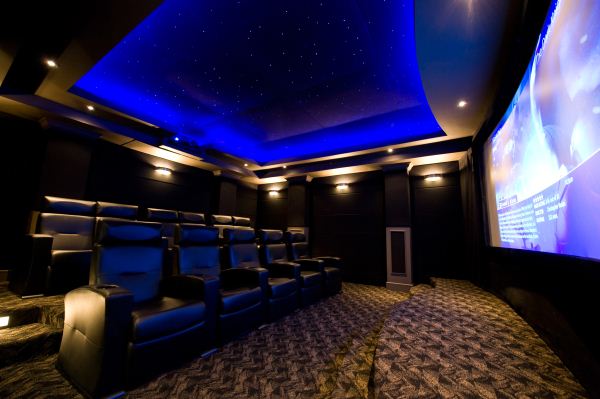
I've needed to rebuild the HTPC in there for a while. Truth be told, my most reliable HTPC was an old AMD 780G platform (Gigabyte's GA-78GM-S2H) but it lacked the HD audio bitstreaming capabilities that I was looking for. Since then I've tried adding sound cards with bitstream audio support, played with ION, experimented with Boxee, and finally moved to a Clarkdale based HTPC. All of these solutions had their quirks and for whatever reason none was quite as stable and appliance-like as the original 780G. That's usually how things go however. If it ain't broke, don't fix it right?


Times have changed however. The trend towards remote mass storage and smaller form factors applies just as well to HTPCs. Four years ago when I started thinking about the HTPC and theater I wanted a chassis that could accommodate a bunch of 1TB drives for holding all of my content. As a result, the HTPC chassis had to be much bigger than necessary. Improvements on the SoC front meant that I could almost drive the whole theater off of something Atom based, although Intel dropping the ball on serious Atom GPUs and pushing NVIDIA out of the market meant that solution wasn't going to work.
Whenever I finish a big review, especially one that I put together under an incredible time crunch, I like to take a little bit of time to do something fun. Whether it's going out for a drive or actually play one of the many games I'm constantly testing, it's a necessary part of the post-review process. It keeps me sane. After the Zenbook Prime review posted, I had a little bit of time while running data for the follow-up. I also had a stack of hardware I'd been assembling to tackle the sad state of my unstable and presently unracked HTPC. Partially out of a desire to clean the lab up a bit, I started piecing together what I hope will be the spiritual successor to my old 780G HTPC.
I've got a Promise Pegasus R6 with far too much storage driving much of my lab: benchmarks, test data, OS images, you name it. I also have a decent amount of leftover space for HT content so that became my makeshift NAS. It also meant that I didn't need room for any real storage in the HTPC, which further meant that I could go mini-ITX. Originally I expected my HTPC to remain a fixture in the theater but it turned out that I was constantly swapping components in and out as companies sent along HTPC-worthy gear that needed testing. Going mini-ITX and abandoning the idea of something large and rackmounted will make that part of my life a lot easier.
The build started with Intel's DH77DF mini-ITX board. It supports Ivy Bridge but for the time being I'm just using Intel's Pentium G850:

Intel's DH77DF

Intel's SSD 310, mSATA
For memory I needed something low profile, so I ironically turned to a bundle of AMD memory I've been wanting to do something with:

Picking the right mini-ITX chassis was a struggle as I don't believe that there many (any?) good looking mini-ITX HTPC cases on the market today. I've been pushing Antec for years but it turns out that despite the coolness of mini-ITX, motherboards and cases built around the spec just don't sell well. I really do hope this eventually changes as companies like ASUS have been taking the form factor seriously for a while now.


Read More ...
Nvidia Icera 410 LTE Modem Passes AT&T Network Validation

Icera 410 is a multimode LTE / DC-HSPA+ / GSM baseband capable of essentially all the features you'd expect for this generation, including 64QAM on HSPA+, the option for DC-HSPA+ (dual cell), and interference cancelation (Type 3i). The only downside is that Icera 410 is an LTE UE Category 2 part, which means it can do 50 Mbps maximum on the downlink on 10 MHz FDD-LTE, compared to UE Category 3's 73 Mbps maximum for 10 MHz FDD-LTE. That said, the success of other UE Category 2 devices (like Motorola's Wrigley in all Motorola 4G LTE phones) shows that this isn't a huge deal breaker. As a reminder, AT&T is running both 5 and 10 MHz FDD-LTE depending on the market.
It doesn't take a lot of imagination to make the next logical leap, which is what role the Icera 410 IP blocks will play in Nvidia's upcoming codename "Grey" SoC, which includes an as yet unannounced Icera baseband.
Read More ...
Streacom Updates Passive HTPC Chassis Lineup with FC9 and FC10

Streacom's current HTPC chassis lineup includes the following models:
FC5 WS Fanless Chassis (June 2011)
F1C Chassis (June 2011)
FC8 Fanless Chassis (July 2011)
F7C Chassis (August 2011)
FC5 OD Fanless Chassis (September 2011)
FC9 Fanless Chassis

Streacom FC9 Passive Chassis Specifications | ||
Motherboard Form Factors | Mini-ITX and Micro-ATX | |
Drive Bays | Optical | 1x 5.25" (slim-line, slot-loading optical drive required) |
Internal | 2x 3.5", 1x 2.5" | |
Cooling | Fully Passive Heat Pipe Direct Touch Solution | |
Expansion Slots | 3x Low Profile | |
I/O Ports | Motherboard Dependent | |
Weight | 4.9 kg | |
Dimensions | 348 x 289 x 100mm (W x D x H) | |
Price | MSRP $279 / 249 Euros | |
FC10 Fanless Chassis


Streacom FC10 Passive Chassis Specifications | ||
Motherboard Form Factors | Mini-ITX, Micro-ATX and Full ATX | |
Drive Bays | Optical | 1x 5.25" (slim-line, slot-loading optical drive required) |
Internal | 2x 3.5", 3x 2.5" | |
Cooling | Fully Passive Heat Pipe Direct Touch Solution | |
Expansion Slots | 2 x Full Height Expansion Slots (riser card required) | |
I/O Ports | Motherboard Dependent / 2 x USB 3.0 on the side | |
Weight | 5.4 kg | |
Dimensions | 435 x 319 x 100mm (W x D x H) | |
Price | MSRP $349 / 299 Euros | |
Readers can look forward to more coverage of passive HTPC hardware components. Feel free to comment about what other components you would use for a fully passive HTPC build.


Read More ...
Seagate Announces Intent to Acquire LaCie
While Seagate now offers a single drive GoFlex Thunderbolt adapter, it would appear that they’re most interested in acquiring LaCie for their multi-drive enclosures. The press release notes that the two companies have “two highly complementary product and technology portfolios”, with specific mention of LaCie’s premium storage solutions, NAS products, and other software. Besides the technology portfolio, the purchase is also intended to help accelerate Seagate’s growth in the expanding consumer storage market, particularly in Europe and Japan. It’s not just about products and technologies, of course, as mention is made of “relationships with several key retailers”. Mr. Spruch will also join Seagate following the close of the sale and lead the company’s consumer storage products organization.
Seagate has offered to purchase all of the shares from LaCie’s chairman and CEO Philippe Spruch and his affiliate, which would represent a controlling interest with 64.5% of outstanding LaCie shares. Pending government approval, at the close of this transaction Seagate would commence an all-cash simplified tender offer to acquire the remaining outstanding shares, in accordance with the General Regulation of the French Autorité des Marchés Financiers (AMF). Seagate has offered Mr. Spruch €4.05 per share in cash, minus a potential adjustment depending on the cash and debt position of LaCie at closing. This price may also be increased by a possible 3%, resulting in a maximum potential price per LaCie share of €4.17. The offer currently values LaCie at an approximate €146 million/$186 million USD, including acquired net cash of approximately €49/$65 million USD, as of March 31, 2012. The €4.05 per share price represents a premium of 29% to LaCie's average closing stock price over the 30 trading days ended May 22, 2012.
The transaction is expected to be neutral to Seagate's fiscal 2013 earnings per share, and the tender offer is expected to be completed by Q3’2012. The transaction is subject to regulatory approval in the United States, France, and Germany, as well as potential other jurisdictions.
Read More ...
Supermicro Updates X9 Platform for Intel's Latest Xeon Families
Intel introduced three new Xeon processor families last week. The Xeon E3-1200 v2 family is based on the Ivy Bridge architecture, while the Sandy Bridge based Xeon E5-2400 and E5-4600 families encompass processors for two and four socket systems respectively. Supermicro has duly updated their X9 family of motherboards and systems to support the new processors. Without further digression, let us take a look at their new products.
Ivy Bridge Xeon Platforms
The updates for the Ivy Bridge Xeons has been quite straightforward for Supermicro. In fact, the announcements actually link to boards / systems based on the Sandy Bridge Xeons (E3-1200), along with a BIOS update for PCI-E 3.0 support.

This 3U 8x node 'MicroCloud' system is meant for cloud computing, data center and web hosting applications. Each node can support two hot-swap SATA3 disks and upto 32 GB of ECC memory. It is based on the Intel C204 PCH chipset and has two GbE ports courtesy of the Intel 82580DB. The support for the Xeon E3-1200 v2 family starts from BIOS rev. 2.0 (with support for DDR3-1600 and PCI-E 3.0 connection speeds for the single PCI-E x8 slot).
5017C-LF, 5017C-MF, 5017C-TF:
These 1U rackmount servers are meant for networking and embedded applications. The TF model is based on the C204 PCH chipset (Supermicro's X9SCM-F motherboard), while the other two are based on the C202 (X9SCL-F motherboard). The differences between the units are mainly with respect to the SATA disk support
and the nature of the PCI-E cards which can be added on. While the LF model supports 1x3.5" or optional 2x2.5" internal SATA drive bays and 1x PCI-E 3.0 x8 low profile slot, the MF model supports 2x3.5" internal HDDs and the PCI-E 3.0 slot is full height. The TF model supports full height / full length PCI-E cards in the PCI-E 3.0 slot and also includes support for hot swapping the hard drives in the two internal bays.
5017C-MTF, 5017C-MTRF, 1017C-TF:
These 1U rackmount mainstream server systems are meant for gateway / security / DVR / transcoding and broadcast applications. All of them are based on Supermicro's X9SCL-F motherboard with the C602 PCH chipset. The TF model has RAID support for the 4x2.5" hot-swap SATA2 HDDs, while the other two models support 4x3.5" hot-swap drives without RAID. All three models have full height PCI-E slots (PCI-E 3.0 x8), but
only the TF model can support full-length cards. All models have support for up to 32 GB of ECC memory, two GbE LAN ports and 6x SATA 2.0 ports with RAID 0,1,5,10 support. The MTF model comes with a 350W power supply while the TF model has a 330W one. The MTRF has a redundant power supply with a rating of 400W.
5037C-i, 5037C-T:
These are server towers for small/medium business applications, file/storage serving and remote desktop applications. While the i model is based on Supermicro's X9SCL motherboard, the T model is based on the X9SCA. Both of them support upto 32 GB of ECC DRAM (upto DDR3-1600). The T model comes with a 500W power supply, support for 4x3.5" internal SATA HDDs and an optional 4x2.5" rotatable HDD cage. There are 2 GbE ports. The PCI breakdown is as follow: 1 PCI-E 3.0 x16, 2 PCI-E 2.0 x4 in x8 and 3 PCI 32-bit expansion slots. The i model has a 300W power supply, with support for 2x5.25" external drive bays, 4x3.5" internal drive bays and 1x3.5" external drive bay (with the hard drive cage capable of rotation for easy access). There are 2 GbE ports, just like the T model. The PCI break down is as follows: 2 PCI-E 3.0 x8 and 1 PCI-E 2.0 x4 in x8 slot.
The motherboards of all the above systems are also available stand-alone for system integrators and resellers to build their own custom machines.
Sandy Bridge-EN and Sandy Bridge-EP Xeon Platforms
Supermicro also updated their X9 lineup to include boards for the Xeon E5-2400 (Sandy Bridge-EP) and Xeon E5-4600 (Sandy Bridge-EN) dual and quad processor families.
The X9 Dual-Processor (DP) solutions cater to date centers, web servers, search engine appliances, gaming systems and ATMs. The 4-way Multi-Processor (MP) platforms target high-end enterprise IT and high performance computing (HPC) applications.

X9DBU-3/iF: The 3F model is based on the C606 chipset, while the iF model is based on the C602. While the 3F model supports 4xSATA2, 2xSATA3 and 8xSAS, the iF model supports 8xSATA2 and 2xSATA3 only. Both of the boards support upto 384 GB of ECC memory. PCI-E support includes 1x v3.0 x24 and 1x v3.0 x8. The form factor is proprietary. Supermicro has one 2U rackmount system (6027B-URF) based on the 3F model. The 1U systems include 1027B-URF, 6017B-URF and 6017B-NTF.
X9DAL-3/i: These motherboards support upto 192 GB of ECC memory. The 3 model is based on the C606 chipset, and the i model is based on the C602. Both of them support one PCI 32, one PCI-E 3.0 x16, 1 PCI-E 3.0 x4 (in x8) and one PCI-E 3.0 x8 (in x16) and two PCI-E 3.0 x8. The SATA/SAS configuration difference stems from the differences between the C606 and C602 chipset and are the same as that of the X9DBU model. The i model is at the heart of the 7037A-iL mid-tower workstation.
X9DBL-3/i(F): The 3 models are based on the C606 chipset, while the i models are based on the C602. As usual, the C606 brings along with it support for 8x SAS/SATA ports. The i models also have integrated IPMI 2.0 and KVM along with a dedicated LAN. All of the models support upto 192 GB of ECC memory, and the expansion slots include one PCI, three PCI-E 3.0 x8, one PCI-E 3.0 x16 and one PCI-E 3.0 x4 (in x8). These motherboards have been put in a range of 1U rackmount servers including the 6017B-MTF, 6017B-MTLF, 6017B-MTRF and 1027B-MTF.
The 4-way MP solutions include systems based on the following motherboards:
X9QR7/i-(T)F+: Systems based on these motherboards include the 1U 8017R-TF+ and 7FT+, the 2U 8027R-TRF+ and 7RFT+ and the 4U 8047R-TRF+ and 7RFT+. These are based on the C602 chipset and can support upto 32 DIMMs for 1 TB of ECC memory. There are four PCI-E 3.0 x16 (out of which two operate in x8 mode) slots. All models have dual GbE LAN, but the T SKU has dual 10 GbE capability. There are 8 SAS2 ports courtesy of the LSI 2208 in the "7" SKU in this 16.79" x 16.4" board.
X9QR7/i-(J)(T)F: Systems based on these motherboards include the 4U 8047R-7JRFT and the 4U 4047R-7JRFT. Compared to the "+" motherboards detailed above, these support only 24 DIMMs for a total of 768 GB of ECC memory. There are 8 PCI-E 3.0 x16 (one of them operates in x8 mode) slots, and dual 10 GbE capability comes as a standard. LSI 2308 provides 16 SAS2 ports for this 17" x 17" board.
Read More ...
The Archos G9 Tablet Reviews: Fast Enough
There's nothing quite like being fastest. Even to be atop the heap of competitors for a second can be a thrill and a great story. And so it was that we were fascinated by the incredible claims by Archos, that they had the "World's Fastest Tablets." We first caught wind of these tablets last year when they were touted as the fastest Android tablets in the world thanks to the 1.5 GHz clock on the TI OMAP4460 dual-core ARM Cortex-A9 SoC. Delays in producing these top models meant falling behind NVIDIA’s Tegra 3, the current “World’s Fastest” title holder. And while the Android tablet market was still pretty shallow last July when these were announced, it’s a deep wide sea now. So how does the French entrant fare?

Read More ...
AMD's Gift to AnandTech Readers: 50 Free AFDS Passes - Update: All Gone
Apparently Manju was feeling pretty generous after our recent Ask the Experts session and gave us 50 free passes to AMD's Fusion12 Developer Summit (AFDS) to give away to AnandTech readers. The show runs from June 11 - 14 in Bellvue, WA, with extended early registration going for $395 per person today. We've got 50 passes to give away, they are first come, first serve.
Update: Sorry guys, we're all out of free passes! Congrats to the first 50 who got in!

Read More ...
Ethanol Advocates Urge Senate Armed Services Committee to Reject Biofuel Cut Back
New budget would cut ethanol investment
Read More ...
MPAA: Switching up Tactics to Fight Piracy
MPAA head switching things up, trying to re-define a commonly used term related to file sharing
Read More ...
5/24/2012 Daily Hardware Reviews
DailyTech's roundup of hardware reviews from around the web for Thursday
Read More ...
Yet Another Talented RIM Executive Jumps From Burning Platform
RIM is refilling its executive ranks as top talent looks for positions at more successful firms
Read More ...
U.S. Government Used Cyber Attacks Against Al Qaeda
The United States government was able to launch a successful cyber attack against an Al Qaida group in Yemen
Read More ...
President Obama Orders Fed Agencies to Optimize Mobile Web Content
Obama wants the government ready for mobile web surfers
Read More ...
Malware Focusing on Macs, Mobile Devices Increasing
Malware is increasing, and now targeting Mac and Android mobile users
Read More ...
FCC Chief Genachowski Plugs "Pay-Per-Play" Metered Internet Pricing
Genachowski's commentary is clearly predicated on fair pricing, but will telecoms "play nice"?
Read More ...
HP to Layoff 27,000; Largest Layoffs in Company History
Chinese unit is expected to be spared; remaining workers are pressured to "work harder"
Read More ...
Jury Finds Google Innocent of Java Patent Infringement
Oracle gambit is dashed by failure
Read More ...
FINRA, SEC to Investigate First-Day Facebook Stock Problems
Facebook, NASDAQ, banks and underwriters associated with the IPO are all being sued
Read More ...
Study Takes Closer Look at IED Impact on Soldiers' Brains
IEDs continue to cause severe long-term damage to blast survivors
Read More ...
Blizzard: Diablo III is Fastest Selling PC Game Ever
The latest installment in the Diablo game series has become the fastest selling PC game in history
Read More ...
5/23/2012 Daily Hardware Reviews
DailyTech's roundup of hardware reviews from around the web for Wednesday
Read More ...
Seagate to Acquire Controlling Interest in LaCie
Deal values LaCie at $186 million
Read More ...
Report: Counterfeit Chinese Electronics in U.S. Military Aircraft Jeopardize National Security
Counterfeit electronics and military hardware risks American lives
Read More ...
Available Tags:Nvidia , Seagate , Xeon , Tablet , AnandTech , Hardware , HP , Google , Java , Facebook , Security ,


4 comments:
good
good
good
nyc
Post a Comment