

Industry Voice: Four steps for success with big data in 2015

According to Gartner's recent Big Data Industry Insights report, it's clear that while organizations are increasing their investments in big data, they struggle to gain significant business value from those investments. Furthermore, according to a CSC survey, five of every nine big data projects aren't completed and many others fall short of their objectives. Often, business and IT groups are not aligned on the business problem they need to solve. Also, employees frequently lack skills required to analyze data.
To help overcome these hurdles and maximize business value from data, organizations can take the following steps to significantly shorten the time-to-value and contribute to business success using big data initiatives.
1. Know What You Are Trying to Solve
Identifying a key element or business problem for a successful big data initiative may seem trivial at first, but it's absolutely crucial. Many organizations fall into the trap of starting a big data initiative before digging deeper into what business questions they want to solve. This often leads to frustrations for both business and technology teams since they already started investing in technology and resources. Having clearly defined analytics requirements is essential for a partnership between business stakeholders and the technology team.Success for big data initiatives hinges on business stakeholders deciding which requirements will move the needle for the business. As technology has evolved, business stakeholders should be encouraged to think of analytics questions that once seemed to be a distant dream with existing technologies.
Coming up with a succinct set of analytics requirements also helps technology teams define a big data architecture that leads to success for the organization.
2. Replace Data Silos with Auditable Role-Based Access Controls
Another hurdle that organizations face is that IT departments spend too much of their time accessing data rather than analyzing it. Most data analysts spend 80 percent or more of their time accessing data, while a mere 20% or less spend time actually analyzing it for actionable business insights.In order to move past data silos and take full advantage of low-cost batch storage technologies like Hadoop, many organizations are looking favorably at a "data lake" or "data reservoir" model. In this model, data is stored once and shared by multiple business and IT stakeholders. This architecture permits role-based access controls to protect sensitive data and customer privacy. For example, someone on the fraud team may be authorized to see PII data, such as home addresses and credit card numbers, while a marketing analyst sees masked and aggregated data. Creating this "data fabric" not only breaks down organization silos, but also empowers employees to take advantage of their data with a single version of the truth.
3. Make Analytics Actionable
A hidden issue with many big data projects is that often assessments are based on data subsets, when they are actually meant to be a representative sample. While this provides directional analysis, actionable insights cannot be derived from sampled and aggregated data. For example, if retailers want to understand customer interactions across offline and online channels, or if an investment banker wants to measure risk in a portfolio, companies must be able to search, analyze and visualize raw granular data, not just a sample. Actionable insights from granular data can drive a targeted marketing campaign at a customer level, or reduce risk by identifying a micro segment of customers.4. Empower Self-Service Analytics by Everyone, Not Just Data Scientists
Finally, organizations are struggling to hire and retain data scientists who understand statistics, computer science and open-source technologies, such as Hadoop or NoSQL data stores. According to research from McKinsey Global Institute, the United States will experience a shortage of between 140,000 and 190,000 skilled data scientists, and 1.5 million managers and analysts capable of reaping actionable insights from big data.One way to address the lack of skills is to adopt technologies that bridge the gap between data scientists and knowledge workers. This approach includes enabling product managers, web analysts, risk managers, security analysts and other knowledge workers to simply point at Hadoop or another data store, and start exploring, visualizing and analyzing. This also relieves database or business analysts from having to learn programming language to access this data or spend valuable time writing complex code, saving both time and money.
The Bottom Line
At the end of the day, businesses will thrive with wide data access and data-driven decision making. By simplifying access to data and democratizing the information, organizations will be able to leverage the power of big data, which will ultimately bring them a step closer to gaining a competitive advantage in 2015.- Rahul Deshmukh is Director of Solutions Marketing at Splunk

Read More ...
Blip: What are you going to do now, Apple Pay? I'm going to Disney World!

Apple Pay is continuing its (slow) march towards mobile payment domination by arriving at one of the happiest places on earth December 24.
That's right - Apple Pay is going to Disney World! Specifically the Walt Disney World Resort, where it along with other NFC systems, like Google Wallet, will be acceptable forms of payment.
Starting on Christmas Eve, iPhone 6, iPhone 6 Plus and eventual Apple Watch users can tap to pay at places like stores, quick-service restaurants, bars and ticket sales booths, according to WDWMagic.com. Other spots, like table service restaurants, will join the Apple Pay brigade.
Eli Manning must be happy.
More blips!
The only things that'll make you happier than a trip to Disney World are our blips.- Android Wear users can watch their security cameras on their wrists
- Fetch! Dog runs with help of 3D-printed prosthetics
- 20th anniversary PS4 sells for insane sums on eBay

Read More ...
Review: Acer TravelMate B115

Overview and specs
Acer’s TravelMate B115 laptop ($379, £243, AU$466) features a 11.6-inch touch-screen display, measures to 11.5” x 8.3” x .83” (W x D x H; 292.1 mm x 211 mm x 21 mm), and runs Windows 8.1 in 64 bits. Breaking from tradition when it comes to smaller PC laptops, it makes no attempt to ape any other designs in the industry, unlike the Chromebook market, which are all aesthetic descendants of Apple’s MacBook Air, which costs $1,299 (about £1,129/AU$1,449. Lightweight, a mere 2.91 lbs (1.32 kg), the B115 comes with a roomy 500GB hard drive. It’s of a solid build, and while I wouldn’t call it rugged, it does feel built for the traveller.The B115 is dramatically cheaper than our recently reviewed Lenovo Z40, a 14” model that costs $599 (£399, AU$799). You can reason out that one is saving money on the B115 thanks to a lack of screen real estate. Comparing it with Acer’s laptop/tablet hybrid Aspire Switch 10, ($467, £299, AU$574), you’ll miss the Switch 10’s form factor, which was made for its touch screen.

Looking out at the world of affordable smaller laptops, it’s hard to ignore the Chromebook 2 models recently released by Toshiba and Samsung. Samsung’s sold at $249 (about £154, AU$282), while the Toshiba’s unit bumped the price to $329 (about £205, AU$382) on account of a 1080p display. If the ability to use Windows applications is not a must for your needs, those units need to be included in your search for an affordable laptop.
Specs and design
While the B115 has an unassuming design, those always on the go will be thankful for a slim PC that can run the Windows applications their office demands.
Featuring three USB ports, one of which is USB 3.0, HDMI-out, Bluetooth 4.0, and an SD memory slot, it can work in most situations. The trackpad, one feature PC vendors are notorious for cheaping out on is impressive, and just as good as those on Apple laptops.
When you walk into any room with many laptops these days, you’re greeted with a sea of silver/aluminum. That doesn’t distinguish anybody, and emphasizes how nobody’s really done much to innovate outside of Microsoft’s Surface line, which I haven’t spotted anywhere in the wild. The B115, though, thanks to it’s almost-squared edges and black-with-touches-of-chrome look, won’t be mistaken for anything else.

While most of its ports are located on the back of the machine, which keep them out of sight and mind, it does keep a USB port and a SD slot within reach on the left side of the body. While the B115 feels built for travel, the no-frills design signals to me that customers aren’t paying for design. In order to get a full-size keyboard onto an 11” frame, some keys feel a little shoved-in or too-tight, but it’s all in service of the small foot-print.
Performance
Testing the battery life, the B115 scored 6 hours 19 minutes and 7 seconds on PCMark 8’s Home battery life test. The machine also lasted a good amount during standard usage. I reproducing a traveller’s routine, running the unit unplugged during business hours. It lasted from 9am to 12:15pm, then I put it to sleep for lunch, and then the battery lasted from 3 to 6:30pm, for a total of 6 & 3/4 hours, against their advertised 7. That testing included email, office software, and streaming music and video from YouTube and Netflix. The quality of said streaming video on Netflix was especially sharp, which earned Acer the “HD” qualifier they apply to the display.In benchmark testing, the B115 scored a 1636 on the PCMark 8 Work Conventional test, including a video chat framerate of just fewer than 30 frames per second (FPS), which is definitely functional for work needs.

Running elemental gaming benchmark tests on 3DMark, the processor demonstrated some muscle on the low end, but buckling at anything more.
The Ice Storm test, built for low-end devices, would render around 70 FPS, netting a score of 16368. Cloud Gate, for “basic notebooks and home PCs” never broke above 7 FPS, and got a score of 1459.
Unfortunately, Fire Strike, the test “for high performance” gaming PCs crashed before it could finish and give a score, and seemed to render one frame per every few seconds. Those last two tests sure looked damning, but nobody ever said this was a gaming PC. The greatest red-flag in that regard is that instead of a graphics card, it lists on-board “Intel HD Graphics,” a sure sign that this isn’t made for gamers.
- 3DMark: Ice Storm: 16,368 points; Cloud Gate: 1459 points
- PCMark 8 Home: 1,636 points
- PCMark 8 Battery Life: 6 hours 19 minutes
Flaws
The biggest obstacle with the B115 is coming to it after having used anything better or larger. I could see being given this unit by a company looking out for its bottom line, but I could never see wanting to have this in my day to day life.The B115 fits a full-sized keyboard in a small-form computer, but it just doesn’t feel right. In a week’s testing, I could not get used to this keyboard. While its keys don’t feel cheap, I had numerous instances of clicks not registering. Often times this wasn’t a problem with the keyboard or screen, but in fact with the speed & RAM of the computer. I’d click on an icon to load an app, and thanks to no feedback, I thought I didn’t register the click. Unfortunately, the process took so much time that when I’d click again, two instances of the desired effect would run.
Something that was incredibly frustrating with this review unit was the amount of bloat that the machine came with. Booting into Windows 8.1, I was greeted with an avalanche of things nobody would have wanted. The built in Acer Explorer app store had prominent billing and it was the first thing I removed. The pre-installed McAffee virus protection seemed cute at first, but a never-ending series of notifications, including the warning that its one week trial was about to end quickly soured me. While most office teams should have their own comprehensive security solution in place already, and won’t care about this cruft, one week felt like a cheap move in an age when most products have free 30-day repair windows.

The biggest thumbs-in-the-eye came from off-brand synergy, which kept reminding me that I was working on a budget computer. Take for example, a preinstalled link on the desktop for a relatively unknown travel website that I won’t give free advertising by mentioning it by name. Sure, I guess there’s an argument to be made for that link being relevant to the travellers this machine is targeted towards, but it being pre-loaded made me feel like I was an Acer product, being sold as eyes to their advertisers.
Additionally, the pre-installed Foxit PhantomPDF application and Acer ProShield apps didn’t give me a feeling of added-value as much as they made me think “send to recycle bin.” If you have an IT department that can wipe the unit before handing it to you, I suggest they remove the garbage and add a specific set of applications. However, if you’re stuck with the machine as is, there’s a lot of Day 0 cleaning to be done. It even tried to install AOL on itself, which I had to decline as an offer.
Verdict
We liked
The Acer TravelMate B115 dares to be different. In a market of 11” MacBook Air clones, this no-frills model succeeds thanks to modest goals. Sure, that sounds like an insult, but if you’re going to send your team out into the world, and they need a computer more capable than a Chromebook - but not especially fast - then the B115 is right for your squad.We disliked
The touch screen feels like a gigantic waste of time and money. Maybe Acer had a bunch of those screens left over from a production run for a different model, but they’re entirely out of place here. What good is a touch screen on a generic laptop that can’t fold over completely or detach? It had me reaching out much farther than feels comfortable, looking like a child who assumes all screens work like iPads.Verdict
I wanted to write this review entirely on the B115 unit, to replace my existing laptop with it for the duration of my testing. I took it through a series of tests and rigorous use, but I just could not stand using it for more than an hour at a time. It’s meant for a little usage here and there - editing a document, checking email, and anything else that isn’t completely hindered by its 11.6” screen. You get what you pay for, and it turns out $379 (about £243, AU$466) can only get you so far, even on Windows.
Read More ...
Interview: How going digital can drive business innovation and value
Canopy was formed in 2012 through a joint venture between industry storage and virtualization partners EMC and VMware. Based in Europe, Canopy offers a complete cloud portfolio including tailored solutions across IaaS, PaaS and SaaS to enable governments and enterprises to transform their IT in the digital era.
Canopy's global headquarters are in London and it operates in nine countries across three continents. We spoke to Canopy CTO Sean Catalin about how the company is helping businesses transform themselves in the digital era.
TechRadar Pro: What distinguishes Canopy's offerings in the cloud service market?
Sean Catlin: Canopy is in a unique position to offer end-to-end cloud services including IaaS, PaaS, SaaS and consultancy taking advantage of the technologies and expertise of leading joint venture partners Atos, EMC and VMware.
Ultimately, Canopy helps customers select the right cloud platform today to support their journey to transform into digital businesses in future. Canopy brings substantial benefits to its customers such as IT cost reduction and reduced capex expenditure through flexible pricing models plus access to innovative and agile technology that can enable rapid cloud implementation and faster time to market for products and services.
Canopy offerings are based on open standards so customers can choose their preferred technology and decide whether to run solutions off or on-premise to best meet their business needs.
TRP: How is Canopy helping customers transform themselves into digital businesses?
SC: The digital economy has changed the stakes for business, and companies that are embracing it are likely to lead their respective industries and be more agile than their competitors. Canopy is empowering businesses to go digital with its latest offerings such as – Cloud Fabric, which provides a platform to develop new applications in the cloud, and Canopy Compose which enables organisations to transfer legacy applications to the cloud.
Both help drive business innovation through software by enabling organisations to move from fewer large application updates per year to smaller updates delivered much more frequently. Not only does this approach reduce costs, it improves agility by allowing businesses to grow on demand, reduces time to market, and ultimately allows companies to deliver new and better digital experiences for customers or citizens.
The digital world requires two speed thinking – both IT Speed and Digital Speed. Digital Speed is an agile culture and approach, thinking in timescales of days and weeks rather than months and years when creating new applications, and quickly turning ideas into working concepts. Digital speed is also about the acceptance of uncertainty, and designing and delivering solutions that are enhanced rather than undermined by changing circumstances.
To reap the benefits of digital, senior management will need to re-imagine the entire organisation - including products, services and the way that they are used to communicate with other businesses. Canopy provides consultancy to help firms cross the chasm of traditional IT supply and formulate a digitally-led IT strategy. With support from the right external cloud vendor to put this process into operation, the migration period can be pain-free for all involved.
TRP: Enterprises are facing pressure to reinvent themselves as digital businesses while consistently delivering new and better digital experiences for their customers. How should businesses begin to tackle this pressure?
SC: The trend of organisations reinventing themselves digitally has been branded 'the digital dragon' by Gartner. It refers to the radical digital disruption that most industries around the world are undergoing. To tame the digital dragon organisations need to harness the power of big data, mobile and social applications delivered in the cloud. In short, they need to excel at developing and delivering great software that offers superior digital experiences to their customers, and do that sustainably faster than their competitors.
With so many different providers in the marketplace offering to provide cloud-enabled digital services, selecting the right partner can be daunting for business decision makers. Firstly, organisations need to consider functionality.
Will a particular cloud provider be able to offer them the right 'class' of service, and can they advise them on the right cloud platform that is most suited for their business, for instance hybrid cloud? Other considerations include assessing whether the cost models and performance models are the right fit for their business with appropriate SLAs in place. Senior IT professionals also need to think about other factors including the workflow, access, control, authorisation, auditing and reporting processes.
TRP: As companies become digital businesses, they will naturally gain more data. How can this data be commercialised so that companies can take advantage of this? E.g. become more predictive.
SC: As the value and volume of an organisation's data changes over time, IT professionals must manage it accordingly, choosing to retire or archive appropriate data sets, or ultimately remove them altogether. But when all that data lives in a private cloud or hybrid cloud environment, it adds a host of extra challenges around Information Lifecycle Management (ILM).
Traditional operational structured data sources are being augmented with social, web, government, as well as historically hard to use enterprise 'dark' data (unstructured document libraries and archives) and vast volumes of machine generated data (sensor and log data).
Modern ILM strategies involve a multi-tiered approach to handling data primarily for cost management reasons. Crucial factors in this decision making process are the availability of data, performance, back-up and recovery, and price. Companies must also find a provider with the appropriate ILM and security tools, but ones which don't compromise the ease at which data can be stored and extracted.
A balance also needs to be struck between tiers, such as with mission-critical applications and older records. Archived data can be stored on slower cheaper storage. For business critical apps, trust and control are important considerations. Furthermore, the speed at which companies can access their real-time data and archived data will have an effect on how data can be used in the commercial business model.
The more localised the data, the faster companies will be able to access it. The IT department needs to understand the controls required by the business, what controls are already in place, and then identify the control weaknesses before putting a remediation plan into action to fix those weaknesses. Understanding where and when to put business critical apps in the cloud will become even more important in 2014-15 as businesses undertake pilot projects for business functions.

Read More ...
This is the first real build of Google's self-driving car

Google may not plan to build the final version of its self-driving cars, but that's not keeping the Mountain View firm from cranking out working test versions.
The Google Self-Driving Car Project today revealed "the first real build of our self-driving vehicle prototype." In other words, this baby ain't no mock-up, and it's got real headlights to boot!
You can see the car in the image above. It's actually an amalgamation of several different prototypes Google created to test various car systems, such as steering and braking as well as the computers and sensors that let the car function driver-free.
Using the earlier test work, Google created the craft you see above, its "first complete prototype for fully autonomous driving."
Holiday test drive
The self-driving car team said their holiday time will be spent on the test track in preparation for putting the vehicles on Northern Californian roads sometime next year.Unfortunately for fully autonomous driving enthusiasts, safety drivers will oversee the cars for the foreseeable future, and temporary manual controls will be utilized as the cars undergo further testing.
- Read our Google Glass review!

Read More ...
Microsoft quietly kills free Public Websites feature

A little known feature that some described as Microsoft's online version of "FrontPage", the company's ill-fated WYSIWIG HTML editor, will be dropped within weeks according to a Knowledgebase post.
The latter confirms that the SharePoint Online Public Website feature will be deprecated from January 2015 and will be available for existing user for a minimum of two years. New Office 365 users won't have access to it.
Moving forward, the statement says, "Office 365 customers will have access to third-party offerings that will enable them to easily integrate their public presence with their Office 365 service".
More details will be unveiled next month. Microsoft explained the move by saying that the "difficult decision" was taken to deliver the utmost value to its customers and focus future investments while relying more on potential partners who will provide solutions at "discounted pricing rates".
It's interesting to note that Microsoft has been relying more on "partners" lately. The move to strategically allow others to get selected portions of Microsoft's cake (where the company was never expected to get big revenues) is interesting indeed.
Back in November, Microsoft announced a strategic partnership with Dropbox allowing the latter to compete better against its own cloud storage, OneDrive.
Microsoft Office 365: Our rolling review

Read More ...
Intel betting on semi-custom designs for 2015

Intel's head honcho for anything data-centre related has confirmed that the company is betting big on semi-custom designs for next year. Diane Bryant told the New York Times that she expects half of the chips it sells to public clouds to use custom designs. That amounts to about nine million units annually.
Intel's top clients, those that can order hundreds of thousands of chips, include Amazon, Google, Microsoft, Facebook (but not Apple) as well as Tencent, Alibaba and Baidu. Outside this group are about 200 other public cloud providers including the likes of Ebay, Twitter, Oracle or Lenovo.
"The name of the game is customisation", she said in an interview. Intel chip factories (or fabs as they are known) are now so automated that they allow for models to be tweaked with very little overhead, although the manufacturer is likely to charge a premium. That allows for a much higher average selling price and profit margin.
Perhaps more importantly, it allows Intel to cement its position in the cloud-market against the potential competition coming from ARM partners like AMD, Qualcomm or Applied Micro, all of which have been eyeing a slice of the booming DC market.

Read More ...
ARM server startup Calxeda back on track

Remember Calxeda? This startup was the first one off the blocks with design wins for ARM-ready server chips. It was good enough for HP to adopt it in its first Moonshot server back in 2013. It did come as a shock to a lot of analysts later that year when Calxeda shut down citing a lack of funds.
It was especially ill-timed as the ARM server market was just about to warm up with Broadcom, Qualcomm, AMD, Cavium, Marvell and Applied Micro announcing products or at the very least a definite interest in that sector.
Calxeda IP has been purchased by AtGames Cloud Holdings and its technology revived via one of its subsidiaries, Silver Lining Systems, which has already completed successful proof-of-concept designs.
A spokesperson for the company suggests that products will come in early 2014. AtGames Cloud Holdings which made news when it purchased the assets of popular game streaming service, Gamefly.
AtGames is also known for selling video game consoles based on vintage platforms such as Sega Genesis or even the antiquated ATARI. Interestingly, Foxconn's server group and ARM are partners although it remains unclear who actually owns Calxeda technology and assets.
We will be interviewing Barry Evans, the former CEO of Calxeda soon. So stay tuned for more details.

Read More ...
Apple readying 'ultra-thin' Retina MacBook Air and Apple Watch in autumn 2015

Apple's long-rumoured Retina MacBook Air may finally be getting a launch next year following a new report that it will enter mass production in spring 2015, along with the Apple Watch.
Citing anonymous sources on the supply chain side, Digitimes reports that a 12-inch Retina MacBook Air featuring Intel's new Broadwell processor is on the way.
The notebook, which has been rumoured to exist since 2012, has been pushed back due to the slow supply of components from the Cupertino-based company's supply chain players, according to the report, an issue that it says has been resolved.
The Retina MacBook Air is expected to be ultra-thin and lighter than previous MacBook Air models in addition to being "fanless", allowing for a redesigned chassis. Following the success of recent iPhones and iPads, Apple will apparently offer it in gold and two different shades of grey.
According to the report, the Retina MacBook Air is being manufactured by Quanta Computer and is expected to be a high-end product that will initially be available in limited supply.

Read More ...
Review: Alcatel OneTouch Idol Alpha

Introduction
It's always tricky for a budget brand to climb the ladder and Alcatel's attempt to break out of the basement and claim some mid-range success with the Idol Alpha is a good example.At first glance this looks like an expensive smartphone, but the premium aluminium exterior and intriguing translucent strips are concealing a multitude of sins.
Looking past the beautiful body we find a 4.7-inch 720p screen, a quad-core processor clocked at 1.2GHz, just 1GB of RAM and a 13MP main camera. There are a lot of disappointments with this phone, but the main stumbling block for potential buyers is going to be the price tag.
The average selling price of Android smartphones has been falling steadily for the last couple of years. IDC reckons it will be as low £160 this year for an unlocked phone. The market is fiercely competitive and at around £280 off-contract, the Alcatel OneTouch Idol Alpha doesn't stand out of the mid-range crowd.
If it's looking to attract people upgrading from the budget sector, then it's not working hard enough.

Consider that £229 will get you the vastly superior OnePlus One. Shop around and an extra few quid will score you an LG G3. You may even prefer one of the now heavily discounted flagships of yesteryear, like the Galaxy S4.
Why does Alcatel think you should fork out so much money for the Idol Alpha? Limited availability means that you probably will need to buy it off-contract if you want one. Is it worth spending nearly £300 on?
Design
After removing the Alcatel OneTouch Idol Alpha from the unusual metal cylinder it comes in I was genuinely impressed. It has an aluminium body with polished chamfered edges and there are two interesting translucent strips at the top and bottom.It's a nice size and it's easy to operate one-handed. It measures 138 x 66.6 x 7.5 mm and weighs in at 117.4g.

The aluminium frame feels cold and expensive, not unlike the iPhone 5S. It gives the Idol Alpha a satisfying weight, but the premium bubble bursts when you discover that the metallic looking back is actually plastic.
Sadly the translucent strips are also plastic and they protrude slightly, which definitely makes the idol Alpha feel a little less sexy. Their purpose becomes apparent when you turn the phone on and a series of LEDs lights them up. It's a really nice, imaginative twist on your standard LED notification.
There's a speaker and front-facing camera at the top and you'll find the standard three capacitive buttons below the screen, although they are unmarked and don't light up, which is a little strange.

The icons to identify them appear on the translucent strip at the bottom. The haptic feedback makes it clear when you've hit them, as does the onscreen action, but it does feel odd at first.
Flipping over to the back we find the camera lens and flash at the top left, then the Alcatel logo with a shiny embossed OneTouch logo beneath.
At the bottom there's a huge speaker grille with a knobbly bit either side, presumably to stop the grille touching surfaces when you put it down and reduce the chance of dust getting in there.

The back doesn't come off, so there's no removable battery, and there's no microSD card slot either.
Both the top and bottom edges are naked, which is aesthetically pleasing, but not practical. The biggest annoyance is the microUSB port which is right at the bottom of the left spine. This makes it awkward to use the Idol Alpha when it's charging.
To make matters worse there is no 3.5mm headphone jack. You have to use the supplied adapter to plug your headphones into the microUSB port if you want to use them.

Having that jut out the side makes it awkward to use comfortably with the phone in your pocket, which is why you generally find the headphone port on the top of a phone.
Nearer the top of the left edge you'll find a SIM tray. You pop it open using the supplied tool and it takes a microSIM card.
Jumping over to the right edge we find the power button and the volume rocker above it. They look stylish, but they only protrude a tiny bit so they aren't always easy to press without looking.

My review model is a grey, slate colour, but you can also pick the Idol Alpha up in three shades of gold.
The 4.7-inch IPS LCD screen has a resolution of 1280 x 720 pixels which gives it a pixel density of 312ppi. It looks just fine at first glance. If you're coming from an older phone it won't bother you, but it's obviously inferior to 1080p and way behind the QHD displays that are hitting the market now.
All in all the Idol Alpha's design is its strongest selling point. The aluminium frame is reminiscent of the iPhone 5S and the translucent strips are a really nice idea that works well, but look a little closer and you can see the premium quality isn't consistent.
It's a mixed bag with some odd choices, most notably are the microUSB placement and lack of a headphone jack.
Key features
The mid-range Android market can definitely be a bit bland and samey. The Alcatel OneTouch Idol Alpha is not blessed with a lot of USPs. The specs are distinctly average and there's really nothing here that's out of the ordinary.Aesthetic style is the only thing that differentiates this phone. That chamfered aluminium frame is very attractive. It feels a bit like an oversized iPhone 5S, and while the plastic back definitely detracts from that impression, you don't often find this kind of design in Android's mid-range market.
You might fall in love with the translucent strips containing that pulsing LED. It flashes when the phone rings or there's an incoming message, which looks undeniably cool, but also does a great job of catching the eye.

The top one stays lit when the Idol Alpha is charging. They're stylish and functional, which is the killer combo. There's also a lighting menu where you can customize the behaviour.
Alcatel has made some effort to add value with its own UI and a smattering of pre-installed apps. It's good to see a radio app on there and basic utilities like note-taking and a torch are covered, but there is some bloatware too.
Thankfully you do have the option to uninstall some of these but others, like Deezer, can only be disabled. Considering you only have around 13GB of 16GB free to play with out of the box, it's a bit annoying.

There's a good setup guide that will certainly help smartphone newbies get to grips with Android, but Alcatel's skin doesn't improve on stock Android and there are some redundancies where Alcatel apps offer the same functionality as Google apps.
You could possibly point to the 13MP camera as another USP. The Nexus 5 is about the same price and it only has an 8MP shooter, but it's not just about megapixel count.
The Idol Alpha camera has a decent range of features and it's fast. It would have been a really noteworthy surprise on a mid-ranger a couple of years ago, but it's becoming more common to find a decent main camera beyond the flagships now. I'll get into how it actually performs in detail later.
Interface and Performance
You'll find that the Alcatel OneTouch Idol Alpha is running Android 4.2 Jelly Bean. With Android 4.4.4 KitKat out and about, and Android 5.0 Lollipop making its way onto most phones, that's not a good thing. There's no telling when, or even if, it will get an update.Alcatel's skin over the top is another mixed bag. The lock screen features a bouncing ball in a circle and you drag it down to the lock icon to unlock the phone, or you can shortcut to phone, messaging or camera by dragging left, up or right respectively.
The animation sometimes sticks and you have to try again, which doesn't create a great impression.
Once you're in you'll find a fairly light touch. The notification shade is stock, but the capacitive touch button at the bottom right is still menu rather than multitasking.
Press it once and you get an ugly pop up menu in white. Long press it and you get the line-up of your open apps, but it's weirdly confined to the bottom of your screen.

I don't really understand why Alcatel has done this and found it very annoying. I'm used to that being multitasking so it tripped me up repeatedly. Even Samsung has done away with the menu button as a default now.
It's mostly familiar Android territory, but there are a few different options in the menu. For example, the status bar entry allows you to decide which app's notifications should and shouldn't appear in the status bar.
They'll still appear in the notification shade when you pull it down, you just won't get the little icons at the top.

There are also a couple of optional gestures that allow you to flip over the phone to mute or shake to switch music.
It's quite common to find an app on your Android phone that allows you to schedule quiet time and set your phone to turn off connections or stay silent during certain hours, such as while you sleep.
Sony offers Smart Connect, there's Motorola Assist, Samsung has Blocking Mode. Alcatel's option to schedule times of day for your phone to turn off or on has to be the most basic version of this I've ever seen and it's buried in the settings menu, but at least it's there.
Basic setup is a breeze and the guide that prompts you about how to edit your home screen and things like that will definitely be handy for newcomers to Android.

Dig into the guts of the OneTouch Idol Alpha and you'll find a MediaTek chipset. The quad-core processor is rated at 1.2GHz and backed up by an average 1GB of RAM.
The animations when you're navigating around stutter sometimes. The Idol Alpha also noticeably lags coming in and out of apps on occasion. It's not consistently awful, but there are hiccups often enough to make it annoying.
It handled basic games like Clash of Clans without a problem, but Asphalt 8 was a different story. It took an age to load, had trouble handling the graphics, and it felt unresponsive and laggy.
When I quit the game it paused and a loading bar for the home screen launcher popped up for a second. If you like graphically intensive games then forget about this phone.

When I ran Geekbench 3 the Idol Alpha's multi-core score was 1082. That's just absolutely horrible. The Nexus 5 scored 2832 the last time we tested, the OnePlus One scored 3050, and even the mid-range HTC Desire 816 managed 1463.
With less than 13GB free out of the box and no option to expand via microSD card, storage is going to be a concern for some people. If you're a big gamer, or you want to load up TV shows or movies to watch then you're going to run low on space pretty quickly.
Battery life and the essentials
Battery life
The Alcatel OneTouch Idol Alpha has a 2,000mAh battery and there's no prospect of carrying a spare because it can't be removed. It's not as big a battery as the latest and greatest. In fact, it's definitely too small.The Nexus 5 has a 2,300mAh battery and I found it made for average performance. The Idol Alpha is not as efficient.
Ten minutes playing Clash of Clans ate 3% of the battery, while the graphically intensive Asphalt 8 ate 5% in ten minutes. Twenty minutes of browsing in Chrome ate another 5%.

In one night, while I was sleeping, the Idol Alpha managed to drop 14% and there were no incoming calls or messages during that period. It really shouldn't be draining that much when idle, and unfortunately a glance at the battery usage statistics did not solve the mystery.
I'm definitely a heavy user and I had to charge the Idol Alpha every day. It didn't even reach the end of the day before needing to be plugged in on more than one occasion in the week I was using it. Casual users will probably get by fine with a nightly charge, but there's no escaping the fact that the battery life is poor.
Our 90 minute video battery test, with the screen at full brightness, drained the Alcatel OneTouch Idol Alpha from fully-charged down to 73%. That compares to 74% for the Nexus 5 and 83% for the OnePlus One.
Google has improved power efficiency since 4.2 Jelly Bean was released, so there is hope that the Idol Alpha will get a little more staying power with an update, but there's no telling when that might happen.

The essentials
As a phone the Alcatel OneTouch Idol Alpha is perfectly adequate. It imported contacts from my Google account during setup. Call quality was fine and clear outdoors.Testing it indoors revealed a much weaker performance with the other caller cutting out fairly frequently. I don't get great reception in my home, but the Idol Alpha was noticeably worse at handling calls than my Xperia Z2.
The basic apps from Alcatel are very barebones. They function reasonably well; they just don't look great or have an overabundance of features.
There's an FM radio app, which is handy when you're out and about, particularly as this phone does not support LTE. The torch app is boosted by the LED strips top and bottom. There's a nice weather app with a minimalist widget. You'll also find a file manager, a note taking app and a handful of other utilities.

Alcatel has also included a batch of OneTouch branded apps. The quality of the curated selection of apps in OneTouch Live is debatable, but you might appreciate it. The backup app could prove handy and there's a dedicated app for sharing your screen, though it didn't seem to be able to detect any of my other devices.
The preinstalled apps are a real mixed bunch. Things like Evernote and WhatsApp are potentially handy, Gameloft Live less so, but regardless of their usefulness you might prefer to choose them yourself. Thankfully most of them can be uninstalled.
You'll find a batch of apps organised into folders when you swipe onto the third home screen. Google's offerings are tucked in here and the Idol Alpha has the same redundancies you'll find on many other Android smartphones.
There's a basic browser, but Chrome is there too and it's better. There's a basic messaging app, but Hangouts is there too and it's better. There's a basic gallery app, but Photos is there too and it's better. The list goes on.

Another weakness I found with the Idol Alpha was web browsing. Chrome is a bit faster than the basic browser, but it still stuttered fairly frequently. There's also a problem with the screen brightness. On auto it consistently went too bright for comfort and at times it started to whiteout the detail in images.
Overall the display is too bright and even when you choose the lowest brightness setting it's actually a bit painful to read if you're in a darkened room. On the flipside you'd expect it to have good sunlight legibility, but the screen is quite reflective so it doesn't.
Camera
On paper the Alcatel OneTouch Idol Alpha has an impressive main camera. It's rated at 13.1MP, it has an LED flash, and it can record 1080p video.
In reality it's a very easy camera to use and it's fast at capturing a shot, as long as it isn't HDR. You can go from the lock screen to shooting a photo in around three seconds, which is great for catching those spontaneous moments. The results I got were reasonably good on the whole.
The app is straightforward to use and clear. You touch to focus and you can touch and hold to take a burst of shots. There is a HDR mode and also a night, sports, and panorama mode. If you want to dig deeper you can set the ISO and exposure manually.

Video recording is also solid. You can capture full HD 1080p video at 30 frames per second. The only options offered are three different quality levels. It's smooth and the automatic settings handle action quite well.
The front-facing camera is a 1.3MP snapper that can record 720p video. It will do just fine for video calls, but it's not going to satisfy selfie addicts.

Click here for the full-res image

Click here for the full-res image

Click here for the full-res image

Click here for the full-res image

Click here for the full-res image

Click here for the full-res image

Click here for the full-res image

Click here for the full-res image

Click here for the full-res image

Click here for the full-res image

Click here for the full-res image
Media
The display on the Alcatel OneTouch Idol Alpha is good enough to enjoy video content and engage in a blast of gaming.If you're inside then you're going to want to turn the brightness down and the colour saturation is noticeable at times, but it's perfectly watchable for streaming Netflix or YouTube.
It can also handle basic games like Clash of Clans without a hitch. Graphically intensive titles like Modern Combat 5 or Asphalt 8 don't fare as well. Expect slow loading times, stuttering, and lag when you exit.
The main speaker is on the back so if you're listening without headphones, then be careful not to cover it up with your hand. The volume is limited and if you crank it to the max it starts to distort. You're definitely better off with headphones.
The music and video apps are incredibly basic, but they support a decent range of file types and were able to play back everything I tested.
There is a widget for the music player if you want to use it, and you can create playlists and order by album, artist, or song name, but you'll find a multitude of better options in the Play Store.
I had no problems watching Netflix on the Idol Alpha and it was quick to load a high quality stream. It also worked fine for choosing content and streaming to my Chromecast.

I also tested Spotify without any issues. You'll need headphones and the adapter for the microUSB is annoying, but aside from that it works just fine for listening to music.
With around 13GB of your 16GB storage available and no micro SD card slot, you might feel space is limited.
If you like to have movies or a big music collection on your phone then it will be a problem. Games like Asphalt 8 are over 1.5GB, but then it performs so poorly you won't want to install it anyway.
Google gives you 15GB and the option to automatically backup photos in the cloud, so that's a handy boost.
The OneTouch backup app that comes preinstalled is something of a mystery as the user agreement is in Chinese, but it appears to just link up with your existing accounts on Dropbox, Box or Google Drive.
Comparison
Google Nexus 5
It's more than a year old now, but for £300 the Nexus 5 still looks a better buy than the Alcatel OneTouch Idol Alpha, if you can get hold of one.It has a slightly bigger, full 1080p resolution display, a much faster processor, double the RAM, supports LTE, and boasts the very latest version of Android.

The only thing, beyond the design, that the Idol Alpha has to tempt you is the 13MP camera, compared to the 8MP camera on the Nexus 5.
Alcatel's interface does not really add any value over stock Android and you could snag all of the preinstalled apps for free in the Play Store. In every other measurable way the Nexus 5 is better.
- Read the full Nexus 5 review
OnePlus One
In terms of specs the OnePlus One, with its 5.5-inch 1080p display and Snapdragon 801 chipset with a 2.5GHz quad-core processor backed by 3GB of RAM, is in a different class.In terms of price it's actually cheaper than the Alcatel OneTouch Idol Alpha at just £229 for the 16GB model.

The OnePlus One also boasts a 13MP camera, a 5MP front-facing camera, support for LTE, the latest version of Android KitKat, and the hugely customizable CyanogenMod.
The main detractor for many potential customers of the OnePlus One, apart from the invite system, is a lack of trust for the brand and maybe a concern about aftercare if something goes wrong.
Alcatel certainly has a longer track record, but it doesn't have a great reputation, so I really can't see a reason to pick it over OnePlus.
- Read the full OnePlus One review
Samsung Galaxy S4
It may be old news, but sometimes yesterday's flagship is a better bet than today's mid-ranger and you can pick up a Galaxy S4 for around the same price as the Alcatel OneTouch Idol Alpha. It boasts a 5-inch 1080p display, a quad-core processor rated at 1.6GHz, and 2GB of RAM.
You also get a 13MP camera, 2MP front-facing camera, and an incredible array of extras from Samsung. The Idol Alpha has a more premium feel and a more arresting look, but the S4 is a better phone.
- Read the full Samsung Galaxy S4 review
Verdict
Why does Alcatel think it can sell the OneTouch Idol Alpha for £280? Having played with it for a week I honestly can't explain. It doesn't seem likely that any carriers in the UK will pick it up, so you're looking at paying the full whack up front.The simple truth is that you shouldn't buy it because there are too many better options at around the same price tag.
It isn't an awful smartphone by any means, and I do like the exterior design, but I want to do more than look at my phone. People seeking an entry-level phone will find plenty to tempt in the budget bracket, this is presumably supposed to attract anyone upgrading and on that basis it's destined for failure.
We liked
Those shiny chamfered edges are lovely. The Alcatel OneTouch Idol Alpha looks like a premium device.When the translucent segments light up, so do I. It's a genuinely innovative design touch and you don't see them very often, especially in the mid-range segment.
The camera is easy to use and fast at capturing a shot. The detail level is good and the burst mode is handy. Video recording is solid. Overall it's far from perfect, but it definitely goes in the plus column.
We disliked
The stuttering is a major turn off. A combination of Alcatel's skin, the processor, and the lack of RAM is causing it to lag and even struggle sometimes. Poor performance during graphically intensive games and in the browser simply isn't good enough for a phone at this price.You can't even get through a busy day on a single charge. The battery life is weak and it drops surprisingly fast at times.
The OneTouch Idol Alpha would obviously benefit from the latest version of Android. It could help soothe the stuttering and extend the battery life. Alcatel should update it as soon as possible.
And the omission of a headphone jack - now that's just plain crazy.
Final verdict
The experience of using the Idol Alpha definitely doesn't live up to the early promise. There are an awful lot of other Android smartphones that match or surpass the hardware and software on offer here and cost the same or less.If you're wondering why you should buy the Alcatel OneTouch Idol Alpha, the short answer is you shouldn't.

Read More ...
Nintendo is working on its next console, which may be powered by AMD
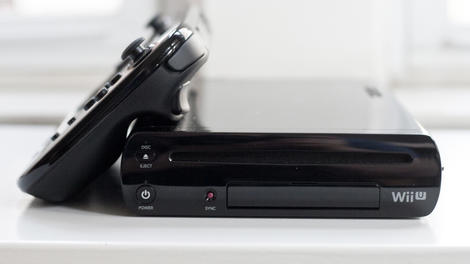
Nintendo's dropped several hints that it's already looking ahead to the Wii U's successor, but it's now being a tad more explicit about its plans.
Nintendo game design chief, Shigeru Miyamoto, has confirmed that the next console is in development, and even dropped a hint about who might be helping to launch it.
"While we're busy working on software for the Wii U, we have production lines that are working on ideas for what the next system might be," he said in an interview with the Associated Press.
What makes this (mostly unsurprising) news a tad more interesting is a separate announcement that may turn out to be nothing more than a coincidence. Recently AMD CFO Devinder Kumar announced that the company had just landed two big design wins. At the time he said: "one is x86 and the other is ARM, and at least one will be beyond gaming, right. But that is about as much as you going to get out me today. From the standpoint [of being] fair to [customers], it is their product, and they launch it. They are going to announce it and then […] you will find out that it is AMD's APU that is being used in those products."
It's unclear as to exactly which ARM project he's hinting at, but if it were to appear in the Wii U we're crossing our fingers that it's the Project Skybridge SoC that was announced earlier in the year.
More likely is that the next Nintendo console will be powered by a x8 SoC like the PS4 and Xbox One, but as we're probably not going to see the platform for at least a couple more years, who really knows?
Gettin' Shiggy with it
Shigeru Miyamoto also hinted that Mario might be the one to launch the console, however the Italian plumber may get a makeover beforehand. Miyamoto explained that, like the gradual evolution of Disney's Mickey Mouse, he'd like to see the next phase of Mario tie in with the next platform."With each digital evolution, [Mickey Mouse] was there to usher in the next era," he said. "I think that maybe when we release the next hardware system, you can look forward to seeing Mario take on a new role in a new game."
Interesting - perhaps we'll see Nintendo go all Frank Miller by portraying a older, weathered Mario a la The Dark Knight Returns. Or maybe we'll finally get the GTA-Mario crossover game we've been pining for, with Mario trading in his hat and wrench for cigarettes, women, tasteless tattoos, and an affinity for street crime.
- Is it time to buy the Wii U?

Read More ...
This is Samsung's Z1 Tizen phone, launching in January

It's been a long wait for Samsung to push out a smartphone powered by its own Tizen software, but it looks like the much-anticipated handset is almost upon us.
There were expectations that it would launch this month, however according to The Korea Economic Daily it's now been pushed back to January. A Samsung official is quoted as confirming that the handset will launch on January 18, 2015 in India.
We had hoped to see a high-end Tizen smartphone, dubbed the Samsung Z, appear this summer. Samsung had a change of heart though, scrapping the handset launch and saying it wanted to stockpile apps before unleashing Tizen on the world.
The imminent Samsung Z1 is a much more modest affair, said to be sporting a 4-inch WVGA display and a dual-core 1.2GHz processor. There's also a dual-SIM card slot, a 3.2-megapixel rear camera, and 3G connectivity, according to early reports.
Z1 leaks
More fuel for the Tizen fire comes from a tweet and a blog posting that purport to show the Tizen-powered Z1 in the (metal) flesh. It looks stylish enough, even if there's not much power under the hood.With a sub-$100 price tag and a limited launch in India, Tizen is being positioned as more of an Android One competitor than something that's going to challenge iOS and the mainstream version of Android. It may eventually reach the US and UK, but there are no indications of that happening right now.
Still, it will be interesting to finally get a look at Tizen on a smartphone (as opposed to a smartwatch) and find out what it's capable of. Let's hope the launch doesn't get pushed back any further, and that the Z1 doesn't meet the same fate as the Z.

Read More ...
Downloads: Christmas crackers: Foobar2000

Christmas just wouldn't be Christmas without a little music, and whether you're listening to traditional tunes or something a little different, Foobar2000 can take care of all of your music needs. This free player keeps things wonderfully simple with its clean, uncluttered interface.
There's support for a wide range of popular audio formats including MP3, AAC, FLAC and many more, as well as audio CDs and CD ripping.
If you have existing playlists, they can be easily imported into Foobar2000 and arranged onto individual tabs so you can easily switch between them, and you can also create new lists with ease.
As with other media players, you can set up a watch folder so that any files that are added to it are automatically included in your music library.
With the option of adding folders from other computers, networks drives and local storage, you may well end up with a large number of music files, so it's just as well that there's a sturdy tool available to help you find what you're looking for. Foobar2000 is a highly competent program from the offset, but you can add extra feature by installing free add-ons.

Read More ...
Two months in, Apple Pay is doing impressively well

Tech-savvy punters in the US have been able to use Apple Pay in stores since October 20, and now we have our first indication of just how well it's doing.
Analyst firm ITG has reported that the tech accounted for 1% of all digital payments made in the US in the month of November. That's a solid start for Apple considering you need an iPhone 6 or iPhone 6 Plus and iOS 8.1 to be able to use it on the go.
By comparison, the more established Google Wallet accounted for 4% of transactions in the same period. ITG said Apple's service has "strong momentum" and "the ability to significantly transform the mobile payment space."
What's more, 60% of Apple Pay buyers made use of the service multiple times in the same month. That's an impressive level of loyalty considering PayPal's comparable figure is hovering around the 20% mark.
Cyber shopping
And where exactly are these dollars being spent? Whole Foods was the most popular retailer for Apple Pay users, with 20% of all transactions. It was joined in the top five by Walgreens, McDonald's, Panera Bread and Subway.Apple Pay users activated the tech an average of 1.4 times per week and continued to use Apple Pay at the same retailer 66 percent of the time. The general feeling is that these are strong figures for Apple, and the statistics should look even better once the Apple Watch is out.
If you're in the UK and eager to start swiping with your iPhone to pay for goods, services and McDonald's fast food, the indications are you might not have much longer to wait.

Read More ...
Tech Bargains: TechRadar Deals: PS4, Xbox One, TV + soundbar, headphones and more!

Saving you money is what TechRadar Deals is all about, and we've got some more bargains for you to consider here.
Whether you're after something for the family or simply looking for bargains for your own good self, we've got some deals for you! And if you haven't heard about the deals bonanza that's going down on the 26th, check out our Boxing Day sales page!
Here's a great little deal to kick us off. If you're looking to pick up a kick-ass USB stick, you can currently get the SanDisk Cruzer Extreme USB 3.0 drive with 64GB capacity for just £24.99.
Today's Hot Deals

If you're after the cheapest possible price on a PS4 or Xbox One console today, this is probably it. By using the secret code GKHC9 at the checkout, you can currently get an extra 20% off the price of both, leaving you paying just £279.20! Get the PS4 deal | Get the Xbox One deal

This is a great deal on a TV and soundbar combo. Pick up the Sony KDL-42W829 - one of TechRadar's favourite TVs of 2014, with a Sony soundbar and subwoofer, all for just £509 while stocks last at Currys.

Here's an exclusive deal just for you. Portable phone chargers are one of the most useful gadgets to own, and with the secret code TR14XMAS you can currently get £3 off the Omaker Premium portable charger with 10,000mAh of charge! That makes the price just £14.99.

Looking for a boatload of storage space for your home computer? This massive 5TB hard drive can currently be had for just £119.99 at Amazon.

And finally, IWOOT currently has the B&O Beoplay Form 21 headphones at a sizeable discount, currently just £47.99.
MORE DEALS
Yamaha RX-V377 5.1Ch 100W Output 4K Ready AV Receiver - £179 - Richer SoundsXbox One Console - £285.00 @ Amazon
Crucial M500 240GB SSD £64.98 Free Delivery @ Amazon
Lenovo e50 Quad Core Desktop PC 25% off £149.99 (£119.99 after cashback) with free delivery @ ebuyer
Sony Xperia Z3 Sim Free £399.88 at unlocked-mobiles
Griffin CinemaSeat for iPad Air - Now £4.98 (was £29.95) @ John Lewis (Click & Collect)
From Dusk Till Dawn 1-3 Complete Collection Blu-ray £8.99 @ Zavvi
Habitat Kringle Small Colour-Changing LED Tree only £6 Argos
80% off 50 Pranks Magic Tricks Tin or 50 Amazing Magic Tricks Tin £2.00 ( was £10) @ Halfords

Read More ...
Interview: World could "run out of storage capacity" within 2 years warns Seagate VP
Seagate VP for branded products group, Mark Whitby, walks us through the fascinating world of storage, warning us of the dangers of not producing enough data and introducing us to the concept of the Zettabyte. The world, he says, will produce 44 of these by 2020, which might not sound a lot until you consider that a Zettabyte is 1^21 bytes.
TRP Tell us a little bit more about Seagate
MW Seagate is a leading provider of hard drives and storage solutions. From the videos, music and documents we share with friends and family on social networks, to servers that form the backbone of enterprise data centers and cloud-based computing, to desktop and notebook computers that fuel our personal productivity, Seagate products help more people store, share and protect their valuable digital content.
Seagate offers one of the industry's broadest portfolio of hard disk drives, solid-state drives and solid-state hybrid drives. In addition, the company offers an extensive line of retail storage products for consumers and small businesses, along with data-recovery services for any brand of hard drive and digital media type.
The company developed the world's first 5.25-inch hard disk drive (HDD) back in 1980 and in March, 2013, Seagate also became the first storage manufacturer to ship two billion drives globally. Seagate is headquartered in Cupertino, California and employs more than 50,000 people around the world.
TRP Why should people care about storage?
MW Data has never been more important. As valuable as oil and just as difficult to mine, model and manage, data is swiftly becoming a vital asset to businesses the world over.
Companies large and small are taking their first steps in data analytics, keen to gain an insight into how their customers behave and so better position themselves in the market place. Although still in its infancy, analytics holds the potential to one day allow them to find solutions, sell more products and develop customer trust.
While most businesses have yet to determine how to get the most from their existing data, let alone understand the masses of unstructured data from outside their organisation, they do accept its potential. Tomorrow's competitive advantage may well be driven by the ability to quickly identify the right data, collect it, analyse it and act on it.
In order to amass this valuable digital repository, however, there must first be ready storage capacity. And in order to drive all possible value from that data, it must also be stored in such a way as to be quick to access, efficient to manage, and low-cost to maintain. Unfortunately, therein lies the rub.
Data centres today are not equipped to be able to handle the anticipated influx generated by the Internet of Things, nor geared towards feeding it smoothly across to the analytics platforms where it can prove its worth. There is little chance that the billions of whirring silicon-based hard drives around the world will be able to keep up with the flood of data driven by the 26 billion connected devices (not including some 7.3 billion smartphones, tablets and PCs) that Gartner predicts will be in use by 2020.
TRP What do you think will be the main challenge facing the storage industry over the next 5 years?
MW Three words: data capacity gap.
We are entering a world where everything is connecting to everything else and the resulting big data is anticipated to solve virtually all our problems. However, by 2016, the hard drives housed in all those connected devices, whirring away in countless data centres, will start to reach their limits.
The total amount of digital data generated in 2013 was about 3.5 zettabytes (that's 35 with 20 zeros following). By 2020, we'll be producing, even at a conservative estimate, 44 zettabytes of data annually.
A zettabyte might not be a word you've heard of – even Word's spellchecker doesn't recognise it – but consider it in terms of a more familiar unit. A standard smartphone today will have around 32 gigabytes of memory. To get to one zettabyte you would have to completely fill the storage capacity of 34,359,738,368 smartphones.
At this current rate of production, by 2016 the world will be producing more digital information than it can easily store. By 2020, we can predict a minimum capacity gap of over six zettabytes - nearly double all the data that was produced in 2013.
TRP If the world is running out of storage, why can we not simply increase production of hard drives and build more data centres?
MW Unfortunately, the imminent breach between storage demand and production is not a problem that can so easily be solved. The fact of the matter is that it's far harder to manufacture capacity than it is to generate data. Building factory capacity that is capable of meeting such stratospheric demand would take hundreds of billions in investment. It's simply not a realistic option.
Another factor is the technology in use by the storage industry today. Even if the investment was there and thousands of new data centres could be commissioned, it's becoming more difficult on a molecular level to squeeze increasingly dense volumes of information onto the same amount of space.
Seagate produced its first ever hard drive in 1979: it had 5MB of storage and would have cost a few months' wages. What it could store today is about 2 seconds of low resolution video shot on a smartphone, or 2 high resolution photos. A modern 5TB hard drive will set you back less than £200 and is capable of storing 2 million photos, 2.5 million songs and about 1,000 movies. Although it's not physically any larger than our oldest hard drive, in capacity it's actually 1,000,000 times bigger.
So, while the ability to squeeze ever more dense data onto the same amount of space is a real testament to human ingenuity and engineering, it's starting to reach the point where new technologies will have to take over.
TRP What are some of the latest innovations in data storage that could help heal the data capacity gap in 2020?
MW Silicon may be the work-horse that has helped us get to where we are today, but it's starting to show its age. Fortunately, there is an impressive amount of innovation taking place in the industry at the moment and a number of these advances could help us to seal the data storage breach over the next five to 10 years.
RRAM (resistive random access memory) is one such example. A smart type of computer memory, this could, in theory, let us store tens or even hundreds of times as much data on our smartphone. The high difficulty and costs of production have meant that many companies have overlooked it in the past s, but researchers at Rice University have recently had a break-through. They have shown a way to make RRAM at room temperature and with far lower voltages. Some prototypes have even been proven to store data densely enough to enable a terabyte chip the size of a postage stamp.
If RRAM doesn't seem quite far enough removed from the world of silicon-based storage, there's also DNA to consider. Last year, a team of scientists from the European Bioinformatics Institute reportedly stored a complete set of Shakespeare's sonnets, a PDF of the first paper to describe DNA's double helix structure, a 26-second mp3 clip from Martin Luther King Jr.'s "I Have a Dream" speech, a text file of a compression algorithm, and a JPEG photograph in a strand of DNA, no bigger than a speck of dust. Another forward-looking team at Harvard University's Wyss Institute later brainstormed their way to successfully storing 5.5 petabytes, or 700 terabytes, of digital data into a single gram of DNA.
TRP Is Seagate developing any new storage solutions at the moment?
MW Heat-assisted magnetic recording (HAMR) is one new technology that Seagate is investing in. This method uses lasers to first heat the high-stability media before magnetically recording data. HAMR is expected to increase the limit of magnetic recording by more than a factor of 100 and this could theoretically result in storage capacities as great as 50 terabits per square inch - current hard drives generally have a capacity of a only few hundred gigabits per square inch. To put this in perspective, a digital library of all books written in the world would be approximately 400 TB— meaning that in the very near future conceivably all such books could be stored on as few as 20 HAMR drives.
While these technologies are still some way from our desks and data centres, these advances and others like them are certainly on their way. Innovation combined with the plunging cost of components is ultimately what's needed if we are to keep up with the world's growing demand for data storage.
TRP Will CIOs need to supplement existing storage resources?
MW CIOs certainly need to consider the implications of a data capacity gap for their business and address it by thinking strategically and longer term in regards to their storage resources.
Typical big data resides on traditional disk storage, using standard hardware and software components. Since companies began to store information, a large amount of standard infrastructure has built up around the process. Data centres today include legacy components comprised of hardware and software stack components. This approach is highly inefficient - in a single system there will often be several unsynchronised components caching the same data, each working independently, but with very poor results. In order for a company to get to a better cost and efficiency model, to match the requirements in the future, a better solution must be put in place.
One of the latest big data storage methods is a tiered model using existing technologies. This model utilises a more efficient capacity-tier based on pure object storage at the drive level. Above this sits a combination of high performance HDD (hard disk drives), SSHD (solid state hybrid) and SSD (solid state drives). SSHD hybrid technology such as this has been used successfully in laptops and desktop computers for years but today it is only just beginning to be considered for enterprise-scale data centres. This new method allows the most critical data to sit on the more expensive SSDs or hybrids, where it is easy and quick to access and well-placed to be processed by analytics platforms, while the less valuable meta-data sits on cheaper HDDs where it is still available and secure, but slower to access.
This potential part-solution to the data capacity gap is part of a growing trend for larger, more efficient data centres. That the world has grown from a planet producing just under one zettabyte per annum back in 2009, to potentially well over 44 in 2020, is truly astounding. Managing this—whether you're a technologist responsible for managing data, a business user who has the task of analysing it, or a consumer trying to manage the flood of your own digital information—will be an interesting challenge for all of us.

Read More ...
Is this the metal frame of the Samsung Galaxy S6?

Want to know what the Samsung Galaxy S6 will look like? Well this could be our first glimpse of the handset as pictures potentially showing the metal frame for Samsung's next flagship have appeared.
The images were picked up by NoWhereElse from an unnamed source, although the site is cautious when linking the shots directly to the Galaxy S6.
Taking a look at the aluminium shells in the pictures, there are clear similarities to be drawn between these and the frames of the Galaxy Note 4 and Galaxy Alpha, which the S6 is predicted to mimic in terms of design.

No so fast
We're also proceeding with caution as there's no evidence as to where these images were taken, and while rows of aluminium may look impressive, it doesn't guarantee a link.
They do however fall in line with reports from Italian site HDBlog, which cites sources claiming the Galaxy S6 will have a curved display at each edge and an entirely aluminium shell.
Other rumours claim the S6 will rock up with a 5.5-inch QHD display, 3GB of RAM and either a 16MP or 20MP camera.


Read More ...
Available Tags:Apple , Acer , Microsoft , Intel , server , MacBook , Nintendo , AMD , TechRadar , Xbox , TV , Seagate , Samsung , Galaxy ,


No comments:
Post a Comment