

Is the Asus Nexus Player a new Android TV box?

It was almost a year ago that we encountered the first whispers of Android TV, and the first devices with Google's new entertainment-focused Android spin-off are expected to materialize this fall.
A new Asus device spotted by Italian site HDBlog.it on benchmarking site GFXBench, the Asus Nexus Player, might be part of that incoming wave of Android TV set-top boxes.
That name is nothing we've heard before, and it's one of the only hints to the device's purpose. Google has already listed Asus as a partner who will release an Android TV device.
The benchmark says the Asus Nexus Player runs Android L, but that may just be a placeholder on the site since no actual Android TV gadgets have launched yet.
Guesswork
Besides that the Asus Nexus Player is listed with a 1.8 GHz quad-core Intel chip with PowerVR G6430 graphics, 1GB of memory, 6GB of storage, and wi-fi.Curiously the Asus device is said to have not one, but two separate displays, one at 23.7 inches and the other 31.9 inches. Both are 1080p.
If the Asus Nexus Player is a smart TV this could mean it will come in two different sizes, but it seems more likely that it's a set-top box that was tested on two different TVs. This is all speculation for now, of course.
Android TV devices will have extensive voice controls and range from smart TVs and set-top boxes to full-blown Android gaming micro-consoles like the Razer Android TV box.
Will it fare better than Google TV before it? That much remains to be seen, but we're expecting a big Android announcement - including Android TV and Android L news - soon.

Read More ...
The new Moto X is going up for pre-order, and the Moto 360 is back

Motorola is on a role with new gadgets, but so far none of them have been very easy to get.
Good news, then, as the new Moto X goes up for pre-order starting Tuesday, September 16, Motorola announced in a blog post.
That includes two versions of the phone: the new Moto X for AT&T, and the $500 (about £300, AU$550) unlocked Moto X Pure Edition that comes with stock Android.
Possibly even better news is the fact that the Moto 360 is going back on sale in the US on the same day. The first batch sold out quickly, though, and Motorola warns that "quantities will be limited."
Charged up
Both versions of the new Moto X, as well as the Moto 360, will be available Tuesday at Motorola's site starting at 11am Central Time.No word on when the new phones will actually be shipped, but Motorola says their individual ship dates will be disclosed at checkout on a per-customer basis.
In addition to the phones Motorola is releasing two new gadgets on Tuesday: the Moto Hint Bluetooth headset and the Motorola Turbo Charger that the company promises will provide 8 hours of battery life after just 15 minutes of charging.
And finally Motorola wants to make sure everyone is aware of its trade-in program, by which it might trade you up to $300 (about £180, AU$330) for your old phone.
Presumably there will be nothing stopping global customers from pre-ordering the unlocked Moto X Pure Edition on Tuesday, but nevertheless Motorola also promises that "you'll hear more from other US carrier partners soon and from our partners around the globe regarding additional Motorola product availability."
- TechRadar pits the Apple Watch vs the Moto 360

Read More ...
Industry voice: Is Apple making a push into healthcare with Watch?

The announcement from Apple is an expression of intent to take the tech battleground in health to the next level.
Apple Watch signals the company's entry into the fitness and healthcare markets, one that comes with a bang rather than a whisper.
From a healthcare perspective, however, Apple Watch seems to be geared more towards fitness rather than general health, at least according to this week's announcement.
Apple hasn't explained in detail how it links with Apple Health although, undoubtedly, I'm sure we will see integration with health apps further down the line.
There is a great scope for healthcare use, provided the apps are reliable and correct in their data sourcing.
From the perspective of GPs and healthcare practitioners, it's a good time to begin embracing tracked data.
Even though the general data collected by fitness trackers as well as, I'm sure, the Apple Watch isn't in-depth enough to base a diagnosis on, being able to monitor heart rate, sleep cycle and activity levels can be of assistance in determining the patient's health condition.
That said, the data from the Apple Watch can be useful in aiding the diagnosis of conditions like hypertension but, of course, it requires an appointment with a doctor to correctly decipher the data and make an informed diagnosis.
It's all about the data
So in essence, it's not an end-to-end solution. The collection of data is just one part of the treatment process, an appointment with skillful healthcare professional is needed to interpret what it all means.Even under the circumstances that a doctor is remotely monitoring a user's data, the service will require a robust infrastructure that simply does not currently exist. Furthermore, Apple will need to integrate into doctors/healthcare professionals' existing systems to be of benefit to most users in the UK.
Apple's solution is undoubtedly a big step forwards in terms of health tracking, however, a lot of work still needs to be done before we have a complete healthcare solution.
It's also worth noting that this technology can cause some users to experience anxiety over the data.
From the medical perspective, it's important to use the data from your wearables to simply stay informed as it by no means provides enough data for self-diagnosis.
I would like to stress that the Apple Watch or any other wearable at the moment is not a substitute to a consultation for a healthcare professional.
In conclusion, I would like to echo the views of Pam Garside, of the Judge Business School from the University of Cambridge and adviser to Zesty.
Mobility is key in our daily lives, which applies to health, too. Having real time data available to healthcare professionals can be vital, and it's great that these devices support this.
Apple has a stellar reputation, so we hope that its operating system will be able to keep up with the healthcare industry.
It would be dramatically increase the efficiency of healthcare professionals if they were able to tap into their patients' health data, but this, of course, poses data privacy and security issues that will need to be overcome.
- Lloyd Price is the co-founder of Zesty, a UK-based online healthcare booking service.

Read More ...
Industry voice: Mobile payments: Why a mobile phone needs to be more than a fat credit card

Recent news that Amazon has announced a card reader and mobile app for small business owners to take payments on their mobiles shows just how far the payments industry has come.
Couple this with Apple's announcement that the iPhone 6 handset will include a 'tap and pay' iWallet wireless payment system and suddenly you start to realise that how you pay for things matters more to consumers now than ever.
Offering people the right choices for payment can make all the difference between a completed purchase and an abandoned basket.
We have more payment choices available to us than ever before, but not every payment option is right for everyone or every product. Indeed, there have been plenty of experiments in mobile payments that have failed.
Why? Because they basically set out to take something pre-existing for which payments via cash or cards worked perfectly well, and simply tacked a mobile dimension on to the end.
Augmented mobile payments
Granted, a lot of the enabling technology was very clever but the proposition for the mobile consumer, in a lot of these cases, was not compelling enough. Mobile payments are getting simpler but, in most cases, they still have a job to do to displace cards and cash.Research we commissioned earlier this year supports this view. Our key finding was that consumers see nothing fundamentally wrong with cash and cards.
Indeed debit cards remain the most popular choice of payment (preferred by 48% of us), while cash is now preferred by about a quarter (although that percentage increases within lower income groups).
While the growth in spending is being fuelled by 'non-cash, non-card' payments, which include mobile payments and vouchers, these new methods remain minority pursuits.
People are not about to start ditching their wallets in favour of their phones for some time.
Online and mobile technologies, in particular, work when they enable brand new, instant and immediate experiences with new payment processes embedded within them.
For example, Hailo lets people hail and then pay for taxi ride without having to worry about carrying cash with them.
PayByPhone does a similar job in street parking, freeing customers from the worry of having to rush back to the car to top up the machine if they run out of time.
These apps have proved so successful because they do more than replace the payments process: they use the functions inherent in the mobile device genuinely enhance the customer experience.
It's not how you pay, it's what you're paying for that counts
As handset manufacturers begin launching mobile devices with payment functionality hard-wired into them, businesses have a golden opportunity to develop all kinds of new commerce offerings.In order to be a hit with consumers they will need to offer things that only a mobile device can offer: location specificity, personalisation, the mobile screen real estate, smartphones' SMS messaging and voice calling capabilities.
And it is in these areas where mobile payments have a significant edge over 'dumb' cash and card payments. It is here where businesses can really add value to consumers, in a way they can't with cash and cards.
As long as cards and cash remain our favourite means of payment, businesses looking at opening up the mobile channel have to be sure that they are giving consumers clear reasons for purchasing via their phones. After all, if all the phone does is make a payment, it's no more use than a fat credit card.
- Dan Salmons is the managing director of PayPoint Mobile and Online. He lead the development of the internet payments and mobile payments businesses.

Read More ...
Week in Gaming: Destiny and Super Smash Bros 3DS first impressions, GTA 5 PC woes

It came without warning. We awoke on a Saturday morning to talk on Twitter of a Super Smash Bros demo. People were begging and pleading for the download codes that Nintendo had exclusively released to its club platinum members overnight. We weren't a platinum member. This was a problem.
And so began our mission to find a working Super Smash Bros demo download code. 3DS gripped tightly in hand, we were a tech site on the edge, anticipating the next code drop and ready to punch those numbers and letters into the screen with an absurd level of determination. But every time we got one, someone beat us to it.
It was turning into an event you'd one day tell your grandkids about. "Oh I was there in the great Smash Bros code battle of '14. You truly saw the desperation of humanity on that day. And sometimes at night, I still see the words so vividly: 'Error: code already used'"
But just when we were about to give up hope, a hero delivered a working code to our inbox. That eShop loading screen had never look quite so beautiful, and within 10 minutes we were booting up Super Smash Bros 3DS for the first time.
So what do we think? Well, it's just a demo, with only five characters and one stage to choose from. But let us sum up our initial thoughts in the following…
- The game runs impeccably smoothly with (so far) not a frame rate problem in sight, which is important because this is a series that's always been about quick reaction times. Every character is rendered beautifully too.
- You will, however, need some time to get used to the controls: it's a little harder to pick up on the handheld with all those buttons being so small, and it can be a bit frustrating at first.
- Playing on a standard 3DS, we found the screen size to be a tad too small for all the mayhem. It's certainly not unplayable, but it's going to be easier to keep a track on your fighter with an XL - and indeed the Wii U version.
- Villager is awesome, with heaps of references to the Animal Crossing games. Plus, his final smash move is to build a house on your opponent. HOW COOL IS THAT!?
- You'll be able to use your 3DS as a controller for the Wii U version of the game.
We're yet to play the full version, but so far we're blown away with how much Sora Ltd and Bandai Namco have crammed into a single cartridge. This is Smash Bros through and through, fine tuned to perfection. We can't wait to get our hands on the full version soon.
Heist fidelity
Rockstar's finally confirmed it: GTA 5 will come to PS4 and Xbox One on November 18, and it's not just going to be a lazy port either.It's going to have 100 new tracks! Increased draw distances! Higher resolution! Better-looking grass! Up to 30 players online! More guns to shoot old ladies with! EVEN THE DOGS LOOK EVEN FURRIER!!
Plus, Rockstar will slip you a shady briefcase filled with a million dollars of in-game currency if you pre-order GTA 5 on any of the new platforms. As you can probably tell, we're a bit excited to revisit Los Santos in glorious new-gen-o-vision.
And to keep your appetite whetted, the team over at CVG have done a nice little trailer analysis, which you can check out below.
But it wasn't all good news. While a PC release date was also confirmed, that date isn't until January 27 2015.
Predictably, this has got a lot of PC gamers taking to their keyboard to unleash their anger in the YouTube comments, but everyone please just chill out - we all know it's going to be worth the wait. Just like Red Dead Redemption was.
Oh right...
It's Destiny, baby
You might have heard of another little game released this week. Bungie's MMO Destiny had an impressively smooth launch (that's how it's done, SimCity) and is no doubt managing to sell a few copies too.Due to the scope of the game, the reviews are ongoing, but CVG's current 8/10 verdict pretty much reflects our own thoughts on the game right now: it's a beautifully-made world that plays things too safe, but there's a lot of potential.
"Big, beautiful and generous, Destiny will keep FPS fans happy for months to come. Yet its feeble story and safety-first approach means it can't help but feel slightly underwhelming." [Full review here]
Meanwhile GamesRadar's review diary notes: "Bungie has been very smart to balance character development and combat to ensure that the focus never shifts away from the tactical, dynamic, second-to-second FPS joy of its emergent and robust shooting mechanics. And no point can I just wade in, trigger held down, and rely on my level to carry me through. I still have to think. I still have to improvise. I still have to strategically work the angles, weapons and approaches needed to get the best of every enemy in every situation. And my tougher adversaries are still damn tough."

Read More ...
In Depth: Getting rid of Google: best replacement apps for Android users

Best replacement apps for Android users
Android is an operating system built by Google but that doesn't mean that every app you use on your Android handset has to be the creation of those fine folks in California.There's a whole world of faster, sleeker, prettier apps, that don't store all your data just waiting for a download. Here's the complete solution to purging all of Google's in-built apps.

AquaMail also deserves a mention as the honourable runner-up here. It's a little easier to set up, and also has a more powerful tablet interface, if you prefer to handle your electronic mail on a bigger fondleslab. The paid version is £3.00 (US$4.95, AU$4.95) if you want to unlock all the features, however.
SMS
A texting app should, in our opinion, be the simplest thing possible – and Hello SMS is about as stripped back as it gets. It claims to be "the first tabbed texting app", and while that's not strictly true, thanks to Google's own Hangouts app, Hello does provide a pretty neat SMS experience.The side tab lets you navigate through conversations, with good touches like adding a flag to show which country an unknown message has come from, or the initials of someone who's actually in your contacts.
Messaging is as simple as you'd like it, with threaded conversations just as you'd expect, and a full range of notification customisation options. It even offers and iMessage-style feature (currently in beta), where texts to other hello SMS users are free.
Calendar
The replacement that we have used for Google Calendar for a few years now is Agenda, which offers a radically different UI to most calendars.While a month, week or day view is offered, it's the grid-free agenda view (showing your next 10 or so upcoming events) that is most useful. Navigating round the app is simple, once you get the hang of swiping between different views, and even adding events is fairly easy (although multiple calendars could be handled better). The only real downside is the £1.49 (US$1.99, about AU$2.20) asking price.
Clock
Google's Clock app is fairly utilitarian – which, in fairness, is all you really need to get you out of bed in the morning.
If, however, you want to wake up to a design that someone's really put the time and effort into, Timely is a good bet. The simple clock app is better designed than some cathedrals, and once you've got your head around the swipe-based navigation, it's also a fast way to set alarms. Best of all, it won't cost you a single shiny penny.
Camera
The main reason to ditch Google's in-built Camera app is the lack of fine manual controls, with The Big G favouring a simplified UI. Camera FV-5 Lite is an excellent free alternative, which puts more advanced controls (exposure, ISO, and metering modes, in particular) onto the viewfinder, as well as a histogram.There's even more under the hood. A good exposure bracketing option can help you make good HDR images, which is often a major help given the small sensors on smartphones. The intervalometer enables timelapse photography, assuming you can bear to part with your smartphone for the duration of an entire sunrise.
Gallery
QuickPic is everything you want in a photo viewer: super-simple, fast navigation, options that get out of the way quickly when you want to full-screen a photo. It also has integration with all the major cloud services, so that you can pull all your photos into one place.
The tablet interface is just as good, and best of all, there's support for almost every image format going – including your entire collection of cat GIFs.
Chrome
Chrome's in-built browser is fantastic if you're constantly hopping between desktop and mobile browsing, but its UI isn't the simplest, and there's always the nagging concern about Google recording your worst internet depravities.The most straightforward replacement for Chrome is Dolphin browser, a fast-and-light Android that trades Chrome's frills for some serious performance. There's also a gesture option, that lets you create a gesture to launch the browser from anywhere on your phone.
Launcher
Probably the most visual change you can make to an Android phone is to strip it of its default launcher (the program that 'makes' the homescreens and app drawer), and replace it with one of the many third-party options that litter the Play Store.The best of the lot is Nova, which offers a ton of features in its free version (and a positively overwhelming smorgasbord in the paid-for edition). You get control over icons, colour schemes, transition animations – pretty much anything, although Nova just about strikes the right balance between simplicity and customisation.

Another standout option, however, is Apex Launcher, which offers nearly the same laundry list of options as Nova. On our test devices, we saw a tiny decrease in performance with Apex over Nova. Although that's arguably balanced out by Apex's superior tablet mode. Either way, both launchers offer a fairly major step up over Google's stock launcher.
Maps
Google's Maps app is hands-down the hardest to replace, because nothing comes close to offering the quality and quantity of mapping info that Google's got on tap. The closest competitior, Apple Maps, is only available on iOS. But if you insist on escaping Eric Schmidt's grasp, MapQuest is probably your best bet.The app itself is surprisingly good, with a simple UI and a good range of options – it's just the mapping data itself that lets it down, with inaccurate and outdated coverage a major problem. At least it's free.
- Best Android apps: the essential applications you need to download on to your Android device.

Read More ...
Inflame: Achtung freebie: U2 album gives the internet another reason to hate iTunes

Apple scored one of the most amazing internet publicity own goals this week, somehow managing to make a laughing stock of itself by giving something away from free.
The free thing was the new U2 album. In these cynical times the ageing rock band is not seen as particularly fashionable. Bono is not as lauded as fellow old men Mick Jagger or David Bowie, it seems. Maybe he needs to go away for a couple of decades and get older and greyer and more statesmanlike?
But who's the most out of touch here? Is it the Apple executives who think U2 is a cutting-edge band the kids like? Or is it us, the self-aware internet people, who don't understand that we're not the audience this promotion is aimed at?
After all, iPhone has become the generic term for mobile telephone among our parents, and wouldn't mum actually like a free album from that Bono man? And besides, how often do people in their 50s and 60s have to delete pre-loaded young people's music? Every single time they buy a new thing, we suspect.
"Not another bloody Arcade Fire viral video teaser," your dad probably said, last week, deleting it from some execrable £59.99 tablet he bought in Argos. But he's not on Twitter so his annoyance went unreported.
Please delete me, set me free
Outrage over Apple's forced insertion of the U2 album into the carefully curated musical collections of the world led to a weird series of "how to" guides appearing, with plenty of tech sites running features along the lines of MacWorld's explainer covering how to get it off your phone.Reader Jong summarised the confusion felt by many, especially in the wake of the so-called iCloud hacking nightmare, saying: "I don't like it! I thought my iPad was hacked or something like that. Some of those songs are still there in the playlist even after switching 'Show All Music' to Off. It's so ANNOYING!"
Steve Bitzel is also reconsidering his technical allegiances following Apple's move, saying: "This is the first time Apple has done something that I can't stand on my iPhone. I don't have music on my phone since I use Pandora or Stitcher to stream whatever I want to listen to, but my car picked up on the songs being available and automatically tried to play them. I don't like when companies try making decisions for me."
Poor old Bono will be in tears reading the simple advice from Stephen, who explained: "Restore your iPhone when connected to iTunes from inside your computer and don't forget to back-up all your data. This takes a little longer but I successfully removed that U2 album."
Perhaps that's why he always wears the sunglasses. So we can't see him crying at how much the world hates his band.
Money, money, money
Some explanation as to why U2 were chosen for the global pimp-out was offered over at Deadspin, where reader Jagorim Jarg commented: "They don't give a XXXX what the under 40 crowd thinks. This is squarely aimed at the 40+ crowd that was into U2 at their peak (Rattle/Hum, Joshua Tree era). That age group has the money to buy Apple products and is probably consuming less music now. This free album gets them to open up iTunes again and maybe start buying more music again."Which is good, as long as they're not only opening up iTunes to delete it in a rage.
Reader CaptainHomeless is also not feeling the love for U2's 123rd studio album or Apple's battering ram approach to marketing, posting: "There are so many good reasons not to use iTunes, but 'foisting sh#t you didn't ask for on you' is pretty high up there."
Where's the drop?
Bloomberg managed to dig out some tweets from young Generation YouTube members who claimed never to have heard of U2 at all, with reader Lopan standing up for dad rock and quickly lowering the tone with his comment: "Sorry U2 was taking up valuable space you would have otherwise been using for Skrillex, you useless c***ts."U2 fan Kenneth Baker also tried to encourage readers to give the music of his minted buddies a fair chance, commenting: "But why in the hell would you people complain about free music. Really? I suggest you give it a listen and who knows, you may discover something great you have been missing out on all this time."
The bizarre decision to use U2 in the first place is a result of Apple existing in a tech bubble of its own creation, according to reader Ryan V, who said: "Apple is dating itself. It's like Tim Cook and friends sat around and ask themselves, 'U2 is cool right?' It's not, btw. Something more classic or something new would have been better."
I won't download what you tell me
Beneath a Guardian piece about the business aspects of the deal, there was more fury. Reader Muzzy62 was aghast at seeing his music collection decimated by some old rockers, saying: "This dang album tried to download on its own yesterday! I was buying 'good' music and without me even clicking on anything U2, the album was in my purchased folder. There are a lot of free tracks on iTunes, but apparently only U2's is a must-have. Naturally I deleted them but self importance reigns for U2 again."Rowan40 probably got nearest to the truth of the matter out of all the angry people, breaking it down like this: "Personally I think that they are both playing a clever game. U2 have recognised that the old ways of album, tour, album are over and are using this as publicity to advertise a tour. Apple likewise, the iPhone is their cash cow to attract attention to other products, probably not a watch but Apple Pay could be the next big thing."

Read More ...
The future of smart home technology: ultimate control for who?

Industry experts are predicting that 11% of homes will be 'smart' by the end of 2014. This is compared to 17% of households in the US and a global average of 5%. The smart home trend is expected to continue growing with the market set to double across 7.7 million UK homes by 2019.
Many of the big household name companies – Apple, Samsung, Google – are either leading or jumping onto the smart home bandwagon. This year, Google bought out smart system manufacturers Nest for $3.2 billion (around £2 billion, AU$3.5 billion). Apple released HomeKit, enabling developers to safely connect gadgets to iOS. Samsung is currently looking to make a name for itself in the smart market with a potential acquisition of SmartThings.
Robotic overlord
Reports of new technology, innovation and streamlined efficiency are released daily. Colin Angle, CEO of iRobot, predicts that homes will soon have just one super robot which will be the centre of communications, command and control. This human-interface robot will be so advanced that it'll be able to talk to you and serve as an interface for a robot-enabled home or business.But do home and business owners want a robot to be the head of their household or workplace? While home automation gives more control to homeowners and small businesses, it simultaneously gives more information to the home automation companies. These companies will no doubt try to use this information to gain control of an even bigger portion of the market than they already have. The question remains: how much information are we prepared to share in exchange for an easier life? At what point do we draw the line?
Control for smart technology providers?
For homeowners and business owners contemplating a move into smart home design and smart technologies, there are increasing concerns that technology is further eroding our privacy. Companies like Apple and Google already know our birthdays, viewing habits and search histories – soon they will even know what time we go to bed and what time we leave for work, through data that shows when we turn off the lights and when we open the garage door.One thing that is crucial to the continued success of home automation is the security of data and this kind of personal information. A recent study by HP revealed that the majority of the most popular app-controlled devices for the home were extremely vulnerable to hackers. Lack of secure passwords and encrypted communications sent to the internet and/or a local network were the main issues. These early mistakes by the companies responsible for smart home systems may prove costly if they lose the trust of the consumer.
Ultimate control for the customer?
There are a lot of benefits that come with smart technology – and I don't just mean the everyday conveniences of washing machines that don't need to be told when to wash. Businesses are already reaping the rewards of digital technologies which are offering innovations in workplace management and giving employers access to insights on employee productivity and a range of data sets that weren't available before.Homeowners are beginning to see the benefits of bringing smart technology into their homes too. One of the most popular aspects of smart home technology is home security. Keeping our home and family physically safe is a top priority and a smart home system is the best way to do that.
With a smart home, you can set the system to remember your previous two weeks usage of lights and curtains and have the system mimic your usage patterns while you're away to give the impression that someone is still at home. Smart homes are also able to detect intruders with passive infrared sensors, or window sensors, and relay the information to you and the police by phone call, email or text message. With certain home automation systems, the homeowner will be able to view the security cameras installed in their home from anywhere in the world, so they can always know exactly what is happening.
Another great smart home security feature is the ability to turn on your security system online when you leave the house, or go to bed. By installing proper security features – alarm systems, cameras, safes, security doors and windows – you make your home six times less likely to be broken into. This kind of control is empowering for the individual homeowner, who is able to protect their home even when they're away.
The future smart home
When it comes to the future of smart home technology, there is one thing we can be sure of – technology is continuing to improve, innovations are being made, and they are all focused on the consumer. Of the 10 brands reviewed by HP, six or seven were deemed insecure, but you can bet that the three or four that did have encrypted information and secure passwords are going to become market leaders and set the standard in the industry.The consumer – the homeowner – remains at the centre of the smart home. Smart home systems are there to enhance the lifestyle of the homeowner, make their lives easier and more productive through intelligent devices, and put them in the position of ultimate control.
- Malcolm Stewart is owner and founder of Kensington AV, a high-end home automation installer in and around London.

Read More ...
Industry voice: How to deliver first-class mobile services in the enterprise
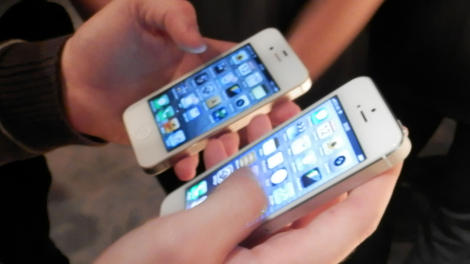
People using mobile services expect them to evolve as new technology becomes available: innovative features, additional services, improved performance – customers will demand all of these, and won't be happy if they have to wait six months to get them, especially when they see their friends' service providers offering the enhancements within weeks.
Agility is the name of the game, and you need to structure your mobile delivery approach to be rapid, iterative and responsive to evolving needs.
However, you must also think strategically, to ensure your agile delivery takes you in the right direction. While there can be a natural tension between agile and strategic thinking, the right approach can address this effectively.
Moreover, you need more than just a team of iOS or Android developers. High-quality mobile services require a broad range of interconnected skills.
Skills blend
While app developers will play an important part in the delivery of your mobile services, they're one cog in a much larger system that encompasses technical and business skills – all of which are required to make mobile a success. You need expertise in strategy roadmap development, business process design, experience design, systems integration, agile development, and testing and release strategy.No one person will possess all these skills. This is why it's important that the respective individuals understand the others' roles and the implications on their own job. For example, an experience designer must create something that will load in a tolerable time – a mobile user will not want to wait 10 or 15 seconds for a page to appear.
Moreover, the blend of skills required to deliver a great mobile service is rarely found within one organisation. It's therefore important to choose your delivery partner carefully, to complement your own in-house competencies and ensure no part of the overall mobile experience is left out.
Mobile delivery approach
High-quality mobile services begin their life as part of a high-level strategy: what does your organisation want to achieve, and how will mobile help it get there? This strategy then needs to be turned into a list of features – a service catalogue or product backlog, if you will.From here, you select which features to deliver first, bearing in mind the relative cost and time required for each. This is when you can set about building your four-tier engagement platform, delivering features iteratively to construct your mobile service offering.
Each iteration should follow a typical agile delivery cycle, delivering a carefully defined set of functionality. Whether you deploy this after each iteration or bundle up a few features to release together depends on their importance and complexity.
Following deployment, you'll want to test your mobile experience with real users, use your analytics to assess how it's being used, and feed this learning back into your service catalogue. This will help revisit your strategy and shape future iterations to meet continually changing customer needs.
- David Shepherd is IPL's Delivery Director and has been an integral part of successful complex mobile delivery programmes.

Read More ...
Available Tags:Asus , Android , TV , Apple ,


No comments:
Post a Comment