

Updated: Samsung Galaxy Note 4 release date, news and features

Note 4 release date, screen, power and camera
The all-new Samsung Galaxy Note 4 has now been officially unveiled, but what does the successor to the Samsung Galaxy Note 3 actually bring?Well there's no change to the size of the screen, which still comes in at the whopping 5.7 inches that we have come to know and love, but Samsung has made some significant changes to that killer feature.
That 5.7-incher is now a Quad HD Super AMOLED (2,560 x 1,440 resolution) technology that stretches to 500 pixels per inch.
You can check out our hands on: Samsung Galaxy Note 4 review for our first impressions of just what has changed in this latest generation.
Cut to the chase
What is it? Samsung's fourth gen phablet
When's it out? September
What will it cost? A lot, even more than the pricey Galaxy S5
What is it? Samsung's fourth gen phablet
When's it out? September
What will it cost? A lot, even more than the pricey Galaxy S5
Samsung Galaxy Note 4 release date and price
The Galaxy note was announced at IFA 2014 on September 3. Samsung had sent invites for an event advising people to 'Note the date', which was a bit of a give away, and so it proved.
We're still waiting to hear an exact release date for the phone in territories around the world, but it looks very likely that it will launch in September, if not trickling into the start of October.
There's been very little said about the price yet, but a listing on Indonesian site erafone puts it at IDR 9,499,000 (or roughly £490 / $810 / AU$870) which seems believable, especially since those conversions don't include local taxes. Better start saving.
An amazing screen - again
First up, screen size. The original Note came with a 5.3-incher, the Note 2 showed up with a 5.5-inch display and the Note 3 pushed things to 5.7 inches.Going by this logic the Galaxy Note 4 should have come with a 5.9-inch display, which would see it match the HTC One Max and LG G Pro 2, while still falling short of the 6.4-inch Sony Xperia Z Ultra.
But actually Samsung showed admirable restraint, keeping the Note 4 to the 5.7 inches of its predecessor, but throwing a boat-load more quality into its killer feature.

The screen now boasts Quad HD Super AMOLED (2,560 x 1,440 resolution) technology that stretches to 500 pixels per inch.
Plus, Samsung is throwing in what it is calling an adaptive display - one that changes depending on the light of the place you are viewing the screen - and on paper you have the optimum viewing no matter what situation you are in.
It even decided to get fancy and launch a variant of the phone called the Samsung Galaxy Note Edge, which has a curved display that folds around the spine of the phone. Sadly this didn't make it to the main device, but it's a good test to see if there's desire for such innovation.
Samsung Galaxy Note 4 power and storage
The Galaxy Note 4 bring with it a pretty impressive 2.7GHz quad-core Qualcomm Snapdragon 805 processor, which certainly won't be struggling to keep things moving despite the screen.Also worthy of, ahem, note, is the 3GB RAM that the phone is running - there are still plenty of people with PCs that don't have that kind of memory.
The internal memory of the Galaxy Note 4 is a not insignificant 64GB, which should mean you don't have to choose between your collection of Jean Claude van Damme movies and your lovingly put-together eclectic music.
Of course, there's a microSD slot too, with the ability to add 128GB more if you're thinking of downloading the internet for a day.
Samsung Galaxy Note 4 camera
The Galaxy Note 4 came in for quite the camera upgrade, but not the 20MP sensor that a report from ET News suggested was due for release in the second half of the year.
Instead, it's gone from 13MP to 16MP but camera-philes will be more impressed with the Smart Optical Image Stabilisation, which helps keep every picture blur free and clear when you're snapping around.
If you hate the word selfie, look away now. The front-facing camera has followed the inexplicable trend and will allow you to take better self portraits, with a 3.7MP sensor with a f/1.9 aperture, allowing in a lot more light and mitigating the lack of flash.
The sensor can now make pictures look a lot more natural thanks to a 90-degree field of view – and the Note 4 has even stolen the panorama mode from the rear-facing camera to allow you to fit more people into your personal snap.
Oh, and you can tap the heart rate sensor on the back of the phone (more on that later) to take your pic to avoid shaking the camera. That's handy.
You can also use the rear camera in unison with the S Pen. A new feature called Snap Note allows you to take a picture of a piece of paper (or whiteboard) and change what's in the picture, which will apparently be excellent for when taking notes in a lecture. We're not sure how, either.
Operating system and the S-Pen
Samsung Galaxy Note 4 operating system
The Samsung Galaxy Note 4 runs the latest version of Android, Android KitKat.It is of course overlaid with Samsung's TouchWiz interface, just like the new version which adorns the Galaxy S5.
The new UI for the Note does have some unique features though, offering up the ability to resize apps over the screen (in a similar way to Windows) so you can pack more information on the display.
Given some people are still struggling with the idea / point of having two windows open at once on a smartphone, this could be something of an overkill – but the Note is all about offering the user as much functionality as possible, and this certainly falls into that category.
Design and special features
Samsung has decided to give the Note 4 more of a premium finish, with a metal rim surrounding the handset, shielding the rest of the chassis.Our first impressions suggested that the Note 4 felt great in the hand, although that faux leather back is going to be as divisive as it was in the Galaxy Note 3 - despite some design tweaks and the inclusion of a heartrate monitor on the back of the phone, in the same way as the Galaxy S5.
The S Pen has received a huge upgrade again – the aforementioned Snap Note, for example, but also in the tactile feel on the screen.
We've often criticised the Note / S Pen combo for feeling too fake, plastic on glass sliding around and not replicating the feel of the pen on paper. That's been solved with the Note 4, with our hands on review finding that the new stylus offered a more sensitive and smart way of interacting with the phone, actually replicating handwriting faithfully.

Those that like to take voice recordings of others will love the new feature that uses multi-directional microphones to zero in on one speaker and record only that person, which will be really useful in noisy enviroments.
There's also a UV sensor added in too, presumably to give accurate information on how much you need to cover up / apply the lotion on hotter days. It's another step toward the smartphone becoming a big reason we all stay a lot healthier – and anything that can help avoid cancer has to be a good thing.
We'll be adding to this article over the next few days, but you can read more about the Galaxy Note 4 in our early hand on with the phone.

Read More ...
Will the iPhone 6L really be called the 'iPhone Plus?'
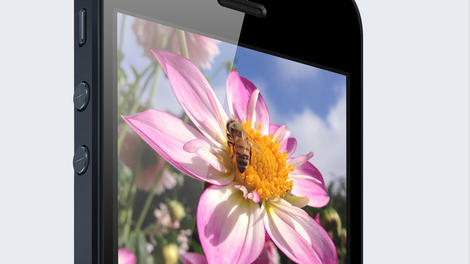
We know we're in for two flavors of the iPhone 6 on Tuesday, but just how Apple will label the dual devices remains to be seen.
Our best guess is that the 4.7-inch variant will be called, "iPhone 6," and we've kicked around "iPhone 6L" as the larger version's moniker. Today, however, we're hearing something completely different.
Word is the larger iPhone 6 will be called the iPhone Plus. Not exactly the most inspired name, but one you can't argue doesn't get the message across.
If you remember way back to last year, "iPhone Math" often surfaced as the name of a larger iPhone 6. While not exactly the same, maybe iPhone Plus morphed out of Math? It seems possible.
Whether it's the iPhone 6L or iPhone Plus or iPhone Air, tune in right here tomorrow at 10 a.m. PT/1 p.m. ET/6 p.m. GMT when Apple's iPhone 6 launch gets off the ground.

Read More ...
One carrier has outed the 4.7-inch iPhone 6 specs a day before launch

The day many an iFan has been waiting for is almost here, but if you want to know exactly to expect from one iPhone 6 before Tuesday's big reveal, read on.
Specs for the smaller new iPhone have appeared thanks to China Mobile, giving us a glimpse at what will likely be the final features for the 4.7-inch iPhone 6.
Among them are an A8 SoC with a quad-core CPU, 1134 x 750 resolution display made of sapphire glass, an 8MP back camera sensor and a 2.1MP in the front, and, shockingly, iOS 8.
The 4.7-inch iPhone 6 will also apparently come in 16GB, 32GB, 64GB and 128GB of on-board storage, flex a nanoSIM slot, come in gold, white or black, and measure 138 x 67 x 7mm. Finally, the phone is said to be water- and dust-proof, ruggedized features already found in the Sony's Xperia line and the Galaxy S5.
According to China Mobile, the smaller iPhone 6 release date is slated for September 19 but the larger, 5.5-inch flavor won't go on sale that day. As for the larger iPhone 6's specs, those are a mystery, too, suggesting the phone isn't quite ready for public consumption.
TechRadar will be on the ground at the iPhone 6's Cupertino launch, so tune back here to see what rumors are real and which are pure fiction.
- Get read for the iPhone 6 and the iWatch tomorrow

Read More ...
Dolby Atmos for home theaters is coming via Transformers and Vudu

Dolby's shiny new "multidimensional" Atmos sound technology has been slowly making its way toward home theaters since it debuted in theaters in 2012, and now it's finally about to arrive.
Dolby Atmos debuted in theaters with Disney Pixar's Brave, and it will arrive in home theaters with Paramount's Transformers: Age of Extinction, the company has announced.
More films with Dolby Atmos for home theaters will follow later this year both on Blu-ray and streaming, Dolby said.
In addition Vudu will be the first streaming video service to support Dolby Atmos sound.
One giant leap for home theater
Transformers: Age of Extinction will be released on Blu-ray on September 30, and Warner Bros. will join Paramount with more Dolby Atmos-enabled movies further down the line.Home theater audio systems with Dolby Atmos capabilities began arriving over the summer, though no Blu-ray or streaming titles yet supported it.
But Dolby says Atmos is "the most significant audio advancement in home theater in the last 20 years."
If you want to know what the new-fangled sound tech is all about you can head to select locations of Magnolia Home Theater and Design Centers and other retailers, including Future Shop, Best Buy Canada, hhgregg, and Sevenoaks Sound & Vision in the UK, starting this fall to get a demo.

Read More ...
Yes, Twitter is definitely testing a buy button

There have been rumors all year that Twitter is developing a way for users to buy things directly from tweets, and now the company has confirmed it.
Twitter Head of Commerce Nathan Hubbard told Bloomberg that Twitter is testing the "buy" button now, and confirmed several other prior rumors.
That includes the news that Twitter is working with e-commerce company Stripe to process payments, which was first reported way back in January.
Stripe will save users' credit card info so they can make purchases with just a few clicks, Hubbard said.
Celebrities and rock stars first
Bloomberg says the Twitter "buy" button is being developed partially in response to pressure from investors, and partially to show that tweets can have a direct influence over users' buying decisions.They'll also use the button to test what kinds of tweets are most effective in getting people to buy things.
However the feature won't roll out for everyone equally. Twitter will start by giving it to celebrities, musical artists, non-profits, and brands that are already influential, including possibly Pharrell and Burberry.
"We want to be a bridge between a consumer wanting something and getting it," Hubbard said. "Conversations are happening every second on Twitter with artists and charities and consumers, and many of those conversations are leading to transactions already."
The Twitter buy button is in testing now, and it's unknown when it will begin to roll out.

Read More ...
HP Stream is a Chromebook-killer Windows laptop with a higher-end price

After weeks of teasing and leaks, HP and Microsoft's super affordable Chromebook killing Windows 8.1 laptop is finally here.
Meet the HP Stream laptop. It's an affordable little machine sporting a 14-inch, 1,366 x 768 resolution display. Underneath the machine's plastic exterior lies an AMD AR Micro-6400T Quad APU that delivers both computing power and drives the graphics engine.
The budget laptop is also equipped with 2GB of Memory and 32GB in SSD storage, which thankfully can be expanded though a MicroSD card slot. In a Google-like move, Microsoft is offering Stream laptop owners two years of free OneDrive storage amounting to an additional 100GB of online disk space.
Throw in the speculated 6 hours and 30 minutes of battery life plus a one-month trial of Microsoft Office 365, and this seems like a Chromebook killing deal…except it's not.
So much for a plan

The only problem with the HP Stream is it actually costs $300 (about £186, AU$322), which is proportionally steeper than the $200 (about £124, AU$215) price tag Microsoft COO Kevin Turner first posited at the Redmond company's Worldwide Partner Conference in July.
Even with the higher price point the HP Stream is still a fair deal for any Windows laptop. However, there are more than a handful of Chromebooks users can get for less including the touchscreen equipped Acer C720P and the premium looking Samsung Chromebook 2.
Last week at IFA 2014 even HP announced a new Chromebook competitor that comes in at the same price as the Stream. Called the Chromebook 14, this will be HP's second 14-inch Google cloud-powered laptop, except the internals have been upgraded to an Nvidia Tegra K1 processor with a purported nine-hour battery life.
But before we get too down about the HP Stream's higher than expected price, we'll have to reserve our final judgment for our review. The Stream ships on September 24.
- The horizon is looking bright for Windows 9

Read More ...
Samsung's Gear VR headset may cost a couple of hundred

It was mere days ago that we were speculating how much the various upcoming virtual reality headsets will cost, and now Samsung has provided an answer regarding the Samsung Gear VR.
That conversation was sparked by the revelation that the Oculus Rift could cost as much as a PlayStation 4 or Xbox One, though it might also cost half that.
Now a Samsung representative at New York Fashion Week has revealed to VentureBeat that the Gear VR will cost exactly that: $200 (about AU$215) - although it's worth noting that Samsung wouldn't confirm this figure officially when contacted by TechRadar.
That was the very low end of Oculus' potential price tags, but like the RIft, which requires a PC to actually play the games that the headset displays, Samsung's Gear VR doesn't function on its own.
The future ain't cheap
The Samsung Gear VR is a headset that turns a Samsung Galaxy Note 4 into a virtual reality display, and getting the phone in addition to the $200 headset will jack up the price significantly.Samsung has yet to announce official pricing for the Note 4, but it's guaranteed to be no small sum.
Then again, if you're already planning to buy the Note 4, maybe a couple of Benjamins isn't too high a price to turn it into a virtual reality experience too?
While we have some idea what the Oculus Rift and Gear VR will cost, Sony's Project Morpheus is still a big fat question mark, in terms of more than just price.
But no doubt as virtual reality continues to gain steam even more competitors will emerge from the woodwork with their own versions of this exciting tech.

Read More ...
Samsung's Gear VR headset may cost a couple of Benjamins
It was mere days ago that we were speculating how much the various upcoming virtual reality headsets will cost, and now Samsung has provided an answer regarding the Samsung Gear VR.
That conversation was sparked by the revelation that the Oculus Rift could cost as much as a PlayStation 4 or Xbox One, though it might also cost half that.
Now a Samsung representative at New York Fashion Week has revealed to VentureBeat that the Gear VR will cost exactly that: $200 (about £120, AU$215) - although it's worth noting that Samsung wouldn't confirm this figure officially when contacted by TechRadar.
That was the very low end of Oculus's potential price tags, but like the RIft, which requires a PC to actually play the games that the headset displays, Samsung's Gear VR doesn't function on its own.
The future ain't cheap
The Samsung Gear VR is a headset that turns a Samsung Galaxy Note 4 into a virtual reality display, and getting the phone in addition to the $200 headset will jack up the price significantly.Samsung has yet to announce official pricing for the Note 4, but it's guaranteed to be no small sum.
Then again, if you're already planning to buy the Note 4, maybe a couple of Benjamins isn't too high a price to turn it into a virtual reality experience too?
While we have some idea what the Oculus Rift and Gear VR will cost, Sony's Project Morpheus is still a big fat question mark, in terms of more than just price.
But no doubt as virtual reality continues to gain steam even more competitors will emerge from the woodwork with their own versions of this exciting tech.

Read More ...
Blip: Amazon opens up online Drone Store, because why not?

Amazon, the e-tailer giant wants to be your online everything.
From being the proud owner of Twitch to releasing its own Fire Phone, the company now has a little area on the site where you can buy drones.
Yup. Drones.
In addition to a broad selection brands including Parrot and DJI, the store features building kits, drone parts and accessories, as well as buying guides, educational tools and safety tips.
We can only imagine what's next ...
More blips!
Fly over here for other buzzworthy blips.- FAA drops kibosh on 'planesharing' apps for private pilots
- One of the fish playing Street Fighter 2 is now a sponsored pro gamer
- The maker of pop-up ads: I'm sorry for what I created

Read More ...
Apple sends its first iCloud alerts notifying users of login attempts

It's looks like Apple is making good on its promises to ratchet up its iCloud security following a rash of leaked celebrity photos.
Letem Světem Applem, a Czechoslovakian site, caught an Apple email alert asking to confirm if the user accessed iCloud from a new browser. The message seems to be a one-time confirmation that's sent whenever the user or someone else accesses the iCloud account from a new browser.
As with Facebook login activity notifications users will either toss away these messages to their virtual recycling bin or report malicious behavior.

The support message follows Cook's recent remarks noting that Apple would improve user awareness by sending out email alerts as well as smartphone notification. This latest message coincides with Apple's plans to roll out a new alert system within the next two weeks.
What is it good for?
Ultimately the new alerts won't prevent future hacking attempts but users will be notified much sooner.As the recent leak of celebrity photos revealed there is a major vulnerability in Apple's cloud service even if the hackers allegedly targeted celebrity accounts. The real problem is no one noticed or said anything until the mass of revealing photos was posted onto 4chan, Reddit and other internet communities.
Now with this new early warning system users will be notified much sooner rather than never. The alerts also allows users to regain control of their accounts, hopefully stopping or tracing the individuals who are breaking in virtually.
It'll be interesting to see if Apple has any new comments to share about the recent attack on iCloud at its iPhone 6 and, very likely, iWatch event tomorrow. Stay tuned to this space for more.
- Here's hoping iOS 8 will be a bit more secure

Read More ...
Amazon Fire Phone flames out, plummets to under a buck on contract

With one of the quickest price reductions in tech history, Amazon's debut smartphone has gone from meteoric rise to a spectacular flameout back on Earth, where the handset can now be found for less than a US dollar.
Amazon today announced that US customers can now purchase a Fire Phone with 32GB onboard storage for only 99 cents (about UK£0.61, AU$1.07) with a two-year agreement - a steep drop from the initial asking price of $199.99 (about UK£124, AU$215) only two months ago.
The base model Fire Phone, also available in the US without service agreement for $449 (about UK£279, AU$484), remains locked in an exclusive agreement with AT&T, but still includes a full year of Amazon Prime benefits, a $99 (UK£79, about AU$107) value.
Amazon also announced Fire Phone is finally heading abroad, where it will be available for £0 on O2 Refresh (with a £33 tariff) in the UK, or the equivalent of €1 in Germany on T-Mobile contract with a tariff as low as €35.95 per month.
Dousing the Fire
Amazon's press releases offer no real clues to the reasons behind the steep drop in price so soon after launching Fire Phone, instead reminding the world what an incredible value the device is, especially now that it's practically free.The 64GB model also received a price cut Monday, dropping from $299.99 (about UK£186, AU$323) on contract to only $99.99 (about UK£62, AU$108), although with the 32GB base model selling for a fraction of that price, we don't see too many takers lining up to spend a hundred bucks on the troubled handset.
The discount also applies for early upgraders taking advantage of AT&T Next, where the 32GB model drops from $0 down and $27.09 per month for 24 months to only $18.75 per month, effectively spreading the contract-free price over the next two years.
Although Fire Phone has been almost universally panned by critics, Amazon's US press release serves up six quotes' worth of gushing praise for the smartphone, all apparently written by a few of the customers who actually paid for the device.
- Check out our review of the Amazon Kindle Fire HDX 8.9 tablet!

Read More ...
Interview: Twitch tells us more about being bought by Amazon

Twitch is on a meteoric rise thanks to the increasing interest in live-streaming videos (and watching said vids). Now that Amazon's bought the barely three-year old company, you can probably expect to see some changes very soon. Whether these changes are good or bad, is still unclear.
You've already heard our reactions from both sides of the spectrum, though there's primarily been positive feedback about the acquisition compared to the uproar over Facebook snatching up Oculus.
Now let's hear a bit more from Twitch itself.
The company held a quick little virtual town hall the day news broke about the deal but we went one-on-one with Twitch's PR Director Chase (just Chase) to see if we could find out a little more.
TechRadar: Can you tell us a little bit more about how Twitch will be a part of Amazon and vice versa?
Chase: The big thing for us is that Emmett will stay on as CEO, we'll be able to retain our leadership and our culture. Right now the whole thing is about acceleration; Amazon's going to help us do what we already do, but do it better and faster.
TR: What changes can we expect to see?
Chase: At this point the brands are just getting to know each other. We're not speaking to the roadmap just yet. What's really important to us is do right by our community. I don't think we're going to be going through any changes that will make people want to get their Twitch-forks out.
TR: What can you tell fans to alleviate their fears?
Chase: Amazon has acquired companies before and they've let them run their companies the way they see fit. So we've seen the autonomy happen elsewhere so we're excited to see that happen with us as well. They understand that our company is driven by our community so they [Amazon] know they we have to keep doing right by them [fans].
TR: Amazon has a big server base. Is this something Twitch is planning on taking advantage of?
Chase: It's not something we're speaking to right now but obviously we'd love to be able to take advantage of the resources they have and hopefully that's one of the things we'll see.
We talked about acceleration and it could be all sorts of things though we haven't announced anything quite yet.
TR: How do Twitch employees feel? Excited?
Chase: Oh yeah, definitely. There were a lot of other acquisition rumors and when this came about, there was a collective thought that this was great … it was a lot of "oh, this is cool"
TR: Could Twitch have been able to grow on its own opposed to being bought by a bigger company?
Chase: Most small companies nowadays often become acquired so you want to become acquired by a company you have a shared DNA with, share view on community with … one thing that was very important to Emmett that he made clear months ago when acquisition rumors were surfacing: he said, I'm never going to let this company be acquired by a company that doesn't let us retain our leadership and culture.
Twitch is still actively hiring and growing its team, with Chase adding that the company would also like to take advantage of Amazon's global reach.
It seems the glow of being bought by big business is still sinking in with a lot to work out in terms of keeping fans happy.

Read More ...
Meet HP's latest line of dual Intel Xeon CPU workstations

HP has a new line of productivity minded desktop and mobile workstations for those working on graphically intensive projects.
First up HP has updated its desktop options with a top of the line Z840 tower that supports dual Intel Xeon CPU setup. This effectively allows the Z840 to pack 36 processor cores to render 2D and 3D models.
Users will be able to deck out their production rig with Nivida and AMD graphics cards slotted into the Z840's 10 expansion bays. Meanwhile, the machine's 16 memory slots can hold up to 2TB of memory.
The new Z840 also introduces Thunderbolt 2 allowing users to quickly move around their massive media files around. Of course, all this overbearing computing power is going to cost a pretty penny. The HP Z840 will be available this October starting at $2,399 (about £1,483, AU$2,575).
Power station
Users looking to pick up a workstation with a smaller footprint should look to the HP Z640 rackable minitower. Despite being smaller users will still be able to cram up to 36 processors into this machine.The only downside is there's only room for eight memory modules and it has a few less expansion slots. The Z640 also comes at a lower price, starting at $1,759 (about £1,087, AU$1,888).
Lastly for less intensive work HP also has a HP Z440 workstation that should fill the needs of photoshoppers well with up to eight cores of processing power. The HP Z440 rings up to $1,499 (about £926, AU$1,609) at its base configuration.
Going mobile

Aside from desktops HP has also introduced to new workstation laptops including the ZBook 15 G2 and ZBook 17 G2.
The new 15-inch production notebooks feature a 3,200 x 1,800 Quad-HD display. HP has also equipped its 17.3-inch offering with an optional HP DreamColor display for users who need accurate and consistent color in their workflow.
As with HP's latest desktops line, the ZBook also come with new drive options including a PCI express connected Z Turbo SSD drive and Thunderbolt 2 connectivity.
The HP ZBook 15 G2 and ZBook 17 G2 will be available later this month with pricing options starting at $1,499 (about £926, AU$1,609) and $1,749 (about £1,081, AU$1,877), respectively.
- Here's the latest news on Windows 9

Read More ...
Lenovo unveils trio of enterprise servers

Lenovo has launched a new range of enterprise-class server models ahead of the completion of the acquisition of IBM's x86 server business.
The two rack servers and one tower model were announced today at Intel's IDF 2014 event and will be available as of tomorrow.
The latter, the TD350, retails for $1629 (about £1,000, AU$1,800) while the RD550 starts at $1829 (about £1,100, AU$2,000) and the RD650 at $1929 (about £1,200, AU$2200).
The RD550 and RD650 are 1U and 2U servers respectively The first one can accommodate 12 drive bays giving it up to 96TB while the 2U model more than doubles that number to 26 drives, that's a whopping 208TB of data, based on Seagate's 8TB drive.
They also come with Lenovo's AnyFabric (up to four 10Gb Ethernet ports, four FC ports), AnyBay (support for SAS, SATA, PCIeSSD) and AnyRAID technologies.
Tower of power
As for the TD350, it is a 4U form factor aimed at small to mid-sized businesses and is capable of providing up to 120TB of storage (using an 8TB drive).All three servers are designed to run permanently in an unbearably warm environment - 45 degrees Celcius - which would allow customers to loosen temperature requirements, especially in data centres.
They also use Intel's Xeon E5-2600 v3 series processor, with up to 768GB DDR4 memory for the rack servers and 512GB for the tower model.
The servers are also equipped with 80 Plus Titanium or Platinum-rated power supply units which Lenovo says are 11% more power efficient than Gold standard, which in turns reduce power wastage.
The top 10 servers for business

Read More ...
iPhone 6L might have a bigger battery, but it won't last longer

The Apple iPhone 6 leaks have been coming thick and fast in the run up to Apple's September 9 event, with the latest rumour focusing on the increased battery size of the 5.5-inch iPhone 6L.
There's good news and bad news with the latest rumour, however. The good news is that like many of us had hoped, Apple is taking advantage of the larger body size of the iPhone 6L to include a bigger battery.
Steve Hemmerstoffer at Nowhereelse.fr has managed to obtain an iPhone 6L battery from a reliable leaker and has ascertained that this new battery will come with a huge 2,915mAh capacity battery. In contrast, the iPhone 5S comes with a battery with a 1,560mAh capcity – an increase of 86%.
But what of the standard iPhone 6 with a 4.7-inch display? According to a leak a few weeks ago, that iPhone will sport a 1,810mAh capacity battery.
You're going to need a bigger battery
Whilst a larger battery in the latest iPhone is good news on paper, in reality the news might not be so great. The iPhone 6L's battery might be significantly bigger than the iPhone 5S, but so is its screen.This increase in display real estate over the 4-inch screen of the iPhone 5s means that the battery will have to work harder to keep it lit.
If the iPhone 6L's screen is around 89% larger than the iPhone 5s, you can probably guess where a lot of the 86% increase in battery capacity will be spent.
So whilst the iPhone 6L's battery might be larger, there's a good chance that the actual battery life of the iPhone 6L will be around the same as that of the iPhone 5s.

Read More ...
In Depth: iPhone through the ages: just how much has it changed?

The birth of Apple's superphone
It was January 2007 when Steve Jobs took to the stage of the Moscone Center San Francisco to announce the arrival of the iPhone, which went on sale worldwide later that year.If you find it difficult to remember that far back, Leona Lewis was number one in the UK with A Moment Like This and people were flocking to the cinema to get teary-eyed at Will Smith in The Pursuit Of Happyness.
While our pop music and movie choices may not have improved much, smartphones were changed forever: from that point on, touchscreens, apps and digital media were the way forward.
iPhone 1 (first generation)
Launched: June 2007 (US), November 2007 (UK)
Steve Jobs introduced the iPhone as three devices in one: a touchscreen iPod, a revolutionary mobile phone, and a truly mobile web browser.
Now we take touchscreens, digital media playback and Web access for granted, but in 2007 the iPhone was unlike anything that had appeared before. Its 3.5-inch screen had a 320 x 480 pixel reoslution (one of the best displays of the time), with a 2MP camera built-in, and up to 8GB of storage.
Third-party apps were not yet allowed on "iPhone OS". In the TechRadar review, we noted that despite several shortcomings, the phone had "changed the mobile device landscape... multitouch will prove to be a model for interfaces in the future."
iPhone 3G (second generation)
Launched: July 2008
High-speed connectivity was big news in 2008, which is why the second generation iPhone included 3G in its moniker (rather confusingly, as this was the second generation iPhone). It also brought with it a thinner shape, a plastic back and - crucially - support for the newly launched App Store.
The app store model worked so well you'll now find it replicated in everything from your smart TV to your Windows 8 laptop, and the change helped Apple's phone really start to gain traction.
We said in our iPhone 3G review promised that buyers would be "amazed by the function and feel of this handset." The iPhone era had begun in earnest.
iPhone 3GS (third generation)
Launched: June 2009
The iPhone 3GS upgrade was viewed as disappointingly minor at the time, but look at the detail and a different picture emerges: as well as faster performance, the new handset offered a better 3.2MP camera (that could now record video as well as take photos), extra storage options and voice control (the precursor to Siri).
The display was the same 3.5-inch 320 x 480 screen, and the device's appearance remained largely unchanged from the 3G model. TechRadar's take on the unit praised the multimedia and internet capabilities while still finding niggles with the camera, call quality and battery life – this was the first of the more iterative updates to the iPhone but did enough to keep users happy.
iPhone 4 (fourth generation)
Launched: June 2010
If the 3GS was a minor upgrade, the iPhone 4 was a serious step up - a new, flat design with an integrated antenna (although questions were raised about how you held the device) a high-resolution Retina display (640 x 960 pixels) that showed the rest of the world how it was done and a superior 5MP camera (featuring HD video recording) on top of internal performance improvements.
The competition was catching up, and Apple had responded in brilliant fashion. We were certainly impressed, despite some reservations about the high price, saying "it's intriguing to see record-breaking numbers queuing up to pick up this device - but after playing with it for a few days, you can see why."
iPhone 4S to now
iPhone 4S (fifth generation)
Launched: October 2011
Apple pulled out the "S" tag again for the fifth generation handset, indicating a minor upgrade rather than a major overhaul.
The design of the iPhone 4S was the same, but inside was Apple's new A5 processor, vastly improved graphics capabilities and an 8MP camera with 1080p video recording. iOS was evolving at the same rate as the hardware, of course, and Siri began life as an iPhone 4S exclusive.
The improvements were enough to persuade us to describe it as "the best thing Apple has ever created" in the official TechRadar review.
iPhone 5 (sixth generation)
Launched: September 2012
Six handsets later, Apple finally decided it was time to tweak the iPhone's screen size and aspect ratio.
Coming in at 20% lighter than its predecessor, the 2012 iPhone adopted a 4-inch screen running at 640 x 1136 pixels.
Otherwise, despite the usual speed bump and a stronger antenna, it was very much business as usual in terms of the design and capabilities.
Our biggest gripe in our iPhone 5 review was with the aging iOS, but with iOS 7 arriving on September 18 that issue is very much negated, which will please a number of iPhone 5 users who've been holding onto the handset for nearly a year.
iPhone 5S/5C (seventh generation)
Launched: September 2013
The big step in the seventh stage of the iPhone's evolution was the arrival of the iPhone 5C, a slightly cheaper, plastic-backed model to help battle Android in the busy mobile middle market. The signs were there already — remember Apple kept the iPhone 4 and 4S on sale during the iPhone 5 era.
Apart from the plastic shell and larger battery though the iPhone 5C was a carbon copy of the iPhone 5 in terms of specs - which was retired to make way for the two new handsets.
As for the flagship iPhone 5S, it was a case of under-the-hood improvements again: more power, a better camera, and a fancy fingerprint reader hidden under the home button. The bigger changes arrived with iOS 7, the most radical revamp of the mobile operating system since the App Store arrived back in 2008.
iPhone 6/6L
Launching: September 2014
Which brings us to now, the eve of the next Apple handset - or should that be handsets?
We're at that familiar point in the cycle where it feels like everything about the next iPhone has been leaked. The standard iPhone 6 is expected to come with a 4.7-inch display packing a 1334x750 resolution, which may come built from scratch-resistant sapphire.
But it's the new design that we're most intrigued by: if the leaks are to be believed then the iPhone 6 will be slimmer with curved edges, while the power button has been moved from the top to the side of the handset.
Inside we're betting on a new 64-bit Apple A8 processor, a better motion co-processor, either 1 or 2 GB of RAM, and possibly storage options up to 128GB.
When it comes to the camera things are a little less certain: some people claim that Apple's sticking with an 8MP snapper, while others claim it's bumping up to 13MP. We'd say the latter is more likely.
Meanwhile a bigger handset, arriving with a behemoth 5.5-inch display, is believed to be arriving hand in hand with the smaller sibling. The specs may be given a slight boost, they might not. What we have heard, however, is that the big iPhone will offer a one-handed mode for easier use, and may even take some interface cues from the iPad.
We're currently referring to it as the iPhone 6L as that's what Apple is rumoured to be calling it, but its final moniker could be just about anything. Place your bets now.

Read More ...
Spotify will start serving free users with video takeover ads

Spotify still has plenty of people enjoying its music streaming for free (some 30 million, in fact), but that number may dwindle with the service's latest scheme.
For the first time, Spotify is going to serve up video ads on both its desktop and mobile services, which will be played to non-paying users.
Not only will Spotify offer brands the chance to use 15 or 30-second video takeover ads on the desktop, but there'll also be the option for 'Sponsored Sessions', which let mobile users view a brief video clip in exchange for 30 minutes of ad-free listening.
Don't kill my vibe
Coca-Cola, McDonald's and Ford are already signed up to use Spotify for Brands, with video ads set to start popping up later in the year, according to Ad Age.
We just hope that Spotify's ads work a little more elegantly than Pandora's, which are a bit of a vibe killer.
- Read our Spotify review

Read More ...
Panasonic announces pair of ruggedised Windows and Android business tablets

Hot on the heels of Samsung and its Galaxy Tab Active, Panasonic has announced a pair of tough-as-nails business tablets designed to take a few knocks and scrapes.
On first impressions, there doesn't seem to be a great deal of difference between the Toughpad FZ-E1 and the Toughpad FX-X1, aside from the operating system, with the former running Windows Embedded 8.1 Handheld and the other powered by Android TM 4.2.2.
Both sport toughened anti-reflective HD (1280 x 720) displays with 10-point capacitive multi-touch that can be used with gloves on. They also have a rain-sensing feature that means they'll still work in wet conditions.
They're fully sealed against dust and can be plunged up to 1.5 meters deep into water for up to 30 minutes, according to Panasonic, meeting IP68 certification requirements.
Well-connected
On the connectivity front, both are voice-enabled and configurable with 4g LTE/3G/GPRS. They also get an integrated Micro USB port, Wi-Fi 802.11 a/b/g/n/ac, NFC, GPS and Bluetooth 4.0.Panasonic reckons both devices will last for a whopping 14 hours thanks to each housing a 6,200mAh swappable battery that can charge up to 50% in less than an hour.
As is usually the case with ruggedised business tablets, the price tag is a little higher than your average consumer slate. The Toughpad FZ-E1 (Windows) is out now starting £1,204, while the FZ-X1 (Android) will be available in November from £1,056.

Read More ...
Review: Samsung SMART Signage TV

Overview and set-up
Samsung's Smart Signage TV (SSTV) is billed as an all-in-one digital signage solution for small business owners. Available in 40 and 48-inch models, priced at $749 and $999, respectively, (about £450, AU$790 or £610, AU$1,065) these screens come loaded with content management software. Known as MagicInfo Express, the interface lets each business owner showcase daily specials, promote new products, play videos, and broadcast live TV – or any combination of these in a split screen display.Unlike costlier digital signage solutions aimed at the B-to-B market, Samsung is betting this nimble model, with its lower price point, out of the box set-up, and availability at big box stores, will be a hit with small business owners. I took a close look at the new Samsung Smart Signage TV to tell you what you can expect.
Overview
Smart TV systems are nothing new. LG's Smart TV with WebOS has a comparably-sized 42-inch model going for $849 (about £520, AU$905), while Panasonic just announced its new smart 4K TV line – including the new flagship AX902. But while these televisions are aimed at a more general consumer and allow users to do everything from browse the web to use apps, SSTV is more of a niche product designed to do one thing well – display signage.
In fact, the SSTV could be considered a pared-down version of some of Samsung's existing digital signage solutions for enterprise use. That includes the Samsung Smart Signage Platform (SSP), which comes with a lot more bells and whistles than the SSTV. The SSTV, however, is aimed at single location storefronts and service providers – not corporate businesses. Let's take a look at what the model does include.
Out of the box
The SSTV comes packaged in a slim, colorful box (around 38 pounds) that looks like it was designed to slide easily off a shelf and onto a cart at a big box store. In fact, the product is being rolled out at club retailers as well as major electronics stores. Inside is everything required to get the TV up and running.The box includes the SSTV and TV stand, the MagicInfo Express content management software (preloaded on the TV), components for a wall mount, a quick setup guide, power cord, warranty card, remote control with batteries and a USB stick for transferring content to the TV. Total set-up time to get the SSTV operational and running its first templates takes about half a day, depending on the user's abilities.

The television hardware itself features a professional-grade LED-lit LCD display (60 Hz Slim Direct-Lit Panel) and has about 16 hours of battery life to align with most business hours. The display on both models features a resolution of 1,920 x 1,080 and a brightness of 350nit. The built in speakers are both 10W. Onscreen content displays crisp and clear. So far, it appears to be a solid television – now let's take a look at the signage solution.
Creating content and final verdict
Once the SSTV is up and running, you select your preferred language and head to the homepage to start creating content. The software features more than 200 templates organized in professional verticals – everything from dental clinics to cosmetics to delis to apparel.Once the type of establishment has been chosen and depending on the template selected, you are offered three types of fields where you can upload or input content. These are text fields, video boxes and image boxes.

Users have three options for getting content to the display:
- Publish to the USB provided in the box.
- Via a common Wi-Fi access point.
- Turn the SSTV into its own Wi-Fi access point and push content to the display.
One interesting feature that SSTV offers is the ability to schedule different content to display throughout the day. Once the business owner has created a variety of templates, they can select "schedule" from the homepage and set the templates accordingly.
For example, a restaurateur's breakfast template can be set to display from 6 a.m. to 11 a.m. followed by lunch and dinner templates. A bar or restaurant can set the divided screen to feature happy hour specials while showing the game, and then switch to showcase a late night bar menu once happy hour has concluded. The schedule function also allows different templates to be set for every day of the week, offering a great deal of flexibility.
You can even control how long an image appears on screen, which means even a slide show can be tailored to the business's needs. Unlike a personal computer set up to display a PowerPoint slide show, the SSTV allows full control over every aspect of the signage – date, time, length that content is shown, type of content. The SSTV really excels in this regard.
Additional features include preloaded Microsoft fonts to allow for some creativity while creating signage, as well as an image cropping tool that automatically sizes and scales images. There is no video feature available in portrait-mode templates, so users will want to stick to landscape options if they want to watch TV or include a video.
Mobile app
Available in the Google Play and the iTunes Store, the free MagicInfo Mobile app allows users to play content, edit the display schedule, and edit text straight from their mobile device. The app also lets users push content like photos or video to the SSTV. One drawback is that the app only allows users to access existing content, not create it.This means that you'll have to head to your laptops or tablets in order to have full access to the software platform. In general, however, the app should provide a basic level of service for busy store owners who want control of the TV at their fingertips.
Final verdict
Business owners looking for a static, deli menu-like display will do well to stick with a cheaper, more analog solution. But those looking for a professional-grade signage solution that lets them play TV while showcasing their wares will do well with this commercial product.The Samsung Smart Signage TV launched just weeks ago as of this writing, so it's still too early to tell if this new TV-signage mash-up will catch on with small business owners. But considering that this display's easy setup offers business owners a quick, intuitive way to create unique signage in less than a day's work, I'd say that's an excellent start.

Read More ...
IFA 2014: The unsung heroes of IFA 2014

You can pretty much pick out the likely star products at IFA well before the first banner has been hung in Berlin - a Z phone from Sony, check, a Note from Samsung, check.
But sometimes the really interesting products aren't the ones given whole sections of the big players' stands, but phones, gadgets and accessories that take a back seat.
TechRadar's time at IFA 2014 has been enlivened this time around by some of these very products, so without further ado, here are our favourite unsung heroes from IFA 2014.
Nokia Lumia 735

The Nokia Lumia 735 is tailored to be the ultimate selfie phone, appealing to a more youthful demographic - it's a cheap and cheerful phone offering that even lets you enhance your mug shots with some effects and enhancements. And you can use the rear camera as well, providing a countdown beeper to help you time your shot.
It also comes with the new OS update Lumia Denim, a 720p display, a 1.2GHz Snapdragon 400 processor, 1GB of RAM, 8GB of storage and a 2220mAh battery. In short: there is enough here to entice you away from other affordable options.
Moto Hint

Given that we have never been seen to utter anything to our phone outside of reviewing it, something that makes the process a little less mortifying is certainly a nice idea.
The Hint sits prettily in a charging dock thing when it's not in your ear and certainly does not look like you've wadded your ear with slightly dodgy coloured cotton wool to block out your other half's snores and forgotten to take it out in the morning. Which is a bonus.
Samsung Galaxy Alpha

Marc Chacksfield got his hands on the device in Berlin and he was positively lavish with his praise.
"I was smitten by its look and feel. The entire design of the handset is punctuated by premium," he said.
"If you can forgive its screen shortcomings and the lack of expandable memory, what you are left with is a beautifully designed phone that is up there with the likes of the HTC One (M8) and the iPhone 5S.
"It's a handset that proves Samsung is pushing the boat out when it comes to style."
Huawei Ascend Mate 7

And Huawei looks to have done just that with the sizeable Ascend Mate 7, competing with the Galaxy Note 4 for the market formerly knows as 'phablet'.
TechRadar phone guru John McCann explained in his Hands on: Huawei Ascend Mate 7 review: "It looks and feels like a surprisingly accomplished handset, and at it's attractive price point it can really give the Samsung Galaxy Note 4 a run for its money.
"I still have a few questions on the performance side of things, but the interface may be fine tuned before it makes it to market.
"The fingerprint scanner is the star of the show here, working wonderfully well, and coupled with a decent screen and a strong spec list I look forward to putting the Ascend Mate 7 through its paces in the full review."
Philips Spotify Connect wireless speakers

The Philips SW700M (priced at about £100) and SW750M (c.£150) are two lounge-friendly wireless speakers, offering some of the cheapest ways to ditch the cables in your audio setup.
As the name suggests they let Spotify subscribers stream away to their heart's content - and might well prove to be an attractive option.
Samsung Galaxy Tab Active

Yes, it may be built for the outdoor workplace but the Samsung Galaxy Tab Active is sure to rope in other demographs as well. It is the slimmest ruggedised tablet on the market by some margin and can withstand pretty much anything you throw at it.
It comes complete with its own S Pen-like stylus, the C Pen, and it is the first of Samsung's tablets to come with a replaceable battery. Samsung has been consulting with a number of Fortune 500 companies to make sure this device is up to their outdoor needs so it is definitely one of the more interesting tablets around.

Read More ...
IFA 2014: Best of IFA 2014: the 12 gadgets you need right now

Now that the dust has settled on IFA 2014, TechRadar thought it would be a good idea to look back on the gadgets that made the show for us this year.
Most of the TechRadar team were in Berlin for the unveiling of the below list and while IFA used to be a show predominantly focused on home entertainment, it's clear to see there has been a fundamental shift in the gadgets that took the most headlines.
Mobile devices and wearables were out in force this year and were by far the most popular, if queues on the stands were to be believed. Televisions and laptops were still in big demand but IFA is now more mobile than ever.
Here's the 12 gadgets that we couldn't wait to get our hands on...
1 Asus ZenWatch

Smartwatches are always going to be a category haunted by the spectre of the iWatch but this doesn't mean that there aren't some fantastic-looking devices coming out that are hoping to make a land grab for your wrist. One of the best-looking is the Asus ZenWatch. Packed with Android Wear, there are 100 different clock faces on board, as well as all the health functionality you need to make sure your body is in tip-top shape.
2 Asus Zenbook UX305

So you think the Apple MacBook Air has the clearest screen and thinnest chassis on the market? Think again: the Asus Zenbook UX305 comes complete with Retina-beating 3,200 x 1,800 pixel-resolution and is a mere 12.3mm thin, compared to the 17mm bulk of the MackBook Air. Oh, and it is one of the first out of the blocks with a Core M Intel chip. It is also one of the best-looking Ultrabooks we have seen, with looks certain to entice those who prefer their laptops to be Mac OS free.
3 LG G Watch R

LG decided to go round with its latest smartwatch, offering up what we reckon is 'the best Android Wear device on the market'. The reason? The LG G Watch R comprises decent specs (Qualcomm Snapdragon 400 CPU, 4GB of onboard storage, 512MB RAM and Bluetooth 4.0) and a superior screen that beats the rest of the competition. There are still some issues with size, though. And battery life could cause problems, but after our initial tests we love this device.
4 Moto 360

As with many other tech companies, Motorola decided to launch the Moto 360 to coincide with IFA, rather than being on the bill itself. But the watch was still on the show floor, just behind closed doors. We managed to get a look at the Moto 360 and it is another smartwatch that proves you can have both style and substance on your wrist. The Moto 360 has been given a unique near-360 display, totes Android Wear and, in our tests, decent battery life.
5 Nokia Lumia 830

Hang on a second,' you're probably thinking, 'a Nokia phone in our best of?' And in past years you'd probably be right, but despite the Microsoft company's steady progression, it's fair to say that the hype around Nokia's products has never been at lower ebb. And that's a shame because this time around Nokia has provided a couple of interesting options for those looking to eschew iOS and Android in favour of a Windows Phone. With an affordable price tag, the 830 could turn out to be a real winner in the Lumia range.
6 Philips 55PUS8909C

Now this is interesting. Philips has added Android to its premium lineup of televisions and the results are nothing short of spectacular. For a start the Philips 55PUS8909C TV is curved, offering up a more immersive viewing experience. Then there is the fact it is 4K, with the telly making good use of Philips' Perfect Pixel Ultra HD Engine. Add in Android and what you have is one of the smartest Smart TVs around. We can't wait to get it in for a full review.
7 Samsung Galaxy VR

Instead of going out on its own with virtual reality, Samsung has decided to rope in the fine folk at Oculus for the Samsung Galaxy VR and the results are impressive. Yes, this is essentially an add-on to the new Note range - you need a Samsung Galaxy Note 4 to slot in as a screen - but it is fantastically immersive and surprisingly comfortable to use, if a little bulky. It's the first time we have used Oculus with a mobile device and we were thankful not to be tethered to a machine. We would like to try out more games on the Galaxy VR, but with hundreds promised this could well turn out to be the surprise best gadget at IFA 2014.
8 Samsung Galaxy Note 4
The Samsung Galaxy Note 4 is everything you want from an update, but don't expect massive changes here. What Samsung has done instead is refined the range. It's kept the same-sized 5.7 inch screen but added QHD technology to it, so media sparkles. The design tweaks are welcome to - there is a metal rim around the chassis that has been lifted from the Samsung Galaxy Alpha, and the S Pen is the best it has ever been.
9 Samsung Galaxy Note Edge

The Samsung Galaxy Note Edge will be a limited edition device but that doesn't mean that it shouldn't be included on this list. It has the same specs as the Note 4 - apart from a slightly smaller battery - but it has been give a revolutionary new screen. The screen makes use of Samsung's curved AMOLED technology and gives you an interactive 'lip' to play with. You can have notifications come up when the rest of the screen is off and even use it as a ruler if you so wish. Yes, it's innovation for innovation's sake but it looks great and was certainly one of the few devices shown off at IFA that had the 'wow' factor.
10 Samsung bendable UHDTV

It wouldn't be an IFA without Samsung showing off a 'world's biggest' television. For IFA 2014, the world's biggest TV turned out to be of the 105-inch bendable Ultra HD variety. Now, this isn't something you would ever have in your house. Unless your house was a mansion. If that is the case, then lucky you. But it does show how amazing television technology has come. The biggest quirk of this television is that it is self bending. So if you want to watch a movie with all the immersion of a curved TV, then flick a switch and it will curve for you.
11 Sony Xperia Z3

Sony's latest phone comes in two sizes and both make for a decent device. If you do opt for the smaller Sony Xperia Z3 Compact (with a 4.7-inch screen) then what you get is a powerful, nicely built device that has an improved screen over its predecessor. As for the large-sized Sony Xperia Z3, this has similar looks to its predecessor but it has been much improved. A brighter screen and new features including PS4 remote play make this the best Sony phone out at the moment.
12 Sony Xperia Z3 Tablet Compact

There were surprisingly few tablets launched at IFA 2014, so the Sony Xperia Z3 Tablet Compact proved to be popular at the show. Although it has a slightly lower res screen than we anticipated, it is a nice device that offers up PS4 remote play, high fidelity audio and it is also waterproof. As this is a Sony device, the chassis is as slim as you expect but we reckon it may be a pricey device.

Read More ...
This could be the biggest hint yet that the iWatch will launch this week

Apple may have just dropped its biggest iWatch hint yet, as we've learned that the company has invited a large number of fashion editors and bloggers to its big iPhone 6 launch event on September 9.
Perhaps most significant of all has been Vogue Editor Alexandra Shulman, who tweeted that she was off to San Francisco for the big day - bang in the middle of New York Fashion Week.
Marie Claire has also been invited over. "I assume it's because they are unveiling a wearable, "features and special projects director (and first-time invitee) Lea Goldman told Reuters. "This suggests Apple is serious about tapping into the fashion world, which often sits on the sidelines."
Fashionista is another publication that's been invited along for the first time, with editor in chief Lauren Indvik telling Reuters her belief that "It confirms they have a play in wearables".
Fashioned for fashion
Apple's been on a hiring spree of fashion types as of late, bringing in Yves Saint Laurent CEO Paul Denever and most recently Australian designer Marc Newson, well known for his watch company Ikepod.Meanwhile, Jony Ive is allegedly planning thermonuclear war on Switzerland. Apparently Apple's lead designer has been boasting that Cupertino's wearable will be so good that the home of high-quality watches could be under threat.
The New York Times dished up the anecdote, quoting a designer who "works at Apple" and who heard Ive say that Switzerland "is in trouble". Just over 24 hours until we know if there'll be one less French-speaking country on the planet.
- But can the iWatch beat the Moto 360?

Read More ...
£900,000 high-performance computing data centre for research and education launched

A national data centre is being created in Slough to provide cost-effective high-performing computing (HPC) facilities to a consortium of educational, medical and academic research institutions.
Funded with £900,000 from the Higher Education Funding Council for England (HEFCE), it will be provided by data centre specialist Infinity, which has entered into a five-year agreement with public education body Jisc to use its high-speed Janet education and research network.
The data centre, which launches in September, will provide access to off-site data storage and services while reducing costs and meeting the bandwidth requirements of large datasets.
According to Jisc, its design combines a traditional three tier datacentre with a range of low-to-high power rack densities and will provide organisations with a discounted pricing structure allowing them to squeeze the most value out of the service. It will host more than 800 racks of capacity to improve the speed and quality of UK research.
Jisc claims that it's the first large scale example of HPC environments being placed in an outsourced co-location facility.
Cloud calling
Tim Marshall, executive director at Jisc and CEO, Janet, said: "As space becomes premium on campus this is a significant step on the journey to the cloud and already indications are that this will be a major breakthrough for the UK education and research community."The initial Jisc partners are: University College London (UCL), Kings College London, The Sanger Institute, The Francis Crick Institute, The London School of Economics and Political Science (LSE) and Queen Mary University of London (QMUL).
The consortium expects that the number of customers will grow over time as the number of institutions begins to recognise the importance of a shared data centre and the benefits of shared IT services to future research.

Read More ...
iPhone 6L tipped to have iPad-like interfaces

We're within touching distance of Apple's September 9 event, and the rumour mill has officially gone into overdrive as we count down the hours, minutes and seconds to the launch of what we expect to be not one, but two versions of the iPhone 6.
The latest nugget of information leaking out suggests the larger, 5.5-inch iPhone 6L will sport some of the landscape interface stylings that you find on the iPad Air and iPad Mini 2.
According to developer Steven Troughton-Smith, adjusting the resolution of iOS to that of the rumoured iPhone 6L sees applications such as calendar offer a two-column view when in landscape.
Trying the same trick with the rumoured 4.7-inch iPhone 6 screen specs sees apps stick with the layout we're currently used to seeing on iPhones.
Putting the productivity in iPhone
This would make sense as the larger screen of the phablet-sized iPhone will likely be all about "productivity" - just take a look at the split screen action provided on the likes of the Samsung Galaxy Note 4 and LG G3 Stylus.The good news is that we'll know for sure very soon, and TechRadar will be reporting live from Apple's press conference to bring you all the latest.

Read More ...
Available Tags:Samsung , Galaxy , iPhone 6 , iPhone , iPhone , iPhone 6 , via , Twitter , HP , Windows , Amazon , Apple , Intel , Xeon , CPU , Lenovo , iPhone 6 , Panasonic , Android , TV , iPhone 6 ,


No comments:
Post a Comment