

TechRadar Deals: Join the 3D printing revolution for just $699

We've been told how 3D printing is going to revolutionise everything from manufacturing to fashion, but for the most part it has been priced beyond the means of most mortal men (and women).
But online retailer Kogan has brought the new technology to Australia for a budget price. The new da Vinci 1.0 3D printer can now be bought for just $699 through Kogan's online store.
The printer is plug and play, and can print objects up to 20 x 20 x 20 cm, with user replaceable cartridges available in 12 different colours.
There's also an online database of designs that users can build and customise, offering plenty of places to start printing.

Read More ...
Chinese e-commerce giant Alibaba files for US public offering

The Chinese e-commerce company Alibaba has filed for an ambitious initial public offering in the US.
The move is "an embrace of the global capital markets that represents a coming of age for the booming Chinese internet industry," according to The New York Times' DealBook.
Alibaba filed with intent to raise $1 billion (about £588m, AU$1.07b) in the IPO, but it's expected to ultimately raise $15 billion (about £8.83b, AU$16b) to $20 billion (about £11.8b, AU$21.4b), which could make it the largest initial offering since Facebook's $16 billion opening day in 2012.
In addition the company is expected to be valued at around $200 billion (about £117b, AU$213b), higher than Facebook, Amazon and eBay but smaller than Google and Apple.
A big move
Alibaba is relatively unknown in the Western world, and its IPO will give it more exposure while also giving investors a chance to grab onto some of China's growth.In China Alibaba runs sites and services analogous to companies like eBay and Paypal. In 2013 all the merchandise sold on Alibaba totaled $248 billion (about £146b, AU$265b), according to DealBook, which is higher than eBay and Amazon's intake combined.
And compare Alibaba's 45% profit margin last year with eBay's 17.8%, possible thanks to the Chinese company's low operation costs and low taxes.
The company's two largest investors currently are Japan's Softbank, with 34.4%, and Yahoo, with 22.6% (though Yahoo will sell its shares down to 13.6% when the IPO hits). But Alibaba's unique structure, in which a partnership of 28 individuals control everything, reportedly prevents it from listing on the Hong Kong stock exchange.
It's not yet clear whether Alibaba will debut on NYSE or NASDAQ, but trading could begin in a matter of months. The SEC just needs to review the company's filing.
Meanwhile Alibaba will continue to target the Chinese market, where it said in its IPO filing still only 45% of people use the internet and just 49% of customers shop online.

Read More ...
Microsoft may stall Surface Mini release date till June

Mere hours after one report said Microsoft's Surface Mini will arrive this month, another crops up to push our expectations back a few weeks.
Microsoft has a press event scheduled for May 20, and while it's not clear exactly what will be announced there, the Surface branding on the invitation and other clues suggest it's time for the Surface Mini.
But will the smaller Surface tablet go on sale that day as well?
On the contrary, Neowin claims, having spoken with mysterious sources. Instead, the Surface Mini release date will actually go down in June.
OneNote to rule them all
The Surface Mini will reportedly come with a stylus, and interestingly it's said to be all but ready to launch, waiting only on an official unveiling from Microsoft.It's also supposed to be the ultimate tablet for note-taking, according to previous reports.
That tidbit came with speculation that Microsoft's OneNote app might have special functionality on the Surface Mini, and now Neowin says that OneNote will in fact be "baked deep into the platform," though it's not yet clear exactly how.
This report also reiterates that the new Surface Mini will be around 8 inches and ARM-based with Windows RT. It won't have a kickstand built-in but will have covers and cases with stands.
We'll know in a couple of weeks whether all these whispers and murmurs pan out, but until then expect these reports to keep popping up.
- What's the best tablet available? TechRadar has you covered.

Read More ...
Your next phone or tablet could have a 600ppi screen thanks to Sharp

It's been half a year since Japan Display introduced its 543ppi smartphone screens - meaning it's about time rival screen maker Sharp upped the ante.
Sharp's newest innovation is a 600 pixel-per-inch, 5.5-inch smartphone LCD panel, which will be followed up by 7- to 9-inch versions for tablets, according to Japanese site Nikkei.
Naturally that beats Japan Display's 5.4-inch 1440 x 2560 display like paper on a rock (and might be about as useful).
Sharp is claiming these ultra-dense screens will enable 4K media playback, though that likely only applies to its tablets. As Android Authority points out, 4K on a 5.5-inch screen would require 800ppi, a milestone that has yet to be reached.
Screens get bigger, pixels get smaller
For comparison the iPhone 5S has a pixel density of 326ppi, the Samsung Galaxy S5 is 432ppi, the HTC One M8 sits at 441ppi and the Oppo Find 7 has a 538ppi QHD screen.Whatever phones these displays find themselves in are going to look quite impressive, though some argue that at a certain point denser and denser screens don't make much of a visible difference.
Recently Japan Display also unveiled a 10.1-inch 4K tablet screen it said matches the battery life of less dense devices despite its ultra-dense display.
Of course for a larger-sized tablet screen "dense" means something like that display's 438ppi, which is 200 pixels-per-inch higher than the iPad Air's but still significantly lower than the best smartphone screens.
Beyond these ultra-high-density displays, Sharp is also reportedly keen to put its more efficient (but 300ppi-capped) LCD IGZO panels in more mid-resolution devices, a welcome focus for smartphone users who are OK with actually spying a pixel now and then.

Read More ...
Here's another hint the Galaxy S5 Mini won't be very small at all

The Samsung Galaxy S5 Mini will be slightly larger than its predecessor, the Galaxy S4 Mini, according to a shipping listing recently seen online.
Zauba, the self-described "home to India's import and export data," has published info about unannounced devices before, and now it may have outed the Galaxy S5 Mini (referred to as the SM-G800F) and its 4.47-inch display.
That's slightly larger than the Galaxy S4 Mini's 4.3-inch display. Hell, it's bigger than the iPhone 5S's 4-inch screen.
Whatever happened to the future envisioned in Zoolander, where phones were actually pint-sized? And in what universe is a miniature phone bigger than a supposedly normal-sized one?
Ours, apparently
According to this listing, the Galaxy S5 Mini is only a half inch or so smaller than the 5.1-inch Samsung Galaxy S5, making the S5 Mini, much like previous Samsung miniatures, sort of pointless.That's just one analysis though, and some users will no doubt find the Mini's size - right in between the proper S5 and the smaller iPhone 5S - just right.
As previous rumors have said, the Galaxy S5 Mini will likely pack a 720p resolution, at least based on this same source.
It's also rumored to have a quad-core Snapdragon 400 chip, 1.5GB of memory, 16GB of storage, and an 8-megapixel camera, not to mention the element-resistant protections of its big sibling.
- Here's TechRadar's take on the Samsung Galaxy Note 3

Read More ...
Intel announces a boatload of new Chromebooks coming this summer

Intel is doubling down on Chome OS with a bevy of new Core i3-powered chromebooks from multiple major manufacturers.
Alongside Dell and Acer, Intel announced it is introducing its first Core i3 processors designed for Chromebooks this summer at a press event in San Francisco.
The processor maker detailed that the beefed up Dell Chromebook 11 with the new chip would come later this year, meanwhile, the new Acer's C720 will be ready for the "early back-to-school season" with a $349.99 (about £206.18/AU$373.96) price tag.
Both machines proved to be hearty enough for our everyday cloud computing during our reviews and the more powerful Core i3 parts should make things even smoother.
The increased process power should smooth out any potential hitches when streaming HD video and let users leave even more web browser tabs open. Intel also promises the parts will help load rich web apps up to four times faster and boost performance when holding Google Hangouts with multiple parties
Walking along the Bay Trail
At the San Francisco event Intel announced a few new devices equipped with the Bay Trail-M system on a chip. These parts are more focused on long battery life that will allow Chrome OS laptops to keep running for up to 11 hours.What's more, the new architecture will allow manufacturers to produce fan-less, passively cooled Chromebooks, making them lighter and thinner. The Bay Trail-M SoC also supports touch-enabled screens and the latest version of wireless internet, 802.11ac Wi-Fi.
With these new capabilities, Intel hinted that we could start seeing even more different Chromebook designs and form factors such as the screen back flipping Lenovo N20 and N20p.
Asus also announced its own additions, the 11.6-inch C200 and a 13.3-inch C300. Both cloud-based notebooks are expected to start shipping this summer.
Puck shaped clouds
Lastly, Google announced it has teamed up to make yet another ChromeBox mini computer similar to the Mac Mini. The miniature Chome OS box will arrive in the US later this June with a Haswell Celeron processor.LG's Chromebase was also dated to arrive in the US from May 26 priced at $349 (about £205/AU$372).
- We rated the top five Chromebooks money can buy today

Read More ...
Google Maps apps get Uber integration, improved offline maps and more

A new update to Google's iOS and Android Google Maps apps adds a flurry of new features, including some very interesting Uber integration, among other helpful additions.
Google Maps users with the Uber app installed on their devices can now compare their rides directly with public transit and walking routes "in some cities," Google Software Engineering Manager Jeffrey Hightower wrote in a blog post.
In addition users can choose a destination in Google Maps, then jump straight to the Uber app with a single tap.
Those long-entrenched and violently stubborn taxi companies must really be loving this update.
Like Yelp, but Google
This is actually the biggest Google Maps update in some time, and in addition to Uber integration it adds a number of features that make the app more useful for everything from driving to work to finding a place to drink.For the former, the Google Maps app will now tell you what lane to be in, so you'll never miss a turn or exit; and alternate routes are now easier to access.
As far as the latter, Google Maps now lets users browse restaurants, bars and other businesses by opening hours, ratings, prices, and more, much like Yelp.
Always be prepared
Perhaps more importantly, the Google Maps apps now let you easily save maps for offline use by tapping on locations, opening up their info cards and selecting "save map to use offline."Saved maps will sync between devices, so you can - for example - save every landmark in your foreign vacation destination in your browser, sync those saved maps to your phone, and then navigate them with data turned off to avoid roaming charges once you get there.
They've even added interiors to some locations in Street View mode so you can explore inside before you arrive.
Finally Google Maps now has improved transit directions, according to Hightower, whose name is straight out of Game of Thrones.
He wrote that Google Maps now features over a million public transit stops, and users can now specify when they want to depart or even choose the "last train home."

Read More ...
LG G3 could end former reputation as fingerprint magnet

LG's flagship smartphones are frequently criticized for being housed in materials which seemingly latch onto even the slightest touch of a finger, but the latest leaked image of the hardware suggests that reputation may soon be put to rest.
@evleaks today posted what appears to be the rear housing of the highly anticipated LG G3, this time with a brushed metal finish that could go a long way toward stomping out memories of the Korean smartphone maker's previous plastic casings.
"LG G3, fingerprint-magnet no more," reads a brief caption accompanying the image, which clearly shows the familiar LG logo silkscreened onto it along with the bottom half of the rear-facing camera.
The tantalizing closeup of the brushed backside could finally offer some welcome relief to LG fans accustomed to constantly wiping off their hardware with a soft cloth virtually every time they touch the device.

Life's good
And that's not all: A second image of the LG G3 shown above appears to reveal that the brushed casing is actually capable of popping off, revealing the micro-SIM card slot and a removable battery inside.Last month, a rumor surfaced that the G3 would come with a removable 3000mAh battery, an option that's becoming increasingly rare with high-end smartphones now that many manufacturers prefer to seal their devices up tight.
Of course, there's no guarantee that LG will ship all models of the G3 with a removable battery, as the company could decide to launch a model with the power pack sealed up tight in many parts of the world.
Thankfully, LG fans won't have to endure the nonstop stream of rumors and leaks for much longer - a launch date has reportedly been set for May 27, which is only three short weeks away.
- War of the phablets as TechRadar sizes up the Samsung Galaxy Note 3!

Read More ...
Google Now adds location-based product reminders for retail stores

Buying products online is the ultimate convenience, but nothing beats traditional brick-and-mortar retail stores when it comes to immediate gratification, especially when your Android smartphone can now be set to remind you about future purchases.
Google today updated its Search app with a bevy of new features for owners of Android 4.1 Jelly Bean or later smartphones and tablets, which includes a new option that will make it easier to remember what to buy next time you're out and about.
In addition to faster startup and the recently announced parking location beta, Google Search for Android now notifies users when they're near a retail store offering one or more items they've recently been searching for.
Those search results will appear as Google Now reminder card, complete with product details and pricing sorted by where the item is available in your vicinity, even if you happen to have forgotten you wanted it in the first place.
Out and about
Google Search announced the new feature on its Google+ account with the example of shopping online for "the perfect pair of hiking boots," which would pop up as a reminder next time you happen to be "near a store that carries those boots."At least for now, shoppers will need to actually walk into the store to confirm the item(s) are in stock, but location-based product reminders could be a great new way for retailers to convert Google search results into purchases.
Google Now also offers retailers a competitive edge against web-only giants like Amazon, where a so-called impulse buy winds up getting stymied by having to wait two or more days for the product to actually arrive.
The latest Google Search for Android update also includes new mall store directories as well as the ability to view cards when an internet connection is lost, and is now available from Google Play.
- Dive into our exhaustive review of the new Samsung Galaxy S5!

Read More ...
Review: Samsung Galaxy Tab Pro 10.1

Introduction
CES 2014 saw Samsung launch, quite literally, two of the biggest tablets of the year but went a little further with the announcement of two impressive slates that fit into more socially acceptable sized frames.The Galaxy Tab Pro 12.2 and Galaxy Note Pro 12.2 may overshadow the competition thanks to their sheer stature, but the launch of the Galaxy Tab Pro 10.1 and Tab Pro 8.4 provides a strong backbone to the new "Pro" range.
Samsung's Galaxy Tab Pro 10.1 sits quite firmly against the more traditional tablet, aiming to take a hefty swipe at the dominance of the iPad Air, the Sony Xperia Z2 Tablet and Microsoft's own Surface 2. Even Samsung's own Galaxy Note 10.1 2014 can't be ignored given a similar spec list and the extra S Pen.
Unfortunately the Galaxy Tab Pro 10.1 seems to get off to a poor start as its fairly substantial price tag, of £449 ($499, around AU$809), makes it more expensive than its immediate competition.
A clue for this increased price tag may lie in the naming strategy. The "Pro" moniker definitely hints at the business market, aimed more as a working tablet than for casual web browsing in front of the television. This is backed up by the inclusion of Samsung's e-Meeting and Remote PC apps, as well as Cisco's WebEx.
That said, even casual users will be drawn to Samsung's offering thanks to some hefty internal grunt and a suitably impressive screen.

The Samsung tradition of eschewing metal products for a plastic back is continued in the white Tab Pro 10.1 I have in my hands, as is the same faux leather and stitch effect on the rear that was first seen on the Galaxy Note 3.
Initially I found this to be a bit disappointing but the textured plastic is actually rather pleasant to hold and I soon found myself drawn to the stitch effect. Love it or hate it, it's nice to see Samsung trying to break away from a traditional slab with a nod to the leather bound notebooks of old.
Samsung has elected to offer the Galaxy Tab Pro 10.1 in both black and white, with the review model I had being the latter. In terms of a "pro" offering, I do feel that the black version is far better suited, as the white plastic seems like it would fit far better on a coffee table rather than at a desk.

Wrapped in a 243.1 x 171.4 x 7.3mm frame and weighing a mere 469g, the Tab Pro 10.1 is easy to hold for long periods of time. The bezel also fits neatly between slim and stylish, whilst staying wide enough to allow a decent grip without leaving thumbs all over the screen.
This is a good call because there is no doubt that the Samsung Galaxy Tab Pro 10.1 screen is easily one of the best on the market. The 2560 x 1600 resolution leaves a density of 299ppi, higher than the 264ppi of the Retina Display on the iPad Air.
This resolution matches that of the Asus Transformer Pad, however the screen felt brighter, meaning a more pleasant viewing experience, and one that was less strenuous on the eyes.

I did find that there was the occasional problem with the auto-brightness coming out too dark even when adjusting the toggle, so I tended to keep the brightness on its maximum setting. This is a problem that I also found on the Asus and will hopefully be fixed in a software update.
Other hardware matches up to this high standard, with 2GB of RAM supporting an octa-core Exynos CPU. This is made up of four cores clocked at 1.9GHz and four smaller 1.3GHz cores.
Samsung has also opted to go for a traditional button layout, with the physical home key being flagged by the back and multi-tasking buttons. These are at the bottom when the Tab Pro 10.1 is held in landscape, something that makes more sense as I found that I held the tablet in landscape pretty much all the time.

The 2MP front facing camera sits in the opposite bezel, making a lot of sense for video calling. A rear facing camera is also included packing a total of 8MP, alongside a flash.
I've never been an advocate of using a tablet as a camera, using it out and about felt more than a bit ridiculous, but the generous offering means that the Tab Pro 10.1 could prove to be a decent alternative to having to search through drawers to find your compact.
In terms of speakers and ports, the Galaxy Tab Pro 10.1 includes a microUSB port on the centre of the base, ideal for charging whilst using the tablet.

The left and right sides house a dual speaker system, something I was equally impressed by as the speakers sat just above where I placed my hands. Below the right hand speaker is the microSD slot, whilst the headphone port sits above the left.
This left the power/lock button and volume rocker to be placed along the top, sitting relatively flush but standing out enough that I never found any problems in hitting them.
An infra-red blaster also seems to be included but the lack of Samsung's WatchOn app left me a little confused. Overall though, it's clear that Samsung has given its tablet design a lot of thought.
Key Features
Being a Samsung device one of the key areas to be looked at has to be the screen. Unfortunately we've yet to see a tablet from the Korean giant that comes with the same pop and sparkle that accompanies the Super AMOLED screens that ship on the Galaxy S5.However, the Galaxy Tab Pro 10.1 still manages to put in a more than decent shift.
There's no doubt that the occasional auto-brightness issue left me feeling a little frustrated, but generally the Tab Pro 10.1 was bright and usable whilst out and about, should you decide to do a bit of mobile web browsing or take a snap on the 8MP camera.

Colours reproduction was also second to none, something that has come to be a trademark of Samsung devices. This meant that watching videos on the 10.1-inch screen was superb, and it gave that extra edge to mobile gaming.
The high specs are also continued inside the Galaxy Tab Pro 10.1, shipping with an octa-core Exynos CPU powered by four 1.9GHz cores and four 1.3GHz cores. This means that whilst browsing the web sat in front of the television was a breeze; pages loaded as quickly as Wi-Fi would allow.
Heavy lifting was also carried off with aplomb. Throughout my time with the Galaxy Tab Pro 10.1 I only found that the CPU stuttered once.
That was during initial set up as nigh-on every app that came pre-installed had an update located on the Play Store, and throwing YouTube browsing its way left the Tab Pro 10.1 hesitating a few seconds before bringing up the latest edition of the Phone Show.

Two gigabytes of RAM also helped the Tab Pro 10.1 take the strain, although this was a little disappointing given that there are three found inside the Galaxy Note 3. That said I never found this to be a problem.
Samsung has also thrown in a variety of differing business-focused apps, from its own e-Meeting and Remote PC apps to Cisco's WebEx. This means that the Galaxy Tab Pro range will certainly be sitting on the radar of many IT departments.

Also included is Samsung's Knox software. This provides not only a protected section on the tablet for file storage, but also a secure connection to the outside world via the internet app, as well as a host of other apps that can be found through the Samsung App Store.
Despite its current troubles there is no doubt that BlackBerry still has a certain hold over the business world thanks to its reputation for security, but this is an area that Samsung is definitely starting to break ground in.
Interface and performance
With all that power behind the Galaxy Tab Pro 10.1, it should be no surprise that it performs really rather well. Any concerns surrounding the lack of a 64-bit chip such as the one found in the iPad Air are quickly allayed.Geekbench 3 results gave an average score of 2722 putting the Galaxy Tab Pro 10.1 at the highest end of scores, as well as being the highest scoring tablet on the Geekbench site - unsurprising really given the wealth of power on offer.
Some of the touches to the UX that are found on the larger Galaxy Tab Pro 12.2 seem to be missing on the Tab Pro 10.1. Instead the Tab Pro 10.1 follows the far more traditional Samsung layout that has been seen before.

That said there is still a dedicated screen for Flipboard as well as a business page occupied with a calendar, large email, office and business magazine widgets.
The inclusion of Flipboard with its own home screen is a nice touch, adding an almost BlinkFeed feel that is found on the HTC One M8 and its predecessor, the HTC One.
I did find myself ignoring it a fair bit though, as it is the page to the left of the default home screen. This was a little disappointing as I think it would have been a far more useful feature had it been baked in slightly tighter to the overall experience.

Another area that Samsung has excelled at has been its use of multiple windows. As a feature that I have come to use on Windows 8.1 devices, this was something that I was really looking forward to using. Unfortunately I found that it was a little more convoluted than the Windows equivalent.
Side by side viewing was possible when loading documents or videos, and apps could be launched as pop ups via a side-swipe in from the right side of the screen.
These pop ups can also be minimised, appearing in much the same manner as Chat heads from Facebook messenger; little floating icons. I would have liked a way of implementing snapping these pop ups to the side though, something that Windows definitely excels at.

It is a little disappointing that a keyboard dock doesn't come bundled as it does with the Asus Transformer Pad. There did seem to be a similar problem on both tablets however: the Android software.
The Tab Pro 10.1 has come on in leaps and bounds in terms of tablet performance. However, when it comes to productivity I still feel that Windows 8.1 has both Android and iOS beaten hands down as the multi app view I mentioned is more impressive and better implemented on Windows.
Battery life and the essentials
Battery life
Including an 8,220 mAh battery seems about standard for this size tablet, coming in at exactly the same size as the iPad Air, and sits rather well between the 4,800mAh Tab Pro 8.4 and the 9,600mAh Tab Pro 12.2.The larger battery size compared to the Galaxy Tab Pro 8.4 left me feeling like the Tab Pro 10.1 could go for a long time. Nine hours of standby whilst connected to the Wi-Fi left a drain of 3%, meaning I never felt the need to ensure that the slate was hooked up to a power supply over night.
Running the TechRadar battery test of a 90-minute HD video with the screen brightness maxed out caused a battery drain of 26%. Compare that to the 22% drop of the Tab Pro 8.4 and the 28% drop on the Note Pro 12.2 and things seem about right.

This also means that the Galaxy Tab Pro 10.1 outperformed the almost identically specced Galaxy Note 10.1 2014.
The Note tablet saw a much greater drain, dropping by 35%. This could be down to the extra power that sits behind the Note 10.1 2014 (it comes with 3GB of RAM rather than 2), as well as a slight variation in the software.
Should you plan on watching HD movies whilst on the way home from the office, or want to give the kids something to keep them entertained on those long journeys, you'll be more than covered with the Galaxy Tab Pro 10.1.
The essentials
In terms of essentials on a tablet, we've already seen that the Galaxy Tab Pro 10.1 covers video playing impressively, alongside that I'd expect to see a decent web browser, keyboard, email integration and perhaps some interesting games and social apps.The Galaxy Tab Pro 10.1 covers most of these pretty well. There is more than one web browser available on the Tab Pro 10.1. I always opt for the Chrome browser as I find that it syncs across my devices better, and provides the majority of features that I've become accustomed to on the desktop.

In no way should this be taken to mean that the Samsung Internet browser should be ignored, although as expected, the functionality is pretty much identical.
The biggest reason to use the internet app rather than Chrome is Samsung Knox as when you are in Knox mode you can browse securely.
The Tab Pro 10.1 does offer a really rather respectable on screen keyboard offering. I found that it will never be able to replace a full sized physical keyboard, nor will it rival the physical offerings that can be obtained alongside the Microsoft Surface 2 or Asus Transformer Pad, but it sufficed for tapping out a few emails and for web browsing. The dedicated number row was a big help.

However, if you're considering using the Galaxy Tab Pro 10.1 as a replacement for a laptop I would definitely recommend investing in a third party Bluetooth keyboard.
Email integration was also well handled, with the Gmail app working as well as ever. The standard email app also worked well, handling multiple accounts and also being compatible through Knox.
Camera
In terms of replacing a compact camera, there is no doubt that any tablet comes with a massive disadvantage. Where a compact camera can fit easily in a pocket or small bag, the Galaxy Tab Pro 10.1 needs to be carried in a much larger bag.That hasn't stopped Samsung from including a rather decent 8MP camera, complete with flash, to accompany the 2MP front facing sensor.
As I consider the front facing snapper the primary camera on any tablet device, I would much rather have seen these two swapped over to allow for much clearer video calls.

I did find though that the 2MP camera was more than sufficient in testing, especially combining it with Samsung's Beauty Face (although there is no quick software fix that will make me look like Bradley Cooper).
Video calling was also well handled; with the biggest problem I faced being the strength of my Wi-Fi, especially when being used by a house full of devices all connected to the same network.
When it comes to snapping photos though, there is no doubt which one of the two you will be using.

Out and about trying to snap a shot with the Galaxy Tab Pro 10.1 did feel odd, and the extra screen real estate didn't really seem to help with the positioning of the subject.
In terms of picture quality though, there is no doubt that this is an area where the Galaxy Tab Pro 10.1 isn't lacking. The 8MP sensor matches the size that was seen in flagship smartphones only a few years ago, and in smartphones that are still towards the upper end of the middle market.
This means that pictures taken are on par with the Samsung Galaxy S4 Mini, a phone that I found took some rather nice shots. Samsung's camera app also comes with the same variety of modes that are now found on Samsung smartphones.

It does seem that in order to be able to take a decent photo of yourself to put in the corner of your main snap, you need to have arms like the bright orange Mr. Tickle. T-Rex's need not apply.

Click here to see the full resolution image

Click here to see the full resolution image

Click here to see the full resolution image

Click here to see the full resolution image

Click here to see the full resolution image

Click here to see the full resolution image
Media
Whilst the camera on the Samsung Galaxy Tab Pro 10.1 is by no means a slouch, there is no doubt that media consumption is far more important on devices of this size.This means the Tab Pro 10.1 needs a decent screen, powerful speakers and enough internal grunt to ensure smooth gaming and video streaming.
Decent storage should also be thrown in there, as all of this will prove completely useless if there is no way of storing all your media. Thankfully Dropbox comes preinstalled so you can store a wealth of media there, all being available to play via the Video app.
This backs up the available 8.9GB of free space, disappointingly low given that this is the 16GB model. Of this, 2.6GB also comes filled leaving a rather measly 6.3GB. You're left with less than 40% of the space advertised.
Samsung does allow this to be boosted through microSD though, so there is some light at the end of the storage tunnel. With 64GB cards supported, and 50GB of Dropbox there is a possibility of 120GB, which isn't to be balked at.
With storage sorted, you can get on to playing with your media library. I've already mentioned the screen a few times, but I'll mention it again once more for good luck.

There are few tablets that can give the Samsung Galaxy Tab Pro 10.1 a run for its money when it comes to screen quality. Its high resolution and impressive colour reproduction really do HD movies justice, even if the battery seems to suffer.
Where the Tab Pro 10.1 does begin to suffer is with the speakers. Whilst they are loud enough and the dual speakers do mean that there is none of the associated problems of sound only entering one ear, at full blast I found the sound to be a bit tinny. Anyone expecting HTC One M8 levels of quality will be a little disappointed.
The Galaxy Tab Pro 10.1 doesn't have a lot to shout about when it comes to media apps, with the standard Samsung apps on offer when it comes to both the video and media apps. Google's standard YouTube app is also bundled in.

Another area that I expected to be able to use when reviewing the media section of the Galaxy Tab Pro 10.1 was a tablet version of Samsung's WatchOn service.
This is thanks to the apparent inclusion of an infra-red blaster at the top of the tablet, which seems ideal for throwing information towards the television. Perhaps Samsung has something for the future? I hope so.

Last on the list of requirements for a decent media device is the internal powerhouse, of which the Galaxy Tab Pro 10.1 is by no means lacking.
Graphically intensive games may prove to be a bit of a drain on the battery, but I didn't find any stuttering or hesitation that so often plagues the mobile gamer.
Competition
iPad Air
Apple's dominance of the tablet market, at least when it comes to the number of devices being sold, might be on the wane, but the iPad Air proved that Apple is still very much the king of the tablet computer.
It is currently the only tablet that has managed to earn all five of our coveted stars and for some very good reasons. The inability to expand the internal storage will prove to be a frustration for many users, but the sheer power and presence of the iPad will equally attract a lot of attention.
The suite of free apps with iOS7 including the likes of Pages, Numbers and Keynote also make the iPad Air suitable for business users. In fact it helps make the iPad Air "as near to tablet perfection as you're going to get."
Sony Xperia Z2 Tablet
It might not pack an octa-core processor, and the screen is 'limited' to a 1920 x 1080 Full HD resolution but the Xperia Z2 tablet does include Qualcomm's Snapdragon 801 chipset boasting four cores of 2.3GHz goodness, and a whopping 3GB of RAM. The 16GB version also comes in cheaper.
This means that it is, in theory, more powerful than the Tab Pro 10.1 and should be a little less power hungry. Given the 6,000mAh battery though, this could prove invaluable.
It also manages to come in almost a 1mm thinner than the Tab Pro 10.1, as well as being almost 10% lighter. This means that, coupled with the Sony's other key selling point, the Xperia Z2 tablet is ideal for gaming, web browsing and movie watching whether in front of the TV, or in the bath, or both!
Microsoft Surface 2
A 10.6-inch Full HD screen might not pack the same resolution as the Tab Pro 10.1, but for those looking at a tablet for productivity as well as casual use, the Surface 2 can do little wrong.
While the back camera might not be as impressive at 5MP, the front facing camera is improved over the Samsung with 3.5MP's on offer to make the most of the tight Skype integration. Full MS Office is also supported, as is a more traditional desktop.
Probably the biggest boost for the Surface is the inclusion of Windows 8.1 RT. Whilst confusion still surrounds Windows RT, access to the ever increasing Windows App Store, impressive multiple windows and a keyboard smart case make the Surface 2 ideal for those looking to work on the move.
Verdict
Although the budget tablet market has taken off, Samsung has proven that there is still an awful lot of life at the premium end of the tablet spectrum.Sitting between the Tab Pro 12.2 and the Tab Pro 8.4, this 10.1-inch slate has a lot of work on its hands to prove that it can take on the likes of the impressive iPad Air, whilst living up to a £449 ($499/around AU$809) price tag.

We liked
The screen has to get a mention here given the amount of times that it highlighted in this review. Even after using the tablet for a while I found that the screen impressed me as much as the day I first opened the box.The 2560 x 1600 resolution leaves everything crisp, whilst the impressive colour reproduction and brightness gives it that extra edge.
Whilst undoubtedly geared to more professional users, and coming out more impressive on the larger Galaxy Tab Pro 12.2, the Magazine UX still provides a lot of features that will get a lot of use to general consumers. Whether it's the multi-view and pop up windows, or the integration of Flipboard there is enough to keep everyone happy.
The camera also impressed me. Given my objection to using tablets for photography, I was surprised at just how well the camera coped and proved good enough for me to consider pulling out the Tab Pro 10.1 when I needed to take a snap.
We disliked
There is no doubt that despite what is on offer, the Galaxy Tab Pro 10.1 is still an expensive device. The impressive specs make a very decent case but there are a lot of consumers who will look at the price and simply move on.This is in no way aided by the plastic build of the Tab Pro 10.1. Whilst I'd argue that the tablet is well built, the metal chassis that adorns the iPad Air will undoubtedly help sway many opinions that it is a tablet worth the extra cash and the faux leather casing will still split opinion.
Finally I am also disappointed with the lack of internal storage that is on offer. There will always be a case to be made for the microSD and cloud expansion but having decent in built storage is still very necessary thanks to the large amount of apps that can't be moved across. Heavy users may just find that a 16GB tablet fills up very quickly.
Final Verdict
The Samsung Galaxy Tab Pro 10.1 is a tablet that offers a lot, but equally costs a lot. It is definitely not a tablet for the casual user, hinted at rather strongly with the 'Pro' tag. This leaves the Samsung sat with a large price tag and a small potential user base.If Samsung can market the Tab Pro 10.1 right, and offer some decent deals to IT departments I can see it making waves as the tablet of choice.
Having staff all running the same device will certainly solve a lot of headaches attached to the mobile worker, but iPad's are still dominating this sector and the Surface 2 adds to the headache.
In short it's hard to see the Galaxy Tab 10.1 selling in the same sort of droves that the likes of the iPad does, but when Samsung has a tablet range that includes the Galaxy Note 10.1 2014, Tab Pro 8.4 and Galaxy Tab 4, is that so much of a problem?

Read More ...
Buying Guide: The best iPhone 5S deals

While the iPhone 5S is being quickly outshone by the glut of new flagships from the likes of Samsung, HTC et al, there's still a great deal of lust for Apple's flagship phone.
Its age doesn't show either, thanks to a high end build and impeccably fast performance. This sadly means it still commands a high price tag too, but if you're dead-set on owning one, then hopefully these deals will soften the blow on your wallet.
EE
EE is arguably the best 4G network right now, at least in terms of widespread coverage. So if you want superfast mobile data on your iPhone 5S you could do a lot worse than these here deals.
Right now the handset is available in grey for £29.99 per month with a £74.99 upfront charge and that gets you 1GB of data, 1000 minutes and unlimited texts. Over 24 months that comes out at £794.75.
If you're after more data than that you can get it in grey or silver with 4GB of monthly data, unlimited minutes and unlimited texts. That will set you back £37.99 per month but there's no upfront cost, so in total it's £911.76 over 24 months, so that's £117 extra for a big slug of extra data.
O2
On O2 one of the best deals you can currently get the iPhone 5S for, in gold, grey or silver, is with 5GB of 4G data alongside unlimited minutes and texts for £38 per month, with no upfront cost.That's £912 over 24 months, so roughly the same as the second EE deal, except with slightly more data and minutes.
On the other hand O2's 4G coverage isn't as comprehensive, so check if you've got good service before plumping for the extra GB.
Vodafone
Vodafone currently has a pretty cheap deal where you can get the iPhone 5S with 1GB of data and unlimited minutes and texts for just £33 per month.It's available in grey or gold and there's no charge for the handset itself, so you'll be paying just £792 over 24 months, which makes it one of the cheapest deals around, with a couple of pounds off and more minutes than the deal EE is offering for the same data cap.

If you want a bit more data you can alternatively get it in grey with 3GB of data plus unlimited minutes and texts for a mere £30 per month, but that comes with a steep £219.99 upfront charge for the handset.
Over 24 months that will cost you £939.99, so ultimately it's not as cheap as some competing offers.
Vodafone also offers 12 month contracts for the iPhone 5S, the best of which is probably a £57 per month one, which might sound steep but it comes with 5GB of data plus unlimited minutes and texts, though you will have to pay £19.99 upfront.
All in all that comes to £703.99, meaning you'll be spending less and be able to get the iPhone 6 when it appears - but be aware, this is a refurbished handset which may affect its resale value if you want to shift it at the end of the deal.
Three
Three has several good deals available at the moment for the iPhone 5S. You can get the handset in grey with unlimited data, 600 minutes and unlimited texts for £35 per month, plus £29.99 upfront. In 24 months that will add up to £869.99, which isn't bad considering you get unlimited data.
If you'd rather not pay anything upfront the grey handset is also available with the same amount of minutes, texts and data for £37 per month, but that will cost you marginally more in the long run, coming out at £888 after 24 months.
If you want more than 600 minutes you could pay £39 per month for a gold iPhone 5S with unlimited everything. There's no upfront cost so that totals £936, but obviously offers lovely piece of mind.
T-Mobile
If you're happy with a 3G tariff then you can get the iPhone 5S in grey or silver on T-Mobile with unlimited data, 500 minutes and unlimited texts.That costs £37.99 per month and there's no upfront cost, so it's £911.76 over the course of 24 months. That's not a bad price but Three has a similar tariff which comes out cheaper and includes 4G data.

Orange
Orange also has a £37.99 per month tariff for the iPhone 5S, but this one comes with unlimited minutes and texts but only 1GB of 3G data.So if calls are more important to you than mobile data then this is obviously a better bet than the T-Mobile one. This deal is for the handset in silver and totals the same £911.76 over 24 months.
- If you're more of an Android fan we've found some great Samsung Galaxy S5 deals too.

Read More ...
Google Glass is the world's worst spy camera, says Google X head

Google Glass gets a bad rap for ending privacy and normal conversations as we know it.
At TechCrunch Disrupt Astro Teller, Head of Moonshots within Google X, took to the stage hoping to clear up any misconceptions of how wearable connected technology will bring about the end of human society.
"[Google Glass] is the world's worst spy camera," Teller proclaimed. "It's only facing in the direction that you're facing, it lights up when it's taking a picture, it would be hard for a person to use it as a spy camera."
"For the foreseeable future Glass will continue to be the world's worst spy camera, if you're looking to spy on people I can point to some other products," he said jokingly listing off other devices including smartwatches with built-in cameras and rice-grain sized cameras that can fit in a shirt button.
Harmonizing the digital with the physical
Teller also used his time on the Distrupt stage to dissuade the myths that Google Glass will just create another device that will consume users' attention, furthering the separation between our physical and digital lives."I share that worry with those people, so does everybody on the Glass team, Teller said. "The moonshot (future vision) for Google Glass is to harmonize the physical and digital worlds.
"It is specifically to find a way to help people be naturally, elegantly situated physically and digitally at the same time, Teller expounded.
Rather Teller sees Google Glass will transcend beyond technology in the future to become an integral part of our lives that enriches everyone's day in the same way regular glasses did over 700 years ago.
"Google Glass is not all the way there but it's a good thing to aspire to and that's the journey that Google Glass is on," he said.
- What is it like to hangout and ride a bike with Google Glass? We find out.

Read More ...
Garmin Forerunner 15 combines running watch with casual fitness tracker

Garmin has announced a new running watch, the Forefunner 15, which weds serious running features with more day-to-day fitness tracking
The new watch seems ideal for those of us who usually a fitness band on our wrist, but tend to strap on a a GPS-enabled watch when heading out for a jog.
The Forerunner 15 tracks distance, pace, calories and (when a monitor is paired) heart rate. The watch also gives you a Nike FuelBand SE-esque alert when you've been sitting still for too long.
Runaway
But the Forerunner 15 also adds more advanced running features such as GPS and lap functions. Plus, it's water resistant up to 50 meters.Garmin says the Forerunner 15's battery will last up to five weeks in activity tracking mode – or eight hours in GPS mode.
It'll be hitting shelves this spring in small and large sizes for £139 ($170, around AU$180). Or you can get it bundled with a heart rate monitor for £169/$200 (around AU$215).
The exact date is to be confirmed, but Garmin has hinted to TechRadar that we might see it available in mid-May.
- The Samsung Gear Fit packs its own heart rate monitor, but is it worth the money?

Read More ...
Video: Big specs, small cost: is the OnePlus One the ultimate smartphone?

When the OnePlus One landed on our desks, we were a little bit wary. Top-end specs combined with an ultra-low price tag – surely there had to be a trade-off somewhere?
Well, if there is, we've yet to find it. With a Galaxy S5-rivalling 2.5GHz Snapdragon 801 CPU, 3GB of RAM to match the Sony Xperia Z2 and a price that undercuts the Google Nexus 5, the OnePlus One appears to be the dream handset for anyone wanting high-end power at a low-end price. And, really, isn't that all of us?
The only "catch", if you can really call it that, is that the OnePlus One comes running the community-driven CyanogenMod over the top of the latest version of Android 4.4.2 KitKat. Although the software will be familiar to anyone acquainted with Google's homegrown OS, it offers a greater depth of customisation options beyond what you'd expect from your typical Android affair.
You'll find everything else you need to know about the OnePlus One and what we make of it in our in-depth hands-on video below.

Read More ...
In depth: 7 reasons why now is the time to buy a Windows Phone

Why Windows Phone deserves a second look
For a long time, the biggest decision to make when weighing up a new smartphone has been whether to plump for iOS or Android.With BlackBerry retreating back to the services and keyboard-toting handsets that made it successful, and Windows Phone scraping by on a sliver of market share, few users have taken the time to look beyond what Apple and Google (and its hardware partners) have had to offer.
Yet there's change in the air. Microsoft has a new CEO at the top of the tree, fresh ideas about how the company's different properties should slot together - and most importantly, a massive redesign of its phone OS hidden in a '0.1' update.
While the global market share of Windows Phone continues to be tiny (up to 3.2 percent in 2013 from 2.5 percent in 2012), it is making significant gains in some areas. It's now the fastest growing phone OS in Europe, accounting for 10.1 percent of the market, for instance, and outsells the iPhone in some developing nations.
What's more, Windows Phone 8.1 is about to be pushed out to users, bringing with it an improved interface, better apps and a digital assistant to take on Siri and Google Now.
With WP8.1 bringing some significant extra functionality to the table, Microsoft's app store growing in scope and quality, and Nokia still producing top-notch hardware, the time is right to upgrade to Microsoft's OS — or so we think.
Don't believe us? Check out these reasons below to see how Microsoft has leapt forward with its OS.
1. Live tiles and customisation

From the home screen, you can get a smooth, animated overview of your life — photos of your contacts, emails in your inbox, recent shows on iPlayer, upcoming appointments, ebooks, websites — it's all in front of you straight away.
WP8.1 adds in the ability to add wallpapers that fuse with the live tiles as well as adjust the colours. The lock screen notifications are useful as well, particularly if your phone's sat on the desk or the arm of a chair.
2. The new Action Centre

While Microsoft may be so late to the party that the caterers have gone home, it has certainly learnt from the best (and worst) of the features offered on iOS and Android.
You can set up custom shortcuts within the Action Centre for everything from Bluetooth to the camera app and certain alerts can be easily previewed without opening the app in question.
It doesn't have the flexibility and ability to launch actions that the Android equivalent has, but it brings Windows Phone right up to date in the notification stakes.
3. Cortana

Scheduling appointments, checking flight times, giving directions and tracking news stories — all of these are within Cortana's capabilities right from the off. Not only that, but she gets cleverer as you spend more time together.
Bing powers everything of course, and it's accessible from everywhere. In many ways, Cortana helps to paper over the cracks in Windows Phone's multitasking capabilities.
4. Outlook, Office and universal apps

However, these titans of productivity are built in and work nicely on Windows Phone as soon as you provide your Microsoft account credentials.
If you're already heavily invested in the Microsoft ecosystem, then the company's mobile OS is a natural next step; as apps become universal across phones, tablets, Windows computers and the Xbox then Windows Phone could make even more sense.
Office is on the iPad now, but when the chips are down and you need instant access to your pivot tables, Windows Phone is still the best bet - although it's still not quite cracked it in the tablet market.
5. A consistent look

When compared to the weird and wonderful interfaces that pop up across iOS and Android it is a welcome change to dive into a mobile platform that's consistent and recognisable.
Even if it's not to your taste, you have to accept that Windows Phone has succeeded in bringing a unified look to its apps and menus.
6. OneDrive

It combines file backup, photo management and document editing, and of course it's baked into Windows 8.1 too.
There's even a Mac client, giving it a Dropbox level of ubiquity across computers, tablets, mobiles and the Web.
Its rivals all have their own key features and advantages as well, but OneDrive is a maturing platform that's all set to go as soon as you sign into your phone.
7. Camera technology

The dedicated hardware button helps, as does the Nokia Pro Cam app, and the Windows Phone experience is proof that you don't have to settle for average snaps from your mobile.
And that's not the end of it, as there are other features in WP8.1 that we haven't had time to mention too, such as the Battery Saver and Wi-Fi Sense apps that help you get more juice from your handset and connect to open networks more easily.
And two big reasons why it shouldn't...
It's not all peaches and cream on the Windows Phone farm of course - we're still talking about an OS that fewer than one in 20 people are using worldwide.So if our reasoning above has you charging out the door to your local phone emporium to buy the latest Lumia, think about these two points before you grab your coat:
1. Moving will be a pain
Unless you're starting from scratch with Windows Phone (if you're 12 years old, perhaps) or you're already heavily invested in Microsoft's other products then transferring your information (emails, photos, contacts) from iCloud/Google can be a bind.Unfortunately, it looks like that system is here to stay, as none of the big players want to make it easy for users to jump ship.
Hopefully Office for iPad is a sign of an interoperable future, but we would dearly love to see an official Gmail client, for example.
97% of smartphone users aren't on Windows Phone (yet), and the process of switching needs to be made easier. Unfortunately that means Google and Apple need to put in the effort as well as Microsoft.
2. The apps still ain't right
Talk to anyone at Microsoft and they'll be predictably bullish on how many apps are landing in the Windows Phone Store every day. And to be fair, it is a decent number: 200,000 at the end of 2013, and that's still growing.Add to that the fact that the interoperability within Windows Phone is strong, and you could make a compelling case for purchase.
But despite some of the bigger names still committing to the platform, the quality still isn't there compared to iOS and Android. Use the likes of Spotify, Facebook or Instagram and you'll see a distinctly lower performance, be it through features or general design, which is something that should definitely play into the thoughts of anyone that relies on their mobile for social networking.
There are exceptions to the rule - Adidas MiCoach has a superior design on Windows Phone compared to its iOS and Android counterparts, for instance - so things may change in the future, but for now you'll need to be pretty cool with an undulating app experience if you're going to get on the WP train.

Read More ...
Review: Jabra Solemate Max

We loved the original Jabra Solemate; it was small but it punched way above its weight.
You can pick one up for £90 in the UK, $125 in the US, and it's a feisty, pugnacious little portable Bluetooth speaker.
Sure, we wouldn't recommend it as a primary speaker for anyone who cares that much about music, but every time we switch it on (in the kitchen, the bathroom or the park) we are genuinely surprised by how good it sounds. The Solemate Max, then, has big shoes to fill.
And that, though you might not have realised it at the time, was a subtle pun. Both given that the whole styling of the range is inspired by shoes (with the rubber tread on the base giving it its name) and that the Max looks a lot like someone just hit the original Solemate with an enlargement ray.
Features
The Solemate Max is well-specced. The sound comes from two tweeters, two woofers and a bass driver, and its internal rechargeable battery is rated at lasting 14 hours; if anything, our testing suggested that might be conservative.
As well as powering the speaker it has a full-sized downstream USB port into which you can plug your phone or other USB device to charge. It reports its internal battery charge level to connected devices too, and communicates this and other statuses to you with a built-in male or female voice.
If you think the smug, oleaginous tone saying "Go ahead and connect me! Use the Bluetooth setting on your phone!" is cool, then we won't judge you. However, others might be relieved to know the voice prompts can easily be turned off.
You can connect devices to it wirelessly using Bluetooth 3.0, optionally using NFC for the pairing process if your phone or tablet supports it.
There's also a 3.5mm jack so you can connect pretty much any audio device on the planet. What's more, there's a 3.5mm cable handily concealed in the base.

If you connect over Bluetooth, though, support for AVRCP means you can control volume, play/pause and previous/next using the membrane control on the top of the Solemate Max.
Paired with your phone, you can also use it as a hands-free speaker system, although the image of a suited-up businessman sitting at a desk soberly holding a conference call using this rugged, urban speaker strikes me as a little comical.
There's a nice, rubbery handle on the end too, with which you could carry the Solemate Max to the beach with your friends or perhaps heft it so you can hurl it at Jenkins because he screwed up the Peterson account again.
(The latter is not recommended, not least because it weighs 3.7kg and even Jenkins doesn't deserve to be hit in the mush with that.)
Design
Of course some aspects of judging a product's design are subjective; you might just not like how the Solemate Max looks. As it happens though, we do. The chunky, ballsy styling isn't overwrought, and it's just enough to give it some character without being ridiculous.
It's put together well, and with smart thinking too. For example, the lip around the top, which gives you somewhere to keep your phone or iPod. (It might have been nice to have a Qi-based wireless charging pad on this top surface, but maybe that would have added too much to cost or complexity.)
What's more, the very slightly angled base not only gives it some nice attitude, but it also makes sense to angle the speakers up towards your ears since most of the time they'll be below you.
The rugged design isn't just for show, either. Although you won't get away with dunking it in the sea, it's resistant to splashes, dust and knocks.
Sound quality
Here's where it gets tricky, because I'm about to say some not very nice things about the Solemate Max's sound quality, but I need to make sure you know up front that it's not actually bad.Indeed, some people positively love how it sounds; we just suspect they either have too much money to be critical, or simply haven't heard many speakers.
We have two big problems with how the Solemate Max sounds; the first is a little unfair, but I'm going to tell you it anyway. The thing that endeared the original Jabra Solemate to us is that every time we switched it on it surprised us with how good the sound emanating from this tiny, comparatively cheap little box was. Yet every time we switched on the Max, we kept expecting better than we got.
It's big and heavy, has five separate drivers, and just flat-out looks like it should sound amazing. In truth, though, it sounds mediocre. Better than the original Solemate, to be sure, but while there's bass there, it lacks visceral punch. While there's detail in the high end, there's not much warmth or, ironically, soul to the mid-range.

Music has little presence; it feels like it's trapped inside the box rather than flooding the room. It struggles most with complex, multi-layered music; simple stuff with a beat, very well-produced acoustic sets with very few instruments, or clean electro-pop all sound fine.
Give it an orchestra, however, or some messy trance or even The Beach Boys and there's a tendency to smoosh everything together.
All this would be understandable in a speaker that cost less than a hundred quid, but the Solemate Max's suggested retail price is $350/£330, and that's our other big beef with the sound quality.
For that kind of money we want a set of speakers that'll put a big, stupid grin on your face every time you listen to them. The Solemate Max doesn't.
It is competent-shading-to-good depending on what music you put through it, but its performance ain't worth even the £260 you can pick it up for online.
Knock a hundred quid off that and we might be talking, but at the moment it's not giving enough bang for your buck.

A quick note about volume: it cranks plenty loud enough to fill a room, and happily goes even further to keep the party going outside, and it only starts breaking up once you really push it.
Annoyingly, though, its lowest volume level is still reasonably loud. Depending on your source, the track and the size of the room you're in, you may find you it wont be quiet enough. It then jumps down from its still-quite-loud lowest volume setting to mute.
Verdict
The problem for Jabra is that it set the bar so high with the original Solemate. Here was a small Bluetooth speaker with great battery life and sound. While not brilliant in the abstract, it delighted you every time you heard it because it seemed impossible it could come out of such a cute little box.What's more, the original Solemate felt like good value for money, even when it cost a lot more.
Sure, we thought, whack another ton on the price if that means we get a speaker that honours the Solemate's heritage of delighting us. We didn't get that.
The Solemate Max is a decent speaker; it's well-designed, well-specced on paper, and nicely styled. It only sounds OK, though, and for £330 you need to be better than OK. Keep looking; this is not the speaker for you. It's not your soulmate.

Read More ...
It won't be long before mobile gaming looks this beautiful

Last year, TechRadar took a peek at Imagination's PowerVR ray tracing technology in action and it got us very, very excited. And the developments we're seeing today are even more promising.
Imagination has just shown off a demo of its PowerVR ray tracing in action in a hybrid rendering demo. Not only does ray tracing product wonderfully lifelike graphics, it does so at incredible speeds - and the aim is to get it into consumers GPUs soon.
"These are the features that ray tracing can improve in terms of mobile gaming," Imagination Technology PR Specialist Alexandru Voica told TechRadar. "We've taken the Unity 5 game engine and then we did all the work that was required to add ray tracing inside the game engine."
Upping the game
Cut out all the jargon, and what you're left with is a glimpse at the next revolution in mobile gaming. As for when you'll start seeing it for real, Imagination says you'll have a short while to wait."Our expectation is that sometime within the next year we'll be delivering some dev kits to select developers," said Voica, who told us that there was a lot of interest shown by devs at GDC 2014.
"And then in terms of actual devices, when you're adopting a new technology like ray tracing, it usually takes about two to three years between a company licencing the design and then an end product coming to market"
You can go read all about it over on Imagination's blog here.

Read More ...
Bitcasa launches a cloud platform aimed at developers

Cloud storage company Bitcasa has launched a service dedicated to enabling application developers to innovate cloud storage faster, and more cost effectively. The solution, Bitcasa CloudFS Platform, will give developers the opportunity to create file sharing, file management, media transcoding and encryption technology without developing complex code, said Bitcasa CEO, Brian Taptich.
The Bitcasa CloudFS Platform features client-side encryption, which enables adopters of Bitcasa's cloud platform to protect their application data as well as client data. Bitcasa CloudFS also features a "Turn-key Drive" that is designed to enable developers to create their own branded cloud services with no upfront investment in complex infrastructure.
Bitcasa has been a provider of consumer cloud storage services since 2011. Last month, the company partnered with Huawei, Samsung and Telefónica to launch devices pre-loaded with Bitcasa designed to enable customers to better manage and access digital content.
A diversified technology supplier
When asked if the CloudFS Platform would damage the company's consumer focused brand, Taptich said Bitcasa's solution would enable developers to provide enhanced storage for clients, which would ultimately better serve brands, developers and the end consumers. "We're happy to be the company your clients have never heard of," he said.Bitcasa also named Ranajit Nevatia as SVP of Products and Marketing, and David Lai as VP of Engineering, in April. Prior to Bitcasa, Nevatia was VP of Marketing at Panzura. Previously, Lai held an engineering position at Tropo, a phone and SMS app development platform.

Read More ...
Surface Mini preparing to land on May 20?

Microsoft has sent out invitations to a "small gathering" on May 20, suggesting that the company is gearing up to show off the long-rumoured Surface Mini for the first time.
According to Microsoft-News, the event is set to take place in New York at 11am EDT / 8AM PDT. It should lay to rest speculation around what could be Microsoft's first pint-sized Surface, which is expected to be a note-taking device with a 7- or 8-inch display.
Other specs are thin on the ground: the software giant previously confirmed it was working on Surface devices with "multiple aspect ratios and sizes".
Multiple sources recently tipped the Surface Mini to feature a 7.5-inch, 1440 x 1080 pixel-resolution display, which would lend it a 4:3 aspect ratio like Apple's iPad, rather than the 16:9 worn by previous Surface devices.
Full-fat Windows?
The killer question is whether Microsoft will plump for the comparatively limited Windows RT 8.1 over the fuller featured but more power-hungry Windows 8.1. Rumours point to the inclusion of an ARM or Qualcomm processor, which means it would run RT.That said, with a slew of well-received smaller Windows 8.1 tablets outed in the past year - including the Lenovo Miix 2, Acer Iconia W4 and Dell Venue 8 Pro - we wouldn't bet against Microsoft covering all bases to keep up with the competition.

Read More ...
In depth: Tech transformers: 10 big innovations making our gadgets better

Tech transformers: 1-5
Technology often moves quite slowly: every barnstorming new product is usually followed by years or even decades of incremental improvements.But from time to time a new technology comes along and transforms everything, leaving you wondering how you ever managed without it.
So which up-coming pieces of tech could transform the whole world, and which ones offer more hype than hope? Here are the current contenders.
1. Lytro cameras

It's enormously clever and has the potential to revolutionise photography. But Lytro is a real underdog here: its images require a plugin to view and it's taking on a massive and well established market. Fans hope it will become the Dyson of digital photography.
2. Project Ara

Google's modular phone programme, Project Ara, could be much bigger than just phones. It's just as applicable to tablets, and Toshiba hopes to bring it to wearables too. Sensors and other key components would be swappable, so for example you might take the camera out of your phone and stick it in your smartwatch when you're going out, popping it into your tablet when you get home.
3. Oculus Rift

4. iWatch

5. Project Christine

Tech transformers: 6-10
6. OnePlus One

Fancy a top-end Android phone for £229 ($299, around $AU400)? Say hello to the OnePlus One, a genuinely disruptive new device that delivers big power for a little price. It's the first smartphone to officially run the CyanogenMod flavour of Android and our early verdict is overwhelmingly positive.
7. Amazon Prime Phone

The much-rumoured Amazon phone is believed to have two unique features: Prime Data, which delivers Amazon-specific content without cutting into your data allowance, and a completely new kind of interface. Six cameras will track your face, changing the display so that it appears to be in 3D. If it's as good as it sounds, it could make other mobile UIs look hopelessly old-fashioned.
8. NSA-proof phones

With endless headlines about data breaches and snooping security forces, it's no wonder many people are interested in phones that don't track their every move and share data with all kinds of people. New devices such as the GSMK Cryptophone and the Blackphone offer a level of security you won't get from any Samsung, but that security comes at a price. How much are we willing to pay for privacy?
9. Amazing chargers

Battery life remains the Achilles' Heel of mobile devices, and while battery tech is improving it's doing so very slowly. That might not be a problem if devices such as StoreDot's prototype can be shrunk down to reasonable sizes: its charger for the Galaxy S4 can fully charge the device in fewer than 30 seconds.
Increasingly ubiquitous wireless chargers could help too, especially if they're like the DCRS (Dipole Coil Resonant System) demonstrated in Korea this April. It can charge 40 smartphones simultaneously from a distance of 5 metres. Its creators believe that we will "eventually have many Wi-Power zones at such places as restaurants and streets."
10. Sapphire screens

Forget Gorilla Glass: sapphire crystal screens are more scratch-resistant and they're almost as hard as diamonds. Unfortunately sapphire is also rather expensive. If firms such as Apple - which has invested heavily in sapphire tech - can get the price down and solve the brightness and colour issues that currently affect sapphire screens, shatter-proof smartphones could soon be a reality.
- Small innovations are important too - like the ones making changes to phone sensors.

Read More ...
4K Ultra HD is five years away from the mainstream, says Netflix

Ultra HD 4K is already here for the lucky few, but the pioneering Netflix has admitted it doesn't expect the next generation of television to be mainstream until 2019.
Even though it's been available for a while for those that looked hard enough (or read the site), Netflix has finally got around to telling the world that it is streaming House of Cards Season 2 in 4K.
Industry expert Steve May has already explained in his regular TechRadar column that he thinks that Kevin Spacey in Ultra HD is enough to make our now familiar full HD feel old, but for the vast majority, we'll be stuck in the dark ages of 'only' 1080p for a while yet.
Critical mass
"Market researchers predict that consumers will buy a million Ultra HD 4K TVs this year and even more in subsequent years," Netflix said."We expect it will likely take up to 5 years before Ultra HD 4K becomes mainstream; when most of the TVs on store shelves are Ultra HD 4K."
That time frame seems to be increasingly well accepted and it's clear we are now in that slightly odd time between the tech being available and enough content being produced to take advantage of it.
But if you have the perfect storm of a 4K TV from Samsung (or Sony and LG soon), a fast enough broadband connection and a Netflix account you can officially claim to be five years ahead of the crowd.
Pick up your smug technophile badge from your nearest stockist.
- You might not be able to get in on the 4K for now, but is Netflix still worth a monthly subscription?

Read More ...
UK and US police serious about cybercrime despite skill shortages
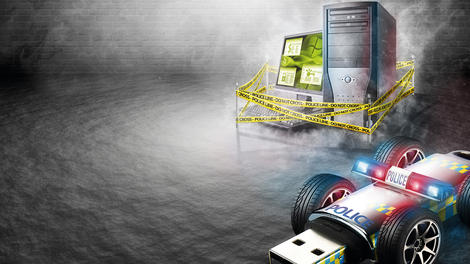
Police agencies in both the UK and US have said they are committed to tackling the growing problem of cybercrime, but are suffering skill shortages.
Pete O'Doherty, head of the UK's National Fraud Intelligence Bureau, warned that 70 per cent of all modern frauds involve a "cyber element," a stark figure showing the growth of digital deviancy.
"From what I see day in and day out, cyber crime is rapidly increasing, both in volume and in complexity. As a pure crime, but also as facilitator for other crimes. It is evolving at a rapid pace," he said, according to the London Evening Standard.
He labelled the epidemic a "global threat."
Across the digital pond
The US is also struggling to hunt down cyber criminals.James Comey, Director of the FBI, said that cyber threats will "dominate" his time with the Bureau, according to Politico. He said there is a huge amount of cybercrime going on "at all different levels," but the FBI is prioritising national security threats and botnet operations.
Comey warned that the 17,000 individual police agencies throughout the US need to become "digitally literate." He said the FBI has a training programme for police to increase skills in this area.
Via Sophos Security

Read More ...
Would you be happy if the iPhone 6 looked like this?

iPhone leak season is upon us and the downpour has well and truly started. However this time it seems Apple is having even more difficulty keeping the seal shut.
The latest comes from Italian blog Macitynet.it, which compares an iPhone 6 dummy unit against the iPhone 5S in a series of photos and a video.
The dummy unit, supposedly obtained from insider source, aligns with many of the leaks and rumours we've already seen.
We can see a larger, 4.7-inch screen and a curved design that's more alike to the iPod Touch, while the power button now sits on the side of the device.
Taking shape
Overall, it would mark the most significant change to the iPhone design yet if it's accurate – and that's a big if. While it's claimed to be a dummy unit, this iPhone 6 mockup could just as easily be fake.Last week, the same site put the iPhone 6 unit side by side with a display model Samsung Galaxy S5, showing that an iPhone of this design could be a tad shorter and thinner than Samsung's effort.
The questionable aspect right now is the flash. As far as we can see, the true tone flash is missing. However there appears to be a silver ring running around the outside of the lens - possibly the ring flash that has been mooted for the handset.
Watch the video below and see whether you'd be happy with Apple releasing an iPhone of this design.
- Then go find out all the other juicy gossip on the iPhone 6

Read More ...
High price for Samsung Galaxy K Zoom comes into focus

We weren't expecting the Samsung Galaxy K Zoom to arrive with a budget price tag, and word from Europe has now confirmed our suspicions - it's a bit pricey.
Samsung Germany has published its Galaxy K Zoom press release complete with a mid-May release date and a price tag of €519 (around £430, $720, AU$775).
In the UK at least, that price may edge closer to the £500 mark after taxes are taken into a account, which in turn would see the K Zoom almost match the Galaxy S5 in terms of cost.
What do you get?
The main attraction on the Galaxy K Zoom is the 20.7MP 3 BSI CMOS sensor with 10x optical zoom on its rear, but round the front it's more smartphone than smart camera.You get a 4.8-inch 1280 x 720 display, hexa-core processor, 2GB of RAM, 8GB of internal storage Android 4.4 KitKat, 4G, NFC, microSD slot and a 2430mAh battery for your money.
We have contacted Samsung regarding the final UK price and we'll update this article when we hear back.
- In the meantime read our hands on: Samsung Galaxy K Zoom review

Read More ...
The LG G3 - is it set to launch with a stylus?

Another day, another leaked LG G3 picture - but this one comes with a mysterious extra hole that could show the location of a stylus.
While these images of the phone in a third party case are broadly similar to what we've seen before, they do reveal some new details, as LG finalises the version it will be showing off to the public.
These new images were spotted on Amazon Germany servers by MobileGeeks and they show the same rear-facing buttons, camera and mystery sensor that we've seen before, but also give a look at the top edge of the handset, which has a hole in the top right corner.
More questions than answers
The obvious explanation for that would be a headphone port, but earlier images of the phone show what seems to be a headphone port on the bottom edge.So what else could it be? There's been speculation that this could be a Japanese version of the handset and that the hole is for an antenna, but it seems odd that there'd be a cut-out for that in a case designed for the German market.

Credit: Mobile Geeks
Another possibility is that it could be a slot for a stylus. We haven't heard any rumours of a stylus but with a screen that's expected to be 5.5 inches (and super-high-res) it's certainly big enough to warrant one.
Or then again it could just be a headphone port after all, which would leave us with a mystery hole at the bottom of the handset instead.
We should know soon enough as we're expecting the LG G3 launch to happen on 27 May.
- Which phone does LG want to out-do? We're pretty sure it's the Samsung Galaxy S5.

Read More ...
Available Tags:TechRadar , 3D , Microsoft , tablet , Sharp , Galaxy , Intel , Google , LG , Galaxy Tab , Samsung , iPhone 5 , iPhone , Windows Phone , Windows , gaming , UK , iPhone 6 ,


No comments:
Post a Comment