

NVIDIA Announces Spring 2014 GeForce Game Bundles

Replacing the Assassin’s Creed IV bundle that had been running for the last couple of months, NVIDIA’s spring bundle will be a two tier affair. For purchasers of the GeForce GTX 660/760 and above, NVIDIA will be including a voucher for a Steam copy of the survival horror game Daylight.
Daylight is a game we have admittedly not heard much about thus far, but a bit of research tells us that it comes from Zombie Studios, the developers responsible for the Spec Ops and Blacklight series of games, among others. More excitingly, this will be the first game released that uses Unreal Engine 4, coming out ahead of other titles such as Epic’s own Fortnite. Daylight is set to retail for $15, so this won’t be quite as aggressive a bundle that the outgoing AC4 bundle was.
NVIDIA Spring 2014 Game Bundles |
||||
Video Card |
Bundle |
|||
GeForce GTX 760/770/780/780Ti/Titan 660/660Ti/670/680/690 |
Daylight |
|||
GeForce GTX 650/650Ti/750/750Ti |
$150 Free-To-Play (Warface, Heroes of Newerth, Path of Exile) |
|||
Select GTX 700M/800M-based Notebooks |
$150 Free-To-Play (Warface, Heroes of Newerth, Path of Exile) |
|||
GeForce GT 640 (& Below) |
None |
|||
Finally, as always, these bundles are being distributed in voucher from, with retailers and etailers providing vouchers with qualifying purchases. So buyers will want to double check whether their purchase includes a voucher for either of the above deals. Checking NVIDIA’s terms and conditions, the codes from this bundle are only good through May 31st, so we don’t expect this bundle will run any longer than 2 months.
Read More ...
Seagate Business Storage 8-Bay 32TB Rackmount NAS Review
Seagate's acquisition of LaCie in 2012 made quite a bit of sense as most of their product lines were complementary in nature. However, they had a bit of an overlap in the NAS market, particularly in the SOHO ARM-based segment. Early last year, we reviewed the LaCie 5big NAS Pro, a desktop form factor x86 NAS with an embedded Linux OS developed in-house by LaCie. With Seagate not having a presence in this space, it was an ideal segment to target with the help of LaCie's expertise. As a result, we have the Business Storage 1U rackmount lineup. Read on for our review of the fully populated 8-bay variant.
Read More ...
Examining MicroSD changes in Android 4.4
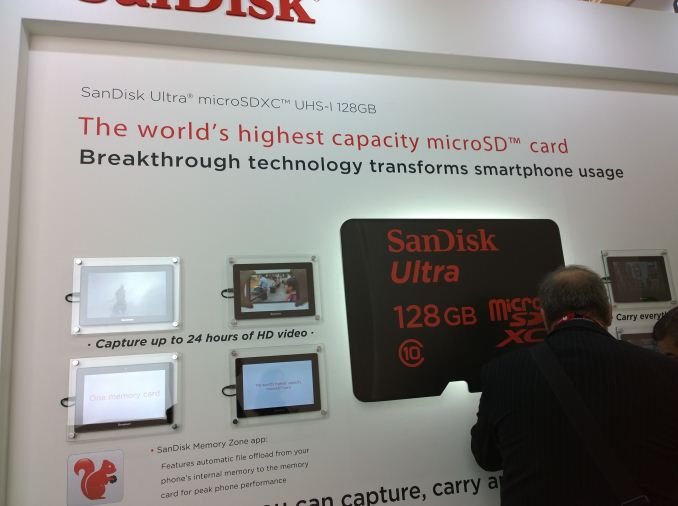
Before Honeycomb, Android was heavily reliant upon microSD cards, as the vast majority of smartphones carried forward the storage model from the days of Windows Mobile, with very little internal storage for the OS and its applications. Everything else had to be placed on a microSD card, which meant the OS was useless if the microSD card was ejected. The same was true of most early Android smartphones. This is the model that most everyone is familiar with. Any application could read and write anywhere they wished on the microSD card with appropriate permissions.
The new model arrived with Honeycomb, which placed permission controls on the microSD card. This disallowed any third party application from writing to the microSD card, although they could write to their own private folder on the microSD card, much like how applications can write to their own folder on /data/apps/ but they can't modify any other folder in that directory. With permission to write to external storage, it is possible to read any file on the microSD card that isn’t a private folder, but it isn’t possible to write to any other folder. The permission to write to any folder on the microSD card is now limited to system/OS applications only.
This means that while Google Play Edition devices like the LG G Pad and Samsung Galaxy S4 followed the behavior that was set by Google as far back as Honeycomb, devices like the Galaxy S4 with TouchWiz never had such restrictions on microSD, custom ROMs altered the restrictions that Google had placed, and in general, microSD behavior continued to work as it did in Android 2.3 for the vast majority of people using Android.
The big news isn’t that Samsung is adopting the change. Rather, it seems that Google is now enforcing this change in microSD behavior across all OEMs. Presumably, this means that the Android CTS (Compatibility Test Suite) now requires compliance with the new system of accessing microSD storage. Based upon user feedback, both Samsung and HTC devices with microSD slots are no longer capable of allowing user applications to write to folders outside of the application’s private folder. While it was once hard to say whether this would only be followed by a few OEMs, it seems that this standard is well on track to universal adoption.
This sounds like a major issue, but Google has clearly planned this out, as the Storage Access Framework feature in Android 4.4 allows file manipulation of data on the microSD slot and can provide access to data on the microSD card without allowing free access of all data on the microSD card. At any rate, an example of the SAF UI can be seen below.

Some may say that this is a clear attempt to kill off expandable storage and attempt to force cloud storage upon more users, but recent events have made it clear that this is a move targeted at OS security, as the popular chat application Whatsapp could have all messages easily accessed by any application that could read the SD card. On 4.4, despite the lack of security on the part of the developer, such a security breach wouldn’t be possible. However, whether this gain in security is worth the transition period between a robust permissions system for microSD/FAT systems on Android and the status quo is another question entirely, and is one that may not have an answer.
Read More ...
AMD Teases Forthcoming Dual-GPU Video Card
In an envelope from AMD’s marketing department labeled “Top Secret”, AMD included in a single picture (of myself) with the text “Wouldn’t you agree that two is better than one?” On the backside is a Twitter hashtag, #2betterthan1.

One thing is for certain: AMD never stops with one teaser. So no doubt there will be more information to follow.
In the meantime, to see whether two really is better than one, I made a quick call to the ultimate authority on all things me: my mother. Her response? “Having two sons was great for getting the yard work done, but I paid for it at the grocery store.” So make of that what you will.

Read More ...
Testing SATA Express And Why We Need Faster SSDs
The Serial ATA International Organization didn't have much to worry about when hard drives were the primary (only) media. The laws of rotational physics ensured hard drive speeds would not increase dramatically and hence updates to the SATA spec were only seldom needed. However, with SSDs that all changed. NAND provided so much lower latencies and higher throughputs that SATA-IO faced an issue: they couldn't keep up with the speed of SSDs. As a result the SATA-IO had to look elsewhere to increase interface bandwidth but at the same time they had to ensure backwards compatibility. SATA Express, a combination of SATA and PCIe, was born as a result. But what exactly is it and how does it perform? Read on to find out.
Read More ...
CeBIT 2014: Sapphire Shows Two R9 290X 8GB GDDR5 GPUs

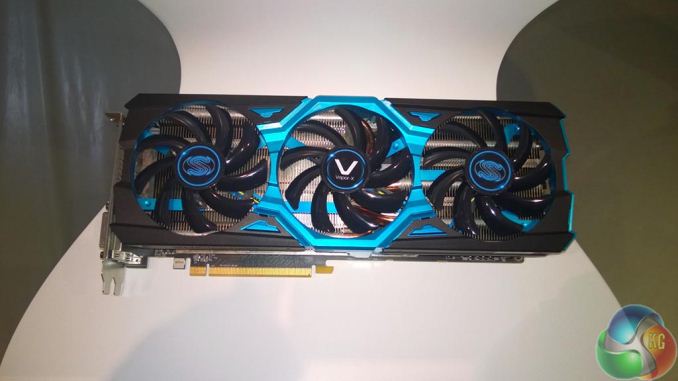
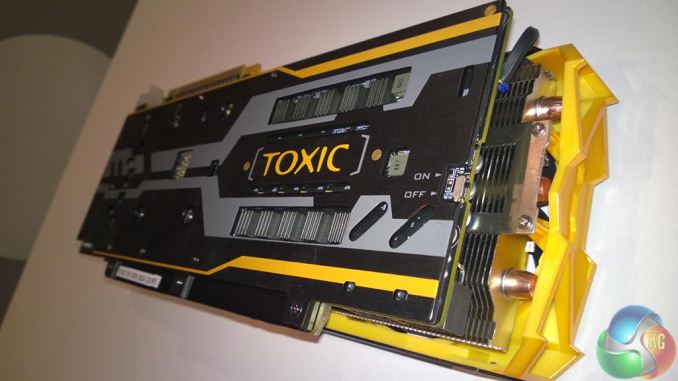
It is a shame that these are going to be limited edition cards, as it does offer that bridge between a high end consumer compute card with a lot of memory and the full-blown AMD FirePro branding. Even saying that, the number of FirePro cards with more than 8GB is rather limiting – an S10000 12GB was announced at the end of last year and further down the product stack there are a few 6 GB models.
Source: Kitguru [1,2]


Read More ...
NVIDIA Announces Legacy Support Plans For D3D10 Generation GPUs

With the forthcoming Release 340 driver set NVIDIA will be moving their D3D10 GPUs to legacy status, which will make R340 the final driver branch to support these products. The branch after R340, R343, will drop support for D3D10 GPUs, leaving Fermi, Kepler, and the new Maxwell as the only GPU families supported in newer driver releases.
As for R340 and their D3D10 GPUs, while the move to legacy status means that these GPUs will no longer receive performance optimizations and new driver features, NVIDIA does leave the door open to further bug fixes with further R340 releases. Officially R340 will support these GPUs until April 1, 2016, so NVIDIA is planning on continuing to support these products in some fashion up until then. But it’s worth noting that legacy products aren’t on a planned driver update schedule like current generation products are, so bug fix drivers are issued on an as-needed basis. For comparison, NVIDIA’s DX9 GPUs, which went legacy back in October of 2012, have received a driver update as recently as February of 2013.
Meanwhile it’s worth pointing out that this move to legacy status will be for all of NVIDIA’s product lines using these GPUs: GeForce, Quadro, and Tesla. So along with GeForce cards ranging from the GeForce 8800GTX to the GeForce 405, the move to legacy will also impact NVIDIA’s first-generation Tesla 1000 parts, the Quadro FX series, and more. The extensive list of affected products can be found in NVIDIA’s announcement.

Farewell 8800GT
Wrapping things up, today’s retirement announcement means that D3D10 GPUs as a class are just about at the end of their lives. With AMD having moved their D3D10 GPUs to legacy status back in 2012 and now NVIDIA in 2014, both of the major dGPU vendors have put their pre-D3D11 products out to pasture. This leaves Intel as the only vendor with D3D10 parts still receiving mainstream support, as Intel did not gain support for D3D11 until Ivy Bridge in 2012.
As such it will be interesting to see how forthcoming game development is impacted by this. With D3D10 GPUs now existing as legacy products, and with the current-generation game consoles being D3D11 based, will developers as a whole continue to support D3D10 GPUs after 2014? We will have to see what the future brings.
Read More ...
Razer Announces the New Razer Blade: 14” QHD+ with GTX 870M
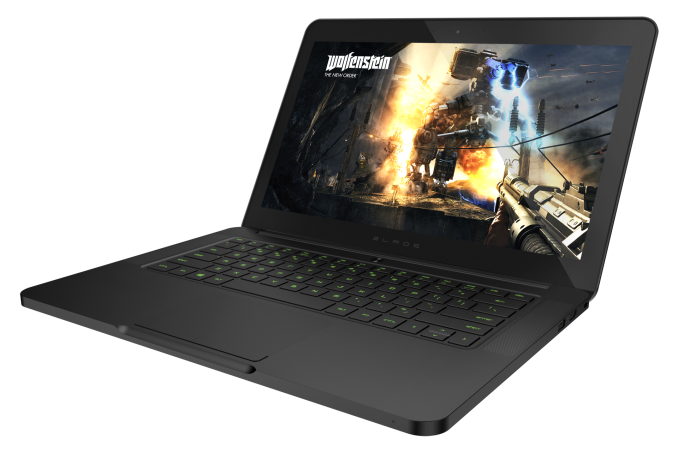
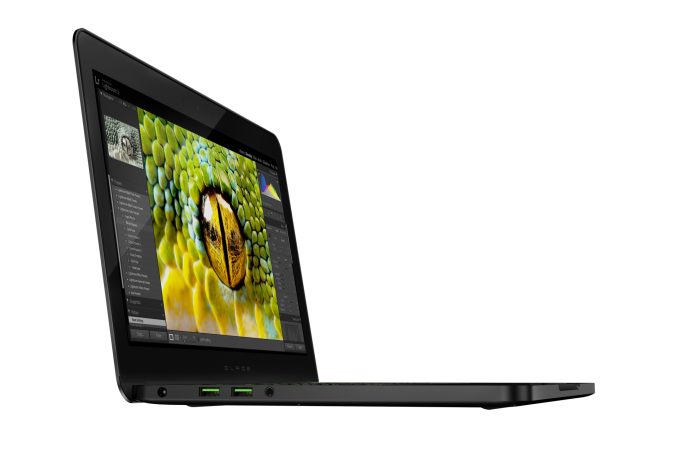
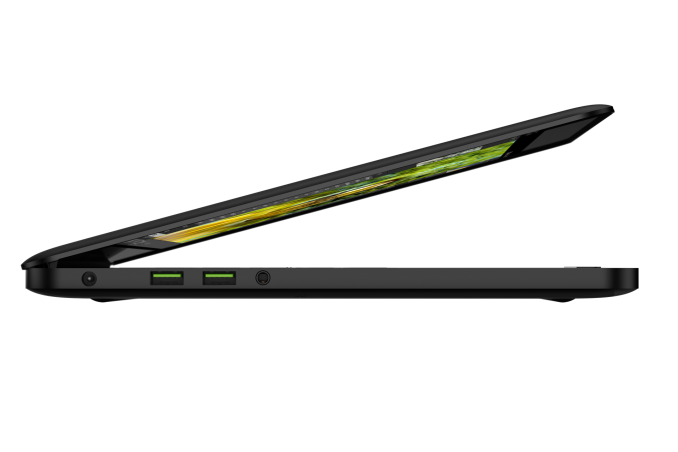
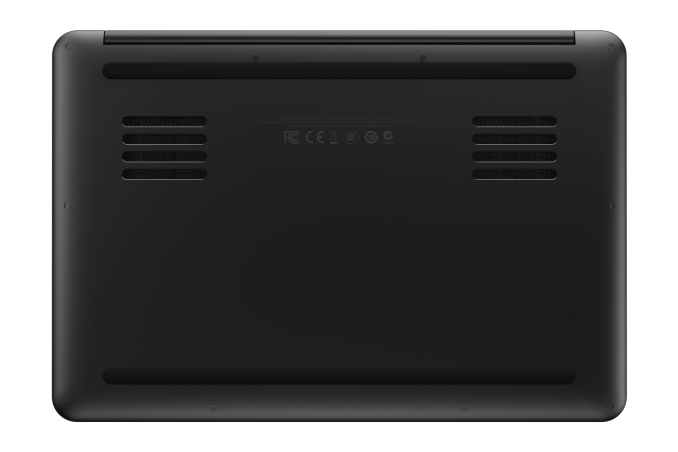
Razer Blade 14-Inch Specifications |
|||||
2013 (Current) |
2014 (New) |
||||
Processor |
Intel Core i7-4702HQ (4x2.2GHz + HTT, Turbo to 3.2GHz, 22nm, 6MB L3, 37W) |
Intel Core i7-4702HQ (4x2.2GHz + HTT, Turbo to 3.2GHz, 22nm, 6MB L3, 37W) |
|||
Chipset |
Intel HM87 |
Intel HM87 |
|||
Memory |
8GB DDR3L-1600 |
8GB DDR3L-1600 |
|||
Graphics |
NVIDIA GeForce GTX 765M 2GB GDDR5 768 CUDA cores, 797MHz/863MHz core 4GHz memory 128-bit memory bus Intel HD 4600 Graphics (20 EUs, up to 1.15GHz) |
NVIDIA GeForce GTX 870M 3GB GDDR5 1344 CUDA cores, 941 MHz core 5 GHz memory clocks 192-bit memory bus Intel HD 4600 Graphics (20 EUs, up to 1.15GHz) |
|||
Display |
14" LED Matte 16:9 900p AU Optronics AUO103E |
14" IGZO 16:9 3200x1800 Multitouch with LED Backlight |
|||
Hard Drive(s) |
Samsung PM841 256GB mSATA 6Gbps SSD |
128GB / 256GB / 512 GB SATA M.2 |
|||
Optical Drive |
- |
- |
|||
Networking |
Killer Wireless-N 1202 Dual Band 2x2 802.11a/b/g/n Bluetooth 4.0 |
Intel Wireless-AC 7260HMW Dual Band 2x2 802.11a/b/g/n/ac Bluetooth 4.0 |
|||
Audio |
Realtek ALC269 HD audio Stereo speakers Combination mic/headphone jack |
? |
|||
Battery |
70Wh |
70Wh |
|||
Front Side |
- |
- |
|||
Right Side |
USB 3.0 HDMI 1.4a Kensington lock |
USB 3.0 HDMI 1.4a Kensington Lock |
|||
Left Side |
AC adapter 2x USB 3.0 Combination mic/headphone jack |
AC adapter 2x USB 3.0 Combination mic/headphone jack |
|||
Back Side |
- |
- |
|||
Operating System |
Windows 8 64-bit |
Windows 8.1 64-bit |
|||
Dimensions |
13.6" x 9.3" x 0.66" 345mm x 235mm x 16.8mm |
13.6" x 9.3 " x 0.70" 345mm x 235mm x 17.9mm |
|||
Weight |
4.1 lbs 1.88 kg |
4.47 lbs 2.03 kg |
|||
Extras |
Webcam USB 3.0 Killer Networks wireless networking Backlit anti-ghosting keyboard |
2.0 MP Webcam USB 3.0 Intel 2x2 802.11ac Backlit anti-ghosting keyboard |
|||
Warranty |
1-year limited |
? |
|||
Pricing |
$1,799 |
Starting at $2200 for 128GB |
|||
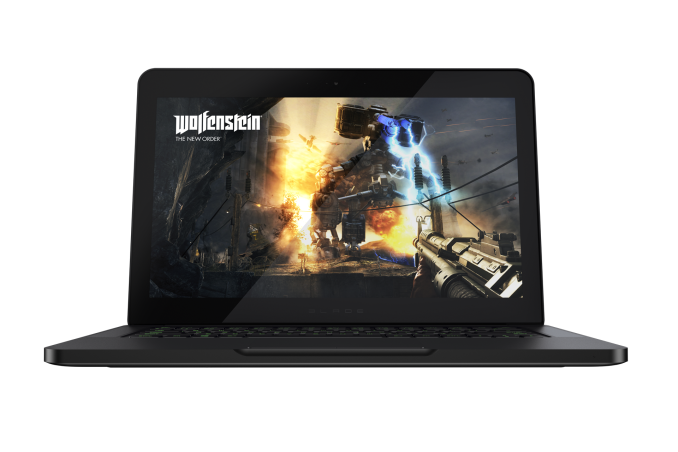
Razer is taking pre-orders for shipping next month. In an interview with TechCrunch, Razer CEO Min-Liang Tan explained how the company has listened to their customers, and aim to help alleviate the previous issues regarding keeping up with demand. Markets like Russia and Taiwan will follow after North America.


Read More ...
NVIDIA’s GeForce 800M Lineup for Laptops and Battery Boost
Last month NVIDIA launched the first of many Maxwell parts to come with the desktop GTX 750 and GTX 750 Ti, which brought a new architecture to NVIDIA’s parts, but one that isn’t radically different from the previous generation’s Kepler. While the features may be largely the same, however, NVIDIA did come out with a renewed focus on efficiency. That renewed focus on efficiency is nice and all on the desktop, but in my opinion where it’s really going to pay dividends is when we get the mobile SKUs. Today, NVIDIA is announcing details of their top-to-bottom 800M SKUs, so while Maxwell debuted on desktop as a 700 series part, for laptops NVIDIA is incrementing the model numbers. Read on to see what’s in store for mobile gamers that don’t want to use a tablet or smartphone.
Read More ...
ASUS Chromebox Review
I see a lot of potential in Google’s Chrome OS. Even today, I have no issues recommending the platform to friends and family with basic computing needs but who want something more traditional than a smartphone or tablet.
Once you get beyond its somewhat awkward learning curve (e.g. there is no traditional Office, you can’t run most of what you download from the web/email attachments, etc...), it’s an OS that is incredibly easy to support if you’re the appointed IT-person in your family/friend group. Sandboxing and automatic updates keep the platform secure. The inability to run most things outside of a web browser keeps clueless users from getting themselves into trouble by running things they shouldn’t. Then there’s the fact that many devices running Chrome OS tend to deliver better user experiences, at least as far as browsing is concerned, compared to similarly priced entry level Windows PCs. HP’s Chromebook 11 is a great example of what can be done. Although HP fumbled its SoC choice, the display, keyboard, storage and chassis in the Chromebook 11 were expertly chosen. For basic web use, I’ve found myself recommending Chromebooks over traditional notebooks more often than not.
I don’t appear to be an outlier in my recommending Chromebooks. Amazon’s top two best selling notebooks are both Chromebooks, and Google’s presence on that list is nothing new. The big question is whether or not the same success at the entry level of the notebook market can apply to desktops running Chrome OS. To find out Google partnered up with a number of OEMs, including ASUS, to go after the entry level Windows desktop market.
Read More ...
Malaysian Airlines Flight 370 Made Wild Altitude Changes
Seismology report from Chinese officials proves to be a dead end
Read More ...
Man Who Shot Father for Texting During Movie Previews Was Also Texting
Curtis Reeves' son arrived at the theater and heard the shooting; he tried to save the man his father shot
Read More ...
Facebook CEO Called President Barack Obama to Complain About NSA Spying
A true, full reform will likely take awhile, he says
Read More ...
Sony's PS4 Outsells Microsoft's Xbox One for February
Sony won by nearly 30,000 sales
Read More ...
Lockheed Martin Puts Military Tech to Use Scouting the Ideal Wind Farm
Past estimates have been notoriously unreliable, leading to many disappointments
Read More ...
Skrillex Releases Free Album Inside App, But Crashes Torture Fans
Grammy-winning artist cites Trent Reznor's Year Zero scavenger hunt as inspiration, expects low earnings
Read More ...
Report: Vehicle-to-Vehicle Communications Could Make New Cars, Trucks Costly
The report said V2V "will increase the cost of a new car that, on average, cost almost $31,000 in 2013"
Read More ...
Apple Authorized to Seek $40 Per Device Against Samsung
Some licensing rates are roughly 20-fold what Apple is charging others
Read More ...
Quick Note: Google Drive 100GB, 1TB Plans See Major Price Cuts
They're $1.99 and $9.99 per month respectively
Read More ...
Target Missed Early Warning Signs of Holiday Data Breach
It received notifications of suspicious activity on November 30
Read More ...
Microsoft Waives Windows Phone OS Licensing Fees for Two Hardware Makers in India
The company is likely hoping to attract more handset makers
Read More ...
Huawei Says Windows Phone is "Low Priority", Relegates It to Dual OS
The decision is a blow to Microsoft mobile hopes
Read More ...
BMW: Demand for i8 Hybrid Sports Car Outpaces Production
BMW sees impressive demand for high-end i8 hybrid
Read More ...
Toyota's Takeshi Uchiyamada Says Hybrids Will Soon Have 20% Global Share
Father of the Prius recalls the early program and its challenges
Read More ...
$1,200 Nikon 1 V3 Mirrorless Camera Offers 120fps Slow Motion Capture
Camera claims worlds fastest continuous shooting speed
Read More ...
Amazon Increases Prime Subscription to $99/year Starting March 19
Customers with existing Prime memberships will receive the new pricing for renewals that initiate on or after April 17
Read More ...
Bitcoin King's American Accounts Get Frozen
Lawyers move quickly to try to prevent Bitcoin "king" from destroying documents
Read More ...
NVIDIA GeForce 800M Series Mixes it up, Bests Promised Results
Mix of Kepler and Maxwell chips outdo NVIDIA's performance claims in independent benchmarks
Read More ...
Time Warner Cable CEO Says Merger with Comcast is a "Dream Combination", Will Increase Innovation
He's also confident the deal will close
Read More ...
North Carolina-based Company to Offer Gigabit Internet Before Google
The service will be available in the next 60 days
Read More ...
Tesla Loses Out in New Jersey's Vote for Direct Auto Sales Ban
Tesla will have to stop selling its cars directly in the state starting April 1
Read More ...
Bids Sought to Build New Presidential Limo
GM has provided presidential limos for 30 years
Read More ...
Tim Berners-Lee Talks Free and Open Web on Its 25th Birthday
25 years of the web celebrated this week
Read More ...
Surface 2 LTE Tipped for AT&T, Power Cover Available for Pre-order
No word on launch date for LTE Surface 2 tablet
Read More ...
Obama's CIA Accused of Hacking Into, Sabotaging Senate Computers
It looks like the NSA is not the only agency to potentially be eyeing a power grab
Read More ...
Available Tags:NVIDIA , GeForce , Seagate , Android , AMD , Dual-GPU , SATA , Sapphire , GTX , ASUS , Facebook , CEO , PS4 , Xbox , Apple , Samsung , Google , Windows Phone , Microsoft , Windows , Hardware , India , Windows Phone , Windows , Nikon , Motion , Amazon ,


No comments:
Post a Comment