

Dell introduces the Precision M2800, Entry Level ISV-Certified Mobile Workstation

This new M2800 is aimed at cost-sensitive customers who require workstation levels of certification with performance, particularly for mission-critical applications. The 15” M2800 is designed to bridge that gap between business-class laptops and regular mobile workstations with ISV certification and configurability. Dell will offer the M2800 with mobile Haswell Core i5 and Core i7 processors, FirePro W4170M graphics with 2GB GDDR5, up to 1 TB of storage and up to 16GB of system memory. Screen resolutions will be available in HD and FHD, along with external multi-monitor support.

In the Dell press release, a lot of talk on CAD, digital content creation and editing software was mentioned, particularly regarding the ISV certification. Applications such as AutoCAD, Inventor, Revit, Solidworks and PTC Creo fall under this bracket. Dell is also drawing attention to their Precision Performance Optimizer, which will adjust the system settings for the certified applications to maintain maximum performance.


Read More ...
Improving the State of 4K Display Support Under OS X
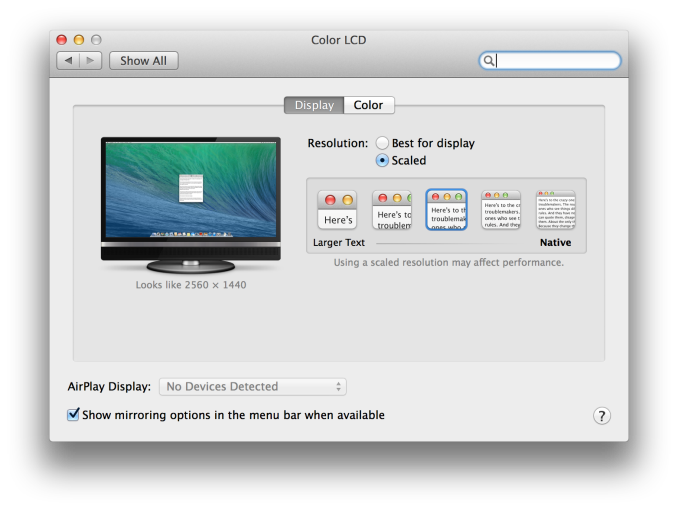
For starters, the list of compatible displays in 10.9.3 extends beyond the ASUS/Sharp models. The 32" and 24" Dell 4K panels are now supported, and I'm guessing the < $1K 28" 4K monitors should be supported as well. You could drive any of those panels prior to 10.9.3 but not at 60Hz.
The display preference pane now includes support for scaled resolutions just like on the rMBPs. The default in 10.9.3 is still the panel's native resolution, but you now have the option to choose 3200 x 1800, 2560 x 1440, 1920 x 1080 or 1280 x 720. All of these options are treated the same way that the rMBP's scaled resolutions are handled. In the case of the 2560 x 1440 setting, your display is rendered at 5120 x 2880 with text/UI elements drawn at 4x the size (2x in each dimension) and images/video in supported applications drawn at 1x size (1:1 pixel mapping). Once the frame is built, it's scaled down to fit the panel's 3840 x 2160 resolution - giving you a fairly sharp image. I suspect Apple is using their own filtering algorithms here as well in order to ensure maximum quality for the downscaled image.
The beauty of Apple's scaled approach is you get totally usable text/UI elements while still getting all of the benefits of having tons of screen real estate for working on images or videos. The example below features a Photoshop CS6 window with a blue box measuring 3000 x 1500 pixels with no scaling (viewport is set to 100% scale). In this particular example the display is running at the 2560 x 1440 scaled setting, but as you can see the 3000 x 1500 image can still fit on the screen without scaling or scrolling. This is only possible because the off-screen desktop resolution is a whopping 5120 x 2880 and image elements are rendered 1:1:

You'll also notice that despite the ultra high off-screen resolution, all text/UI elements appear as if they were drawn on a 2560 x 1440 display. That's the 4x scaling at work.
Prior to 10.9.3, you could force some lower-than-native resolutions on 4K panels but you'd get a lower res desktop upscaled to fit the panel, without any of the HiDPI benefits I just outlined.


There may be a performance impact to the scaled resolution settings (the 3200 x 1800 option actually draws your screen at 6400 x 3600), particularly if you're driving a 4K panel off of an rMBP but I suspect any of the beefier Mac Pro configurations should be fine. This is definitely something to look at once 10.9.3 goes final.
This is a huge step forward in improving the state of 4K under OS X. The 10.9.3 update is a smaller update than 10.9.2 (~200MB vs nearly 800MB), which took around two months from initial seeding to final release.
Read More ...
OCZ's CEO Outlines Post-Acquisition Plans for TLC and Native PCIe SSDs
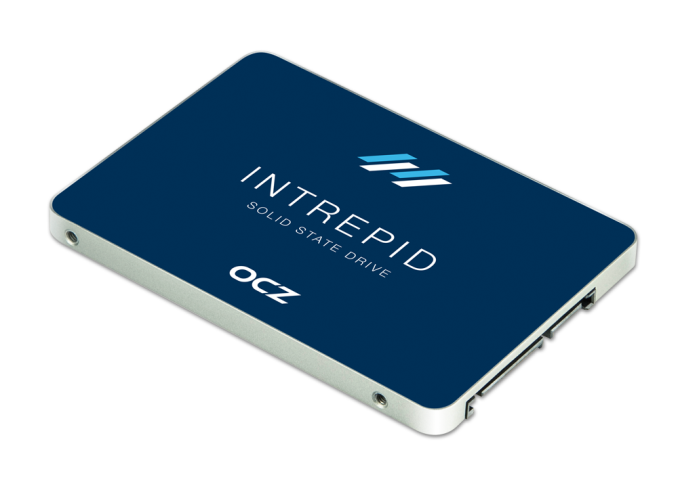
As with most acquisitions, the promise from the get-go is independence. In the case of Toshiba/OCZ, independence is obvious. OCZ exists as a subsidiary of Toshiba and will receive funding/support from the company, but will continue to operate its own product lines independently of Toshiba.
We will see technical collaboration between the two companies, but sales will be kept independent from one another. Toshiba is strong with PC and enterprise OEMs, while OCZ is stronger in the channel. For now, that's how the lines will be drawn. In many ways it's similar to the Micron/Crucial relationship, with Micron (the parent company) handling OEMs and Crucial being the consumer facing brand. What's different in this case is Toshiba will likely depend on OCZ's controller expertise quite a bit.
Toshiba appears to be viewing the acquisition as a marriage of strengths. Toshiba will leverage OCZ to develop SATA and PCIe based controllers, while OCZ has canceled its own plans for SAS drives and instead will lean on Toshiba's expertise there. We'll see division according to form factor as well. OCZ's expertise is in more traditional 2.5" form factors today, while Toshiba has been building M.2 drives for a little while now. We'll see that separation continue, at least until there's a larger shift towards client use of M.2 (at which point OCZ may start making drives in that form factor as well). The internal goal is for zero overlap of efforts between both companies. That doesn't mean that we won't see OCZ branded Toshiba drives or vice versa, just that we won't see OCZ and Toshiba controllers created that compete for the same markets.

There's limited room for independent SSD manufacturers. Exposure to volatility in NAND pricing and availability is a huge problem. OCZ's days were limited as an independent provider, despite OCZ making it much further than anyone ever expected. Most of its competitors that came from similar roots exited the SSD business while OCZ was still doing well in the space. An acquisition (or outright exit) was inevitable, and Toshiba's move on the business appears to be a really good fit.
The lack of a TLC offering is a huge hole in OCZ's (and Toshiba's) roadmap. OCZ competes well at the high end of the SATA market, but it has no answer to Samsung's SSD 840 EVO or Crucial's M500. Toshiba hopes to fix that. By the middle of the year Toshiba will release its first TLC based SSD, leveraging an existing Toshiba controller design. OCZ will probably end up selling a branded version of this drive to help address some of the more cost sensitive segments of its existing markets.
Early next year OCZ hopes to leverage Toshiba's 3D NAND technology to hit more competitive price points with a controller of its own: Jetstream Express.
OCZ's Jetstream Express has been in development for the past year and a half. It's a native PCIe Gen 3 controller with support for SATA. Tapeout is scheduled for the second half of this year but all IP blocks within the design are presently being run on FPGAs to work through bugs and continue firmware development. Similar to what we've seen from other controller vendors, there's a big focus on error correction and developing flexible front end and NAND interface blocks with Jetstream Express. OCZ expects the first Jetstream Express drives to ship in Q1 of next year. The initial target will be client however we should see an enterprise version follow shortly thereafter. OCZ hopes to have the client Jetstream Express drive to show off at CES next year. The timing does leave OCZ out of the beginning of the next round of controller releases from rivals Samsung and SandForce.

On the NAND front OCZ is almost completely transitioned over to Toshiba at this point. I think it's a safe bet that we won't see any OCZ products shipping with 3rd party NAND going forward.
The NAND side of the story is actually one of the more interesting aspects of the acquisition. Similar to how we have to fight for access to internal data on architectures and design, 3rd party controller/drive makers are kept at arm's length from some of the details on the inner workings of the NAND they're buying. Now that OCZ is in house, it gets far better insight into the NAND it's integrating into drives which in turn feeds back into firmware and controller development/optimization.
When Ralph Schmitt arrived at OCZ about 1.5 years ago, one of his primary goals was to increase the company's credibility as a provider of reliable SSDs. Development and validation cycles increased, which impacted time to market but significantly improved return rates. I asked Ralph if Toshiba planned on further improving things now that OCZ is a member of a company that supplies to OEMs like Apple. Toshiba evaluated all of OCZ's manufacturing and design processes and concluded that they were generally pretty good. The biggest change on the quality front will be access to NAND. Almost all NAND providers save the best stuff for themselves, but with OCZ in-house it should get the same 1st class treatment from Toshiba.
The Toshiba acquisition appears to be a good next step in the maturation of OCZ as an SSD player. Samsung is still an incredibly fierce opponent, and one that has shown absolutely no signs of slowing down. To be honest, until the new OCZ is cost competitive with the 840 EVO I'm not sure things will change much from a marketshare perspective. What I am sure of is that the old OCZ had no chance to be competitive in this new mature SSD space with vertically integrated players. With Toshiba's support and access to its NAND, the new OCZ at least has a chance to bring its own flavor of competition to the table. As good as Samsung's SSDs have been lately, it's still incredibly important to have competition in this space.


Read More ...
ASUS Chromebox Available for Pre-Order Now, Shipping March 14, Not Fanless
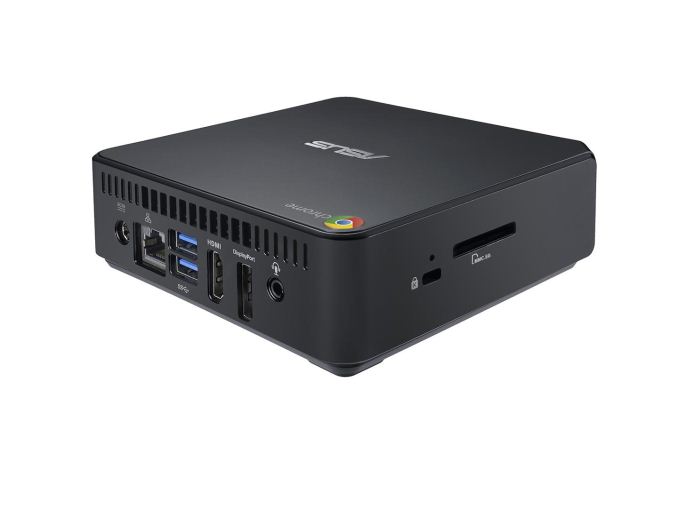
The ASUS Chromebox will start at $179 for the dual-core 1.4GHz Celeron 2955U model. The very low price point includes 2GB of memory, a 16GB M.2 SSD, 100GB of Google Drive space, and dual-band 802.11n WiFi.
ASUS Chromebox |
||||||
ASUS Chromebox |
Intel Haswell NUC |
|||||
OS Preloaded |
Google Chrome OS |
None |
||||
CPU |
Intel Celeron 2955U (2C/2T 1.4GHz 2MB L3) Intel Core i3-4010U (2C/4T 1.7GHz 3MB L3) Intel Core i7-4600U (2C/4T 2.1/3.3GHz 4MB L3) |
Intel Core i3-4010U (2C/4T 1.7GHz 3MB L3) Intel Core i5-4250U (2C/4T 1.3/2.6GHz 3MB L3) |
||||
GPU |
Celeron: Intel HD (200/1000MHz) Core i3: Intel HD 4400 (200/1000MHz) Core i7: Intel HD 4400 (200/1100MHz) |
Core i3: Intel HD 4400 (200/1000MHz) Core i5: Intel HD 5000 (200/1000MHz) |
||||
Memory |
2GB/4GB configs, 2 x DDR3 SO-DIMM Slots |
2 x DDR3 SO-DIMM Slots |
||||
Storage |
16GB M.2 SSD + 100GB Google Drive for 2 years |
1 x mini PCIe (full length) |
||||
LAN |
10/100/1000 Ethernet |
10/100/1000 Ethernet |
||||
Wireless |
dual-band 802.11 a/b/g/n, BT 4.0 |
1 x mini PCIe (half length) |
||||
External I/O |
SD card reader 4 x USB 3.0 1 x HDMI 1 x DisplayPort 1 x Audio Jack (mic-in/speaker out) |
4 x USB 3.0 1 x mini HDMI 1 x mini DisplayPort 1 x Audio Jack (mic-in/speaker out) |
||||
Power Supply |
65W |
65W |
||||
Dimensions |
4.88" x 4.88" x 1.65" |
4.59" x 4.41" x 1.36" |
||||
Starting Price |
$179 |
$285 |
||||


Read More ...
My First Mobile World Congress: Round Up and Impressions
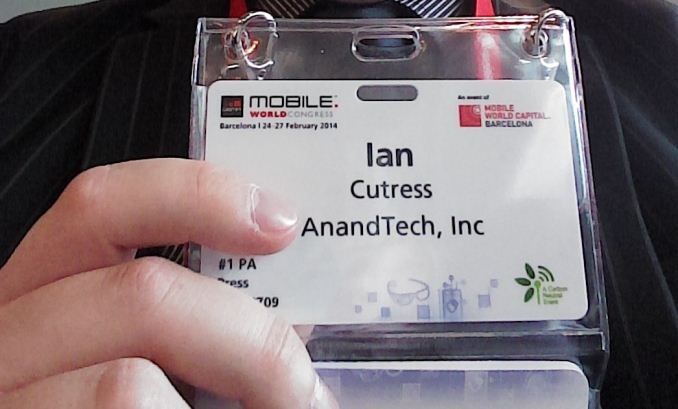

MWC is technically Monday to Thursday; however press briefings and events started on the Sunday. Brian and I attended the Microsoft Press Event on Sunday, where an update for Windows 8.1 and Windows Phone was announced to be rolled out in the spring. A lot of focus on Microsoft right now is regarding their acquisition of Nokia, and Microsoft were pleased to announce that Windows Phone had overtaken Blackberry to be the third largest smartphone OS.


My opinion of the wearable ecosystem is fairly low to begin with (with the big question being ‘why?’), based on the fact that I do not casually wear a watch and do not wish to know to the smallest detail the quality of my exercise routine. The quote regarding ‘put anyone in a full body scanner and you will find 5 things wrong’ resonates with my feeling, but the direction of the market is headed in that area. We still seem to be a few generations out in terms of applicability and user experience for the mass market, and I particularly agree with Intel’s Genevieve Bell with her statement ‘The much bigger question is not one about style but about meaning. Why are we going to wear these objects on our bodies? What are they going to say about us to others? Why would others care about them and what is the symbolic work these things do?’. In my opinion, something like the Galaxy Fit needs to move down to around $80 to become more appealable to the majority. However, the flexible color display marks a good point in technology evolution in the display space. Incidentally, this was labeled at the event as ‘Samsung Unpacked 2014 Part 1’, suggesting that at least another ‘Unpacked’ event is down the road sometime this year. Amusingly, one wireless SSID name at the event pointed to an un-announced device from HTC, although it was later discovered to be a social experiment by a journalist interested in seeing the reaction from other media.
For the most part of MWC on my side it was all to do with learning about the companies that we deal with in the mobile space. I come from a PC component background, and while mobile devices are essentially small PCs, the market is younger and going through the same evolution we saw in the PC space at the turn of the century. There are many stages to the equation and players willing to put their products forward, but ultimately it all comes down to performance, cost, perception and design wins. The event for me meant looking at the ecosystem from silicon to device, from people like ARM, Qualcomm, Samsung and Intel all the way through Mediatek, Broadcom, Peregrine Semiconductors, and ending up with Microsoft, Lenovo, Sony, Samsung again, LG, ZTE, Huawei, Nokia and Motorola. Every stage of a smartphone is riddled with intricacies regarding connectivity, power consumption, performance, industrial design, feature set and carrier integration.


ARM celebrated their #50billionchips shipped announcement, meaning that for every individual on the planet there are now ~7 ARM chips. We were invited to their impromptu booth celebration during MWC, where I met with a few members from their UK offices. These are very smart people (there are smart people everywhere at MWC), and due to their location in Cambridge an hour away from where I live, with any luck I will be speaking to them in the future regarding architecture deep dives, a HQ Tour and perhaps an interview or two with them.
Trips to Rightware and Kishonti to talk about benchmarking software and relevance is also always interesting, especially when dealing with real-world relevance and implementations of new graphics standards on the mobile side. Also of note was SanDisk launching a 128GB microSD, which reminds me of a particular xkcd What-If regarding data sizes.

There were a few announcements during MWC designed to shake up the industry. We reported on the leaked memo putting Stephen Elop, ex Nokia CEO, in charge of the Devices and Studios Division at Microsoft. This essentially means he will be in charge of the Xbox platform, and internet-related response was not overly positive. Actions speak louder than words, so we all wait to see what Elop can bring to the platform, which just announced price cuts in the US (as well as the UK I notice). Google’s Project Ara also seems to be picking up speed in the design phase, and SanDisk announced their storage solution platform for smartphones to improve random-IO performance in these devices by an order of magnitude.

I really enjoyed MWC, and I hope to be at MWC next year. I want to talk to these companies at that point about how they think 2014 has performed and what lies ahead for 2015. Within the industry there is scope for consolidation, a race to the bottom and then innovation, similar to what we saw in the PC component space. Right now the specification race seems to dominate (remember Pentium 4?), and announcements of $25 smartphones along with Nokia’s growth in of devices like the Nokia 220 in emerging markets are going to push this train along its tracks. ARM’s presence, along with Qualcomm’s design and Intel playing catch-up should provide interesting reading. While it is one thing to lead the market, innovation and strategic planning will create the next generation. We also have to mention Apple in all of this, and see what Cupertino has up its sleeve in the following months at WWDC.
Read More ...
MSI Launches the Nightblade Gaming Barebones, a mini-ITX with OC

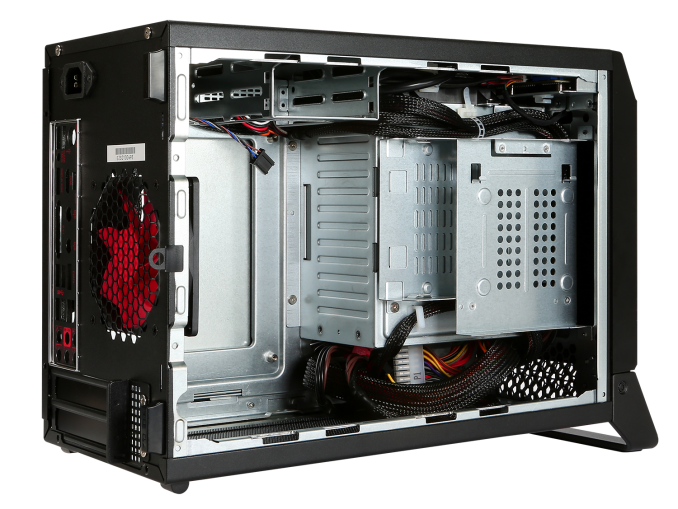
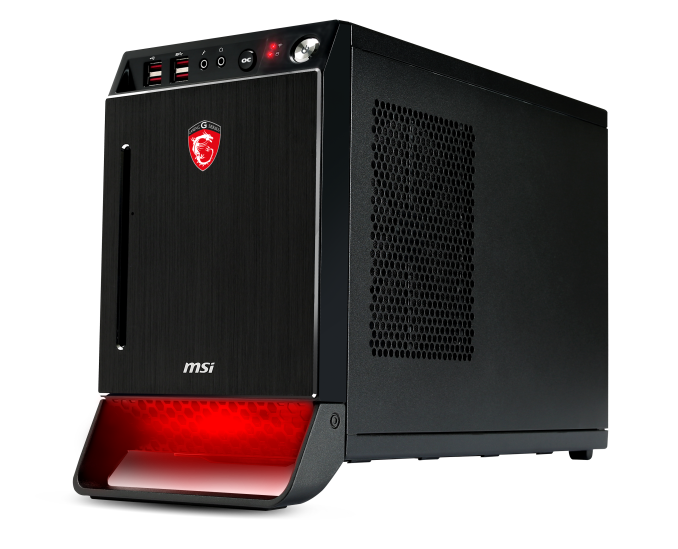
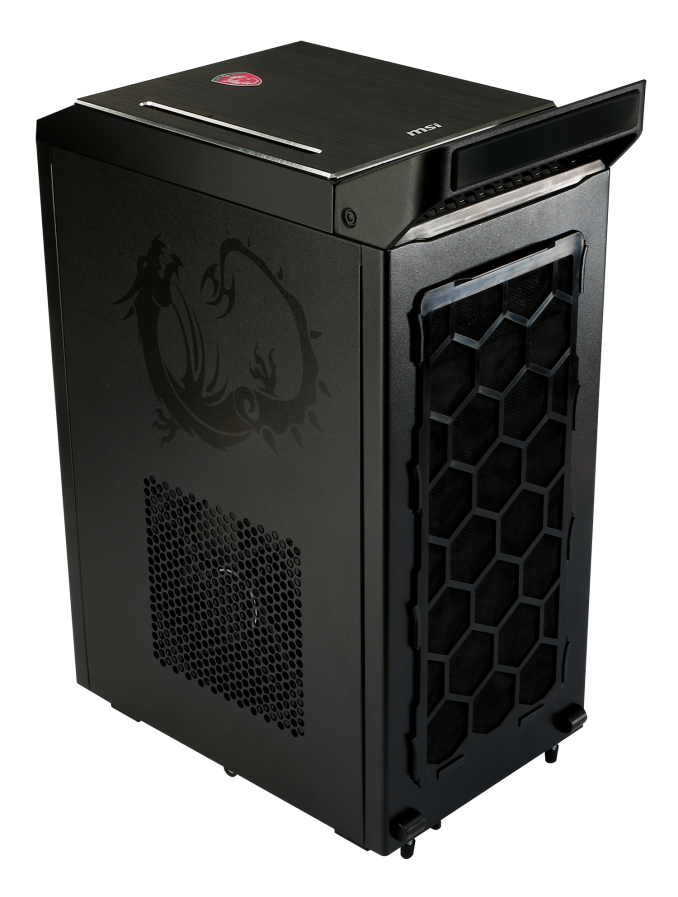
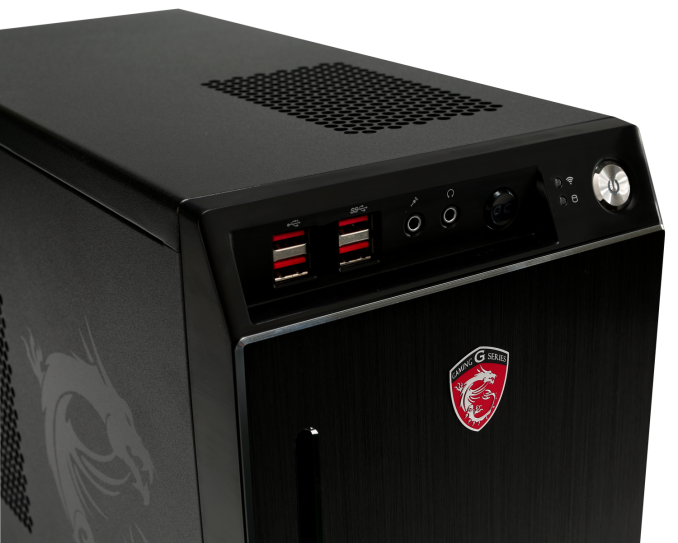
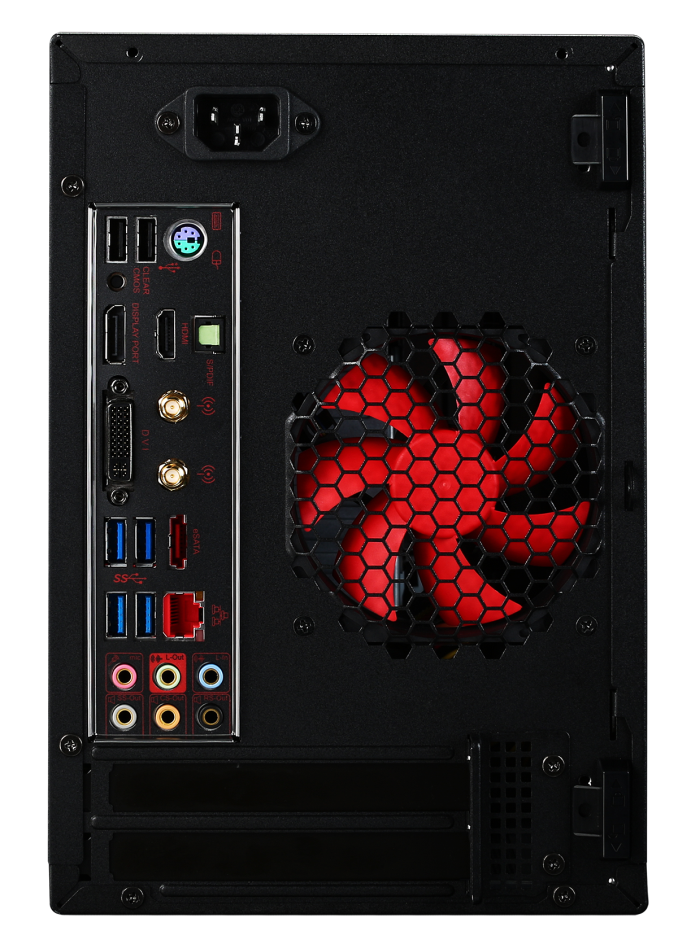
Source: MSI


Read More ...
Dell XPS 15 Haswell Edition: QHD+ with a Refined Design
It's late, but our review of Dell's updated XPS 15 (9530, late 2013 edition) is finally ready. There were reasons for the delays, which we'll get into in the review, but this has been a highly anticipated product and it marks Dell's latest attempt at building the "ultimate" laptop. Read on as we dig deeper and find out if there are any blemishes hiding beneath the surface of this laptop beauty.
Read More ...
GIGABYTE Server to Offer a 1P LGA2011 Motherboard with 10GbE SFP+
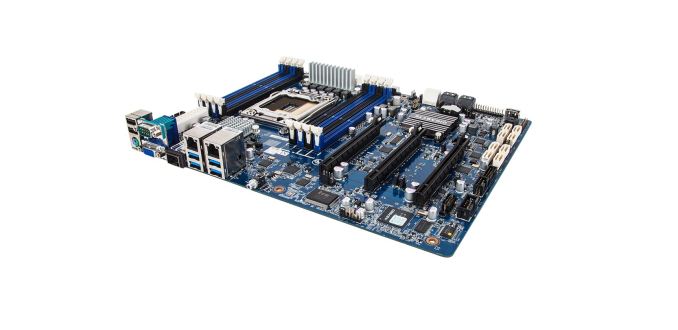


The motherboard has four fan headers, a physical USB 2.0 port on board (for internal licence dongles), a TPM header, a USB 3.0 header, a USB 2.0 header, a backplane board header and various server related jumpers.
GIGABYTE Server motherboards are usually sourced by GIGABYTE’s regional offices (and thus pricing and warranty is individual to the purchaser based on units), although recently they have been placed for public purchase at malabs.com, ServersDirect and Superbiiz. The GA-6PXSVT should be availble there in the next few weeks.
Read More ...
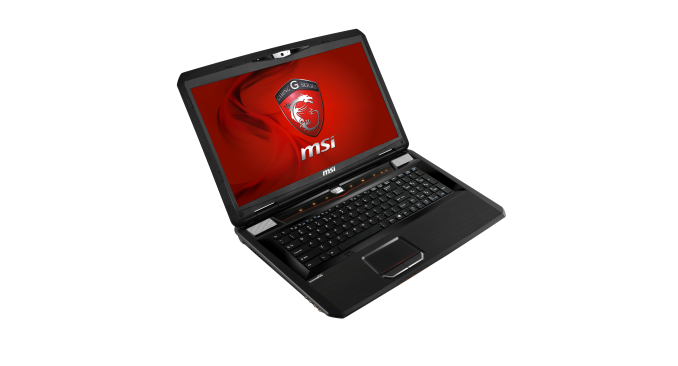
MSI Launches New Keyboard Tools for Upcoming Gaming Laptops
XSplit Gamecaster is a program designed to help stream gaming exploits online. The service adjusts the quality and settings of the stream based on the users internet speed and capability, as well as allowing for a webcam feed in the stream and on-screen in-game annotations. This service is available to purchase separately, either at $14.95/3mo or $24.95/3mo depending on the feature set – MSI are bundling 6 months of the Premium service (the expensive one) with their laptops.

Macro Editor: Program a series of inputs for a designated key press
Button Reassignment: Reassign button mapping
Color Illumination: Full adjustment of key color, including group color and intensity
Profiles: All of the above adjusted based on the primary program running
Statistics: Highlights frequently used keys and combinations to help gamers improve combo and macro efficiency

According to the PR, both XSplit Gamecaster and SteelSeries Engine will be on all upcoming MSI Gaming laptops including the GS series, GT Dominator series and GE Apache series. The online announcement states that the first one should be the GX70 and GX60 Destroyer models, featuring AMD A10 processors and R9-M290X graphics.
Source: MSI


Read More ...
Quick Note: Moto X Gets Mad for the Month of March
New school-themed smartphones aim to boost Motorola Mobility's sales
Read More ...
Vine Users No Longer Allowed to Post Pornographic Videos
Nudity is still allowed as long as it's artistic, educational or a documentary
Read More ...
Staples Closing 225 Stores Across North America
The closings will be complete by mid-2015
Read More ...
Court Rules that FAA Cannot Ban Commercial Drones, Dismisses $10,000 Fine for Drone User
The FAA is currently working on regulations that would allow drone deliveries without putting the public or manned aircraft in danger
Read More ...
Bitcoin King Pt. II: Mt. Gox's Dictator Karpelès Proves Tragically Flawed
CEO is alleged to have committed massive market manipulation which lost a fortune in customer money
Read More ...
3/7/2014 Daily Hardware Reviews
DailyTech's roundup of hardware reviews from around the web for Friday
Read More ...
Windows 8.1 Update 1 Leaked Early
The "easy" way to update has been shut down, but unauthorized methods still exist
Read More ...
Facebook Launches Slightly Tweaked News Feed
Redesign comes a year after Facebook's "major" overhaul backfired
Read More ...
HP Launches $170, 8" Android Tablet
Specs for the tablet aren't impressive at all, but it's to be expected given its sub-$200 price point
Read More ...
Sony Computer Entertainment America CEO Jack Tretton Stepping Down
He will leave at the end of March
Read More ...
Tesla Adding More Superchargers, Stores, Service Centers Throughout Europe in 2014
Tesla wants potential EV customers to stop worrying about electric range when it comes to the Model S
Read More ...
Target Chief Information Officer Resigns in Wake of Holiday Data Breach
The resignation was effective Wednesday
Read More ...
Apple Won't Let UK Sons Unlock Their Deceased Mother's iPad
Apple wants a court order
Read More ...
Lt. Gen. Davis Says Next Gen USAF Bomber Will "Of Course" Surpass $550M/Unit
Once all costs are figured in Davis says the bomber will cost more than the target per unit
Read More ...
IBM Workers Strike Over Terms of Deal That Will Have Them Working for Lenovo
Strike will continue says one worker
Read More ...
Benchmarks for NVIDIA Tegra K1 Hit the web
K1 is impressive in AnTuTu benchmark
Read More ...
Available Tags:Dell , CEO , ASUS , MSI , Gaming , GIGABYTE , Server , Keyboard , Hardware , Windows 8 , Windows , Facebook , HP , Android , Tablet , Sony , Apple , UK , iPad , IBM , Lenovo , NVIDIA ,


No comments:
Post a Comment