

Humble Weekly Update: Endless Random Dungeons and Audiobooks
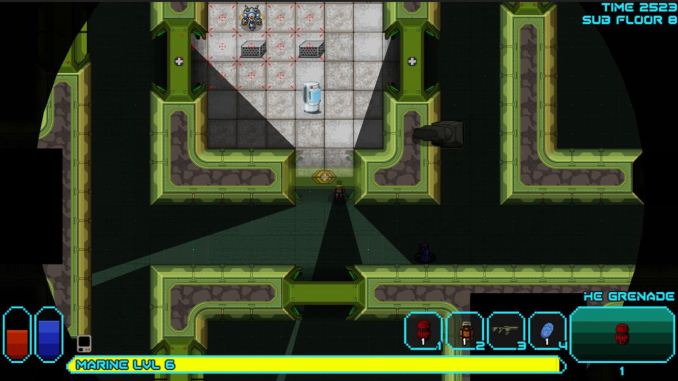
The first three games consist of Dungeons of Dredmor Complete (07/2011, 79%), which is probably the closest you’ll get to a true semi-modern take on Rogue, with a healthy dose of tongue-in-cheek humor tossed in. Hack, Slash, Loot (12/2012, N/A) is more like the original Rogue, with graphics very much of the old-school variety and somewhat more simplistic controls, but it’s still good for some simple fun on occasion. And Paranautical Activity (02/2013, N/A) changes things up with FPS action with power ups and retro neon graphics (probably my least liked of the three games).
Moving on to the three titles you get with a $6+ donation, The Binding of Isaac: Wrath of the Lamb (05/2012, N/A) is the expansion to The Binding of Isaac (09/2011, 84%), and it includes the original game along with new items, power ups, chapters, enemies, etc. The game itself is an action-heavy game with RPM elements and randomly generated levels. Similar to other rogue-like games, you’ll die…a lot…and sometimes you’ll get the right combination of items to help you survive as you dig a bit further into…your crazy bible-obsessed mother’s basement. Graphics are a smooth-running sprite-based affair that shouldn’t tax any modern system too much – one of the great benefits of these indie games. Next up, Teleglitch: Die More Edition (07/2013, 78%) is the extended edition of the original Teleglitch (12/2012, 84%). It’s a top-down view with some nice lighting effects, though I have to say the text is a bit hard on the eyes – and as you can probably guess, you should again prepare to die a lot.
Last up is by far the largest of the games, Sword of the Stars: the Pit (02/2013, 68%), but size isn’t necessarily everything (not that I’d know….) Set in the SotS universe, The Pit is yet another action-RPG, and it’s the only game in this bundle that requires Windows (Steam or DRM versions are available) – all of the other games are available for Windows, OS X, and Linux (with Steam and DRM-free versions as well). The Pit is actually my favorite of this collection, probably because I’m an old man now and like its turn-based gameplay and slightly more cerebral approach. Like Dredmor, this is a game that has a lot in common with the original Rogue style of gameplay, only with a sci-fi backstory.
If you’re like me and happen to like randomly generated dungeons (and for that, I blame my childhood spent playing Rogue many a time on an old IBM PC), this is a great collection of games. You might not want to sit down and play every one of them (repeatedly), but if you have a bit of free time they’re mostly easy to jump in and out of. They’re also pretty painful as far as I can tell in regards to permadeath, which is probably the one thing I didn’t necessarily enjoy about Rogue. One thing I’d like to see with a lot of these indie games is support for ChromeOS, though perhaps that’s because I’ve been playing around with Acer’s C720. Most of these games are very low on system requirements, and it would be great to see more good games on Chrome, but I suspect development is far easier if you’re targeting Windows (or even OSX and Linux).
And on a somewhat related note, Humble Bundle is doing their first ever audiobook bundle. I don’t actually listen to audiobooks, so it’s not really something that grabbed my attention, but most audiobooks tend to cost quite a bit of money. The eight books available for a “name your own price” ($5.95 or higher required to unlock the three extra books) are The Satanic Verses, Stolen, Abandon, Junky and Found, withHeartbreaking Work of Staggering Genius, Blood Meridian and On a Pale Horse being the bonus titles. Happy listening!


     |
Read More ...
AnandTech Call for Writers: 2014
We've enjoyed steady growth at AnandTech over the past several years. Last year in particular we saw our traffic break record highs thanks to all of you. As anyone who follows the site knows very well, the list of things we have to review/cover usually exceeds our available time. To continue to grow, we need your help. We're looking for writers with a true passion for the technology we cover, a deep understanding of what's out there and a thirst for more knowledge.
We're looking for contributors to help out both with reviews as well as our short to medium form Pipeline coverage. The areas in particular we're looking for help with are listed below:
- Smartphones
- Tablets
- SoCs
- Notebooks
- Enterprise & Datacenter Coverage
- GPUs & PC Components
- Professional GPUs
If
you find yourself at the intersection of knowledge and passion about
any of those areas, and have some time to contribute, you're exactly
what we're looking for. These are paid, part-time positions that we're
looking to fill. What I need is a writing sample that demonstrates your
ability to talk about any one of these topics. Your sample can be in the
form of a review, a pipeline post or an analysis piece - it should be
something that looks like it would fit in on AnandTech. Although
not specifically listed here, we're also looking to expand video content
on the site. If you've got a knack for video work, feel free to pass
along a sample.- Tablets
- SoCs
- Notebooks
- Enterprise & Datacenter Coverage
- GPUs & PC Components
- Professional GPUs
Once you've produced it, send it on over to callforwriters@anandtech.com. We'll read through all samples but can't guarantee a reply due to the sheer volume of submissions we tend to receive. If we like what you've sent and there's a potential fit on the team, we'll be in touch.
I'll conclude this post with a passage I wrote for our About page:
In the early days of technology reporting on the web the focus was almost exclusively on depth. We had a new medium for content that didn't come with the same restrictions as more traditional forms. We could present as much data as we felt was necessary and we could do it quicker.If the above resonates with you and you'd like to help by being a part of something different, I'd encourage you to submit a writing sample.
As the web grew, so did the approach to gaining readership. In many cases, publishers learned from the tips and tricks of more traditional media to growing their audience. The focus shifted away from ultimate understanding of what was being reported, to producing content significantly motivated by increasing traffic, or revenue, or both. Thorough observations were out; sensationalism, link baiting, and the path to shallow 10-o'clock-news reporting were in.
While I believe it's definitely easier to produce content by going this route, I don't believe it's the only way to build a well read website.

| |
Read More ...
Razer’s Project Christine: A Modular PC Prototype

First, it’s important to note that the two Christine prototypes shown at CES are apparently not functional (or at least, no longer functional after shipping?), which is unfortunate as we would have loved to see a more real-world demonstration. Anyway, the idea is that you have this modular case (tower/column) where you can plug in GPUs, HDDs/SSDs, and other devices that come in self-contained modules. Need a faster GPU? No longer do you open up your PC and unscrew the old GPU and then install the new GPU; instead, you simply pop out the old module and add a new one – or in the case of CrossFire and SLI systems, you could simply plug in a second (or third?) GPU. Or perhaps you need more storage; simply pop in another SSD module and away you go.
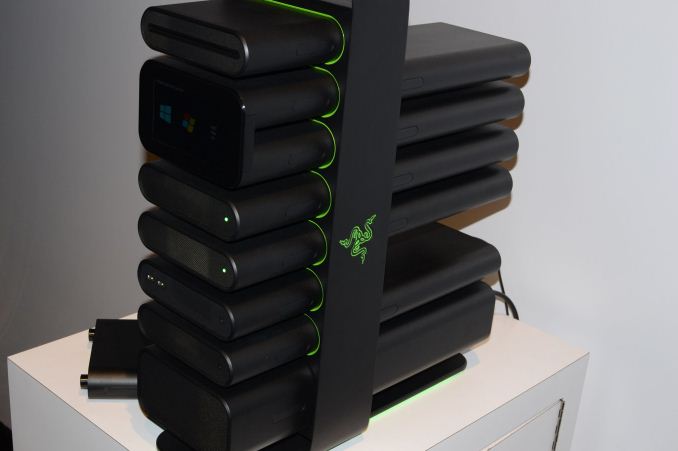
So far so good, but rerouting PCI Express lanes to custom ports isn’t really all that difficult (relatively speaking). Where things start to break down is when we get into the idea of adding more…let’s say “unusual”…parts. Swapping GPUs is easy enough, as we already do that with our “modular” desktop PCs. The same applies to storage devices as well as things that might plug into USB ports. But what happens if you want to upgrade your CPU or chipset? And what sort of RAM is supported and where is it located? RAM is usually in close proximity to the CPU, and one of the modules houses the CPU + RAM, so that solves that question (though it might make upgrading RAM a little difficult). But the location of the chipset wasn't disclosed (maybe it's in with the CPU and RAM?), and I suspect in the prototype upgrading the chipset/platform simply isn’t possible.
What would be really ground breaking would be a modular PC where you could easily swap any and all components. Maybe that’s something Razer is hoping to deliver in the future, but imagine having the center column contain a large PCI-E backplane that could be upgraded with various options. The default model might come with 24 or 32 PCI-E lanes, while higher end backplanes could boast 48, 72, or even 96 (or more!) lanes. Perhaps the chipset would need to be part of the backplane, or maybe not – certainly it would have to be something more than a stock chipset if it were going to support differing numbers of PCI-E lanes – or at the very least, it would have to have something like a PLX switch, which wouldn't actually doing anything for peak bandwidth. We could even have a design that could be upgraded to PCI-E 4.0 support in the future, and maybe something with the ability to transition between CPU platforms – so AMD, Intel, ARM, etc. That would take a lot of work and probably wouldn’t really receive much in the way of support from Intel, but it’s a nice dream.
Ultimately, it’s an idea we’d love to see flourish, but we’ll have to wait and see where Razer goes with it. We could draw a parallel with the automotive industry and their concept cars, where all sorts of cool/crazy ideas are shown but few of them ever reach the point of mass production. Right now, we have plenty of questions and Razer isn’t really providing much in the way of answers. How much would the modular PC cost – for the initial base unit as well as for the component upgrades? When will it be available (if ever)? What’s the cooling capacity? How much (if any) noise does it make? How reliable would such a device be long-term? What about durability for frequent upgraders (or if someone happens to accidentally knock it over – I mention this as someone with a few children running around the house; I like my big, sturdy box, thank you very much!)?
Even if the device may not be entirely practical, Razer has built a brand around somewhat niche products. Their peripherals have catered primarily to gamers since they first showed up, and the Razer Blade laptops are generally high quality designs if a bit expensive. The Project Christine prototypes felt pretty solid and it’s certainly an eye-catching design, though perhaps a bit too much so. If Razer brings in other partners or perhaps licenses the core elements, we might even end up with more traditional looking modular PCs that still provide an easier path to upgrades than our current devices. Now if we can just get something similar for laptops, I’ll be happy.


| |
Read More ...
OCZ Vertex 460 (240GB) Review
The last few months have not been easy at OCZ. After long-lasting financial issues, the company filed for bankruptcy on November 27th and a week later Toshiba announced that it will be acquiring the assets for $35 million. OCZ is currently surrounded by uncertainty, at least from a consumer's perspective. The details of the acquisition are scarce at best and OCZ only announced that Toshiba will be funding them to ensure normal operation during the acquisition process. I was hoping to have an update about OCZ's situation (especially about existing product warranties) but I was told by OCZ that they can't shed any light on the deal until it closes. Assuming the acquisition process is on schedule, we should expect to hear more in the next couple of weeks. Meanwhile, OCZ continues to do business as usual and the Vertex 460 is a sign of that. Already showcased at CES a couple weeks ago, the drive is now ready for release. Read on to find out how the drive performs!

| |
Read More ...
Floating point peak performance of Kaveri and other recent AMD and Intel chips
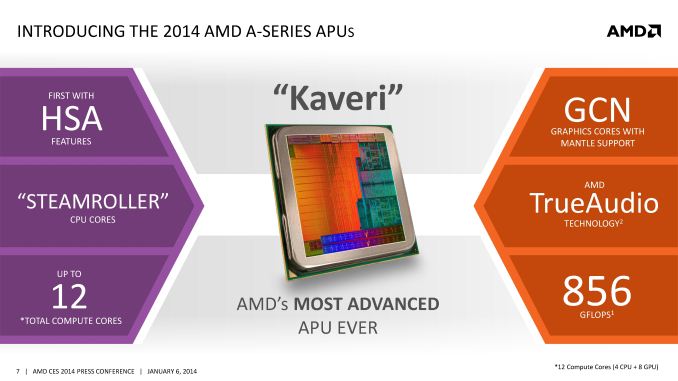
I am taking this opportunity to summarize the info about Kaveri, Trinity, Llano and Intel's competing platforms Haswell and Ivy Bridge on both the CPU and GPU side. We provide a per-cycle estimate for the chips as well as peak calculated in gflops. The estimates are chip-wide, i.e. already take into account the number of cores or modules. Due to turbo boost, it was difficult to decide what frequency to use for peak calculations. For CPUs, we are using the base frequency and for GPUs we are using the boost frequency because in multithreaded and/or heterogeneous scenarios the CPU is less likely to turbo. In any case, we believe our readers are smart enough to calculate peaks at any frequency they want, given that we already supply per-cycle peaks :)
The peak CPU performance will depend on the SIMD ISA that your code was written and compiled for. We consider three cases: SSE, AVX (without FMA) and AVX with FMA (either FMA3 or FMA4).
| Platform | Kaveri | Trinity | Llano | Haswell | Ivy Bridge |
|---|---|---|---|---|---|
| Chip | 7850K | 5800K | 3870K | 4770K | 3770K |
| CPU frequency | 3.7 GHz | 3.8 GHz | 3.0GHz | 3.5GHz | 3.5GHz |
| SSE fp32 (/cycle) | 16 | 16 | 32 | 32 | 32 |
| SSE fp64 (/cycle) | 8 | 8 | 16 | 16 | 16 |
| AVX fp32 (/cycle) | 16 | 16 | - | 64 | 64 |
| AVX fp64 (/cycle) | 8 | 8 | - | 32 | 32 |
| AVX FMA fp32 (/cycle) | 32 | 32 | - | 128 | - |
| AVX FMA fp64 (/cycle) | 16 | 16 | - | 64 | - |
| SSE fp32 (gflops) | 59.2 | 60.8 | 96 | 112 | 112 |
| SSE fp64 (gflops) | 29.6 | 30.4 | 48 | 56 | 56 |
| AVX fp32 (gflops) | 59.2 | 60.8 | - | 224 | 224 |
| AVX fp64 (gflops) | 29.6 | 30.4 | - | 112 | 112 |
| AVX FMA fp32 (gflops) | 118.4 | 121.6 | - | 448 | - |
| AVX FMA fp64 (gflops) | 59.2 | 60.8 | - | 224 | - |
Now onto GPU peaks. Here, for Haswell, we chose to include both GT2 and GT3e variants.
| Platform | Kaveri | Trinity | Llano | Haswell GT3e | Haswell GT2 | Ivy Bridge |
|---|---|---|---|---|---|---|
| Chip | 7850K | 5800K | 3870K | 4770R | 4770K | 3770K |
| GPU frequency | 720 MHz | 800 MHz | 600 MHz | 1.3 GHz | 1.25 GHz | 1.15 GHz |
| fp32/cycle | 1024 | 768 | 800 | 640 | 320 | 256 |
| fp64/cycle (OpenCL) | 64 | 48** | 0 | 0 | 0 | 0 |
| fp64/cycle (Direct3D) | 64 | 0? | 0 | 160 | 80 | 64 |
| fp32 gflops | 737.3 | 614 | 480 | 832 | 400 | 294.4 |
| fp64 gflops (OpenCL) | 46.1 | 38.4** | 0 | 0 | 0 | 0 |
| fp64 gflops (Direct3D) | 46.1 | 0? | 0 | 208 | 100 | 73.6 |
Situation on AMD's Trinity/Richland is even more complicated. fp64 support under OpenCL is not standards-compliant and depends upon using a proprietary extension (cl_amd_fp64). Trinity/Richland do not appear to support fp64 under DirectCompute (and MS C++ AMP implementation) from what I can tell. From an API standapoint, Kaveri's GCN GPUs should work fine on for fp64 under all APIs.
Some of you might be wondering whether Kaveri is good for HPC applications. Compared to discrete GPUs, applications that are already ported and work well on discrete GPUs will continue to be best run on discrete GPUs. However, Kaveri and HSA will enable many more applications to be GPU accelerated.
Now we compare Kaveri against Haswell. In applications depending upon fp64 performance, conditions are not generally favorable to Kaveri. Kaveri's fp64 peak including both the CPU and GPU is only about 110 gflops. You will generally be better off first optimizing your code for AVX and FMA instructions and running on Haswell's CPU cores. If you are using Windows 8, you might also want to explore using Iris Pro through C++ AMP in conjunction with the CPU. Overall I doubt we will see Kaveri being used for fp64 workloads.
For heterogeneous fp32 applications, Kaveri should outperform Haswell GT2 and Ivy Bridge. Haswell GT3e will again be a strong contender on Windows given the extremely capable Haswell CPU cores and Iris Pro graphics. Intel's GPUs do not currently support OpenCL under Linux, but a driver is being worked on. Thus, on Linux, Kaveri will simply win out on fp32 heterogeneous applications. However, even on Windows Haswell GT3e will get strong competiton from Kaveri. While AMD has advantages such as excellent GCN architecture and HSA software stack (when ready) enabling many more applications to take advantage of GPU, Iris Pro will have the eDRAM to potentially provide much improved bandwidth and the backing of strong CPU cores.
I hope I have provided a fair overview of the FP capabilities of each platform. Application performance will of course depend on many more factors. Your questions and comments are welcome.

| |
Read More ...
Amped Wireless: 802.11ac WiFi with High-Gain Antennas

The wireless routers are now dressed in black, while the repeaters/range extenders use similar hardware that’s tuned for a slightly different workload and their casings are white. Amped also has access points available, which are more for business, with the highest model currently being AC1200 (two stream 2.4GHz/5GHz), which comes in a steel-grey color. The AC1200 RTA15 router has been shipping for a few months now with an MSRP of $190, while we’re still waiting for the new AC1900 model to begin shipping. Similarly, the REA20 range extender is currently shipping with a $200 MSRP, and we’re waiting for availability on the AC1900 range extender.
Along with the routers, repeaters, and access points, Amped has a couple new 802.11ac client adapters. One is the ACA1, an AC1200 USB WiFi adapter with USB 3.0 connectivity that supports two streams (300Mbps/867Mbps) and can be used with any suitable laptop or desktop. USB 2.0 compatibility is provided as well, but performance will potentially be lower due to the limited bandwidth offered. The second client adapter is the PCI20E, and AC1200 WiFi PCI-E adapter, which has similar performance but comes with a PCI-E x1 expansion card for use in your desktop. The ACA1 is already shipping with a $90 MSRP, while the PCI20E is currently on pre-order with an MSRP of $80, and availability is expected in March.
The potentially fastest routers at CES support up to four streams 802.11ac (1733Mbps), but the only four stream solution currently available comes from Quantenna. Considering most of Amped’s other products use Realtek chipsets, they may not bother with a four stream 11ac router, so the AC1900 line is likely to be the highest performance router and range extender from Amped for the time being.


| |
Read More ...
Crucial Showing DDR4 Modules and Sport VLP DDR3

The other cool thing Crucial had to show is their half-height Ballistix Sport VLP DIMM. These have been available for a little while, but they have several features that make them attractive. For one, instead of the usual gigantic heat spreaders – which can sometimes interfere with the installation of CPU coolers or other items – the Sport VLP has a very low profile (that’s the VLP part of the name) and ends up being about half the height of a standard DIMM. They’re also 1.35V DDR3-1600 modules, so they use less power and generate less heat – never a bad thing in my book. These are literally the polar opposite of some of Crucial’s other Ballistix products, with capacities up to 8GB per DIMM and pricing that’s somewhat higher than standard DDR3 DIMMs. Note that you may need to spend some time in the motherboard BIOS in order to get these DIMMs to work, and raw performance isn’t likely to be as high as some other DDR3 DIMMs, but for mini-ITX builds I could see these being very handy alternatives to regular size DIMMs.


| |
Read More ...
BenQ LCDs and Projectors: RevolutionEyes and Colorific

On the monitor side of things, BenQ had several interesting displays. The RL2455HM is a TN panel that boasts GTG response times of just 1ms; I’m not even sure how important response times are these days, particularly on TN panels, but if you’re annoyed by smearing on LCDs this might be an improvement. Personally, I was more impressed with the G-Sync compatible display, and as I commented to NVIDIA, I think getting G-Sync into laptops and notebooks is going to be far more important (considering the lack of GPU performance, running at 30-60 FPS is far more common on laptops than desktops). If you haven’t seen G-Sync in action, you’re missing out on one of the most impressive visual demonstrations to date.
BenQ also showed their BL3200PT professional 32” 2560x1440 display targeting CAD/CAM users, with ZeroFlicker technology and support for portrait mode – and yes, a 32” portrait mode LCD looks awesome, though perhaps not practical for most users. Finally, the PG2401PT 24” display is for professional that need accurate colors. It has a 99% AdobeRGB gamut, 1920x1200 resolution (hooray for 16:10!), brightness uniformity function, and I believe is available with or without an i1 Display Pro colorimeter for color management.
One thing that wasn’t really clear is how much attention BenQ will pay towards delivering accurate colors on their displays without the need for an expensive colorimeter or spectrophotometer. While most LCDs can be calibrated with the right tools to deliver good colors, these days we’re at the point where anything more than a budget display ought to ship with an option for accurate colors. Best Buy and other retailers may not use the function, but when you’re sitting at your desk, many of us would like to get reasonably accurate colors rather than blown out and oversaturated colors. Hopefully BenQ (and other display manufacturers) will put more of an emphasis on that area going forward.


| |
Read More ...
In Win: Tempered Glass Cases, PSUs, and NUC

Other products on display at In Win included a limited edition Tou case where the entire exterior is composed of tempered glass – cool looking but perhaps not very practical. There were a couple prototype 707 cases as well, with some interesting aesthetics and perhaps a few elements that need to be tweaked before they’re ready for mass production (the hinged flap on the top didn’t strike me as being particularly useful). In Win also makes power supplies – or at least, they sell PSUs under their brand, which like all PSUs are manufactured according to the specs In Win provides by one of the major PSU ODMs – and they had both a 550W 80 Plus Gold and a 900W Serenity 80 Plus Platinum on display.
Wrapping things up for In Win, I don’t have much to say about the smartphone and tablet stands or the headphones, let alone the mouse pads. The K3 Ultra Small Form Factor systems on the other hand might find a use in some businesses. They support Intel NUC motherboards and the core design is similar in most of the K3 devices, but one supports Power Over Ethernet so you can basically get everything you need with one cord (assuming you use a Bluetooth keyboard and mouse). The others use power supplies (one with an internal 65W PSU with the other two using external power bricks), and all include VESA compatibility so they can mount on the back of a display.


| |
Read More ...
Corsair Obsidian 250D Case Review
Corsair is a name familiar to any computer enthusiasts, and the company today offers numerous products: computer cases, power supply units, air and liquid CPU coolers, solid-state drives, and gaming peripherals can all be found in Corsair's product ranks. With the recent announcement of the Obsidian 250D, Corsair is starting 2014 by joining the Mini ITX case fever. The Obsidian 250D however has not been designed with minimum proportions in mind; despite the Mini-ITX format, it can still house very powerful gaming systems and advanced cooling solutions. Let's see what the 250D brings to the table and how it performs in our updated case testing suite.

| |
Read More ...
CES 2014 Networking Wrap-Up: D-Link, Netgear, Thecus and ZyXEL

D-Link - FCC Leaks Point to Home Automation Play
D-Link's suite had on display all their products announced at CES. We weren't planned on writing up about the visit since we were placed under NDA for most of the interesting information / demonstrations. However, ZatzNotFunny unearthed a public FCC filing and a product link for the D-Link HomeSense Wi-Fi Smart Plug (a Belkin WeMo-like product that has an electrical relay controllable using an app over the Internet / Wi-Fi).
Netgear - HDMI Stick & Cable Modem / 802.11ac Router Gateway
Netgear's suite had all their products announced at CES on display. There were a couple of interesting product lines that we didn't cover in our write-up based on the press release. One of them was the Android HDMI stick, NTV300D. Considering that these types of devices are a dime a dozen in the retail market, Netgear is doing the right thing by targeting it towards the service provider market.
Another interesting product was the C6300 DOCSIS 3.0 cable modem / AC1750 router gateway. Usually, such cable modem gateways are sold through service providers, but Netgear is preparing this for retail availability at a $230 price point. Given the separate costs of a DOCSIS 3.0 cable modem and a AC1750 router, this looks like a very sound product on the price front. I am interested in checking out our readers' views on a modem / router combo gateway vs. a traditional separate modem and router.
Thecus - First Trip to CES
Thecus attended CES for the first time in their history. They have had a regular presence at Computex and other trade shows around the world over the last several years. The focus seemed more towards having a display of the currently available products and distribution of product literature (perfectly fine for their intent, which was to attract more customers and let attendees know about the products being sold by Thecus). There were no live demos or new OS features (most of the other NAS vendors launch either a new OS version or present new hardware at CES).That said, Thecus did announce some 10 GbE-enabled NAS units including the N7710-G and N8810-G at price points of $1200 and $2000 respectively. These are based on the Intel Pentium G850 dual-core CPUs. This is a nice balance between the Celerons used in the QNAP TS-x70 series (which are also 10 GbE-capable) and the Core i / Xeon CPUs used in the higher-priced models.


ZyXEL - Targeting Service Providers
ZyXEL usually uses CES to announce a few new products and meet up with their current / prospective service provider customers. Like D-Link, most of the interesting information was under NDA, but we did grab some pictures of their product line on display.Some of the interesting products were a LTE broadband gateway, the PMG2542 GPON Fiber gateway (which also happened to be a CES Innovations 2014 Design and Engineering Honoree) and FTTH (fiber to the home) gateways. MoCA and HPNA devices, as well as HomePlug devices were on display. The PMG2542 is particularly exciting because it happens to use Quantenna's 4x4 802.11n implementation. Various powerline networking kits and 802.11ac routers / extenders were also on display under the ZyFi tag.


TP-LINK - HPAV2 Product Piques Curiosity
We met with almost all the vendors we had worked with before, but missed out on some of the new entrants to the US market. On the networking side, I did see TP-Link's huge presence on the show floor. However, with no prior meeting set up, it would have been impossible to go beyond what was announced in their CES press release. TP-LINK's foray into the US market has some of the other vendors worried, and it appears that TP-LINK is already the largest seller of WLAN products worldwide as per the latest IDC report. The most interesting product in the PR appears to be the AV1000 PLC kit based on HPAV2. TRENDnet and TP-LINK seem to be the only two vendors with publicly announced designs based on the QCA7500 powerline chipset. We hope to evaluate some of TP-LINK's products in the near future.Concluding Remarks
CES 2014 was an exciting show for the networking market. The biggest announcement, in our opinion, was Quantenna's 4x4 802.11ac solution for Wi-Fi routers. Wave2 products have the ability to leave people impressed with real Gigabit Wi-Fi capabilities. It will be interesting to see Broadcom's and Qualcomm Atheros's response to this chipset. In the PLC front, the appearance of products with MIMO capabilities and compliant with the HPAV2 standard is also a heartening milestone for HomePlug technology.On the NAS side, we would say it was a bit disappointing. Our hope was that we would see some product announcements based on the latest Intel Atom platforms (Bay Trail / Avoton / Rangeley). Unfortunately, nothing materialized. Privately, we were told by various NAS vendors that products were being worked on for a late Q2 / Q3 announcement. While Avoton should bring much-needed AES-NI acceleration for encrypted volumes / shares, companies will still be able to use some Rangeley-based platforms (without hardware accelerated cryptography functions) for products without export restrictions. The other worrying aspect for some of the NAS vendors is the absence of clarity on Intel's side with respect to the Evansport platform. Some of them are not very enthused by the repurposing of a set-top-box chipset for the NAS market. I would love to learn what is on Intel's roadmap for the low-end NAS market currently dominated by Marvell's ARM-based SoCs.
The home automation market is also well primed to take off in a big way. With Belkin's WeMo product line proving to be a decent seller, other established networking vendors are becoming ready to test the waters (though not everyone wants to go the retail route). The home automation market is currently a risky one for vendors due to the multitude of protocols that need to be supported. While Z-Wave seems to be the established incumbent, ZigBee is close on its heels. Recently, Bluetooth LE (BLE) and Wi-Fi have also entered the fray. Supporting all these protocols requires sourcing silicon from different vendors and integrating into a single system. As the market takes off, the big silicon vendors like Broadcom and Qualcomm are not going to lie still and let the single-vendor (Sigma Designs) controlled proprietary Z-Wave rule the market. I have heard from various industry sources that the 802.11ah (the sub-GHz IEEE standard for ultra low-power, low bandwidth requiring IoT products) specifications as well as silicon development are being fast-tracked and we could see something concrete as early as next year. It is built from the ground-up to address the IoT market, takes care of the drawbacks of traditional Wi-Fi and BLE in those types of applications, and will have multi-vendor support from the outset. In the long run, the non-proprietary nature of 802.11ah might just be what the home automation market needs.
From a home automation product perspective, it is a bit worrisome to see a trend where reliance only on cloud control is deemed acceptable. Examples include the Dropcam IP cameras and Honeywell Wi-Fi thermostats. These rely on the user's Internet connection as well as the cloud servers being up. It might be a good way for service providers to milk more money out of their customers every month (and, I completely agree, many users might be willing to do that to avoid the hassle of a DIY solution). However, the industry would do good to use the cloud only as a backup option and allow full control over the local network with the help of open APIs.

| |
Read More ...
Toshiba Excite and Encore Tablets, Click and Z10t Hybrids - CES 2014

Jumping way over to the high-end – and with nothing in between – is the Excite Write, a 10” tablet with a Tegra 4 SoC (probably the SoC the reps were talking about earlier), with a Wacom digitizer and stylus. The Write also has a 2560x1600 display, 2GB RAM, and a variable amount of storage depending on the model. Starting price? $600. So yeah, you could buy six Excite 7 tablets or one Excite Write, though obviously there’s more to it than that. Rounding things out on their tablets is the Encore 8.1, a Windows 8.1 tablet with an 8” display and Atom Z3740 SoC with a new target price of $299 (down from the original launch price of $329). If you’re after a Windows 8.1 tablet, the Encore 8.1 might fit your needs, and it includes Microsoft Office Home and Student to sweeten the deal.
None of the above devices are new, but it was our first chance to go hands-on so I thought I’d at least mention them. There were a couple more tablet-like device at Toshiba that have come out during the past few months, the Satellite Click and the Portege Z10t. Portege tends to be the business variant of Toshiba’s ultraportable line, but in this case there appears to be little overlap between the Satellite Click and Portege Z10t – I’m simply mentioning them together as they’re both hybrid detachable tablet-laptop devices.
The Click is a 13.3” hybrid that uses an AMD A4-1200 (Kabini) SoC/APU with a target price of $600. That will get you 4GB RAM, 500GB HDD (yeah, no SSD here), the keyboard dock, and a 2-cell battery in the tablet with another battery (2-cell?) in the keyboard dock. Battery charging and drain are prioritized do the dock is used first and the tablet is charged first, but holding a 13.3” 1366x768 tablet is still probably more conspicuous than most of us would like, and sadly the AMD Kabini APU doesn’t do a lot to make up for other deficiencies in the design.
As for the Portege Z10t, it’s a slightly smaller detachable with an 11.6” 1920x1080 display and with Intel’s Y-series CPU powering the device. Think of this as basically an Ultrabook with a detachable keyboard and you’re not too far off, though it can still be a bit bulky for a tablet. The Z10t originally launched with Ivy Bridge, but it is now being updated with a Haswell i5-4200Y processor and appears to come with 8GB RAM. That should help improve battery life over the earlier model, but the pricing for the currently shipping IVB models starts at $1449, so that’s still pretty steep. The Haswell update will likely come in around $1500 MSRP starting prices, but I didn’t get any specific information on pricing or availability.


| |
Read More ...
Toshiba’s 4K Laptops and Updated KIRAbook - CES 2014

Shift to the other end of the laptop spectrum and Toshiba has a couple laptops sporting 4K displays. The two options are somewhat similar, with the Tecra W50 being for business users and the Satellite P50t going after the consumer market. Starting with the marquee feature, the display is a 15.6” 3840x2160 panel – 262 PPI. It’s difficult to say what the colors are like given the viewing environment, but at least subjectively it looked closer to producing correct colors than most laptops, and that’s a patterns we’ve noticed with many of the high-DPI panels. As far as aesthetics, the P50t is a consumer device that comes with a Blu-ray combo drive, glossy touchscreen display, and glossy keys. I really like the keyboard layout Toshiba uses (hello proper 10-key!), but I wouldn’t mind a switch to non-glossy keys. I suppose it’s not enough to be a deal breaker, but it definitely feels a bit out of date in terms of styling. The Tecra by comparison ditches the touchscreen and instead goes with a matte panel, and it also has workstation level features like the ability to support up to a Quadro K2100M GPU. It’s also quite a bit heavier at up to six pounds (depending on configuration). Both are slated for release in the middle of the year, so perhaps there’s still time for changes perhaps, but we’ll see what happens.
The last notebook to discuss from Toshiba is actually one of the nicest (perhaps even the best) looking Ultrabooks at the show, the KIRAbook. There was a lot to like about the original Ivy Bridge KIRAbook, but pricing was perhaps a bit too high, battery life was middling, and build quality (specifically, the flex on the display portion of the chassis) wasn't as good as we'd like on a premium device. With the Haswell update, Toshiba looks to have fixed at least the battery life aspect, and perhaps pricing will be a bit more compelling this round. Toshiba claims up to 9 hours of battery life, which should be about right compared to the Ivy Bridge design with the same core specs. That includes a 2560x1440 (available with or without touch), a 0.7” thick profile, and a weight of just 2.6 pounds. The body is constructed of AZ91 magnesium alloy that’s supposed to be more rigid and durable than the A6063 aluminum alloy, though I couldn’t tell you who uses the latter. Pricing and availability are scheduled for February 2014 with the base model selling for $1500; it’s not clear if that includes a 256GB SSD and 8GB RAM, but that appears likely from the press release.


| |
Read More ...
Best Video Cards: January 2014
To kick that off, let’s start with our first buyer’s guide of the year, our January 2014 desktop video card buyer’s guide. Since our last guide there have not been any major product launches, so the makeup of the market has not changed. However due to a few different factors – chiefly Cryptocoin Mania and what we suspect are some inventory drawdowns ahead of future product launches – pricing and availability for a number of video cards has shifted.
From an inventory perspective, there has been a clear drawdown of GeForce GTX 650 Ti Boost cards, which are now virtually impossible to find. GTX 650 Ti Boost is one of 3 GK106 based cards offered by NVIDIA and usually packed the most performance per dollar, making it one of our recommendations last month. At this point there’s reason to believe that NVIDIA is drawing down inventory ahead of a new product refresh, so that GTX 650 Ti Boost isn’t competing with its successor. Note that GK106 wasn’t put into a 700 series card in 2013, so with its 1 year anniversary coming up in 2 months, NVIDIA may finally be getting around to doing that.
Meanwhile in AMD’s camp things are in flux, both for all the benefits and drawbacks that brings. Last month AMD announced that they’ll be launching the Radeon R7 260 this month, but those cards have yet to hit the market. A lower tier Bonaire part, the R7 260 will fill the gap between the R7 260X, and the Oland based R7 250.
At the other end of the market, AMD is having unprecedented demand issues which has severely distorted pricing for the R9 280 and R9 290 series. In brief, Cryptocoin Mania has resulted in virtually every high-end AMD card being snatched up for mining. And with cryptocoin prices having risen to new levels in the last few months, the value of these cards as miners has exceeded their value as video cards, resulting in the demand spike. With video card prices now being almost unilaterally dictated by mining returns and electricity costs, the 280 series and 290 series are all running roughly $100 over MSRP.
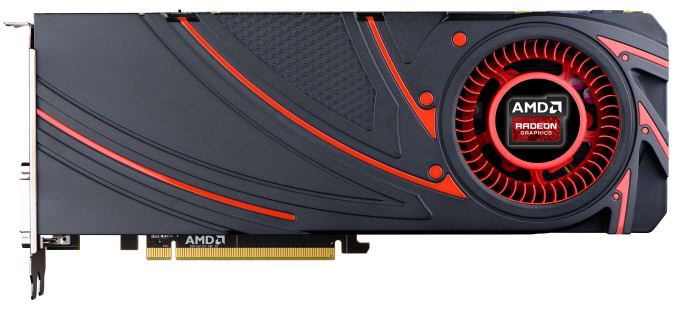
Cryptocoin Victim #1: Radeon R9 290
Truth be told we had figured this would blow over by now (if only due to increases in mining difficulty multipliers), but AMD card prices have held their inflated prices for almost two months now. Which on a side note is good for AMD – they’re clearly selling almost everything they can make – but it’s also not great because they’re not the one setting these new card prices, or the ones collecting the higher profit. The same goes for the partners, who are still selling the finished cards to retailers at normal prices. Instead the profit between MSRP and these inflated prices is being captured by retailers, which although is good for them (retail is a notoriously low margin business), it does mean that the always financially precarious AMD doesn’t get to further improve their balance sheets in the process.
Anyhow, market summaries behind us, let’s look at individual recommendations. We’ve laid out our ideas of price/performance bands and recommendations in our table below, with our full explanations and alternative options to follow.
In general, high quality 1080p gaming will start at $199; going above that will find cards that are good for 1440p, 4K, and multi-monitor, while going below that will find cards that will require some quality sacrifices to stay at 1080p.
| Jaunary 2014 GPU Performance Guide | ||||
| Performance Band | Price Range | Recommendation | ||
| 1080p (Low) | $99-$139 | AMD Radeon HD 7770 | ||
| 1080p (Med) |
$139-$209
| |||
| 1080p (High) |
$209-$329
| |||
| 1440p (Med) |
$329-$499
| |||
| 1440p (High) |
$499-$679
| |||
| 1440p (Max) |
$679+
| |||
| 4K/Multi-Monitor (High) |
$1200+
| |||
Budget (<$99): AMD Radeon HD 7770

From a performance perspective the 7770 isn’t going to quite hit the sweet spot we outlined earlier, but for those gamers on a strict budget it will get the job done. In the long run it should be able to run most games even at 1080p with medium-to-low settings, along with keeping texture quality down a notch to account for its 1GB of VRAM. Battlefield, GRID 2, and even Total War: Rome 2 can easily hum along on this card at decent settings at 1080p.
Unfortunately, since last month it looks like AMD has discontinued providing vouchers for the 7770 to participate in their Never Settle Forever program. According to the latest terms and conditions it should qualify for the Bronze tier, but without vouchers that doesn’t mean much.
Mainstream Sweet Spot ($139): AMD Radeon R7 260X

As an added kicker, the 260X is the lowest tier card to qualify for the Silver tier in AMD’s Never Settle Forever program. AMD’s silver tier is good for two games, one of which will be the forthcoming (and Mantle/TrueAudio enabled) Thief.
1080p Gaming ($209): AMD Radeon R9 270X

To that end there is no better card at this price than AMD’s recently released Radeon R9 270X. Based on a fully enabled Pitcairn GPU, 270X easily offers the most bang for the buck, keeping its distance from NVIDIA’s GTX 600 series competition while getting rather close to NVIDIA’s more expensive GeForce GTX 760. The only catch right now is that 270X prices a running a hair over MSRP; while they’re supposed to start at $199, in practice they start at $209. For a $10 difference we’re not going to make much of a fuss, but it does mean that AMD technically misses the $199 mark by a Hamilton.
Meanwhile buyers looking for bundled games will come up disappointed. The only cards participating in AMD’s bungled Battlefield 4 promotion carry a price premium, assuming of course you can find one at all.
Runner Up: AMD Radeon R9 270: Briefly, AMD’s lower tier R9 270 card makes for a good runner up here. The performance is still strong, but more importantly 270 is AMD’s top 150W card, for those gamers looking for something that will work with a limited capability PSU. Asus’s 270 DCUII OC absolutely floored us here in recent testing, producing next to no noise.
Reaching For 1440p ($339): NVIDIA GeForce GTX 770

For the GTX 770 we’re looking at a card that will straddle 1080p and 1440p. It’s not quite fast enough to work in every game at 1440p with high quality settings, but it’s fast enough for many of them. Alternatively, it’s fast enough at 1080p that it has no problem at that resolution with everything cranked up, including high levels of MSAA and even SSAA in some games. The only area where it may come up short is VRAM, which at 2GB is enough for today, but it probably won’t have as much headroom for 1440p in the future. There are 4GB cards, but that will carry a $30+ premium.
Meanwhile for bundle bonuses, the GTX 770 (and all other 700 series cards) qualifies for NVIDIA’s new Winter 2014 game bundle. The Winter 2014 bundle includes a free copy of Assassin’s Creed IV: Black Flag - NVIDIA’s flagship game under The Way It’s Meant To Be Played program – and further offers a $50 bundle discount on NVIDIA’s SHIELD handheld gaming console.
Extreme Performance with Refinement ($499): NVIDIA GeForce GTX 780
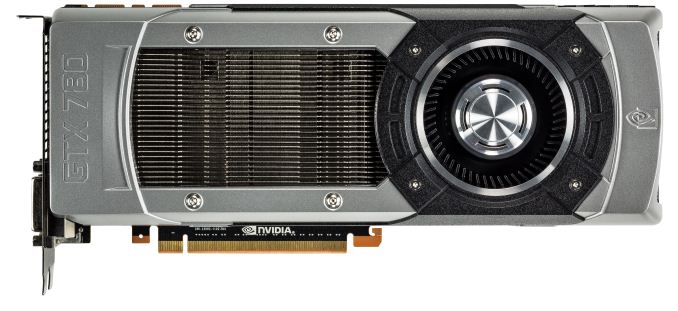
Positioned as NVIDIA’s lowest tier GK110 card, the high performance offered by the GeForce GTX 780 means it should be fast enough to run virtually anything at 1440p with high-to-extreme settings, and 1080p gamers should have no trouble hitting 120fps in anything that isn’t CPU limited to begin with. To that end the GTX 780 is the cheapest card that can drive all sub-4K single-monitor setups, giving it a sweet spot position of its own in the current market.
As an added bonus, even at the $499 base price this gets access to NVIDIA’s amazing metal cooler, which in our tests is enough to keep noise levels under 50dB. So for gamers looking for a balance between performance and noise, the GTX 780 is a star. Meanwhile for gamers looking at open air coolers, GTX 780 cards with alternative coolers such as EVGA’s ACX cooler will find that the GTX 780 can be even quieter for the usual tradeoff between a blower and an open air cooler.
Also, like the GTX 770, the GTX 780 qualifies for NVIDIA’s Winter 2014 game bundle, which means it includes Assassin’s Creed IV: Black Flag and a $50 SHIELD discount.
Finally, while the Radeon R9 290 doesn’t make the cut as a runner-up here, it does at least bear mentioning. The 290’s strong suit was as a spoiler at $400; at $500 it offers performance similar to the GTX 780, but it loses rather badly on noise/build-quality. It’s certainly an option, but for gaming we don’t see any reason to pick a reference 290 over a GTX 780.
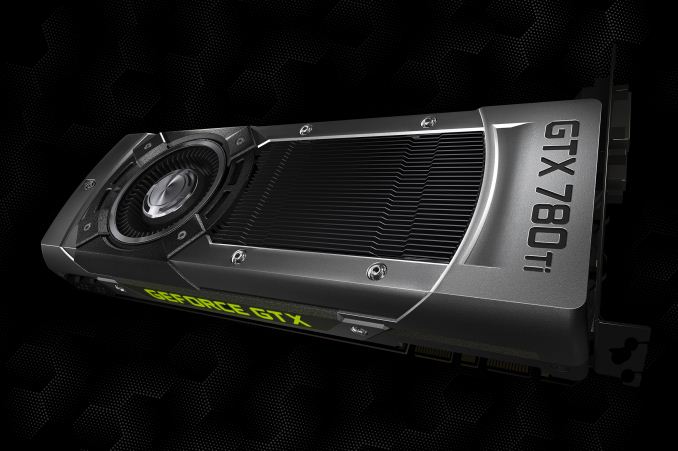
Taking the Single-GPU Crown ($679): NVIDIA GeForce GTX 780 Ti
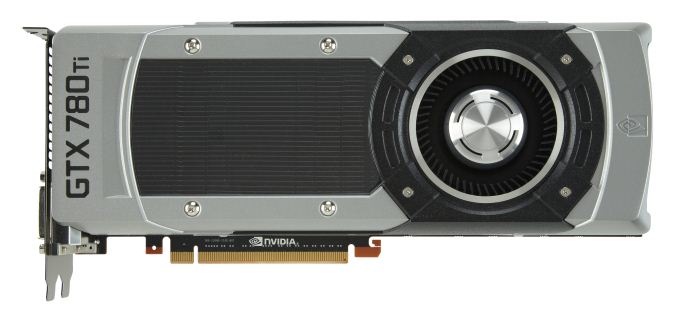
Note that like the other 700 series cards, the GTX 780 Ti qualifies for NVIDIA’s Winter 2014 game bundle, which means it includes Assassin’s Creed IV: Black Flag and a $50 SHIELD discount.
4K for Me ($1200+): 2x AMD Radeon R9 290X
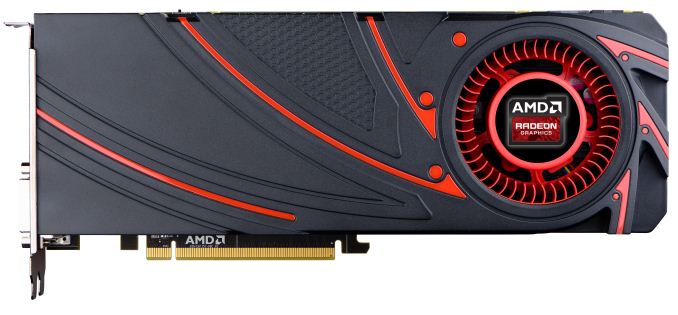
Meanwhile the GTX 780 Ti in SLI is going to be a viable alternative here, but NVIDIA doesn’t offer much of an incentive. The total price tag is $160 more for roughly identical multi-GPU performance (and a bit less VRAM), with the only meaningful difference being a bit less noise and a bit less power consumption. This still puts the price of the video cards at roughly the price of the cheapest 4K monitor – so really it may as well be down to buyer preference – but there’s certainly no performance incentive to spend the additional money.

| |
Read More ...
Powerline Networking - End of the Road for G.hn?

G.hn had two major trump cards over HomePlug when it was brought up as an alternative. The first one being the ability to obtain gigabit-level speeds, and the second one being the ability to operate over any wire (powerline, coax or phone line). With the launch of HPAV2, the first trump card has been lost. Will the second trump card be attractive enough for service providers to risk choosing it over what is proven technology? It looks unlikely based on what I heard and saw at CES. I have been checking out really awesome demonstrations of the capbilities of G.hn from Sigma Designs (back in 2011) and Marvell (in 2013), but I am left wondering what is preventing them from coming to the market. It would be great to hear more on this in the comments section from readers familiar with this space.
On the other hand, HomePlug is going from strength to strength. Over the last year, they have cornered the 'PLC for electric cars' market, developed a certification program (Netricity) for long-distance low-frequency narrow band PLC (up to 500 kbps below 500 kHz) and launched the nVoy certification program for IEEE P1905.1 hybrid networking products.
The HomeGrid forum had its fair size of news to share too, but the real success of a technology lies in shipping announced products to end users (be it service providers or retail consumers). As of now, I am not aware of any shipping G.hn product. All the networking vendors (catering to the service provider market) that I talked to at CES seem to be committed to HomePlug for the near future. None of them have any G.hn products in their pipeline currently. If this is the state even three years after silicon was first demonstrated, I am not sure how G.hn can make inroads any further (considering that one of their trump cards is no longer on the table).

| |
Read More ...
Intel System Giveaway Part 2: High Performance Core i5
Late last year Intel came to us with an interesting proposition: using Haswell CPUs and Intel SSDs, we had to come up with four of our best system builds. Each build would be targeted at a slightly different type of user and budget, but all are aimed at folks looking to overclock. With the component list assembled, Intel went out, got all of the parts we selected and agreed to give away the bundles to AnandTech readers.
With the hectic holidays and CES our giveaway schedule was interrupted but we're back and have 3 more builds to give away. These systems are purely parts bundles, you'll have to assemble them yourself. Literally everything here was picked by Jarred and Ian as what they'd build if given these budgets.

| |
Read More ...
AMD Kaveri Docs Reference Quad-Channel Memory Interface, GDDR5 Option


In our Kaveri review, we asked the question whether or not any of you would be interested in a big Kaveri option with 12 - 20 CUs (768 - 1280 SPs) enabled, basically a high-end variant of the Xbox One or PS4 SoC. AMD would need a substantial increase in memory bandwidth to make such a thing feasible, but based on AMD's own docs it looks like that may not be too difficult to get.
There were rumors a while back of Kaveri using GDDR5 on a stick but it looks like nothing ever came of that. The options for a higher end Kaveri APU would have to be:
1) 256-bit wide DDR3 interface with standard DIMM slots, or
2) 256-bit wide GDDR5 interface with memory soldered down on the motherboard
I do wonder if AMD would consider the first option and tossing some high-speed memory on-die (similar to the Xbox One SoC).2) 256-bit wide GDDR5 interface with memory soldered down on the motherboard
All of this is an interesting academic exercise though, which brings me back to our original question from the Kaveri review. If you had the building blocks AMD has (Steamroller cores and GCN CUs) and the potential for a wider memory interface, would you try building a high-end APU for the desktop? If so, what would you build and why?
I know I'd be interested in a 2-module Steamroller core + 20 CUs with a 256-bit wide DDR3 interface, assuming AMD could stick some high-bandwidth memory on-die as well. More or less a high-end version of the Xbox One SoC. Such a thing would interest me but I'm not sure if anyone would buy it. Leave your thoughts in the comments below, I'm sure some important folks will get to read them :)

| |
Read More ...
Securifi's Almond+ Platform Update Integrates Cortina SoC with QCA Radios
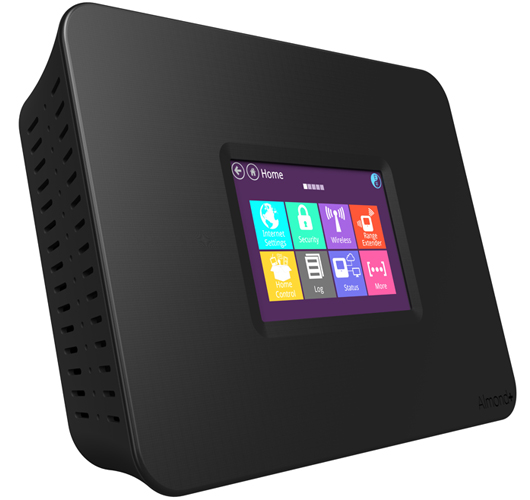
Securifi had started off with a Realtek-based platform, but soon ran into various limitations of the chipset. Apparently, the chipset didn't support more than 128 MB of RAM and also had support for limited amounts of flash memory. In addition to acting as a wireless router, the host CPU also needed to be powerful enough to handle the home automation devices. The router was also a 2x2 design, but all router manufacturers were moving towards 3x3 designs for their mid-range 802.11ac routers. Securifi was in a fix, and had to take a decision on whether to release a half-baked product to its backers or get back to the drawing board and start fresh with a new platform. They went with the latter option.
After deciding to move to a 3x3 configuration, Securifi's options for the 802.11ac radios were limited to Broadcom and Qualcomm-Atheros (QCA). QCA hadn't enjoyed much success in the 3x3 802.11ac router market at that time, and probably gave Securifi a better deal on the radios (AR9580 and QCA9880 chipsets for 802.11n and 802.11ac respectively). The problem with the 3x3 802.11ac solution was that the bundled SoC (network processor) was pretty weak compared to Broadcom's offering (as deciphered from the TP-LINK Archer C7 configuration). Securifi decided to take on the arduous task of making the QCA radios talk to a network processor from an external vendor, the Cortina Systems CS7542. Such systems are a nightmare for any company, as vendors keep blaming each other for issues. In any case, given the dual Cortex-A9s and Cortina's enterprise networking background, the SoC should be no slouch -- enough hardware offloading of network processing tasks, while keeping CPU cycles free for the home automation tasks / controlling peripherals. Securifi pointed out the fact that the Almond+'s two USB 3.0 ports compared favourably with the single USB 3.0 / single USB 2.0 port provided by other vendors.


Coming back to our CES meeting, Securifi demonstrated some home automation scenarios (including Z-Wave light dimmers, flood sensors etc.) controlled by the Almond+. CES is never a good place to verify or demonstrated Wi-Fi performance, so we didn't even venture to check that out. With developer/beta units slated to come out towards the end of the month, we should get better visibility into how the Almond+ actually performs in the real world soon.

| |
Read More ...
Apple Goofed on iPhone 5C Projections, Demand Was “Different than we thought"
Apple CEO Tim Cook makes an rare admission to a "miscalculation" on product mix

| |
Read More ...
Apple Announces Fiscal Q1 Profit of $13.1B, Sells 51M iPhones, 26M iPads
Apple recorded revenue of $57.6 billion for fiscal Q1 2014

| |
Read More ...
Obama Admin. Promises to "Engage" Snowden, If He Stops Leaking
Eager to prevent more revelations, Obama administration might consider a light sentence -- but offers no promises

| |
Read More ...
Microsoft Purchases Gears of War Franchise From Epic
Black Tusk Studios in Vancouver will develop an Xbox One Gears of War title

| |
Read More ...
Tesla Relieves Model S Drivers of Road Trip Anxiety with Coast to Coast Superchargers
There are 70 Superchargers total in the U.S. now

| |
Read More ...
Foxconn Eyes Display Manufacturing Facility in the U.S.
Factory would build large LCD panels for TVs

| |
Read More ...
1/27/2014 Daily Hardware Reviews
DailyTech's daily roundup of reviews from around the internet for Monday

| |
Read More ...
NY Senator Proposes Law for GPS Tracking of Autistic Children
It's meant to help find a child when he/she wanders off

| |
Read More ...
BMW Eyes In-Car Ads for Its Infotainment Systems
Drivers will be able to turn off the ads tips BMW

| |
Read More ...
Google Picking Up Artificial Intelligence Company "DeepMind" for $400 Million
DeepMind is acompany that builds learning algorithms for simulations, games and e-commerce

| |
Read More ...
Samsung Sells Only 9 Million Galaxy S4s in Q4, Sees First Profit Drop in 2 Years
Phonemaker looks to Galaxy S5, Gear 2, and Note 4 to boost sales in Q2-Q4

| |
Read More ...
Apple's Mac PC Turns 30 Today
It's known for making computing easier for everyday people

| |
Read More ...
FBI: Retailers Beware, Target's Cyber Attack Was Just a Warm-Up
The FBI expects more to come as the software is affordable and easily available

| |
Read More ...
South Korean Guidelines for Smartphone Manufacturers to Make Bloatware Deletable
Guidelines aim to give users more storage space

| |
Read More ...
Quick Note: Qualcomm Grabs up Palm, IPAQ, and Bitfone Patent Portfolio from HP
Over 1400 patents and apps are from the US

| |
Read More ...
Honda, Toyota, and Subaru Race to Make it Harder to Hit Pedestrians
Technology can prevent accidental and intentional collisions at speeds up to almost 40 mph (60 kph)

| |
Read More ...
Netflix CEO Warns of Possible Grim Future, Post-Net Neutrality
He says that he doesn't believe it will happen, but that there's a small chance an ISP could embrace such tactics

| |
Read More ...
Apple Owns Up to iOS 7 Home Screen Crashes, Still Ignores Serious Safari Flaws
Apple says that a fix for the home screen crashes is coming

| |
Read More ...
Federal Watchdog Group: NSA Bulk Collection Program Illegal, Should be Shut Down
A law for the FBI may have opened Pandora's box for the NSA's bulk collection of data

| |
Read More ...
EBay Says "No" to Icahn PayPal Spinoff Request
eBay wants PayPal to remain part of eBay for now

| |
Read More ...
Quick Note: ADATA Announces Elite CE700 Qi Wireless Charging Stand
Qi charger works upright or lying flat

| |
Read More ...
Microsoft Lawyer Wants Overseas Data Centers for Non-U.S. Citizens to Avoid NSA Snooping
The NSA has foreign customers worried for their privacy

| |
Read More ...
New York Snowstorm Score: Snowblower 1, Apple's Giant Glass Window 0
Pricey window may take some time to replace

| |
Read More ...
MIT Seeks to Enable the Ultimate Heads-Up Display for War and Peace
Tech could be heading to everything from store windows to your car

| |
Read More ...
Lenovo Announces Intent to Purchase IBM x86 Server Business
Lenovo and IBM come to an agreement

| |
Read More ...
Available Tags:AnandTech , OCZ , other , AMD , Intel , DDR4 , DDR3 , BenQ , Toshiba , iPhone 5 , Apple , iPhone , Microsoft , Hardware , BMW , Google , Samsung , Galaxy , Mac , Smartphone , HP , CEO , iOS , EBay , PayPal , Wireless , Lenovo , IBM , Server ,


No comments:
Post a Comment