

Acer's latest Chromebook is slim, cheap and home to Haswell

It's coming up Chromebooks this week as Acer is out with details on its latest Chrome OS-based laptop just days after HP lifted the lid on the Chromebook 11.
Wind of the C720 first started blowing during IDF 2013, but details for the device were scarce, save for news that Haswell was humming along inside.
Now, the silver-tinted picture is much clearer.
First, about that Haswell - specifically we're talking a Celeron 2955U processor based on Intel's 4th gen Core processor architecture.
Acer is bragging about the C720's battery life, which it claimed lasts up to 8.5 hours. The Taiwanese hardware maker's third-gen Chromebook is apparently 30% slimmer than its predecessor, the C7, measuring 0.75-inches thick and weighing 2.76 pounds.
Something else its predecessor didn't have? An anti-glare display, that's what.

While we're on the subject of the first-of screen, we're looking at an 11.6-inch HD display brimming with a 1366 x 768 resolution. Its described as housing ComfyView HD tech, a term we've never heard before but one that sounds snug. Like a well worn blanket or a beanbag chair.
More specs
On the storage side of the things Acer topped the DDR3L memory off at 4GB with a 16GB SSD. This specific configuration belongs to the C720-2800, and it's actually only the start as Acer said more configs are due in the coming weeks.The C270 lays claim to a boot time of less than seven seconds, meaning you won't have to wait the usually unbearable 10 seconds-plus log on.
There's an HD webcam built into the C720's top but users can upload photos and videos through either its USB 3.0 or USB 2.0 port. An HDMI slot found a spot on Acer's machine to make a path for videos and other content to reach external displays and HDTVs.
Last but not least (well, maybe least) keep an eye out for the C720's SD card reader. You'll probably need it at some point.

C720 Chromebook availability and price
When it lands, the HP Chromebook 11 will run customers $279 (£229/AU$295).The C720-2800 just edges out HP's offering, coming in at $249.99 (about £156/AU$264). U.S. customers can start pre-ordering the new Chromebook at Amazon.com and BestBuy.com right now, though we're yet to hear a specific ship date.
We'll update this story when we have international release info to share too. According to its Google hub, the C720 also comes with 100GB of Google Drive free for two years.

     |
Read More ...
Belkin brings new WeMo to Australia

Belkin has added to its range of WeMo products, which sees home automation come to life with the use of an app and Wi-Fi enabled switches and plugs.
The WeMo Light Switch, which replaces existing light switches and connects to your Wi-Fi router, lets you turn the lights on and off with the WeMo app. You can also schedule lights off and on and set triggers using other WeMo Motion detectors in the same room.
"WeMo provides a fun and easy way to put the control of your home at your fingertips," said Brendan Sparks, head of product management and marketing for Australia and New Zealand at Belkin.
As the WeMo Light Switch requires installation by a professional electrician, Belkin is partnering with Jim's Electrical.
Sparks said that Belkin was partnering with Jim's Electrical as it is a local company with national presence, and will allow Belkin to tell customers that generally speaking, connection will cost around $40 per switch.
"We understand the rise of home automation can be daunting to some consumers, which is why we have partnered with Jim's Electrical to provide an end to end process for our customers," he explained.
While the app is for free on iOS and Android, the WeMo Switch will go for $69.95.
Belkin's automated home
Along with the WeMo Light switch, earlier this year, Belkin had also launched the WeMo Baby, which is basically a baby monitor that connects to your phone using the WeMo app to wirelessly stream audio from your baby's room, even if you aren't at home.The WeMo Switch, on the other hand, is a power port that plugs directly into any electrical outlet, on which any appliance or device can be plugged into.
Using a Wi-Fi network and the WeMo app, anything plugged into the WeMo Switch can then be turned on or off from your smartphone or tablet, even if you are in another country.
Using the app, you can set the plugged in devices to turn on or off at pre-set times, and adding a WeMo Motion sensor means you can set the Switch to turn on or off based on motion within 3 metres or the sensor. Again, you can create rules or schedules.
WeMo Baby costs $99.95, while the WeMo Switch is $59.95, or $119.95 when bundled with the WeMo Motion.
Internet integration
The WeMo Light Switch, Switch and Motion are integrated with IFTTT, which uses the internet to help create rules or triggers.This basically means that you can set up a light to turn on when motion is detected, but only between sunset and sunrise.
Or, if you have a WeMo Motion set up near your front door while you're away from the house, an IFTTT rule can send you an email or SMS to your phone any time motion is sensed.
"The powerful combination of WeMo and IFTTT provides endless possibilities of what you can customise and control throughout your home," said Sparks.
- Here's what else you can do with Wi-Fi in your home.

| |
Read More ...
Is Samsung serious about flip phones? Snapdragon 800 model spotted

Samsung's recent flirtation with the flip phone form factor could be about to become a full on love affair, judging by a new leak suggesting a handset with high-end specs might be on the way.
Documents submitted to Chinese regulator Tenna detail the SM-W2014, a smartphone with the quad-core Qualcomm Snapdragon 800 CPU that's appeared in many top all-touchscreen devices this year.
Not only that, the spec sheet also promises the device will boast 2GB of RAM and dual 3.7-inch Super AMOLED touchscreens, both with 800 x 480 resolutions.
Also listed is a 13-megapixel rear camera, a 2-megapixel front-facing snapper and the latest version of Android 4.3 Jelly Bean. Not too shabby.
Flippin' 'eck!
If accurate, those specifications would greatly surpass the recent Samsung Hennessey and Samsung Golden smartphones, which were recently unveiled for the Chinese market.The former has 3.3-inch 320 x 480 displays and a 1.2GHz quad-core processor, while the latter is a dual-core handset with an 8-megapixel camera.
Unfortunately for those hoping to relive the flip phone halcyon days, this latest device is likely to be a Chinese exclusive too.
However, Samsung does seem to be putting more and more effort into this form factor, so it's not inconceivable that an international launch could be on the cards. Interested parties should begin shouting loudly now.

| |
Read More ...
HTC One Max specs supposedly leak, suggest a chip off the older processor

There's certainly going to be more to the still-unannounced HTC One Max than its normal-sized counterpart has to offer, but how much more remains a mystery.
The supposed full HTC One Max specs leaked today, giving us a possible answer courtesy of French-language tech blog NowhereElse.Fr.
HTC is said to be sticking an older 1.7Ghz Snapdragon 600 processor in its phablet instead of upgrading to a Snapdragon 800 chip, as was previously rumored.
But the rest of the phone sounds souped up from the alleged specs. HTC One Max is supposed to have a 5.9-inch Full HD display, 2GB of RAM, Android 4.3 and HiSense 5.5.
Wait, the weight?
The most interesting part of these leaked specs concerns the approximate weight of the new device.HTC One Max is listed as weighing in at "130 grams (with battery TBD)," according to today's alleged spec sheet.
Sure, the final weight is "to be determined," but 130 grams is actually a reduction from the HTC One at 143 grams.
Maybe the blurry spec sheet is just not accounting for the missing fingerprint sensor that is rumored to be a part of the HTC One Max.
The specs for this phone certainly seem a little lighter than its rival Samsung Galaxy Note 3 phablet, which contains the elusive Snapdragon 800 processor.
We'll likely know where the HTC One Max weighs in by the rumored Oct. 18 launch event.
- To the Max: See more of the HTC One Max in photos.

| |
Read More ...
Leap Motion launches in Australia

The 3D gesture control device Leap Motion has officially launched in Australia today and can be found exclusively at Dick Smith stores for $129.95.
The Leap Motion controller is a USB device that plugs into either a Mac or PC and can be used with apps found in Leap Motion's app store.
Equipped with a camera that can track a user's hands and 10 individual fingers in 3D space, it can track with an accuracy of 1/100 millimetre to the user's movements by snapping at 290 frames per second.
It supports Windows 7 and Windows 8, as well as Mac OS X 10.7 and 10.8, and is apparently 200 times more accurate than other motion control cameras currently on the market, such as Microsoft's older Kinect sensor.
The cheaper option
While Leap Motion has also been available for Aussies through Leap Motion's own website since launching in the US back in May, a AU$32.99 delivery charge is tacked onto the AU$104.99 asking price.This makes the gesture sensing controller in Dick Smith cheaper than going through Leap Motion's own site.
Leap Motion president and COO Andy Miller said in a statement that Dick Smith was an ideal channel because of the number of stores across Australia and the presence it has online.
"It's also an ideal place for even more people to experience the magic of using just their hands in the air to play, learn and create on their computers," he added.
- Here's our review of the gesture sensing Leap Motion.

| |
Read More ...
T-Mobile disrupts again, announces free unlimited international data, texts

The "Un-carrier revolution" continues. At an event in New York 's Bryant Park headlined by Shakira, T-Mobile announced its "Uncarrier 3.0" plans, or the next phase of the company's plans to shake up the wireless industry.
Chief among tonight's announcements are the new "Simple Global" international unlimited data plans. T-Mobile is eliminating global roaming charges effective later this month on October 31. That's means no roaming charges on calls, text or data when you're using your phone on Tahitian vacation.
"The cost of staying connected across borders is completely crazy," said John Legere, president and CEO of T-Mobile US in a release. "Today's phones are designed to work around the world, but we're forced to pay insanely inflated international connectivity fees to actually use them. You can't leave the country without coming home to bill-shock. So we're making the world your network – at no extra cost."
The nitty-gritty
In a mission to take its network worldwide, the plan isn't exclusive to the US. It's also being rolled out to over 100 countries including locales like the United Kingdom, Spain, Argentina, Russia, China, and Australia. Even better, this plan is automatically being added on if you are already an existing customer.While you'll be able to access data worldwide without having to worry about racking thousands of dollars in roaming charges, you won't be going anywhere faster than 2G speeds. Power users, however can opt to buy speed boosters with three different packages: one day and 100MB for $15, one week and 200MB for $25 or two weeks and 500MB for $50.
T-Mo is also introduced a new option for those of you that want to keep up with your friends and family in other countries. Stateside International Talk & Text is a $10 a month option that lets you call and text your friends abroad in any Simple Global country. If you happen to be calling outside of the US to any of your global peeps, that adds an additional 20 cents (about £0.12 or AUS $0.21) a minute.
Going international

To round out its latest international additions, T-Mobile has enlisted Shakira's rather, erm hip appeal as a music star. Don't worry if Carly is out of a job, T-Mobile says she'll still be riding around in hot-pink T-Mo colors as well as those delightful Bill Hader commercials pushing Jump!
T-Mobile let loose some bold moves but it's all a part of it plan to shake up the mobile industry. Phase one back in March did away with annual contracts and added iPhones to the magenta carrier's roster of handsets. Meanwhile a few months later in July, phase two introduced Jump!, T-Mobile's early upgrade program, and credit card check-less family plans.

| |
Read More ...
Amazon reportedly firing up its Firetube media streaming device for Christmas

Amazon may be hawking more than just the Kindle Fire HDX in the lead up to Christmas, as it is reportedly launching its own media streaming device in a matter of weeks.
The company's set-top box, labeled Firetube by trademark documents last week, is expected to have a release date that's in time for the holiday selling season, according to the Wall Street Journal.
Amazon's small media streaming device sounds far from unique. It's said to look similar to a Roku and support apps from a variety of apps.
Of course, the main focus of the set-top box would likely be an Amazon's free video streaming benefits included in Prime membership bolstered by an affordable price.
This is akin to how Apple puts emphasis on its iTunes content at the top of the Apple TV while still supporting a number of third-party apps.
Remote chance for Firetube
Google recently released Chromecast for an affordable price too, and it was backordered on the Google Play store and Amazon for nearly two months.Amazon could replicate that success and do one better by including a Firetube remote.
The company may offer a separate remote control for the set-top box, according to the Journal. Controlling the device through smartphone and tablet apps is also thought to be likely.
At any time, Amazon's set-top box could be shelved or delayed due to financial or performance factors, according to the paper's anonymous sources.
We'll know soon enough, as Black Friday - the big holiday sales kickoff in the U.S. - is just seven weeks away.
- Already at war: Apple TV vs Chromecast. Find out who's winning.

| |
Read More ...
GamePad 2 unveiled, Archos hopes it fixed the first one's shortcomings

Unimpressed with the current line of Android gaming devices but aren't ready to give up on them quite yet? Try the just-announced Archos GamePad 2 on for size.
The follow-up to the first GamePad leaked late last month, so it's no surprise to learn Archos had the real deal lurking all along.
Fitted with a 7-inch HD IPS screen at 1280 x 800 resolution, the new GamePad tablet scored a quad-core 1.6GHz A9 processor, a jump from the original's dual-core chip. Archos also skipped to Android 4.2 this time around, a step-up from the first model's Android 4.1.
Not only is this a newer version of Android, "this is Android as Google designed it to be," meaning no skins or overlays.
The boosts don't stop there - not only is Archos packing 2GB of RAM in the gaming machine, it's offering both an 8GB and 16GB version. Plus, the GamePad 2 has microSD support, meaning users can go all the way up to 64GB for extra gaming goodness.
More GamePad 2 specs
There's a touted 50% larger battery, which when coupled with the device's "super energy-efficient" 28nm processor tech affords a longer-lasting gaming experience.Perhaps most importantly to owners of the first GamePad (or those who wanted one but hated its outdated and low-quality analog nubs), Archos said that in this version, the thumb-sticks are more precise and flex a concave shape. The same precision goes for the double buttons on the GamePad 2's shoulders and a "vastly improved button click-feeling."
GamePad No. 2 also features a single part directional pad, which Archos claimed makes for easier hadokens.

Users can put the new controls to the test as soon as their slate arrives because Archos is shipping each GamePad 2 with two pre-installed games - Asphalt 8 Airborne and Modern Combat 4: Zero Hour, both from Gameloft.
Because of its Google connection (and because it's a tablet), the GamePad 2 has access to a suite of Mountain View's apps, like Gmail, Hangouts and YouTube, as well as the Play Store.
Lastly, the GamePad 2 has tech Archos called Wireless Display, which simply means users can touch a button and mirror what's on their slate to a compatible TV. There's also a mini-HDMI slot for just this purpose, too.
GamePad 2 release date and price
European residents can look for the GamePad 2 at the end of this month with a pretty decent price of £179.99/€179.99.For the U.S., the GamePad 2's price should hit $199.99 when it's released at the end of Q4.
- Ready, set, fight! It's the Xbox One vs PS4.

| |
Read More ...
iPad 5 purportedly shows off its slim, space gray body in leaked photos

Apple's iPad 5 and iPad mini 2 are expected to launch on October 22, which leaves less than two weeks for last-minute leaks of the forthcoming tablets.
Like clockwork, we're now seeing the first high-resolution photos of a purported space gray iPad 5 back casing and front panel courtesy of Sonny Dickson.
The new color is posed next to what appears to be a traditional silver-backed iPad casing, giving us a unique look at the difference between the two options that Apple may unveil.
On the flip side, the front of the space gray iPad 5 is black, while the silver version is white. These configurations match the iPhone 5S colors.

A slim space gray suit
The batch of 74 photos gives us more insight into Apple's alleged color-coordinating efforts.The tablets further drive home the expectation that the 9.7-inch iPad 5 is going to say goodbye to a whole lot of unnecessary bezel vs the iPad 4.
Yet, it's supposed to trim the perimeter without sacrificing precious screen size. It looks almost like a full-sized iPad mini in a lot of ways.
The iPad 5 and iPad mini 2 are also thought to sport a fingerprint sensor and a third color option: gold.
We'll should know soon enough on Tuesday, October 22. Mark your program formerly known as iCal.

| |
Read More ...
Updated: Nokia Lumia 1520 release date, news and rumors

The Nokia Lumia 1520 looks like it's a beast of a Windows Phone smartphone. Think Lumia 920, but beefed up in a considerable number of ways.
We've already seen leaked press photos of the Lumia 1520, so there won't be too many surprises when Nokia makes it official. However, we're expecting quite a bit under the hood.
It will be interesting to see what kind of reception the new flagship Lumia will receive, as the 920 and Lumia 1020 are still relatively fresh on everyone's radar.
Nokia Lumia 1520 display
From what we've heard, the Lumia 1520 display might be a 6-inch monster, which would put it in the phablet zone, as much as we hate that word.
The leaked photos and press images seem to suggest that it is going to be the biggest Lumia yet, at least in terms of size.
If the display is anything like previous models, it will be an AMOLED ClearBlack display. What that means is easy visibility in broad daylight, and strong contrast with deep blacks.
Nokia Lumia 1520 camera
We know that Nokia takes its camera technology pretty seriously, but we're not going to see anything like the 41MP PureView camera here like we did on the Lumia 1020.What we're hearing so far is that the Nokia Lumia 1520 will have a 20MP camera, which is still a massive resolution by today's smartphone camera standards.

It will undoubtedly have excellent low-light performance as previous Lumias have had, and excellent color reproduction and sharpness thanks to Nokia's and Carl Zeiss's optics.
If the 1520 is like the previous Lumia flagships, we'll also anticipate 1080p video recording with OIS, or optical image stabilization. That same stabilization system ought to help with still camera performance in less than optimal lighting conditions, too.
Nokia Lumia 1520 release date
The Lumia 1520 seems a little late to the party if you've been following rumors, but since no official release dates have been announced, it just feels late.
We were expecting to see this Windows Phone 8 device a week or two ago. However, we're now hearing that October 22 is the date for the official announcement. And Nokia is planning on holding the event in Abu Dhabi, of all places.

Given that the announcement is going to be in late October, we're thinking that the actual availability will be within the coming weeks, probably some time before the holidays hit.
Additionally, Nokia says there will be six devices on hand at the Abu Dhabi event, which could also mean more phones and perhaps even tablets. If we were to really stretch our imagination, maybe some wearable tech, too.
Nokia Lumia 1520 design
Right now, it looks like the Lumia 1520 is just an overgrown 920, which isn't necessarily a bad thing. However, gigantic smartphones can be a little unwieldy.From the looks of leaked photos and the press photos, the body seems to share the same polycarbonate material that its predecessors had. It's doesn't feel cheap, and it looks nice even though it's plastic.
The 1520's shape and curvature is very much like the Lumia 1020 and 920, which makes sense if Nokia is to make the Lumia Windows Phone handsets distinct and different from its competition.
The glass covering the display also looks like it curves very gently into the body, as Lumia smartphones do. This gives the device a very seamless feel overall, and it looks nice, too.
So far we can glean a lot from the leaked images and rumors, but we're just weeks away from Nokia's official announcement where we'll bring you all the finer details about its new flagship device.
Nokia Lumia 1520 pricing
Right now, we don't have any concrete information on the Lumia 1520 price.It would be easy to go off of the pricing of the Lumia 920, or perhaps even the 1020 with its inflated price tag thanks to the PureView camera. However, it's not that easy in this case.
We would guess, given its sheer size, that it would hover around the $299 range with a two-year contract or agreement in the U.S.
Outright, we would guess somewhere in the $600-800 range based on its size, and depending on memory capacities and options.
While it's hard to play guessing games with pricing these days, the Lumia 1520 price ought to be what you'd expect from a very large Windows Phone 8 device. It probably won't break your bank, if that's what you're fearing.
Nokia Lumia 1520 leaks

The leak came courtesy of evleaks on Twitter, and the display and icon arrangement looks much like what we're expecting already.
We mentioned, "Well-known Twitter leakster @evleaks came through again on this one after publishing a leaked press shot of the yellow Lumia 1520 in early September."
We're keeping our eyes peeled for the official launch or announcement on October 22, which is the same time as Apple's iPad event. It'll be interesting to see what happens with the two companies battling for press attention, though we know where it's going to skew.

| |
Read More ...
Windows Phone 8.1 could grow devices up to 10 inches
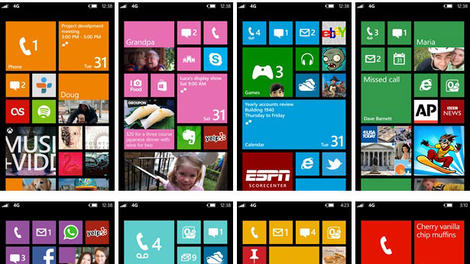
Windows Phone 8 device displays might soon reach previously unheard of sizes if a report published today holds any water.
Over at the Windows SuperSite Paul Thurrott shared some scoops, including word that the expected Windows Phone 8.1 "Blue" update could add support for devices with displays up to 10 inches large.
We already heard that the GDR3 Windows Phone update might add support for 5- to 6-inch devices, but it seems the update after that - the Windows Phone 8.1 release, code named "Blue" - might push that even farther.
Although "this obviously infringes on Windows RT/8.x tablets," as Thurrott put it, "so it's not clear what the thinking is there."
This town's not big enough
Compatibility with more devices is generally a good thing, but there are few key questions that signal extending Windows Phone 8.1 to tablet-sized devices may not be a great idea.Among them, can Microsoft possibly maintain and explain three different operating systems that are all on devices of the same size?
Windows 8 and Windows RT are already doing battle over the 10-inch Surface tablet. What will be left standing if Windows Phone 8 tablets of the same size join the fray?
Finally, will Windows RT and Windows Phone 8 eventually merge?
Microsoft may want to think twice before potentially cannibalizing itself any further, though it would behoove us to keep in mind that this is nothing more than an unsubstantiated rumor at this point - and one that doesn't necessarily make sense, anyway.
'Back' to the future
The same report highlights some other potential features of WP8.1, like increased API compatibility between Windows Phone and Windows RT - which actually supports the idea that they could someday merge.In addition, Windows Phone will reportedly become less Android and more iOS with the substantial update when Microsoft axes the "back" navigation button from hardware specifications because it "just doesn't makes sense."
Finally, multitasking will reportedly improve and become more efficient with Windows Phone 8.1.

| |
Read More ...
Google Chromecast hits Amazon UK, nearly three times more expensive than US

The Google Chromecast HDMI streaming dongle is now available to buy in the UK from Amazon, 24 hours after it temporarily became available globally from the retailer's US site.
However, Brits who marvelled at the device's $35 (about £21) US price-tag will have to fork over almost triple that, at £59.99 to get their hands on Chromecast. Shipping will be free.
Google is yet to officially announce international availability for its versatile Apple TV rival, months after bringing it to Statesiders, but Amazon UK's listing claims to have Chromecast in stock.
On Tuesday some punters were able to snap up the device from the Amazon.com and have it shipped to the UK for the American price, but the company is no longer offering the international shipping option.
Potential
Chromecast, a surprise announcement at Google's Android 4.3 launch event this summer, allows content to be sent from iOS, Android, Chrome OS Windows and Mac OS X devices to be played on a HD TV.Rather than streaming directly from the mobile device or laptop, Chromecast works by pulling the content down to the device from the cloud, making the origin device more of a trigger or remote control.
So far it lacks widespread support from third-party developers and apps are thin on the ground, but the potential is there for Chromecast to be a much more inclusive, versatile device than Apple's £99 hockey puck-like set-top box.
The good news for Brits is that we can now get our hands on the device, but we're not sure about that massively inflated price point. Perhaps when Google has something to say about a UK launch, we'll see a semblance of parity restored.

| |
Read More ...
Get your own in-action figure at your local Asda 3D printing station

Asda has announced it plans to offer 3D printing stations at its supermarkets across the UK with a trial kicking off at one store immediately.
The Wal-Mart owned chain is setting up studios where shoppers can bring in objects to be scanned or even be scanned themselves within a couple of minutes to create 3D-printed 'mini me' figures of the family.
The company, which has been developing the tech for 18 months, expects the figurines, which will start at £40 and can be scaled to whatever size the customer wants, will be the most popular items.
"Evolving well beyond simply filling frames with photographs of friends and family, 3D printed 'mini me' figures will add a whole new dimension to shoppers' mantelpieces and the lifelike models are also expected to be popular as personalised wedding cake toppers," it wrote in a press release.
Pick it up with next week's shop
Objects or people will be scanned using handheld cameras, which can grab the minutest details and capture up to six million different colours. The objects can be printed in full colour, bronze or white.Once the process it completed, the information is sent away where it will be built up using layers of ceramic and available to pick up the next week alongside their weekly shop.
The trial starts in the company's York store next week, while a nationwide roll-out will take place at some point.
You can check out the process in the YouTube clip below.

| |
Read More ...
Disney simulates the magic of touch with touchscreen vibration algorithm

Disney is not normally at the forefront of technological advancements - unless we're talking about theme parks - but its new technique for "feeling" touch screens sounds pretty magical.
The company's Pittsburgh researchers, including one Dr. Ali Israr, have developed an algorithm that generates "electro-vibration" when a touchscreen user's fingers touch certain points on the display.
When users' fingers land on something that should feel textured, the device emits vibrations, creating the illusion of an object with actual, physical texture.
And because many touchscreen devices already have vibrating feedback motors the system should be easy to implement, according to the researchers.
Good vibrations
The Disney touchscreen technique simulates what it really feels like to touch textured objects, like pineapples, fossils and interactive maps, by recreating that feeling using small vibrations.Apparently its algorithm creates vibrations that are pretty close to what actually happens when you touch something.
"Our brain perceives the 3D bump on a surface mostly from information that it receives via skin stretching," said Ivan Poupyrev, head of the interaction research group that developed the technology.
The vibrations reportedly stretch the skin of a user's fingertips just enough to make it seem like they're really feeling something.
When it's described like that, it seems obvious - haptic feedback is important, after all. That's why your phone vibrates when you type a letter.
The system is also more versatile than other haptic feedback touchscreen gimmicks, like the Tactus microfluid tech touted last year, because it can "tune tactile effects to a specific visual artifact on the fly," said Israr.

| |
Read More ...
Turn on, tune in and See It, all from a tweet

It's no secret Twitter is the perfect place for television fans to hold real-time conversations about their favorite shows, but now viewers can actually control the boob tube from the very same place.
Twitter today announced a new partnership with Comcast and NBCUniversal called See It, which allows Xfinity TV subscribers the ability to actually control their cable box from tweets about their favorite shows.
Rather than just engage in chatter about a show, See It enables viewers to change the channel, set the DVR to record and even play a show On Demand, all from an expanded tweet.
"By partnering with Comcast, we'll be able to make it easier than ever to turn on the show everyone is talking about and jump into the conversation," Twitter's Vice-President of Business Development & Platform Jana Messerschmidt explained in a blog post.
See it soon
To activate See It, Comcast Xfinity TV subscribers tap a button in their Twitter app, which prompts the user to log into their account and select where they'd like to view the program.With the fall television season now in full swing, See It will be enabled for a wide variety of NBCUniversal content across the company's entire network, which includes NBC as well as cable properties such as USA, Syfy, Bravo and E!.
Shows with See It enabled will include Sunday Night Football as well as popular primetime fare such as "The Voice," "The Blacklist," "Suits" and the upcoming Winter Olympics being held in Sochi, Russia.
Twitter hopes to expand its partnership with Comcast to include additional content providers, although the microblogging service remains mum on current plans to bring it to competing services.
- Get up close and personal with LG's latest Optimus L9 smartphone in our full review!

| |
Read More ...
Updated: Nexus 5 release date, news and rumors

The Nexus 5 is going to be the successor to last year's Nexus 4, and from what we know so far, it's going to be made by LG - just like the previous model.
We've seen numerous leaks of and about the device now - we even saw one from a Google promotional video for Android 4.4. KitKat - so we have a very rough idea of what he new Nexus 5 will be like.
If we go by the Nexus line's history, there are a few things we can gather in terms of what the device will feature, or not feature. To start, there typically isn't expandable memory in Nexus devices - whether we're talking tablets or smartphones.
It would be a safe bet to assume that the Nexus 5 won't have microSD support, so we're hoping that 32GB and 64GB options will be available.

Another thing - and this is pretty obvious - is that this upcoming smartphone will be the first to feature the latest version of Android: 4.4 KitKat.
Nexus 5 release date
The Nexus 5 may see a release date around November, much like its predecessor, the Nexus 4. Word is that the Google-powered LG smartphone will see an October announcement with a launch of a few weeks later.
Not surprisingly, we're seeing a lot of the phone getting leaked in the wild, too. Most recently, following an unusual trend of where devices are getting leaked, the Nexus 5 was spotted in a bar.
Moreover, a phone that looks very much like the coming Google phone was spotted at the FCC. The camera hold was as large as the module we've seen in leaked photos, so we suspect that the LG smartphone, labeled as model D820, is actually the Nexus 5.
Nexus 5 inspired by LG G2
Rumor has it that the new Nexus 5 is going to be heavily inspired by the LG G2, which is a good thing. While the hardware isn't as sexy as the HTC One, for example, it is by far the most powerful Android device so far this year.In terms of specs and raw performance, the G2 is really incredible. Its high-resolution display is amazing, and it has great color and contrast.

The G2's benchmark performance is off the charts, and battery life doesn't seem to suffer at all as a result. We can only hope that the Nexus 5 does take all these elements from the G2, and place the power and volume buttons back where they belong - on the edges of the device.
Perhaps we can also expect that amazing 13MP camera, too, since it performed exceptionally well in most lighting conditions. Judging by the huge module on the back of the Nexus 5, however, we might be in for even more.
Nexus 5 processor and power
We've come to learn that the Nexus 5, which obviously isn't available yet, has destroyed the Samsung Galaxy S4 in benchmark tests.This isn't a surprise if the Nexus device ends up taking its cues from the LG G2. In our review, the G2 did exceptionally well in benchmark testing.

Rumor is that the Nexus 5 will have a 2.3GHz Qualcomm Snapdragon 800 with 3GB RAM. That's a lot of power and memory under the hood of a smartphone.
One thing we can be sure of is that the new Google phone will give other Android flagships a good run for their money.
Nexus 5 wireless charging
Perhaps it's a novelty for some of you, but wireless charging is very convenient. And it looks like the Nexus 5 will have this feature thanks to a little digging in Android 4.4 KitKat.It's also more than safe to assume that if a device like the Nexus 5 were to have wireless charging, it will also have NFC.
What isn't clear is whether the charging device or dock is going to be sold as part of the package with the Nexus 5, or if it's going to be a separate accessory. Right now we'll hedge our bets and go with the latter.
Nexus 5 price
Right now it's anyone's guess whether the Nexus 5 will see the same pricing scheme as the Nexus 4. The newer model, if it turns out anything like the LG G2, will be a monster of a device in terms of specs.Compared to the Nexus 4 the Nexus 5 is shaping up to be a smartphone in a completely new class. And with specs like that, it's hard to imagine that it will get the same pricing treatment that the Nexus 4 did with off-contract rates. Last year's model didn't even have LTE support!
We would expect the newer Google phone to hover around $499 - $699 off contract, and perhaps even higher if Google decides to offer a massive 64GB version.
Update: We're now hearing that Nexus 5 16GB and 32GB option will be priced at $299 and $399, respectively. Strangely, word is that the 16GB model will have a 2,300mAh battery, whereas the 32GB version will have a 3,000mAh battery. Rumor is that they're both the same size and dimension, too.
This contradicts info that we've received when it comes to capacity and pricing, and especially the whole battery issue. From other documents we've seen, the Nexus 5 is supposed to have a 2,300mAh unit. It'll be interesting to see how this pans out.
Nexus 5 October release date
Word is now that the Nexus 5 will ship in late October, with a few similar specs to the iPhone 5S. In our latest news article, we said, "However it's likely we'll see something similar to the the iPhone's 64-bit A7 processor. Apple kicked off an arms race with the 64-bit processor announcement and no doubt Google and Samsung will follow suit."The leaks have been so plentiful that we are convinced that we will see the official Nexus 5 by the end of October.
Nexus 5 camera
With the advancements in smartphone camera technology, the Nexus 5 really has to pick up its game as far as Nexus devices go. With that said, we're hearing that the upcoming Google phone will be the first smartphone ever to feature Lytro-like technology.What does that mean? Here's what we said earlier:
"MEMS stands for microelectromechanical technology, and it provides a number of benefits, including focusing that's seven times faster than competitive cameras.
The Nexus 5's MEMS camera also reportedly uses less power and produces less heat, plus it's smaller.
Most importantly, it may allow Nexus 5 users to magically re-focus photographs after they take them - hence the comparison to Lytro cameras."
Perhaps it just might be a neat trick in the end, but it'll be one trick the Nexus 5 has that other smartphones may not adopt for a long time. We'll see soon enough!

| |
Read More ...
Hands-on review: Canon G16

Overview
The Canon GXX series has long been considered the natural back-up camera for DSLR users, especially those already familiar with the Canon brand.As such, the outward design of this range has changed little from its first incarnation. The Canon PowerShot G16 is no different, looking outwardly almost identical to the year-old Canon PowerShot G15 it replaces. But of course, inside there have been a few notable changes.
First up is the sensor. While it remains the same pixel count, at 12.1MP, and physical size, at 1/1.7-inch, Canon says that the CMOS sensor is a completely new design, featuring back illumination.

The Canon G16 now includes inbuilt Wi-Fi, something which Canon's David Parry says is "pretty much essential" for new compacts.
What Canon is most keen to shout about, and perhaps the most exciting new feature, however, is the Digic 6 processor. This is Canon's latest generation of processor which enables some pretty special things, most notably an impressively fast 9.3fps (JPEG, without continuous autofocus), which doesn't have a buffer - in real terms that means you can, in theory, keep on shooting until your card runs out. It also means you can shoot a sequence, stop shooting and be ready to shoot again.
It should also mean that low light performance is once again improved. The Canon G16 is capable of shooting at up to ISO 12800. Canon also claims that AF speed has been significantly improved - apparently it is 41% quicker than its predecessor, the Canon G15.

Two new creative modes have been created for this camera. Background Defocus shoots two photos, one completely in focus, one out of focus, then combines the two images to produce DSLR-style background defocus effects. This is done in-camera automatically.
The second is Star Mode, which has been designed with night time photographers in mind. Canon says that it is so confident of the camera's low light capabilities that it actively wants to encourage photographers to use it in pitch black conditions.
Star Mode is a fully automatic mode that triggers the best settings for capturing night time skies. It's also capable of recording star trials and creating time-lapse movies - again, all captured and created within the camera without the need for post-processing. HDR mode has also been improved to include new digital filters.

Manual Focus Peaking has been introduced for the first time in a Canon compact camera. It's a technology that has existed in Canon's range of video cameras before, and we have seen it from other manufacturers fairly recently. The sensitivity of focus peaking can also be set depending on how strong you want it to be. Different colours can also be set, which can be useful depending on the subject you're shooting.
As found on the Canon G15, the Canon G16 features an f/1.8-f/2.8 5x optical zoom lens, with a maximum wide-angle of 28mm. At its full telephoto zoom it offers a 35mm equivalent of 140mm and a maximum f/2.8 aperture.
The exterior of the camera is pretty much identical to its predecessor, the Canon G15. Canon says that this is because it has been honed throughout the years and is one that consumers feel comfortable with.

Canon has also announced a replacement for the Canon S110 in the shape of the Canon S120. That takes a lot of the features of the Canon G16 but places them in a slimmer body, and is worth investigating if you're looking for something a little more pocket-friendly.
When the original Canon G series camera launched it had far less competition that it does in the current market. Probably the biggest competitor for this camera is the Sony RX100 II, as well as the Nikon P7700.
The Canon PowerShot G16 will have a full price of £529.99 (around US$830/AU$920), making it slightly more expensive than the Nikon but a fair bit cheaper than the Sony.
Build quality and handling

Much of what can be said about the Canon G16's build quality and handling is true of its predecessor, the Canon G15, so it may be a good idea to give that review a read over to find out more.
The Canon G15 slimmed down considerably from the Canon G12 by removing the articulating the screen, and Canon has evidently received sufficient positive feedback to keep the same design for the latest iteration of the camera.
Canon isn't shy about targeting cameras at the advanced photographer - it often refers to DSLR owners in marketing materials. This is reflected in the number of dials and direct access buttons found on the camera.

On the top are two overlapping dials. First there's a mode dial for switching between the various exposure options on the camera, including fully automatic and semi-automatic modes (aperture priority and shutter priority).
Slightly underneath this dial is the exposure compensation dial, which is handily reached by the thumb and is something that was a welcome addition to last year's Canon G15.
The back of the camera sees a fairly wide array of buttons and dials, including one for changing autofocus point and a direct button for changing sensitivity. It's a shame that Canon still hasn't included a touchscreen on the G series of cameras, especially since it produces an excellent one for the S range.

This means that everything is operated by button control - but then again, maybe it's all about the type of photographer that Canon wants to appeal to with this, the traditionalist.
Anyone who is stepping up from another Canon compact camera, or perhaps an older G series model, should be very much at home with the Canon G16.
Performance
As always, it's difficult to give any kind of definitive statement of performance at this stage, but early indications for the Canon G16 are very good.We already know what Canon is capable of with this range, and equipping it with a new, back-illuminated sensor and Digic 6 processor should see some fantastic results - we're really looking forward to testing it properly.

Canon says that AF speed has been significantly improved. In our brief time with a pre-production version of the camera, focusing did seem to be pretty speedy and accurate, but we'll be keen to put that properly through its paces once a full production sample becomes available for our full Canon G16 review.
Digital filters and creative modes have not been an area that Canon has traditionally excelled in, but it's interesting to see the addition of Star Mode. It's an unusual but intriguing prospect that sounds like it should be fun to use, and in theory it could produce some excellent results.
We were reasonably impressed by the low light performance of the original Canon G15, but since its announcement, cameras such as the Sony RX100 II have surpassed it. We'll be interested to see what the combination of a new backlit sensor (the same technology the RX100 II uses) and the Digic 6 processor can achieve, bearing in mind that the Canon G16's sensor is significantly smaller than the Sony's.
Initial verdict
Canon always produces solid performers in its G series cameras. While that's appealing to the traditionalist crowd, it is now fighting a harder battle than ever before to keep market share in the crowded premium compact camera market.While we've no doubt that the Canon PowerShot G16 will be capable of producing fantastic images, it will have to go some way to beat the excellent Sony RX100 Mk II. It's interesting that Canon has decided to keep the same (relatively) small sensor for the latest G series and hasn't been tempted to go down the same larger route as the Sony. Whether image quality will suffer because of this remains to be seen.
We're excited by some of the new introductions to the Canon G16, most notably the Digic 6 processor. It's also good to see a traditional manufacturer such as Canon acknowledging the importance of Wi-Fi on modern cameras.
Stay tuned for a more in-depth review of the Canon G16 as soon as possible.
First reviewed 22 August 2013
Sample images

Click here to view the full-resolution image
The G16's automatic white balance does a good job of producing accurate colours in mixed lighting conditions, but metering has struggled slightly here, making the subject slightly underexposed.

Click here to view the full-resolution image
The G16's maximum aperture if f/1.8, making it ideal for use when shooting portrait images.

Click here to view the full-resolution image
Colours straight from the G16 are bright and punchy, with a good level of saturation and accuracy in subjects such as skies.

Click here to view the full-resolution image
At its widest point, the G16 offers an equivalent of 28mm, making it ideal for capturing a good variety of subjects. Canon's S120 goes slightly wider at 24mm, though.

Click here to view the full-resolution image
Here, despite the high-contrast nature of the scene, chromatic aberration isn't visible even when zooming in at 100%. There is a fractional amount of fringing, but it's not noticeable at normal printing and web sizes.

Click here to view the full-resolution image
The G16 features 5x optical zoom. Here's a picture shot at the widest point of the lens - 28mm equivalent.

Click here to view the full-resolution image
This image was shot at the telephoto end of the optic, which offers an equivalent of 140mm. Impressively, even at this far reach of the telephoto optic, the lens is still able to stop down to f/2.8.

Click here to view the full-resolution image
Canon's ZoomPlus technology is available to boost the zoom's capability up to 10x. Detail is retained impressively well here, making it a viable option if you do need that extra bit of reach.

Click here to view the full-resolution image
Standard digital zoom is also available, to push the zoom capability up to 20x. There's less detail here, but again, if you really need to get closer it's a nice option to have, especially if you're only sharing images online.

Click here to view the full-resolution image
The G16's macro focusing capability allows you to get very close to the subject to fill the frame with detail rich close-ups.

Click here to view the full-resolution image
The G16's f/1.8 aperture allows you to get creative with shallow depth of field effects.

Click here to view the full-resolution image
Shooting at mid-range apertures, such as f/8 allows us to determine the sharpness of the camera's lens. Here we can see that the image is reasonably sharp throughout the image, with some evidence of loss of detail in the corners when zooming at 100%. At normal printing and web sizes however, detail is kept well.
Digital filters
A number of digital filters are available to use on the G16, accessible via a dedicated mode.Filters are as follows:

Click here to view the full-resolution image

Click here to view the full-resolution image

Click here to view the full-resolution image

Click here to view the full-resolution image

Click here to view the full-resolution image

Click here to view the full-resolution image

Click here to view the full-resolution image

Click here to view the full-resolution image

Click here to view the full-resolution image

Click here to view the full-resolution image

Click here to view the full-resolution image

| |
Read More ...
Hands-on review: Updated: Nikon P7800

Overview
The premium end of the compact camera market appears to be one sector that remains reasonably robust in what is generally a declining market. Offering full manual control for advanced photographers, they're often the first choice of both those looking to take a step up in image quality and control, and those wanting a less bulky camera to carry around when the DSLR is inconvenient.Nikon's P7XX range has always been Nikon's attempt to fulfill that need, taking on the incredibly popular and well established Canon G range. Canon recently refreshed its model, in the shape of the G16, so it's no surprise to see Nikon follow suit with the Nikon P7800, replacing last year's Nikon P7700.
Featuring a 12 million-pixel resolution sensor, Nikon has chosen to keep the same physical size of 1/1.7 inch. That's the same size as the Canon offering, but quite significantly smaller than the Sony RX100 and RX100 II, models which have proven hugely popular in the past year or so and feature a 1-inch sensor (the same size as found in the Nikon 1 range of compact system cameras).
Nikon has also chosen to keep the same lens as its predecessor, with a 7.1x optical zoom device offering the equivalent of 28-200mm in 35mm terms. At the widest point of the lens, an f/2.0 aperture is offered - rising to a still respectable f/4.0 at the telephoto end of the optic.
Unlike the Canon G16, the Nikon P7800's 3-inch screen is a fully articulated device – useful for shooting at awkward angles. It's still not touch sensitive though (neither is the Canon).

Previous generations of the P range of cameras have featured optical viewfinders, although the most recent versions had no finder at all. The Canon G16 features a small optical finder, but Nikon has decided to follow the same path as the Panasonic Lumix LF1 and introduce an integrated electronic viewfinder.
This viewfinder is a 921k dot device, and also features a dioptre adjustment dial, similar to those you might find on a DSLR camera.

Build quality and handling
At first glance, the Nikon P7800 has changed little from the P7700 it replaces. It retains the same fairly bulky exterior which includes the large grip and textured coating – particularly useful for shooting one-handed.Although the back of the camera sees a fully articulating LCD, it's nice and flush against the back of the body. The joint feels solidly built too, and able to withstand a lot of repeated adjustments of the screen.
On top of the camera are a number of dials designed for quick access to different controls on the camera. Almost all of the buttons have been placed on the right side of the camera for easy reach with the thumb when shooting one-handed.

As there is now an electronic viewfinder in the top right-hand corner of the camera, the dial for accessing commonly used settings (such as white balance and sensitivity) has now been removed and replaced with a dedicated Q button on the back of the camera. To access such common settings, you can now press this button and then use the dials to scroll to the setting you want to change.
A mode dial on top of the camera enables quick switching between the various exposure modes on offer, including fully automatic and aperture priority. There's also scene mode and effects modes here, along with space for up to three groups of custom settings, useful if you often find yourself shooting one type of scene.

Another dial to the right of the camera is used to alter exposure compensation. Nikon has also included two customisable function buttons, which can be used in conjunction with the control dials on the camera to change certain settings.
At the top of the grip is one control dial, while the second is found at the back of the camera just at the top right of the screen. These can be used to alter settings such as aperture (depending on the mode you're shooting in). It's useful to have a switch at the top of the grip, and is reminiscent of DSLR operation, something which is likely to be appreciated by those using this as a backup camera.
The electronic viewfinder in the top left of the camera is activated via a switch just next to it. It's a shame that there's not a sensor to automatically switch it on, as it's not particularly natural having to press a button before lifting the camera up to the eye.

For a compact of this size, it's nice to see an electronic viewfinder which is useable. It's a decent size, while the high resolution makes it nice and easy to compose. One criticism we have for the moment is that colours are rendered inaccurately within the viewfinder, making it hard to judge what white balance settings you might want to use. Nikon says that this should be down to the camera being a pre-production sample – we'll be keen to check whether a full-production version is more accurate.
Performance
It is of course difficult to give an assessment of a camera's performance at this stage, but we have been impressed by the Nikon P range image quality before, so we see no reason why this shouldn't also live up to those already high standards.In our brief time with the camera so far, we've found that autofocus is reasonably quick, although not quite as competitive as some of the other cameras on the market. It's important to bear in mind that as a pre-production sample, autofocus speeds may not be finalised yet.

Setting the camera to macro focusing mode enables very close focusing, and that seemed to be pretty quick and accurate – we'll be keen to see how that performs on the finished version as we have found some cameras with larger sensors – most notably the Canon G1X and Sony RX100 II - aren't capable of focusing as closely as those with smaller sensors like the P7800.
The lens is the same as found on the P7700, and we enjoyed using the f/2.0 apertured optic previously. It's a little bit of a shame that the new camera isn't capable of f/1.8, as the Canon G16 now boasts, but f/2.0 should be more than adequate in the majority of situations.

One of the biggest problems we had with the P7700 was its shot-to-shot time, as processing seemed to be fairly poor. Early indications seem to suggest that the P7800 suffers from the same problem, but again we're hopeful that this will have been ironed out by the time a full production sample arrives with us.
Early Verdict
The Nikon P series of cameras are very capable, offering consumers full manual control and making excellent "back up" or every day cameras for advanced users. For those looking to step up in quality from a standard compact camera, they're also an excellent option, too.
We've been impressed with the image quality of these cameras before, but we've had issues with the performance of things such as autofocus and processing – hopefully things which will prove to have been improved once full production samples are available.
It's great to see the return of a viewfinder to the P series, and even better to see a useable electronic viewfinder. We'll be keen to put that through its paces a little more during the full review.

We're a little disappointed not to see integrated Wi-Fi and a touchscreen here, though it is nice that it remains articulating.
Look out for a full review of the Nikon P7800 in due course.
Sample images

Click here to view the full-resolution image
The P7800's maximum aperture of f/2.0 makes it a good option for shooting portraits.

Click here to view the full-resolution image
The camera's metering system has done a decent job of producing an accurate exposure, despite the high contrast in lighting.

Click here to view the full-resolution image
At its widest point, the Nikon P7800 offers an equivalent of 28mm, which is wide enough to capture some interesting wide-angle shots.

Click here to view the full-resolution image
The P7800 features a 7.1x optical zoom function. Here is an image shot at the widest point of 28mm (equivalent).

Click here to view the full-resolution image
Here we can see at the full 7.1x optical zoom (200mm equivalent): the image stabilisation system has done a good job of producing an image without any blur and plenty of detail.

Click here to view the full-resolution image
A digital zoom is also available, which does produce images with much more noise and image smoothing, but is a good option if you really need the extra reach. The digital zoom reaches a maximum of 800mm (equivalent).

Click here to view the full-resolution image
The P7800's macro mode allows you get extremely close to the subject to produce detailed macro shots. The f/2.0 maximum aperture also means you can get creative with shallow depth of field.

Click here to view the full-resolution image
Colours from the P7800 are bright and punchy without being overly vibrant. You can boost contrast if you prefer by altering the Custom Picture Control to Vivid.

Click here to view the full-resolution image
By shooting at mid-range apertures of f/8.0 (which is actually the narrowest the P7800 will shoot), we can assess the sharpness of the lens. Here we can see that detail is good for the majority of the image, although there is some loss of detail in the very corners of the edges of the frame.

Click here to view the full-resolution image
Fine detail is even resolved when shooting at the far end of the telephoto optic, such as here. At the furthest reach, the maximum aperture of the lens stops down to f/4.0.
Digital filters
The P7800 includes a number of digital filters which you can shoot in. Unfortunately, these can only be used when shooting in JPEG.Filters are as follows:

Click here to view the full-resolution image

Click here to view the full-resolution image

Click here to view the full-resolution image

Click here to view the full-resolution image

Click here to view the full-resolution image

Click here to view the full-resolution image

Click here to view the full-resolution image

Click here to view the full-resolution image

Click here to view the full-resolution image

Click here to view the full-resolution image

Click here to view the full-resolution image

Click here to view the full-resolution image

| |
Read More ...
Hands-on review: In Depth: HP Chromebook 11

Google's high-end Chromebook Pixel raised applause and eyebrows in equal measure when it hit the shelves back in February.
Despite being a beautiful device with a crystal clear IPS display packing an impressive 239 PPI, many questioned whether a machine running Google's internet-reliant Chrome OS could justify a hefty $1299 (£1,049 or AU$1374) price tag.
HP's Chromebook 11 was "inspired" by the Pixel's design. It's a device we were immediately drawn to for its clean looks and portable leanings, which are particularly attractive plus points considering the machine has been priced at a mere £229 ($279, or AU$364).
Moreover, the company appears to have got picked the right areas to keep the cost down without compromising the Chromebook experience.

HP Chromebook 11 design
Simply put, this is the best Chromebook to have pitched its pearly-white tent in this price bracket.That's partly down to its reflective plastic body, which harks back to the days of Apple's white polycarbonate MacBooks (were they really discontinued just two years ago?).
From the lid to the gaps between its chiclet-style keys, light bounces off the Chromebook 11 at every angle (with the exception of its matte black, logo-bearing bezel). It looks great, but it does mean that the machine attracts fingerprints like a magnet.
A strip featuring Google's trademark colours can be found on the back of the lid. Like Apple's MacBooks, it lights up when in the open position, lending it another subtle MacBook-like touch.

HP Chromebook 11 display
Though we think Google has the right idea with Chrome OS, its reliance on the internet to provide functionality through its online services and Chrome Store apps leaves it entering the fight with one hand behind its back.It's a story that Surface RT tablet owners will be all too familiar with, and it means that, as with Microsoft's decision to bump up the resolution on the Surface 2, Chromebook manufacturers had to ramp up the attractiveness to put out desirable machines.
With the Chromebook 11, HP has done just that. It sports a sharp 11-inch (1366 x 768) display that provides wide viewing angles (176 degrees, to be exact) thanks to the inclusion of an IPS panel, which provides deep blacks and makes colours 'pop'.
Chrome OS's animations - whether that's switching from full-screen to windowed mode or the taskbar fading out - are more visually appealing than ever before.

HP Chromebook 11 specs
Ultimately, at this price point, the Chromebook 11 was going to have to make a few sacrifices and a major one is the processor.HP decided against an Intel processor (the powerful Core i5 is found in the Chromebook Pixel), instead choosing to opt for a dual-core Samsung Exynos 5250 processor backed up by 2GB RAM.
Chrome OS is a naturally light on its feet, so even with the downgrade we failed to detect any slowdown when opening apps and windows, and the device still wakes up immediately from sleep like a MacBook.

The device itself weighs 1.04kg, so it's certainly a portable machine that you could sling in a bag without a second thought. But it's not super light - that's the same as many Intel Ultrabooks.
It comes with 16GB of internal storage, which you'll need to install an increasing number of 'Desktop Apps' emerging from Google's Chrome Web store.
Of course, Google is also throwing in 100GB of cloud storage for two years that you can use to store and retrieve files from before splashing out for a subscription.
HP Chromebook 11 connectivity
The only ports to be found on the Chromebook 11 are on the left-hand side of its body, the most notable being a micro-USB slot used to charge the device.It's a remarkable first for a laptop and only adds to its mobile feel. Best of all it means an end to lugging around chunky charging bricks that can cause serious follicle damage (when you're ripping your hair out, obviously) when they give up the ghost or become frayed at the ends.
HP reckons you'll get about six hours' use out of the Chromebook 11 before needing to plug in a charger, and if you do need one, a spare one should never be too far away.
Other ports include two USB 2.0 connectors and a headphone jack, and a front-facing VGA webcam is housed in the top of the device's lid.

HP Chromebook 11 keyboard and trackpad
Let's face it - a laptop at this price is never going to afford you the reassuring springiness of Apple's MacBook Air ultrabooks, but the Chromebook 11 offers adequate travel and decent spacing between its full-size keys.It certainly didn't blow us away, and it may be the case that we would have to spend longer with the machine before making our mind up proper.
There's also the usual row of Chrome OS-specific shortcut keys along the top. The matte trackpad feels responsive enough, and it supports two-finger scrolling and three-finger tab switching in Chrome.

Flip the Chromebook 11 over and you'll find a strip of padding along the top and the bottom that matches the coloured trim around the keyboard.
There's a HP logo in the middle, the only evidence that the company actually made the device. It's joined by an even more inconspicuous "Made with Google" logo underneath.
Early Verdict
Overall, we really took to the Chromebook 11, which could well prove to be the first Chromebook that tempts us away from our catwalk dwelling ultrabooks to try something a bit different, honest and (whisper it) maybe even a bit sexy.But it has to be remembered that at this price, Chromebooks are almost certainly going to be about compromises for the foreseeable future, whether that's wringing the most out of the comparatively limited Chrome OS, plugging it in more often, or putting up with less screen estate and processing horsepower.
If you can handle those caveats, you'll be privvy to one of the finest displays on an 11-inch laptop if you plump for the HP Chromebook 11, which is wrapped up in one of the most minimally attractive designs (even if it is slightly derivative).
It'll be available from PC World in the UK and Amazon (among other retailers) in the US from November.
- Here's why we think Chrome OS will (eventually) be a success

| |
Read More ...
Explainer: BBC Playlister: What is it and why should I use it?

The BBC has taken a step forward in the music streaming space today, and though it's not quite doing its own Spotify, it does hope to go hand in hand with your favourite music services.
The result is BBC Playlister, a music discovery service waiting for the next time you ask "what was that track being played on Strictly Come Dancing last night?"
It's completely browser based for now, which includes mobile browsers. Though integration with the iPlayer app is coming in the next few months, the BBC tells us.

So how does it all work? Well firstly you'll need to sign up to the service in order to get anywhere. Don't worry, this part takes seconds – you don't even need to verify by email. And once you're in, you're good to go.
Playlist is a pretty simple affair right now but there's enough to play around with and get an idea of just how helpful this could be.
Discovering and exporting
The front Discover page is where you'll find a list of the tracks recently played on various BBC Radio stations. Presented in a tile formation, each entry will give you the track name, artist, a picture from the single or album, where it was played and when.
Hover the mouse over and you can click the play button and listen to a 30 second sample to make sure it's the track you're looking for. Then, when you know for sure, the second button is the magic "add to Playlister" one.
Under the top selection bar is a big button named Explore Playlister ("Assorted tracks for your listening pleasure"). Hit this and you'll have the choice of organising the front page by "Most Popular" or "Recently Played".

When you've got your playlist in order, it's time to export it. You've got a choice of sending it over to Spotify, YouTube or Deezer. We did it with Spotify and as soon as we hit export Spotify asked us to add the BBC Playlister app.
Once that was done, we were were greeted with our playlist. You can also browse through a number of playlists from various shows within the Spotify app.
Of course there's a chance that the song you want on Playlister isn't available on one of the other services, so that's why the odd one might not sync across from Playlister in the browser.

Right now we can't have more than one playlist, but we "might be able to in the future," says the BBC. We'll take that as a "coming soon".
Presenter playlists and TV
Unfortunately, one of the coolest features of Playlister isn't available in the beta, but it is coming. This will display tracks played on TV shows from the BBC channels - the ones that are a tad harder than radio plays to track down.There's also a tab for "Presenter Playlists", which is another feature the BBC is making a big song and dance about. This will offer a bunch of playlists curated by BBC DJs and presenters which are also exportable.

It's pretty basic right now (this is the beta, remember) but we're impressed with BBC Playlist and we'll be even more interested when the TV show support arrives. It's just a shame we can't have one of these that works across all our channels.

| |
Read More ...
In Depth: Nexus 7 (2013) vs Nexus 7 (2012)

Google's original Nexus 7 tablet blew the bottom end of the tablet market wide open last year with top specs and a low price, but how does it stack up against its leaner, meaner brother of the same name?
Rather confusingly we're going to have to refer to the two tablets by the year they were made, as they both sport the Nexus 7 name - no "Nexus 7 2" here, but that's a minor blot on what are a couple of impressive devices.
There's no surprise that the new Nexus 7 (2013, date fans) has a better spec sheet than its predecessor, but we're going to take a detailed look at how the two compare.
- The reviews: Nexus 7 (2012) | New Nexus 7
Design
The first thing you'll notice between the two is the design. While both obviously have the same size 7-inch display, Google (well actually Asus, the firm behind the creation of both tablets) has fine-tuned the body of its latest offering.Measuring 114 x 200 x 8.65 mm the new Nexus 7 (2013) is actually fractionally taller than the original (although only by 1.5mm), but it's got noticeably thinner in width and depth making it just that little bit easier to hold with one hand.
The one handed operation is further aided by a drop in weight for the Nexus 7, down from 340g to a delicate 290g on the new version - making it considerably lighter than the Amazon Kindle Fire HD (395g), Nook HD (315g) and the larger, yet thinner iPad mini (308g).

Couple that size and weight with a fully rubberized rear and the new Nexus 7 (2013) is just as easy, if not easier, to handle than its predecessor, while still maintaining a solid build - although neither ooze the same premium finish as Apple's smaller tablet.
We're treated to stereo speakers on the rear of the new Nexus 7, with a strip of speaker holes running across the top of the tablet, and a broken strip towards the base - broken by the bump for the microUSB port.
Gone is the four pin dock connector found on the bottom left side of the old Nexus 7, replaced by exactly nothing on the newer version, while the headphone jack has been shifted from the base to the top of the tablet.
Display
The new Nexus 7 seriously steps things up in the display department, boasting a stunning 7-inch, full HD display which sports an eye-popping 1920 x 1200 resolution and 323ppi pixel density - compare that to the 1280 x 800, 216ppi original Nexus 7 and you get why it's such a step up.Both the Nexus 7 (2013) and Nexus 7 (2012) use the same LED-backlit IPS LCD screen technology, and while colors don't pop as they do on the Super AMOLED displays we get on some smartphones, the quality is still top notch.
Put the two tablets side by side and the new Nexus 7 clearly has the beating of its predecessor in real life as well as on paper, with sharper, brighter images and crystal clear video playback. Beautiful.

Operating System
Operating system is less of a close run thing as both tablets now run the latest version of Google's platform - Android 4.3 Jelly Bean.The new Nexus 7 launched running Android 4.3, while the 2012 version kicked things off with Android 4.1, although it has subsequently been updated to 4.2, and most recently 4.3.
This means that both the new and old Nexus 7 tablets offer up the same functionality and features, although the inclusion of a rear facing camera on the new Nexus 7 obviously offers something additional.
As these are both Google's own-brand products we'd expect the tablets to be hastily upgraded to Android 4.4 KitKat, which is rumored to launch in mid October.
Power
The original Nexus 7 was certainly no slouch with a 1.2GHz quad-core processor and 1GB RAM, but once again the new Nexus 7 ups the ante with 1.5GHz quad-core chip and 2GB of RAM.This means the already smooth running Jelly Bean runs even more effortlessly on the new Nexus 7 (2013) - you're rarely ever left waiting for anything to load.
That's not to say the old Nexus 7 (2012) offers up a poor user experience - far from it in fact - it's just that it's younger brother is even better.
Camera
The new Nexus 7 comes complete with a 5MP snapper slapped on the rear - a new introduction to the tablet as the original had to make do with a sole front facing option.There's still a front facing camera on the new Nexus 7, and it's the same 1.2MP offering. It's not going to win any awards for clarity, but for the odd video call it's a handy feature.

Back to the rear camera and we're still not sold on the process of using your tablet as a camera, but at least the new Nexus 7 is far more manageable in the hand than a 10-inch slate.
You won't be winning any photography awards with the camera on the new Nexus 7, but for the odd snap it's a handy addition.
Storage
Google is very much against the idea of expandable storage, wanting you to store all your stuff in the cloud. This means you have to make do with the internal storage options of both Nexus 7 tablets if you don't fancy taking to the sky.While Apple treats us to the likes of 64GB and even 128GB of space in its headlining iPad 4, both the old and new Nexus 7 are rather more limited.
The original Nexus 7 launched in 8GB and 16GB guises, but the 8GB version was soon discontinued and a 32GB tablet was brought in. The new Nexus 7 follows suit with 16GB and 32GB offerings - we do wish there was a 64GB one as well though.
Connectivity
The original Nexus 7 came as Wi-Fi only to start with, but Google soon introduced a 3G version as well.Meanwhile the new Nexus 7 offers up a 4G connected slate alongside the standard Wi-Fi only offering. With 4G connectivity you'll be able to browse the web, download apps and stream video with ease.
Asus has also managed to squeeze the wireless NFC technology into the new Nexus 7 (as it did in the original) allowing you to share content with other enabled devices, make wireless payments and pair the tablet with a range of accessories such as headphones and speakers.

| |
Read More ...
Panasonic may or may not quit plasma production next year
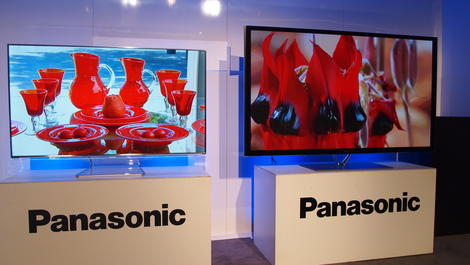
Insider sources have reportedly been squealing that Panasonic will stop making plasma TVs next year, but Panasonic disagrees.
"Nothing has been decided yet," a spokesperson for Panasonic said - which isn't a straight-up denial but isn't a confirmation either.
Both Reuters and Nikkei Business Daily claim that Panasonic will sell its plasma TV division off next year after closing its factory and halting production.
Panaphonics
It's not a hard rumour to believe given than the company's plasma business has tanked, losing over 700 billion yen for two years running. That's about £4.5bn, $7.2bn and AU$7.6bn.But Panasonic told us just six months ago that plasma is "still the best technology" for certain elements of home cinema, particularly sports and movies, so panning plasma is by no means a done deal.
Basically, no one really knows what Panasonic will do at this point. Not even Panasonic.
- Plasma is good, sure, but can it rival LG's 77-inch curved OLED TV?

| |
Read More ...
Updated: In pictures: Gold HTC One

OK, so gold phones are quickly coming close to being passe, but the HTC One Gold edition is something different: it's a proper 18ct gold edition.
Designed for the MOBO awards, the HTC One has been gold plated to deliver that 'hyperbling' experience that marks it out from the rest.
Apart from being the most reflective phone we've ever tried to photograph (and we've tried to do the same thing with chrome phones), the most remarkable thing about the handset is that it doesn't weight more than 4g more than the normal HTC One.


It's essentially the same device, although HTC did admit it was working out some of the connectivity issues that come with gold plating. However, thanks to its efforts into antenna reception in making the all-aluminium HTC One there are apparently no issues with getting a spot of 3G or 4G to play with.

It's not as malleable as you'd expect, thanks to being covered in a clear protective layer that means the gold, which is one of the softer metals, won't just fall apart when plopped on a table.
However, as you can see, the scratches show up so easily - so you'd have to really want the gold phone to achieve this.

So there you have it: it's an HTC One with the most bling-tastic covering you'll ever see. Don't hanker after it too much, as it not only costs £2700 to make, but sadly it's never going to see shop shelves. Well, sadly for those that have just sold a mid-sized coupe and feel the need to waste the cash, that is.


| |
Read More ...
Updated: iPhone 6 release date, news and rumours

The iPhone 5S and iPhone 5C have been announced. So what does that mean for the iPhone 6?
Well, we'll tell you. Or, at least, we'll tell you what we can glean from rumor and speculation - some reliable, some not so much.
Given the iPhone's history - from the 3G onwards, there's always been a half-step S model before the next numbered iPhone - so it was no surprise the 5S was first and so we're looking at 2014 for a new iPhone 6.
One thing is for sure, with potential refreshes of such super handsets as the Samsung Galaxy S4, Sony Xperia Z and HTC One, the next iPhone will have to seriously up its game.
iPhone 6 release date
The iPhone 6 release date will be in 2014. It will follow the iPhone 5S which will be released at the end of this week..Jefferies analyst Peter Misek says that there will be a June 2014 release for the iPhone 6. We reckon it will be later than that, around a year after the 5S. Citi's Glen Yeung also believes that we won't see an iPhone 6 until 2014, although that's no big leap.
Interestingly, in May 2013 Stuff reported it received a photo of the till system at a Vodafone UK store (which it has since removed along with the reference to Vodafone), with '4G iPhone 6' listed.
So could we see both an iPhone 5S and iPhone 6 in quick succession? Some reports suggest a new 5S in the late part of the year before a revamped iPhone 6 very early in 2014.

iPhone 6 casing
It's been suggested that there could even be three size variants of the new iPhone - check out these mocked up images by artist Peter Zigich. He calls the handsets iPhone 6 Mini, iPhone 6 & iPhone 6 XL (these look rather like the iPhone 5C variant though). However, as ZDNet rightly points out, different size variants aren't exactly easy to just magic out of thin air.
The iPhone 6 will finally do NFC
About time too. Well, that's what iDownloadblog reckons, quoting Jefferies analyst Peter Misek. Many Android phones now boast NFC and Apple appears to have been happy to be left behind here.See our video below on what Apple needs to do to slay Samsung's Galaxy S4
The iPhone 6 will run iOS 8
With iOS 7 heading out of the traps now, who's betting against the next iPhone coming with iOS 8?We'd expect a September or October release date for iOS 8 in line with previous releases.

iPhone 6 storage
We've already seen a 128GB iPad, so why not a 128GB iPhone 6? Yes, it'll cost a fortune, but high-spending early adopters love this stuff.iPhone 6 home button
According to Business Insider, of the many iPhone 6 prototypes Apple has made, one has a giant Retina+ IGZO display and a "new form factor with no home button. Gesture control is also possibly included". It will surely include Apple's new Touch ID finger print tech though?iPhone 6 screen
The Retina+ Sharp IGZO display, would have a 1080p Full HD resolution. It's also been widely reported that Apple could introduce two handset sizes as it seeks to compete with the plethora of Android devices now on the market.Take this one with a pinch of salt, because China Times isn't always right: it reckons the codename iPhone Math, which may be a mistranslation of iPhone+, will have a 4.8-inch display. The same report suggests that Apple will release multiple handsets throughout the year over and above the iPhone 5S and 6, which seems a bit far-fetched to us.
Patents show that Apple has been thinking about magical morphing technology that can hide sensors and even cameras. Will it make it into the iPhone 6? Probably not.
Jefferies analyst Peter Misek also says he believes the new iPhone will have a bigger screen. Different sizes also seem rather likely to us - the word on the street after WWDC 2013 was that there would be 4.7 and 5.7-inch versions.
More rumors in September 2013 point to a six-inch display, but this seems a little large to us.

iPhone 6 processor
Not a huge surprise, this one: the next processor one will be a quad-core A8 or an evolved A7. The big sell here is more power with better efficiency, which should help battery life.Update: Anyone hoping for some juicy Samsung technology hidden under the iPhone 6 body will be disappointed though, as reports suggest Apple is looking to push its Korean rival further out of the iPhone picture with its eighth-gen handset.
Apple is apparently cutting the amount of A8 processors it is having made by Samsung, although it hasn't severed ties completely just yet.
iPhone 6 camera
Apple's bought camera sensors from Sony before, and this year we're going to see a new, 13-megapixel sensor that takes up less room without compromising image quality.An Apple patent, uncovered by Apple Insider in May 2013, shows a system where an iPhone can remotely control other illuminating devices - extra flashes. It would work in a similar manner to that seen in professional photography studios. Interesting stuff.

iPhone 6 eye tracking
One thing seems certain - Apple can't ignore the massive movement towards eye-tracking tech from other vendors, especially Samsung. It seems a shoe-in that Apple will deliver some kind of motion tech within the next iPhone, probably from uMoove.iPhone 6 wireless charging
Wireless charging still isn't mainstream. Could Apple help give it a push? CP Tech reports that Apple has filed a patent for efficient wireless charging, but then again Apple has filed patents for pretty much anything imaginable.The tasty bit of this particular patent is that Apple's tech wouldn't just charge one device, but multiple ones. Here are more details on the iPhone 6 wireless charging patent.
Meanwhile, a further Apple patent seems to imply that future iPhones will be able to adjust volume as you move them away from your ear.
And could the iPhone 6 really have 3D? It's unlikely, but the rumours keep on coming.

| |
Read More ...
Updated: iPad mini 2 release date, news and rumours
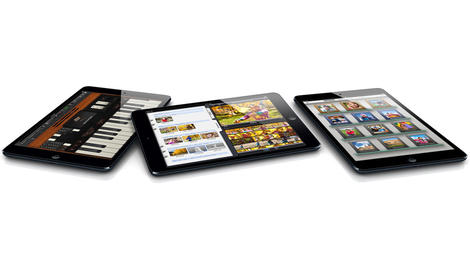
The iPad mini has been on sale since November 2012, so when will we get the iPad mini 2?
We're expecting the new iPad (both the iPad mini 2 and new iPad 5) to be launched at an event on October 15 - the invites for this should be sent out any day now, so stay tuned. It's likely to be on sale before the month is out, so if you're thinking of being that person and queuing, then best buy your camping gear now.
It seems like Apple was surprised by the iPad mini demand - it shifted three million units of the new iPad 4 and iPad mini in three days alone. so it will be looking to make something that can really wow the crowds with the follow up.
The likely scenario is that the iPad mini 2 will have an even sharper display of 2,048 x 1,536 pixels packed into the same 7.9-inch space, which will bring it closer to the impossible sharpness of the Nexus 7 2013.
When retailers start to price cut that can sometimes mean they're making way for a newer model, and as Cult of Mac notes, in the US that's just what Wal-Mart, Best Buy and MacMall are did on Wednesday 3 April, reducing prices of the iPad 3 and iPad mini prices by about 30%.
It seems a little bit early to be bringing the cost down as, like last year, the iPad mini 2 will launch in October, before being released onto shop shelves later that month, or perhaps spilling into November.
And could the iPad mini 2 also have the A5X processor under the hood? It seems likely, but as GottaBe Mobile reports, it's unlikely that Samsung will be the manufacturer of whatever part appears in the device.
And don't forget about iOS 7 - that's the new platform for Apple, and no matter what version of the tablet launches later this year, the iPad mini 2 will be on the latest version of iOS.
iPad mini 2 release date
Update: We've now got word of a potential iPad mini 2 launch event apparently set for October 22 - a week later than earlier rumours which pegged the event for October 15.With production of the sharper screens projected to start by the later half of 2013, the iPad mini 2 release date is almost certain to land in the run up to Christmas.
We've already seen a couple of rumours that there will be an event to announce the iPad mini 2 at an October 15 launch - this date is fast approaching, so we're expecting an invite any day now.
According to analysts, the iPad mini 2's production has already begun, with leaked documents and factories already revving their engines to bring the new device to market. The price drops are continuing too, so the likely October / November iPad mini 2 release date seems nailed on.
To corroborate this, BGR cites a pair of reports that agree with the late 2013 release date, in time for the Christmas rush. Indeed, Apple Insider reckons that development issues have caused the new iPad mini to be delayed along with the cheap iPhone and iPhone 5S, but will still hit the all important Christmas rush.
Bloomberg has more recently cited 'sources' saying that the release is imminent, but there is one horrendous idea being bandied about: that Apple will simply 'refresh' the iPad mini (the iPad mini S?) and save the new, Retina-powered device for 2014.
Say it ain't so...
iPad mini 2 casing
Images of what could potentially be the casing for the new iPad mini 2 leaked online in February. The photos come courtesy of the Chinese Weiphone forum, showing a silver rear casing for an iPad mini.Most immediately noticeable on the casing is that the Apple logo and text is a sky blue color, rather than the typical black.

We've since seen a couple of other colours leak out to match those seen on the new iPhone 5S - both Space Grey and Gold could be making an appearance. We're not sure about those ideas, as it would look rather odd with a two tone back, so it would probably be a more monotone thing.

After you get over the color distraction, the more important point is a more subtle difference from the current mini, in that the casing appears to indicate a thicker device that the existing model.
The iPad gained a little extra girth when Apple upgraded it to a Retina display, so a thicker casing in these alleged iPad mini 2 shots seem to point to some Retina presence in this model.
We've since seen more in the way of iPad mini 2 casings, with a couple of new casings contradicting the earlier reports, with the first from new Apple-tipster-on-the-block Sonny Dickson thinking it will maintain the form factor of the original iPad mini.

Another, more likely faked, prototype has appeared, shorn of the usual iPad markings and regulatory notices as above, but does seem to corroborate the notion that Apple is keeping things the same with the new iPad mini.
It seems that there's a chance we could see two iPad mini versions coming when the device is launched later this year; a refreshed iPad mini that just gets a little speed bump, and the iPad mini 2 with a Retina display... here's hoping that it causes competition in the market and pushes prices down. We all want that.
iPad Mini 2 display
The grown up iPad 4 has a Retina display, and the next mini really needs Retina tech or something similar to allay the annoyances of those that eschewed the first iPad mini.It makes sense that the biggest criticism of the current iPad mini so far is its relatively low 1,024 x 768 resolution. Critics wonder why a Retina display wasn't incorporated into the first iPad mini to begin with, but it seems it was largely to do with the speed of the product's announcement.
Some said Apple went with a lower resolution so it had some low hanging fruit to grab for the next upgrade. Production problems surrounding the iPad mini might also be the culprit - something that may well be holding back an iPad mini 2.
The forthcoming iPad mini 2's retina display is said to have a resolution of 2,048 x 1,536 pixels, doubling the current iPad mini's 1,024 x 798 screen and packing more pixels than the iPad 4's 264 ppi. In May 2013, NPD DisplaySearch predicted a 2,048 x 1,536 pixel display which will have a pixel density over 300ppi.
There are reasons not to worry about the iPad mini 2 coming with a thicker case to accomodate the Retina display. As we saw with the iPad 4, could a better iPad mini 2 display also mean a bulkier product? Not it, as rumours suggest, the screen is a tough Sharp IGZO display. Other rumours point at several manufacturers being involved.
The more recent trend of rumour-mongering is to claim that Apple still doesn't know whether it's going to whack a Retina display on the new iPad mini, with the first such notion appearing in July, in order to make the iPad mini even sleeker and bezel-less.
This was corroborated then refuted later in the same month, with developers noting that the code in the new iOS 7 platform didn't contain any mention of a higher-res display for the iPad mini.
However WSJ sources think this is total nonsense, with Samsung joining Sharp and LG in making the new screen for the iPad mini 2... which would make more sense if Apple is going to make enough of the things.
That's actually something that's a worry, as it could be that which causes a shortage of iPad Mini 2 units in the short term when it launches.
Our take is simple: we'll bet the house on the iPad mini 2 having a Retina display. Anything less and Apple would be too far behind the current trend for super-clear devices to have a hope of selling anywhere near as many units.
iPad mini 2 specs
In addition to an Apple A6X processor, an 8 megapixel camera is also expected to sit on the rear of the device.Any other information on the specs of the upcoming tiny tablet have been few and far between, with the main focus on the display and case. However the battery will need to be boosted to accomodate the new Retina display, and we'd therefore expect an uprated GPU to help things out.
There will also be a double RAM unit plopped in as well as the new A7 chip from the iPhone 5S to help power the improved amounts of pixels - while this isn't confirmed, it would follow Apple's upgrade logic for the last few years.
Update: Something else the iPad mini 2 might borrow from the iPhone 5S is the Touch ID fingerprint scanner, with a cable showing up online apparently set to feature in this tablet and the iPad 5.
iPad mini 2 price
When the iPad mini was first released, reports said the steep price point of $329/£269/AU$369 was due to manufacturing difficulties. Indeed, well into early 2013, iPad minis were not shipping quickly.The new GF DITO touchscreen technology that helps make the mini so small is reportedly one of many production hurdles.
AU Optronics (AUO), the company that produces the current iPad mini LCD panels, was also having yield issues with the mini screens at first, so a Retina-like display could have caused additional production headaches.
However, AUO claims it smoothed out production problems surrounding the current panels, already resolving the light leak issues that held up fabrication.
Would a retina display iPad mini 2 also push the price upwards? There may also be retina and non-retina variants to keep the basic price low, which would satisfy a number of consumers while still maintaining the Apple tradition of keeping all its Christmas products shiny and new.

| |
Read More ...
Available Tags:Belkin , Samsung , HTC , Motion , Amazon , iPad , Nokia , rumors , Windows Phone , Windows Phone 8 , Windows , Google , 3D , Canon , Nikon , HP , BBC , Panasonic , iPhone 6 , iPhone ,


No comments:
Post a Comment