

Oculus Rift maker shrugs of consoles, focused on next-gen mobiles

Makers of the exciting Oculus Rift virtual reality gaming headset are more excited by launching the device for use with next-gen mobile games rather than the Xbox One or Sony PS4 consoles.
The CEO of Oculus, Brandon Iribe, told Edge the company hopes to launch the device in 2014 with a focus on games for the next Samsung Galaxy and Apple iPhone handsets.
While Iribe refused to rule out a console launch completely, he claimed the ongoing innovation in the mobile sector and the ability for users to just plug and play makes it a better option.
While dismissing the possibility of a 2013 launch, the CEO said a 2014 launch will only come "if its right," while also pledging to try and keep the costs under $300 (£196, AU$£26).
More mobile innovation
"I love consoles but internally we're a lot more excited about where mobile's going to go, and being able to plug it right into a next gen cellphone," he told the gaming publication."It's the innovation, and how fast cellphones are now improving – where we'll be with the next Galaxy or the next iPhone compared to where consoles are. Those things are almost doubling every year, compared to a console that's just stuck it out for eight years – it just makes us very excited.
"There's a lot of improvements that can be made on the hardware side for VR that no-one's doing yet because it's a new thing. The mobile rate of innovation is going to be able to make a lot of those improvements."

     |
Read More ...
New Apple Store app to serve up tasty gadgets with a side of free apps?

Apple will launch a new version of its official Apple Store application next week, offering free content in a bid to get more eyes on its products, according to reports this weekend.
The new Apple Store portal for iOS devices will land on Tuesday, according to 9to5Mac sources, and for a limited time will serve up freebies that can be downloaded directly from the app.
They will include items from the App Store, iTunes Store and iBooks, but don't expect it to last for too long.
The items featured within the app will be gratis initially, but will usually require users to stump up cash, according to the report.
Eyes on the products
The new app's pending revamp (pictured), seems reflect the design language of Apple's other digital stores.The company has mastered selling content through the iTunes and the App Store portals, but according to recent comments from Tim Cook, only 20 per cent of iOS users know the Apple Store app even exists.
The company will hope that changes with the impending launch of the new app.

| |
Read More ...
Apple's iWork for iCloud beta begins rolling out to regular Joes

Apple has started to invite members of the public to join its beta program for the iWork for iCloud web-based productivity suite.
Selected iCloud users were granted access to the Pages, Keynote and Numbers apps on Friday, the first time they have been available to those outside of the developer community.
Those with access can now create, edit and share documents, presentations and spreadsheets from the iCloud.com portal within their web browser.
Naturally,if users so desire, also sync up with the latest versions of documents created using desktop and mobile versions of the apps, giving users easy access across their devices.
Apple going into over-Drive?
The expansion of iWork within iCloud gives Apple a shot at matching rival products from Google and Microsoft.The well-established Google Drive platform continues to be a favourite for cloud-based document creation and storage, while Office 365 is proving a popular solution for Microsoft users.
Apple is yet to reveal when the iCloud beta will officially go public, but this weekend's limited roll out is definitely a step in the right direction.
The company first confirmed iWork for iCloud at WWDC back in June.

| |
Read More ...
Moto X bares all in leaked press shot ahead of August 1 launch

Just a few hours after we marked our calendars for its launch on August 1, leak artists have celebrated the Moto X phone's impending 'coming out party' by slipping out an official-looking shot.
Just ten days from the official reveal, prolific Twitter leaker @EvLeaks (via The Unlockr) has gotten his or her mitts on another press render of a Motorola device, following recent Droid family leaks.
Although it's nice to see the phone in its official guise, rather than blurry-cam snapshots or videos, there isn't much new information to bring you beyond the photo.
The homescreen gives us a look at stock Android running on the device, but the transparent menu keys, as Engadget points out, suggests there'll be some minor UI modifications from the Motorola division.
Born in the USA
The 'designed by you' and build in the USA smartphone will be officially presented to the world on August 1, after the company requested RSVPs from the media for an event.It is thought that smartphone fans will be presented with a host of customisation options, including build materials and personalised engraving.
The device is also expected to be the first to run Android 4.3 out of the box, which most observers expect to be the subject of Google's 'breakfast with Sundar Pichai' event on Wednesday.
- Official-looking press shots not enough for you? Check out this hands-on video from Canadian network Rogers.

| |
Read More ...
Buying Guide: Best MacBook Air case: 11 top bags, cases and covers

Best MacBook Air case
Your shiny new MacBook Air has just been delivered... but what to put it in?Do you just want to protect it from scratches or are you after a case that shields it - and the give-away logo on its lid - from prying eyes and criminals? Perhaps you need a drop-prof case, or you're a photographer that needs to take a MacBook Air and a DSLR camera in the same bag.
Whatever your ambitions, there's something for you among these innovative slings, messengers, backpacks, cases and covers that fit the MacBook Air 11-inch and 13-inch models.
1. WaterField Designs Outback Laptop Sleeve - US$50 (around £35/AU$55)

This vintage-style case from WaterField Designs is a more outdoorsy waxed canvas. Weighing in at 384g (13.5oz), the Outback is available for both the 11 and 13-inch MacBook Air, as well as the 13 and 15-inch MacBook Pro (all the same price), and with the opening at either the top or bottom.
We tried out the 11-inch side-loader, which had a soft, neoprene-clad inner sleeve that adds just enough padding to the tough canvas construction for us to be less precious about our MacBook Air. It fitted perfectly and the simple leather popper strap kept it securely closed.
Though it just so happens to house an iPad quite happily despite being a touch too wide, it's that solid construction and unusual, well disguised worn look that we like it for most. It's best chucked into an old rucksack before straddling a horse and riding off in search of Wi-Fi.
2. Targus Canvas Slipcase - £40/US$60/AU$65

If you're shuffling between meetings or hanging around a conference venue, a dedicated backpack is overkill and a simple cover slight underkill.
Step forward this sturdy Targus Slipcase (model number TTS00504EU in the UK or TTS00504US in North America and Australia), which is available in white/brown and grey/black, and for both sizes of MacBook Air.
Weighing 450g (16oz) and made from a canvas far thinner than that found on the WaterField Designs Outback, the Slipcase is less of an event than most dedicated laptop bags, but piles on the functionality.
A magnetic faux leather hood hides a main, padded compartment that takes a MacBook Air, while a stretchable pocket in front is enough for a power adaptor and, thanks to a dedicated pocket, a clutch of business cards. Add a simple shoulder strap and it adds up to a cost-effective, functional solution.
3. Berghaus Remote II 20 - £50 (around US$75/AU$80)

It's not custom-made for a MacBook Air, but if you're after a good disguise, the Berghaus Remote II 20 works very well.
Not surprisingly, the shoulder straps (complete with sunglasses stuff and adjustable chest strap) are the best here, with a vent between the foam back pads that makes this a less sweaty option than some.
Inside is an all-important compartment that, while designed to carry a three-litre hydration bladder, manages to fit a 13-inch MacBook Air with ease, though snugly so.
Given its netting design the paranoid might want to wrap their Air in a separate case first - and there's room for one of those, too - though the waterproof design makes this one of the safest options, particularly for cyclists.
A grab handle on the top is handy, as are four pockets inside, while compression straps either side pack the bag down to the bare minimum size that's perfect for those packing one of the slimmest laptops around. Weighs 530g (19oz) when empty.
4. WaterField Designs MacBook Air Smart Case - US$80 (around £55/AU$85)

Given the MacBook Air's rather cold-looking metallic design, there's a temptation to wrap it up in something warm and safe, and that's exactly what this easy-access slip-case achieves.
Weighing 340g (12oz) for the 11-inch version and 396g (14oz) for the 13-inch version and hailing from San Francisco, the Smart Case is an unusual mix of a distressed brown leather spine, red (or copper green, black or white) nylon and a black net pocket on the outside.
Inside is a soft padded sleeve that's among the snuggest fitting we tried. A recessed spine on each side makes it easy to retrieve a MacBook Air when docked, while the stretchable pocket on the outside is able to house everything from a MacBook Air's power adaptor or Kindle to a 300-page novel or even a naked iPad.
5. Twelve South BookBook - £80/US$80/AU$90

Don't judge a MacBook by its cover? Skeuomorphism might be out in Cupertino for iOS 7, but Twelve South has something special for those who like both the sleek machined aluminium of the Macbook Air and an olde worlde leather look.
Available for both the 11-inch and 13-inch versions and weighing either 355g or 382g (12.5oz or 13.5oz), the BookBook's weathered style and two-tone red and brown spine are clearly designed as a disguise on a book shelf, but there's decent protection here, too.
Hard covers are backed by a soft felt inner sleeve and two secure zips. It fits a MacBook Air snugly, with elastic security tags across the corners of the screen keeping its guest in place, though it could do with some on the keyboard, too.
Six more top MacBook Air cases
6. Thule Crossover Sling Pack - £80/US$100/AU$130

Although it's able to take a 13-inch Macbook Air, the diagonal-access compartment inside this tough 823g (29oz) sling pack from Thule is of less exact dimensions than most of the other bags and cases here.
With a capacity of 17 litres and designed to fit a 13-inch laptop, it's primed to be a work or weekend bag, with plenty of room for a couple of shirts and a few netting pockets for sundries within its three compartments.
On the front is a pocket that fits an iPhone, while the middle pocket easily takes a 10-inch tablet. There are compartments for business cards, and also a surprisingly wide water bottle holder on one side, which is rare on custom-made bags such as these.
A couple of well-placed grab handles on the side and top impress, though one of our favourite features - a chest-height pocket on the sling strap - proves just too slim for most smartphones.
7. Tech 21 Impact Slip - £80/US$125 (around AU$130)

A slim case ideal for protecting an 11 or 13-inch MacBook Air, the Tech 21 Impact Slip is perfect for clumsy types who've put nasty dents in dropped laptops before now.
The technology behind the leather is D3O, an orange-coloured soft material made from molecules that lock together and harden instantly upon impact, dissipating the shock and keeping your slab of machine-engineered aluminium in one piece.
The middle layer is called BulletShield, which is also used in bulletproof glass... you get the idea.
It's a hard claim to test, but nothing else we know of claims to dissipate 80% of the force of being dropped or struck. And it's a great fit, so snug that a small tab is needed to help it on its way out.
If the pouch-style isn't for you, Tech 21 also makes its fold-out Impact Jacket also with D30, for the same prices, which wraps around either side of the MacBook Air.
8. Lat 56 MS_01 - £130/US$200 (around AU$210)

Lat 56's MS_01 Small Laptop Messenger Case is one of the toughest, best made bags on offer here. In a ruthlessly efficient design that puts an emphasis on function and protection, this totally waterproof 12-litre bag has an inner, padded sleeve that safely encloses either an 11-inch or 13-inch MacBook Air, and keeps it perfectly still.
In front is an area for chargers and cables, while an outer section houses two iPhone-sized pockets, a smaller zipped pouch and some pen holders. All pockets close using magnets, not poppers, while a couple of rubber feet on its undercarriage keep it off the floor.
However, once we'd sealed the bag and attached the shoulder strap, the real surprise extra appeared; a zipped pocket on the reverse that houses a padded sleeve that perfectly fits an iPad.
It's this kind of attention to detail within a heavyweight, 1.5kg (2.2lbs) design, that makes this one of the ultimate MacBook Air bags for the commute.
9. Marshall Bergman Corbin - £135 (around US$205/AU$220)

Selling exclusively on the Apple Store, this gorgeous leather shoulder work bag has perhaps been designed for an iPad, but unlike most of its contemporaries this 783g (27.6oz) effort is just that bit taller - and therefore just about houses a 2013 generation 11-inch MacBook Air in its dedicated, padded inside pocket.
However, if you've already put your MacBook Air in some kind of cover, it's best plunged into the main section, with the padded pocket instead reserved for a tablet.
Two outside pockets - one with a dedicated iPhone pocket - impress, though neither is deep enough for a full-size iPad. Inside are two more pockets for iPhones or iPod touches - alongside two pen holders, a nicely detachable keyring, and a secure zipped pocket. It's available in black or brown.
10. Jill-e Designs Emma - £200 (around US$300/AU$330)

Sold exclusively on the Apple Store, the feminine - but eminently business-like - Jill-e Designs 11-inch Emma Leather Messenger Bag is specially designed to carry a MacBook Air 11-inch, but that's not all it can carry.
Available in black or sky blue, the main compartment secures a MacBook Air within a padded wall with velcro security strap. Alongside is a padded pouch that perfectly fits an iPad, while two pockets opposite take an iPhone and something slightly wider.
Two pen holders and a zipped pocket complete the soft-touch, sand-coloured fabric-lined innards, though there's scant room for much else bar a charger or two.
Weighing 1kg (2.2lbs) and with a comfy leather shoulder strap and grab handle, the Emma doesn't stop with the tech there; on its rear is a pocket that also nicely nestles an iPad, while an oval zipped pocket on the front has three more pen holders and an iPhone pocket.
Best of all, it looks like a proper handbag, with burnished gold strap rings, zips and a buckle on the front that uses magnets.
11. Booq Python Pack - £220/US$240 (around AU$360)

For photographers that need Photoshop and email on the go, there are few better options that the Booq Python Pack. Most custom-made MacBook gear is for urban dwellers, but this photography-centric Python Pack is about as outdoorsy as it gets.
A MacBook Pro 15-inch can be slipped into a special laptop compartment, so a MacBook Air is no problem. You can also squeeze in a DSLR (or two) and four lenses, umpteen memory cards, and even a couple of smartphones in pouches on the comfy shoulder straps.
Great for hiking and with a shocking red shower cover that stows in a side pocket, it does have straps for a tripod on the outside, though they're rather oddly aligned. In the back panel between the straps is a 'secret' compartment that's the exact dimensions of an iPad.

| |
Read More ...
Week in Science: Sabre rattling: A rocket revolution

Welcome to a special Brit Week edition of Week in Science. From blue marbles to an intelligent knife, we've got it all this week thanks to industrious Britons and their amazing discoveries.
Britain has been at the forefront of scientific discovery for centuries. From physics and chemistry to biology and nanomaterials, the UK is a research powerhouse. We've had some truly great Britons change the world with their science, including the likes of Darwin and evolution, and Newton and gravity to name but just a few. And that doesn't even cover the engineering greats that made a lot of the modern world happen.
So, let's quit waffling and let's get cracking with this week's British-led science news, with a bit of science history thrown in for good measure.
Britons discover the first exoplanet colour is ocean blue
A team of astrophysicists, lead by Tom Evans from the University of Oxford, have finally been able to identify the colour of an exoplanet first discovered back in 2005.You see, most planets are observed in non-visible wavelengths of light like infrared. That gives stargazers the size, shape and other properties of the various planets, but not the colour of them. Unfortunately, Hubble's resolution just isn't high enough to discern planet from star at that distance. Instead the Brits waited until the planet passed behind its star, allowing them to find out which wavelengths of light were lost at that precise moment. The result turned out to be a deep ocean blue, despite the planet not actually having oceans owing to it being a giant ball of gas. Still, we now know we're not the only deep blue marble floating through the galaxy. [APJL]
Did you know we discovered penicillin?
British scientific success isn't a new thing. Penicillin, the drug that kick started the antibiotics revolution, was discovered in good old Blighty. The story goes that back in 1928 a biologist was studying Staphylococcus bacteria on a traditional petri dish in an old lab in St Mary's Hospital (now part of Imperial College London), when he left the window open. A fungal spore flew through the window and landed on the uncovered plate.That biologist was Sir Alexander Fleming, who discovered that the bacterial lawn on the plate showed a halo effect, with a circle totally devoid of bacteria surrounding the now growing tiny speck of blue-green mould. The reason for the halo was that the fungus secreted an antibiotic agent into the medium within the petri dish, which killed off the surrounding bacterial cells. That chemical was later isolated and turned into penicillin (named after the Penicilliumfungus), the starting point of modern antibiotics as we know them today. Another revolutionary piece of British science of which we should all be proud.
Britons discover that the obesity gene makes you fat by keeping you hungry
Six years ago we discovered that there really was a gene linked with obesity called FTO. Now researchers from University College London have shown that it fails to dampen hunger following meals and increases your desire for high-calorie foods.FTOcomes in multiple variants, with type "A" linked with an increased likelihood of obesity. An FTO genotype of "AA" increases your risk of obesity by whopping 70 per cent, while a single "A" increases your obesity risk by around 30 per cent, which half of all white Europeans have. It seems obesity-linked variants of FTO fail to suppress ghrelin -- a hormone known to stimulate appetite -- which leaves people forever hungry. It also seemingly stimulates an addiction-like response to calorific foods. So next time you crave something fatty or just can't sate your hunger, you might want to blame your genes. [JCI]
Britons create the world's first pee-powered phone
Researchers from the Bristol Robotics Laboratory have produced a microbial fuel cell (MFC) that harnesses the abundant supply of urine your body produces to power up a Samsung phone.The microbes implanted on the surface of the cell break down the organic compounds ejected in urine to produce carbon dioxide and electrons. The electrons pass across a membrane from anode to cathode combining with protons to form hydrogen, which in turn reacts with oxygen to create pure water. The by-product is the flow of electrons, creating a current and producing electricity that can be used for anything -- in this case charging a phone. The MFCs were stacked to produce enough electricity to power up the phone to be able to send texts, browse the web or make a quick phone call. The researchers propose using this kind of system to essentially turn your toilet into a power station; effectively free electricity. [UWE]
And then we gave the world the DNA double-helix
It wasn't just modern antibiotics we Brits gave the world either. The structure of one of the founding platforms of life as we know it, DNA, was discovered right here in the UK.Through X-ray diffraction, a team of researchers famously headed up by James Watson and Francis Crick discovered that DNA formed into a double-helix structure held together by linked base pairs forming a central twisting backbone, evidence of which was published by Watson and Crick, as well as Franklin and Gosling in Nature in 1952. Crick later went on to set out the central dogma for molecular biology, including the replication mechanisms and the relationship between DNA, RNA and proteins. That work formed the basis of genetic and modern biology from then on, and we wouldn't be where we are today without it.
British government sinks £60m into revolutionary new rocket engine
Britain's getting back into the space race with a brand new Synergistic Air-Breathing Rocket Engine (Sabre) that'll be able to shoot a re-usable space plane into orbit. The jet-cum-rocket is being designed and built by Reaction Engines in the UK, and will burn a mixture of oxygen and hydrogen.
What makes it different, though, is that at low altitude it'll draw the oxygen from the surrounding air like a normal jet turbine. An incredible compact air pre-cooler can take 1,000C air to -150C is just 1/100th of second increasing the density of the ambient air to rocket-levels. Reaction Engines needs another £160m to take the amazing new engine to the next stage, which should start at the beginning of next year, at least partially supported by the Esa. Of course, the UK has been leading the field in satellites for some time now, but having a rocket of our own would help get men back into orbit too. [UK Space Agency]
Amazing new British invention will revolutionise cancer surgery
At the moment, doctors extracting tumours from patients can't tell whether what they're cutting into is cancerous or healthy tissue. A new scalpel, which attaches directly to a mass spectrometer is about to change that.The "intelligent knife" built by Dr. Takats from Imperial College London, couples a fairly standard cauterising surgical knife to a vacuum tube. As the knife cuts through and burns the tissue, smoke is released which is sucked up by the tube and fired into a mass spectrometer for immediate analysis. The mass spec is attached to a computer that identifies the tissue by chemical markers, determining whether it is cancerous or healthy tissue. The knife is currently under clinical trial, having already performed 81 successful surgeries. Thanks to the intelligent knife, soon more people could be cancer survivors rather than cancer victims. [Science]

| |
Read More ...
Review Roundup: This week's hottest reviews on TechRadar

Please allow us to introduce you to the HTC One Mini: the mini version of the world's hottest smartphone and presumably the precursor to the even-minier HTC One Mini Mini that we just made up.
The One Mini has been insta-billed as the most desirable midrange smartphone on the planet, which explains its price in relation to the competition. And having had a good play with it, we can say that we like it a lot. If you're in the market for a new phone, it's almost probably worth holding on for - despite the boring name.
Also sliced up and examined on TechRadar's altar of silicon this week we've seen some snazzy snappers and lovely laptops, a troop of techy TVs and a whole smorgasbord of inexplicably aggravating alliteration.
So here we go then, fetch yourself a nice hot cup of tea and peruse the week's loveliest tech. Because if you don't, who will?

HTC One Mini
The HTC One Mini follows in the footsteps of its outlandishly successful bigger brother, slicing off some components but managing to maintain a real sense of class. When it comes to the HTC One, there was a big call from fans to follow it up with something a little more affordable, in the same manner as Samsung has done with the Galaxy S4 Mini. However, while coming in at a similar price (well, unconfirmed but likely) and a slightly lower set of specs than its Samsung competitor, there's no doubt that the HTC One Mini is a more impressive device (and it has a higher-resolution screen to boot).Read: Hand on: HTC One Mini review

Samsung UE40F6400
It's not the best upscaler, nor the slimmest TV, and some won't like the need to use MotionPlus for both 2D and 3D, but we're quite taken by the Samsung UE40F6400. Packed with apps within a reasonably polished Smart Hub system, there's plenty of contrast, colour and detail to compete with pricier options. Read: Samsung UE40F6400 review
Lenovo Yoga 11S
If you're in the market for a Windows 8 tablet or laptop you'd be remiss to not check out the Lenovo Yoga 11S. While it currently lacks a Haswell option, it's still plenty fast enough for whatever you want to do, with the exception of hardcore PC gaming. We took this model on several business trips and experienced nary a hiccup. On planes its diminutive size made it perfect for working or watching videos and it easily tucks away nicely into any bag you may be traveling with. Read: Lenovo Yoga 11S review
Samsung Galaxy S4 Zoom
We really want to like the Samsung Galaxy S4 Zoom but we're just not sure there's a gap in the market for it. If the camera or phone part was better or the price tag was lower then it would make sense, but right now it's a poor compact married to a mid-range phone at a high end price tag.Read: Samsung Galaxy S4 Zoom review

Lenovo IdeaCentre B540p
If you're absolutely sure you want a PC/TV combo, and you've got the money in your pocket, we can see no reason to buy any all-in-one other than the Lenovo IdeaCentre B540p. It's just about the pinnacle of the genre, and we reckon the impetus is now on Lenovo's competitors to catch up. If our ethical compass weren't so finely attuned, we'd hang on to our review model forever. But we probably wouldn't shell out the cash, because we're cheap. Read: Lenovo IdeaCentre B540p review
Lytro Light Field Camera
Despite the best efforts of some avid post-capture sharpeners the focus point of most images is set at the point of capture. However, the Lytro Light Field Camera allows the focus point to be changed after the image is captured, so you switch from an object in the foreground being sharp to the background. The image refocuses before your eyes. Read: Lytro Light Field Camera review
Nikon Coolpix S31
the Nikon Coolpix S31 is a basic camera, for a basic price. Although the waterproof function works well, we can't help wishing the day to day shots had a bit more punch and brightness. However, for a family camera that you'd be happy to leave in the hands of your little ones you can't really complain about the Nikon S31 - it's easy to hold, easy to use and will withstand all the knocks, bumps and drops you and your children could put it through. Read: Nikon Coolpix S31 review
| |
Read More ...
PAX Aus: Aussies will get hands on with Xbox One at EBGames Expo

While Comic-Con attendees are currently experiencing the next-gen console wars with their very own thumbs, Microsoft used its PAX Australia panel to confirm that Aussies will get their first taste of the Xbox One at the EB Games Expo on October.
Around 100 of Microsoft's next console will be on the show floor for gamers attending the retailer's Sydney event in October.
In a statement on the EB Games Expo website, Manager of Brand Engagement and Events, Debra McGrath said,
"We are thrilled that EB Games and Microsoft are combining forces to give gamers a chance to get hands-on with the Xbox One at this year's EB Expo. We hope that this glimpse of the future is as exciting to the gaming public as it is to us."
The Great PAX disappearing Xbox One

In stark contrast to the abundance of hardware at the Sydney Expo, Microsoft has taken a much more subtle approach to the console's presence at PAX.
A small Microsoft stall in the main expo hall held nothing more than an empty glass box for most of the opening day, with a sign explaining the console's presence for two hours a day.
Exactly why Microsoft has been so frugal with the console is unknown, although that can be said about many of Microsoft's Xbox One decisions so far.

| |
Read More ...
Motorola job listing hints at mysterious wearable technology

Motorola may be soon saying "hello" to a new head of its wearable design team, as indicated by a recently discovered job listing involving wearable technology.
"The wearables design team will lead the establishment of our brand in the massive competitive and growing space of wearable connected products," noted the job ad spotted by TechCrunch.
The company hints that it wants to start its wearable tech efforts anew, as this Senior Director of Industrial Design will "create a new world-class wearable's design group within Motorola."
That role will be based in Chicago and go to someone with at least 15 years of work experience in the design, tech, consumer product or apparel field.
The vast amount of experience Motorola is seeking could be a sign that the company has a lot to prove against its wearable technology rivals.
Tracking Motorola's past tracking efforts
Motorola's continued interest in wearable technology shows that its MotoActv watch might not be a one-time deal.Its ill-fated smartwatch included a GPS fitness tracker and was also a music player running Android 2.3.4.
While the technology could connect to a smartphone, it was limited to Motorola phones and was rather expensive when it launched in early 2012.
Hello, Moto competitors
The fact that Motorola may be gearing up for entry (or reentry) into the wearable devices market isn't a big surprise.Apple is said to be releasing the long-rumored iWatch, and its closest competitor, Samsung, may beat it to the wrist with a Samsung Gear smartwatch.
Then there's Asus, Foxconn, Intel, Acer, Sony, LG and Pebble Watch all wanting to show up to the same party wearing pretty much the same thing.
Taking a slightly different approach is Motorola's parent company Google with Google Glass, which makes Motorola's ambitions in the wearable technology market especially interesting.
- Read about the constantly-leaking Moto X smartphone, its first flagship device under Google.

| |
Read More ...
Supposed Sony smartphone lens mount might make your pics less terrible

Face it, smartphone camera photos are never going to be good enough when compared to those taken by a DSLR, and high-end standalone cameras are impractical to carry around all day long.
Sony knows this and that's why it may be making a high-end camera lens that can be attached to existing smartphones and bridges the gap.
The Sony camera lens contains a built-in sensor, battery and memory, according to a blog dedicated to the company's cameras, Sony Alpha Rumors.
The sensor and Zeiss lens is said to be the same as the one included in the recently released and well-reviewed Sony RX100 II.
Connectivity for photos
The Sony camera lens can be mounted on a smartphone or used separately, as it contains a built-in battery that can power the device on its own, according to the report.This means that its photos would then have to be transferred to a smartphone or tablet by Wi-Fi and NFC, a process similar to that of an Eye-Fi card.
While the existence of a standalone Sony camera lens with the on-board bells and whistles of an RX-100 Mark II is very much a rumor, Sony Alpha Rumors rates it an SR5, or "almost certainly correct."
The site also claims that a second model with a smaller sensor and larger zoom is being made by Sony.
As confident as the report is about the existence of these Sony camera lenses, no price or release date was given.
- Check out the best compact cameras of 2013

| |
Read More ...
PS4 and Xbox One venture to Comic-Con for first public play-through

Joss Whedon, Doctor Who, Game of Thrones and what? Consoles? All at Comic-Con? We're ecstatic already.
Next-gen consoles Playstation 4 and Xbox One have made an appearance at the San Diego Comic-Con and the TechRadar team was on the scene to scope out reactions of the dedicated fans.
Players had Knack, Driveclub and Octodad for the PlayStation 4 to choose from, with Ryse: Son of Rome and Killer Instinct for Xbox One.
Responses to both the One and PS4 were remarkably different from what we expected.
So, what'd you think about 'em?
After playing Ryse: Son of Rome on the Xbox One, Miguel Galindo only had praise for the much harassed console when asked if he was impressed with the graphics:"It plays really smooth, like how a computer game plays...like on a desktop or powerful gaming computers. So it looks and feels a lot more like that."

It's surprising and nice to know the Xbox One can hold its own against a PC.
Galindo goes on to say, "for just this game alone I would purchase the system. But hopefully this isn't the only big battle. That's what I'm afraid of."
That's a pretty big deal considering all the hate the Xbox One received after the big E3 reveal. If they can keep pushing out great games, maybe they'll win back their once loyal fans.
Your turn Playstation 4
Apparently Sony's repertoire of games just isn't cutting it for players, but that doesn't necessarily mean the console itself is bad - just that the few games they're touting right now make it look bad.Another player by the name of "Q" mentioned issues with the PS4 games when discussing the console's graphics, or lack thereof: "Unfortunately with Knack I can't exactly say - with the graphics they're using because they're using 'kiddier' graphics...It's simplistic, simplistic colors..."
However, he did like one aspect of the game, saying, "it looks more cartoonish but it's focused a lot more on dynamic lighting which I do like."
So there's great lighting, but the graphics just weren't demanding enough to really experience the power of the console.

Galindo mentioned the PS4 as well and how the games just weren't up his alley compared to the Xbox One:
"The PS4 has better specs, on paper or whatever, right? But Xbox One feels a lot cooler. And the PS4 games all seem like they're all geared towards little kids or people that are even nerdier than I am so I don't even know where to go [with that]...and I'm a pretty hardcore Playstation fan - ever since the Playstation One, I've had it - but I might switch over because no games [are available]."
We think it's a little too early to tell if a switch is necessary based on the few games out, but Sony probably should have flaunted more graphically demanding pieces to show-off its next-gen console abilities.
What else?
Though Q had difficulty assessing the PS4 graphics, he did enjoy the feel of the DualShock 4 controller. Citing his "big hands," a comfortable controller was important to him.For Q, the PS4 controller felt much better than the older models and did not feel "claw-like" when playing the game.

Galindo did not mention the Xbox One gamepad, but he did remark on the 24-hour check in and DRM policies stating "Well they said they're going to take them out but we'll see what happens on launch day and PS4 still has a few months to figure out what they're launching with."
So there you have it. The first public play-throughs on both consoles at Comic-Con have been enlightening - the Xbox One may not be the horrible monster people expected and the Playstation 4 needs to step up their game, or so to speak and release a better selection.

| |
Read More ...
Updated: Has Apple finally found out how to fix Maps?
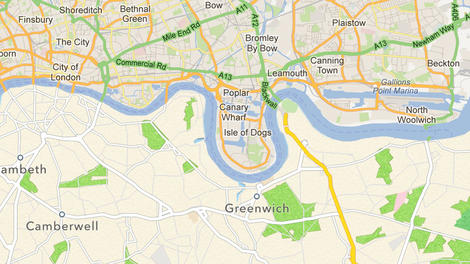
Update: Maps are weighing heavily on Apple's mind as the tech giant found its way to purchasing yet another smaller, geo-focused firm today.
Initially reported by Bloomberg and later confirmed in a statement to AllThingsD, the iDevice maker has agreed to purchase HopStop, which offers walking, bike, bus, ferry, train, subway and taxi information.
Basically, the mass transit information Apple Maps is missing. It also provides real-time delay information and a host of other data, like wheelchair accessible and stroller friendly routes.
HopStop has both Android and Apple apps covering more than 300 cities.
Original article...
Ah, Apple's 'maptastrophe'. The less said about it the better. However, at least we know that Cupertino is making strides to improve its mapping service situation, with news that it's has just bagged a significant new weapon.
Apple's latest acquisition, Canadian location data startup Locationary, crowdsources and collates the most up to date information to ensure that everything is recent and accurate.
Locationary not only verifies that something is still in the place its supposed to be, but also if it's temporarily inaccessible - if a shop is closed for redecorating or whatever, for example.
Watch out Google, Apple's coming to getcha
The word came from "multiple sources" speaking to AllThingsD, with Apple strongly suggesting the news was true by issuing the following statement:"Apple buys smaller technology companies from time to time, and we generally do not discuss our purpose or plans."
There's no verification that this is for Apple's map service, but come on now, what else could it possibly be for? Apple promised that it would be making efforts to improve the service, with Tim Cook even issuing an apology back in September last year. It's alright Tim, we have faith.

| |
Read More ...
Motorola will unveil the Moto X, its 'designed by you' phone, on August 1

This Moto train is moving fast.
Hours after word surfaced that the Moto X phone could launch on Aug. 26 at American carrier U.S. Cellular and a day after the company tweeted a pic of production getting underway in Texas, Motorola sent out invitations to a New York event on Aug. 1.
The invite - which could double as a clothing brand ad - simply says "Moto X," the date, the place and "RSVP here." The Motorola "M" floats above looking like the Bat signal.
The invitation features two handsets in the hands of two hip women, one in black and one in white, indicating that, like your style, you can customize the phone just the way you want.
That's it?
Black and white may seem a little on the limited side when it comes to creating a phone that matches the unique you, but from what we've heard many, many more options are due with the Moto X.Motorola's branding for the phone has centered around a "designed by you" mantra, and so far it sounds as though a palette of colors and engravings will be possible. Users are said to be able to create a personalized default wall paper with a picture, while wood, metal, fabric and ceramic are all tipped as optional casing materials in addition to default plastic.
On the operational side of things, the invite shows a camera lens centered roundly on the back of the device, and the flash below. A jack is clearly visible on the top.
We've heard several times that the phone's sensors will be a thing to marvel, so tuned into your surroundings that the phone even knows when you're traveling in a car. The device is believed to house a 1.7GHz quad-core processor and 2GB of RAM.
A version running Android 4.2.2 was reportedly in carrier testing, but if Google reveals Android 4.3 next week, perhaps we're in for the updated OS on the Moto X?
- Heard about the cheap iPhone? Well, we bet you didn't know it might come in two flavors.

| |
Read More ...
Settling secrets: Apple, Samsung may have been chatting patents for months

Apple and Samsung's bitter patent disputes have been widely covered for the past few years, with the biggest blow in the case landing in Cupertino's favor last summer.
In August 2012, Samsung was ordered to pay Apple $1.05 billion (around £688m, AU$1.14b) million in damages, though that hefty price tag was dropped to a mere $450.5 million (£295m, AU$489m) earlier in 2013.
While it appeared Apple and Samsung were content (or at least resigned) to let the courts decide the fates of the various patents in question, there were apparently some secret negotiations happening behind the scenes as well.
According to new documents released by the U.S. International Trade Commission (ITC), the Cupertino and South Korean companies have been discussing potential settlements as far back as Apple's $1 billion court victory.
Close, but no settlement
In addition to the ITC documents, sources revealed to the Wall Street Journal the ongoing secret settlement discussions have been both hot and cold, though no agreement has been reached as of yet.Based on the information available in the heavily censored ITC papers, Samsung at one point offered a broad patent cross-licensing deal to Apple, which would have ended all litigation between the two companies.
Obviously Apple didn't take the deal, but it's not very clear from the ITC's report just how seriously Apple took the offer to begin with.
Both companies spent a great deal of time talking terms between December 2012 and March 2013, with some face-to-face meetings happening in January, though by February it appears the talks had broken down.
The ITC paper mentions a March 22 proposal from Samsung to re-open talks, adding that some of its offers were still on the table, however Apple didn't respond by the time the ITC ruled.
Despite the massive amount of redactions in the report, it's clear the ITC didn't believe Samsung's offers were unreasonable, though it would seem Apple disagreed with that assessment.
Love-hate relationship
The curious thing is both Apple and Samsung continue to work together in the manufacturing process, as the South Korean company still provides chips for iOS devices.Apple has reportedly entered into an agreement with the Taiwan Semiconductor Manufacturing Company (TSMC) to craft new processors for 2014, which would all but cut Samsung out of the picture.
However, there are also reports Apple and Samsung have a deal for Sammy to create chips once again in 2015, so it's still unclear just how strong the partnership between these two smartphone giants really is at this point.
For what it's worth, a memorandum of understanding was supposedly drafted by the two companies in February, which the ITC saw as promising for a potential future deal.
"The fact that representatives for both parties were able to reach a memorandum of understanding indicates Samsung is negotiating in good faith and, to be colloquial, is playing in the same ballpark as Apple," the report read.
With all the redactions in the report, it's impossible to tell just why the possible settlement fell through, but if Apple and Samsung are still talking behind closed doors, there's always a chance the ongoing legal battles could finally come to an end.
Given how this past year has played out however, we won't be holding our breath waiting for Apple and Samsung to start getting along.
- Want to know more about iOS 7? Check out our round-up of all the pertinent details.

| |
Read More ...
Is Apple seeing double? Budget iPhone could arrive in two flavours

A selection of brightly coloured bodies won't be the only option presented to buyers of the fabled 'cheap iPhone' if and when Apple launches said device, according to word on the street today.
Leaked documents, courtesy of Chinese social network Weibo, have sparked talk that Apple is working on two variants of the device with different specs, connectivity options and price points.
According to the docs, a device codenamed iPhone Zagato will be the cheaper of the two and will pack a Samsung 'HP5' dual-core processor, 1GB of RAM, FDD 4G LTE and Bluetooth 4.0 connectivity.
The second iteration, apparently codenamed Bertone, will be more expensive due to a 'HP6' processor and TDD 4G LTE, which is an alternative standard developed for the Chinese market.
Both handsets will pack the same 4-inch screen size as the iPhone 5, the documents state, but it seems unlikely the cheaper devices would get the Retina display treatment.
Shady goings on
Today's report follow a number of leaks and rumours that have focusing the devices purported colour options.Several leaked photos have showcased cases in five shades, including yellow, pink, blue, green and white, while Apple is reportedly turning to polycarbonate plastic for the build materials.
It's expected in many corners that the device will be mainly targeted towards emerging markets and go on sale before the end of the year.

| |
Read More ...
Nexus 7 2 details continue to spill, will it flood the market July 31?

If you're the type of Android tablet buyer who prefers to be pleasantly surprised by new product announcements, you might want to skip the Nexus 7 2 refresh, which has leaked out from every corner of the internet this week.
Engadget reported today that a new model of Google's Asus-manufactured Nexus 7 appears to be on deck for release sometime before the end of the month, with nearly every aspect of the tablet popping up courtesy of various tipsters.
Earlier this week, reports claimed the second-generation Nexus 7 would hit stores shortly, with a 16GB model selling for $229 (about £150, AU$248) and 32GB model priced at $269 (about £176, AU$292) - a few clams more than current iterations..
Judging from info made public today, that extra dinero may be worth it, with a quad-core 1.5GHz processor and the elusive Android 4.3 only the tip of this iceberg.

Hello, Staples?
According to a screenshot of Nexus 7 2 specifications, this year's model will also include dual cameras: The customary 1.2MP front-facing model for video chat, plus a 5MP shooter around back for taking photos and video.We've heard word on the slate's pair of cameras before, and now the inclusion of the snappers is looking pretty set in stone.
The 32GB tablet also promises wireless charging and Slim Port video output for enjoying as many 1080p HD videos as you can cram into the available space.
With a Google event planned for next Wednesday, the only real questions left are: When and where can we buy one?
An Engadget tipster claims the refreshed slate will hit Staples retail stores on July 24, but are likely to be kept under lock and key for a week until July 31.
- HP may be eying a return to making smartphones, but here's one tablet you should check out.

| |
Read More ...
Review: EVGA GTX 770 SC

One of the only issues we have with the GTX 770 concerns Nvidia's decision to drop the lovely trivalent chromium plated cooling solution from the GTX Titan and 780 onto it. We had no problem with the level of cooling it affords and we certainly had no problem with the look - it couldn't look any more bling unless it had a diamond-studded hubcap in the middle of the fan housing.
The problem is that the only way for card manufacturers to differentiate themselves is to design own-brand cooling solutions and slap them onto their cards, maybe with a hefty overclock to boot. And that's exactly what EVGA has done with this Superclocked version of the excellent GTX 770.
So instead of the matte-finished, LED-lit, robust Nvidia cooler, EVGA has gone with its brand new ACX (we're not using the word "Xtreme", EVGA) cooling array. Instead of the trivalent chromium plating, we've got plastic surrounds and a couple of chunky fans.
It would be shallow indeed if our big concerns around a new graphics card launch were about its aesthetics alone, but it's a fact that no matter how good the cooling performance of such a replacement chiller on either a GTX 780 or GTX 770, they're going to suffer by visual comparison.
Xtremely cool
And that's a shame, because the ACX cooling is really quite impressive on these Superclocked cards. Like EVGA's GTX 760 version, this GTX 770 iteration manages to chill the GPU down by at least 10ºC.The stock cooler, as good-looking as it is, still gets rather hot when you apply some serious graphics loads. We were knocking around 80ºC with the Titan-esque cooler at 100 per cent GPU load - this Superclocked card, on the other hand, is sitting resolutely at 69ºC.
We couldn't spot much difference in general acoustic levels with the out-of-the-box settings; the top-end Nvidia reference cooler is pretty good regarding standard noise levels. The chunkier fans mean the ACX cooler doesn't have to spin up so quickly to dissipate the heat, so it shouldn't hit the same top-end noise levels.
But what about the actual gaming performance of this factory-overclocked card? The standard GTX 770 is already impressive, batting ahead of the GTX 680 it's essentially replacing, and even this OC version is cheaper than any GTX 680 I've found.
Benchmarks
The Active Cooling Xtreme chip chiller on EVGA cards is really impressive, especially up against the lovely high-end Nvidia reference cooler. Being able to stay below 70ºC - even when the chip is dialling up to 1,228MHz with GPU Boost 2.0 in its out-of-the-box state - is quite a feat.DirectX 11 tessellation performance
Heaven 4.0: Frames per second: Higher is better
EVGA GTX 770 SC: 26
NVIDIA GTX 770: 24.9
EVGA GTX 760 SC: 20.6
DirectX 11 gaming performance
Crysis 3: Frames per second: Higher is better
EVGA GTX 770 SC: 31
NVIDIA GTX 770: 29
EVGA GTX 760 SC: 24
ACX cooling performance
100% GPU load: Degrees centigrade: Cooler is better
EVGA GTX 770 SC: 69
NVIDIA GTX 770: 79
EVGA GTX 760 SC: 71
Verdict
In real terms, this Superclocked card doesn't really offer much in terms of extra gaming chops, compared with the reference card, which can easily be pushed up to the same levels as this pricier version.What you do get for the extra money you're spending on EVGA's Superclocked GTX 770 is a card that can hit those top clocks without melting the silicon inside your expensive new GPU. It will happily run at the enhanced clock speed, at lower temperatures than the standard card can manage running slower.
Combined with EVGA's warranty support, this overclocked card is worth a look for that impressive ACX cooling alone. So long as you don't mind ditching the chrome, that is.

| |
Read More ...
Brit Week: Are these the 20 best British games?

Elite and GTA
As part of a Brit flavoured week of content we wanted a celebration of iconic UK games. After a host of rows within the team we decided to make it the problem of veteran game journalist Adam Hartley. We know lots of you will not agree with the list - so we're dying to hear your angry arguments about whythe likes of Cannon Fodder, Micro Machines or LEGO Star Wars should have made the grade.How to begin to sort the wheat from the golden wheat of the last 40-odd years of belting videogames designed and developed in the UK?
What follows is a list of what some would suggest are the top 20 Britsoft games of all time, the result of (often heated) conversations with developers, veteran gaming journalists and the true hardcore fraternity in the office.
So many of the devs, publishing execs and games writers we quizzed about their favorite Britsoft titles responded with the same basic question: "where the hell to begin?"
"This is actually quite a tricky one to answer, as I've got many favourite games of all time, just as I have favourite albums of all time," explained Stewart Gilray, CEO of Just Add Water. "Games are almost a 'soundtrack to my life' - so going back to the 80s, it was Brian Bloodaxe on the ZX Spectrum, in the early 90s it was Eliminator, by John M Philips on the Atari ST. Then in the mid 00's it was Grand Theft Auto IV on the PS3. So it's not an easy answer to give."
Jamie Sefton, ex-editor of PC Zone and now Managing Director at Game Republic echoed the same sentiment, telling us that it was "so difficult to choose – so many great British games are worthy of the top 20.
"I was obsessed with the brilliant open-world Elite on the BBC Micro in the 1980s, and fell in love with Rare's GoldenEye and Banjo Kazooie in the 1990s. However, I still play Rockstar's Grand Theft Auto III now – a satirical, funny, violent, addictive masterpiece."
And with that, we begin our journey through what may very well be the top 20 British games of all time.
Elite

"Elite was a truly brilliant game by David Braben and Ian Bell which showed that games could take place in a sandbox world," recalls TIGA CEO Dr Richard Wilson. "A deep slice of space exploration that remains an undoubted classic."
"David Braben and Ian Bell took the themes of the 1974 classic Star Trader, where you trade stuff as you voyage between planets, stars and galaxies, and turned it into probably the most influential British videogame of all time," adds Automata founder Mel Croucher.
"The use of 3D wire-frame graphics for the spaceship was the first rung on the ladder to all today's eye-melting, ultra-realistic graphics. For that alone, Britain can claim to have invented modern videogaming, but there's more. Elite saw the first dedicated launch event, which took place at Thorpe Park and was organised chaos on a grand scale!"
Elite was also one of the first games to feature a special edition package, with a fan novella called The Dark Wheel. The game sold over half a million copies, which might not sound like a great deal now, but was completely unheard of back then.
"Yet despite all these achievements, Elite tops our list of great British video games simply because it generated a planet named Arse," laughs Croucher!
Mark Baldwin, Community Manager at New Star Games and a Britsoft veteran of 16 years standing adds: "It's really only since I became a community manager that I realised what a massive impact certain British brands have had and still have on people and how culturally important they are to us.
"Elite was a game that just blew you away with the possibilities, nothing else had come close to allowing so much freedom in a game," adds Baldwin. "You really could play it how you liked and it was a game without a defined story or ending and that's what made it stand out at the time and it's what so many games aspire to these days.
"Not many games give you the same sense of wonder that Elite gave you and I just hope that the new kickstarter project lives up to the huge expectations. I think games like Minecraft follow this great rule of creating a universe that is fun to be in and then let the player entertain themselves, you don't need to get all hung up on crafting a brilliant story, just create something where the player can get lost in their own stories and that's why I love Elite."
It is the fact that Elite actually broke a lot of modern day games design rules that still amazes Phil Gaskell, Creative Director of Ripstone.
"The game begins incredibly hard, forcing you to manually dock into space stations by matching their rotation. Slog away shifting minerals and luxury items (or be a naughty boy and trade in slaves and narcotics) and you soon afford enough credits to buy a docking computer. Suddenly life is so much easier! Modern games wouldn't have allowed this early difficulty spike yet it didn't affect the popularity of the game one iota!"
Grand Theft Auto

"GTA is an amazing series and it just keeps getting better," says TIGA's Richard Wilson. "People used to dream of this kind of stuff but GTA III made it reality. It's gritty, but it's also tongue-in-cheek and it's about as good a commentary on American life as any other form of media."
"I purchased my first ever 3D card for my PC (a Voodoo 3DFX card) just to play this game in its fully rendered top down glory," adds Phil Gaskell, Creative Director of Ripstone.
"More than 15 years later and I'm still giddy at the thought of GTA V coming out. It's one of those games that clearly has a lot of love and attention spent on it. Dan and Sam Houser's direction and passion for the game is always evident, as is their wicked sense of humour.
"Top Brits Ricky Gervais, Phil Collins, and even Shaun Ryder have all lent their voices to the game. So it's powerfully motivating to know that it was made in Britain, continues to break all sales records on launch, and still drives US lawyer Jack Thompson crazy!"
Total War to Bond
Rome: Total War

"We started Rome at the same time as Medieval, with Medieval being an evolution of the Shogun engine, and Rome being a revolution with the whole game being rewritten.
"The most challenging feature to deliver was making the thousands of men on the battlefield all 3D characters rather than 2D sprites. So at a time when the maximum number of 3D characters in other games was maybe 10, we were doing 1000. We pioneered a whole range of techniques to achieve this."
When the game first game out, there was a common reaction amongst gamers and games journalists alike, Simpson recalls.
"Disbelief was a common reaction to early screenshots. People thought they were off-line renders. The epic scale of the battlefields was however matched by the epic scale and depth of the turn based empire building. The combination was unique and gamers loved it.
"The [Total War franchise] customer base grows with every release, and they are a mixture of new and regular customers. It's always our aim to make sure that it's us that beats our previous efforts, not the competition, so we're always looking for ways to push the boundaries and make each game feel new. Fortunately the subject matter gives us a huge helping hand – there is always new content to explore, and it new ways to serve it up. I don't think we'll ever run out of material, or ever get bored making and playing these games."
And neither will we! Computerandvideogames.com digital manager John Houlihan explains the continuing appeal: "Every young lad who ever dreamed of commanding an army of toy soldiers? Well the Total War series actually made that happen.
"Rome's move to 3D was a huge leap forward for the series too, combining the deep strategic board game with epic tactical battles as you commanded Roman legions sweeping across the ancient world. Hail Caesar!"
Football Manager
Many a Football Manager widow blame Sports Interactive for keeping their menfolk addicted to their screen-based paean to the beautiful game."Football is a major passion in the UK so Championship Manager - and Football Manager after it - showed just how involved people could get," says Miles Jacobson Studio Director, Sports Interactive. "Divorces aplenty but gamers seem to think it's worth it!
"We've been lucky enough to be able to make games for a long time now and hope to continue to make them for many more years to come. Knowing that the work we love to do is played by so many people around the world and that they choose our games to entertain themselves with keeps us going throughout what is a pretty crazy schedule each year.
"Because we make annual iterations, it also gives us a lot more room to plan. So something like Classic Mode, which was introduced in FM13, was first discussed a few years ago when it became clear that some of the team, mainly those who had had children in the preceding years, were no longer able to devote as much time as they wanted to playing the game.
"So we came up with the idea of a mode where they could play the game much quicker, and do away with some of the more detailed areas of Football Manager – then thought it would be a good idea to release it to the public too! It was a couple of years in the planning before work started on it as something that could be released. When we did eventually release it, it went down very well, getting lapsed players back into the game and freeing up some time for regular managers to spend with their family (or to let them have two FM careers on the go).
"Despite FM13 being our twentieth game, it was also our highest reviewed by the critics, and is officially our best-selling title too. That doesn't mean we're going to pack up our bags now – we're currently working on FM14 (and planning for 15 and 16 too) as well as Classic mode, a new iteration of Football Manager Handheld, and Football Manager Online (which will launch is Asia next year)."
Goldeneye

"The first console first-person shooter. A slice of sheer brilliance that involved that most British of characters, James Bond and which showed that a film franchise can make a good game," Wilson explains.
Patrick Garratt, editor of VG247.com agrees, stating, unequivocally: "GoldenEye is one of the most groundbreaking games to ever be developed in the UK. It proved first-person shooting was possible on console - it was very much a PC thing up to this point - and set up what would develop into one of the video gaming industry's enduring staple genres. It was also amazing, which helped."
"Goldeneye's multiplayer was one of, if not the, highlight of the N64," recalls Richard Wood, Producer at Outplay Entertainment. "I can't begin to contemplate the number of hours I spent running around the Complex laying Proximity mines to the annoyance of the other players. A fantastic title that set the bar for those that followed."
Lara and Ice Cream
Tomb Raider

"A female heroine in a videogame – that's never going to work?!" was a common refrain in dev studios prior to the release of Core's first ever Tomb Raider title.
Shortly after release, Lara Croft appearing on the cover of style bible, The Face marked the advent of "The PlayStation generation" – and videogames were officially cool. Something we had all known for years, of course…
"It came at the right time and showed what could be done with 3D on a new generation of machines," says TIGA's Richard Wilson. "The use of a female main lead was inspired and it is one of the most recognised British games."
"There was also a bit of luck involved in this," VG247.com's Garratt reminds us. "Lara was originally supposed to be an Indiana Jones-style man, but Core eventually went with a woman as they were concerned about the "closeness" to the film character. The rest is history.
"I think it's important to remember that Tomb Raider wasn't just about having a female lead; the game itself was totally new, blending action and 3D manoeuvring like never before. It played a huge part in the success of PlayStation because of it's success in the third dimension. And let's not forget shooting a T-Rex with twin pistols. Seems obvious now, but back then it was completely thrilling. Absolutely classic game.
Phil Gaskell, Creative Director of Ripstone recalls that he was once told a story about how Lara Croft got her surname, "apparently one of the designers had a bottle of Croft Original on his desk and...well, okay in the cold light of day it does sound like I was being taken for a bit of mug!
"Still there's nothing more British than Core Design's tomb raiding heroine," Gaskell says "We all remember the moment the T-Rex stomped into view (something that will resonate with game makers from the PSOne days as Sony used a t-rex model to showcase their new console).
"What I loved the most though was finding the little control easter eggs, like getting Lara to swan dive, or do a handstand on the edge of a platform. Thank the Lord they didn't cast Harrison Ford in the role or we'd have been denied many an hour staring at a well-modelled digital derrière!"
Speedball 2

It is nothing less than criminal that Speedball 2 is yet to get the update respect it truly deserves in over two decades, according to Daniel Boutros, Games Creative Director at Skybound.
"The original is perfect with a d-pad, on the megadrive, with the sound all the way up on the biggest crap old telly you can find," Boutros recalls fondly. "Rugby in a giant pinball table is yet to be bettered."
Andy Payne, CEO of Mastertronic & AppyNation agrees wholeheartedly.
"Speedball 2 Atari ST is simply the best arcade [brutal] sports game there was or has ever been. Relentless and unforgiving, from an era where casual was a football terrace term and had nothing to do with computer and video games."
Editor in chief of TechRadar, Patrick Goss adds: "There was almost no more satisfying moment in gaming than smashing right through from kick off. I think I broke about four Zipsticks playing this game against my friends."
Project Gotham Racing series

One of the greatest racing series was a product of a more recent golden era in Britsoft creativity.
"Bizarre Creations hit the big time with Gotham by tying it into the first Xbox and signing with Microsoft," says VG247.com's Garratt.
"It was a trailblazing arcade racer which showed off the new console's power and cemented Bizarre's name as the premier car studio of the time. The developer met a nasty end at the hands of Activision in later life, but Gotham was gold."
Eggs, lemmings and miners
Chuckie Egg

Very simple but fearsomely addictive. Another game that justified the purchase of the sturdy ol' BBC Micro back in 1983.
"One my earliest gaming memories is playing this game on my ZX Spectrum," says Phil Gaskell, Creative Director of Ripstone.
"The 'Birdie Song' theme tune, floaty jumps, and a crazy duck in the later levels. A magical introduction to a now staple genre. I do think Chuckie Egg 2 was much underrated too!"
Worms

It's so popular and remains as addictive as ever. War with worms. Inspired.
"The original is still my favorite. says Skybound's Boutros. "Got a little overwhelmed with all the Iron Donkeys, Chocolate Monkeys and other stuff they added later. I love that they took the classic Tank style game I can't remember the name of and added "lunacy" and mechanical variety."
"A game so ludicrously addictive in multiplayer that it became the source of some genuinely nasty arguments in my household at university," said TechRadar EID Patrick Goss. "At my wedding, my best man was still making jokes about the names I gave to my elite team of worms in his speech."
WipEout

Whatever. WipEout was the futuristic racer made in Liverpool that drew a lot from the club scene on Merseyside at that time. It was played in nightclubs across the country and it helped to bring gaming out of the bedroom and established it as a cool pursuit.
"Without question a defining British game, and one very much loved globally," says VG247.com's Garratt. "WipEout was, for many years, synonymous with the PlayStation name, and the latest version remains one of the best Vita titles. Sadly now defunct, the futuristic racer holds a special place int he heart of many an ageing gamer for its neo-Asian sci-fi thrills and hardhouse audio. Badly missed."
"Beautiful. Haven't seen so much attention given to the combination of slick visual design and physical feel so well executed outside of Japanese games at the time this was released," says Skybound's Boutros. "If you told me the Japanese made it, I'd have believed you, save for the fact that the visual style was like a UK graphic design studio did the pretty. Which they did."
Lemmings

"Loved the character driven powers, the sounds, the fiendishly tough puzzles and the animation and personality they could squeeze into the dozen pixels they used," says Skybound's Boutros.
"Oh no!" adds Patrick Goss. "A classic puzzler that was infuriating and brilliant."
Manic Miner
A crazy and yet inventive game that really only a British mind could produce. Perhaps the greatest and most madcap vision of the harebrained Matthew Smith."The entire genre of platform games can be traced back to Manic Miner," argues Automata founder Mel Croucher. "Like Elite, this was inspired by an earlier American creation, the Atari game Miner 2049er, but Matthew Smith turned it into an essentially British experience, featuring poisonous pansies and a form of lethal snot."
"As well as the platform concept, a revolutionary innovation of Manic Miner was the use of in-game music generated by the machine itself, including The Blue Danube Waltz for the title screen, and In The Hall Of The Mountain King, which looped continuously during gameplay.
"As both composers had been dead for a considerable time, there were no royalty issues. Bonus! The game was extremely difficult to complete, and a badly timed run, dodge or jump would kill off the game's hero, amusingly named Willy, and send him back to the start of the game. The game also became celebrated, or notorious, for letting the player cheat and so save themselves several days torture listening to the music.
"Manic Miner was one of the first games I ever played on Spectrum, and, almost unbelievably, still holds up today," says VG247.com's Garratt. "That era was all about jumping, and no one did it better. I never finished it, obviously, but I always loved the descending boot that told me I'd died."
"Nothing says Britsoft like Manic Miner," says digital manager of computerandvideogames.com John Houlihan. "Matthew Smith's iconic platformer was crazy, colourful, gloriously eccentric (penguins and toilets as patrolling enemies?) and also fiendishly challenging. I still can't hear In the Hall of the Mountain King without thinking of the Spectrum version."
Timesplitters to Banjo
TimeSplitters series

"It was not about a character, it was about the variety and being able to mix and match characters and backgrounds, kind of like a sandbox," says TimeSplitters series developer Steve Ellis
"That's what we were going for with it - something where variety was the selling point."
But the jewel in the TimeSplitters crown has always been its multiplayer. Free Radical set out to create a sandbox and we built sandcastles for hours.
Plus, monkeys with machine guns. What's not to love?
Sensible World of Soccer

John Hare's Sensi Soccer or Dino Dini's Kick Off, which one would win? There's only one way to find out!!!
"Sensi Soccer gave me hundreds of hours of fun," says Phil Gaskell, Creative Director of Ripstone. "It was a game I always came back to and fought with my kid brother over. In fact I think I invested in a few top of the range Kempston Pro's just for that game!"
The best version of Jon Hare's franchise was SWOS. It had management elements and a pinball table wall of playing with a top down view that recreated the feel of football if not the looks.
"Loved it," says Skybound's Boutros. "Football for people who couldn't give a shit about football – i.e. me! Just a great, fun, slick, simple to play game."
"Sensible Soccer was my introduction to social multi-player gaming," says Mark Baldwin, Community Manager at New Star Games. "Me and my mates would sit around the Amiga and play tournaments, it was rubbish when we had an odd number because someone had to play the AI and nobody wanted to potentially lose to the computer.
"There was some kind of dignity allowed when losing to one of your mates. So many games today concentrate on single player experiences or online multiplayer, but for me there is something special about playing competitive games in the same room, cajoling your friends when they mess a shot up and bragging when you take a whole team on and curl a shot into the top corner. See also Worms and Street fighter for other great examples of social multiplayer games."
Little Big Planet

Leo Cubbin, Managing Director of Ripstone; previously internal producer of LittleBigPlanet at Sony, tells us how he "had the pleasure of working alongside Media Molecule on LittleBigPlanet and I have to say they were the most diverse and multicultural team I have ever worked with.
"With team members from Egypt, China, Japan, Sweden, Australia and France to name but a few, it makes me chuckle to see it being described as having "British humour"."
Banjo Kazooie

"Rare were exactly that, they had a rare talent for creating amazing games one after the other," says Phil Gaskell, Creative Director of Ripstone. "I played Banjo for many enjoyable hours, and even deconstructed it when I had to design a 3D platform game myself.
"What I loved about the development of the game was how Kazooie came about. The team added a pair of wings that sprang out of Banjo's backpack to help him perform a 'double-jump', they also added a pair of chicken-like legs that appeared from the bottom of the backpack to help him run fast and the logical conclusion was these could belong to another character, one that actually lived in Banjo's backpack.
"This sort've emergent, somewhat serendipitous game design always inspires me to continue creating."
Molyneux and Conkers
Populous

"The true progenitor of the god game genre and a major influence on every strategy series since," adds computerandvideogames.com's John Houlihan
"Who could resist the lure of smiting as a virtual Almighty and raising volcanoes right underneath your opponent's heartland? One of Peter Molyneux's finest hours."
Dizzy
Codemasters' Dizzy, the genius creation of bedroom coding brothers the Oliver twins, is one of the greatest and most original platformers of the 1980s Britsoft boom era.The character took his name from the gravity-defying somersaults and rolls players would execute around the game's fairytale-inspired landscape.
"We never cease to be amazed by how much love there still is for Dizzy after all these years. We worked incredibly long hours in those days but loved every minute of it and we're still really proud of the Dizzy series and the place he still has in the affections of so many gamers," said Philip & Andrew Oliver, Co-Founders of Blitz Games Studios and creators of Dizzy, when we informed them one of their very first games had made it onto our shortlist.
Conker's Bad Fur Day
Sweary fun from Rare, with the studio's final title for the N64 the result of four-years' painstaking development.Conker the Squirrel was a heavy-drinking, foul-mouthed videogame anti-hero desperately trying to stumble home to his long-suffering girlfriend.
We like to think of Conker as the videogame version of Frank Gallagher from Shameless. If Frank was a squirrel, that is). He is one of the most memorable characters in Britsoft history, the likes of which we will unfortunately never see again.
Originally intended as a family game (?!) Conker's Bad Fur Day still fetches upwards of £100 on eBay, so if you still (somehow) have a decent quality original copy tucked away in a bottom drawer somewhere, you're in luck!
Clever, funny and defiantly low-brow, in a South Park kinda way. We want to get our N64 back from the lucky young boy that bought it off us at that car boot in 2004 now…
Driver
A true Britsoft classic to top off our definitive top 20. Driver may have been inspired by the early top-down perspective GTAs, but it built the explorable 3D city before Grand Theft Auto III arrived two years later."While we considered racing titles such as Destruction Derby and even Blur - which brought down Bizarre Creations despite being a highly decent racer – Reflections' Driver was just a blistering play that evoked the car chase films of the 1960s and 1970s," says TIGA's Richard Wilson.

Conclusions, in-fights and thankless, Herculean tasks
There are clearly many, many important and/or great games that have come out of Britain but these listed above represent those which set the standard."It's really only since I became a community manager that I realised what a massive impact certain British brands have had and still have on people and how culturally important they are to us." says Mark Baldwin, Community Manager at New Star Games.
There are so many others worthy of mention in terms of technology, design, art, fun or commercial success that we simply could not include them in the above list. Once you scratch the surface, you start arguing (with yourself, as much as with other hardened gaming vets) that the list really should have included Jetpac, Knight Lore, Deus Ex Machina, Star Fox, Blast Corps, Runescape, Chaos Engine, Rainbow Islands, LEGO Star Wars, Conker's Bad Fur Day, Fable, F1 Grand Prix, Xenon 2, Broken Sword, Micro Machines, Cannon Fodder, Dizzy, Batman: Arkham Asylum…
And then you gradually realise that list-making is a thankless, Herculean task!

| |
Read More ...
Review: Toshiba BDX2400

The Toshiba BDX2400 is a tiny Blu-ray player, measuring just 290 x 180 x 36mm (11.4 x 7.1 x 1.4 inches) and weighing a mere 800g (1.76lbs). It has BBC iPlayer and HD Blu-ray features. All for an asking price of £69/US$129.99 (around AU$115). And yet Toshiba's entry-level Blu-ray player for 2013 isn't much fun to use.
Smart in both looks and features, this matt black plastic-adorned box looks like a Freeview box or a portable DVD player - it's impressively slim and small.
On its side is a USB slot capable of playing video, while the rear of the machine is home to just three more ports for HDMI, coaxial digital audio (a change from the usual digital optical) and a wired Ethernet LAN slot. The latter enables DLNA networking from nearby PCs, but flags up the absence of a Wi-Fi module inside.
Those after Wi-Fi ought to spend the extra money on the step-up Toshiba BDX3400, which also adds Miracast (streaming from an Android phone). Miracast is flagged up on the Toshiba BDX2400's on-screen menus, but it's listed as 'not available yet', even though it never will be.
All the major surround sound formats are here on the Toshiba BDX2400, including Dolby Digital True HD and DTS Master Audio, while the deck can output in PCM or bitstream.
Performance
If you think the always-on green circular light around the standby switch could get annoying, you've seen nothing yet. The Toshiba BDX2400 is blessed with one of the dreariest user interfaces around, and its simple carousel of low resolution icons on the left-hand side of the screen aren't much helped by the lightweight remote control.In practice it's fairly unresponsive, and we had to hit a few buttons a number of times before anything happened. Everything on the Toshiba BDX2400 happens a second after it should.

If that's not a great start, the Toshiba Cloud Portal screen is a pleasant surprise, even if it does take a while to load, doesn't have its own button on the remote control, and is rendered in a rather low resolution.
It boasts a basic readout for the current weather and temperature below a grid for app icons ranged around a couple of pretty pictures of an iceberg and the Louvre museum in Paris. Eh?

At least the choice of apps is good. Top billing goes to BBC iPlayer, of course, but it's also got Acetrax movie streaming and Netflix, the BBC News app, Picasa and YouTube. YouTube is supplied in its all-new Lean Back flavour, though in our test the category icons were constantly bunched up so as to be almost unreadable, while some of the virtual navigation controls appeared in the middle of the screen during video playback.
No such problems bug the BBC iPlayer, which loaded quickly and played Top of the Lake in HD smoothly and stably. It was also quick to zip around, and navigating proved easier than using the Toshiba BDX2400's other functions.

Some will miss a Lovefilm app - and any semblance of an 'app store' for downloading new apps - though the Toshiba BDX2400 puts some flexibility back into the mix with its functional USB slot.
Choosing My Video, My Music or My Photos for some reason ceases the Portal screen in favour of a rudimentary interface, though we did manage to get all the major formats to play, including MKV, AVI, AVC HD (albeit with the odd fuzzy diagonal edge) and MP4.
JPEG slideshows were speedy, while the Toshiba BDX2400 also deals in the lossless WAV and OGG (though not FLAC) music formats, as well as MP3 and M4A. Rely solely on DLNA networking and you'll have to forgo MKV playback. That USB slot also powers basic BD Live features if fitted with a USB flash drive that's then formatted by the Toshiba BDX2400.
However, put a CD in the Toshiba BDX2400 and it's immediately obvious that there's no display on the front, and unfortunately the disc doesn't start automatically. Add an unresponsive remote and a relatively slow deck, and we weren't sure whether we were trying to play or pause a CD. It took us multiple minutes to get anything from the Toshiba BDX2400 - it's a poor choice for those wanting to listen to CD collections. Incidentally, Blu-ray discs load and play in around 15 seconds.
Picture quality

It's hardly fun to use, but the Toshiba BDX2400 does spit out some decent HD video.
Both DVD and streamed video - in this case from the The West Wing and the BBC News app - were upscaled to some extent, largely cleaning them up, though both looked soft on our 40-inch TV, and displayed some stepped edges. Still, both looked better than most standard-definition digital TV channels.

During our 2D Blu-ray test with both a 46-inch TV and a projector, edges on our test disc Crouching Tiger Hidden Dragon held together and motion was impressively smooth in 24p mode.
Colours are on the muted side, though well saturated, and while close-ups retain a lot of detail, we have seen more precise performances. Night-time scenes lacked a little shadow detail and can look a little empty, but overall it's hard to argue with for this kind of money.
Verdict
The Toshiba BDX2400 is a budget Blu-ray player with BBC iPlayer, Netflix and YouTube. It's otherwise as basic as it gets, and can be a pain to use, but if you're after as low cost an option as possible, this unobtrusive deck is just about capable of dragging your living room into the smart era.We liked
The low price is nice, as is the choice of core apps, while USB playback is flexible and impressive. However, it's the BBC iPlayer app that's the highlight, since it's speedy and an all-round delight to use.There's a clean look to lower quality sources, while images from Blu-ray are full of detail. We also like the Toshiba BDX2400's tiny size - two could easily fit side-by-side on an AV rack.
We disliked
Any so-called smart machine needs Wi-Fi, in our opinion, but the Toshiba BDX2400 has other problems. A slightly repetitive, hugely basic and slow to navigate user interface is the biggest problem. We're just not sure why it needs both a Portal screen for apps and a separate carousel of settings, since almost everything is just replicated. It's here the R&D costs have been slashed.But the biggest issue is with the remote control, which is unresponsive and generally irritating to use. Even the relatively pleasant Portal page takes too long to load. There's also a bug in the YouTube app, which is a shame considering that there are only six apps available.
Final verdict
It looks so much like a set-top box and puts such an emphasis on its apps that its Blu-ray disc tray is something of an afterthought, but it's nevertheless with HD discs that the Toshiba BDX2400 excels.However, given that most people are after a Blu-ray player primarily to give their TV a smart dimension without having to upgrade, we're not sure the Toshiba BDX2400's BBC iPlayer and Netflix apps are quite enough. Even for those who are happy with that double act, the poor remote control will add a layer of frustration that's not worth saving a few quid for.
Also consider
If you're on a limited budget but can stretch up to £100 or so, consider Toshiba's flagship BDX5400 deck. For the extra spend you'll get 3D playback and a glosser design that uses aluminium, though it's got the same tiny dimensions.However, if you can spend that kind of money it would be silly not to at least test-drive the Samsung BD-F6500, which has an altogether smarter interface and an unrivalled selection of apps that includes Lovefilm, BBC Sport, BlinkBox and 4OD.

| |
Read More ...
Brit Week: How Samsung forced INQ out of handsets and into apps

You might not remember INQ, but you will be aware of its legacy. It's a company that began in 2008, only created a handful of phones, but brought the notion of tight integration of services to the masses.
The INQ1 was a stealth hit for the brand located next to the Thames in Battersea, winning awards for the handset that brought Facebook integration into the handset in 2009 when Android was barely out of the box.
Then came the INQ Chat 3G and Mini 3G, adding in Skype and Windows Messenger to the mix as well as direct links to eBay and the like. That might sound archaic now, but this was before smartphones had really taken off, and the cost of INQ products was squarely aimed at the low end.
At this point, the future looked bright for the firm, and it announced its first Android handset, the INQ Cloud Touch, in 2011, which was dubbed "the Spotify phone", as it had a key that gave direct access to the music streaming service as well as an innovative dedicated info key that flashed up the information the users wanted when pressed.
But that's when the wheels started to come off the hardware wagon. The INQ Cloud Q, which brought a keyboard into the Android mix for the firm, never appeared, and hints of future devices dried up.

Poor sales of devices were never given as the official reason for the demise of the hardware business, but there was no doubt that only being available on Three (likely because the parent brand of INQ, Hutchinson Whampoa, also owns the network) reduced the number of possible customers.
"We had a really different product with the INQ Cloud Touch, and that's how we got off the ground," CEO and co-founder Ken Johnstone told TechRadar. "It was quite cheap, but then Samsung would be able to come in at half the cost down to the sheer economy of scale that it has."
In a world now dominated by identikit handsets from Apple, Samsung and BlackBerry (well, the first two), the chunky, plastic, low-cost handsets with a focus on social networking and music seemed to make sense. They gave consumers easy access to the things they used, and for not much money.
The software shop
But with the low sales, INQ made the decision to exit the smartphone business and has instead set up shop as an app developer."When we were working on smartphones, it was always fundamentally software that we were doing," admitted Johnstone. "The hardware was outsourced; we did the design in-house but all the detailed hardware, PCB layouts, mechanical engineering, manufacture was by another firm.
"Our core competency was the software that we were working on. So when we pivoted the business it felt like a no-brainer, as we'd created all this value with our software. Plus we could see that the behemoth of Samsung was coming, and we didn't have the economy of scale to compete.
"So now [working on apps] it's a much more front foot feeling, as we're masters of our own destiny. When you're in the hardware business you can launch the best product in the world, but we only had the ability to do a couple of handsets a year and we knew we would be stuck with those for a year and a half, and that didn't feel comfortable."
Discover me, socially
So now the focus is on social discovery. In previous interviews, Johnstone has evangelised about the "social DNA" that runs through INQ thanks to its efforts in the phone space, and there's no doubt that's true.The Cloud Touch used Facebook's Top Friends ability to draw in large, full-page info on the people you interact with most, and that functionality was drawn off into INQ's People app as it began to experiment with bringing its core functionality to the Android Play Store in 2011.
INQ is now pushing two apps: Material (which uses Facebook and Twitter interests to create a magazine of personalised content for users twice daily), and SoHo (a launcher that takes over your Android phone and gives a scrolling view of Facebook, Twitter or Instagram).

Both of these are now available in beta form, and both are free. With no indication of making them paid-for in the future, and competing in the tremendously congested social media / mobile magazine space, how can this strategy help INQ rise from the ashes of a smartphone business?
"We created Material and SoHo as it came from people's personal behaviours. We found we were visiting the same websites regularly to find information; people are in the habit of waking up and going to one or two sites, which is very narrow in scope and they're missing out on lots," said Johnstone.
"Now the shackles [of being a phone manufacturer] are off, and we can churn software out quickly. If we want a new feature it can be live in the market a couple of weeks later, whereas that's much, much harder if you're doing lower level handset software."
There's still a large question mark over how you can monetise free apps without resorting to heavy advertising, but Johnstone believes that creating an asset that can accurately track users interests will be an incredibly important asset in the future.
"The thing we've done is work quite closely with some academic research institutions, we're doing some cutting edge work and getting a steer from them into what's working and what's not to create our own engine which determines your interests.

"In Britain and Europe there are good little hubs of research into things like semantic technology, it's a hot and interesting space right now and it really interests us as a team.
"What we're trying to do is radically change the way people discover content, almost like trying to make search obsolete in a mobile context.
"Search has its place and it's amazing, but in a mobile context we don't necessarily have the time to go and search for things.
"It's not an easy thing to do but I don't think anyone has done it well."
The idea is strong: offering up content that you'll want to read without having to want to go and find it. Or with SoHo, having your social feeds as active wallpaper that drip-feeds you the information without needing to open the apps time and again.
However, the current offering is a long way away from that right now. Material will wake you up at half five in the morning to let you know a magazine is available to read, with articles that are only 50 per cent relevant to many and with a lot of repetition from the previous "issue".
Not there yet
Similarly with SoHo, users are finding issues. A look at the comments on the Google Play Store shows that the fact it's a launcher irks some, as well as the fact you can't have multiple panels showing different feeds.We raised these issues with Simon Davies, INQ's Head of Product, who admitted there was work to be done, but preferred it this way in a beta offering:
"We sometimes get some interesting challenges around localisation [with Material] that we didn't realise when we first started. For instance, football can draw in both soccer and American football, so we rapidly had to roll out updates that looked at where you were and did some clever stuff that figured out what you wanted.
"We've still got a few more elements that we can roll out too. Music is another interesting area for us, as it contains so many different genres. As a result, we've gone to some smart people from universities for different elements of product and added a huge swathe of changes [since the start] for which we're now figuring out patents."
Davies also dismissed the idea that launching without the full range of features was detrimental. He's excited about the beta tag, saying that it's resulted in some great feedback from users that has built engagement and raised mistakes in a constructive way.
There's no doubt that INQ's new approach is refreshing - even the office layout has changed since the days of being a hardware manufacturer, making everything more open plan to unify the teams.
But equally, it's a company taking a huge risk by moving into apps that focus on the user's interest, trying to work out you want to read before you think of it, or giving access to social networks when you're not even looking.
The current apps need a lot of work to take on the might of Flipboard or even Facebook Home - Johnstone might claim that INQ isn't creating something that rivals these names, as its apps are more about discovery, but there's no doubt in the eyes of the user there are similarities.
But it's great to see a company in the UK trying to make waves in a new area of technology - if it can truly create a twice daily magazine that gives you content that you would never have found otherwise would be awesome, and would blow the likes of HTC's BlinkFeed and Flipboard out of the water.
And Johnstone isn't ruling out a return to hardware in the future either, although probably not in the same guise as before:
"We won't do the hardware ourselves, but it's not impossible that you'll see the INQ brand out there one day, maybe as software on someone else's hardware."
INQ tried to swim against the tide and bring the cool apps to the front and centre of phones for a low cost. It would be great if that ethos didn't die because of a congested smartphone market.

| |
Read More ...
Review: LG 55LA740V

Introduction
After years of consistent, even quite spectacular progress in the TV world, topped off by the successes it's achieved with its passive 3D format, LG still finds itself under a world of pressure this year, thanks to the arrival of a frightening number of fearsomely good rivals.Still, LG's 55LA740V certainly looks as if it's got the weapons to stake its claim on the TV world's hotly contested middle ground.
Its incredibly slinky design is a match for almost any other television we've seen this year, and its extensive feature list includes one of the most heavily populated and well-interfaced smart TV engines in town, as well as the sort of picture set up subtleties normally reserved for high-end models.
The 55-inch TV - priced at £1,499 (around US$2,290 / AU$2,485) - also supports playback of a wide variety of multimedia file formats. And promisingly its edge LED picture technology is supported by a contrast-boosting local dimming system, which is something we certainly don't always expect as standard on a mid-range TV.

If you want to go high-end instead of sticking with the mid-range LG 55LA740V, then LG has alternatives to tempt you. One step up you get the LG 55LA790W, which adds an extra HDMI port and provides a different stand design, while the LG 55LA860W provides an even trimmer design and introduces a built-in camera and high-level video processing power.
Where alternatives from other brands are concerned, the Sony 55W805A and Panasonic L55ET60 spring to mind - two models we'll cover in more detail at the end of the review.
Features
LG is very much at the top table now when it comes to TV design, and this trend extends confidently down to its latest mid-range model. As we would expect given current trends, the LG 55LA740V's bezel is extremely thin, and gains extra style points for the way it stands proud of the rear.The television's stand is also highly striking with its unusual 'inverted arch' shape, metallic finish and open frame design.

There's a slight disappointment on the rear, though, where a search uncovers only three HDMI ports when we would ideally like to find four these days. This is quite a surprise on an LG TV, since the Korean brand can usually be depended on to offer more features and connections than average, rather than fewer.
The TV does, though, offer extensive multimedia playback via three USB ports and Wi-Fi-enabled DLNA network playback, and it enables you to go online with LG's latest smart TV service.
This service quickly turns out to be one of the best in the current smart TV world for two reasons. First, its interface is hugely impressive, thanks to its on-screen layout and Magic Remote handset - more on these in the Usability section.
Second, its neat folder-style menu system hosts a huge array of apps, taking in everything from games and information to those most important of online TV services, the video streaming platforms.

TV and film highlights are Netflix, Lovefilm, BBC iPlayer, Blinkbox, BBC Sport, YouTube and KnowHow Movies. This is a fair selection of big hitters, but it's impossible to ignore the absence of other catch-up TV services such as 4OD, ITV Player and Demand 5 - services that are all found on the latest smart TV platform from LG's arch-rival, Samsung.
But LG has done a better job than Samsung of delivering a good iOS and Android control app for its latest TVs, offering a good interface, lots of integrated functionality (versus the piecemeal approach of Samsung's control app) and a strong array of features.
As usual with an LG TV, the LG 55LA740V is endorsed by the Imaging Science Foundation (ISF), which means that as well as a couple of ISF picture preset slots that an ISF-certified engineer could use for professionally calibrating day and night modes, you get a truly expansive suite of picture tweaks.
There's colour management, gamma management, white balance adjustments, contrast boosters, sharpness boosters, noise reduction systems - the list of options really is huge.

Some of these features are more useful than others - the sharpness booster and noise reduction features at the very least need to be treated with extreme care if not ignored altogether when watching HD sources if you don't want them to actually make pictures worse rather than better.
Overall, though, you've got everything you need to give images believable, 'industry standard' colours if that's your thing, or extreme levels of vibrancy and punch if you prefer that.
The panel at the LG 55LA740V's heart is a Full HD affair, as is almost standard these days, and it's illuminated by an edge LED lighting array bolstered by a local dimming system, whereby sectors of the LEDs can have their brightness levels set individually, to bolster images' potential black level response and contrast.
The panel is also, of course, one of LG's passive 3D types, with no less than six pairs of cheap passive glasses included with the TV (four 3D, two for enabling two users to enjoy simultaneous full-screen gaming).
Picture quality
Unfortunately the LG 55LA740V presents a mixed bag of results in this all-important part of any TV's makeup. Let's get the bad news out of the way first.The biggest problem is contrast. LG just hasn't moved the contrast response of this latest passive 3D panel as far forward in 2013 as we'd have liked, resulting in black levels during dark scenes that look significantly less deep and natural than those of many rival TVs.
The darkest sequences in the alien tunnels in Prometheus, for instance, look distinctly washed out/greyed over when using the panel in its native state, resulting in some slightly off-key dark colours and a need to squint through the mist to try to spot background details.
Thankfully, calling the LG 55LA740V's local dimming system into action leads to a dramatic increase in the screen's black level response. However, even with the local dimming system running on its highest setting, black levels are still only fair to middling, plus there's another problem: backlight blocking.

What we mean by this is that whenever there's a bright object within a predominantly dark background - which actually happens more than you might think, especially when watching a film - you can see a fairly clear 'strip' or rectangle of extra light around the bright object, stretching all the way from the top of the image down to the bottom.
It doesn't help in this regard that LG is still ranging its edge LED lights along the top and bottom edges of its screen rather than down the sides, since experience suggests that light blocks caused by local dimming are at least a bit easier to control when lights are ranged down the TV's sides.
Using the local dimming system on its lowest power setting reduces the obviousness of the light blocking problems, but the bottom line is that at no point did we feel able to become completely immersed in very dark scenes.
The other issue with the LG 55LA740V's performance is that its handling of colours feels a little basic at times. Large expanses of colour can look a little short of tonal subtleties and skin tones can sometimes look a touch plasticky.

And some background areas containing lots of subtle colour information (such as the faces of Ron and Hermione in the background of the scene where Harry speaks to Griphook near the start of the final Harry Potter film) can look a bit blocky and low-res.
HD picture
Right, now for the good news. Starting with the exceptional sharpness the screen is able to deliver with HD footage. Every last pixel of resolution in a Full HD source is rendered with aplomb, and without leaving the picture looking forced, gritty or stressed around object edges.The sense of clarity only reduces marginally, moreover, when you're watching action scenes, revealing the LG 55LA740V to have a decent innate response time.
Calling into play LG's motion processing system can improve motion clarity even further, especially when it comes to judder reduction. And it delivers its improvements without generating too many unwanted side effects - at least if you only use the motion processing on its lowest power setting.
Next, while colours lack some finesse versus the best TVs in town, they are at least very boldly and vibrantly presented, making images look eye-catching and punchy. In fact, they're so bold that they do a fine job of hiding the panel's black level shortcomings with the majority of typical TV fodder, which tends to be predominantly bright with just a few dark elements.
The panel has plenty of brightness to help drive its rich colour saturations off the screen too, and during bright scenes colours still manage to look quite natural despite their aggressive saturations and aforementioned lack of subtlety in places.
3D picture
The LG 55LA740V can be watched from a slightly wider viewing angle than many rival screens without contrast or colour saturations dropping off too heavily too, and its 3D pictures are eminently watchable thanks to their brightness, lack of flicker and crosstalk (so long as your vertical viewing angle is under 13 degrees) and generally less fatiguing nature compared with active 3D images.The 55-inch screen is large enough to reveal passive 3D's weaknesses of a slight reduction in resolution versus Full HD active 3D screens, occasionally visible horizontal line structure across bright parts of the image and some jaggedness around curved edges. But for many people, the passive 3D advantages will outweigh its negatives.
Standard definition picture

Standard definition is fast becoming less important, especially now the BBC has announced five more HD channels for 2014. But on those odd occasions where you really can't avoid standard definition, the LG 55LA740V does a good job of upscaling it to its native Full HD pixel count, adding detail without exaggerating noise or leaving proceedings looking soft or processed.
The last point to cover here is input lag - the amount of time it takes the LG 55LA740V to render an image after receiving it at its inputs. And here it comes up rather short of expectations, averaging around 65ms - a time significant enough to reduce your video gaming performance.
Usability, sound and value
Usability
LG has tried very hard indeed on the 55LA740V to deliver an exceptionally user-friendly smart TV interface. The highlight of the system is the Magic Remote you get with the TV alongside a standard model.As well as greatly streamlining the button count, the Magic Remote rather brilliantly enables you to select options by just pointing the remote at the right part of the on-screen menus. This feels brilliantly intuitive, and will come as a godsend to technophobes who usually start trembling at the very sight of a normal remote control. And most importantly, it provides a genuine shortcut to the huge amounts of content that the LG 55LA740V makes available.
Another great feature of the Magic Remote is the spinning wheel button at its heart, which enables you to quickly shift up and down menu option lists.
The LG 55LA740V's on-screen menus are very well designed for the most part, too. The approach taken is to divide the countless apps up into themed folders, with a few highlighted options available from the front of each folder directly from the main hub screen while further selections pop up if you select a folder's More button.
The sheer quantity of direct app link icons that the menus can carry without looking cluttered or overbearing is impressive, and really sells the scope of LG's smart offering.
LG's TV adjustment menus are a bit less elegant and forward thinking than its smart menus, but they get the job done cleanly enough - especially because they're quite sensible in the way they keep the most complicated features tucked away from the eyes of casual users, and the way you can still navigate options with the Magic Remote.
One final strength of the LG 55LA740V's operating system is the accompanying app that LG has designed for iOS and Android devices.
This features attractive menus, reasonably logical organisation and a strong feature count, underlining our belief that such second-screen apps will become a huge part of TV functionality in the next year or so.
Sound quality
LG joins an impressive roster of manufacturers this year who really seem to have got to grips with the thorny issue of how to get a convincing audio performance out of a slim bodied TV.
Its twin 12W speakers are given solid support by a rear-firing subwoofer to ensure that the soundstage has both more bass and more mid-range clarity than you might normally expect. The soundstage is also larger than that heard from most flatscreen TVs, and even manages to avoid sounding excessively cramped during loud parts of a dense mix.
Value
The full £1,499 (around US$2,290 / AU$2,485) asking price for the LG 55LA740V is reasonable in some ways. After all, it's got a 55-inch screen, its pictures look enjoyable with bright footage, it's beautifully designed, and its smart TV interface is outstanding.
However, the television's problems with dark scenes will likely make it look a bit expensive to avid film fans, while its input lag will similarly make it feel like a costly frustration for serious gamers.
Verdict
On paper, the LG 55LA740V seems tailor-made to make a big impact on the mid-range of the big screen TV market. Its £1,500 (around US$2,290 / AU$2,485) price isn't by any means unreasonable for a well-specified 55-inch TV, and its design offers an exciting twist on the super-slim designs that are currently all the rage.Its feature count is strong too, dominated as it is by a content-rich, beautifully interfaced multimedia/online system, a superbly intuitive 'point and click' Magic Remote handset and more picture calibration tools than you'd expect to find on many rival brands' flagship TVs.
There are times, too, where the LG 55LA740V's performance really shines - predominantly with bright, colourful content. But unfortunately the TV has a weak point that's revealed whenever you're watching something dark. It struggles to produce dark scenes with real conviction, leaving you frequently feeling unable to get totally immersed in dark content.
The TV also suffers enough with input lag to make it a compromised option for gamers.
We liked
The TV looks posher than you'd expect, given its price, and LG's latest smart TV interface is both attractive and winningly easy to find your way around.The Magic Remote handset is a work of genius too, and bright, colourful image content looks engaging and bold. The LG 55LA740V's 3D images are relaxing and involving, as well.
We disliked
The TV struggles with dark scenes, thanks to a fundamental lack of contrast that the onboard local dimming engine isn't quite clever enough to work around without causing distracting backlight block inconsistencies.Input lag is too high for gaming too, and the addition of a few more of the key UK catch-up TV services to LG's smart TV offering would be greatly appreciated.
Final verdict
LG has done a good job of serving up on the LG 55LA740V all the key design tricks and features users increasingly demand from a respectable mid-range TV. And it's put all of these design tricks and features on sale at a respectable price. LG has also clearly worked extremely hard on making its quite sophisticated smart TV platform feel easy and intuitive to use.The TV's pictures know how to make an impact too, with their bold colours and high brightness and sharpness levels.
However, the LG 55LA740V sadly comes a bit of a cropper when asked to reproduce dark sequences, thanks to a below-par native contrast performance and a somewhat rough and ready local dimming system.
Add to this a fairly high input lag figure, and you've got a TV that will likely frustrate both film fans and serious gamers - a fairly significant portion, in other words, of its potential audience.
Also consider
The Panasonic L55ET60 is a very close alternative to the LG 55LA740V, offering as it does passive 3D and a super-friendly smart TV interface inside a hugely attractive body. It doesn't have as many online content services as the LG, but it handles dark scenes slightly better (if hardly perfectly) and is beautifully designed.The Sony 55W805A is a potential rival too. However, while the Sony model offers an impressive array of video content on its online service, its contrast performance is no better than that of the LG. In fact, its handling of dark scenes is arguably even less convincing.

| |
Read More ...
Microsoft launches SharePoint Newsfeed app
Microsoft has extended the mobile capabilities of its SharePoint web platform by adding a SharePoint Newsfeed app to its Windows Store.
It gives users the chance to stay in touch with their enterprise social network on SharePoint through tablets and mobile phones, filtering posts and comments on a site feed and providing the ability to take part in conversations.
A Microsoft blogpost says it can be used with the online and on-premise versions of SharePoint, although the latter requires a remote technology such as Windows Server 2012 DirectAccess.
It won't work with earlier versions of SharePoint, but it is available for Windows Phone and iOS.
Earlier in the year Microsoft integrated SharePoint with the Yammer enterprise social network service that it bought in 2012.

| |
Read More ...
D-Link launches flagship 802.11ac router

D-Link has launched a new flagship router that operates using the 802.11ac wireless standard and can provider transfer rates of up to 1.3Gbps.
The DIR-868L Wireless AC router operates on both the 2.4GHz and 5GHz wireless bands at the same time using dual band technology and six internal antennas. D-Link says that, through a feature dubbed AC SmartBeam, the router can switch between the two wireless bands to prioritise speeds for users on the network based on their internet activity at the time.
It also has a Gigabit Ethernet port that supports up to four PCs or other devices and is IPv6 ready. Other features onboard are WiFi Protected Setup and a quick setup mode that can be configured using an iOS or Android smartphone app.
Paul Howard, Technical Manager of Telco and ISP at D-Link, told TRPro that the routers would be suitable for businesses with between 20 and 25 employees, as any more would likely result in a degraded signal and poorer performance.
Howard added that D-Link's new AC routers will also support devices that use the 802.11n standard, and will even give them a slight speed boost compared to routers using the older standard.
New addition
The DIR-868L is available now at a cost of £132 and joins D-Link's existing range of routers operating over the 802.11ac standard, which start at £62 for the basic model and rise in cost as they emit stronger wireless signals using more antennas.Devices are increasingly being equipped with WiFi chips that support the new standard, including the latest version of Apple's MacBook Air laptop, and the ASUS Windows 8-powered G75VW. Smartphones with chips that support the standard include Samsung's GALAXY S4.

| |
Read More ...
Brit Week: Why the UK is the 'sweet spot' for tech start-ups

When it comes to building an international tech business from the ground up there's no better place to start than in Britain.
TechRadar spoke to UK-based firm Truphone - a company you may not have heard of, but one which has a global reach - about how the UK offers a great platform for start-ups.
Truphone tackles the problems that limit global communication by using ground breaking innovations to help businesses stay connected when they travel by providing a SIM-based service which significantly reduces the cost and complexity of international mobile roaming, at home or aboard.
The firm's co-founder James Tagg told us "the UK is easy to market in, people are early adopters and it's a big market."
"Both America and the Netherlands are early adopters, but the former is extremely difficult to market in because it's so enormous, and the latter has a pretty small market."
Truphone's UK Managing Director Rob Jones added: "the UK is a good sweet spot for us. If you look a people who do business internationally there's probably fewer who do it in the US, but in the UK people are always looking abroad."
Start me up
Tagg also explained that the UK, and London in particular, is seen as a great place for tech-centric start-ups to base themselves."There's a lot of start-up activity happening in London now. There are enough people now who have created start-ups once or twice in the UK that you can invite on your board and can tell you what the hell is going on.
"Maybe ten years ago you could name the handful of people who had done it."
Helping hand
As well as having a strong nucleus of tech-minds in country, not just in London but in other cities too such as Oxford and Cambridge, the British government also offers schemes to encourage start-ups to grow."The government offers the R&D tax credit system and that generates a lot of money.
"We on average probably get more than half a million pounds each year from the system, so that's a pretty good benefit," Tagg explained.
"Obviously the objective is that they get that back in spades later on, so they are making an investment, but that's good."
Invest in me
Of course any tech start-up is nothing without some money behind it and the investment game is something Truphone experienced during its early days, but money is slowly becoming easier to secure in the UK."There's a bit of a changing attitude in the UK about tech investing. I've been to many places around the world and historically in the Valley in the US there's a lot more orientation towards risk taking," Jones told us.
"I think the UK has always been a very innovative country - you see the IP that comes out of places like Cambridge and Oxford, it's staggering - but historically it hasn't had so much of a risk taking appetite.
"From what we're seeing, and what the market is seeing, there is more of an appetite to now take risks within the UK."
So what are you waiting for? That killer idea you've been saving for a rainy day - its time has come, so get your self to London town as it's apparently all kicking off.

| |
Read More ...
QuickRadar: Video: HTC One meets HTC One Mini

The HTC One Mini revealed itself to the world this week and while it may look pretty much identical to its big brother, the HTC One, there are some key differences between the two.
Some people out there don't really see the point of these "mini" smartphones - especially as they're not exactly small in size - but the success of the Galaxy S3 Mini last year, along with a burgeoning middle market, means there's method in the mini madness.
Now instead of us telling you the differences between the two, we sent both handsets to the TechRadar laboratory where our egg-head professors were able to splice their souls into a couple of spare humans they had lying around, so they could tell their own story.
The result? Well just hit the play button on the video below and find out what happened when Mini met One.
More QuickRadar
Love a bit of one-on-one action? Then why not check out some more QuickRadar videos?
| |
Read More ...
Available Tags:Apple , MacBook , TechRadar , Xbox , Motorola , Sony , smartphone , PS4 , Samsung , iPhone , EVGA , GTX , Toshiba , LG , Microsoft , router , UK , HTC , HTC ,


No comments:
Post a Comment