

Samsung's price-happy Tab 3 range on pre-sale in Australia from tomorrow

Three seems to be the magical number for Samsung, with the tech giant bringing to Australia its very affordable Tab 3 range.
The refreshed Samsung Tab range comes in three size options, the first being the 7-inch tablet. Made for one-handed use, this is the cheapest of the lot, priced at $249.
Samsung is touting this tablet for every-day use and general net browsing, with a dual-core 1.2GHz processor, 1GB of RAM and a 4000mAh battery.
The 10-inch Tab 3 has a $399 price-tag, and is being targeted toward family use and sharing the screen. It runs on the new dual-core Intel Atom 1.6GHz processor, with 1GB of RAM and a 6800mAh battery.
The "hero" product of the lot is the 8-inch option, which sits nicely specced in between the 10-inch and 7-inch tablets. Priced at $849, it also runs a dual-core 1.5GHz processor, with 1.5GB of RAM and a 4450mAh battery.
The screen resolutions of 1280x800 (10 and 8-inch) and 1024x600 (7-inch) brings the screen quality down to fuzzy 189ppi for the 8-inch, 149ppi for the 10-inch and 169ppi for the 7-inch.
They all have micro USB ports for charging, and both the 8-inch and 10-inch tablets have 16GB of internal storage expandable to 64GB through microSD card slot, while the 7-inch has 8GB of internal storage expandable to 32GB.
One-inch difference
While the above specs don't seem to differ too much, we've wondered before why Samsung would have 7 and 8-inch options available. But with the Tab 3 range, what differentiates the models the most is what apps and features they come with.The major difference between the two fall to the fact that the 7-inch option is for the budget conscious, while the 8-inch model has more features and apps in-line with the 10-inch model.
There are a number of differences in app availability through Samsung's app store, but one such would be that Samsung's new Readers Hub and Games Hub, for example, are not included in the 7-inch model, while they are included along with the new Music and Learning Hubs on the two larger models.
Among a number of other app features that the the 8-inch gets, it also has a 5MP rear-facing camera over the 3MP cameras the other two models have.
Tablets for everyone
Samsung looks to be striving to provide consumers all over the world a very large and differing array of choices with their products.While it seems that the Galaxy Note tablets will continue to be Samsung's premium range, the very affordable, but lower-specced Tab 3 range looks to be targeting the more casual user.
"We recognise that tablets are becoming an essential device for a wide range of Australians, but perhaps most significant is the uptake and use among families," said Tyler McGee, vice president for telecommunications at Samsung Australia.
Samsung has not announced the date that the Tab 3 will be going on sale across Australia, but they'll be available for pre-sale at Samsung Experience stores starting tomorrow. Samsung has said that they will also be sold in either Wi-Fi-only variants or with 4G capabilities in the future.

     |
Read More ...
Fuji announces firmware to boost AF performance of CSCs

A new firmware update will be available to download for Fuji's X-Pro1 and Fuji X-E1 interchangeable lens cameras.
The new update boasts improvements in AF speed when using most existing XF lenses, including the 18-55mm f/2.8-4 "kit lens" included with the X-E1.
In addition, a focus peak highlight function, features which are already found on the Fujifilm X100S and X20 have been added via this firmware. This assists accurate and sensitive manual focusing my enhancing the outline of your subject during high contrast situations.
There's also been an improvement made to magnification during manual focus. Now you can press a dial to activate image magnification using manual focusing and the camera will alternate between 3x and 10x, whichever direction you turn.
Algorithm
Fuji says that the focus detection algorithm has also been improved for more accurate focus precision for low contrast subjects and scenes which contain horizontal stripes.When recording videos, optical image stabilization has been improved for the 18-55mm f/2.8 lens.
To take advantage of the improvements the new firmware upgrade offers, it can be downloaded from July 29th for free from the Fuji website.
You will need to upgrade the firmware on any XF lenses to fully benefit from the enhancements.

| |
Read More ...
Updated: PAX Australia: What to expect from the expo

The very first Penny Arcade Expo to be staged outside America arrives in Melbourne, Australia this week.
Announced back in August 2012 by Penny Arcade founders Mike Krahulik and Jerry Holkins during a panel at PAX Prime, the PAX Australia show will take place at the Melbourne Showgrounds between July 19 and July 21.
The leadup to the show hasn't been without controversy, with a poorly worded synopsis of a panel causing outrage on Twitter.
But with the best Australian Indie developers sharing show floor space with the bigwigs like Nintendo and Ubisoft, it's a great opportunity for Australian gamers to revel in the local gaming industry.
Tickets are all sold out to the event, so if you were hoping to attend but didn't get in early, you're all out of luck.
Fortunately, TechRadar will be there to bring you all the news as it happens, but while you wait, here's a complete rundown of what you can expect from the show.
1. Xbox One

Microsoft made a real mess of its Xbox One next-gen console launch. 24-hour internet checkins to play offline games, restrictions on used-games, a Kinect that is always connected… the list of features that upset gamers went on and on.
The company got so much negative feedback that it made the unprecedented step of doing a full 180, and ditching its plans for used game restrictions and 24 hour internet checkins.
While that may be too little too late for some gamers, Microsoft is still hoping to regain the trust of the gaming community by bringing its Xbox One console to PAX Aus.
The 'Softies have three one-hour presentations on the new console scheduled for the event, occurring Friday at 6pm, Saturday at 2:30pm and Sunday at 12:30pm. Attendance is first in, first served.
2. Story Time with Ron Gilbert

He may not fight like a dairy farmer, but Ron Gilbert will be opening the PAX Australia show with his storytime keynote on July 19.
Yes, one of the men behind the iconic Monkey Island franchises, the brains behind Maniac Mansion and the Scumm VM game engine, and part of the Double Fine team (along with Tim Schafer) to create The Cave, Gilbert is expertly placed to give the opening keynote at the event.
Exactly what Schafer will talk about during the keynote is unknown, but if he gives any indication that he will, in fact, make another Monkey Island game, expect the crowds to storm the stage and carry the man atop their shoulders down to the nearest Mana Bar.
3. Aussie Indies

Australia is a hotbed of amazing game developer talent. PAX Aus has already committed to finding some of the best the land down under has to offer in order to showcase it to the world.
The PAX Aus Indie showcase has culled a list of more than 60 hopeful independent games to just six titles.
Whether developed by individuals or small indie teams, the six games selected for the show will be on display in the Indie showcase booth, while the developers themselves will get to talk about their projects and their passion during the Aussie Indie panel on Friday night.
Furthermore, there's an Indie pavilion on the show floor that will play host to 28 local developers and their games.
4. Nintendo

Charge up your 3DS handhelds and get ready for plenty of street pass shenanigans, as Nintendo has confirmed it will be at the show.
Showcasing its 3DS and Wii U latforms - and potentially a heap of titles announced at E3 - Nintendo was one of the first companies to confirm its presence at the inaugural Australian PAX event.
While the exact contents of Nintendo's booth is still unknown, we do know from the official event map that the company is home to one of the larger booths at the Showgrounds.
We also know that Nintendo is using PAX Australia to host the National Pokemon Video Game Championships.
Competing on Pokemon Black Version 2 or Pokemon White Version 2, participants will be competing for a chance to win a trip to Canada to compete in the 2013 Pokémon Video Game World Championships.
There are three divisions based on your age - Junior division for players born after 2002, Senior division for those born between 1998 and 2001, and Master division for older people born before 1997.
5. Oculus Rift

Dubbed by many as the future of gaming, PAX Australia organisers have confirmed that there will be at least four Oculus Rift setups to wrap around your eyeballs as the show.
Courtesy of the Virtual Reality Insanity stand, PAX Australia show-goers will be able to enjoy a virtual reality experience of games like Mirror's Edge, Skyrim and Team Fortress 2.
Team Fortress fans will even be able to engage in four-player deathmatches using the virtual reality headset.
While TechRadar has already experienced the Oculus Rift first hand, we'll be making sure to get up close and personal with the future of VR gaming at the Aussie PAX show as well.
6. BioWare beware

Sure, the Mass Effect 3 ending may not have been as fulfilling as gamers may have hoped, but that hasn't prevented the team at Bioware from being some of the best in the game-making business.
For the first time ever, Bioware is sending out a team PAX Aus for a panel on the Friday afternoon, cleverly titled, "BioWare goes down under".
Making the trip are producer Cameron Lee, Senior writer Patrick Weekes, lead editor Karin Weekes and community event planner Chris Priestly.
According to the PAX website, the team will be discussing both Mass Effect and Dragon Age, among other things. If there's even the slightest whiff of Mass Effect 4, expect (another) stampede to the Mana Bar.
7. Panels a-plenty
Whether you're a die-hard gaming fan longing to listen to sage-like words from the cream of the crop of the industry's big-wigs, or a developer hoping for insight to success, PAX Australia will have plenty of panels for you to satiate your quest for knowledge.A full schedule of panels has been announced, with something to cater to everybody. Whether that be mobile aficionados wanting the low-down on HalfBrick's next money-printing game, or tabletop fans wanting insight into how smartphones are changing their games, there's plenty of panels to attend over the show's three days.
Big names have been confirmed for the event as well. Outside of BioWare and Ron Gilbert, PAX organisers have confirmed that Gearbox will be offering in inside look at Borderlands 2.
Also presenting will be the crazy kids from Rooster Teeth (the minds behind Red vs Blue) and the guys behind Penny Arcade themselves.
8. Plenty of hardware

It's not all "Xbox One this" and "Nintendo that" at PAX Aus. There's going to be plenty of other hardware on stand to check out for gamers of all persuasions.
Mapped out on the event hall planner are stands for a range of hardware manufacturers. Gigabyte, Intel, Thermaltake, and Coolermaster will all have stuff on show for the hardcore PC contingent, while Alienware also has a stand for those who like their gaming PCs to be performing out of the box.
Asus will be showing off its behemoth ROG Tytan CG8890 at the show, as well as powering a World of Tanks competition with 20 high-end machines running Intel's new Haswell chipset.
Local custom builders Frag Labs will be showing off a new 13.3-inch gaming laptop at the show, also powered by the latest Haswell chipset.
Aussie Android gamers are going to be able to get their hands on the new Moga Pocket and Moga Pro controllers before they go on sale in August.
Also on the show floor will be Sennheiser, Audio Technica, Steelseries and Western Digital, showing off a range of high-end gaming peripherals, from headphones to storage and controllers.
9. Classic consoles

Take a trip down memory lane and discover some of the history that makes console gaming so damn enjoyable.
A dedicated Classic Console area, supported by the likes of Retrospekt, Retro Domination, Australian Retro Gamer and Retro Gaming Australia, will offer dozens of playable consoles from bygone eras.
While it's not a complete collection of every game console ever created, there's a pretty good spread. Just don't get too lost in the sweet smell of nostalgia.
The full list of playable retro consoles can be found on the PAX Australia Facebook page, but needless to say they have the majority of the classic consoles covered.
10. Wargaming
 Don't
be mistaken in thinking that PAX is exclusively for video gamers.
Wargaming will play a massive part in the show, with two large stands on
the show floor dedicated to the table-top experience.
Don't
be mistaken in thinking that PAX is exclusively for video gamers.
Wargaming will play a massive part in the show, with two large stands on
the show floor dedicated to the table-top experience.Covering more than 300 square metres, the Wargaming area will be hosting World of Tanks gaming stations, plus tournaments and prizes
There will also be a number of panels dedicated to the tabletop gaming experience, especially covering the crossover between tabletop and technology.
Magic: The Gathering Fans will also be catered for, with a large tabletop area dedicated to the card-based game and tournaments to compete in during the event.
11. Laser tag
Truth be told, it's probably not the most revolutionary thing on offer at the show, but it is potentially one of the most fun.A good chunk of the show floor is dedicated to Tech Assault laser skirmish arena, an Aussie laser tag company which does away with the neon lights and plastic weapons to try and create a realistic real-world recreation of games like Call of Duty and Battlefield.
With Aussie-made weapons, realistic gunfire sounds and different game modes, this looks like a great way to mix up the day traversing the PAX show floor.
12. Games, games, games!
Of course, it wouldn't be a real gaming expo if there weren't games all over the place, letting visitors wrap their hands around the controller and taking stock of the gaming experience.We know that in addition to Nintendo, Ubisoft, Mindscape, and Halfbrick Studios all have a big chunk of floor space.

Ubisoft's PAX Australia stand is going to be tough to beat, with the company confirming it will have playable versions of the highly anticipated Assassin's Creed: Black Flag and Watch Dogs.
There will also be Tom Clancy's Splinter Cell Blacklist, Prince of Persia The Shadow and the Flame, Rayman Jungle Run, Rayman Legends, Just Dance 2014, Rocksmith 2014, Anno Online, Cloudberry Kingdom, Flashback, Might & Magic Heroes Online, The Mighty Quest for Epic Loot, and The Settlers Online.
Mindscape has confirmed that Pro Evolution Soccer 2014 will be playable on the show floor, while dedicated handheld lounges will offer plenty of comfortable gaming experiences.
Also on the Mindscape stage will be Castlevania: Lords of Shadow 2, Ninja Gaiden Z and Dynasty Warriors 8.
There's also a large space dedicated to Saints Row 4, although given the game was recently refused classification in Australia it's debatable whether that will actually make the event.
Sega and Creative Assembly are showing off Rome 2, with a 30 minute demo of the campaign and gameplay.
And for other gamers just wanting to get competitive, there are plenty of titles to whet your appetite, with PAX organisers confirming comps for Kinect Sports 2, Nintendo Land, FIFA 13, Halo 4, Forza 4, Assassins Creed 3, Sonic All Stars racing, Street Fighter X Tekken, Dance Central 3, Nintendo Land, AFL Live, UFC: Undisputed 3, CoD: Black Ops 2, NBA Jam, NBA 2K13, WWE 13, Trials Evolution and Pro Evolution.
So in other words, something for everyone.
13. eSports
Australia may not be be the biggest eSports nation, but PAX Australia could be the pebble that kicks off the competitive video game industry avalanche in this country.Riot Games has confirmed that the Season 3 tournament finals of League of Legends will be played off at PAX Australia, with more than $40,000 worth of prize money up for grabs.
With a freshly-launched dedicated server for the region, the winning team in the tournament will head to Gamescom in August to compete for an international wildcard spot at the World Championship.
There's also that competitive Pokemon Championship on the Nintendo booth, which should give Aussies a good taste of what it takes to be a pro gamer in this day and age.

| |
Read More ...
Google wants to give streaming traditional TV another go
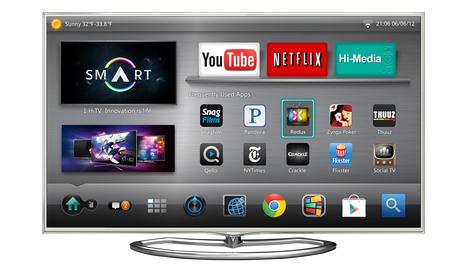
Google is once again meeting with media companies in an effort to license traditional TV content, according to a report today.
The Mountain View-based company is said to have made pitches to multiple programmers and even demoed a product, according to sources who spoke to The Wall Street Journal.
The plan would be to carry cable TV-style packages of channels over broadband connections, a process which the report called "over-the-top TV."
However, Google may have to resort to selling much-maligned channel bundles in an effort to lure reluctant media companies that resisted its Google TV bids two years ago.
The race to the vast wasteland
Google isn't the only cutting-edge technology company with a desire to launch a television streaming service.Apple reportedly met with media companies like Time Warner Cable to secure deals for a premium Apple TV service with ad-skipping capabilities, according to a rumor yesterday.
Likewise, Sony and Intel are also said to be readying over-the-top TV services, with documents going as far as calling Intel's product OnCue.
Google's advantages
Google might have an advantage over its rivals, having already attempted to blaze the traditional TV streaming trail with media companies two years ago.It also has experience hosting original video programming through YouTube and selling set-top box devices thanks to its existing line of Google TV products.
Going along with Google TV's slick interface is the dominance of the Android platform on which it runs.
Tying Android-powered smartphones and tablets into the experience could help Google get a leg up in negotiations with media companies afraid of changing the way traditional TV works and sometimes doesn't work.
- Read about Microsoft's plans for Xbox TV

| |
Read More ...
Interview: Tales from Billabong Valley: OneFlare

It started with renovations. An apartment, freshly purchased by a recent university graduate, needed some work. And as a digital native confused by the primitive methods that our forefathers used to hire tradespeople to do our renovations, Marcus Lim saw a market ripe for a digital transition.
Like many successful tech startups, OneFlare is a digital offering aimed at bringing the processes of the 20th century into the ripe new, internet-enabled present. It's goals, its very reason for existence, is to add a layer of transparency between tradespeople and the general public.
"What we're trying to do," Lim explained to TechRadar, "is we're trying to facilitate the transaction between two parties. We're not forcing or coercing anyone in regards to the message, but what we're trying to do is provide the most relevant and most competitive information to the consumers so they can make the best decision in regards to who they hire."
What it comes down to, ultimately, is pricing and reputation. Before the age of the internet, hiring a tradie required something of a leap of faith - you found someone in the Yellow Pages and hoped they wouldn't drag your wallet over the coals. Or if you were lucky, you'd get a recommendation from a family or friend for someone trustworthy.
OneFlare attempts to deliver all that information to you, including a realistic quote, before you even pick up the phone.
Ignition
OneFlare actually began life as a different site altogether. Dubbed pickaquote.com.au, the site was initially targeted at tradespeople exclusively. The name switch to OneFlare came as a way of incorporating other services into the platform."The word 'quote' is very synonymous with trades and services. What we felt was if we were to progress to local services, then 'pickaquote' wouldn't be the right name because 'quote's' not synonymous with chiropractic services, or a massage services, or pet grooming… it's very synonymous to trades. So we changed to OneFlare," explained Lim.
The other surprising aspect of the OneFlare business is that it's not exactly an original idea. Even when Lim and his business partner Adam Dong were getting started, competitors offering a similar service were already on the market. But the OneFlare team figured they could do a better job.
"I looked at the founders of the competitors and I felt like they didn't have a technology background, so they weren't tech natives. The way they'd built the site and the way they came to present the value proposition to the customers weren't as appealing," Lim said.
It was obviously a good justification, given that OneFlare has surpassed one of its competitors, in terms of both visitor traffic and jobs requested, within two short years. Not only that, Lim told TechRadar that they have already been approached by a competitor for acquisition (which they turned down flat), as well as being approached for lead-sharing with both of its major competitors.

Sputter
But for all that, there were still plenty of hurdles to overcome. One of the earliest challenges the startup faced was being able to build the site without a large amount of capital."I was fortunate enough to have family and friends who knew how to code, so we originally brought them on and they built the site," Lim said.
"The ongoing process was very difficult. It was a combination of being unable to find talent and also not having a lot of capital, so we couldn't go to an agency and say, 'hey, look, we're happy to pay a hundred grand a year for a developer' because we didn't have that. So we had to go to uni students, and it was a lot harder to find competent uni students who were able to develop continuously on the site."
Getting businesses to sign up was also a challenge in the early days, given the lack of capital and the small team.
"We had to develop a really smart process in regards to how we acquired businesses and how we acquired customers that was really low cost. It was a super hard thing to do at the start, but what we realised was getting the businesses on board first was key, ensuring they had low barriers to entry. And then once we've got the customers on board, that's when we can start getting engaged businesses," Lim explained.
Actually converting a connection-made between business and consumers into guaranteed income was challenging as well, with the company pivoting its business model multiple times to try and determine the best way to make money.
"One of the big challenges with a pivoting business model was that we fell into a transaction based billing system, whereby we took a clip out of every business that won a job through the site. The problem was that a lot of businesses were dealing outside of the site, so we weren't able to capture that clip," he said.
And throughout all those hurdles is the ongoing challenge of raising capital. Without the necessary capital, OneFlare wasn't able to expand at its desired rate, needing to cut costs and operate more efficiently in order to survive.
Fortunately, the company has recently raised half a million dollars, which should help things along nicely in the short term.
Fireworks
Capital funding of $500,000 has given the OneFlare team the breathing space it needs to expand, and expand rapidly."The business has gotten to a milestone where we need to raise money to grow and scale the business. An advisory firm called Growth Equity Partners was able to introduce us to investors that would be interested in our business, and it started with lots of coffee with over 10 investors total while doing the roadshow.
"They saw the type of traction that we were getting, and they were really interested to come aboard," Lim said.
For Lim, the investment is a validation of the business and the team. But it's also about having the right investors on board who understand the benefit of a two-sided marketplace.
With a massive increase in capital, Lim believes that the company is well positioned for growth over the next 18 months. The challenge is striking the right balance in how that money is spent.
"Our challenge is figuring out what we need to invest in. Whether it's talent, or sales and marketing, or whatever it is that will allow the business to scale and grow.

"For us, the three really core things that the money is going towards is firstly building and establishing and enhancing the product to make it market leading. The second is really driving traffic, driving user base to sign up to our site, driving job requests through the site to really get more throughput and getting more job traction. And the third is increasing revenue on the site by investing in talent in regards to how we can monetise the site even further," Lim said.
Afterglow
There are always plenty of barriers to making a startup successful, but Lim believes that the best advice anyone can give is to "just do it" and worry about the financing later.Pickaquote, and later OneFlare was build on a $40,000 budget, with the two co-founders both committing $20,000 each. That total allowed the company to thrive for nine to 10 months before they needed to find some more money.
But ultimately, it's the execution of the idea that is key to success.
"Start with very little capital and be iterative - so keep failing, because one day you'll succeed," Lim explained.
He also argues that having the right motivation is essential to success.
"The way I see OneFlare is a platform for me to be able to provide a service to the Australian economy. It's not that I'm super, super passionate about carpenters and builders and electricians and plumbers, because I never knew anything about that before.
"OneFlare essentially is that platform that allows me, within this particular industry, to be able to improve the way people do things, and that's the overarching motivation behind it," Lim claimed.
- Tales from Billabong Valley shines the spotlight on the massively expanding local tech startup industry.

| |
Read More ...
Halo launches a Spartan Assault on Windows 8

The temperatures were rapidly approaching triple digits in New York City on Tuesday, but even blistering heat couldn't deter Microsoft from bringing its flagship video game franchise to its mobile devices.
Announced in June, Halo: Spartan Assault will mark the first entry on tablets and smartphones for the series when it launches on all compatible Windows 8 and Windows Phone 8 devices this month.
Though it will be arriving on PCs at some point, Microsoft has been rather coy about a specific release date for the game, with the exception of revealing limited exclusivity at Verizon when the $6.99 (about £4.60, AUS $7.25) app launches later this month.
In anticipation of the title's impending availability, Microsoft invited a select group of attendees to its Halo Reinvented event, giving most of the guests their first look at Halo: Spartan Assault.
Perfect fit

To this point, the Halo franchise has largely been a console-only experience, so the jump to mobile came as a bit of a surprise to longtime fans and more casual players.
On various Xbox consoles, Halo has been a proven seller, capable of moving copies and systems year after year, but the Windows 8 marketplace doesn't quite have the same reach.
Despite that lack of embedded audience, Microsoft's Surface and Windows Phone teams seem confident the app will appeal to plenty of players.
"There's a million things people buy a Surface to do," said Surface Product Manager Dan Laycock.
"For those that buy it for gaming, we think Halo is a perfect fit."
After a few minutes playing with the both versions of Spartan Assault, fit was all we could think of when using the Surface Pro.
The larger screen made it a bit easier to manage the touchscreen twin-stick shooter controls, and offered a better viewing area unobstructed by our hands.
Of course, those consumers who believe in a unified ecosystem, the Windows Phone version plays well enough (save for the tighter play space), and your progress can be saved to the cloud to be resumed on any device when you resume play.

Allied assault
Halo: Spartan Assault wouldn't have been possible without various Microsoft teams working in tandem to bring the incredibly popular franchise to the Windows brand.Kevin Grace, 343 Industries' franchise manager, was on hand at the event and discussed a bit about how each team helped realize the completed version of the game.
"The Windows Mobile and Surface teams proved invaluable, as we had to try and cram what Halo fans are used to on a big screen onto some little, bitty screens," Grace said.
Spartan Assault is definitely a different Halo than fans are used to, as its top-down perspective is a major change from the standard first-person view.
Still, Microsoft clearly believes the brand will do great things for its Windows mobile devices in spite of how different the overall experience is from the core title.
"We expect the fact that [Halo: Spartan Assault] is available exclusively on Windows 8 and Windows Phone 8 to benefit the platform," said Windows Phone Product Manager Greg Sullivan.
How easy the game is to pick up and play should bode well for its chances of success, but whether it can be the killer app that elevates Microsoft's OSes to greater heights remains to be seen.
No matter what the result, 343 Industries has definitely reinvented Halo, but now it's in the consumers' hands to determine whether that's a good thing.

| |
Read More ...
Microsoft refutes report that it willingly helped US government spy

Microsoft is denying that it willingly helped U.S. intelligence agencies spy on Outlook.com, Hotmail, Skype, and SkyDrive users as part of the government's Prism surveillance program.
"We do not provide any government with direct access to emails or instant messages. Full stop," wrote Microsoft legal affairs head Brad Smith in a post that was strangely not a telegram.
Immediately after including the words "full stop," though, he acknowledged that the company is sometimes obligated to comply with the government's lawful demands to turn over content for specific accounts.
This is only when a warrant and court order are involved, according to Smith, as Microsoft stores data in the United States as well as other countries.
"When we receive such a demand, we review it and, if obligated to we comply."
No encryption keys under the mat
Microsoft also refuted that it helped the FBI circumvent encrypted Outlook.com messages in a "team sport" effort, as last week's report from Edward Snowden-leaked documents had claimed."To be clear, we do not provide any government with the ability to break the encryption, nor do we provide the government with the encryption keys," wrote Smith of its Prism activities.
"When we are legally obligated to comply with demands, we pull the specified content from our servers where it sits in an unencrypted state, and then we provide it to the government agency."
Holdering back Microsoft
While Microsoft was able to declare that "there is no blanket or indiscriminate access to customer data," the company still wants to shed more light on the situation.That's why Smith also wrote directly to U.S. Attorney General Eric Holder to get permission to publicly explain the practices found in the newly leaked documents that refer to Microsoft.
Its first request through official channels was rejected last week, but the company expressed in its post and personal letter to Holder a desire for a world with a public discussion of these practices.
"While the debate should focus on the practices of all governments, it should start with practices in the United States. In part, this is an obvious reflection of the most recent stories in the news," wrote Smith.
"[The U.S.] has been a role model by guaranteeing a Constitutional right to free speech. We want to exercise that right."
"With U.S. Government lawyers stopping us from sharing more information with the public, we need the Attorney General to uphold the Constitution," Smith concluded in his post.
- Read about Google's similar request to overcome the FISA gag order

| |
Read More ...
Wonky fingerprint tech may put the pinch on iPhone 5S release

Another day, another report that Apple is facing issues with still-unconfirmed devices.
Today's report claims that the iPhone 5S is dallying due to unexpectedly low volume production of fingerprint recognition chips and the device's LCD driver ICs, which could lead to Apple putting the squeeze on first quarter shipments of the new phone.
Issues apparently tied to the the original AuthenTec design of the fingerprint chip led to reduced yield rates, "industry sources" told spotty DigiTimes. It's unclear what's holding back the LCD chips.
The problems apparently led to a halt of production by Taiwan Semiconductor Manufacturing Company and packaging by Xintec, both companies that Apple outsources work to.
Dude, where's my iPhone 5S?
Chip production should have begun much earlier - late June to early July - but will now be slowed to the end of July, or so the report goes.With assembly on hold, the iPhone 5S launch, which is purportedly supposed to happen in September, will be marred by constrained supplies. DigiTimes cited that about 3 million units of the iPhone 5S in initial shipments will be delayed until the fourth quarter.
So, the takeaway here is that while you'll have fingerprint recognition on your new iPhone to show off to your friends, it may be hard to actually find the device when it goes on sale.
- Speaking of Apple delays...it seems the iPad mini 2 will make a late appearence

| |
Read More ...
Updated: HP is planning a return to the smartphone game, but leaked render isn't it

Update: Hit the brakes on that render folks.
While we came in with all the speculation an unconfirmed render requires, HP has squished any promise that the render below is a handset that could one day make it to store shelves.
"This is not an HP phone," an HP spokesperson said in a statement sent our way, a rare move for a company when it comes to these things in the first place. "The photo is a fabrication and is not a photo of anything HP has in the works. Someone is making stuff up."
While many leaks do yield legitimate results, this one can be thrown in the trash bin.
Original article...
The news that HP may make a return to the smartphone business is refusing to die down and we now have a render to cast our eyes over, although its origins are unclear.
HP hasn't exactly shied away from a potential return to the phone sphere, with the firm's CEO revealing it was working on a smartphone last year. That was followed by similar comments from another exec in February and a senior director earlier this month.
PhoneArena has now got hold of a render which claims to show HP's Android smartphone, but the tipster who passed it over didn't present any information on the device.
In terms of design the handset in the picture appears to borrow its shape from the iPhone 5, while the centralised notification light below the screen is reminiscent of the Nexus 4.

Dock me
No clues were given as to how the tipster came about the render, or how well connected they are so we're taking this leak with a sizable pinch of salt for now.Another hint that HP is working on mobile solutions has come via a patent application picked up by Patently Apple, which documents an ultrabook with a dock for a mobile phone built into it.

This phone, however, is said to be powered by Windows and not Android allowing it to seamlessly integrate with the computer, suggesting HP may develop handsets to run on Windows Phone as well as Google's offering.
We'll have to wait and see if these ideas really do come to fruition, but we're intrigued as to what HP may be able to offer the already crowed mobile market.

| |
Read More ...
Brekkie Bytes: The best news from Tuesday night
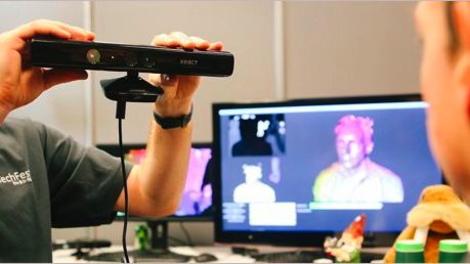
While so much of the speculation about an Apple iTV recently has revolved around content deals, it's good to see the wacky rumours back on the agenda. Overnight, it leaked that Apple is apparently in discussions to buy the company that created the tech behind original Kinect for Xbox 360 to use in its iTV.
Let's just say we'll believe it when we see it. Just like the claims that the PS4 is hoping to fool us into believing that characters in PS4 games are real, even temporarily, we highly doubt the claims are true.
A little firmer rooted in reality is the news that Microsoft's Xbox One will feature the same intelligent download feature as the PS4 that will see you playing before the whole game has made its way to your hard drive.
It also looks like we've captured our first glimpse of HP's return to smartphones (although HP has since denied this) and Google Glass could soon have access to the Play Store.
- Brekkie Bytes is your morning roundup of the best the international TechRadar team has to offer.

| |
Read More ...
20-megapixel Sony Xperia 'Honami' spotted in new leaked pic
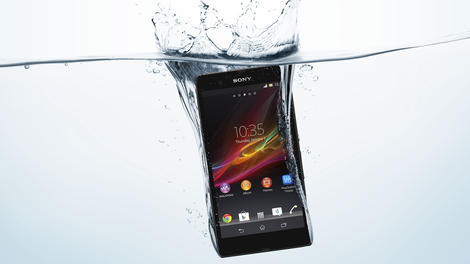
Details of Sony's Xperia i1 "Honami" continue to trickle on to the internet this week as a possible specs sheet and new image appear on a Taiwanese site.
The site, ePrice, published the below image with some new details about the rumored Sony flagship, which is expected to release in Korea by the end of the year.

According to this report, Sony's "Honami" will indeed pack a 20-megapixel camera sensor, just like previous rumors claim.
In addition to that the new Xperia handset is said to sport a 2.2GHz quad-core Snapdragon 800 chip, Adreno 330 graphics, 2GB of memory, 16GB of storage, microSD, LTE and NFC support, a 5-inch full HD display, a 2-megapixel front camera, and a 3000 mAh battery.
I Spy
The image itself, if legitimate, reveals some interesting things about the Honami's camera.Specifically, the Sony G Lens branding is visible next to the camera and LED flash. G Lens is Sony's own camera lens glass brand.
The original report also claims that the new Sony flagship will support the BIONZ image processing engine. The engine is usually comprised of a separate sensor, but in this case it's more likely to be a software-only version called BIONZ for mobile, says Xperia Blog. A dedicated camera button is also rumored.
One more things about that image: it seems the Honami could come in white as well as black, the color seen in the previous alleged leak.
Following the Xperia Z
The Xperia i1 Honami will face some stiff competition in Nokia's Lumia 1020, with its 41-megapixel camera.The phone is being considered a successor to Sony's Xperia Z, its current flagship, and the enlarged Xperia Z Ultra. It's also expected to be highly water-resistant.
Sony may lift the veil off the device at its Sept. 4 press event during IFA 2013 in Berlin.
- Here's why Sony's Xperia i1 Honami could be the next camera phone king.

| |
Read More ...
Blip: Google wants to take you to the Eiffel Tower...and a car wash

The Google Street View images are getting bigger and bolder. And a little random.
Perhaps for fun, the Street View team recently ventured into a car wash in Arizona to visually capture the inner workings of car washing machinery.
If that's too low-brow for you, the Google Cultural Institute and the Eiffel Tower Operating Company have a new project that may be of interest.
The Institute houses several beautiful exhibits online and there's a panoramic experience of the Burj Khalifa in Dubai but Google has gone one step further with the famous Parisian landmark.
In addition to being an immersive 360 degree experience, visitors of the website can also learn about the Tower through historical images, plans and engravings.
With the introduction of photo sphere announced at Google IO earlier this year, and this level of involvement from the Street Team, it seems like you won't need to travel very far to see the world.
More blips
Don't worry, our blips are a quick read so you can have longer Google adventures.- Google turns magical with Harry Potter's Diagon Alley on Street View
- #Nofilter 'Jobs' trailer invades Instagram
- The Microsoft Points death march begins

| |
Read More ...
Xbox One shares PS4's play-while-downloading capability

Sony may have just lost a bit of its early edge against Microsoft in the next-gen console war.
A Microsoft spokesperson confirmed with Polygon that the Xbox One will be able to play games as they download, eliminating the need to wait for dozens of gigabytes to transfer to the console before you jump in and start playing.
Sony already confirmed the convenient feature for the PS4, but this is the first time Microsoft has mentioned it.
It may well be that they only just added it to the Xbox One's functionality in an attempt to regain some consumer favor from Sony - if not, why would they wait until now to mention it? Of course, that's pure speculation.
Anything you can do…
Sony's PlayStation 4 can prioritize game downloads so that the framework and early levels arrive first, allowing games to be played before they're finished downloading.We saw this feature appear first in Naughty Dog's The Last of Us (pictured), released on PlayStation 3 in June. Digital downloads of the game, which require over 50GB of hard drive space, can be booted up and played when they hit 50 percent completion.
On PlayStation 4, however, games will be playable even before the 50 percent mark, Sony previously confirmed. Some PS4 games will also be divided into multiple parts so that you can choose to download just the single-player or multiplayer portions.
…I can do better
One can assume that the feature works much the same on Microsoft's console, though specific options like the separate downloads for different modes have not been confirmed.Microsoft did confirm previously that physical Xbox One games will be playable even as they're being installed to the console from their discs, a requirement for all disc-based games.
TechRadar asked Microsoft to share more details about the play-as-you-download feature on Xbox One, and we'll update this story if we hear back.
- TechRadar got extensive hands-on time with the PS4 and Xbox One - check out our current reviews if you haven't yet!

| |
Read More ...
Review: Updated: Lenovo Yoga 11S

Introduction and Design
Pundits have been predicting the "death of the PC" for more than a decade. Of course, if you looked at the balance sheets of former industry juggernauts as HP and Dell you'd be inclined to think that those prophecies may actually be on the verge of coming true. And then there's Lenovo. While other manufacturers are busy pointing fingers as to why the PC seems to be struggling in the face of competition from that Cupertino-based company and myriad tablets, Lenovo is both pumping out solid Windows 8 devices while at the same time, turning a profit. Which brings us to the Lenovo Yoga 11S.
Lenovo is known for making primarily productivity machines for productive people. Its Thinkpad line is known the world over as a no-nonsense, reliable Windows 8 machine. However, the Yoga Lenovo has let its hair down and gotten a little bit playful. A transforming ultrabook in silver or metallic orange with an equally colorful screen, it's just as functional but much "cuter" than what we usually see from Lenovo.
Of course, this isn't Lenovo's first time on the yoga mat. The 13-inch Lenovo IdeaPad Yoga was released last year to very favorable reviews. The appropriately named 11s is a size down. At just 11.6-inches, it's the smallest form factor that can support a full QWERTY keyboard.
Design
Sporting a rather heavy duty hinge, the flexible Yoga 11S is designed to bend over backwards at a moments notice. You can easily use the Yoga 11S as you would any other laptop, replete with a full QWERTY keyboard. While it's relatively small, we had no problem writing on this keyboard. This review, for instance, was a breeze. That said, we would have appreciated the Yoga 11S having a backlit keyboard. While this is in no way a deal breaker, it's a nice feature when using the laptop in darkened classrooms or meetings.
Where the Yoga 11S really shines is the flexibility that that hinge provides. If you want to use the Yoga 11S as a Windows 8 tablet you simply fold the keyboard all the way to the back. In this mode, you're basically just using an 11-inch tablet. Also, since the keys are still exposed in this mode they're disabled. That said, it's still sort of weird to feel them when you're sitting on your couch using the device in tablet mode.

In stand mode you can orient the keyboard around 30-degrees from the display, and you can easily stand the Yoga 11S on a table or desk. In our tests we found this mode great for presentations or reading recipes in the kitchen. It's also perfect for watching movies and television shows in bed.
Specifications and Performance
The Yoga 11S boasts a nice selection of ports, including an HDMI port and an SD card reader. However, for some reason, Lenovo went with USB 2.0, not 3.0. What's more, it's a traveler's delight - weighing in at only 3.1lbs. But again, the lack of backlit keyboard means typing on a dark nighttime flight won't be easy.
The display is sharp, and brighter than what we've seen on Lenovo models like the Lenovo ThinkPad X1 Carbon Touch and the Lenovo ThinkPad X1 Carbon. With a resolution of 1366 x 768, it's not full HD, but at only 11.6-inches it's not really an issue.
Despite its playful exterior, there's real processing power available for the Yoga 11S. You can get up to an i7 processor in this ultrabook, and complement it with a 256GB SSD and 8GB of RAM. That said, similarly sized notebooks from Apple and Sony are now shipping with Haswell processors. While this may not impact speed necessarily, Haswell-equipped machines will no doubt experience much better battery life. The Yoga 11S could do well with the battery life gains that Hawsell promises.
Performance and battery life
- Cinebench CPU test: 1.74 pts
- Cinebench OpenGL test: 11.52 fps
- 3D Mark Pro Ice Storm: 25,169
- 3D Mark Pro Cloud Gate: 2710
- Powermark Pro Balanced: 3 hours 49 minutes
- Powermark Pro Productivity: 5 hours 40 minutes
- Powermark Pro Entertainment: 2 hours 53 minutes
Verdict
Functional and flexible, the Lenovo Yoga 11S looks to be just what we want in an ultrabook. Light enough to travel easily, and so small it can tuck in any bag with ease. It also has serious specs. The combination of an i7 processor and SSD make for a peppy Window 8 experience. That said we think it would better compete if it was rocking a Haswell processor.We liked
We liked how versatile the Yoga 11S is. With strong hinges, the Yoga 11S is both extremely portable and it also feels nice and solid. You can easily configure a Yoga 11S with an i7 processor. We also really like the fact that you can start configuring them at just $799.We disliked
There isn't much we didn't like about the Yoga 11S. That said, we were puzzled that Lenovo equipped it with USB 2.0 and not 3.0. Additionally, the keyboard isn't backlit and going forward, Lenovo is going to have to refresh it with Haswell eventually to remain competitive.Verdict
If you're in the market for a Windows 8 tablet or laptop you'd be remiss to not check out the Lenovo Yoga 11S.While it currently lacks a Haswell option, it's still plenty fast enough for whatever you want to do, with the exception of hardcore PC gaming. We took this model on several business trips and experienced nary a hiccup. On planes its diminutive size made it perfect for working or watching videos and it easily tucks away nicely into any bag you may be traveling with.

| |
Read More ...
HTC One Mini UK release date set for August 9 to battle Galaxy S4 Mini?

The recent flurry of news and speculation regarding the forthcoming HTC One Mini seems like the calm before the storm compared to the last couple of days' goings on.
Just yesterday we saw purported leaked photos and specs, while a HTC blog post also alerted the world to little things that pack a big punch. Today we have a purported UK release date.
According to Twitter leakster Vizileaks, the diminutive version of the company's awesome flagship HTC One smartphone will go on sale in Blighty on August 9.
While not quite as prolific as the EVLeaks account, Vizileaks does have previous in this area. The account was the first to alert the world that the Nokia Lumia 1020 would be named as such.
Not that Mini
A UK release date of August 9 would allow HTC to meet the threat of the rival Samsung Galaxy S4 Mini - which is expected to go on sale in the next couple of weeks - head-on.Monday's leaked spec sheet suggested the device will come packing a 4.3-inch display, making it 'Mini' only by very modern standards.
That screen is rumoured to pack a 720p resolution, while a 1.4GHz dual-core processor is said to be doing the work in the engine room.
It's also set to include the distinctive aluminium unibody and the innovate Ultrapixel camera, both of which helped the senior device become TechRadar's top-rated smartphone on the planet.

| |
Read More ...
BRIT WEEK: UK government unleashes driverless cars on public roads

The UK government is set to announce plans to allow testing of driverless cars. The first robocars will be unleashed onto public roads later this year.
Researchers at Oxford University will work in conjunction with Japanese car maker Nissan on the project and the collaboration has already been testing a driverless Nissan Leaf on private roads.
The move is part of the Department of Transports new £28 billion road investment and strategy scheme, announced today.
Previously, autonomous cars have been prohibited from operating on public roads, but the new measures allow for testing on lightly used rural and suburban roads. However, a back-up human driver must be on board and behind the controls at all times.
Google's at it, too
Overall, it looks like a similar scenario to that which has applied to testing of Google's autonomous car in the US.But the big difference between Google's robocar and this UK-based initiative is cost. Google's autonomous cars are thought to cost roughly £100,000, half of which goes on a high-end lalser range finder.
Professor Newman who leads the Oxford team claims the its prototype system costs just £5,000. The ambition is to eventually whittle that down to just £100, though initial production versions would probably be more costly.
Whatever, if the numbers are anything like that, the prospect of mainstream autonomous cars will be very real.
Welcoming our new autonomous overlords...
Here on TechRadar, we're very much pro autonomous cars. There's a tabloid tendency to fear the arrival of this technology. There's little doubt the outcry should a robot car cause an accident will be deafening.But the real question isn't whether the technology will be infallible. It won't be. But how many lives will it save on balance?
Very roughly, 2,000 people die on UK roads each year. If all cars were autonomous, it's very, very likely that number would be reduced dramatically.
So the choice is, what do you prefer? Thousands killed on roads by human drivers? Or a small handful killed by robocars?

| |
Read More ...
Samsung Galaxy S3 and Note 2 may skip straight to Android 4.3

Android 4.3 is inevitably headed our way, but while the HTC One might have just been injected with Android 4.2.2, the Samsung Galaxy S3 and Note 2 might have to hold out a bit longer before they see an update.
But don't worry, it's coming. At least that's what a so-claimed insider speaking to Temefy reckons, saying that the 4.3 Jelly Bean update is well underway. And right now the plan is for the Galaxy S3 and Galaxy Note 2 to leap over 4.2.2 to get there.
The report goes on to tell us that the next update for the two handsets will arrive in November or December this year, making it very likely that 4.3 is on the cards.
Delayed droid
Finally, we're told that the Samsung Galaxy S4, Galaxy S3, Galaxy Note 3 and Galaxy Note 2 will all be upgradeable to the next major Android overhaul - ie 5.0 Key Lime Pie. However, the release across the devices will be somewhat staggered.About a month ago we heard that Android 4.2.2 for these devices was to be delayed beyond its expected June/July release date, so we're hardly gobsmacked.
It's all just rumours right now but it does a fair amount of sense if 4.3 is imminent. After all, what's the point of getting 4.2.2 if the next best thing is just around the corner?

| |
Read More ...
Wireless cloud to consume more and more energy

Wireless devices and cloud services are going to increasing amounts of energy in future, according to a report from the Centre for Energy-Efficient Communications (CEET) in Melbourne, Australia.
Titled The Power of Wireless Cloud it says that wireless and cloud are converging, and between them will consume between 32 and 43 Terawatt hours (TWh) in 2015, up from just 9.2 TWh in 2012. This will increase the carbon footprint from 6 megatonnes of CO2 to 30 megatonnes over the same period.
More than half of the energy (59%) will be consumed by 4G services, with 31% by local WiFi and just 9% by the data centres that support the services, which have so far attracted more concerns about energy consumption.
Industry forecasts
CEET has come to the estimates through using industry forecasts on wireless cloud traffic. They reflect the big growth in cloud computing and the boom in people accessing its services through wireless networks.Energy can be consumed by mobile devices, WiFi routers and metro and core telecommunications networks. The figures assume an average of two users sharing an in-home Wi-Fi connection.
The report does not suggest any measures to resist or manage the trend, but says it should be taken seriously in managing global energy consumption.
"Curbing the user convenience provided by wireless access seems unlikely and therefore the ICT sector faces a major challenge," it says.
It continues: "Finding solutions to the 'dirty cloud' at the very least requires a broader acknowledgment of the cloud computing ecosystem and each component's energy requirements. There needs to be a focus on making access technologies more efficient, and potentially a reworking of how the industry manages data and designs the entire global network."

| |
Read More ...
Play Store update contains Google Glass hints

Google rolled out an update to the Play Store yesterday that suggests Google Glass users may soon have access.
"Google Glass 1" now appears in a drop-down list of devices on the Play Store, although it's greyed out so you won't be able to actually select it even if you have a Google Glass to your name.
It comes with the message, "You have not opened the Google Play Store app recently on this device. Please open it and try again."
So it's not a hugely useful update at the moment but does seem to bear the shape of things to come.
Glassy
Google Glass currently has its own portal known as My Glass but once it hits the shop shelves, it makes sense for Google to incorporate it into the Play Store alongside its tablet and phone apps.Exactly when Google Glass will go mainstream is anyone's guess - it's currently in a weird extended semi-public beta whereby competition winners paid $1000 for the privilege of getting hold of the futuristic specs.
- Want to know more about Google Glass? Here's everything you need to know and our hands on review

| |
Read More ...
Brit Week: How Raspberry Pi taught British tech to be world-class

In some places, people trade arms. In others, drugs are smuggled across borders. But in several African countries right now, a computer board no bigger than a bank card is being filtered in via discreet means.
The Raspberry Pi launched just over a year ago and it's already making waves around the world. Big waves.
"These pop up in all sorts of environments," Raspberry Pi founder and executive director Eben Upton tells us. "Although we haven't focused on it, it's happening in Africa."
"These are kind of suitcase Pis. They're Pis that haven't necessarily gone through formal distribution," he says. "What happens is that people put them in suitcases and carry them in."
While Raspberry Pi's distributors cover 85 per cent of the world's GDP, some African countries, though very populous, don't contribute enough for them to be seen as economically viable enough. "We didn't think about the developing world early on. And then what we found is that it's kind of just been cropping up there anyway."
The success of the Pi in the developing world has caught Upton and the rest of the team by surprise, but as he admits, it also makes perfect sense: "You've just entered the middle class and the first thing you buy is a television, a lot of people buy a television before they buy a fridge.
"And then you've got this television, maybe a second hand television that's been exported from the West. And then you can invest a little bit more and make it a computer."
It's a fascinating chapter in the Raspberry Pi story that a lot of people will have skipped over. After all, this tiny computer has its humble roots all the way back in Cambridge, where Eben Upton began the Raspberry Pi Foundation in 2009.
Despite being told by the East of England Development Agency that Pi was an "unsellable product", Upton's team was determined to prove that this was the key to restoring life back into computer science in the UK. "We were told no one would buy this," he says.

And in February 2012 that vision became a reality as the Raspberry Pi launched official. A year later it soared past expectations and sold one million units, the bulk of which are manufactured in Wales. But the chip itself, a Broadcom BCM2835 SoC based on ARM architecture, isn't a product - it's an answer to a fundamental problem with Britain's education system, itself a key link in the chain of the UK's technology industry.
Over the years, computer science in Britain has been deformed into an ICT curriculum that's driven out enjoyment and the understanding of what a variable is, and prioritised the teaching of PowerPoint and other less-than-thrilling, software-focused activities. That's exactly what Pi is here to change.
Pi in the sky
The Pi project was partly inspired its 1980s predecessor-of-sorts, the BBC Micro, which Upton can't help but keep dropping into conversation like some fond memory of better times. For Eben and his team (of which gaming icon David Braben is also a part), Pi is about giving today's generation a BBC Micro of their own. In fact, one of Pi's founders, Jack Lang, was himself involved with the creation of the Micro those many years ago.Now, little over a year since its launch, the fruits of team Pi's efforts are plain to see. All over the world people have been finding hundreds of inspired ways to use their tiny computers.

"The one I was impressed by very early on was the ballooning one," says Upton, referring to David Akerman, who turned his Raspberry Pi into a near-space craft by sending it up to an altitude of 25 miles with a webcam strapped on.
Upton also sees some inspiration in Google's recent £500,000 grant to the Zoological Society of London to have cameras installed in Kenya to survey for rhino poachers.
"I thought that's got real potential to have kids in school build one of these things [using a Pi], send it off to Africa, have it installed and get the feed from there," he says. "It's got a bit of stuff to do with computers, but it's actually much more about exciting kids about science in general, about zoology."
The UK's secret weapon
Pi's potential is limited only by the imagination of the beholder. Ok, and perhaps a few restrictions of the hardware for the time being. "We'll have to change chip. We've always said we'll have to change chip sooner or later, probably later rather than sooner," Upton tells us. "I don't think we're going to be shipping an ARM11 in 2020."But right now Pi is enjoying gradual world domination, spreading its message to the masses and showing a new generation of kids why coding is a lot easier and more interesting than they probably think.
"I think what's surprised maybe a little bit is how quickly we've gone from having the majority of the awareness of Pi and the majority of sales in the UK, to being a proper global business where we're really just looking at the last few territories where we're trying to get penetration," he says.
Passion Pi
Raspberry Pi is about making this industry fascinating again, about giving Britain a reason to be excited about technology. Raspberry Pi has turned into a great British tech success stories, but in order for it to really work it has to have the weight of the education system behind it.Back in 2011, Google's Eric Schmidt criticised the British curriculum for failing to engage young people in science and technology. Now, a new curriculum is set to take over as early as 2014, putting computer science at the forefront, and Upton could not sound more excited. "It's absolutely amazing," he beams. "All this stuff about little kids needing to know what a variable is."

"If you made the school computer course just about building robots and writing computer games, A, the kids would all love it, and B, it would teach them lots of useful interesting stuff that would help them compete in the jobs market and help us as a country compete in the global economy."
And yet, bizarrely, there's a campaign to keep things exactly the way they are right now. "It's criminally, treasonously insane," says Upton. "It's businesses who want drones who have been pre-trained."
All you have to do is look down the line to see that something's wrong with the current model. With an ageing, male-oriented technology sector, something has to change in Britain. "Obviously if you go to a tech company and you look around there's a preponderance of guys in their thirties and forties," says Upton.
"Something historic has been completely screwed up. Where are the women? In hard engineering, design chips, there's a real preponderance of older people. There's a sign that something's broken."
Time for a shake-up
As a startup, Raspberry Pi knows all too well the tribulations of getting an idea off the ground in Britain, no matter how big the ambition might be. "I think we do have challenges in the UK around access to finance," says Upton."Often the quality of decision making is arbitrary or political," he says. "It doesn't go to people who are good at technology, it goes to people who are good at filling in forms. And that's always disheartening to see that happen. I've seen companies in Cambridge get funded, and you look at it and you think 'why are you getting funded?'"
That's not to say that Britain isn't contributing its fair share of names to the tech space - just look at ARM and Imagination Technologies - but if we want to be truly world-beating, it's up to the new generation to learn the necessary skills to do so. And it's up to Raspberry Pi to help get them there.
"I don't think we necessarily need to think we need to be slamming a Microsoft out the door every ten years," says Upton. "If you look at Israel, it doesn't grow a lot of large hi-tech firms, but it's very, very good at growing small hi-tech firms and selling them to large American high tech firms."
Still, Microsofts or no Microsofts, there remains an unshakable cynicism in the British attitude that runs through the veins of the industry. "There's almost a sense sometimes in the funding markets in the US where people are keen to fund because they don't want to risk being the one who missed out," says Upton.

"People will invest because they don't want to be the one who's turning down the next Instagram. Where in the UK, maybe people don't do this because they don't want to be the guy who put money into the dog. It's always that difference in outlook between Britain and the US."
This is just the beginning
As for Pi, what do Upton and his team have planned for the horizon? "More focus on the user experience," he tells us. So far Pi has excelled in targeting the more tech savvy children as well as those with more computer-literate parents. But The Raspberry Pi crew want to tap into the wider audience."If all we do is get all the kids who are kind of tech savvy anyway and that way inclined, yeah it will help a little bit, but the worry is that if you do that all you're doing is robbing physics and maths, you're just moving the partitions around in this pool of usual suspects," says Upton.
By making a more polished product at both the hardware and software level, Upton is convinced that Pi can bag those who are still slipping through the net.
But can the true success of Raspberry Pi ever be measured? "It's fun to measure it by volume," says Upton, "but in the educational mission we're only going to know in five or ten years time when we see whether we've manage to get a significant number of kids interested."
As Raspberry Pi and the new curriculum stand hand in hand, ushering in tomorrow's tech pioneers, we can only be optimistic that this is just the start of something much bigger for British technology.

| |
Read More ...
Seagate launches new HDDs for cloud storage

Seagate is launching two enterprise class hard disk drive (HDD) models optimised for storing data in the cloud.
It claims that the 4TB Seagate Terascale HDD is the highest capacity model on the market available in a 3.5-inch SATA HDD form factor. Additionally, it's pitting the drive as its lowest cost per gigabyte enterprise HDD for use in scalable multi-drive systems.
The HDD features 5900rpm spindle speed, 64MB DDR2 cache and Serial ATA-600 interface. It claims the typical power consumption of the drive is 6.49W, idle power consumption 4.59W and standby/sleep energy consumption 0.77W.
Features bundled with the Terascale HDD include Seagate's Instant Secure Erase (ISE) technology, which cuts down drive erasure times from hours to milliseconds for drive disposal or repurposing, and a 6Gb/s SATA interface for easy integration with lower cost SATA infrastructures.
Low power
Seagate has also unveiled the Seagate Enterprise Performance 10k HDD v7, which it claims offers high capacity storage suitable for mission critical servers while drawing low power.Loaded with up to 1.2TB of data storage, it's claimed to be engineered for high performance computing and high random and sequential workloads, including database transaction processing and high workload servers that process mission critical data.
Seagate says that, with a 2.5-inch form factor, the 10k HDD v7 is also suitable for small scale data centres where real estate is at a premium. It also gets Seagate's ISE technology and RAID Rebuild functionality, which it claims makes RAID recovery faster and safer.

| |
Read More ...
In Depth: Tweaking your tweets on the Samsung GALAXY S4 and Note 8.0

Twitter is more than just a social network. What started as a way to send short SMS-like messages to your friends has practically become a communications medium in its own right. Many apps and games now use Twitter to post updates and share content with friends.
Tweeting is dead easy on your GALAXY S4 or Note 8.0 but tweeting well is another matter entirely. So how do you do it?
If you want to gain followers, to find an audience for your pearls of wisdom through retweets or find out how to tweet a celebrity without getting blocked, here is our guide to tweaking your tweets.
Be nice
In many ways, this is the golden rule. It is true to say that there are people on Twitter who have made a career out of being offensive, but unless you are one of that special breed who manages to make nastiness into an amusing art form then a good rule of thumb is to simply be nice to your fellow tweeters.That doesn't mean you can't have a heated debate - or even a full-on argument - but it is easy for the distance and relative anonymity of Twitter to make things escalate in a way they would not in real life. A good rule of thumb is to imagine that you are in the same room as the person you are talking to and behave accordingly.
Be interesting or be funny. Preferably both.
What should you tweet about? The possibilities are endless and there are no hard and fast rules but if you want to gain followers (or 'make friends' as we call it in the real world) then you need to be interesting or funny.Humour is a crucial part of Twitter. The 140 character format lends itself to quick wit and snappy remarks. Whether it is a sarcastic comment about a TV documentary or a surreal observation, a good joke can fly around the world in a flurry of retweets and reach huge numbers of people.
It's not all LOLs though. An interesting link or a timely comment on the news can be just as effective. Many people will tell you to avoid the Twitter clichés like describing what you had for breakfast or documenting a bus journey but the fact is if you can do it well then anything is fair game.
Here's a good example!

Watch with @Mother
TV and Twitter go together like hand and glove. Tweeting along to a good TV show or - even better in some case – a really bad TV show can be great fun.You can do this using any Twitter app but Zeebox is a 'second screen' app designed to make it even easier.

Zeebox will show you a live feed of tweets relating to the show you are watching and show you which of your friends are tuning in too.
Zeebox works great on the GALAXY S4 and the app's developers also recently released an update that lets it make great use of the Note 8.0's more expansive screen.
Celebrity squares
One aspect of Twitter life that can prove divisive is the presence of celebrities. For some, Twitter can seem like a great opportunity to talk to your musical heroes or to say your piece to a favourite actor.For others, the fact that celebs often have thousands more followers than mere mortals can seem intimidating or give their utterances an undue weight.
Many celebs just use Twitter as a mouthpiece or a promotional tool but some actually do engage with their fans and swap jokes or have - gasp - normal conversations.
A common frustration is that talking to celebrities is just shouting into the void and that they never reply. If you find this annoying, try to remember that someone with 200,000+ followers probably has a hard time keeping up with everyone trying to talk to them at once - it is just impossible for them to reply to everyone even if they wanted to.
If you want to get in touch with one of these Twitter behemoths, your best bet is just to follow the rest of the advice in this guide. Be interesting, be nice and don't pester. Treat it like making friends in real life and you might just be pleasantly surprised.
Leave it hanging, because a picture is worth a thousand tweets
Presentation is everything. Rather than just tweeting a link to something cool you have found on the web, draw people's attention with a description. Even better, if you are posting a link to some news or an interesting article, use a short 'pull quote' in the text of your tweet or frame the tweet as a question.Also remember that it's not all about those 140 characters and that a picture is worth 1000 tweets.
There are plenty of ways to post pictures to your Twitter feed. You can use features built in to your GALAXY S4 or Note 8.0 or you may prefer to use apps designed for the job.
Almost every Twitter app has a picture upload feature. The official one will upload to Twitter's own image servers whereas third party apps usually use image hosts like imgur.com or yfrog.com.
Choosing a picture from within your Twitter app can be a bit annoying, but handily, Samsung's GALAXY S4 and Note 8.0 can both use Android 'Intents' to share images from your Gallery.

When viewing a picture in the Gallery, tap the menu button and then "Share via..." to bring up a list of apps. Choose your Twitter app of choice and it will happily upload the pic for you with whatever text you want. Try it - it is much easier to find the picture you want first, perhaps even sending it to a picture editor like Snapseed first.
Instagram it, for that extra retro dash of nostalgia
Instagram is by now most probably the standard app for sharing photos via Twitter.
And while Facebook-owned Instagram is really a small, specialised social network in its own right but it is quite happy to let you share your pics on Twitter as well as other networks like Facebook.
Using Instagram for its image filters isn't quite as big a deal as it once was - both the official Twitter app and your GALAXY's own Camera app offer similar tweaks - but cross-posting to Instagram's vibrant community of snappers has its own rewards.
You can mention @usernames and #hashtags in your Instagram descriptions, just remember not to go over 140 characters or the end will get chopped off.
Keep on moving, with short, sharp 6-second videos
When it comes to sharing videos, again, there are several options. Instagram now has the ability to share 15-second video clips which can be altered with similar filters to its still pics. The most popular app for sharing video on Twitter is, however, Vine.
Vine is made by Twitter and is designed for the same kind of minimalism as a tweet. Use it to make videos that are just 6 seconds long and it will insert them directly into your timeline. You even sign in to it using your existing Twitter ID.
Short concert clips? Micro-reviews of films as you leave the cinema? You've Been Framed-style pratfalls? The only limit is your imagination. Some users, like the artist Moose Allain, have created incredible stop-motion animations using Vine, such as the example below.
Timing is everything
Having your finger on the pulse and tweeting about things as they happen is one thing, but sometimes, timing can be the key to making sure your tweet is seen.Buffer is a clever app that will space your tweets out throughout the day at the time it calculates is best. It does this by analysing your twitter feed and using these analytics to schedule your tweets to have maximum impact.

It is perhaps best suited to corporate tweeters who need to get a PR message out to the most eyeballs as possible, but you can also use it as a sort of jotter for ideas or jokes and leave the actual posting to its algorithms.
Play tag
Hashtags, which look like #this, are 'labels' you can add to a tweet that help other users see them and identify them as being related to a particular subject. For example, you might add a #GALAXYS4 hashtag to tweeting about your new phone. Anyone searching for that hashtag will see your tweet and can tweet you back.
Choosing the right hashtag is crucial, which is why many live events and TV shows have 'official' tags to help viewers join in the conversation.
Finally, before using a hashtag, search for it using your Twitter app both to check if it is in use and also to make sure that it is related to the thing you want to talk about and isn't being used to mean something else by the majority of tweeters.
Above all, enjoy your Twitter life on your GALAXY S4 or Note 8.0, because the more fun you're having, the more fun everybody else will!

| |
Read More ...
Brit Week: EE CEO: UK's passion for technology 'is just incredible'

While many of us are still waiting for 4G to become available on our network, in our area or just get a bit cheaper, the UK's only carrier to currently offer the service has found that Britain is riding the wave of technology like never before.
TechRadar spoke to EE CEO, Olaf Swantee, to discuss just how switched on, engaged and excited the nation is when it comes to technology.
When asked if it was easy to get staff and the population as a whole energised about the 4G rollout Swantee explained: "It was amazing how quickly people were moving forward, it was really quite exciting, and they continue to do that."
Better than Germany
"The passion in Britain is just incredible, and when you compare that to other markets, for example Germany, it's harder over there," he said."In Germany you plan, it takes a long time, but when it motors it motors like a train.
"In the UK you have to kind of get the whole thing moving but then 'boof', everyone suddenly starts moving. That's good, and that's nice."
Infrastructure "unbelievably poor"
It hasn't exactly been plain sailing for the folks over at EE though, with Swantee revealing that the infrastructure they had to work with really wasn't up to much compared with other countries."In the UK the digital infrastructure - similar to others such as the airport, rail and energy infrastructures - is really quite poor.
"Especially is you compare them to somewhere like Switzerland, the difference is really quite unbelievable.
"In the UK people use more mobile stuff than in other markets, they are on the internet more than any other European market, they commute more and yet the digital infrastructure was way behind."
Better for Britain
However this meant EE had the space to innovate, unlike some other countries where the technology has already surpassed what we have in the UK,"I think that in the UK, where the networks weren't as good compared to other markets, it was ideal to innovate with the network.
"If you start innovating with the networks in Korean or Japan it's harder because the network is actually pretty good.
"It's hard to innovate, but I'd say it's more fun and in the long run I think it's a more sustainable business model. If you are able to innovate and show differentiation many of your customers will stay with you."
Britain challenging the world
While the UK may be lagging behind in terms of its 4G service, Swantee believes it's getting to the point where it can start challenging global firms and push them to deliver the latest technology."We're working with the ecosystem to drive the latest technology. For the first time I've seen a mobile network operator who is pushing the boundaries of the other firms in the industry.
"We [EE] are pushing device manufacturers, asking where's your device at 150Mbps? We need CAT 4 devices. Qualcomm what are your plans? What are you doing, where is your chipset?
"The same with transmission suppliers, BT, Virgin and others. Microwave suppliers, where are you going beyond 1GB? We may need it in two years, one year, three years, I don't know, but we're working on it now."
So it seems that Britain is climbing its way to the top of the technology tree and if we all keep the passion that Swantee has described then, to borrow a phrase from one of EE's subsidiaries, the future's bright for tech in the UK.

| |
Read More ...
PS4 might finally bring us games characters that look real, says Sony

The PS4's lead system architect believes the next-gen console will take us a giant leap closer to photorealism in games, with Mark Cerny insisting that the advance in technology can allow people to 'forget sometimes that we're looking at CGI'.
The PS4 and Xbox One represent a big step for consoles in terms of processing and graphical power, and Cerny told Edge-Online that in the former's case he is hoping that characters in games will occasionally allow us to forget they are computer generated.
"We are at the point in the PlayStation 4 generation where we will forget sometimes that we're looking at CGI rather than captured video," Cerny said.
"I don't think it will be indistinguishable. I just think that at times we'll be able to forget, and it will depend on lighting and depend on the scene.
"I don't think we'll be consistently able to be at that point so if you used video, you really would be drawing attention to the fact that the actors really don't exist in the game's world."
Emotional baggage
Cerny believes that the inability to accurately show off human emotion has held it back in the storytelling world compared to film."If you look at games and you look at film, in film no matter how much cheap your production is, you have access to emotion because you have access to the human face," he added.
"But in games that's the most expensive thing – the human body is the most expensive thing you can try to put in your game – at least a human who looks like a human.
"So it takes tens of millions of dollars to do what film can do on many levels for just a few hundred thousand dollars. It took a while for the technology to get to the point where we could really put something compelling in there on the narrative side."

| |
Read More ...
Review: Lenovo IdeaCentre B540p

Windows 8 has a lot to answer for, doesn't it? Forget Microsoft's drive towards hypnotic coloured squares and u-turn design policies; it's the insistence on touch that's made the most impact on the market. Just about every PC manufacturer worth its salt is saturating the market with wacky touchscreen designs and form factors that we potentially don't need.
The Lenovo IdeaCentre B540p doesn't slide into the same odd niches as, say, the Asus Taichi or Dell's twisty screened XPS 12 - which will end up as artefacts when people later come to analyse the crazy decisions made in this decade - but it is kin nonetheless.
It's a stab at something new, a bucket of features poured into a PC mould. It might seem to have been cast from the iMac imprint, but it's far removed.

The Lenovo IdeaCentre B540p is a huge all-in-one PC, and when we say huge, we mean we had to roll our chair far from our desk in order to work on its enormous 23-inch screen comfortably.
Of course it has a touchscreen, that most vital of components; in a desk context, this is absolutely unnecessary and ungainly, though it wouldn't be undue to suggest that the desk isn't the Lenovo B540p's most native environment. It wants to live on a dresser, on a kitchen counter, on a stand in your living room. It's a touch-enabled TV wrapped in a PC shell, with coax aerial and HDMI inputs for all your entertainment needs.
Equally, the Lenovo IdeaCentre B540p is a capable PC performer, with a reasonable Intel Core i5 processor in the version we reviewed (though there's a Core i7 model available too), a huge cache of RAM, a decent Nvidia GeForce graphics card and a passive 3D panel.

Pinning it down to one function feels utterly impossible. Forget the Dell Inspiron One or the HP Pavilion TouchSmart line, if any machine deserves the 'all-in-one' title, it's this.
The big question is whether 2013's scad of innovations has built up to the peak of PC versatility, or a muddled, pointless mess priced at £1,350 / US$1,200 (around AU$2,210). Let's look at exactly what's inside this black slab of technology.
Specifications
Let's start from the outside and work our way in. The whole front of the Lenovo IdeaCentre B540p is a slick pane of glass, meaning the multi-touch screen is completely edge-free. We'll forgive it its hefty bezel, because it's quite an attractive machine, and the bottom edge conceals touch-sensitive buttons for volume, brightness and screen configuration.The unit is propped up by an adjustable stand that clicks between two primary positions, and you can angle the screen between these by putting a disconcerting but effective amount of additional stress on the rear leg.

The sides harbour the extras you might expect. There's an optical drive, Blu Ray on most models (and we wouldn't recommend plumping for the DVD-only version, because scrimping when you're paying this much for a PC is lunacy), along with a couple of USB ports, a multi-card reader, and audio in and out.
At the back you'll find four more USB ports, HDMI in and out, and a coax socket for the built-in digital TV tuner. It's software only, sadly, so you'll need to be booted into Windows 8 to watch anything.
So, to the inside. Lenovo hasn't skimped. The screen is luscious and bright, a 23-inch 1080p panel with passive 3D capabilities, although its polarised viewing angle is rather shallow so you'll need to pick the perfect spot in the room to watch it from.

The webcam sensor is 720p and surprisingly ungrainy compared to many, even in low light. A pair of Dolby-enhanced speakers blast sound from the base of the unit, and while Windows' internal volume isn't linked to the core volume control of the unit, they produce a satisfying sound, which is something that can't be said for most all-in-one desktop PCs, or even many dedicated TVs.
There's more in the box besides. There's a couple of pairs of polarised 3D goggles - yes, they'll make you look stupid, but they fit over conventional glasses so we'll give them a pass.
Plus there's a remote control - it's horrible, of course, but it at least has proper buttons so it's nowhere near as horrible as some - and a wireless mouse and keyboard combo.

Lenovo really likes its keyboard. We don't. Sure, it's slim and perfect for use on a lap. And it doesn't feel cheap, as such. But typing is quite unpleasant, and the placement of the arrow keys means that right-shift aficionados will have a hard time. The mouse, conversely, does feel cheap, small, and although we didn't break it completely, we were tempted to crush it underfoot.
Windows 8 comes pre-installed, and there's a cache of bloatware to keep Lenovo's sponsors happy. The important bits - PowerDVD 10 for discs, AVerMedia TV Player for keeping up with your favourite shows, CyberLink YouCam for taking silly pictures of yourself - are fine. The rest is easily ignored.
Performance
Guts-wise, our review unit sported a quad-core Ivy Bridge Intel Core i5 processor, which is no slouch in processing terms, and a previous-generation Nvidia GeForce 650M graphics card with 2GB RAM onboard.Benchmarks
3DMark:
Ice Storm: 67009
Cloud Gate: 7444
Fire Strike: 1218

The benchmark results show that Lenovo's spread of focus means the IdeaCentre B540p falls behind most desktop computers in technical terms.
It's not nearly as zippy as a comparably priced gaming laptop such as the Samsung Series 7 Gamer, and it pales in comparison to proper desktop constructions under the 3DMark benchmark.
But while its combination of components might not have the same grunt as a desktop processing set, we found them to be perfectly adequate in the context, and more than enough to at least run every game we tested. The 12GB of RAM in the PC probably didn't hurt matters, either.

It's not really fair to focus too much attention on graphical performance, though. This is primarily an entertainment device, and it does its job well. The speakers boom, the 3D screen displays 3D perfectly well if you're the kind of masochist that enjoys that sort of thing, and Windows 8 boots quickly enough that the lack of a dedicated TV tuner component doesn't feel like that big a deal.
If you don't power it down completely, the Lenovo IdeaCentre B540p's startup from standby is as close to instant as you'll possibly get - certainly aeons faster than most living room TVs. The fact that you can switch the PC on and off with the included remote is just, as they say in the rap game, gravy.
The touchscreen is responsive and slick - though, as we've said, it's a recipe for gorilla shoulder and ruined eyes if you want to use it in desktop form. In fairness that's not a direct fault with the Lenovo B540p itself, more an issue with its context. Stand up to poke it then sit back down and it's just about perfect.

This is a PC that might struggle to find a niche in your life, though. Are you looking for a TV? You can go and buy a much more capable 50-inch TV, with smart features and internet connectivity and a 3D screen, for much less money. Are you looking for a powerful PC? You can find one for half the price and wire it up to a comparable TV.
Is a touchscreen so important that you absolutely must invest in a heavy 23-inch one that's tethered to a wall socket? Good luck to you. But if regular portability isn't important and you want a PC that does just about everything to a decent level, this might, just might, be for you.
Verdict
The Lenovo IdeaCentre B540p could well be Lenovo's flagship home desktop PC. It's less stuffy than its ThinkPad business laptops, less gimmicky than its flip-over Yoga laptop-tablet hybrids, and vastly superior to its previous line of all-in-one machines.It's absolutely crammed with features, and although it's pitched at a high price point it seems to deserve its billing.
We liked
Lenovo's IdeaCentre B540p isn't as big as the TV you might have in your living room, but its range of media features make it the perfect TV for a bedroom or kitchen. It's got HDMI-in, a digital tuner of its own, an integrated Blu-ray drive, hefty rich speakers and a 1080p touchscreen 3D-capable panel, which means it can cater for just about every media whim.But it's not just a TV. The competent selection of components within mean it'll play just about any game with reasonable settings, and its wireless peripherals combined with that massive 23-inch panel mean you'll be able to perform most tasks from a distance. You'll have to, to be fair, because sitting close to a panel that bright is not the most pleasant experience.
We normally baulk at do-it-all PCs. They're usually jacks of all trades, master of none. We wouldn't pin the 'master' badge on the Lenovo B540p, but we'd highly commend it in just about every aspect of its form. Plus, it's rather nice to look at - something most all-in-one computers seem to forget about.
We disliked
Conversely, there are some imperfect things about the Lenovo B540p. The remote control is full of tiny buttons unsuitable for the massive thumbs of overweight tech journalists. The keyboard is unpleasant to type on, the mouse a flimsy plastic shell that feels cheap and begs for instant replacement.There are plenty of better ways to spend your money, too, if this isn't the exact bit of hardware you're looking for. As a TV it's small, as a PC it's not all-powerful, and the 3D features suffer from a rather restrictive viewing range.
Final verdict
If you're absolutely sure you want a PC/TV combo, and you've got the money in your pocket, we can see no reason to buy any all-in-one other than the Lenovo IdeaCentre B540p. It's just about the pinnacle of the genre, and we reckon the impetus is now on Lenovo's competitors to catch up.If our ethical compass weren't so finely attuned, we'd hang on to our review model forever. But we probably wouldn't shell out the cash, because we're cheap.
First reviewed July 16 2013

| |
Read More ...
Available Tags:Google , TV , Windows 8 , Windows , Microsoft , iPhone 5 , iPhone , HP , smartphone , Sony , Xbox , Lenovo , HTC , UK , Galaxy , Samsung , Android , Wireless , Seagate , PS4 ,


No comments:
Post a Comment