

Google Maps Gets A Major Upgrade, Promises Interstellar Accuracy
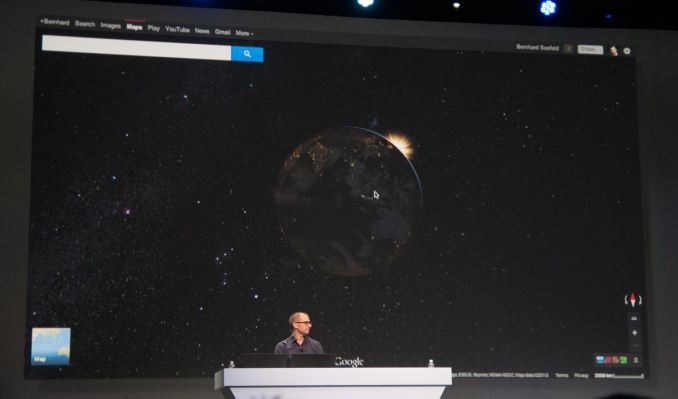
Most of us have have probably seen the gradual progression of Google Maps ever since it launched, but today's update brings to the table an entirely new design paradigm, promising a holistic user interface, allowing users to focus on tasks at hand and not be distracted by traditional UI elements; the map is the UI.
I was never really a big fan of the current iteration of the Google Maps UI, not because it was confusing at times or the sidebar wasted valuable screen space, but because the UI often turned out to be unintuitive, progressively increasing my reliance on more constrained mobile mapping solutions. Google's re-imagination of their entire mapping experience this morinng really ticks the box for most of my gripes with Google Maps, if not all of them. The new Google Maps is built using the latest web standards, leveraging vector maps support and promising an extremely snappy user experience in the browser environment, with no plugins required.
The user interface is uncluttered, almost pristine, allowing users to focus on the content, with just the search bar on the top left corner. All search results are displayed on the map simultaneously, with finer descriptions for top results, allowing users to delineate them easily. Integration with Google+ pulls up places that your friends have reviewed or liked, making it that much more easier to pick your perfect destination. The search bar is dynamic, providing contextual options, based on the search results. Once you have decided on the place, you can also access indoor imagery (if available) of the establishment to resolve any outstanding doubts, if any. And since the results are sourced from other Google services, they are dynamic and ever-evolving, only getting better as time progresses. Another neat feature highlights similar and related places on the map once a desired place has been selected, making it easier to plan your itinerary for places you are visiting.
Getting directions to a place has also been streamlined, by highlighting the relevant routes and automatically displaying available public transit information using an intuitive UI, allowing users to compare driving times versus public transportation times, to plan trips with granular precision. This feature will be very useful in cities like Chicago with well established public transportation systems, where the new public transit scheduling UI will add a whole new level of precision when it comes to planning your trips.
On an international front, the new Maps experience integrates stunning panoramic views of available locations, including relevant crowd-sourced imagery and viewpoints, including Photo Sphere integration. Google has also promised support for the Oculus Rift and the Leapmotion Controller, for those of us slightly ahead of the technological curve. Google has also added other interstellar features, where zooming out a bit further presents a blissfully accurate rendering of our planet, including real-time cloud and planetary data.
All in all, this is unequivocally the biggest upgrade to Google Maps in recent times and most likely helps Google leapfrog any advances by Microsoft or Apple to their mapping platforms, at least in the near future.
So go on and sign up for the preview now. Google has promised invites to start rolling out tomorrow morning.
Google Maps Preview
Read More ...
Google Launches Google Play Music All Access

Google aims to one up the competition by enabling users to get to their own and potentially new music (that they’ll hopefully like) as quickly and intuitively as possible. Google showed off a brief demo of the app running on Android, but the service can be accessed via a traditional web-based interface as well. The orange and white colored UI was slick and aesthetically pleasing, allowing users to instantly queue up songs and listen to personalized radio stations. The demo did however leave a lot of unanswered questions such as mobile cross-platform compatibility, support for traditional desktop operating systems and other features such as offline syncing, but we can definitely expect tight integration across all of Google's services, especially Google+.
Google Play Music All Access launches today in the United States for $9.99/month, with the promise of a gradual international rollout. There’s also a 30-day free trial and users that sign up before 30 June 2013 get a discounted rate of $7.99/month. It is unclear whether this is a lifetime or a limited time offer, but Google’s been known to be notoriously generous in the past, so we can always hope.
Although the subscription-based music streaming market is by no means nascent with heavyweights like Spotify and Rdio, Google’s undoubtedly beaten Apple to the punch here, which is long rumored to be developing its own subscription-based music service, presumably for launch later this year.
For the time being though, if you are in the US, head on over to Google Music and try All Access out for yourself.
Google Music
Read More ...
AMD Expands Never Settle Reloaded Program Again: Launches Level Up Bundle
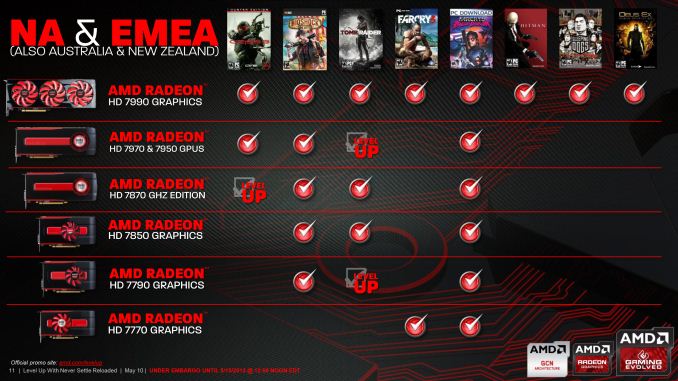
The latest rendition of AMD’s program will see AMD launching a new, smaller game bundle to run alongside the Never Settle Reloaded bundle. The new bundle is to be called the Level Up bundle, with the complete package being dubbed the Level Up with Never Settle Reloaded bundle. Level Up won’t add any new games to AMD’s bundles – the game industry is between major launch periods anyhow – but instead Level Up will see AMD offering a greater number of their bundle games with most of their video cards.
With the exception of the 7990 at the high-end and 7770 at the low-end, most AMD bundles are composed of a subset of four games: Crysis 3, Bioshock Infinite, Blood Dragon, and Tomb Raider. Level Up will see most AMD bundles expanding by one more game, going from 3 to 4 and 2 to 3 respectively, and generally resolving the oddites of some cards including Tomb Raider while other cards include Crysis 3. Specifically the 7900 series and 7870 will become complete sets, with the 7900 series adding Tomb Raider while the 7870 will add Crysis 3. Meanwhile the 7850 remains unchanged, and the 7790 will get a third game with the addition of Tomb Raider.
Throughout all of this it’s worth pointing out that game bundles are traditionally based around buying large number of copies of a title in advance. So besides the more straightforward benefit of increasing the value of their cards, the separate and temporary nature of Level Up may be AMD using the opportunity to burn off excess Crysis 3 and Tomb Raider keys.
All things considered the expansion of AMD’s game bundle is not unexpected, as AMD’s success with Never Settle programs means that they will continue using game bundles to increase the value of their products and offset at least some of the need for price cuts. But even this was admittedly earlier than we figured any additional expansion would arrive, so this comes as a pleasant surprise. More interesting perhaps, the 7790 which launched only a bit more than a month ago is already down $10 on average and has seen both Blood Dragon and Tomb Raider added to its game bundle, so we’re still seeing some price cuts alongside these larger bundles. Overall with 7790s going for as little as $110 after rebate, and 7870s for as little as $220, game bundles are clearly becoming an increasingly large part of the complete package for AMD video cards, with all of the benefits and drawbacks thereof.
Read More ...
Google I/O 2013 Keynote: Live Blog
We're here in San Francisco's Moscone West for Google I/O 2013, where Google will be no doubt talking shop about Android, Chrome, Google+, and the rest of its online services. We're ready for a long couple days of I/O excitement. Hit the link for our Live Blog of the Keynote.
Read More ...
AMD Launches Radeon HD 8970M

While there’s not a whole lot to discuss in terms of the hardware or architecture, there’s a separate story that does warrant some discussion. For the past several years, NVIDIA has basically been on a roll as far as gaming titles are concerned, with a large number of the AAA titles sporting an NVIDIA logo. Our last two mobile gaming suites have had quite a few NVIDIA titles, and there have been other major releases with NVIDIA branding (both Batman games, Borderlands 2, Mafia II, and Metro 2033 to name a few). There are also a few recent and upcoming releases from the green team, like the just launched Metro: Last Light and Star Trek, with ARMA 3 coming down the pipeline.
That’s all well and good, and up until the past nine months or so I’d say NVIDIA had an advantage in terms of game developer support. However, check out the list of games with ATI branding from the last year or so: Far Cry 3 (and the spin-off FC3 Blood Dragon), SimCity, Bioshock Infinite, Tomb Raider, Crysis 3, DmC (Devil May Cry), Hitman: Absolution, Sleeping Dogs, and Deus Ex: Human Revolution are all on the list, and outside of DmC and Sleeping Dogs I’d say all of those are names that any gamer would recognize and most of those games have been good if not excellent. If AMD can keep up the pace of AAA releases, they might regain some lost ground. The Never Setting and Never Settle: Reloaded bundles are possibly the best gaming suites ever given away for free with a new GPU purchase. AMD is hungry, I’ll give them that.

The one item that still generates some concern is AMD’s Enduro switchable graphics. My earlier encounters with the technology (especially prior to the Enduro branding) were less than acceptable, and even with Enduro I can’t say AMD has caught up to NVIDIA’s Optimus. In particular, support for older GPUs and iGPUs is sketchy at best (Sandy Bridge and Llano generally require modded drivers for support, and even then they don’t always work). There are also certain applications that present difficulties; for example, I’ve tried Bitcoin and Litecoin mining on Enduro laptops, with less than stellar results. I’m not suggesting those are critical applications for most people, but if GPU compute doesn’t fare any better it would certainly be a problem. Still, at least the last few driver releases from AMD have all had mobile versions that installed with Ivy Bridge and Trinity Enduro solutions, so that’s definitely an improvement.
The other thing to consider is that where AMD’s 8970M is basically just a rebranding and minor clock speed increase from 7970M, NVIDIA has yet to announce their GTX 780M. Oh, we know it’s coming, and I would assume we’ll hear about it sooner rather than later (the Haswell launch practically demands a new high-end NVIDIA GPU); the question is whether GTX 780M will be a rebranding/higher clocked GK104 part, or if NVIDIA will do something more—like, say, getting the higher performance of the GTX 680MX into a 100W power envelope. (GK110 in a notebook isn’t going to happen any time soon, I suspect.)
The first notebook to ship with HD 8970M is MSI’s already discussed GX70 3BE, but more will certainly follow. At the very least, Alienware and Clevo notebooks are basically a gimme, considering they already support HD 7970M without issue. Pricing will also likely continue to be in AMD’s favor—NVIDIA hasn’t made their highest performing mobile GPU competitive in price for a while, mostly because they apparently don’t need to. We’ll see if anything changes with the status quo this round, but outside of the software story the Radeon HD 8970M doesn’t bring anything truly noteworthy to the table. We’ll probably have to wait for 20nm mobile GPUs before we see major improvement in performance, but will have to wait until the next round of GPU updates.
As usual, the full deck of AMD slides is provided in the gallery below, lest anyone think we’re intentionally skipping over important information.


Read More ...
SilverStone Sugo SG08 Mini-ITX Case Review
Continuing our series of reviews of smaller enclosures, we take a look at one of the smallest of all: SilverStone's impressively diminutive Sugo SG08 Mini-ITX case.
Read More ...
Western Digital and SanDisk Announce Partnership to Produce Hybrid Drives
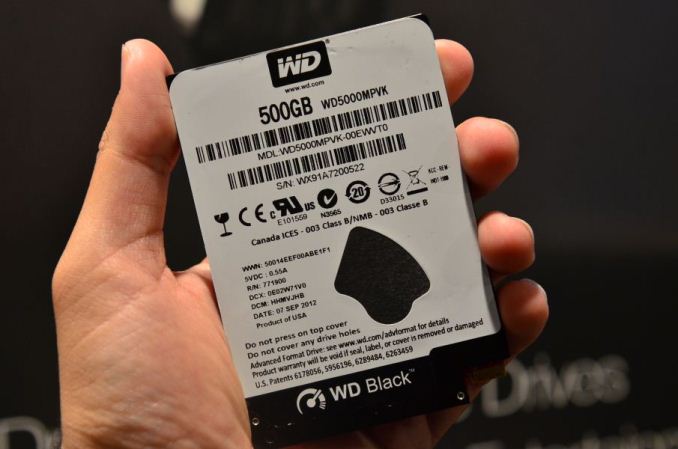
WD’s approach with SSHDs is slightly different from Seagate’s. Seagate simply put a NAND package on the PCB and used their own controller manage it. SanDisk’s iSSD, on the other hand, is a standalone SSD with a SATA 6Gbps interface in BGA-156 form factor (sometimes called µSSD). Both implementations obviously have their pros and cons: Seagate has total control over the NAND (garbage collection, etc.) but it also means the NAND performance is up to Seagate’s engineers, whereas WD can rely on SanDisk’s expertise on the NAND frontier and concentrate on caching and hard drive technologies.
Now, before we get too excited, putting an iSSD inside a hard drive won’t magically solve the biggest problems that SSHDs have. The first generation WD Black will only have 8GB-32GB of NAND, which is better (or the same) than Seagate’s SSHD (or Momentus XT as it was called previously) but it’s still not enough to provide performance that is even close to the SSD-only experience. SanDisk promises pretty impressive numbers for the iSSD (450/350MBps sequential read/write, 9K/1K IOPS random read/write), but those are for the largest 128GB SKU. Remember that one of the key elements of SSD performance is high parallelism: The more NAND you have, the better the performance is because you can access multiple dies simultaneously. As the Black SSHD will only have up to 32GB of NAND, it won’t be able to achieve a similar level of performance as the 4x larger 128GB model.
With increasing NAND densities the performance difference between capacities has become an even bigger issue because performance decreases with every process node, yet capacity per die goes up. This is a double-whammy that results in lower parallelism (and hence performance) at the smallest capacities. With SLC NAND you could somewhat dodge the performance issue since SLC NAND is faster to begin with, but unfortunately the iSSD is MLC based (which shouldn’t surprise anyone given the pricing of SLC NAND).
When you combine the very limited amount of NAND with a low-power integrated controller, it’s simply impossible to get performance that’s anywhere close to a decent standalone SSD. Of course there’s the caching side too because only a small portion of your data can be stored in the NAND, so in most cases you will still be limited by the spinning platters. With 32GB it should finally be possible to cache Windows in full, although the hurdle of hardware-level caching is that you have no say in what goes where.
What’s really special about this announcement is the timing as Seagate introduced their first consumer SSDs only a day earlier. I have a feeling that WD and SanDisk had not planned to go public with their partnership yet but Seagate’s announcement changed their plans. With WD’s biggest rival entering the SSD market, it’s clear that shareholders want to know WD’s strategy in order to maintain credit on the company.
Aside from keeping investors happy, there are also concrete reasons for the partnership. By far the most important one is the fact that SanDisk is a fab owner (a joint-operation with Toshiba where SanDisk gets 49% of the NAND output). Nowadays if you want to do something that requires NAND, there’s no other way to guarantee a steady NAND supply than to partner up with a NAND fabricator. There have already been several NAND shortages in the market (and it's only going to get tougher this year) and the brutal fact is that the ones without a fab or partnership are the last ones in the supply chain.
I’ve already heard from several fab-less SSD OEMs that they have not been able to keep up with demand because there’s not enough NAND in the market. For someone like WD a steady NAND supply is even more important because at least in the beginning the WD Black SSHD is aimed towards OEMs (there's a custom connector so it doesn’t work in regular systems without an adapter). If your production is dependent on the fluctuations of the NAND market, OEMs will likely not choose your product because they don’t want to take the risk of halting their own production due to the lack of drives. It’s not a coincidence that for example Apple sources their SSDs from Samsung, Toshiba, and SanDisk, which are all NAND fabricators.
If WD ever decides to re-enter the SSD market, the partnership will obviously be even more important. I wouldn’t be surprised if WD and SanDisk were actually working on an SSD together. SanDisk has controller IP thanks to the acquisition of Pliant in 2011, but that arm of SanDisk has mainly been focused on the enterprise segment. The consumer market has much lower profits and it’s usually not profitable to design a consumer-grade controller on your own, but with a partner like WD it can turn out to be a good investment as R&D costs can be shared and WD has an enormous distribution channel for providing the product to the market.
All in all, I have a feeling that the real fruits of this partnership won’t be seen today or tomorrow. The WD Black SSHD is definitely an interesting product and we will try to get one in for reviewing as soon as possible, but it's likely that you will still be better off with a small-ish SSD accompanied by a hard drive for storage. My gut is saying that this is more of a transitory product as WD gets ready to re-enter the SSD market. That doesn’t mean it’s the end of story for SSHDs, but this announcement should have happened two, preferably three, years ago.
Read More ...
Best X79 Motherboards, May 2013

X79 and Sandy Bridge-E were released in November 2011, with a cavalcade of motherboards in the first 12 months of launch. Now in 2013, new motherboard production has been slow, with only a few models to look at before the next high-end installment for Ivy Bridge-E, which most media and users alike are expecting sometime later this year. We would assume that the socket will be the same, if Sandy Bridge to Ivy Bridge is any indication, though details on ‘X89’ are few and far between. Motherboard manufacturers should be in there right now designing with products ready for launch, hopefully beta testing the first or second batches of ES boards.
But on X79 today, there is still plenty of choice. Since launch I covered 13 different motherboards (which doesn't sound like much), including the high end models from ASUS, ASRock, MSI and ECS. Here are a few of our favorites that are worth considering.

Our pick of the best falls at the feet of the most feature packed and almost the most expensive model - the ASUS RIVE, part of the ROG range. When testing this motherboard, it did almost everything right for overclockers and would keep a lot of users very happy. It comes with MCT at stock but also overclocks like a beast, being one of the top boards for competitive overclockers due to its stability, memory compatibility, and features like the OC Key which you do not get in other motherboards. The board supports 8 DIMM slots for up to 64 GB of memory, an extended heatpipe arrangement across the power delivery, overclock tools such as voltage reading pads, VGA hotwire, an LN2 switch, a SLOW mode switch, Subzero Sense, PCIe disable switches, and other features such as extra SATA 6 Gbps, extra USB 3.0, USB BIOS Flashback, as well as enough PCIe lanes to abuse 4-way GPU gaming.
The software stack and BIOS from ASUS are great pieces of kit, and there is also the ROG forums if you have any concerns and issues – the admins are there to help you push the limits of your system and get the best out of the top line purchase.
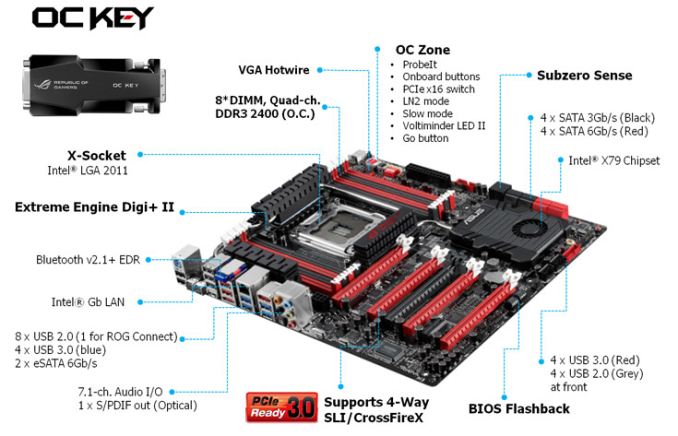
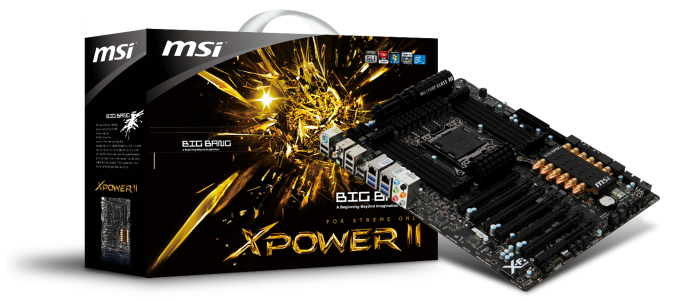
AnandTech Bronze Award: MSI Big Bang XPower II ($370)


The MSI Big Bang XPower II (BBXP2) did not win an award because of the novelty heatsinks – if anything that was more of a detractor. What it does score highly on is performance, as well as functionality. We get a triple BIOS system, with one BIOS being easily replaceable – these are alongside 10 SATA ports, 8 USB 3.0, a full array of full-length PCIe slots, dual Intel gigabit Ethernet and bundled in the box is a USB 3.0 front/rear panel, an eSATA back panel, eight SATA cables and a variety of SLI connectors.
For overclocking there is the OC Genie button for a one-button OC, or the Direct OC buttons allow overclocking on the fly. Like the RIVE, we get PCIe switches to disable PCIe slots, voltage read points, and power/reset buttons with a two digit debug. There are a few areas for polish (fan controls), but if you picked one off the shelf I doubt you would be disappointed. It is longer than other boards, such that users will need to check their case dimensions.
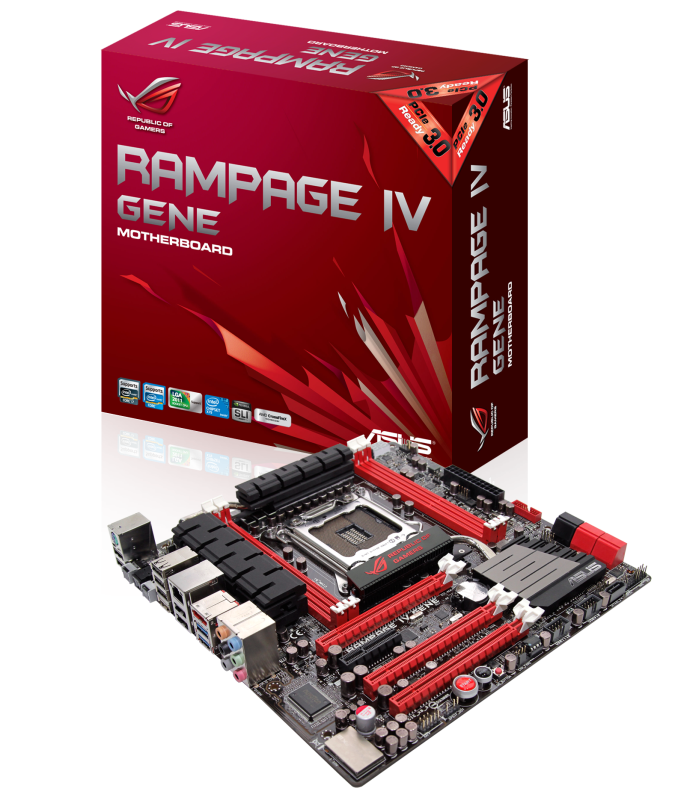
AnandTech Bronze Award: ASUS Rampage IV Gene ($270)


With the power and heat output of Sandy Bridge-E, smaller motherboards might come across as more of a novelty – it would be understandable that with quad channel memory and 40 PCIe lanes that a mini-ITX board might not exist outside of ODMs, but there is room for micro-ATX. At the top of the list of microATX boards is the Rampage IV Gene from ASUS. This motherboard is designed to be the entry point into the ROG world for X79, and features the same software and BIOS pack like the Rampage IV Extreme above. By being a smaller board however, we have some adjustments to make – it is primarily a gaming board, but still overclocks really well. We get SupremeFX audio rather than an ALC898 for example. It costs a bit more than the ASRock X79 Extreme4-M while having similar outward facing hardware (the beauty is in the underlying details and component choices), but the Gene takes a crown for performance and feature set. Gene users want that small gaming system that rockets rings around other setups. If Bitfenix make a micro-ATX prodigy, I would want this build in a red case.
AnandTech Bronze Award: ASRock X79 Extreme11 ($600)


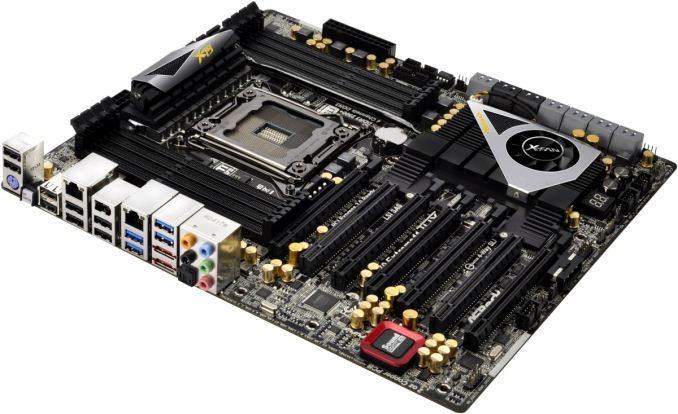
As a Sandy Bridge-E owner, what would you like on your motherboard? How does space for 64 GB memory, four-way GPUs at x16/x16/x16/x16 for gaming, dual Broadcom NICs for teaming, a Creative Core3D audio codec, an integrated LSI 2308 SAS/SATA RAID chip capable of 8-way RAID-0 and peak speeds of 4 GB/s sound? If that excites you, the ASRock X79 Extreme11 is the board to have. As a technical exercise, fitting all the obscene power features a user may want onto a motherboard sounds like a recipe for disaster, and a mountain on a wallet. In the end bundling two PLX chips and an LSI SAS controller on board does make it expensive, but ASRock are improving steadily with their software and BIOS bundling, making the board an attractive choice if you need one of its usage scenarios.
With our testing, and the price range of this motherboard, it is safe to say that this product is more aimed at workstation projects, such as an 8-core Xeon with ECC, rather than a product for gamers or overclockers. Tool it up with eight SAS drives, seven single slot GPUs (or four dual slot), and away you go with a nice number crunching machine.
The Future for X79


While playing around with X79 is fun, the entry point for the platform is quite high. The cheapest X79 motherboard on sale today is $190, and the cheapest processor is $300, giving a sub $500 entry point. But that does not show the whole picture – while the price of the cheapest motherboards is not bad (considering the main bulk of Z77 is around or just below that price) the good motherboards will cost around double that. Also the cheapest X79 processor, the i7-3820, is like an i7-2600K with a couple of extra memory channels – if you are not hitting the memory hard enough, it will not feel like an upgrade. As a result, you might end up looking towards the i7-3930K which is $570-ish new. Combine that with the Rampage IV Gene and we have an $840 entry point, before we consider memory, GPUs, SSDs, PSUs, etc. Most users could take the top end Ivy Bridge today with that money and get a nice boost on the rest of the system, leaving those that need Sandy Bridge-E to actually go out and get it.
With all that being said, the future for X79 is unclear. It is still the choice for pure multithreaded performance, even though Ivy Bridge surpasses it (at stock) in single threaded performance and Haswell will make the jump a little bit more. With Ivy Bridge-E assumed to take socket 2011 like SB-E (if you believe recent leaked screenshots), then current X79 motherboards will get updated to support the new processors and perhaps a new batch of motherboards under the name X89 will be released. We do not have details on that yet though, unfortunately - I want full SATA 6 Gbps and PCIe 3.0 for a start. To put it into perspective, I use an X79 system as my general gaming/work system, and when dealing with the multithreaded workloads, I would not have anything else – except perhaps a 2P or 4P machine, but those are not inside my budget.
Read More ...
Toshiba KIRAbook Ultrabook Review
Toshiba throws their hat into the high-end ultrabook ring with this 13.3" gem featuring a 2560x1440 IPS display.
Read More ...
Choosing a Gaming CPU: Single + Multi-GPU at 1440p, April 2013
One question when building or upgrading a gaming system is of which CPU to choose - does it matter if I have a quad core from Intel, or a quad module from AMD? Perhaps something simpler will do the trick, and I can spend the difference on the GPU. What if you are running a multi-GPU setup, does the CPU have a bigger effect? This was the question I set out to help answer.
Read More ...
AMD Releases New Radeon Memory SKU: RG2133 Gamer Series
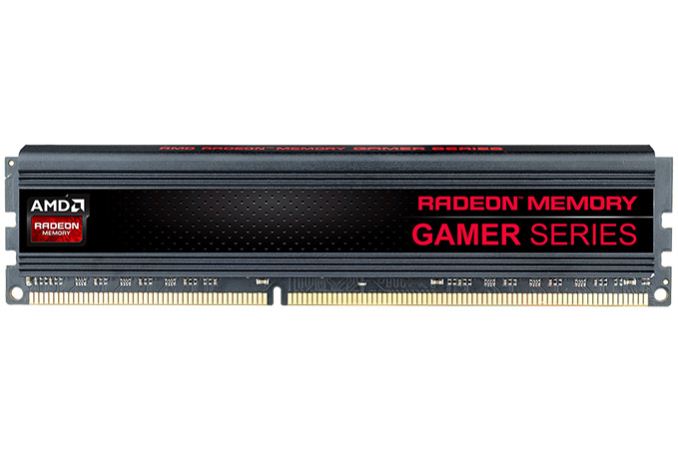
Joining AMD’s existing 1600MHz (RE1600) and 1866MHz (RP1866) Radeon Memory products today is a new SKU, the 2133MHz (RG2133) Gamer Series. The RG2133 is a middle of the road 2133MHz part, sporting a CAS 10 latency (10-11-11-30) and a voltage of 1.65v. In keeping with AMD’s other memory products they aren’t using any flamboyant heatsinks here, so these are simple DIMMs enclosed in a heatspreader, keeping the DIMM height at a low profile of 30mm.
AMD Memory Specification Comparison |
|||
RE1600 |
RP1866 |
RG2133 |
|
Kit Speed |
1600MHz |
1866MHz |
2133MHz |
Subtimings |
9-9-9-28 |
9-10-9-27 |
10-11-11-30 |
Voltage |
1.5v |
1.5v |
1.65v |
Size |
2 x 8GB |
2 x 8GB |
4 x 4GB |
Price |
$95 |
$125 |
$155 |
For AMD the primary benefit of introducing another speed grade of RAM is not only to keep themselves competitive in the memory market, but also to work the fact that AMD’s APUs greatly benefit from increased memory bandwidth. Even though the GPUs in AMD’s APUs are lower performing than AMD’s discrete GPUs they’re still memory bandwidth starved to a very large degree, and as we’ve seen even back in 2011 with Llano most games benefit from additional memory bandwidth. So by pairing RG2133 memory with Trinity/Richland, AMD can significantly improve their GPU performance in many cases even with the same silicon.

On a final note, AMD will once more be bundling licenses for their branded version of Dataram’s RAMDisk software with their memory. RG2133 kits will come with a license good for a 64GB RAM disk (note that you can’t actually get 64GB of RG2133 into a system at the moment). All other AMD memory products will continue to ship with a license for a 6GB RAM disk. The usefulness of AMD’s RAMDisk software remains questionable, but as AMD’s pricing is generally competitive it’s essentially a freebie with an otherwise solid memory package.

Read More ...
Sony Announces VAIO Fit Series of Laptops
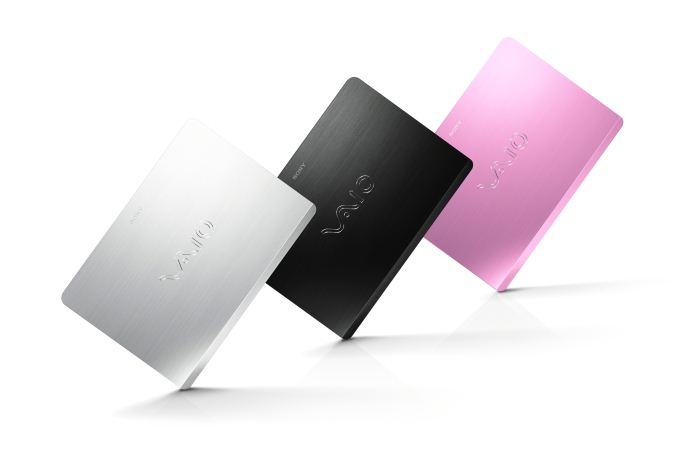
Noteworthy features of the VAIO Fit laptops include 1600x900 HD+ LCDs on the 14" model and 1080p displays on the 15.6" models, with both sizes offering optional capacitive touchscreens. Sony also touts improved webcam functionality and high quality audio and states, with the 14E and 15E including "big box speakers" as well as a subwoofer on the 15E. All of the laptops also feature full-size backlit keyboards, with a numeric keypad on the 15" models. Finally, the VAIO Fit laptops will also feature Near Field Communication (NFC) technology, allowing users to share website URLs and other data with compatible NFC devices.
As with other recent announcements, the timing is enough to let you know that the models being discussed today are using Ivy Bridge (3rd Generation Intel Core processors), but we may see updates after the Haswell launch. Processor support tops out at Core i7 (presumably dual-core), with Core i3 and i5 also available. NVIDIA Graphics will also be an option, though the specific GPUs aren't listed.
The Fit 14 and 15 will be available in mid-May and will start at $649 and $699 respectively. The Fit 14E and 15E are apparently the lower-spec models and will launch at prices of $549 and $579.


Read More ...
Seagate 1200 SSD: Custom Seagate SAS Controller, X8 PCIe SSD Also Announced

Seagate is planning on using a mixture of custom designed and 3rd party controllers with Seagate custom firmware depending on the application. As I hinted at in our review of the Seagate 600/600 Pro SSDs, I don't believe the Link A Media relationship is one that will last - eventually I see Seagate transitioning to its own controllers. The 1200 is an indication of just that.
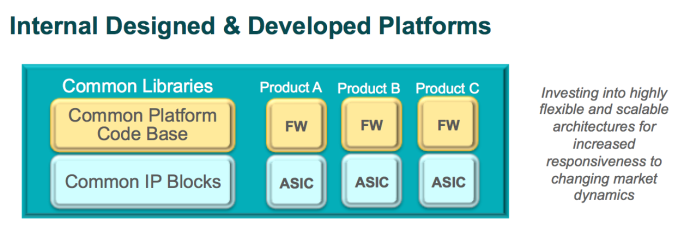
We don't know a whole lot about the 1200 other than it is a 12Gbps 2.5" SAS drive. The 1200 will be available this quarter.
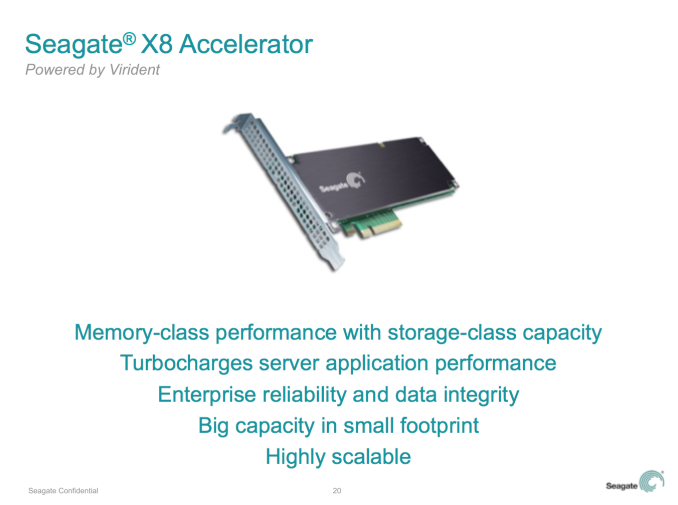
Seagate also unveiled a Virident FlashMAX II based PCIe SSD simply called the X8. The X8 features a FusionIO-like architecture that moves all NAND management from the SSD to the host CPU cores in the server. Given how readily available (and sometimes underutilized) host CPU resources can be, the tradeoff is sometimes worth it. The X8 will be available starting on May 27th.
Read More ...
The Seagate 600 & 600 Pro SSD Review
If you had asked me back in 2008 who I thought would be leading the SSD industry in 2013 I would’ve said Intel, Western Digital and Seagate. Intel because of its commanding early lead in the market, and WD/Seagate because as the leaders in hard drives they couldn’t afford to be absent from the long term transition to SSDs. The days of having to explain why SSDs are better than mechanical drives are thankfully well behind us, now it’s just a question of predicting the inevitable. I figured that the hard drive vendors would see the same future and quickly try to establish a foothold in the SSD market. It turns out I’m really bad at predicting things.
Like most converging markets (in this case, storage + NAND), the SSD industry hasn’t been dominated by players in the market that came before it. Instead, SSDs attracted newcomers to the client/enterprise storage business. Not unlike DRAM, owning a NAND foundry has its benefits when building a profitable SSD business. It’s no surprise that Intel, Micron and Samsung are some of the more frequently discussed SSD vendors - all of them own (either partially or fully) NAND foundries.
Whether or not ownership in a foundry will be a requirement for building a sustainable SSD business is still unclear, but until that question gets answered there’s room for everyone to play in the quickly growing SSD market. This year, Seagate re-enters the SSD market with a serious portfolio. Today it not only announces two 2.5” SATA drives, including its first client-focused SSD, but also a 2.5” SAS product and a PCIe SSD solution.
The products that we’re focusing on today are the two 2.5” SATA drives: Seagate’s 600 and 600 Pro.
Read More ...
Synology's DS213j Targets Budget-Conscious Home NAS Market

In order to cater to budget-conscious consumers (and users trying to experiment with their first NAS), Synology carries the j series (DS112j / DS212j / DS413j etc.). These products are all based on a single core Marvell ARMADA 300 SoC, the Marvell 6281. The single-threaded single custom Marvell ARM core runs at 1.2 GHz in the MV6281 SoC. Today, Synology is updating the j series lineup with the 2-bay model for 2013, the DS213j.
In order to make the DS213j an attractive option for consumers, Synology is using a FPU-enabled version of the 6281. The amount of DRAM is also being doubled from the previous generation (the new model has 512 MB of x16 DDR3 DRAM). The presence of a FPU should make some of the tasks such as photo viewing / thumbnail generation faster.


The DS213j runs on DSM 4.2 with all its feature-rich apps. Synology promises compatibility with future versions also. The unit is slated to start shipping worldwide today (Availability in the US is slated for later this month). I will update the article with pricing information later today (Update: The MSRP is USD 219.99).
Read More ...
Intel’s Silvermont Architecture Revealed: Getting Serious About Mobile
The most frustrating part about covering Intel’s journey into mobile over the past five years is just how long it’s taken to get here. The CPU cores used in Medfield, Clover Trail and Clover Trail+ are very similar to what Intel had with the first Atom in 2008. Obviously we’re dealing with higher levels of integration and tweaks for further power consumption, but the architecture and much of the core remains unchanged. Just consider what that means. A single Bonnell core, designed in 2004, released in 2008, is already faster than ARM’s Cortex A9. Intel had this architecture for five years now and from the market’s perspective, did absolutely nothing with it. You could argue that the part wasn’t really ready until Intel had its 32nm process, so perhaps we’ve only wasted 3 years (Intel debuted its 32nm process in 2010). It’s beyond frustrating to think about just how competitive Intel would have been had it aggressively pursued this market.
Today Intel is in a different position. After acquisitions, new hires and some significant internal organizational changes, Intel seems to finally have the foundation to iterate and innovate in mobile. Although Bonnell (the first Atom core) was the beginning of Intel’s journey into mobile, it’s Silvermont - Intel’s first new Atom microarchitecture since 2008 - that finally puts Intel on the right course.
Read More ...
Acer Aspire V Series: New AMD APUs and Other Upgrades


Available in touchscreen and non-touchscreen configurations, the touch-enabled models will be slightly thicker and weigh a bit more. Acer lists the dimensions at 340mm x 240mm x 20.75mm for the non-touch models and 22.85mm thick for the touchscreen offerings. Similarly, weight is 1.95kg for the standard models and 2.1kg for touchscreens. (Wow—who knew touchscreens weighed so much more?)
Other features of the 14” models include Core i3/i5/i7 CPU support, optional GeForce GT 740M 2GB DDR3 graphics, a 4-cell battery, hard drive capacities up to 1TB or SSD capacities up to 256GB, and four stereo speakers. Acer also lists a “ZoomPerfect Touchpad” as a feature, which will hopefully work better than some of the other touchpads we’ve seen lately.

The non-touch models measure 381.6mm x 255.95mm x 20.75mm, while the touchscreen models are 22.85mm thick (so same thickness as the 14” models). Weight for the non-touch models is listed at 2.1kg, with the touchscreen bumping that to 2.3kg. As for the GPUs, Acer is offering a GT 720M 2GB DDR3 as one possibility, with a GT 750M 4GB DDR3 as a higher performance option. What’s frustrating is that both GPUs have to make do with DDR3; really, the GT 750M doesn’t deserve to be paired with anything less than GDDR5, particularly if you plan on getting a 1080p LCD!
Acer didn’t provide details on specific models, configurations, or pricing. It seems as though there will be AMD APUs available in the 14” and 15.6” chassis as well, and one of the documents mentions the availability of Radeon HD 8750M. The V7 models will also apparently make the grade for Ultrabook classification (and probably pricing to go with that). Acer notes that keyboard backlighting will be available on all three sizes, depending on your region. As for pricing and availability, all we have to go on right now are that models will begin shipping at the end of May with a starting MSRP of $500.


Read More ...
Acer Iconia A1 7.9” Tablet

Acer makes a point of calling the A1 a “one-handed” tablet, suggesting that the smaller size than traditional tablets makes it more usable with a single hand. Dimensions of the A1 measure 208.7mm x 145.7mm x 11.1mm and with a weight of 410g (WiFi only; 430g for 3G) it’s reasonably light, but we’ve seen other 7” tablets so this is nothing really new.
Other features of note are the IPS XGA LCD, 1GB DDR3L RAM, 8GB/16GB eMMC storage, 0.3MP (640x480) front-facing camera, 5MP rear-facing camera (with 1080p30 video support), microSD slot with support for up to 32GB, Micro USB 2.0, Micro HDMI, GPS, Bluetooth 4.0, 802.11b/g/n, and an 18.6Wh battery with up to eight hours of battery life. The A1 ships with Android 4.2 (Jelly Bean).
The Iconia A1-810 with 16GB will be available in June with an MSRP of $200.


Read More ...
Acer Aspire P3 Ultrabook Launched

The weight of the tablet is 790g (1.74 lbs.) while the keyboard cover nearly doubles the total weight with an additional 600g (1.32 lbs.), so the whole tablet/Ultrabook ends up being somewhat heavy at 1.39kg (3.06 lbs.) The tablet portion measures 295.4mm x 190.7mm x 9.95mm (11.63” x 7.51” x 0.39”), and the keyboard cover is slightly wider and taller and adds another 9.8mm to the thickness. Other aspects include a 40Wh battery that’s good for up to six hours of battery life, 720p front-facing camera, 5MP rear-facing camera, 802.11a/b/g/n WiFi, Bluetooth 4.0, micro HDMI, and a single full-size USB 3.0 port.
The base model P3 is available immediately with an MSRP of $800, so again this is very much a Surface Pro alternative. I would assume the $800 model comes with a 60GB SSD, 2GB RAM, and a Core i3 CPU. Acer doesn’t list an MSRP for the higher spec model, but $1000+ would seem likely.


Read More ...
Acer Aspire R7: A Laptop to Make You Flip

Equipped with a 1080p IPS touchscreen, Acer has decided to try a different approach to the touchscreen laptop. Now, instead of having the touchpad in front of the keyboard, it’s located above the keyboard and the display hinge can shift forward to bring the touchscreen experience closer to the user. The screen can also flip 180 degrees for easy sharing of content, it can lie (mostly) flat against the chassis, or it can even rest in an elevated “table” position.
The core hardware for the R7 is standard Ultrabook fare (though the R7 isn’t and Ultrabook), with an optional GeForce GT 750M available. That means processor choices consist of the i5-3337U and the i7-3537U, both slightly faster versions of the 3rd Generation Ivy Bridge CPUs we’ve had for a year or so now. There will be models with HDDs as well as SSD equipped options, and in addition to the usual WiFi and Bluetooth you get two USB 3.0 ports, one USB 2.0 port, four stereo speakers, and dual array microphone, webcam, HDMI, and SD car ports. Battery life is rated at 4.5 hours (53Wh battery), which is on the low side for a 5.3 pound laptop.
The idea of a 15.6” convertible laptop/tablet/thingy is interesting, though not necessarily something we’ve seen a lot of users clamoring for. I suspect this may turn into one of those love-it or hate-it affairs, depending on the user. Acer also notes that they’ve created a very durable "Ezel" hinge so that the screen will stay in place wherever you put it, though as I wasn’t at the launch party I can’t provide any specific comments on how it feels in practice right now.
Pricing is listed as $1000 for the “Best Buy model” that will include a free copy of Star Trek: The Video Game and will come with a Core i5 CPU, 6GB RAM, 500GB HDD, and a 24GB caching SSD. The R7-571-6858 will be available at Best Buy on May 17th and is available for pre-order now; other models will follow.


Read More ...
QNAP Lauches Marvell-based TS-x20 / x21 Series with Revamped QTS 4.0 OS
QNAP's entry level NAS models received an upgrade recently with the launch of the TS-x20 and TS-x21 series. Both of therm are based on Marvell CPUs (and the lack of explicit mention of the SoC leads us to believe it is based on the Marvell 6282 which has been around for quite some time). While the x20 series uses a 1.6 GHz version with 512 MB of DDR3, the x21 uses a 2.0 GHz one with 1 GB of DDR3. As such, these models carry twice the amount of memory compared to the corresponding models from last year. The x20 and x21 series have 1,2 and 4 bay models (for a total of 6 new units). The 2 and 4-bay models have hot-swap bays. The TS-421 also has a LCD display in front while the TS-420 doesn't. The TS-120 and TS-220 come in white.

In the meanwhile, for other NAS models, firmware version 3.8.3 is scheduled to go out in a week or two. QTS 4.0 beta for older NAS models is expected to be made available free of charge towards the end of May 2013. Business-oriented features such as storage pools and new LVM (logical volume manager) are slated to be added to QTS 4.0 in June. The next few months promise to be exciting for existing and prospective QNAP customers.
Read More ...
Micron P420m Announced: MLC PCIe SSD

The P420m is built on the very same controller as the P320h, with nearly identical firmware (save for changes to support the new NAND type). We're still looking at a 32-NAND-channel PCIe x8 controller, it's just hooked up to a different type of NAND.
The other big physical change here is the use of on-board capacitors to enable power fail protection, a feature that wasn't present on the P320h.

Like the P320h, there will be both 2.5" (SFF-8639 connector) and half-height, half-length PCIe x8 versions of the P420m. The 2.5" version only supports PCIe x4 and 16 NAND channels in capacities of 350GB or 700GB, while the x8 can stripe across all 32 NAND channels with 700GB and 1.4TB capacities. The use of 2-bit-per-cell MLC guarantees twice the usable storage of the SLC based P320h. The P420m is rated for 10PB of total drive writes (~4 drive fills per day for 5 years) compared to 25/50PB for the P320h.

Micron isn't talking about pricing (other than to say that it's cheaper than the P320h) or write performance at this time as the drive still isn't final. Read speeds are up to 3GB/s (sequential) and 750K IOPS (4K random). At the right price, the P420m could be far more interesting than the P320h given that it could deliver very similar performance.
Read More ...
Report: Climate Change Could Wash Away Historic Jamestown Site Within 100 Years
Historic site could be flooded as soon as 2100

     |
Read More ...
PayPal to Merchants: Ditch the Cash Register, Get Free Payment Processing
PayPal is looking to eliminate cash registers and wallets to create a digital payment ecosystem in retail

| |
Read More ...
Every Porsche Model Will Soon Have a Hybrid Variant
Yes, even your precious 911 will be available in hybrid trim

| |
Read More ...
Google Announces "Pure" Galaxy Nexus S4 for $649, Android Updates
Google focuses its attention on Android

| |
Read More ...
U.S. Navy Launches First Unmanned X-47B Aircraft from Carrier Flight Deck
While X-47B is for non-operational use, its precision navigation algorithms will be used to create the first operational carrier-based unmanned aircraft

| |
Read More ...
U.S. Federal Traffic Board Wants to Make Drunk Driving Threshold Far Harsher
Plan would drop legally drunk from B.A. of 0.08 to 0.05

| |
Read More ...
DOJ Uses Email from Steve Jobs as Evidence in E-Book Case
The DOJ is calling Apple the "ringmaster" in the creation of this price-fixing scheme

| |
Read More ...
Ad-Subsidized Xbox 720/Infinity May be Announced at Next Week's Reveal
Microsoft will finally answer the questions of DRM and more next week

| |
Read More ...
HP Announces New SlateBook X2 and Split X2 Detachable PCs
One runs Android the other runs Windows 8

| |
Read More ...
Square Blocks Gun Retailers from Using its Mobile Payment System
It says the current gun debate has nothing to do with it

| |
Read More ...
Dell Slashes XPS 10 Windows RT Tablet Price
New entry-level price is under $300

| |
Read More ...
Government Creates Global Warming "Refugee" Crisis in Alaska
Natives were forced to settle in unstable mud flats in the 1950s, are now paying the price

| |
Read More ...
Available Tags:Google , AMD , Radeon , Western Digital , Toshiba , Gaming , Sony , VAIO , Seagate , Seagate , SSD , Acer , Other , Tablet , PayPal , Porsche , Galaxy , Android , Xbox , HP , Dell , Windows ,


No comments:
Post a Comment