
 Sony Xperia Tablet Z leaked specs reveal 10 inch, full HD device
 Sony's new Xperia Z impressed at CES 2013, leaving little question Sony was ready to start competing with the big boys on the smartphone market.
Based on some new reports, it seems the company is also taking some steps to make just as big a splash in the battle for tablet supremacy.
Specifications for the rumored Xperia Tablet Z have surfaced, and echo some of the main features the Xperia Z boasted about at CES.
Though Sony has yet to make any official announcement about the Xperia Tablet Z, if these specs end up panning out, consumers looking for a powerful Android tablet will have a tough choice ahead of them.
Sony's new Xperia Z impressed at CES 2013, leaving little question Sony was ready to start competing with the big boys on the smartphone market.
Based on some new reports, it seems the company is also taking some steps to make just as big a splash in the battle for tablet supremacy.
Specifications for the rumored Xperia Tablet Z have surfaced, and echo some of the main features the Xperia Z boasted about at CES.
Though Sony has yet to make any official announcement about the Xperia Tablet Z, if these specs end up panning out, consumers looking for a powerful Android tablet will have a tough choice ahead of them.
Sony's double-down
The Xperia Tablet Z doesn't just share a very similar name with its little smartphone brother, it also shares some of the same DNA. According to the leaked specs, the Xperia Tablet Z will be waterproof, dustproof, and will sport a similarly thin stature as the Xperia Z. The 10.1-inch screen will include a full 1920 x 1080 HD display, powered by a 1.5GHz quad-core Snapdragon processor and 2GB RAM. There's no indication as to whether or not the Xperia Tablet Z will use the same Bravia Engine technology behind the Xperia Z's sharp screen, but there's little reason for Sony not to use it again here given the positive response to the engine in its latest smartphone. Along with that nice screen will reportedly come 32GB of memory, and an 8.1 megapixel rear camera and a 2.2MP front-facing camera. The Xperia Tablet Z is also believed to include Android 4.1.2 Jelly Bean, as well as compatibility for LTE networks, WiFi, Bluetooth 4.0, and NFC abilities. There's no indication as to when or where Sony will debut the new tablet, but reports point to a launch during the second-half of 2013. By that time, Apple, Google, Samsung, and more competitors may have new tablets ready to tackle such a potentially formidable foe.
 |  |
Google, Ray Kurzweil developing 'ambitious' intelligent A.I. search technology
 New Google hire and accomplished inventor Ray Kurzweil recently described his "ambitious" current project at the search giant in an interview with Singularity Hub.
Kurzweil is hoping to leverage Google's massive pool of resources and data to help develop technology that would create truly intelligent computers that can understand human language on a deep level.
The technology could be used to create hyper-intelligent search engines that answer questions before you even ask them, or to cause the downfall of humanity, though Kurzweil failed to mention that last point.
A video of the entire exchange was posted to Youtube last week, and the discussion is truly fascinating.
New Google hire and accomplished inventor Ray Kurzweil recently described his "ambitious" current project at the search giant in an interview with Singularity Hub.
Kurzweil is hoping to leverage Google's massive pool of resources and data to help develop technology that would create truly intelligent computers that can understand human language on a deep level.
The technology could be used to create hyper-intelligent search engines that answer questions before you even ask them, or to cause the downfall of humanity, though Kurzweil failed to mention that last point.
A video of the entire exchange was posted to Youtube last week, and the discussion is truly fascinating.
Computers that understand language
Kurzweil knows what he's talking about - according to Phys.org, the American inventor is responsible for both commercial speech recognition software and text-to-speech reading machines for the blind, among other things. "There is no more important project than understanding intelligence and recreating it," he told his interviewer in the video. His project at Google is focused on getting computers to understand "natural language," as he calls it, which will allow them to better serve humans (or rise up against them). Computers at this point are unable to determine the meanings behind the words, phrases and sentences that they parse through by the billions on the internet, Kurzweil explained, but he's is looking to change that with Google's help. "It will know at a semantically deep level what you're interest in, not just the topic," he said. "It will know the specific questions and concerns you have. It will be constantly surveying all of the new knowledge that comes out every minute and bringing things to your attention that it thinks you will want." He said that technology will answer our questions before we even ask them, and that this function would likely be integrated into the "core technology" of our devices and computers.They're listening
Kurzweil gave an example regarding someone worried about not getting enough of a specific vitamin - the person's device picks up on that concern, despite it not being asked directly, and weeks later points out to the user that new information is available regarding that particular vitamin. That nagging feeling in the back of your head is the one that's worried about computers listening to your every word, and Kurzweil isn't blind to that. "Privacy is obviously a huge issue, but it is already to Google," he said. "It's already exposed to a lot of private information, and they do a very good job to maintain that. I can tell you from having been there one day that that is a big message." But users will be okay with granting the new smart search technology access to their lives, because it will be "like a friend" to them, he concluded. Until it stabs them in the back, that is. Just don't say we didn't warn you.
| |
New BlackBerry Z10 and X10 leaks show off the goods in photos and video
 Images and video of two new BlackBerry devices have reportedly appeared online just a couple weeks ahead of the Jan. 30 BlackBerry 10 launch.
First, two photos of the QWERTY BlackBerry X10 (or N-Series) popped up on the social photo-sharing site Instagram on Monday, if a source on the Crackberry forums is to be believed.
Then, on Tuesday, the Austrian site Telekom-Presse posted the first hands-on video with the BlackBerry Z10 (aka the L-Series), the touchscreen-only counterpart to the X10.
Neither leak really shows off much that wasn't already known or suspected about either device, but it's interesting to see them both popping up more and more as the BB10 launch approaches.
Images and video of two new BlackBerry devices have reportedly appeared online just a couple weeks ahead of the Jan. 30 BlackBerry 10 launch.
First, two photos of the QWERTY BlackBerry X10 (or N-Series) popped up on the social photo-sharing site Instagram on Monday, if a source on the Crackberry forums is to be believed.
Then, on Tuesday, the Austrian site Telekom-Presse posted the first hands-on video with the BlackBerry Z10 (aka the L-Series), the touchscreen-only counterpart to the X10.
Neither leak really shows off much that wasn't already known or suspected about either device, but it's interesting to see them both popping up more and more as the BB10 launch approaches.
BlackBerry X10 N-Series
Crackberry forum user antheauxny posted the two images of the BB10 X10 on Monday night after reportedly searching Instagram for the #BlackBerry hashtag. The keyboard-equipped phone appeared with its power cord plugged in and again in someone's hand. Despite the physical QWERTY keyboard, some traditional BlackBerry buttons are missing, but those functions will no doubt be replicated on the touchscreen in BlackBerry 10.BlackBerry Z10 L-Series
The video featuring the BB Z10 is a little more revealing, though, giving an in-depth 7-minute look at the phone's hardware, as well as the BlackBerry 10 OS itself. The previous rumors of a 4.3-inch screen now seem just shy of the actual 4.2-inch mark, according to the video's German-language narrator, as reported by Engadget. The site also reported on Tuesday that the narrator lists a 1.5GHz dual-core ARM Cortex A9 processor, 2GB of memory, and 16GB of storage on the Z10.15,000 BlackBerry 10 apps
On Monday it was reported that 15,000 BlackBerry 10 apps had been submitted in less than two days during a Research in Motion-sponsored "port-a-thon" for developers. That's good news for those looking to jump in bed with BB10 on day one, though doubtless not all of those apps will be approved. Last week, RIM's chief marketing officer reportedly revealed that BlackBerry 10 devices will cover all price points, ideally leaving no consumers behind.
| |
Review: DriveNTalk Coda One review

 The Coda One ably does its primary job of acting as a Bluetooth speaker for smartphones, and allows access to Siri or third-party app Vlingo with a single button to allow voice dialing, searching, and more. The slim and sleek Coda One also doubles as a portable speaker for music and movies, and offers solid performance in that regard considering its size.
And in an interesting twist, the dual-speaker device can also be switched to handset mode and held to your face like a standard phone to allow for private conversations. While not essential for phone users (who could simply pick up the actual paired device), it's a helpful addition that can be used for VOIP calls on tablets, bringing you closer to a traditional phone experience.
As a wider array of increasingly smart and agile devices enter our lives, we need accessories that likewise keep up with the action. Wireless, hands-free Bluetooth speaker boxes for cars aren't exactly a new development, but the flexibility of DriveNTalk 's Coda One makes it much more appealing than the average peripheral.
The Coda One ably does its primary job of acting as a Bluetooth speaker for smartphones, and allows access to Siri or third-party app Vlingo with a single button to allow voice dialing, searching, and more. The slim and sleek Coda One also doubles as a portable speaker for music and movies, and offers solid performance in that regard considering its size.
And in an interesting twist, the dual-speaker device can also be switched to handset mode and held to your face like a standard phone to allow for private conversations. While not essential for phone users (who could simply pick up the actual paired device), it's a helpful addition that can be used for VOIP calls on tablets, bringing you closer to a traditional phone experience.
As a wider array of increasingly smart and agile devices enter our lives, we need accessories that likewise keep up with the action. Wireless, hands-free Bluetooth speaker boxes for cars aren't exactly a new development, but the flexibility of DriveNTalk 's Coda One makes it much more appealing than the average peripheral.
Design
Viewed from its side, the Coda One actually looks like a traditional phone, albeit significantly slimmed-down and streamlined so that its two speakers only jut out slightly from the base candy bar-style design. Between the two speakers, you'll find one large indented button: the multi-function button, which allows you to accept, reject, and end calls, activate Siri or Vlingo, and activate pairing mode. Above it are light-up indicators that show whether or not a device is paired, if it's in handset mode, whether mute is on, and if the battery is low. On the right side are separate up and down volume buttons, along with the mode button, which triggers the private handset option. Over on the left side is a physical power button, along with a covered micro-USB port, which allows the Coda One to be charged via computer or car using the included vehicle charger. A full charge takes only a couple of hours and claims to allow 20 hours of talk time and 40 days of standby time. Rubberized feet on this side also allow the device to be stood up at a slight angle during non-car use.
The back is smooth, but hides the very handy perk of a strong magnet, which lets the Coda One quickly attach to the included visor clip, which has a soft felt backing to help avoid scratching the device. It offers a serious pull: just enough to keep it in place, but with enough give to let you grab it without straining.
Over on the left side is a physical power button, along with a covered micro-USB port, which allows the Coda One to be charged via computer or car using the included vehicle charger. A full charge takes only a couple of hours and claims to allow 20 hours of talk time and 40 days of standby time. Rubberized feet on this side also allow the device to be stood up at a slight angle during non-car use.
The back is smooth, but hides the very handy perk of a strong magnet, which lets the Coda One quickly attach to the included visor clip, which has a soft felt backing to help avoid scratching the device. It offers a serious pull: just enough to keep it in place, but with enough give to let you grab it without straining.
Performance
The Coda One pairs easily via Bluetooth 3.0 and remembers the last eight devices it paired with, allowing you to use it with a range of family and friends' phones and tablets. When a paired device is in range, a female voice announces that it is successfully paired, and the leftmost light on the Coda One will blink steadily as a result. Learning the initial uses for the multi-function (MFB) and mode buttons may result in a few rejected calls or accidental handset mode triggers, as the included instruction manual is a bit sparse. Once past the learning curve, though, we found the Coda One to be very versatile and easy to use while concentrating on the road.
A single tap of the MFB will answer or reject a call, while holding it down pops up Siri or Vlingo. Additionally, when placing or receiving a call, you're given the option on the iPhone to use the Coda One or the device itself, should you not be driving or simply prefer not to use the Bluetooth speaker.
While driving, the call reception using an iPhone 5 was very clear via the Coda One speaker, with the quality similar to using speakerphone on the device – albeit louder and on the visor directly ahead. The caller reported similar clarity coming through on the other line.
We tested the Coda One extensively with Siri and found that the results varied depending on location. In a quiet home office, Siri did a great job of recognizing our search and call requests via the Coda One, but while traveling in a car, our queries were at times misinterpreted. In both cases, we occasionally noticed some volume discrepancies using Siri, wherein the voice would be difficult to hear, especially while driving.
As a Bluetooth speaker for listening to music and other media, the Coda One is solid for its size, though not at all meant as a replacement for dedicated home speakers. Its best advantage is its sleek design, as the device can be kept in a bag or briefcase and popped out as needed for playback. It's a great perk to have that option of playback anywhere with ease.
Switching to handset mode during any call requires only a tap of the mode button, and though its use might be marginal for phone users, it makes the Coda One a great option for those who do a lot of Skype or other VOIP calls on a tablet. Pairing the Coda One offers the option of private conversation versus using the tablet's speaker, and the handset mode sound quality is very good.
Capable wireless Bluetooth car speakers can be found for less than the Coda One's $99.99 asking price, but it's the myriad advanced and extra features that make this a standout option.
Learning the initial uses for the multi-function (MFB) and mode buttons may result in a few rejected calls or accidental handset mode triggers, as the included instruction manual is a bit sparse. Once past the learning curve, though, we found the Coda One to be very versatile and easy to use while concentrating on the road.
A single tap of the MFB will answer or reject a call, while holding it down pops up Siri or Vlingo. Additionally, when placing or receiving a call, you're given the option on the iPhone to use the Coda One or the device itself, should you not be driving or simply prefer not to use the Bluetooth speaker.
While driving, the call reception using an iPhone 5 was very clear via the Coda One speaker, with the quality similar to using speakerphone on the device – albeit louder and on the visor directly ahead. The caller reported similar clarity coming through on the other line.
We tested the Coda One extensively with Siri and found that the results varied depending on location. In a quiet home office, Siri did a great job of recognizing our search and call requests via the Coda One, but while traveling in a car, our queries were at times misinterpreted. In both cases, we occasionally noticed some volume discrepancies using Siri, wherein the voice would be difficult to hear, especially while driving.
As a Bluetooth speaker for listening to music and other media, the Coda One is solid for its size, though not at all meant as a replacement for dedicated home speakers. Its best advantage is its sleek design, as the device can be kept in a bag or briefcase and popped out as needed for playback. It's a great perk to have that option of playback anywhere with ease.
Switching to handset mode during any call requires only a tap of the mode button, and though its use might be marginal for phone users, it makes the Coda One a great option for those who do a lot of Skype or other VOIP calls on a tablet. Pairing the Coda One offers the option of private conversation versus using the tablet's speaker, and the handset mode sound quality is very good.
Capable wireless Bluetooth car speakers can be found for less than the Coda One's $99.99 asking price, but it's the myriad advanced and extra features that make this a standout option.
We liked
We found the call quality coming through the Coda One to be loud and clear, and the slim design and magnetic clip are both appreciated. But the Coda One is not just a car device: it's a helpful accessory for wherever you are, as the slim speakers produce solid playback for the size, and the handset mode allows for private conversation with VOIP calls when paired with a tablet, in addition to standard phone useWe disliked
Using Siri with it was a little inconsistent, though, especially while driving. Also, the controls take some getting used. Finally, at $99 it's not cheap.Verdict
With relatively easy and comfortable use, not to mention a bevy of features, DriveNTalk's Coda One is well worth the expense for those seeking a more advanced and versatile portable Bluetooth speaker for car, home, and everywhere in between.
| |
HTC One SV LTE handset is EE's newest 4G phone
 4GEE, the UK's only LTE network, has added the recently-announced HTC One SV handset to its growing stable of 4G-ready devices.
The mid-range device was launched in December, but it's taken a full month for EE to sign it up on its fledgling, next-gen network.
Aside from the new 4G radio, the SV is a slightly scaled-back, more rounded version of the HTC One S handset and employs a now-modest 1.2GHz dual-core processor to do the heavy lifting.
The 4.3-inch screen also has a lower resolution than the HTC One S, while there's also a 5-megapixel rear camera and a 1.6-megapixel front-facing camera.
4GEE, the UK's only LTE network, has added the recently-announced HTC One SV handset to its growing stable of 4G-ready devices.
The mid-range device was launched in December, but it's taken a full month for EE to sign it up on its fledgling, next-gen network.
Aside from the new 4G radio, the SV is a slightly scaled-back, more rounded version of the HTC One S handset and employs a now-modest 1.2GHz dual-core processor to do the heavy lifting.
The 4.3-inch screen also has a lower resolution than the HTC One S, while there's also a 5-megapixel rear camera and a 1.6-megapixel front-facing camera.
Low spec, high price
So, with those trimmed-down specs, it's a slight surprise that Everything Everywhere is asking for £36 a month for a mere 500MB of 4G LTE data. Those hoping for a data plan they'll actually be able to use without living in a constant state of panic, will have to pay £46 for 3GB. In December last year, third-party retailers began selling the device for £329.
| |
Nationwide pay by text service coming to the UK next year
 We don't really send that many texts anymore, but the UK Payments Council is working on a solution that'd give the good old-fashioned SMS an ultra-modern new purpose.
Amid a sea of mobile payment methods springing up over the last couple of years, come the spring of 2014, users in the UK will be also be able to send and receive money just by sending a text.
Members of the public will be asked by their banks whether they'd like to opt-in to a database which would tie their account details to their mobile phone number and allow for easy money transfers.
The BBC reports that the scheme is being backed by eight of the country's top financial institutions, including Barclays, HSBC, Lloyds, RBS and Santander. The rest are being courted by the Payments Council.
We don't really send that many texts anymore, but the UK Payments Council is working on a solution that'd give the good old-fashioned SMS an ultra-modern new purpose.
Amid a sea of mobile payment methods springing up over the last couple of years, come the spring of 2014, users in the UK will be also be able to send and receive money just by sending a text.
Members of the public will be asked by their banks whether they'd like to opt-in to a database which would tie their account details to their mobile phone number and allow for easy money transfers.
The BBC reports that the scheme is being backed by eight of the country's top financial institutions, including Barclays, HSBC, Lloyds, RBS and Santander. The rest are being courted by the Payments Council.
Playing catch-up
The scheme is similar to the Barclays PingIt app, which enables users to send money to another using a mobile phone number, but requires users to set up a digital wallet account with the app. PingIt allows payments of up to £750 every day and makes it easier to settle emergency borrows, pay back money to mates who buy concert tickets or to split dinner bills. The launch of a nationwide database will make it easier to send and receive money as it will be directly tied to each user's bank account and will not require a separate front-facing account. Passcodes will ensure the system is not misused or insecure, the Payments Council said. The UK is actually playing catch-up in this field as the tech has already been in use in the developing world for a number of years.
| |
Review: Jak Multishare USB
 Depending on your smartphone or tablet of choice, there exist any number of ways to share your media and files to other devices – whether it's using AirPlay or HDMI output to mirror video, apps, and photos to a television, or even just a dock or audio jack to play music through a home or car stereo. Heck, even Dropbox or email could suffice for document transfer.
 For users with multiple phones or tablets, particularly those from varying makers or with different operating systems, it might be a hassle to juggle the myriad ways to accomplish such tasks, big or small. It's in those cases that bCODA's Jak Multishare USB dongle aims to fill the void as an easy-to-use, all-in-one solution.
As a small USB stick no larger than physical flash storage, the Jak can fit snugly into any television, computer, or home or car stereo with a USB port and be up and running within moments. The Jak creates a Wi-Fi connection that can be accessed with the free Multishare Jak app for Android, letting you create playlists and stream audio, video, photos, and documents to the receiving device.
While also primed to work with iOS devices, that app is not yet available; a February launch in the App Store is expected, according to the company. At least on Android, bCODA says that up to 20 different devices can be connected to the Jak, allowing many local users to fire up playlists and alternate between them, if desired.
Indeed, the Jak succeeds as an extremely straightforward, plug-and-play peripheral, allowing users to tap into content within moments using the dedicated app. Some odd limitations and an awkward app make it the kind of jack-of-all-trades device that is ultimately a master of none.
For users with multiple phones or tablets, particularly those from varying makers or with different operating systems, it might be a hassle to juggle the myriad ways to accomplish such tasks, big or small. It's in those cases that bCODA's Jak Multishare USB dongle aims to fill the void as an easy-to-use, all-in-one solution.
As a small USB stick no larger than physical flash storage, the Jak can fit snugly into any television, computer, or home or car stereo with a USB port and be up and running within moments. The Jak creates a Wi-Fi connection that can be accessed with the free Multishare Jak app for Android, letting you create playlists and stream audio, video, photos, and documents to the receiving device.
While also primed to work with iOS devices, that app is not yet available; a February launch in the App Store is expected, according to the company. At least on Android, bCODA says that up to 20 different devices can be connected to the Jak, allowing many local users to fire up playlists and alternate between them, if desired.
Indeed, the Jak succeeds as an extremely straightforward, plug-and-play peripheral, allowing users to tap into content within moments using the dedicated app. Some odd limitations and an awkward app make it the kind of jack-of-all-trades device that is ultimately a master of none.
Setup and App
Only the Android app (Multishare Jak) is available at present, and we tested it using a Nexus 7. With the dongle plugged into your destination device and its light flashing at a regular interval, you can tap the Start button to begin the pairing process. From there, you'll select the Jak from the list of local Wi-Fi networks that pops up, and once chosen, simply enter the default password from the instruction manual and the devices should be paired. Your television, computer, or stereo will recognize the Jak as a normal USB stick, and access the media selected within the app as though it were stored locally on the device. Jak can only access the files listed on the active playlist made within the app, which must be specifically built for audio, video, photos, or documents, respectively. That means that rather than allowing you free reign amongst the files on your device, it'll only show those that you added to a specific playlist. Playlist management on the Android app proves cumbersome, as well. When creating a music playlist, you can sort the available files on your device by modifiers like album or artist, but you can't add an entire album or every track by an artist; the songs must be added individually all the same. And swapping between playlists can mean having to fully reload the media browser on your TV, for example. And we were only able to use the files that we manually added to the device via computer; the Jak would not recognize videos and songs purchased from Google Play and saved to the device, which severely limits the potential uses of the dongle. We'll have to see if similar restrictions are in place for iTunes media when the iOS app launches.Performance
Plugged into the USB port of an LCD TV, we fired up a music playlist on the app and it took between five and 10 seconds on any first attempt to start the music. But from that point on, the playback was largely stellar, with only very rare and brief pauses. Gapless playback isn't an option, sadly, and you'll encounter about 2-3 seconds of wait time between tracks on a playlist, but the audio quality is otherwise fine. Switching to video, it took a bit longer to load the first clip on a playlist – sometimes upwards of 20 seconds – but playback was generally very good, even with 1080p clips. An occasional early pause would leave the video hanging for several seconds, but it wasn't a recurring issue in our testing. With the screen of our device activated, we enjoyed quality music and video streaming with rare interruptions, even while moving around the room with the tablet in hand. However, playback becomes inconsistent with the screen turned off.
The range drops considerably in such scenarios, plus pauses are more common and it can take longer to start songs. However, we were able to attain pretty steady playback with the device right near the dongle and the screen turned off. It's a risk, though, and we'd recommend putting the screen timeout option on max and tapping the screen every so often during use to keep it awake.
When used with a computer, the Jak shows up as an external drive containing only the media files or documents on the playlist, which makes it a lot less effective than simply hooking your tablet or smartphone up via USB.
Sure, the Jak allows access to Dropbox files via Android on your computer, but any modern PC or Mac should be able to do that rather easily on its own. Document sharing just isn't a particularly essential part of the equation; we'd rather email files to ourselves rather than pull out the Jak and have to create a playlist.
For Android users that don't have HDMI mirroring available for their device, or those seeking a USB-specific option, the Jak Multishare USB functions as a simple replacement that works with a wide array of phones and tablets.
With the screen of our device activated, we enjoyed quality music and video streaming with rare interruptions, even while moving around the room with the tablet in hand. However, playback becomes inconsistent with the screen turned off.
The range drops considerably in such scenarios, plus pauses are more common and it can take longer to start songs. However, we were able to attain pretty steady playback with the device right near the dongle and the screen turned off. It's a risk, though, and we'd recommend putting the screen timeout option on max and tapping the screen every so often during use to keep it awake.
When used with a computer, the Jak shows up as an external drive containing only the media files or documents on the playlist, which makes it a lot less effective than simply hooking your tablet or smartphone up via USB.
Sure, the Jak allows access to Dropbox files via Android on your computer, but any modern PC or Mac should be able to do that rather easily on its own. Document sharing just isn't a particularly essential part of the equation; we'd rather email files to ourselves rather than pull out the Jak and have to create a playlist.
For Android users that don't have HDMI mirroring available for their device, or those seeking a USB-specific option, the Jak Multishare USB functions as a simple replacement that works with a wide array of phones and tablets.
We liked
Playback of audio and video via the Jak is solid across many different devices. It's simple plug-and-play interface and compact design make it an easily portable solution.We didn't like
The Jak is not as smooth or reliable as a hard-wired solution, and having to create dedicated playlists within the clunky app is a drag. The lack of support for media downloaded from Google Play is a big restriction that could kill the Jak's appeal for some, as well.Verdict
We see the Jak as something akin to those cassette-based adapters that allow users to listen to portable MP3 or CD players on older car stereos: it's a simple and straightforward solution to a need, albeit one that comes with a drop in quality. Considering its limitations, the Jak's $69.99 price point seems steep for an imperfect means of getting media from one place to another.
| |
In Depth: Facebook Graph Search: what is it and how do you use it?
 Well, Facebook didn't reveal a new phone or operating system today - instead the social network announced a new Graph Search. This new feature offers a multitude of new ways to use Facebook's search function to help you find the right people, photos and more.
What is Graph Search?
You can still search in the usual way, but you can also ask Graph Search to find exactly what you're looking for. Launching now is the beta (or early) version of Graph Search, and it focuses on four areas: people, photos, places and interests. It's only available in U.S. English for now.
What is Graph Search?
Graph Search is a new way for you to find people, photos, places and interests that are most relevant to you on Facebook. You'll be able to find others even though you may not know their name, as well as learn more about them and make connections. What's more, you can explore photos, quickly find places like local attractions and restaurants, and learn about friends' common interests such as music, movies and books. Graph Search appears as a bigger search bar at the top of each page. As you start to type, suggestions appear in a drop down. You can refine your search using the tools on the right-hand side of the page. "When you search for something, that search not only determines the set of results you get, but also serves as a title for the page," says Facebook director of engineering Lars Rasmussen. "You can edit the title – and in doing so create your own custom view of the content you and your friends have shared on Facebook."
What can you ask Graph Search?
Your Graph Search query can be very specific. One example given at Facebook's launch event was "people named Chris who are friends of Lars and went to Stanford" – so you really can find someone you met once and remember by mere association. You can also use a search example like "my friends who like Lady Gaga" or "photos of Sue taken in Bristol in 2005."
Why has Facebook launched Graph Search?
Facebook says there are more than a billion people on the social network who have posted 240 billion photos and have more than a trillion connections. The company believes it needs to provide "the tools to map out their relationships with the people and things they care about." Facebook refers to this map as "the graph." "When Facebook first launched, the main way most people used the site was to browse around, learn about people and make new connections," says Rasmussen. "Graph Search takes us back to our roots and allows people to use the graph to make new connections."
Is Graph Search taking on Google?
Graph Search and web search are very different, explains Rasmussen. "Web search is designed to take a set of keywords (for example: 'hip hop') and provide the best possible results that match those keywords. "With Graph Search you combine phrases (for example: "my friends in New York who like Jay-Z") to get that set of people, places, photos or other content that's been shared on Facebook. We believe they have very different uses."What about Graph Search privacy?
Facebook says that Graph Search has been built with privacy in mind, primarily because often it's searching content that's very appropriate to you, but its completely different from something that somebody else would see if they did the same search. According to Facebook, the Graph Search "respects the privacy and audience of each piece of content on Facebook," meaning you'll only see results you could already see elsewhere on Facebook.What's next for Graph Search?
The social network says they're "very early" in the development of Graph Search. It's only available in the U.S. today, and you can search for only a subset of content on Facebook – people, photos, places and interests only at the moment. Posts and some auto-generated content – such as song plays from Spotify – can't yet be searched.What are some example Graph Searches?
People: "friends who live in my city"; "people from my hometown who like hiking"; "friends of friends who have been to Yosemite National Park"; "software engineers who live in San Francisco and like skiing"; "people who like things I like"; "people who like tennis and live nearby" Photos: "photos I like"; "photos of my family"; "photos of my friends before 1999"; "photos of my friends taken in New York"; "photos of the Eiffel Tower" Places: "restaurants in San Francisco"; "cities visited by my family"; "Indian restaurants liked by my friends from India"; "tourist attractions in Italy visited by my friends"; "restaurants in New York liked by chefs"; "countries my friends have visited" Interests: "music my friends like"; "movies liked by people who like movies I like"; "languages my friends speak"; "strategy games played by friends of my friends"; "movies liked by people who are film directors"; "books read by CEOs"
| |
Visa's V.me digital wallet set for nationwide UK rollout in 2013
 Visa has revealed that 80 per cent of its UK customers will have access to its V.me digital wallet, before the end of the year.
The credit card company's contactless payment solution will allow users to pay for goods using their smartphones at a number of their favourite stores, and a full nationwide roll out will take place this year.
Visa said that individual banks will be rolling out digital versions of debit and credit cards throughout the year, starting with NatWest and RBS this spring and with others coming as the year progresses.
Visa is hoping to capitalise on the growth of mobile payments in the UK. They quadrupled in 2012 and Visa expects the amount of transactions to quadruple once again in 2013.
Visa has revealed that 80 per cent of its UK customers will have access to its V.me digital wallet, before the end of the year.
The credit card company's contactless payment solution will allow users to pay for goods using their smartphones at a number of their favourite stores, and a full nationwide roll out will take place this year.
Visa said that individual banks will be rolling out digital versions of debit and credit cards throughout the year, starting with NatWest and RBS this spring and with others coming as the year progresses.
Visa is hoping to capitalise on the growth of mobile payments in the UK. They quadrupled in 2012 and Visa expects the amount of transactions to quadruple once again in 2013.
PayPal rival
Visa reckons that there'll be a whopping 33.7m digital payment cards in the UK, which may be used in 175,000 places by the time 2013 comes to a close. The company also announced that there'll be 80 Visa-certified smartphones on the market by the end of the year. As well as the incoming digital wallet option, V.me is Visa's answer to PayPal, allowing consumers to pay for goods online, by only entering their credit card and shipping information once. Can this all-in-one solution give the contactless payment drive the boost it needs to go mainstream this year?
| |
Facebook Graph Search is filter-friendly Facebook search
 Facebook today introduced its new social network search tool, dubbed Graph Search.
With search engines and phones and mobile OSes all mooted, the internet may have got a little bit carried away with speculation ahead of Facebook's big event today.
Instead, we're looking at a powerful search tool that uses specific filters to help you navigate through all the billions of photos, people and connections housed on the site.
Facebook today introduced its new social network search tool, dubbed Graph Search.
With search engines and phones and mobile OSes all mooted, the internet may have got a little bit carried away with speculation ahead of Facebook's big event today.
Instead, we're looking at a powerful search tool that uses specific filters to help you navigate through all the billions of photos, people and connections housed on the site.
Graphic
Facebook will still offer its traditional search tool, but this new Graph Search bar requires you to ask Graph Search for exactly what you're looking for. Launching today is the beta version of Graph Search, and it focuses on four areas: people, photos, places and interests. The queries can be insanely specific. One example given at Facebook's launch event was "people named Chris who are friends of Lars and went to Stanford". Other examples include looking for "my friends who like Home Alone" (add them straight to your favourites) or "photos of Gareth taken in Barcelona in 2009". When you're looking for something specific on Facebook, this could save you a lot of time. It could also be a mad stalking time-sink. A number of examples given during Facebook's event were kind of creepy dating queries like, hey, Facebook, find me "friends of friends who like Star Wars and hats and eat spaghetti on Tuesdays". We might have elaborated slightly, but Facebook wants you to make new connections using this tool and that seems kind of sleazy.
On the plus side, your searches will only return results containing Facebook content that has been shared with you or is public - Facebook was keen to ensure you know that your privacy is well looked after.
Bing answers will also appear in search results for queries that aren't yet indexed. For example, if you need to know the weather, Facebook will cull meteorological results for you.
Facebook Graph Search beta is launching today, but you'll have to sign up to the waiting list before you'll get access. To do that, head over to the Facebook Graph Search.
It could also be a mad stalking time-sink. A number of examples given during Facebook's event were kind of creepy dating queries like, hey, Facebook, find me "friends of friends who like Star Wars and hats and eat spaghetti on Tuesdays". We might have elaborated slightly, but Facebook wants you to make new connections using this tool and that seems kind of sleazy.
On the plus side, your searches will only return results containing Facebook content that has been shared with you or is public - Facebook was keen to ensure you know that your privacy is well looked after.
Bing answers will also appear in search results for queries that aren't yet indexed. For example, if you need to know the weather, Facebook will cull meteorological results for you.
Facebook Graph Search beta is launching today, but you'll have to sign up to the waiting list before you'll get access. To do that, head over to the Facebook Graph Search.

| |
Report sheds light on Samsung Exynos 5 Octa's GPU
 New details have come to light on Samsung's Exynos 5 Octa mobile processor, providing possible graphics processing unit specs.
According to an AnandTech report, the octo-core chip will use a PowerVR SGX 544MP3 GPU, running at 533Mhz.
This further separates the Octa from the Exynos 5 Dual, which is built with ARM's Mali-T604 GPU.
The Dual is said to support WQXGA 2,560 x 1,600 resolutions that can best the retina display found on the new iPad, though perhaps not best the iPad in raw processing power.
New details have come to light on Samsung's Exynos 5 Octa mobile processor, providing possible graphics processing unit specs.
According to an AnandTech report, the octo-core chip will use a PowerVR SGX 544MP3 GPU, running at 533Mhz.
This further separates the Octa from the Exynos 5 Dual, which is built with ARM's Mali-T604 GPU.
The Dual is said to support WQXGA 2,560 x 1,600 resolutions that can best the retina display found on the new iPad, though perhaps not best the iPad in raw processing power.
Speed with power
With a PowerVR SGX 544MP3 GPU the Exynos 5 Octa is a step up from Apple's A5X chip in the third generation iPad, which used a GPU based on the PowerVR SGX 543MP4. The Exynos 5 Octa's GPU has a slight edge though, in part due to twice as fast triangle setup and DirectX 10 class texture support. Of particular note is that the Octa GPU clocks in at 533Mhz. For comparison, Apple's A6 GPU in the iPhone 5 runs at 266Mhz while the new iPad's A6X GPU clock at around 300Mhz. This means that while the Exynos 5 Octa might not quite match the new iPad's GPU in terms of raw power, but it could still provide a smoother experience for graphics intensive apps like gaming. Of course, the raw tech is one thing, but the real question is how well developers will be able to utilize the performance. Graphics showpieces are rarer on Android given the variety of devices, so that extra clock speed will come in handy more than a raw power bump.
| |
Updated: PS4 release date, news and rumours

PS4 release date, news and rumours
Sony is yet to confirm the existence of the PS4 games console, but it exists out there somewhere. And with Christmas 2012 upon us, we're all hoping we'll have PlayStation 4 consoles under our trees this time next year. So the important questions are; when will the PS4 hit the shelves? What sort of hardware will it pack? And will it even be called the PlayStation 4? There have been rumours doing the rounds suggesting that Sony is calling the PS4 'Orbis'. This comes from a source speaking to Kotaku "who is not authorised to talk publicly about next-gen hardware but has shared correct information" with them before. Assuming the Orbis name is in some way accurate, it's still unclear whether the name is a codename like Durango or whether the console will literally be called the Sony PlayStation Orbis instead of the Sony PS4. The name does make some kind of sense if you combine it with the word 'Vitae' (or Vita). Orbis Vitae translates from Latin as 'circle of life' and hints at some serious synergy between the PS4 and the PS Vita. It could be a red herring, of course, but with the Vita already communicating fairly competently with the PS3, it seems highly likely that this will be the case. So what can we expect from the PlayStation 4?PS4 release date
Latest rumours suggest that the PS4 will launch in time for Christmas 2013, though Sony are remaining quiet on the issue. We have received strong hints from industry insiders that 2013 will be the year but nothing is confirmed and anything could yet happen. One thing's for sure: Sony is currently losing billions every year and badly needs the cash injection that would come from a new console. VG247 is quoting an anonymous source (always a bad start to a rumour) as saying that Sony believes it is in a position to get the PS4 out of the door before the launch of Microsoft's Xbox 720. The next Xbox is almost certain to hit the shelves in 2013 so maybe we expect them to arrive roughly together. We remember, of course, how Microsoft managed to launch the 360 a full year before the PS3 went on sale and that enabled it to gain a huge headstart, despite all sorts of technical faults and expensive repair bills. Meanwhile, Bethesda's Todd Howard, game director for the blockbuster Elder Scrolls V: Skyrim, says that gamers should not expect follow-ups to the PS3 and Xbox 360 until 2014, at the very earliest. Speaking to PSM3 magazine, the Bethesda exec said that gamers were happy with the current generation of console tech and that he didn't expect to see an Xbox 720 or a PS4 before 2014. Further sources said in December 2014 that they also believe Autumn 2014 is a more realistic date, so we're certainly not going to count any Turkeys this Christmas! However, after that slap in the face reports began to surface that the PS4 would be unveiled in early 2013, at least. Games Informer suggested that both the PS4 and the Xbox 720 would be revealed to the world at separate events in March 2013, with release dates slated for late 2013.PS4: Graphics and CPU power
The same source who revealed the PlayStation Orbis name to Kotaku also mentioned that the PS4 was penciled in as packing an AMD x64 CPU and 28nm AMD Southern Islands graphics power. However, in November 2012, strong rumours have suggested that PS4 dev kits have been issued to developers packing an AMD A10 APU (check out our review of this combo chip here), between 8GB and 16GB of RAM, 256GB of storage and a Blu-ray drive. The graphics part of the A10 APU is already quite dated, which is a big disappointment but not all that surprising. Those chips aren't even the best that AMD currently has to offer - so by the time the PS4 goes on sale it would be woefully lacking in power compared to the latest AMD tech, let alone the most advanced chips from Nvidia and Intel. By 2014, Intel will be shipping 14nm - or possibly even tooling up for 11nm - CPUs and with that amount of transistors on a die, we're talking serious performance and efficiency gains. So it's for this reason that we suspect - or hope - that current PS4 development kits may currently be using these AMD chips, but the final PS4 will most likely pack something a little more special. We would at least expect a Steamroller APU packing a newer graphics core. Now, because a console is a closed platform, it's possible for developers and engineers to squeeze more performance out of any given chip than would be possible in a PC which has a lot more redundancies to cater for. So the PS4 will have decent graphics no matter what. But this is still very much last-generation tech we're talking here. And according to various rumours, Sony is attempting to get 4K gaming out the door with the PS4, along with full HD 1080p 3D gaming for the first time. We don't think it would even be possible to achieve this kind of output with the A10 APU unless some kind of multi-GPU set-up is being used - so it's highly likely that Sony will pair the eventual APU with a low-end discrete graphics card to help things along.Backwards compatibility
When the original original PS3 unit shipped, it contained a chip that gave it the ability to play PS2 games. Subsequent iterations of hardware omitted this chip and so the backwards compatibility was condemned to death. Current rumours suggests that the PS4 will completely ignore the possibility of backwards compatibility and focus firmly on the next generation. So if you want to continue playing your PS3 games, keep hold of your PS3s, kids.Second hand games on the way out?
More rumours suggest that Sony is going in the same direction as Microsoft in that it wants to kill off the second hand games market. Current industry wisdom suggests that future PS4 games might be tied to your Sony Entertainment Network account and will thus then have no resale value. That's a similar approach as used by PC developers using Steam so we reckon this is a likely development. Doesn't mean we're happy about it, though.What are the PS4 features we'd most like to see?
PS4info dreams of a next-gen PlayStation with a 32nm Cell processor an up to 16 SPEs, double the number in the PlayStation 3. While over on gamrConnect, there's talk of a greater partnership with Google. Sony's new fondness for Android on the Xperia Play is an interesting strategy. Blu-ray on the PlayStation 4 is a dead cert. While digital distribution is undoubtedly the way forward, not every PlayStation owner has access to a fast broadband connection. As Kaz Hirai told Develop, "we do business in parts of the world where network infrastructure isn't as robust as one would hope. There's always going to be requirement for a business of our size and scope to have a physical medium." As for the PlayStation 4 controller, Dr. Richard Marks (Sony Computer Entertainment's US R&D manager of special projects) says that "anything that lets us get the player's intent into the system more" is technology they'll be looking at. No brain wave gaming just yet.
| |
Updated: Xbox 720 release date, news and rumours

Xbox 720 release date, news and rumours
While gossip surrounding Microsoft's next Xbox console has been churning around inside the rumour mill for a good few years now, there's no doubt that we're getting closer to learning some cold, hard facts. We fully expect the Xbox 720 - if it is indeed to be called that – to launch in time for Christmas 2013. If it doesn't we'll be absolutely flabbergasted. And with the increasing frequency of new rumours, reports and leaks, an official reveal from Microsoft cannot be too far away. So what can we expect from the Xbox 720 when it is finally revealed by Microsoft, and when will it finally hit the shelves?Xbox 720 to be called Xbox Infinity?
Microsoft recently went on a domain name shopping spree, snapping up a whole bunch of Xbox-related URLs. One of them, and the one that immediately catches the eye, is Xbox8.com. Could this mean that the next Xbox could be called the Xbox Infinity? It's just speculation at the moment, but it's possible! It's also entirely possible that Microsoft could call it the Xbox 720, but we reckon it'll have something a bit more exciting up its sleeve. Noted Microsoft blogger MS Nerd outed the name Xbox Loop, claiming that the long-awaited console will be "far smaller", cheaper and quite Kinect-focused when it finally lands on our shelves. Rrecent reports indicate that Microsoft's internal codename for the new Xbox is 'Durango'. Sean Tracy, a technical designer at games developer Crytek, said on Twitter: "Enjoying the Durango developers summit in London. So far, great swag and interesting talks". The tweet was very quickly taken down but the codename was out of the bag by then.What about the Xbox 720 controller?
Many rumours suggest that the second version of Kinect will sit at the heart of the Xbox 720 experience, and we reckon it's a no brainer. A console built around motion detection has lots of promise and it seems highly likely that this is the direction Microsoft is taking, given the way it's currently pushing Kinect hardware and software. However, you can be sure that the trusty control pad will remain a core component for hardcore gaming. The 360 control pad is wildly popular amongst both console and PC gamers so we can't see the design changing too radically, either. Microsoft recently filed a patent relating to projecting augmented reality 3D images onto the walls of the room you're gaming in, in an effort to more fully immerse you in the experience. The codename for this project is 'Fortaleza' and has Kinect at its heart. It is all supposed to work with wi-fi enabled Fortaleza glasses much like Google's Project Glass glasses.Xbox 720 specs
If the next Xbox is to be as popular and last as long as the Xbox 360 – without the frankly appalling hardware failures which blighted its early days – it's going to need some reliable and powerful components. Latest rumours suggest that the console will contain a revision of AMD's 7000 series graphics, which is based on its 28nm Graphics Core Next (GCN) Southern Islands tech. Anonymous sources are being quoted on VG247 as saying that the graphics setup in the Xbox 720 will be "like two PCs taped together" which sounds like waffle to us. What does that even mean? The same sources say that the two GPUs in the Xbox 720 "aren't structured as they are in a normal dual PC set-up," with each chip working separately to draw different items simultaneously. Again, this sounds rather wooly to us, so let's try and make some sense of it... Perhaps it depends what the source is referring to as different 'items'. The traditional usage of multi-GPU tech is Alternate Frame Rendering (AFR) where each GPU renders a frame in turn; if the source is saying that is not the case in the Xbox 720 then it will be a whole new usage of twin graphics chips. It's possible this simultaneous rendering of different items could be referring to using the twin GPUs to display 3D outputs – where each chip is rendering a different angle of a scene to generate the 3D effect. This would then minimise the stress that 3D gaming puts on graphics chips.Still, if that secondary GPU is lying dormant during non-3D gaming it would be rather wasteful, so the GPUs must surely still be used concurrently to render the games. It's also possible the confusion here could be arising from the difference between AMD's old GPU architecture, used in the Xbox 360, and the new Graphics Core Next technology. The old Very Long Instruction Word (VLIW) architecture of AMD's last gen GPUs essentially batched up instructions before outputting them. But GCN is made up of more independent microprocessors capable of carrying out more instructions concurrently. Either way, the inclusion of AMD 7000 series graphics would put the new Xbox on a par with the current rumoured specs of the Sony PS4 which is in turn expected to also contain AMD Southern Islands graphics as well as an AMD x86 CPU. It would put the two consoles on level footing in terms of performance as they will essentially contain the same hardware, though by the time they actually go on sale they would to be hopelessly out of date compared to modern PCs. Are we really to believe that the 'next generation' of games consoles would essentially be out of date mini AMD PCs, with just the operating systems and scale of fun-sucking DRM the only levels of differentiation? We can't see that being the case, and a report in April 2012 suggests that Microsoft does indeed have something more exciting up its sleeve. Xbox World reported that the Xbox 720 will pack a 16-core CPU, which would certainly add some much needed muscle to the maybe-possibly underpowered graphics.Xbox 720 to pack Blu-ray and DVR features?
It now seems highly likely that the new Xbox will arrive packing a Blu-ray drive. Microsoft was, if you remember, a staunch member of the HD DVD Promotion Group and went so far as to launch an external HD DVD drive for the 360. So it represents a bit turn-around for Microsoft to embrace Blu-ray, but it also makes perfect sense. Read speeds from DVDs are still faster than from Blu-ray discs, but BDs can hold vastly more data. A standard dual-layer BD can contain 50GB of data compared to the Xbox 360's dual-layer DVDs which contain between 8 and 9GB. Many current Xbox 360 titles come on two or three discs, and with the size of Xbox 720 games destined to dwarf current titles, that extra capacity is a fundamental requirement. Latest A document that leaked in June 2012 indicates that the Xbox 720 will come packing 1080p 3D support, Blu-ray player and DVR functionality. This would indicate that Microsoft is trying to position the Xbox 720 as the single does-it-all set-top box in your living room.Xbox 720 games
It looks as though games developers are already playing with Xbox 720 hardware - a recent job advert from Peter Molyneux's Lionhead studio asks for developers with a background in DirectX 11 - a platform not used by any of the current consoles but is rumoured to be used in the AMD-powered Xbox 720. It's a bit of a no-brainer that titles are in development from all the big studios if you ask us.Will Microsoft kill the second-hand games market?
There have been rumours cicrulating that the new Xbox console will feature a system aimed at preventing owners playing used games. That would mean no trading-in of old titles in order to fund the purchase of new ones - a move that would not be warmly received by gamers or highstreet store. The rumours centre around the concept of the new Xbox demanding an always-on internet connection. That sounds like a horrifying idea to us – say it ain't so!Xbox 720 release date
All indications are that the next Xbox will arrive in time for Christmas 2013. Microsoft briefly stated that the new Xbox is imminent in an interview with the Verge before swiftly backtracking and issuing a moderately embarrassing denial. This is further backed up by a Microsoft job advert which confirms a new Xbox launch is imminent. Further rumours of an Xbox 720 release date of pre-Christmas 2013 was backed up at the end of November 2012 by a Bloomberg report which cites sources at Microsoft and says we are likely to see the Xbox 720 make its debut at E3 2013. But then! In January, a report from Game Informer suggested that we'd actually see Microsoft bust out an all-singing all-dancing event to launch the Xbox 720 around Game Developers Conference in March. Why no E3 reveal? Because Microsoft wanted to make a splash away from the noise of the mega-show. Unfortunately, the report indicated that Sony had the same idea for the PS4...Xbox 720 price
That leaked document we mentioned earlier mentions a $299 (£190) price point which sounds gloriously ambitious to us. Expect the Xbox 720 price to be a bit more than that but assuming the PS4 launches around the same time, expect some competitive pricing.
| |
Gary Marshall: How Wall-E predicted the death of HMV
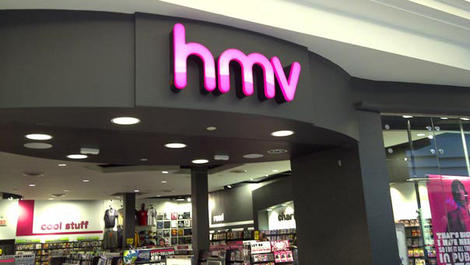 Terrible news for music fans: a much-loved record shop is going out of business. No, not HMV: Aberdeen's One Up, which will cease trading at the end of January.
One Up and HMV are very different, of course, but they faced the same problems: the rise of downloading, both legal and illegal; pressure from loss-leading supermarkets and tax-avoiding, subsidy-chasing online retailers; people shopping in suburban retail parks rather than on the high street; rising rents and other costs; people choosing to spend their disposable income on other things... it's a long list, death by a thousand cuts.
Here's the problem in a nutshell. Last night, I discovered there was a new compilation of music by Talk Talk, a band I love. I ordered it immediately.
From Amazon.
Terrible news for music fans: a much-loved record shop is going out of business. No, not HMV: Aberdeen's One Up, which will cease trading at the end of January.
One Up and HMV are very different, of course, but they faced the same problems: the rise of downloading, both legal and illegal; pressure from loss-leading supermarkets and tax-avoiding, subsidy-chasing online retailers; people shopping in suburban retail parks rather than on the high street; rising rents and other costs; people choosing to spend their disposable income on other things... it's a long list, death by a thousand cuts.
Here's the problem in a nutshell. Last night, I discovered there was a new compilation of music by Talk Talk, a band I love. I ordered it immediately.
From Amazon.
From "we browse" to "web browse"
The problem with the high street is that, clothes aside, if you're shopping there you're either mad, panic buying, or ineligible for a debit card. The high street is now where you go to look at the stuff you'll order online later. That was quite cool when only a few of us were doing it, but now we're all at it it's much more depressing. To take just three recent closures, Jessops put 1,370 people out of work, HMV's administration threatens around 4,500 more, and Comet put around 6,600 people on the dole. It's easy to point fingers at the firms and their strategies, but we should also be pointing fingers at ourselves. We can't moan that the high street is full of pound shops, charity shops and pop-up shops if we've been showrooming our way from shop to shop, scanning barcodes and ordering online - but equally when we're all skint and struggling, we'd be mad to pay high street prices when online shopping is so much cheaper.
Maybe we need to talk about this, because the money's moving out of the high street at an increasing rate: HMV, Jessops and Comet won't be the last big names to go out of business this year.
The effects are enormous: more people looking for work, fewer people paying tax, and less money going into HMRC's coffers because businesses made of clicks are a damn sight harder to tax than businesses made of bricks.
I don't know the answers, but I do know where this is heading: the world of Pixar's Wall-E, where a single retailer took care of every human need from birth to death. Buy n Large might not exist yet, but every HMV or One Up that shuts is bringing it one step closer.
We can't moan that the high street is full of pound shops, charity shops and pop-up shops if we've been showrooming our way from shop to shop, scanning barcodes and ordering online - but equally when we're all skint and struggling, we'd be mad to pay high street prices when online shopping is so much cheaper.
Maybe we need to talk about this, because the money's moving out of the high street at an increasing rate: HMV, Jessops and Comet won't be the last big names to go out of business this year.
The effects are enormous: more people looking for work, fewer people paying tax, and less money going into HMRC's coffers because businesses made of clicks are a damn sight harder to tax than businesses made of bricks.
I don't know the answers, but I do know where this is heading: the world of Pixar's Wall-E, where a single retailer took care of every human need from birth to death. Buy n Large might not exist yet, but every HMV or One Up that shuts is bringing it one step closer.

| |
Xbox 720 and PS4 heading for a March reveal?
 The new Xbox 720 and PS4 could be unveiled at a couple of ritzy glitzy media events as early as March 2013.
While some train their sights on June's E3 2013 video gaming conference for the next generation consoles to make their debuts, a Game Informer report says we'd be better to look around the Game Developers Conference in March for the big announcements, with hardware going on sale towards the end of the year.
Scheduling an all-singing-all-dancing media event slap bang in the middle of a shunned industry conference? Classic Apple move.
The new Xbox 720 and PS4 could be unveiled at a couple of ritzy glitzy media events as early as March 2013.
While some train their sights on June's E3 2013 video gaming conference for the next generation consoles to make their debuts, a Game Informer report says we'd be better to look around the Game Developers Conference in March for the big announcements, with hardware going on sale towards the end of the year.
Scheduling an all-singing-all-dancing media event slap bang in the middle of a shunned industry conference? Classic Apple move.
Limelight
The report explains that "both companies want to give their systems their own limelight", which may work better if they go one at a time. But if Microsoft and Sony blow their console loads early, does that mean we're in for a sedate E3 2013? Not so, promises the same report. "That doesn't mean E3 won't be without its surprises," it claims. "Next-gen games will be announced at the convention in preparation for the systems' release at the end of the year." But does that really explain away Microsoft's big E3 countdown? Of course, we prescribe a bucket of salt alongside any and all console speculation at this point. But one thing seems to be fairly certain: there will be some new consoles released this year.
| |
In Depth: CP+ 2013: What to expect
 Looking at the camera announcements to come out of the recent CES 2013 show in Vegas, you'd be forgiven for failing to get overly excited by the slew of compacts and relatively minor upgrades.
It seems that CES, which incorporates PMA, is the place for mass-market products to be announced.
However, it looks likely that CP+, the Japanese photographic trade show taking place at the end of January, will yield some exciting new photographic tech.
Here's what we could expect to see released at the end of the month, based on rumours and just a pinch of high hopes.
Looking at the camera announcements to come out of the recent CES 2013 show in Vegas, you'd be forgiven for failing to get overly excited by the slew of compacts and relatively minor upgrades.
It seems that CES, which incorporates PMA, is the place for mass-market products to be announced.
However, it looks likely that CP+, the Japanese photographic trade show taking place at the end of January, will yield some exciting new photographic tech.
Here's what we could expect to see released at the end of the month, based on rumours and just a pinch of high hopes.
Canon at CP+
 At CES, the most exciting product revealed by Canon was the PowerShot N. However, there are several other cameras in the lineup that haven't been updated for a while.
It's been rumoured that both a Canon EOS 7D and Canon EOS 60D replacement is on the cards for a while now, with some suggestions being that Canon will combine the two lines.
The introduction of a very high megapixel camera in the 1D line has also been suggested for some time. Since Nikon revealed the 36 million pixel D800 back in the early part of 2012, it's been rumoured that Canon would follow suit with a similarly, or higher, specced DSLR.
Last year CES saw the introduction of the Canon G1 X, a premium compact camera with a larger than average sensor. Perhaps the G2 X could be unveiled at CP+. We'd also like to see an entry-level DSLR with inbuilt Wi-Fi. As technology from top of the line cameras trickles down the line, will Canon be the first company to offer this functionality in a beginner model?
At CES, the most exciting product revealed by Canon was the PowerShot N. However, there are several other cameras in the lineup that haven't been updated for a while.
It's been rumoured that both a Canon EOS 7D and Canon EOS 60D replacement is on the cards for a while now, with some suggestions being that Canon will combine the two lines.
The introduction of a very high megapixel camera in the 1D line has also been suggested for some time. Since Nikon revealed the 36 million pixel D800 back in the early part of 2012, it's been rumoured that Canon would follow suit with a similarly, or higher, specced DSLR.
Last year CES saw the introduction of the Canon G1 X, a premium compact camera with a larger than average sensor. Perhaps the G2 X could be unveiled at CP+. We'd also like to see an entry-level DSLR with inbuilt Wi-Fi. As technology from top of the line cameras trickles down the line, will Canon be the first company to offer this functionality in a beginner model?
Nikon at CP+
 Although Nikon introduced two new entry-level compact system cameras at CES, and despite the extremely busy 2012 the company had, there are still some products ripe for upgrade.
The Nikon D300s was announced all the way back in 2009, and it still hasn't been replaced yet. Although the D600 came along towards the end of last year, the D300s is still listed in its current lineup. This suggests that it's a camera that could be replaced in the future.
Another camera that has been around for a while is the Nikon D7000. With most of the rest of the lineup upgraded in 2012, we wouldn't be surprised if this was next on the company's hitlist.
Although Nikon introduced two new entry-level compact system cameras at CES, and despite the extremely busy 2012 the company had, there are still some products ripe for upgrade.
The Nikon D300s was announced all the way back in 2009, and it still hasn't been replaced yet. Although the D600 came along towards the end of last year, the D300s is still listed in its current lineup. This suggests that it's a camera that could be replaced in the future.
Another camera that has been around for a while is the Nikon D7000. With most of the rest of the lineup upgraded in 2012, we wouldn't be surprised if this was next on the company's hitlist.
Olympus at CP+
 At Photokina 2012, Olympus updated the middle and bottom of its PEN range, placing the sensor from the excellent Olympus OM-D inside the smaller cameras.
However, the Olympus PEN E-P3, which currently sits at the top of the PEN lineup, was notably spared this upgrade. It's been suggested that the E-P3 replacement, most likely called the E-P5, will feature an inbuilt viewfinder. If that's the case, it'll be interesting to see how Olympus manages to distinguish it enough from the OM-D.
At Photokina 2012, Olympus updated the middle and bottom of its PEN range, placing the sensor from the excellent Olympus OM-D inside the smaller cameras.
However, the Olympus PEN E-P3, which currently sits at the top of the PEN lineup, was notably spared this upgrade. It's been suggested that the E-P3 replacement, most likely called the E-P5, will feature an inbuilt viewfinder. If that's the case, it'll be interesting to see how Olympus manages to distinguish it enough from the OM-D.
Panasonic at CP+
 Like the other electronics giants at the show, Panasonic used CES to unveil its latest compact camera refreshes. However, it's a company known for its quick turnaround times when it comes to releases and we expect a new CSC or two soon.
The Panasonic GF5 was announced in April last year, but as that was announced just 10 months after the Panasonic GF3, we wouldn't put it the past the company to issue another upgrade at CP+.
It's also possible that the Panasonic GX range will see an upgrade. The Panasonic GX1 has been on the market since December 2011, which in Panasonic terms is a relatively long time.
Like the other electronics giants at the show, Panasonic used CES to unveil its latest compact camera refreshes. However, it's a company known for its quick turnaround times when it comes to releases and we expect a new CSC or two soon.
The Panasonic GF5 was announced in April last year, but as that was announced just 10 months after the Panasonic GF3, we wouldn't put it the past the company to issue another upgrade at CP+.
It's also possible that the Panasonic GX range will see an upgrade. The Panasonic GX1 has been on the market since December 2011, which in Panasonic terms is a relatively long time.
Fujifilm at CP+
 Fuji was one of the companies to announce relatively major new products at CES in the shape of the Fuji X20 and the Fuji X100S, both upgrades of previously popular products.
However, that's not to say that the Japanese photography giant couldn't have something else hidden up its sleeve. Although it's not been around that long, the Fuji X-Pro1 could be next on the list for an upgrade, perhaps taking on board some of the features the company's learned from customer feedback after its re-entry into the interchangeable lens market.
If we don't see any new cameras, we might get the full specs on new lenses to be added to the range. We've been promised an increasing X-range lineup in 2013, so CP+ could be the place that new optics are officially revealed.
Fuji was one of the companies to announce relatively major new products at CES in the shape of the Fuji X20 and the Fuji X100S, both upgrades of previously popular products.
However, that's not to say that the Japanese photography giant couldn't have something else hidden up its sleeve. Although it's not been around that long, the Fuji X-Pro1 could be next on the list for an upgrade, perhaps taking on board some of the features the company's learned from customer feedback after its re-entry into the interchangeable lens market.
If we don't see any new cameras, we might get the full specs on new lenses to be added to the range. We've been promised an increasing X-range lineup in 2013, so CP+ could be the place that new optics are officially revealed.
Sony at CP+
 Sony used CES as an opportunity to refresh its compact cameras lineup. The company had a pretty busy 2012, unleashing new NEX compact system cameras on us, along with the eagerly anticipated Sony Alpha a99 and the pretty much unexpected RX1, both with the same full-frame (35mm) sensor.
Now many suggest that that sensor will make its way onto an NEX camera. If so, that will be a very interesting addition to the premium CSC market, and will surely make the likes of Nikon and Canon sit up and take notice.
If it does happen, it seems likely that the company will have to introduce a whole new range of optics as well, so watch this space.
Sony used CES as an opportunity to refresh its compact cameras lineup. The company had a pretty busy 2012, unleashing new NEX compact system cameras on us, along with the eagerly anticipated Sony Alpha a99 and the pretty much unexpected RX1, both with the same full-frame (35mm) sensor.
Now many suggest that that sensor will make its way onto an NEX camera. If so, that will be a very interesting addition to the premium CSC market, and will surely make the likes of Nikon and Canon sit up and take notice.
If it does happen, it seems likely that the company will have to introduce a whole new range of optics as well, so watch this space.

| |
New Myspace opens its virtual doors to the public
 Not exactly story of the year but the new Myspace has opened up to the public after a few months in private beta.
You can now sign up over at new.myspace.com, using your email address, Facebook account, Twitter account or your old MySpace log in.
Cutting the ribbon on the new Myspace had to play second fiddle to the launch of co-owner Justin Timberlake's new single, which you can also listen to on the site.
Not exactly story of the year but the new Myspace has opened up to the public after a few months in private beta.
You can now sign up over at new.myspace.com, using your email address, Facebook account, Twitter account or your old MySpace log in.
Cutting the ribbon on the new Myspace had to play second fiddle to the launch of co-owner Justin Timberlake's new single, which you can also listen to on the site.
What do you think?
We had a play with the site, concluding in our hands-on new Myspace review that it looks good, sounds good but might just be too late to compete with Spotify and other streaming services. Still, check it out for yourselves and let us know what you think in the comment box below or over on Twitter.
| |
LG shies away from Google Nexus 5 speculation
 LG has played down reports that suggest the Korean manufacturer has been lined up to produce the Google Nexus 5 smartphone.
Branding the claims as "unfounded", an unnamed LG spokesperson spoke to Korean site Chosun Biz about the firm's dealings with Google and the Nexus line of products.
This isn't a huge surprise after Google blamed LG for the delay in shipping Nexus 4 stock. Besides, the search engine likes to share the Nexus spoils among manufacturers, with HTC, Samsung and LG all getting a bite of the apple so far.
LG has played down reports that suggest the Korean manufacturer has been lined up to produce the Google Nexus 5 smartphone.
Branding the claims as "unfounded", an unnamed LG spokesperson spoke to Korean site Chosun Biz about the firm's dealings with Google and the Nexus line of products.
This isn't a huge surprise after Google blamed LG for the delay in shipping Nexus 4 stock. Besides, the search engine likes to share the Nexus spoils among manufacturers, with HTC, Samsung and LG all getting a bite of the apple so far.
Nexus 4 supply issues not LG's fault
The LG spokesperson also defend the firm when quizzed on the supply issues surrounding the Nexus 4, claiming that no such delays existed at the LG's end. This switches the blame back onto Google who some have accused of purposely throttling the number of units available in an attempt to increase hype and demand around the product. It's unlikely that we'll ever get the real reason behind the Nexus 4 shortage with both Google and LG seemingly happy to pass the buck.The NexTus tablet
According to the folks over at Mobile PC Online the Google Nexus 5 will arrive with a quad-core processor and 1080p display before the end of the year alongside a new tablet currently being dubbed the Google Nexus 7.7. As the name suggests the new Nexus tablet will apparently feature a 7.7-inch display which the Chinese site claims will be full HD, alongside a Tegra 4 quad-core chip and 2GB of RAM. While the suggestion of a new Nexus smartphone and tablet is hardly groundbreaking stuff, we're a little more reserved when it comes to the exact specifications of the devices with the sources of this information unknown, so don't get too excited just yet.
| |
Facebook sees 600,000 drop in UK users in December
 The UK could be falling out of love with Facebook if the latest figures are to be believed, suggesting a 600,000 strong exodus from the social network in December.
Although it's normal for there to be a dip in December usage, the UK was the only country of the top ten Facebooking territories to see a significant drop over Christmas.
That's according to Social Bakers' stats - and it's worth bearing in mind that figuring Facebook user data from outside of Facebook itself is a dark art and rarely completely accurate.
The UK could be falling out of love with Facebook if the latest figures are to be believed, suggesting a 600,000 strong exodus from the social network in December.
Although it's normal for there to be a dip in December usage, the UK was the only country of the top ten Facebooking territories to see a significant drop over Christmas.
That's according to Social Bakers' stats - and it's worth bearing in mind that figuring Facebook user data from outside of Facebook itself is a dark art and rarely completely accurate.
Rocky road
However, the downward trajectory in Facebooking Brits seems to be a theme across the last three months. What does it all mean? Well, it could be that the stiff upper lip is back and we're choosing to ditch Facebook in favour of hand-written letters and photo albums. More likely is that Facebook is approaching saturation point in the UK - the only way used to be up, now it could be that the only way is down. The USA, Facebook's biggest territory, also saw a negative change but it was down by less than half a per cent, as opposed to the UK's shedding of 1.86 per cent. Either way, faux pas like Facebook's little Instagram terms mishap won't help those wavering about whether to ditch the 'Book. Luckily for Zuck and co, fear of missing out will keep a lot of us in place. Perhaps today's little Facebook get together will tempt some of those 600,000 users back - after all, who can resist the promise of social search?
| |
Hands-on review: Updated: Sony Xperia Z
 The Sony Xperia Z is the phone that's set to propel the Japanese firm to the head of the phone charts - and if it went on specs alone, there's a good chance it would manage it.
We're looking at yet another redesign from the Sony design studios - from the Sony Ericsson Xperia Arc to the Xperia Z, we've had four iterations of the smartphone aesthetic.
The Sony Xperia Z is the phone that's set to propel the Japanese firm to the head of the phone charts - and if it went on specs alone, there's a good chance it would manage it.
We're looking at yet another redesign from the Sony design studios - from the Sony Ericsson Xperia Arc to the Xperia Z, we've had four iterations of the smartphone aesthetic.
- Sony Xperia Z release date: when and where can you get it?
 While we - rightly - lambast Apple for not really changing the look of the iPhone from model to model, this is a lot to take in. However, the good news is that the Xperia Z is probably the most attractive of the lot, with its superbly thin 7mm chassis, 1080p 5-inch screen and quad core Qualcomm processor kicking things along under the hood.
In short, this is the most powerful Sony smartphone ever made, and the brand tells us it's the first model it's really had a strong influence on since it took the manufacturing over from the Ericsson joint venture.
While we - rightly - lambast Apple for not really changing the look of the iPhone from model to model, this is a lot to take in. However, the good news is that the Xperia Z is probably the most attractive of the lot, with its superbly thin 7mm chassis, 1080p 5-inch screen and quad core Qualcomm processor kicking things along under the hood.
In short, this is the most powerful Sony smartphone ever made, and the brand tells us it's the first model it's really had a strong influence on since it took the manufacturing over from the Ericsson joint venture.
 The new design language will permeate through the entire Bravia range apparently, bringing an iconic look to products in the TV, phone and other categories.
It make sense, given Sony needs to push the 'connected home' message, but also probably means the Xperia Tablet S will be obsolete before it's even had a chance to get going.
But what of the Xperia Z, we hear you cry? Is this the final message in the Xperia range thanks to nabbing the last letter of the alphabet? Well, probably not, but it does deserve to have the Z moniker thanks to the sheer awesome power on offer.
The new design language will permeate through the entire Bravia range apparently, bringing an iconic look to products in the TV, phone and other categories.
It make sense, given Sony needs to push the 'connected home' message, but also probably means the Xperia Tablet S will be obsolete before it's even had a chance to get going.
But what of the Xperia Z, we hear you cry? Is this the final message in the Xperia range thanks to nabbing the last letter of the alphabet? Well, probably not, but it does deserve to have the Z moniker thanks to the sheer awesome power on offer.
 We've already mentioned the 1080p 5-inch screen, and it's probably both the most impressive and disappointing feature on the Xperia Z. It's impressive because it's so pin sharp, coming with a post-400 PPI and offering some lovely contrast ratios.
On top of that, it's much closer to the edges of the device, meaning that it has a footprint very close to the Samsung Galaxy S3 while packing that massive display. Think Motorola Razr i when you're holding it in the hand and you'll be pretty close.
We've already mentioned the 1080p 5-inch screen, and it's probably both the most impressive and disappointing feature on the Xperia Z. It's impressive because it's so pin sharp, coming with a post-400 PPI and offering some lovely contrast ratios.
On top of that, it's much closer to the edges of the device, meaning that it has a footprint very close to the Samsung Galaxy S3 while packing that massive display. Think Motorola Razr i when you're holding it in the hand and you'll be pretty close.
 However, we say we're disappointed in it as it really does lack the impression of a Super AMOLED screen when viewed even slightly off angle. Look at the phone on a table and you'll be surprised how washed out the display seems, compared to the almost printed-on nature of the Samsung S3 or Galaxy Note 2.
We say we're most disappointed in this feature and that tells a story in itself: it's not a big deal at all as you will mostly be looking at the phone straight on for 99% of the time, so for this to be the worst of it means it's an excellent smartphone.
However, we say we're disappointed in it as it really does lack the impression of a Super AMOLED screen when viewed even slightly off angle. Look at the phone on a table and you'll be surprised how washed out the display seems, compared to the almost printed-on nature of the Samsung S3 or Galaxy Note 2.
We say we're most disappointed in this feature and that tells a story in itself: it's not a big deal at all as you will mostly be looking at the phone straight on for 99% of the time, so for this to be the worst of it means it's an excellent smartphone.
 In the hand it feels superbly premium: light enough to be impressive, heavy enough to feel like you're getting a decent deal for the money. And add to that the fact it's water and dust resistant and you'll be so surprised it may fall from your hand.
And it would likely survive - just remember to clip on the covers for the various ports round the sides of the device.
In the hand it feels superbly premium: light enough to be impressive, heavy enough to feel like you're getting a decent deal for the money. And add to that the fact it's water and dust resistant and you'll be so surprised it may fall from your hand.
And it would likely survive - just remember to clip on the covers for the various ports round the sides of the device.
 The interface is also a pleasure to use: it's Android Jelly Bean 4.1 running on top of a Qualcomm Snapdragon S4 Pro quad core CPU with 2GB of RAM.
We're a little sad that we're not seeing Android 4.2 used here, but Sony assures us that it has placed a minimal skin over the top of the OS and can be upgraded very easily when needed.
The interface is also a pleasure to use: it's Android Jelly Bean 4.1 running on top of a Qualcomm Snapdragon S4 Pro quad core CPU with 2GB of RAM.
We're a little sad that we're not seeing Android 4.2 used here, but Sony assures us that it has placed a minimal skin over the top of the OS and can be upgraded very easily when needed.
 An upgrade to Android 4.2 is on the cards with Sony currently working on it and it hopes to make it available to users as soon as possible although no release date has been given just yet.
In terms of the interface, it's recognisably Sony but doesn't add too many bells and whistles; gone is the resource-intensive and pointless Timescape 'Splines' that dominated the old interface. Instead we're presented with a sea of icons and widgets that you can resize and change as you see fit, and not much else.
An upgrade to Android 4.2 is on the cards with Sony currently working on it and it hopes to make it available to users as soon as possible although no release date has been given just yet.
In terms of the interface, it's recognisably Sony but doesn't add too many bells and whistles; gone is the resource-intensive and pointless Timescape 'Splines' that dominated the old interface. Instead we're presented with a sea of icons and widgets that you can resize and change as you see fit, and not much else.
 The Sony Xperia Z will definitely appeal to those who are fans of stock Android but like the idea of having a little personalisation in their handset - although the lock screen does at least offer a cool way to open up the camera or unlock the phone.
You can have little home screens on this part of the interface too, so you can set calendar, social network or messaging updates to show without you needing to actually start up the phone proper-like.
The Sony Xperia Z will definitely appeal to those who are fans of stock Android but like the idea of having a little personalisation in their handset - although the lock screen does at least offer a cool way to open up the camera or unlock the phone.
You can have little home screens on this part of the interface too, so you can set calendar, social network or messaging updates to show without you needing to actually start up the phone proper-like.
 When we say that the skin is minimal, it really is; so the main points of differentiation have to come from the software enhancements.
To that end, the Mobile Bravia Engine 2 is the biggest leap forward on the phone – we were shown side-by-side comparisons between standard definition footage and the same with the BE2 algorithms applied – and it was startling.
When we say that the skin is minimal, it really is; so the main points of differentiation have to come from the software enhancements.
To that end, the Mobile Bravia Engine 2 is the biggest leap forward on the phone – we were shown side-by-side comparisons between standard definition footage and the same with the BE2 algorithms applied – and it was startling.
 The colours were so much more rich, the detail it 'discovered' was massively impressive, and the overall smoothness of what was a fairly fuzzy scene blew us away.
Sure, it looked a little over-sharp and saturated at times, and proper video buffs are going to moan about the fake enhancements, but in reality most users will see this mode as a real plus.
When it comes to media, we were a little shocked to find out that the Sony Xperia Z comes complete with a microSD card slot to supplement the meagre 16GB of onboard storage.
The colours were so much more rich, the detail it 'discovered' was massively impressive, and the overall smoothness of what was a fairly fuzzy scene blew us away.
Sure, it looked a little over-sharp and saturated at times, and proper video buffs are going to moan about the fake enhancements, but in reality most users will see this mode as a real plus.
When it comes to media, we were a little shocked to find out that the Sony Xperia Z comes complete with a microSD card slot to supplement the meagre 16GB of onboard storage.
 It's refreshing to see another top level manufacturer putting the option on there, and especially so when you consider the minimal thickness of the phone too.
As you can imagine, HD video looked simply superb on the expansive screen, and we can see the Xperia Z will be a really decent mobile for movies on the go.
It's refreshing to see another top level manufacturer putting the option on there, and especially so when you consider the minimal thickness of the phone too.
As you can imagine, HD video looked simply superb on the expansive screen, and we can see the Xperia Z will be a really decent mobile for movies on the go.
 The screen is also excellent for internet browsing (along with the RAM and processor combo, which on Wi-Fi were superbly speedy. We couldn't test it on 3G or 4G, but we'd imagine that it will be excellent on both as well, given the grunt and speed on offer).
Zooming in and out of text was a breeze and it meant that even if you wanted to view anything zoomed out, the text was really easy to read and made navigation that much easier.
The screen is also excellent for internet browsing (along with the RAM and processor combo, which on Wi-Fi were superbly speedy. We couldn't test it on 3G or 4G, but we'd imagine that it will be excellent on both as well, given the grunt and speed on offer).
Zooming in and out of text was a breeze and it meant that even if you wanted to view anything zoomed out, the text was really easy to read and made navigation that much easier.
 In short, when it comes to movies or internet browsing on the go, we couldn't really fault the Xperia Z. Of course, it does come down to price, but with one of the best processors on the market as well as an impressive screen there are going to be a lot of people drawn to the device.
Another one of Sony's strengths is the upgraded Exmor R sensor: it's now the Exmor RS version and it brings even greater low light ability. Sony is touting the improved photo quality, obviously, but its main feature is HDR video recording.
In short, when it comes to movies or internet browsing on the go, we couldn't really fault the Xperia Z. Of course, it does come down to price, but with one of the best processors on the market as well as an impressive screen there are going to be a lot of people drawn to the device.
Another one of Sony's strengths is the upgraded Exmor R sensor: it's now the Exmor RS version and it brings even greater low light ability. Sony is touting the improved photo quality, obviously, but its main feature is HDR video recording.
 This means the Xperia Z can handle full HD video, process each frame three times and decide on the optimal light level. It's an incredible amount of work going on when you consider it, so we'll be massively intrigued to see how the battery power holds up during our full Sony Xperia Z review.
The final thing that we really think is worth mentioning, especially with the possibly suspect battery power, is the data and power management on offer.
Sony has, it says, invented new technology that means the phone will be drawing very little power when in sleep mode (ie when the screen is turned off) and it will completely disable apps from being able to communicate during this time.
This means the Xperia Z can handle full HD video, process each frame three times and decide on the optimal light level. It's an incredible amount of work going on when you consider it, so we'll be massively intrigued to see how the battery power holds up during our full Sony Xperia Z review.
The final thing that we really think is worth mentioning, especially with the possibly suspect battery power, is the data and power management on offer.
Sony has, it says, invented new technology that means the phone will be drawing very little power when in sleep mode (ie when the screen is turned off) and it will completely disable apps from being able to communicate during this time.
 The first phone to perform such a trick is the Sony Xperia E, a more budget offering, but the difference between these two is that the Xperia Z can intelligently decide which apps should be able to communicate and which shouldn't.
The user will have to specify which apps they think should be able to run under the lock screen, for instance Facebook Messenger or Skype, but Sony still thinks that battery standby life could be improved by a large order of magnitude with this new technology.
The first phone to perform such a trick is the Sony Xperia E, a more budget offering, but the difference between these two is that the Xperia Z can intelligently decide which apps should be able to communicate and which shouldn't.
The user will have to specify which apps they think should be able to run under the lock screen, for instance Facebook Messenger or Skype, but Sony still thinks that battery standby life could be improved by a large order of magnitude with this new technology.

Early verdict
There's no doubt that Sony has stepped up its game with the Xperia Z. We were pretty unimpressed with the screen quality when we first saw the handset sitting nonchalantly on the table, and if you're not using the phone straight on, then you may not think you're staring at a top-end smartphone. But that aside, the rest of the device impressed us hugely. From the premium design, the weight and industrial casing and the larger edge-to-edge screen to the high-end Exmor RS sensor and Bravia Engine 2, there's so much that Sony will be able to tout on its marketing literature. We're getting used to our hands on reviews yielding promising smartphones these days, so we'll reserve a lot of judgment until we get our final review sample in. But based on our early look with the device there's definitely a lot of positivity surrounding it, and the fact that Sony has finally joined the big boys with a powerful smartphone is enough to pique our interest at the very least.
| |
First photo claiming to be taken on a Samsung Galaxy S4 appears
 With CES 2013 now out of the way expect to see a lot more leaks surrounding the Samsung Galaxy S4, with the latest suggesting it will sport a 10MP camera.
The details have come from an image uploaded to Google's photo sharing site Picasa, which claims to be taken on a device sporting the model number SGH-N045.
This is thought to the be aforementioned Samsung Galaxy SIV, although the shot of what appears to be some floor, a filing cabinet and a table leg fails to fill us with confidence.
With CES 2013 now out of the way expect to see a lot more leaks surrounding the Samsung Galaxy S4, with the latest suggesting it will sport a 10MP camera.
The details have come from an image uploaded to Google's photo sharing site Picasa, which claims to be taken on a device sporting the model number SGH-N045.
This is thought to the be aforementioned Samsung Galaxy SIV, although the shot of what appears to be some floor, a filing cabinet and a table leg fails to fill us with confidence.
 The resolution of the picture is 4128 x 2322, which pegs it around the 9.6MP mark, leading people to believe the Samsung Galaxy S4 will pack a 10MP camera – up from the 8MP snapper on the Galaxy S3.
We've seen phones launch with 13MP cameras recently including the Sony Xperia Z, Huawei Ascend D2 and ZTE Grand S, so we wouldn't be surprised if Samsung followed suit with the Galaxy S4 and boosted the camera to match these.
All the details have been pulled from the photo's EXIF data which can be easily forged so there's no guarantee that the image is from Samsung's next flagship smartphone.
The resolution of the picture is 4128 x 2322, which pegs it around the 9.6MP mark, leading people to believe the Samsung Galaxy S4 will pack a 10MP camera – up from the 8MP snapper on the Galaxy S3.
We've seen phones launch with 13MP cameras recently including the Sony Xperia Z, Huawei Ascend D2 and ZTE Grand S, so we wouldn't be surprised if Samsung followed suit with the Galaxy S4 and boosted the camera to match these.
All the details have been pulled from the photo's EXIF data which can be easily forged so there's no guarantee that the image is from Samsung's next flagship smartphone.

| |
Facebook to launch search engine today?
 Facebook is busy "building" something that will be revealed at an event later today, and the latest reports suggest that it could be a search engine.
"What, no Facebook phone?" we hear you cry. Given the dearth of leaks, we'd say new hardware is unlikely to be unveiled today - not to mention the fact that Mark Zuckerberg publicly stated that knocking out a handset would be the "wrong strategy" for the company.
Facebook is busy "building" something that will be revealed at an event later today, and the latest reports suggest that it could be a search engine.
"What, no Facebook phone?" we hear you cry. Given the dearth of leaks, we'd say new hardware is unlikely to be unveiled today - not to mention the fact that Mark Zuckerberg publicly stated that knocking out a handset would be the "wrong strategy" for the company.
No phone
But something big is coming, and Pocket-Lint is reporting that "inside sources" have told it that Facebook's plan is to launch a Google-baiting search engine. The sources added that the new search feature is expected to roll out shortly after today's event. Whatever the announcement is, the mere fact that it's happening caused Facebook shares to jump as financiers get excited about all the potential money-reaping tweaks that the social network has in mind for its 800 million plus active users. We'll be covering the Facebook event as it happens, so check back at 10am PT, 6pm GMT for the news as it breaks.
| |
Celerity teams up with ClickSquared
 Data management company Celerity has formed a worldwide partnership with US company ClickSquared to provide the latter's Cross-Channel Marketing Hub to its clients.
UK based Celerity will be able to market the campaign management software-as-a-service alongside its CRM consultancy products and services.
The Hub is a cloud based solution that comes with email and mobile delivery, customer intelligence tools, customer scoring and social apps.
Jason Lark, Celerity's managing director, said: "By combining the features and functionality of ClickSquared's Hub with our best-in-class marketing programs and data solutions, we can provide clients with a robust, integrated offering that eliminates the need to maintain multiple standalone platforms.
"Beyond its platform, we found ClickSquared's depth of marketing knowledge, email delivery expertise, data management acumen and understanding of systems integration to align nicely with Celerity's core strengths."
ClickSquared claimed it is the only company offering this type of SaaS, cross-channel campaign management software.
Data management company Celerity has formed a worldwide partnership with US company ClickSquared to provide the latter's Cross-Channel Marketing Hub to its clients.
UK based Celerity will be able to market the campaign management software-as-a-service alongside its CRM consultancy products and services.
The Hub is a cloud based solution that comes with email and mobile delivery, customer intelligence tools, customer scoring and social apps.
Jason Lark, Celerity's managing director, said: "By combining the features and functionality of ClickSquared's Hub with our best-in-class marketing programs and data solutions, we can provide clients with a robust, integrated offering that eliminates the need to maintain multiple standalone platforms.
"Beyond its platform, we found ClickSquared's depth of marketing knowledge, email delivery expertise, data management acumen and understanding of systems integration to align nicely with Celerity's core strengths."
ClickSquared claimed it is the only company offering this type of SaaS, cross-channel campaign management software.

| |
Budget iPhone to go back to plastic?
 There's a growing voice saying Apple is working on an entry-level iPhone and the latest report suggests it will ditch the fancy glass finish for a more economical plastic chassis.
Apple is no stranger to the use of plastic on its phones as it used the material on its handsets up to the iPhone 3GS, with the well known glass-metal combo only coming into effect with the iPhone 4.
Now Digitimes has spoken to one of its infamous "upstream supply chain sources" which has "confirmed" that the budget iPhone will sport the plastic chassis of old in an attempt to keep costs down.
There's a growing voice saying Apple is working on an entry-level iPhone and the latest report suggests it will ditch the fancy glass finish for a more economical plastic chassis.
Apple is no stranger to the use of plastic on its phones as it used the material on its handsets up to the iPhone 3GS, with the well known glass-metal combo only coming into effect with the iPhone 4.
Now Digitimes has spoken to one of its infamous "upstream supply chain sources" which has "confirmed" that the budget iPhone will sport the plastic chassis of old in an attempt to keep costs down.
No brainer
This hardly comes as much of a surprise, as using cheaper materials for the handset's body is one of the key ways for Apple to keep the price of the final unit low. A plastic chassis could be music to the ears of clumsy iPhone owners who have seen their shiny smartphones shatter as they hit the deck – just ask our very own Kate Solomon and Gareth Beavis, who both managed to smash iPhone 4s back in the day. We're not counting our chickens just yet though as Digitimes doesn't have a particularly glistening track reckord with these sort of leaks and there's been no official word from the Cupertino-based firm that it's even considering a cut-price iPhone. According to the same source the first entry-level iPhone will hit stores in the second half of 2013 – we'll just have to wait and see.
| |
Updated: 10 bizarre gadgets from CES 2013
 Formation helicopters, mind-controlled cat ears, forks that measure what you eat and air-conditioned shirts: the bizarre side of tech from CES 2013.
1. Swiveling cat ears
With the power of your mind! Neurosky's brainwave scanning band really works, but are cat ears showing your feelings really the best use?
2. Parrot AR Drone
Parrot's gyroscopic AR Drone quadcopters flying in formation; the real Top Guns fly some 100 miles west of Vegas at China Lake
3. HAPIfork
Slow down and chew your food properly, or the HAPIfork will start buzzing; it doesn't check if your elbows are on the table though.
4. Dhama Pursuit business shirt
Stay cool, or warm, or just right. Dhama's Pursuit business shirt has built-in heating and cooling from 73 to 122 degrees – but no Jackie Chan moves.
5. TrackingPoint guns
Bringing a whole new meaning to point and click, TrackingPoint's Linux-powered guns have head-up displays for choosing your target.
6. Lifeproof Kitchen iPad case
It's not a chopping board, but if you use your iPad for recipes this hermetically sealed Lifeproof case will keep it clean in the kitchen.
7. Acase Black Diamond IIIs
There's no shortage of Bluetooth speakers at CES but the Black Diamond IIIs from Acase are the only ones you're likely to mistake for disco lights.
8. Apple Juice cleaner
This screen cleaner really does smell of fresh apples; especially if you press too hard and spray it all over your shirt…
9. Tylt Energi
Tylt's Energi backpack with a hefty battery can charge your iPad but it might also turn you bright green
10. Pinlo stands
These adorable stands from Pinlo customise your iPhone power supply and cuddle your phone while it charges
11. Aaaaah
What everyone who goes to CES really wants: the time to lie back and rest weary feet in a massage chair!

| |
Available Tags:Sony , Tablet , BlackBerry , HTC , 4G , UK , USB , Facebook , Samsung , GPU , PS4 , Xbox , LG , Google , Galaxy , iPhone ,


No comments:
Post a Comment