

New Sony Reader PRS-T2 comes with the boy who lived

Sony has unveiled the Reader PRS-T2, its latest touchscreen ereader that boasts two months of reading time.
That's if you keep the Wi-Fi off, but it still manages an acceptable 1.5 months with it on from a two-hour charge.
The fact that we've gone with Harry Potter and battery life as two stand-out features should give you an idea of how revolutionary the Reader PRS-T2 is.
E-inkling
The touchscreen is an E-Ink affair so it's kind to the eyes, and the Reader PRS-T2 comes with 2GB of internal memory and the option to expand that using the Micro SD slot.As with all of Sony's ereaders, you can download books from the Sony Reader Store as well as sending documents and the like to the gadget using Evernote.
There's pinch-to-zoom, web look-up and the ability to highlight passages if you want to come back to them later.
If you're reading something particularly cerebral and want to brag about it, the PRS-T2 comes with social networking integration for Twitter and Facebook (although there's really no need to let everyone know when you're reading 50 Shades of Grey).
The Sony Reader PRS-T2 is up for pre-order from August 17 in an array of colours (red, white and matt black) with a stylus to boot. Sony hasn't given a delivery date or exact price yet, so stay tuned for that.
But if all that wasn't enough for you, Sony's collaboration with Pottermore means that you get a free e-copy of Harry Potter and the Philosopher's Stone when you pick the reader up (as if you haven't already read it 73 times).

 |  |
Read More ...
Updated: Best cell phone: 20 top handsets in the US
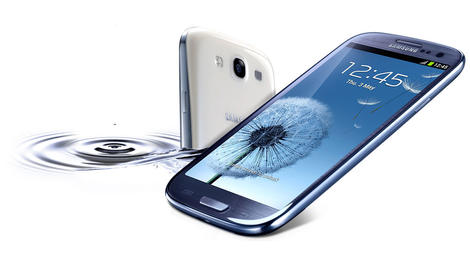
Best cell phone: Overview
What's the best phone? Our verdict on the best smartphone / best cell phones - constantly updatedSometimes choosing between two phones is easy. Just look at the specs and it becomes woefully clear that some phones (even those positioned directly against one another) aren't created equal.
But most the time it's not as easy as just reading numbers. A phone is something you'll use everyday for two years (if you're lucky). It needs to be durable, adequately future-proof, and feel right in your hand. So where do you find this information?
Where do I begin?
Our pre-release list of new mobile phones is a great spot to start, but if you're craving more, we're happy to oblige. Because here we have our continually-updated comparison of the top 20 best cell phones you can get in the US.While we've provided you with a ranking as well as a brief overview of every phone and why we love it, feel free to check out our incredibly extensive mobile phone reviews for a more in-depth look to decide for yourself which cell phone is best.
If you've been wondering which is the best cell phone, we've got answers for you. Click on to read our rankings of the best cell phones in the US.
Number 20: LG Thrill 4G

If you like 3D, you'll love the LG Thrill 4G (known as the LG Optimus 3D outside of the States).
It's not perfect. It's a little chunky for our tastes (11.9 mm thick) and heavy (168g), but it's hard to feel like it's anything but incredible after seeing what's encased. Inside you'll find a 1GHz dual-core processor and the technology that feeds out a surprisingly crisp glasses-free 3D 4.3-inch display.
That's right, glasses-free 3D display. On your phone.
Sure, it's a novelty, but it's far from a gimmick. LG has gone the distance here, including dual 5 MP HD cameras that are capable of capturing videos in Stereoscopic 3D.
Even better, it's not too expensive. It costs $299.99 off contract, but its only $49.99 on two-year contract.
Quick verdict
If you must have one, the LG Thrill 4G is the one we recommend. It's fast, it's functional as a day-to-day phone, and it's cheap. But don't hesitate to check out the HTC Evo 3D if you're still not sold.LG Thrill 4G review
Number 19: Samsung Infuse 4G

Above all, the Samsung Infuse feels big and fast. At 4.5-inches it'll feel too large in some hands, but it's so thin you might just be surprised.
How thin? At 8.8mm it's thin enough for AT&T to bill it as its thinnest 4G phone (though the Motorola Droid Razr [7.1mm] is thinner on Verizon, and the Huawei P1 S is destined to snatch up both titles).
The Samsung Infuse 4G's main selling point might be its agreeable size, but it's also packing a fantastic camera and equally impressive video capabilities.
And while AT&T's 4G might be more marketing than actual bandwidth, the Infuse 4G is AT&T's first 4G phone boasting Category 14 bandwidth, which means there's plenty of speed to make it feel like it's almost, you know, actual 4G.
That LTE skimping also means the Infuse 4G doesn't burn through its battery too quickly. In fact, we found the Infuse 4G had a surprisingly long life, even with the large, bright display.
Quick verdict
It might not be one of Samsung's flagship phones, but the Samsung Infuse 4G is packing enough goodies to be one of our favorite phones.Samsung Infuse 4G review
Number 18: Motorola Droid Bionic

We're fans of Motorola's unnamed, heavily tweaked user interface. It's sleek and cool, and on no phone does it shine as brightly as on the Droid Bionic, which zips along quickly with its dual-core processor.
But that's not the only zippy thing about the phone - it's also able to access true 4G LTE offered by Verizon. These speeds are fast and we were able to routinely notch download speeds in excess of 20 Mbps and upload numbers around 11 Mbps.
That, of course, will burn right through your battery, and while the 1,735 mAh Lithium Ion battery puts up a good fight, it's still no match for battery sucking LTE. When you aren't using LTE, we found the phone lasted at least through the day, which is more than we can say for quite a few others.
Quick Verdict:
While it's not as inspiring as the Razr, and its battery suffers much more than the Razr Maxx, we still can't help but love the utilitarian phone of the bunch. And, at $150 on contract, the price is right.Motorola Droid Bionic review
Number 17: HTC Wildfire S

The Wildfire S might only be a slightly updated Wildfire, but it's the only chance we have at the popular handset in the States.
It's not too fast, and ultimately not too powerful; but what it lacks in sheer horsepower, it makes up for in form factor. The tiny 3.2-inch screen makes it feel small in the hand, but it's well-constructed and far from a toy.
If you're stuck on T-Mobile with a small budget, you could do a whole lot worse.
Quick Verdict
The HTC Wildfire S is free on a two-year contract with T-Mobile. While you'll sacrifice a lot of bells and whistles to get this form factor, if you're looking for a compact phone on T-Mo, you won't find much better than the Wildfire S.HTC Wildfire S review
Number 16: Google Nexus S 4G

The Google Nexus S 4G doesn't look good on paper. With 512 MB of dedicated RAM and 1GHz processor, it's outperformed by a wide variety of phones on our list.
But when it released donning its Gingerbread coating and novel contoured display, it was undeniably the hotness. But even now, it's still a perfectly reasonable option, and might just look more compelling than ever to some phone enthusiasts.
That's in part because it's cheaper than ever (Free on contract - a whopping $399 saving).
The Super AMOLED screen still looks as good as it did on day one, and we're big fans of the 'Pure Google' experience. When Google finally rereleases Ice Cream Sandwich, it'll be an even more compelling option. Plus, it's available on Sprint and AT&T - a rare combination.
Quick verdict
While its specs are looking increasingly underwhelming, there's just about no way you'll find a cheaper, better built phone, that's sporting ICS.Google Nexus S review
Number 15: Samsung Captivate Glide

The Samsung Captivate Glide is mostly just the Galaxy S2 with a slide-out QWERTY keyboard, and we're definitely not complaining about that. Especially since the keyboard on the Glide feels great.
It's also sporting a loveably long list of enviable features, not least of which is the high-end 8MP rear camera.
If you must have a QWERTY phone, and can't wait for the Droid 4, the Captivate Glide is not a bad choice (in fact, it might be the best choice).
Quick verdict:
If you can wade through all the AT&T bloatware, you'll end up with the snazziest keyboard phone this side of the Droid 4.Samsung Captivate Glide review
Number 14: Motorola Atrix 2

The Motorola Atrix 2 is more like a Motorola Atrix S, in that it's more an evolution than a sequel. But that doesn't mean there's nothing to see here.
The Atrix 2 is a dual-core phone with a slightly larger screen (4.3-inches compared to the predecessor's 4-inch) and a load of accessories that make it worthy of our desires.
It's light and portable, has a long-lasting battery, and a low price. While it's not the flashiest phone we've seen, it'll still turn heads once it's plugged into its horizontal cradle.
Quick verdict:
If you dig the Motorola experience and flashy accessories (let's be honest, we all do), the Atrix 2 is an attractive option.Motorola Atrix 2 review
Number 13: HTC Vivid

A good LTE phone on AT&T's network is hard to find. While the phones are slowly being rolled out, we have to say the HTC Vivid has secured a spot in our hearts as "AT&T's second best LTE phone."
It's not a slouch on specs, with a 1.2GHz dual-core processor, 4.5-inch qHD, 8MP rear facing camera, 16GB of internal memory, and luscious Sense 3.0.
Predictably, battery life isn't great, and the phone is just a little too boring (not to mention heavy) to warrant a higher spot on the list.
Quick verdict
The price reflects our concerns, and for $99.99 on two year contract, it's absolutely as cheap a ticket as you'll find for AT&T's budding LTE network. If price is no object, we'd recommend the LG Nitro HD (we're getting there), but either way, there's no denying the HTC Vivid is more than adequate.Number 12: Blackberry Curve 9350/60/70

The Blackberry Curve 9360 might not be anything like the leagues of gorgeous touchscreen phones on the list, but once you've used one, you just can't write it off. There's no denying it's earned a place on the list.
With a crisp screen, a great size, and more features than we've come to expect from the Curve line, we found ourselves happy with the slim phone and full QWERTY keyboard.
The Blackberry Curve 9300 series is also on every major carrier, and better yet, costs a measly $29.99 on contract.
Quick verdict
Huge touchscreens might be the way of the future, but the Blackberry Curve 9300 series proves if you do something right you don't have to follow the pack. If you're looking for a budget phone with a lot of heart, you could do much worse than the 9360.Blackberry Curve 9360 review
Number 11: Apple iPhone 4

The iPhone 4 was a polarizing and inspiring phone. The phone had an industrial design with a sturdy construction and no plastic in sight.
Unfortunately, in what seemed like hours, someone had found that holding the phone in a certain way negatively affected reception - and "Antennagate" was born.
Things have only gotten better for US iPhone owners in the last year. Antennagate has ended, the iPhone has found its way onto multiple carriers (finally), released in a new color (white), and received the incredible iOS 5 update, which has completely revitalized the operating system.
Throughout it all, the iPhone 4 has remained a viable - if not excellent - option for people looking for a new phone, music player, or the ultimate app device.
The iPhone 4's gorgeous Retina Display is still one of the best looking displays on any handheld. The pixels are so small it's almost impossible to even differentiate them on the screen.
While it's not on Sprint, and it's Siri-less, there are still ample reasons to invest in Apple's ecosystem.
Quick Verdict
If you want an iPhone but aren't willing to shell out for a 4S, the iPhone 4 is still a plenty compelling device. The fact that it looks and feels exactly the same as the 4S also means if you only buy phones for looks, you'll still have a year to feel outdated (not that we condone this kind of behavior).The fact that you can choose between two service providers (Sprint only stocks the 4S), two colors, and walk out of the store with an 8GB iPhone 4 for $99 makes most other "deals" seem weak in comparison.
Apple iPhone 4 review
Number 10: Motorola Droid Razr

At 7.1mm thick at its thinnest point, the Droid Razr is the slimmest smartphone in the world (until the Huawei P1 S releases, anyway). And sure, while nobody's really sweating an extra .5 mm here and there, the Razr really didn't sacrifice anything to fit the mind-melting form factor.
It still has a gorgeous Super AMOLED screen. It still has a dual-core 1.2 GHz processor. It still has an 8MP camera capable of 1080p video recording.
So what did it sacrifice? Not as much as you'd think. When compared to its recently released Maxx cousin, the Razr could have had a bigger battery.
But you're not even necessarily picking form over function - the Razr might be one of the most capable and appealing phones on the market, even before you factor in its thickness.
Quick verdict
Thin is in, and the Droid Razr brings more than just looks. If you're looking for a cheap option that will perform admirably, and still look sleek for years to come, the Droid Razr might just be for you.Motorola Droid Razr review
Number 9: Blackberry Bold 9900

The Bold 9900 might be the best messaging device ever created. Everything from the chassis to the ultra-comfortable keys all feel made for your hand, and once you've sent an email or two from the 9900, you'll curse the day touchscreens took over.
OS 7 isn't anything to write home about, but it doesn't need to be. This is a phone with function being central to its purpose.
While we'd prefer something a little cheaper and with an LTE by its name, the Bold 9900 certainly isn't a slouch. In fact, it's pushes NFC technologies quite admirably.
Quick verdict
If you must have a Blackberry (and your wallet's not on a diet), you don't have to think twice. The Curve is beyond capable, and while your phone might not get any sidelong glances, you'll still have a highly usuable phone.Blackberry Bold 9900
Number 8: LG Nitro HD

The LG Nitro HD is the best LTE phone on AT&T's network. If your stars align in such a way that you're covered by AT&T's tiny (but flourishing) LTE network, the LG Nitro is the best way to go.
The blazing fast internet displays on a gorgeous 4.5-inch display, offering a 1280 x 720 pixel resolution, at 329 pixels per inch.
LTE might be the ultimate battery leech, but the 1830 mAh battery offers at least a little fight.
Quick verdict
If you're not currently covered by AT&T's LTE network, this might not be the phone for you. AT&T's network has been growing rapidly, but unless you're specifically looking for something to tear through the internet, there's still no reason to get an LTE phone on AT&T.But if you are, and you're not afraid to spend two hundred bucks on a phone, this is a fantastic option.
Number 7: HTC Sensation 4G

The HTC Sensation 4G is a dual-core powerhouse, slathered in Sense 3.0.
The Sensation 4G delivers all of the best HTC features - a well integrated contacts app, customization, and more - all packed in a stylish device.
While the Sensation 4G is a plenty solid and well-designed device, we can't help but feel a little spiteful that the XE, with a faster processor and an even bigger battery (not to mention Beats audio and headphones) never made its way to the States.
Though the latter doesn't truly detract from the former. The Sensation 4G is still a great phone, and Sense 3.0 is smooth and enjoyable to use with tons of slick 3D animations that never stutter.
Quick verdict
The Sensation 4G is in desperate need of a bigger, better battery, and we're not sure why the camera is quite as slow as it is, considering everything else is so fast.But those complaints aside, the Sensation 4G is an absolute jewel. This is the phone that anyone who brags about specs should want.
HTC Sensation 4G review
Number 6: Sony Ericsson Xperia Ray

In the US, there seems to be an arms race to create the largest phone, and it's easy to forget that smaller doesn't always correlate with inferior quality. This is clearly evidenced in the ridiculously sharp Xperia Ray.
Unlike many other "small phones," The Xperia Ray is in no way a budget phone. Instead the Ray basically packed it with the innards of the Sony Ericsson Xperia Arc. That means it's a surprising powerful phone with a crystal clear display.
It also has an 8MP camera with HD video recording capabilities, and that smaller display might explain why that thing has such a great battery life as well.
Granted, that small display (and we're talking 3.3-inches small) won't be for everyone. But anyone willing to sacrifice the extra screen real-estate will find a lot to love.
Quick verdict
The Xperia Ray is the best cell phone you can get at this form factor. Small and undeniably "cute" without being over the top; The Xperia Ray sacrifices nothing and delivers a small phone that delivers big results.Sony Ericsson Xperia Ray review
Number 5: Motorola Droid Razr Maxx

Number 5: Motorola Droid Razr Maxx
Frankly, LTE kills batteries. Fast. Often times the hit battery takes makes LTE is not worth turning on at all.But the Razr Maxx has an enormous 3,300 mAh battery that allows you to browse on. And on. And on.
Everything that makes the Droid Razr so amazing is in the Droid Razr Maxx. The only compromise is the thickness of the device, and what you get for it is a whole lotta battery.
Unlike most LTE phones that don't even last seven hours, the Motorola Droid Razr Maxx allows you to browse on LTE for seven hours. Or talk for 21 hours. Or watch videos for 15 hours.
In other words, it's the world's first LTE phone you can use like a normal phone.
Quick verdict
If you absolutely must have an LTE phone, and you absolutely must use 4G speeds at all times, the Droid Razr Maxx is the snazziest phone you'll find.Motorola Droid Razr Maxx review
Number 4: Sony Ericcson Xperia Arc S

Number 4: Sony Ericcson Xperia Arc S
The Arc S might not have delighted many Arc owners when it launched only a few months after the Arc released, but we, on the other hand, were absolutely thrilled.This phone has a list of impressive features a mile long. Perhaps the best of all of these features is the incredibly sharp Reality Display with Bravia Engine.
But then there's the 8.1 MP camera with Exmor R technology, the 3D panorama mode, deep Facebook integration, and the gorgeous Sony Ericsson overlay.
One of the only "flaws" of the phone is that it's not dual-core powered, but the 1.4GHz processor seems perfectly fast inside the Arc S.
Quick verdict
It's a stunningly beautiful phone with a whole lot of features you can't find anywhere else. Yes, we're living in a dual-core, LTE world now, but a good phone is a good phone, and the Xperia Arc S proves there's more to a handset than a list of specs.Sony Ericsson Experia Arc S review
Number 3: Samsung Galaxy Nexus

Number 3: Samsung Galaxy Nexus
This might come as a surprise, but here in the States the Galaxy Nexus is king.Why? It's simple - The Galaxy Nexus is the only phone in Google's favored line with LTE. It's almost hard to believe - Stateside, half the phones seem to tag on an obligatory "4G" to the end of their names, but if you want a truly fast internet with a 'pure Google' experience, the Nexus is your only choice.
Of course, the Galaxy Nexus has some fairly big problems that might make you reconsider the device. The LTE will absolutely destroy the already fickle battery, it has no SD slot, and no way to expand the memory (so you're stuck with a measly 16GB).
To add insult to injury, it's not even our favorite Samsung body.
But, don't get the wrong idea - we love this phone.
At 4.65 inches, the Galaxy Nexus is the right kind of large. The display is especially gorgeous, rocking a 720 x 1280 resolution, which gives it an ultra-sharp 361 pixels per inch.
The LTE is insanely fast, the keyboard is simply fantastic, and all of those Ice Cream Sandwich features (like facial unlock) are fun and well-suited to the device.
Quick verdict
If you're not dying to get your hands on Ice Cream Sandwich, you could justify waiting on the next batch of phones to receive the update.But you don't have to wait - the Galaxy Nexus is a fantastic phone, with a great build quality, LTE capable, and sporting the best operating system ever offered by Google.
Samsung Galaxy Nexus review
Number 2: Apple iPhone 4S

Number 2: Apple iPhone 4S
The iPhone 4S didn't blow us away with an all-new, revolutionary design like many had hoped. But it didn't really have to. It's still the best-built phone in the world.And even though many were hoping for a larger display, LTE, and an entirely new design, the iPhone 4S came packing enough goodies to make it our number 2 phone.
Siri hasn't made an impact everywhere, but thanks to some deep integration with Google Maps and Yelp in the United States, she's been able to help us make reservations, reminders, and make calls when typing just wasn't an option.
While some may still call her a gimmick, she's proven to be deeply useful in small, but numerous, everyday tasks.
And did we mention the camera? The iPhone 4's already fantastic camera got an upgrade, with an 8MP sensor and better glass than ever before. The pictures that come out of this phone are bright, clear, and colorful.
There's also iOS 5, which lets you backup almost everything useful to iCloud, and Messages, which circumvent the major carriers and allow free iPhone to iPhone messaging.
Quick verdict
Luxury, and specifically Apple Luxury, doesn't come cheap. If you want to enter Apple's garden, you'll have to drop some major dollars - but we suspect if you're interested it's probably already your favorite phone on the market.When you buy an iPhone you get the whole package. An App Store filled with the biggest apps, a tack sharp camera, the best iPod around, and a lovely personal assistant - and the iPhone 4S has the best of them all.
Apple iPhone 4S review
Number 1: Samsung Galaxy S2

Number 1: Samsung Galaxy S2
Surprise! Our best phone in the world is also our best cell phone in the States! Who'd have guessed?Likely anyone who's ever used the mind-bogglingly awesome S2. The Samsung Galaxy S2 is really something special. Even after all this time, the phone still "just works" better than any other phones we've ever used. So what makes it so special?
Just about everything.
It's a dual-core phone (1.2GHz processor), with a gorgeous Super AMOLED Plus screen, and a media player that might even be better than the iPhone's.
It can take excellent shots (not quite as good as the iPhone 4S), and record in 1080p - which can be a little sketchy at times, with a less than great focus.
Like many other phones on this list, it doesn't have LTE - which is probably part of the reason the battery holds up. Suffice it to say, until every phone sports a Razr Maxx-sized battery, a lack of LTE isn't always a bad thing.
Quick verdict
The Samsung Galaxy S2 really has it all - Flash integration, a great camera, awesome video capabilities, and clear call quality.Even better, in the US you have more SII options than you can swing a two-year contract at. If you're not sold on the tried-and-true S2, you can get one with LTE, one with a slide-out keyboard, or one with a 5-inch screen.

| |
Read More ...
Review: Asus GTX 660 Ti DCU II Top

Introduction
We've been waiting for the mainstream-oriented Nvidia GeForce GTX 660 Ti to hit the shelves since we first saw the Kepler architecture way back in March this year. As is its wont Nvidia brought the top-end GeForce GTX 680 out first, aiming squarely at AMD's top GPUs, and to start with had the edge.As time has moved on though the AMD Graphics Core Next architecture, exemplified by the excellent AMD Radeon HD 7970 GHz Edition, has proven to be a tough nut to crack. As the AMD driver sets have matured and more Compute-focused game engines have emerged, such as those powering DiRT Showdown and Sniper Elite, the Radeon cards have taken the ball and ran with it.
Nvidia is looking to fight back now though with the GTX 660 Ti, and in the volume end of the market that's where you want your graphics cards to take the crown. That's where the bulk of the graphics card upgrade money is spent and it's the segment which can make or break a GPU generation.
This Asus GTX 660 Ti DCU II Top is the Taiwanese company's heavy overclocking card, and as such has come to market with seriously tweaked clocks, a bespoke PCB and cooling solution as well as a price premium on top too.
GPU genes
So what makes up this new mainstream GPU then? Well, it's the self same Kepler GPU which has made up the bulk of Nvidia's 600 series cards.So it's the GK104 chip, the same as in the the GeForce GTX 690, GTX 680 and the GTX 670. In fact it's an almost identical chip to that in the most recent Kepler card, the GTX 670, but with a few key parts turned off or turned down.
It's still rocking seven of those SMX modules, so comes with a total of 1,344 CUDA cores, all now running at the same speed as the base clock. It's also got the same 112 texture units but crucially is missing eight ROPs for a reduced total of twenty-four.
The GK104 GPU in the GTX 660 Ti is kept company by the same 2,048MB of GDDR5 video memory, running at the breakneck speed of 6,008MHz, though the bus betwixt chip and VRAM is a rather cut-back 192-bit compared with the 256-bit bus used by the rest of the Kepler top-table GPUs.
The close connection between the chips in the GTX 670 and this GTX 660 Ti explains why there is only a £50 difference between the £250 RRP for this latest card and the £300 you can pick up a reference GTX 670 for.
In the scheme of things though that £50 makes all the difference. And when you're talking about the overclocked SKUs of the Nvidia GeForce GTX 660 Ti, then we start to hit a price parity with the GTX 670 the new Nvidia card can't hope to replicate in terms of gaming frame rates.
Benchmarks and performance
It's definitely a case of a cut too far for the GK104 GPU Nvidia is using to pad out its Kepler line up. The weaker GPU and memory bus combo means even this Asus GTX 660 Ti DCU II Top card can't compete with similarly-priced GTX 670 or the cheaper AMD HD 7950.Even the extreme overclock Asus has managed on the GTX 660 Ti GPU, going from 915MHz up to 1,059MHz on the base clock alone, can't help push the performance up to GTX 670 speeds, or even AMD HD 7950 pace.
The EVGA GTX 660 Ti SC is also slightly overclocked, but is significantly cheaper than the Asus card. That puts it in the same price bracket as the HD 7950, but that only goes to show how solid the performance of the AMD chip is, even eight months or so since it first launched.
DirectX 11 tessellation performance
Heaven 2.5 - FPS: higher is better
- Asus GTX 660 Ti Top - 24.3
- EVGA GTX 660 Ti SC - 23.7
- Nvidia GTX 670 - 28.5
- AMD HD 7950 - 24.9
Batman: Arkham City - FPS: higher is better
- Asus GTX 660 Ti Top - 49
- EVGA GTX 660 Ti SC - 48
- Nvidia GTX 670 - 60
- AMD HD 7950 - 52
- Asus GTX 660 Ti Top - 22
- EVGA GTX 660 Ti SC - 20
- Nvidia GTX 670 - 22
- AMD HD 7950 - 29
- Asus GTX 660 Ti Top - 9.9
- EVGA GTX 660 Ti SC - 9.4
- Nvidia GTX 670 - 10.6
- AMD HD 7950 - 13.2
Metro 2033 - FPS: higher is better
- Asus GTX 660 Ti Top - 25
- EVGA GTX 660 Ti SC - 24
- Nvidia GTX 670 - 31
- AMD HD 7950 - 33

Generally it's a lot more fun to write a negative review about a product than a positive one. With a positive review everything's been done right so there's nothing for the writer to rail against. With a negative review on the other hand you can have fun laughing at the stupid design decisions the company in question has made.
Sometimes though a product can be so disappointing there's not an ounce of fun to be had from kicking it. We'd expected the GTX 660 Ti to be a serious contender for our favourite GPU of all time. After all, combining the goodness of the Kepler architecture, like the GPU boost, impressive power juggling, pretties like TXAA and Adaptive Vsync and a mainstream price-tag, how could it fail?
Well, talk to Nvidia and you'll find out. It can certainly fail if you don't bother designing a GPU aimed at the mainstream and instead just hack up the existing chip you've been using for your top-tier gaming cards since March.
The ageing GK104 is a fine GPU when it's being fed with a decent memory bus and hasn't been pared to the bone. Hacked up, as it is in the GTX 660 Ti, it's not much good to anyone unless it's significantly cheaper than we're seeing at launch.
Verdict

At £200 this overclocked Asus GTX 660 Ti DCU II Top would be a great graphics card, but with it being offered for the same price as the far superior GTX 670 it's completely irrelevant. Even the EVGA GTX 660 Ti SC with its £260 price tag, is too much, losing out to the slightly faster HD 7950 at the same price.
It's not like this is a new precedent either. If it all seems rather familiar then your GPU memory is impressive, we salute you. Almost the exact same situation arose when Nvidia was getting into the mainstream segment of its first generation Fermi cards.
After the GTX 470 came the GTX 465. It was the using the same GPU, but cut out a lot of the chip's innate goodness, and Nvidia positioned it only slightly cheaper than the much faster GTX 470. It was roundly panned as a pointless release and was superseded in around a month by the fantastic GTX 460 and its new GF104 GPU.
We can only hope the same thing happens here and we'll see a new Kepler GPU, specifically designed for the mainstream segment, in the GTX 660 without the Ti moniker. And for a more mainstream price. Seriously, when did £300 become the mainstream pricing for graphics cards?
Nvidia needs to step outside and smell the global recession.
We liked
The only positive thing we can say about this Asus GTX 660 Ti DCU II Top card is the fact the cooling solution is impressive - being at both times quiet and effective. But that's not something the GTX 660 Ti can generally boast.We disliked
It's running the same GPU as the top-tier Kepler cards, but with so much being chopped out or pared back it lacks any of the punch of its big brothers.That wouldn't be such a problem if it wasn't priced so high. Nvidia has the reference price starting at £250 so it's no surprise the factory-overclocked solutions are priced high, but they're then encroaching on GTX 670 territory.
But only in price, not performance.
Verdict
It's not Asus' fault this card is so irrelevant - you can't make a silk purse from a lame GPU. The starting point of the Nvidia GTX 660 Ti is such a weak one there's nowhere you can go but down.It's a weak GPU with a stupidly high price tag. Avoid and hope the mainstream is catered for properly with an upcoming GTX 660 without the Ti tag.

| |
Read More ...
Illegal football streaming given red card by the Premier League

The Premier League has announced that it had to put an end to thousands of illegal web streams of its matches last year.
Given that the league recently signed a deal worth £760 million a year with Sky, and another with BT for the 2013-2014 season, there's big money in television rights and having these illegal streams pop up on the internet is causing a massive headache for the football authorities.
According to the BBC, it had to shutdown 30,000 streams of football last season, which equated to around 75 streams per match played.
The Premier League used a company called NetResult to monitor for activity and get rid of the streams as they appeared; the company's aim was to get rid of 80 per cent of all streams while a match is taking place.
Costs money
Speaking about the reasons behind shuttering the streams, a spokesperson for Premier League said: "If you want top quality football, it costs money."It's not just about star performers getting paid well, it's about investment in facilities and youth development."
This view is not one that's shared by everybody, however. TechRadar contacted the Pirate Party about the illegal streams and it believes fairness is the key and the Premier League should sort out some sort of pay-per-view system for fans, instead of pushing them to signing up to the likes of Sky.
"If the premier league stubbornly refuses to sell the fans what they want, then of course fans will find a way to watch the teams they love," said Andrew Robinson, UK spokesperson for the Pirate Party.
"Instead of playing an unwinnable game of whack-a-mole with low quality streams, surely the best solution would be to simply sell the fans the coverage they so desperately want?"
"I simply don't believe the Premier League's excuse that stopping fans watching football is essential to keep up revenue. If you give a fan a choice of missing a game, or paying something to see it, isn't it blindingly obvious which one would make more money?"
"The Premier League has recently lost a court case over allowing European fans access to TV coverage that British fans are denied.
"I hope this ruling will encourage them to stop fighting the public and start giving British fans the same chance to watch 3pm Premiership matches that fans in other countries already have."
Although Sky hasn't revealed whether it will be offering sport through its Now TV PAYG service, it is something the company is looking into, which may well - as the Pirate Party notes - deter people from getting their football fix illegally.
Obligation to the clubs
TechRadar also contacted Neil Parkes, partner at media law firm Wiggin LLP, who explained that the Premier League had every right to protect its content, although given that many of the sites are based outside the UK, policing is an issue."Illegal streams of live sporting events is a growing problem across the globe. With faster broadband speeds illegal streams are becoming more reliable and of higher quality," said Parkes.
"Many streaming sites are based outside the UK in jurisdictions where it can be difficult to take effective action. An increasing problem are websites that collate links to multiple live sport streaming sites in the mistaken belief that they are doing no more than providing a search engine service and are therefore not liable for copyright infringement.
"However, recent decisions in the UK civil and criminal courts have established that the provision of such linking services is infringing and can constitute serious criminal offences."
Parkes also noted that these sites are making money off the back of the streams, despite having not rights to the footage.
"The operators of streaming and linking websites know full well that they do not have the right to stream the matches but do so nonetheless and many make substantial sums of money from subscriptions to their illegal sites or from advertising revenue.
"The Premier League exploits the commercial rights of the clubs in the league by licencing the rights to broadcast live matches and it has an obligation to the clubs and to the broadcasters it licences to protect its content."

| |
Read More ...
How to choose the right server for your business

Whether a business has five or five hundred PCs, they all need to communicate and share with each other: they need to be able to access shared documents, print to shared printers, access a common database or send emails, to collaborate in short. While it is possible to share data directly between PCs in an organisation, beyond a relatively low number of workstations it becomes much more efficient to employ a dedicated server for these tasks.
And what exactly is a server? A server is a computer or other hardware device that is connected to a network, runs server software and manages network resources for groups of computer users. Put simply, servers hold, manage, send and process data. They make a lot of sense for organisations with five or more staff who work collaboratively on a network and who need a central location for files, shared applications and other frequently used computing resources.
The first steps to choosing a business server
Before investing in a server, take some time to think how your business would make use of the server. Would it just be a file and printer server or would it handle other tasks such as databases and e-mail?A server for a small office that's only going to be used to share files and run a back-up program doesn't need to be as well-specified as a server that'll also run your database application and your mail server.
Server reliability is crucial because in a client-server network, if the server goes down, the clients, that is, the PC workstations, may find it difficult to get any work done at all. Up time is therefore critical - the more your business relies on the server for day-to-day work, the more robust and powerful it needs to be.
Don't forget that the server hardware is just half of the picture – you'll also need suitable server software as well and this is typically purchased separately.
The different server types
There are several types of servers, some of which are dedicated to a single function. Single-function servers are quite popular for small businesses:- File servers allow documents and data files to be shared, secured and backed up from one place. Almost without exception, the first server in any small business is a file server.
- Print servers allow you to share a single printer among many users.
- Mail servers move and store e-mail within the business and the Internet.
- Collaborative workspace servers, make it easy for staff to share data and work collaboratively.
Server hardware choices
While it's possible to use an ordinary PC as a server, it's best to use one that's designed and built for that express purpose. From a business point of view it really doesn't make any sense to entrust your business data to 'any old PC', you simply have too much riding on it to take that chance. Here's what to look for in server hardware.Server systems: blade v's tower
Servers come in all shapes and sizes, but for a small business, the best choice is a dedicated entry-level server in a tower configuration. A tower is economical, easily accessible, doesn't take up much space and doesn't require any special installation hardware. It'll also have room for storage expansion. Most server towers can be fitted in to an equipment cabinet – 'rack mounted' in server parlance.Organisations that need multiple servers tend to use 'blade' servers. Apart from being comparatively thin, they fit in special equipment racks that provide power, cooling, networking, various interconnects and system management, features that would normally be built-in to each server. This allows blade servers to fit in very slim enclosures and reduces the overall total cost if you're intending on buying multiple servers.
The right mix of processor and memory
For a basic, entry-level file server, it's actually more important to have plenty of disk storage than it is to have a top-end processor connected multi-gigabyte's worth of memory. A good multi-core processor, such as an Intel Core or AMD A or FX series is perfectly adequate though the most powerful servers are driven by 'server grade' processors such as the Intel Xeon and AMD Opteron, which, as you might expect, carry a price premium.A server can never have too much memory plenty of memory and anything above 2GB is to be preferred, especially when a gigabyte of RAM can cost as little as £30: 8GB is not a bad place to start. More memory directly translates into better server performance.
Your server storage options
You'll be using your server to store your all of your business data, so storage is very important. At the very minimum buy a server with a minimum of 500GB of storage. As your company grows, you may need your server to take on more tasks than just storing files. Luckily servers are built to take multiple hard disk drives, so expanding your storage if you run out of space shouldn't be a problem.Most servers support drives with high-speed Serial ATA or SATA interfaces – if you're looking for the ultimate in hard disk performance you'd want a server that supports Serial Attached SCSI or SAS drives.
SATA and SCSI systems typically have built-in support for Redundant Array of Inexpensive Disks or RAID, a technology that provides varying levels of data protection. RAID 1, for example, writes the same data to two hard disks so if one drive goes bad, your data is safe on the other. RAID 5 uses a sophisticated error-checking system that lets the server reconstitute the contents of a drive that goes bad.
Finally, it doesn't matter what disk options you choose, it is essential that your server has a reliable data backup capability. This used to be dominated by tape cartridges but today external hard drives are preferable.
Network Attached Storage as an alternative to a server
Network Attached Storage or NAS is, put simply, an external hard drive with a network interface. Unlike, say, USB external drives, NAS drives are not reliant on a host PC to make them visible on a network, they operate independently of PCs, which makes for a simple life.Most external drives are fairly dumb and offer little more than extra storage capacity. But over the past few years NAS drives have gradually become smarter and smarter and the latest versions come complete with relatively sophisticated server software, offering much of the functionality of heavy-duty servers but a fraction of the cost. You effectively get a file server, print server, mail server, ant-virus, web server and FTP server, all for next to nothing – basically you only pay for the hardware.
Not only that they are designed to be simple to manage and operate as network appliances – they 'just work', in other words. Another bonus – NAS boxes tend to be very compact, some no bigger than a shoebox, so they'll fit just about anywhere.
Getting the right ports for your server
All servers will come with at least one network port – typically a Fast Ethernet (100Mbps) or better still a Gigabit (1000MBps) Ethernet network port. You won't find frivolities such as FireWire ports on a server but aside from the usual mouse, keyboard and display ports you should find USB 2.0 or 3.0 ports (with some at the front).If you're going to backup a lot of data to an external drive look for an eSATA port – these can offer 6Gbps bandwidth to suitable drives, considerably speeding up backup tasks.
Choosing an operating system for your server: Windows, Apple and Linux
The vast majority of business servers run a Microsoft Windows operating system. Linux dominates the web server and super-computer market segments but despite being extremely capable and essentially free, only enjoys a relatively small (but growing) presence in the business sphere.Apple does have a server offering – ever since OS X 10.8 MacOS incorporates built-in server support, though you do need to buy a low cost Server App to administer the server elements. Needless to say, it only runs on Apple hardware. Windows on the other hand runs on cheaper hardware from a number of vendors.
Most businesses should consider one of two Windows Small Business Server 2011 configurations; Standard and Essentials.
The Essentials version handles up to 25 users and requires minimal PC knowledge. It includes automated backup of PC computers on your network as well as its own storage. Essentials doesn't include Exchange email server and SharePoint portal and collaboration server – Microsoft expects users to subscribe to its cloud-based offering, Office 365, which provides online versions of these features. The Standard edition can handle up to 75 users, but doesn't include the PC Backup that is found in Essentials.
If all of this sounds daunting then there are professionals available who can help you make your decision and most are just a click away. Remember your business will be run from this server and everyone in the business will have access to it, so any downtime is going to have a significant effect on your business.
See also:
- Microsoft announce Windows Server 2012 versions
- The complete business guide to Windows Server 2012 RC
- How to turn old hard drives into a secure file server

| |
Read More ...
Black Samsung Galaxy S3 all but confirmed in UK

It looks like we will see a black version of the Samsung Galaxy S3, as it is made available for pre-order via an online retailer.
Expansys have slapped a £499.99 price tag on the black, 16GB Galaxy S3's head, putting it in line with the pebble blue and marble white versions – although there's currently no word on when it will arrive, apart from "soon".
A spokesperson from the website told TechRadar: "From what our contacts have told us, we're pretty sure the black Samsung Galaxy S3 is going to be released and we've made it available to pre-order on our site."
64GB on the way
According to the website, the 64GB version of the Samsung Galaxy S3 will also be making its way to the UK, although it was unable to say when or for how much, but it has been confident enough to put up pre-registration pages for both the blue and white versions.If you have a hankering for the 32GB model of the quad-core Galaxy S3 then you'll need to commit yourself to Vodafone, as the mobile network still holds the exclusivity rights to that form of the handset.
And it looks like Vodafone will keep hold of that for a while, with Expansys saying there are "no plans in sight to end the agreement."
We've contacted Samsung to see if they can officially confirm the black S3's existence now it's available to pre-order, and we'll update this article once we hear back.

| |
Read More ...
Netflix pushes TV advantage with continuous play

Netflix has unveiled a new feature that means no more sitting through tedious credits at the end of TV shows.
Now, the streaming service will minimise the credits and cue up the next episode of the series you're watching.
So instead of finding out who the key grip was on Twin Peaks, you can just sit back and watch the next instalment which will automatically play 15 seconds after the previous one ends.
Options
Of course, if you just want to go back and watch something else, there's an easy option to head back to the homepage in the 15 second window.
Netflix is calling this feature 'post-play', and is bringing it to films too by suggesting three films you might like to watch as the credits roll.
The new feature is now available on the Netflix website and PS3 app, and should be coming to other platforms soon.

| |
Read More ...
Interview: Why Hotmail changed its name to Outlook

The Hotmail name has a heritage. It was one of the earliest webmail services and according to Brian Hall, general manager of what's still called the Windows Live team, it's still "the world's largest webmail service". So why do away with the name?
Outlook has a lot of brand recognition too, of course and Hall told TechRadar "we took the best of each of those, but we also recognised that we needed to move on to do something new". That's not just the "modern, clean design" that's intended to work well on smartphones and tablets, but tools to help with the two biggest categories of email we get these days.
"Email is now only one of the ways people communicate online," Hall points out. "In particular a lot of personal connections have migrated to social networks like Facebook, Twitter or Linked In so we decided to connect those in to Outlook.com in smart ways."

Updates from social networks are a whopping 17% of all the email people get, according to Hall (we're flattered to see our tweets in his inbox). That's why Outlook.com shows you information about friends from social networks next to their messages, where you can follow them if you don't already and pictures in your address book.
And the rest? "50% is newsletters, with a growing percentage of those being daily deals, so we saw an opportunity to treat those differently." That means tools to sweep older messages out of your inbox if you want (when that daily deal has expired, say).
That sounds very like a feature we liked in Hotmail? "We took all the features we knew people really liked forward to Outlook.com," agrees Hall. "Some of the stuff in the releases over the last year including graymail tools, shipping updates, notifications, photo slide shows and the like, aliases as a technology… If we thought something was really good in Hotmail we didn't shy away from moving that forward. But then there's a bunch of stuff that's new."
An issue of reputation?
Although Hall doesn't say so, one reason for the name change could be that Hotmail's reputation still suffered from old problems that are long fixed."Certainly we have had some issues with spam" he admits readily. "In 2006, 2007, Hotmail had some challenges with spam. If you look at the spam filters that we have today, that we use and tune through Exchange and Hotmail; as of February we were reviewed as having the best spam protection of any email service.
"We've taken that technology, improved it with some special sauce that now has been rolled into Outlook and we're pretty confident we have good spam protection."

Updating the calendar
Eventually, the Hotmail name will disappear completely. First comes "a beautiful new user interface for SkyDrive that we'll release in the next month". Next is an update to the Hotmail calendar, which has neither the name nor the look of Outlook.com.""It's one of the reasons we're referring to Outlook.com as a preview," Hall confides. He doesn't put a date on updating the calendar or on when Microsoft will stop letting you get a new Hotmail address and send everyone to Outlook.com instead. "We have no plans for a long protracted beta or preview. I would imaging we would upgrade the Hotmail base to outlook sometime in the next year but we're not putting a timeframe on it specifically right now."
The Windows Live name is going away as well; although you'll see lots of references to using a Microsoft account to sign in across Windows, Windows Phone, Xbox and Office 2013, that's not the replacement Hall says. "We offer some great services but we don't have an umbrella concept like Windows Live was before."

| |
Read More ...
Acer Cloud Mobile UK release date could be September 5

An online retailer has listed the Acer Cloud Mobile release date as September 5, which means we could finally see the Ice Cream Sandwich handset in three weeks time.
We reported yesterday that the Acer Liquid Glow was now on sale and that the Cloud Mobile was about to launch in the UK, with September mused as its arrival.
Now online retailer Expansys has revealed on its site that it expects stock of the Acer Cloud Mobile on September 5 – although it seems this date isn't set in stone quite yet.
Subject to change
We contacted Expansys and a spokesperson told us: "this is the latest information from Acer regarding the handset, and we hope to speak to Acer again today about it."The Cloud Mobile is currently available for pre-order on the site, priced at £284.99 SIM-free, which will get you a 1.5GHz dual-core processor, 1GB of RAM, 16GB internal storage, 4.3-inch 720p display, 8MP camera and Android 4.0.
We have also contacted Acer about the Cloud Mobile and we'll update this article once we hear back.

| |
Read More ...
HP palms off Palm with a weighty new name

A leaked memo seems to confirm that HP is set to spin the remnants of Palm into a new company called Gram.
Sources close to the matter have confirmed to All Things Digital that HP has cobbled together the bits it has salvaged from the closure of Palm and is about to announce Gram, a new subsidiary that will house the soon-to-be-released open source version of WebOS.
At first, HP's acquisition of Palm in 2010 looked to be a good one but the company never capitalised on Palm's smartphones and tablets.
The failure of the HP TouchPad was the final straw, essentially shuttering the hardware arm of Palm for good. Then CEO Meg Whitman decided there was life in the WebOS operating system and announced in late 2011 it was to go open source.
Focus on software
According to a memo leak, the focus of Gram will be on software (we're guessing the name it's a truncation of 'program'), with the note explaining: "We are no longer a consumer hardware brand, we are a different company with focus on software, User Experience, Cloud, engineering and partnering."This change in identity will take some getting used to and that's normal."
It seems that getting used to a change of identity is normal – especially if you are an employee of HP.

| |
Read More ...
First Nokia Windows Phone 8 handset to sport 4.3-inch display?

An image has appeared online claiming to show the front panel of Nokia's first Windows Phone 8 handset.
The photo popped up on Chinese site Cnbeta, although there's no word on where the image was sourced, which immediately should put an element of doubt in any prospective fan's mind.
The ruler spread across the front of the part tells us that the screen measures 4.3-inches, matching the likes of the Samsung Galaxy S2 and Nokia Lumia 900.

Mid-range phone?
Interestingly the panel which appears in this image sports a far more rounded design than the Lumia 900 and Lumia 800, and this distances it from an earlier leak claiming to show off the first Windows Phone 8 handset from the Finnish manufacturer.If anything, the curvaceous design looks similar to that of the Samsung Galaxy S3, although the screen size doesn't quite match up to the 4.8-inch display found on the popular quad-core handset.
This could mean that the part is from a handset set to feature in Nokia's mid-range offering, as the Lumia 710 and 610 both sport a rounded design, while the attractive polycarbonate chassis is reserved for flagship models.
There's a possibility that Nokia will unveil its first Windows Phone 8 handsets at an event in New York on September 5, so hopefully we won't have too long to wait until we find out the truth.

| |
Read More ...
In Depth: Music streaming up 40 per cent in 2012

The money brought in by music streaming is set to shoot up 40 per cent this year, raking in over $1 billion (£640 million).
According to Strategy Analytics, global digital music sales are set to reap $8.6 billion throughout the year (£5.5 billion).
It's still small-fry compared to sales of physical CDs and the like, which account for 61 per cent of the industry's takings.
But digital music spending is on the up and physical is dropping consistently - if Strategy Anaytics' predictions are accurate, digital spending will overtake physical in 2015.
Maturing
Ed Barton, Strategy Analytics' Director of Digital Media, explains: "Although downloads still account for nearly 80 per cent of online music revenues, this market is maturing and spending is flattening in all key territories."People are increasingly valuing accessibility and availability over actual ownership of digital music which, in turn, drives growth in streaming services which routinely offer instant access to over 10 million tracks.
"Additionally, the emergence of cloud storage of a subscriber's existing music library for seamless streaming to a range of connectable devices improves the value proposition further."
Strategy Analytics' findings jive well with other reports of increasing revenues from streaming, with Warner Music confirming that eight per cent of its income comes from streaming.
But although the figures for music streaming are constantly on the rise, it remains unclear how much of the money actually finds its way to the artists themselves.

| |
Read More ...
Touchscreen BlackBerry 10 handset will sport HD display

Research in Motion has unveiled the screen resolutions for its new BB10 handsets, as it looks to aid app developers.
We already know that RIM is planning to launch two devices at the start of next year, a fully touchscreen handset alongside a more traditional BlackBerry, featuring the firm's famous QWERTY keyboard.
Now Tim Neil, who heads up Application Platform & Tools Product Management at RIM, has posted on the BlackBerry Dev site, revealing that the first touchscreen BlackBerry 10 handset will feature a 1280 x 768 HD display – the same resolution as the Dev Alpha device which has been dished out to developers around the world.
Different to future touchscreen handsets
However this will be the only BlackBerry 10 touchscreen phone which will sport this resolution, as all future full-touch devices will have 1280 x 720, 16:9 displays.
Neil explains the reason for this in his post: "This first BlackBerry 10 device has been in the works for quite some time now with lots of supply chain management and manufacturing tooling to bring it to launch. So it's pretty much a sealed deal.
"We are now telling you that moving forward new smartphones will be standardizing screen resolutions which will allow you to design your applications to fit two main form factors."
This poses a potential problem for developers, who will either have to make two versions of their full-screen apps, or just have their app "letter boxed" on the first BlackBerry 10 handset.
Keeping up with the QWERTY
RIM's not forgetting about its huge base of QWERTY keyboard fans either, as Neil goes on to say: "we are also continuing with our iconic keyboard for users like me who love typing on a physical keyboard. This new physical keyboard device will have a screen resolution of 720 x 720."That means all you board fans out there are about to get treated to the highest-res display ever seen on a BlackBerry keyboard device, with the likes of the Bold 9900 and Bold 9790 only offering up 640 x 480 and 480 x 360 respectively.
Although BB10 has been a long time coming, it looks like our retinas could well be treated to a visual feast once the handsets finally touch down in 2013; let's see if they can do enough to save the ailing firm.

| |
Read More ...
Google Maps for Android gets public transport filtering

Android users can now choose one mode of public transport to show on Google Maps instead of having to sift through several.
The update, Google Maps for Android version 6.10, lets you pick whether you want to see train, bus, tram or underground information on the map rather than just showing them all.
This will make life easier in big cities where all four transport types are available in a small area.
Stop map
Station pages have had a bit of an overhaul to display more information including departure times and the distance to nearby stations.As well as the public transport updates, the Android app will also now highlight the borders of a region you search for, with a couple of tweaks to My Places and the addition of a Local History dashboard to boot.
The Android-friendly upgrade comes as Google celebrates the fact that it now has over one million transit stops mapped in over 500 cities worldwide.
There's no word on if or when the nifty new additions will make it to Google Maps on other platforms.

| |
Read More ...
Review: BitFenix Prodigy

There's no doubting the striking looks of the BitFenix Prodigy owe more than a little to the serious, brushed aluminium stylings of the Mac G5. The over-and-under looped handles are a dead giveaway, aren't they?
That, though, is over-simplifying things a touch, as there's much more to this case than just the outsides. Internally BitFenix has worked hard to create a space in which to create a top-end gaming machine without compromise.
A few years ago that wouldn't have been possible given the limitations of mini ITX motherboards at the time. Now you can get a fully fledged Z77 board that will offer all the functionality of boards twice their size.
Space to spare

With a horizontally arranged motherboard sat atop the PSU cage there's a surprising amount of space left inside to complete your PC build. There's even enough clearance above the board to allow the use of the chunkiest of CPU coolers.
Okay, so the NoFan isn't going to get a look in here, but a decent air-cooler will fit straight in. There's even space in the roof for a dual-width water cooler, such as the Corsair H100, but you'd have to sacrifice the optical drive to do that because of the space restrictions.
If that sounds like a deal-breaker, think about the last time you actually used an optical drive in anger…
Because of the removable HDD cage in the middle there's also enough room in the Prodigy to fit the biggest of dual-slot graphics cards. Even the lengthy AMD cards fit with room to spare. The grill on the side panel allows them to suck in all the air they need.
But you take out the HDD cage and then what? You still need storage, right? Well, yes, you do lose a good chunk of the available HDD racks. However, there's still space for a pair of 3.5-inch HDDs in the remaining rack and in the far side are slots for another pair of 2.5-inch drives - in other words, all the space a gaming rig needs.
Obviously in a wee chassis like this you're going to run out of room somewhere, but really the only place we got cramped when putting together a rig in this machine was with the PSU. It ought to be a simple matter of just sliding in the box-o-power and screwing it in, but despite not using an overly large supply we struggled to squeeze it in.
The problem wasn't that the box wouldn't fit, it was that the cables, that inevitably have to spew from the back, were mighty cramped. There's a good chance that a modular PSU simply wouldn't have been usable at all. But with that being the only issue we encountered with the Prodigy that's a build happily done.
The design is quite lovely, especially in the white option, though we did find a lot of dirty fingerprints on the so-called SoftTouch Surface once we'd closed it up. For the grubby the black option might be a better way to go.
But if space is an issue on your desktop, and compromise doesn't sit happily in your vocabulary, then the Prodigy is the perfect chassis to drop your gaming bits into for safe-keeping.

| |
Read More ...
Mega retailers react to mobile payment apps by creating their own

Some of the world's biggest retailers are getting into the mobile payment application sphere with the formation of a new company aimed at making paying easier and more customized.
Announced earlier this week, the Merchant Customer Exchange (MCX) is a joint effort between major companies like 7-Eleven, Best Buy, CVS, Lowe's, Sears and Shell Oil.
In all, more than a dozen merchants are teaming up through MCX to develop a "mobile-payments network" that's better than services like Google Wallet and Isis.
As reported by Hot Hardware, the group's initial members account for about $1 trillion in sales annually.
Swipe and save...customer info
Though still in its early stages, MCX's partners have high hopes for the initiative.According to the Wall Street Journal, "industry executives are convinced that customers eventually will be just as comfortable buying with their phones as they now are when using credit cards and debit cards."
The initial focus will reportedly be on the ability to offer merchants a way to integrate information on consumer offers, promotions and retail programs, delivering information on deals to customers as they become available.
In a sector that's expected to grow by $600 billion globally by 2016, these merchants are certainly jumping on the mobile payment app bandwagon at the right time.
Square announced a mobile payment deal with Starbucks last week and the U.S.'s top cellular carriers created the Mobile Payments Committee just two days later.
Of course, a benefit to each of these companies is the ability to gather detailed purchasing information from their customers.

| |
Read More ...
Cable providers 'approached' for Apple TV link-up
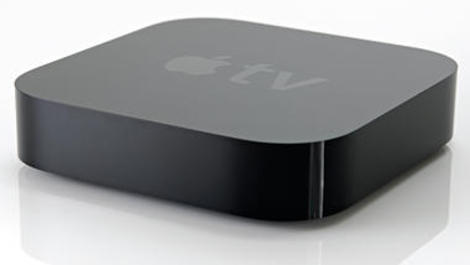
If you were one of roughly 50 percent of people who said they'd be interested in buying an Apple TV, you may soon be in luck.
Though talk indicates Apple is indeed moving forward with a TV set - expected sometime next year - how the Cupertino company intended to deliver programming through the device was a point of contention.
However, according to the Wall Street Journal, sources are now saying that instead of Apple going head-to-head with cable providers, it's taken the position of wooing pay-TV providers with the offer of playing their live shows and other content through a set-top box built by Apple.
For those concerned about quality and compatibility, the sources reported the set-top box technology Apple's developing could be integrated with HDTVs.
Jobs not a fan
Steve Jobs, Apple's brilliant though choleric boss, was reportedly "dismissive" of attempts to build a cable box, the Journal reports, because cable operators each have limited regional exposure and don't own the content they license.However, Jobs may have missed the boat on this one as Verizon Wireless and Comcast have apps on Microsoft's Xbox 360 apps and Samsung brings providers directly to its smart HDTVs.
Countless other providers offer streaming access through the iPad and other mobile devices.
No deal has been inked yet, perhaps because cable companies are reluctant to give an inch to the litigious Apple, but time will tell if Apple TV changes from a dream into reality.

| |
Read More ...
Making a play for Apple TV
If you were one of roughly 50 percent of people who said they'd be interested in buying an Apple TV, you may soon be in luck.
Though talk indicates Apple is indeed moving forward with a TV set - expected sometime next year - how the Cupertino company intended to deliver programming through the device was a point of contention.
However, according to the Wall Street Journal, sources are now saying that instead of Apple going head-to-head with cable providers, it's taken the position of wooing pay-TV providers with the offer of playing their live shows and other content through a set-top box built by Apple.
For those concerned about quality and compatibility, the sources reported the set-top box technology Apple's developing could be integrated with HDTVs.
Jobs not a fan
Steve Jobs, Apple's brilliant though choleric boss, was reportedly "dismissive" of attempts to build a cable box, the Journal reports, because cable operators each have limited regional exposure and don't own the content they license.However, Jobs may have missed the boat on this one as Verizon Wireless and Comcast have apps on Microsoft's Xbox 360 apps and Samsung brings providers directly to its smart HDTVs.
Countless other providers offer streaming access through the iPad and other mobile devices.
No deal has been inked yet, perhaps because cable companies are reluctant to give an inch to the litigious Apple, but time will tell if Apple TV changes from a dream into reality.

| |
Read More ...
Leaked photo of bizarre iPad Mini dock connector?

First the iPhone 5's dock connector leaked online.
Now, the long-rumored iPad Mini's port seems to have made an unexpected web appearance, revealing it might be swimming against the current of rumored port sizes.
The Mini's dock connector is indeed mini, though it's got 10 pins as opposed to eight (like the iPhone 5's supposed port) or 16.
The theory is the 7-inch iPad's dock connector will have either eight, nine or 16 pins, though this photo indicates to none of the above are accurate.
Docking down
So far, all signs have pointed to dock connectors for all iOS 6 devices coming in under 30 pins, so if this photo is to be believed, the iPad Mini's port fits right in with these predictions, though not at a number seen before.The components in the pic also include a headphone jack and home button connector close to the dock connector, leading SlashGear to believe that this is indeed part of an Apple iPad.
If the trend of revealed components continues, as September 12 inches closer, we might see all the ins and outs of these devices before they're even assembled.

| |
Read More ...
Verizon adding 34 new 4G LTE markets, now at 371 in total

Verizon's kind of like the Usain Bolt of the U.S. wireless carriers – at least, when it comes to deployment of 4G LTE coverage.
The company just announced today that it's adding 34 new markets to its existing total, starting tomorrow, which brings the company up to 371 total markets for 4G LTE connectivity.
Or, as Verizon described in a statement released today, the company's 4G LTE network now blankets 75 percent of the U.S. population.
And Verizon had no problems comparing this fact against its lagging competition.
"Our 4G LTE network is currently in more markets than all other U.S. wireless providers combined, and our team is continuing to expand the network so that more customers across the nation can take advantage of 4G LTE speed and capabilities," said Verizon Wireless CTO Nicola Palmer.
Comparing carriers
Verizon is miles ahead of its major U.S. competition for total deployment and plans to cover 400 individual markets with 4G LTE coverage, "in the near future," Palmer says.In fact, the 4G LTE markets served by AT&T and Sprint combined – remember, T-Mobile only plans to start dipping into 4G LTE coverage starting next year – don't add up to the number of areas covered by Verizon's 4G LTE.
AT&T, for example, hovers right around 50 total markets served with 4G LTE.
Sprint intends to reach 19 markets with 4G LTE coverage by early September – Labor Day, specifically.
Smartphone wars
The comprehensiveness of each carrier's coverage is also reflected in the number of 4G LTE-friendly smartphones each offers: As of this article's writing, Verizon's up to 44 total 4G-friendly smartphones.AT&T, however, only offers 16.
And while Apple's white elephant in the room waits to make its official debut – expected the iPhone 5 to arrive in September with 4G connectivity in tow (Apple's first iPhone to sport such a feature) – it remains to be seen just how much each carrier's 4G LTE coverage might affect its slice of the iPhone 5 sales pie.
In other words, are potential iPhone 5 owners going to flock in larger-than-expected numbers to Verizon simply because of the size of its 4G LTE deployment?
To see which cities that are receiving new or expanded Verizon 4G LTE coverage, be sure to check out Verizon's comprehensive list.

| |
Read More ...
Competition: WIN! A feature-packed desktop and portable scanner from Brother

We've teamed up with printer and scanner manufacturer Brother to give you the chance to win one of two feature-packed scanners, (one desktop, one portable) in a Techradar competition worth over £650.
The new range of Brother desktop document scanners includes fast two-sided scanning with multipage detection as standard, one-touch scanning, and fast scan speeds up to 24ppm (48ipm for double sided document).
The portable scanners are small enough to easily carry yet these models still provide all the features you'd expect in a desktop scanner. The scanner is fully powered via USB on your laptop, so you don't need to worry about carrying a separate power supply.
Both scanners come with a suite of software including great features such as business card scanning, scan to searchable PDF, and both devices are compatible with both Windows and Apple operating systems.
The portable Brother DS-700D scanner worth £234 (SRP)
- Scans colour documents up to A4
- USB powered
- Scans double sided documents
- Scans high quality colour documents up to A3
- Includes a 50 page sheet feeder
- Scan speeds of 24ppm for single sided documents and 48ipm for double sided documents
- Direct USB host
- Works with TWAIN and ISIS scan drivers
- Scans various types of documents at once with multipage detection
- Scans double sided documents
To be in with a chance of winning either the Brother ADS-2100 desktop scanner or the Brother DS-700D portable scanner (the choice is yours) just enter the competition here
Please note that this competition is only open to UK residents over 18 years of age

| |
Read More ...
Judge tells Apple and Samsung to make nice

The judge presiding over the Apple vs Samsung tech trial of the century has advised the two giants to consider settling their differences.
Judge Lucy Koh said the bitter rivals should discuss a settlement over the phone "at least once" this weekend, before the case reaches the jury next week.
"It's time for peace," said the judge during the case in San Jose, California, who added that she could see "risks here for both sides," if the case comes down to a jury.
The quest for peace
Both Apple and Samsung are requesting damages and/or sales bans of the other company's mobile tech amid complex claims that they infringed on each other's intellectual property/The plea from Koh is the second of its kind. Apple and Samsung attempted to work out their differences in a court-arranged meeting between the two CEOs in May, before the case began last month.
That meeting solved nothing and with the trial approaching a conclusion, Judge Lucy Ko wants to examine the possibility of finding a peaceful and amicable solution one last time.

| |
Read More ...
Judge tells Apple, Samsung to make nice
The judge presiding over the Apple vs Samsung tech trial of the century has advised the two giants to consider settling their differences.
Judge Lucy Koh said the bitter rivals should discuss a settlement over the phone "at least once" this weekend, before the case reaches the jury next week.
"It's time for peace," said the judge during the case in San Jose, California, who added that she could see "risks here for both sides," if the case comes down to a jury.
The quest for peace
Both Apple and Samsung are requesting damages and/or sales bans of the other company's mobile tech amid complex claims that they infringed on each other's intellectual property/The plea from Koh is the second of its kind. Apple and Samsung attempted to work out their differences in a court-arranged meeting between the two CEOs in May, before the case began last month.
That meeting solved nothing and with the trial approaching a conclusion, Judge Lucy Ko wants to examine the possibility of finding a peaceful and amicable solution one last time.

| |
Read More ...
Apple vs Samsung trial: Judge tells rivals to discuss settlement
The judge presiding over the Apple vs Samsung tech trial of the century has advised the two giants to consider settling their differences.
Judge Lucy Koh said the bitter rivals should discuss a settlement over the phone "at least once" this weekend, before the case reaches the jury next week.
"It's time for peace," said the judge during the case in San Jose, California, who added that she could see "risks here for both sides," if the case comes down to a jury.
The quest for peace
Both Apple and Samsung are requesting damages and/or sales bans of the other company's mobile tech amid complex claims that they infringed on each other's intellectual property/The plea from Koh is the second of its kind. Apple and Samsung attempted to work out their differences in a court-arranged meeting between the two CEOs in May, before the case began last month.
That meeting solved nothing and with the trial approaching a conclusion, Judge Lucy Ko wants to examine the possibility of finding a peaceful and amicable solution one last time.

| |
Read More ...
10 million Galaxy Notes sold worldwide, Samsung says

While today's big buzz is centered on Samsung's newly unveiled Galaxy Note 10.1, the firm also took time to recognize the success of its existing smartphone-tablet hybrid.
Samsung announced that it has now sold 10 million units of the original Galaxy Note in the nine months since it launched.
Often referred to as a "phablet" for its 5.3-inch screen falling between the typical range of a smartphone and a tablet, the Galaxy Note found its audience and carved out a new market in the ever-tightening race among mobile devices.
Galaxy Note's future
Building on the Galaxy Note's success, Samsung is going the more traditional tablet route with the Galaxy Note 10.1.The 10.1 combines elements and internals of the Galaxy S3 with the original Note's signature S-pen stylus for easy input.
There are also rumblings about an imminent Galaxy Note 2, with leaked manufacturing photos hinting at an upgrade to a 5.5-inch screen along with the same overclocked 1.6 GHz version of the quad-core Exynos processor found in the Galaxy S3.
Samsung's Galaxy Note 10.1 went on sale today in New York Starting at $499 for 16GB and $549 for 32GB.
It will launch across the rest of the country on Thursday.

| |
Read More ...
Available Tags:Sony , Asus , GTX , server , Samsung , Galaxy , UK , TV , Hotmail , Acer , HP , Windows Phone , Windows Phone 8 , Nokia , Windows , BlackBerry , Google , Android , Apple TV , Apple , Apple TV , Apple , iPad , 4G , Brother , Apple , Apple ,


No comments:
Post a Comment