

HP Folio 13 Review: Deviating From the Norm
The initial bum rush of ultrabooks resulted in, with limited exception, a lot of designs that took most of their cues from Apple's MacBook Air. Even Dell's XPS 13, otherwise very different from what came before it, still maintained that wedge shape. Yet HP went a bit of a different route with their Folio 13 and demonstrated the same kind of outside the box thinking that many of the larger vendors are demonstrating these days.

Read More ...
Microsoft Announces Windows 8 Product Editions
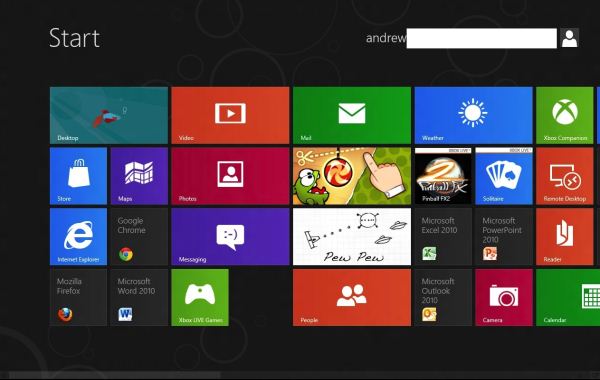
Windows 8 Pro is largely a superset of Windows 8, including all of its features plus business and power user-oriented features like Bitlocker, EFS, the ability to boot from VHDs and host Remote Desktop sessions, the ability to join Active Directory domains. Some of these features had previously been restricted to the Ultimate/Enterprise product tier in Windows 7, and it's nice to see everything trickling down to what should hopefully be a cheaper product (though Microsoft has not yet released details about Windows 8 pricing). Windows 8 Pro will, however, be missing Windows Media Center. The software can be purchased separately, but Windows Media Center is essentially abandonware in Windows 8 - as of the Consumer Preview, there have been no major additions to the software since Windows 7.
As for other editions, Windows 8 Enterprise will still exist as a separate product available to customers with Software Assurance volume licensing agreements with Microsoft. LeBlanc noted that Windows 8 Enterprise would include features that "enable PC management and deployment, advanced security, virtualization, new mobility scenarios, and much more," but it's not certain whether these will manifest themselves as new features within Windows 8 or as additional add-ons and programs available to enterprise customers separately. Windows 7 Enterprise was functionally identical to Windows 7 Ultimate except for its support of volume license keys.
There will also be an edition offered in China and other "emerging markets" - Microsoft hasn't said much about what is missing from this edition other than support for multiple languages, but this could end up being a more stripped-down version of Windows to replace Windows 7 Starter. In any event, most people reading this are unlikely to find this OS in the wild.
This is as simple as the WIndows product stack has been since Windows XP was introduced in Home and Pro editions in 2001, replacing Windows Me and Windows 2000 and bringing both the home and professional Windows products onto the same Windows NT codebase. Windows Vista split the lineup into four different commercially available editions - Home Basic, Home Premium, Business, and Ultimate - whose feature sets were often confusing and poorly defined. It's nice to see some semblance of simplicity restored six years later.
For a full list of features included in each edition, the original blog post is linked below.
Source:Windows Team Blog
Read More ...
Radeon HD 7000 Series Price Cuts & Promos Announced
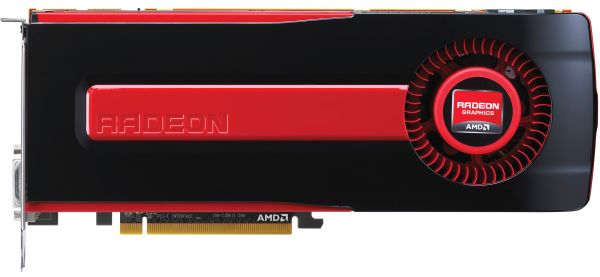
With the launch of the GeForce GTX 680 AMD lost their performance lead in the high-end market – and thereby losing their ability to charge top dollar – so this adjustment has been expected. However it’s a pleasant surprise to see it this soon since the GTX 680 is still significantly supply constrained. We weren’t expecting to see this price cut until the GTX 680 supply improved, as AMD is still the only option when it comes to readily available cards.
Altogether AMD will be reducing the prices on 3 of their 7000 series cards: the 7970, the 7950, and the 7770. The 7970 will be dropping by $70 from $549 to $479 – below the GTX 680 – while its lower tier counterpart the 7950 will be dropping $50 from $449 to $399. Meanwhile the 7770, which was undoubtedly the worst priced member of the 7000 series, will be seeing a price drop of $20 to bring it from $159 to $139.
Spring 2012 Radeon HD 7000 Series Price Cuts | |||||
Card | Old MSRP | New MSRP | |||
Radeon HD 7970 | $549 | $479 | |||
Radeon HD 7950 | $449 | $399 | |||
Radeon HD 7870 | N/A | $349 | |||
Radeon HD 7850 | N/A | $249 | |||
Radeon HD 7770 | $159 | $139 | |||
Radeon HD 7750 | N/A | $109 | |||
Deus Ex was one of AMD’s major partner games from last year, while DiRT Showdown and Nexuiz are games that will not be released until next month. The inclusion of unreleased games is a bit odd, but considering that we’re just getting out of the post-Christmas game slump AMD’s options were either this or to include more 2011 games that many potential customers may already have. In any case, as with past AMD promotions these games will be given away via Steam keys.
Spring 2012 GPU Pricing Comparison | |||||
AMD | Price | NVIDIA | |||
$499 | GeForce GTX 680 | ||||
Radeon HD 7970 | $479 | ||||
Radeon HD 7950 | $399 | GeForce GTX 580 | |||
Radeon HD 7870 | $349 | ||||
$299 | GeForce GTX 570 | ||||
Radeon HD 7850 | $249 | ||||
$199 | GeForce GTX 560 Ti | ||||
$169 | GeForce GTX 560 | ||||
Radeon HD 7770 | $139 | ||||
Both the price cuts and the Three For Free promo should be starting today. We’re already seeing the prices come down on some Radeon cards with the rest soon to follow, however none of AMD’s e-tail/retail partners have started the promo yet. So you may want to hold off on any 7900 purchases until the promo starts.
Read More ...
Sprint makes its Galaxy Nexus Variant Official - $199 with $40 Google Wallet Credit
In a move that shouldn't be surprising to anyone, Sprint has made a Galaxy Nexus variant tailored for its own CDMA2000 and LTE network official in an announcement today. Back in January, news of its upcoming Galaxy Nexus variant was leaked through an online Ad placement, and back then the copy included mention of a 1.5 GHz SoC.

The Sprint Galaxy Nexus (CDMA/LTE) model includes support for 5MHz FDD-LTE only on PCS 1900 (LTE Band 25) and no doubt will use the same combination of Samsung's CMC221 baseband for LTE and a Via CBP-7.1 for 1x/EVDO. Interestingly enough the antennas appear to have been moved around compared to the Verizon CDMA/LTE model.
Preorders have already started on Sprint's own microsite for the device. As mentioned in the headline, Sprint is selling the Galaxy Nexus for $199 on two year contract, but also giving users a $40 Google wallet credit within three weeks.
Source: Sprint, Sprint Fact Sheet, Sprint Preorder Site
Read More ...
Intel SSD 330 Officially Announced: Affordable SandForce
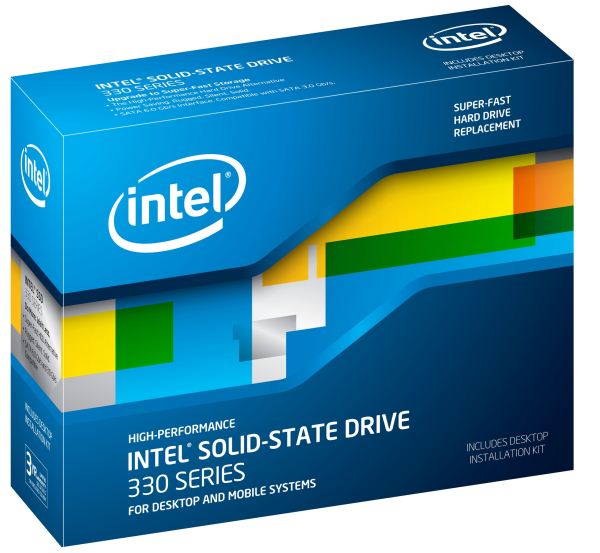
We reported on Intel's SSD 330 weeks ago, but today is the official announcement of the drive and its availability in the channel. Unlike previous 300 series drives, the 330 isn't based on Intel's own controller - it's the second SandForce SF-2281 drive in Intel's lineup.
Read More ...
Western Digital VelociRaptor 1TB (WD1000DHTZ) Review
There was a time when Western Digital's Raptor (and later, the VelociRaptor) was a staple of any high-end desktop build. Rotational media could only deliver better performance by increasing aereal density or spindle speed. In a world dominated by hard drives that focused on the former, WD decided to address both. By shipping the only mainstream 3.5" hard drive with a 10,000 RPM spindle speed, WD guaranteed that if you needed performance, the Raptor line was the way to go.
Two years ago we met the most recent update to the VelociRaptor line: the VR200M. While it raised the bar for the VelociRaptor, WD saw its flagship competing in a new world. SSDs were now more affordable, resulting in even more desktop builds including an SSD. Although the high dollar-per-GB cost associated with SSDs demanded that desktop users adopt a two-drive model (SSD + HDD), for storage of large media files a standard 5400RPM or 7200RPM drive was just fine. After all, moving large files is mostly a sequential operation which plays to the strengths of most consumer drives to begin with.
There are still users who need more storage than an SSD can affordably provide, and who demand speed as well. Although photo and video editing is great on an SSD, a big enough project would have difficulty sharing a 128GB SSD with an OS, applications and other data. For those users who still need high performance storage that's more affordable than an SSD, the VelociRaptor is still worthy of consideration. There's just one problem: Moore's Law is driving the cost of SSDs down, and their capacities up. The shift to solid state storage is inevitable for most, but to remain relevant in the interim the VelociRaptor needed an update.
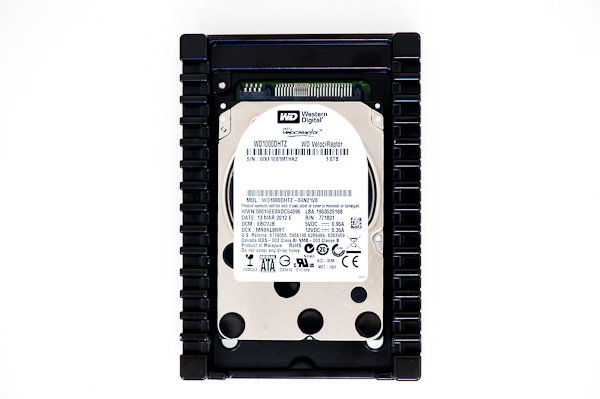
Today Western Digital is doing just that. This is the new VelociRaptor, available in 250GB, 500GB and 1TB capacities:
Read on for our full review!
Read More ...
Gold Nanoparticles, Three Types of Imaging Used to Remove Brain Tumors
Stanford University researchers can completely remove tumors without harming healthy tissue
Read More ...
Android OS in the Hot Seat as Oracle v. Google Legal Battle Kicks Off Today
Jury trial is expected to pack a lot of interesting information
Read More ...
U.S. Will Have no Experts Who've Used a Nuke Within 5 Years
Lack of qualified experts could hinder defensive readiness
Read More ...
Quick Note: Patriot Unveils New Extreme Performance SDHC/SDXC Memory Cards
New fast and high-capacity storage media from Patriot
Read More ...
Netflix CEO Rants About Comcast's Xfinity, Net Neutrality on Facebook
Reed Hastings claims that all Internet apps on Comcast count against the data cap except Xfinity
Read More ...
Crytek's Crysis 3 Gets Official for 2013
Crysis 3 up for pre-order
Read More ...
Google Co-Founder Attacks Gov., Facebook for Ruining Internet Freedom
Google couldn't have been created on a Web dominated by Facebook, said Google co-founder Sergey Brin; company pays $25,000 fine
Read More ...
UPDATE: ASUS Transformer Prime GPS Dongle Now Available to Order
ASUS's Transformer Prime GPS dongle gets an early reveal
Read More ...
Implantable Monitoring Device Vibrates to Warn of Pending Heart Attack
Implantable device is called the Guardian
Read More ...
Available Tags:HP , Windows 8 , Microsoft , Windows , Radeon , Galaxy , Google , Intel , SSD , Western Digital , Android , Oracle , CEO , Facebook , ASUS ,


No comments:
Post a Comment