

Regulators to Google: You can buy Motorola, but we still don't trust you

Google got exactly what it needed today to close the book on its $12.5 billion acquisition of Motorola Mobility. With approval from both US and European authorities, Google is set to acquire one of the biggest Android hardware makers and a portfolio of 17,000 patents.
But regulators on both sides of the pond went out of their way to warn Google not to abuse the patents, with the Justice Department comparing Google's patent statements unfavorably with what Justice views as more responsible statements made by Apple and Microsoft. In effect, regulators from both the US and Europe said there wasn't enough evidence to prevent Google's acquisition of Motorola today, but warned that Google's future actions could invite antitrust scrutiny.

Read the comments on this post
Read More ...
Google Wallet suspends prepaid payment cards to prevent "painfully easy" attack

Google Wallet will temporarily stop provisioning prepaid credit cards to prevent the exploitation of a recently discovered vulnerability which allows crooks to siphon funds out of devices that are lost or stolen.
Google disabled the prepaid capability on February 10, a day after The Smartphone Champ blog exposed what it called a "painfully easy" exploit that allowed people to recover prepaid balances stored in Google Wallet without knowing the personal identification number protecting the app. To exploit the flaw, attackers need do nothing more than clear data from its settings menu and set a new PIN.
"The problem here is that since Google Wallet is tied to the device itself and not tied to your Google account, that once they set the new pin and log into the app, when they add the Google prepaid card it will add the card that is tied to that device," a blogger with the name Hashim wrote. "In other words, they’d be able to add your card and have full access to your funds."
Osama Bedier, vice president of Google Wallet and Payments, said phones that are accessible only when a user PIN or pattern are entered into the device, aren't vulnerable to the attack. He encouraged all users of the mobile payments service to enable such lock screens, which aren't turned on by default. But he said Google was temporarily disabling provisioning of prepaid cards as a precaution until a permanent fix for the underlying vulnerability is made.
The exploit from The Smartphone Champ came a day after an engineer at security firm Zvelo disclosed a separate method for cracking Google Wallet PINs on Android devices that have been rooted. The vulnerability stems from the decision to store cryptographic hashes in a database that's associated with the app, rather than the handset's Secure Element chip, McAfee researcher Jimmy Shah blogged.
Google's Bedier said Google Wallet users shouldn't root their devices.
Read the comments on this post
Read More ...
HP launches new generation of "self-sufficient" servers
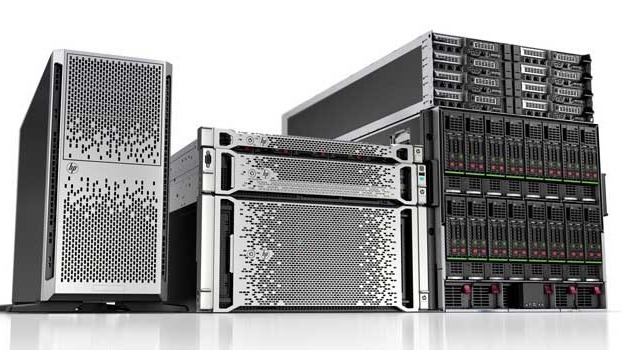
Hewlett-Packard rolled out the next generation of its enterprise server line on February 13, along with a host of other datacenter focused improvements coming out of the company’s Converged Infrastructure initiative. The results of the latest round of that initiative, labeled Project Voyager, has focused on making servers easier to maintain in large datacenters by putting more intelligence throughout the server itself, as well as the rack.
The new ProLiant Generation 8 (Gen8) servers are the centerpiece of the products that come out of Project Voyager. The servers, which will be generally released in March, are intended to reduce the manpower requirements associated with datacenter tasks—making them what HP claims are the “world’s most self-sufficient servers.”
Read the comments on this post
Read More ...
Breaches galore as Cryptome hacked to infect visitors with malware

A breach that caused Cryptome.org to infect visitors with virulent malware was one of at least six attacks reported to hit high-profile sites or services in the past few days. Others affected included Ticketmaster, websites for Mexico and the state of Alabama, Dutch ISP KPN, and the Microsoft store in India.
Cryptome, a repository of leaked documents and other information concerning free speech, privacy and cryptography, was attacked by hackers who left code on its servers that attempted to infect visitors using Windows PCs with a trojan spawned by the Blackhole Toolkit, the website reported on Sunday.
Read the comments on this post
Read More ...
Betting the farm: new model shows offshore wind farms at risk from hurricanes

If we want to obtain 20 percent of our electricity from wind power by 2030, the US is going to need at least 50 gigawatts from offshore wind farms, according to the US Department of Energy. The National Renewable Energy Laboratory (NREL) estimated that this wouldn’t be a problem—we could provide four times our 2010 electricity generation capacity with offshore wind power alone. The US hasn’t actually built any offshore wind farms yet, although there are at least 20 in the planning stages.
As part of that planning, the Interior Department recently performed a review, concluding there would be no significant environmental or socioeconomic impacts from wind farms off the mid-Atlantic Coast. However, according to a paper published today in the Proceedings of the National Academies of Science, we should be worrying the converse: the impact of the environment on the wind farms, from hurricanes in particular. In certain risky offshore regions off the Atlantic and Gulf Coasts, there is a high probability that at least one turbine would be destroyed by hurricanes within 20 years, and a smaller chance that half the turbines in a farm would be wiped out.
Read the comments on this post
Read More ...
Why are gaming's academy awards such a non-event?

When major entertainment industries host their annual awards, it's usually a major cultural milestone, with highly rated telecasts and breathless pre- and post-show coverage from the press. When gaming's Academy of Interactive Arts and Sciences hosted its Interactive Achievement Awards last Thursday, the event warranted cursory coverage from most of the press and ignorance or indifference from most gamers.
Read the comments on this post
Read More ...
iPhoto's Flickr options driving you crazy? A new look at FlickrExport

Nearly every day for the last couple years, I quietly suffer at the hands of iPhoto as I sip my morning coffee. I sit down, plug in my iPhone, transfer my photos from the last day or so, go to upload them to Flickr via iPhoto's built-in service, and then I wait. Actually, I take that back—I wait several times during the process of attempting to upload my photos to Flickr. I wait when I click the little "Share" button on the left-hand bottom corner that brings up my sharing options. I wait after I select "Flickr" from the list. I wait (a lot) after I click either "Photostream" or "New set." I wait again a few times as I adjust my options with the drop-downs that pop out, and then I wait after I click Publish.
And that's just the beginning. Although iPhoto purports to be able to upload photos to existing photo sets on Flickr, my most recent sets don't show up in iPhoto on most days. And forget adding tags on the fly, or adding those photos to any number of public Flickr groups that I belong to. If I click away from iPhoto at any point during these extensive waiting periods, all my "work" so far goes away and I'm forced to start all over. More waiting.
Read the comments on this post
Read More ...
Tor's latest project helps Iran get back online despite new Internet censorship regime

Last week, the Iranian government apparently started a new censorship program that blocks encrypted Internet traffic. Even Iranians who had taken steps to evade government firewalls were being stymied—and the immediate impact can be seen in usage of the Tor network.
Tor anonymizes Internet activity with client software that routs traffic through the Tor network, a worldwide network of relays and bridges set up by volunteers. Iran is second only to the US in Tor usage, with roughly 50,000 Iranians anonymizing their Internet traffic each day by routing it through the Tor network. Yet between Feb. 8 and Feb. 9, connections dropped from about 50,000 to fewer than 20,000, and plummeted to nearly zero by Friday, Feb. 10.
Read the comments on this post
Read More ...
UPDATED: Google's Motorola buy gets clearance from US, Europe

UPDATE: Google has now received the all-clear from the US Department of Justice's antitrust division, which announced this afternoon that it has closed its investigation. The Justice Department also approved the $4.5 billion sale of Nortel patents to Apple, Microsoft, and RIM, and the sale of Novell patents to Apple.
Original story: European Union officials gave Google regulatory approval for its acquisition of Motorola Mobility today. The deal is expected to gain approval from the US Justice Department later this week.
"We have approved the acquisition... because upon careful examination, this transaction does not itself raise competition issues," EU Competition Commissioner Joaquin Almunia said in a statement, according to Reuters. Google's $12.5 billion purchase of Motorola is driven largely by the device maker's portfolio of 17,000 patents, which Google hopes to use to protect Android from patent lawsuits, and perhaps launch a few lawsuits of its own.
The possibility that Google might abuse this patent portfolio was not worrying enough to lead the EU to block the merger. But Almunia said European authorities reserve the right to monitor Google's handling of the patents, and they reserve the right to reopen their inquiries based on future actions. "This merger decision should not and will not mean that we are not concerned by the possibility that, once Google is the owner of this portfolio, Google can abuse these patents, linking some patents with its Android devices. This is our worry," Reuters quotes him as telling reporters.
When Google announced the acquisition, it expected to close the deal by the end of 2011 or early 2012. It is still on track to meet that goal, if US approval comes this week as expected.
Read the comments on this post
Read More ...
Motorola cranks up difficulty on user repairs, Droid 4 teardown shows

A teardown of the recently released Motorola Droid 4 reveals some quirky features, iFixit has revealed. The phone received a paltry score of 4 out of 10 for user repairability, but its innards contained some unusual wonders.
Though the Droid 4 comes with a rear panel removal tool that looks like a wind-up key, taking the back cover off revealed a sticker saying the battery is not user-removable, a big departure for Motorola's Droid phones. The battery is held in with two Torx screws and a generous amount of adhesive—not insurmountable, but it appears Motorola wants the days of the pop-out battery to be over sooner rather than later.
Another of the more unfortunate features of the Droid 4 is that, unlike the Droid 3 that came out only six months ago, the keyboard's pressure sensors are attached to the back of the motherboard. If one gets worn out, the entire motherboard has to be replaced. iFixit also found that that the raised rubber over the pressure contacts are in the shape of the letters they correspond to, a very odd design choice that they (and we) can't see much reason for, other than ease of alignment. Overall, the authors praised the design and usability of the keyboard for texting.

The raised rubber letters marking the pressure contacts. You know, in case you need to text while your phone is undergoing major surgery.
More positively, the Droid 4's display glass and LCD are separate pieces, so if owners manage to break the first but not the second, they can get away without having to replace both. On the downside, owners would have to take the entire phone apart to separate and replace those pieces.
The Droid 4's 4 out of 10 score in user repairability is bested by the Droid 3's 6 out 10. We'd argue the Droid 4's superior QWERTY keyboard is worth that step down.
Read the comments on this post
Read More ...
NES-inspired "iCade 8-bitty" brings retro gaming feel to iOS devices

ThinkGeek announced on Monday a new iCade-compatible gaming controller called the iCade 8-bitty. The D-pad style controller will get its first public showing at the 2012 Toy Fair in New York City this week.
The iCade 8-bitty looks a bit like the classic NES D-pad controller, but redone with fake wood veneer reminiscent of Atari consoles form the 1970s. It connects to an iPhone, iPad, or iPod touch using Bluetooth, and is compatible with a growing number of game titles including Atari Arcade Classics, Pac-Man, and Frogger Decades, among others. Developers can add support for all iCade devices using a free SDK.
ThinkGeek hasn't announced when the 8-bitty will ship except to say it will be sometime "later this year." At $24.99, though, it will be much less expensive than the original (and in our view, excellent) $99.99 iCade iPad cabinet.
Ion, which helped ThinkGeek turn the the original iCade from an April Fool's joke into a real product, recently unveiled its own iCade devices at CES this year. The expanding line now includes an iCade Jr for iPhones and iPod touches, the iCade Mobile for iPhone and Android devices, and the iCade Core fighter stick.
Read the comments on this post
Read More ...
Samsung will release a Galaxy Tab 2 with Android 4

Samsung has announced plans to release a "Galaxy Tab 2," an official Android 4.0 follow-up to the first Galaxy Tab released in October 2010. The 7.0-inch Galaxy Tab 2's specs are underwhelming compared to the offshoot Galaxy Tab 7.0 Plus, a weird prospect given that the Tab 7.0 Plus is meant to be a bargain model.
The Galaxy Tab 2 will have a 1GHz dual-core processor of unspecified make, 1GB of RAM, a 3-megapixel "fixed-focus" rear camera, and a VGA-front facing camera. The tablet will be able to connect to both WiFi and HSPA+ networks, though Samsung has not yet announced a carrier. The whole thing will run on a 4,000mAh battery, and the 8GB/16GB/32GB storage options can be supplemented by a microSD card slot, up to an extra 32GB.
The Tab 2 comes only months after the Tab 7.0 Plus, which was released at a two-year contract price of $249 to compete with the Kindle Fire (through an extra $10 charge over the two years, customers would still end up paying the same $499 starting price as the original Tab). Despite the Tab 7.0 Plus's low starting price, it has slightly better specs than the Tab 2: a 1.2GHz processor and a 2-megapixel front-facing camera.
The Tab 2 will come with Android 4.0, which is a plus, though no release date or prices have been announced yet. The mitigated specs and may mean the tablet could be released off of a contract, finally, for a reasonable price.
Read the comments on this post
Read More ...
Mozilla building Metro version of Firefox for Windows 8

Mozilla developers are planning to build a dramatically different version of Firefox for Windows 8, a change necessitated by Microsoft's use of the touch-friendly "Metro" user interface for PCs and tablets.
Mozilla describes its Windows 8 plans as part of a 2012 Strategy & Roadmap document updated yesterday. A technology proof-of-concept demonstrating the feasibility of Firefox in Windows 8 is planned for the second quarter of this year, with timing dependent on the release of Microsoft's Windows 8 consumer preview and developer documentation. A Metro version may be necessary for Firefox to avoid being shut out of Windows 8 tablets running on ARM, which will have only a limited "traditional" Windows desktop. But Mozilla is apparently planning Firefox builds both for the traditional Windows desktop environment and Metro.
"Windows 8 contains two application environments, 'Classic' and 'Metro,'" Mozilla notes. "Classic is very similar to the Windows 7 environment at this time, it requires a simple evolution of the current Firefox Windows product. Metro is an entirely new environment and requires a new Firefox front end and system integration points."
Metro Firefox will be a new Gecko-based browser focused on touch interactions, with both full-screen and partial-screen modes, with the possibility of a live tile so that users can see updates on the Start screen. There are several unanswered questions, such as which programming language to use for building the Metro front end. Firefox product manager Asa Dotzler further notes that "This proposal depends on Microsoft providing the same capabilities for Firefox as it does for IE—running at the Medium level integrity process that allows us the full use of the Win32 API and what we need from Metro, or a set of APIs that allow Mozilla to port Gecko to the WinRT. For the purposes of this feature proposal, I'm assuming we'll get the first and we won't have to port the bulk of Gecko and instead will use the win32 dlls from within Metro."
Firefox accounts for about 20 percent of worldwide desktop browser market share, but has lost ground to Google Chrome over the past year. Chrome will presumably have a Metro version for Windows 8 as well, but Google has made no official announcement.
Read the comments on this post
Read More ...
LHC set to up collision rate, energy in attempt to pin down Higgs boson

Last week, the people running the LHC laid out plans for its 2012 schedule. In announcing the results of the 2011 run, physicists indicated that they would have enough data by the end of this year to know whether the Higgs boson exists at around 125GeV, where a tantalizing signal had been spotted. To make sure this comes to pass, the people running the LHC have laid out a schedule that will see the machine pump out three times as many collisions this year as it did in the one just passed. They'll also boost the energy slightly before sending the collider into an extended shutdown that will start next winter.
A catastrophic failure early in the LHC's history revealed a flaw in some of the superconducting hardware that helps keep the protons on track as they circle the accelerator. To compensate, the accelerator has been running with each beam at 3.5TeV (for a combined energy of 7TeV), half its design energy; an extended break would be required to replace the faulty hardware. At the reduced energy, however, the LHC has outperformed most people's expectations, placing a definitive answer on the Higgs within reach. That prospect has caused the LHC management to revise some of its plans in the expectation that the Higgs can be discovered or ruled out before the extended shutdown.
Read the comments on this post
Read More ...
Microsoft's store site in India defaced; hackers find plain text passwords

Chinese hackers defaced the home page of the Microsoft Store in India and gained access to user names and passwords associated with the site on February 12. The store site, operated for Microsoft by Quasar Media, is currently offline.
The hackers, who call themselves "Evil Shadow Team," posted a link to their weblog on the store site's homepage as part of the defacement, along with screen shots of their defacement. The blog also included screen shots of what appears to be Windows management console access to the site itself, including internal files of the site displayed in a Microsoft Internet Information Services Manager console, as well as a view of the user profile database. The passwords for accounts were apparently stored in plain text in the database.
On their blog, the hackers said they were a low-profile group and claimed not to be masters of their craft. They also wrote that they were making the data from the site available to "any security enthusiasts" and that the homepage of the store was defaced because modifying the home page was "a powerful way to make Microsoft aware" of how poor security of the site was.
According to a report by IDG's John Ribero, Microsoft has begun an investigation of what it calls a "limited compromise" of the site. In a statement, Microsoft said that "store customers have already been sent guidance on the issue and suggested immediate actions."
Read the comments on this post
Read More ...
NMR imaging used to catch performance-killing flaws inside batteries

Batteries based on lithium now power everything from our watches to our cars, and we've made major strides towards stuffing more energy into them more quickly over the last several years. But there are limits to how quickly a battery can charge, and pushing past them can cause the lithium to form metallic microstructures within the battery. These can do ugly things like creating a short between the electrodes or puncturing the membranes that contain the battery's electrolyte.
Most techniques that could image these miscrostructures involved taking the battery apart, meaning that we could only take static images of the impact of charge/discharge cycles on the battery. One of the best techniques for non-invasive imaging, NMR, relies on radiofrequency signals that simply don't penetrate beyond the surface of a battery. Now, some researchers have figured out that there are conditions that enable the use of NMR to peek inside a battery—and they happen to be the formation of the microstructures we care about.
Read the comments on this post
Read More ...
Fair Labor Association begins independent audits of Foxconn factories

Apple announced on Monday that independent third-party inspections of its final assembly plants in China have officially begun in "Foxconn City." The factory in Shenzhen is one of several facilities that will be audited by the Fair Labor Association, a labor rights activist group that admitted Apple as a member in January.
Factories owned by Foxconn, Quanta, and Pegatron—responsible for final assembly of over 90 percent of Apple's computers, iPhones, iPads, and other accessories—will be inspected by a team of labor rights experts led by FLA President Auret van Heerden. The team will reportedly interview employees, inspect safety equipment and worker dormitories, and examine all available documentation on worker safety, wages, and working hours. Apple's suppliers have reportedly agreed to cooperate fully with FLA's inspection team.
Apple said that the results of the independent audits of Foxconn facilities should be available on the FLA website in early March, while audits of Quanta and Pegatron facilities should be published in "late Spring."
The FLA inspections come shortly after details of working conditions in China sparked a controversy in light of Apple's soaring profits. Apple first began dealing with workers' rights issues when a 2006 investigation revealed widespread abuse of China's labor laws; since then, Apple has performed its own yearly audits and publishes the results in a public report. The company announced its partnership with the Fair Labor Association when it released the results of its 2011 audit in January.
"We believe that workers everywhere have the right to a safe and fair work environment, which is why we've asked the FLA to independently assess the performance of our largest suppliers," Apple CEO Tim Cook said in a statement on Monday. "The inspections now underway are unprecedented in the electronics industry, both in scale and scope, and we appreciate the FLA agreeing to take the unusual step of identifying the factories in their reports."
Despite the audits, labor activists believe Apple should do more than try to make sure factories are operating within Chinese law. "Although we think Apple is among the best in terms of auditing, we still think that Apple can do more because it is the most profitable company in the world," activist Li Qiang, founder of China Labor Watch, said. "As soon as Apple is willing to give a small percentage of its profits, the workers can benefit a lot. But Apple is not willing to do that."
Read the comments on this post
Read More ...
Available Tags:Google , HP , Motorola , gaming , iOS , Galaxy Tab , Samsung , Galaxy , Android , Windows 8 , Mozilla , Firefox , Windows , India ,


No comments:
Post a Comment