

Complaint: medical "copyright over your comments" contracts are illegal

When our own Timothy B. Lee stepped into a Philadelphia dentist's office earlier this year, he had an unpleasant experience: the dentist required him to sign over control of all copyright in future online commentary related to that dentist. Here's how Tim described the visit:
When I walked into the offices of Dr. Ken Cirka, I was looking for cleaner teeth, not material for an Ars Technica story. I needed a new dentist, and Yelp says Dr. Cirka is one of the best in the Philadelphia area. The receptionist handed me a clipboard with forms to fill out. After the usual patient information form, there was a "mutual privacy agreement" that asked me to transfer ownership of any public commentary I might write in the future to Dr. Cirka. Surprised and a little outraged by this, I got into a lengthy discussion with Dr. Cirka's office manager that ended in me refusing to sign and her showing me the door.

Read the comments on this post
Read More ...
Internet Explorer 10 Platform Preview 4: Windows 7 users need not apply

Microsoft has released the fourth preview of Internet Explorer 10. As is the case with previous Platform Previews, the release is aimed at developers: the new features are important to those creating rich, complex Web applications, but will have less impact on Web users.
However, even Web developers might struggle to get too excited about the latest preview, because they probably won't be able to run it: it only works on the Windows 8 preview release that Microsoft shipped at its BUILD conference in September.
Read the comments on this post
Read More ...
Kindle Fire vs. Nook Tablet: which one should you buy?

The Kindle Fire and Nook Tablet are both vying for that special place in consumers' hearts reserved for inexpensive consumption devices. But neither is perfect, and in many aspects of the tablet experience, one succeeds while the other fails.
Since we published our reviews, we've been getting e-mails asking us which is the better device. That's going to depend on what you value the most in your tablet experience. Are you looking for the cheapest tablet in town? Are you willing to pay a bit more for a better browsing experience? Which product provides better e-mail support? What about battery life? Is the Nook $50 better than the Fire? Allow us to break it down for you.
Read the comments on this post
Read More ...
Review: 3DS Mario Kart 7 drives cautiously


Here is the best thing about Mario Kart 7: This time, Nintendo didn't screw it up.
When you think of Nintendo's hit products, you don't necessarily think of the Mario Kart racing games (specifically) as a dominant part of the 3DS maker's business. But the series is colossal. Mario Kart Wii has outsold every other standalone game on the home system, moving a staggering 28 million copies. That's one game for every three Wii consoles.
Read the comments on this post
Read More ...
US judge orders hundreds of sites "de-indexed" from Google, Facebook
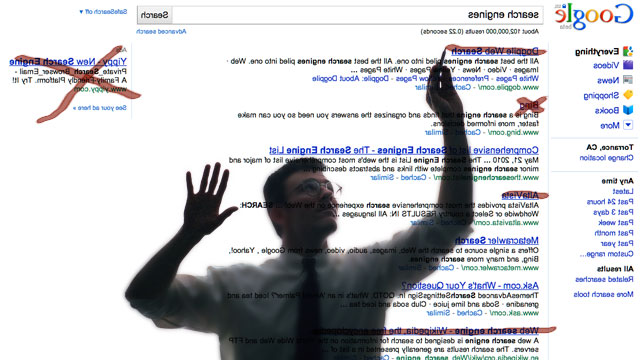
After a series of one-sided hearings, luxury goods maker Chanel has won recent court orders against hundreds of websites trafficking in counterfeit luxury goods. A federal judge in Nevada has agreed that Chanel can seize the domain names in question and transfer them all to US-based registrar GoDaddy. The judge also ordered "all Internet search engines" and "all social media websites"—explicitly naming Facebook, Twitter, Google+, Bing, Yahoo, and Google—to "de-index" the domain names and to remove them from any search results.
The case has been a remarkable one. Concerned about counterfeiting, Chanel has filed a joint suit in Nevada against nearly 700 domain names that appear to have nothing in common. When Chanel finds more names, it simply uses the same case and files new requests for more seizures. (A recent November 14 order went after an additional 228 sites; none had a chance to contest the request until after it was approved and the names had been seized.)
Read the comments on this post
Read More ...
Europe's largest IT firm to scrap internal e-mail

Atos, the largest IT services firm in Europe, is going to do away with internal e-mail. Atos CEO Thierry Breton says that only 15 percent of the 200 e-mails his staff receive on average are valuable, and that staff are wasting between 5 and 20 hours a week handling e-mail. Instead of e-mail, he wants staff to use instant messaging and other chat-like communications media.
Breton himself claims not to have sent a work e-mail for three years, saying that if staff want to communicate with him they can visit his office, call, or send a text message. The 56-year-old CEO explains, "e-mails cannot replace the spoken word."
Whether a switch away from e-mail for internal communication will actually improve staff productivity is less clear. Communication outside the company will still tend to use e-mail, so staff will still have to run an e-mail client and still be vulnerable to e-mail-based interruptions.
Moreover, research suggests that instant messaging and phone calls are just as disruptive to productivity as e-mail. The problem is not really e-mail; it's interruptions. Eighty-five percent of Atos' internal mail may be worthless, but ditching internal mail doesn't mean that employees will end their unproductive communication.
Switching from one kind of interruption to another doesn't solve the problem—and indeed, a conscientious, well thought-out e-mail that included a number of points or questions might be less of a distraction that a regular barrage of instant messages.
Of course, for Breton the decision to abandon internal e-mail was easier than it is for most: Breton has a secretary.
Read the comments on this post
Read More ...
Amazon to Congress: No, Silk won't invade people's privacy

Amazon has responded (PDF) to Congressional questions regarding the Silk Web browser in its new Kindle Fire tablet, but Rep. Ed Markey (D-MA) says the responses aren't enough.
In answering Markey's earlier questions about Silk, Amazon's reply makes the case that Silk doesn't violate user privacy. To speed up Web access, Silk can route all requests through Amazon's cloud infrastructure, which caches various bits of websites and does server-side processing of some material in order to make the browsing experience faster. (Silk can also be switched to operate like a more traditional browser, with Web requests going directly to their target websites.)
Markey had questions about privacy. With Web requests routing through Amazon, the company would have a huge trove of information on users. Amazon says that it will only log Web addresses for 30 days and will not associate them with specific customers. It will cache Web content, but only that which is approved for caching by website operators (though the use of caching headers). And all encrypted SSL traffic will flow directly from the Fire to target servers, not passing through Amazon's infrastructure.
So Silk will only collect aggregate information about Internet browsing habits. How will it be used? Amazon says it currently has no plans to sell or rent the information, though it will certainly use it internally. "Customer information is an important part of our business and an important driver of customer experience and future invention," wrote the company.
The two-page letter didn't satisfy Markey, who said in a statement, "Amazon’s responses to my inquiries do not provide enough detail about how the company intends to use customer information, beyond acknowledging that the company uses this valuable information… Amazon is collecting a massive amount of information about Kindle Fire users, and it has a responsibility to be transparent with its customers. I plan to follow up with the company for additional answers on this issue."
Read the comments on this post
Read More ...
Google maps the indoors. Finding nearest bathroom has never been easier

Google has begun mapping indoor establishments like malls, airports, and retail stores, and today added the first indoor maps to its application for Android. Now, air travelers don't have to bother with information booths and freestanding maps: Google Maps can show the way to their gate or the nearest coffee shop or bathroom. Turn-by-turn directions aren't provided, but the maps will show users where they are in relation to nearby landmarks.
Instead of creating X-ray imaging satellites for the task, Google is partnering with the organizations that manage the facilities to get their floor plans into its Maps service. Airports in Atlanta, Chicago, San Francisco, and Tokyo are among the first to receive the indoor mapping treatment, joined by the Mall of America in Minnesota, certain locations of IKEA, Home Depot, Macy's, Bloomingdale's, and others. While Google worked with these businesses to ensure a certain level of precision, the search company also set up a do-it-yourself site for other business owners to upload floor plans, blueprints, and directories and line them up with satellite images.
"Detailed floor plans automatically appear when you’re viewing the map and zoomed in on a building where indoor map data is available," Google said in an announcement today. "The familiar 'blue dot' icon indicates your location within several meters, and when you move up or down a level in a building with multiple floors, the interface will automatically update to display which floor you’re on." But business owners that want to join in on the fun may have to wait a while. Google notes that "Google Maps Floor Plans is still in Beta. We’re still working out the kinks in how we process your floor plans, so right now we can’t give estimates on when your floor plans will appear in Google Maps for Android."
Indoor Maps was added to version 6.0 of the Google Maps application for Android, and will presumably be added to additional mobile platforms in the future. We asked Google if Indoor Maps will work on desktop Web browsers, but were told that "the new indoor maps feature of Google Maps is only available on Android mobile devices at this time." Microsoft, by the way, already has indoor mapping of major malls for Windows Phone and indoor mapping of airports and malls for the desktop.
Read the comments on this post
Read More ...
Facebook settles with FTC, under privacy watch for 20 years

The FTC announced on Tuesday that it has approved a proposed settlement with Facebook over charges that the company did not keep its promises to protect the privacy of its users. The settlement requires that all future changes to Facebook privacy settings and information sharing to be "opt-in" and requires Facebook to undergo privacy audits for the next 20 years.
Facebook made sweeping changes to its privacy settings in December of 2009, and attempted to make the settings more apparent to users. However, those changes actually confused many users, who shared more than they intended, leading to an avalanche of FTC complaints from privacy advocacy groups. Facebook made additional changes in the spring of 2010 in an attempt to forestall an intervention from the FTC, but that only triggered more complaints to the FTC and Congress.
Read the comments on this post
Read More ...
Activision CEO: Star Wars: The Old Republic may not make EA any money

Star Wars: The Old Republic will soon become the latest in a long line of online games attempting to tackle the behemoth that is World of Warcraft, but Activision Blizzard CEO Bobby Kotick doesn't seem too worried. In fact, he believes that The Old Republic may not even be profitable for EA.
During the recent Reuters Media Summit, Kotick reportedly questioned whether or not the much-hyped Star Wars MMO would be able to steal subscribers from WoW. He also explained that due to the licensing fees for the Star Wars name, which is owned by LucasArts, he's unclear how profitable the game will be.
"Lucas is going to be the principal beneficiary of the success of Star Wars," Kotick explained at the event. "We've been in business with Lucas for a long time and the economics will always accrue to the benefit of Lucas, so I don't really understand how the economics work for Electronic Arts. If you look at the history of the people investing in an MMO and achieving success, it's a small number."
Earlier this year, EA CEO John Riccitiello revealed in an earnings call that the game would be "substantially profitable" with just 500,000 subscribers. By comparison, WoW currently has more than 10 million subscribers.
EA has reportedly spent upwards of $100 million on the development of The Old Republic. The game was originally announced in 2008 and is set to launch on December 20.
Read the comments on this post
Read More ...
Seagate hybrid drive approaches solid-state speeds at hard-disk prices

A new hybrid drive from Seagate can approach near-solid state drive speeds in opening programs and booting up a PC, according to benchmarks from Laptop Magazine and ExtremeTech. The second-gen 750GB Momentus XT uses adaptive memory to store your most used files on a small bit of flash storage, giving it a huge speed jump on your most frequently performed tasks.
The 750GB hard drive combined with 8GB of flash memory is designed to learn which files you most commonly use and cache them on the flash storage, allowing it to open programs very quickly. Laptop Magazine tests showed that after a few iterations, the Momentus XT was able to open Excel in 5.8 seconds, compared to 4.2 seconds for a Samsung SSD and 14 seconds for another 7200RPM HDD.
The flash memory also has a reserved section for Windows boot files, to crank up boot speeds. ExtremeTech found that the Momentus XT could boot in 14 seconds, nearly matching the 11 seconds of an Intel 320 SSD and soundly beating the 54 seconds of a 7200RPM HDD.
But the drive does have a significant weak point: performance under stress. Laptop Magazine clocked the drive at 22.6 seconds to open Excel while running a stress test, the same time it took a standard 7200RPM HDD. The Samsung SSD took only 6.7 seconds to open the same program under stress.
While the Momentus XT hybrid won't provide a massive speed-up in all situations, it will likely fill a niche for those looking for affordable speed without compromising on storage space. It's priced at $249, about $100 more than a standard 7,200RPM drive and $40 more than a 128GB SSD.
Read the comments on this post
Read More ...
iOS 5.1 beta offers developers limited Siri integration

Apple released the first developer-only beta of iOS 5.1 to developers Monday night. While it includes a number of unidentified bug fixes, it also adds some APIs that let developers better integrate Siri's dictation input as well as offers a few clues to upcoming iOS devices.
Full release notes for iOS 5.1 were published by BGR, though those notes usually do not detail bug fixes or security patches—that information is usually not detailed until public release. However, it is expected that the update will further address reported battery life problems that seem to particularly affect the iPhone 4S. Apple released an iOS 5.0.1 patch recently in an effort to address those issues, but users have reported that it doesn't fully address battery life problems.
A source confirmed to Ars that a handful of the new iOS 5.1 APIs allow developers to specifically handle the response from Siri's speech-recognition servers. These APIs don't allow developers to integrate Siri support for controlling an app the way that Apple has with, say, Messages or Reminders. But it does open up the possibility to better handle text dictation input.
Nothing in the release notes or developer documentation supports rumors from a few weeks ago that iOS 5.1 would add additional capabilities to Siri, such as commands for activating an iPhone's camera or turning WiFi or Bluetooth on and off. Our source was not able to confirm any new functionality, either.
Finally, bits of code in the iOS 5 beta contain references to new iPhone, iPad, and Apple TV hardware. "iPhone5,1" refers to the next major hardware revision for the iPhone, undoubtedly set for release in the second half of 2012. "iPad2,4" refers to a minor hardware revision for the current iPad 2, which 9to5Mac believes may be a Sprint-compatible 3G-enabled iPad model. And finally, the codename "J33" appears to be the next-generation Apple TV hardware. Little is known about what Apple may have in store for the Apple TV, though an upgrade to Apple's dual-core A5 processor would allow 1080p playback. Other rumors have suggested Apple may integrate Apple TV functionality into a standalone HDTV set sometime next year.
Read the comments on this post
Read More ...
HP printers can be remotely controlled and set on fire, researchers claim (updated)
Security researchers at Columbia University have accused HP of selling printers with a flaw that could let hackers gain remote control over the devices. Once compromised, the access can be used to steal personal information, attack networks, and even set printers on fire by feeding them a continuous stream of instructions designed to heat them up.
The researchers, funded by government and industry grants, reported the flaw to federal officials and HP this month, and gave a demonstration to MSNBC, which has an extensive article on the subject today. HP told MSNBC that it is reviewing the details, but denied that the problem is as extensive as claimed by Columbia PhD student Ang Cui and Professor Salvatore Stolfo.
Cui and Stolfo say they can remotely install malicious software onto HP LaserJet printers because the printers accept software updates without examining digital signatures, and check for updates each time they accept a print job. "In one demonstration of an attack based on the flaw, Stolfo and fellow researcher Ang Cui showed how a hijacked computer could be given instructions that would continuously heat up the printer’s fuser—which is designed to dry the ink once it’s applied to paper—eventually causing the paper to turn brown and smoke," according to MSNBC. "In that demonstration, a thermal switch shut the printer down—basically, causing it to self-destruct—before a fire started, but the researchers believe other printers might be used as fire starters, giving computer hackers a dangerous new tool that could allow simple computer code to wreak real-world havoc."
The researchers also showed how a hacked printer can be forced to send tax forms and other sensitive documents to criminals, and said the flaw could also be used to disable printers by the thousands. Printers hooked up to computers could also be used to launch attacks and join botnets, they say. Cui tells Ars that such an attack "can be sent though several vectors, the USB connection [from a printer to a computer] is one of them. Once the malware is on the printer, the printer itself can become part of a botnet, or can be controlled by malware on the host PC, or can potentially be used to attack the PC, etc."
However, HP Chief Technologist Keith Moore disputed many of the researchers' claims. In an interview with MSNBC, Moore said HP's printers have required digitally signed firmware upgrades since 2009; that most home users have InkJet printers that do not allow remote upgrades; and that printers behind a firewall are not vulnerable to the flaw. The researchers, however, say models with the flaw are still being sold in major office supply stores.
Although the researchers' claims have caused HP to take notice, Cui and Stolfo have not yet published any research on the vulnerability. A search of the National Vulnerability Database does turn up other flaws in HP printers that could allow remote attacks. With regard to the newly discovered vulnerability, Stolfo tells Ars in an e-mail "the formal publication is in preparation but not yet available."
Update: An HP spokesperson acknowledged the security vulnerability revealed by the researchers, but denied that it could be used to start a fire under any circumstances. "Speculation regarding potential for devices to catch fire due to a firmware change is false," an HP spokesperson told Ars. "HP LaserJet printers have a hardware element called a 'thermal breaker' that is designed to prevent the fuser from overheating or causing a fire. It cannot be overcome by a firmware change or this proposed vulnerability."
HP says it is working on an update to mitigate against the vulnerability. In the meantime, it warns against leaving printers connected to the Internet without the benefit of a firewall and notes that printers on private networks could be compromised by firmware upgrade from a malicious party or a "corrupted print job" triggering a firmware upgrade in "some Linux and Mac environments."
Read the comments on this post
Read More ...
Acer and Lenovo prepping quad-core Tegra 3 tablets for 2012
Acer and Lenovo are lining up Android 4.0 tablets with Nvidia Tegra 3 processors for launch in the first quarter of 2012, Digitimes reports. The devices are designed to compete with Asus's forthcoming Eee Pad Transformer Prime, a hybrid tablet that also packs a Tegra 3 processor. but ships with Android 3.2 Honeycomb.
Tablet and smartphone enthusiasts have been salivating over the quad-core ARM Cortex A9 Tegra 3 for some time, and the processor is at the tipping point for appearance in real, purchasable devices. The Transformer Prime's Tegra 3 is clocked at 1.3GHz, and though it is shipping as Android 4-capable, there's a window for Acer or Lenovo to slip in as the first tablet to market with that OS.
Engadget reported two weeks ago that Lenovo's Tegra 3 tablet entry will measure 10.1 inches, sport 2GB of RAM and a USB port. Digitimes' most recent posting states the the Lenovo and Acer entries are slated for the first quarter of 2012, while Engadget says the Lenovo tablet will launch before this year is out.
Little else is known about Acer's Tegra 3 tablet, though both Acer and Lenovo's devices will reportedly cost between $459 and $599. More casual but still capable devices like the $199 Kindle Fire and $249 Nook Tablet have been jangling up the pricing works of late, and may make consumers less receptive to higher prices for Android models, despite beefier internals.
Read the comments on this post
Read More ...
Robot without a skeleton inspired by squid, crawls on land

The design of many robots has been inspired by living creatures, from the humanoid machines that have appeared in science fiction for decades to the mechanical cockroaches that scurry around some research labs. There has even been a robotic tuna used to explore the ocean. But our reliance on the mechanical has left a very large area of the animal kingdom left out: soft bodied creatures with neither skeletons nor shells. In a paper that will be released by PNAS, researchers describe a soft-bodied robot that can crawl around lab, powered by compressed air.
The limits in robot design have been very practical. We don't yet have something that will mimic muscles well, which leaves our creations articulating their joints with things like gears and engines, which require a fairly rigid support structure. But the creators of this new robot were inspired by squid, which perform impressive feats of flexibility using a soft body that's supported by the ocean's buoyancy.
Read the comments on this post
Read More ...
RIM to offer its mobile device management software on Android, iOS
Research In Motion's executives have apparently decided that if they can't beat Apple and Google, they'll join them. The company announced today that it will offer its mobile device management and security software for iOS and Android devices, allowing enterprise customers to manage them alongside BlackBerry phones.
The new software, BlackBerry Mobile Fusion, will provide many of the same central administration features now offered on RIM's own phone OS—including remote locking of devices and remote erasing of their storage, application and software management, security policy enforcement, and management of WiFi and VPN connections among them. The software will be available in the first quarter of 2012, according to a company statement.
The move is an acknowledgement of the growing trend of companies adopting "bring your own device" policies to accommodate employees' desire to use their own smartphones and tablet devices in the enterprise, and of the iPad's dominance in the tablet space.
By integrating with iOS and Android, RIM vice president of enterprise product management Alan Panezic told Reuters, RIM is shooting to "become the de facto platform" for managing mobile devices in the enterprise. "We will take full advantage of whatever security capabilities are provided by the core operating system—we're not going to hold back in any way, shape or form."
The problem RIM faces is that the mobile device management market is already crowded. The BlackBerry still remains a favorite of large companies and the government (though that favor may have diminished after the worldwide RIM e-mail outage in October), and that's largely been because of the platform's management features. It's possible that Mobile Fusion could give BlackBerry the opportunity to hang on to its mobile device management customer base (which the company claims includes 90 percent of the Fortune 500), or at least delay their decisions to move to multiple platform mobile device management tools from companies such as Good Technology (which is making inroads with RIM's government customers) and MobileIron. On the other hand, it could shoot RIM's handset business in the foot, as large companies dump the BlackBerry en masse and move to iOS and Android.
Read the comments on this post
Read More ...
ARM's new tools make it easier for Android devs to use native code
ARM has announced the launch of the ARM Development Studio 5 Community Edition, a suite of Eclipse-based tools that are designed to aid Android application developers who use the NDK to write native code. The tools will simplify the debugging of native ARM code in Android applications and provide visibility into performance characteristics to help developers optimize their native code for the ARM architecture.
Android applications are generally coded in the Java programming language and compiled to run on the platform’s Dalvik runtime environment. There are some rare cases, however, in which the performance penalty makes managed code impractical on a resource-constrained mobile device. That is why Google launched the Android Native Development Kit (NDK) in 2009.
The NDK provides a convenient way for third-party application developers to incorporate native libraries coded in C or C++ within their Android applications. The NDK is useful in a number of contexts, such as game development, that involve intensive computing. The new tools from ARM will ameliorate some of the standing technical challenges faced by application developers who use the NDK to wring more performance out of their software.
Although the toolkit will undoubtedly be welcomed by developers who rely on the NDK, it’s worth noting that this might not be the best time to start building architecture-specific Android applications. Android is getting increasingly comfy on the x86 architecture due to Intel’s growing commitment to the platform. Android applications that rely on native code compiled for ARM aren’t going to work out of the box on future Intel-based Android devices and current ones like the newly app-enabled Google TV products.
Read the comments on this post
Read More ...
Available Tags:Windows 7 , Windows , Kindle , Facebook , Amazon , Google , Activision , EA , Seagate , iOS , HP , Acer , Lenovo , Android ,


No comments:
Post a Comment