

BenQ VW2420H Monitor Review
Recently I reviewed another monitor from BenQ that was designed as an all-in-one model to handle your computer use, as well as TV or video game usage. While the performance of the display was decent, the combination of everything wasn’t an ideal fit.

Read More ...
Intel Discontinuing Some Clarkdale, Lynnfield, and Sandy Bridge Desktop CPUs
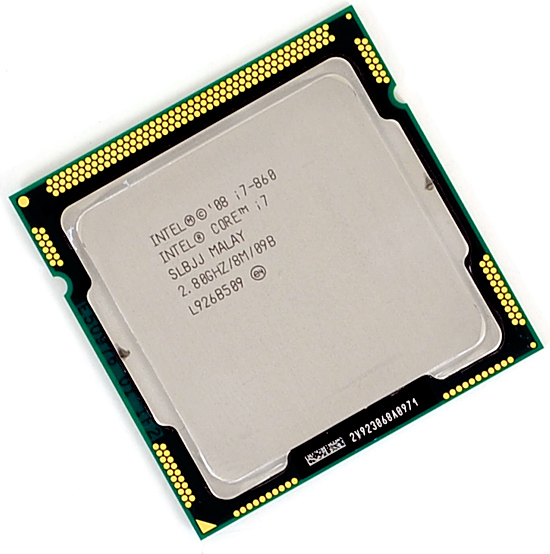
The complete list includes the Pentium G6950, G6960, G620, G620T, and G840; the Core i3 540 and 2100T; the Core i5 650, 660, 670, 680, and 2300; and the Core i7 860, 870, 930, 950, 960, 980, and 990X. Many of these processors have been around for over two years now, and with Sandy Bridge and Sandy Bridge E products available at almost all conceivable price points (and with Ivy Bridge just around the corner), the discontinuation of these processors is unsurprising.
More surprising is the cutting of several Sandy Bridge Pentium models, which were released only a few months ago. However, the models in question have already been replaced by slightly faster models (the G630, G630T, and G860, with the G850 apparently still available), and high competition in this market segment from both Intel's own Sandy Bridge Celerons and AMD's offerings is bound to lead to faster turnover.
Source: CPU World
Read More ...
Hitachi Ships The First 4TB Hard Drive
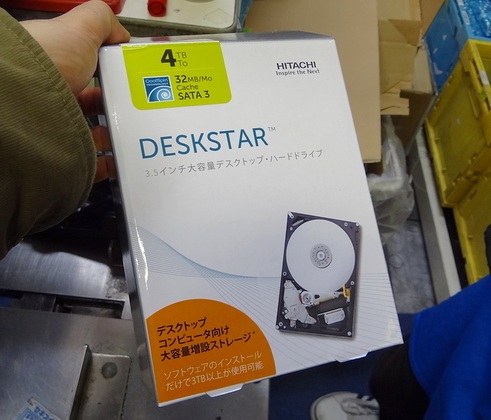
The brand suggests that it's a lower performance drive with rotational speed of 5900rpm (Hitachi calls this "CoolSpin"). The drive comes with 32MB of cache just like the 2TB and 3TB versions, and uses SATA 6Gb/s interface. The drive is priced at 26,800 Yen, which translates to $345. For comparison, the 2TB Deskstar 5K costs 19,780 Yen ($254), so the price per GB is very close. The drive appears to use four platters, so one more platter than the previous 3TB monster.
The release comes at an odd time because hard drive supply is still very limited due to the floods in Thailand. The components of this drive are manufactured in Thailand according to the product packaging, meaning that the supply may be very limited in the short term. There is no word on global availability, though.
Read More ...
webOS Goes Open Source
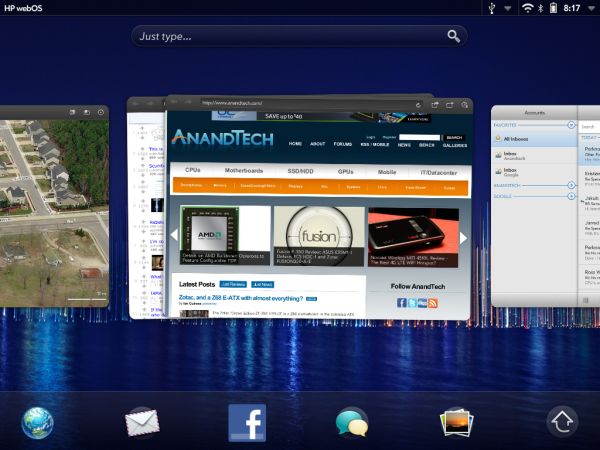
I had personally given up on webOS a while ago. The platform really had a lot of potential but HP was both the right and wrong company to take it to the next level. The best we can hope for is that some of the innovations in webOS will get incorporated into other competing OSes and in turn, make them better. I'd like to see webOS stand on its own as another platform, but I do believe the time for that has passed.
Read More ...
ASRock X79 Extreme4-M and X79 Extreme4 Review – Sandy Bridge-E meets mATX
In our series of X79 reviews, the next boards to face scrutiny are a pair of ASRock boards – the X79 Extreme4-M, one of the first mATX solutions to X79, and the X79 Extreme4, a full size ATX model. The main interesting point to consider starts with whether the power consumption and heat generation are applicable to the Sandy Bridge-E platform. With the socket and quad channel memory taking up serious PCB real estate, it is interesting to see how ASRock have tackled heat dissipation issues. We also compare the Extreme4-M to the Extreme4, its bigger brother. Both boards offer amazing value in X79 land, coming in at a recommended retail of $224.99 and $234.99 respectively. Read on for the full review!

Read More ...
Holiday 2011 Mainstream High-End Buyer's Guide
After covering the budget and midrange sectors of the DIY PC market, as well as pre-built desktops and laptops, today we have a guide outlining mainstream high-end builds. Saying the computers outlined in this guide are capable is an understatement—these are seriously powerful (and spendy!) systems. These rigs check out around $2000, at the top of the mainstream market. Each of them will be able to serve their owners well for years to come.

Read More ...
Zalman to Enter Graphics Card Market With AMD GPUs
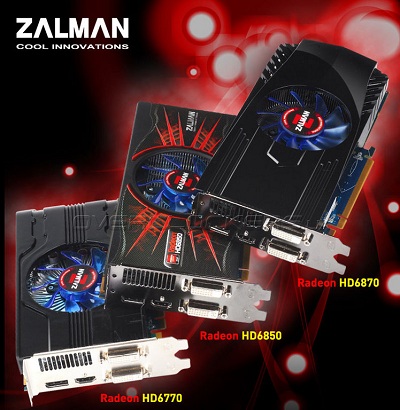
Specifications of Zalman's Graphics Card Lineup | |||
Model | HD6870-H | HD6850-H | HD6770-H |
GPU | AMD 6870 | AMD 6850 | AMD 6770 |
Stream Processors | 1120 | 960 | 800 |
Texture Units | 56 | 48 | 40 |
ROPs | 32 | 32 | 16 |
Core Clock | 900MHz | 775MHz | 850MHz |
Effective Memory Clock | 4200MHz | 4000MHz | 4800MHz |
Memory (GDDR5) | 1GB | 1GB | 1GB |
Memory Bus Width | 256-bit | 256-bit | 128-bit |
Price | $190 | $168 | $124 |
There are already plenty of AMD board partners so succeeding requires you to be different, usually either in price or cooling performance. Given the prices, Zalman isn't competing in that category, which leaves them with cooling performance. Zalman definitely has the experience in cooling systems, including GPU coolers, and hopefully we will see some products that are more innovative from them in the future.
Shipments are set to start next Tuesday, December 13th.
Source: Overclockers.ua via TechPowerUp
Read More ...
AMD Releases New Llano Mobile CPUs

AMD Llano mobile CPU refresh | |||||||
Name | Cores | CPU Clock (Max Turbo) | L2 Cache | GPU | GPU Cores | GPU Clock | TDP |
A4-3305M | 2 | 1.9GHz (2.5GHz) | 1MB | HD 6480G | 160 | 593MHz | 35W |
A4-3320M | 2 | 2.0GHz (2.6GHz) | 2MB | HD 6480G | 240 | 444MHz | 35W |
A4-3330MX | 2 | 2.2GHz (2.6GHz) | 2MB | HD 6480G | 240 | 444MHz | 45W |
A6-3420M | 4 | 1.5GHz (2.4GHz) | 4MB | HD 6520G | 320 | 400MHz | 35W |
A6-3430MX | 4 | 1.7GHz (2.4GHz) | 4MB | HD 6520G | 320 | 400MHz | 45W |
A8-3520M | 4 | 1.6GHz (2.5GHz) | 4MB | HD 6620G | 400 | 444MHz | 35W |
A8-3550MX | 4 | 2.0GHz (2.7GHz) | 4MB | HD 6620G | 400 | 444MHz | 45W |
The outlier is the A4-3305M, a new low-end processor with the same CPU clocks as the A4-3300M but with half the L2 cache and 33% fewer GPU cores, though the GPU clock has been increased to compensate. In spite of these changes, the GPU is still called the HD 6480G.
Expect to see these APUs trickle into laptops in the coming months.
Source: CPU World
Read More ...
Quick update: more Interlagos testing
As promised in our last Opteron "Interlagos" review, we have been taking the time to deepen our understanding of AMD's newest Interlagos server platform and the "Bulldozer" architecture. Server reviewing remains a complex undertaking: some of the benchmarks take hours to set up and run, and power management policies, I/O subsystems and configuration settings can completely alter the outcome of a benchmark. That sounds very obvious right? It is not in practice.
Let me give you an example how subtle server benchmarking can be. One of the benchmarks missing in the original review was the MS SQL server benchmark, and for a reason. We did some extensive scaling benchmarks and our gut feeling told us that some of the results were a bit off the mark. So we kept the benchmark out of the original review until we pinpointed the problem.
Just a few days ago, we found out that a tiny bit of time-outs (1%, caused mostly by a data provider time out setting) can boost the results by about 20% erroneously as the actual workload is decreased. So our MS SQL server benchmark was not as accurate as we thought it was. Luckily we have solved all problems, and the benchmark is now more accurate than ever. You can expect to see the MS SQL server benchmarks on different server platforms and an in depth analysis in a forthcoming article.
While solving the MS SQL Server benchmark issues required a lot of testing, analysis and debate with Dieter, the lead developer of our stress testing tool vApus, we missed a more obvious tweak that could have improved our blender benchmarking. Luckily, we still have a community that is willing to give us valuable feedback. Greg Wereszko point out that our Blender benchmark cuts the render job up into only 64 tiles (X=8, Y=8). The result is that near the end of the test several cores are inactive, especially on the Interlagos Opteron (32 cores/threads).
So we increased the number of tiles beyond 8x8, to check if this improves performance on our 32 and 24 thread machines, and it did. (Quick note: the Blender benchmark on Windows is one of the worst benchmarks for the Opteron Interlagos, so see this as "worst case" performance point.)
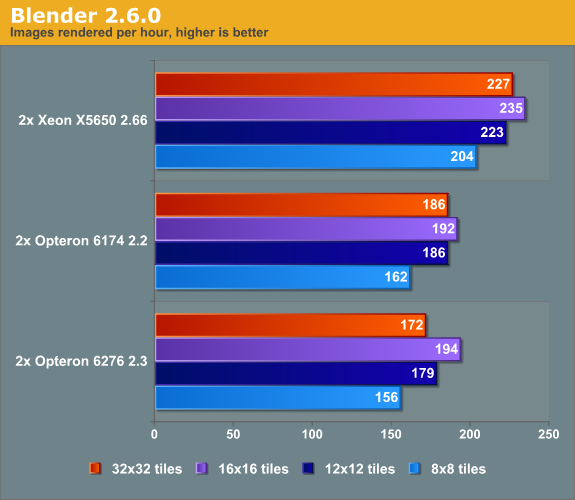
Using more tiles, all CPUs are able to show their top performance. It also shows the rather "fragile performance profile" of the new Opteron. Many users are going to use standard settings and will never bother with this kind of tuning. As a result they are not going to use the full potential of the new Opteron. The Xeon's higher single-threaded performance makes it less vulnerable to less optimal software settings.
At the other side of the coin, once well tuned the Opteron 62xx offers an interesting performance per dollar ratio and this "fragile performance profile" may become very robust in FP intensive applications once the use of AVX gets widespread. We are taking quite a bit of time to make sure that the next server article can give more detailed information, but rest assured that we did not give up: we will update our server benchmarking...when it is finished.
Read More ...
Xbox 360 Companion for Windows Phone, Xbox Live for iOS Apps Released
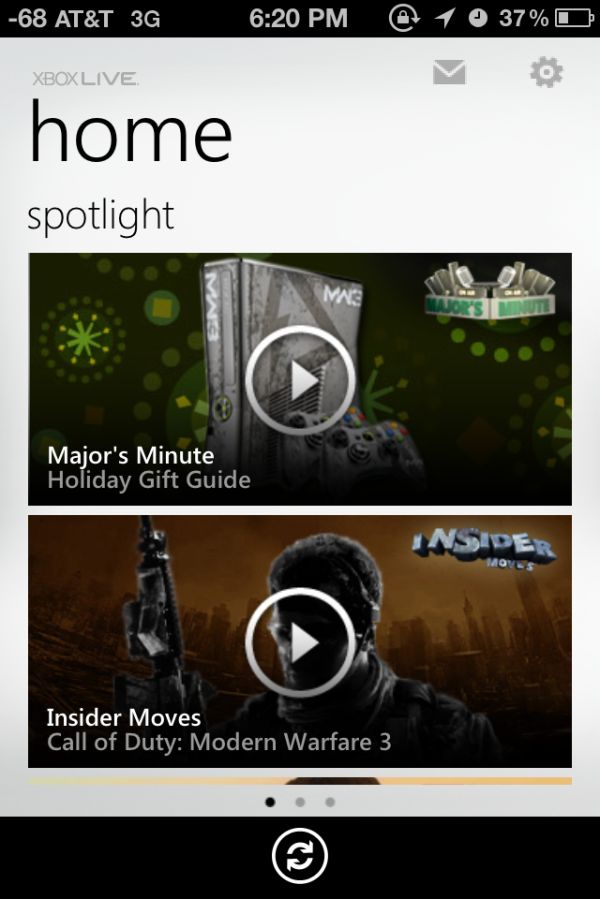
The Xbox team has been rather busy lately. On Tuesday, the team delivered the most sweeping facelift of the Xbox 360 dashboard since NXE, and today released an Xbox Companion app for Windows Phone 7 and My Xbox Live for iOS. We've had a little bit of time to troll around inside the two and thought it worthwhile to go over the very different features the two offer in conjunction with an Xbox 360.
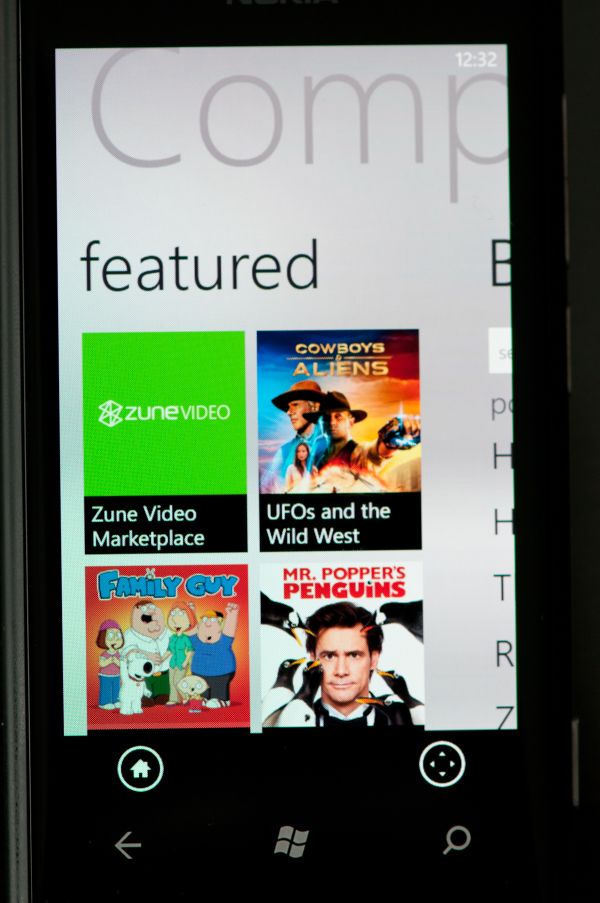
Again, Xbox Companion really acts in practice like a remote for an attached 360, and does a pretty good job replacing a the IR Xbox 360 media center remote if you have a WP7 smartphone handy. Xbox Connector finally gets close to the kind of integration that we've been waiting for between WP7 and the 360, and using it as a remote is fluid if you're using it over WiFi with good connectivity.


My Xbox Live for iOS eschews the control and remote functions of its WP7 counterpart, and instead gives you control over Xbox Live messaging, friends, and an achievements browser. It's slightly surreal to see and use a Metro-style UI on iOS, but the interface is extremely fluid.
Source: WP7 Marketplace, Apple App Store, Major Nelson Blog (1), (2)


Read More ...
Lian Li's PC-A05FN: Alternative Thinking at a $99 Price Point
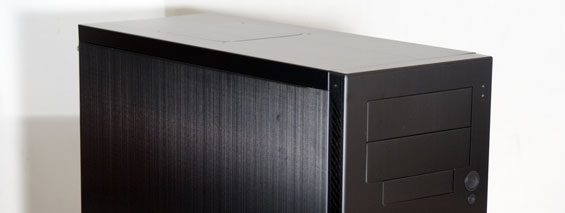
If you're willing to shell out the money for them, there are a lot of interesting alternative enclosure designs on the market. Companies like SilverStone, Thermaltake, and Lian Li are happy to sell you more experimental and exotic cases once you get past $150 or so, but what if you want something a little spicier without breaking the bank? At $99 Lian Li has you covered with the new PC-A05FN. There are a lot of good (or at least interesting) ideas at work in the PC-A05FN, but how well do they pan out?
Read More ...
Ivy Bridge Mobile Lineup Overview
Specifications of Mobile Ivy Bridge CPUs | ||||||||
SKU | i7-3920XM | i7-3820QM | i7-3720QM | i7-3520M | i5-3360M | i5-3320M | i7-3667U | i5-3427U |
Core/Thread Count | 4/8 | 4/8 | 4/8 | 2/4 | 2/4 | 2/4 | 2/4 | 2/4 |
Frequency (GHz) | 2.9 | 2.7 | 2.6 | 2.9 | 2.8 | 2.6 | 2.0 | 1.8 |
Max SC Turbo (GHz) | 3.8 | 3.7 | 3.6 | 3.6 | 3.5 | 3.3 | 3.1 | 2.8 |
Max DC Turbo (GHz) | 3.7 | 3.6 | 3.5 | 3.4 | 3.3 | 3.1 | 2.9 | 2.6 |
Max QC Turbo (GHz) | 3.6 | 3.5 | 3.4 | N/A | N/A | N/A | N/A | N/A |
L3 Cache | 8MB | 8MB | 6MB | 4MB | 3MB | 3MB | 4MB | 3MB |
Graphics | HD 4000 | HD 4000 | HD 4000 | HD 4000 | HD 4000 | HD 4000 | HD 4000 | HD 4000 |
Graphics Frequency (MHz) | 650 | 650 | 650 | 650 | 650 | 650 | 350 | 350 |
Max Graphics Turbo (MHz) | 1300 | 1250 | 1250 | 1250 | 1200 | 1200 | 1150 | 1150 |
Memory Support | DDR3-1600 and DDR3-1333 | |||||||
TDP | 55W | 45W | 45W | 35W | 35W | 35W | 17W | 17W |
VT-d | X | X | X | X | X | X | X | X |
TXT | X | X | X | X | X | X | X | X |
AES-NI | X | X | X | X | X | X | X | X |
SIPP | X | X | X | X | X | X | X | X |
vPro | X | X | X | X | X | X | X | X |
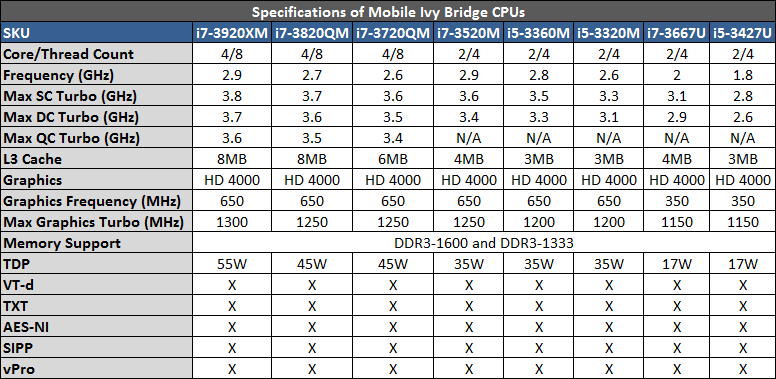
The number of SKUs is the same as in the retail Sandy Bridge lineup: three quad-core models and three dual-core. There are several OEM CPUs in SNB lineup as well, and it's likely that some OEM SKUs are missing from the roadmaps. On top of that, there are two Ultra Low Voltage (ULV) models, indicated by the U at the end. When compared to SNB, there are no more 25W Low Voltage (LV) CPUs, only standard and ultra-low voltage. This isn't surprising, given that there hasn't been a mainstream product with an LV SNB CPU.
In a nutshell, mobile Ivy Bridge appears to be just like mobile Sandy Bridge but with slightly higher clocks and better graphics, just like the desktop variant. The TDPs will remain the same: 45/55W for quad-core, 17/35W for dual-core—but it's surprising that there is no mention of the 35W quad-core. It's possible that we will see one later on as the new 22nm process node matures, or the 35W quad will be an OEM-only model because those are missing from the roadmaps. Anyway, the roadmaps have nothing about a 35W quad-core, so right now it's not confirmed, although Intel previously stated that there will be one. As for the clock speeds (including Turbo speeds), they are 100-400MHz faster than in the current SNB lineup, so we won't see a huge increase in the mobile side either.
The graphics will see a much bigger update. Like in Sandy Bridge, all mobile SKUs (though Celeron and Pentium brands aren't included here) will come with the better graphics, HD 4000 in this case. This time Intel has put even more effort into the mobile graphics, and the base frequencies will be on-par (except for ULV models) with the desktop models. Also, the Turbo speeds will actually be higher than what desktop chips offer (1300MHz vs 1150MHz). The ULV chips have a substantially lower base frequency but the Turbo, which is as high as the Turbo of the desktop chips, could make up the difference.
Another important feature in Ivy Bridge graphics is the support for three simultaneous displays. This isn't as big a deal for desktops because discrete GPUs can easily be added, but laptops have limited space and discrete GPUs are mainly found in bigger laptops. In the last few years, however, laptops have taken a lot of market share from desktops and using a laptop as a desktop replacement is becoming increasingly common. The Sandy Bridge IGP supports only two displays, which basically means one external display plus the internal LCD of the laptop. For some users, this has been a limiting factor in running a laptop as a desktop replacement. Especially now that we are entering the Ultrabook era, IGPs need to have proper multi-display support as well. While the IGP won't be the fastest GPU on the planet, it will still be more than capable of running basic tasks. My personal usage is fairly light (mainly web browsing, IMing, email and writing) and an IGP would be sufficient, but I prefer at least two 1080p monitors because I tend to have multiple windows open at the same time side by side. This is where the SNB IGP wouldn't cut it, but IVB IGP will.
The Chipsets
We have known the features of desktop chipsets for quite a while (since May, to be exact) but the mobile chipsets have remained as a mystery until today. The basic features are the same: USB 3.0 will be included and we finally get the first mobile chipset with Smart Response Technology (SRT). There will be a total of six chipsets: four consumer and two business models. Let's look at the specifications.
Specifications of Mobile Intel 7-Series Chipsets | ||||||
Model | HM75 | HM76 | HM77 | UM77 | QM77 | QS77 |
USB Ports (USB 3.0) | 12 (0) | 12 (4) | 14 (4) | 10 (4) | 14 (4) | 14 (4) |
PCIe 2.0 Lanes | 8 | 8 | 8 | 4 | 8 | 8 |
SATA Ports (6Gb/s) | 6 (2) | 6 (2) | 6 (2) | 4 (1) | 6 (2) | 6 (2) |
VGA Output | X | X | X | X | X | |
RAID | X | X | X | X | ||
Smart Response Technology | X | X | X | X | ||
Active Management Technology | X | X | ||||
Small Business Advantage | X | X | X | X | ||
The lineup is pretty straightforward. HM75 is the low-end model and is the only chipset that lacks USB 3.0 support, along with some of the software features like SRT and RAID. HM76 brings USB 3.0 supports but lacks the same software features as HM75.
HM77 is the chipset to look for in the higher-end laptops. It offers two extra USB 2.0 ports compared to HM76, but the more important part is its software support. RAID support in a laptop isn't that big of a deal because few laptops have space for two 2.5" drives, and a single SSD would easily outperform two 2.5" HDs in RAID 0. Smart Response Technology, Intel's own SSD caching system, is what you should be looking at. Z68 was the first chipset that supported SRT, but a mobile version was never released. There have been 3rd party solutions, such as OCZ Synapse, but they haven't received much attraction. Having a 3rd party software playing with low-level file access also has its risks, so I think OEMs will be more comfortable adopting Intel's caching system since it's built into the chipset, and if the laptop already has the necessary chipset there's no additional software cost.
The last entry of the consumer chipsets is UM77. It's a low power chipset and will mainly be aimed at ultrabooks. Its feature list is a bit more crippled but the crucial features, USB 3.0 and SATA 6Gb/s, are still there. The number of PCIe lanes is cut in half but that shouldn't be an issue because there are still 16 PCIe 3.0 lanes coming from the CPU, and we have yet to see an ultrabook with discrete graphics. Moreover, ultrabooks rarely have many PCIe devices and the on-die USB 3.0 support reduces the need for additional devices even more.
There are two chipsets remaining, QM77 and QS77. The Q designation is for business models. Specification wise, they are equal but QS77 comes in a smaller form factor, ideal for business orientated ultrabooks and other small form factor computers. The only advantage these chipsets have over HM77 is Intel Active Management Technology, which allows administrators to remotely monitor, update and repair computers over the network, even if the PC is powered off. (There's a specific circuit for this, hence the computer's regular network card doesn't have to be on). Small Business Advantage (SBA) is another business related feature and it offers for example hardware level anti-virus monitoring, blockage of unwanted USB devices, and data backup. Some of these tasks, such as the back up, can be run even when the actual computer has been turned off. HM77 and UM77 support SBA as well, although it's most useful for businesses.
Wrap-Up
The only surprise is the TDPs. Ivy Bridge is supposed to be more power efficient but right now, the only CPUs that have seen a cut in TDPs are the standard voltage desktop chips. The lack of 35W quad-core is particularly disappointing. 35W would make quad-core possible in smaller 13-14" laptops, such as the 13" MacBook Pro. I think quite a few people have been waiting for less bulky quad-core laptops as a 13" laptop can still be a good desktop replacement if your usage is only CPU intensive (unless a decent discrete GPU can be fit in 13" chassis along with 35W CPU). Hopefully the 35W QC will be at least an OEM-only model, or come a few months later. Haswell would mean another year or so of waiting. The roadmaps indicate that quad core IVB parts will be released in April 2012, while dual core parts are scheduled for May release.
As a whole, Ivy Bridge will be an average update for laptops. The CPU performance won't increase substantially (maybe around 15% or so) but the graphics will see a healthy boost. The new chipsets will also provide some anticipated features, which should make IVB a worthwhile upgrade if you have a pre Sandy Bridge laptop.
Read More ...
Sony Ericsson and Motorola Detail Android 4.0 Upgrade Path
We've talked in the past about how OEMs take the Android Open Source Project (AOSP) and use it to build software tailored for devices in the context of x86 optimizations, and today two partners are sharing some more details about their specific timelines for Android 4.0 releases. Those two are Sony Ericsson and Motorola, who have outlined in their respective blog posts the path from code to getting a fully baked ROM pushed out over the air to handsets.
The two posts describe the process as we've understood it for a while now, and with Android 4.0 things don't seem any different. Google works with a specific OEM and SoC vendor around some chosen reference hardware (in this case Galaxy Nexus), and simultaneously (or close to it) releases the source code and device when things are finished. At that point, SoC vendors begin working on their own ports and build in necessary drivers or optimizations of their own.

Each carrier has different requirements for phases 2 and 3. There may be a two-month preparation cycle to enter a carrier lab cycle of one to three months.Sony Ericsson also notes that this certification and testing phase is the longest in the process:
The Certification and approval phase that is the most time consuming process when it comes to getting a new software release out on our phones. This is one of the major tasks that are legally required from us as phone manufacturer, but is a task that the custom ROM community doesn’t have to take into consideration.Motorola has noted as well that the Droid RAZR, Bionic, and Xoom are all guaranteed to get an ICS port before the second half of 2012, and the list of Motorola devices being upgraded to 4.0 will likely grow. Meanwhile Sony Ericsson noted that the entire 2011 Xperia family will receive an update to 4.0 and that dates will come later.
Source: Motorola, Sony Ericsson
Read More ...
Microsoft Announces Windows Store Details
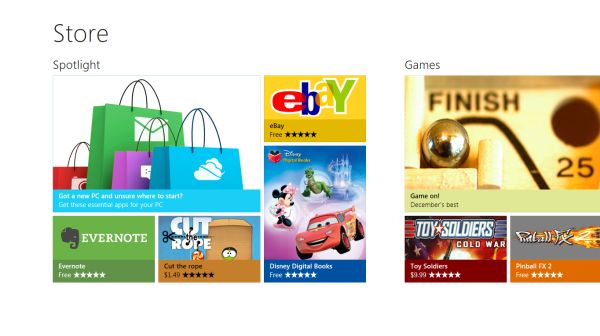
First, the money: registration fees for individual developers will cost $49, and $99 for companies. When a paid app is first posted to the store, the revenue will split between the developer and Microsoft using the standard 70/30 ratio, but for apps that make more than $25,000, the split will change to 80/20 in favor of the developers. Unlike the Mac App Store, Microsoft will also allow both time-based and feature-based trial versions of apps in its store, which can be upgraded in-place to the full version if the developer supports it. Paid apps can start at $1.49 and cost up to $999.99.
The approval process for apps looks to be a more developer-friendly version of Apple's system: Windows 8 will be a curated platform, which should help curb some of the malware problems that Android is having. However, criteria for approval are clearly laid out even at this early date, and developers whose apps are rejected will be given feedback on what changes they'll need to make to get approved. Developers can also get status updates on exactly where they are in the approval process (all of this sounds pretty good, though Microsoft's rules for things like Xbox Live games and patches have drawn some criticism from developers for their inflexibility).
For both advertisements and in-app purchases, Microsoft offers its own platforms but does not mandate their use. If a newspaper or magazine publisher has an existing database of its users and a pre-existing authentication system, that publisher is free to continue using them in its app. Apple began mandating the use of its systems for in-app purchases earlier this year.
Lastly, as usual, Microsoft spent some time assuaging the fears of its enterprise customers: via group policies and PowerShell scripts, domain administrators can both permit and deny access to the Windows Store and to individual apps, and can also deploy Metro apps directly to PCs without using the Windows Store at all. This functionality could be particularly useful for volume-licensed apps.
The Windows Store will make its first appearance in the Windows 8 Beta, which should be available at some point in February of 2012. Microsoft has announced a "First Apps" contest, through which developers that submit their apps before January 8 will have a chance to have their app featured in the beta store. Microsoft will allow only free apps in the store during the beta period, so users will have a good chance to dig around and see what Metro apps will be like.
Source: Windows Store for Developers blog
Read More ...
Verizon and Motorola Introduce Xyboard 10.1 and 8.2: Xoom Sequels

The Xyboard 8.2 is being targed towards media consumption, with 2.1 surround sound built-in and touting HD Netflix streaming. Each tablet features an IPS 1280x800 display, and are supposed to be significantly thinner than their predecessor. LTE is, of course, offered, and pricing on a two-year contract remains impressively high. But if you hate square corners and are looking for a 4G tablet to sate your LTE-loving heart, the Xyboards will be available sometime this month, with a starting on-contract price of $429 and $529 for the 8.2" and 10.1" tablets, respectively.


Read More ...
Introducing AMD’s Radeon 7000M and NVIDIA’s GeForce 600M Mobile GPUs
AMD briefed us last week on several new and upcoming technologies and announcements. We’ve covered the AMD Memory announcement, and next up on the list is AMD’s Radeon Mobility HD 7000M. While we were getting this article ready, we also had NVIDIA launch their updated GeForce 600M parts without so much as a brief heads-up email. There’s reasons for that, which we’ll cover in this article, but we’ll start with a look at AMD’s new mobile parts before getting into the NVIDIA update.
Read More ...
Verizon and AT&T: State of the LTE Spectrum Union
In two deals announced late last week, Verizon Wireless has expanded its spectrum holdings through deals that will give it control over various frequencies, almost all in the AWS space. This in the same week that AT&T had the door nearly entirely shut on them in their efforts to merge with T-Mobile. Though AT&T touted its desire to increase competition, produce more jobs in the United States and provide more and better services for its customers, spectrum was the real target of this acquisition. Ever hungry mobile data customers are the drive for bandwidth, and falling short of meeting your customers needs can be costly to a provider (just ask AT&T). There are several techniques that can be deployed for encoding more bits into each wave, but ask a firefighter what he wants to help fight a fire. More hoses will be the answer everytime, and in wireless that means more spectrum.
Where We Are, Where We're Going

What's next then? LTE-Advanced will fulfill the true potential promised by 4G mobile broadband networks, and will do so through a more crowded and complex arrangement than we have now. Right now, your phone is picking up signals from, most likely, more than one cell tower owned by or servicing your network provider. These towers serve many customers over a wide geographic area, and are referred to as macrocells. Your phone utilizes the tower that will provide it the fastest and most reliable connection, and this determination is made using several factors including interference from other near by towers. If you are lucky, your phone will have (if supported) a MIMO connection with low SNR resulting in a high speed, low latency connection.

Verizon currently operates their network in a 22MHz chunk of the 700MHz spectrum, this is divvied up in a frequency duplexed scheme with 10MHz for downstream, 10MHz for upstream, and two 1MHz chunks at the sides. This all fits nicely with LTE's ability to use varying sized channels, in this case 10MHz serves upstream and downstream fine. Lower frequencies propagate through buildings better, so 700MHz is beneficial in urban areas where customers might not get any signal from higher frequency towers.
Now, add in some lower power small cells throughout the range of a single macrocell. Many of these smaller cells will be within buildings, or covering outdoor hotspots (think Times Square and Madison Square Garden). Those smaller cells don't necessarily need to worry about building penetration as they are either outdoors or already within the building they're trying to serve. As a result, that 700MHz frequency becomes less important, though they may still operate on them. Now, add in some of the channels that Verizon is acquiring; particularly a 20MHz chunk of AWS in Minneapolis, MN. Imagine that the whole channel is added for downstream operation. You now have multiple cells, with several channels to choose from, all operating in one geographic area. And that's just for LTE, the PCS spectrum they acquired could be added to their 3G and telephony networks for enhanced voice service and fallback data. One more picture to look at.

The New Land Grab, Spectrum Acquisitions
Now let's breakdown the two deals Verizon's made, and hope will get approved. Cricket Wireless is a regional operator that provides cellular services on spectrum it owns or leases within a given market. This is similar to ClearWire, though Cricket provides telephony services along with data services. Cricket, like ClearWire, intends to move to LTE and wants some of that coveted 700MHz spectrum. It just so happens, Verizon has 12MHz it isn't using in Block A of the 700MHz spectrum covering the Chicago area. So, Cricket gets 12MHz of building penetrating frequencies in the 3rd largest metropolitan region in the US, and Verizon gets 23 PCS and 13 AWS (Advanced Wireless Services) licenses in markets spread across the US. Since each chunk is regional, this won't mean that Verizon will have dozens of 20MHz channels blanketing the whole country, but with this deal alone they will have many 20MHz channels over many markets.And what's so good about AWS? Mainly, it's available. AWS exists in the microwave spectrum, with downstream bandwidth provided between 2110MHz and 2155MHz, and upstream bandwidth provided between 1710MHz and 1755MHz. It was first put up for auction in 2006, and was almost entirely scooped up by T-Mobile for its 3G network.
The key to this deal is that Cricket isn't actually doing anything with these channels, nor is Verizon doing anything with their 12MHz. The FCC generally frowns on deals that will adversely affect customers of a service. So if Cricket were giving up their only operating frequency in Fresno, CA, there might be some push-back. As it is, the FCC shouldn't have anything to complain about. Indeed, by exchanging 700MHz spectrum they are basically creating an honest to goodness competitor in the Chicago area. And just to bear out how important these AWS acquistions are, Verizon is also throwing in $100 million to help build out Cricket's LTE network.

Since all 122 of these licenses was being unused, the FCC won't be concerned about a loss of service to customers. What might strike some alarms is the notion that the largest cable telcos are going to be locked into offering only one wireless provider's services. This is obviously a strategic win for Verizon, but might be looked down on by regulators. It will be curious to see whether this is the end of Verizon's buying spree, there's only so much spectrum out there.
And AT&T? AT&T is awaiting approval from the FCC on their purchase of Qualcomm's MediaFLO 700 MHz spectrum. Qualcomm having bowed out of the mobile TV business is letting this slice of spectrum sit idle, so this deal should be approved any day now. The purchase of T-Mobile is a different story altogether. Though becoming the number one wireless provider in America has its appeal, the acquisition of spectrum is the driving force behind this deal. Combining AT&T's block of 700 MHz spectrum with T-Mobile's nationwide AWS spectrum would boost their LTE competitiveness. Mergers of this type receive thorough evaluation from technical, legal, consumer and anti-competitive perspectives. In their recent Staff Report, the FCC opined that while AT&T's competitiveness will improve, the merger will negatively affect the public and lead to higher prices. The release of this report succeeded AT&T and T-Mobile withdrawing their application with the FCC, after Chairman Genachowski requested that the merger be put through a hearing to determine approval. AT&T will continue their merger efforts with the Department of Justice, in the hopes that a positive result there could sway the FCC in a future submission. So overall, it looks a little grim at AT&T right now.
Wrap-up
LTE isn't going to get too much better at using the spectrum we feed it. To that end, if more and more customers are going to be demanding more and more mobile data, the only solution is to feed the beast. Verizon had a headstart with the first US LTE network, which celebrated its first birthday the other day. Now Verizon is taking the next step and, should the AT&T/T-Mobile merger fall through, may end up with a commanding lead in LTE spectrum. What remains to be seen is how this will play out for the consumer. If wireless providers follow the lead of their wired kin, we could end up with high prices to take advantage of this high performance. That sounds logical, until you see how poorly US broadband speeds scale with their price; $200 for 105 Mbps just isn't balanced against $42 for 1.5 Mbps.Read More ...
Australian Court Silences Apple's Cries, Allows Samsung Tablet to Launch
France court also refuses Samsung's request to ban Apple's iPhone 4S; pair forced to compete on the market
Read More ...
One Line of Code Created a World of Woe for HTC, Carrier IQ, et al.
Code sloppily, pay the price; or as a source puts it "It really appears like Carrier IQ got screwed by HTC."
Read More ...
Update: webOS is Going Open Source, Future HP Hardware Still Unlikely
Many expect Whitman to address what HP plans to do with webOS, which former CEO Leo Apotheker decided to kill back in August
Read More ...
Available Tags:BenQ , Sandy Bridge , Intel , webOS , Sandy Bridge , ASRock , Zalman , AMD , Windows Phone , Xbox , Windows , Xbox , iOS , Ivy Bridge , Sony Ericsson , Sony , Motorola , Android , Microsoft , Xoom , mobile GPU , Radeon , GeForce , Samsung , Tablet , HP , Hardware ,


No comments:
Post a Comment