

Samsung Gives Portability Another Try with Galaxy Tab 7.0 Plus
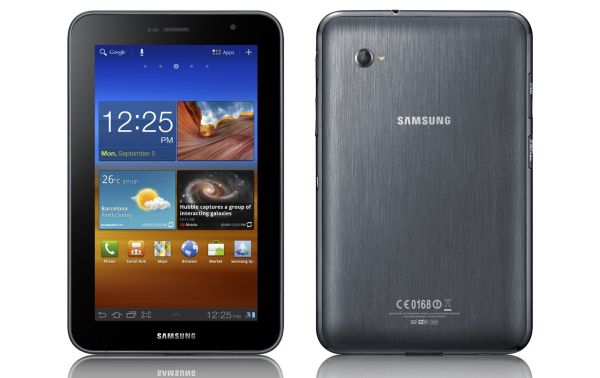
A bit thicker than the 10.1 and 8.9, the 7.0 Plus measures 9.96mm compared to 8.6mm for the bigger tabs. Weight is significantly lower at 345g, and obviously the overall footprint is smaller. Samsung continues to use its own PLS display technology although the resolution of the 7.0 Plus drops to 1024 x 600.
Samsung 2011 Tablet Comparison | |||||||
Galaxy Tab 7.0 Plus | Galaxy Tab 8.9 | Galaxy Tab 10.1 | |||||
SoC | Dual ARM Cortex A9 @ 1.2GHz | NVIDIA Tegra 2 (Dual ARM Cortex A9 @ 1GHz) | NVIDIA Tegra 2 (Dual ARM Cortex A9 @ 1GHz) | ||||
GPU | ? | NVIDIA GeForce | NVIDIA GeForce | ||||
RAM | 1GB | 1GB | 1GB | ||||
Display | 1024 x 600 PLS | 1280 x 800 PLS | 1280 x 800 PLS | ||||
NAND | 16GB | 16GB | 16GB | ||||
Dimensions | 193.65 x 122.37 x 9.96 | 230.9 x 157.8 x 8.6mm | 256.6 x 172.9 x 8.6mm | ||||
Weight | 345g | 447g | 565g | ||||
Price | ? | $469 | $499 | ||||
The 7.0 Plus features an integrated HSPA+ (21Mbps) baseband capable of working 900, 1900 and 2100MHz networks. EDGE/GPRS are supported on 850, 900, 1800 and 1900MHz bands.
The tablet features two cameras: a 3MP rear facing unit with LED flash and a 2MP front facing sensor. Samsung will also integrate its TouchWiz UX into Android for the 7.0 Plus. Battery capacity is listed as 4000 mAh.
The 7.0 Plus will begin is life in Indonesia and Austria at the end of next month, with a gradual global rollout afterwards.


Read More ...
Game Review: The Binding of Isaac
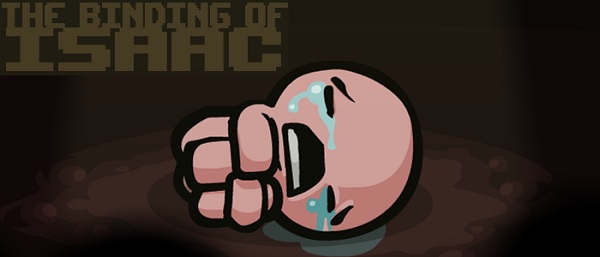
A pregame Flash animation shows Isaac’s mother, who likes to watch Christian television programming, being told by God that Isaac is a creature of immense sin. To prove that she loves her deity above all else, she attempts to kill Isaac, who escapes into a cavernous basement of hideous monsters and terrible trials. After his fall, Isaac awakes, ready to seek revenge.
To reinvent one of the oldest stories in Western theology (Abraham almost killing his son Isaac at God’s behest) as a videogame, McMillen drew inspiration from venerable entries in gaming canon. Isaac, who cannot stop crying, shoots his tears in a manner reminscent of Robotron and Smash TV. Some enemies harken back to arcade classics like Asteroids and Centipede. The UI and environment design smack of The Legend of Zelda on NES, replete with hearts, bombs, shops and grid-based dungeon maps.

All of Isaac’s demented loot drops with similar randomness, and none of it is explained. Upgrades come in many forms: trinkets, pills, tarot cards, blood pacts with the devil. They each change Isaac cosmetically, reflecting the shame and punishment inflicted by his mother (lipstick, heels, and a coat hanger are a few choice examples). There is no manual to tell you what they do, and if a guide crops up on the Internet, I urge you to avoid it. The whimsy and danger lurking behind each item pickup make Isaac’s journey all the more precarious and exciting.
The uncertainty and randomness breed resourcefulness. Sometimes the game will hand you powerful items early on, only to withhold heart and bombs in the later levels. Other times you will receive plenty of bombs and keys but few meaningful upgrades to Isaac’s skills. To succeed, you must adapt your play style to what the game gives you. Unless you have issues with the core gameplay, it could take ages to become bored with Isaac’s breadth of game-changing content.
So about that core gameplay: it’s purposefully loose and imprecise. Isaac can only fire his tears in the cardinal directions, and they don’t always travel in perfectly straight lines. Moving while shooting allows you to angle the shots a bit, but it isn’t an exact science. Movement’s controlled with WASD, and Isaac glides a bit, especially after a few speed upgrades. Navigating some of the spike-filled rooms is difficult when your protagonist can’t stop on a dime.
Despite this, I love how Isaac handles. The controls enhance the overall tension while still feeling fun. You need to be mindful of the environment, how Isaac moves within that environment, how the enemies move in reaction to Isaac, and how and when you can harm them. Fighting a bit of imprecision fits in well with the rest of the game’s randomness and adds to the challenge.

While guiding Isaac through the depths, stop and give a listen to the delightful soundtrack by composer Danny Baranowsky (Canabalt, Super Meat Boy). Baranowsky consistently finds ways to channel retro game music without resorting to composing on a Game Boy. I’m particularly taken with the surprising warmth of the “Caves” theme. He also admirably meets the challenge of writing his own riff on the “You Found A Secret” chime from Zelda.
At just $5, The Binding of Isaac is priced as an entertaining distraction, but it offers much more. McMillen and his programmer Florian Himsl have packed this retro hybrid with loads of secrets and unlockables. After six hours I'm still discovering new items, new enemies, new endings. Nothing about a boy being tortured by his mother should be this fun, but it is. And it’ll likely stay fun and fresh for a while.
A copy was provided for the purposes of this review. The Binding of Isaac is currently available on Steam for $4.99. You can find the hardware requirements below:
PC Requirements | Mac Requirements | |
OS | Windows XP/Vista/7, | OS X Leopard 10.5.8 or Snow Leopard 10.6.3 |
Processor | 2.5 GHz | Intel Mac 2.5 GHz |
Memory | 1 GB | 1 GB |
Hard Disk Space | 50 MB | 50 MB |
Video Card | DirectX 9.0c Compatible Card | -- |
Read More ...
Rendering and HPC Benchmark Session Using Our Best Servers
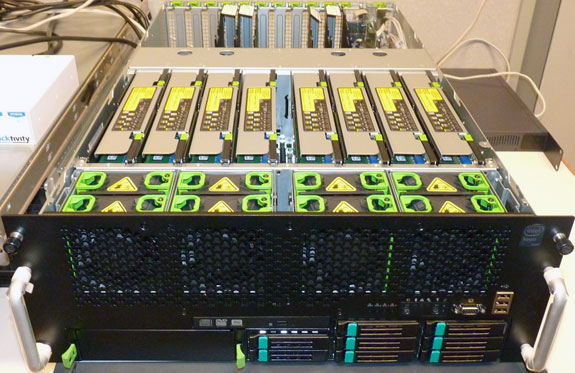
Each time we publish a new server platform review, several of our readers inquire about HPC and rendering benchmarks. We're always willing to accommodate reasonable requests, so we're going to start expanding beyond our usual labor intensive virtualization benchmarks. This article is our first attempt. It was a bumpy ride, but this first attempt produced some very interesting insights.
Read More ...
AMD Releases Catalyst 11.9 Drivers
The new drivers enable 3D support via DisplayPort - AMD specifically mentions the Samsung 750 and 950 displays as being supported. There are no particular performance enhancements listed for any games, though hanging and crashing issues in several games have been resolved (especially under Windows 7).
The new drivers can be downloaded from AMD's web site, through the Catalyst software's automatic updater, or via Steam. The final version of the 11.10 drivers will replace the 11.9 drivers when they're made available next month.
Source: AMD
Read More ...
Samsung Talks About 32nm 1.5GHz Exynos SoC

Today Samsung announced a 32nm addition to the family: the Exynos 4212. CPU clocks jump up to 1.5GHz, while GPU clocks are unknown. Samsung claims GPU performance improves by up to 50% "over the previous processor generation" but that is a bit too ambiguous for me to extract anything real from. The move to 32nm could have simply enabled a 50% increase in GPU clock speed.
Samsung's 32nm process uses high-K + metal gate transistors, similar to a transition Intel made at 45nm. According to Samsung, these new transistors allow for either a > 40% increase in performance at the same leakage or a 10x reduction in leakage current at the same speed. Density also improves by 2x enabling even more complex chip designs (more cores, bigger GPUs, more integration) or smaller die with the same feature set (eventually improving supply and profit).
Specific to the Exynos 4212, Samsung is claiming a 30% reduction in power compared to its predecessor (presumably the 45nm LP Exynos 4210?).
Exynos 4212 will be sampling in Q4. I'd expect to see it in handsets sometime in 2012.
Read More ...
Oracle Circles HP Like a Shark, Ellison Lashes Out With War of Words
Some believe Oracle could be trying to depress HP's stock price to buy it
Read More ...
DOE Review: EVs, Grid Modernization to be Focus of 2013 Spending
The Quadrennial Technology Review will be used to steer spending for fiscal 2013, and a budget proposal will be released in 2012
Read More ...
New Galaxy Tab 7.0 "Plus" is Thinner, Lighter, and More Powerful
Samsung smaller tablet finally gets a referesh
Read More ...
Quick Note: BMW Announces ActiveHybrid 5, Sets March '12 Launch Date
One BMW hybrid dies, another springs into action
Read More ...
The End of Big Science: America's Top Particle Accelerator to Shut Down
The world loses its second largest particle accelerator, America loses its ambition
Read More ...
GM Beefs Up Vehicle Safety With New Airbag, Collision Avoidance
New systems to debut on select models in 2012, 2013, slowly roll out to rest of the lineup
Read More ...
Glowing Bacteria Reveal Coded Messages
Seven strains of bacteria have been genetically engineered to express varied fluorescent proteins
Read More ...
Available Tags:Galaxy Tab , Samsung , Galaxy , AMD , Catalyst , Oracle , HP , Galaxy Tab , BMW , GM ,


No comments:
Post a Comment