

Exclusive: LG Optimus Pad UK release date is April or May
 The LG Optimus Pad UK release date is April or May.
 What's more, the 3D-enabled tablet is going to be available through Carphone Warehouse, presumably on contract deals.
That's according to Nvidia's technical marketing director Nick Stam, who we spent some time with on the Nvidia booth at Mobile World Congress 2011.
As we were touring the stand looking at Nvidia's Tegra 2 tablets including the Motorola Xoom and new Toshiba tablet, we arrived at the Optimus Pad at which point Stam pulled a piece of paper from his pocket which detailed launch dates for the slab in Europe.
For the UK, it clearly said Carphone Warehouse and gave an April/May timeframe. But, of course, the real question is "how much?" We're sure it won't be cheap - especially with the 3D capability. Check out our Hands on: LG Optimus Pad review.

 |  |
Read More ...
Exclusive: NFC adds 'noticeable premium' to smartphone cost
 Samsung has told TechRadar that it thinks NFC is about to take off, despite the extra cost associated with the technology.
Jim Powell, head of product management for Samsung Mobile UK, told us that networks were deeply interested in pushing the technology and had asked Samsung for products to satisfy that:
"We're seeing NFC across an increasing number of devices. The Galaxy S2 and the new Wave 578 won't be the end of our involvement in the technology," said Powell.
Network drive
"In the UK the drive is coming from the networks, as they see a real opportunity with the technology which is why they come to us and ask for a specific product - like the Wave 578.
"NFC is coming in a big way, and the change is going to be enormous over the next 12 months.
"NFC obviously incurs a natural development cost - it will be a noticeable premium on handsets but it won't be huge, and it certainly won't be the reason NFC technology in phones becomes popular or fails."
With some analysts predicting over half of all mobile phones will be NFC-enabled in 2015, this makes a degree of sense, so keep an eye out for an increasing number of people touching stuff with their handsets.

| |
Read More ...
Exclusive: HTC: Deep Facebook integration could come to all smartphones
 HTC has told TechRadar that it may roll out the Facebook integration from its recently unveiled HTC ChaCha and Salsa to other devices.
Jon French, executive director of HTC UK, Ireland and South Africa, said that HTC had worked on making the Facebook integration as simple as possible and the same features could be brought to more devices in the future:
"It's no secret that we don't mind developers plugging into our Sense UI in the same way we worked with Facebook on [the ChaCha and Salsa] - it would be a relatively easy thing to take a third-party application and make sure it's integrated well into Sense."
Different directions
"We could have implemented what we did on those devices on higher-end smartphones, but we're trying to target a different demographic; those that pick up their smartphone even before out of bed.
"However, there's nothing to say we won't expand that offering into different areas of our portfolio going forward - or even expand it to offer different services."
While French refused to be drawn on which services that could be, the offer is clearly open for another big name to come in and make the same impression - could the Spotify phone be up next?

| |
Read More ...
Exclusive: Motorola looking to deploy NFC in smartphones
 Motorola has confirmed to TechRadar that it's looking to add NFC to its smartphones in the future when it believes the market is ready.
Paul Nicholson, product marketing director for Motorola Mobility, said the company was currently looking at addressing the security concerns with the technology:
"It's about finding the right point in time for NFC. We're clearly looking to deploy an initiative in that area when that time comes.
"It's going to be next big thing in the smartphone world, enabling users to get rid of their wallet and car keys and just have it in a smartphone."
Security top priority
"However, consumers' main concerns are about security, and we're looking hard at those elements. When the time's right, we will deploy it, but we're still evaluating what the implications are."
Nicholson declined to give an exact time frame, despite other manufacturers saying that the technology was going to be big over the next 12 months, stating that for nearly a decade he'd heard that the technology was coming and it was still yet to fully materialise.
However Motorola has conducted trials into this area over the years, and has a patent portfolio to back it up - so if NFC takes off it wouldn't be a big ask for the renaissance company to becoming involved in a big way.

| |
Read More ...
Exclusive: Samsung: No need for 3D on mobiles
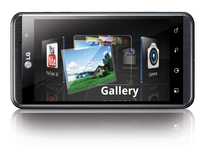 Samsung has stated that it doesn't think the time is right for a mobile phone with a 3D screen in the market.
Jim Powell, head of product management for Samsung Mobile UK, said that while the Korean brand was clearly keeping an eye on the tech, Samsung isn't launching a rival product:
"We are world leaders in 3D, but we haven't seen a need for 3D on mobiles as yet for UK customers.
"There's a trade off with when it comes to thickness and pocketablity when it comes adding 3D into a mobile phone as well."
Who needs it?
"We just don't see [3D] is needed yet - good luck to the innovators though, it will be interesting to see if it works, and if it does you'll see a response from Samsung quickly."
Given that there's only one phone coming to the market with a 3D screen, it's not hard to see this is a thinly-veiled criticism of the LG Optimus 3D.
However, with the brand garnering interest from Sky over porting its content to the platform, Samsung may find itself having to change its tune should consumers get on board with 3D on mobiles.

| |
Read More ...
MWC 2011: Clever Bluetooth sticker brings NFC to any smartphone for £20
 A French company has developed a near field communications sticker that gives any Bluetooth-enabled smartphone NFC capabilities, including contactless payments.
 That means you could feasibly enjoy Nexus S-style NFC without having to shell out for a new smartphone.
There aren't many NFC-enabled smartphones around at the moment – the Google Nexus S and Samsung Galaxy S2 are the notable ones – although many are rumoured to be en route to shop floors, including Apple's iPhone 5.
Bargain-field communications
But if you don't fancy a £500 upgrade or a £35 contract hanging over you for the rest of your life, the simple £21 Twinlinx MyMax NFC sticker could be all you need.
Using the handset's Bluetooth connection, the sticker can either be used with external readers (like Oyster gates and contactless payment points) or as a reader or for taking information from an NFC code (e.g. on an advert).
When reading or writing information to the phone the user has to physically switch the Bluetooth on, which requires just a simple press of the sticker.
Easy option
Even this small inconvenience could soon be a thing of the past, however: at a demo of the technology at Mobile World Congress, Twinlinx told TechRadar that it is working on a new model that automatically wakes up when needed.
The company also revealed that the price should drop by around €5 (£4) in 2012.

Ok, so it's a bit of a shame to whack a sizable sticker on the rear of your beautifully designed iPhone 4 or HTC Desire HD (although you don't need the plastic pouch shown above), but as NFC takes off, the benefits should outweigh the inconvenience.
We've already had word that retailers and networks are looking to install card readers and contactless payment points around the country, meaning the mobile wallet is set to take off in the UK.
Steve Lewis, VP of Marketing and Business Development at Twinlinx, told us, "By 2015, Frost and Sullivan predicts that 50 per cent of all phones will be NFC – but that still leaves half without the capability. That could be billions of phones, and not everyone wants a high-end smartphone which will cost hundreds of Euros."
The MyMax NFC sticker was first launched in France last year, but Twinlinx has volume shipments planned for 2011, some of which will hopefully reach our fair UK shores.

| |
Read More ...
Video: Google One Pass: Apple app subscription rival announced
 Google has revealed today that it too will be offering an app subscription service for publishers, called Google One Pass.
Just yesterday Apple announced that it would allow publishers to offer subscriptions to their magazine apps through the App Store.
Google, not wanting to be left out in the publishing cold, has unveiled its own system for this.
One Pass, according to Google, is a new revenue stream for publishers, one that allows users to purchase a mag app once and view anywhere.
It will allow publishers to offer subscriptions, day passes, metered access, pay-per-article and multi-issue packages of their apps.
Easy to implement
"By providing a system for user authentication, payment processing, and administration, Google One Pass lets publishers focus on creating high quality content for their readers," said Google.
"Publishers have flexibility over payment models and control over the digital content for which they charge and the content that is free for consumers."
Google continued: "Google One Pass is easy to implement and simple to manage. The set up is minimal and content will be managed through a simple online interface, so publishers can try out different approaches to selling content with minimal development cost and see what works for their business.
"It is powered by Google Checkout, so publishers' e-commerce and payment processing needs are covered, and there is no need to build a third-party payment system into publishers' sites."
Google One Pass is currently intended for periodicals, such as news and magazines, but is a flexible payment system that can be used for many other types of content.
Google is looking to charge 10 per cent for the privilege of using One Pass, which is significantly less than the 30 per cent cut that Apple is currently asking for.

| |
Read More ...
Video: Google One Pass: Apple app subscription rival announced
Google has revealed today that it too will be offering an app subscription service for publishers, called Google One Pass.Just yesterday Apple announced that it would allow publishers to offer subscriptions to their magazine apps through the App Store.
Google, not wanting to be left out in the publishing cold, has unveiled its own system for this.
One Pass, according to Google, is a new revenue stream for publishers, one that allows users to purchase a mag app once and view anywhere.
It will allow publishers to offer subscriptions, day passes, metered access, pay-per-article and multi-issue packages of their apps.
Easy to implement
"By providing a system for user authentication, payment processing, and administration, Google One Pass lets publishers focus on creating high quality content for their readers," said Google about One Pass.
"Publishers have flexibility over payment models and control over the digital content for which they charge and the content that is free for consumers."
Google continued: "Google One Pass is easy to implement and simple to manage. The set up is minimal and content will be managed through a simple online interface, so publishers can try out different approaches to selling content with minimal development cost and see what works for their business.
"It is powered by Google Checkout, so publishers' e-commerce and payment processing needs are covered, and there is no need to build a third-party payment system into publishers' sites."
Google One Pass is currently intended for periodicals, such as news and magazines, but is a flexible payment system that can be used for many other types of content.
Google is looking to charge 10 per cent for the privilege of using One Pass, which is significantly less than the 30 per cent cut that Apple is currently asking for.

| |
Read More ...
MWC 2011: Hands on: HP Veer review
 This tiny lozenge-shaped handset was launched at HP's webOS event last week, but we've found it in the halls of Mobile World Congress courtesy of a nice man from HP.
 Like its bigger brother, the HP Pre 3, the HP Veer has a slide-out keyboard and the same smart matt finish.

The size will be a problem for some, a boon for others, but at the size of a credit card and smaller than a wireless mouse this is seriously titchy. The dimensions are 54.5 mm x 84.0 mm x 15.1 mm while the weight is only 103 grams.
The Veer seems so small at first that you wonder how you're going to do anything. But webOS does work well on it.
We like two things about the Veer especially – the integrated messaging seems great, while we also like the Just Type feature that's on all webOS devices. Just start typing on your home screen and the phone will give you options – do you want to search for it on the web or do you want to tweet it? You get the idea.

However, you can really only deal with a single thing at once – the screen is just too small. We've been spoiled a bit too much by the 3.5-inch and above screens we're all now used to. And if you've used a Samsung Galaxy S or Nexus S you'd hate it.

Veer also makes some performance concessions for its size. It has an 800Mhz Qualcomm Snapdragon processor and 8GB of storage. There's also the usual Wi-Fi and A-GPS and full support for HTML 5 and Adobe Flash Player 10.1.
There's a similar keyboard to the Pre family, although the keyboard is so tiny that we really think it compromises the handset.

There's a lot to like about the Veer, but it's just way too small. If you want a phone that's a QWERTY slider, this really wouldn't and shouldn't be a first choice. How can it be?


| |
Read More ...
MWC 2011: Hands on: CoPilot Live 9 review
 ALK's incredibly successful CoPilot sat nav app has had a major refresh, with CoPilot Live 9 offering a redesigned user interface and some handy new social features.
TechRadar managed to get a recent hands-on with the application and were pleased with what we saw.
While CoPilot has never looked displeasing to the eye, the sat nav's new user interface is a joy to use. Cleaner and simplified, the UI means that the app is now easier to get around and some features that were buried before pop out at you, begging to be used.
One of the new features that caught our eye was the ability to manipulate your route to your pleasing.
We have all shouted at a sat nav, telling it that it is taking us the wrong way, well CoPilot has fixed this with a simple 'touch and move' function. So, if you don't like the route you just grab it and bend it to where you want to go – this is also great if you want to go to A to B, by way of C.

Another neat little idea is that you can now double tap the screen anywhere to be given the option to be directed to this spot. There is nothing worse than reprogramming a sat nav when your are driving, so this double tap functionality makes a lot of sense.
If you want to know more about a place, the same double tap will also give you the option to see more information about it.

While the user interface has been simplified, ALK has assured us that there's now more features than ever before in the app.
Additional options include a 'find my car' option, so you can save the exact location of your car (there's some apps that do this already but they are pretty pricey), and you can copy and paste locations straight into the app.

Back to the maps and the first thing you notice is that while the whole app screams of simplification, the maps now have more detail than ever before.
What's that coming over the hill? Well, it could be a river, lake or park and you would know about it as they are all clearly labelled.
For those who are easily distracted, you can have the maps turned off for the majority of your journey, only to pop up when you need to change direction.
Couple this with the ability to sign into Facebook Places through the app and connect up to Twitter and CoPilot Live 9 is looking likely to be the sat nav app to beat this year.

Although there's no word on pricing, the CoPilot Live 9 UK release date is Q2 of this year.
The app will be available for Android and iOS smartphones.

| |
Read More ...
Tutorial: Windows Phone 7: a guide for new users
 Windows Phone 7 has received rave reviews since its launch last October, and now represents a real - if belated - challenge to the reign of Android and Apple's iOS.
 The clean menu design, integration with your online life and array of decent hardware mean that Microsoft smartphones are a real proposition for the first time. Gone are the shoddy handsets crippled by cost-cutting measures. The new wave of phones are strictly controlled and monitored by Microsoft to make sure they deliver the right experience.
What's more, Redmond has done its homework on the software, which is now adept at pulling in your contacts and social media, and putting it at your fingertips.
If you haven't been keeping tabs on the Windows Phone 7 market, then here's a quick recap for you.
As it did with the Android mobile OS, HTC kicked things off with a range of fantastic Windows Phone 7 handsets. The Taiwanese telecom giant has released four handsets in the UK: the HTC 7 Mozart, HTC 7 Trophy, HTC 7 Pro and its flagship product, the HTC HD7, which offers a 4.3-inch screen with a high-definition 720p resolution.
LG has come to market with the Optimus 7 and Samsung has launched the Omnia 7, a touchscreen device with a 4-inch super AMOLED display and five-megapixel camera.
If you've decided to take the leap and back the latest horse in the race for smartphone perfection, you'll be surprised what it can do.
The first five minutes
If you're putting an existing SIM card into an unbranded WP7 handset, you'll run into the first of the operating system's shortcomings. While the handset will recognise the SIM for calls and text messages, you won't get a connection for data, Internet Explorer won't return any web pages and the app store won't connect.
To fix this, you need to find your APN settings and input them into the phone. You'll find these online, so just search for '[your network] APN' to get the address, username and password relevant to your operator. Then go to 'Settings | Mobile network| Edit APN' to input the details, and your data connection should start working automatically.

Once your APN settings are completed, you can start enjoying the benefits of having data at your fingertips. The Windows Phone 7 ecosystem mostly revolves around Windows Live. You probably already have an account, but if not you can sign up at www.live.com.
This compatibility means you can share information with other Microsoft services like Windows Live Messenger, and import contacts automatically. You'll be prompted to enter a Windows Live ID when you first turn on your handset, or you can enter one by going to 'Settings | Email and accounts | Windows Live'.
If you don't want a Windows Live ID, you can still have your information on the front screen of your phone. In the same menu, choose 'Add account' to enter your details for Facebook, Gmail or Sky. The handset will then scour your contacts from these services and start populating the 'People' folder on your start screen.
This is a social networking pool, which makes it easy to follow your friends from a central location rather than having to check individual websites, and helping you get in touch with them easily.
Customise the look
Once you have all your essential information set up, you can start customising the look and feel of your phone. Microsoft hasn't afforded users a huge level of customisation here, but you can still make the software feel a little more personal.

Go to 'Settings | Theme', then choose a background and the colour of the buttons on your front page to ensure the blocks on the start screen stand out. Next, go back to 'Settings' and choose 'Lock and wallpaper'.
The 'Change Wallpaper' option enables you to select a picture for the unlock screen on your handset. There's a host of wallpapers to choose from, or you can select a photo you've taken with the phone for that personal touch.

Finally, you can customise the 'Pictures' hub background screen and 'Start Screen' icon. Go into the Pictures menu from the 'Start Screen' button, then press and hold on the background.

A menu will appear, which gives you the option to change the wallpaper. Again, you can use photos you've taken, which will be resized and displayed on the Start screen.
The Start screen is your focal point for most phone-based activity, and you can change its layout to suit the way you work. Move the standard apps around on the screen by holding your finger on them, then dragging them around before releasing. Alternatively, if you want to simplify your home screen apps, the pin icon at the right of the screen is a one-touch tool for removing unwanted menus and decluttering the screen.

Once your home page apps look the way you want, you can start to add more. Any app you download will be found in the Setting menu, which you can access with a quick swipe to the left. Holding your finger down on an app will display an option to pin it to your Start screen. You can do this with websites as well.
When viewing a site, hit the three buttons in the right corner and choose 'Pin to Start' to attach a thumbnail on your phone's menu.

Microsoft hasn't bundled many apps with Windows Phone 7, but it's easy to download more. One of these is Google Search, which means you can access the search engine quickly from your front page if you don't like being forced to use the 'Bing' button on your handset. (This button can't be customised and Microsoft doesn't look like changing its mind any time soon.)
While you're in the store, consider grabbing the Facebook app, as well as YouTube and Adobe Reader to increase your phone's functionality.
Unlike other mobile platforms, it's not just apps that live on the Start screen - you can add your regular contacts there as well. Not only does this provide a fast way of calling them, it also means that you can email or send them Facebook messages in moments.
Easy access to your contacts is a focal point of Windows Phone 7 - you can even update your contacts list with your friends on Facebook. However, if, like us, your Facebook account is a dumping ground for old school friends and people you don't know very well, this is a terrible idea - but there is a way around this.
Go to 'Settings | Applications | People' and then choose 'Show all my Facebook friends' in your contacts or 'Only add Facebook information to existing contacts'. This option will take all of the useful information it can find on Facebook, adding extra details about the people you actually call and ignoring the rest.
Better browsing
The default browser in Windows Phone7 is Internet Explorer, which may seem like a basic tool. However, on closer inspection, it has some great features that give Windows Phone 7 a reputation for excellent web handling.

When you're browsing the web on your phone, many (such as BBC News and Guardian Online) will default to the mobile version, which is great when you're on the move. When you're using Wi-Fi however, you can easily change to the full version of the site. Just press the three buttons on the bottom right corner and tap 'Settings'.

The screen will change and you'll see options for 'Desktop' and 'Mobile'. Pick the display option you want and then tap the 'Back' button to see the correct version.
Desktop browsing isn't the only trick that Internet Explorer has up its sleeve. When you turn your Windows Phone 7 handset sideways, the landscape view of the browser hides the address bar and menu toolbar to give you more space to read the page.
When Windows Phone 7 was released, Internet Explorer was the only option for web browsing. However, the release of Browser+ added spice to the mobile internet experience. Browser+ adds better tabs to Windows Phone 7, plus a handy private browsing mode.
Windows Phone 7 has built-in speech recognition, which can be a useful tool for navigation. To access the voice controls, hold down the Windows icon on the front of the phone and wait for a beep.
You can use various words to control the phone, such as 'Open' to access apps and features, 'Call' for starting a voice call with a contact, and 'Find' followed by a term to start a search. Using these in public might make you look a bit odd, but they help you skip several menu screens.

| |
Read More ...
Music labels see smartphone streaming as the future
 Music label bosses at some of Britain's major record labels are looking towards streaming music services as the future for commercial music.
However, many don't think that services that are heavily reliant on advertising-funded models stack up, according to digital music industry experts.
David Joseph, the boss of Universal Music, said recently that streaming services such as Last.fm, Spotify and YouTube were "eclipsing everything" in the business of making cash from recorded music.
Joseph told The Guardian this week: "It's a different digital currency to downloading. You're dealing there with 175 million single tracks bought a year compared to seven billion streams of music."
Joseph added: "The revenues are significantly growing and I fundamentally believe that streaming and subscription models with unlimited access on all devices are the future of our business. But will people still listen to albums, or just single tracks, or send playlists to their friends? Answer: all of the above.
"For music services to succeed they have to understand the fan and how artists work, and they need to be well marketed with, in the case of this model, integrated billing."
Ad-funded streaming doesn't stack up
Universal is fully behind Virgin Media's new music streaming service. However, some industry pundits that TechRadar have spoken to don't believe that advertising-funded streaming alone can provide a decent income for labels and artist to thrive.
"There is a general feeling amongst most labels that the pure advertising funded streaming just doesn't stack up, either for rights owners or for the services themselves as the value generated by the ads is simply not enough to make this a viable business," said digital music specialist Paul Brindley, CEO of Music Ally Ltd, to TechRadar.
"That's why the labels are so keen on freemium models which at least have an upgrade route to a paid-for subscription.
"But ad-funded streaming is very popular with consumers so rights owners will probably ultimately have to accept lower rates than they might feel they deserve or they may end up losing an important revenue stream."
Smartphone streaming is the future
Christian Ward, digital music PR specialist from Clarity Communications, told TechRadar that smartphones should be at the forefront of any music execs mind when they think about streaming: "Any future for music streaming has to have mobile/smartphone as its focus," he noted.
"I think that's how the next generation are going to be doing the majority of their listening."
With that in mind, Ward notes that Apple's latest plans for a subscription cut on iOS apps revenue plan announced this week is going to be crucial.
"Is it going to hobble Spotify, and will it drive more streaming services to Android? The labels will be looking warily at Apple trying to dominate another part of the music consumption pie, so will be interesting to see what they do - more bespoke offerings like this new Virgin one, or will they start to see Spotify in a more favourable light and put more of their effort there?"

| |
Read More ...
Hands on: Panasonic TX-L37DT30B review
 When 3D TVs first started emerging onto the market at the beginning of last year, Panasonic spent a lot of time talking up the merits of plasma.
It said plasma was by far the best technology for 3D due to its crosstalk performance, and heckled the 3D LCD efforts of its rivals.
However, times are changing and while Panasonic is sticking to its guns on the 'plasma is best' issue, it's now launched a range of 3D LED LCD TVs. There is a market for 3D LCDs and Panasonic, not surprisingly, wants a piece of it.
The DT30 series comes in two sizes, the 37-inch Panasonic TX-L37DT30 and the 32-inch Panasonic TX-L32DT30. They sit alongside the TX-L37DT35 and the TX-L32DT35 in the range but UK readers can ignore this DT35 series as it's not going to go on sale on these shores.

You'll notice that's a maximum size of 37-inches - evidence that Panasonic still firmly believes that if you want a big screen, you should go for a plasma.
Panasonic claims the DT30 series are the best 3D LCD TVs in the world and beat the performance of the likes of Philips and Samsung. That remains to be seen – we'll be testing the DT30 TVs in our labs in the next month or so – but on first reflections the DT30 series really is stunning.
Beneath the liquid crystal layer sits an IPS Alpha panel which offers energy efficiency, brightness and a wide viewing angle as well as a super-low response time.

The amount of light the TX-L37DT30B produces is phenomenal – it's easily brighter than the top of the range VT30 plasmas, which is to be expected. Picture quality is super impressive and even though we had limited time to check the TV out, the sheer quality of it was immediately obvious.
Crosstalk may be an issue compared to the plasma ranges – we'll look more closely at that when we run our full review – but generally picture quality and motion were a match for the TV's good looks.
Specs-wise, the DT30 series packs a 400Hz backlight and Intelligent Frame Creation Pro tech, as well as Viera Connect, Wi-Fi compatibility (you wont find a free dongle in the box though), DLNA certification, 4 HDMI connections, 3 USB ports, and a PC input.

Check back soon for a full and in-depth review.

| |
Read More ...
MWC 2011: Hands on: Sonos Controller for Android review
 Sonos Controller for Android is all set for its UK release date of 28 March, and follows very much in the iPhone equivalent's excellent footsteps.
 Sonos wireless multi-room speaker systems are the Bentleys of the wireless speaker world; classically styled, gently unassuming and wonderfully easy to set up, they provide a rich, full sound when streaming music from a laptop or PC.
The recent addition of being able to play Spotify Premium through the speakers sky-rocketed Sonos in our estimations. The iPhone controller app was very high quality, meaning you could control the tunes from your phone without needing to keep your laptop near you.
Do the robot
Now Android users are set to get that convenience on their handsets next month; so we took the app for a bit of a spin at Mobile World Congress.
The Android app is very similar to that of the iPhone; it shares the same look and feel (clean, pleasing to the eye) and all the same functions.

It all works over WiFi, with the Sonos hub connecting directly to your router; each speaker is then connected to the network. When you have your home WiFi connection on your phone, you can control the tunes. The connection dropped out once for us, but it reconnected very quickly and the app was quick to recover.
There's the option to play from your music library, listen to internet radio stations or use services like Spotify, Last.fm and Deezer, although you'll need subscriptions to make the most of these.

Android users do get one search feature that iPhone owners don't; voice search. When looking through Spotify, for example, you can hit the voice search button and say the artist, song or album name you're looking for.

It was tricky to get this working well at the noisy Android booth at Mobile World Congress, unfortunately. However, in the quiet of a home, we're sure we'd have more success.
Sadly, we don't think it'll be able to find the song if you sing into it, although that would be fun.
The various zones in your home (e.g. kitchen, bedroom, living room) where you have a speaker can all be controlled separately through the app; or you can choose to play the same thing in each zone.

The touchscreen interface is very smooth, and there was no noticeable lag when using the app.
The other new addition that the iPhone app doesn't have is the ability to control the volume of the speakers using the volume buttons on the side of the handset if you don't want to unlock the phone screen.
The convenience of the Android app further cements the brilliance of the Sonos multi-room system; all we need now is a budget version, as those speakers do not come cheap.
Sonos Controller for Android is a free app, with a UK release date of 28 March. If you have the Sonos

| |
Read More ...
MWC 2011: Qualcomm: Snapdragon quad-core supports 20 MP cameras
 During a roundtable briefing with TechRadar, Qualcomm talked up the possibilities for dual and quad-core Snapdragon – including that the quad-core chipset has support for up to 20 megapixel digital cameras.
 Talking about the demand for better processor performance in handsets, Qualcomm's senior vice president of product management Luis Pineda said: "It depends also on display, bigger camera.
Some of the features we didn't talk about in the quad-core [in the press release], we have support for a 20 megapixel camera. It depends on the device manufacturer again camera size, display size and so on."
Qualcomm also says it is working on 20 tablet designs with partners as it seeks to catch up in that market following the plethora of Nvidia Tegra 2-based tablets such as the Motorola Xoom.
"We have another 150 Snapdragon designs in development and out of that 60 are dual-core and 20 are tablets. We have a good amount of partners building single and dual-core."
The latest batch of ARM-based Snapdragon chipsets include the single-core MSM8930, the dual-core MSM8960 and the daddy of the group – the quad-core APQ8064 which run at clockspeeds of up to 2.5GHz. All are based on 28nm process technology.
There's still a big market for single-core, too, said Raj Talluri, vice president of product management for Qualcomm. "Not everything is ready for dual-core. We're running a 1.4GHz dual-core [here], but it's pretty much all single threaded applications.

But dual-core will roll out across all price points. "It'll come down to tiering of handsets," continued Talluri. "We'll have low-end, mid-tier handsets and high-end handsets having dual-core. You look at the phones out there and look at Snapdragon 1.4GHz, you go and experience what you typically do. You want to make sure that what you're buying has the right level of performance."
1080p HD output and future NFC compatibility
The new Snapdragon range also features a bunch of new Adreno graphics processors – also up to quad-core. We saw a 1.4GHz dual-core Qualcomm Snapdragon running a 3D gaming demo on Android through a Samsung 3D TV and the results were impressive, along with around a 60 per cent performance improvement too.

The new chips offer 150 percent higher overall performance compared to the performance of Qualcomm's earlier Snapdragon offerings but because lower frequencies across the cores they work at 65 percent lower power than currently available ARM-based CPU cores.
Qualcomm also said it would adapt NFC contactless payment technology in Snapdragon when the time is right.
"Today NFC is an increasingly popular feature," said Pineda. "Our chipsets support it through a third-party chipset. Not at this time, but I think certainly as time goes on we'll integrate it, yeah."
Talluri added: "We are interested in that and we are looking at that and as you know we acquired Atheros too." Announced last month, Atheros is Qualcomm's biggest acquisition to date.

| |
Read More ...
Hands on: Panasonic TX-P42VT30B review
 Panasonic is widely regarded as being the king of the plasma TV market and with its latest range of NeoPlasma sets that doesn't look like changing any time soon.
The new VT30 series was announced last month at CES but it's only now that we've been able to have a proper look at the full range. Panasonic shows off its new products at an annual launch event every February, so today we've been walking the floor at London's Excel centre checking out the new kit.
As we reported yesterday, Panasonic has expanded its range of 3D TVs to include the VT30, GT30, and ST30 NeoPlasma 3D TVs (out goes the NeoPDP branding, in comes NeoPlasma), and also now the DT30 series of 3D LED LCDs.
The four TVs in the VT30 series represent the cream of Panasonic's plasma line-up and replace last year's VT20s. They're available in four different sizes, the 65-inch TX-P65VT30B, the 55-inch TX-P55VT30B, the 50-inch TX-P50VT30B and the 42-inch TX-P42VT30B.
The first thing you'll notice about these TVs is that they're actually pretty good looking – shock, horror! While Panasonic tellies have long been revered for their picture quality, they've more often than not underwhelmed when it came to looks.

Samsung and Philips TVs have certainly looked a lot prettier over the last few years, and while the VT30s don't look radically different – that bezel is still there and yep, it's still black – they certainly look a bit more refined.
They're built with a single sheet of glass which spans across the face of the set, and they're also a bit thinner than last year's models while the bezel is noticeably slimmer too.

We're not sure exactly how much they weigh but we had a cheeky fumble and can report that they're very light. Our three-year-old TX-P42G10 is a weighty monster in comparison.
As far as picture quality goes, you can probably guess that these plasma TVs are stunning. Black levels, as always, are the stand-out feature while the handling of motion is also a very obvious step-up – certainly from the Neo PDP sets from two years ago.
The VT30 series comes with the new internet TV service Viera Connect which replaces the damp squib that was Viera Cast. Viera Cast was blighted by a lack of content and was, frankly, the worst IPTV service of all the big players.

However, the new Viera Connect service offers a variety of new content options, while also offering Skype video calling and the like. We were unable to properly test these features due to a significant lack of remote controls at the event, but we did see it all in action and it looks a lot more developed than Viera Cast was.
It's Wi-Fi ready too, and you'll get a USB wireless LAN adaptor in the box with the TV so you won't have to wire it in which is a blessing.
Other assorted features include an image viewing option for looking at 2D and 3D digital still images and both 2D & 3D HD video recorded on an SD Memory Card, USB HDD Recording as well as SD Card recording.
You also get two pairs of Panasonic's active shutter glasses with every TV which is more than you get with some other brands' 3D offerings.
We'll be getting this TV in for a proper test in the next few weeks so check back soon for the full-fat TechRadar review.

| |
Read More ...
TiVo withdrawing support of Series1 UK PVRs
 TiVo has announced that it is to stop supporting any Series1 TiVo boxes in the UK, as of June 2011.
The news, which will no doubt annoy existing TiVo users, comes after a deal was reached with Virgin Media that sees the US company add its technology to next-gen Virgin Media TiVo boxes.
On its support page, TiVo warns that after its support switch-off in June customers' boxes may not work at all, noting: "After over 10 years of operation, the UK Series1 TiVo service will be discontinued as of June 1, 2011.
"Since November 2010, monthly Series1 customers have not been billed and will continue to receive free service until June 1, 2011.
"Without the program guide data provided by the TiVo service, Series1 boxes will have limited - if any - functionality.
"They can still be used to view previously recorded programs and, under certain circumstances, may be used to record programs manually."
Committed audience
TechRadar spoke to Home Cinema Choice deputy editor Mark Craven about the news, who explained: "The small but committed TiVo community in the UK will naturally be up in arms over this news – especially those who bought 'lifetime' subscriptions – and some will probably refuse to entertain the idea of switching to Virgin Media's TiVo service despite all the extra functionality it offers.
"Part of TiVo's continuing appeal was its almost anti-corporate image – and the fact that the DVRs can be modded by the tech-savvy.
"If Virgin thinks it's going to get all these customers to switch over then it will be disappointed."
Virgin Media has already begun to roll-out of TiVo boxes to its top-tier customers.

| |
Read More ...
TiVo withdrawing support of Series1 UK PVRs
TiVo has announced that it is to stop supporting any Series1 TiVo boxes in the UK, as of June 2011.The news, which will no doubt annoy existing TiVo users, comes after a deal was reached with Virgin Media that sees the US company add its technology to next-gen Virgin Media TiVo boxes.
On its support page, TiVo warns that after its support switch-off in June customers' boxes may not work at all, noting: "After over 10 years of operation, the UK Series1 TiVo service will be discontinued as of June 1, 2011.
"Since November 2010, monthly Series1 customers have not been billed and will continue to receive free service until June 1, 2011.
"Without the program guide data provided by the TiVo service, Series1 boxes will have limited - if any - functionality.
"They can still be used to view previously recorded programs and, under certain circumstances, may be used to record programs manually."
Committed audience
TechRadar spoke to Home Cinema Choice deputy editor Mark Craven about the news, who explained: "The small but committed TiVo community in the UK will naturally be up in arms over this news – especially those who bought 'lifetime' subscriptions – and some will probably refuse to entertain the idea of switching to Virgin Media's TiVo service despite all the extra functionality it offers.
"Part of TiVo's continuing appeal was its almost anti-corporate image – and the fact that the DVRs can be modded by the tech-savvy.
"If Virgin thinks it's going to get all these customers to switch over then it will be disappointed."
Virgin Media has already begun to roll-out of TiVo boxes to its top-tier customers.

| |
Read More ...
TiVo announces it is withdrawing support of Series1 UK PVRs
TiVo has announced that it is to stop supporting any Series1 TiVo boxes in the UK, as of June 2011.The news, which will no doubt annoy existing TiVo users, comes after a deal was reached with Virgin Media that sees the US company add its technology to next-gen Virgin Media TiVo boxes.
On its support page, TiVo warns that after its support switch-off in June customers' boxes may not work at all, noting: "After over 10 years of operation, the UK Series1 TiVo service will be discontinued as of June 1, 2011.
"Since November 2010, monthly Series1 customers have not been billed and will continue to receive free service until June 1, 2011.
"Without the program guide data provided by the TiVo service, Series1 boxes will have limited - if any - functionality.
"They can still be used to view previously recorded programs and, under certain circumstances, may be used to record programs manually."
Committed audience
TechRadar spoke to Home Cinema Choice deputy editor Mark Craven about the news, who explained: "The small but committed TiVo community in the UK will naturally be up in arms over this news – especially those who bought 'lifetime' subscriptions – and some will probably refuse to entertain the idea of switching to Virgin Media's TiVo service despite all the extra functionality it offers.
"Part of TiVo's continuing appeal was its almost anti-corporate image – and the fact that the DVRs can be modded by the tech-savvy.
"If Virgin thinks it's going to get all these customers to switch over then it will be disappointed."
Virgin Media has already begun to roll-out of TiVo boxes to its top-tier customers.

| |
Read More ...
Nokia's Windows Phone link-up on hold until 'Mango' update
 Nokia won't be releasing any Windows Phone 7 handsets until Microsoft has pushed through its major OS update later in the year, codenamed 'Mango'.
Stephen Elop, CEO of Nokia, has been cagey about a Nokia Windows Phone UK release date and now, according to sources, the company is going to play the waiting game for the new OS update, which means we won't see any handsets this side of October.
Nokia not in seventh heaven
Nokia has been very careful to not mention that the company will be offering Windows Phone 7 handsets, which makes a lot of sense given that the upcoming Mango update is looking increasingly likely to be called Windows Phone 7.5.
Mango is being seen as a major refresh of the current Windows Phone 7 OS and will act as bridge between Windows Phone 7 and the launch of Windows Phone 8 in 2012.
Elop has stated that we will see the Windows Phone operating system on a Nokia device this year, but the company will be shipping them "in volume" in 2012.

| |
Read More ...
Review: Toshiba Satellite L650-1GD
 Toshiba's output never seems to slow and its Satellite range incorporates everything from entry-level laptops to powerful multimedia machines. The Satellite L650-1GD is a mid-range laptop with strong performance, but it struggles to stand out.
 The chassis is one of the bulkiest with a thickness of 40mm, although the 2.5kg weight means it can be comfortably carried in a case.
We liked the all-black design featuring a subtle wavy pattern, although we noticed some flex along the right edge and also in the centre of the lid, which could potentially harm the display.
A glossy coating has been used for the 15.6-inch screen and we found reflections to be a hindrance to outdoor use, as with the other laptops in this group. Images are well reproduced and colourful, however.
With an Intel Core i5 460M processor and 3072MB of DDR3 memory running the show, this laptop produced a solid performance in our benchmarking tests, on a par with the Dell XPS 15 and Packard Bell EasyNote TX86. You can happily run a number of applications at once with no slowdown, and should easily be able to for some time to come.
Unfortunately, graphical power is lacking. Unlike the Dell and Samsung, there's no dedicated graphics card, so multimedia potential is limited. You will have no problem watching films and browsing your holiday snaps, but frequent photo and video editing is beyond its abilities.
Benchmarks
Battery life: 211 minutes
MobileMark 2007: 258
3DMark 2003: 3174
The flat keyboard is pleasingly firm and well sized, despite featuring a separate numeric keypad. The wide touchpad matches the widescreen display and sits level with the palmrests, with a textured surface to set it apart. We liked the firm mouse buttons and there's a switch just above to disable the pad if desired.

Limited battery
A drab 211 minutes of battery life gives you enough charge for commutes, but falls well behind many of the other laptops at this price.
The 320GB of hard drive storage is average for this price group but should provide more than enough space for all of your important files and folders. A 2-in-1 memory card reader can be used to boost storage or to directly access your media from portable devices such as cameras.
VGA and HDMI ports allow external monitors to be connected. Wireless networking is taken care of by 802.11n Wi-Fi, while 10/100 Ethernet is available for wired connections when back at home.
Although the Satellite L650-1GD has few flaws and its performance cannot be faulted, it isn't quite as desirable as the likes of the Dell and the Packard Bell. Nevertheless, this is a highly usable mid-range laptop that won't disappoint.
Related Links

| |
Read More ...
Exclusive: LG and Sky confirm content deal for Optimus 3D
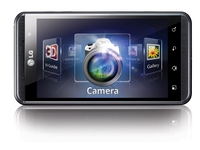 LG has told TechRadar that it will be working with Sky to create 3D content for use on the forthcoming Optimus 3D.
The exact details have yet to be confirmed, but given Sky and LG's intent to see the reach of 3D video furthered, the tie-up makes sense:
"LG will be collaborating with Sky to showcase Sky 3D content directly on the upcoming Optimus 3D handset," read the exclusive statement to TechRadar.
Short form first?
The deal could be pretty big - we'd anticipate short form content would be provided first as the technology beds in, before longer elements (with things like full, streamed games hopefully) coming later in the future.
This would mirror the deal that Sky has with Nintendo on the 3DS for short form content - and could mean the door is open for the likes of Eurosport to offer its 3D content too.
We'll have more on this story in the coming weeks - so stay tuned, as the LG Optimus 3D suddenly became a lot more attractive...

| |
Read More ...
Warner launches 'app editions' of Inception and The Dark Knight
 Warner Bros has announced new 'app editions' of feature films, Inception and The Dark Knight for iPad, iPhone and iPod touch.
Warners promises a 'fully-loaded, connected viewing experience' with downloading, streaming, bonus content, music, games, soundboard and social media integration.
Geek-flicks
Which all sounds like fun, although it is the choice of two of the greatest geek-favourite flicks from recent years that is the real genius move here.
"Warner Bros. Digital Distribution (WBDD), a market leader in video-on-demand and electronic sell-through, today announced the groundbreaking launch of the 'App Editions' of feature films Inception and The Dark Knight, giving consumers around the world an entirely new way to own special edition movies with the iPhone, iPod touch and iPad," reads Warner's release.
App Editions let you view the first five minutes of the movie – and access a few extra bits and bobs such as trivia, games and soundtracks – for free. If you are then tempted to buy the movie you can do so within the app. Ingenious.
Watch the movie or Twitter?
While watching a film, fans can connect with their friends by "sharing favorite movie quotes through Facebook and Twitter and watch a feed of social networking chatter directly related to the movie in real-time."
Which would kind of take something away from the experience of watching a movie, but hey, any self-respecting digital content delivery system has to have Facebook and Twitter integration, right?
Thomas Gewecke, President of Warner Bros. Digital Distribution said: "For many, watching a movie is a social activity and App Editions are the first mobile product to deliver this capability on a global scale.
"They offer a fully connected experience, allowing viewers to engage with others around the world in real-time through Facebook and Twitter.In 2011, Warner Bros. will release a full slate of App Editions including new release and catalog films."
The The Dark Knight: App Edition and the Inception: App Edition and are now available on the App Store.

| |
Read More ...
MWC 2011: Hands on: Samsung Galaxy Mini review
 The world is always looking for ways to save money thanks to the blasted recession, and increasingly users are turning to cheaper handsets as a way to offset cost.
That's the theory behind the Samsung Galaxy Mini - a complete Android experience contained with a smaller footprint with some cost savings keeping the monthly fee down.
The little unit is certainly on the dinky side - you feel you could accidentally swallow it if you were inclined to put it in your mouth (or you got caught in a really dangerous bet).

The plastic-covered unit might look and feel a little budget, but that's mostly to do with the light feel of the Galaxy Mini - at only 105g it could hide in a pocket all day without being found.
The yellow plastic of the model we had on test was nicely metallic, although the overall feel of the chassis felt like it had more in common with the likes of the Genio range.

The front keys were sparse, with the main home button being the primary eye draw - this is well placed an easy to hit no matter what size of hands you're rocking.
The outer chassis shell feels a little fragile in our opinion, and the coverings for the microUSB and microSD slots could be open to a bit of damage from time to time.


The 3.14-inch screen also suffers from the weight deficiency too, with taps and swipes, while being accurate and useful, sometimes feeling a little hollow.
However it should be firmly noted that all the above is in keeping with the budget model tag, and is perfectly acceptable for a phone that might cost as little as £15 per month.

Under the hood of the device lives a 600MHz processor, which isn't too shabby, and TouchWiz 3.0, the same as seen on the likes of Galaxy S and Galaxy Europa, offers up some lovely Exchange and social networking integration from the outset.
The screen is only QVGA, which might look a little low-res to the high-end smartphone user - it does add an element of pixellation to things like web zooming and icon rendering.

However it's not a big problem - pinch and zoom to see text in the browser, and get used to the icons being the way they are and you'll barely notice it after a while.


Weirdly, video actually looked pretty good on the Samsung Galaxy Mini - the resolution should have got in the way, but we found ourselves enjoying (well, sort of, as it's a film with Vince Vaughan in) a full clip with minimal judder.

The internet is a similar experience - while text is pretty much illegible from far away, once you zoom in with a double tap or pinching you'll see that things are a lot more acceptable, with text wrapping on offer too.
We've covered the media player, but the music player is equally as impressive given the relative dimensions and price level.

With Samsung's Digital Natural Sound engine on board, an equaliser allows you to get a much better sound kicking out of the Galaxy Mini - although the speaker is a little on the quiet side.
Another nifty feature is the slide down notifications bar - simply put, when the music player is active, a widget appears in the top bar that you can access from anywhere, which is another feature nabbed from the big Papa Galaxy S.

And while we've slated the QVGA screen somewhat, we were impressed by the ability to play Angry Birds - sure, it looks a little like you're throwing red blobs at orange ones, but then again, that really is what you're doing.
Expect the Android 2.2-toting Samsung Galaxy Mini to be on our store shelves in the next month or two - if you want to stop spending so much money and don't mind cutting back on a few smartphone extras, we recommend you check this out.

| |
Read More ...
Exclusive: Dolby Digital Plus coming to LG, Samsung and Sony Ericsson phones
 Dolby Digital Plus, the impressive sound enhancement technology from Dolby, is set to make its way to LG, Samsung and Sony Ericsson handsets later this year.
 Currently only on board the Nokia N8 and E7, DD+ allows handsets to decode DD+ format video files to allow video playback in a range of audio outputs.
These include 7:1 surround sound, 2:1 stereo and mono, switching seamlessly in real time if you need to unplug your TV and plug in your headphones, for example.
Coming soon to a mobile near you
Robin Dyer, Dolby's EMEA vice president, told us that the company is in talks with LG, Samsung and Sony Ericsson, anticipating DD+ devices from the companies to launch in the coming months.
When outputted via HDMI to a big screen, video playback quality can rival that of Blu-ray players, as we saw in a demo at Mobile World Congress.
But DD+ files can also be played using a laptop, tablet or television too, as long as it has the correct decoder installed - Windows 7, for example, supports DD+.
In a world where content is availble...
Given the fact that Nokia is the only manufacturer using the mobile technology at present, content encoded in the DD+ format is currently mainly available in Nokia's soon to be defunct Ovi Store.
"It's been a bit of a chicken and egg situation," Dyer told us. "The technology needed to be available before content providers would invest in encoding, but without the content manufacturers are wary of incorporating the technology."
Good job Nokia took a punt then, with others now set to follow suit. Dyer also told us that Dolby is in talks with several major movie studios.
Over 80 handsets now incorporate Dolby Mobile, which post-processes files to enhance media sound on handsets; Nokia, however, forwent Dolby Mobile on the N8, because it doesn't want the smartphone to be known as a mobile.

| |
Read More ...


No comments:
Post a Comment