

The Source of Intel's Cougar Point SATA Bug
I just got off the phone with Intel’s Steve Smith (VP and Director of Intel Client PC Operations and Enabling) and got some more detail on this morning’s 6-series chipset/SATA bug.
The Problem
Cougar Point (Intel’s 6-series chipsets: H67/P67) has two sets of SATA ports: four that support 3Gbps operation, and two that support 6Gbps operation. Each set of ports requires its own PLL source.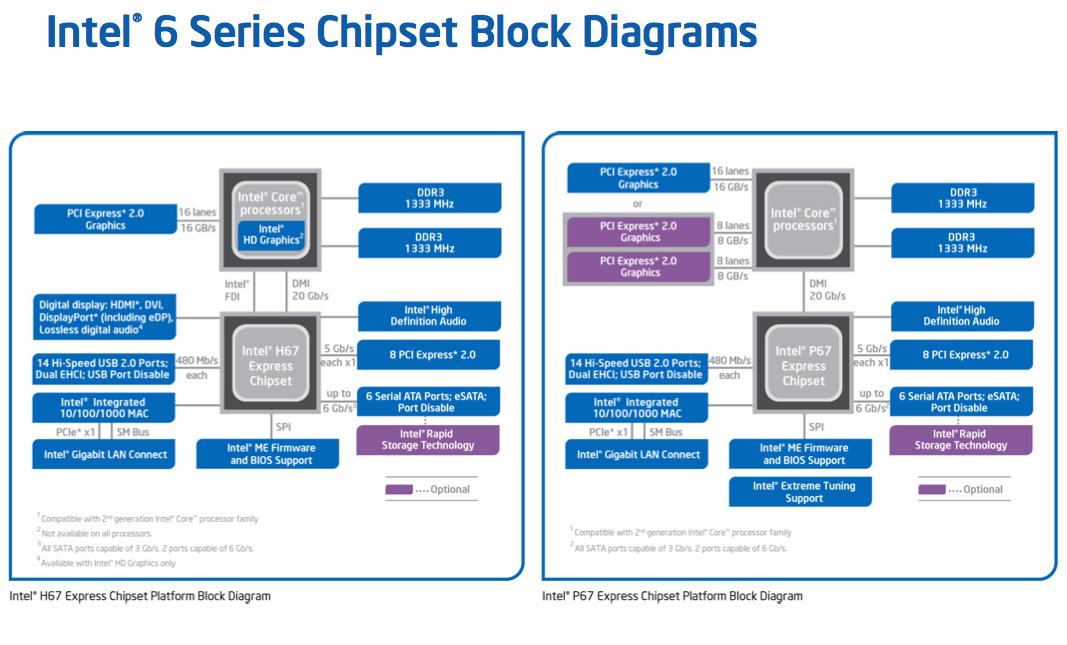
You can coax the problem out earlier by testing the PCH at increased voltage and temperature levels. By increasing one or both of these values you can simulate load over time and that’s how the problem was initially discovered. Intel believes that any current issues users have with SATA performance/compatibility/reliability are likely unrelated to the hardware bug.
One fix for this type of a problem would be to scale down the voltage applied across the problematic transistor. In this case there’s a much simpler option. The source of the problem is actually not even a key part of the 6-series chipset design, it’s remnant of an earlier design that’s no longer needed. In our Sandy Bridge review I pointed out the fair amount of design reuse that was done in creating the 6-series chipset. The solution Intel has devised is to simply remove voltage to the transistor. The chip is functionally no different, but by permanently disabling the transistor the problem will never arise.
To make matters worse, the problem was inserted at the B-stepping of the 6-series chipsets. Earlier steppings (such as what we previewed last summer) didn’t have the problem. Unfortunately for Intel, only B-stepping chipsets shipped to customers. Since the fix involves cutting off voltage to a transistor it will be fixed with a new spin of metal and you’ll get a new associated stepping (presumably C-stepping?).
While Steve wouldn’t go into greater detail he kept mentioning that this bug was completely an oversight. It sounds to me like an engineer did something without thinking and this was the result. This is a bit different from my initial take on the problem. Intel originally characterized the issue as purely statistical, but the source sounds a lot more like a design problem rather than completely random chance.
It’s Notta Recall
Intel has shipped around 8 million 6-series chipsets since the launch at CES. It also committed to setting aside $700 million to deal with the repair and replacement of any affected chipsets. That works out to be $87.50 per chipset if there are 8 million affected chipsets in the market, nearly the cost of an entire motherboard. Now the funds have to cover supplying the new chipset, bringing in the affected motherboard and repairing it or sending out a new one. Intel can eat the cost of the chipset, leaving the $87.50 for shipping, labor and time, as well as any other consideration Intel provides the OEM with (here’s $5, don’t hate us too much). At the end of the day it seems like enough money to handle the problem. However Intel was very careful to point out that this is not a full blown recall. The why is simple.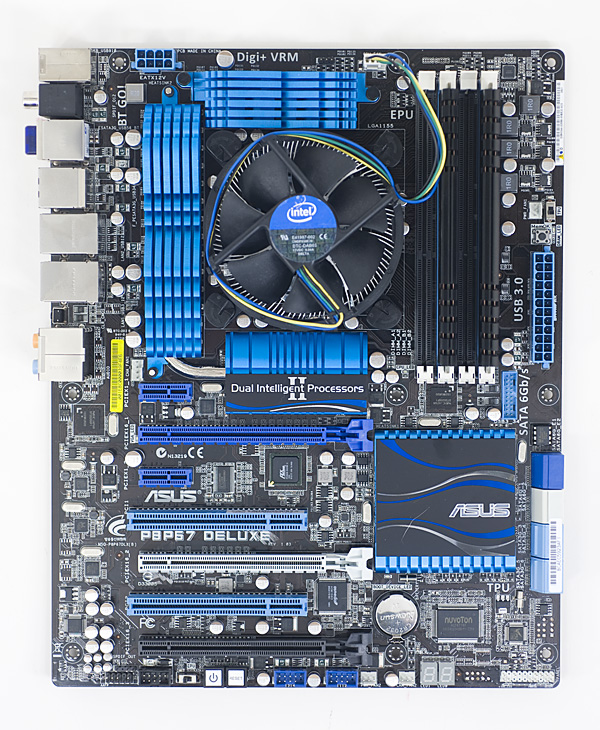
If you have a notebook system with only two SATA ports however, the scenario is a little less clear. Notebooks don’t have tons of storage bays and thus they don’t always use all of the ports a chipset offers. If a notebook design only uses ports 0 & 1 off the chipset (the unaffected ports), then the end user would never encounter an issue and the notebook may not even be recalled. In fact, if there are notebook designs currently in the pipeline that only use ports 0 & 1 they may not be delayed by today’s announcement. This is the only source of hope if you’re looking for an unaffected release schedule for your dual-core SNB notebook.
Final Words
Intel maintains that Sandy Bridge CPUs are not affected, and current users are highly unlikely to encounter the issue even under heavy loads. So far Intel has only been able to document the issue after running extended testing at high temperatures (in a thermal chamber) and voltages. My recommendation is to try to only use ports 0 & 1 (the 6Gbps ports) on your 6-series motherboard until you get a replacement in place.OEMs and motherboard manufacturers are going to be talking to Intel over the next week to figure out the next steps. Intel plans to deliver fixed silicon to its partners at the end of February, however it’ll still take time for the motherboard makers to turn those chips into products. I wouldn’t expect replacements until March at the earliest.
I maintain that the best gesture of goodwill on Intel’s part would be to enable motherboard manufacturers to replace P67/H67 motherboards with Z68 boards for those users who want them.
Read More ...
Intel Discovers Bug in 6-Series Chipset: Our Analysis
In our Sandy Bridge review I pointed out that Intel was unfortunately very conservative in one area of the platform: its chipset. Although the 6-series chipset finally brought native 6Gbps SATA to Intel platforms it failed to fix issues with 23.976 fps video playback. Intel also failed to deliver a chipset that can support SNB's processor graphics as well as overclocking. Today, things just got even more disappointing.
Intel just announced that it has identified a bug in the 6-series chipset, specifically in its SATA controller. Intel states that "In some cases, the Serial-ATA (SATA) ports within the chipsets may degrade over time, potentially impacting the performance or functionality of SATA-linked devices such as hard disk drives and DVD-drives.". I don't know the specifics of the bug yet, but Intel very rarely issues statements like this so it's likely quite serious.
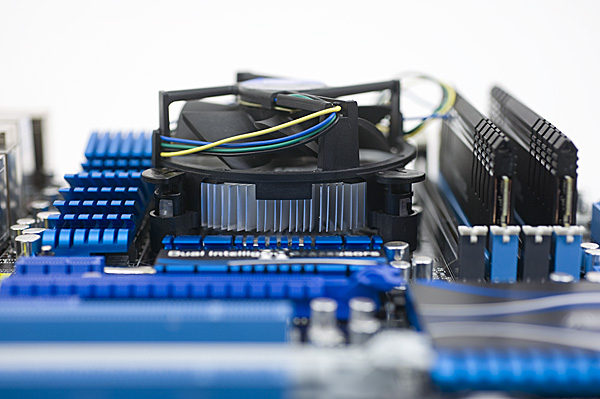
Intel will begin shipping the fixed version of the chipset in late February. The recall will reduce Intel's revenue by around $300 million and cost around $700 million to completely repair and replace affected systems.
Read on for more information on the nature of the bug and what it means for current and future SNB owners.
Read More ...
Google speak2tweet Launches, Aimed at Egyptian Protesters
Workaroudn is to get Egyptians back on Twitter
Read More ...
Visa NFC Payment Trails Underway in Europe
Visa trial is using the iPhone
Read More ...
Lab-Grown Arteries More Elastic Than Ever
New lab-grown arteries function just like natural inborn arteries with the help of additional elastin for blood flow
Read More ...
Egypt Internet Ban Lingers, Users Adjusting
Chaos and destruction in Egypt as nationwide Internet ban continues until further notice
Read More ...
Microsoft Outs Yahoo! Mail as Windows Phone 7 Phantom Data Menace
Microsoft offers a fix to its Windows Phone 7 users who run the offending app
Read More ...
UPDATED: Wikileaks' Founder Revels in Making Banks "Squirm"
Assange claims U.S. is utterly incapable of removing his site from the web
Read More ...
AT&T Smacked with Class Action Lawsuit Over Phantom Data
Lawsuit claims the carrier overstates data usage, charges for phantom data
Read More ...
Netgear CEO Apologizes for Steve Jobs Comment
Says in e-mail that he wasn't referring to Jobs' poor health in his comments
Read More ...
Beating Heart Cells Made Directly from Adult Skin Cells in Mice
Improved direct reprogramming strategy skips the iPS stage and converts adult skin cells directly into beating heart cells
Read More ...
Researchers Claim Molybdenite Outperforms Silicon, Graphene in Electronics
Molybdenite is commonly occurring in nature, could it spark a future era of supercomputing
Read More ...
1/31/2011 Daily Hardware Reviews
DailyTech's roundup of hardware reviews from around the web for Monday
Read More ...
Construction Underway on Nissan's Battery Plant in Smyrna, TN
Plant will produce up to 200,000 battery packs each year
Read More ...
Princeton Researchers Develop "Air Laser" to Sniff for Explosives
Laser sensor is 1,000 times more powerful than LIDAR
Read More ...
Intel Finds Design Flaw in New Sandy Bridge Chipset
Intel is working to fix a design flaw in its Sandy Bridge chipsets relating to SATA performance
Read More ...
Pro-Wikileaks Hacker Group Calls For War Against the UK Government
Fiery statement from Anonymous follows the arrest of several of the group's hackers
Read More ...
Study Shows Dinosaurs Lived 700,000 Years After Mass Extinction
New dinosaur bone found in New Mexico suggests the hadrosaur lived beyond mass extinction
Read More ...
Android Overtakes Symbian as World's No. 1 Smartphone Platform
Android moved nearly 33 million units last quarter
Read More ...
Netgear CEO Trashes Steve Jobs, Predicts WP7's Demise
Says Apple will eventually lose out to the more open Android
Read More ...


No comments:
Post a Comment