

Facebook hit with class action suit over privacy

Five people have filed a class action suit against social networking site Facebook in the US District Court for the Northern District of California concerning privacy changes implemented at the end of last year.
The lawsuit claims that the changes actually reduced, rather than increased, the privacy of Facebook users. That's contrary to what the company claimed.
Where a single click once took care of privacy, with only a user name and the networks a user belong to available on public search, now a great deal more is accessible, including photos and listing of friends, as well as geographic data.
"Misleading, confusion and disingenuous"
The lawsuit, which calls Facebook's messages about the changes "misleading, confusing and disingenuous," is seeking unspecified damages.
It asserts there are now at least 29 privacy settings spread over a number of Web pages, a procedure it calls "grossly ineffective and users are misled into allowing Facebook to having their personal information easily accessed for commercial use, exposing them to identity theft, harassment, embarrassment, intrusion and all types of cybercrime."
When Facebook first explained the changes last December, Electronic Frontier Foundation Kevin Bankston issued a warning about them: In a blog post he wrote: "Our conclusion? These new 'privacy' changes are clearly intended to push Facebook users to publicly share even more information than before. Even worse, the changes will actually reduce the amount of control that users have over some of their personal data."
Before the changes, somewhere between 15 and 20 per cent of Facebook users adjusted their privacy settings. There are no figures on how many attempt it these days.

 |  |
Read More ...
Sony sees end in sight for platform-exclusive games

Platform-specific games are beginning to fade away, according to Sony with the future of gaming looking set to becoming platform agnostic.
Sony and Microsoft have built up a loyal following of fans who bought their console because of the games available, but Sony's VP of publisher relations sees this trend slowing down.
"We're not going to get the exclusive games – the Mass Effects, Gears of Wars and Left 4 Deads aren't going to happen nearly as often," explained Rob Dyer to Industry Gamers.
"Exclusives just aren't as commonplace as they were during the PS2 days."
Sony, whose has sole control over big franchises like LittleBigPlanet, Uncharted and Killzone, is hoping to become the multi-platform games console of choice – with gamers buying multi-platform games on the PS3 because of its power and graphical quality.
Exclusive content
"What is going to be the driving force is either exclusive ad campaigns, like the Madden campaign, or exclusive content like we had with Batman," explained Dyer.
"The PS3 version outsold the 360 version, and what we've said to developers is: 'if you take advantage of what the PS3 can deliver – more content on the Blu-ray disc, better graphics, being able to get more of what the player wants onto the disc – you're going to see those sales translate."
Dyer knows that there's many households which own both a PS3 and Xbox 360, but he is hoping that Sony can deliver just that little bit more to consumers, noting: "There's a lot of cross-ownership between PS3 and 360, and so we're now trying to differentiate that and give that consumer a reason to buy the PS3 version instead of the 360 version."
You could do that or then again you could make the box out of gold and give it away for 20 quid – it'll work like a charm.

| |
Read More ...
Vodafone named UK's most valuable brand

A new survey from Brand Finance has crowned Vodafone as the UK's most valuable brand, and the seventh most valuable globally.
The company has jumped over HSBC to claim the British title, and is one of 27 UK companies among the world's top 500 brands.
According to the survey, the telecoms industry worldwide has experienced growth second only to banking over the last 12 months, rising in brand value by $97 million.
Across the world, Vodafone ranks ahead of US giants AT&T and Verizon, and dwarfs Nokia, Orange, and T-Mobile.
On the global stage
Tech and telecoms fare very well globally in the new survey. Although Walmart might be the biggest brand globally, it's followed by Google in second place, with IBM and Microsoft coming fourth and fifth respectively, and HP scraping into the top 10 at number nine. Apple is number 19 on the list.
According to Brand Finance, the 500 most valuable brands have grown 26 per cent in value to $2,873 billion.

| |
Read More ...
In Depth: 11 handy Google Buzz tips

The launch wasn't a storming success, but Google Buzz is a pretty nifty tool - especially when you start mucking around with it.
You can update it by email, add it to your blog, stick it in your browser or just stalk people nearby, and you can also take advantage of experimental features from Google Labs. Here are 11 ways to bring the buzz.
1. Buzz by email
Email your post to buzz@gmail.com from your Gmail / Google Mail account. There's no 140-character limit either, so your post can be as long as you like.
2. Get Buzz out of your inbox
Buzz notifications appear with the rest of your email. If you'd rather they didn't, it's easy to empty your inbox. Create a filter and put "label:buzz" in the "has the words" section. Ignore the warning message and then select "Skip the inbox". Once you click on Create Filter, your inbox will be Buzz-free.

CLEAN INBOX: Keep Buzz notifications out of your inbox by creating a filter for "label:buzz"
3. Format your text
If you add an *asterisk* before and after a word or phrase it becomes bold; if you use _underscores_ the text will be italicised; and if you put a -dash- before and after the word or text it will be shown with a line through it, as if you've scored it out.
4. Keep your followers private
To hide the list of those you follow: go to your Google Profile, edit it and uncheck the box marked "Display the list of people I'm following and people following me". Buzz's follower lists have caused controversy, so this option is likely to become much more prominent.
5. Use multiple inboxes
Would you like to keep Buzz out of your inbox but still see new messages on the front page of Google Mail? Then you need to enable Multiple Inboxes from the Labs section (it's the icon of a green beaker). Once you've enabled it, you should see a link for Multiple Inboxes when you click on Settings.
In Pane 0, enter the criteria "is:buzz" and in Panel Title choose something descriptive, such as Buzz Messages. Then, click on Right Side of the Inbox and Save Changes. Your inbox will now have a second panel containing Buzz posts immediately to the right of the normal inbox.

MORE BOXES: Google Mail's Labs can be used to tweak Buzz. We used Multiple Inboxes to show Buzzes next to our email inbox
6. Add your WordPress blog to Buzz - or add Buzz to your WordPress Blog
If you're running a WordPress.com blog and you'd like Buzz to tell people when you've updated it, a bit of fiddling enables you to add your site to Buzz's Connected Sites list [http://cuu508.wordpress.com/2010/02/12/adding-wordpress-com-blog-as-connected-site-in-google-buzz/]. Alternatively if you'd just like to list your Buzz posts in a panel on your blog, simply install the Google Buzz-er plugin [http://wordpress.org/extend/plugins/google-buzz-er/].
7. Put Buzz in your browser
As you'd expect, extensions already exist to put Buzz inside your browser. If you're running Chrome there's Chrome Buzz, while Firefox users can install Buzz It - or just add Buzz to their Sidebar.
8 Post to Twitter from Buzz
Buzz automatically publishes your posts in an RSS feed, which means you can use Twitterfeed to import and publish your Buzz posts to your Twitter account. You'll find the feed URL by clicking on the RSS icon on your Google Profile. The same trick enables you to use RSS to read other people's Buzz posts in your favourite RSS reader.
9. Save your Buzz searches
Another Labs feature, this: enable the Quick Links feature first, then search your Buzz posts for something specific. Copy the URL from the address bar and then look for the Quick Links box at the left hand side of Google Mail. Click on Add Quick Link, paste the URL, and your search will now be available for 1-click access whenever you need it.
10. Add other sites
You can automatically update Buzz from other sites by making them Connected Sites. To add a connected site, click on the Buzz link in Google Mail and then on the Connected Sites list next to your name.
You'll see that you can add Google Reader, Flickr, YouTube, Twitter, Google Chat and Picasa, but if you want to add sites that aren't on the list you can do that, too. Google has published instructions on adding your own Connected Sites.

ADD NEW SITES: Connected Sites automatically update your Buzz feed when they've been updated. Google's API enables you to add sites that Google hasn't thought of
11. Buzz around locally
Buzz has been integrated into mobile phone mapping, but you can access it from your PC, too: go to http://maps.google.com/maps/m?lci=m, click on Layers and select Buzz. This enables you to see what the Buzz is near you - although when we tried it, the buzz appears to be that, er, nobody near us is actually using Buzz. Oh dear.

NO BUZZ: As you can see, the people of Glasgow are going crazy for Buzz. And by "crazy", we mean "not crazy"

| |
Read More ...
MWC 2010: O2 bringing HTC Smart to the UK
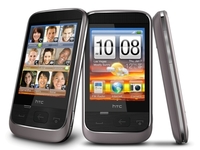
O2 has announced it will be stocking the HTC Smart - a budget smartphone from Taiwanese brand.
Although it was announced a month ago, the HTC Smart has yet to be confirmed in the UK by any network - until the current O2 announcement.
The phone is running Qualcomm's Brew platform, which is designed to facilitate low cost smartphones.
The HTC Smart is packing the company's Sense UI, which gives a number of swipe-able home screens for popping different widgets on, such as weather and messaging.
Innovation
"Qualcomm's collaborations with HTC have resulted in some of the most innovative smartphones the market has seen in recent years," says Paul Jacobs, chief executive officer of Qualcomm.
"The HTC Smart is a budget-friendly smartphone that delivers a really exciting user experience. We are pleased to be supporting HTC's move to bring this advanced mobile experience and HTC Sense to the widest possible audience."
The Brew platform has been used in a few phones so far, such as the INQ Chat 3G and INQ Mini 3G, so we'll be interested to see how many more Brew-based phones appear in 2010.

| |
Read More ...
Exclusive: O2 confirms HTC Desire for UK too

O2 has confirmed to TechRadar that it too will be offering a UK release of the HTC Desire.
The network will join T-Mobile, Orange and Vodafone in stocking the new high end Android phone in the UK.
O2 has confirmed to us that it will be coming in April, so after the T-Mobile release later in March.
Legend ahoy?
We've not been able to confirm whether the HTC Legend will joining the Desire on the O2 shelves, although the network did highlight it is the 'home of the smartphone'.
The HTC Desire has created a large amount of interest since its launch at Mobile World Congress, so it's clearly important that O2 jumps on the bandwagon with the rest of the networks.
O2 has also announced the HTC Smart on its network, telling TechRadar that it was looking to take smartphones in a different direction by looking at the budget end of the spectrum as well.

| |
Read More ...
Opinion: Is SeeSaw too late to the online party?

Why don't we have Hulu? That's the most frequent question asked when discussing the state of video on demand in the UK.
Well, now we now do. Kind of.
SeeSaw launches today, marking the first time we have a (legal) place to watch myriad content from terrestrial channels in one online portal, without the need to switch from online video player to online video player and back again to get your programme fix.
Built from the rubble that was Project Kangaroo, SeeSaw has had something of a tumultuous upbringing – one which echoes the problems VoD-casters face when entering the UK market.
To begin with Project Kangaroo was meant to be our Hulu – a place where all content that's piped through an aerial finds itself eventually online. Where we control the time and the place to watch the next episode of Spooks et al and then flick over to an ITV show without changing web pages.
This didn't happen. The Competition Commission put its boot into Arqiva's plans – the folks behind the project – fearing that this one-place-for-all approach would stifle the reach of the smaller players in the VoD market. So, SeeSaw was born, ITV content was shed and Channel Five came on board.
Flick to the channel section on SeeSaw and it looks rather lonely, with just the BBC, Five and 4oD listed. And the kicker is that 4oD is merely a re-skin of the 40D channel. But at least it doesn't send you over to the 4oD website.

At least CEO SeeSaw Pierre-Jean Sebert is upbeat about the service, explaining: "We estimate that there are two and half million people in the UK regularly watching TV via video on demand services such as the BBC iPlayer.
"We are initially targeting this group via an online advertising campaign and then moving our marketing efforts onto TV in order to capture the 13 million people who have used both linear and web TV services – but are still more reliant upon the big screen."
This 'more reliance on the big screen' is a loaded phrase which masks a slight pop at the other VoD contender soon to hit the marker – Project Canvas.
The big key to SeeSaw, when looked at in relation to Project Canvas, is as follows: SeeSaw is aimed at those watching VoD content on a computer, Project Canvas is aimed at those who want it on their big-screen TV.
In industry speak, the difference is SeeSaw is seen as a 'lean forward' experience, Project Canvas - which is due to hit TVs by Chrismas 2010 - is a 'sit back' one. With PCs you interact more and TVs, well, they're Catnip for humans.
In a way SeeSaw is an old-school approach to video on demand. More and more televisions are coming to market equipped with broadband and Ethernet connectivity. While the reason for this is being touted as applications for your TV – like up-to-date weather news and stock reports – the key to this connectivity will be VoD.
Project Canvas is pushing itself as the portal to web video content on your television. It's hoping for a 'sit back' approach to viewing TV piped from the web.
Built by the BBC, BT and ITV, the service is set to bring BBC, Channel 4, ITV and Channel Five on-demand content to your TV, much in the same way that your get channels at the moment.
Project Canvas wants to be a TV-friendly web portal piped through Canvas-compliant set-top boxes - and eventually TVs - which will offer content from a multitude of sources (including internet-only TV channels) but through one, simple user interface.

While Project Canvas wants to get intimate with your TV, SeeSaw is capturing the online lunch bunch – those who want to catch up telly they missed the night before.
It's in direct competition with iPlayer, 4oD and even YouTube, who recently started adding shows to the site.
But broadcasters whose content straddles all of the above don't care about where their programmes are seen – as long as they are seen.
This is why SeeSaw could well become a success in the UK market. It may not have the Hulu draw of event TV. There's no Losts or 24s on the SeeSaw service (though there would be if Channel 4 and Five invested money into these shows), instead there's lighter fare like the IT Crowd and Hustle.
But for those fed up of website-hopping it will come as welcome relief.

Unfortunately, the Competition Commission has made it so that the UK will never get a Hulu-like service. Even when Hulu does eventually launch in the UK – and it's currently stuck fighting a war over advertising – it won't house anywhere near the content the US version has. Its niche will be US content that is currently not available over here.
SeeSaw feels like a latecomer to a party which is already ending. iPlayer has already snaffled top spot for the UK VoD market and it won't budge, despite its lack of non-BBC content.
In fact iPlayer is growing in stature as it moves away from computers and on to smartphones and games consoles.
This is something SeeSaw needs to latch on to quick, otherwise it'll find there's no demand for its video on demand.

| |
Read More ...
In Depth: Why Blu-ray still needs a killer app to succeed

Blame the recession if you wish, but sales of DVDs are down - and Blu-ray isn't necessarily making up the shortfall.
Last November Screen Digest published its annual guide to the worldwide home video market and it made for slightly depressing reading. Rentals and sales of home video fell by 2.8 per cent in 2008 and Blu-ray didn't make up the shortfall, accounting for just 2 per cent of global video shipments.
It wasn't that optimistic about its prospects in 2009, either, prompting Screen Digest's head of video, Helen Davis Jayalath to comment:
"Clearly the start of a global recession was not the ideal time to launch an upgrade to what many consumers consider to be a perfectly serviceable home entertainment system [DVD] and that spending on the Blu-ray format has been slower than the industry had hoped."
Prospects for 2010 look better, but worldwide sales of standalone players were expected to hit just 18.9 million by the end of 2009, with another 27 million being allotted to the PS3.
Compare that to the 540 million households that were expected to have a least one DVD player by the end of 2009, and it's clear that Blu-ray has a mountain to climb.
Blu-ray benefits
One problem, aside from the recession, is that your average person doesn't yet get the benefits of Blu-ray. Simon Morris, chief marketing officer at Lovefilm told TechRadar that while 25 per cent of his company's customers are 'touching' Blu-ray they're among the most avid consumers of movies full stop.
Morris likens them to footie fans who have a season ticket, Sky subscription, watch ITV highlights and Match Of The Day. In other words, they go the cinema, watch TV, stream content online and - yes - buy and rent movies on DVD and Blu-ray - the same kind of enthusiasts who thought Laserdisc was a good thing. Mass market it was not.
Morris argues that most people understand that high definition is better, but don't necessarily make the connection between that and hooking an HD-ready TV to a high definition source such as Blu-ray.
Richard Cooper, senior analyst for video at Screen Digest argues that there's a similar disconnect for PlayStation 3. He told TechRadar that many of them aren't plugged into high def TVs in the living room, and are being used instead as standalone games machines hooked up to portable TVs - although he expects that to change once awareness of the PS3's capabilities as an entertainment hub becomes more widespread.
Even home cinema experts agree that the real benefits of high definition only become apparent once your display gets over 37-inches in size. Roger Batchelor, product marketing consultant for Denon told TechRadar "For anyone with a projector, Blu-ray is a must-have."
Blu-ray may have already won over certain switched-on consumers - movie enthusiasts and some gamers - but for it to become truly mass market and to enjoy DVD-like sales of hardware and software it needs a killer app.
The movie industry is doing its bit by offering Blu-ray/DVD and Digital Copy combi packs - Disney Pixar's Up (http://www2.disney.co.uk/DisneyDVDs/DVDs/up.jsp) being one example - but that already hints at what maybe Blu-ray's fundamental problem.
Unlike VHS and DVD before it, Blu-ray exists in a world where video is readily available from all kinds of sources - online, offline, through subscription TV services, by PC, smartphone, PVRs, even internet connected TVs and games consoles. It needs, in the words of Lovefilm's Simon Morris to be able to pull an 'elephant out of the hat' – a killer app that no-one can ignore.
Blu-ray recording and 3D Blu-ray
None of the people we spoke to were really that enthused by Blu-ray recording, the mass market appeal of high def or even the prospect of watching 3D movies at home on their own.
Roger Batchelor from Denon says: "It is yet to be seen whether 3D will be as big as some are predicting. I think the jury's still out... there are still issues to be sorted out for 3D to become standard in the home: different formats, connectivity and backwards compatibility. No doubt these will be sorted eventually, but it will take a little time."
This isn't stopping the industry from pushing 3D Blu-ray players, though – just this week, Panasonic unveiled its DMP-BDT300 3D Blu-ray player [http://www.techradar.com/news/home-cinema/high-definition/panasonic-unveils-dmp-bdt300-3d-blu-ray-player-for-uk-670413] in a product launch that was heavily 3D orientated. [http://www.techradar.com/news/television/hdtv/panasonic-goes-3d-crazy-at-munich-product-launch-670864]
Ian Beushaw, head of digital media at video services provider ITFC (http://www.itfc.com/) told TechRadar:
"Recording onto Blu-ray will not significantly enhance the format's desirability, as it will be restricted to computer-mounted recorders for creating home videos. With ever increasing capacity, the set-top high definition recorder of choice will, for the foreseeable future, be HDD based.
"3D will have limited appeal and it will be difficult to persuade viewers to dispose of and replace their relatively new Blu-ray player and flat panel TV to be able to enjoy the small number of features produced in 3D.
"Interactivity is the only potential area of growth I see, but again, it's difficult to predict what effects this will have."
The last physical format?
Bill Gates famously argued that HD-DVD and Blu-ray would be the last physical video format - a notion confirmed in part by several of the industry pundits we spoke to. Instead, they spoke of solid-state 'packaged media' and the increasing availability of video content by other means, including HD streaming and downloads within the next 5-10 years.
But perhaps the brightest hope for Blu-ray is the argument put forward by Ian Beushaw of ITFC:
"If I decide to buy a loved one the complete collection of Pedro Almodأ³var films for their birthday, I do not want to email them a download link, I want to wrap it up in silver paper with a bow and present it to them on the day. Having said that, I think that the number of titles destined for physical media in the future will be limited to collectables and significant others with the remainder only available as downloads."

| |
Read More ...
BBC announces news, sport and iPlayer apps for iPhone

The Apple iPhone is to get dedicated applications from the BBC for its news, sports and iPlayer web channels.
The apps are aptly titled BBC News, BBC Sports Results and BBC iPlayer will be updated feeds of what is on offer on the web at the moment, but in an easier-to-use interface.
Eric Huggers, speaking at the Mobile World Congress in Barcelona, said the applications would be accessible one-handed, proving their ease of use, and that they will comprise breaking news, big headlines and, most importantly, sports results. All this content will contain real-time data.
iPlayer for Android
There's no official word if the apps will work directly over 3G or if Wi-Fi will need to be enabled to use them to their full effect.
There's also good news for BlackBerry, Android and Palm users - Huggers has also said that the apps will become available on these handsets but no date was given.
The BBC News, BBC Sports Results and iPlayer app for the iPhone have a UK release date of April.
This article has been updated

| |
Read More ...
Review: Samsung R720 Blu-ray

Samsung was the first manufacturer to release a truly affordable Blu-ray laptop and has continued this trend with such machines as the R720.
Combining power and usability, this excellent laptop is a great choice for people looking for a laptop with the latest tech but want to save a few quid.
With Blu-ray support still a luxury at this price, its inclusion here is impressive and allows you to watch the latest high definition (HD) movie releases. Although you cannot write data to recordable, high capacity Blu-ray discs, you can create your own CDs and DVDs with ease.
The use of a large 17.3-inch panel ensures ample screen space for enjoying widescreen movies and viewing photos in comfort. While the screen does not feature a Full HD resolution, image quality is fantastic nevertheless and ideal for regular entertainment use.
Gaming abilities
Multimedia usability is enhanced by impressive graphics performance. The dedicated ATi Radeon HD 4650 graphics provides ample power for frequent photo and video editing. As an added bonus, there is even enough power for basic gaming.
Home and office performance is no less capable, with the high-powered, dual-core Intel P7450 processor making light work of everything we threw at it. Smooth multitasking is also possible.
Due to its spacious screen, this laptop is a bit on the weighty side. Weighing 3kg, you won't want to carry it very far. Its 180-minute battery life drives this point home, offering limited mobility.
Samsung laptops often feature functional yet plain designs and this model is no exception. Using a combination of satisfyingly resilient glossy and matt-black plastics, the only element of design flair is seen in the blue highlighted touchpad, with lighting activating upon touch.

Usability is excellent, with the touchpad's wide profile matching the widescreen panel. The keyboard is firmly fixed and provides a flawlessly smooth, responsive and quiet typing action. A full pad of number keys is also included.
Rounding out the specification is a capacious 500GB hard drive, providing ample storage for large multimedia collections. Flash card compatibility is limited, however, with only SD Card support on offer, so bear this in mind if your digital camera uses another format.
Offering Blu-ray support at this price is an achievement in itself, so when combined with such impressive performance and usability, the R720 barely puts a foot wrong.
Only its limited mobility may deter some buyers, but as an affordable multimedia centre, this is one of the best.
Related Links
| |
Read More ...
Outlook gets Facebook and MySpace integration

Microsoft has announced that the beta of its social connector for Outlook will soon be expanded to include MySpace, Facebook, and Windows Live.
The software, first mooted last November, adds a new pane to the main mail reading screen in Outlook. This shows recent activity among friends on a social networking site whenever a user clicks on Outlook to read an email message.
To date, though, the only social network hooked up to the social connector is LinkedIn.
Microsoft obviously hopes that the addition of the new networks will make Outlook into a social networking hub. On the Office 2010 beta site, the company promises: "Synchronise your contact data right into Outlook 2010 and obtain information about your friends and colleagues. See status updates from various networks and recently posted files—even view shared photos.
"Connect to SharePoint Server 2010 social data and receive updates from your workplace, such as newly posted or tagged documents, site activity, and more."
Coming soon-ish
Users can currently only read information from LinkedIn on Outlook, not change their own status or upload material.
Microsoft says that the plug-ins to access Facebook, MySpace and Windows Live in social connector will be online by the time Office 2010 lands on shelves in June. In the meantime, a beta of Office 2010 is available free.
Curiously, Microsoft forgot to mention Google Buzz in there.

| |
Read More ...
Review: Acer Aspire 5935G-664G50Mn

As the world's second biggest-selling laptop vendor, Acer's comprehensive range covers almost all sectors of the market. Its Aspire 5935G-664G50Mn is a fantastic consumer offering that combines power, mobility and usability with a stylish design.
3D performance is this machine's key strength. Despite being outperformed by the Toshiba Satellite L555-10R and Samsung R720 (Blu-ray), ample power for home multimedia use is on offer. Whether editing photos or videos or playing games, you will be well equipped for most graphics tasks.
A lower-powered Intel GPU is also fitted and you can switch between the two, on the fly, to prioritise mobility over power when necessary. The Nvidia GT240M chip gives 213 minutes of battery power and by switching to the Intel chip, a further 51 minutes of mobility is provided.
Home and office performance is less notable, but there is still plenty of power on offer for most family use, and the dual-core Intel T6600 processor makes it easy to multi-task.
The stunning 15.6-inch widescreen panel adds to the appeal and offers bright, sharp and vibrant images. Colour and contrast are generally strong, although images can appear slightly washed out at times.
An HDMI port lets you connect to an HDTV when back at home, for a bigger picture.
While the black chassis lacks an eye-catching colour scheme, its sleek look and blue lighting create an elegant design for the home or office.
Resilient build quality is shown throughout, with sturdy plastics used, although the glossy lid is a magnet for fingerprints and smudges.

The keyboard uses a design common to Acer laptops, whereby each key is individually raised above the chassis. Usability is excellent, with all keys moving smoothly and accurately, but dust and dirt can easily collect beneath the keys.
Excellent touchpad
The large touchpad is equally usable and provides gesture-control functionality. Images can be zoomed and documents scrolled with an easy pinch or swipe of your fingers. The mouse buttons are far less accessible, requiring a frustratingly precise click to register successfully.
Rounding out the impressive specification is a capacious 500GB hard drive, it will easily hold a family's files.
A biometric fingerprint scanner is also in place to protect your data from prying eyes.
Providing impressive performance without sacrificing mobility, the Aspire 5935G-664G50Mn satisfies the key requirements of a modern laptop. Add the impressive specification, great usability and vibrant screen and you've got a great laptop for the whole family.
Related Links
| |
Read More ...
SeeSaw launches with 3,000 hours' VoD content

SeeSaw, the video-on-demand service which has risen from the ashes of Project Kangaroo, is launching today with over 3,000 hours' content available to viewers for free.
The service brings in programmes from Channel 4 and Channel Five and also is the base for some archived BBC Worldwide content.
Although ITV isn't part of SeeSaw, you will be able to get some archived programmes from the channel thanks to deals with independent producers.
Shows on demand
The shows, er, on show range from premium programmes (Doctor Who), adult drama (Red Riding) to comedy (Eurotrash and Green Wing).
There's a limited amount of adverts on the service but you will still have to sit through some pre-roll and mid-roll adverts.
There is also a parental lock on board, for those who have children or adults who don't like swear words.
"What you see today is the tip of the iceberg. Our thirst for great content will further enhance the appeal of SeeSaw to British audiences in the months ahead, ensuring viewers will come back again and again," said John Keeling, Platform Controller of SeeSaw.
Kangaroo jump
SeeSaw's assets were originally part of Project Kangaroo, the video-on-demand project from Arqiva which was meant to be an online hub for UK VoD content – including BBC, ITV and Channel 4.
This was blocked by the Competition Commission and morphed into SeeSaw, a place that has limited access to ITV's assets but includes Channel Five shows.
The beta of the service launched in January and was invite only but now the SeeSaw beta is open to all.
If you want to SeeSaw, log on now to www.seesaw.com.

| |
Read More ...
MWC 2010: Hands on: Motorola Quench review

Previously known as the Zeppelin, the Motorola Quench is a mid-range Android HSDPA and Wi-Fi handset that will be known as Cliq XT in the US.
Yes, for once we get the decent name.
And we liked it! The handset has a 3.1-inch 320 x 480 touchscreen and a touch pad to navigate through the menus and screens.

We were impressed with how this worked, though we were less enamoured with the touch of the other buttons and, indeed, the wavy-plastic look.

So the screen isn't as nice (and touch not as definite) as on other recent Motos we've seen, but it won't be the most expensive handset around.

The phone packs Motoblur, the social-networking interface also on the Dext. That means your social networking feeds (Facebook, Twitter and MySpace) are combined in one central widget on the home screen – this seems to be a central theme running through everybody's announcements this MWC.


The music and media playback is quick and we were impressed with how snappily the phone responded.


Adobe Flash Lite is included and we were able to play videos from full-fat YouTube, even if it seemed a bit temperamental doing so (it could have been the maxed-out connection in the hall).

The Motorola Quench will be launched in Q1 this year in Europe. So expect a Spring UK release date. Oh and final notes; the memory is expandable to 32GB via the microSD slot. There's also a 5 megapixel camera with LED flash and a 3.5mm headphone jack, as you can see from the rest of our snaps.


| |
Read More ...
Review: Sony VAIO VGN-NW20EF/P

The Sony VAIO VGN-NW20EF/P is an entry-level multimedia laptop that offers great style and quality. Office performance is decent, but 3D performance isn't quite what we hoped.
The 15.5-inch screen is great and provides a very sharp image, courtesy of the 1366 x 768-pixel resolution.
We noticed that working with multiple windows open wasn't an issue, making multi-tasking very simple. Colour reproduction is first rate, and this quality will suit those looking to view or edit photos and film.
Attractive build
Unlike the PC Nextday and Mesh Edge15 InspireRS, Sony has used a custom-built chassis design, and the laptop looks great.
Tough silver plastics have been used, featuring a thin lined pattern, giving it a universal appeal. Some of the chassis panels do bend quite a bit, however, reducing durability.
The flexibility of the panels has a direct effect on the typing experience, and the whole board will move if you have a firm typing action. The isolated key style is in place and the keys are nicely spread out and feature a crisp action. The touchpad features an aesthetically pleasing mottled surface and two large click buttons.
The Sony produced decent everyday performance scores during benchmarking and proved more powerful than the Mesh, despite featuring a less powerful Intel Pentium processor. Running applications such as word processors, internet browsers and email clients won't be an issue, even concurrently.
Graphical power only betters the Mesh – not a major achievement – thanks to the integrated Intel GPU. Anything but light photo editing will cause problems for this machine, so if multimedia editing is a priority we would recommend considering the Asus, which boasts a much more powerful graphics card and a large amount of dedicated video memory.
The Sony is also incapable of running the latest games, but older games may run. The laptop's portability is impressive, which is a bonus if you're looking to use the machine on the road a lot.
The 2.6kg weight won't prove too much of a burden on your shoulder, and the 234 minute battery life will keep you productive if you're away from a power point for long.
The latest networking components are included and are more powerful than those in both the Mesh and PC Nextday.
The Sony VAIO VGN-NW20EF/P is a great machine. It looks good, is easy to use and boasts impressive everyday performance and battery life.
Having said that, more 3D power would have been welcome, and those looking for multimedia editing functionality would do well to check out the Asus X5DAB-SX028V.
Related Links
| |
Read More ...
Facebook goes Zero for mobiles

Facebook has announced to Mobile World Congress that it will be releasing a text-only, low-bandwidth version of the social networking site "in the coming weeks."
The site (http://zero.facebook.com) is already live, but people will only be able to use it when it's been adopted by networks. Given that Facebook claims that over 100 million people worldwide access the site from their mobiles, expect that to happen very soon.
The GSM Association says that of the time people spend online on their mobiles, almost half is at Facebook. In December alone it accounted for 2.2 billion minutes.
According to a Facebook spokesman: "'Zero' is a light-weight version of m.facebook.com that omits data intensive applications like Photos.
"It will launch in coming weeks and we are discussing it at MWC as an option to make Facebook on the mobile web available to everyone, anywhere and allow operators to encourage more mobile Internet usage."
Adds to Facebook Lite
Facebook already offers Facebook Lite, aimed more at the developing world, where Internet connections can be very slow. It cuts out some data-intensive applications. That customisation has helped increase the social network's penetration globally.
The site does work with mobile operators, and already has mobile versions for different handsets. This, however, strips everything right back, which will please the networks, as it should free up bandwidth.
The only problem is that it's much harder to upload embarrassing text.

| |
Read More ...
Panasonic goes 3D-crazy at Munich product launch

Panasonic has come out with all-guns-blazing in an attempt to convince consumers that they should invest in 3D this year.
At the company's annual product launch – this year held in Munich, Germany – new Lumix cameras, camcorders and AV systems were left in the shadow of Panasonic's new 3D offerings.
The actual product announcements came yesterday before the event started. 13 new ranges of plasma and LCD TVs were launched, including new 3D-ready Viera VT20-series PDP TVs, and many other AV products – the biggest being the DMP-BDT300 3D Blu-ray player.
3D was always going to be a big thing for Panasonic at this show, but it was surprising to all who attended exactly how much time was spent going over the Blu-ray products and the technologies inside them, at the expense of other product ranges.
This is especially puzzling when you consider that the number of 3D-ready products Panasonic has actually launched totals just three – two VT20 50 and 60-inch 3D TVs, and the BDT300 3D Blu-ray player. That's three products amidst dozens of other TVs, Blu-ray players and other AV products, cameras and camcorders.
Pushing 3D TV
In fact, instead of going over some of these other new products, Panasonic chose to further ram the 3D message home by wheeling out a French broadcasting exec, who made a complete hash of extolling the virtues of new 3D broadcasting services from the likes of Sky in the UK and Orange in France.
Panasonic, of course, has more than a small interest in seeing to it that 3D in the home catches on.
It's one of the key members of the Blu-ray Disc Association, and is also heavily involved with the authoring of Blu-ray discs themselves – the company has close ties with some of the biggest publishers and studios.
And despite Panasonic's conviction that 2010 is the year of 3D, the reaction among the vast number of European journalists present was muted.
The AV industry, it seems, is going to have a hard job convincing even the most staunch AV enthusiasts that 3D on the small screen is a winning idea. Winning the hearts and minds of Joe Public is going to be another job entirely - and judging from the mood at the event, the AV press is not going to bend over backwards to do the job for them.
2010 is certainly going to be a very interesting year in AV.
Expect to see hundreds of millions of marketing pounds spent across the board in an attempt to convert you to the ways of 3D. Just how successful such campaigns are, will be entirely up to… you.

| |
Read More ...
MWC 2010: Hands on: Toshiba K01 review

Toshiba has complemented its launch of the TG02 by bringing out a version with a QWERTY keyboard – the K01.
As with the other model, there's a 4.1-inch capacitive touchscreen, but unlike the TG02 it has an AMOLED version.
The K01 we snapped isn't a final version. We also photographed a dummy model for the close-ups.


The main thing to note is that, like the TG02, the K01 matches the Windows Phone 7 Series hardware spec.
In other words, it has the three buttons along the bottom that every 7 Series handset will have. But they make an appearance with 6.5 first.

The slide-out keyboard doesn't add to the bulk – at 12.9mm thick it's only 3mm thicker than the TG02. It's also extremely light to hold and while the keyboard slides nicely, it perhaps comes out a little too easily. Once again though, this is an early build.


As for the keys themselves, we didn't like them as there isn't a definite enough keypress. Hopefully this will be fixed for shipping models.

Toshiba says the display quality is boosted by using technology also deployed in its Regza flatscreens. We guess this means Resolution+ for sharper images.

Like the TG02, the K01 packs a Qualcomm Snapdragon 1GHz processor and has expandable memory to 32GB.


| |
Read More ...
Review: PC Nextday Zoostorm 3389-2410

PC Nextday is a UK-based company that provides a broad variety of laptops, including a tough range of netbooks designed entirely for children. The Zoostorm 3389-2410 (آ£480 inc VAT) is a very good laptop that provides all-round performance and portability, although lacks the wow factor of the Asus and Sony.
This is because, like the Mesh Edge15 Inspire RS, a generic chassis has been employed. Build quality is good, with the various panels that make up the unit proving fairly firm, but it simply lacks the impact of the Asus X5DAB-SX028V or Sony VAIO VGN-NW20EF/P.
The screen boasts a sharp resolution – at 1440 x 900 pixels – and images are crisp and clear as a result. If you regularly work with multiple windows open, the high resolution this laptop offers will certainly suit you. Colour reproduction is also decent – although it doesn't compare to the excellent Sony – so pictures look great.
The keyboard is firm with very little evidence of flex, and the large, tapered keys travel just the right distance, making for a very comfortable typing experience.
The Zoostorm really starts to impress when it comes to performance, and PC Nextday has done a great job in squeezing the maximum power out of the various components used. The exact same processor as used in the Mesh powers this laptop – with 1024MB less memory – and yet it performs significantly better here.
The same can be said for graphics, as this machine outperforms the Sony, even though they use the same Intel chip, making it a better choice if you're looking to edit photos and movies – although the Asus is still the best option for this.
The result is that you will be able to run both office and multimedia applications without any issues, and if it's all-round performance you're after, the Zoostorm offers the best of both worlds.
Strong portability
Portability is also good and the 236-minute battery life just pips the Sony's efforts, although it absolutely massacres the offerings from both Mesh and Asus.
The chassis isn't as light as the Asus, however, although the weight difference is minor. Networking capabilities are good, although the 802.11g Wi-Fi on offer isn't the latest technology sported by the Asus and Sony.
High-speed fixed network connectivity is also in place, courtesy of the built-in Gigabit Ethernet adapter.
We like the Zoostorm 3389-2410. It isn't the most attractive machine here, but its all-round performance is excellent.
If it boasted a standout feature it would be a medal-winner, but for those after a decent all-rounder with no specific demands for graphical power, it still provides an excellent choice.
Related Links
| |
Read More ...
Breaking: Office 2010: UK prices unveiled

The UK prices for Microsoft Office 2010 have finally been released, with a boxed version of the Home and Student version costing آ£109.99 and the Professional version priced at a penny under آ£400.
With the June 2010 arrival of Office drawing ever closer, the UK pricing announcement has now told us what we'll be forking out for Microsoft's ubiquitous applications, and that - like the US - we won't be handed an upgrade option.
From the bottom up, the boxed version will cost: آ£109.99 for the Office Home and Student version, آ£239 for Office Home and Business and آ£399.99 for Office Professional.
Included programs
The Home and Student version brings Word 2010, Excel 2010, PowerPoint 2010, OneNote 2010 and Office Web Apps – the Home and Business adds Outlook 2010 (for an extra آ£130!) and the Professional version brings Publisher 2010, Access 2010 and Premium technical support to round out the package.
So why the huge disparity between the Home and Student and Home and Business? Microsoft told us: "Office Home & Business 2010 includes the addition of Outlook and is licenced for commercial use are which are not available in Home & Student.
"Office Home & Business 2010 represents a substantial savings over comparative Office Standard 2007 suite while including an additional application (OneNote) and Office Web Apps.]"
Product Key Cards
There are cheaper Product Key Card pricings as well, which are available to people who buy new computers.
"As announced back in October, the release of Office 2010 will see the introduction of Product Key Cards, which will be available to consumers who purchase a new PC from Microsoft's retail partners," explains Microsoft.
"With most consumers and small businesses typically purchasing Office with a new PC, the majority of users will immediately benefit from the greater value and simplified setup experience offered by Product Key Cards.
"The key number contained on the card will unlock Office 2010 software that has been pre-loaded by the PC manufacturers onto the new PC, and will enable a simpler and faster path for consumers to begin using any one of three full versions of Microsoft Office."
For the record, the Product Key Card prices are: آ£89.99 for the Home and Student, آ£189.99 for Home and Business and آ£299 for Office Professional.
Microsoft will not be offering upgrades as with previous versions of Office.

| |
Read More ...
Google CEO: Buzz communication was lacking
Google's chief executive Eric Schmidt has waded into the debate around Google Buzz, insisting that the company's biggest failing was not explaining to users how the service would work.
Google Buzz's product manager Todd Jackson made an apology for the issues around the new social networking system from the search giant, which include questions about privacy.
But Schmidt is quoted in the Guardian as telling phone executives at Mobile World Congress that people had jumped to the wrong conclusion with concerns that personal details had been shared.
"I would say that we did not understand how to communicate Google Buzz and its privacy," he said.
"There was a lot of confusion when it came out on Tuesday, and people thought that somehow we were publishing their email addresses and private information, which was not true."
Communication breakdown
"I think it was our fault that we did not communicate that fact very well, but the important thing is that no really bad stuff happens in the sense that nobody's personal information was disclosed," he added.
The real issue came when people discovered that, at launch, the system had automatically signed them up to follow their most common Gmail contacts.
This led to a slew of complaints and major changes to the way that Buzz worked, as well as an admission at Google that things had not gone to plan.

| |
Read More ...
MWC 2010: HTC Legend vs HTC Desire vs Google Nexus One

The days when the T-Mobile G1 was the big cheese in the Android world are happily gone. Now, the Android OS is being used to create some truly industry leading handsets and HTC is behind some of the best.
But which is the one for you to spend your hard-earned on? The Hero-a-like Legend? The insanely powerful but stupidly monikered Desire? Or do you trust your mobile dollar in Google with the Nexus One?
The HTC Legend

What makes a phone good? Well, the easy answer is one that packs the most into the smallest frame - but Apple came along with the iPhone and changed that perception almost overnight.
No, apparently what's best is the combination of beautiful hardware and a slick user experience - so step forward the HTC Legend.
If you imagine an HTC Hero met an Apple Macbook Air one night in a bar, got along famously and ended up getting so drunk that they woke up shame-facedly together in the morning, this would be the result.

The HTC Legend is hewn from a single block of aluminium, giving it a polished and expensive look, in the Marmite-esque 'lip' chassis. Not only that, but the 3.2-inch screen is actually an OLED, which means colours are gloriously saturated and the blacks are wonderfully dark.
The HTC Sense UI is also in full force here, and while we could witter on about the social networking integration in the contacts menu or the improved camera UI, we just care about the fact we can pinch the home screen in to view all our open widgets in one glance (called Leap view).

We're also digging the ability to see all our friends' feeds in one place through Friend Stream - we know that it's an option on the HTC Desire as well, but it seems to suit the Legend a little more.
It's a smooth, sleek and ultimately satisfying to hold phone - and it's packing a fair whack of grunt under the hood as well.

Who's gonna buy the Legend? If you're the kind of person that values form as much as functionality (and for some reason don't want the iPhone) then you should definitely give the HTC Legend the once over.
Sure, it's not got the processing power of the Desire or the bells and whistles of Google's device, but it looks superb, handles better than most phones out there and what's more - it shouldn't break the bank when it appears.
The HTC Desire

The TechRadar office is currently divided between those that want the HTC Legend, for all its Fancy Dan looks and svelte charm, and those that crave the raw power of the HTC Desire.
(We're keeping an eye on the situation, lest it break out into a dance number a la The Jets and The Sharks).
It would be wrong to say the Desire is an ugly device, as it comes in at less than 12mm thick, which means it's ultimately pocket-friendly.

And by Jingo, it's a powerful beast. Yes, it's 'only' running the Qualcomm 1GHz Snapdragon processor (we say 'only' because it's about the tenth phone to do so), but there's more than just a decent chipset in action here.
The whole Sense UI has been optimised for the HTC Desire, and this means that it excels in two key areas beyond the Legend: multimedia and internet.

The screen is 4x the resolution of the Legend, which means a high-res display and a terrific device to watch video and view photos on.
There's an 8GB memory card in the box too in order to help you start stuffing content onto the device, and while it doesn't have the same standby time as the Legend, it does have a larger battery to help cope.

And the internet experience on the HTC Desire is phenomenal (we might have to rethink the battery claim, as we'll probably be on the internet all the time when using this device).
Somehow HTC appears to have optimised the browser in such a way that even over EDGE connectivity, heavy web pages load in seconds. The text reflow (which admittedly is the Legend as well) is a dream, allowing users to zoom into text as and when they like at the size they want.
In short, if you've got deep pockets or carry a bag with space for a phone with a 3.7-inch screen, there's very little reason not to pick up the HTC Desire.

Who's gonna buy the Desire? Trust us when we say that Technophiles are going to be all over this phone. Multi-touch, flash video, WVGA screen - it's the spec-enthusiast's dream. It might be a little bit pricier than some, but it will apparently come in at a lower cost than the Nexus One.
The Google Nexus One

Looking over the other two on trial here, you'd be forgiven for thinking that the Google Nexus One doesn't really have a prayer against the might of HTC's own children.
But the Nexus One is a powerful beast in its own right - pulling in some of the same specs as the HTC Desire, but adding in some upgrades too.
Take for instance active noise cancellation. This means that when you're walking down the street and the traffic gets too noisy, the person on the other end of the phone won't notice almost at all - which is a pretty handy trick.

It's also got support for a dock as well - meaning you can pop your phone onto your desktop and play Bluetooth music in wonderful A2DP stereo sound too.
And while many are cooing over the Sense UI used on the HTC Legend and Desire, it's certainly not suited for all tastes, with the plethora of home screens looking a bit much at times.

The Nexus One also has the added weight of Google behind it - which device do you think will always get the next Android upgrades first? That's right - its own child.
The trackball and smooth touch sensitive keys are bound to appeal to another demographic, especially those that find the optical trackpad a very strange experience to use.

And the little touches, like living wallpaper, are present on the Nexus One - we're not sure it's automatically better than the HTC Desire, but it's certainly another option worth considering.
Who's gonna buy the Nexus One?
Those hat are clued in to the way Google is working will probably favour a little bit of the Nexus One over the HTC Desire - simply because it's a native home overlay, making it much easier to code over the top of.
Yes, we don't have a UK release date or even UK pricing, but we're still fans of a trackball and smoother touch sensitive keys - so don't rule out the Nexus One just yet.

| |
Read More ...
MWC 2010: Hands on: Samsung Beam i8520 review

Wow, it's here in the flesh at Mobile World Congress – Samsung's pico-projector phone.
The tiny projector (check out the pics below) will show an image up to 50 inches wide and even though the model we saw had been projecting all day, it surprisingly wasn't too hot.
Running Android 2.1 topped out with TouchWiz, the i8520-numbered handset features a 3.7-inch Super AMOLED touchscreen.
There's no word on battery life, which we'd imagine would be pretty poor when projecting.

You might previously have heard about the Beam under its codename, Halo. Our Samsung demo dude seemed to think we'd be getting it in Europe late in the year, possibly the Autumn.


The screen is so bright – the new Wave also has such a screen – and seeing really is believing.

However, the six lumens of brightness projection doesn't quite live up to the billing and even in this darkened area it was hard to see the image properly.


But in concept the Beam is fantastic and we're obviously just at the start point for pico projection phones.
It also sports a 5 megapixel camera and can record 720p video at 30fps. The phone is also capable with DivX and XviD video, so you can take your most recent download with you to watch.
There's 16GB of memory on board and a microSD slot, too. As you can see, the model we looked at was firmly screwed down.

There's also the usual raft of connectivity – Bluetooth, GPS and Wi-Fi.


| |
Read More ...
MWC 2010: Hands on: Toshiba TG02 review

It's been a big couple of days for Windows Phones, but Windows Mobile 6.5 is still alive and kicking – at least until the Autumn, anyway.
Toshiba has dropped the successor to the TG01 at Mobile World Congress and it's a beefy handset in terms of specs.
The 4.1-inch WVGA touchscreen seems massive when you watch something on the screen, but the phone itself remains pocketable (just).
Touch is now capacitive rather than resistive as on the TG01.


Despite the beef on board, the handset is pretty thin at just 9.9mm. The finish is certainly more impressive than the TG01.


The camera is unfortunately only 3.2 megapixels, however.

Here's the main port - we're never sure about handsets that use these flappy things. After all, surely pushing and pulling a phone out of your pocket all day can't end well for them. The TG02 also doesn't have a headphone jack, which is a bit of a miss these days.

One of our favourite features is the newly designed 3D menu system, which you can rotate around and get an overview of each screen on the handsets.


The phone we played with was pretty quick. There's a Qualcomm Snapdragon 1GHz chip inside and you could speedily navigate around the screens.

However, those little Windows Mobile niggles still came to the surface pretty quickly and our demo model also had a problem sorting out its orientation after we moved between screens. Hopefully this will be sorted out but that might take a little bit of Windows Phone 7 loving to achieve. Mind you, it wasn't clear if the TG02 packs the WinMo 6.5.3 update over bog-standard 6.5.


| |
Read More ...
Exclusive: Firefox for Android coming 'late this year'

Firefox Mobile for Android is likely to make its debut on the platform later in 2010, according to Mozilla's VP of mobiles.
Jay Sullivan told TechRadar that Android was a 'great fit' for Firefox mobile:
"It's a modern OS, and it's a great fit with us. It's the type of platform that has a high affinity with the early adopter, and it's seen a lot of uptake."
Sullivan pointed out that the reason for the delay was based on the underlying code:
"Android has been built on a Java platform, whereas [Firefix Mobile] is based on C and C++ code. Until last year when [the Open Handset Alliance] released the NDK (native development kit) which allowed native code as part of the app, it was simply impossible."
Wondering about Windows
Sullivan also spoke of Windows Mobile (which has Firefox Mobile running as an Alpha build at the moment, stating that the new announcement had caused some decisions to be made at Mozilla:
"Now we have the decision: do we target Windows Mobile 6.5 or 7? How much architecture will there be to work with?"
And while admitting Mozilla didn't know a lot about MeeGo, the new alliance between Nokia and Intel, Sullivan highlighted it as an exciting opportunity.
"Nokia has been a great partner for us, helped Firefox Mobile to get better, and we hope that continues.
"Mozilla has also been in Moblin (Intel's previous Linux-based platform) for a while, and that company has contributed a lot over the years.
"It all lines up pretty well, although I don't know how it will all shake out."

| |
Read More ...


No comments:
Post a Comment