

Asus O!Play HDP-R1 Digital Media Player Review
You can add another product to this growing list of media devices that play content on your TV: the Asus O!Play HDP-R1 digital media player. The O!Play is a relatively small (1.9x7.1x4.9-inches), unassuming black box with rounded corners. It doesn’t have any onboard storage, but is designed to connect with media stored on attached drives or over a 100Mbps Ethernet connection. The left side of the unit has a USB 2.0 port, a combo eSATA/USB 2.0 port, and a reset button. The back of the unit houses the device’s
Read More ...
FTC-Intel Lawsuit Raises Possibility Of NVIDIA-Built x86 Processor
When the FTC sued Intel last week over the company's alleged anti-competitive behaviors, we noted that NVIDIA could be one of the main proponents (and beneficiaries) of such a lawsuit, particularly given the price structure of Intel's Atom products. It's now been alleged that NVIDIA's interest in the FTC's investigation goes beyond Atom's chipset; The New York Times claims the GPU designer may have been working on an x86 processor since 2007. This particular rumor has been kicked around a time or ten before,
Read More ...
Fashion Brand STUSSY Adds Color To Redesigned Ricoh GR DIGITAL III x
Earlier this year, Ricoh introduced its GR Digital III with one of the fastest lenses on the market. Today, that very camera is getting a fashion-inspired overhaul. For those who passed on the first edition due to its plain styling, there's a good chance this version will catch your eye.The GR DIGITAL III x STUSSY is a collaboration model with US fashion brand manufacturer STUSSY Incorporate, which adds a special paint job and nothing more. What's interesting is that this type of tie-up is becoming increasingly
Read More ...
DisplaySearch: Netbook Sales Up 103%, Revenues Elsewhere Fall In 2009
We wondered earlier this year if netbook sales would cool down after the recession, but it seems as if people love low-cost machines regardless of what's going on in the world around them. According to new data from DisplaySearch, netbook shipments grew a staggering 103% year-over-year in 2009, with revenues up some 72%.Let's take a second and think about that. During 2009, the year with the worst recession since the Great Depression, netbook sales managed to soar over 100% compared to all of 2008. Meanwhile,
Read More ...
ASUS Xtreme Design Contest Update!
We just wanted to post a quick reminder to let you all know that the Asus Xtreme Design contest is still going strong! In fact, our friends from Asus recently posted an update with some information about some of the winners so far. At this point, Team HotHardware is looking strong. Here's what the Asus update said...For those of you joining in, we wanted to give you an update on whats been going on with Xtreme Design!We reached out to Hothardware members and asked what they would do with Xtreme Design
Read More ...
Yamaha YHT-S400 Includes Slim Sound Bar And Sub-Integrated Receiver
Yamaha has been beefing up its home audio line here in the fourth quarter of 2009, and with CES in just a few weeks, it seems as if the company is looking to get a jump on everyone else. Today, it has revealed its newest two-piece home theater package, which should fit perfectly in cramped studio apartments and in living rooms where space is at a premium. The YHT-S400 combines a super-slim sound bar with a subwoofer-integrated receiver, the latter of which looks nothing like anything we've ever seen.The kit
Read More ...
Microsoft To Remove i4i-Owned Feature From Word 2007
We definitely had to take a second look at our calendar, but it's not April 1st. In fact, it's nowhere near it. Microsoft--the giant that you would think could never be taken down--has just has its holiday thrown for a loop. Or, at least Microsoft's team of lawyers. If you'll remember back, Microsoft had heard from a judge that its immensely popular Word program could no longer be sold due to the software infringing on patents of one i4i. Of course, Microsoft appealed and did its best to delay things, but it
Read More ...
OMG! Texting While Driving Is Dangerous!
The risk has been confirmed, right down the the number of times your crash vulnerability is increased. Matching an earlier study by the Michigan State Medical Society, a new study says that accident risk is increased by 6 times by texting drivers. The only issue is that people don't seem to be willing to change their behavior, sans legislation.The study, released Monday in the journal "Human Factors," was done by researchers at the University of Utah, used driving simulators. The study, titled "Text Messaging
Read More ...
Asus O!Play HDP-R1 Digital Media Player
Perhaps one the more significant defining digital attributes of the first decade of the the 21st Century could be the size of the ginormous digital media collections so many of us have amassed--media collections made of up a disparate assortment of video, photos, and audio files from a wide variety of sources. The advent of digital cameras and digital camcorders has converted many people into virtual shutterbugs and documentarians--collecting events from our lives, ranging from the mundane to the life
Read More ...
Asus O!Play HDP-R1 Digital Media Player Review
 You can add another product to this growing list of media devices that play content on your TV: the Asus O!Play HDP-R1 digital media player. The O!Play is a relatively small (1.9x7.1x4.9-inches), unassuming black box with rounded corners. It doesn’t have any onboard storage, but is designed to connect with media stored on attached drives or over a 100Mbps Ethernet connection. The left side of the unit has a USB 2.0 port, a combo eSATA/USB 2.0 port, and a reset button. The back of the unit houses the device’s output ports, which include analog stereo audio, composite video, digital audio (optical S/PDIF), HDMI, and a 100Mbps Ethernet port--the HDMI port supports up to 1080p 60Hz. Click the link below and check it out...

Read More ...
Microsoft To Remove i4i-Owned Feature From Word 2007
 We definitely had to take a second look at our calendar, but it's notApril 1st. In fact, it's nowhere near it. Microsoft--the giant that youwould think could never be taken down--has just has its holiday thrownfor a loop. Or, at least Microsoft's team of lawyers. If you'llremember back, Microsoft had heard from a judge that its immenselypopular Word program could no longer be sold due to the softwareinfringing on patents of one i4i. Of course, Microsoft appealed and didits best to delay things, but it looks as if today's verdict could meanbusiness.
i4i had a patent on some XML inner-workings, which Word evidently usesfreely. Naturally, i4i isn't too pleased with this. Imagine all of thecopies of Word sold, and how much loot would come from having a smallroyalty attached to each one. It doesn't take a rocket scientist tounderstand why i4i is fighting so hard to get what it is apparentlydue. Just before Christmas, Microsoft has now lost its appeal, as the$290 million jury verdict was upheld for the infringing of patents. Thecourt also confirmed an injunction that would prevent the world'slargest software maker from selling a few versions of Word whichcontain the i4i code, though this would only start on January 11, 2010.

It should be noted that older versions of the software are not affectedor included in this, and as you may expect, the team in Redmond isactively working to remove the i4i feature(s) from Word 2007 and Office2007 packages. Meanwhile, the company is also considering anotherappeal, which could "include a request for a rehearing by a full panelof judges at the appeals court, or a request for a review by the U.S.Supreme Court." In case you're wondering, Word 2010 and Office 2010don't feature this software, and while Microsoft calls it a"little-used feature," even something "little" can obviously cost youquite a lot.
Goliath, meet David.
Read More ...
Fashion Brand STUSSY Adds Color To Redesigned Ricoh GR DIGITAL III x
 Earlier this year, Ricoh introduced its GR Digital III with one of the fastest lenses on the market. Today, that very camera is getting a fashion-inspired overhaul. For those who passed on the first edition due to its plain styling, there's a good chance this version will catch your eye.
The GR DIGITAL III x STUSSY is a collaboration model with US fashion brand manufacturer STUSSY Incorporate, which adds a special paint job and nothing more. What's interesting is that this type of tie-up is becoming increasingly rare. A few years back, it wasn't atypical to see gadgets of all shapes and sizes have some sort of fashion tie, with branding and colors used to create somewhat of a halo effect between the two worlds.

Today, we're noticing that fewer and fewer fashion outlets and looking to the consumer electronics realm for partnerships. It's hard to say why: maybe the gadget companies have decided that they can stand on their own without shelling out royalties to be partnered with some fashion brand, or maybe we're just seeing a shift in consumer demand.
Either way, this new camera is described as a modified version of the GR DIGITAL III camera, which features a color-changed verson of the ring cap, shutter button the area around the middle dial and a few other places to royal blue. You'll also notice that the STUSSY font is everywhere, and the camera will be launched as a part of STUSSY's 30 year anniversary celebration. A price has yet to be mentioned, nor do we know if these will just be a limited edition run. Who knows--maybe the fashion and gadget worlds are about to collide again in a big way, and this is just the (next) beginning.

Read More ...
OMG! Texting While Driving Is Dangerous!
 The risk has been confirmed, right down the the number of times your crash vulnerability is increased. Matching an earlier study by the Michigan State Medical Society, a new study says that accident risk is increased by 6 times by texting drivers. The only issue is that people don't seem to be willing to change their behavior, sans legislation.

Researchers noted that while on a voice call while driving, drivers attempt to split their attention between the tasks. However, texting requires more attention, and thus drivers actually switch tasks rather than divide their attention, which is far more dangerous.
In terms of reaction time, it is quite a simple set of figures. Median reaction time increased by 30 percent when participants were texting, and 9 percent when they talked on the cell phone, compared with when they were just driving.
It is difficult to understand why, after multiple studies and tests, the industry continues to fight against bans on cell phones while driving. Or rather, cynically, perhaps it is not. A ban on cell phone use while driving would affect the bottom line of corporations. Additionally, it is well-known that text messaging is a cash cow for wireless carriers.
Many people believe they can text and drive without impairment. This is reminiscent of how many feel they can drink and drive without an issue, too. There simply isn't enough common sense to go around to beat the issue of money, or convenience.
Read More ...
Game- ready model shops
I'm making a list of game-ready model shops, if you know another ones please tell me ^^ here's what I've found so far:
(alphabetically sorted)
3dbud.com
(fantasy characters - animals - monters) -
http://3dbud.com
3drt.com
(fantasy - scifi characters - animals - monters)
http://3drt.com
adenfall.com
(game objects)
http://adenfall.com
arteria-gaming.com
(game objects)
http://arteria-gaming.com
cubixstudio.com
(fantasy - scifi characters)
http://cubixstudio.com
dexsoft-games.com
(game objects - fantasy - scifi characters)
http://dexsoft-games.com
frogames.net
(game objects - fantasy - scifi characters)
http://frogames.net
gamebeep.com
(game objects - fantasy - scifi characters)
http://gamebeep.com
game-stuff.com
(game objects - game levels)
http://game-stuff.com
Read More ...
6 digit Steam account for sale with all games
Selling my 6 digit steam account with all games for $50 or best offer. I also have another steam account with cs 1.6 and source for trade. Looking for Guild Wars maybe WoW. Make some offers at Goshenjohn@yahoo.com or post here.
Read More ...
New Online Marketing Strategy, Does it work?
An important thing in running a business it has to be Good Customer Service, whether your business is on or off the net. If your customer support is hopeless, you'll soon find your customers running away from you and worse, telling others to stay away too. Now you could learn some good suggestion on how to better manage online customer support through this article. You may check this link: http://theonlinemarketingresource.blogspot.com/2009/10/best-three-online-credibility-builders.html . Do you think this would be the easiest way to rise up online business?
Read More ...
FTC-Intel Lawsuit Raises Possibility Of NVIDIA-Built x86 Processor
 When the FTC sued Intel last week over the company's alleged anti-competitive behaviors, we noted that NVIDIA could be one of the main proponents (and beneficiaries) of such a lawsuit, particularly given the price structure of Intel's Atom products. It's now been alleged that NVIDIA's interest in the FTC's investigation goes beyond Atom's chipset; The New York Times claims the GPU designer may have been working on an x86 processor since 2007. This particular rumor has been kicked around a time or ten before, but the FTC complaint does raise the question. (If you want to see the full FTC complaint, you can view it here.)
According to the FTC, Intel's decision to sell Atom+chipset packages at a lower price than plain Atom CPUs could constitute illegal bundling as it prevents/inhibits would-be competitors from offering profitable alternative solutions
- 17. Requiring Intel to make available technology (including whatever is necessary to interoperate with Intel's CPUs or chipsets) to others, via licensing or other means, upon such terms and conditions as the Commission may order, including but not limited to extensions of terms of current licenses.
- 18. Prohibiting Intel from including or enforcing terms in its x86 licensing agreements that restrict the ability of licensees to change ownership, to obtain investments or financing, to outsource production of x86 microprocessors, or to otherwise partner with third parties to expand output.
Over the past 33 years, Intel has fought tooth and nail to keep an iron grip on the x86 family of patents. While it was forced to issue a license to AMD in 1982 due to IBM's requirement that it have a second source for all processor production, Intel attempted to terminate its agreement with AMD in 1986, and aggressively sought to prevent its one-time partner from producing an 80386-compatible design. AMD's launch of its own Am386 was delayed by several years thanks to this tactic; the California Supreme Court finally found in AMD's favor in 1994. To date, AMD's x86 license (the parts of it we can see, anyway), has been subject to the various restrictions and limitations listed in 17 and 18 above.
AMD isn't the only company that ever developed x86-compatible processors and then ended up in court with Intel, but it's the only competitor left standing with any degree of market share. VIA subsidiary Centaur Technologies has its own license, but the terms and conditions of the agreement aren't widely publicized. Historically, Intel has sued manufacturers for patent infringement, even if the processors themselves were developed entirely from reverse engineering and were later found to violate no Intel patents. An FTC decision that forced Intel to reduce or eliminate the restrictions it places on the few companies that even possess x86 licenses could have long-term implications for the market, but NVIDIA probably isn't planning to build an x86 processor anytime soon. It's true, as the New York Times points out, that the company has hired a number of engineers that once worked for Transmeta, but the new workers were probably brought in to work on ARM-based Tegra solutions, not a brand-new x86 design.
Why x86 Doesn't (Yet) Make Sense
Even if NVIDIA was working on an x86 processor design, its ability to successfully bring that chip to market would depend entirely on the FTC's ruling, that ruling being upheld upon appeal, and, most likely, that ruling being upheld upon appeal, again. The entire process could drag on for years—when Intel and AMD tangled with each other over x86 licensing back in 1986, it took eight years for the Supreme Court of California to finally rule that AMD had the right to manufacture x86 processors.
Support from major OEMs or motherboard manufacturers would be all but nonexistent, thanks to factors the FTC points out in other parts of its complaint. Intel is capable of exerting an inordinate amount of control over the computer industry, thanks to its dominant position in the CPU and motherboard markets. Challenging Intel by selling parts made by a company Intel is suing (or threatening to sue) isn't recommended, and the vast majority of manufacturers simply won't risk it. NVIDIA said as much when it acknowledged it was shuttering chipset development, and the fate of VIA Technologies chipset division is proof in and of itself.
For those of you who aren't aware, VIA shot to prominence in 1999-2000 as a provider of K6, K7 (Athlon) and Intel chipsets. At that time, Intel had no 133MHz, SDRAM-equipped chipset, while the new Athlon had been limited to an old platform of AMD design. VIA released products that filled both niches and gained a huge chunk of the Pentium 3 chipset market in a relatively short time. Intel, smarting from the loss, then announced that only companies with a license to produce Pentium 4 chipsets would be allowed to do so. VIA retorted that it already had a license, Intel said it didn't, and VIA launched its DDR-based P4X266 anyway. The chipset did well at first, right up until Intel sued VIA, at which point P4X266 solutions started to vanish. None of the company's later designs gained more than a sliver of traction in the market.
Conclusion
The FTC's decision to sue Intel has shown a spotlight on NVIDIA's interaction with that company, and led to a lot of speculation on what the GPU and chipset manufacturer might hope to gain. In this case, we believe the speculations that make sense are those that don't depart from NVIDIA's current core competencies and acknowledged major initiatives. Chipset licensing? Check. Allegedly illegal bundling and below-cost product discounts? Check. The right to produce an x86 core? Not so much. The first two complaints, if proven and addressed, would allow NVIDIA to design its own compatible products and compete more fairly in terms of price. The third implies that NVIDIA is risking the success or failure of a major initiative on a court case that could drag on for nearly a decade. The company may have had a rough 2009, but there's been nothing to suggest its willing to risk its future in such a mercurial roll of the dice.آ
Read More ...
DisplaySearch: Netbook Sales Up 103%, Revenues Elsewhere Fall In 2009
 We wondered earlier this year if netbook sales would cool down after the recession, but it seems as if people love low-cost machines regardless of what's going on in the world around them. According to new data from DisplaySearch, netbook shipments grew a staggering 103% year-over-year in 2009, with revenues up some 72%.
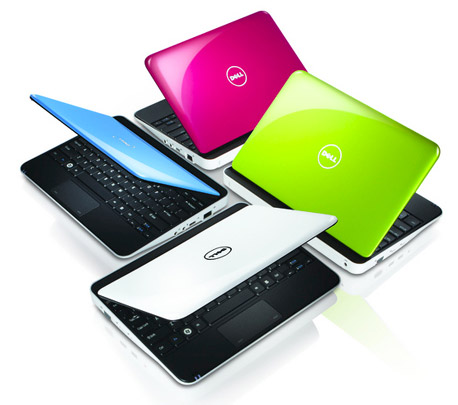
Let's take a second and think about that. During 2009, the year with the worst recession since the Great Depression, netbook sales managed to soar over 100% compared to all of 2008. Meanwhile, monies spent on netbooks went up 72%. We've got a few ideas as to why this happened, and it all starts with marketing. The Eee PC may have started the craze, but offerings from HP, Dell and even OCZ Technology helped fuel the fire. There's hardly a mass market PC company out today that doesn't have at least one netbook on sale, so they've been easier to find and competition between companies has been ever tougher.
Also, netbooks have found a place within cellphone stores. AT&T, Sprint and Verizon are all selling discounted netbooks for those needing a new PC along with a data plan, which certainly helps to get netbooks more visible (not to mention the boost in sales). And then there's Windows 7. Win7 makes the netbook much more of a modern, full-featured PC than the Windows XP models that came before. Win7 has run great on the netbooks that we have tested, and with a new round of Intel CPUs coming up, we see nothing but great things for the netbook sector ahead.
The revenue bit seems easy to us: it's all about choice and flexibility. Netbooks began as simple, one-trick-pony cheap machines. Today, you can get a netbook with varying display sizes, varying RAM/HDD options (or even an SSD), and varying GPU options. Those options increase the base price, and with more people splurging on upgrades, you've got more shots to make more from netbook sales.
The wildest part of this data, however, isn't dealing with netbooks. It's dealing with every other kind of notebook. According to DisplaySearch, revenue from the ultraportable PC, portable PC, desktop replacement PC, and all other styles of notebook PCs fell in 2009 from a year-over-year perspective. In other words, every other sector of notebook sales lost business (in terms of revenue), while netbooks gained huge amounts of share. That's telling us that netbooks actually are stealing away some market share, despite earlier claims that these were only being purchased for use as a "secondary laptop."
Honestly, it's tough to blame people in the market for a new notebook when they opt for a netbook. With Intel's new chips, Broadcom's new graphics chipset NVIDIA's Ion and the decreasing cost of SSD drives, the only reason to spend more is if you need a machine to handle very specific job-related tasks. Today's netbook lineup can easily handle the basics, and judging by the numbers, people are quite mindful of that.

Mini-Note (Netbook) Shipments Grow 103% Y/Y in 2009; Revenues Up 72%
Mini-Notes Take 19.6% of Portable PC Shipments and 10.4% of Revenues; Share to Remain Stable in 2010
AUSTIN, TEXAS, December 22, 2009—NotebookPC revenues are expected to be $109آ billion in 2009, down almost 7%Y/Y, according to the DisplaySearch Q4’09 Advanced Quarterly Notebook PC Shipment and Forecast Report.A dramatic increase in the size of the mini-note (netbook) market hasincreased the overall size of the portable PC market, but it wasinsufficient to offset declines in revenue for ultra-portable andportable class notebook PCs (as shown in Tableآ 1). Revenues in everynotebook PC category were down Y/Y, and only the portable category(displays from 13†to 16â€) posted Q/Q growth. The strong growth ofmini-notes drove their revenue share of the portable computer market to11.7% in Q3’09.
Table 1: Notebook PC and Mini-Note Revenue (Billions of US$)
Category
2008
2009
2010
2009 Y/Y
Growth2010 Y/Y
GrowthMini-Note
$6.65
$11.40
$11.40
72%
-0.1%
Ultraportable PC
$8.93
$6.92
$6.51
-23%
-6%
Portable PC
$91.91
$80.29
$77.05
-13%
-4%
Desktop
Replacement PC$9.60
$10.78
$13.02
-12%
21%
All Portable PC
$117.09
$109.40
$108.0
-12%
-1%
Notebook PC
(w/o Mini-Note)$110.4
$98.0
$96.6
-11%
-1%
Source: DisplaySearch’s new Q4’09 Advanced Quarterly Notebook PC Shipment and Forecast Report
DisplaySearchexpects 2009 notebook PC shipment volumes to increase 5% Y/Y in 2009.However, the increase in unit growth is not sufficient to offset thealmost 20% decline in ASPs. Mini-note and portable notebook PC(13-16.4â€) ASPs are expected to be down more than 15% Y/Y in 2009 andagain in 2010. These two market segments account for more than 85% ofthe total notebook market.
In2010, DisplaySearch expects the notebook PC market to grow by 16%, withhigher than average growth for mini-notes and ultra-portable notebookPCs. Growth in the latter segment is expected to be fueled by numerousnew 11.6†and 12.0†products built on CULV platforms and withaggressive, sub-$500 ASPs.
Table 2: Notebook PC and Mini-Note Shipments (Millions of Units)
Region
2008
2009
2010
2009 Y/Y
Growth2010 Y/Y
GrowthMini-Note
16.4
33.3
39.7
103%
19%
Notebook PC
129.6
136.3
158.1
5%
16%
All Portable PC
146.1
169.6
197.8
16%
17%
Source: DisplaySearch’s new Q4’09 Advanced Quarterly Notebook PC Shipment and Forecast Report
Thelow prices of mini-notes make these products attractive to buyersseeking a secondary PC for the home, as well as making them moreaffordable for first-time PC buyers in emerging markets, who are lesslikely to require all the features available on a larger mainstreamnotebook PC. The relatively low ASPs also make mini-notes attractive towireless service providers that hope to add to their revenue byoffering subsidized mini-notes with data plan contracts.
“Mini-notescontinue to be a significant piece of the notebook PC pie, in terms ofboth units and revenue. However, our long-term outlook is that themini-note share of the notebook PC market has stabilized, and willremain at approximately 20% through 2011 before starting to erode.While mini-notes offer lower ASPs and are thinner and lighter thannotebook PCs, the performance of larger notebook PCs continues toimprove while prices continue to steadily decline, increasing theperformance gap while narrowing the price gap.†said John F. Jacobs,Director of Notebook Market Research. “For 2010, we expect furthererosion of ASPs across almost every portable computer segment. However,unit growth should be sufficient to offset ASP decline, leading to flatY/Y revenue for the portable PC market.â€
The DisplaySearch New Advanced Quarterly Notebook PC Report Now Available
Building upon DisplaySearch’s proven expertise in notebook PC market research, the company’s new advanced version of its Quarterly Notebook PC Shipment and Forecast Report will take your company’s notebook PC know-how to the next level. With expanded coverage to the end market, including streetprices (ASPs) and system revenue for notebook PCs and mini-notes bydisplay size/resolution by region, you won’t want to miss out on thelatest information that can impact your business decisions.
Otherreport highlights include forecasted notebook PC and mini-noteshipments by region, display size, resolution, along with insightfulanalysis of the state of the notebook PC industry, including thebreadth and depth of mini-note and notebook PCs demand in the majorgeographic regions, and identifying the key variables influencingchanging demand patterns in these markets. For information on thisDisplaySearch report, contact Charles Camaroto at 1.888.436.7673 or1.516.625.2452, e-mail contact@displaysearch.com or contact your regional DisplaySearch office in China, Japan, Korea or Taiwan.
About DisplaySearch
Since 1996, DisplaySearch has been recognized as a leading globalmarket research and consulting firm specializing in the $770 billiondisplay supply chain, as well as the emerging photovoltaic/solar cellindustries. DisplaySearch provides trend information, forecasts andanalyses developed by a global team of experienced analysts withextensive industry knowledge and resources. In collaboration with theNPD Group, its parent company, DisplaySearch uniquely offers a true,end-to-end view of the display supply chain from materials andcomponents to shipments of electronic devices with displays to sales ofmajor consumer and commercial channels. For more information onDisplaySearch analysts, reports and industry events, visit us at http://www.displaysearch.com/. Read our blog at http://www.displaysearchblog.com/ and follow us on Twitter at @DisplaySearch.About The NPD Group, Inc.
The NPD Group is the leading provider of reliable and comprehensiveconsumer and retail information for a wide range of industries. Today,more than 1,700 manufacturers, retailers, and service companies rely onNPD to help them drive critical business decisions at the global,national, and local market levels. NPD helps our clients to identifynew business opportunities and guide product development, marketing,sales, merchandising, and other functions. Information is available forthe following industry sectors: automotive, beauty, commercialtechnology, consumer technology,entertainment, fashion, food and beverage, foodservice, home, officesupplies, software, sports, toys, and wireless. For more information,contact us or visit http://www.npd.com/and http://www.npdgroupblog.com/. Follow us on Twitter at @npdtech and @npdgroup.
Read More ...
Yamaha YHT-S400 Includes Slim Sound Bar And Sub-Integrated Receiver
 Yamaha has been beefing up its home audio line here in the fourth quarter of 2009, and with CES in just a few weeks, it seems as if the company is looking to get a jump on everyone else. Today, it has revealed its newest two-piece home theater package, which should fit perfectly in cramped studio apartments and in living rooms where space is at a premium. The YHT-S400 combines a super-slim sound bar with a subwoofer-integrated receiver, the latter of which looks nothing like anything we've ever seen.
The kit provides HD Audio compatibility three 1080p-compatible HDMI inputs (and one output), the company’s exclusive AIR SURROUND XTREME, UniVolume and Extended Stereo technologies for immersive audio for movies, sports and music experiences. The sound bar stands just 2" high and can easily fit in front of most modern HDTVs, and it even supports the YDS-11 universal iPod dock and YBA-10 Bluetooth wireless audio receiver to stream A2DP audio from Bluetooth-enabled mobile phones, PCs and Macs. It's available now for $599.95.

YAMAHA’S INNOVATIVE TWO-PIECE HOME THEATER PACKAGE COMBINES HD AUDIO AND SUBWOOFER-INTEGRATED RECEIVER
YHT-S400 Offers Several Installation Options with Ultra-Slim â€کSoundBar,’ Exclusive AIR SURROUND XTREME, UniVolume and Extended Stereo forImmersive Audio
BUENA PARK, Calif.––Yamaha Electronics Corporation, the innovator inhome theater and digital audio and video reproduction, today introducesits innovative YHT-S400 two-piece home theater audio package. Thesystem, which consists of an ultra-slim “sound bar†front speaker and afirst-of-its-kind subwoofer-integrated receiver, provides HD Audiocompatibility, three 1080p-compatible HDMI inputs (and one output), thecompany’s exclusive AIR SURROUND XTREME, UniVolume and Extended Stereotechnologies for immersive audio for movies, sports and musicexperiences.
The YHT-S400’s sound bar stands at 2-inches high and fits in front ofmost 32 to 50-inch TVs without blocking the screen. In addition, thefeet of the sound bar can be adjusted horizontally or vertically, ortaken off entirely, for additional installation flexibility. Byintegrating the system’s subwoofer into the receiver, Yamaha is able tooffer users an easy connection to a full-featured receiver withoutadding a separate component and the ability to place the unit in a rackor on the floor in tight spaces.
For optimal sound quality, the YHT-S400 accepts HD Audio signals(linear PCM transmission) from Blu-ray disc players. Three1080—compatible HDMI inputs enable three different HDMI sources to beconnected to the receiver.
Yamaha’s UniVolume feature maintains a consistent volume level betweendifferent channel, programs, commercials and input sources. Forinstance, when watching TV, the volume of commercials will not belouder than the program being viewed. The same is true when switchingsources to watch a DVD or Blu-ray movie or to listen to music on CD.This is particularly helpful for late night watching and listening whenspikes in volume can disturb others in the house or apartment building.
Yamaha’s proprietary AIR SURROUND XTREME technology better deliverssound around the listener than other “virtual surround†systems.Dialogue is clearly heard from the center while ambient audio fromon-screen action is clearly heard from the right, left and behind theviewer with smooth sound movement from position to position. AIRSURROUND XTREME can also deliver surround sound from 7-channel sources.Yamaha’s exclusive Head Related Transfer Function (HRTF) maintains thedynamic virtual surround sound regardless of the viewers’ positioningor direction they are facing.
Yamaha’s proprietary Extended Stereo technology moves the stereo imagefurther to the sides. With it, audio from the 31 آ½-inch sound barsounds as if it is emanating from speakers that are five feet or moreapart, resulting in a wider optimum sound field.
The YHT-S400 also has HDMI CEC functionality that allows the unit toautomatically power on with CEC-compatible TVs. In this scenario, theTV remote can also control the YHT-S400’s volume. CEC-compatibilityalso provides advanced functions with other components.
The YHT-S400 also supports Yamaha’s YDS-11 universal iPod dock andYBA-10 Bluetooth wireless audio receiver to stream A2DP audio fromBluetooth-enabled mobile phones, PCs and Macs.
The YHT-S400 is currently available for MSRP $599.95.
For more information, write Yamaha Electronics Corporation, P.O. Box6660, Buena Park, CA 90620; telephone (714) 522-9105; email infostation@yamaha.com; or visit www.yamaha.com/hometheater.
# آ # آ #
About Yamaha
Yamaha Electronics Corporation (YEC), USA, based in Buena Park,California, is a wholly owned subsidiary of Yamaha Corporation ofAmerica. YEC offers industry-leading home theater components andsystems, featuring A/V receivers, neoHD Media Controllers, theMusicCAST2 Wireless Music Distribution System, amplifiers,Blu-ray/DVD/CD players, speakers, mini-systems, home-theater-in-a-box(HTiB) pre-matched systems and the company's exclusive Digital SoundProjectors (single component surround sound solutions), as well as A/V& IT convergence products.

Read More ...


1 comment:
Affiliate Marketing is a performance based sales technique used by companies to expand their reach into the internet at low costs. This commission based program allows affiliate marketers to place ads on their websites or other advertising efforts such as email distribution in exchange for payment of a small commission when a sale results.
www.onlineuniversalwork.com
Post a Comment