

Opinion: DX11: biggest ever leap in PC entertainment tech

On the face of it, DirectX 11 is just the latest in a long line of multimedia APIs.
Great if you have a fetish for fragment shaders, moderately interesting if you're a keen PC gamer, but otherwise a bit of a niche subject.
DirectX 11, however, is a bit different. There are several reasons to think it will not only be the biggest ever step forward in entertainment tech on the PC, but also properly shake up the way desktop computers process data.
Undoubtedly the biggest change is the introduction of Direct Compute, also known as the compute shader. The idea is to broaden the scope of DirectX – or perhaps more accurately the Direct3D pipeline subset – to general computing rather than just graphics rendering. The only caveat is that a given task must lend itself to parallel processing.
In hardware terms, the target component here is the GPU. Despite the recent rise of multicore CPUs, it's by far the most parallelised PC-compatible computer chip. It's also theoretically the most powerful – if only its resources were harnessed for general computing.
If that sounds like a familiar refrain it's because I've preached the virtues of using graphics for general processing, otherwise known as GPGPU, on several occasions. It's a well established concept, complete with several ongoing initiatives, most obviously Nvidia's CUDA platform.
So far, GPGPU has failed to live up to the hype. I'm convinced DX11 will finally change that.
Graphics chips "30 times faster" for general tasks
Crucially, it sets out common standards for both hardware and application developers. Unlike with CUDA, you won't to need to worry about the make and model of your graphics card beyond ensuring it's the real DX11 deal.
Just as importantly, software developers can begin to get their teeth into the challenges posed by coding for GPGPU, safe in the knowledge that there will be a healthy installed base of fully compatible PCs a year or two from now.
Of course, Direct Compute isn't just about guaranteeing cross-vendor compatibility. It's also about laying out the minimum hardware requirements to ensure compliant graphics chips actually have the computational chops to handle general-purpose tasks.
While previous graphics cards have packed immense theoretical processing power, they've also been hobbled by architectures optimised for graphics rendering. Up until the introduction of DX11, for instance, GPUs have only been required to make 256 bytes of internal memory available to each software thread. With Direct Compute in DirectX 11, that balloons to 32kB.
The net result of the combined efforts of Microsoft, Nvidia and AMD should see a huge increase in parallelised application performance. Graphics chips could turn out to be 30 times faster for highly parallised software such as media encoding.
For the record, the first fully DX11-compliant GPU is already on sale. It's AMD's new Radeon HD 5870 and it really is a piece of work. Thanks to no less than 2.15 billion transistors, it packs a ludicrous 1,600 stream processors and is claimed to be capable of nearly three teraflops of raw computational heft.
To put the latter figure into context, that makes it faster than the world's fastest supercomputer circa 1999. That was a machine that filled a 230m2 room. Not bad for a single chip.
Multicore support
Direct Compute aside, there are one or two further features that mark DX11 out from its predecessors. For starters, support for multicore PC processors has been much improved. The introduction of hardware geometry tessellation should also make a huge difference to the quality of PC graphics. The sheer number of triangles the new Radeon HD 5870 is capable of processing simply beggars belief.
But most significantly, Microsoft has done a much better job with backward compatibility than it did with DX10. You can already upgrade Windows Vista to full DirectX 11 support with a couple of mouse clicks.
Naturally, I would recommend that everyone takes the opportunity presented by the arrival of Windows 7 to go all the way and dump Vista altogether. But I also realise the reality for many is that there are some rather off-putting cost and technical barriers to doing so.
It's also nice to know that existing Vista licensees can get all the benefits of DX11 without upgrading to 7. Truly, it's not often you get something for nothing from Microsoft.

 |  |
Read More ...
Review: NAD IPD-2

Offering broadly similar connectivity to the Cambridge and Onkyo models (video output on an S-video socket only), the NAD IPD-2 is, however, rather more closely tied to its manufacturer's own systems.
It has a data port intended to connect to a matching one on a NAD home cinema receiver, which allows advanced functions involving an on-screen display to be used.
Still, normal operation is perfectly possible using either the iPod's own controls or the NAD remote and sound will, of course, be the same.

This unit also has a bit of weight added to its base, which makes it pleasant enough to use.
Like Onkyo, NAD has not boosted the iPod's output level, which remains at the 0.7-volt native output level of the device.
We're not keen on that feature, as it means the volume control must be turned up quite high on the amp, resulting in the odd nasty surprise if one then switches to CD without readjusting!
Sound quality
But once again the sound makes a strong case for Apple's little music storage devices.
We felt that the treble sounded a little tight and constrained through this dock, but its performance in the lower octaves is very likeable, with both grip and drive giving the music a real sense of purpose.
There is also some good detail, especially in the bass: it may seem a little dry at times but the insight it gives is certainly welcome and a useful antidote to the rather vague quality of the bass on all too many recordings.
Imaging is slightly less full than one might expect from a decent mid-range CD player, but is generally stable and believable.
Related Links
| |
Read More ...
Johnston Press puts local news behind a pay-wall

Johnston Press, the second biggest local newspaper publisher in the UK, has announced it is to conduct pay-wall trials on three of its papers.
The publisher owns around 300 newspapers in the UK and in a bid to stave off low advertising revenues, it is looking into asking readers to pay for the news it puts on the web.
The newspapers which are to be put behind a pay-wall are the Northumberland Gazette, the Whitby Gazette, the Worksop Guardian, the Ripley & Heanor News (all based in England) and the Southern Reporter and the Carrick Gazette (based in Scotland).
Charging for content
It is just a trial at the moment, with Johnston Press looking to charge آ£5 for three months of complete web access. If you're against paying such a fee, then you'll be directed to a site to buy the newspapers.
The idea of a pay-wall for news content seems to be gaining momentum. This is mainly due to the announcement that Rupert Murdoch's News Corporation is to erect its own pay-wall for the Sun and the Times as early as next year.

| |
Read More ...
Review: YBA YC201

From the French designers at YBA, but made (like so many other components these days) in China, the YBA YC201 may or may not have anything definably Gallic about it, but is certainly rather natty.
We're very much taken with its use of the display to indicate the function of the nine buttons on the front: unpowered, it tells you absolutely nothing, but once fired up is very easy to use. Round one to YBA.
The rest of the appearance is quite impressive for the price, the case being made mostly of aluminium, neatly shaped and fitted together and angular without having the skin piercing sharp edges of one or two brands we could mention.
The remote control is a definite point in YBA's favour, a solid-metal affair that feels and looks particularly impressive. The electronic design is fairly conventional.
A computer CD-ROM drive is connected via its digital output to an audio board that includes a familiar digital receiver, upsampling and DAC chips, plus a typical analogue output circuit.
There's a conventional linear power supply based on an R-core mains transformer, and parts are of decent quality, if nothing particularly outstanding.
We're not entirely sold on the idea of CD-ROM drives, for a couple of reasons: first, they are a bit slow to load a disc and second – rather more seriously – they have a marked tendency to make a lot of mechanical noise.

This player is definitely one we'd rather have a good distance from the listening seat, as it emits a slightly tuned whistle that has a way of making itself heard above surprisingly loud music.
Sound quality
That apart, the sound has plenty going for it. One of those things, it should be made clear at the outset, is a degree of character that we anticipate not all audiophiles will care for. Some, however, will love it.
One listener's comment sums it up well; "A bit lively, isn't it?". And yes, it does certainly seem to be that, in both good and bad ways. Of course, there's nothing bad about lively as such – there's nothing worse than lifeless music-making.
But it's not necessarily the job of music-reproducing equipment to put the life in, merely to preserve it as recorded and just occasionally we felt this player may be a bit too much of a good thing.
It sounded great in our Ian Dury track, marvellously energetic and revelling the grit and sarcasm of the singer's delivery. But with the complex sounds of the Penguin Cafe Orchestra it seemed to be on the verge of hysteria, the carefully layered music lacking some control and precision.
Classical voice and piano produced generally neutral results, though the piano showed off the YBA's good bass extension and attack to advantage, but again Rachmaninov's orchestral fireworks seemed perhaps a touch on the overexcitable side.
Experiments with further tracks in various musican veins confirmed that rock is a good stylistic match to the player, with quite a lot of jazz faring well too and, perhaps surprisingly, simple ballad-style stuff scoring quite a hit.
That may well be more due to the player's appealingly neutral and unforced detail in the midrange, which suits voices well.
High treble is a little congested and lacks some of the finesse of the best players, but as mentioned above the bass is very good, with both presence and detail in plenty.
What it doesn't manage quite so well is the tuned quality of instruments like double bass and gently-played orchestral timpani, but that may be splitting hairs when the essential bass quality is so very likeable.
Related Links
| |
Read More ...
Online retailers reveal Mega Monday confusion

Confusion reigns over 'Mega Monday' the day the UK's online retailers sell the most amount of goods, with Visa suggesting that it's today and Play.com plumping for next week.
Online giant Play.com is gearing up for next Monday – 7 December and the first Monday in December – to be its busiest.
"Online shoppers are spending more money than ever this Christmas, despite the doom and gloom of the recession – and look set to splash record amounts of cash on Monday 7 December," said Play.com's release
"Known as Mega Monday, this is the day the UK's leading e-retailer, Play.com predicts will be its busiest of the year, as the festive shopping season gets into full swing."
Or today
However, Visa has other ideas, with the Daily Mail stating: "According to the card company, Visa, there will be almost 2.4 million online sales today which is the highest figure on record. The busiest period will be around lunchtime with a second peak around 7pm."
We contacted Play.com to get to the bottom of things, and they answered: "Play.com believes that the seventh will be Mega Monday; however other retailers may feel differently."
So there you have it, it's Mega Monday today, or next week. Whatever turns out to be true, we can't see any retailers too unhappy at having two major sales days.
Credit Crunch? Meh
David Smith, Director of Operations at IMRG comments, "Despite the credit crunch, the online retail sector is still growing, with an increasing number of consumers appreciating the ease and efficiency of shopping online.
"Consumers have become much savvier and cost conscious in the current climate; we are seeing a growing trend of online price comparisons so customers ensure they get the best deal for their purchase.
"We are expecting approximately آ£350miliion to be spent online on 7 December which is up 10 per cent on the corresponding Monday last year. We are also expecting online shopping sales in December 2009 will reach up to آ£5 billion."

| |
Read More ...
Nokia doesn't rule out selling handset division
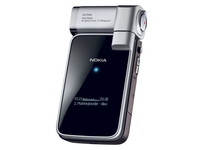
Nokia has said it needs to improve its mobile internet offering, and to that end may even consider selling its handset manufacture division.
The likes of Apple, RIM and especially Google have been working on utilising the mobile internet, and Nokia's Anssi Vankoji has told German publication Wirtschaftswoche that it would even consider selling its handset division.
But don't panic, Nokia fans - this doesn't mean that the N-Series is doomed (although the longer the N-Gage stays dead, the better) it just means the Finns would likely outsource production like most other firms.
Buttons + screen + microphone = profit
Nokia currently considers the ability to make its own handsets a 'competitive advantage' but as it looks to extend beyond the simple 'put numbers near a screen' to also focus on the likes of Comes With Music and Nokia Money.
Either way, we doubt it will happen, as Nokia loves being all vertically integrated - but when we all have mobile chips sewn into our livers and contact lenses with screens pushed into our eyeballs, what use will it be then?

| |
Read More ...
Twitter named most popular word of the year

Twitter has been voted the most popular word of the year by the The Global Language Monitor, with the micro-blogging site knocking 'Obama' off of the top spot.
The top 15 words which have been released paint a pretty good picture of how 2009 shaped the world.
There's financial words which are darn right depressing – like 'stimulus' (number 4), 'deficit' (number 7) and 'foreclosure' (number 14) – and words that are part of the zeitgeist, including 'vampire' (number 5), 'hadron' (number 8) and, unfortunately, 'unemployed' (number 13).
Standing above all
As well as words, phrases have also been counted up and number one on this list, unsurprisingly, is 'King of Pop'.
Technology-wise, there's just one phrase which infiltrates the top 10, and that is 'cloud computing'.
"In a year dominated by world-shaking political events, a pandemic, the after effects of a financial tsunami and the death of a revered pop icon, the word Twitter stands above all the other words.
"Twitter represents a new form of social interaction, where all communication is reduced to 140 characters," said Paul JJ Payack, President of The Global Language Monitor.
Quite why 'Jedward' didn't make the list is beyond us.

| |
Read More ...
Review: Onkyo DS-A3

Onkyo has just announced the first affordable digital iPod dock, the Onkyo DS-A3. so are analogue docks now redundant?
Not according to Onkyo's representative, to whom we put that exact question. He pointed out, reasonably enough, that not everyone will have a digital input available, nor will they want to buy a separate DAC just for an iPod.
Accordingly, this dock is optimised for extracting the most from an iPod's analogue output. It has much the same connections as most, though the provision of a component video output is not so common.
You can use an external TV or the iPod's own display as monitor while operating with the iPod's own buttons or the supplied remote.

Using the iPod's buttons is easier than on many docks, as this one has some weight to it and decent non-slip feet, so it doesn't slide away! The adjustable backrest for the iPod is a neat idea too.
Output level is very low at 0.7 volts.
Sound quality
We felt that the sound of this dock didn't quite match up to that of the Cambridge, but it's quite a close thing.
There's plenty of detail to the sound and some impressive extension at both frequency extremes, but it doesn't quite hang together with the same convincing realism, and as a result one is just that little bit less involved.
All the same, there's a lively character in evidence, which makes the most of energetic rock, for instance, and for foot-tapping inspiration this is a hard act to beat.
It's also quite dynamic, making the most of well recorded classical tracks with their large changes in level.

| |
Read More ...
Jackson tops Bing US searches for 2009

Twitter, Michael Jackson and Patrick Swayze have all been named in Bing's most searched topics for 2009 – although the data appears to be for the US.
We've asked Microsoft for its Bing UK list, but in the meantime we'll have to make do with a look inside the mind of the US 'Binger' who was looking for kidnap victims, the recently deceased and 'cash for clunkers' - the US equivalent of the UK's car scrappage scheme.
Outside of the likes of Jaycee Dugard, who spent 18 years in captivity, US celebrity stars Jon and Kate Gosselin and pitcher Billy Mays, swine flu, stock market and Twitter all made the top ten.
Jackson at number one
But the winner, as you may expect, was Michael Jackson, who died suddenly in 2009, and dominated the media for months.
So from that we can assume that the average searcher is death-obsessed, reality-TV watching hypochondriac who wants to trade in their car for cash and spend it on stocks and shares then talk about it in 140 characters or less.

| |
Read More ...
Review: Electrocompaniet ECC-1

Hot on the heels of Electrocompaniet's cheaper PC-1 CD player, the ECC-1 is the basic CD-spinner from the company's 'Classic' line.
It's an unusually large machine and very heavy too, mostly due to the use of thick steel for the casing, though the generous toroidal transformer will add a bit, too. The front panel is a piece of polished acrylic sheet, with the CD drawer in the centre.
The characteristic Electrocompaniet four-button control set is at the right, the buttons themselves attractively made of solid brass. The machine itself may be very attractive to behold, but we reckon the ergonomics could do with some improvement.
For a start, even by current standards, it's terribly slow to load a disc. Via front panel or remote, one must press and hold the 'Stop' button to open the drawer and even after the display has acknowledged this you still have to wait a few seconds.
Reading a new CD also takes a while and the player then unavoidably goes on directly to play track one. It is impossible to start playing with any track other than the first one.
Seeking within a track is only possible from the remote and only at a pitifully slow speed. CD ergonomics have never been great, but this is, at times, frustrating.
Electrocompaniet has been more original than most internally. The sample-rate converter chip for digital filtering and the DAC itself, are familar parts of recent vintage, but the analogue stages are evidently all in-house and use discrete transistors instead of the more common integrated circuits.

This includes the balanced output, which is not an afterthought – quite the reverse, in fact, as the phono sockets are wired to two pins of the XLR output connectors. A single digital output is available.
Sound quality
Although nothing seemed overtly wrong with the sound of this player, our listeners were not entirely drawn into its music-making and expressed a variety of reservations regarding it. None of these were major, but the overall picture is of a sound that's just not quite completely rounded-out, especially as regards fine detail and insight.
This became evident from the first track played, where one listener was concerned to find the timing unclear, while another thought the vocals and reed instruments were a little on the thin side.
Things picked up a bit in the classical tracks, with more satisfying tonality and better timing – or could it just be that most classical music relies less critically on this aspect and so it is less obvious if it is slightly compromised?
The large forces of Rachmaninov's Symphonic Dances were clearly differentiated in the lower parts of the spectrum, but comments were made indicating that a little more precision in the treble would have been welcome. Solo piano had plenty of body, but lacked a little refinement and had a slightly 'twangy' quality.
In our sighted listening, after the panel had departed, we found that the real problem seems to be a slightly grainy quality in the high treble. Bass and midrange, on the odd occasions when they occur with little or no treble accompaniment, are very clear and well defined, but the treble grain makes itself felt across the range – we get a lot of information from the high treble and when that is frustrated, our ears react badly to the whole sound.
It's a pity as it does compromise the performance of this player and conceals some good performance in areas such as midrange tonality and imaging.
Maybe Electrocompaniet could score a double whammy by addressing that at the same time as the ergonomics?
Related Links
| |
Read More ...
Competition: WIN! Rogue Warrior and Xbox 360 Elite console

Mickey Rourke has gone through something of a renaissance in the Naughties, lending his grizzled chops to some of the decade's best cult films – Sin City and The Wrestler to name but two.
Now Rourke has brought his talents to the videogame world, voicing Richard 'Demo Dick' Marcinko, a real-life Navy SEAL and founder of the elite SEAL Team 6, in Rogue Warrior.
Going Rogue
Inspired by Marcinko's New York Times bestseller of the same name and his subsequent novels based loosely on his own past military experiences, the plot of Rogue Warrior is an action-packed one.
Essentially, you are sent on a clandestine operation to disrupt a suspected North Korean ballistic missile program. Soon into the mission, you uncover a conspiracy and must covertly enter the USSR to destroy a technology that could change the balance of geopolitical power, leaving a trail of destruction in your wake.
Winning streak
TechRadar has teamed up with Bethesda Softworks to offer you a chance of winning a fantastic Xbox 360 Elite console and a copy of Rogue Warrior for the Xbox 360.
Don't worry if you don't win the main prize, though, as there are also five copies of the game available for five lucky runners-up.
To be in with a chance of winning, all you have to do is head over to our competition site and answer the question.
-------------------------------------------------------------------------------------------------------
Please note that this competition is only open to UK residents over 18 years of age.
Enter more TechRadar competitions

| |
Read More ...
Samsung beats 2009 mobiles target

Samsung has exceeded its target for mobile phone sales in 2009, with the electronics giant breaking its self-imposed 200 million handset goal.
Samsung is the second biggest seller in the mobile phone world, and after narrowly missing out on the 200 million mark in 2008, it was confident of breaking it this year.
And that confidence was not misplaced, with the company now stating that it has surpassed its target, in a big year for the mobile phone.
Marginal cuts?
Some analysts have immediately suggested that the company may need to cut its margins in order to compete in the growing smartphone market, but the company will be delighted about the growth it has shown in touchscreen handsets.
Samsung also stated that its global market share in handsets rose over 20 percent for the first time in the third quarter, and with an unchanged profit margin of 10 per cent.
The likes of Apple, RIM and old hands like Sony Ericsson and Nokia have all seen smartphone sales increase, as the market becomes steadily more competitive.
See all Samsung Genio Touch deals:
All deals | Pay monthly | Pay as you Go | SIM free

| |
Read More ...


No comments:
Post a Comment