

(PR) ADATA Introduces XM13 mSATA Solid State Drive
Following up on the successful launch in May this year of the S511 SATA III solid state drive, which received an enthusiastic industry response and multiple awards, ADATA Technology has introduced the industry's fastest high-performance XM13 mSATA solid state drive. This display of the company's increasingly strong R & D capabilities establishes a firm foundation for ADATA in the Small Form Factor (SFF) applications market.
The "rapid start" usage of Tablet PCs has had an impact on the consumer desktop market, causing rising hopes and expectations for performance. The future market is expected to demand that boot devices combine the power of rapid, efficient operation with a thin profile and price competitiveness. To this end, ADATA has set its sights squarely on the market trends of the near future, applying the full force of the company's development capability and years of experience in memory storage. The result is the introduction of the XM13 mSATA SSD, incorporating mSATA memory cache, low power consumption, and implementing the latest Sandforce controller.

Read More ...
Intel To Revamp SSD Lineup in 2012
It looks like Intel has concrete plans with its SSD lineup moving into 2012. A roadmap slide sourced by VR-Zone reveals that its main SSD lines feature major additions or replacements that will take shape by the third quarter of 2012. To begin with the enterprise-grade 700 Series, Intel will have launched SSD 720 "Ramsdale" family of PCI-Express SSDs with SLC NAND flash memory, and SSD 520 "Cherryville", a successor of SSD 510; by the end of 2011. These products will lead the lineup through, with no changes in the first quarter of 2012.
In 2012, Intel will launch "Ramsdale MLC" PCI-Express SSD, a variant of Ramsdale that uses MLC-HET NAND flash memory, that increases capacities, while offering endurance roughly comparable to SLC, if not as fast as it. Capacities will double over Ramsdale SLC, into 400 GB and 800 GB. Around that time, Intel will also launch SSD 500 Series "King Crest", a new 2.5-inch SATA 6 Gb/s SSD that succeeds SSD 520 "Cherryville" family, and makes use of 25 nm MLC-HET NAND flash instead of standard 25 nm MLC NAND flash. Its capacity options are unknown.

Read More ...
(PR) Sony Announces a New Range of Portable Hard Drives
Sony is making data storage and backup easier, safer and more enjoyable with its latest range of external hard drives. The new HD-EG5 and HD-EG5U offer advanced features in a slim, stylish package that enable users to save and access their data quickly and conveniently, wherever they go.
The new drives with 500GB capacity provide USB3.0 compatibility and use pre-loaded Data Transfer Accelerator software to increase transfer speeds up to three times as compared to data transmission without the software. When connected to a USB2.0 port, the software boosts transfer speeds up to two times. These features make them one of the quickest 2.5-inch hard drives in the market.

Read More ...
ASRock X79 Extreme7 Pictured
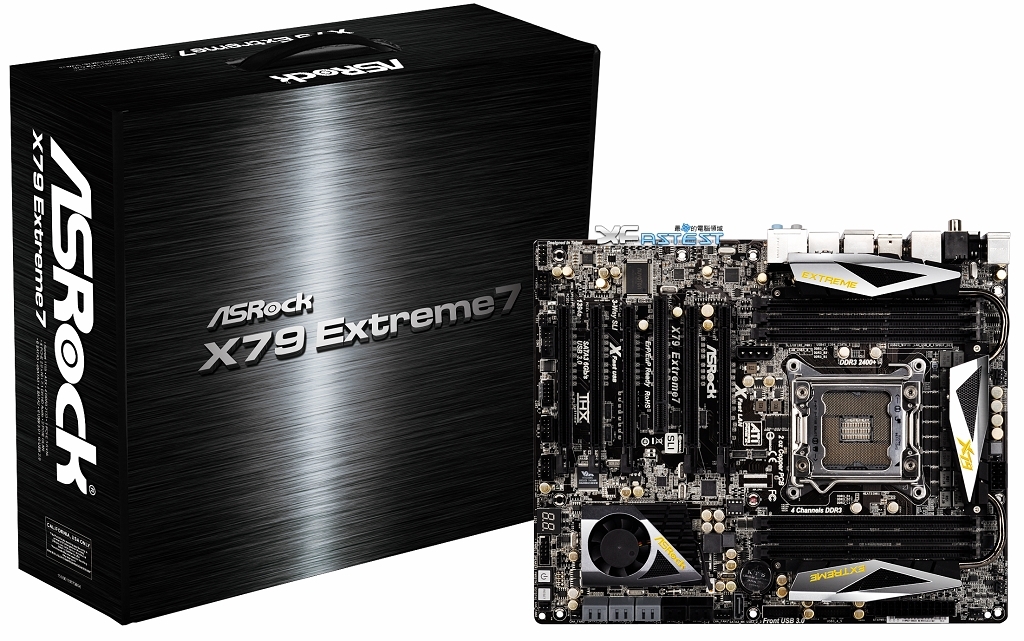
ASRock is readying is new, high-end socket LGA2011 motherboard targeting the upper-most tier of the PC enthusiast market, the X79 Extreme7. This board will be a part of the company's first wave of LGA2011 motherboards, which are slated for mid-November, 2011. Pictures scored by XFastest reveal the board to be filled to the brim with features. The CPU socket is powered by a 16-phase VRM making use of high-grade chokes, and server-grade poscap capacitors.
The socket is wired to six DDR3 DIMM slots arranged in sets of three on either sides of the socket, powered by a 4-phase VRM. Among channels A, B, C, and D; channels B and D have two DIMM slots wired, so if you have four DDR3 modules, you should populate slots 0, 2, 3, and 5; to take advantage of quad-channel DDR3 memory. There are heatsinks over the memory VRM areas, that are connected to the heatsink over the CPU VRM using heat pipes.


Read More ...
Ditch The Restrictive DRM: Happy Customers Equals More Profit
Rice University and Duke University are the latest in a long line of educational institutions to fund research on the effect of using restrictive Digital Rights Management (DRM) to try and control levels of so-called "piracy", which is allegedly reducing sales of content-only, infinite goods/virtual products, such as music, movies, computer games and books. (Some observers writing about DRM replace the word "Rights", giving us the phrase Digital Restrictions Management, which seems a more accurate description of what it's really about and removes the veneer of legitimacy from it. When buying DRM'd content, you are buying digital handcuffs, nothing more, nothing less.) The universities sponsored a study called Music Downloads and the Flip Side of Digital Rights Management Protection and what it found is that contrary to popular belief amongst the big content companies, removing DRM can actually decrease levels of piracy and increase sales. The fact is that DRM is always broken by hackers and pretty quickly too, often within a day or two (there isn't a single one still standing) leaving legal users who work within its confinements with all the restrictive hassles that it imposes, while the pirates get an unencumbered product to do with as they please. How is this progress?


Read More ...
MSI Overclocking Competition Won By the Favourites, Real Money Handed Out As Prize
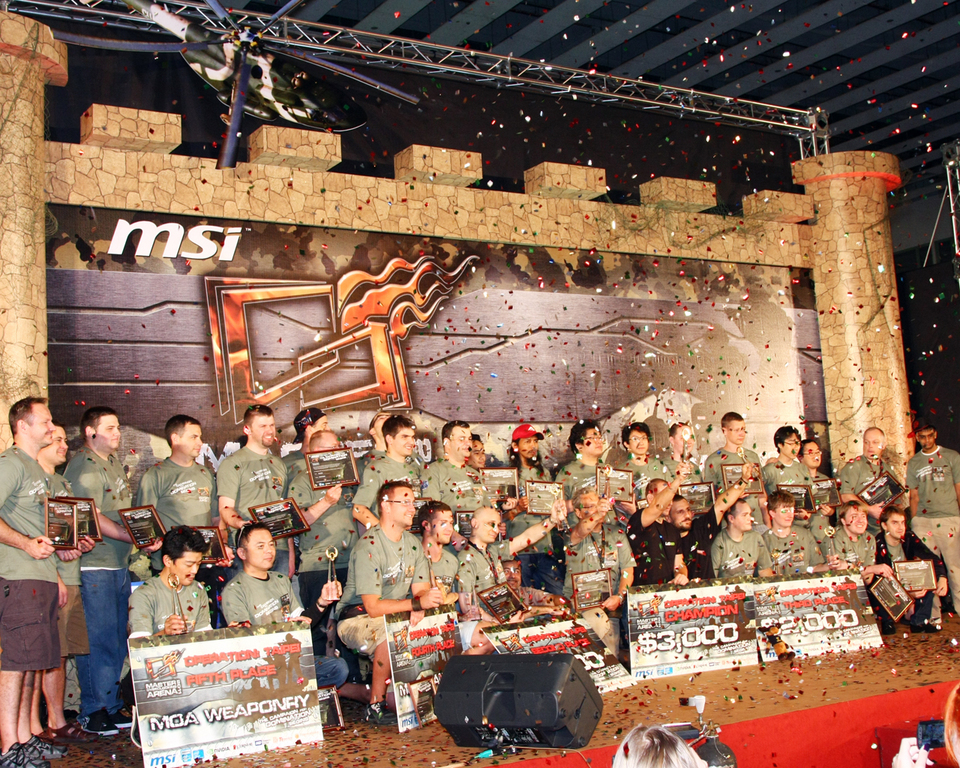
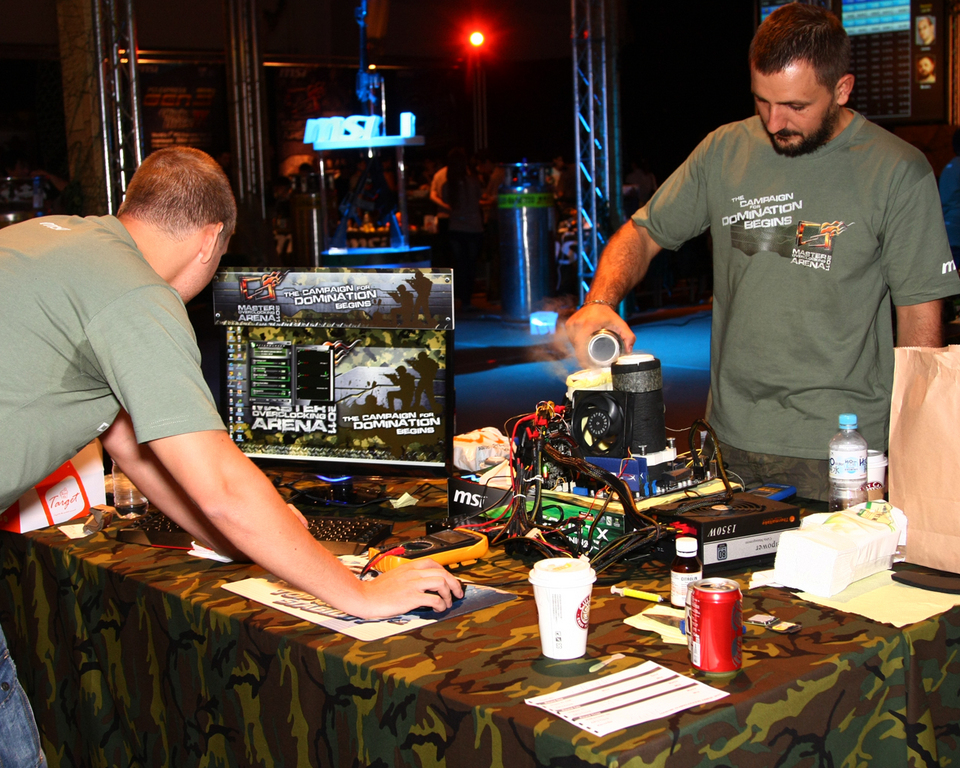
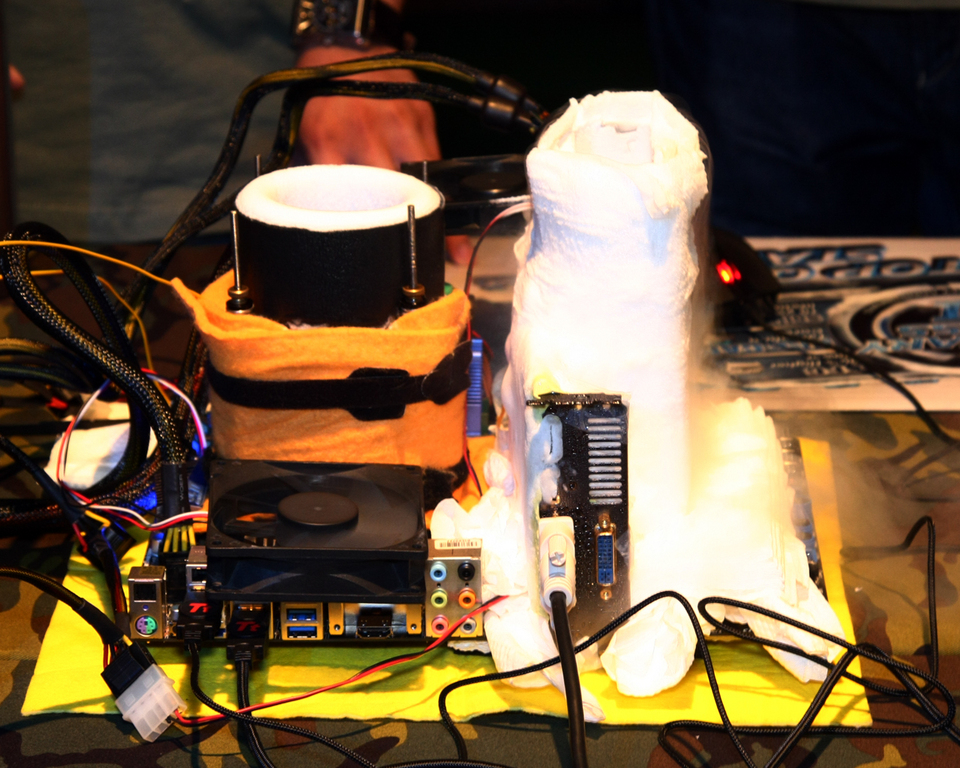
Well, this is good news for PC enthusiasts. PC overclocking has become a competitive sport in recent years with various brands hosting the competitions and others also chipping in with sponsorship money. This year’s event was the fourth annual MSI Master Overclocking Arena competition held in Taipei, Taiwan, with sponsorship money coming from the likes of Intel and Kingston among others. Basic competition info: sixteen teams worldwide; benchmarks used were Super PI 32M, 3DMark 11 and surprisingly, the ancient 3DMark 2001SE but it’s not clear why such an old benchmark is being used; the components used are given to contestants based on a lottery system, the team picking a number corresponding to either a CPU or a complete rig. This prevents contestants from having an unfair advantage by bringing in their own heavily modified kit to press home an advantage. Imagine how much more potent a modded motherboard with beefed up voltage regulators could be? Turned out that the favourites, previous winners Romania, won the competition. The prize money was only $3000, which is paltry compared to mainstream sports, but remember that this overclocking "sport" is still very new and is very niche in nature, so isn’t so unreasonable when viewed in that light. Head on over to VR-Zone for more competition details and photos.


Source: VR Zone
Read More ...
Mirror's Edge Fans Should Keep Holding Their Breath For The Sequel
Mirror's Edge received good reviews when it was released and has been quite popular with gamers who unsurprisingly, want a sequel. This is especially important in the case of Mirror's Edge, as this game is single player only, so it's not something a gamer can come back to time after time. However, a sequel has never really been on the cards for Electronic Arts, since it didn't sell as well as they had thought it should have and rejected a prototype ME2. Now, developer DICE have been busy with other projects such as upcoming blockbuster Battlefield 3, but good news could be on the horizon, since Electronic Arts are adamant that Mirror's Edge is an important brand for their portfolio. SPOnG recently interviewed Patrick Liu from DICE and asked him if he thought that the games market would be receptive to Mirror's Edge 2. He answered:
Good news then for Mirror's Edge cult members, err, fans, keep holding your breath!
Yeah, definitely. I think it's something that people are ready to get into again. We see that there's a huge fan following, it's almost like a cult! And we know what strengths we had, and what weaknesses we had in that game. If we were to release a new game, we'd know what to improve and how to reach a broader audience. So I definitely think there's a market there.


Source: SPOnG
Read More ...
Battlefield 3 Interview With Producer Patrick Liu: maps, betas and jets
The Guardian has published an interesting interview with the producer of Battlefield 3, Patrick Liu and in it a selection of reader's questions were put to Liu. The choice of maps and the meaning of what a "beta" and a "demo" seem to be causing confusion amongst players are just two. It appears that players were disappointed with the Paris map, because it doesn't have any vehicles, but there was a good technical reason for that. The alpha game had a quickly designed "rush" map just to test the basic code, performance etc. To make testing comparisons between the alpha and the beta as similar as possible, the map used in the beta had to be essentially the same but it looks like gamers were expecting a demo with lots of different maps. However, providing those isn't necessarily appropriate for a beta test. On top of that Liu is confident that the various technical glitches will be ironed out by the time of the launch on 28th October.

Read More ...
Available Tags:Intel , SSD , Sony , ASRock , MSI ,


No comments:
Post a Comment