

Hands On With the iPhone 6s and iPhone 6s Plus
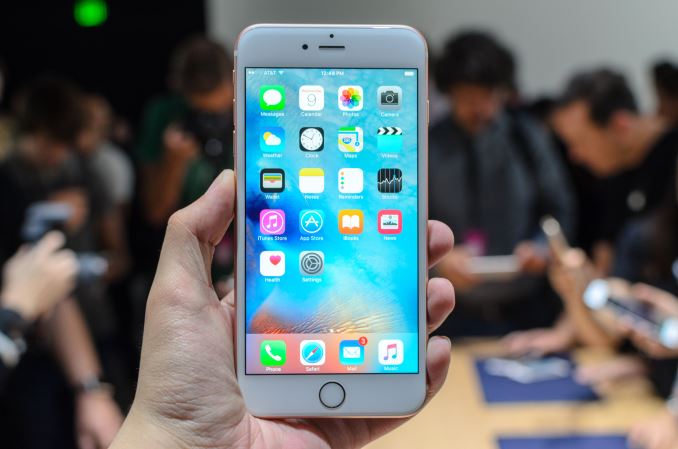
The first, and probably most important change to the iPhone 6s from a user experience perspective this generation is going to be 3D Touch. After using it, I’m sure this will be widely adopted throughout the smartphone industry in about 18-24 months after the iPhone 6s. One of the major user experience problems I have with smartphones that isn’t necessarily obvious to most people is that there are a lot of actions that just break the flow of fluid user interaction. This may seem like a petty complaint, but a long press is probably the single most frustrating aspect of a smartphone user experience today. On Android, the standard for a long-press is usually around 500ms. This doesn’t seem like a long time, but if done repeatedly or if under time pressure half a second can start to feel like an eternity.
Another kind of flow-breaking that exists in smartphone user experience today is what I’d call ping-ponging. In short, this is the kind of user interaction in which you’re constantly opening one app to view one small thing before switching back to the application your focus is on. This is actually objectively bad for user focus, because humans are fundamentally not capable of true multitasking. Instead of doing multiple things at the same time, we’re just rapidly switching back and forth between tasks. Each context switch entails overhead, much like how making a CPU core switch processes invokes an overhead as state is saved and loaded.
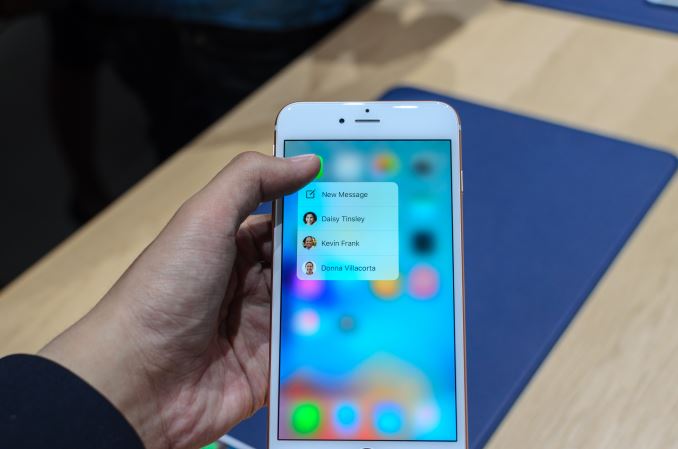
3D Touch is a novel way to tackle these two problems. In practice, 3D Touch means that you can do the equivalent of a long press on various app icons to expose options hidden behind a long press menu. However, instead of a long press, you just push slightly harder on the display to activate it so it happens as fast as you want it to be. The use of the Taptic Engine is actually quite helpful here as well, because it gives very obvious feedback as to what you can do with a force touch. If the app on a homescreen doesn’t support any options with 3D Touch, there’s a distinct double-tap to indicate this instead of a lot of pressing and wondering why nothing is happening. The speed at which you can do a force touch on the display means that 3D Touch gestures are just much faster and more user friendly than a traditional long-press.
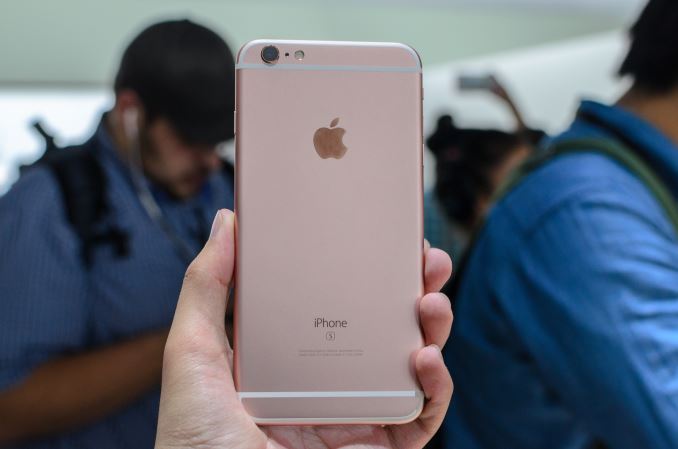
In the other case previously described, 3D Touch is actually impressive because of how well it effectively eliminates a lot of the user experience inefficiencies that come with traditional multi-touch. Some of the key demos shown include peeking at emails with a medium-press, and opening them with a hard-press. In the case of the medium-press, you can look at an email with a single press quickly instead of tapping on the email, quickly reading it, then marking it unread and swiping back to the inbox. A hard-press opens the email completely so it isn’t necessary to release the finger and then do a light tap. In practice, this is actually a fluent gesture to make and I didn’t have any trouble with strange activation pressures. As far as I can tell though the pressure levels aren’t relative, so it’s fully possible to make a force touch equal to a light tap if you’re aggressive enough with the force touch gesture.
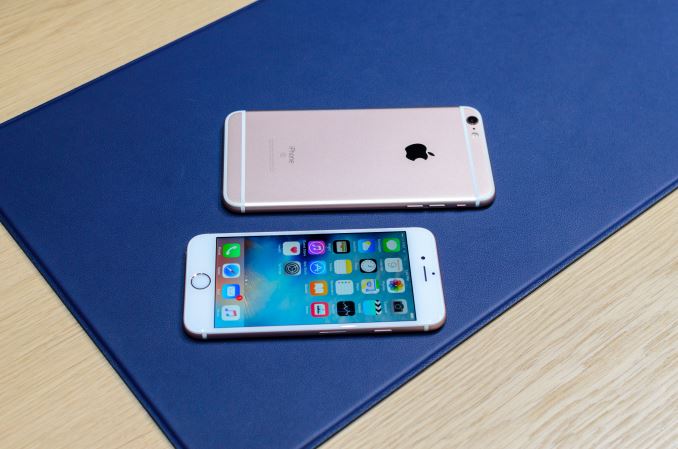
The email example is just one application, but probably one of the more obvious applications of this would be viewing links in a message thread and responding to IM within that thread. Without the ability to peek at links, each link would have to be opened in the browser with the associated loading times and before using multitasking to get back to the messaging application. In that time, it’s also possible that the messaging application would clear the message field so a half-written message could be lost to the ether. With 3D Touch, it’s possible to easily view links and other information in a message thread without losing focus.
It’s also possible to do a fast multitasking gesture by applying pressure while swiping from the left edge of the display, which allows a fast way of accessing the next app in the multitasking menu instead of pressing the home button. Overall, I think this is a pretty smart feature. It isn’t life-changing, but it’s definitely nice to have.
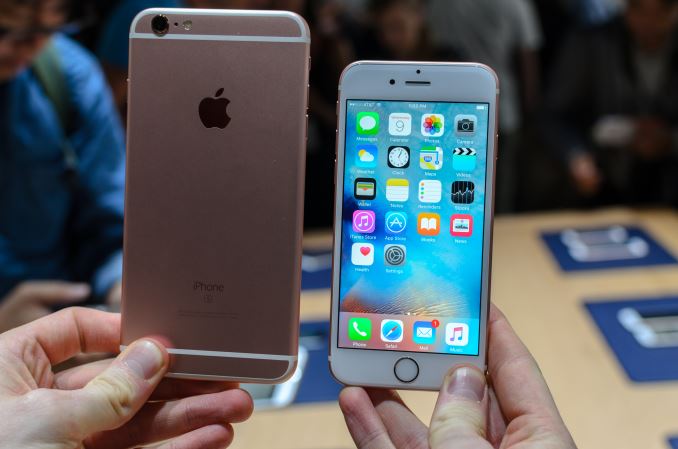
The other features that I could immediately get my impressions on were retina flash and changes to video recording. Retina flash sounds a bit over the top, but it’s really just a good way of using the display as a front-facing LED flash. LG has done this before to be sure, but Apple has implemented it in a way that the display gets much brighter than usual for a very short period of time. At least a few OEMs have implemented front-facing cameras with LED flash, but I have to say in my experience an LED flash with a front-facing camera is a painful experience because the light is strongly concentrated on a single point. I thought LG had a smart idea in the form of using the display as a front-facing LED flash as early as the G Flex 2, and given that Apple has adopted this idea as well it seems that someone at Apple thought so as well.
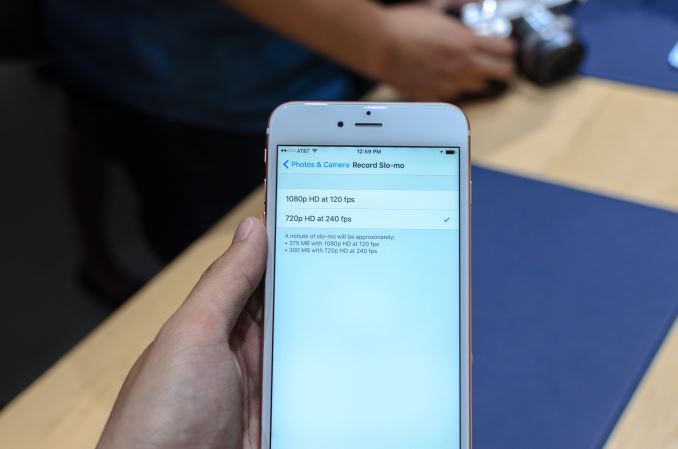
Although there was no way I’d be able to accurately say whether low light performance is comparable between the iPhone 6 and 6s, I did notice some changes to video recordings in the iPhone 6s. The first thing I noticed was that for slow motion video, 1080p120 is definitely supported. Additionally when recording 4K video there’s no time limit like in most phones, which is notable because in most phones the time limit is to ensure that SoC or camera sensor temperatures don’t exceed critical values. Live Photo seems like an interesting feature, but I really don't know what to think there as the functionality could easily go either way depending upon the intelligence there.
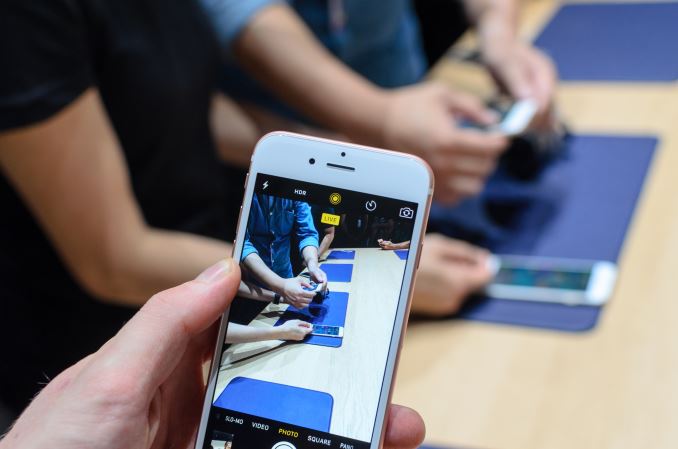
Outside of these small observations, it seems to me that the iPhone 6 Plus’ camera now enables OIS when recording video. When I tried to record video, it’s obvious that some kind of hardware stabilization is happening because the video was smoothed with the characteristic OIS jerkiness that I’ve seen in many phones that only use OIS in video. In my experience, the iPhone 6 while recording video appeared to not have any video stabilization at all while once recorded much of the jitter and shake was removed from the video. I didn’t get to examine the recorded video too closely, but I suspect the electronic video stabilization will help to smooth out the inherent jerkiness of OIS in video alone.
Overall, I found the iPhone 6s lineup to be relatively promising in terms of new features like 3D Touch and performance with nothing that seemed wrong. However, as the smartphone market continues to mature it’s no longer enough to just rely on a short hands-on to identify potential pitfalls. In order to really understand the iPhone 6s lineup and the problems that it might have a full review is necessary.
Read More ...
Apple Announces the iPhone 6s and iPhone 6s Plus
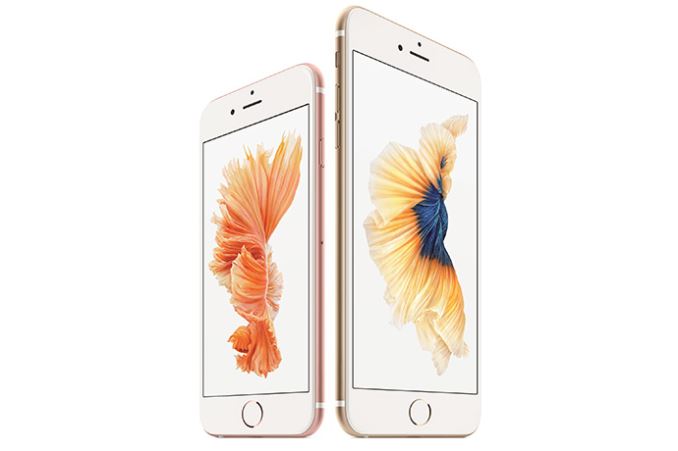
| Apple iPhone Generations | ||||
| Apple iPhone 6 | Apple iPhone 6 Plus | Apple iPhone 6s | Apple iPhone 6s Plus | |
| SoC | Apple A8 | Apple A9 | ||
| Display | 4.7-inch 1334 x 750 IPS LCD | 5.5-inch 1920 x 1080 IPS LCD | 4.7-inch 1334 x 750 IPS LCD | 5.5-inch 1920 x 1080 IPS LCD |
| WiFi | 2.4/5GHz 1x1 802.11a/b/g/n/ac, BT 4.2, NFC | 2.4/5GHz 2x2 802.11a/b/g/n/ac, BT 4.2, NFC | ||
| Storage | 16GB/64GB/128GB | |||
| I/O | Lightning connector, 3.5mm headset | |||
| Size / Mass | 138.1 x 67 x 6.9 mm, 129 grams | 158.1 x 77.8 x 7.1 mm, 172 grams | 138.3 x 67.1 x 7.1 mm, 143 grams | 158.2 x 77.9 x 7.3mm, 192 grams |
| Camera | Rear Facing 8MP iSight with 1.5µm pixels + True Tone Flash Front Facing 1.2MP f/2.2 |
Rear Facing 8MP iSight with 1.5µm pixels + True Tone Flash + OIS Front Facing 1.2MP f/2.2 |
Rear Facing 12MP iSight with 1.22µm pixels + True Tone Flash Front Facing 5MP f/2.2 |
Rear Facing 12MP iSight with 1.22µm pixels + True Tone Flash + OIS Front Facing 5MP f/2.2 |
| Price | $99 (16GB) | $199 (16GB) | $199/299/399 16/64/128GB | $299/399/499 16/64/128GB |
For the most part, it’s really rather difficult to talk in great depth about these changes because right now we don’t have a lot of detail which will probably be saved for a full review. One example of something that we can’t test or really notice at all is the change to the build materials. While the display glass is still glass, Apple is claiming the strength of this cover glass is greatly improved from the iPhone 6. The aluminum of the back cover has also been strengthened, with the iPhone 6s using a custom 7000-series aluminum alloy to improve strength.
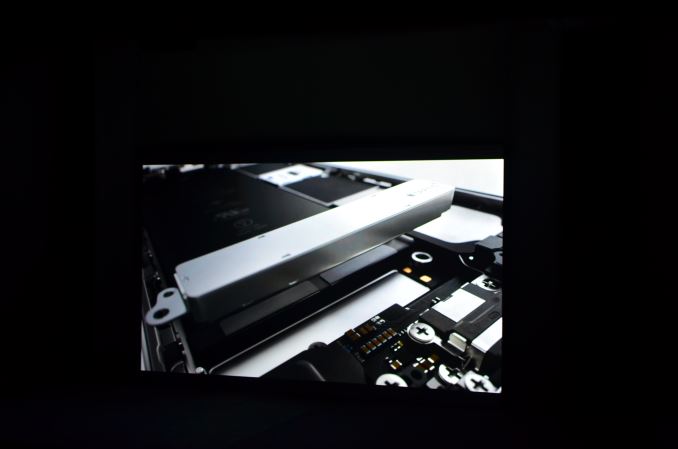
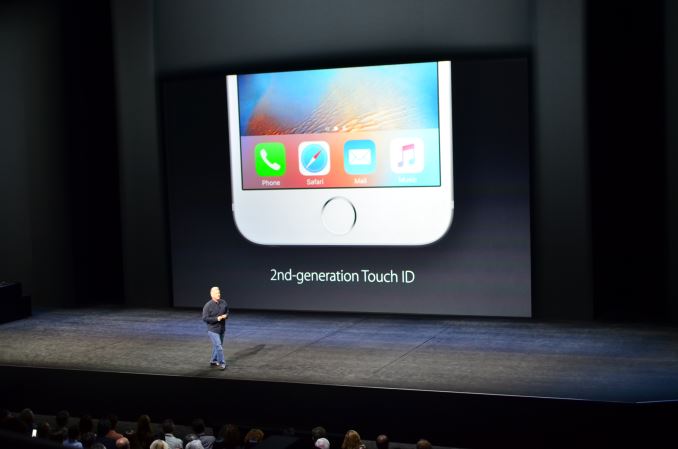
On the display side of things Apple has added a precise force sensing layer to the display module which allows for a whole range of new interactions with the smartphone. This force sensing technology is called 3D Touch by Apple, to differentiate from Force Touch on Apple Watch which is basically just a single force sensor to allow for a single force gesture within a context. The addition of a taptic engine helps to enable strong and useful haptic feedback when using 3D Touch gestures. While not part of the display, TouchID has also improved to enable much faster unlock speed.
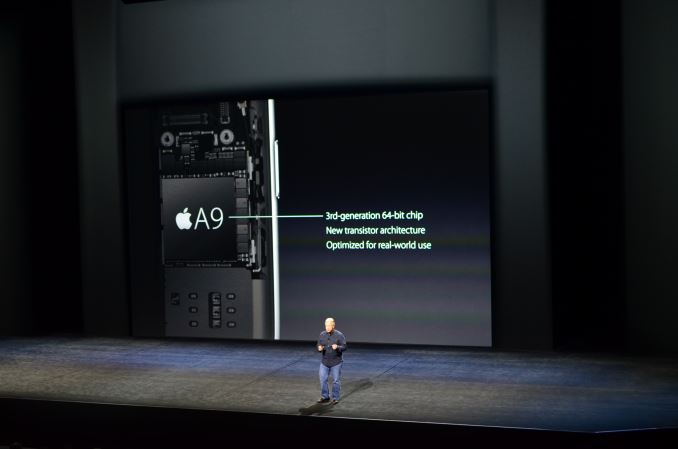
The SoC is also brand-new and much faster. Apple disclosed up to 70% CPU performance improvement and 90% GPU performance improvement, and is built on a leading edge FinFET process. Judging by the lack of disclosure of specific process node the possibility that A9 will be using both Samsung 14nm and TSMC 16nm still exists. The Apple A9 SoC in the iPhone 6s will also have the M9 motion coprocessor built into the SoC itself, which should improve power efficiency by virtue of being on a leading-edge process rather than lagging behind on 28nm or something similar. The addition of always-on Siri voice activation is also possible due to the new A9 SoC.
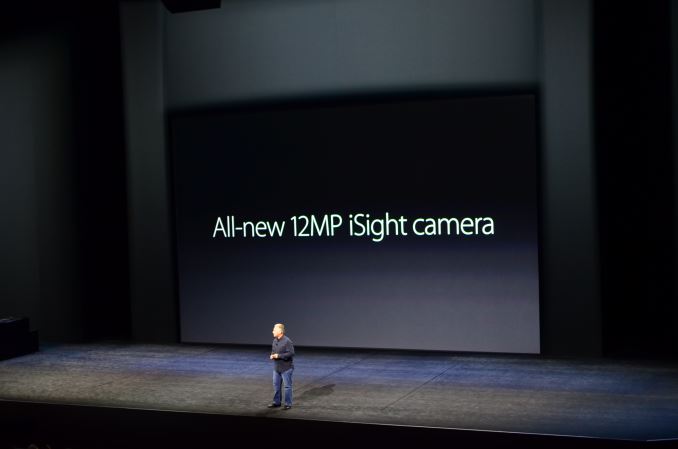
The new camera is also part of the major announcement this time around as the iPhone 6s now has a higher resolution to support 4K video recording. This new camera is 12MP, with 1.22 micron pixel size which means that sensor size is effectively identical to the iPhone 6 and 5s at 1/3”. Technologies like deep trench isolation and modified color filter array are said to help with low light performance. Deep trench isolation has been seen before in camera sensors like the One M7 ST-Micro Cinesensor/Ultrapixel sensor, and Samsung’s ISOCELL sensors, which is likely needed in order to drive these smaller pixel sizes.
The front-facing camera has also been updated to a 5MP unit, with a display flash mode to enable low light selfies. Using the display for flash has been done before by companies like LG, but Apple’s claim for differentiation is that they’re detecting ambient light and using their display LED driver to boost LED brightness up to 3x the maximum brightness of the display in normal operation with the right white balance to ensure good color rendering.
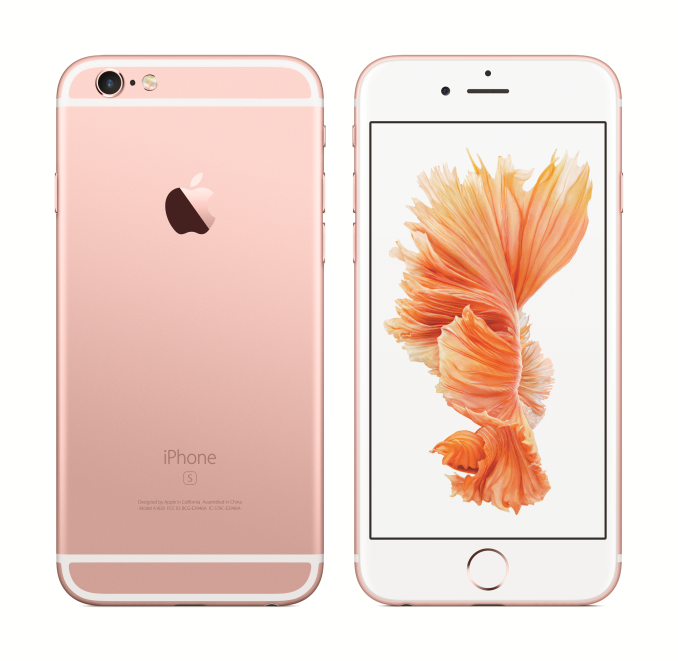
The camera will also have Live Photos, which captures a photo that is a short moment in time with sound, which could also be said to be a video. If this sounds a lot like HTC’s Zoe feature, it’s probably because it definitely shares some similarities in that regard. However, as far as I can tell unlike HTC’s implementation Live Photos is mostly seamless and only shows animation when you do a force touch or if you’re swiping from one photo to another in the gallery.
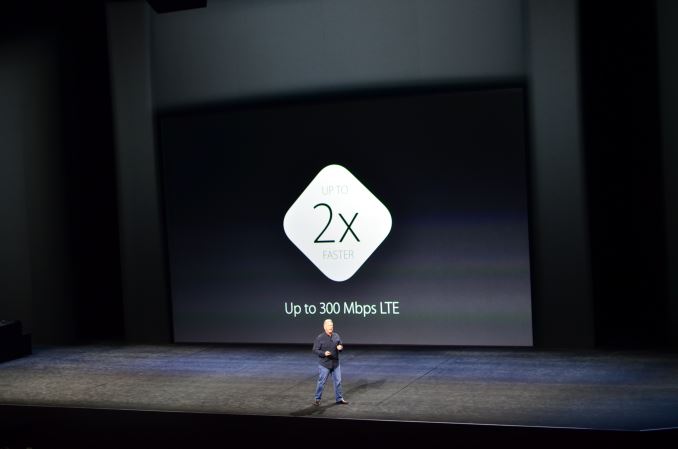
On the wireless side, the iPhone 6s brings LTE-A with speeds of up to 300 Mbps. The modem design win wasn’t disclosed, but it’s probable that Qualcomm’s Gobi modems are in at least some iPhone 6s variants. Apple did disclose that the iPhone 6s can support up to 28 LTE bands, which makes the iPhone 6s one of the closest phones to single global SKU on the market today.
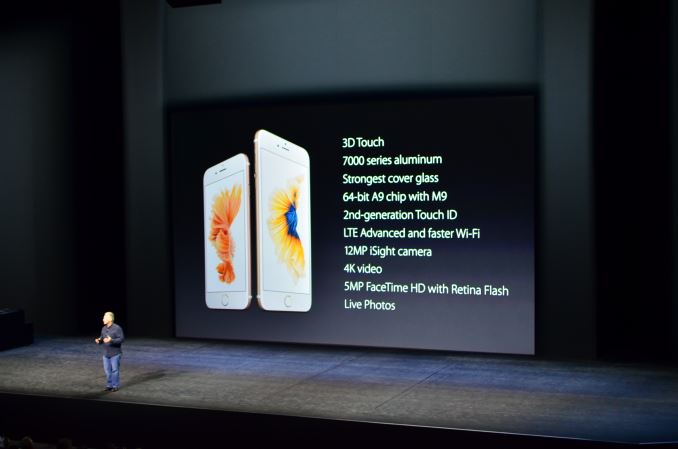
WiFi is also improved with two spatial streams for up to 866 Mbps on 5 GHz 802.11ac. The two antennas are likely to be integrated into the top and bottom metal sections of the phone, which likely means that peak WiFi performance will have to be achieved by not touching either section. Of course, this isn’t going to be another antennagate though because it’s likely that all RF that relies on the lower antenna to work will also have an antenna tuner to reduce detuning effects.
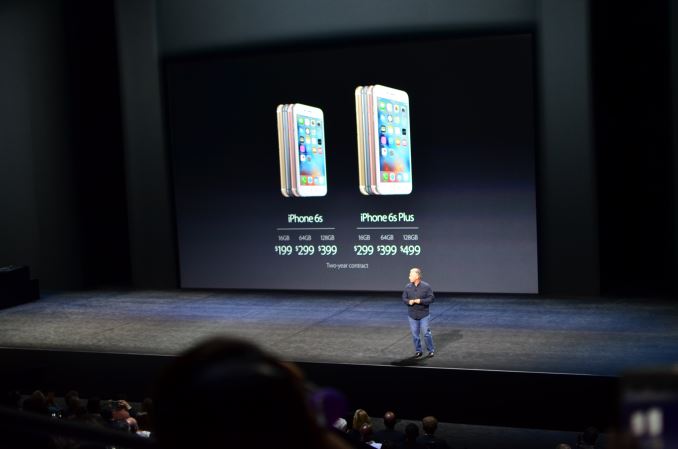
The iPhone 6s and 6s Plus will go on sale starting September 25th, and preorders begin September 12th. Pricing will be identical to the iPhone 6 last year, with the 16GB 6s starting at 199.99 USD on contract and the 16GB 6s Plus starting at 299.99 USD on contract. Unlocked pricing is likely to start at 649.99 USD and 749.99 USD respectively. Both phones will be available in silver, space gray, gold, and rose gold.
Read More ...
Apple Announces Release Dates for iOS 9, watchOS 2, and OS X El Capitan
According to Apple, both iOS 9 and watchOS 2 will be launching one week from now on September 16th. iOS 9 supports all devices with an A5 SoC or newer. For iPads this includes everything except the original iPad, which is really impressive when you consider that the iPad 2 launched in early 2011 with a version of iOS 4. The supported models of the iPod Touch include the iPod Touch 5 and the new iPod Touch 6 which is almost identical to the 5th gen on the outside but has Apple's A8 SoC. Supported iPhones include the iPhone 4s and any iPhone released afterward.
As for OS X El Capitan, it will be launching on September 30th, which is just a bit later than iOS 9 and watchOS 2. As for supported devices, the system requirements are unchanged from OS X Yosemite so if your Mac can run that then it can run El Capitan.
Read More ...
Apple Announces The New Apple TV
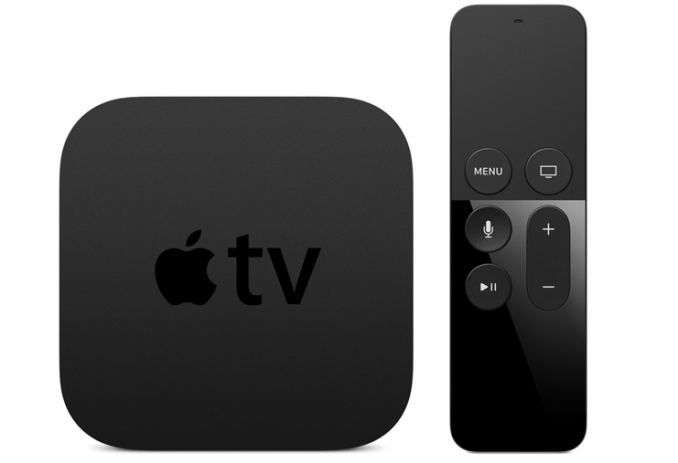
| Apple TV | |
| SoC | Apple A8 SoC, 2x 1.4GHz Typhoon |
| RAM | 2GB LPDDR3 |
| NAND | 32/64GB NAND |
| Display | N/A, HDMI 1.4 1080p60 Output |
| Dimensions | 98 x 98 x 33mm, 425 grams |
| OS | tvOS |
| Connectivity | 2x2 802.11a/b/g/n/ac + BT 4.0, USB Type-C, HDMI 1.4, IR Receiver, 10/100 Ethernet |
| Launch Price | $149/$199 32GB/64GB |
The new Apple TV receives some much needed hardware improvements. What's funny is that none of them are really required for video playback, as the old A5 chip had the ability to decode 1080p H.264 video in hardware. What the upgrades are required for is running the brand new tvOS, and all the apps and games that Apple hopes will be made for it. I'm surprised that Apple hasn't built in support for HDMI 2.0 or HEVC decoding in order to support existing 4K TV sets and future 4K content encoded with HEVC.

tvOS comes with a brand new interface for Apple TV. The old Apple TV UI looked like a relic of ancient history with its iOS 6 inspired UI, while this new interface looks very modern and fits in well with iOS, OS X, and watchOS.
The tvOS UI is navigated using two methods of input. The first is Siri, and in this case it's a super powered Siri that can do a lot more than the Siri on your phone. You can issue very specific commands and searches, such as finding an episode of a TV series based on a character that guest starred or an event that happened. This is something that I've wanted for a long time, especially for finding episodes of a long series like Seinfeld where it's impossible to remember each specific episode. You can also use Siri to control playback by asking to move forward or back a certain amount. Siri will even recognize questions like "What did she say?", and rewind the video while also temporarily putting on captions so you can understand something that wasn't said clearly.

The second method of input is the new Apple TV remote. This new remote has a glass multi touch surface on the top of the display for navigating the UI. It also has a dedicated Siri button which is how you trigger voice input, as well as a play/pause button, a menu button, a home button, and volume controls. The remote is powered by a rechargeable internal battery that you recharge via a lightning port on the bottom, and Apple claims it can last for months on a single charge with typical daily usage.
Circumstances that would drain the Apple TV remote would likely be related to using it to play games. The remote connects to the TV using Bluetooth 4.0 as well as IR, and it includes both an accelerometer as well as a gyroscope. This means that it can be used as a controller for certain types of games, with other more complicated games supporting third party controllers that you will be able to buy.
It's difficult to describe all that Apple TV offers, and to make a comparison between it and other set top boxes based on what Apple has shown off. Hopefully we will be able to review it in detail in the future, and for now I would suggest taking a look at the demos Apple did on stage if you haven't so already.
Apple TV will be shipping in late October, and will be priced at $149 for the 32GB model or $199 for the 64GB model.
Read More ...
Apple Announces the iPad Pro and iPad Mini 4
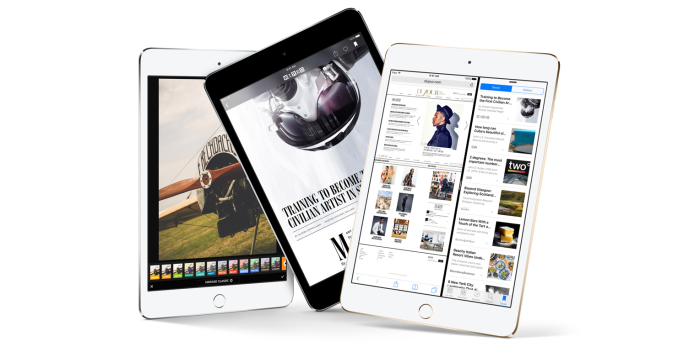
| Apple iPad Mini 4 | Apple iPad Pro | |
| SoC | Apple A8 | Apple A9X |
| RAM/NAND | 2GB LPDDR3 + 16/64/128GB NAND | ?GB + 32/128GB NAND |
| Display | 7.85" 2048x1536 IPS LCD | 12.9" 2732x2048 IPS LCD |
| Network | WiFi only or 2G / 3G / 4G LTE (Category 4 LTE) | |
| Dimensions | 202.1 x 134.8 x 6.1 mm, 298.8g WiFi, 304g LTE | 305.7 x 220.6 x 6.6 mm, 713g WiFi, 723g LTE |
| Camera | 8MP Rear Facing with F/2.4 aperture, 1.2MP FFC | |
| Battery | 19.1 Wh | 38.5 Wh |
| OS | iOS 9 | iOS 9 |
| Connectivity | 2x2 802.11a/b/g/n/ac + BT 4.1, Lightning, GPS/GNSS (LTE SKU only) | |
| Price | $399/$499/$599 16/64/128GB | $799/$949 32/128GB |
Like the iPad Mini 3, the iPad Mini 4 only got a small amount of time during the keynote. Apple described it as a mini iPad Air 2, is true in most ways but not in all of them. The thickness has been reduced to 6.1mm, and the mass reduced to 298.8 grams for the WiFi model and 304 grams for the LTE model. It still has a 7.85" 2048x1536 IPS display, and based on a look at Apple's event it no longer appears to have a reduced color gamut. It also receives the 8MP iSight camera from the Air 2 with an F/2.4 aperture and 1.12 micron pixels.
While all of these attributes are what you'd expect from a small iPad Air 2, the one difference is that the iPad Mini 4 does not use Apple's A8X SoC. This is a noticable downgrade from A8X in both CPU and especially GPU performance. That isn't to say that A8 is slow, but it's not quite a small iPad Air 2 in every regard. Because Apple's marketing materials show that the iPad Mini 4 can do split screen multitasking it's almost a given that this is a version of A8 with 2GB of RAM.

The star of the show at today's event was the brand new iPad Pro. The iPad Pro sports an enormous 12.9" 4:3 display with a 2732x2048 resolution. You may have noticed that the smaller axis has the same resolution as the large axis of the other iPads. This is so the iPad Pro can take advantage of iOS 9's multitasking features in order to show a full size iPad app with a slightly condensed iPad app on the side. A resolution of 2732x2048 is also impressive when you consider that it has a greater number of pixels than the 15" MacBook Pro with Retina Display.
Beyond the resolution, the iPad Pro's display uses the same photo alignment tech as the iPhone 6 and 6 Plus to achieve greater contrast. It's also uses an IGZO backplane which is necessary to reduce power consumption. Both the iPad Pro and the iPad Mini 4 have the anti-reflective coating that the iPad Air 2 uses, and both also have have a laminated display. Apple is also employing the use of an adaptive refresh rate to reduce display power usage when displaying static content. This hasn't been elaborated on very well, and it's not clear whether or not there's also panel self refresh support.
Of course, having a giant display isn't free. You naturally need to enlarge the size of the chassis, and pack in a larger battery to power it. The iPad Pro isn't very thick at 6.9mm, but it's quite hefty with a mass of 713 grams for the WiFi model and 723 grams for the LTE model. With a large chassis Apple was also able to make room for additional speakers. There are two pairs of stereo speakers on the top and bottom of the tablet, with the top speakers being dedicated to producing higher frequencies. The software can also detect based on your orientation which speakers are most likely to be covered, and can intelligently switch to using the correct two to product unmuffled audio.
Inside the iPad Air 2 is Apple's most powerful chip to date, the A9X. According to Apple A9X is 1.8x faster than A8X at CPU tasks, and 2x faster at GPU tasks. Given that A8X was already the fastest ARM SoC in a mobile device this is quite an accomplishment, and is likely the result of architectural improvements, higher clock speeds, and possibly the addition of a fourth CPU core. We'll have to wait until we get our hands on the iPad Pro before any of this can be confirmed though. Apple also noted that A9X is built on a new "transistor architecture" which means it's being fabricated on either Samsung's 14nm or TSMC's 16nm FinFet process.
Apple also noted that A9X sports 2x the memory bandwidth and 2x the storage performance of A8X. It's not clear what changes have been made to the flash storage, but it's reasonable to assume that the increase in memory bandwidth comes from a move to LPDRR4 memory.

With the iPad Pro comes two new accessories to boost productivity. The first is the Apple Pencil, which is a drawing pen not unlike what is offered with Microsoft's Surface Pro 3. To minimize latency, the iPad Pro scans for input at 240Hz when using the Apple Pencil. This is twice the rate of scanning that the Air 2 and iPad Pro normally use for input (the iPad Air 2 also scans at 120Hz which was not advertised). You can use the Apple Pencil to draw in apps like Mail and Notes, and third party applications like Microsoft's Office apps and Paper by FiftyThree are adopting support for it as well. Apple hasn't said anything about exactly how many pressure levels the Apple Pencil supports. The Apple Pencil costs $99, which I think is a bit steep when the tablet alone comes at quite a premium.
To recharge the Apple Pencil, you just remove the cap at the end and a lightning connector is exposed. You can then plug it into your iPad Pro to charge, with 15 seconds of charging providing 30 minutes of battery life. With a full charge the Apple Pencil will last 12 hours.
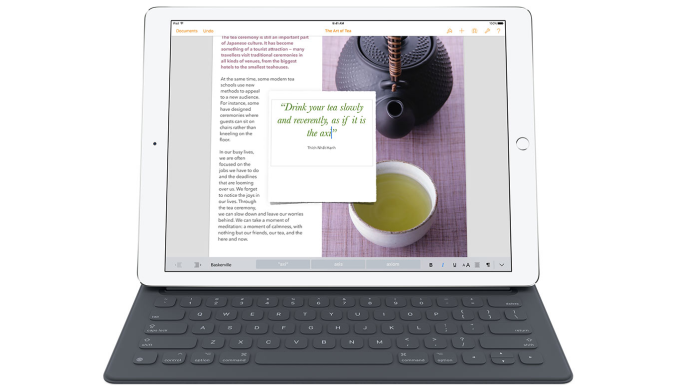
In addition to Apple Pencil, Apple has released a Smart Keyboard for the iPad Pro. This is essentially a Smart Cover that integrates a keyboard, and it's similar to the keyboard covers for Microsoft's Surface tablets. Also like the Surface, the keyboard connects to a small magnetic connector on the side of the tablet. It's worth noting that the original iPad actually had an official keyboard too, but it was more like Apple's Bluetooth keyboard with a 30 pin connector stuck onto it, and you used it with the tablet in portrait. The Smart Keyboard costs $169.
Apple's new iPad Pro has been announced now, but it won't be shipping until November. It's priced at The iPad Mini 4 is already available to purchase now. Like the iPad Mini 3, the Mini 4 is priced at $399 for 16GB, $499 for 64GB, and $599 for 128GB. Add $129 to any of those tiers to add LTE support. As for the iPad Pro, it's priced at $799 for 32GB, $949 for 128GB, or $1079 for 128GB with LTE.
Read More ...
AMD Reorganizes Graphics Division - Radeon Whole Once More, Led By Raja Koduri
By and large AMD achieved their technical goals with the ATI acquisition. On the I/O side of matters AMD’s chipsets improved dramatically, reaching a level of quality AMD previously never could achieve internally, nor could external 3rd parties reach from outside AMD. Meanwhile AMD’s grander graphics related plans have moved along as well; the company successfully integrated an on-die GPU with Llano in 2011 – though not quite beating Intel to the punch. More recently the company executed on the first phases on their long-term Heterogeneous System Architecture project, forming the HSA consortium to make the project a group effort, shipping a preliminary HSA-capable processor with Kaveri in 2014, and following that up with a full HSA 1.0 capable processor this year with the launch of Carrizo.

None of this could have happened for AMD without the ATI acquisition, and while AMD paid a high price at the time for the technology, in the long run it’s very likely that the fusion of AMD and ATI is what has kept the modern AMD an important player in the current marketplace. Which is not to say that things have been easy for AMD – they are if nothing else the perennial underdog – as the challenges posted by Intel and NVIDIA are greater than ever, and not all of AMD’s initiatives have seen as much buyer traction as they anticipated. On the other hand, thanks to CPU/GPU integration AMD has been able to branch into entirely new markets, securing both the Playstation 4 and Xbox One video game consoles, and this newfound semi-custom business is expected to be a cornerstone of AMD’s progression in the long run.
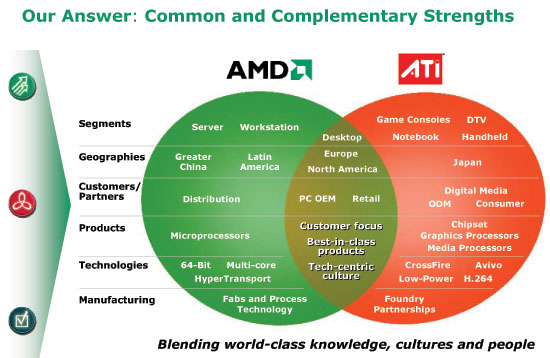
AMD On The Synergies of Acquiring ATI In 2006
Meanwhile on the business side of matters, the fusion metaphor wasn’t just a technology metaphor, but a business metaphor as well. When AMD set out to acquire ATI they didn’t just want a GPU business sitting next to a CPU business, but they wanted GPUs to be part of everything AMD. As we wrote on the matter in 2006 “Having each company operate entirely independently makes no sense, […] it's what these two can do together that makes this acquisition so interesting.” To that end over the first four years of the acquisition AMD slowly but surely worked to absorb and digest ATI, culminating in a deep level of integration and the retirement of the ATI brand.
Reminiscing about the past aside, there is a point to taking a trip down memory lane, and that is understanding AMD’s past in order to understand their future. Today AMD is announcing a significant restructuring, one that in some ways even greater than last year’s business unit reorganization. Taking effect immediately, AMD is bringing the band back together. The company will be reforming a singular, monolithic graphics group – the Radeon Technologies Group – to oversee every aspect of AMD’s graphics efforts. The Radeon group will in turn be led by long-time ATI and AMD graphics guru, Raja Koduri.
When I first saw this announcement the plan came as a bit of a shock, and for good reason. AMD has spent a significant amount of time and energy on making graphics a core part of the company at every level, and now the formation of the Radeon Technologies Group runs counter to some of those efforts. This is unquestionably a bit of backtracking by AMD, though a move that after 9 years they feel is necessary.
Though I imagine most long-time AMD followers understand just what "graphics being an integral part of AMD" means at a high level, it wasn’t until this announcement that even I truly understood just how spread out AMD’s various graphics-related sub-groups have been. Between the various groups, AMD has had departments reporting to CTO Mark Papermaster, CVP of Global Marketing John Taylor, CVP and GM of graphics Matt Skynner, VP of Visual Computing Raja Koduri, and other executives within the AMD structure. The end result is that graphics is truly everywhere within AMD, but at times it is also nowhere.
Having graphics spread out as AMD has been was intended to foster deep cooperation between the various AMD CPU and graphics groups, by making everyone vested in the success of AMD’s graphics initiatives. However from what I’m hearing with respect to today’s announcements, being spread out in such a fashion has also hamstrung AMD’s graphics initiatives at times. Having different groups under different executives controlling technology, marketing, ISV relations, and other aspects of the business has prevented AMD from being able to execute swiftly on the graphics front, and ultimately that has hurt AMD as a whole.

The end result is that after 9 years there is a reluctant admittance within AMD that such a deep fusion of the businesses has not worked out like AMD expected. GPUs are still essential to AMD’s technology plans and the technology fusion is critical to how AMD operates, but how those products are developed and marketed within AMD needs to change. Consequently AMD has decided to take a step back and to reevaluate how they want to organize their graphics business. And the outcome of that evaluation is that the graphics business will once again become whole, with AMD in a sense turning back the clock and keeping graphics as its own unit.
Leading this new group is AMD veteran Raja Koduri. Prior to today Raja was AMD’s Vice President of Visual and Perceptual Computing, and starting today Raja is being promoted to the executive level as the Senior Vice President and Chief Architect of the Radeon Technologies Group, reporting directly to CEO Dr. Lisa Su. As of this writing AMD does not have their new executive organization chart up, but with this reorganization and promotion, Raja is being promoted to the same level as AMD’s other SVPs, and Raja’s group being made a counterpart to AMD’s computing and EESC groups.

For Raja the path to the SVP position has not been a straight one. We previously wrote about Raja re-joining AMD in 2013, returning to the company after a four-year tenure at Apple, helping the company build up its own graphics technologies. As one time graphics CTO Raja is well versed in what AMD’s graphics technology is capable of, and as was the case around his return in 2013, Raja will be a critical part of AMD’s success with graphics technology going forward.
In many ways then today’s reorganization and promotion is the culmination of re-integrating Raja into AMD, embracing Raja’s task on a larger scale. Raja is no longer just overseeing AMD’s graphics hardware and software, but he is overseeing every facet of graphics at the company. Marketing, ISV relations, and more all fall under Raja.
Raja in turn has a grand task in front of him, figuring out how to steer the reformed graphics group after it has spent so much time in pieces. AMD’s market share of consumer discrete graphics has never been lower, and overall for x86 graphics vendors AMD is in a solid third place behind both Intel and NVIDIA. It will fall to Raja to orchestrate how AMD can recover this lost market share while also reinvigorating AMD’s graphics marketing and ISV relation efforts, all the while ensuring AMD continues to design awesome graphics architectures for APUs, discrete GPUs, and the embedded/semi-custom market. Raja will face significant challenges, but there is likely no one better suited for the task than Raja.
For the rest of AMD, this reorganization represents both a beginning and an end. Radeon becoming whole again will with any luck give the group the swiftness it has long needed and couldn’t find under the rest of the AMD bureaucracy. AMD is certainly trying to sell this reorganization as a positive thing, and having worked with so many people from AMD’s graphics side over the years I can only imagine that by and large for many of them this is a welcome change. On the other hand this is a reorganization, and while it’s not in AMD’s press release, from what I’m hearing the current CVP and GM of graphics and long-time AMD/ATIer Matt Skynner, will be leaving the company, so there will be changes at AMD besides just who reports to whom.
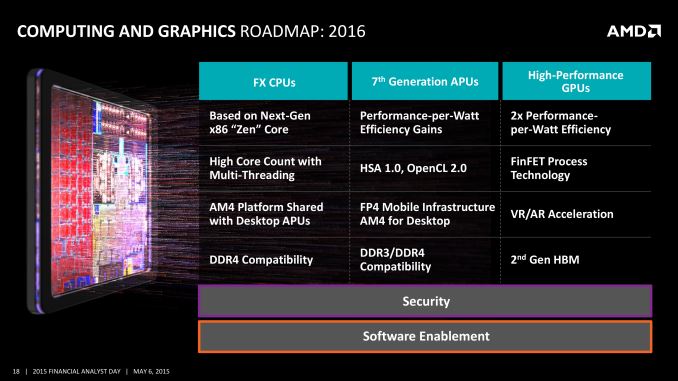
As for the Radeon Technologies Group’s immediate future, it will be interesting to see how long it takes the reorganization and Raja’s promotion to have a visible impact. When Raja first came back to AMD it was to take on hardware and software, the technical aspects of the graphics business where development is measured in years. However the rest of the graphics business that now falls under Raja’s control – the PR, the marketing, etc – operates on much smaller time scales and should be easier to change. What those changes are remains to be seen, but I’m hopeful that we’re going to see the first fruits of this change in time for the expected 2016 launch of AMD’s next-generation FinFET-based GPUs. The hardware will have been locked in for some time now, but Raja will have ample leverage to now change how AMD handles the launch of the hardware.
Finally, in the longer term, what remains to be seen is if Raja can reverse what has without a doubt been a difficult period for AMD. I think it would be remiss to point out that this kind of a reorganization would also be the precursor to splitting AMD and selling/merging parts of it, however from everyone I’ve talked to this doesn’t appear to be the plan. Rather there is a lot of energy over at AMD backing this reorganization, and that by making graphics whole again and putting it under the steady hand of Raja Koduri, AMD believes they can reinvigorate their graphics group. In the end time will tell, and for the time being there is a great deal of hope that in making Radeon whole once more AMD can carry on in what has been a 30 year legacy of graphics hardware development.
Read More ...
Apple September 2015 Event Live Blog
Read More ...
Sex, Drugs, and Politics: John McAfee Makes the Presidential Race a Bit Stranger
Eccentric former software wizard made headlines for his legal troubles in Central America
Read More ...
Available Tags:iPhone 6 , iPhone , iPhone , iPhone 6 , Apple , iOS , Apple TV , TV , iPad , iPad , AMD , Radeon , McAfee ,


No comments:
Post a Comment