

AMD Announces the Radeon R9 Fury Graphics Card
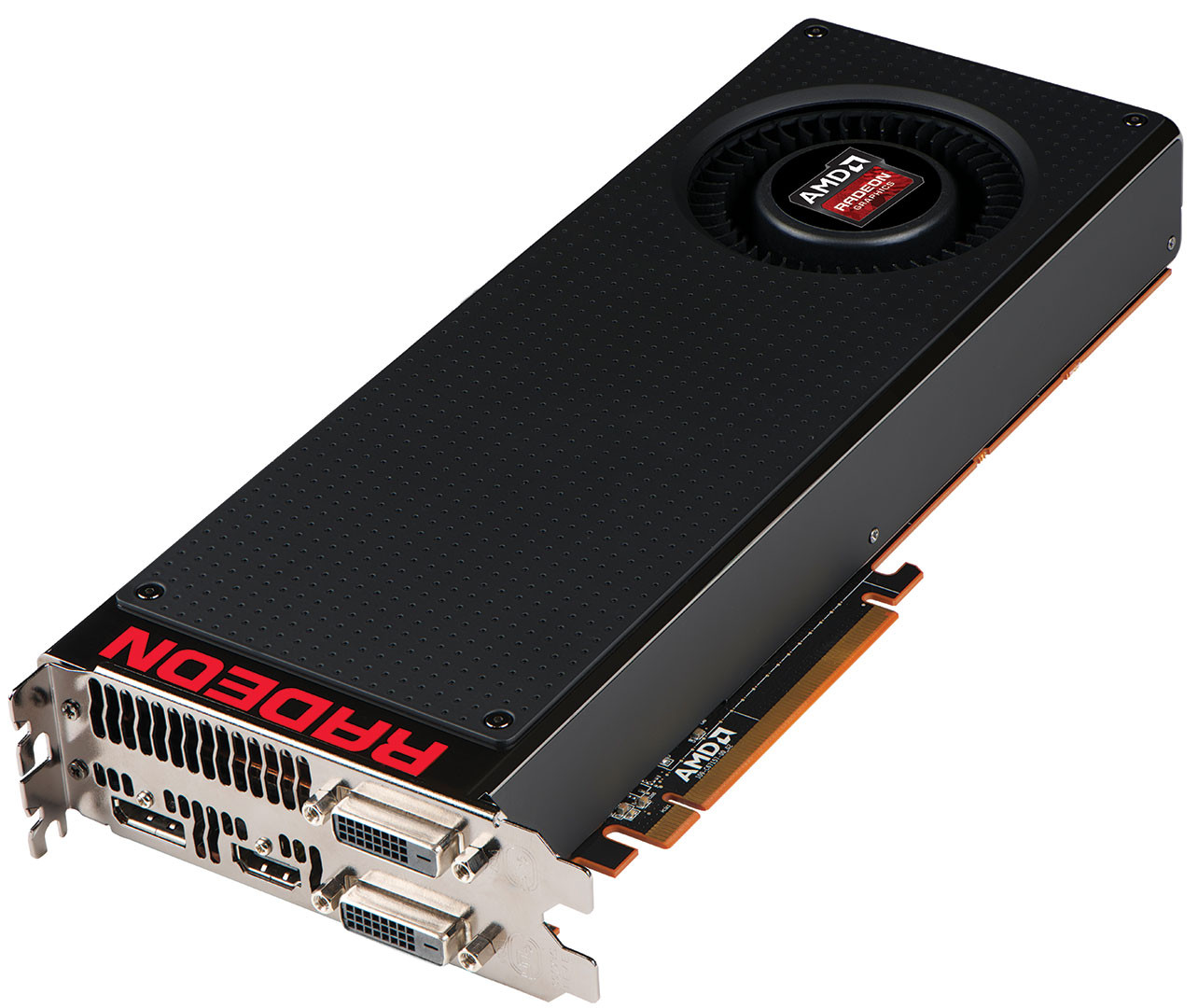
AMD announced the second graphics card based on its swanky new "Fiji" silicon, the Radeon R9 Fury. Positioned between the R9 390X and the R9 Fury X, this card offers higher pixel-crunching muscle than the R9 390X, while giving you cutting-edge 4 GB HBM memory. It can play any game at 2560 x 1440, and at Ultra HD (3840 x 2160), with reasonable eye-candy. The R9 Fury is designed solely for AMD's AIB partners to come up with their own air-cooled products.
AMD carved the R9 Fury out of the Fiji silicon, by enabling 56 of the 64 GCN compute units physically present, yielding 3,584 stream processors. Other specifications include 224 TMUs, 64 ROPs, and 4 GB of memory across a 4096-bit wide HBM interface. The core is clocked at 1000 MHz, and the memory at 500 MHz (512 GB/s). Custom-design boards will offer factory-overclocked speeds. AMD is pricing the R9 Fury at US $549.
Read More ...
ASUS Readies Radeon R9 Fury STRIX
Here are some of the first pictures of ASUS Radeon R9 Fury STRIX, detailed in no less than AMD's own [leaked] press-deck for the R9 Fury. It appears that only two AIB partners are going to launch the R9 Fury for whatever reason. These are the Sapphire, with its R9 Fury Tri-X card, and ASUS, with its R9 Fury STRIX. ASUS' card features the same new-generation triple-fan DirectCU III cooling solution that made its debut with the GTX 980 Ti STRIX, and is featured on the R9 390X STRIX. This cooler is mated to what appears to be the first custom-design PCB for AMD's "Fiji" silicon (Sapphire's card uses the reference AMD PCB carried over from the R9 Fury X). This card is firmly in the 30 cm-ish territory. Its display output configuration includes a DVI connector, apart from three DisplayPorts, and an HDMI connector. The cooler offers 0 dBA idle. AMD claims that the R9 Fury will offer higher performance than the GeForce GTX 980, and is hence expected to be priced in that range.


Read More ...
BenQ Announces XR3501 Curved Cinematic-Widescreen Monitor for Gaming
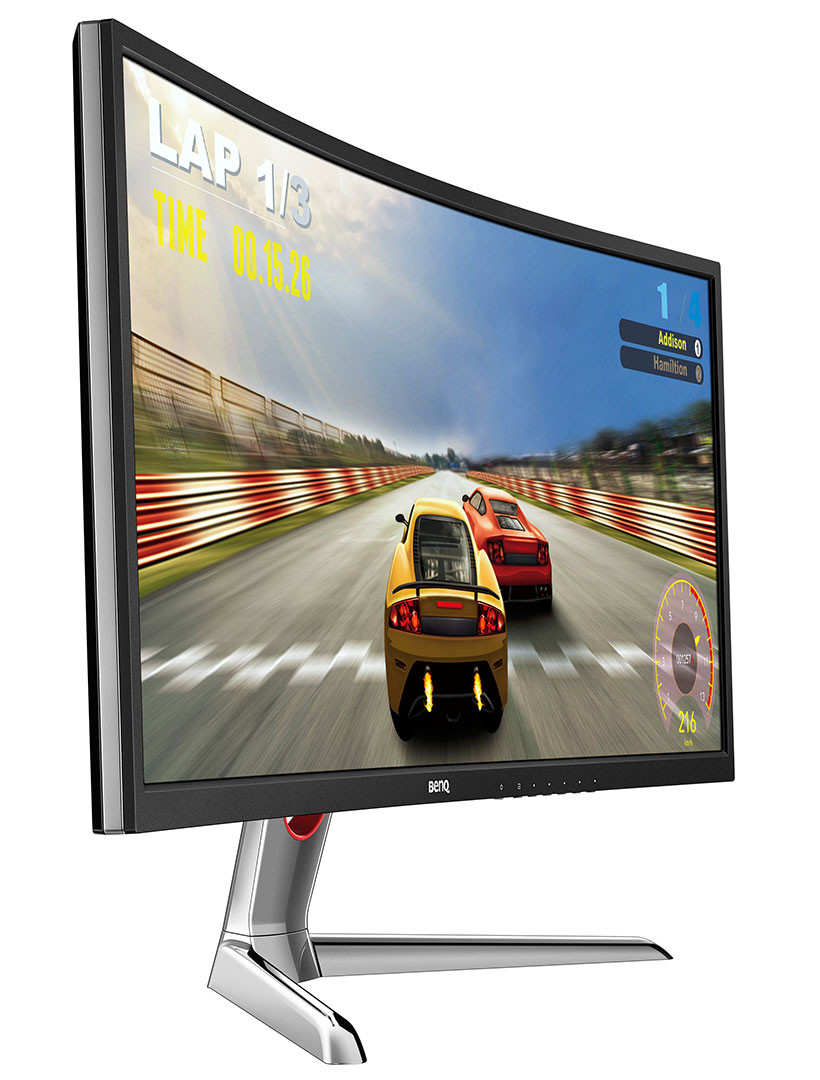
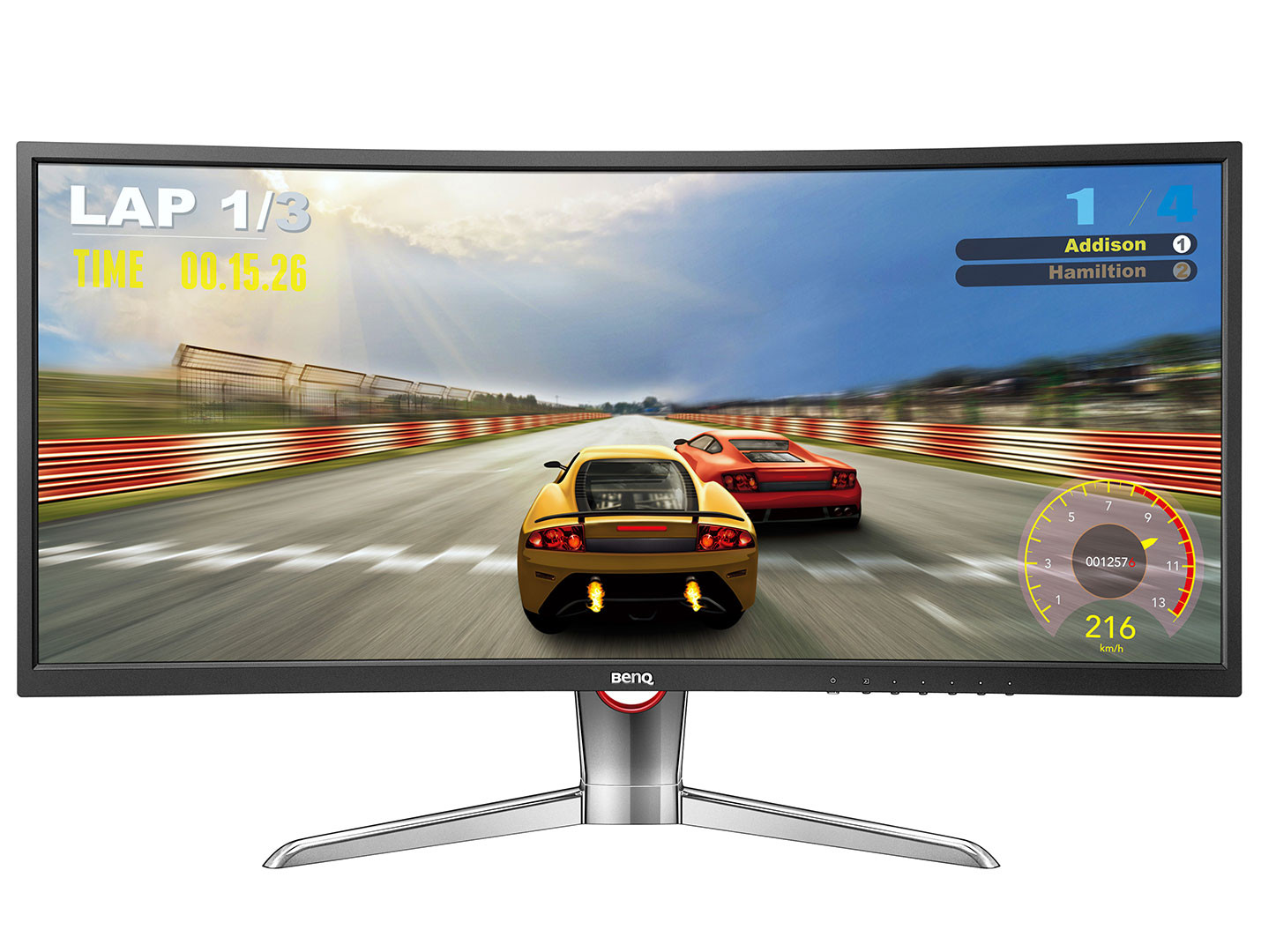
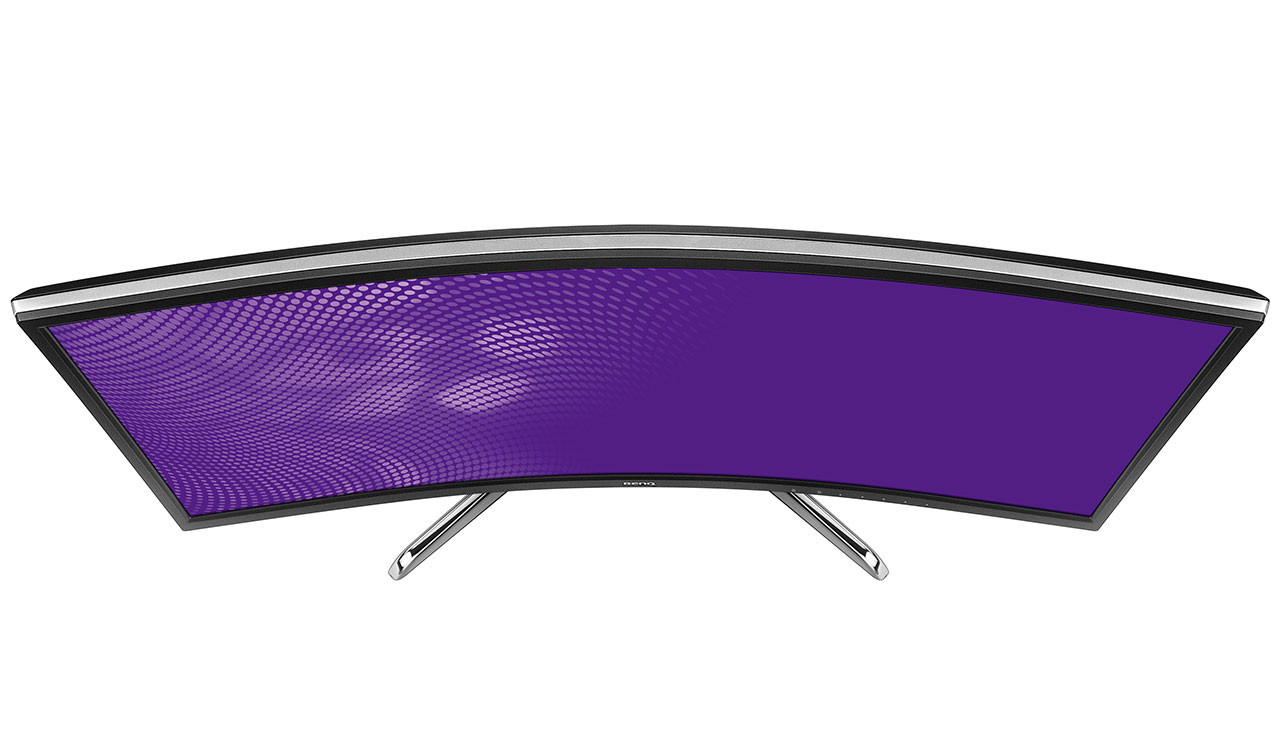
BenQ announced the XR3501, a 35-inch curved, cinematic-widescreen monitor, which it recommends for motorsport gaming. The monitor packs a curved 21:9 aspect-ratio panel, with 2560 x 1080 pixels resolution, 144 Hz refresh-rate, 4 ms response time (GTG), 300 cd/m² maximum brightness, and 2000:1 static contrast ratio. It offers 178°/178° viewing angles. Its racy looking chrome stand suspends the monitor over a hinge, letting you tilt it vertically by 15°. Inputs include DisplayPort 1.2, mini-DisplayPort, two HDMI 1.4, and an analog audio input. Other features include 3 game mode display setting presets. The XR3501 will be generally available some time in August, 2015.


Read More ...
OCZ Announces the Trion 100 Cost-effective SSD Line
OCZ announced the Trion 100, a new lineup of cost-effective SSD for first-time users graduating from HDDs, and for those who want fast read-intensive drives to replace storage HDDs in their systems. Some extremely low price-per-gigabyte figures build their case. The drive features 19 nm TLC NAND flash chips made by Toshiba, driven by a controller also made by Toshiba. This controller features an SLC-caching tech that deals with a small portion of the TLC NAND flash as SLC (by storing just one bit per cell), which has the maximum sequential transfer performance. The controller juggles hot-data in and out of this portion from the rest of the TLC area. Other controller features include DEVSLEEP mode support. In this mode, the drive draws just 6 mW of power. Other essentials such as TRIM and NCQ are also featured.
OCZ Trion 100 comes in four capacities - 120 GB, 240 GB, 480 GB, and 960 GB, priced at US $56.99, $87.99, $184.99, and $369.99, respectively. All four variants offer sequential read speeds of up to 550 MB/s, while the maximum sequential-write speeds are rated at 450 MB/s, 520 MB/s, 530 MB/s, and 530 MB/s, respectively. The maximum 4K random-read performance for the 120 GB variant is rated at 79,000 IOPS; while the other three offer up to 90,000 IOPS. Random-write performance figures for the four variants are 25,000 IOPS, 43,000 IOPS, 54,000 IOPS, and 64,000 IOPS, respectively. The drives are built in the 7 mm-thick 2.5-inch form-factor, with SATA 6 Gb/s interface. The drives ship with OCZ's SSDGuru software that lets you monitor the drive's health, update its firmware, and wipe it. OCZ is offering a 3-year warranty with these drives.

Read our review of the OCZ Trion 100 480GB.
Read More ...
Colorful Releases GeForce GTX 980 Ti iGame Ymir-X Graphics Card
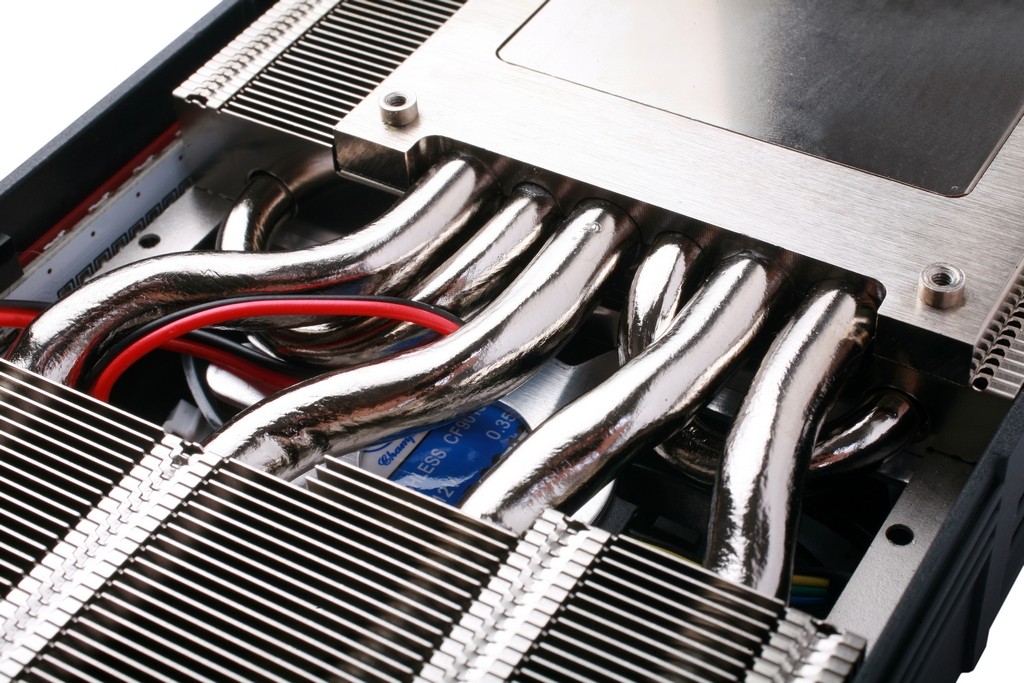
Colorful launched its factory-overclocked GeForce GTX 980 Ti graphics card, the iGame Ymir-X. This custom-design board is positioned between the Ymir-U and the KUDAN, in Colorful's product stack, and offers a reasonably big feature-set. To begin with, the card features a 2-slot thick, triple-fan based air-cooling solution, with twin aluminium fin-stack heatsink, to which heat drawn from the GPU is conducted by six 8 mm-thick nickel-plated copper heat pipes. Its three fans are temperature-activated, and it features a red glowing "Colorful iGame" logo on its top.
Under the hood is a completely custom-design PCB by Colorful, which draws power from a pair of 8-pin PCIe power connectors, and conditions it using a meaty 14-phase VRM, with solid ferrite-core chokes, driver-MOSFETs, and poscap capacitors. The PCB features silver instead of copper for its contact points. Other features include dual-BIOS, and a load-indicating LED array that lights up towards the back of the card. The card offers factory-overclocked speeds of 1127 MHz core, 1216 MHz GPU Boost, and an untouched 7.00 GHz (GDDR5-effective) memory. The package includes a multipurpose toolkit. Colorful didn't announce pricing.



Read More ...
AMD Halts Optimizations for Mantle API
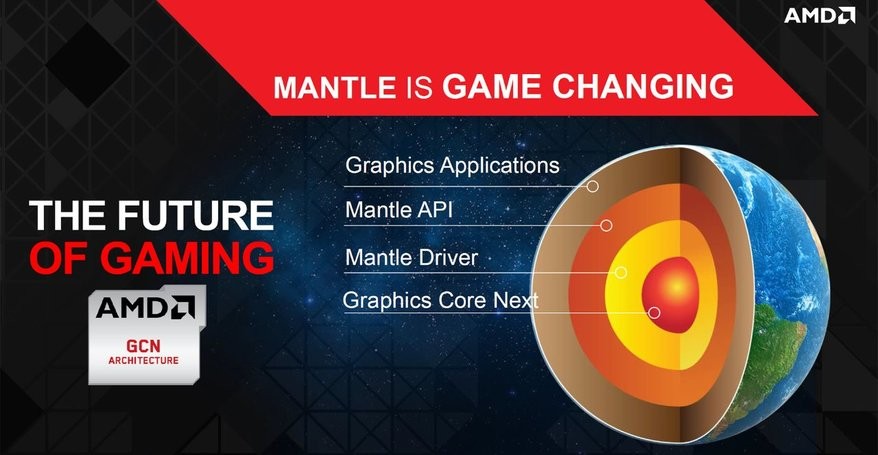
AMD has halted optimizations for its Mantle 3D graphics API, for current and future graphics cards. The cards will retain Mantle API support at the driver-level, to run existing Mantle applications, but will not receive any performance optimizations from AMD. Launched around 2013, Mantle had a short stint with AAA PC games, such as Battlefield 4, Thief, Sniper Elite III, and Star Citizen, offering noticeably higher performance than DirectX 11. The API improves the way the CPU-end of 3D graphics rendering is handled, particularly with today's multi-core/multi-threaded processors, bringing about significant increases to the number of draw-calls that can be parsed by a GPU.
AMD will now focus on DirectX 12 and Vulkan (OpenGL successor by Khronos Group). Why the company effectively killed its own 2-year old and promising 3D API is anyone's guess. We postulate that Mantle could have been used by AMD to steer Microsoft to introduce vital bare-metal optimizations it reserved for the console, to the PC ecosystem with DirectX 12. It appears to have served that purpose, and as if to hold up to its end of a bargain, AMD 'withdrew' Mantle. DirectX 12 will feature a super-efficient command-buffer that scales across any number of CPU cores, and will have huge increases in draw-calls over DirectX 11. The new API makes its official debut with Windows 10, later this month. AMD's Graphics CoreNext 1.1 and 1.2 GPUs support DirectX 12 (feature level 12_0), as do rival NVIDIA's "Maxwell" GPUs. The company will continue to nurture Mantle as an "innovation base" for its upcoming tech, such as LiquidVR.
Read More ...
Available Tags:AMD , Radeon , ASUS , BenQ , Gaming , OCZ , SSD , GeForce , GTX ,


No comments:
Post a Comment