

High-value ASRock Z170 Extreme4 Motherboard Detailed
ASRock is seeking to strike a cost-features sweet-spot around the $130-150 mark with the new Z170 Extreme4 motherboard. ASRock didn't finalize the board's heatsink design, but showed it off at Computex. This ATX form-factor, socket LGA1151 motherboard based on Intel's Z170 Express chipset, features four DDR4 DIMM slots, supporting up to 64 GB of dual-channel DDR4-3400 MHz memory. A 10-phase VRM powers the CPU. The board draws power from a combination of 24-pin ATX and 8-pin EPS connectors; and with this generation, is appears that ASRock has finally got the onboard electrical distribution right; with the board lacking any additional power inputs.
Expansion slots include two PCI-Express 3.0 x16 (x16/NC or x8/x8), one PCI-Express x16 (electrical x4) wired to the PCH, and three PCIe 3.0 x1 slots. Much like the beefier Z170 Extreme7, this board offers three SATA-Express 16 Gb/s ports, but just one M.2 (32 Gb/s) slot; and six SATA 6 Gb/s ports. All other essentials for this generation are covered, with two USB 3.1 ports (one each of Type-C and Type-A), and eight USB 3.0 (four on the rear panel, four by headers); 115 dBA SNR onboard audio with a headphones amp and ground-layer isolation; and a single gigabit Ethernet interface (Intel controller).

Read More ...
ASRock Z170 Extreme7 Motherboard Pictured Up Close
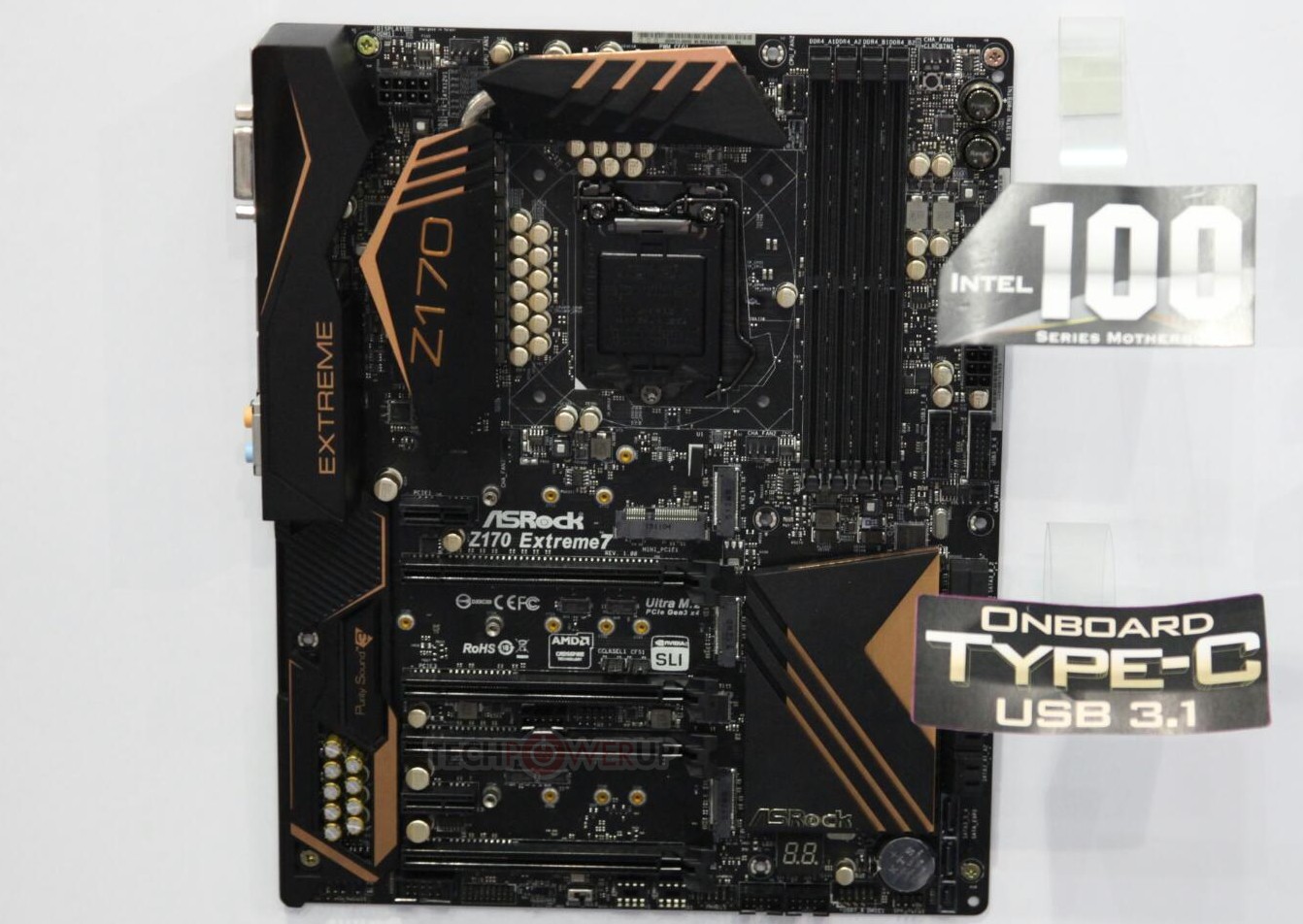
Here's one of the first pictures of ASRock's flagship socket LGA1151 motherboards from its mainline Z170 Extreme series, the Z170 Extreme7. This board offers an exhaustive feature set, and should appeal to gamers and overclockers alike. The board draws power from a combination of 24-pin ATX, 8-pin EPS, with no other auxiliary inputs. The LGA1151 socket is wired to four DDR4 DIMM slots, supporting up to 64 GB of dual-channel DDR4-3200 MHz memory; and three PCI-Express 3.0 x16 slots (x16/NC/NC or x8/x8/NC or x8/x4/x4); the fourth PCIe x16 slot is electrical x4, wired to the PCH. There's also an mPCIe slot; which will seat a WLAN+Bluetooth card on the /ac variant of this board.
The Z170 Extreme7 is the first motherboard to feature three M.2 slots, all three of which are PCIe gen 3.0 x4 (32 Gb/s). Other storage options include three SATA-Express 16 Gb/s, and ten SATA 6 Gb/s ports. The board features two USB 3.1 ports, one each of Type-C and Type-A; and eight USB 3.0 ports, four on the rear panel, four by headers. Display outputs include one each of dual-link DVI, HDMI 2.0 and DisplayPort 1.2. The onboard audio is an ASRock designed Purity Sound III solution, which combines a Realtek ALC1150 CODEC with ground-layer isolation, a headphones amp, and audio-grade capacitors. Other features include dual-BIOS (manual switching), and a high-quality plastic sheath running along its I/O area.
Read More ...
Thermaltake Draws Flack for Ripping Off Other Brands' Products
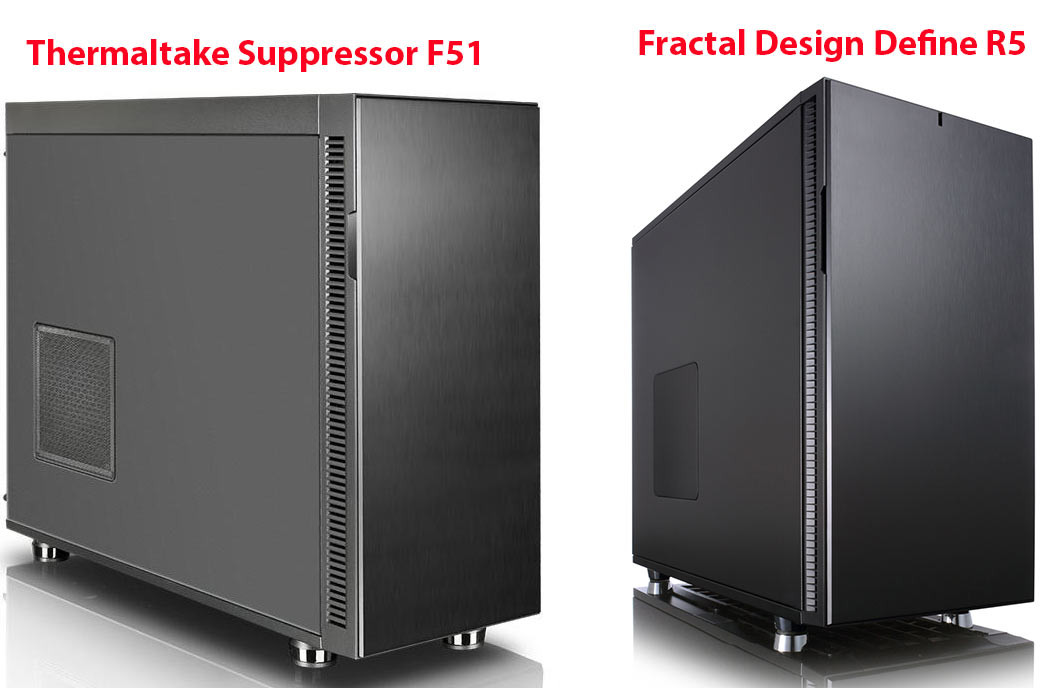
Thermaltake, a brand that has been associated with DIY PC for decades, is accused of blatantly copying designs of other [smaller albeit popular] brands' products, with some of the new products it unveiled at Computex 2015. It begins with the Suppressor F51, a case that was launched just a month before Computex, and was widely reviewed by the media. Our readers almost instantly noticed (and we agree) that the Suppressor F51 bears an uncanny resemblance to the Define R5, a pioneering case by Fractal Design. We could excuse similarities to an extant, but it appears that Thermaltake copied even intricate design details.
Legit Reviews compiled a list of other products Thermaltake copied in a similar way. These include its Riing series fans, which resemble Corsair Air Series 120 mm; the Commander FT fan-controller copies some UI design elements from the NZXT Sentry 3; and the most blatant rip-off being the W2 CPU water block, which looks identical to the Swiftech Apogee XL. Perhaps the biggest victim of this episode is CaseLabs. A very small player in the PC case industry, CaseLabs is critically acclaimed, and loved by PC enthusiasts to come up with some of the most original high-end case designs. The company's Merlin SM8 and TH10 cases are copied by Thermaltake into two of its prototype cases exhibited at Computex. These examples alone are class-action bait that, if pursued, could lead to a trade-ban for Thermaltake in markets such as the US and EU.

Read More ...
NVIDIA Could Capitalize on AMD Graphics CoreNext Not Supporting Direct3D 12_1
AMD's Graphics CoreNext (GCN) architecture does not support Direct3D feature-level 12_1 (DirectX 12.1), according to a ComputerBase.de report. The architecture only supports Direct3D up to feature-level 12_0. Feature-level 12_1 adds three features over 12_0, namely Volume-Tiled Resources, Conservative Rasterization and Rasterizer Ordered Views.
Volume Tiled-resources, is an evolution of tiled-resources (analogous to OpenGL mega-texture), in which the GPU seeks and loads only those portions of a large texture that are relevant to the scene it's rendering, rather than loading the entire texture to the memory. Think of it as a virtual memory system for textures. This greatly reduces video memory usage and bandwidth consumption. Volume tiled-resources is a way of seeking portions of a texture not only along X and Y axes, but adds third dimension. Conservative Rasterization is a means of drawing polygons with additional pixels that make it easier for two polygons to interact with each other in dynamic objects. Raster Ordered Views is a means to optimize raster loads in the order in which they appear in an object. Practical applications include improved shadows.

Read More ...
G.Skill Shows Off Phison-powered Phoenix Blade PCIe Gen 3.0 SSD
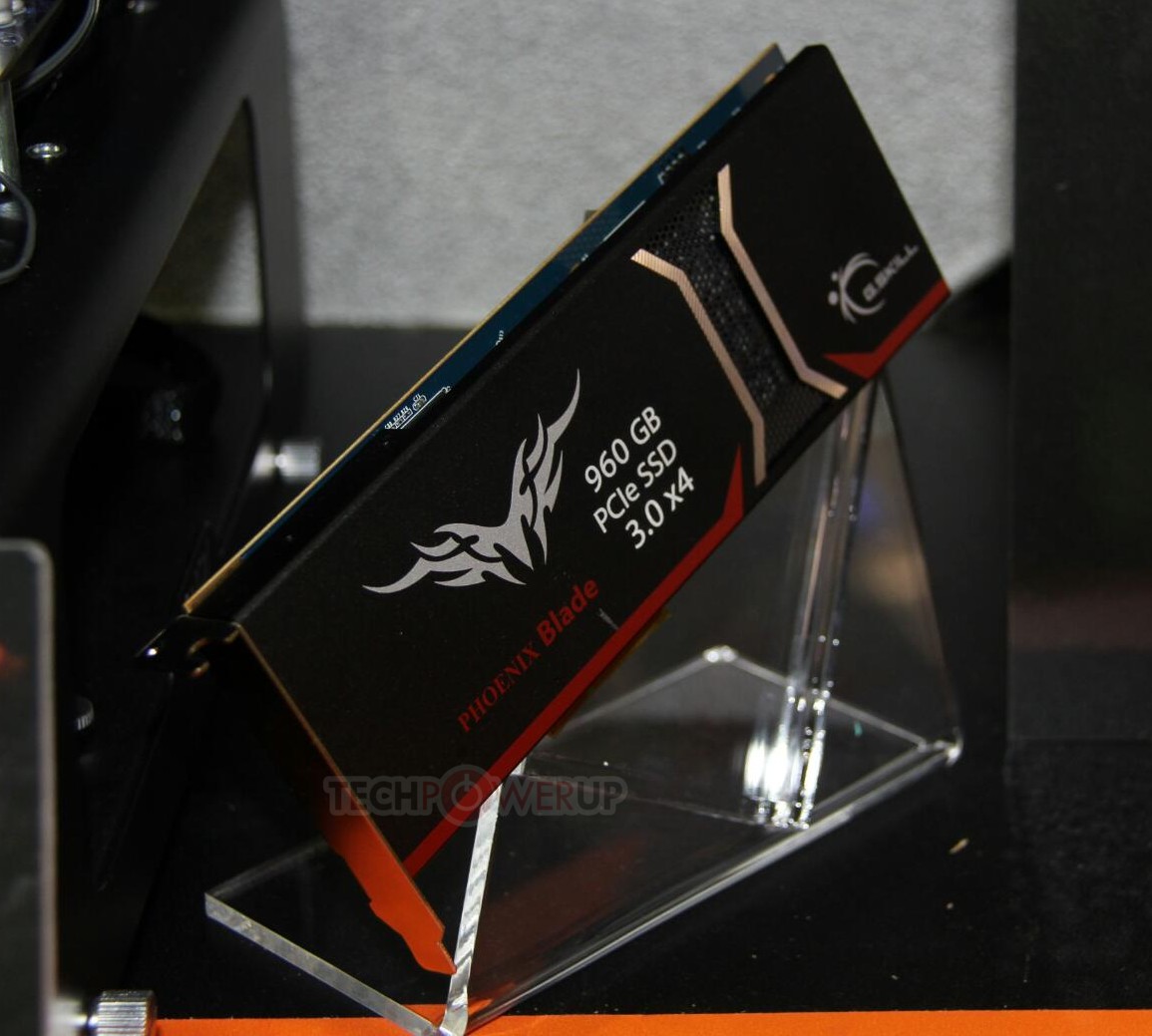
G.Skill unveiled a product that makes it abundantly clear that Phison has established itself as not just a cheap SSD controller maker, but one that can cater to the most choosy PC enthusiasts. The second-generation Phoenix Blade PCIe SSD from G.Skill is driven by a Phison PS5007-E7 processor, which features a native PCI-Express 3.0 x4 host interface, wired to up to 1920 GB of MLC NAND flash. The drive succeeds the PCIe 2.0 x8-based first-generation drive which was launched last October. The drive offers sequential transfer rates of up to 2,600 MB/s reads, with up to 1,400 MB/s writes; and 4K random access performance of 300,000 IOPS reads, with up to 200,000 IOPS writes. The drive is designed to compete with the likes of Intel SSD 750 series, and will be competitively priced.
Read More ...
Giada Unveils Intel "Skylake" Based NUC
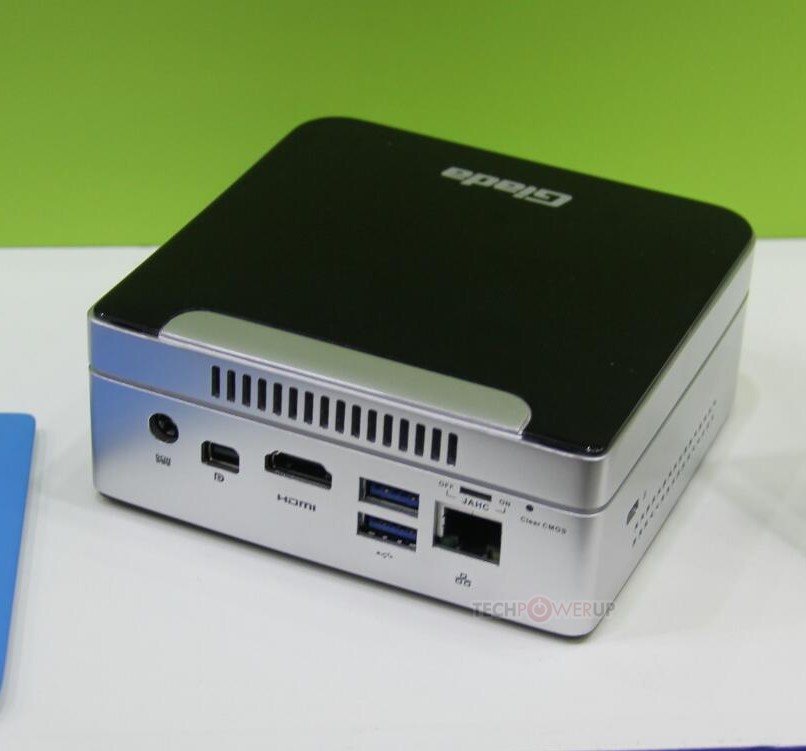
Embedded systems and IPC major Giada is one of the first to openly exhibit a NUC (next unit of computing) compact desktop based on Intel's 6th generation Core "Skylake" processor. The i80 Ultra-Compact Mini PC by Giada features a "Skylake-U" dual-core processor, meant for Ultrabooks and NUCs; and tucks in four USB 3.0 ports, 802.11 ac WLAN, gigabit Ethernet (Intel controller), mini-DisplayPort, and HDMI 2.0, with just enough room for an mSATA SSD; in a compact chassis that measures 116.6 mm x 111 mm x 47.5 mm.


Read More ...
EVGA GeForce GTX 980 Ti Classified Kingpin Edition Pictured
Here are some of the first pictures of EVGA's flagship GeForce GTX 980 Ti based graphics card, the Classified Kingpin Edition. Designed and tuned by the legendary overclocker himself, the card will be the fastest GTX 980 Ti offering out of the box, by EVGA. It begins with a large PCB (though not as tall as the one on ASUS Strix), which draws power from a combination of one 6-pin and two 8-pin PCIe power connectors; conditioning it for the GPU using a 15-phase VRM, capable of an obscene amount of current at 600A, letting you stabilize your overclock.
The cooling solution is a copper mine, with a large all-copper base, from which 8 mm-thick copper heat pipes convey heat to a copper-fin array; which is ventilated by a pair of temperature-activated 100 mm spinners. The company didn't disclose clock speeds, but is hopeful of selling the fastest GTX 980 Ti in the market, which means its clock speeds could be in the same ball park as ZOTAC's GTX 980 Ti AMP Extreme.


Read More ...
PowerColor Shows Off its Devil Hybrid Cooling Solution
PowerColor showed off its latest custom graphics card cooling solution, the Devil Hybrid. This particular sample was shown off on a Radeon R9 290X-based prototype, which will likely never make it to the market, because AMD AIB partners cannot unveil "Fiji" based parts just yet; but is expected to feature on AMD's upcoming graphics cards. The Devil Hybrid is a combination of an AIO liquid-based GPU block, and a conventional temperature-activated single fan heatsink for the VRM. The GPU block is plumbed to a 120 mm radiator, with a PWM spinner included. Given that such a setup could tame the R9 295X2, it could prove adequate for a single GPU.


Read More ...
Available Tags:ASRock , Thermaltake , Other , NVIDIA , AMD , SSD , Intel , EVGA , GeForce , GTX ,


No comments:
Post a Comment