

AMD Also Announces Radeon R7 300 and R9 300 Series GPUs
In all the buzz surrounding the five products based on its Fiji silicon, AMD also announced five other mid-thru-performance segment graphics cards, the Radeon R7 360, the Radeon R7 370, the Radeon R9 380, the Radeon R9 390, and Radeon R9 390X. Aimed at competitive online MOBA gaming the Radeon R7 360 is good enough to play MOBAs such as "League of Legends," at 1080p, and most other modern games at 900p and 720p.
Based on the "Bonaire" silicon, the Radeon R7 360 features 768 stream processors, 48 TMUs, 16 ROPs, and a 128-bit wide GDDR5 memory interface, holding 2 GB of memory. The core is clocked at 1050 MHz, and the memory at 6.50 GHz (GDDR5-effective), translating into 104 GB/s of memory bandwidth. The card draws power from a single 6-pin PCIe power connector, and has a typical board power rating of 100W.
The Radeon R7 370 is designed for MOBA, FPS, and MMORPGs at 1080p resolution. It is expected to feature 1,024 stream processors, 64 TMUs, 32 ROPs, and a 256-bit wide GDDR5 memory interface, holding 2 GB or 4 GB of memory. The core is clocked at 975 MHz, and the memory at 5.40 GHz (GDDR5-effective), belting out 179 GB/s of memory bandwidth. AMD has given this chip some energy optimizations, which lends it a typical board power of just 110W. The card draws power from a single 6-pin power connector.
Read More ...
Radeon Fury X Outperforms GeForce GTX Titan X, Fury to GTX 980 Ti: 3DMark Bench
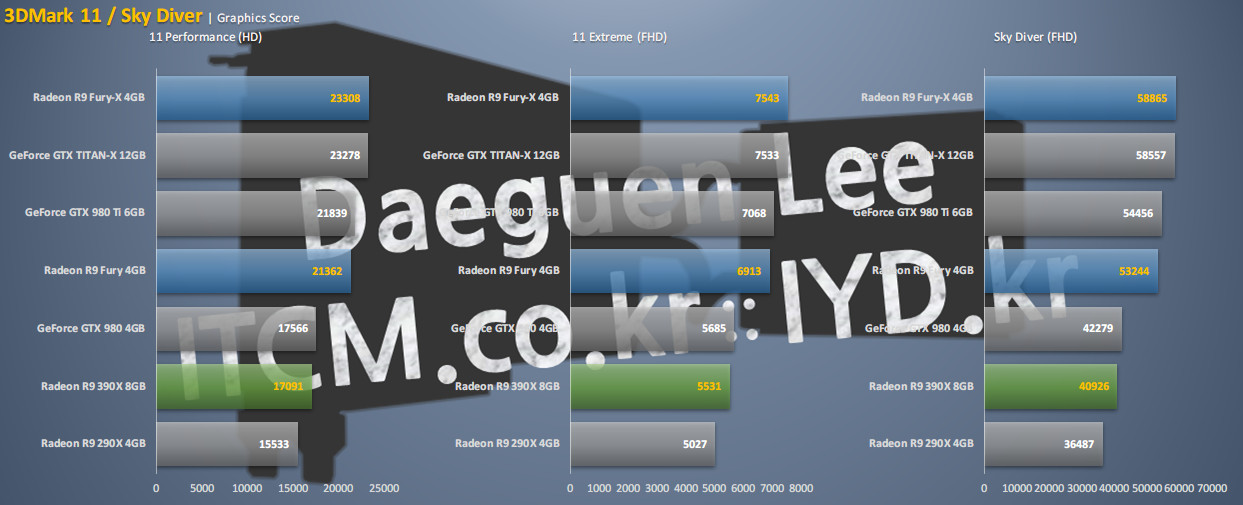
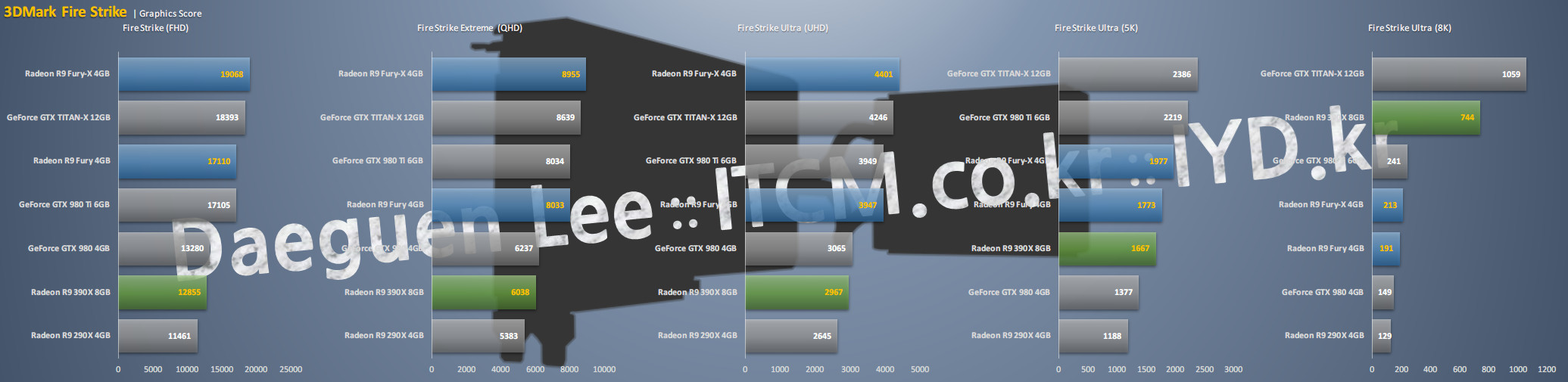
AMD's upcoming $650 Radeon R9 Fury X could have what it takes to beat NVIDIA's $999 GeForce GTX Titan X, while the $550 Radeon Fury (non-X) performs close to the $650 GeForce GTX 980 Ti, according to leaked 3DMark 11 and 3DMark (2013) benches by Korean tech publication ITCM.co.kr. The benches see the R9 Fury X score higher than the GTX Titan X in all three tests, while the R9 Fury is almost as fast as the GTX 980 Ti. The cards maintain their winning streak over NVIDIA even with memory-intensive tests such as 3DMark Fire Strike Ultra (4K), but buckle with 5K. These two cards, which are bound for the market within the next 30 days, were tested alongside the R9 390X, which is not too far behind the GTX 980, in the same graphs. The R9 Nano, however, isn't circulated among industry partners, yet. It could still launch in Summer 2015.
Read More ...
AMD Dual-GPU "Fiji" Graphics Card PCB Pictured
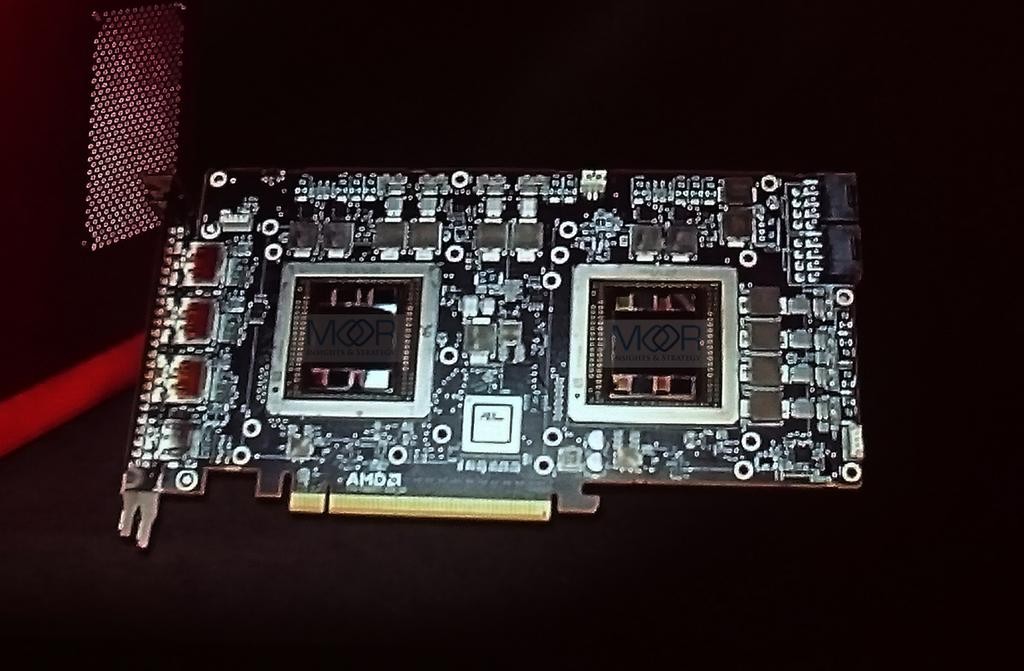
Here is the first reasonably detailed PCB shot of the dual-GPU graphics card based on "Fiji," which AMD announced at its E3 conference. The card is an inch taller than standard, but surprisingly short, for a dual-GPU board. This is thanks to the memory being relocated to the GPU package. All that's left on the PCB, besides the two GPUs, are the PLX PEX8747 PCI-Express gen 3.0 x48 bridge chip, and the 12-phase VRM, which draws power from a pair of 8-pin PCIe power connectors. Display outputs include one HDMI 2.0, and three DisplayPort 1.2a connectors.
AMD announced significant energy efficiency gains for "Fiji" over "Hawaii," and so this card could have a much lower than expected power-draw. The reference board could come with AIO liquid-cooling, much like the single-GPU Radeon R9 Fury X, some AIBs could even release cards with air-cooling solutions. The yet unnamed dual-GPU "Fiji" based graphics card could be available in Autumn 2015.
Read More ...
AMD Announces Five New Products Based on the Fiji Silicon
AMD announced no less than five new products based on its swanky new 28 nm "Fiji" silicon, the company's most powerful GPU, packing over 8 TFLOP/s of raw compute power, and the first GPU to feature stacked HBM (high-bandwidth memory), moved to the GPU package, and communicating with the GPU die over a special silicon substrate called the interposer. The "Fiji" silicon will enable AMD to target NVIDIA's entire high-end GPU lineup.
The first product is Project Quantum. This is a console-sized SFF gaming desktop designed by AMD, which will be sold by the company's add-in board partners. Despite its diminutive size, the desktop packs two "Fiji" GPUs in AMD CrossFireX, and an AMD 64-bit x86 machine driving the rest. All main components (the CPU, the chipset, and the two GPUs), are liquid-cooled. This desktop will enable smooth 4K/5K gaming in the living room.

Read More ...
AMD Unveils Fiji Based Dual-GPU Graphics Card
AMD unveiled the fastest graphics card money will be able to buy, a dual-GPU graphics card based on its swanky new "Fiji" silicon. This card will feature 8 GB of memory, and packs two "Fiji" cores in an internal multi-GPU configuration. The card will offer smooth 5K (four times 1440p resolution) gaming. Fiji introduces 50% improvements in performance-per-Watt over the previous-generation "Hawaii" silicon, while staying at 28 nm.
Read More ...
AMD Unveils the Radeon R9 Fury X, Ready for 5K Gaming
AMD CEO Lisa Su announced the company's latest super high-end graphics card, the Radeon R9 Fury X. The company claims this graphics card will be your gateway to 5K (that's four times 1440p) gaming. The card leverages AMD's new "Fiji" silicon, featuring stacked HBM (high-bandwidth memory), which offers significant performance and performance-per-Watt improvements over the previous generation. The company also announced the Radeon R9 Fury, the company's second-best card based on "Fiji," and the R9 Nano, the third-best product. The R9 Nano is about the size of an ASUS DirectCU Mini, is air-cooled, with performance significantly higher than the R9 290X, and half its power draw.
The Radeon R9 Fury X could be priced around the $650 mark, and will be available in mid-July. The Radeon R9 Fury, on the other hand, could be priced around the $550 mark, and come out a little sooner. The R9 Nano is the dark horse here, and could be AMD's most important product among the three, since it could go head on against the GeForce GTX 970 in both pricing and performance. Its biggest feature over the GTX 970 is 4096 MB of usable memory at half-a-terabyte per second speeds. The R9 Fury could seat itself in an interesting price-performance position between the GTX 980 and GTX 980 Ti; while the R9 Fury X could go head on against the GTX 980 Ti, and GTX Titan X. There's a dual-GPU product based on the "Fiji" silicon, which AMD is trying to launch very soon. There's nothing from NVIDIA's current product lineup that can match that.
Read More ...
AMD Announces Project Quantum
AMD announced Project Quantum, what it claims to be the most powerful small form-factor gaming PC. About the size of a gaming console, and designed entirely by AMD, using AMD components, this machine packs two AMD "Fiji" graphics processors, with 8 GB of graphics memory, set in CrossFire, and an AMD 64-bit x86 machine. All hot components are liquid-cooled. The desktop will be marketed by AMD AIB partners, and will offer 60 FPS on any game at 4K resolution. Leveraging Windows 10 and DirectX 12, the machine will ship out a little later this year. More details soon.

Read More ...
(PR) JEDEC to Update Solid State Drive Standard
JEDEC Solid State Technology Association, the global leader in the development of standards for the microelectronics industry, today announced that its JC-64.8 Subcommittee for Solid State Drives is currently engaged in an effort to update the JESD218 standard for Solid State Drive Requirements and Endurance Test Method. Originally published in September 2010 and revised in February 2011, the new update to JESD218 will primarily address improvements in test methodologies to better reflect product expectations, reduce testing options to remove unused methods, and add clarifications to improve the readability and understanding of test methods and artifacts caused by accelerated testing. Additional topics are discussed when brought up by task group participants. JEDEC strongly encourages all interested parties to contact the JEDEC office at 703-907-7560 to become involved with SSD standards development.
JESD218 Solid-State Drive Requirements and Endurance Test Method defines the conditions of use and corresponding endurance verification requirements for both Client and Enterprise application classes, as well as providing a standard endurance rating. Workloads are described in a separate, related document: JESD219 Solid-State Drive Endurance Workloads. Both JESD218 and JESD219 are available for free download from the JEDEC website.
Read More ...
Inno3D Announces GeForce GTX 980 Ti iChill X4 Ultra
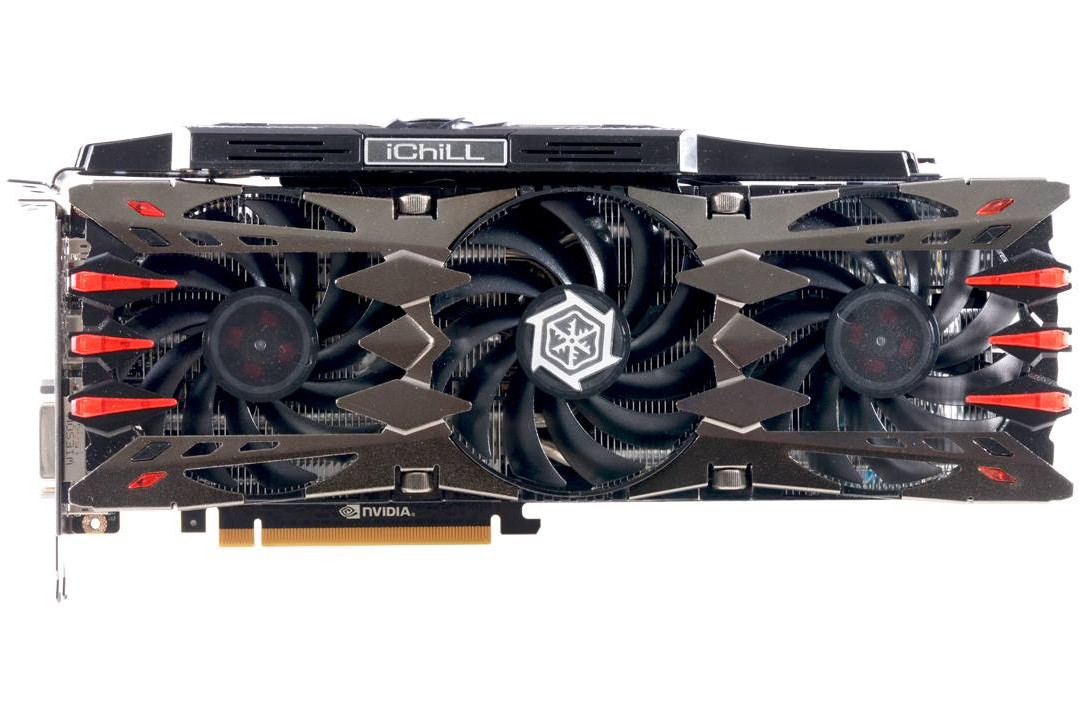
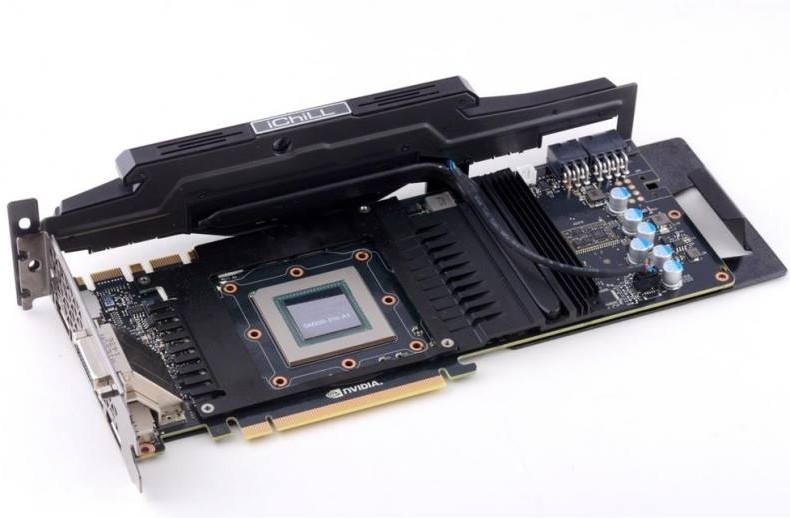
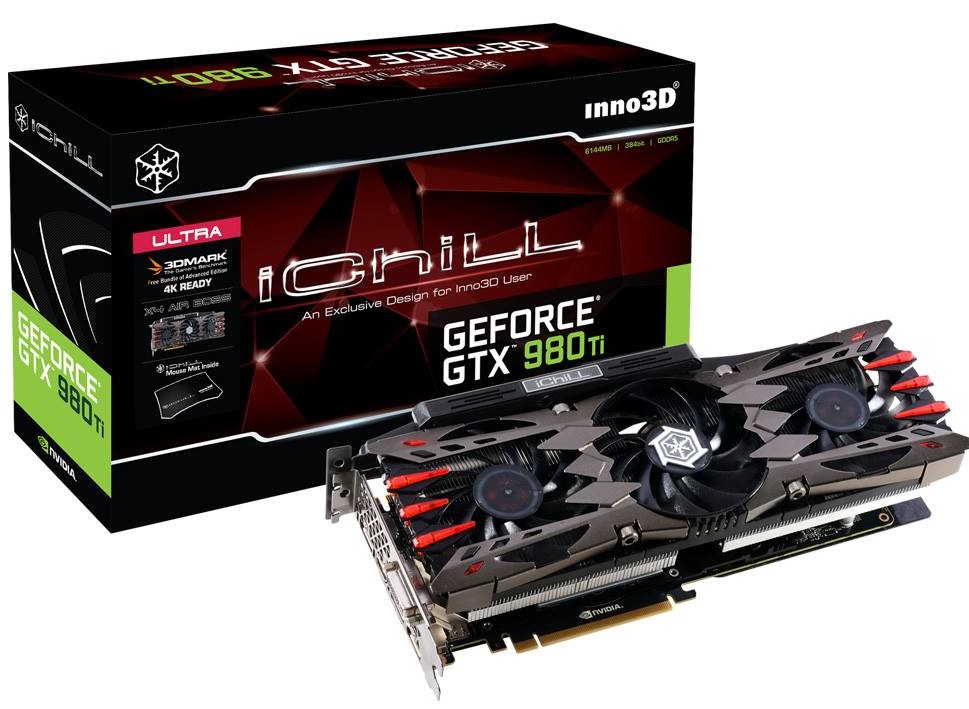
Inno3D announced its flagship GeForce GTX 980 Ti based graphics card, the GTX 980 Ti iChill X4 Ultra. The card derives its name from a gargantuan custom air cooling solution by the company, which features four fans - three cooling the main GPU heatsink; and one along the card's top, cooling the memory and VRM. The main heatsink, a little over 2 slots thick, features a meaty aluminium fin-stack heatsink, with two aluminium fin-stacks projecting from a central base. This heatsink is ventilated by three 100 mm fans, suspended on a metal shroud, which is easily detachable by turning a few thumb-screws. The second heatsink draws heat from the heatspreader covering the memory and VRM, using a flat heat pipe, dissipating it under air-flow by a 60 mm spinner.
The card offers factory-overclocked speeds of 1152 MHz core, 1241 MHz GPU Boost, and 7200 MHz (GDDR5-effective) memory; against reference speeds of 1000 MHz core, 1076 MHz GPU Boost, and 7012 MHz memory. The underlying PCB is NVIDIA reference design, featuring an 8-phase VRM, and 6-pin + 8-pin PCIe power connectors. Display outputs include one each of HDMI 2.0, dual-link DVI, and three DisplayPort 1.2 connectors. Expect the card to feature a 10% pricing premium over reference. Based on the 28 nm GM200 silicon, the GTX 980 Ti offers 2,816 CUDA cores, 176 TMUs, 96 ROPs, and a 384-bit wide GDDR5 memory interface, holding 6 GB of memory. The card bundles a medium-sized mousepad with iChill branding, and a key to 3DMark (2013) Advanced.

Read More ...
ASUS Compact DirectCU 3 Cooling Solution Pictured, Debuts on GeForce GTX 960
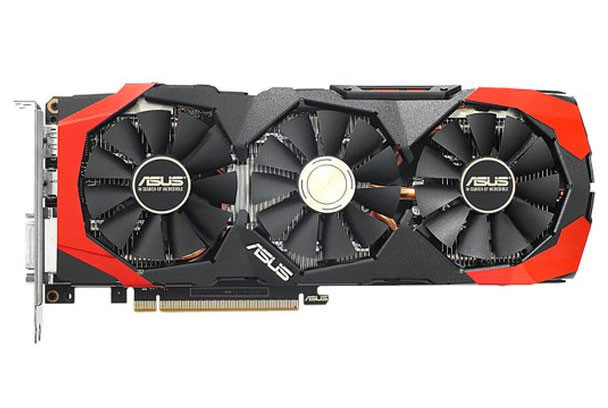
ASUS will be designing its DirectCU 3 cooling solution in different sizes. We've seen the super-tall, almost-triple slot version, strapped to a GeForce GTX 980 Ti, at Computex. Here is its more tame, two-slot, normal-height sibling, which ASUS could feature on several of its performance segment products, such as the GTX 960, GTX 970, GTX 980, and perhaps even the upcoming Radeon R7 370 and R9 380. The card pictured below is a GTX 960.
The DirectCU 3 cooler appears to feature three heat dissipating components, a central heatsink that draws heat from the GPU, with two aluminium fin stacks on either sides, suspended along three 8 mm-thick copper heat pipes, which make direct contact with the GPU. A trio of temperature-activated 80 mm spinners ventilate it. This particular card offers factory-overclocked speeds of 1228 MHz core, 1291 MHz GPU Boost, and 7.00 GHz memory (vs. 1127 MHz core and 1178 MHz GPU Boost reference). The card started selling in China, there's no word on a wider launch. The cooler itself, though, will feature on a boat-load of upcoming products from ASUS.

Read More ...
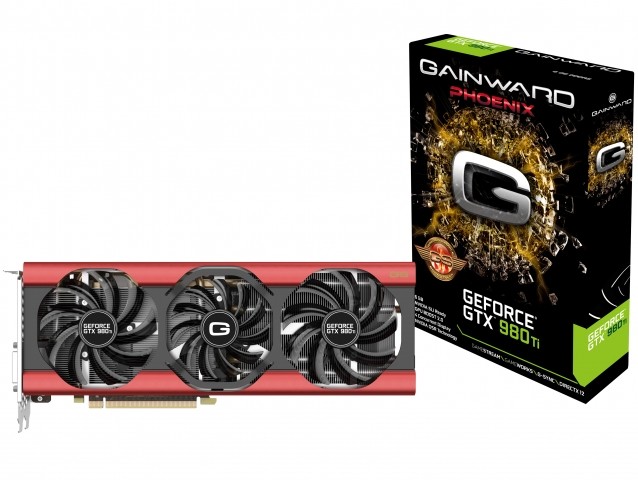
(PR) Gainward Announces GeForce GTX 980 Ti Phoenix GS Graphics Card
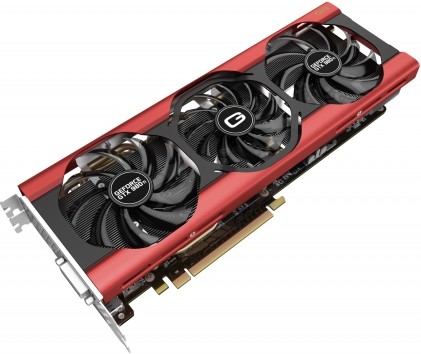
As the leading brand in enthusiastic graphics market, Gainward proudly presents the brand-new GeForce GTX graphics - base on the next generation MAXWELL architecture, GeForce GTX 980 Ti Phoenix "Golden Sample". Gainward GeForce GTX 980 Ti Phoenix "Golden Sample" is the most advanced graphics cards, is accelerated by the groundbreaking NVIDIA Maxwell architecture to deliver an unbeatable 4K and virtual reality experience. With 2816 NVIDIA CUDA cores running at 1.152GHz base clock (1.241GHz boost clock) and 6 GB 384 bits memory with 3500MHz memory clock speed, it has the horsepower to drive whatever comes next. It offers Gainward GeForce GTX 980 Ti Phoenix "Golden Sample" up to 11%+ more performance than reference board.
A brand new cooler design for Gainward GeForce GTX 980 Ti Phoenix "Golden Sample" is to offer hard core gamers an excellent thermal solution for high end graphics. Its triple fans and very low thermal resistance for GPU and PWM components provides that Gainward GeForce GTX 980 Ti Phoenix "Golden Sample" can run very stable under heavy loading environment and still have room for extra over-clocking. With "Zero RPM fan design", all three fans can be stop until the GPU temperature raises to 60°C or above. It doesn't introduce any noise while light loading operation.


Read More ...
(PR) Super Talent Announces USB 3.0 DRAM Disk
Super Talent Technology, a leading manufacturer of NAND flash storage solutions, announces the USB 3.0 Express Dram Disk. With sequential read scores of up to 4041 MB/s and sequential write scores of up to 5388 MB/s, the USB 3.0 Express Dram Disk is a speed demon of a drive housed in a sleek aluminum casing. The USB 3.0 Express Dram Disk and its unique built-in software utilize your computer's available RAM to transfer files at an amazingly quick rate. Software is included.
This USB also transfers files while you are using the program, cutting down on wait time later. A productivity gem for creative professionals whose daily regime relies upon constantly moving files on-the-go-cutting their valued time in half.

Read More ...
Available Tags:AMD , Radeon , GeForce , GTX , GTX , Dual-GPU , Gaming , ASUS , USB 3.0 , USB ,


No comments:
Post a Comment