

The SilverStone Fortress FT05 Case Review
In this review, we are having a look at the SilverStone Fortress FT05. It is an atypical Midi-ATX case, mixing the rotated motherboard tray design of the Raven series with the elegance of the Fortress series. We are going to examine the fruits of this joining in this review.
Read More ...
4K Displays for HTPCs: A Consumer Checklist
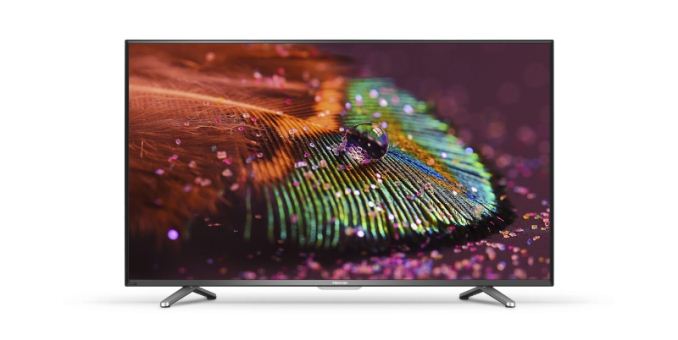
Picture quality is of paramount importance, but it is usually not a known aspect unless one reads the after-launch reviews. However, there are some basic specifications that can help narrow down the search. Availability of 4Kp60, HDMI 2.0, HDCP 2.2 and ARC (audio return channel) support are readily available in the spec sheets of the displays coming into the market nowadays. In this piece, we will cover a few 'behind-the-scene' aspects and how the recently launched Hisense 50H7GB fares with our checklist.
4Kp60 RGB 4:4:4 Support
Videos meant for consumer consumption have always been encoded in 4:2:0 format with chroma sub-sampling. Frames encoded / sent to the display in this format are fine for viewing purposes, since the effects of the sub-sampling are not very evident in rapidly changing images. Unfortunately, HTPCs are multi-purpose devices. Even though video decode and display is probably the majority of its workload, it can be used for tasks such as web browsing also. Driving mostly-static desktop frames to the display in 4:2:0 makes for a bad user experience. For a detailed explanation, I strongly suggest that readers peruse this AVSForum thread. Usually, most displays supporting 4Kp60 RGB 4:4:4 also support the other variants - 4Kp60 4:2:0 at 8b, 10b and 12b, as well as 4Kp60 4:2:2 at 8b and 10b.
Ensure that any display you plan to purchase for a 4K HTPC supports 4Kp60 RGB 4:4:4 input in the HDMI 2.0 / HDCP 2.2 sink.
HDR Capability
Ultra HD Blu-rays are expected to come with high-dynamic range content. HDMI 2.0a was recently ratified with support for HDR metadata flags. Most displays can get firmware upgrades if they are already HDMI 2.0 certified. However, that might not always be the case, and the consumer needs to pay particular attention to this aspect.
If you are planning to watch 4K Blu-rays on your display, ensure that it supports HDR, both from the HDMI sink perspective, as well as the display perspective.
Panel Bit-Depth
Display panels usually come in 8b, 10b or 12b varieties. This bit-depth refers to the number of bits used to encode each sub-pixel (color channel) that gets displayed. Very cheap panels even adopt 6b panels. Note that the input coming via, say, HDMI has a minimum bit-depth of 8b per sample. Lower bit-depth panels adopt dithering to represent higher bit-depth content. When done in a temporal manner (i.e, over time for successive frames), it is called FRC (frame rate control). Suffice to say that FRC is not something you would want in your display, since it doesn't accurately reflect what is being transferred over the display link.
Higher panel bit-depth is also useful for representing a wider color gamut without banding artifacts. With the adoption of the larger BT.2020 color space for UHD, it is good to have a panel with higher bit-depth compared to what one had for Full HD (the smaller BT.709 color space).
In addition, 4K videos in HEVC for consumer delivery are already being encoded with the Main10 profile (4:2:0, 10b per sample). In order to accurately display such videos, it is essential that the panel bit-depth matches or exceeds 10b. Another aspect of HDMI 2.0a is HDR (high dynamic range), which we briefly covered in the earlier sub-section. This needs 10b at the minimum for each sub-pixel.
All things considered, ensure that any display you plan to purchase for a 4K HTPC has a 10b (or higher) panel. (Update: One of the readers had mailed in asking me to clarify this: I mean a '10-bit panel', not 'panel with
transmitter than can receive 10-bit input signals' - in case that wasn't clear)
Color accuracy, high refresh rate and low input lag are other aspects that need to be paid attention if one plans to edit photos and/or play games on the display. In addition, it is also important to have the ability to turn off motion interpolation to avoid soap opera effects in movies and certain other videos. The higher the coverage of the BT.2020 color gamut, the better. However, these are aspects that need to checked in the display reviews.
Hisense 50H7GB 4K TV
This article was triggered in part by the launch of the Hisense 50H7GB 50" 4K TV last week. In addition to 4Kp60 support with HDMI 2.0 and HDCP 2.2, the TV also supports 1080p120 with real 120 Hz refresh rates and carries a "Netflix Recommended TV" designation. All of this comes for just $598 with Wal-Mart as the main distributor. Surprisingly, the TV also carries a 4-year in-home service warranty. Most of the technical details not available in the press release have been gathered by HDGuru. In addition, there is also a YouTube video review with the TV in action. The TV is powered by the MediaTek 5657 quad-core SoC.
Piqued by the price to specifications balance, we contacted Hisense and got some more information that is summarized in the table below. All the components (panel, TCON, BLU and enclosure) other than the open cell glass are manufactured by Hisense.
| Hisense 50H7GB 4K Display for HTPCs - Checklist |
|
| Aspect | Notes |
| HDMI 2.0 with HDCP 2.2 (4Kp60) | On HDMI3 and HDMI4 |
| HDMI 1.4 with HDCP 2.0 (4Kp30) | On HDMI1 and HDMI2 |
| ARC (Audio Return Channel) | On HDMI2 |
| Mobile High-definition Link (MHL) | On HDMI1 (MHL v2.0) |
| 4Kp60 HDMI 2.0 Supported Input Formats |
|
| HDMI 2.0a (HDR Metadata Support) | Not Upgradable |
| Input Frame Rate Support | Up to 120 fps @ 1080p |
| Display Refresh Rate Support | Up to 480 Hz with High Ultra Smooth Motion |
| Panel Bit-Depth | ? (8b likely) |
| Launch Price | $600 |
Based on Hisense's response, it looks like the 50H7GB might not tick all the boxes for the perfect HTPC 4K display (given the lack of HDR capabilities). But, given the price, it is going to be hard to complain. On the other hand, support for 4Kp60 RGB 4:4:4 makes it an interesting display. At 50", it might be hard to justify calling it a monitor, but it seems to be a good candidate for connecting to computers in general (particularly for an 'entry-level' 4K HTPC setup).
Read More ...
Steam Machines, Steam Link, & Steam Controller Launching November 10th
Steam Controller

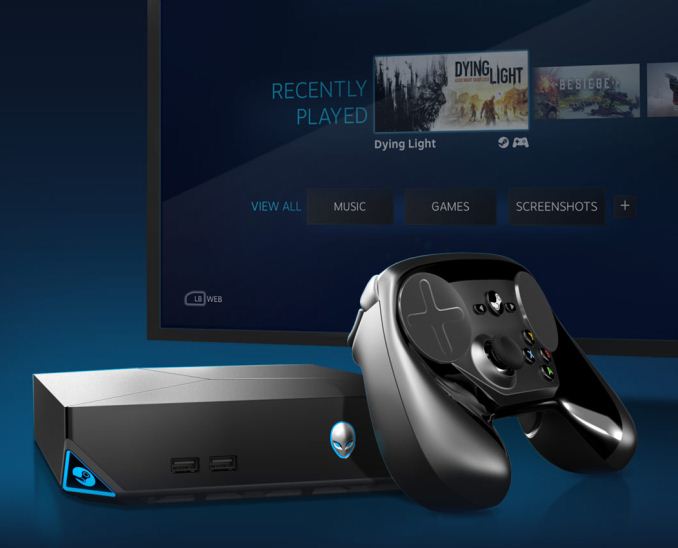
First and foremost, let’s start with the Steam Controller. The final version of Valve’s controller is pretty much identical to what we saw at GDC 2015, featuring what has become the controller’s signature touchpads, along with an analog stick, motion controls, haptics (vibration), and what Valve is calling dual-stage triggers, all communicating with host systems over Bluetooth. Though ultimately lacking the touchscreens of Valve’s original design, the final controller retains the touchpads and the same goals Valve had held to since the start: making more traditional mouse-driven PC games playable on the couch with a controller. Valve has put up a short promotional video showing it in action, and it will be interesting to see if it works as well in real life as Valve would like it to. When not part of a Steam Machine bundle, Valve will be selling the Steam Controller stand-alone for $49.
Steam Machines

Next up, this brings us to Valve’s Steam Machines initiative. With last year’s delays we’ve seen a few of the initial Steam Machines reissued as Windows machines in the interim, but now with Valve finally ready to ship on their end, the full collection of Machines will be available. In terms of design all of these Machines are all small form factor designs intended for the living room, with the actual designs being a mix of existing SFF designs – such as the Gigabyte BRIX Pro or the Falcon Northwest Tiki – while other designs being brand new entirely.


Meanwhile as far as performance and costs go, the initial wave of Machines run the gauntlet from low-powered, console-like computers to high-end machines that are meant to take a stab at 4K rendering. The cheapest machines start at $449, such as the Alienware in its low-end, Core-i3 powered configuration, and also the iBuyPower SBX. Meanwhile at the middle of the pack are machines like the Zotac SN970 at $999, and finally at the high-end the sky’s the limit. With many of these designs accepting desktop class CPUs and video cards, the price tag on the top configurations can go into the thousands of dollars, with Falcon Northwest quoting $4999 for what will be their top-end Tiki.
As one might expect, all of the Steam Machines are shipping with one Steam Controller, with additional controllers available from Valve for $49. Meanwhile the very first Steam Machines from Alienware and Syber are already available for pre-order from GameStop and Syber respectively, while the rest are slated to be available in November. The pre-order machines are said to be a “limited quantity” (though we don’t know just how limited), and will be shipping on October 16th, for gamers who are willing to order the machines before the reviews and formal launch. Otherwise we’re expecting to see everything else go out around November 10th.
Steam Link

Finally, we have the Steam Link, Valve’s in-home streaming receiver for Steam. Intended to be used with Steam’s existing, built-in streaming technology, the Link is designed to allow playing Steam games in other locations away from the host PC/Machines, be it things like spare bedrooms or locating the host in said spare bedroom and putting the Link in the living room. The Link features a 2x2 802.11ac for wireless connectivity, or a 100Mbit Ethernet port for wired fallback, along with a trio of USB 2.0 ports and of course the necessary HDMI port.
Valve will be selling the Link on its own for $49, while a package with the controller will be $99, and somewhat surprisingly for a consumer device these days, Valve’s even throwing in HDMI and Ethernet cables. As with the Steam Machines, the Link is available for pre-order through Valve or at GameStop, with a limited number of the devices shipping on October 16th.

Read More ...
The Huawei P8 Review
It’s been a month now since Huawei launched its new smartphone flagship, the P8. Huawei started Ascend P-line of smartphones back in 2012 with the launch of the Ascend P1, and has since iterated every year with the follow up P6, P7, and this year’s P8. Read on as we review Huawei's new smartphone.
Read More ...
The Big One: Chinese Hackers Steal Records of 4 Million U.S. Gov. Employees
So much for "the best defense is a good offense"; for all its cyberspying, feds fail to stop Chinese hackers biggest attack yet
Read More ...
Tutorial: Here's How to Force YouTube or Vimeo VIdeos to Embed as HTML5
Google claims that its YouTube iframe embeds are defaulting to HTML5, but that hasn't happened yet based on our tests
Read More ...
Available Tags:Steam , Steam , Steam , YouTube , HTML5 ,


No comments:
Post a Comment