

NVIDIA Plans To Wind Down Icera Modem Operations In 2016

All modems function through a combination of hardware and software. However, at the time of NVIDIA's purchase, Icera's solution was significantly more software based than Qualcomm's. Since Qualcomm was really the only big name in modems at the time, NVIDIA's purchase of Icera made sense in order to ship future Tegra chips without having to rely on external basebands.

Unfortunately, NVIDIA's efforts to ship SoCs with integrated modems in the mobile space haven't worked out as well as planned. While there have been some past design wins for discrete Icera basebands such as in the ZTE Mimosa X, NVIDIA wasn't able to drive adoption of their Tegra 4i SoC with its integrated Icera i500 baseband. As a result, Tegra chips since that time have almost entirely relied on external modems from Qualcomm or other manufacturers, with the discrete i500 only being used a handful of times.
Since then NVIDIA has shifted their focus away from mainstream cell phones and tablets and towards more niche products – the company’s press release specifically calls out gaming, automotive and cloud computing – so the company has not needed an in-house baseband solution as urgently as they once did. Meanwhile for NVIDIA’s immediate future, they expect their existing Icera basebands to meet their needs for the next year (or more), and longer term NVIDIA expects to partner with 3rd party baseband suppliers in a fashion similar to what their customers are already doing today.
NVIDIA's press release states that Icera currently employs around 500 employees, which are mostly located in the United Kingdom and France. No longer having a need for Icera themselves, they are open to a sale of Icera's technology or the company itself. It's unlikely that they'll be able to sell the company for anything near the original $367 million dollars that they paid, as many different companies have begun to offer their own softmodem products in the years since then.
Read More ...
Intel Releases SSD DC S3510
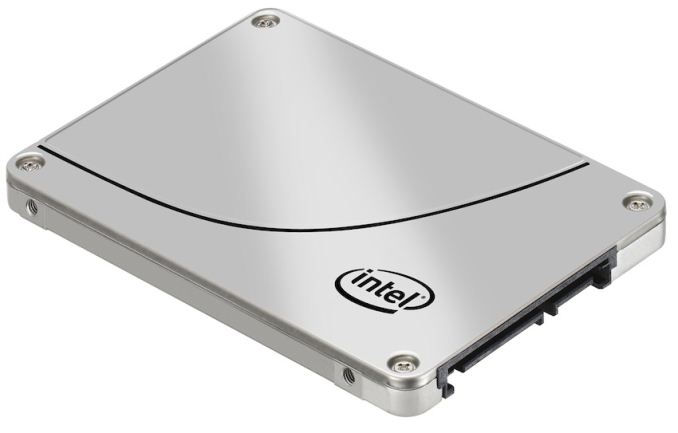
Similar to its big brothers, the S3510 features Intel's second generation SATA 6Gbps controller that was first introduced in the high capacity S3500 models late last year. Intel has remained quiet about the specifics of the second generation controller (and the SATA 6Gbps controller as a whole), but we do know that it adds support for larger capacities, which suggests the internal caches and DRAM controller could be larger.
The most significant change in the S3510 is the NAND. The S3510 switches to IMFT's latest 16nm 128Gbit MLC NAND node, which is a rather surprising move given that all Intel's client SSDs are still utilizing 20nm NAND. The reason lies behind the fact that Intel didn't invest in IMFT's 16nm node, meaning that Micron produces and owns all 16nm NAND output. Intel and Micron reconsider the partnership and investments for each generation separately and for 16nm Intel decided not to invest -- likely because Intel's focus is in the enterprise nowadays and 16nm is more geared towards the client market given its lower endurance, and Intel also wanted to concentrate more heavily in the companies' upcoming 3D NAND.
That said, Intel and Micron do have strong supply agreements in place, which gives Intel access to Micron's 16nm NAND despite not investing in its development and production. I suspect the use of 16nm NAND is why the S3510 wasn't launched alongside the S3610 and S3710 earlier this year because validating a new NAND node is time consuming and might be that the 16nm node wasn't even mature enough for the enterprise back then. In any case, the S3510 is the first enterprise SSD to utilize sub-19nm NAND, which is a respectable achievement on its own already.
| Intel SSD DC S3510 Specifications | ||||||||
| Capacity | 80GB | 120GB | 240GB | 480GB | 800GB | 1.2TB | 1.6TB | |
| Controller | Intel 2nd Generation SATA 6Gbps Controller | |||||||
| NAND | Micron 16nm 128Gbit Standard Endurance Technology (SET) MLC | |||||||
| Sequential Read | 375MB/s | 475MB/s | 500MB/s | 500MB/s | 500MB/s | 500MB/s | 500MB/s | |
| Sequential Write | 110MB/s | 135MB/s | 260MB/s | 440MB/s | 460MB/s | 440MB/s | 430MB/s | |
| 4KB Random Read | 68K IOPS | 68K IOPS | 68K IOPS | 68K IOPS | 67K IOPS | 67K IOPS | 65K IOPS | |
| 4KB Random Write | 8.4K IOPS | 5.3K IOPS | 10.2K IOPS | 15.1K IOPS | 15.3K IOPS | 20K IOPS | 15.2K IOPS | |
| Avg Read Power | 1.93W | 2.14W | 2.21W | 2.32W | 2.39W | 2.61W | 2.69W | |
| Avg Write Power | 1.91W | 2.14W | 3.06W | 4.45W | 4.74W | 5.24W | 5.59W | |
| Endurance | 45TB | 70TB | 140TB | 275TB | 450TB | 660TB | 880TB | |
On the performance side, the S3510 provides slightly better random write performance at larger capacities than its predecessor (you can find the S3500 specs here), but other than that the S3510 is a very close match with the S3500. Typical to enterprise SSDs, the S3510 features AES-256 hardware and full power loss protection that protects all data, including in-flight user writes, from sudden power losses.
| Comparison of Intel's Enterprise SATA SSDs | |||
| S3510 | S3610 | S3710 | |
| Form Factors | 2.5" | 2.5" & 1.8" | 2.5" |
| Capacity | Up to 1.6TB | Up to 1.6TB | Up to 1.2TB |
| NAND | 16nm MLC | 20nm HET MLC | 20nm HET MLC |
| Endurance | 0.3 DWPD | 3 DWPD | 10 DWPD |
| Random Read Performance | Up to 68K IOPS | Up to 84K IOPS | Up to 85K IOPS |
| Random Write Performance | Up to 20K IOPS | Up to 28K IOPS | Up to 45K IOPS |
The endurance is also equal to the S3500 and comes in at 0.3 drive writes per day for five years, which is a typical rating for entry-level enterprise SSDs that are mostly aimed for read intensive workloads like media streaming. For more write-centric applications, Intel offers the S3610 and S3710 with higher endurance and better write performance (but at a higher cost, of course). I didn't get the S3510 MSRPs from Intel yet, but I suspect that the S3510 is priced around $0.80 per gigabyte, but I'll confirm this as soon as I hear back from Intel.
All in all, even though the industry is transitioning more and more towards PCIe and NVMe, there is still a huge market for SATA drives. Many applications don't necessarily benefit much from higher performance and especially hyperscale customers are looking at cost and compatibility, which is where SATA is still the king of the hill.
Read More ...
NVIDIA Updates Spring GeForce Game Bundle - Adds Batman: Arkham Knight

Launching today is the Two Times The Adventure bundle, which sees the Witcher 3 joined by the forthcoming Batman: Arkham Knight on the GeForce GTX 980 and GTX 970. Batman: Arkham Knight is the 3rd Batman game created by series developer Rocksteady, and the 4th game in the series overall. The latest entry in the series is still Unreal Engine 3 powered, but this marks the first time the game has been targeted solely at PCs and what are now the current-generation consoles. Meanwhile as a traditional showcase for NVIDIA’s GameWorks technologies, Arkham Knight will once again be tapping NVIDIA’s PhysX libraries for cloth, turbulence, and destruction.
This latest update will see just the GTX 980 and GTX 970 receiving both Arkham Knight and the Witcher 3, while the GTX 960 and higher-end GTX 900M parts will continue to receive just the Witcher 3, indicating that NVIDIA is especially keen to improve the value proposition on their higher-end desktop cards. Meanwhile notably absent entirely is the GeForce GTX Titan X, which launched back in March. NVIDIA bundles that include GTX Titans are hit-and-miss, and with little competitive pressure for their Titan cards more often than not NVIDIA excludes them from bundles, as is the case here.
| NVIDIA Current Game Bundles | ||||
| Video Card | Bundle | |||
| GeForce GTX Titan X | None | |||
| GeForce GTX 980/970 | Batman: Arkham Knight + The Witcher 3: Wild Hunt |
|||
| GeForce GTX 960 | The Witcher 3: Wild Hunt | |||
| GeForce GTX 750/750Ti | None | |||
| GeForce GTX 980M/970M | The Witcher 3: Wild Hunt | |||
| GeForce GTX 965M/800M Series | None | |||
Finally, as always, these bundles are being distributed in voucher from, with retailers and etailers providing vouchers with qualifying purchases. So buyers will want to double check whether their purchase includes a voucher for either of the above deals. Checking NVIDIA’s terms and conditions, the program is valid in all regions except China, and the codes from this bundle are good through July 31st, so it looks like this will bundle will run for just short of 2 months. The Witcher 3 will be distributed DRM-free through GOG, meanwhile Arkham Knight will be distributed through Steam.
Read More ...
AnandTech Call for Writers: 2015
The Call for Writers has become something of an annual tradition over here at AnandTech. As anyone who follows the site knows very well, the list of things we have to review/cover usually exceeds our available time. So the call for writers gives us a chance to find new talent and new opportunities to grow, be it into new coverage areas entirely or just covering more of the existing products our readers have come to enjoy over the years.
In the last year of course we were acquired by Purch, which presents us with some additional opportunities we have not had in the past. Purch is making good on their commitment to helping us grow, which means that for 2015 in particular we're aiming higher than ever before.
Anyhow, the ultimate purpose of the Call for Writers is to find new talent. To continue to grow, we need your help. We're looking for writers with a true passion for the technology we cover, a deep understanding of what's out there and a thirst for more knowledge.
We're looking for contributors to help out both with reviews as well as our short to medium form Pipeline coverage. The areas in particular we're looking for help with are listed below:
- SSDs
- Monitors
- GPUs
- Mobile (US-only, potential for quick promotion to full-time)
- Systems/Laptops (US-only)
- Networking
- Home Automation
- Professional Graphics
- Pipeline
If you find yourself at the intersection of knowledge and passion about any of those areas, and have some time to contribute, you're exactly what we're looking for. These are paid, part-time positions that we're looking to fill, with most positions open on a world-wide basis, and certain positions primed for a quick promotion to full-time. What I need is a writing sample that demonstrates your ability to talk about any one of these topics. Your sample can be in the form of a review, a pipeline post or an analysis piece - it should be something that looks like it would fit in on AnandTech.
Once you've produced it, send it on over to callforwriters@anandtech.com. We'll read through all samples but can't guarantee a reply due to the sheer volume of submissions we tend to receive. If we like what you've sent and there's a potential fit on the team, we'll be in touch.
I'll conclude this post with a passage from our About page:
In the early days of technology reporting on the web the focus was almost exclusively on depth. We had a new medium for content that didn't come with the same restrictions as more traditional forms. We could present as much data as we felt was necessary and we could do it quicker.
As the web grew, so did the approach to gaining readership. In many cases, publishers learned from the tips and tricks of more traditional media to growing their audience. The focus shifted away from ultimate understanding of what was being reported, to producing content significantly motivated by increasing traffic, or revenue, or both. Thorough observations were out; sensationalism, link baiting, and the path to shallow 10-o'clock-news reporting were in.
While I believe it's definitely easier to produce content by going this route, I don't believe it's the only way to build a well read website.
If the above resonates with you and you'd like to help by being a part of something different, I'd encourage you to submit a writing sample. Please also include a description of what subject(s) you would be interested in writing about.
Frequently Asked Questions
Q: How old do I need to be to work for AnandTech?
A: You need to be old enough to legally work in your country of residence without significant restriction. Otherwise we have no specific requirements so long as you can do the job well. Anand started the site at 14, after all...
Q: Do I need to be located in the United States to work for AnandTech?
A: Some positions do require that you be in the US for logistical reasons, and those specific positions are noted. However unless otherwise noted, most positions are open on a world-wide basis.
Q: Do I need to supply my own products for testing or contacts at companies? (i.e. do I need to be an insider?)
A: No. Assuming for the moment you have a computer to write on, then you already have the most important piece of equipment that you need. Meanwhile you will need some knowledge of the field at hand, but will introduce you to the people you need to know for your position at AnandTech.
Q: Can I really work for AnandTech even though I don't have a Ph.D in electrical engineering?
A: Yes! We are first and foremost looking for people with a passion to learn, and the knack to make it happen. There's a certain degree of baseline knowledge needed for any given position, but if you can read existing AnandTech articles then you're already half-way there.
Q: Is there a submission deadline?
A: We have a tentative end point for the end of May.
Read More ...
Android Lollipop Nears 10 Percent Market Penetration After Half a Year in the Wild
Lollipop brings with it a new direct update initiative for core services -- but Google has to get customers on the OS to benefit
Read More ...
Available Tags:NVIDIA , Intel , SSD , GeForce , AnandTech , Android ,


No comments:
Post a Comment