

T-Mobile USA Launches Never Settle Trial For Verizon Customers

Today they launched a new campaign targeted at Verizon users in the United States. The campaign pokes fun at the "Never Settle" tagline and #NeverSettle hashtag that Verizon has been using in their recent ad campaign to promote their LTE network. T-Mobile's new Twitter hashtag for their campaign is #NeverSettleforVerizon, and the Never Settle Trial is a free trial of T-Mobile's service that current Verizon customers can sign up for.
The Never Settle trial will begin on May 13, and it will work as follows. Verizon users will port their number to T-Mobile for the trial period, but hold on to their current Verizon phone. If the user was happy with their service on T-Mobile then T-Mobile will cover their Verizon Early Termination Fee (ETF) and remaining device subsidy up to a maximum of $650 when they trade in their existing Verizon phone and sign up for one of T-Mobile's plans. If they were unhappy with the service, they can port back to Verizon and T-Mobile will cover their activation fees by sending them a prepaid Visa card for that amount, and they will also waive cost of their service while on T-Mobile.
I would assume the system is such that you keep your Verizon line during the duration of the trial, and when you port your number to T-Mobile a new number gets assigned to your Verizon account until you either leave or port back. I know on my carrier in Canada a number port request usually goes along with an account closure, so hopefully T-Mobile has planned all this out.
T-Mobile has made eight videos to promote this new campaign, and you can check those out in the source below.
Read More ...
MediaTek and Alcatel OneTouch Launch the POP Astro for T-Mobile USA
Recently a new budget oriented device was launched on T-Mobile USA. It's the Alcatel OneTouch POP Astro. At $149.76 outright, the POP Astro is aimed squarely at buyers who need an inexpensive smartphone with only the most basic set of feature and hardware specifications. With that in mind, you can see the details of the POP Astro's specs below.
| Alcatel OneTouch POP Astro | ||||||
| SoC | MediaTek MTK6732 4 x Cortex-A53 at 1.5GHz ARM Mali-T760 GPU |
|||||
| Memory and Storage | 4GB NAND + MicroSD, 1GB RAM | |||||
| Display | 4.5" 960x540 LCD | |||||
| Cellular Connectivity | 2G / 3G / 4G LTE (MediaTek Category 4 LTE) | |||||
| Dimensions | 133.6 x 65.3 x 7.62 mm, 145g | |||||
| Camera | 5MP Fixed Focus Rear Facing VGA (0.3MP) Front Facing |
|||||
| Battery | 2000 mAh | |||||
| Other Connectivity | 802.11 b/g/n + BT 4.1, microUSB 2.0, GPS/GNSS | |||||
| Operating System | Android 4.4 KitKat | |||||
While we haven't been able to test MediaTek's MTK6732 in depth, it should be competitive with the other devices at this price point which use Qualcomm's Snapdragon 410. It may actually prove to be faster than the 1.2GHz Snapdragon 410 in the Moto E, although we would need to test the device to properly characterize this.
The most notable point about the POP Astro is that it's the first device in the United States to be powered by one of MediaTek's processors with their integrated LTE baseband, marking MediaTek's formal entry into the US LTE market. After being dominated by Qualcomm over the first few years, in the last year we've seen competitors such as Samsung, Intel, and now MediaTek pick up momentum in getting their solutions into the US LTE market. Being a device aimed at the US market, the POP Astro has support for LTE bands 2, 4, and 12, and can fall back on 42Mbps DC-HSPA on any carrier that uses 850/1700/2100MHz frequencies for UMTS.
As for the rest of the device, the specs are decidedly low end. The amount of storage, fixed focus camera, and KitKat 4.4 all remind me of the original Moto E, and it may be a hard sell with the new 2015 Moto E selling for roughly the same price. Buyers who are interested can order the Alcatel OneTouch POP Astro from T-Mobile now for $149.76 up front, or $6.24 every month over a 24 month term.
Read More ...
ASRock Rack Announces Mini-ITX LGA2011-3 Motherboard, with Quad-Channel SO-DIMM DDR4


The motherboard uses the narrow ILM socket, usually found in the server space, similarly to the X99E-ITX. We also get a single PCIe 3.0 x16 slot, four SATA 6 Gbps ports, an integrated server control ASPEED 2400 module for headless running with KVM support and dual Intel gigabit Ethernet (I210 + I217). There is also an on-board USB 3.0 type-A connector for in-chassis USB devices such as dongle licences, and the rear panel is almost at the thin-mini-ITX standard for z-height. Notice that there is no onboard audio due to the space limitations.

Sources of DDR4 SO-DIMM modules, especially ECC ones for servers, are relatively few right now. But because this is a server motherboard, chances are that the board is mostly available through B2B channels, athough we might see some consumer outlets start selling it later in the year similar to the C2750D4I. Also by virtue of server focused sales, chances are that the EPC612D4I will not come with a bundled narrow ILM cooler (like the X99E-ITX does) and users will have to source their own. The pricing reflects this, as we see that the price is reported to be at $265, making it a very cheap LGA2011-3 motherboard especially when we factor in Xeon and ECC support.
Much like the X99E-ITX, ASRock is targeting the small form factor CPU compute markets rather than large GPU compute systems. We have the X99E-ITX in for review so stay tuned for that within the next few weeks.
Source: ASRock Rack (product page)
Read More ...
Update to PSU Testing 2015: A Minor Change
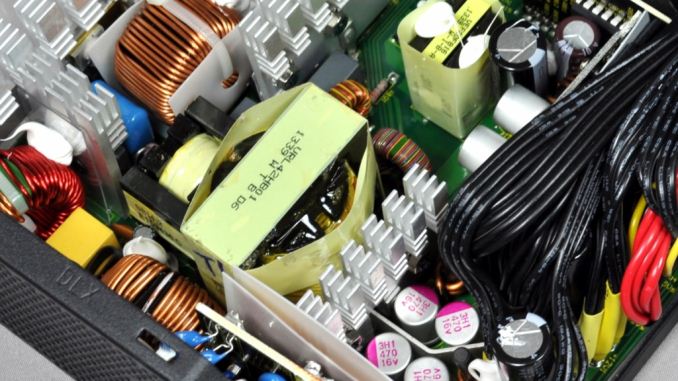
To date, all of our testing was being done in accordance with Intel's Power Supply Design Guide for Desktop Form Factors and with the Generalized Test Protocol for Calculating the Energy Efficiency of Internal AC-DC and DC-DC Power Supplies. These two documents describe in detail how the equipment should be interconnected, how loading should be performed (as the power lines should not just be loaded randomly), and the basic methodology for the acquisition of each data set.
However, not all of our testing can be covered and/or endorsed by these guidelines.
Even though these documents are just a few years old, their methods fail to account for modern "enthusiast grade" computer switching mode power supplies. The industry has been making leaps on the creation of more energy-efficient devices, continuously lowering their power requirements. Nowadays, the vast majority of computers that require very powerful PSUs simply employ multiple components, such as numerous graphics cards. As the majority of energy-consuming components require a 12 V source, PSU manufacturers have been continuously driving the 12 V output of their units upwards, while the 3.3V/5V outputs remained inert or are getting weaker. There are many design rules that modern "enthusiast-grade" PSUs do not adhere to nowadays, such as the current safely limits and the maximum size of the chassis, but this particular change creates a problem with the generalized test protocol.
Furthermore, nearly all switch mode power supplies with multiple voltage rails will exceed their maximum rated power output if all the rails are loaded to their maximum rated current. This includes nearly every PSU ever made for a PC. It is not possible to load every rail (3.3V, 5V, 12V, 5VSB, -12V) to its maximum rated current without severely overloading the PSU. For this purpose, the derating factor D exists, which calculates the contribution of each rail in relation to the maximum output of the PSU. The derating factor for a computer PSU always has a value lower than one. A lower derating factor indicates overly powerful lines in relation to the total output of the PSU, which practically is good. A value greater than one would suggest that fully loading every rail does not exceed the maximum power output of the PSU, which is never the case with a PC power supply.
According to the generalized test protocol, the derating factor D of the 3.3V/5V lines should be:
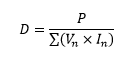
Simply put, the formula is maximum rated power output of the unit divided by the sum of the power output ratings of each individual power line.
However, this formula frequently leads to the overloading of the 3.3V/5V lines with >1 kW PSUs. The effect is particularly severe in some high efficiency units, in which the designers moved the 3.3V/5V DC-to-DC conversion circuits on the connectors PCB, reducing their maximum power output significantly. Although some PSUs would operate normally even if their 3.3V/5V lines were overloaded, the continuous degradation of the 3.3V/5V lines in comparison to the 12 V line resulted to PSUs appearing in our labs that could not operate under such conditions.
The grandest example of them all would be the Andyson Platinum R 1200W PSU that we reviewed just recently. This PSU has a lopsided design such that the 3.3V/5V rails that can output just 100W combined, which is nothing compared to the 1200W the single 12V rail can output. Furthermore, the current rating of the 5V line alone can reach the maximum output reserved for both the 3.3V and 5V rails. This great imbalance creates an issue with the generalized PSU testing protocol, which has been developed for PSUs that do adhere to the design guide standards. If we were to load that PSU using the standard derating factor formula, it would create a load of over 150 Watts on the 3.3V and 5V rails, which were rated for an output of just 100 Watts. Other units did work with their 3.3V and 5V rails slightly overloaded but, in this case, the Platinum rated unit failed long before it reached its maximum output. Therefore, it was obvious that the official derating factor calculation method could no longer be used for modern high output PC PSUs.
Therefore, we had to alter the derating factor formula in order to compensate for real world testing. Without at least two significant energy consumers, no modern system requires > 500 Watts. Greater power demand suggests the presence of devices that load only the 12 V line (i.e. GPUs, CPUs, liquid cooling pumps, Peltier effect coolers, etc.). After certain calculations and research, for units with a rated power output over 500 Watts, we will be using the following formula:
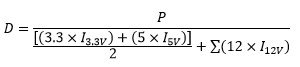
Which effectively halves the impact of the 3.3V/5V lines on the calculation of the derating factor, imposing the difference on the 12V line. This does not mean that their load is being halved, only that their contribution to the total output of the PSU is now considered to be of lower importance. Furthermore, the loading criterion of the 3.3V/5V lines for a load rating X (in % of the unit's maximum output) is now changed to:
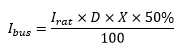
For the 12 V line(s), the loading criterion remains unchanged.
This formula results to the more realistic representation of the requirements that actual systems have, at least up to a power output realizable today.
Furthermore, there are no guidelines on how transient tests should be performed and the momentary power-up cross load testing that Intel recommends is far too lenient. Intel recommends that the 12 V line should be loaded to < 0.1 A and the 3.3V/5V lines up to just 5 A. We also perform two cross load tests of our own design.
In test CL1, we load the 12 V line up to 80% of its maximum capacity and the 3.3V/5V lines with 2 A each.
In test CL2, we load the 12 V line with 2 A and the 3.3V/5V lines up to 80% of their maximum combined capacity.
The End Result
If that all sounded like jargon, the end takeaway cause is this - due to user requirements of high wattage power supplies, manufacturers have altered the design of their products outside of the specification documents in order to compensate for cost and engineering prowess.
A power supply should have a balance between the 3.3V/5V and the 12V rails, such that when one is increased the other will rise as well. However this doesn't happen with high wattage power supplies like the specifications says it should. Normally the power rating advertised should be based on this balance, but it doesn't have to. It means that some designs are not like others, and the level of balance is different to get to the power rating.
If the OEMs did adhere to specifications, the cost of the end product would increase to accomodate the higher wattage 3.3V/5V outputs, which is bad for a product that sells based on margins. Meanwhile the extra power that users actually need is all on the 12V, after all, so keeping parity with the guidelines is perhaps a fruitless task. But this means the products do not follow the guidelines, much in the same way that some cars disregard emission guidelines in various markets. The end result is that by testing against the guidelines, the results become erroneous because the device isn't built to strict specification.
Nevertheless the design underneath still works for the user, just like the car with high emissions still drives like a car. You just can't test it like a normal car, or some of the guidelines no longer apply. As a result, we're going to adjust our testing on a sliding scale. If we didn't, some units that will work happily in a real system might fail on our test-bed well before we hit 100% load. The culprit is that 'guidelines' are ultimately not 'rules', and these guidelines can be blurred without proper inspection and preparation.
Read More ...
The Surface 3 Review
The Surface lineup for Microsoft has been extremely interesting to watch. What first launched in October 2012 as the Surface RT has been constantly iterated upon, and of course the Surface Pro line has evolved even faster. The Surface Pro 3 has finally provided Microsoft with something that critics and consumers alike seem to have bought in to, and sales have been very strong since the Pro 3 was launched.
Read More ...
Microsoft Quietly Kills Windows Media Center, Hypes Xbox One as Replacement
Windows 10 should help the Xbox One close some of the gaps vs. a Windows 7 HTPC w/ Media Center, but will die-hards buy in?
Read More ...
America's Largest Cable Company, Comcast, Sees Internet Subscriptions Pass TV
Cable TV is still an important market, but it's getting slowly overshadowed in the internet age
Read More ...
Quick Note: Microsoft Windows 10 Gives Users the Finger (Literally)
In addition to the new middle finger emoji, there's also new "classic" style yellow face emojis, and even the Vulcan salute
Read More ...
Available Tags:ASRock , DDR4 , Microsoft , Windows , Xbox , TV ,


No comments:
Post a Comment