

Apple Releases FY 2015 Q2 Earnings Results: Strong Growth In China Fuel Large Sales
| Apple Q2 2015 Financial Results (GAAP) | |||||
| Q2'2015 | Q1'2015 | Q2'2014 | |||
| Revenue (in Billions USD) | $58.010 | $74.599 | $45.646 | ||
| Operating Income (in Billions USD) | $18.278 | $24.246 | $13.593 | ||
| Gross Margin (in Billions USD) | $23.656 | $29.741 | $17.947 | ||
| Net Income (in Billions USD) | $13.569 | $18.024 | $10.223 | ||
| Margins | 40.8% | 39.9% | 39.3% | ||
| Earnings per Share (in USD) | $2.33 | $3.08 | $1.66 | ||
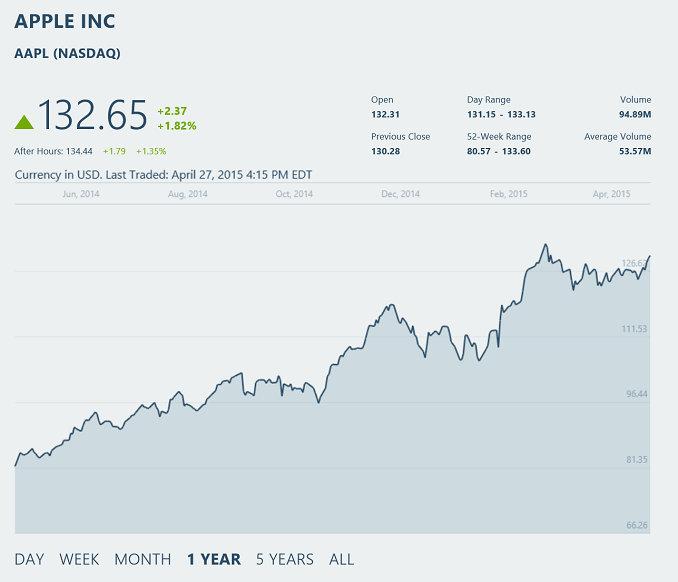
Almost 70% of Apple’s revenue came from international sales, but China was the big market for Apple this quarter. Sales in Greater China were up 71% year-over-year, to $16.8 billion for this quarter. This is even a 4% rise over Q1, which was the launch quarter for the iPhone 6 series. China is now the second biggest market for Apple, closing in on the Americas where sales this quarter were $21.3 billion.
iPhone sales kept up their torrid pace. In Q1, Apple sold almost 75 million iPhones, and while there is traditionally a drop in the quarter succeeding the launch of the phone, they still managed to sell over 61 million iPhones for Q1. Year-over-year, this is a 40% increase in devices sold and even better for Apple’s bottom line, revenue was up 55%. With Apple, there really is iPhone, and everything else. iPhone accounts for 69.4% of all of Apple’s revenue. They are top heavy in this one product, but it seems to be a product that just keeps giving returns.
Mac sales were also up, with a 10% increase in units sold as compared to Q2 2014. Revenue for Mac also increased, but only 2%. Unit sales were 4.5 million devices, which accounted for $5.6 billion in revenue. This works out to an Average Selling Price of $1230.55 per Mac computer. Macs have once again surpassed iPad sales to become the number two device at Apple. For Q1, and the launch of the new iPad Air 2, iPad sales briefly retook the lead, but Mac sales have surpassed iPad again.
iPad sales have continued to struggle. What was once thought to be the next iPhone has certainly struggled to maintain the trajectory it first had. Sales for Q2 were 12.6 million units, which is down from the 21.4 million last quarter (when the new products were launched) and also down significantly year-over-year from the 16.35 million in Q2 2014. That is a 23% decline in sales, and it resulted in a 29% reduction in revenue, with iPad now coming in at $5.4 billion.
| Apple Q4 2014 Device Sales (thousands) | |||||
| Q2'2015 | Q1'2015 | Q2'2014 | Seq Change | Year/Year Change | |
| iPhone | 61,170 | 74,468 | 43,719 | -18% | +40% |
| iPad | 12,623 | 21,419 | 16,350 | -41% | -23% |
| Mac | 4,563 | 5,519 | 4,136 | -17% | +10% |
Services however did not suffer such a fate, and at $4.996 billion in revenue, iTunes, the App Store, and other Apple services are now almost a $5 billion per quarter business. Revenue was up 4% since Q1 2015, and up 9% from a year ago.
The final segment Apple reports on is “Other Products” which include iPod, Apple TV, Beats, and accessories. Revenue for this segment was $1.69 billion, down from $1.88 billion a year ago, and $2.69 billion in Q1. This is a year-over-year decrease of 10%. Much of that would be iPod sales which only two quarters ago were still listed in their own category, but have been falling for several years now as they have been superseded by smartphones.
| Apple Q2 2015 Revenue by Product (billions) | |||||
| Q2'2015 | Q1'2015 | Q2'2014 | Revenue for current quarter | ||
| iPhone | $40.282 | $51.182 | $26.064 | 69.4% | |
| iPad | $5.428 | $8.985 | $7.610 | 9.4% | |
| Mac | $5.615 | $6.944 | $5.519 | 9.7% | |
| iTunes/Software/Services | $4.996 | $4.799 | $4.573 | 8.6% | |
| Other Products | $1.689 | $2.689 | $1.880 | 2.9% | |
As part of their announcement, Apple is also expanding their capital return program. What was first going to be a $90 billion share repurchase program is now up to $140 billion. There is also going to be an 11% increase to the quarterly dividend, which will now be $0.52 per share, payable on May 14th to all shareholders of record as of May 11th. Since the creation of their capital return program, Apple has paid out over $112 billion to shareholders, with $80 billion of that being share repurchases.
For Q3, the forecast is revenue of $46 to 48 billion, with margins between 38.5% and 39.5%.
To a certain extent, we have become numb to the record breaking numbers every quarter, but really it is impressive that they have been able to sustain this for so long. For Q2, they once again set records for iPhone and Mac sales, and the App Store had an all-time record quarter. They have some new products in the market now with the MacBook and the Apple Watch, so it will be interesting to see the Q3 numbers.
Source: Apple Investor Relations
Read More ...
Samsung Releases Second 840 EVO Performance Fix
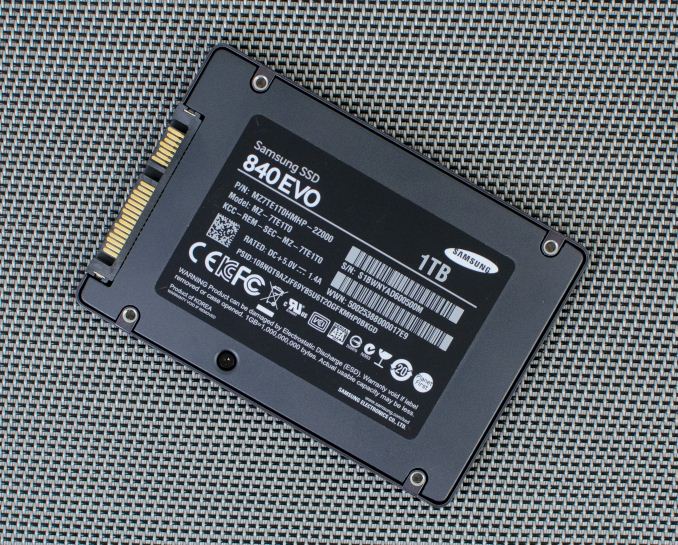
Aiming to fix the issue, in 2014 Samsung released a performance restoration tool and firmware update for the 840 EVO. The combination of the tool and firmware would update the drive to better handle decayed cells and reduce the need to re-read them, meanwhile the restoration tool would refresh the drive’s data by re-writing all of the data to fresh cells. The idea being that fresh data in combination with the newer firmware would prevent the drive’s performance from decaying again.
Unfortunately that didn’t work out as planned, and while the data refresh from the performance restoration tool did bring drive performance back up, over the long run performance once again began decaying on old data, even with the firmware improvements. As a result Samsung has commissioned a second, more permanent fix for the 840 EVO. This fix involves another firmware update, this time installing a firmware that periodically refreshes old data rather than the one-off refresh of the performance restoration tool. Refreshing the data once again brings performance back up to where it should be, and the periodic, repeating nature of the refresh means that data is never allowed to get too old to let performance degrade again.

Ultimately Samsung’s second fix is a bit of a brute force solution to the problem, but at this point there doesn’t seem to be anything Samsung can do about 19nm TLC cell charge decay other than to refresh the data, as the problem is intrinsic to the NAND itself. Pre-release versions of the firmware show that this fix works, and conceptually this is much more likely to work over the long run than Samsung’s initial fix. The tradeoff is that it does consume P/E cycles to refresh the data, but by our own calculations even 5 years of refreshes at 1/week would only be 26% of the drive’s rated 1000 cycle lifetime. Meanwhile for the longer term, Samsung has since moved on to 3D-VNAND in newer drives, which is more stable than very small geometry planar NAND and essentially turns back the clock on NAND scaling issues. So the 840 EVO should be the last Samsung TLC drive to encounter this issue.
In any case, after previewing the updated firmware to the press, Samsung has released the updated firmware and its associated version of Samsung Magician (version 4.6) to the public over on their website. After an initial staggered release over the weekend – we suspect to make sure not too many users had the firmware if a problem quickly cropped up – Samsung looks to have opened downloads to everyone. However Mac and Linux users will want to note that at this time only the Magician version of the firmware has been released; the bootable ISOs for directly updating the drive have yet to be updated.

In the meantime this will continue to be an issue we keep an eye on. As with the initial problem and Samsung’s first fix, the decay issue only occurs after a time, so we’ll have to see where 840 EVO performance is in a couple months’ time. However with the very nature of the problem and the periodic refreshing of data, we’re hopeful that this will finally put an end to the performance degradation.
Read More ...
ASUS Announces the ZenBook Pro UX501

| ASUS ZenBook Pro UX501 | ||
| Size | 15.1 x 10.0 x 0.8” 38.4 x 25.4 x 2.03cm |
|
| Mass | 5 lbs - 2.27 kg | |
| Display | 15.6" 1920x1080 IPS LCD or 15.6" 3840x2160 multi-touch IPS w/ 100% sRGB |
|
| Battery | 60/96Wh battery rated for 6 hours of usage | |
| Storage/DRAM | 1TB 5400RPM HDD or 128/256GB SATA3 SSD or 512GB PCIe x4 SSD 16GB DDR3 |
|
| CPU | Intel Core i7-4720HQ (2.6GHz base, 3.6GHz turbo) | |
| GPU | NVIDIA GTX 960M | |
| Wireless | 2x2 802.11ac + BT 4.0 | |
| Ports | 3 x USB 3.0, 1 x Thunderbolt 2.0/mDP, HDMI, SDXC, 3.5mm Headset Jack |
|
| Front Camera | HD 720p | |
| Operating System | Windows 8.1 64-bit | |
| Warranty | 1-year limited | |
| Price | $1799 for UHD + 512GB SSD model | |
Starting with its appearance, we see that the UX501 features an aluminum chassis with the same spun metal finish that ASUS has put on most of their products. At 2.03cm thick at its thickest point and a mass of 2.27kg, it's definitely not an ultra portable laptop. The aluminum build and high end specs will inevitably draw comparison to the MacBook Pro, and the name ASUS has chosen certainly gives the impression that they're taking on Apple's flagship laptop as well. That being said, in my view the UX501 is distinctly an ASUS product with its slightly tapered chassis and brushed metal lid.
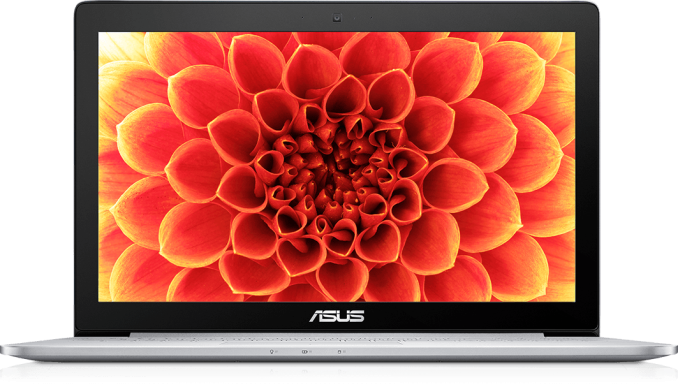
Just looking at the specs, it's clear that the UX501 is what one might call a desktop replacement laptop. The most notable point may be its display, which is a 15.6" 3840x2160 IPS panel. At 282ppi it's an extremely high resolution display, although I don't think anyone was unhappy with 3200x1800 panels and the lower power consumption that comes with them. ASUS is also reporting full sRGB gamut coverage, and hopefully high color accuracy is bundled with that gamut. The rest of the specs are equally impressive, with a 2.6GHz quad core Intel Core i7 CPU, and NVIDIA's GTX 960M GPU.
In terms of storage, ASUS is offering several options with the UX501. Buyers can opt for a 1TB 5400RPM HDD, a 128GB or 256GB SATA III SSD, or a 512GB PCIe x4 SSD. The PCIe SSD is definitely the most interesting option, with ASUS quoting maximum read/write speeds of 1400Mbps.
Battery life on the UX501 is a bit low, but hardly unexpected for a laptop with these specifications. With no Broadwell quad core i7 parts available, companies making desktop replacements are stuck using Intel's 22nm Haswell parts. The display is undoubtably the biggest consumer of power, and one can debate the merits of moving to 4K from QHD+ or other resolutions. With a 96Wh battery in the UHD model, ASUS is also pushing up against travel regulations that do not permit battery packs above 100Wh on airplanes. Regardless, any users interested in a desktop replacement should always be ready to keep their charger with them.
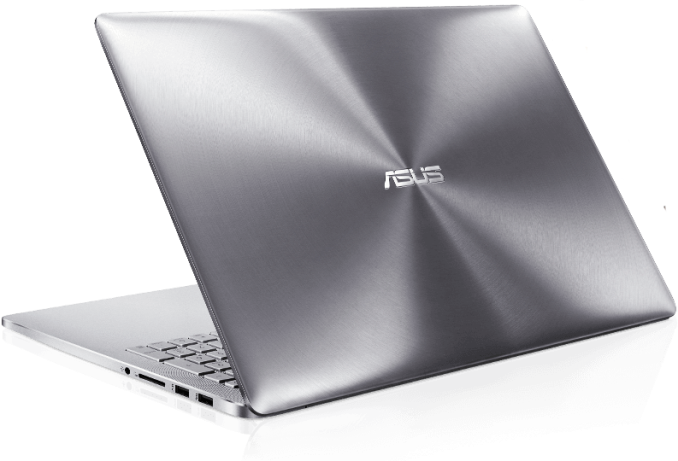
The I/O ports on the UX501 are fairly standard for a laptop of this class, but there's one port that is fairly unique among Windows laptops. ASUS has included a single Thunderbolt 2 port on the UHD model of the UX501. Thunderbolt never really took off like many had hoped, but it seems that there's enough adoption of it in the professional space to warrant ASUS putting it on their flagship laptop. The 1080p models will feature a Mini-DisplayPort output rather than the Thunderbolt 2 port.
The ASUS ZenBook UX501 is available now in the United States from the ASUS Online Store as well as from various retailers. The fully featured model with the UHD display and 512GB PCIe SSD will be $1799 USD.
Read More ...
Imagination Announces Free MIPSfpga Design For Academia

As part of Imagination’s ongoing university relations program, the company is going to be releasing the design to one of their MIPS CPUs to universities for use by instructors and students. In this day and age university sharing agreements are fairly commonplace, but what makes Imagination’s offer particularly interesting is that they’re going to be releasing a complete and un-obfuscated MIPS core, releasing the design to educational institutions with a very deep level of access and with very few strings attached in the process.
The specific CPU Imagination is releasing is being called MIPSfpga, and is derived from the company’s microAptiv line, which is part of their lineup of embedded processor designs (think microcontrollers and the like). The MIPSfpga core, as implied by the name, is a customized microAptiv MPU core designed for implementation on FPGAs, with Imagination releasing the complete RTL for it. The design Imagination is releasing is among their fullest featured, and includes some otherwise optional microAptiv features such as an MMU and cache, which makes this processor functional enough to run Linux alongside more traditional real-time operating systems (RTOS).

Along with the un-obfuscated design itself, the actual terms of the agreement are rather unrestrictive. MIPSfpga is meant to be used for educational purposes and cannot be put into silicon – preventing anyone from using it as a roundabout way to get a royalty-free MIPS design – otherwise the only limit applies to patents. Consequently, users are free to modify the design as they wish, and then those who wish to patent those changes need to talk to Imagination first.
Imagination for their part is claiming that this is the first time anyone has released such a capable and complete un-obfuscated CPU design in this manner. And while we can’t confirm that no one has ever done something similar, certainly as far as we can tell no one has done something like this in recent history. Which would make this a very unusual release, and a big step up from more traditionally locked down and scaled down academic designs.
From a high level perspective, Imagination says that they’re doing this for education purposes; to give universities access to a complete (and relatively clean) CPU so that students can see first-hand how such a processor works, without any of the internals hidden away from them as proprietary information. After all, MIPS traces its very roots back to academia as a Stanford project. But pragmatically speaking, MIPS adoption at the manufacturer level has been struggling in the face of a very strong ARM for some time now, so releasing a complete design to universities gives Imagination the chance to get students familiar with the MIPS architecture early.
In any case, Imagination tells us that they will be releasing the design in the coming weeks. The very first release will be as part of an educators’ workshop in May. Otherwise Imagination expects to have it more broadly available in June, under a streamlined enrollment process on their university relations program website.

Read More ...
Belkin WeMo and Ubiquiti mFi Home Automation Platforms Review
The Internet of Things (IoT) concept has gained a lot of traction over the last couple of years. One of the main applications of IoT lies in the home automation space. Consumers have many options in this space, but none of them have the right combination of comprehensiveness, economy, extensibility and ease of use. Today, we look at two different solution families - WeMo from Belkin and mFi from Ubiquiti Networks.
Read More ...
Windows 10 Build 10061: A Quick Review
The latest test build finally fixing the glaring flaw in superfluous backups, freeing up 25+ GB; Recycling Bin also gets a new look
Read More ...
Available Tags:Apple , Samsung , ASUS , Belkin , Windows ,


No comments:
Post a Comment