

AMD R9 390 Series To Launch Alongside Computex 2015
AMD is preparing to time the launch of its next-generation Radeon R9 300 series with that of Computex 2015, in early June. The company had earlier planned to launch some products that are essentially price-adjusted rebrands of existing ones, such as the R9 380 series (being rebrands of R9 290 series on a slightly improved silicon), and the R9 370 series (being based on the "Tonga" silicon); but has decided to launch the two along with its flagship R9 390 series, based on a brand new silicon, around the same time. AMD's answer to the GTX TITAN-X from NVIDIA, the R9 390X will feature around 4,096 stream processors based on the Graphics CoreNext 1.3 architecture, and will implement an HBM (high-bandwidth memory) interface, with bandwidths in excess of 600 GB/s.
Read More ...
GIGABYTE Announces a Pair of GeForce GTX 960 4GB Graphics Cards
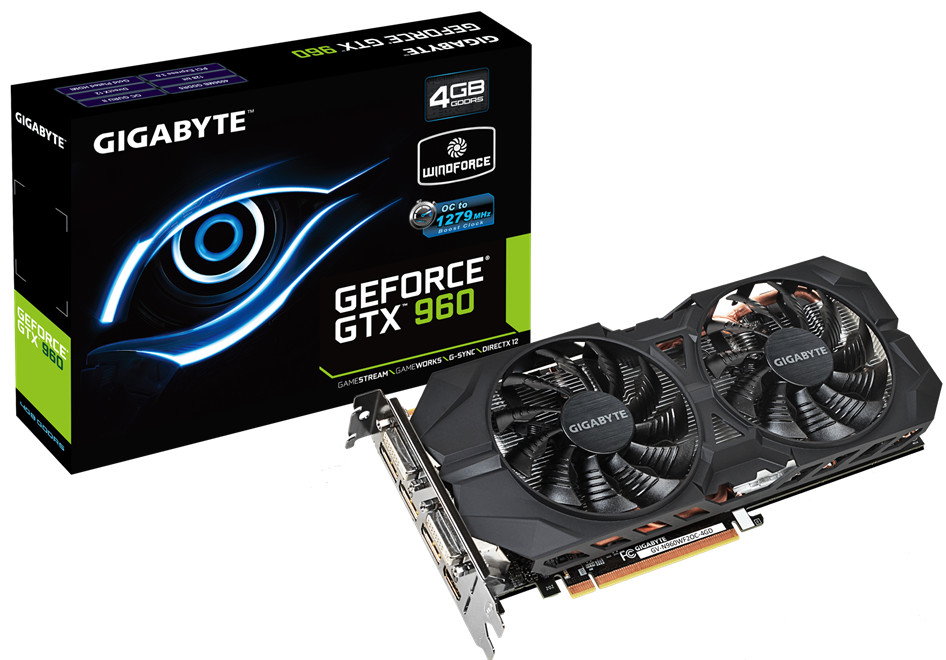
GIGABYTE rolled out a pair of GeForce GTX 960 graphics cards with 4 GB of onboard memory, the N960WF2OC-4GD (WindForce 2X), and the N960G1 GAMING-4GD (G1.Gaming). The N960WF2OC-4GD features a compact twin-fan WindForce 2X cooling solution, and offers a minor factory-overclock of 1241 MHz core with 1304 MHz GPU Boost (compared to reference speeds of 1216/1279 MHz.) The N960G1 GAMING-4GD, on the other hand, features the company's top of the line WindForce 3X cooling solution, which takes advantage of its meaty heatsink to keep the fans off until a temperature threshold is reached, with the 120W TDP GPU. This card serves up 1266 MHz core, and 1304 MHz GPU Boost. Both cards feature 4 GB of GDDR5 memory, across a 128-bit wide memory bus, clocked at 7.00 GHz (GDDR5-effective).

Read More ...
NVIDIA GeForce GTX TITAN-X Pictured Up-close
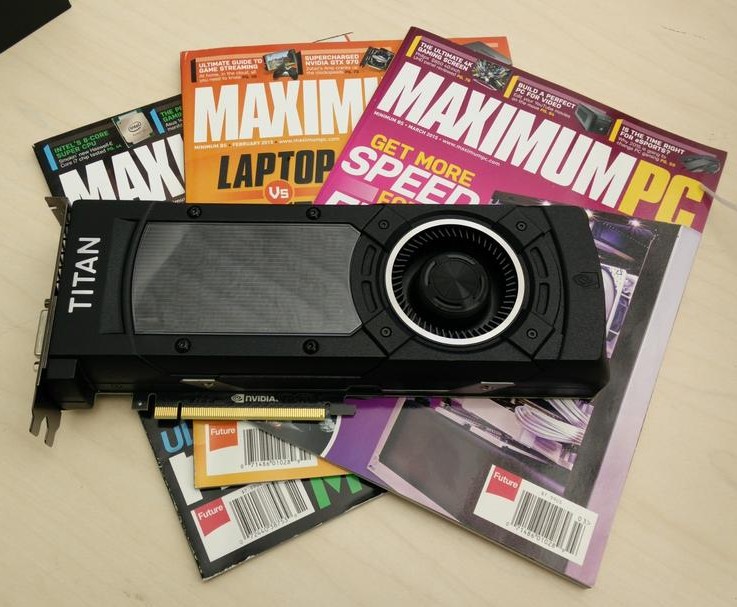
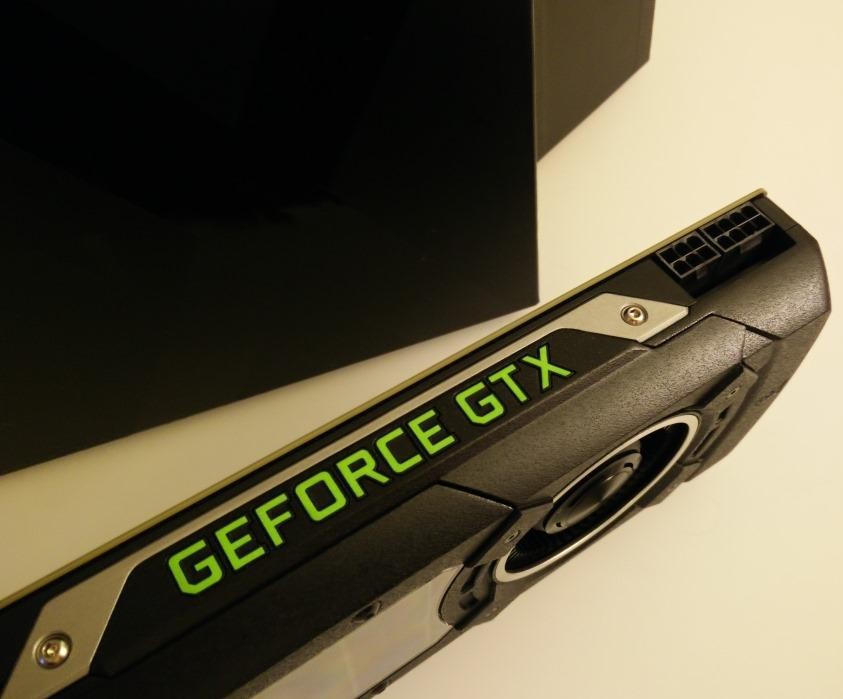
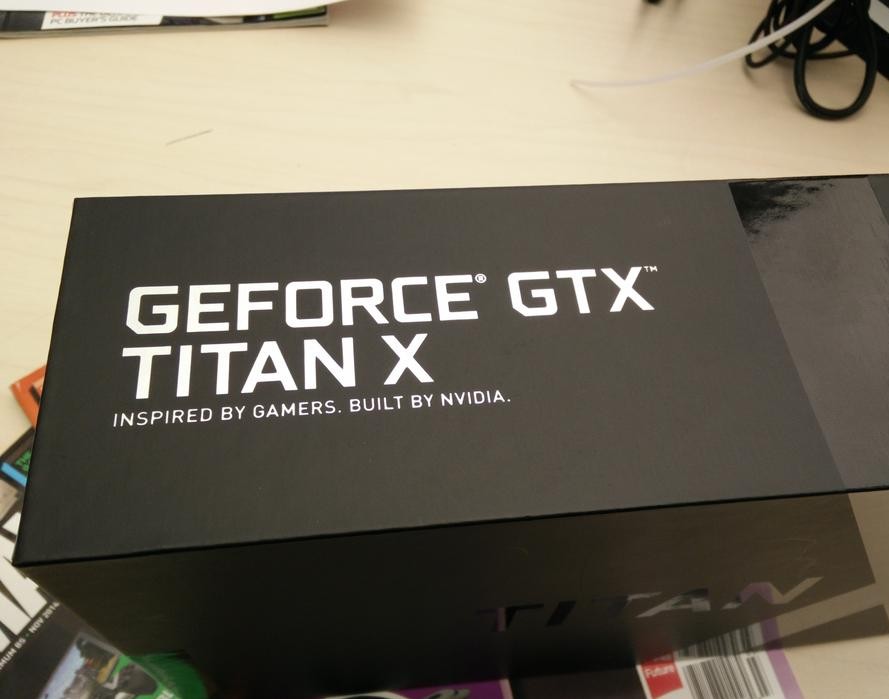
Here are some of the first close-up shots of NVIDIA's new flagship graphics card, the GeForce GTX TITAN-X, outside Jen-Hsun Huang's Rafiki moment at a GDC presentation. If we were to throw in an educated guess, NVIDIA probably coined the name "TITAN-X" as it sounds like "Titan Next," much like it chose "TITAN-Z" as it sounds like "Titans" (plural, since it's a dual-GPU card). Laid flat out on a table, the card features an a matte-black colored reference cooling solution that looks identical to the one on the original TITAN. Other cosmetic changes include a green glow inside the fan intake, the TITAN logo, and of course, the green glow on the GeForce GTX marking on the top.
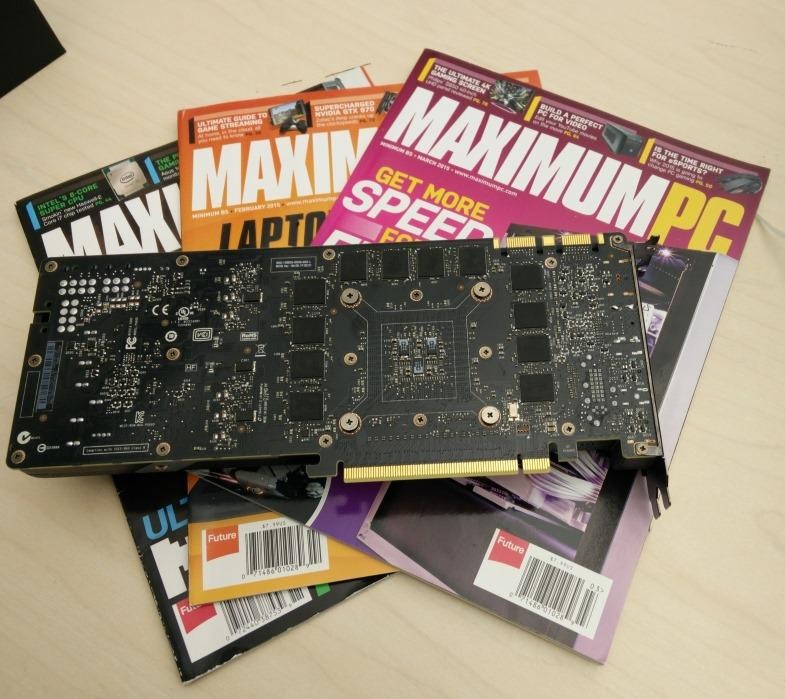
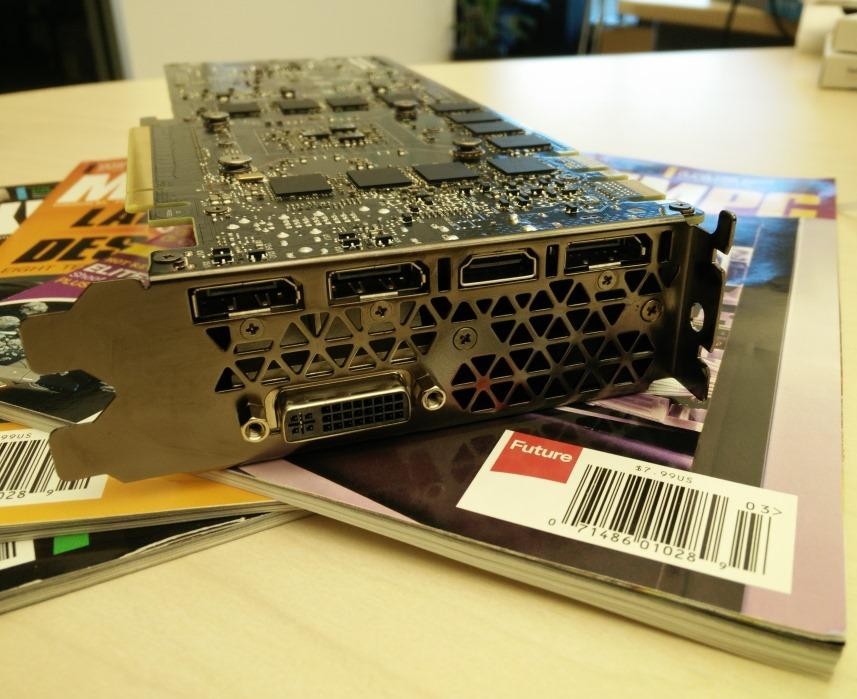
The card lacks a back-plate, giving us a peek at its memory chips. The card features 12 GB of GDDR5 memory, and looking at the twelve memory chips on the back of the PCB, with no other traces, we reckon the chip features a 384-bit wide memory interface. The 12 GB is achieved using twenty-four 4 Gb chips. The card draws power from a combination of 8-pin and 6-pin power connectors. The display I/O is identical to that of the GTX 980, with three DisplayPorts, one HDMI, and one DVI. Built on the 28 nm GM200 silicon, the GTX TITAN-X is rumored to feature 3,072 CUDA cores. NVIDIA CEO claimed that the card will be faster than even the previous generation dual-GPU flagship product by NVIDIA, the GeForce GTX TITAN-Z.
Read More ...
(PR) Gigabyte Launches X99 Champion Series Motherboards
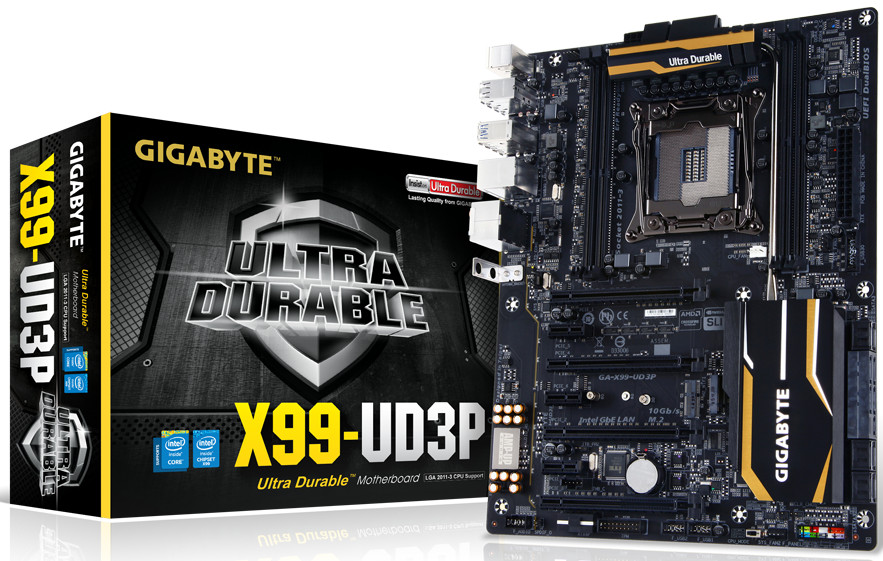
GIGABYTE TECHNOLOGY Co. Ltd., a leading manufacturer of motherboards and graphics cards is proud to announce today the addition of 4 new high performance motherboards to their comprehensive Intel X99 chipsets offering with the X99 Champion series. The new motherboards consist of the X99-Gaming 5P, X99-UD4P, X99-UD3P and the already famous X99-SOC Champion.
DDR4 memory modules are available at a stock frequency of 2133 MHz, but memory vendors encode XMP profiles which can automatically modify the frequency and timings of the supported memory modules to work in par with your CPU. With the X99 Champion Series, GIGABYTE is offering a tested and proven platform that ensures proper compatibility with profiles up to 3200 MHz, and exclusively 3400 MHz for the X99-SOC Champion.


Read More ...
(PR) Ozone Gaming Announces Strike Battle Compact Mechanical Gaming Keyboard
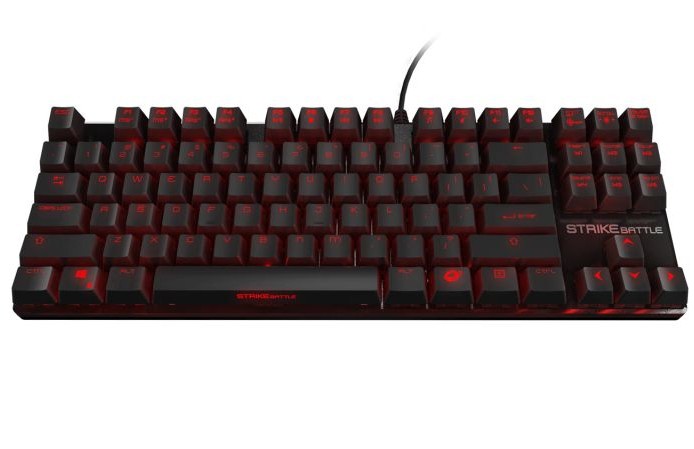
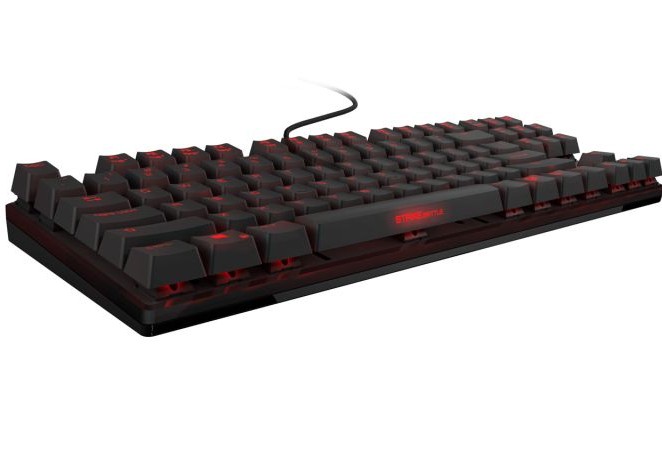
Spanish Ozone Gaming has started this year with Blast series headsets and today they are releasing new simple and ergonomic mechanic compact keyboard, which includes red LED Backlight keys.
Ozone Strike Battle offers the biggest Cherry MX key switches selection for users. Depending on your style you can choose from MX red, MX blue, MX black, MX brown, MX green, MX clear, and MX white. Small and ergonomic compact design ensures to leave more free space on the desk for gaming mouse and mousepad. This will be appreciated by any first person shooters gamers who play and aim at low sensitivity.

Read More ...
Gigabyte Rolls Out X99 Gaming 5P Motherboard
Gigabyte rolled out of latest premium socket LGA2011v3 motherboard targeted at high-end gaming PC builds, the X99 Gaming 5P. What sets the board apart from the X99 Gaming 5 (X99 Gaming G1-WiFi minus the WiFi), is its native support for DDR4-3200 XMP profile, a "CPU mode" switch between 2011-pin and 2083-pin socket modes, which enables off-spec electrical pins, and a different brand of chokes for the CPU VRM. The two are practically identical otherwise.


Read More ...
Akasa Intros Euler T and Euler M Cases
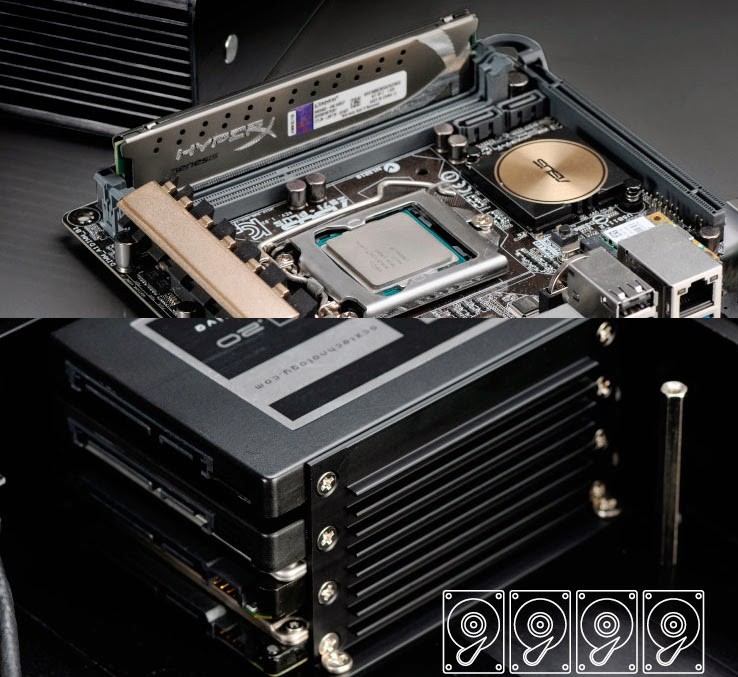
Akasa made two stylish new additions to its slim mini-ITX case lineup, the Euler T, and Euler M. Built completely with chunky aluminium panels that double up as heatsinks for the CPU, capable of passive cooling CPUs with TDP of up to 35W, the Euler T is an evolution of the Euler S. It's a minor redesign that creates room for three 2.5-inch drive bays. Measuring 245 x 215.5 x 68.5 mm, it dry weighs in at 2.5 kg. The Euler M, on the other hand, is the largest in the series, yet. While the case can still only handle 35W CPUs, it comes with a slightly larger 80W power supply, and room for four 2.5-inch drives. It can seat regular thickness mini-ITX motherboards, with regular memory modules. Measuring 245 x 274.5 x 68.5 mm, it weighs 3 kg. Available starting a little later this month, both cases will sell for $250 a pop.


Read More ...
NVIDIA Frees PhysX Source Code
After Epic's Unreal Engine 4 and Unity 5 game engines went "free,"with their source-codes put up by their makes for anyone to inspect freely, NVIDIA decided to join the bandwagon of showering game developers with technical empowerment, by putting up the entire source-code of PhysX 3.3.3, including its cloth and destruction physics code, on GitHub. The move to put up free-code of PhysX appears to be linked to the liberation of Unreal Engine 4 code.
NVIDIA PhysX is the principal physics component of Unreal-driven game titles for several years now. There's a catch, though. NVIDIA is only freeing CPU-based implementation of PhysX, and not its GPU-accelerated one, which leverages NVIDIA's proprietary CUDA GPU compute technology. There should still be plenty for game devs and students in the field, to chew on. In another interesting development, the PhysX SDK has been expanded from its traditionally Windows roots to cover more platforms, namely OS X, Linux, and Android. Find instructions on how to get your hands on the code, at the source link.
Read More ...
Available Tags:AMD , GIGABYTE , GeForce , GTX , NVIDIA , Motherboards , Gaming , Gaming , Keyboard ,


No comments:
Post a Comment