

Corsair Releases Orange Dominator Platinum DDR4-3400 for GIGABYTE X99-SOC Champion


We were the first to review the X99-SOC Champion when it was released at CES, and agreed that it had the chance to take the place for X99 overclockers on a budget. However, these DDR4-3400 modules will not come cheap with an MSRP of $999.99 for a 4x4GB kit, but will come with a lifetime warranty. Users of the X99-SOC Champion will have to update to BIOS F4d, which should be available online shortly, in order to enable XMP appropriately.

We actually have these modules in to test already, and applying XMP in our test system put the CPU into the 167 MHz strap at 160 MHz, resulting in a 22x multiplier on the CPU in order to keep the CPU frequency relatively consistent.
The reason it goes for this strap is because at the 100 MHz strap it would require a higher DRAM multiplier which may not be possible. In actual fact, our testing CPU would not allow the 100 MHz with a 34x DRAM multiplier, but neither would it allow 160 Mhz on the 167 MHz strap either due to a mediocre processor.

We were able to get the kit running at DDR4-3400 using the 125 MHz strap with a small overclock, which kind of confuses comparisons because it means the CPU is lower/higher in frequency, depending on the CPU multiplier (127.5 x 27 = 3440 MHz / 127.5 x 28 = 3570 MHz). One of the benefits of these high end memory kits with a processor at XMP will be that they require a CPU overclock to work properly, promoting performance (albeit indirectly). We tuned the CPU to stock speeds which reduced the kit to DDR4-3333 (still 16-18-18), and the biggest jumps from our quick testing showed WinRAR on Windows and Redis on Linux both getting improvements over 2133 MHz, similar to our deep dive into DDR4 performance.
We’ll roll out a full review, with new GPU benchmarks as well, at a later date. I would imagine that in time these modules will also be validated on other systems, however it would seem that GIGABYTE and Corsair have done a deal to focus on the X99-SOC Champion first. The modules will initially be available from corsair.com.


Read More ...
The HTC One M9 Review: Part 1
For the most part, HTC’s story in the recent past has been well-understood. Starting with the G1, HTC was the first to adopt Android, with massive success as others lagged behind. However, around the time of the Sensation, we saw HTC’s fortunes peak and begin to fall. With the strength of Samsung’s success, HTC crumbled under competitive pressure as their product line became increasingly fragmented, with no real direction. HTC reacted with the One line of phones, but the One X was hurt by the use of Tegra 3 over Snapdragon S4 for most variants, the flexible back cover could easily damage antenna connectors and ruin reception, and in general the One X wasn’t really well-differentiated.
The One M7 was essentially the phone that saved HTC. While at the time it wasn’t as clear, the One M7 was ultimately a better phone than any flagship phone that competed with it. The display was and still is incredible, the design clearly differentiated and well-executed, Sense 5 was smooth and well-designed, the front-facing speakers made for amazing media experiences, and the camera was somewhat of a revelation at the time for its low light quality. The One M8 continued this by refreshing the M7 in some key areas, but areas like the camera weren’t really improved upon, the design was a bit too rounded, and the ergonomics of the bigger phone weren’t the greatest due to the top-mounted power button.
The One M9 attempts to take the M8 and address all of these issues. To see how well it does this, read on for the full review.
Read More ...
Clevo P750ZM: GTX 980M Overclocking Investigated
We posted our full review of the Eurocom P5 Pro (Clevo P750ZM) last week and mentioned that we were investigating overclocking potential. Armed with an updated VBIOS and running NVIDIA’s older 344.75 drivers (as the current NVIDIA drivers lock out overclocking), just how far can you push the GTX 980M? We’ve run some additional tests to find out how much headroom exists and what happens to thermals in the process.
Read More ...
Microsoft Hints at Windows 10 IoT SKUs
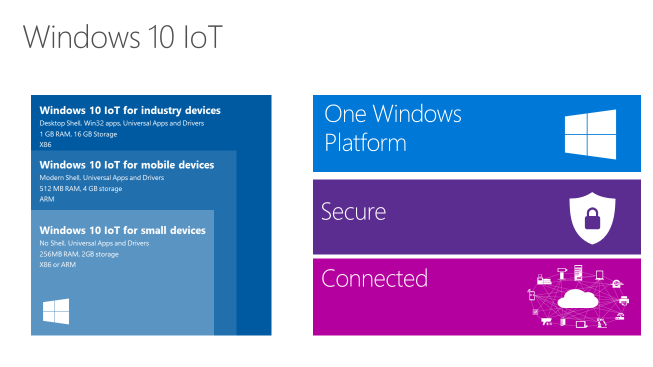
The primary information provided by Microsoft is that there will be an entirely new edition of Windows 10, "Windows 10 IoT", using a similar postfix notation as the ill-fated "Windows 8 RT". However, within Windows 10 IoT there are three classes: industry devices, mobile devices, and small devices. This could be the eventual official names of Stock Keeping Units (SKUs) for Windows 10 IoT, but Microsoft was careful not to use the SKU term yet.
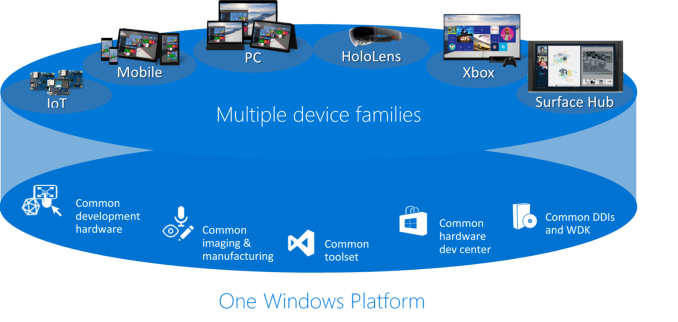
All three classes of Windows 10 IoT support universal apps and drivers. This extends the deployment options of a single app from desktops, laptops, tablets, game consoles, TVs and augmented reality (Holo Lens), all the way to IoT devices. The idea of a single app running on all these targets is quite impressive if it can be done well. While one app might not need to be on every type of device, it at least implies the development experience for each target is similar therefore lowering the barrier to entry.
Windows 10 IoT for industry devices has identical requirements to traditional 32-bit Windows 10: x86 processor, 16 GB storage and 1 GB RAM. Therefore it will be interesting to see what software tweaks are provided in Windows 10 IoT for industry devices that differentiate it from traditional Windows 10. Microsoft has not yet provided any details about this, but alludes to deeper integration with cloud services, security, and machine to machine connectivity. Microsoft mentions targeting medical devices, robotics, and other smart machine applications. From my own perspective, many of these devices already run Linux or real-time operating systems such as VxWorks so this could be an uphill battle.
Windows 10 IoT for mobile devices is a subset of functionality. It excludes the desktop shell but keeps the all modern interface introduced in Windows 8, then further reduces storage needs to 4 GB and an memory to 512 MB. Microsoft also limits it to only ARM processors, which is quite surprising considering that Windows 10 for small devices works on ARM or x86 processors. Also, the overlap with Windows Phone is considerable, and considering the rumors of x86 support in Windows 10 for phones, Windows 10 IoT for mobile devices is quite an enigma at the moment.
Finally, Windows 10 IoT for small devices drops the shell entirely but maintains universal app compatibility. This might imply that there is no way to interact with the operating system while running an app, such as a kiosk experience for Point of Sale (PoS) or media center devices. Microsoft's own documentation states "To keep storage and memory costs low, this edition of Windows 10 does not include a Windows start experience or in-box apps. Instead, the device maker builds the device experience as a Windows universal app and configures the device to launch that app at boot, giving the device developer complete control over the device experience." Requirements drop down to 256 MB of RAM and 2 GB of storage. As mentioned above, x86 and ARM processors are supported.
Microsoft also announced that Windows 10 IoT for small devices will be free for makers and commercial device builders. The language used is quite specific and it appears to rule out deploying Windows 10 IoT for small devices internally within a company.
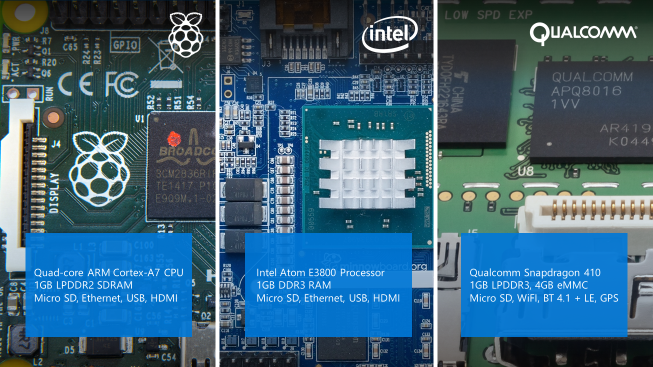
Finally, Microsoft's supplied graphic highlighting three compatible small devices includes the Raspberry Pi 2, an Intel Atom development board, and the Qualcomm DragonBoard 410c. The processors in each are ARMv7, x86, and ARMv8 respectively.
Unfortunately many questions remain. We look forward to Microsoft providing more details and evaluation units in the future.
Read More ...
Cher Wang Replaces Peter Chou as CEO of HTC

This move may seem unprecedented, but in practice it seems that Cher has increased responsibilities in terms of running HTC from day to day as Peter became more focused on product development and R&D. Given the change in focus in HTC from smartphones to connected devices, it seems that this has become one of the organizational changes that was deemed necessary to expand into new segments of the industry. In the near term, it seems that it's unlikely that anything will be noticeably different, but in the near future we may see a distinct shift in how HTC works.
Read More ...
Microsoft Launches The Ultra Low Cost Lumia 430
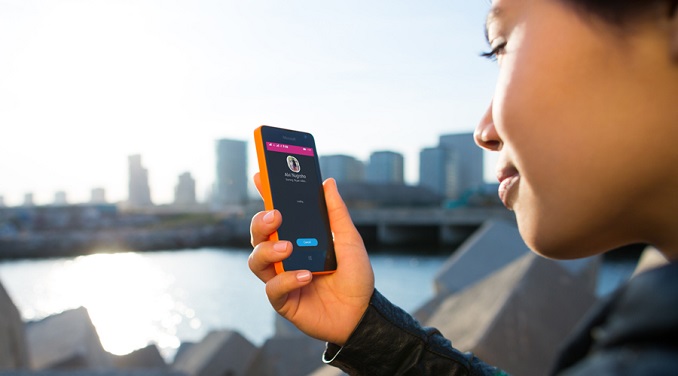
It is all fairly pedestrian in the specifications department, as we will see below, but the real story is just how inexpensive this device is. Pricing will vary by market, but Microsoft is estimating the Lumia 430 Dual-SIM smartphone to be priced around $70 USD before any subsidies are applied.

To hit these kinds of price points, some sacrifices have to be made of course, but all in all it is still a typical low end Lumia. Before Microsoft bought the Lumia line from Nokia, we had similar low end phones launched that would be missing key features. The Lumia 635 is a great example of this. Although it was a decent device, the lack of a proximity sensor and ambient light sensor made it difficult to use in real life, and the limited 512 MB of RAM meant it could not access the entire Windows Phone catalog of apps.
Microsoft has taken a different approach, and all of the low end devices that they have launched with the Microsoft logo have included the standard features needed to enjoy a smartphone experience, and the $70 Lumia 430 is no exception. It comes with the Qualcomm Snapdragon 200 SoC, with dual 1.2 GHz Cortex A7 cores, so it will not be the speediest device ever launched, but Windows Phone has always been good on low end devices and avoids the stutter and chop which has plagued Android. RAM is a healthy 1 GB, which means that the Lumia 430 does have access to the entire Windows Phone store. Other key features such as the ambient light and proximity sensor are included, even for this budget price, so obvious features such as automatic brightness will work.
Speaking of brightness, the LCD will also likely be a very low end model, but it is a 4” 800x480 LCD, although it is not listed whether this is an IPS display (hopefully it is) but the display enhancement technologies such as ClearBlack are not available. I have also found with the low end Lumia phones that the display coating is also either very thin or not available, and this could continue that trend due to the price.
Storage is also something that Microsoft has bumped up, with Nokia opting for 4 GB on the very low end models, but Microsoft has equipped even this low end device with 8 GB of internal NAND. MicroSD support will give an additional 128 GB more space, and Windows Phone supports MicroSD very well so this will not be an issue.
The battery is just a 1500 mAh, with the older 3.7 V chemistry, which works out to just 5.55 Wh of capacity.
| Nokia Lumia 430 | |
| SoC | MSM8212 dual-core 1.2 GHz Snapdragon 200 |
| RAM/NAND | 1 GB RAM, 8 GB NAND + microSD |
| Display | 4.0” 800x480 LCD |
| Network | GSM/GPRS/EDGE/UMTS/HSPA+ up to 42.2 Mbps |
| Dimensions | 120.5 x 63.2 x 10.6 (mm) |
| Weight | 127.9 grams |
| Camera | 2MP rear camera Fixed Focus 1/5" Sensor No Flash, VGA FFC |
| Battery | 1500 mAh (5.55 Whr) |
| OS | Windows Phone 8.1 with Denim Firmware |
| Connectivity | 802.11 b/g/n + BT 4.0, USB2.0, MPT, DLNA, FM Radio |
| Location Technologies | Cellular and Wi-Fi network positioning, A-GPS, A-GLONASS |
| SIM Size | Smart Dual MicroSIM |
The camera is the main area where costs were saved. The Lumia 430 comes with just a 2 MP fixed focus camera on the rear, however the front camera is the same resolution as the $1299 Apple MacBook, with a 0.3 MP VGA sensor which is clearly for cost savings, and will not be very good for anything other than the occasional video chat.

Microsoft’s strategy seems to be to release a new low end smartphone every couple of weeks, and even as someone who follows the space it is getting awfully confusing. However most of these are aimed at specific markets, and the Lumia 430 is no exception. The Lumia 430 will be available in April in the Asia-Pacific, India, the Middle East, Africa, Russia, Kazakhstan, Ukraine and Belarus.
Source: Lumia Conversations
Read More ...
The AMD FreeSync Review
After a long wait, AMD’s FreeSync has finally arrived. Promising adaptive refresh rates using open standards and with no royalty fees, there are only two remaining questions: does is work, and how much will it cost? With the first publicly available FreeSync drivers in hand and using LG’s 34UM67 UltraWide display, we put FreeSync to the test.
Read More ...
NVIDIA Announces Quadro M6000 & Quadro VCA (2015)
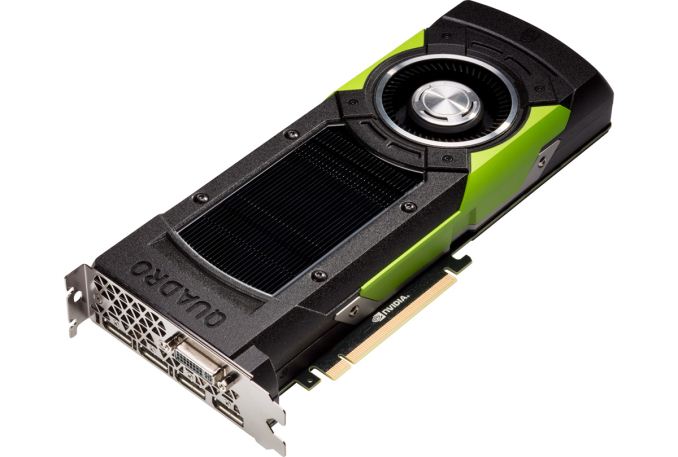
Like Titan, 6000 is NVIDIA’s flagship Quadro card and today’s launch sees the new GM200 based Quadro M6000 take its place at the top of the Quadro graphics stack. What makes this launch interesting is that NVIDIA has never launched a flagship Quadro card so close to a flagship GeForce card in this manner. Quadro cards usually launch months down the line, not days. The end result being that professional users are getting much earlier access to NVIDIA’s best hardware.
| NVIDIA Quadro Specification Comparison | ||||||
| M6000 | K6000 | K5200 | 6000 | |||
| CUDA Cores | 3072 | 2880 | 2304 | 448 | ||
| Texture Units | 192 | 240 | 192 | 56 | ||
| ROPs | 96 | 48 | 32 | 48 | ||
| Core Clock | N/A | 900MHz | 650MHz | 574MHz | ||
| Boost Clock | ~1140MHz | N/A | N/A | N/A | ||
| Memory Clock | 6.6GHz GDDR5 | 6GHz GDDR5 | 6GHz GDDR5 | 3GHz GDDR5 | ||
| Memory Bus Width | 384-bit | 384-bit | 256-bit | 384-bit | ||
| VRAM | 12GB | 12GB | 8GB | 6GB | ||
| FP64 | 1/32 FP32 | 1/3 FP32 | 1/3 FP32 | 1/2 FP32 | ||
| TDP | 250W | 225W | 150W | 204W | ||
| GPU | GM200 | GK110 | GK110 | GF110 | ||
| Architecture | Maxwell 2 | Kepler | Kepler | Fermi | ||
| Transistor Count | 8B | 7.1B | 7.1B | 3B | ||
| Manufacturing Process | TSMC 28nm | TSMC 28nm | TSMC 28nm | TSMC 40nm | ||
So just what is Quadro M6000? Packing a fully enabled GPU, this is GM200 at its best. All 3072 CUDA cores are enabled, and with a maximum clockspeed of 1.14GHz the card is capable of pushing 7 TFLOPs of single precision performance. Coupled with the card is GM200’s double-sized ROP clusters, giving M6000 96 ROPs and better than 2x the pixel throughput of the outgoing K6000.
Meanwhile it’s interesting to note that NVIDIA’s GPU Boost technology has finally come to the Quadro lineup via the M6000. The M6000 supports 10 different boost states, the fastest of which is the 1.14GHz state that gives the card its 7 TFLOPS of performance. As with GeForce and Tesla cards, GPU Boost allows NVIDIA to raise their shipping clockspeeds for better performance without violating the card’s cooling or power delivery restrictions.
Paired with the GM200 is 12GB of GDDR5 memory, which is as much as the K6000 and still the most one can pack on a memory bus of this size. M6000 clocks its memory at 6.6GHz, which is good for 317GB/sec of memory bandwidth. Furthermore, as with past high-end Quadro cards ECC protection is available for the memory (and only the memory, no cache), which trades off some memory bandwidth for better protection against memory errors.
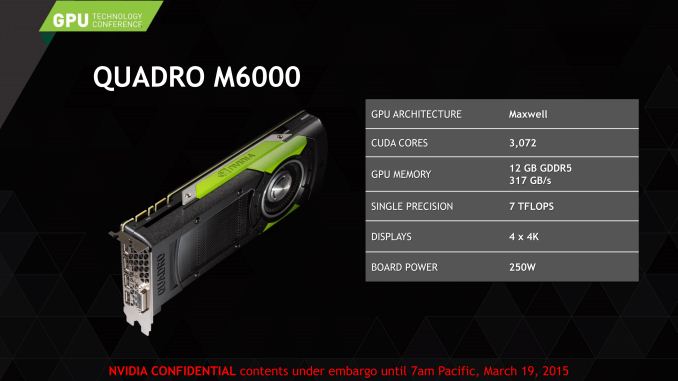
On the overall performance front, Quadro M6000 is expected to offer a significant performance boost over K6000, similar to what we’ve seen on the consumer side with GTX Titan X. Along with the greater clockspeed and the slight increase in the number of CUDA cores, M6000 brings with it the Maxwell 2 family architecture and its efficiency improvements. Actual performance will depend on the application, but 50% or more is possible, especally in exotic scenarios that stress the ROPs. To that end NVIDIA gave Lucasfilm some of the first M6000 cards, and they reported a better than expected performance increase:
To create the most immersive and visually exciting imagery imaginable, Lucasfilm artists and developers need optimal graphics performance and GPU power," said Lutz Latta, Principal Engineer at Lucasfilm. "With the NVIDIA Quadro M6000 GPU, we saw overall gains of 55% in heavy a compute and memory access ray-tracing application using layered shadow maps. This kind of performance boost gives our artists a necessary edge to realize their creative vision.
(Emphasis ours)
Along with Maxwell 2’s architectural efficiency improvements, Maxwell 2 also brings with it a series of feature improvements that make their debut in the Quadro family on the M6000. On the display side, M6000 is the first Quadro capable of driving four 4K displays (previous gen Quadros were limited to two such displays) thanks to the updated display controller. Meanwhile Quadro also gains the latest NVENC video encoder, which though unlikely to be used at this early stage, opens the door up to real-time HEVC encoding on Quadro.
As for the card’s construction and power requirements, both have changed compared to K6000. M6000’s TDP is 250W, up from 225W on K6000. The increased TDP allows for higher clockspeeds than the Quadro family’s historically conservative clockspeeds, and is at this point equivalent to the consumer GTX Titan X’s power requirements. Interestingly despite this increase, M6000 only requires 1 8-pin PCIe power connector (located on the far side of the card, as in past Quadro designs); this technically puts the M6000 out of spec on PCIe since 250W is more than what the slot + 8-pin connector can provide (225W). We asked NVIDIA about this, and they have told us that the card is pulling the extra power from the 8-pin connector, and though not officially in spec, the kind of systems expected to house the M6000 are expected to have no problem delivering the extra amperage necessary.
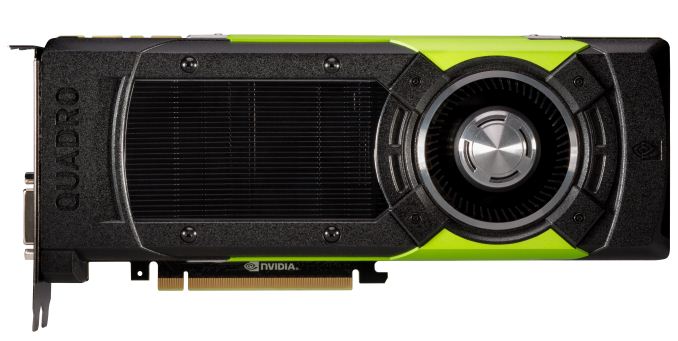
Meanwhile the card’s construction has seen the K6000’s plastic shroud and cooling apparatus replaced with the metal GTX Titan shroud and cooler, similar to the GTX Titan X. This change is largely driven by the power increase, as the GTX Titan cooler is already qualified to handle 250W designs. To set it apart from the GTX Titan X, the M6000 gets a black & green paint job rather than the Titan’s all-black paintjob. Otherwise the change in coolers has no effect on the card’s dimensions, with the card still being a double-slot 10.5” long card, just like the K6000.
Moving on, while M6000 will be a graphics monster, as it’s using the GM200 GPU this means that it will also inherit GM200’s compute capabilities, including the GPU’s highly limited double precision (FP64) performance. On the more recent Quadro 6000 cards, NVIDIA has used GPUs with high FP64 throughput (largely an artifact of also using these GPUs in Tesla compute cards) and left FP64 throughput unrestricted on Quadro cards. This made the Quadro K6000 a sort of jack of all trades, offering NVIDIA’s best pro graphics performance along with their full compute performance.
However GM200 and the Quadro M6000 change that. With Quadro M6000 having a native FP64 rate of 1/32 FP32, M6000 will only have minimal FP64 capabilities. In our GTX Titan X article we discuss the development rationale for this, but NVIDIA has essentially opted to build the best graphics and FP32 compute GPU they can, and not waste space on FP64 resources. Consequently this is the first Quadro 6000 series card in some time to have such poor FP64 performance. However as FP64 compute is not widely used in graphics, this is not something NVIDIA believes will be an issue. In the far more common scenario of FP32 compute (e.g. most ray-tracing engines), M6000 will be far more performant than its predecessors.
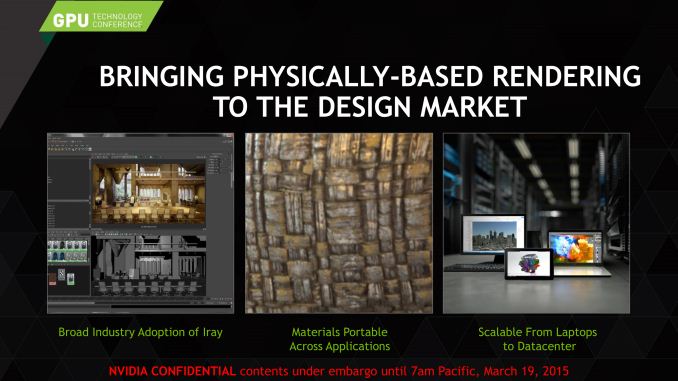
Finally, as far as use cases go, NVIDIA is aiming the M6000 at a cross-section of possible markets. There is of course the traditional pro visualization market, the high-end of which is always in need of greater GPU performance, something the M6000 can provide in spades. However the company is also pushing the use of Physically Based Rendering (PBR), a compute-intensive rendering solution that uses far more accurate rendering algorithms to accurately model the physical characteristic of a material, in essence properly capturing how light will interact with that material and reflect off of it rather than using a rough approximation. We’ll have more on PBR a bit later this week when we talk about Quadro developments at GDC.
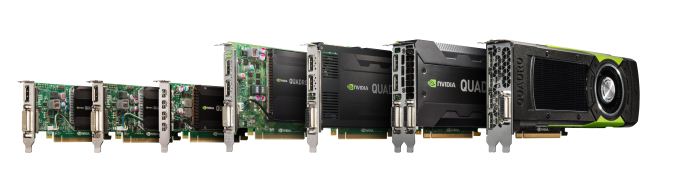
Wrapping things up, NVIDIA tells us that Quadro M6000 will be available soon in complete systems through the company’s regular OEM partners, and as individual cards via the typical retail channels. As is company for NVIDIA, they have not announced a launch price for the M6000, but we would expect to see it launch at $5000+, as has been the case with past Quadro 6000 series cards.
Quadro VCA (2015)
Meanwhile with the launch of the Quadro M6000, NVIDIA is also using this opportunity to refresh their Iray Visual Computing Appliance (VCA), the company’s high-end network-attached render server. The VCA specializes in very high performance remote rendering jobs, packing in multiple GPUs into a single server box, with further scale-out capabilities to multiple VCA boxes via 10GigE and Infiniband.
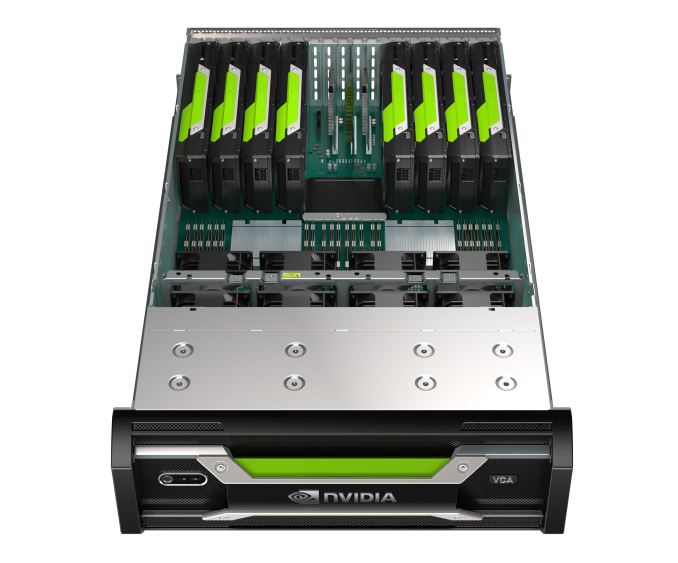
Now dubbed the Quadro VCA, this updated VCA packs in 8 of NVIDIA’s high-end Quadro cards. The cards themselves are GM200 based but are technically not M6000 – NVIDIA is quick to note that they have a different BIOS that has them clocked slightly differently – but should perform similar to the aforementioned M6000. These cards have 12GB per GPU and are fully enabled, giving the entire VCA some 96GB of VRAM and 24,576 CUDA cores.
Driving the Quadro cards will be a pair of 10-core Xeon processors (we don’t have the specific model at this time, but believe it to be from the Xeon E5 V3 family), 256GB of system memory, and 2TB of solid state storage. Other than the change in processors and the updated Quadro cards, the rest of these specs are identical to the previous generation VCA.
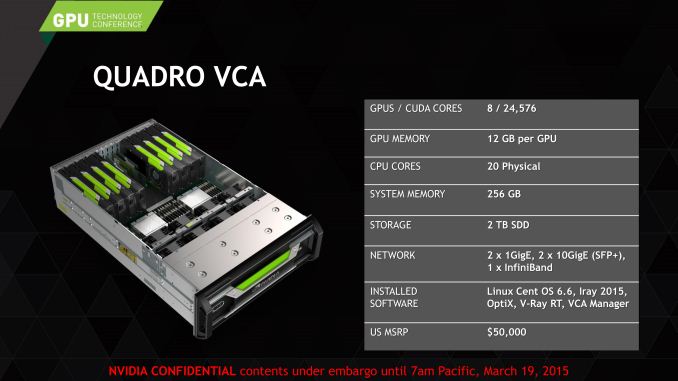
On the software side, the new Quadro VCA runs CentOS 6.6. It will also come with Iray 2015 and Chaos’s V-Ray RT pre-installed to make setup easier, however it should be noted that the VCA does not include the licenses for those software packages and those must be purchased separately.
The Quadro VCA will be available soon through NVIDIA's VCA partners for $50,000.


Read More ...
Windows 10 Update: Build 10041 Now Available
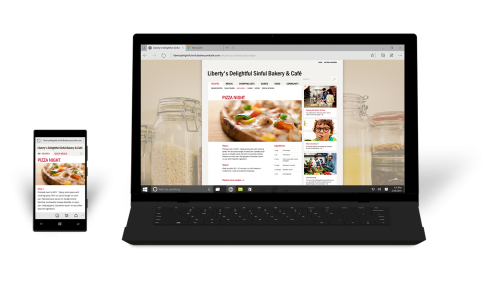
For those in the Insider Program, if your computer is in the “Fast” ring for Technical Preview updates, you can get this update through Windows Update. Microsoft will not be providing ISO files for fast ring builds, but will continue to provide ISO files for slow ring builds. There is no update yet on when the next slow ring build will be though.
Fast ring updates should be coming out much quicker now, so for those that want a more stable machine, the slow ring may be the safer bet. Microsoft is hoping to have at least one or two new builds per month. Due to the frequency increase, we may not give a full breakdown on changes unless a new feature emerges which needs some discussion.
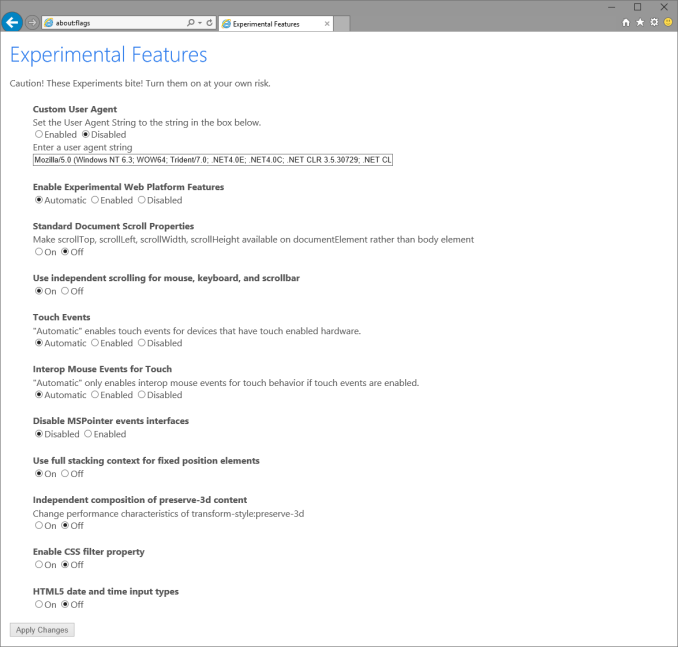
The one big feature that was supposed to be in the “next” build was the new Spartan web browser, however some technical hurdles with the code have prevented this for build 10041, although we are promised it for the next round. For those that have missed it, Spartan is a new branch of Internet Explorer, which keeps some of the components but ejects a lot of the legacy code in an attempt to have a leaner, faster browser. Early results from the new ECMAScript engine were promising, with results that are comparable to Chrome. It will be the default browser in Windows 10, with Internet Explorer being moved to the background for enterprises which rely on its features only. As with previous builds, some of the new Spartan capabilities can be tested from within Internet Explorer too.
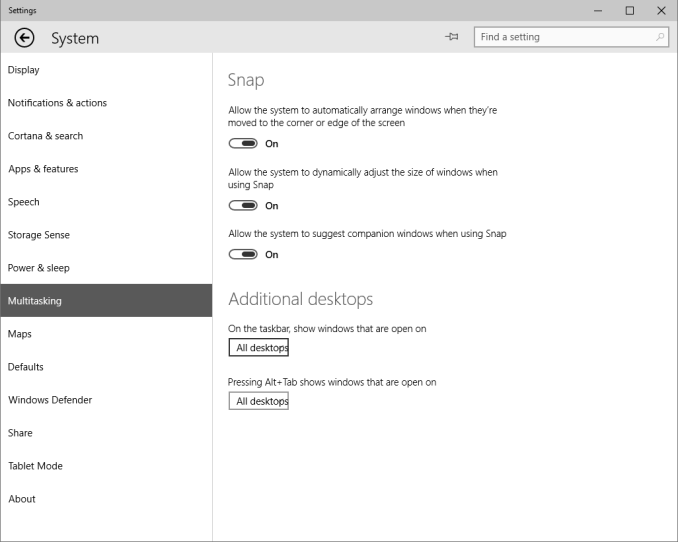
For build 10041 though, there are a few changes. The Start Menu has been tweaked, and now has a transparency effect. The login is now a new look and feel, which is actually quite nice. Virtual Desktops have gotten a big update. One of the things that I did not like about Virtual Desktops was that any apps open on a virtual desktop would be on the taskbar, which clutters the taskbar on the desktop you are on. You can now filter the taskbar so that a taskbar will only show the apps running on that desktop. Because this is just a filter, those that prefer it the old way will be able to keep it as status quo.
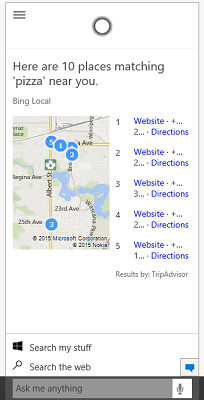
The much touted Cortana personal assistant is now available in many more markets. Microsoft has China, the UK, France, Italy, Germany, and Spain listed as new markets for Cortana, but I can confirm from my chair in Canada that Cortana is now in Canada as well.
One of the things that people have lamented from the days of Windows 8.1 was the ability to choose networks. The Charms settings for Wireless was very easy to use, and quite effective. Windows 10 now has a “Windows 10 style” flyout window, which is similar to the Action Center notification window in look and feel. The UX of both are still works in progress, but the initial functionality is there.
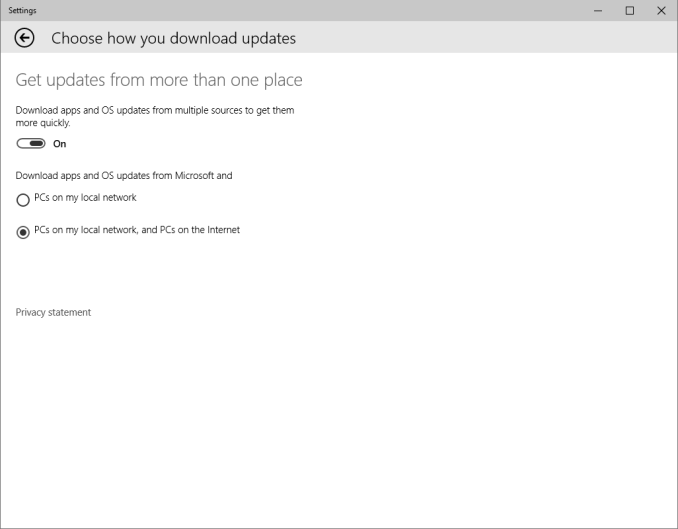
One of the more interesting additions, which is very much welcome in my household, is a big change to how Windows Update can get updates. Windows Update will now be able to pull the update files from sources other than Microsoft, including devices on your local area network. Apps will also be available, so when you have a multi-PC household, as long as one of the devices has already downloaded an app or update, your computer will no longer need to traverse the internet and be limited by your ISP or more importantly the possibility of limited data usage on mobile networks. With some apps being in the multi-gigabyte range, this is a huge change and very welcome.
The new build is still not finished code, so be aware that there are quite a list of known issues. For the complete list, or if you run into any issues with the new build, be sure to check out the source link.
Source: Windows Blog
Read More ...
AMD Mantle API Programming Guide Available
And it’s not just about Mantle, as earlier this month it was announced that the next generation OpenGL, Vulkan, will build off of AMD’s work with Mantle. The Vulkan API hasn’t been finalized yet, but the Mantle API should serve as a good primer if you’re interested. With the full API and reference guide now publicly available, we should hopefully see more games and applications leverage Mantle going forward.
Read More ...
The AnandTech Podcast: Episode 31 - MWC 2015 Show

We kick things off with a look at the flagship smartphones to come out of the show, Samsung's Galaxy S6 and HTC's One M9. We follow this up with a look at some of the photography-centric products to come out of the show, including the Lenovo Vibe Shot and Panasonic Lumix CM1. Of course no MWC would be complete without SoCs, and MWC has Qualcomm's Snapdragon 820, ARM's forthcoming Cortex-A72 CPU, and Intel's new Atom x3/x5/x7 brands. Then we switch gears to peripherals, including Qualcomm's new ultrasonic fingerprint scanning tech, Sandisk's hybrid eMMC tech, and modem tech from Broadcom and Altair. Finally we close things out with SteamVR and the first supporting headset, the HTC Vive.
The AnandTech Podcast - Episode 31
Featuring
- Dr. Ian Cutress: Host, CPU Guru
- Andrei Frumuşanu: Mobile Editor
iTunes
RSS - mp3, m4a
Direct Links - mp3, m4a
Total Time: 1 hour 8 minutes 35 seconds
Outline h:mm
00:00 - Intro
00:28 - Samsung Galaxy S6
07:21 - HTC One M9
13:24 - Microsoft Lumia 640 / 640XL
18:18 - Lenovo Vibe Shot
22:05 - Panasonic Lumix CM1
23:43 - Snapdragon 820 Announcement
24:34 - ARM A72
26:38 - Qualcomm Ultrasonic Fingerprint Scanning
28:25 - Qualcomm Modem Rebranding, LTE and Wifi Link Aggregation
31:28 - Intel Atom x3/x5/x7
37:49 - Sandisk 200GB MicroSD and Hybrid eMMC
42:39 - Broadcom Simultaneous Dual Band
45:07 - Cat-1 and Cat-0 LTE and Altair Semiconductor
46:58 - HTC Vive and SteamVR
Read More ...
HTC Announces UH OH Protection For the One M9
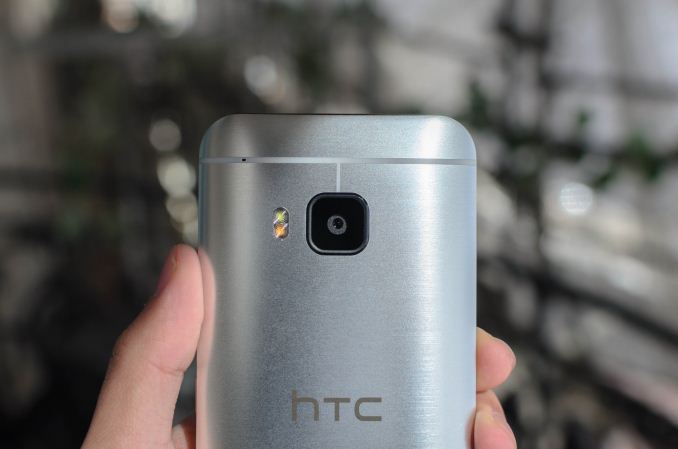
UH OH Protection will be given to every user who purchases an HTC One M9 in the United States. The program will offer all of these users a free replacement device in the event that they shatter its display or cause damage due to water exposure during the first twelve months of ownership. It also covers replacements required due to switching carriers, which should make the issue of network locks a thing of the past for HTC One M9 users. Users who don't end up taking advantage of UH OH Protection will be given a $100 credit toward the purchase of the next HTC One device, and so users who take care of their devices won't be left out.
HTC will be hosting a question and answer session about the new UH OH Protection program at 12:00 EST today, and you can view that stream by clicking on the source below. I personally hope that someone raises the issue of second hand devices, and whether or not users who have a phone given to them or buy it second hand will still be eligible for UH OH Protection if the device is within its initial 12 month warranty period.
Read More ...
Windows 10 News: New Authentication, New Storage Savings, And Launch Timeframe
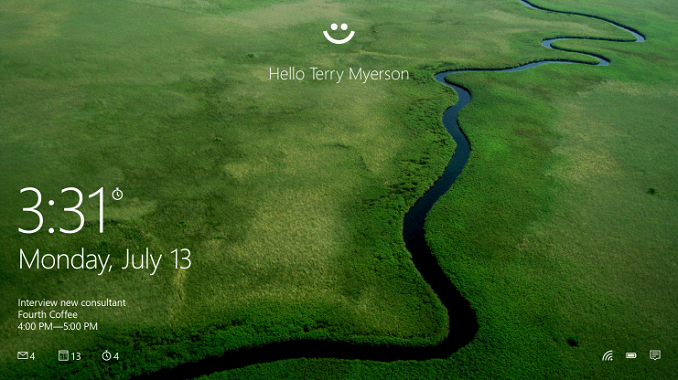
Windows Hello
With Windows Hello, Microsoft is taking a new spin (for them) at authentication. Everyone knows about passwords, and most people are aware of the many issues with passwords, such as password reuse, non-strong passwords, and the like. Passwords are great for computers, but awful for people. Truly strong passwords need to be unique per system or site, and should be long alphanumeric strings. The problem is people are not good with passwords. Windows Hello wants to solve this with multifactor authentication using biometrics and physical devices. Yes, we have seen biometrics before. Even on Windows, device makers like Lenovo have been including fingerprint scanners for many years. We have seen the rise of the TouchID fingerprint reader on the iPhone, which owners have embraced as a much easier way to authenticate themselves to their phone.
Microsoft will be taking a two pronged approach to authentication. The first is the actual authentication. Windows Hello will work with several biometrics, including fingerprint scanners, facial recognition, and iris scanning, as examples. This will be used in conjunction with hardware cryptography on the device to unlock the device. Microsoft is claiming false unlocks at around one in one hundred thousand. Fingerprints are well known, but the facial recognition will not rely on just a webcam, but rather will require new hardware such as the Intel RealSense 3D Cameras to ensure that it is a real person in front of the device and not just a photo. The unlock is tied to the actual device, and none of the unlock information is ever sent off of the device. Existing fingerprint readers can be used with Windows Hello.
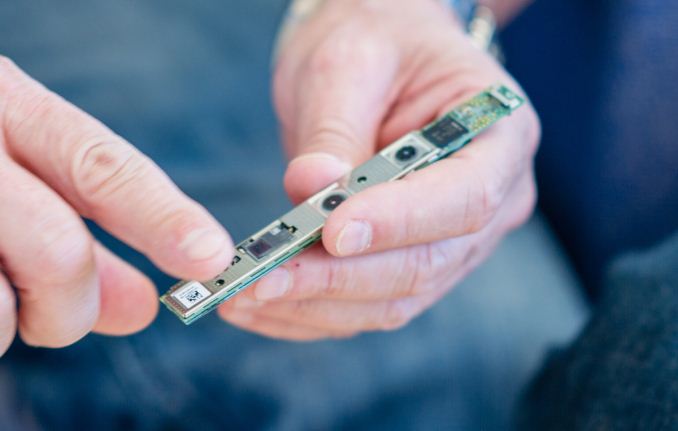 Intel RealSense 3D Camera Module
Since this is not even in the latest build of Windows 10, there are a lot of questions still to be answered. Microsoft has said that they have evolved authentication from what they have learned with Kinect, so they do have some background with this technology. However my experience with Kinect is that it is not very good at authenticating, and with something as important as unlocking my PC I will be skeptical until proven otherwise. Regardless, it is hard to deny that the password has outlived its usefulness, so any research and advancement in this area can only be a good thing.
The second prong of the approach is using your device authentication to allow access to services and websites which require authentication. Microsoft is integrating Windows Hello into a new service code named Passport. Passport is a method of authenticating to external services using public-private key cryptography. Rather than login to OneDrive.com (as an example) with a username and password, and possibly a second factor like an authenticator app, you will log in to your device with Windows Hello (which is two factors – your device and your biometrics), and your device will then authenticate to the service using public-private crypto. This way, if a service is ever compromised, the attacker would just get a public key for your user, which would be useless. The private key would be locked on your device. Passport will be integrated with Azure Active Directory on day one, and Microsoft is hoping to expand the capability of the service through the FIDO alliance. As with anything security related, this is a good step, but we need to see the full details.
WIMBoot Evolution
Windows 8.1 Update 1 brought along a piece of technology called WIMBoot, which allowed Windows to save space on the system drive by keeping the system files in a compressed WIM (Windows Imaging) file on the recovery partition. Traditionally, files are kept as the WIM file for recovery and extracted to the C: drive for use by the operating system. WIMBoot allowed system manufacturers to free up space by removing the redundant files and just using the compressed copy. It was not perfect though. OEMs could still add in their own files to the WIM, significantly increasing the size of the recovery partition. These files could never be removed, so if an OEM just stuck a bunch of unnecessary software in the WIM, that space could never be reclaimed. The recovery partition could not be removed on devices with WIMboot. Although the idea of booting off of the WIM file had merit, it was not always ideal.
Microsoft is evolving this process. Instead of keeping system files in a compressed WIM file on the recovery partition, they have instead gotten rid of the recovery partition. This will free up a significant amount of space that is often dedicated to this, even on devices which never used WIMBoot. The new reset and refresh functionality will rebuild the operating system in place using runtime system files. This takes up less space, and it will keep security updates for system files in place to avoid having to download them again after recovery.
Also, Windows 10 will compress system files if appropriate to the system. During the upgrade, the process will look at several factors and compress the system files if doing so will not adversely affect system performance. This likely means that the system has enough processing power and disk speed that impact will be minimal or non-existent. OEMs will be able to determine if their devices can and should have this done as well, and incorporate It into new devices.
Windows Store apps will also benefit from this compression. This will allow more user data to be stored, which is a win, especially on low cost devices with limited storage.
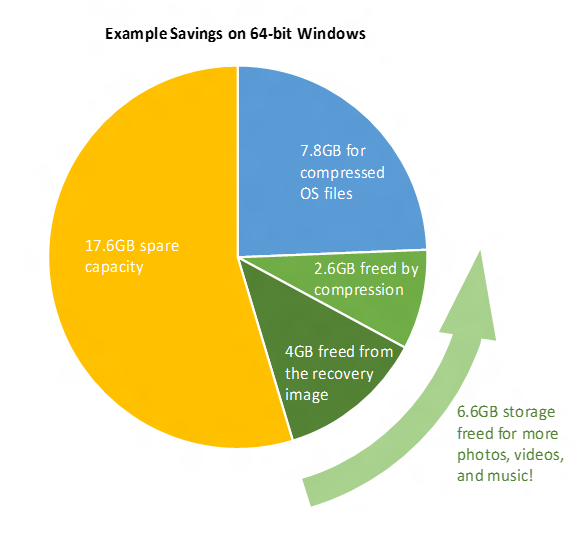
Microsoft is claiming this new compression and lack of a recovery partition can free up over six gigabytes on a 64 bit system. In practice, it could easily be much higher, since the recovery partition can be well over seven gigabytes on its own once the additional software is added. However, their numbers would most likely be comparing to a device which did not leverage WIMBoot in the first place.
Windows 10 Launch Timeframe
The final bit of news from the software company is that Windows 10 is going to ship “this summer” in 190 countries and 111 languages. They have also detailed how they hope to get the free upgrade to Windows 10 underway. In China, partnerships with Lenovo, Tencent, and Qihu 360 will assist customers in getting the upgrade done. Lenovo will offer Windows 10 upgrades at 2,500 service centers and retail stores in China. Tencent will offer free upgrades to Windows 10 for its customers as part of an upgrade pack which also includes some of their own software. They will also be creating a universal app for their QQ app which has over 800 million customers in China, as well as bringing some of their gaming IP such as League of Legends to the Windows Store. Qihu 360 will also be offering Windows 10 to their customers with streamlined installations and accelerated download speeds.
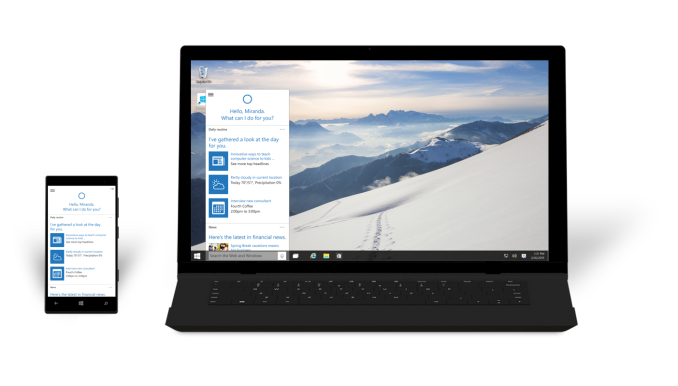
With the current state of the Windows 10 Technical Preview, it seems hard to believe that Windows 10 will be launched by September at the latest. However we have not seen a new build for Windows Insiders since the January build came, so internally employees may be working on much more stable code. Hopefully this is the case, and hopefully the speed of new builds is increased as well. There has been news in the Windows 10 Insider Hub that the rollout of new builds is going to increase, but that has not happened yet. I would get a quote from the Insider Hub, but the app will not currently launch on my Windows 10 desktop which explains my surprise at the launch timeframe being so soon.
If Microsoft can hit the back to school crowd, it would certainly help out with both PC sales and Windows 10 market penetration, but that is not something that they have hit with either Windows Vista or Windows 8 or any of its derivatives.
Source:
Windows Blog: Windows Hello, WIMBoot Evolution, Windows 10 Launch Timeframe
Read More ...
The NVIDIA GeForce GTX Titan X Review
Never one to shy away from high-end video cards, in 2013 NVIDIA took the next step towards establishing a definitive brand for high-end cards with the launch of the GeForce GTX Titan. Proudly named after NVIDIA’s first massive supercomputer win – the Oak Ridge National Laboratory Titan – it set a new bar in performance. It also set a new bar in build quality for a single-GPU card, and at $999 it also set a new bar in price. The first true “luxury” video card, NVIDIA would gladly sell you one of their finest video cards if you had the pockets deep enough for it.
Since 2013 the Titan name has stuck around for additional products, although it never had quite the same impact as the original. The GTX Titan Black was a minor refresh of the GTX Titan, moving to a fully enabled GK110B GPU and from a consumer/gamer standpoint somewhat redundant due to the existence of the nearly-identical GTX 780 Ti. Meanwhile the dual-GPU GTX Titan Z was largely ignored, its performance sidelined by its unprecedented $3000 price tag and AMD’s very impressive Radeon R9 295X2 at half the price.
Now in 2015 NVIDIA is back with another Titan, and this time they are looking to recapture a lot of the magic of the original Titan. First teased back at GDC 2015 in an Epic Unreal Engine session, and used to drive more than a couple of demos at the show, the GTX Titan X gives NVIDIA’s flagship video card line the Maxwell treatment, bringing with it all of the new features and sizable performance gains that we saw from Maxwell last year with the GTX 980. To be sure, this isn’t a reprise of the original Titan – there are some important differences that make the new Titan not the same kind of prosumer card the original was – but from a performance standpoint NVIDIA is looking to make the GTX Titan X as memorable as the original. Which is to say that it’s by far the fastest single-GPU card on the market once again.
Read More ...
NVIDIA GTC 2015 Keynote Live Blog
Read More ...
HSA Foundation Launches ‘HSA 1.0 Final’ – Architecture, Programmers Reference and Runtime Specifications

- the HSA Specification 1.0 defines the operation of the hardware,
- the HSA Programmers’ Reference Manual for the software ecosystem targeting tools and compiler developers,
- the HSA Runtime Specification for how software should interact with HSA-capable hardware
The specifications are designed to be hardware agnostic as you would imagine, allowing ARM, x86, MIPS and other ISAs to take advantage of the HSA standard as long as it conforms to the specifications. The HSA Foundation is currently working on conformance tests, with the first set of testing tools to be ready within a few months. The goal is to have the HSA specification enabled on a variety of common programming languages, such as C/C++, OpenMP, Python as well as C/Fortran wrappers for the HPC space. Companies such as MultiCoreWare are currently helping develop some of these compilers for AMD, for example.
The announcement today is part of an event being held in San Jose, CA, and the event will also see the preview of a HSA book designed to help developers in this space. There will also be a round-table panel of HSA board members discussing the release as well as taking questions. Some of the obvious key points the HSA Foundation will be pushing include video conferencing in mobile (exchanging encode cycles on the CPU/GPU for lower bandwidth requirements), video search, embedded applications and high performance computing, especially those with high memory requirements but can still take advantage of co-processor based compute.
As part of the pre-briefing we received, Phil Rogers, the president of the HSA Foundation and corporate fellow at AMD, explained the purpose of the announcement and answered a few of our questions. Mr Rogers explained how current Kaveri APUs currently rely on the HSA 1.0 Provisional specification, and Carrizo (based on Excavator) will aim for 1.0 Final compliance if the tools are ready before Carrizo launch. Carrizo will not be held back in order to secure compliance before ramping up production, but the expectation is that it should pass and be used similar to Kaveri but with the minor adjustments required for 1.0 Final, such as GPU context switching.
Mr Rogers also explained that the HSA 1.0 Final specifications should integrate with Aparapi for Java and Project Sumatra, both of which we described back at Kaveri launch last year. Currently C++ AMP is also a goal as it allows a reduction in defining restricted kernels due to the unified memory. Also making sure that the new upcoming version of C++17 is also fully supported within the HSA context is important.
With regards profiling, the HSA Foundation has a Tools Working Group currently pursuing both a Profiling API and a Debugging API to allow low language software developers to integrate these tools into their GUIs. We were told that this should happen within a year, but the API requires proper low level access from the developer.
Mr Rogers was not able to comment on the implementations of other HSA Foundation members, particularly companies such as Qualcomm, Samsung, ARM, Imagination Technologies, LG and MediaTek, all of which have ‘arms’ into the smartphone space where HSA could encompass a wide variety of scenarios. We were told however that each of the members of the HSA Foundation, of which there are over 40 technology companies and 17 universities, were keen on closing the specification in order to move forward with their goals.
Heterogeneous System Architecture is in for the long haul for sure, although execution and improvement of user experience will be the key factors in providing something tangible. There also requires an element of learning to think in the HSA paradigm, something not specifically taught to young software developers entering college and university. To that extent, PCIe co-processors and multi-core programming are still low down on the list of to-teach. Nevertheless, I would imagine HSA offers a wide opportunity to those who can take advantage of it, developing their hardware and tools to use it effectively, and the ratification of the 1.0 Final specifications is a big step along that road.
Source: HSA Foundation
Read More ...
X99 goes TUF: Sabertooth X99 at CeBIT 2015 with NVMe Support
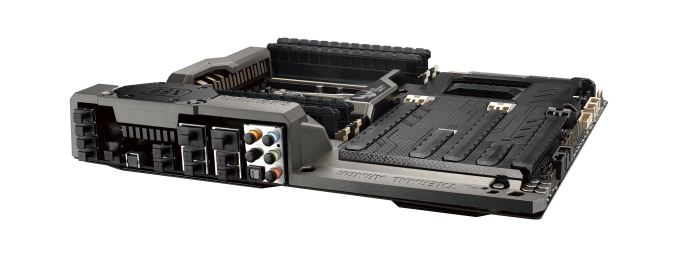

Like some of the Z97 TUF models, such as the Mark S which we reviewed in November, the X99 version gets the front and rear reinforcement plates labelled as the TUF Fortifier as well as slot dust guards to help protect unused slots. The rear panel comes with a covered shroud allowing for directed airflow over the power delivery heatsinks. New to the TUF line is a set of USB 3.1 Type-A ports onboard in teal blue, presumably provided by an ASMedia controller.

New features for X99 include the TUF Detective which is a combination hardware and software feature that connects a specific dedicated USB port on the rear to a smartphone or tablet, allowing the user to remotely turn-on, restart, clear CMOS, view voltages and live system clock speeds. This is somewhat similar to ROG Connect on the gaming motherboard line, but focuses on smartphone/tablets and removes overclocking.


Other TUF features include an upgraded electrostatic discharge protection for the IO ports, an integrated controller for 11 fan speeds and 12 sensors as well as software to manage the directed and partitioned control of the fans. As with all TUF boards, where applicable there is a five year warranty, which is two years more than normal.
An interesting mention in the press release is that the board is listed as 'the world's first consumer desktop motherboard to support all NVM Express storage devices', 'including M.2 as well as SFF-8639 via a mini-SAS HD connector on a 'Hyper Kit' expansion card'. This also apparently allows compatible drives to take advantage of PCIe 3.0 x4. A clause in the press release stats that Hyper Kit is an 'NVM Express M.2 adapter' included with the motherboard, initially available in North America only. No images of the Hyper Kit were provided, nor a list of compatible drives, although given ASUS' PR strategy that might change when it goes on release in the various regions.
No direct word on when the motherboard will be available, which is typical with press releases from ROG. TUF boards are usually light on extra controllers and such, although this one has dual SATA Express, USB 3.1 and the Hyper Kit, and so it might fall in a wide range of pricing depending on ASUS' strategy.
Source: ASUS


Read More ...
The Chromebook Pixel (2015) Review
Google's Chrome OS has always been similar to Microsoft Windows in how one company provides the operating system for many different manufacturers to use on their own devices. But two years ago, Google decided to create a Chromebook which was solely Google branded and designed. Although Chromebooks typically aim at the inexpensive part of the laptop market, this Google branded Chromebook had specifications that put it in line with high end Ultrabooks, and an equally high price tag. It was the original Chromebook Pixel, and its name referred to its 2560x1700 IPS display. At 239ppi it had the highest pixel density of any laptop in the world when it was released, and the rest of its specs were also impressive. But its starting price of $1299 was quite a barrier to entry, and Chrome OS was more limited at that time than it is today.
That brings us to the new Chromebook Pixel which was released just last week. At first glance, you would be hard pressed to tell the difference between this new model and the old one. It has a similar high resolution display, and the same aluminum body with flat edges. But a look at the sides of the chassis will reveal a pair of highly versatile USB Type-C ports, and a figurative look inside will show one of Intel's new Broadwell CPUs which enables high performance and stellar battery life. To learn more about how the new Pixel improves on the original, read on for the full review.
Read More ...
Samsung, Dell, Pegatron to Preinstall Microsoft Office 365 on Android Devices
Seven other companies also sign up for the productivity bundling
Read More ...
Half a Billion Dollars of U.S. Weaponry May be Lost to al-Qaeda, Rebels in Yemen
Report says that U.S. gave Yemen drones, helicopters, planes, humvees, and light weaponry; much of it is currently unaccounted for
Read More ...
HTC CEO Peter Chou is Ousted, Chairwoman Cher Wang Steps In
In spite of slowing plummet, HTC's Chou is knocked down to product development role
Read More ...
HTC One M9 Launches Tomorrow Overseas
American buyers will have to wait till April 10 to get the hot Android flagship smartphone
Read More ...
Acer Iconia Tab 10 is a Bargain at $200 w/ WXGA, $250 w/ WUXGA
Tablet is second cheapest option for HD/FHD Android tablets from a top OEM
Read More ...
FAA Grants Amazon Prime Air an "Experimental Airworthiness Certificate"
However Amazon still faces strict restrictions, like the demand that it only operates drones with a clear line of sight
Read More ...
Small Consolation: Lawyers Score Massive Payday in $16M+ Target Settlement
Plaintiffs who suffered identity theft/credit damage can collect up to $10K each, but experts say few will qualify for a payout
Read More ...
Windows 10 Build 10041 Rolls Out: What's New in Pictures Pt. 1
Microsoft abruptly made good on its overdue promise to roll out a new public preview build
Read More ...
Windows 10 Launches "This Summer" w/ Option to Overwrite Android on Phones
Microsoft said in its corporate blog that the new OS will launch "this summer"
Read More ...
World Bank Official's Sob Story About His Kid's $4500 Xbox Bill Doesn't Add Up
Ignorant of Xbox One's settings, prominent official makes false accusations against Microsoft
Read More ...
Microsoft Band is Coming to the UK on April 15th; U.S. Retail Presence Expands
Fitness-minded wearable packs 10 sensors in a slick package and integrates with most smartphones and tablets
Read More ...
After Failure in 2006, Scientists Score First Successful Penis Transplant
Implanted penis is fully operation
Read More ...
Facebook-Backed Oculus Rift's Release Date Slips to 2016; Valve and HTC Salivate
Virtual reality will have to wait a little longer to become reality courtesy of Facebook, Palmer Luckey, Carmack, and comp.
Read More ...
Nationalist Hackers From Turkey Cause Chaos, Deface Dozens of Sites
Group has risen to prominence in the Middle East via a string of successful politically-motivated cyber-vandalism efforts
Read More ...
Android Apps to Soon Get Boost From Google Now Voice Assistant API
Increased personalization is also planned for assistant
Read More ...
Google Barrages Firefox Users With Warnings After Mozilla Snubs it for Yahoo!
Google pressures Firefox users to make its search engine their default
Read More ...
Stinky Mess: Wipes do $18M in Damage to NYC Sewers
With adults increasingly replacing toilet paper with moist nonwoven towels, sewage systems struggle to keep up
Read More ...
Microsoft Tweaks Windows 10 Taskbar, Start Menu in Leaked Builds 10022, 10036
"Modern Glass" transparent look greatly enhances Start Menu in full screen mode
Read More ...
Flood of Apple Watch Knockoffs Hitting the Black Market in China
Chinese consumers unable to wait - or afford the Apple Watch - can now order a cheaper knockoff
Read More ...
More Than a Feeling: Facebook Removes "Feeling Fat" Emoji Amid Backlash
Critics say the graphic was hateful body shaming and a barrier to obesity acceptance
Read More ...
Nexus 6 Launches Today for $250 on Verizon Wireless, w/ Android 5.1 Onboard
It took nearly half a year for Motorola's Google Nexus branded phablet to trickle out
Read More ...
After Sony Sale, Vaio Launches Android Smartphone of its Own
Sony's former brand has now taken a turn as a market rival
Read More ...
Available Tags:GIGABYTE , HTC , GTX , Microsoft , Windows , CEO , AMD , NVIDIA , AnandTech , GeForce , Android , Acer , Amazon , His , Xbox , UK , Valve , Google , Firefox , Mozilla , Apple , Facebook , Sony , Vaio , Smartphone ,


No comments:
Post a Comment