

AORUS Notebooks Updated with New X5 and X3 Plus
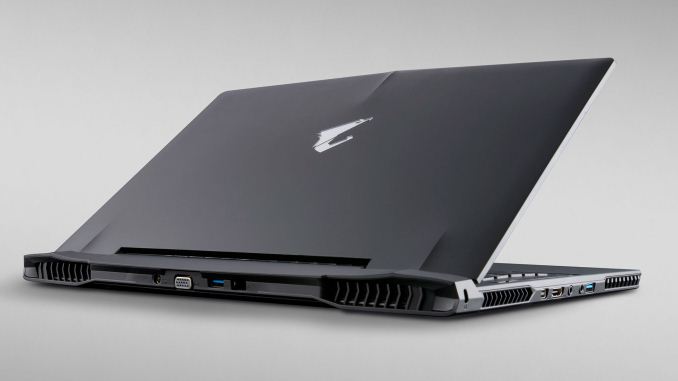
The AORUS X5 starts out with NVIDIA’s new GTX 965M, which was rather quietly released at this CES on Tuesday. It’s basically a trimmed down version of the GM204 chip, coming in slightly below the GTX 970M in terms of performance but with a lower price as well. Except, the AORUS X5 has not one but two GTX 965M GPUs in SLI, pushing performance above the level of a single GTX 980M in some benchmarks. I’ll admit that I’m not really a huge fan of SLI laptops, as I’d rather have the best single GPU solution available before shifting to SLI, and the price isn’t really any lower than laptops with a single GTX 980M (e.g. Gigabyte’s own P35X v3). Still, for those times where SLI works as it should, there’s a bit of extra performance available and spreading the heat between two GPUs may have some minor benefits.
Perhaps more important than the SLI 965M however is the use of a 4K display, and an IGZO panel at that. IGZO (Indium Gallium Zinc Oxide) is a superior alternative to normal Zinc Oxide TFT LCDs. The basic summary is that IGZO generally allows for brighter and better images while using less power, but the cost is higher as well. Needless to say, the display looks quite stunning and while even SLI 965M might struggle to run a lot of games at native 4K with maximum details, for video and multimedia use in particular 4K can be great. Note that there is a non-4K display option as well, for those that don’t need (or want to pony up for) 4K.
The AORUS X5 weighs 2.5kg and is still only 22.9mm thick, which is impressive considering the hardware packed inside. The X5 supports up to three M.2 SSDs in RAID 0 with a 2.5” bay as well. It also has four SO-DIMM slots, supporting up to 32GB of RAM. MSRP ranges from $2299-$2799 depending on configuration. Availability however isn’t expected until Q2, 2015, so if you want the X5 you’re going to have to wait a few more months.
Stepping down a bit in size we have the other new AORUS, the X3 Plus. According to Gigabyte, this is the world’s lightest gaming laptop with a GTX 970M, and it tips the scales at just 1.87kg (4.11 lbs). That’s not actually a true statement, then, as Gigabyte’s own P34W weighs a bit less (1.71kg), but we’ll let it slide. As with the X5, the X3 Plus features an IGZO display, this time a 13.9” IPS QHD+ (3200x1800) resolution panel. It looks great in person, and with the slightly smaller chassis in many ways it’s the most compelling of the AORUS offerings. It also includes up to 3xmSATA SSDs in RAID 0 (and no HDD). Pricing is set at $2199 with availability set for this month.
Finally, the AORUS X7 Pro launched in late 2014, sporting SLI GTX 970M graphics. Other than the larger chassis and scree, most of the specs are similar to the X5 – three mSATA drives in RAID 0, a single 2TB HDD, and four SO-DIMM slots for up to 32GB RAM. Again I applaud the fact that Gigabyte has managed to source an IPS (or PLS or UHVA?) panel for the X7 Pro, as finding IPS 17.3” displays can be rather difficult. Gigabyte is doing the right thing with their high-end laptops by simply avoiding any budget TN panels, and I wish more gaming notebooks would follow their example. Performance of the SLI 970M should be faster than any other gaming notebook other than those with SLI 980M (Gigabyte claims 30% better performance than a single 980M), and with a weight of 3.0kg (6.6 lbs) this is lighter than any other 17.3” gaming notebook that comes to mind. The X7 Pro is already available with an MSRP of $2599.
In addition to the AORUS laptops, Gigabyte is also making additional gaming products under the AORUS brand, including a keyboard, mouse, and backpack. Note that unlike the Gigabyte notebooks, AORUS laptops do not support NVIDIA’s Optimus Technology for switchable graphics – though that’s not an option for the SLI models. I believe that manual switching is available, and for gaming notebooks it’s probably not a huge deal. All of the AORUS laptops also feature a block of macro keys on the left side of the keyboard. We’ll hopefully be able to review some of the AORUS models in the coming months as they become available.


Read More ...
Hands On with Gigabyte Notebooks at CES

Starting with their highest end offering, the Gigabyte P37X is a 17.3” notebook that comes with a GTX 980M GPU, and it’s the thinnest 17.3” laptop to be equipped with that GPU. I supports a pair of mSATA SSDs and can hold up to two 2.5” drives (if you are willing to give up the optical drive). Cooling consists of dual fans, and the keyboard also includes a macro hub. Perhaps most importantly, the display is a 1080p IPS (or AHVA?) panel, providing for wide viewing angles and generally better colors than TN displays. The P37 will be available in three different SKUs, with the P37X targeting a price of $2100-$2300 (with GTX 980M); the P37W will cost $1750-$2000 (GTX 970M); and the P37K will cost $1150-$1350 (GTX 965M). Availability is expected in February.
Up next and very similar in appearance to the P37 is the P35, now in its third iteration. It has basically all of the same features as the P37, only with a 15.6” screen and slightly smaller chassis. What’s truly surprising is that Gigabyte has managed to put a full GTX 980M 8GB into a laptop that’s only 20.9mm thick – along with two mSATA SSDs, a 2.5” drive, and either a slim optical drive or a second 2.5” drive bay. Unlike the 17.3” market, HiDPI displays are readily available for 15.6” laptops, and the P35 comes with a WQHD+ (3200x1800) IPS display. There are three SKUs again, the P35X v3 is at the top and comes with GTX 980M with a price of $2100-$2400, depending on configuration; P35W v3 comes with GTX 970M and will cost $1750-$2000. Both of these SKUs already began shipping in late 2014. Finally, a third SKU, P35K v3, was launched at CES with the newly released GTX 965M; it will cost $1500-$1600 and should be available this month.
Last but not least, the P34 is also in its third iteration, and it should begin shipping this month or next. It has a 14” 1080p IPS display and features a single mSATA SSD and a 2.5” bay. It’s as thin as the P35, 20.9mm, and weighs an impressively light 1.71kg. The P34W v3 comes with a GTX 970M with a price of $1700-$1900 and should ship this month. The P34K v3 is the latest addition with a GTX 965M and a price of $1500-$1600, and it should ship next month.
In terms of our hands on time with the devices, all of them feel relatively solid and it’s great to see Gigabyte opting to avoid the use of any TN displays. Build quality seems good if not exceptional – the chassis is mostly plastic, but still relatively solid to handle. The keyboard and touchpad also seem good, though the 10-key layout on the P35 in particular basically breaks all the 10-key rules and will not be especially useful. The only real question I have is whether the laptops can truly cope with the level of hardware they’re using, as substantially larger laptops sometimes get a bit hot.
We’ve asked for the chance to review all of the latest P3x offerings, though not all at once, and we hope to be able to test the P35X v3 in particular. GTX 980M with a 3K display in a very thin 15.6” chassis happens to press all the right buttons for me. Let’s hope it can live up to our high expectations.


Read More ...
AMD Demonstrates Working Carrizo Laptop Prototype

One of the features of Carrizo is full support for H.265 decoding, and as an example of why this is needed they had an Intel system running next to the Carrizo system attempting to playback a 4K H.265 video. While the AMD system was easily able to handle the task without dropping any frames, the Intel system was decoding at what appeared to be single digit frame rates. The 4K content was essentially unwatchable on Intel. Of course that’s easy enough to remedy by adding an appropriate GPU that can handle the decoding, but AMD’s point is that their APU on its own is able to do something that a high-end Intel CPU cannot do without additional hardware.
As far as other aspects, we do not have any details on the system specifications or expected final clocks. I did see the clock speed of the prototype laptop, but it’s certainly not final so there’s not much point in going into more detail. AMD also indicated that their eventual goal is to have the prototype laptop equipped with a discrete GPU for Dual Graphics support, but that isn’t in the current prototype.
In terms of using the system, we were unable to run any benchmarks or really do anything more than open Windows Explorer and the system properties. Given this is early hardware there are sure to be some kinks to get worked out over the coming months. AMD is still on track for a Q2/Q3 release of Carrizo, and we’re looking forward to seeing what the Excavator core can do in terms of performance. Also note that the GPU will be “Next Generation” GCN (from the redundant department of redundancy?), with support for DX12. It should be an interesting fall when Carrizo ships.


Read More ...
AMD Shows Off Multiple FreeSync Displays

More important than the displays and hardware powering them is the fact that FreeSync worked just as you’d expect. AMD had serveral demos running, including a tearing test demo with a large vertical block of red moving across the display, and a greatly enhanced version of their earlier windmill demo. We could then enable/disable FreeSync and V-SYNC, we could set the target rendering speed from 40 to 55 Hz in 5Hz increments, or we could set it to vary (sweep) over time between 40 Hz and 55 Hz. The Samsung display meanwhile was even able to show the current refresh rate in its OSD, and with FreeSync enabled we could watch the fluctuations, as can be seen here.
Having seen and used G-SYNC, there was nothing particularly new being demonstrated here, but it is proof that AMD’s FreeSync solution is ready and delivering on all of AMD's feature goals, and it should be available in the next few months. Meanwhile AMD also took a moment to briefly address the issue of minimum framerates and pixel decay over time, stating that the minimum refresh rate each monitor supports will be on a per-monitor basis, and that it will depend on how quickly pixels decay. The most common outcome is that some displays will have a minimum refresh rate of 30Hz (33.3ms) and others with pixels quicker to decay will have a 40Hz (25ms) minimum.
On the retail front, what remains to be seen now is just how much more FreeSync displays will cost on average compared to non-FreeSync displays. FreeSync is royalty free, but that doesn’t mean that there are not additional costs involved with creating a display that works with FreeSync. There’s a need for better panels and other components which will obviously increase the BoM (Bill of Materials), which will be passed on to the consumers.
Perhaps the bigger question though will be how much FreeSync displays end up costing compared to G-SYNC equivalents, as well as whether Intel and others will support the standard. Meanwhile if FreeSync does gain traction, it will also be interesting to see if NVIDIA begins supporting FreeSync, or if they will remain committed to G-SYNC. Anyway, we should start to see shipping hardware in the near future, and we’ll get answers to many of the remaining questions over the coming year.


Read More ...
Dell CES Hands On
The Area 51 is Alienware’s top gaming desktop, available with X99 based CPUs and multiple graphics cards. It was announced a couple of months ago, and the first thing anyone will notice is the distinct shape and styling of the case. The internals are mounted on an angle, which is said to enhance cooling.

Next we got to check out the laptops from Alienware. The 13 was previously announced but the new models are the 15 and 17, both of which share styling with the 13. They are much thinner than their predecessors. As seems to be the case with Alienware, almost everything has backlights including the trackpads. It is an interesting effect, and is fully customizable and owners can set the lighting to whatever color they like, or disable it if they prefer. On top of this, if someone wants more graphics power than their internal GPU can handle, the graphics amplifier allows pretty much any graphics card to be leveraged to power either the internal display or external monitor if you want more of a dock experience.


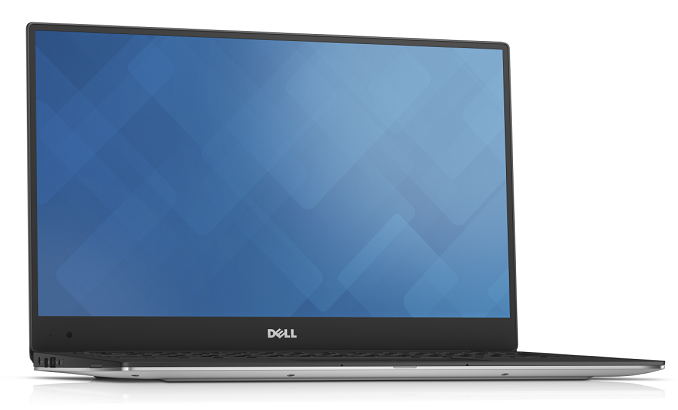
To me the most exciting thing from Dell was the new XPS 13. Dell basically managed to fit a 13” display into an 11” chassis, and the result is a super thin bezel which Dell calls Infinity Display. It was striking to look at, and according to Dell’s representative the display is IGZO, which should mean that it has the standard RGB stripe. Broadwell is the name of the game this CES, and the XPS 13 is powered by the new Intel CPU. Also on display was the updated XPS 15, which is now sporting a 4K display.

Also on the show floor was a couple of tablets from Dell. Dell’s Venue line is divided between Windows and Android with the “Pro” name. Dell’s recently launched Venue 11 Pro was available to see, and this 11” tablet is offered with either Atom or Core-M processors.

The Venue 8 7000 tablet was a striking to see in the dark room, with its 2560x1600 OLED display packing quite a punch and having the incredible blacks that OLED is known for. It is Intel powered, and performance was quite good. This will be Bay Trail of course, with Cherry Trail just now shipping to OEMs.

Dell has some great new products coming out, and I love to see how coordinated the styling is getting among the manufacturers. We look forward to getting some of these in for review to dig into them some more.
Read More ...
MediaTek Demonstrates 120 Hz Mobile Display

While the video is in slow motion to demonstrate the difference, in practice the benefit of the higher refresh rate is still quite visible. Text scrolling and motion was visibly clearer and more fluid, although it’s possible that displays with poor refresh rates wouldn’t see nearly as much benefit. MediaTek claims that this feature would increase display power consumption by about 10%, although it’s unclear whether this is with dynamic refresh rate adjustment or constant refresh rate. Features like this seem to be part of MediaTek’s new strategy of bringing value to the mid-range, and it will be interesting to see if MediaTek’s focus on Asia will continue to pay off.
Read More ...
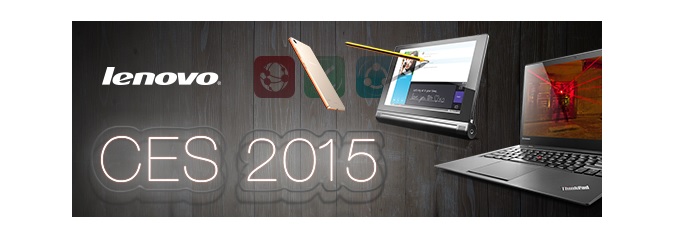
CES 2015 Lenovo Hands On
The first thing in the Lenovo room is the 100 millionth ThinkPad ever built – a ThinkPad X1 Carbon named Eve. The ThinkPad brand has been around a long time, so congratulations to Lenovo on the achievement.

Next we got to check out the ThinkPad Carbon X1. While mostly a spec bump over last year’s model, Lenovo did get rid of the adaptive function keys and brought back the TrackPoint buttons which should make fans for the series happy.
The ThinkPad Yoga line got a large boost in numbers, moving from just a single 12.5” model to three models, with a 14” and 15” model made available. The 15” model is downright massive for a Yoga, but it does come with an optional Intel RealSense 3D camera system. While applications that leverage the camera system are sparse right now, in order for there to be an ecosystem around it, the hardware needs to be there. Lenovo did have some demo software which showed how the camera system could track points on your fingers in real time.

Lenovo has often offered an active digitizer on many of its models, and they also demonstrated some new software that they are developing to extend the use of the pen when it is in use. They feel that if you are using the pen, you should be able to use it as the primary input method so they were working on software to do character recognition with the pen in places like the search box. Although the software was in early stages, it did eliminate the touch keyboard taking up a large portion of the screen when text entry was needed.
Also new to the ThinkPad Yoga 15 was the Intel RealSense 3D camera system which was demoed.

The Yoga 3 series was also released, and this series is a slightly less expensive take on the Yoga 3 Pro. We got a chance to see both the Yoga 3 11 and Yoga 3 14. As with most 2-in-1 models, the large displays can make them a bit unwieldy when being used as a tablet but are generally better than the smaller models when used more like a traditional notebook. I will never complain about having more options though and personally I find the stand mode very useful.


Moving away from the Yoga series, we can still see its impact on the rest of the Lenovo lineup. The Flex 13 is a low cost version of the Yoga, with lower specs, but keeps the 360 degree hinge. Also on the consumer side Lenovo showed off its S41 and U31 models, which both have a white metal finish and 14 and 13 inch displays respectively.


Likely the most exciting thing at the Lenovo booth was the new LaVie series. The models on display are branded as NEC (NEC and Lenovo partnered on these) but they will be branded as Lenovo in other parts of the world. It was fairly stunning to pick one up and see just how light a 1.7 lb laptop is. The lower end version is rated by Lenovo at 5.9 hours of battery life, while the slightly heavier 2-in-1 version was rated up to 9 hours. The 2-in-1 version on display did have the 360 degree hinge, but it did not support Stand mode. It does have a gyroscope so it would seem likely this will be added on when it is closer to release.


Hopefully we will be able to get some of these in for review. Stay tuned!
Read More ...
Intel Announces Curie: Tiny Module for Wearables
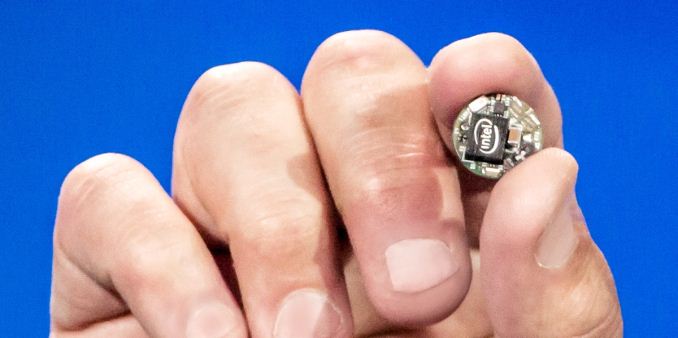
Despite its size, Curie packs in a reasonable amount of functionality. Curie is headlined by a new SoC Intel claims is their first purpose-built for wearables: the Quark SE. Curie was only just announced so we do not have complete specifications yet but I have compiled what is available.
| Intel Curie | Intel Edison Development Platform | |
| CPU | Quark SE @ ? MHz | Dual-Core Silvermont Atom @ 500MHz + Quark @ 100MHz |
| RAM | 80kB SRAM | 1GB LPDDR3 (2x32bit) |
| WiFi / BT | "BT Low Energy" | 2.4/5GHz 802.11a/b/g/n, BT 4.0 |
| Storage | 384kB flash | 4GB eMMC |
| I/O | Battery charging PMIC | SD + UART + SPI + GPIO + USB 2.0 OTG |
| OS | Open source Real-Time OS | Yocto Linux v1.6 (CPU) Open source Real-Time OS (MCU) |
| Dimensions | Approx. US dime (~18mm diameter) |
35.5 x 25 x 3.9 mm |
| Sensors | Integrated DSP sensor hub with pattern matching 6-axis combo sensor (accelerometer and gyroscope) | - |
Intel did not specify if the Bluetooth antenna was built into the PCB or needs to be added on. As Curie integrates sensors and a battery charging PMIC directly whereas Edison provides interfaces to connect to those same features, it is clear Intel designed Curie to be stand alone. Therefore, accounting for the other hardware that needs to be built around Edison, the size difference grows.
Intel's Curie does not include an applications processor and instead relies entirely on the MCU. This may seem limiting compared to powerful Galaxy Gear or Android Wear devices, but there are many devices such as Fitbit and even the Microsoft Band that also exclude an applications processor. This should enable Curie to be exceptional for battery life, however Intel provided no power consumption figures.
Curie will ship in 2H 2015 and be bundled with Intel IQ Software Kits. Intel IQ is a set of algorithms, device software, smartphone apps, and cloud integration (management, analytics, user and company portals) and breaks down into two components: Body IQ and Social IQ with corresponding biometric and connectivity focuses.
Read More ...
Seagate and LaCie at CES 2015

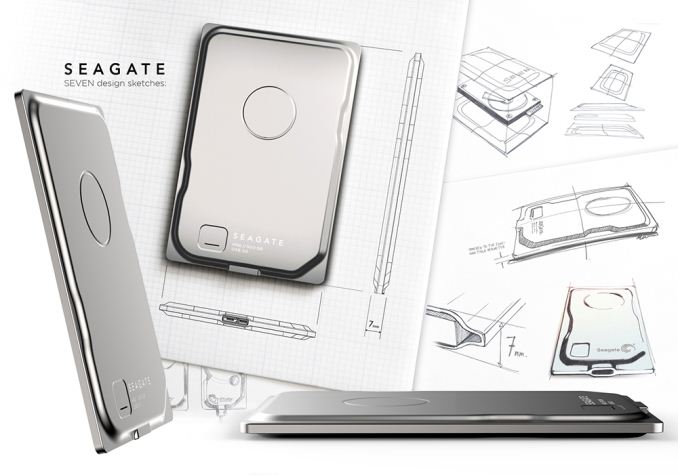
The Seagate Seven is based on a 500 GB 5mm 2.5" Angsana drive (two platters). The SATA-USB 3.0 bridge has been integrated on the main board. A premium steel enclosure creates a unique and striking product at a reasonable $100 price point.
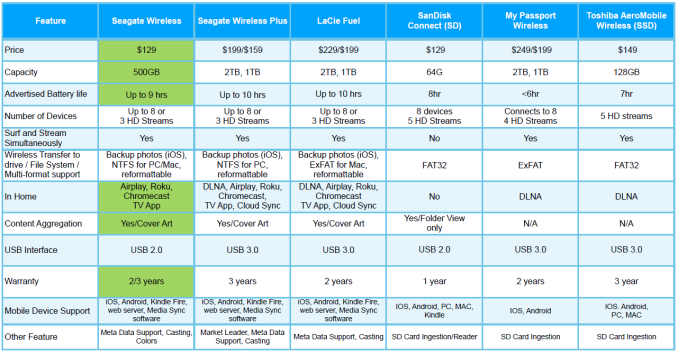
The Seagate Wireless product is an low-cost entry update to the wireless mobile storage lineup for smartphones and tablets. The USB 3.0-based Seagate Wireless Plus and the LaCie Fuel will continue to exist. The new product is USB 2.0-based and has only one available capacity point - 500 GB. It is priced at $129. Unlike the My Passport Wireless that we reviewed late last year, this one doesn't have a SD card slot - the content consumption side is the target market here. Seagate had a handy comparison table in their briefing.
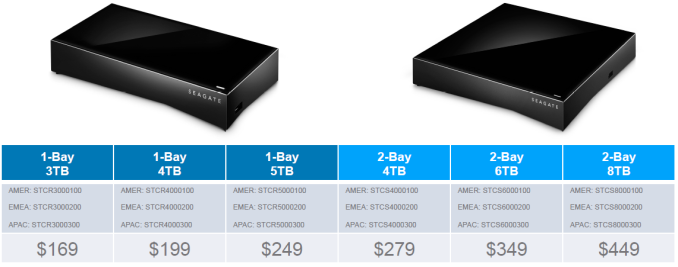
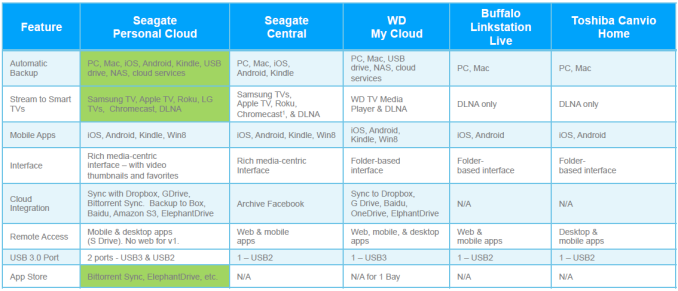
The Seagate Personal Cloud is a NAS lineup targeted towards the average home consumer. It comes in 1 and 2-bay varieties. The mobile apps are the focus here - primary target market being owners with media libraries that need to be streamed to a variety of devices. Seagate operates relay servers with end-to-end encryption so that access to the content on the device is available from anywhere in the world. The various models and price points, as well as the competitive positioning are reproduced below.
On the LaCie side of things, we had the usual fashion statement in the LaCie Mirror - an external 1TB 2.5" USB 3.0 drive that can double up as a mirror. It carries a premium, as usual, with the pricing set at $280. The more exciting product from a technical viewpoint was the LaCie Rugged RAID. The industrial design is almost the same as the LaCie Rugged Thunderbolt that we had reviewed last year. The thickness is more to accommodate two 2.5" drives, and there is a switch to move between RAID 0 and RAID 1 for the internal volume. The device comes with two hard drives. A dual SSD option was ruled out since Thunderbolt and USB 3.0 don't support more than 10 W over the bus.
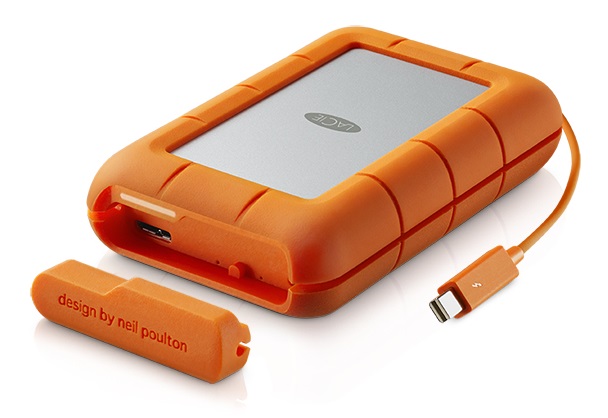
The pricing of the 4TB version (2x 2TB drives inside) will be $450. Advertised performance numbers include speeds of over 240 MBps in RAID 0. Similar to the Rugged Thunderbolt, the unit is shock, dust and splash-proof, and carries an IP54 rating.
On the enterprise side of things, we finally got a look at the Seagate Kinetic Ethernet-Attached Hard Drive. As a quick introduction, the unit does away with the need for a separate NAS server by presenting two Ethernet links over what looks like a SATA connector. Object-based storage removes lots of overhead. Seagate indicated a growing number of chassis vendors with support for these drives. We hope to do a more detailed investigation into Kinetic in the near future.
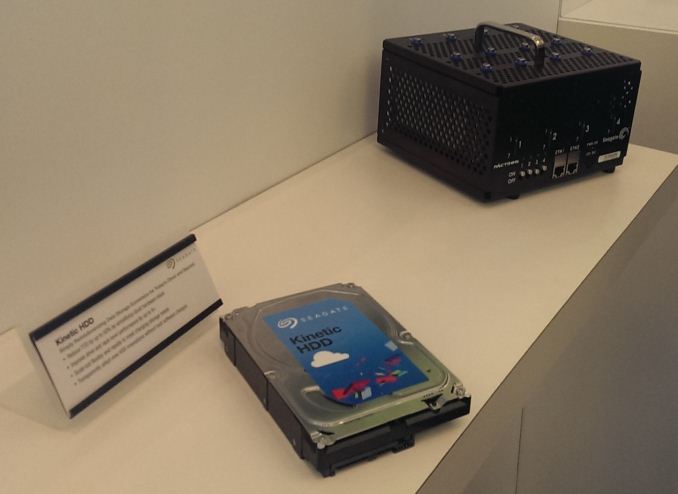
Seagate also had a demonstration of a ClusterStor unit from their Xyratex acquisition. Kristian will be covering updates from the SandForce division later this week.
Read More ...
TP-LINK's Networking Solutions at CES 2015
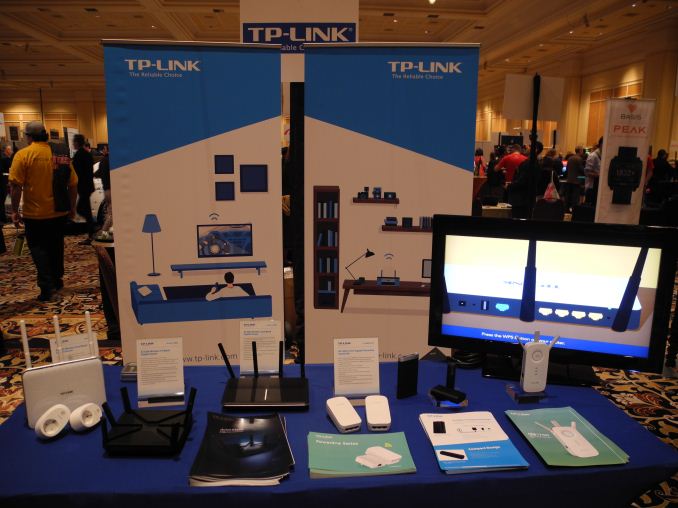
At CES 2015, TP-LINK became one of the first vendors to launch a 4x4 MU-MIMO-capable 802.11ac router with the QCA9980 platform. As of the end of last year, Quantenna was the only vendor with a shipping 4x4 MU-MIMO solution. However, this CES has seen the launch / customer shipment of 4x4 MU-MIMO 802.11ac solutions from Qualcomm Atheros, Broadcom and Marvell. We will have a separate piece comparing the various solutions. With reference to TP-LINK, the QCA9980 finds a place in the Archer AC2600. The unit also sports USB 3.0 ports, and other features are what is standard for a flagship model.
The Broadcom Xstream platform does find a place in the Archer AC3200. With two 5 GHz radios and a single 2.4 GHz radio, this is the same platform that other vendors are already using (Netgear seems to have had an exclusive for a few months with the Nighthawk X6 R8000).
On the powerline side, TP-LINK is staying with Qualcomm Atheros for the AV1200 HomePlug AV2 with MIMO solution. The TL-PA8030 can deliver 1.2 Gbps of throughput theoretically and sports three gigabit ports. It can use all three prongs (power, ground and neutral) for data transmission.
The announced products are slated to appear in the market in Q3 2015.
Read More ...
HTC Announces the Desire 826

| HTC Desire 826 | ||||||
| SoC | Qualcomm Snapdragon 615, 4 x Cortex A53 at 1.7GHz + 4 x Cortex A53 at 1.0GHz, Adreno 405 GPU |
|||||
| Memory and Storage | 16GB NAND + MicroSDXC, 2GB LPDDR3 | |||||
| Display | 5.5” 1920x1080 LCD | |||||
| Cellular Connectivity | 2G / 3G / 4G LTE (Qualcomm MDM9x25 UE Category 4 LTE) | |||||
| Dimensions | 158 x 77.5 x 7.99 mm, 183g | |||||
| Camera | 13 MP f/2.2 Rear Facing, 4MP UltraPixel f/2.0 Front Facing or 13MP f/2.0 Front Facing | |||||
| Battery | 2600 mAh (9.88 Whr) | |||||
| Other Connectivity | 802.11 a/b/g/n + BT 4.1, AptX, USB2.0, GPS/GNSS, NFC (in select regions) | |||||
| SIM Size | Nano SIM (Dual SIM SKU available) | |||||
| Operating System | Android 5.0 KitKat with HTC Sense | |||||
The Desire 826 has a lot in common with the Desire 820 that was released in September 2014. Both devices use Qualcomm's Snapdragon 615 with 2GB of LPDDR3 memory, 16GB of NAND, and 2600mAh (9.88Wh) battery. However, the Desire 826 has a maximum clock speed of 1.7GHz on its high-power A53 cluster, while the Desire 820 was limited to 1.5GHz. Being an Android 5.0 Lollipop device, the Desire 826 will also be 64-bit enabled out of the gate, while the Desire 820 had to operate in 32-bit mode due to a 64-bit version of Android being unavailable. I still believe having two clusters of Cortex-A53s is silly, but HTC weren't the ones making that decision so it's not something I can really fault the phone itself for.

There are some other notable improvements over the Desire 820. The Desire 826 has a significantly sharper display due to HTC's move from 1280x720 to 1920x1080 on the same panel size. The front-facing camera is the other significant difference between the two devices. While the Desire 820 used an 8MP front-facing sensor, the Desire 826 uses a 4MP UltraPixel sensor with an f/2.0 aperture for the front-facing camera in most markets. This should significantly improve low-light camera performance. In certain unspecified markets, the Desire 826 will use a 13MP f/2.0 sensor instead. Like all of HTC's recent devices, the Desire 826 ships with HTC's Eye Experience software for the camera.
The Desire 826 will be available in the Asia-Pacific region by the end of this month, and will expand to other markets afterward. It comes in multiple colors, including but not limited to white, purple, and blue. There is currently no word on what to expect for pricing, but it should be similar to the launch price of the Desire 820.
Read More ...
MHL Consortium Announces superMHL: New Standard & New Cable To Drive 8K TV
Flash forward a few years, and while there have been successive versions of MHL – the most recent being MHL 3 – all of these have built on the original design principles of MHL, focusing on the Mobile part of Mobile High-Definition Link while improving the specification. For this reason it came as quite a surprise to us this week when we found out that the MHL consortium was planning on taking MHL beyond its mobile roots and moving into the TV space, greatly extending the features and use cases in the process. With a mandate to provide a cable for 8K video at up to 120fps, MHL is no longer aiming low; with today’s announcement of superMHL, MHL is now aiming for nothing less than the top.
superMHL in a nutshell is a pair of improvements to the MHL specification to further improve mobile connectivity and to enable 8K video. First and foremost, the protocol itself is being improved: superMHL doubles the amount of bandwidth available over a single lane to allow for 4Kp60 video, along with defining support for deep color modes (10/12/16bit) and newer color spaces. This alone would be a notable improvement to MHL, especially as H.265 capable phones being to hit the market and the H.265 backers are pushing 4Kp60 video and 10-bit color themselves, necessitating a video interface capable of delivering that data.
| MHL Specification Comparison | |||||
| superMHL (6 Lanes) | superMHL (1 Lane) | MHL 3 (1 Lane) | |||
| Maximum Resoluion | 8Kp120, 4:2:0 36-bit color | 4Kp60 | 4Kp30 | ||
| Deep Color Support | Yes | Yes | No | ||
| Power Charging | 40W | Up To 40W, Depending On Cable | 10W | ||
| Requires superMHL Cable | Yes | No | No | ||
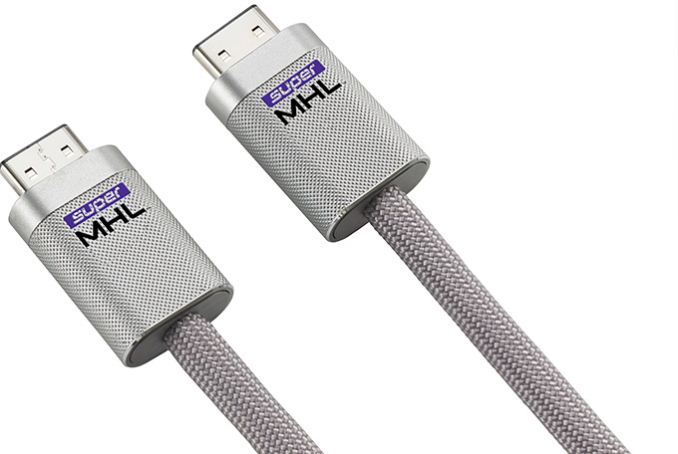
However the more dramatic change is in the second improvement coming to superMHL, which is the introduction of the superMHL cable and connector. This unusual development was spurred on by the television manufacturing members of the MHL Consortium, who in developing their future 8K (7680x4320) televisions wanted a single cable that could carry the enormous amount of data required for 8K video with deep color and high frame rates. Compounding matters, the usual TV connector of choice, HDMI, was not going to be ready for the job, as HDMI 2.0 was only planned for up to 4Kp60 video. Consequently TV manufacturers turned to the MHL Consortium, who became tasked with developing a cable and connector standard for 8K video.

The Consortium’s solution was the suitably named superMHL connector. A reversible connector containing 32 pins, the superMHL is among the densest digital video connectors ever devised, packing those 32 pins in a space roughly the same size as the 19 pin HDMI Type-A cable. With 32 pins the superMHL connector would be capable of carrying 6 lanes of MHL data as opposed to 1 lane on a traditional MHL setup, providing the necessary bandwidth for 8K video, and capable of carrying it two to three meters over a standard (passive) cable.
By going this route the MHL standard now serves two masters, mobile and the home, and consequently the standard now covers a much wider range of use cases and potential configurations. superMHL-to-superMHL cables will be the cable necessary for 8K video, and meanwhile USB to HDMI cables will continue to support mobile devices.
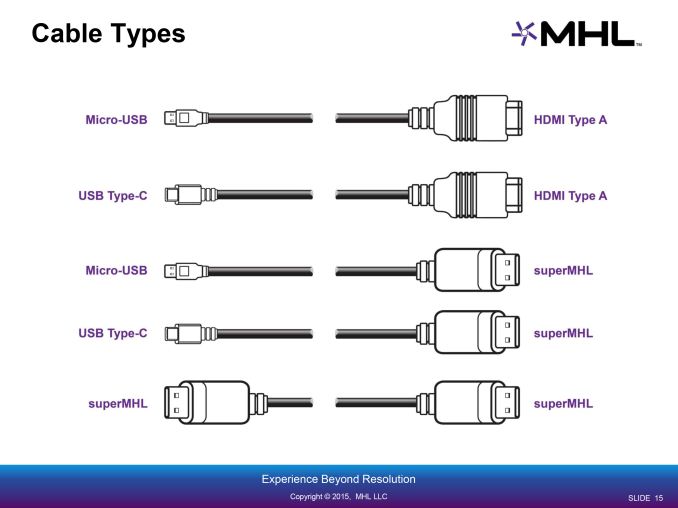
Overall the superMHL standard allows for ether the traditional HDMI connector or the new superMHL connector as a “sink” connector, and no fewer than 3 “source” connectors. Joining the regular micro-USB as a source, USB type-C and the superMHL connector are now supported as source connectors as well. Of these combinations we expect superMHL to superMHL and USB to HDMI will be the most common, especially since 4K TVs can still go ahead and implement superMHL protocol support for 4Kp60 video without using a superMHL port. However if superMHL ports on TVs gain traction, then direct USB to superMHL would become increasingly viable. Meanwhile for USB Type-C in particular, thanks to the Type-C’s alternate mode support, Type-C to superMHL will be able to support 2 or 4 MHL data lanes (versus 1 for micro-USB), leaving the door open to potential mid-bandwidth use cases in the future.
Finally, along with the changes to the MHL protocol and physical interface, for superMHL the standard is also having its power and multi-display limits increased. superMHL power delivery will allow for up to 40W (20V @ 2A) versus MHL 3’s 10W, which will allow MHL connections to carry enough power to not just run tablets but to charge them as well. Meanwhile, though currently rarely used in any form, superMHL increases the number of displays allowed in an MHL multi-display configuration to 8 displays, thanks in large part to the bandwidth increases.

Ultimately today’s announcement from the MHL Consortium marks an interesting turn of events in what has otherwise been a complementary relationship between MHL and HDMI. Though this doesn’t make the standards competing standards – especially not when both are based on TMDS technology and both have TMDS owner Silicon Image among their members – this does for the first time create a real degree of overlap between the two. MHL’s place in mobile is as secure as it ever was, but what will come of their home/TV efforts remains to be seen.

At least in the short term superMHL will be the only option for 8K TV, and in fact Samsung already has an 8K TV with superMHL up and running for CES. But how long it superMHL remains the only option for 8K is another matter entirely. Even outside of its higher bandwidth support, superMHL has some other technological advantages such as the reversible connector and the ability to carry power which give it an advantage over HDMI for 4K video, but for most cases this is not going to be a massive advantage.
In any case, ignoring the HDMI overlap for the time being, superMHL should still bring tangible benefits for both of its primary markets. With an upgraded protocol capable of supporting 4Kp60, MHL is better than ever for traditional mobile applications. Meanwhile with the new superMHL cable and connector, TV manufacturers eager to get 8K TVs out the door will finally have a single cable standard to drive those TVs with.


Read More ...
As mainstream as it gets: Corsair announces the Carbine 100R case


The 100R will be available in two versions. The windowed and windowless (silent) versions will have an MSRP of $49 and $59 respectively. No, that is not a typo, the windowless version is a little more expensive because it includes a layer of sound-dampening material. Visually, the 100R is very similar to its larger, older brother, the 200R. From the pictures that Corsair provides with their press release, we can tell that the major differences lie with the drive cages; there is one less 5.25" bay and the 3.5" cage has been remodeled to use plastic trays. The top exhaust fans are limited to 120mm as well, but they ought to be more than sufficient for a budget-level system.


"The Carbide 100R shatters the stereotype that budget-friendly cases have to be gaudy and poorly designed, " said George Makris, Product Manager for Cases and Cooling at Corsair. "Now gamers and PC enthusiasts have a subtle, functional, and affordable foundation for their next PC." A presentation of the 100R by George Makris can be seen in the following video.
Read More ...
Corsair Debuts the Hydro H110i GT AIO Cooler and HG10 N780 Edition GPU Cooling Bracket
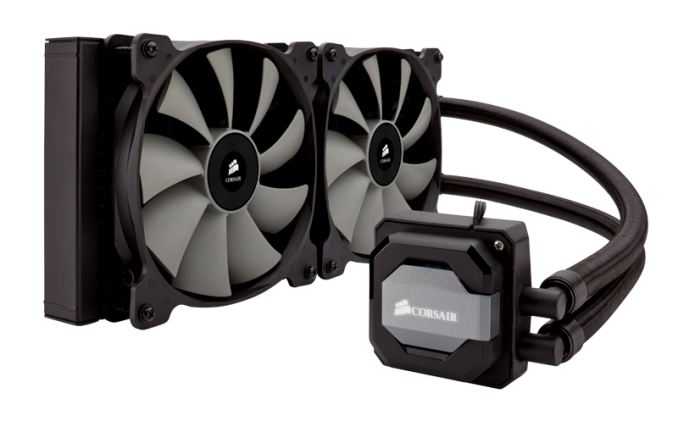


The company also presented an adaptation of the HG10 GPU Cooling Bracket for NVIDIA GeForce GPUs. The core concept of the HG10 N780 remains unchanged, as it has been simply modified in order to be compatible with reference design NVIDIA GeForce GTX 770, GTX 780, GTX 780 Ti, Titan and Titan Black graphics cards. The HG10 N780 is compatible with every Hydro Series AIO cooler. The HG10 N780 is compatible with every Hydro Series AIO cooler. Much like the normal version, the HG10 N780 will not only cool the GPU but the VRAM and VRMs of the latest NVIDIA cards as well. It will be available with an MSRP of $39.99.


Read More ...
Corsair Unveils New Flash Storage Solutions
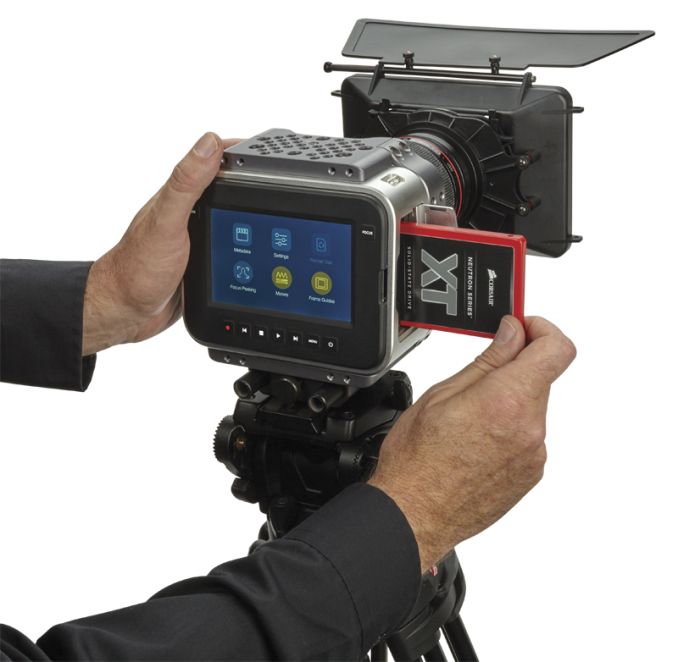
The Neutron XT will be available immediately with MSRPs of $150 for 240GB, $270 for 480GB and $540 for 960GB. I would have liked to see a bit more aggressive pricing because the Neutron XT isn't fast enough to compete with the 850 Pro and Extreme Pro, but as it stands the Neutron XT is a decent option for those who seek for something in between the value and high-end drives.


Furthermore, Corsair performed a major overhaul of their USB 3.0 drives. The company released two new USB 3.0 flash drive families, the Flash Voyager Slider X1 and Flash Voyager Slider X2, and upgraded the Flash Voyager GS and Flash Voyager GTX families.
The Flash Voyager Slider X1 and X2 are visually similar and both are available in capacities between 16GB and 256GB. The difference is their maximum speed, with the X1 and X2 capable of maximum read speeds of 130MB/s and 200MB/s respectively. Of course, both drives are backwards compatible with USB 2.0 equipment but their performance will be limited by the USB 2.0 interface.


Flash Voyager Slider X1 Flash Drive
Product |
Part Number
|
MSRP (USD)
|
Flash Voyager Slider X1 16GB Flash Drive |
CMFSL3X1-16GB
|
$14.99
|
Flash Voyager Slider X1 32GB Flash Drive |
CMFSL3X1-32GB
|
$19.99
|
Flash Voyager Slider X1 64GB Flash Drive |
CMFSL3X1-64GB
|
$39.99
|
Flash Voyager Slider X1 128GB Flash Drive |
CMFSL3X1-128GB
|
$64.99
|
Flash Voyager Slider X1 256GB Flash Drive |
CMFSL3X1-256GB
|
$149.99
|
Flash Voyager Slider X2 Flash Drive
Product |
Part Number
|
MSRP (USD)
|
Flash Voyager Slider X2 16GB |
CMFSL3X2-16GB
|
$19.99
|
Flash Voyager Slider X2 32GB |
CMFSL3X2-32GB
|
$29.99
|
Flash Voyager Slider X2 64GB |
CMFSL3X2-64GB
|
$54.99
|
Flash Voyager Slider X2 128GB |
CMFSL3X2-128GB
|
$99.99
|
Flash Voyager Slider X2 256GB |
CMFSL3X2-256GB
|
$189.99
|
Corsair also upgraded the Voyager GS and Voyager GTX series and reduced their price a little. The Voyager GS is the high capacity series of the company, with the drives ranging from 64GB up to a whooping 512GB. Voyager GS drives have read speeds of up to 260MB/s and write speeds of up to 105MB/s. The Voyager GTX on the other hand is the performance-oriented series. Only two Voyager GTX drives are available, a 128GB and a 256GB version. Both drives have an integrated SSD data controller that allows them to reach read and write speeds up to 450MB/s and 200MB/s respectively.

Flash Voyager GS Flash Drive
Product |
Part Number
|
MSRP (USD)
|
Flash Voyager GS 64GB |
CMFVYGS3B-64GB
|
$89.99
|
Flash Voyager GS 128GB |
CMFVYGS3B-128GB
|
$109.99
|
Flash Voyager GS 256GB |
CMFVYGS3B-256GB
|
$199.99
|
Flash Voyager GS 512GB |
CMFVYGS3B-512GB
|
$399.99
|

Flash Voyager GTX Flash Drive
Product |
Part Number
|
MSRP (USD)
|
Flash Voyager GTX 128GB |
CMFVYGTX3B-128GB
|
$129.99
|
Flash Voyager GTX 256GB |
CMFVYGTX3B-256GB
|
$249.99
|
Read More ...
Synology's BeyondCloud Series - NAS Units made User-Friendly

Newly purchased BeyondCloud NAS units are up and running immediately after purchase. As I have mentioned before in previous Synology reviews, setting up a JBOD or RAID-1 volume with fresh raw disks involves optimization of the configured file system. It often takes the better part of a day. The BeyondCloud series manages to hasten the setup process, and it is particularly useful for SMBs and busy tech-savvy users
On the other end of the spectrum, we have this new lineup making NAS units more friendly to the average consumer - those who are not comfortable with aspects such as shared folders and mapping network drives. In this area, I think Synology has a chance to jostle for space with the Western Digital EX2, Seagate Personal Cloud, LenovoEMC EZ Backup and Media Center and other such products which come with disks pre-installed and target home users. Given the ease of use of the DSM UI, home consumers should find the BC series a welcome competitor in this space.
The BC series currently has three members:
- BC115j 1200: 1-bay, 2TB hard disk pre-installed for $180
- BC115j 1300: 1-bay, 3TB hard disk pre-installed for $240
- BC214se 2300: 2-bay, 2x 3TB hard disks in RAID-1 for $370
The units are based on the DS115j and the DS214se. Both of them have a Marvell ARMADA 370 as the main SoC. The concept is great (albeit one that Western Digital and Seagate have already implemented in their consumer-focused personal cloud solutions). Synology can differentiate a bit by offering higher-end systems (4- and 5-bay ones) in a BeyondCloud configuration.
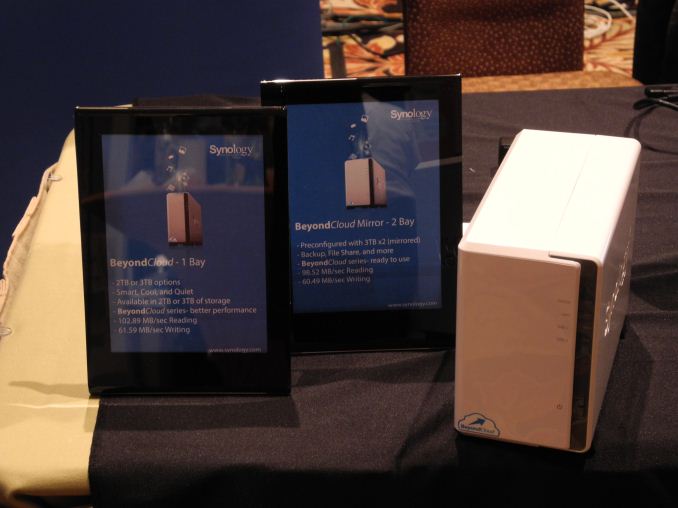
We met up with Synology at Pepcom, and they had the units on display, along with the SMB-focused DS2015xs and the DS414slim. On the CES show floor, they will also be having demonstrations of the new Surveillance Station (which doesn't require Java on the client systems anymore) as well as other features of the latest DSM.
Read More ...
Zotac ZBOX CI320 nano Review: A Fanless Bay Trail-M mini-PC
Over the last couple of years, mini-PCs in the ultra-compact form factor (UCFF) have emerged as one of the bright spots in the troubled PC market. Zotac is no stranger to this segment. In fact, their nano xs units came to the market before the Intel NUC, even though the NUC is credited with kickstarting the UCFF trend. Intel's Bay Trail family of SoCs has proved to be an affordable and low-power candidate for UCFF PC units. We have already evaluated a couple - an actively cooled GIGABYTE BXBT-1900 and and the fanless ECS LIVA. This review provides some insights into what the passively cooled Zotac ZBOX CI320 nano brings to the market.
Read More ...
Lenovo Launches LaVie Series Of Ultraportable Notebooks
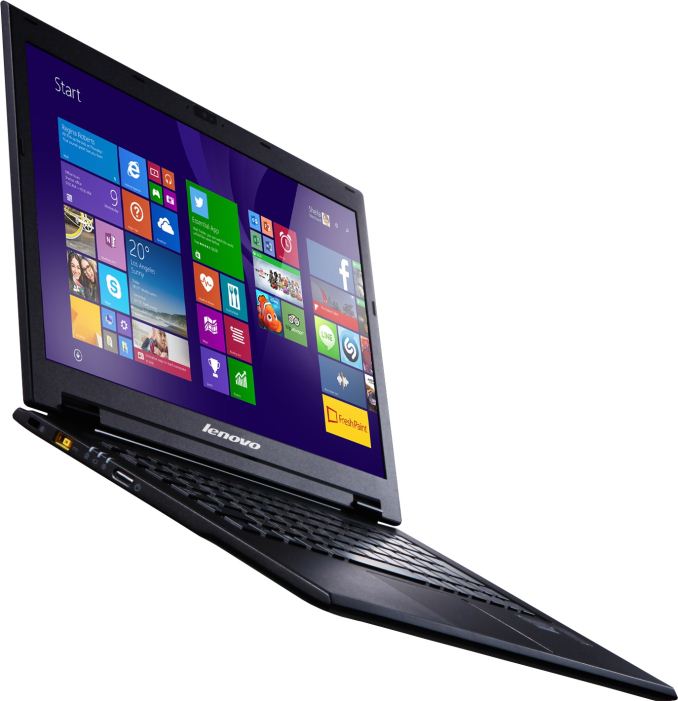
The devices come in at a thin 16.9 mm z-depth, and are made from a super light Magnesium-Lithium alloy case. Both are powered by Intel’s 5th Generation Core processors, with the i5 being offered in the HZ550, and the i7 available in the HZ750. The HZ550 is more of a traditional clamshell notebook, with a hinge offering 180 degrees of movement to let it sit flat on the table. The 13.3 inch display offers WQHD resolution and an anti-glare coating. 4 GB of memory is the only option in the HZ550, and it comes equipped with a 29.6 Wh battery. Moving up to the HZ750 grants a WQHD or FHD touch screen, and a six cell 44.4 Wh battery along with an optional 8 GB of memory. The HZ750 also offers the Yoga style 360 degree hinge.
Both models will be available in the US in May starting around $1299 and $1499 depending on the model.
Source: Lenovo
Read More ...
Lenovo Updates The Yoga Family At CES
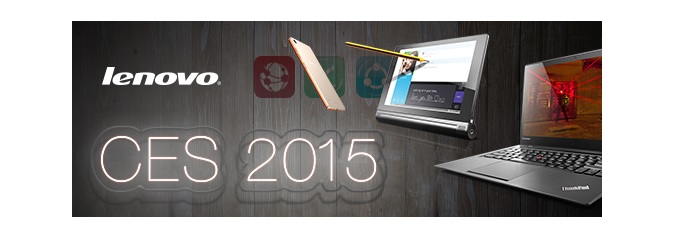
Starting with the tablet, the Yoga Tablet 2 is a Windows based tablet with the Lenovo Yoga hinge. On their tablet lines, the hinge is a smaller version but the increased volume allows Lenovo to pack the hinge with a much larger battery than would be otherwise possible. It offers Hold, Stand, Tilt, and Hang modes. The Yoga Tablet 2 also offers front facing stereo speakers and Dolby audio. Powering the Yoga Tablet 2 is an Intel Atom processor, and the 8” display is 1080p which should give good clarity. The battery life is rated at 15 hours due to the extra battery space in the hinge.

The interesting feature of the Yoga Tablet 2 is the AnyPen technology, which allows any pen or pencil to be used as a handwriting tool. A dedicated stylus is not required. Basically any writing tool with a conductive end will work with the digitizer. At this point, it would seem odd to write on your tablet with a pencil, but assuming the display does not get marked up with the writing tool it should work well.

Next up is the Yoga 3 notebook. The Yoga series is based on the same 360 degree hinge as the other Yogas, however due to the lower price point of the Yoga vs Yoga Pro there is no watch band on this model. The 11 inch version has been updated and also added to the lineup is a 14 inch model, with up to Core i7 5th generation processors (Broadwell-U). The displays are 1080p with touch, and 802.11ac Wi-Fi is standard which will put to rest my biggest complaint with the Yoga 2 Pro. All are offered with backlit keyboards, and the devices are around 18.3 mm thick. Lenovo has also reworked the hinge to allow a smoother opening and to let the laptop lay flat when opened to 180 degrees. Lenovo has equipped the Yoga with Wave speakers which automatically adjust based on how the device is current being used (ie Stand, Tent, Laptop, Tablet) and several new colors are being added to the mix. The Yoga series is now available in Platinum Silver, Ebony Black, Chalk White, and Clementine Orange.

The business line for the Yoga is unsurprisingly the ThinkPad Yoga. 2014 offered a single ThinkPad Yoga with a 12.5 inch display, and for this year Lenovo is increasing their portfolio to include a new 14 and 15 inch model. The 15 inch model will also be available with an optional Intel RealSense 3D Camera system, and several models can also be had with an active digitizer, with an internal garage for the pen. Powering the new ThinkPad Yoga is the 5th Generation Intel Core processors as well, so none of the ThinkPad line will be available with the lower performance Core-M at this time.

The Yoga Tablet 2 8 inch model will be available starting this month for $299. The Yoga 3 11 inch has a base price of $799, and the Yoga 3 14 inch starts at $979. Both are available in March. The ThinkPad Yoga will be available starting at $1199 in May of this year.
As a fan of the Yoga series, I look forward to seeing these devices at CES this week. We will hopefully be able to provide hands-on updates when we get to the Lenovo booth, and look for review units after that.
Source: Lenovo
Read More ...
Samsung Releases External T1 SSD

The T1 support USB 3.0 UASP mode for increased performance and for sequential performance Samsung is promising up to 450MB/s. Random performance comes in at 8K IOPS for read and 21K for write. There is also AES-256 encryption support, which is definitely handy for business users that handle sensitive data. The drive comes pre-formatted as exFAT to ensure out-of-the-box compatibility with both Windows and OS X based systems.
The available capacities will be 250GB, 500GB and 1TB with the MSRPs being $180, $300 and $600 respectively and a 3-year warranty. The pricing is definitely a bit high, but since we are dealing with MSRPs things can change very quickly and I wouldn't draw any final conclusions yet. I have samples waiting for me when I get back, so stay tuned for our review in the next few weeks.
Read More ...
Asus Announces Transformer Book Chi Line of x86 2-in-1s

| Asus Transformer Book Chi | |||||
| T300 | T100 | T90 | |||
| Screen Size | 12.5" IPS 2560x1440 or 1920x1080 |
10.1" IPS 1920x1200 |
8.9" IPS 1280x800 |
||
| Processor | Intel Core M 5Y10/5Y71 | Intel Atom Z3775 | Intel ATom Z3775 | ||
| Dimensons (Tablet) | 317.8mm x 191.6mm x 7.6mm | 265mm x 174.5mm x 7.2mm | 241mm x 137.5mm x 7.5mm | ||
| Mass (Tablet) | 0.72Kg | 0.57Kg | 0.4Kg | ||
| Price | $699 (1080p) $799 (1440p) |
$399 | $299 | ||

Built around x86 and Windows, the Chi family will come in three sizes. The largest and flagship of the Chis is the T300, which at 12.5” sits between traditional ultrabooks and large format tablets. The T300 is based around Intel’s Core-M 5Y10 (or 5Y71) processor with either 4GB or 8GB of RAM and a 128GB SSD standard. Asus is using full-sRGB IPS panels throughout the entire Chi ineup, and the T300 will be available with either a 1080p or 1440p display.

Meanwhile the T100 brings the Chi down to 10.1”, and in terms of size trends closer to a 10” tablet with an attachable keyboard. Driving the T100 is an Atom Z3775, one of Intel’s quad-core Bay Trail parts. Paired up with the T100 is a 1920x1200 display – going from 16:9 on the T300 to 16:10 here – and like the rest of the Chi family is a full-sRGB IPS display. Rounding out the package is either 32GB or 64GB of eMMC NAND for storage.
Finally, the smallest member of the Chi family is the 8.9” T90, which is a smaller scale version of the T100. Besides trading in the T100’s larger display for a 1280x800 full-sRGB IPS display, the specifications between the T90 are largely similar. T90 is powered by the same Atom Z3775 and comes with either 32GB or 64GB of eMMC.
All the 2-in-1s are expected soon. The T300 will start at $699 for the 1080p version an $799 for the 1440p, while the T100 will start at $399, and the T90 at $299.


Read More ...
Samsung CES 2015 Press Conference Live Blog
Read More ...
GIGABYTE X99-SOC Champion Motherboard Review: Low Cost X99 Overclocking
When we ask the motherboard manufacturers about overclocking, most of them say that it is an integral part of their hardware line-up as well as a point to distinguish themselves from the competition. I have been a big fan of the cheaper overclocking oriented models in the mainstream markets, and in order to emulate the success that GIGABYTE has made in that area today they are releasing the X99-SOC Champion aimed at the Haswell-E overclocking crowd. We managed to get a sample in for a launch day review.
Read More ...
GIGABYTE Launches BRIX Models with 14nm Broadwell-U

Each unit will give HDMI at a native UHD-4K resolution due to the use of Broadwell-U, albeit at 24 Hz which makes it more suited for films, as well as a mini-DisplayPort. Also included is an 802.11ac 2T2R dual band module, a VESA bracket and four USB 4.0 ports. As a special extra for the Core i7 version, both the BRIX and BRIX s will come with NFC support.
At this point we have no information on pricing or exact release dates, or even the difference between BRIX and BRIX s. As is perhaps visible from the images, the BRIX s will be slightly taller, presumably to either cater for more storage or extra cooling. Hopefully when we swing by GIGABYTE this week at CES we can get some answers. Especially as it might be interesting to see if Iris 6100 models show up or any with Iris Pro in the next six months.


Edit: The BRIX s will have the higher profile for additional storage, and BRIX s versions will be available for i3, i5 and i7 units.
Read More ...
Qualcomm CES 2015 Live Blog
Read More ...
Asus CES 2015 Press Conference Live Blog
Read More ...
Intel Shipping 14nm Cherry Trail
Given that Intel’s press release today was short and mentioned connectivity with their XMM726x modem with Cat 6 LTE with aggregation, it sounds specifically that Cherry Trail for smartphones/tablets is the order of the day, rather than larger or desktop systems. Cherry Trail will also be a focus point for Intel’s RealSense technology, with Intel wanting to promote their ‘no wires, no password’ philosophy.
Rather than provide more detail about SKUs and price points, Intel is allowing their customers to announce the products that will be featuring the SoC, with a larger update of specifications to follow. We’ve heard talk of Cherry Trail products that might be announced at CES, and if we catch any we will let you know.
Read More ...
LG Press Conference, CES 2015
Read More ...
Intel Releases Broadwell-U: New SKUs, up to 48 EUs and Iris 6100
As part of the CES cavalcade of announcements, after launching Core-M back in September, Intel is formally releasing their next element of the 14 nanometer story: Broadwell-U. As the iterative naming over Haswell-U suggests, Broadwell-U will focus on 15W and 28W units from Celeron to Core i7 using 12 to 48 execution units for the integrated graphics. A Broadwell-U processor should drop into any existing Haswell-U equivalent design (i3 to i3) due to pin and architecture compatibility, albeit with a firmware update.
Read More ...
SanDisk Announces Entry-Level SSD Plus & Ultra II mSATA

Availability is slated for this quarter (Q1'15) and the SSD Plus will only be available in capacities of 120GB and 240GB due to the entry-level focus. MSRPs are $70 and $110 respective with a warranty of three years. I'm still trying to wrap my head around the technological placement of the SSD Plus as it seems a bit weird to have MLC in the entry-level offering and then TLC in the one level up, but I should have a better understanding of the product once I have a sample on hand.
In addition to the SSD Plus, SanDisk is also announcing an mSATA version of the Ultra II. The core architecture remains unchanged as it's just a different form factor, although interestingly enough the mSATA flavor features less over-provisioning and is available in capacities of 128GB, 256GB and 512GB (whereas the 2.5" Ultra II is 120GB, 240GB, etc...). MSRPs are $74, $116 and $221 respectively and availability is Q1'15.
Read More ...
Quick Note: iPhone 6, 6+ Finally Are Available SIM-Free in U.S.
Buying an unlocked iPhone was already possible, but it's now a bit less confusing as there's a clearly labeled SIM-free option
Read More ...
John Legere Has Some Things to Tell You About AT&T's Rollover Data
Compared to T-Mobile's Data Stash, Rollover Data applies to more customers, but rolled over data lasts only a month
Read More ...
CES 2015: Saygus's "Super Smartphone" Offers 320 GB of Storage
Finally you can replace that iPod Classic 160 GB edition
Read More ...
Editorial: Je Suis Charlie; Paris Terrorist Attack Shows the Price of Free Speech
When your beliefs inspire you to kill civilians, it's time for a new set of beliefs
Read More ...
Star Trek/Star Wars Director JJ Abrams Apologizes to Fans for Lens Flare Addiction
Into Darkness's flare abuse was so bad his wife couldn't follow the movie, forcing Abrams to realize his problem
Read More ...
CES 2015: Samsung Guns for LG With New Tizen-Based Smart TVs
New sets will automatically sync with Galaxy tablets and smartphones, will support a variety of services
Read More ...
Elon Musk Plays Warcraft; But Still Finds Time to Sleep, Build a Mars Colony Ship
CEO says the most critical habit to his quality of life is showering; he shares a lot of details about his Mars mission plan
Read More ...
SpaceX Scrubs Falcon 9 Launch to ISS, Barge Landing Test, Friday Redo Targeted
Automated safeguards detected an issue in the craft's actuators and reportedly shut it down safely, averting potential trouble
Read More ...
Intel's Broadwell-Base Core i-Series SoCs Finally Hits the Market
After a year of delays due to process problems, Broadwell finally prepares for a broader release; but did it break Moore's Law?
Read More ...
China's Xiaomi Sold Over 61.12 Million Smartphones in 2014
Third place phonemaker continues to grow rapidly in shipments, revenue, and profits
Read More ...
NVIDIA's 64-Bit ARM Tegra X1 SoC Doubles the Power of K1, Guns for Qualcomm
New 20 nm chip packs 256 Maxwell-based GPU cores and an A53/A57 octacore design
Read More ...
Microsoft's Nokia 215 Might be the Cheapest Internet Phone at $29 Unlocked
Phone offers many modern amenities like apps, "SLAM" content sharing, Facebook, and browsing via the Opera Mini browser
Read More ...
Quick Note: Vietnamese Firm Bathes Budget Samsung Galaxy A5 in 24K Gold
Gold + budget hardware = profit?
Read More ...
ISIS JIhadi From NZ Accidentally Shares Location on Twitter, Outs Cohorts in Selfie
Islamic extremist's movements were easily trackable down to the building via geotags in his Twitter post
Read More ...
India Uses Tablets to Track Public Defecation, Toilet Use
Armed with tablets and smartphones government officials are tracking toilet usage
Read More ...
Strings App Peddles Text Messages You Can Remotely Delete
It's sort of like Snapchat for the text world
Read More ...
Report: Air Force's Spoiled F-35 "Superjet" Has No Code to Shoot Its Gun
Armed w/ only 2-10 missiles, the F-35 will be deemed "combat ready" in 2015, but won't have gun code till 2019, despite 20 million LOC
Read More ...
Available Tags:Gigabyte , AMD , Dell , Lenovo , Intel , Seagate , HTC , TV , GPU , Zotac , Samsung , SSD , Asus , LG , iPhone 6 , iPhone , Nokia , Galaxy , India ,


No comments:
Post a Comment