

Industry voice: 10 predictions for the mobile world in 2015

As another year comes to a close, again we've seen mobile impact every aspect of life, as wearables, new apps, mhealth, social platforms, mobile shopping, video adds and more have permeated our lives. Here's how Anna Yong, Jaskaran Sangha and Mikko Disini at Citrix thinks these trends will develop in 2015
Devices & wearables
Mobile data traffic will continue to grow at a pace of 1.5x for 2015. Wearables traffic will grow exponentially.Overall tablet and smartphone ownership is rising, though the pace of growth is slowing. However, 4G-enabled device penetration is rising rapidly. Consequently, in 2015 we can expect to see the volume of data traffic continue to rise exponentially.
Connected watches and fitness trackers made a big splash in the consciousness of consumers in 2014 with Apple and even pop mogul Will.i.am announcing new devices. They will continue to grabs the headlines in 2015 and we will even start to see data creeping up as units are shipped to enthusiastic early adopters.
Samsung launched the Gear VR in September 2014 and virtual reality headsets, in general, are becoming more affordable (see the Google Cardboard for £50!) so we're going to see more from VR next year – maybe we're a year or two away from serious data generating VR devices, but they're coming.
The Internet of Things (IoT), which includes phones, tablets, watches, VR headsets, cars, toothbrushes and potentially just about anything and everything else, is a trend whose time has come. The technology exists – we're waiting now for the services revolution that will drive traffic from the 25 billion networked devices expected by 2020.
Mobile ads / video ads
70% of mobile subscribers will be served ads. The growth period of 'free' social media is apparently over, and it's time to make money via advertising.Mobile advertising is growing in sophistication. Ads linked to context have been 'about to happen' for a long time, but the emergence of larger smartphone, phablets and tablets in combination with fast networks is helping accelerate advertising.
In 2014, Citrix found that 50% of smartphone subscribers were served ads, and that the relative popularity of video ads increased from 1/20 banner ads to 1/16 banner ads. Next year, we predict that 70% of mobile subscribers will be served ads as every major social media channel announces monetization plans based on advertising.
Video ads on social networks will continue to drive the mobile advertising market and its impact on the mobile network.
Now that we are almost in 2015, just about every single social media vendor seems to have advertising, with Snapchat's launch of video ads on Oct 17, 2014 as being one of the last entries into the money making machine of advertising.
And it's working. Advertisers spent $1.95 billion on Facebook mobile ads in Q3 2014, generating 66% of FB advertising revenue for the third quarter of 2014, up from approximately 49% of advertising revenue in the third quarter of 2013.
With 2015 we will see mobile ads permeate every mobile social media communications channel – whichever one you may choose – Facebook, Twitter, Instagram, SnapChat, Google+, Weibo, FourSquare just to name a few.
Mobile video
Mobile video will continue to make up the lion's share of data traffic over cellular networks. Video traffic will be 55% of mobile traffic in 2015. (In Sept 2014 Citrix Mobile Analytics Report stated it was at 52%).Mobile video data will grow significantly in Latin America, shifting from 40% video traffic to 45% in 2015. Furthermore, we anticipate that in 2016 LATAM will see major spikes in video traffic around the Olympic Games.
With faster networks and greater 4G device penetration the volume of mobile video consumed is going to rise via short-form channels such as YouTube and also longer form services from the likes of Netflix – though subscriber 'bill shock' fear could continue to force mobile users off cellular and onto Wi-Fi for longer video.
As noted above, advertising is going to support a wider range of mobile data services such as Facebook, Twitter.
According to the latest Citrix Mobile Analytics Report, 2.5% of subscribers access sports media content through their mobile device. With the world's eyes on the 2015 Rugby World Cup, we predict a spike in video consumption with 5% of subscribers tuning in their favourite matches on their smartphone or tablet.
Internet Radio
Streaming has been set to replace side-loaded audio content for some time. People are unlikely to rely entirely on streaming since mobile coverage is not ubiquitous – nevertheless we'll see streaming services driving up mobile music consumption in 2015.Based on information collected from Citrix ByteMobile Adaptive Traffic Management Solution deployments around the world, mobile audio – including Internet radio and audio file downloads – now constitutes 12% of mobile data volume in North America and 4% outside North America.
Mobile internet traffic is growing exponentially, and we're going to see more audio traffic in 2015. Applications including Pandora, Spotify, iHeart Radio, Rhapsody, Slacker and several local radio station applications are increasingly popular among mobile subscribers. Whether we see the proportion growing relative to other types of data traffic remains to be see, though it is likely that the rest of the world (or at least the world where smartphone ownership is most common) will start to catch up with North America.
4G/LTE
In 2015 mobile subscribers will be 2x more likely to watch video over LTE networks than over 3G networks.Mobile subscribers are increasingly using LTE networks to consume video related content. The availability of LTE drives greater consumption of long-form content such as that offered by Netflix. In fact, Netflix viewing times are longer over LTE than over 3G and more subscribers seek to watch Netflix over LTE than over 3G with 74% requesting Netflix service over LTE versus just 26% over 3G
With Neflix announcing its European expansion plans and the penetration of 4G growing, operators worldwide need to maintain and ensure data Quality of Experience (QoE). This is precisely why operators need video optimisation solutions
Operators are faced with the same dilemma they were faced with when 3G networks were rolled out. Namely, that of making the technology pay. It is a careful balancing act, between providing data at a price that encourages its use, but not at a price that is unsustainable for growth. One thing we can be certain of is a rise in traffic, all of which means a greater demand for analytics, management and optimisation
Social Media & Big Data
Social networking will remain the most popular activity over mobile networks. Currently, social networking is the most popular activity over mobile networks at 40% of mobile subscribers engaged, generating 10% of daily mobile data volume. The majority of mobile social networking data volume consists of images and videos, which generate 87% of that volume.With Facebook, Instagram and Twitter growing in terms of the number of users every day and new features arising, we predict that social networking will remain the most popular activity over mobile networks.
With data for mobile consumption growing exponentially, MNOs will be pushed to implement optimisation techniques geared towards delivering the smoothest quality of experience. With a growing amount of data now available for mobile consumption, MNOs will have to be able to provide a quality of service that matches both network speed and new customer trends, the likes of video streaming, internet radios and OTT messaging to name a few.
Mobile Health
Mobile networks will see a sharp uptake in health-related data traffic, to cater for the rise of wearable devices and the need for healthcare professionals to communicate.Citrix analysis of 2014 mobile health traffic found that compared to Q1 2014, mobile health apps still generate minimal activity on the mobile network. And within this category, more people engage with fitness apps over the mobile network than with other mobile health apps, such as dieting or women's health.
As the popularity, affordability and sophistication of wearables grows, the portion of mobile health traffic will increase rapidly.
In 2015, mobile networks will be the key conduits, and possibly brokers for a constant and consistent pulse of mobile health data traffic – be it for tracking personal fitness goals, aggregating fitness app traffic to discover fitness hotspots and usage patterns, proactive patient health monitoring or installing "granny cams".
Along with this, mobile networks will become critical information highways for more than just personal health tracking to help healthcare workers deal with emergency situations or health hazards globally. Specifically, mobile health apps that can capture personal health information, and deliver interactive video will be able to help communities address communities in need, bringing education, communication and expertise to those who need it most.
Retail
On Christmas Day 2014, the majority of retailers' website traffic will originate from mobile and tablet devices, as people try out new Christmas presents & browse for add-ons to their gifts. John Lewis reported that more than 3/4 of its web traffic on Christmas Day 2013 came from mobile devices. This year it is predicted that as people receive new mobiles and tablets and Christmas presents they will use these to access retail websites.Telco-OTT
Operators will become a platform for OTTs with creative business arrangements that will promote both OTT and MNO. We are seeing more significant partnerships where the operator becomes a platform for the OTT.In Germany, WhatsApp has an MVNO–type arrangement with E-Plus where they offer an E-Plus WhatsApp SIM card; in this case, WhatsApp is the primary mode of communication bundling of E Plus voice and internet access under the E Plus brand. In this model, WhatsApp is not rebranding the voice and Internet access services, but rather keeping them under the E-Plus brand umbrella.
In 2015, we predict that
- The WhatsApp – E Plus type of arrangement will be replicated with other MNOs by WhatsApp, Facebook and other OTTs
- Quasi-MVNO models will grow to full MVNO models where OTTs will promote their own OTT app and branding as their own the MNO's voice and internet access services
- OTTs will begin to market their own smartphones as part of their MVNO strategy.
WebRTC
In 2015, Mobile Network Operators will be able to leverage their existing messaging and voice infrastructure to support WebRTC services.WebRTC proponents, which broadly speaking come at communications from an Internet perspective, view WebRTC as a game changer. The ability to carry out real-time communications without the need for a plug-in promises a future of innovative browser-based communications solutions. Citrix predicts:
With 13% of web video calls through WebRTC, WebRTC will gain adoption by mainstream users in late 2015.
WebRTC for voice will likely extend beyond early adopters to add mainstream users. This will be driven by applications from operators that leverage WebRTC for existing voice and messaging systems.
With more mainstream usage of WebRTC, large enterprises will begin to develop WebRTC-based tools especially for touch points with customers such as in contact/call centers.

Read More ...
Kodak is now making Android smartphones
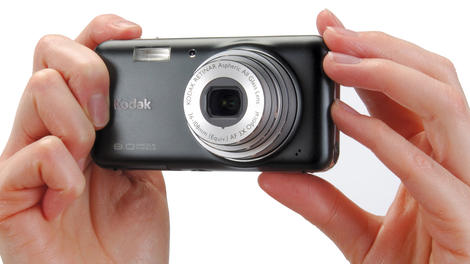
Who are you calling irrelevant? Kodak is making a comeback in the shape of an Android smartphone, and we're going to see it at CES 2015.
Next year will see Kodak enter the phone and tablet business, with devices primarily focused (of course) on photography.
Kodak won't actually be building the products but will be licensing its name to English company Bullitt, the company behind the rugged Caterpillar phones.
A comeback moment
According to the press release we can expect to see the first handset at CES, followed by a 4G handset, a tablet and a connected camera later in the year.There are few details on the upcoming phone, other than that it will let users "take great pictures and edit, share, store and print them in an instant" and that it "will not compromise on design and user experience". We look forward to seeing the result.
- What else are we expecting at CES 2015?

Read More ...
Best free software of 2014: VirtualBox

There are very few emulator programmes available for Windows, and even fewer that are free. If you want to instal a new OS, partitions must be created and so on – a lot of work to run the odd Linux programme.
Luckily, VirtualBox, a piece of software created by Oracle, comes to the rescue, offering the power and flexibility of more popular emulator apps (such as Parallels or VMWare Fusion) for free. As part of Oracle's enterprise suite, VirtualBox enjoys regular updates and bug fixes. Alongside this, VirtualBox supports a wide range of operating systems, including older versions of Windows.
Throughout my usage of VirtualBox, I have never experienced a crash of the emulated OS, even when running more intense programmes. Obviously this is somewhat hardware based, but Oracle's backing of VirtualBox pays dividends in performance,stability and continued updates to the software.
Being able to run a different OS from a free, multi-platform app is fantastic and, as such, VirtualBox more than justifies its place on this list. The software has been continuously updated throughout 2014, offering bug fixes and feature additions, and it continues to get better and better.

Read More ...
Buying guide: The best accessories to supercharge your new phone

Introduction and iPhone 6
You've been a good boy or girl all year round, and the hard work has paid off with Father Christmas depositing a shiny new smartphone underneath the tree.Unwrapping a brand new phone is exciting enough, but if you really want to get the most of your handset you'll want to deck it out with some of the best accessories around.
For the most popular phones there are a huge range of accessories, from cases that protect them from knocks and drops, to add-ons that can completely transform how they can be used. Finding the best ones for each phone can be daunting, so let us show you the best accessories you can buy for your new phone.
And even if you don't have the phones below, most will work with other phones too - so there's something for everyone!
iPhone 6
The iPhone 6 is Apple's latest flagship smartphone and as expected there's already a big range of accessories for the handset.Twelve South HiRise Stand
£29.95 ($34.95, AUS $34.95)

The Twelve South HiRise Stand is a unique stand for the iPhone 6 (which also works for older iPhone models and the iPad mini) that charges the iPhone while holding it aloft, letting you continue to use the handset for browsing the web, making calls and FaceTime Chats.
It takes a leaf out of Apple's style design book for a compact and attractive way to charge your new iPhone 6.
Trianium Atomic S iPhone 6 Battery Case
$59.95 (around £38, AU$73)

An LED battery level indicator keeps you posted about how much juice you have left, all while preventing the svelte iPhone 6 from becoming too bulky.
The Concert Acoustic Docking Station In Cherry
$64.50 (around £41, AU$79)

When we say unique, we're not kidding either, as each docking station is handmade out of single pieces of wood in Portland, Oregon. Not only will the docking station play music, it will also charge your new iPhone 6 as well.
[BRIC+]xtreme Aluminum Case for iPhone 6
$95 (around £60, AU$116)
![[BRIC+]xtreme Aluminum Case](http://mos.futurenet.com/techradar/art/mobile_phone_accessories/best%20smartphone%20accessories%202015/xtreme%20Aluminum%20Case%20for%20iPhone%206-420-90.jpg "Awful name, but will keep your iPhone 6 protected")
This premium case is easily installed, giving you access to all of the iPhone 6's features. Offering next generation protection via its Aluminum bumper case you won't have to worry about whipping out your new iPhone 6 again, with creator BRIC promising no bending, crashing, shattering or signal loss.
Beats by Dr. Dre Pill XL
£269.95 ($269.95, AU$399.95)

A visible battery gauge lets you know how much power you have left. If you're feeling particularly flash you can buy a second Beats Pill XL and connect them together for some cheeky stereo sound.
HTC One M8
HTC One M8
If you woke up on Christmas morning to find the HTC One M8 sitting underneath the Christmas tree, then you're very lucky indeed.HTC's latest flagship handset is a brilliant bit of kit that we recently crowned the best flagship phone of 2014. Not only is it a great smartphone, but there are plenty of accessories that make it even better.
HTC One (M8) Dot View Cover
£14.25 ($8.93, around AU$27)

This is thanks to the retro dot matrix design that is both cool and functional, displaying everything you need to know directly on the case.
HTC Fetch
£35 ($50, around AU$67)

It also works the other way around, so if you can't find your phone you can use the HTC Fetch to ring it. It will also warn you if you walk off without your phone. That's not all though, as you can even use the HTC Fetch to remotely work the shutter button for the HTC One M8's camera.
HTC Media Link HD
£79.99 ($99, around AU$153)

The HTC Media Link HD is a handy little device the plugs in to your high-definition TV and lets you quickly and easily stream the photos and videos wirelessly from your brand new HTC One M8 to your TV. You can even use it to stream games, turning the HTC One M8 into a home games console.
Shocksock - HTC One M8 Reflective Sports Armband Case
£7.99 ($9.95, around AU$12)

Supcase HTC One M8 Case
£12.94 ($14.99, around AU$18)

Samsung Galaxy S5
Samsung Galaxy S5
If you've just unwrapped a Samsung Galaxy S5 this Christmas then you're in for a treat with Samsung's decent flagship phone. Here are some of the best accessories you can buy to make it even better.Samsung Galaxy S5 S-View Premium Cover Case
£24.99 ($16.99, around AU$59.95)

It can also automatically customise the background of the S5's screen to match the colour of the case you've attached.
Samsung Galaxy Gear 2
£284.85 ($369.97, around AU$450)

Just connect the Galaxy Gear 2 to the S5 via Bluetooth and you'll be able to make and receive calls, read messages and track your health through the smartwatch. It's also waterproof, like the Galaxy S5, so you don't have to worry about getting caught in the rain.
Samsung Galaxy Gear Fit
£159.95 ($159.95, around AU$195)

This doesn't mean that it's only interested in your health, as you can still read texts and emails that have been sent to your S5, all by conveniently glancing at your wrist.
Incipio Feather Shine Case
£21.95 ($13.19, around AU$16)

The incredibly thin Incipio Feather Shine Case solves this problem by giving the S5 a classy brushed aluminium outer shell that not only looks great but protects the handset as well.
Joby TightGrip Tripod Adapter
£9.99 (around $16, AU$19)

To make the most of the brilliant snapper make sure you pick up the Joby TightGrip Tripod Adapter that will let you attach the S5 to any tripod you like for amazing quality shots.
LG G3
LG G3
The LG G3 is a fantastic smartphone with a phenomenal screen. LG has also created a fantastic accessories ecosystem that means if you've got a brand new LG G3, you've got a wide range of brilliant and innovative accessories to choose from.LG Quick Circle Case
£20.11 ($38.72, around AU$48)

The LG Quick Circle Case lets you operate your phone without opening the protective case thanks to the circular window that displays texts, takes photos and answers phone calls.
It's stylish and protective without adding additional bulk to the handset when in use. It also comes in a range of colours to suit your style.
LuguLake Qi Wireless Charger Pad With 6000mAh Portable Power Bank Pack
£22.99 (around $36, AU$44)

The LG G3 can be wirelessly charged, which on its own makes it pretty convenient to keep the battery topped up. But what happens if you're caught out and about with a rapidly depleting battery?
The LuguLake Qi Wireless Charger Pad is here to rescue you – not only can it be plugged in to wireless charge your LG G3, but it can also be taken out with you to give the LG G3 a much needed top up quickly and easily.
Spigen LG G3 protective case
£15.99 ($19.99, around AU$30)
You'll want to keep your shiny new LG G3 well protected, but all too often protective cases force you to clad your once svelte smartphone in bulky and ungainly clobber.That's why the Spigen LG G3 protective case is such a great accessory for the LG G3; it uses a combination of TPU and polycarbonate material for dual protection while remaining slim and lightweight.
The Spigen LG G3 case is closely moulded around the LG G3, offering access to all the ports and buttons you need and proving that you don't have to sacrifice ergonomics for protection.
LG Foldable Charging Wireless Cradle for G3 Smartphones
£24.95 ($38.98, around AU$48)

Ultimate Ears BOOM Wireless Bluetooth Speaker
£99 ($179.99, AU$199.95)

The Ultimate Ears BOOM Wireless Bluetooth Speaker is the perfect choice, not only does it sound fantastic with room-filling 360-degree speakers, but it can comes in a variety of colours and is stain and water proof – perfect for particularly messy parties.
You don't need any wires at it connects to the LG G3 via Bluetooth, and thanks to both the LG G3 and the Ultimate Ears BOOM being NFC (Near Field Communication) compatible, all you need to do connect them to each other is tap the LG G3 on the top of the speaker and away you go!
Sony Xperia Z3
Sony Xperia Z3
If you've got a brand new Xperia Z3 then you'll have a host of exciting accessories that can help you get the most out of Sony's excellent flagship handset. The Z3 is incredibly versatile and these accessories can help you use the smartphone in ways you've never imagined.Game Control Mount GCM10
£24.99 (around $39, AU$48)

The Game Control Mount GCM10 lets you securely attach the Z3 to the PlayStation 4's DualShock controller for excellent comfort and control as you play.
Sony Wireless Charging Cover
£51.31 ($99.99, around AU$95)

With the cover installed, all you need to do to keep your Z3 charged is place it on the wireless charger. The cover can also be used as a desk stand to make viewing and using the Z3 easy and convenient.
Sony QX10 Lens Style Camera
£109 ($168, around AU$208)

Just connect it to the Z3 quickly and easily via NFC and the supplied mount and you'll get a 18MP Exmor R CMOS sensor and 10x optical zoom for absolutely amazing photos.
Jabra Tour Hand-Free Wireless Bluetooth Speakerphone Car Kit
£48 ($49.15, AU$92)

A high definition mic offers enhanced noise cancellation, while voice control lets you make and receive phone calls with just your voice. You can also connect two Bluetooth devices simultaneously.
Sony MDRNC13 Noise-Cancelling Headphones
£26.45 ($48, around AU$50)

The Z3 will know when these headphones are on, and will tailor the sound experience for them. Both voice calls and music will sound better than ever.

Read More ...
In Depth: 10 tiny tech advances that will make 2015 awesome

10 tiny tech advances for 2015
2014 was a pretty great year for tech - we got big iPhones, curvy TVs, and more smartwatches than your wrist can handle.But 2015 is going to be even better, what with virtual reality, shiny new satellites, and even a few tweaks to the very fabric of the internet itself. Here's our list of the tiny tech advances that we think will make 2015 a year to remember...
1. Battery tech
Batteries power the tech you spend most of your time with, but the design of the lithium-ion batteries commonly used is decades old, and severely limiting. Better batteries wouldn't just mean a week of smartphone use, or longer Netflix binges - they could make electric cars viable, provide a boost for renewable electricity, and maybe make your laptop a little lighter.
Science has promised us faster-charging and longer-lasting batteries for decades, but 2015 might be the year that we finally see some progress. Research has provided solid leads on both improved lithium batteries, and quick-charging versions that last for 20 years. If just a tenth of these potential fixes gets into production, you could be visiting sockets far less frequently next year.
2. Galileo

By this stage, everyone is familiar with the Global Positioning System, the American satellite magic that helps you find your dinner restaurant, and tells you where to go when you're driving. But Europe has been working on its own version, Galileo, which is set to start working (albeit in a limited capacity) in 2015.
The most exciting improvement offered by Galileo is a search-and-rescue function. At the moment, distress beacons are detected by a decades-old satellite system, which uses a Doppler effect to local the signal - but only down to an accuracy of five kilometres. Galileo's satellites carry detectors for emergency beacons, and thanks to its geo-locating abilities, Galileo will be able to pass that distress signal on to the relevant authorities within minutes, rather than hours.
Galileo will also offer more precise location and faster connection than the existing GPS system, which is good news for the millions of us who rely on smartphone location day-in day-out.
3. VR's the star

We've spent the last few years admiring the dual promises of wearable computing and virtual reality from afar, technologies embodied by Oculus Rift and Google Glass. In 2015, it might finally be time for consumers to get their sweaty paws on both products.
Although Oculus Rift has shied away from putting a precise date on the release of its much-vaunted VR system, signs are pointing towards a 2015 release, with a price somewhere between £150-300. Even if we don't end up getting Oculus Rift next year, there'll be a bevy of other VR toys to play with, starting with Samsung's very new Gear VR.
On the wearable computing front, Google Glass is also slated for a 2015 launch - that is, assuming Google hasn't given up on the project altogether.
4. HTML5

One of the biggest changes you might notice in 2015 will be under the hood of the internet itself. HTML5, the latest iteration of the framework that powers web pages, was released in October this year. It's a major update, promising to speed up apps, kill off Flash altogether, and generally make the web prettier and faster.
However, it also requires developers and web designers to re-work their websites and code, and as such it's not an overnight change. Now that the standards for HTML5 have been firmly hashed out, you can expect it to become the default in 2015. Your overloaded browser will thank you, even if you don't notice.
5. Retina Macbook Air

The Macbook Air has long been the best laptop for most people, but with one important caveat: the screen kinda sucks. While you can buy a Macbook Pro with a luscious high-pixel Retina display, or an iMac with the kind of screen than makes you fall in love with an inanimate object, the Macbook Air has been left out in the cold. Hopefully, that will all end next year.
It's been two years since Apple did anything significant with the Air (and even that was 'just' a re-working of the guts). Given Apple's Retina-ifcation of the iMac this year, and the general clamour for a Retina Macbook Air, it's almost inevitable that we'll see one this year.
Provided that the wizards at Cupertino can keep the Air's stellar battery life and svelte body with a Retina machine (and not require the pawning of three or more limbs to own one), the 2015 Retina Macbook Air could be the ultimate laptop.
6. Good Smartwatches

2014 was a big, bold year for smartwatches, but 2015 could be even better. There's the obvious: The Apple Watch will be landing sometime in the first few months, and chances are London's Regent Street might actually collapse under the weight of queuing fanboys. But 2015 will also be the year that smartwatches as a category truly matures.
In the Moto 360 and LG Watch R we saw devices with bags of promise, but still some deal breaking flaws. Now that companies have had a year or two to get to grips with software, work out the physical limitations and run a few thousand prototypes past focus groups, we might start seeing devices that look nice, run great, and don't need charging every single evening.
Not to mention smartwatch old-timer Pebble, which will probably be pushing out its third iteration this year. And you know what they say: the third instalment in a trilogy is always the best.
7. Windows 10

Statistically speaking, you're probably reading this article on a machine powered by Windows. It's not glamorous or exciting, but Microsoft's OS is still one of the most popular pieces of software around. And next year Windows 10 will be released.
Windows versions run in a hot-and-cold sequence: XP good, Vista bad, 7 great, 8 terrible. So by that logic, Windows 10 is going to be a hit. That hypothesis is backed up by our initial testing, which has shown Windows 10 to be the operating system that 8 should have been: all the speed improvements, none of the stupid home screens.
One other difference could be in how you pay for Windows 10. Apple has released the last few versions of OS X for free. Now, Microsoft's unlikely to follow suit - Windows is one of its last remaining cash cows - but it could well move to a different pricing model.
Specifically, Microsoft has moved to a subscription payment system for Office, and a similar move could be in the works for Windows 10. How much you'll have to fork over is still up in the air; but if we don't have to pay every few years for the latest version of Windows, it'll be a welcome change.
8. New Wi-Fi

You might think that Wi-Fi is a decidedly old-hat technology, since it's been around for decades now. But in actuality, it's undergoing constant improvements to improve speed, reliability and security. 2015 could see some major improvements for your YouTube video streaming, with any luck.
The Wi-Fi 802.11ac standard has been around for over a year now. But to benefit from its vastly improved speeds, you need both a router that supports 802.11ac, and a phone with a compatible chipset. Unless you bought your home router and a brand-new phone this year, then there's very little chance that you're actually using 802.11ac.
But next year, every higher-end smartphone sold will likely have a ac-compatible chipset embedded, in the same way that you'd be hard-pressed to find a handset without 802.11n on sale today. Internet providers will also be upgrading users to 802.11ac-packing routers. Hopefully, you'll have an internet connection worthy of the new speed.
9. Fast-charging tech

With batteries still a major problem for smartphone users, a few companies are turning to a fairly simple fix - faster, wireless charging. A crowdfunding project for Petalite Flux, a portable battery pack that charges in just 15 minutes, has seen a lot of attention, and it's just the tip of the iceberg.
The Flux uses charging tech that's normally reserved for electric vehicles to charge 2600mAh in 15 minutes. That's about the same size battery as found in a smartphone, charged in about a sixth of the time.
Although the battery looks cool, the real excitement would be a smartphone manufacturer integrating the same tech into the phone itself. It's something that companies have proven surprisingly willing to do - the Galaxy S5 uses high-speed charging, as does the iPhone 6 for that matter.
If fast charging doesn't do it for you on its own, there's also the potential for fast, wireless charging. Freescale is a new wireless charging standard that promises to work three times faster than existing wireless chargers. If it can do that while not adding too much weight or cost to handsets, it could finally push wireless charging into the mainstream.
10. Steam Machines

If you're a gamer, you might already be aware of the SteamOS project. It's a plan by PC game company Steam to get the power of PCs into your living room, with the same size and simplicity advantages as gaming consoles.
The system has two key components: SteamOS, a free version of Linux that'll run games happily, so you don't have to touch Windows when you want to game. And the Steam Machines, small form-factor PCs designed specifically for their gaming chops.
It's a very promising project, but sadly it's been delayed a little. Although you can download a beta right now, full release has been delayed until 2015. Hopefully, that'll be enough time to fix the minor bugs (and for them to finish work on Half Life 3, of course).
- Find more Christmas articles on XmasRadar. Supported by LG

Read More ...
In depth: What is the Cicret Bracelet wearable?

Cicret Bracelet secrets revealed
Are wearables simply a passing fad? Or are they still gaining steam? It may be the latter if companies keep innovating and reaching for new ways to put tech on our bodies. With Google Glass hitting a wall, likely for being too expensive and awkward looking, it seems like the wrist is where the wearables war will be won.On October 30, 2014, a French company called Cicret published a video on YouTube that immediately went viral, garnering 6.2 million views and counting. What was the fuss about?
Apparently a wearable called the "Cicret Bracelet," an orange, waterproof wearable able to project the image of a smartphone's UI on a wrist, transferring the same response of a touch screen, turning the experience into "touch skin."
But how much of the video is real? Take a look yourself, then read on for more details from our conversation with Cicret's co-founder, Guillaume Pommier.
AW: Your product is really gaining a lot of traction. What is the history of Cicret and where did it all begin? What's been going on lately?
GP: In the origins, it was just my father and I. I am only 25 [years old] and we have a very strong bond, spending most our free time together building applications, or books, or whatever. We've been working on the Cicret Bracelet for more than one year now, but we've been working on the Cicret application for many years.
We always knew that together the Cicret Bracelet would be well received, so it's kind of a dream, and we have to stay very calm. I have, today, 5,000 unread e-mails in my inbox, but unfortunately, I don't have enough time in one day to answer them all.
We have a lot of investors interested, and we're continuing working on our prototype as well as work with our producer of components here in France.
I have the feeling of not sleeping for one month.
AW: How do you pronounce "Cicret"?
GP: Like "secret."
AW: Is the video a real prototype being shown or is it a simulation?
GP: It's a demonstration showing how the Cicret Bracelet will work. We don't have all the final components in the video demonstration, and now, before last week, we know that the prototype that we'll have next year will be 90% of what was shown on the video. The partnership we have with our component company says we can make the bracelet, though it might be twice as big as the bracelet shown in the video, about the size of a watch.
AW: How does the projected interface react to touch?
GP: When you use your finger you interact with a long-range proximity sensor, it's a laser that goes straight and intercepts your finger, capturing its movements, and sending it back to your phone. The long-range proximity sensor is similar to when you try to take a picture with your smartphone in that it recognizes the range of the object you're focusing on. This technology is combined with a Pico projector.
AW: Is it scary to think you may be a competitor to Google Glass?
GP: We can't be scared because we have so much luck with this. We're a small business.
AW: What type of investments are you getting? To what scale?
GP: We have distributors - people from all over the world from the US to Belgium. I don't know how much e-mail we got last week, but it was about 1,500 from guys who said, "I want to be an investor." And we have big companies who want to meet us in Paris to see if the prototype is working. We also have other big companies asking, "How can we be partners?" in making software for the Cicret Bracelet. We are a small team, but we're going fast, and we have luck to be distributed by the people watching our video.
More Cicret Bracelet details
AW: What's the expected battery life?GP: It depends on how many functions you're using, but if you're not constantly putting a strain on the Cicret Bracelet, I think it'll be around 24 hours.
AW: Will your finger distort the projected image displayed on your wrist?
GP: We're working on multiple ways to assure that the Pico projector isn't disturbed by one's fingers, like putting the projector very close to the skin and the proximity laser above it. I know that for the engineering department it isn't an issue.
AW: Will there be any monthly fees or extra charges?
GP: No, we're not that kind of business.
AW: Is it open source?
GP: Yes, we plan on making it open source for developers interested in making their own apps.
AW: What's the future of Cicret?
GP: We have an ambitious idea that will be way more incredible than the Cicret Bracelet. For now, we'll be focusing on our Cicret Bracelet. We are already working on the next thing to come.
AW: Anything else you want to say to the millions of people interested in your creation? People who look up to you?
GP: If you have an idea, you need to make it real. Life is too short. Just try it. People can't insult you if you're trying. If it's working, it's for you. This is what I believe.
The waterproof bracelet is in pre-production with a protoype in the works, however the company intends to release the final product globally in 2015 for €300 ($365, £234, AU$450) to €400 ($487, £313, AU$600) due to Pommier seeing high demand across the world.
The wearable is also priced far lower than Google Glass because Pommier states "I want the bracelet to be available for everyone." He also notes the team has partnered with component manufacturers to get fair prices for parts in order to make the product affordable.
The Cicret Bracelet seems like such an ambitious endeavor that it's hard to believe it will stay on track to release next year. Perhaps the bracelet will simply become another blip in technology history, or maybe it will significantly impact the future of wearable tech. Regardless, our interest has been piqued, and we're curious to see what the final wearable will be like.

Read More ...
Industry voice: Are Consumer Operating Systems Right for Your Enterprise Mobile Devices?

In this article, Ritesh Gupta from Zebra Technologies, looks in more details at whether consumer operating systems are fit for (enterprise) purpose before recommending steps you can take to protect your devices, apps and data if you're making the move to a consumer OS.
It's anticipated that Android will be more widely used in the enterprise this year. Drivers for this include Android's dominance of smartphones and broader support for Bring Your Own Device (BYOD). Android's momentum is underlined by the fact tha each day, 1 million people power up a new Android device, the number of Android devices is expected to top 1 billion by the end of this year and Android has 81.9% share of the smartphone market (end of 2013).
That explains why the days of a single OS dominating the enterprise mobile market look to be over. Among a number of reasons for this, five stand out:
- OS versatility: With mobile devices now used across the organisation, there may well be a case for using a blend of operating systems to better tailor your devices to people's specific roles.
- Employee demand: Employees are pushing their organisations to give them work devices that offer the same appealing and tactile interface that they enjoy on smartphones.
- End of life: With popular versions of the dominant enterprise OS coming to an end, customers of are looking for alternatives.
- Cost savings: Consumer operating systems promise cost savings. For example, with 81.9% of smartphones using Android, most people can just pick up and use an Android device without training.
- Accelerated deployment: With a huge range of developers, programmer resources and ready-to-go 'pro-sumer' apps available, you can quickly develop and launch a mobile platform.
Another big issue is the speed of revisions, with consumer operating systems upgraded or renewed on average every six months. These revisions will require you to amend your apps and device software and can consume considerable resource.
We take a look below at how to combat these critical issues.
Securing your devices
One of the best things you can do to protect your devices is to install Mobile Device Management (MDM) software to remotely manage and protect devices.For instance, you can review device usage and enforce security protocols, ensure that users can only access a list of approved websites, kill or wipe lost or stolen devices, enforce software updates, change security settings any time and protect against malware.
You can also take steps at the device level to protect data by containerising it in highly secure encrypted areas on your devices.. You also have the option of encrypting your devices and any data sent over wireless networks. Encryption software provides the most robust level of security available and is appropriate where your people are working with highly sensitive information.
Another important decision in securing your mobile platform is the choice of OS. For example, with Android you can select two flavours: Google Mobile Service (GMS) or AOSP (Android Open Source Project). GMS has a lot going for it with access to the Google Play app store with over a million apps,.
But there's a trade-off. You'll need to sign up to a Gmail account for these features. And by doing so you agree to the collection and possible analysis of your user's behaviour including web searches, location data and email activity. With this in mind many of our customers are opting to use Open Source that's increasingly seen to be a more appropriate OS for the enterprise.
A growing number of devices are pre-installed with Android Open Source Project, it's easy to customise and secure the OS, and a wide range of apps are available that have been created for business: for instance, navigation apps that can be used in off-line mode to save on data charges, highly secure email clients, and proven, specialist apps designed for different sectors including field services, field mobility, logistics and many more.
Protecting your app investments
To reduce the impact of OS amendments we suggest looking for ways to make your apps as agnostic and resilient to change as possible.Key to achieving this resilience is how you develop. You have three options: developing natively for one OS, using a hybrid model or building your apps in HTML5.
In today's much more nimble mobile world we advise against locking in to one OS. In regards to the hybrid model, we're seeing some customers take this route. The thinking behind this is that core processor-heavy apps run more smoothly when developed for a native OS.
For example a delivery company whose drivers are using navigation, proof of delivery and scanning apps a lot would develop these natively. Supplementary apps, such as an email client, they would build around HTML5.
However, if that company wants to bring a new OS into the business, and if they have, say, 60% of their core apps written in native code, they will have to re-engineer them – at considerable cost. Our advice then is to develop using HTML5.
Once you've created your apps, any changes are easily made to the core code to make them compatible with OS revisions. In our experience HTML5 is robust, it's easy to develop with and, because it's OS-agnostic, it gives you much more versatility to provide your people with the best devices for their roles.
Consumer confidence
There has long been a case for introducing consumer operating systems into the enterprise. But there has always been a concern that rich usability comes at a high potential cost – compromised security. But security loopholes are closing.And new tools are available for IT teams that enable them to better monitor, control and protect their mobile apps and devices – whether the devices are owned by the business or employees. We believe that now's the time to confidently consider using a consumer OS in the business with the expectation that the familiar and engaging interfaces will help your people achieve even more through their mobile devices.
- Ritesh Gupta is senior Manager WW technical operation at Zebra Technologies.

Read More ...
Industry Voice: How to safely and securely move your workload to the cloud

Business success depends on having access to accurate, current and complete data. Without it, it’s difficult for employees to collaborate efficiently. Data silos also make it harder to effectively manage customer relationships. Many companies are moving their workload to the cloud, not only because operating in the cloud is less expensive than maintaining a physical infrastructure but also because it makes it easier for authorized employees to share data.
When a company operates in the cloud, employees can work from any computer or mobile device, easily accessing data and business applications no matter where they are, which is an important advantage in the BYOD era. But in practice, more than half of business data is stored on employees’ desktops, laptops and devices. An enterprise-quality synchronization, backup and data protection solution can help companies eliminate data silos.
When operating in the cloud or conducting business online, strong passwords are also a must since the password is typically the first line of defense against hackers. Companies that store information in the cloud should require employees to use passwords that contain upper and lowercase letters as well as numbers and symbols. They should also caution staff to avoid using personal information like names, birthdays, phone numbers, job titles or sports teams as a password since this information is usually available online.
More tips
Another tip for safer cloud operation is to use a different password for all sites and change the password every 30-60 days. Hacking is a growing problem, and employees who use the same password for every site they visit give hackers an opportunity to crack a single code and gain access to multiple sites. Employees who frequently change passwords also help keep cloud information safer from hackers who sell passwords to third parties – if the password is updated, the third-party buyer won’t be able to access the site.Operating in the cloud makes sense for a lot of reasons, and so does using a cloud-based password solution. With an automated, cloud-based password solution that syncs across devices, employees won’t have to deal with the hassle of remembering and updating multiple passwords themselves – the system will take care of it automatically. And with the right password manager, employees can also improve security by using multifactor security options when available, such as a password combined with a unique device code.
As more and more companies move operations to the cloud, it’s increasingly important to synchronize and safeguard data. By ensuring that devices are synced and taking commonsense precautions with passwords via an automated password manager, companies can move their workload to the cloud with confidence and operate more safely and securely.
- Bill Carey is Vice President of Marketing & Business Development at Siber Systems

Read More ...
Tesla Roadster is being upgraded to extend its range to 400 miles

Tesla's new Model D may be the hottest electric car around, but the company revealed today that you shouldn't discount its older Roadster just yet.
Tesla CEO Elon Musk tweeted on Christmas that the Tesla Roadster will be upgraded to "enable non-stop travel from LA to SF - almost 400 mile range," promising more details today.
Those details, delivered in a Tesla blog post, explain exactly what the Roadster 3.0 upgrade will entail: a new battery cell with 31% more energy, a retrofit aerodynamics kit with a 14% improvement to the vehicle's drag coefficient, and improvements to its tires, wheel bearings and residual brake drag that add up to 20% better rolling resistance.
These changes cumulatively will achieve a 40-50% improvement to range compared with the original Roadster, the post says, and further upgrades will arrive "in the many years to come." That said, it's unclear how and when the 3.0 upgrade will arrive to existing Tesla Roadsters, or how much it will cost.
Tesla will demonstrate the improvements with a non-stop drive from San Francisco to Los Angeles in early 2015, the company promised.
- Here's why OnePlus One equals 4.5

Read More ...
Google is cracking down on shady Play Store 'user testimonials'

Google has updated the "Keyword spam" section of its Android developer guidelines to forbid app developers from including "user testimonials" in their app descriptions.
The search company says developers use these "dubious" testimonials to game the search system with keywords and competing app names, and that customers' feedback should be relegated to official user reviews.
"Please do not include user testimonials in your app description," the updated guidelines read. "They tend to be dubious and are frequently utilized to include references to popular search terms and competitor apps in violation of the policies outlined here. Let your users speak for themselves via Play's comment review system."
The Google Play Store has long been notorious for having less regulation than Apple's iOS App Store, although to be sure plenty of crap slips through the cracks in both systems.
In any case it's nice to see Google making positive changes to its policies.
- The Samsung Galaxy S5 was no revolution

Read More ...
Sony's gigantic Xperia Z4 Tablet Ultra to launch in early 2015?

When we first caught wind of the rumored Sony Xperia Z4 Tablet Ultra in mid December, we deemed it "unbelievable in all senses of the word," and yet here's another rumor that corroborates past claims.
Sony is planning to release the large tablet in the first half of 2015, reports DigiTimes.
The site doesn't name the Xperia Z4 Ultra specifically, but the specs it lists for this rumored slate - a 12.9-inch 3840 x 2400, 8-megapixel camera, Qualcomm chip, and 8.6mm thickness - match the Z4 Tablet Ultra specs that leaked previously.
The giant Sony tablet is already about to enter mass production, and it may surpass $1,000 (about £650, AU$1,230) in price, the site says.
Timed release
Sony may be hoping to get the Xperia Z4 Tablet Ultra out around the time Microsoft, Samsung and Apple release their own large slates, including the long-rumored iPad Pro.And allegedly the big Sony tablet is being manufactured by the firm that makes Microsoft's and Apple's high-end tablets, Pegatron Technology.
Hopefully it will make an appearance at CES 2015, which is almost a guarantee if Sony is trying to launch it by next summer.
- Be thankful the new iPhone isn't 13 inches too, the way things are going

Read More ...
Camera Rumors for 2015

Camera rumors, precedents and possibilities
We can't tell you for certain what 2015 holds in store for new cameras, but we can give you our best guess – and we think we've nailed a few key stories already.We've gathered together rumours, tip-offs and speculation from a number of respected sources and combined this with our own research and experience to produce a list of cameras we think we could see in 2015.
Some of these are fairly predictable updates to existing cameras. Most cameras have a fixed shelf life within a manufacturer's range and we've spent some time analysing past launches to work out what's coming next.
But we also know what technology the camera makers use, the cameras they use it in and how it could be adapted for new models. Even where we don't know for sure what the makers are going to do, we know what they ought to do… and there are plenty of possibilities for new cameras which you may not have thought of.
Finally, there are some crazy, wild rumours which might just be true. We've done our own research to see whether these things are technically possible, whether they've been done before or just how they might be implemented.
So sit sit down, buckle up and hold tight as we take a wild ride through the cameras we think may be coming in 2015…
Canon rumors
There's a feeling that Canon's been treading water over the past few years with its DSLRs, and the EOS-M compact system camera has failed to make any significant impact. But is 2015 the year when all this changes?Canon PowerShot GX

Can we expect another big-sensor PowerShot from Canon? We think so. There's an intriguing remark at the end of a press release on Canon's Hong Kong website which, as well as listing the PowerShot G7 X, says that a new PowerShot camera is under development with a large image sensor, high zoom capability and compact body.
So just to be clear, this is a third large-sensor PowerShot, in addition to the G1 X Mark II and G7 X. We think this will be a big-sensor bridge camera along the lines of the Sony RX10 or Panasonic FZ1000. Both these cameras use 1-inch sensors, and Canon has already used a 1-inch sensor in the G7 X.
Regular bridge cameras have extra-long zoom ranges which are only made possible by the use of very small 1/2.3-inch sensors. Sony and Panasonic, however, have gambled on users valuing better image quality over massive zoom ranges, and Canon may be about to follow suit.
Canon EOS 150D/Rebel ES2

Canon's pint-sized EOS 100D DSLR has now been out for almost two years, and it uses the venerable 18-megapixel APS-C CMOS sensor that Canon's been using in its amateur DSLRs almost as far back as we can remember. But we think the Hybrid CMOS AF II system used in the EOS 100D was just a stepping stone to the Dual Pixel CMOS AF system in the newer EOS 70D and that the new sensor holds the future for Canon's beginner SLR range.
Our prediction, then, is that there will be a new EOS 150D/Rebel ES2 (assuming Canon follows its usual model numbering scheme) with the 20.2-megapixel Dual Pixel CMOS AF sensor from the 70D. That's a big enough jump in itself – Canon won't need to do much more except perhaps increase the continuous shooting speed slightly and improve the rather basic 9-point AF system.
But there is another scenario, and one involving Canon's flagging EOS-M range…
Canon EOS-M 3

Will Canon actually continue with its super-small EOS 100D DSLR sub-range? It's amazingly petite, for a DSLR, but an SLR-style compact system camera would be smaller still.
Canon might decide that mirrorless is a better bet and take the opportunity to merge two product lines, boosting its flagging EOS-M compact system camera range with a DSLR style EOS-M 3 (our name) that takes over from the EOS 100D product line.
Again, Canon's 20.2-megapixel Dual Pixel CMOS AF sensor would be the ideal candidate, offering faster hybrid autofocus than a simple contrast AF system – remember, there's nowhere to put a regular phase-detection AF sensor in a mirrorless camera, so this would be of particular relevance.
Consider this. DP Review ran a very interesting interview with Canon at Photokina 2014, where the company revealed that users could expect to see mirrorless developments in the near future. Northlight Images, meanwhile, has published a tip-off that the next Canon Rebel DSLR will have an electronic viewfinder.
Now it seems strange to us that Canon would sacrifice the optical viewfinder in a DSLR body, and far more logical to produce an up-market EOS-M with an SLR-style body and an EVF. Canon, like everyone else, must have seen the way the Fuji X-T1 and Olympus OM-D series have captured the headlines.
Canon EOS 750D/Rebel T6i

The current Canon EOS 700D arrived early in 2013, and Canon normally issues a replacement for its top beginner's DSLR every year to 18 months, so a new version is overdue. We think Canon will follow its regular +50 naming convention (UK) and call the camera the EOS 750D, or the Rebel T6i in the US.
We also think Canon will pension off its old 18-megapixel APS-C CMOS sensor and swap to the 20.2-megapixel Dual Pixel CMOS AF sensor currently in the 70D.
Canon needs to make sure that any new camera doesn't cannibalise sales from the 70D, so the 750D might offer a continuous shooting speed boost up to 6fps or a swap to the 19-point AF system in the 70D, but not both. Canon might also take the opportunity to add 60p and 50p frame rates for full HD movies.
Canon EOS 6D Mark II

Next on the list for replacement is Canon's entry-level full-frame camera, the EOS 6D, which was launched in 2012. The EOS 6D Mark II seems the most likely name, since '7D' is already taken and Canon has a history off adding 'Mark' numbers to new cameras which replace well-established originals.
Canon Rumors has posted a tip that the new camera will be pitched slightly higher, and there is quite a price and feature gap between the current 6D and 5D Mark III which it could slot into. The 6D's specs are pretty basic, so Canon could choose to replace the sensor with the 22.3-megapixel imaging unit from the 5D Mark III. Swapping over to the 5D Mark III's sophisticated 61-point AF system, though, would perhaps be a step too far.
Or Canon could take a different approach entirely, follow Nikon's lead with the D750, and introduce a more versatile, swivel-screen do-it-all enthusiasts D-SLR between the 6D and the 5D Mark III. With Wi-Fi and maybe even GPS built in, it could be like a full-frame version of the 70D – and that really could shake up the market.
Canon EOS-1D x Mark II

Canon has indicated higher resolutions are imminent (see the DP Review interview with Canon), and the EOS-1D x, launched way back at the end of 2011, would seem to be the obvious candidate. Nikon has had the high-resolution full-frame market to itself ever since the launch of the 36-megapixel D800, and surely Canon can't let this continue much longer?
But there has been so much crazy talk about a super-high-resolution Canon pro SLR over the past few years – all of which has come to nothing – that it's tempting to take any new rumours with a pinch of salt.
However… the EOS-1D x is three years old, there is speculation that Sony has a 46-megapixel full-frame sensor in the pipeline and Canon has indicated (DP Review interview) that it will use sensors from other makers if they are the best ones for the job.
Nikon rumors
Nikon has enjoyed two or three really good years in the DSLR market, but has it used up all its good ideas – and, for that matter, all its new tech? Maybe so, but we still think there's more to come from Nikon in 2015, and not necessarily just in the DSLR market.Nikon CoolPix A II

This is an interesting situation for Nikon. Its first and only big-sensor compact, the CoolPix A, is now two years old. It's a good camera (if a little slow) but expensive, and no-one's paid it much attention. If Nikon does decide to replace it, we can probably expect a new version with the 24-megapixel non-anti-aliased APS-C sensor used in the D3300, D5300 and D7100.
Nikon P8000

But Nikon's other high-end compact, the P7800, is also due for an update – the P7800 arrived in 2013, the P7700 before it came out in 2012, just a year earlier. Here, Nikon surely faces a dilemma. Other makers (Sony, Canon, Panasonic) have launched high-end compact cameras with big sensors, while the P7800 has a much smaller 1/1.7-inch sensor. Should Nikon persist with the smaller sensor size and risk losing ground, or take the plunge with a new, big-sensor compact?
It has two choices. One is to produce a 'zoom' version of the CoolPix A, though lens size is proportional to sensor size, and even a modest 3x zoom would almost certainly be too big for a compact camera.
The second is to swap to a 1-inch sensor.
Why not? Nikon has used 1-inch sensors extensively in the Nikon 1 range, and has already made a power-zoom kit lens to go with it. So our shot-in-the-dark tip for 2015 is a Nikon CoolPix 8000 with a 1-inch 18-megapixel sensor from the Nikon 1, with a retracting lens, 20fps burst mode and built-in Wi-Fi.
Nikon D5500

We've already reported on the latest Nikon D5500 rumors. The Nikon Rumors website says it will have an APS-C sensor, like the existing D5300/D5200 cameras, and a touch-screen display – a first for a Nikon D-SLR. According to our own camera timeline chart, the D5300 is indeed due for a replacement, but Nikon has got so far ahead of the DSLR curve, sensor-wise, that it's hard to see how much else it could add.
The D5300 already has built-in Wi-Fi and GPS, and 24-megapixel non-anti-aliased sensor and a fully-articulating rear LCD display.
But it does have weaknesses. Nikon does not yet have (that we know of) a hybrid live view AF system for its DSLRs to match Canon's, and its 24-megapixel images stretch its buffer to bursting point – it can only shoot 6 14-bit raw files in a burst.
On the other hand, Nikon might be able to scale up the super-fast hybrid AF system in the Nikon 1 range, and scale down the high-speed shooting/processng and cavernous buffer capacity of the D4s.
The problem for Nikon is that the D5500 must not encroach into the territory of the D7100 (or its replacement). If the D5500's continuous shooting gets any better, the D7100's starts to look worse.
Nikon D7200

But then Nikon Rumors thinks the D7100 will be replaced with a new D7200. Our camera timeline chart supports this – the D7100 was launched back at the start of 2013, and recent launches lower down the range mean that although it's a more powerful camera with more features, it now has no sensor advantage over Nikon's cheaper models.
Nikon Rumors expects a newly-designed 24-megapixel sensor, a tilting screen like that seen on the full-frame D750, built-in Wi-Fi, the same 6fps continuous shooting speed but a buffer capable of handling up to 16 RAW+JPEG images and video improvements.
If true, this will represent an incremental upgrade to Nikon's top amateur camera, and not the long-awaited replacement for Nikon's pro-spec D300s.
This would leave Nikon in a bit of a hole. With the release of the EOS 7D Mark II, Canon now has an affordable amateur APC-format camera that can shoot at professional speeds – 10 frames per second. Nikon does not – not by a long chalk.
Nikon D400 (again!)

This revives a long-running Nikon rumor. The D300s was the company's last professional APS-C format SLR and many photographers lament its passing. Would Nikon replace it? The D7000 and D7100 turned out to be well-specified amateur cameras, not the pro model that D300s fans wanted. And now, if the D7200 turns out to be a modest development of the D7100, the clamour is likely to start all over again.
Interestingly, DP Review carried out an interview with a senior Nikon spokesperson at Photokina 2014 and asked that very same question – to be told that Nikon is 'studying demand'.
In the absence of any information whatsoever, we can only speculate. The obvious name for any D300s replacement would be the D400, and apart from the same strengths as the D300s – all-metal body, pro controls, Nikon's pro-level 51-point AF system – it would need high-speed continuous shooting capability.
Sensor-wise, Nikon has a choice. Its last-generation 16-megapixel APS-C sensor (D7000) might not be the most modern, but Nikon uses a non-anti-aliased version in the CoolPix A to good effect, and it might ease the pressure on the camera's processor and buffer and allow the high-speed continuous shooting that this camera would need.
The alternative is the 24-megapixel sensor currently used by the D7100 and other models, but the limited buffer capacity and shooting speed of the D7100 suggests that getting similar speeds to the EOS 7D Mark II may be no easy matter for Nikon.
We're dubious. We really do hope there will be a D400, but right now we're not that optimistic.
Olympus rumors
Olympus has been so busy reinventing its camera range that its easy to forget that most of its high-end cameras are actually quite new. All, that is, bar one…Olympus OM-D E-M5 II

It seems hard to believe, but the Olympus OM-D E-M5 is now almost three years old. This was the camera that kickstarted the OM-D revival, and it's since been joined by the OM-D E-M10 and OM-D E-M1.
According to 43rumors.com, a new version is on the way in the early part of 2015. Called the OM-D EM5 II, or OM-D E-M5 Mark II, it's expected to have a number of improvements to the operation and design, but the big story is talk of a new sensor-shift exposure system that can create images with a resolution of up to 40 million pixels.
This isn't as crazy as it sounds – in fact, it's been done already. Hasselblad uses it for the Multi-Shot system in its H5D 200c MS medium format camera.
Hasselblad's Multi-Shot system moves the sensor either one pixel or half a pixel between exposures. In Four Shot mode, a single pixel movement is used to capture full red, green and blue colour information for each pixel. Six Shot mode adds half-pixel movement to capture detail 'between' pixels and boost the resolution.
Olympus has a very good 5-axis stabilisation system which, in principle, could be adapted to do exactly the same thing – the only issue is that the Hasselblad Multi-Shot system takes many seconds to operate, so it only works with statics subjects.
But if Olympus could find a way to capture multi-shot sequences at something approaching regular shutter speeds, then this rumor may not be crazy at all. It would also sidestep a looming problem for Olympus and Panasonic, that development of Micro Four Thirds sensors seems to have stalled – for now – with the latest 16-megapixel version.
Sigma rumors
Our camera timeline planner breaks down somewhat with Sigma, which follows its own development path in its own sweet time. Nevertheless, the arrival of two 'Quattro' compact cameras is a sure sign that at least two more cameras with the same multi-layer sensor will follow.Sigma DP3 Quattro

Sigma's DP-series cameras are compacts with 'Quattro' multi-layer APS-C size sensors and fixed focal length lenses. Rather than offering interchangeable lenses, Sigma offers different camera variants with fixed lenses. The DP1 has a wideangle 28mm equivalent f/2.8 lens, the DP2 has a 45mm equivalent f/2.8 lens and the forthcoming DP3 will have a 75mm equivalent f/2.8 lens.
These cameras are also notable for their extremely odd and elongated shape. If you add the optional viewfinder/LCD hood attachment, they look odder still.
The odd shape of the DP1, DP2 and DP3 is apparently due to constraints on the sensor, processor and battery requirements – but having recognised the need for an engineering solution, Sigma seems very happy with the styling outcome.
With all the talk of Sony multi-layer sensors, yet to be confirmed, it's easy to forget that Sigma did it first. The Foveon sensor uses three layers sensitised to blue, green and red light, and the Quattro sensor is a development of that which quadruples the number of pixels in top layer to provide higher resolution overall and luminance information for the green and red layers below.
Sigma SD1 Quattro

The DP3 may not be the only Sigma announcement next year, though. In an interview published on the Photo Yodobashi website, a Sigma spokesperson acknowledged that a DSLR version was in the pipeline.
The new Sigma SD1 Quattro (our name – we don't know Sigma's) would replace the current SD1 Merrill DSLR, offering improved resolution and other as yet unknown enhancements.
The SD1 Merrill is fascinating technically, but has had little or no real impact on the camera market. As a test bed for new and experimental sensor technology, however, it's very interesting.
The Foveon sensor captures full colour data at each photosite and does not need an anti-aliasing filter. It produces images with relatively modest resolution (in megapixels) but much better clarity and definition at a pixel level than regular single-layer sensors.
Sony rumors
Like Olympus, Sony has been very busy, constantly innovating and developing new products in a bid to muscle in on the high-end camera market dominated for so long by Canon and Nikon. Sony is so good at springing surprises that it's hard to predict what might come next.We have one fascinating sensor rumour at the very top end of the market, but most camera sales are made lower down the range, and we think we've identified some strategically important cameras that are due for replacement.
Sony a59

At the press briefing for the Sony a7 II, Sony told us that it was still committed to the alpha SLT range and alpha lenses. If so, there's one camera that's certainly due for an update in 2015. It might not be Sony's most glamorous camera, but the a58 is great value for beginners and is now coming up to two years old. It's also being heavily discounted – Jessops in the UK is offering a triple-lens kit for just £399.
We wouldn't expect any cutting edge new technology on an entry-level camera, but if Sony were to launch an a58 replacement there are a number of areas where it could make useful improvements.
For example, Sony could use a higher-resolution 24-megapixel sensor, boost the continuous shooting speed to 10fps and add a higher-resolution, tilting screen. All these features were found on the Sony a65, so there would be no technical or marketing barriers, now that the a65 is no longer listed.
Sony a3100

There is another vacancy at the entry-level end of the Sony camera range which we would hope to see filled at some point in 2015. Sony's cheapest entry-level compact system camera used to be the NEX-3 and its subsequent variations, ending with the NEX-3N.
At that point, Sony swapped its CSC naming system from 'NEX' to 'alpha', and released the a3000, which was a mistake. It looked like an Sony SLT but wasn't, so you got the bulky body without the translucent mirror and fast phase-detection AF.
It's rather telling that the a3000 has now disappeared from the Sony website (in the UK, at least) but the NEX-3N is still listed, so the smart thing for Sony to do would be to launch a modernised replacement which returns to the super-compact body style of the NEX-3N.
Currently, the Sony a5000 is on sale at heavily discounted prices compared to its replacement, the a5100 – this is a sure sign that it's about to disappear altogether. So, in principle, Sony could take the a5000 technology – its 20-megapixel APS-C sensor and basic but effective 25-point contrast AF focusing – put it in a cheap, entry level CSC called the a3100 and fill a rather large and obvious gap in its camera range.
Sony a9

Sony sensor rumors are creating lots of speculation right now, and our information comes from Sony Alpha Rumors. It's believed that Sony has developed a 46-megapixel full-frame sensor and that it's going to debut in a new a9 mirrorless model which will sit above the A7 series in the Sony range.
There's also talk, possibly unrelated to the a9 rumor, that Sony is working on a multi-layer sensor which can capture full red, green and blue colour information at each photosite, in a similar manner to Sigma's Foveon X3 sensor.
At the same time, Sony has patented an APCS (Active-Pixel Color Sampling) sensor design that shifts the coloured filters above the sensor's photosites during the exposure to capture full-colour data at each photosite.
This is an interesting parallel with the sensor-shift rumor surrounding the Olympus OM-D E-M5 II and the Multi-Shot system developed by Hasselblad.
The net result would be the same as a multi-layer sensor's, so it's possible the two rumors are describing the same technology.
Sony a99 II

But let's not forget Sony has another full-frame product line. The a99 SLT camera has been out since 2012 without an update, and if Sony is indeed serious about maintaining this Alpha line, an a99 II is the obvious next step – Sony has committed heavily to a-mount lenses, don't forget, and although you can use them on mirrorless alphas bodies with an adaptor, it's not the ideal solution.
If Sony were to launch an a99 II it wouldn't be too hard to guess at the specs. The obvious sensor choice would be the 36-megapixel full-frame sensor from the a7R, though this might have a negative impact on the maximum continuous shooting speed. Or, if Sony does indeed have a 46-megapixel sensor waiting in the wings, it could use it here too – though it might prefer to reserve it for the a9 alone.
The other obvious area for improvement is the a99's relatively basic 19-point AF system. The fast, accurate and sensitive new 79-point AF system in the Sony a77 II was a major step forward, so if Sony could scale this technology up for a full-frame Sony a99 II, it could breath new life into Sony's SLT range and keep the pressure on Canon's and Nikon's full-frame D-SLRs.
Is that it?
Almost certainly not. There are bound to be stories and launches we didn't predict, but you can count on Techradar to report on every new camera announcement as soon as it happens on our camera reviews and news home page.We'll also update this article throughout the year, revising predictions which turn out to be wide of the mark and adding new ones as they filter down through the grapevine.
So stay tuned, and get ready for some surprises!

Read More ...
Boxing Day Deals: Boxing Day sales 2014: all the best deals listed

Boxing Day Sales
It's Boxing Day and you know what that means... Boxing Day sales!For the next few days we'll be populating this page with all of the best Boxing Day sales deals we can find at all the best retailers, from games consoles to TVs, phones, tablets, laptops and cameras!
It'll be worth your while sticking with us - this year's Boxing Day sales promise to be the most exciting ever, as online retailers slash prices across the board in an attempt to clear stock. Black Friday was bigger than anyone predicted this year, and Boxing Day promises to be similarly exciting.
We're currently assembling a list of all the best deals so check back with us for more amazing bargains!
Boxing Day sales: quick links
Quick links to the best Boxing Day deals:
Very Boxing Day homepage | Electricals sale | TV sale | Tablets and E-Readers | Games & Consoles | Clothing, fashion & footwear sale | Home, garden & furniture sale | Home & Garden |

Amazon Boxing Day sales | Games & console deals | Electricals & computing sale | Clothing sale | DVD & Blu-ray sales | Shoes and boots sale | Toys & Games sale

Argos Boxing Day sales | Technology, Gadgets & Gaming sale | Home & Garden | Toys and Games | Sport & Leisure | Health & Beauty sale | Clothing sale

Currys sales homepage | TV Mega Sale | Cameras & Audio | Laptop & Computing sales | Hard drives & printers | Home Appliance sales | Software sales

Tesco Direct: The Big Sale | Smartphones & Mobile | TVs & Accessories | Headphones & Speakers | Computing & Office | DVD & Blu-ray sale | Furniture sale

John Lewis Boxing Day Sale | Tech & Gadgets sale | Home & Garden | Sports Gear | Womenswear | Menswear | Furniture sale | Beauty sale
Gift cards: Amazon gift cards | Gift card store | John Lewis gift cards | Currys gift cards|PC World gift cards | GAME gift cards

Boxing Day deals: the best sales bargains:
Android tablet: Samsung Galaxy Tab 3 10.1-inch Android tablet - now just £169 at Very!Laptop: HP Stream X360 11-p000na Celeron N2840 Processor, 2Gb RAM, 32Gb SSD, Wi-Fi, 11.6 inch Touchscreen 2-in-1 Laptop - now just £195 at Very!
Macbook: Apple Macbook Pro i5, 1TB, 4GB Ram + 5 Year Warrany - £899 at John Lewis
iMac: Apple iMac Z0QU3B/A All-in-One Desktop Computer, Dual-core Intel Core i5, 8GB RAM, 1TB, 21.5" - £899 at John Lewis
Laptop: Lenovo G50 Intel® Core™ i7 Processor, 8Gb RAM, 1Tb Hard Drive, Wi-Fi, 15.6 inch HD Laptop - Black - £449.00 at Very
Xbox One: ShopTo is running a whole bunch of deals on Xbox One bundles starting from £285
Xbox One: Buy an additional Xbox One control pad for just £32.86 at ShopTo!
PS4: ShopTo also has a huge range of deals on PS4 bundles starting from £309
Magazines: Get huge discounts plus an extra £5 off all subscriptions to magazines such as T3, Mac Format, PC Format, Total Film, PC Gamer and SFX! You can get the paper or digital versions or a bundle of both! Use the code LASTCHANCE5 - at myfavouritemagazines.co.uk
Android tablet: Get the SAMSUNG Galaxy NotePRO 12.2-inch pro Android tablet for just £324 at Currys!
Android tablet: Find the Asus MeMO Pad ME170 7-inch Android tablet at Very now for an amazing £69
iPad mini 2: Get the brilliant Apple iPad Mini 2 in its massive 128GB flavour for just £289 at Currys!
Cheap TV: Here's a great deal on the 39-inch Samsung UE39F5000 39 Inch Full HD 1080p LED TV With Freeview HD - only £209 at Tesco!
Xbox One: Get an Xbox One console with Forza 5 for just £289 at Very.
Smartphone: Get the excellent Motorola Moto G 2nd Gen smartphone at Tesco for just £139!
Cheap TVs: Currys currently has a load of amazing deals on cheap TVs, check out the landing page
Camera: Get the Nikon L29 Coolpix 16 megapixel digital camera now for just £49
iPad mini: Pick up the 16GB flavour of Apple's white iPad mini for just £199 at Very
Android tablet: Pick up the Samsung Galaxy Tab 4, with Quad Core Processor, 1.5Gb RAM, 8Gb Storage, 7 inch Tablet for a bargainous £139 at Very!
TV: Save £650 on the original price of the excellent 55-inch Samsung UE55H6400 - one of TechRadar's favourite TVs of 2014 - and pay just £749 at Very
Cheap laptops: Currys has some brilliant deals on cheap laptops at the moment, check them out!
Cheap 4K TV: You can currently snap up the Philips 40PUS6809 40-inch 4K Ultra HD 3D Smart LED TV for just £499 at Argos!
Roku: Pick up the excellent Roku Streaming Stick for a bargainous price! Stream BBC iPlayer, Netflix, Plex and more to your TV without any hassle, now just £39 at Currys
Camera: Save £130 on the Canon EOS 100D digital SLR 18MP with EF-S 18-55mm NON IS STM Lens. Now just £399 at Very
Smartphone: Get the Sony Xperia E3 smartphone with full HD screen for just £100 at Tesco!
iPad Air: Grab a 16GB iPad Air at Very for just £319 or select the 32GB model for just £359!
Kindle: Pick up a touchscreen Kindle for reading ebooks and pay just £49 at Amazon
Kindle Paperwhite: Get the brilliant Kindle Paperwhite with its high resolution, high contrast screen, for just £99 at Amazon
Android tablet: Pick up the fantastic Sony Xperia Z2 Tablet for an incredible £329.99 at Currys (includes cashback deal)
Nintendo: Pick up the Nintendo DSi XL handheld gaming console for just £59 at IWOOT!
Xbox One: Pick up Microsoft's console on its own without any needless extras and just pay the bare minimum! Amazon has this deal currently for just £285
Xbox One: Get the console bundled up with some great games - GTA V, Forza 5 and Call of Duty: Advanced Warfare - all for just £349.99 at Game
PlayStation 4: Pick up the Sony PS4 bundled together with some excellent games - GTA V, Driveclub, Call of Duty: Advanced Warfare and The Last of Us Remastered, all for just £349.99 at Game
PlayStation 4: Get a Black or White PS4 console and Lego Batman 3, Driveclub, Minecraft and Little Big Planet 3 games for £369.99 at Argos
TV: Pounce quickly and you could get the LG 50LB650V 50-inch Smart 3D LED TV for just £499 at Currys
TV: If you're after a super cheap second screen for a bedroom or kitchen, look no further than the 32-inch Seiki SE32HY01UK - currently available at Currys for £149
GoPro: Here's a great Boxing Day sales deal on the GoPro Hero 3 action camera. Get the Hero 3 White Edition with GA0022 36-inch POV GoPro Camera Pole and GP2002 Chest Mount Harness - all for just £189 at Currys
Camera: Save £60 on this Sony 20.1MP digital camera at Very with HD video and a 35x optical zoom lens! Now available for £119
Camera: Find a great deal on the Samsung WB1100F digital camera with 35x optical zoom and 16.2MP sensor - now just £129, saving £170!
TV: Get a bargain on the 50-inch Panasonic TX-50AS500B 50 inch Full HD Smart Freeview HD LED TV by paying just £549, saving £200!
Projector: Grab a ViewSonic Full HD 3D Ready Projector with 15,000:1 contrast ratio for just £399 at Amazon!
Running watch: Garmin Forerunner 610 GPS Running Watch with Heart Rate Monitor - £129.99 at Amazon
Projector: OPTOMA HD141X Full HD Home Cinema 3D Projector - £399.99 at Currys
Smartwatch: Sony LiveView Touch Generation 2 SmartWatch Android Smartphone Accessory - £50.00 at Amazon
Fitness: Sony Smartband - £29 at Sainsburys
Fitness: Fitbit Flex - £49.99 at Carphone Warehouse

Boxing Day deals on games consoles
Nintendo Wii U: You can currently pick up Nintendo's latest console for just £144.99 at ArgosSony PS4: with Minecraft, Little Big Planet, Driveclub & Lego Batman -£349.99 at Argos
Sony PS4: with The Last of Us, Driveclub & Call of Duty Advanced Warefare - £349.99 at Game
Sony PS4: with LIttle Big Planet & The Last Of Us - £299 at Game
Sony PS4: with Driveclub & The Last Of Us - £299 at Game
Playstation 4 Camera: Get the PS4's smart camera for £30.95 (with codebetterthansocks) at The Game Collection
White PS4: with Driveclub & The Last Of Us - £299 at Game
White PS4: with Little Big Planet & The Last Of Us - £299 at Game
Sony PS4: Bundles for £299 (Special Offers at bottom of the page) Argos
Xbox One: ShopTo is running a whole bunch of deals on Xbox One bundles starting from £285
Xbox One: Buy an additional Xbox One control pad for just £32.86 at ShopTo!
Xbox One: Get an Xbox One console with Forza 5 for just £289 at Very.
Xbox One: Pick up Microsoft's console on its own without any needless extras and just pay the bare minimum! Amazon has this deal currently for just £285
Xbox One: Get the console bundled up with some great games - GTA V, Forza 5 and Call of Duty: Advanced Warfare - all for just £349.99 at Game
Xbox One: Get the Xbox One Console With Forza 5 and LEGA Batman 3for £299 at Game.
Xbox Live: Get a 12 Month subscription to Xbox Live for just £29.99 at Game!

Boxing Day sales: TV deals
Boxing Day sales: TV quick links- Very: TV sales
- Amazon TV deals
- John Lewis TV offers
- Argos TV sales
- Currys TV Bargains
- Tesco TV deals
HD TV: Sony Bravia KDL42W829BBU 32-inch Smart 3D TV + Soundbar - all together just £509 at Currys
HD TV: Samsung UE39F5000 39-inch Full HD 1080p LED TV With Freeview HD -Just £209 at Tesco Direct
4K TV: Philips 40PUS6809/12 40 Inch 4K Ultra HD 3D Smart LED - Currently just £499 at Argos
4K TV: Sony Bravia KD49X805 49-inch 4K TV - Now just £908 at Electronic Empire
HD TV: LG 42UB820V 42-inch Widescreen Ultra HD LED TV with Freeview - Now £499 at Amazon
4K TV: LG 49UB820V Smart 4k Ultra HD 49" LED TV - Currently £649 at Currys
4K TV: LG 40UB800V Smart 4k Ultra HD 40" LED TV - Now £449.00 at Currys
HD TV: LG 47LB630V 47 inch, Full HD, Freeview HD, Smart WebOS, LED TV -£439.00 at Very

Boxing Day sales: tablet deals
Kindle: Amazon Kindle - £49 at AmazonAndroid: Samsung Galaxy Tab 4 8GB - £139 at Very
Android: Samsung Galaxy Note Pro 12.2" 32GB - £324.00 at Currys
Apple: iPad Mini 2 128GB - £289.00 at Currys
Apple: iPad mini 16GB - £169 at Tesco
Android: Lenovo Yoga 8 Quad Core Processor, 1Gb RAM, 16Gb Hard Drive, 3G, 8 inch Touchscreen Tablet - £129.00 at Very
Android: SAMSUNG Galaxy Tab 3 7" Tablet - 8 GB, White - £79.00 at Currys

Boxing Day sales: audio deals
Soundbar: Yamaha SoundBar - £71.95 at Richer SoundsMP3 player: Sony NWZ-W273S 4GB Waterproof All-in-One MP3 Player - Blue - £50.96 at Amazon
Speakers: Tannoy Mercury Speakers - £69.95 at Richer Sounds
PlayStation headset: GTA V Plus Elite Wireless Headset for PS3 and PS4 - £50 at Game
Soundbar:LG NB3530A Wireless Sound Bar - £149.00 at Currys
Speakers: Harman Kardon Soundsticks III 2.1 Channel Multimedia Sound System - £69.99 (Lightning Deal)

Boxing Day sales: storage deals
Storage: D-Link ShareCenter 2 Bay Cloud Network Storage Enclosure - £39.99 at AmazonStorage: Panasonic Lumix TZ35 16MP Compact Digital Camera - £99.99 at Argos
Storage: 1TB Store n Go - £39.99 at eBuyer
Storage: Verbatin 64GB USB Drive - £10.99 (Code Xmas5) at Rakuten
Boxing Day sales: retailers to watch out for
Retail websites always have dedicated pages for things like this, and you can find some of them here:Amazon: Amazon is your safest bet for picking up a Boxing Day sales bargain and the big deals will start going live at 4pm on Christmas day! Starting on Christmas Eve, the retail giant will be starting a whole week of Boxing Day sales on tech, clothing and everything in between. We'll be working hard to dig up the best bargains throughout the sale so do check in with TechRadar for links to all the best bargains on Amazon UK!
Very: One of the big up and coming retail sites, Very has been described as the new Amazon! On Black Friday it was the source of the best bargains of all as the site sought to make a name for itself in a busy marketplace. So if you want to scour a dark horse for Boxing Day deals this year, make sure you check out Very! It sells everything so you're bound to find deals that appeals!
Argos: Argos always has some amazing deals and the sheer breadth of products that it sells practically guarantees that you'll find something of interest. The stores and online shop carry the same deals so it'll be much easier for you to find the bargains by shopping online.
Currys: Everyone knows Currys, one of the UK's oldest and best known retailers of tech. On Boxing Day it'll be slashing the prices of laptops, tablets and all sorts of other gadgets and many deals won't last long so it'll be worth logging on early and of course, check in with TechRadar where we'll be listing all of the best bargains!
PC World: If you're looking for computing gear, PC World will be carrying some excellent bargains as it usually does. Expect some crazy cheap laptops, printers and tablets while stocks last!
Tesco Direct: Tesco has been making a name for itself in the online space and on Black Friday it was the source of some fantastic deals from £150 iPads to massive discounts on headphones. It might not be the most obvious choice but you might find Tesco Direct to be the source of some of the best Boxing Day sales bargains on the web.
John Lewis: John Lewis is the best known department store in the UK and you can expect it to serve up some amazing deals on Boxing Day this year. Expect some amazingly cheap TVs, tablets, laptops, headphones and more - we'll be trawling the site to find the best deals so check in with TR where we'll have a nice list for you!
Zavvi: Zavvi always has good deals on Boxing Day and this year is bound to be no exception. Look out for great deals on tech, as well as movies and games!
GAME: Game will be carrying some brilliant Boxing Day sales deals as it seeks to clear out all the boxed copies of games it stocked up on in the run up to Christmas.
Carphone Warehouse: If a smartphone or tablet is what you're after, especially if you need a new contract, you should definitely check out Carphone Warehouse on Boxing Day! We'll find the best deals and list them on this page so you don't have to bother trawling through all the other sites.

Why Boxing Day and January sales became a big deal
The tradition of post-Christmas sales came about for a very simple reason: after Christmas, shops were stuffed with things that took up valuable space and that nobody wanted to buy. While setting fire to it and pretending that villains were responsible sounded tempting, retailers realised that insurers would see right through such tomfoolery. So they put away their matches and came up with the idea of sales instead - and it turned out that sales were brilliant.They really were. Sales helped shift unwanted stock to make room for spring/summer ranges. Sales got people to go shopping when they wouldn't normally bother. And sales often resulted in people coming in for the bargains and then paying for other, profitable, items and accessories.
"It's like a post-Christmas Christmas!" retailers thought. "Let's do it every year!"
So they did.

Why Boxing Day sales seem to start in September now
We're exaggerating, but only a little bit. Faced with the question of how their sales could stand out when everybody else was doing it, retailers decided there was only one solution: start before everybody else. In 2013, some retailers kicked off their Boxing Day and January sales the week before Christmas. This year they might have already started.
Boxing Day and January sales: online versus the High Street
Some retailers start their sales early, but only online - so you can expect to see some websites unveil deals on Christmas Eve that you won't be able to get in-store for another few days. And of course, online-only retailers from gadget emporiums to Steam are keen to get a slice of that sweet sales-frenzy pie, so they'll be running their own offers too.
Should I queue overnight for Boxing Day sales?
We wouldn't. So-called "doorbuster" deals tend to be very, very limited, and chances are you'll be way behind the organised eBay Tout Massive who know exactly what they want, what Buy It Now price they'll put on it and how to kill you with a single blow if it looks like you'll get to it before they do.We'd recommend staying in bed until a reasonable hour, having a nice breakfast and then relying on a trusted technology website - hello! - to tell you where the best deals are online.

Have Boxing Day sales been overshadowed by Black Friday?
Tesco certainly thinks so: it's reported that it expects its Black Friday sales to be higher than its Boxing Day ones, although given Tesco's recent track record in reporting important numbers - something that's seen heads roll and the financial cops called - then we should maybe take that with a pinch of salt. We're sure Boxing Day 2014 and the January sales 2015 will be just as frenzied as they've always been - maybe more so, given the current climate of austerity.
Can you really get a great bargain on Boxing Day or in the January Sales?
Yes, sort of, maybe, if you know what you're doing and watch out for the tricks of the trade. And there are quite a few tricks to watch out for.The most common trick is what the Consumers' Association calls "pseudo-sales"; that is, sales that look like sales and quack like sales but that aren't really sales. They exist because of retailers sticking to the letter of the law rather than the spirit.
Here's how it works. UK law says that retailers can claim to have discounted goods provided they've been at full price for 28 consecutive days in the last six months, so some firms simply double their prices to ridiculous levels for a month, drop them back to normal again and stick a SUPER HUGE MEGA DISCOUNT sticker on them. That, amazingly, is perfectly legal, and it's why every single Christmas tree in the world appears to be half price in December: they were twice the price throughout August, when nobody buys Christmas trees (if you did, you were robbed. Sorry. Why are you buying Christmas trees in summer anyway?).
TechRadar will only be promoting genuine deals on the day so if you're unsure, check back with this page!

Boxing Day Sales: what's TechRadar doing?
We'll be on hand on Boxing Day to unearth all of the best Boxing Day sales deals on the web, and we'll be listing them right here for you on this page. If you came to us on Black Friday, it's the same deal - we'll be regularly updating as more deals hit the web!We'll be continuing this throughout the January sales with deals of the day so if you stick with us it'll be almost impossible to not find a bargain or two!

Read More ...
Boxing Day Deals: Boxing Day Sales: best TV deals 2014

If you're looking to grab a bargain on a TV then today's the day to do it - it's the Boxing Day sales, after all!
With Boxing Day sales deals hotting up across all the major retailers there are some serious savings to be had on a whole range of screen sizes.
We've picked some of our favourites so far to save you the effort so, whether it's a cheap second set for your bedroom or a 60-inch 3D beast, check out our list below.
Boxing Day sales: TV quick links
- Very: TV sales
- Amazon TV deals
- John Lewis TV offers
- Argos TV sales
- Currys TV Bargains
- Tesco TV deals
Boxing Day Sales: TV deals
LG 50LB650V 50-inch Smart 3D TV - Now just £499 at CurrysSony Bravia KDL42W829BBU 32-inch Smart 3D TV + Soundbar - all together just £509 at Currys
Samsung UE39F5000 39-inch Full HD 1080p LED TV With Freeview HD - Just £209 at Tesco Direct
Philips 40PUS6809/12 40 Inch 4K Ultra HD 3D Smart LED - Currently just £499 at Argos
Sony Bravia KD49X805 49-inch 4K TV - Now just £908 at Electronic Empire
LG 42UB820V 42-inch Widescreen Ultra HD LED TV with Freeview - Now £499 at Amazon
LG 49UB820V Smart 4k Ultra HD 49" LED TV - Currently £649 at Currys
LG 40UB800V Smart 4k Ultra HD 40" LED TV - Now £449.00 at Currys
LG 47LB630V 47 inch, Full HD, Freeview HD, Smart WebOS, LED TV - £439.00 at Very
Boxing Day sales: quick links
Quick links to the best Boxing Day deals:Very Boxing Day homepage | Electricals sale | Games & Consoles | Clothing, fashion & footwear sale | Home, garden & furniture sale | Home & Garden |
Amazon Boxing Day sales | Games & console deals | Electricals & computing sale | Clothing sale | DVD & Blu-ray sales | Shoes and boots sale | Toys & Games sale
Argos Boxing Day sales | Technology, Gadgets & Gaming sale | Home & Garden | Toys and Games | Sport & Leisure | Health & Beauty sale | Clothing sale
Currys sales homepage | TV Mega Sale | Cameras & Audio | Laptop & Computing sales |Hard drives & printers | Home Appliance sales | Software sales
Tesco Direct: The Big Sale | Smartphones & Mobile | TVs & Accessories | Headphones & Speakers | Computing & Office | DVD & Blu-ray sale | Furniture sale
John Lewis Boxing Day Sale | Tech & Gadgets sale | Home & Garden | Sports Gear |Womenswear | Menswear | Furniture sale | Beauty sale
Gift cards: Amazon gift cards | Gift card store | John Lewis gift cards | Currys gift cards|PC World gift cards | GAME gift cards

Read More ...
Boxing Day Deals: Boxing Day sales: PS4 deals 2014

The Boxing Day sales are here, and with it come some of the best deals of it the year.
If you're after a PS4 this Boxing Day, and maybe some games and accessories too, then this is the place to look. We've got all the top deals and best bargains in one place so you can get your hands on a PS4 at the best price available.
We'll be updating this list throughout the whole of Black Friday, so if you don't see a PS4 deal that catches your eye now check back later. You never know, the prices could get even lower.
Boxing Day sales: PS4 deal quick links:
Boxing Day sales: PS4 deals:
Sony PS4: with Minecraft, Little Big Planet, Driveclub & Lego Batman - £349.99 at ArgosSony PS4: with The Last of Us, Driveclub & Call of Duty Advanced Warefare - £349.99 at Game
Sony PS4: with LIttle Big Planet & The Last Of Us - £299 at Game
Sony PS4: with Driveclub & The Last Of Us - £299 at Game
Playstation 4 Camera: Get the PS4's smart camera for £30.95 (with code betterthansocks) at The Game Collection
White PS4: with Driveclub & The Last Of Us - £299 at Game
White PS4: with Little Big Planet & The Last Of Us - £299 at Game
Sony PS4: Bundles for £299 (Special Offers at bottom of the page) Argos
Boxing Day sales: quick links
Quick links to the best Boxing Day deals:Very Boxing Day homepage | Electricals sale | Games & Consoles | Clothing, fashion & footwear sale | Home, garden & furniture sale | Home & Garden |
Amazon Boxing Day sales | Games & console deals | Electricals & computing sale | Clothing sale | DVD & Blu-ray sales | Shoes and boots sale | Toys & Games sale
Argos Boxing Day sales | Technology, Gadgets & Gaming sale | Home & Garden | Toys and Games | Sport & Leisure | Health & Beauty sale | Clothing sale
Currys sales homepage | TV Mega Sale | Cameras & Audio | Laptop & Computing sales |Hard drives & printers | Home Appliance sales | Software sales
Tesco Direct: The Big Sale | Smartphones & Mobile | TVs & Accessories | Headphones & Speakers | Computing & Office | DVD & Blu-ray sale | Furniture sale
John Lewis Boxing Day Sale | Tech & Gadgets sale | Home & Garden | Sports Gear |Womenswear | Menswear | Furniture sale | Beauty sale
Gift cards: Amazon gift cards | Gift card store | John Lewis gift cards | Currys gift cards|PC World gift cards | GAME gift cards

Read More ...
Sky gives us a peek into Britain's Yuletide log-ins

Sky has given us a little insight into what everyone else was doing at Christmas by publishing its broadband usage figures.
There's always something reassuring about checking that our Christmas Day is not particularly different from everyone else's festive experience - but beyond peering in windows, which is of course frowned upon - we generally have to ask people.
One thing we do know, thanks to Sky, is that by and large the amount of us using our devices on Christmas Day declines hugely between the hours of 1pm and 3pm - which you would fairly certain was due to us tucking into our Turkey.
But, by the hour of 11pm, probably after snoozing in front of the TV, we're back on our WiFi checking out the early Boxing Day sales or testing out our brand new tablets and phones.
Sk also tells us that network usage, at least in its 5 million households, was up on last year, as you'd expect from an increasingly technophile nation.

Read More ...
Available Tags:Kodak , Android , Google , Tablet , Rumors , TV , PS4 ,


No comments:
Post a Comment