

Download of the day: IrfanView

IrfanView is so simple to use but offers so much to users, you'll wonder why you ever used anything else to view images.
Why you need it
Don't be fooled by its basic appearance, IrfanView is one of the best image viewers on the planet. The super-lightweight program loads up instantly and makes image viewing an absolute cinch thanks to a huge range of features and powerful options.For starters, it can open and save almost 120 different image file extensions and around 15 audio/video formats. It's extremely easy to use and user new and old will feel well at home when using it. The simplest tasks are quick to access with well thought out hotkeys, while more advanced users will find its more sophisticated tools easy to find and simple to get to grips with.
And if you want a little more from it, it has a number of powerful image manipulation features at its disposal. There's the paint tool, allowing you to draw lines, circles, arrows and more on your images, while it's also got batch conversion, scanning and text editing tools, plus a range of effects such as blur, sharpen, filters and more. If all that's not enough for you, you can also download IrfanView plugins to extend it even further.
Key features
- Works on: PC, Mac (with additional software), Linux (with additional software)
- Versions: Free
- Ease of use: IrfanView loads in a flash and makes viewing images simplicity itself
- Edit: There are a range of useful tools for editing images, whether you're a total novice or seasoned pro
- Extend: Make your IrfanView experience even better with plugins
You'll also like

Read More ...
Tag Heuer could reveal its first smartwatch in January

Tag Heuer, the Swiss maker of luxury watches usually sported by a smug-looking Leonardo DiCaprio, could be about to reveal its first smartwatch at CES 2015.
"Industry sources" have been speaking to Business Insider to suggest that Tag will debut its Intel-based wristpiece at the massive tech show in Las Vegas.
The company revealed it's working on a smartwatch when its head of watch operations told a Swiss newspaper so back in September. It's set to follow the majority of smartwatches in providing data on steps taken, distance travelled and calories burned.
Unfortunately, we don't know anything about what the watch will look like. But Jean-Claude Biver - he of the previous paragraph - said it won't just be an Apple Watch lookalike.
Swiss made
Other companies have tried to move away from the black rectangular slab approach of most smartwatches, with the notable example being the Withings Activité. However, this is the first time one of the noted Swiss manufacturers has got in on the smart action.Smartwaches are certain to figure heavily in 2015 as Apple joins the race and Android Wear gathers pace. And as long as Tag's own offering isn't as bad as its first phone then we're in for a good year.

Read More ...
Review: Martian Notifier

Introduction, design and interface
Smartwatches have gotten a lot better looking over the past year with new attractive models. Some devices even look the part of a traditional timepiece including the Moto 360 and LG G Watch R and Samsung Gear S. But if you're looking for something even more old school, Martian has created a set of wearables that integrates a mechanical clock face with an electronic display for notifications.The Notifier sits on the low-end line of Martian smartwatches currently on sale at Best Buy for $99 (about £63, AU$117). At first glance it looks like a standard analog watch. But towards the bottom of the Notifier, there's a discreet OLED screen that lights up with scrolling notifications. The Notifier also has the ability to use voice commands - though it's not what you think. More on that later. The wearable also lacks a pedometer and many apps you can typically find on Android Wear devices.
The Martian Notifier has a style of its own, but let's see if it's enough to make this hybrid analog timepiece-smartwatch worth a purchase.
Design

The Martian Notifier is on the chunkier side compared to other wearables I've slapped on my wrist. It's not quite as big as the Samsung Galaxy Gear S or the Puls Smartband, however with a 1.7-inch round face, it looks big even on my moderately sized wrist. It's also well on the thick side sitting half an inch (12.7mm) above your wrist, which makes taking off a heavy jacket in the winter a real chore.
Although the Notifier has such a large face, it's fairly barebones as an analog watch. For one, there's no second hand at all. The watch does not have a mechanical calendar either and it's missing several numerals at the bottom of the clock face to make room for the electronic screen. What's more, the lines for the 20 and 40 minute marks have been offset to accommodate the LED, which makes it practically useless for keeping time.

Thankfully the shortcomings of this just-for-show analog watch can be remedied by flicking on the OLED screen. You'll also be relying heavily on the electronic display to check the time because the only illuminated part of the watch are its two hands - making reading time in the dark nearly impossible. The good news is that the digital display is nice and clear to read even in bright sunlight.
As far as aesthetics, my Martian Notifier looks like an everyday - though extremely basic and inaccurate analog watch. My particular review unit came with a black frame and band, but the smartwatch is also available in other colors with a white or red face. You can also customize your watch by swapping out the default band by choosing one of Martian's many hued bands that range from red to violet.

Unfortunately, comfort is a huge (literal) sticking issue with the Notifier thanks to a thick, yet narrow plastic band. Worse yet, the inside edge of the band comes to a sharp corner that digs into your skin as you wear it.
While it's possible to replace the wrist strap with another standard 22mm watch band, it will stick out like a sore thumb. The band is attached to the Notifier by way of two long forks, which extend and dip below the watch's main body. By extension, Martian's bands are made with an extra bit of material to cover this gap, so any third-party strap you attach with look incredibly unseemly.
Features, app and battery life
Pairing the Martian smartwatch is easy enough on iOS and Android. The latter requires an extra step of buttoning through the options on the watch to put a checkmark for Android. After that, all you'll need to do is launch the app and follow the instructions.
The main feature of the Martian Notifier is of course, notifications. Whether it's an email, phone call, text, Facebook update, Twitter DM or what have you, if it pops up as a notification on your mobile device, you'll get the same ping mirrored on the Notifier. Beyond system apps, there's also support for third party apps including ESPN and Snapchat.
The smartphone app picks out every compatible app from the get-go, but there's the option to disable any unwanted updates filtering the list to a shorter stack. You can also set up custom vibration patterns for every type of notification letting you identify them without looking at your wrist.

While the system works well enough, it's also annoying waiting for the scrolling text to show the entire message. Even with the speed set to max, I find it's much simpler and easier to read the whole notification at a glance on wearables like the Pebble Smartwatch. Since the Martian Notifier only has a tiny sliver of a digital screen, this also makes it useless for anything aside from text notifications.
Features and app
Another problem with the Martian Notifier is its bare bones simplicity. Aside from notifications, you can launch your smartphone's voice control, Siri on iOS and Google Now on Android, with the push of a button on your wearable - but you're still saying commands into the handset's microphone. Essentially, you're already holding your smartphone or wearing a pair of microphone equipped headphones connected to the device - most of which can trigger the same command with a long press of the remote button. Ultimately this makes the feature redundant since you're not actually speaking into the smartwatch.
Aside from this you can program the app to push the current weather forecast to the smartwatch, set up a silent alarm clock, or remotely trigger the smartphone camera. There's also a panic button for finding your paired smartphone as well as an option to leash the wearable to the smartphone - which will cause the Notifier to buzz when you've gotten too far from your handset and disconnects. That wraps up everything you can do with the Notifier.
By comparison, the lower priced $99 (about £63, AU$117) Pebble has all of the same features as the Notifier and can act as a pedometer, thanks to a Misfit app, while throwing in music controls and much more. The same goes for the identically priced Samsung Gear Fit, which does even more as an activity tracker equipped with a heart rate monitor.
Battery Life
In my testing, the Martian Notifier died after a surprisingly short four days, considering the only smartwatch bits include a bluetooth module and one small LED panel. The maximum specified battery life is five days, which you should be able eke out by limiting the number of notifications that appear to a select handful.
Luckily even if you forget to charge the smartwatch, the analog watch runs on a separate battery rated for five years. Charging the device, meanwhile, requires the included micro USB cable because the charging port is seated further inside the Notifier's chassis.
Compatibility

One of the great things about the Martian Notifier is that it will work with practically any device you throw at it. iPhone 4S and any model above are all good to go. Android phones are also almost universally supported, so long as you're using a device with at least Android 2.3.3. I can also personally vouch that the Martian Notifier works well with the iPhone 6 and HTC One M8, as well as the Nvidia Shield tablet.
Verdict
We liked
As far as smartwatches go, this is one of the simplest devices to pair and set up with a smartphone. Once you've gone through tweaking your settings in the app it's pretty much set to go all on its own. The Martian Notifier also reliably sent over every notification without a single hiccup.We disliked
Ultimately the Martian Notifier feels like a pile of compromises. It meets the bare minimum requirements to be an analog watch with smartwatch features, all the while making too many trade-offs to achieve both its goals at the same time.The analog watch is unreadable due to both the missing markings and the displaced notches on the bottom of the watch. At the same time, the tiny sliver of a digital display is only really useful for text notifications while the Martian Notifier is sorely lacking in features. Even if it is an entry level wearable, there are other smartwatches and activity trackers that also show notifications and do much more for the same price point.
Final verdict
While it's great the Notifier works as promised, it's simply not worth it even with its currently discounted price at Best Buy. A regular, completely analog watch as mechanically simple as the Notifier would only cost about $25 (about £15, AU$29) by itself. Even taking the extremely limited smartwatch features into account, it still does not make any sense why the Martian Notifier costs as much as it does.You could pick up a more feature packed Pebble Smartwatch or Samsung Gear Live for the same price. Sure it won't have an analog clock face, but you'll still get your notifications, a silent alarm, remote camera trigger and everything the Notifier can do. Plus these other competing wearables also have a pedometer, music controller and many other features that the Martian Notifier lacks.

Read More ...
Drones, pizza, and geofencing

Custom-built vehicles, drones and e-bikes
A connected car is the ultimate mobile device - it lets consumers stream music, park more easily, and keep track of gas consumption with a simple app. But connected cars aren’t just for consumers - they offer a wealth of opportunities for enterprises that rely on cars as an integral part of their business. From Uber, Zipcar, and Hertz to Fresh Direct and IKEA’s furniture delivery service, the possibilities for enterprise innovation are endless.So, while companies are already utilizing many of the new developments to help their businesses, we took a look at what’s already happening in the connected car space and we imagined what could come next.
1. Custom-built (and DIY) vehicles
Connected cars could soon come not from a dealer showroom but from companies like Tesla that have changed the automotive game entirely. By putting the company’s patents online, Tesla CEO Elon Musk wants to speed innovation while reducing reliance on fossil fuels.With this rise of the environmentally friendly, open platform car that anyone can build in an hour, we predict businesses will soon be able to order (or build themselves) specialized cars tailored to enterprise needs, from any number of companies at a competitive rate. Dominos Pizza, for example, just sponsored a contest with Local Motors to create the “perfect pizza delivery vehicle.” The winning design came equipped with an insulated pizza box as well as refrigerated drink storage.
2. And a drone to match
For companies in the military, medical, or security spaces, connected cars could soon come with their own drone to keep an eye on things. For excursions into high-risk or unmapped territories, a drone can safely broadcast aerial information back to the driver and provide an up-to-date overview on current traffic, pedestrians, and terrain, that a simple GPS can’t always provide.
First responders, for example, could have critical data relayed to them en route to an accident, which could then be transmitted across multiple channels to ensure the quickest and most efficient response. In fact, this concept is already being tested by the US military - DARPA has been experimenting with drones and driverless cars on the battlefield in order to reduce the number of military personnel needed on the field.
3. More (and more) shareable data
Real time tracking of data received across a fleet of vehicles enables companies to improve safety, reduce costs, and control their inventory. If a vehicle’s anti-lock brakes engage, if the windshield wipers are turned on, if it makes an unscheduled stop, if the windows are down while the air conditioning is on, if a particular route consumes more gas than another - all of this data enables a company to analyze real-time driver and vehicle performance, better deploy resources as needed, and schedule appropriate tune-ups and training sessions.This is pretty standard stuff, but it’s important as it enables a business to be as efficient and as cost effective as possible - and as cars become more tech-oriented businesses will constantly find new ways to engage with the data.
4. Connected…bikes
A smart bike made its unlikely debut at the 2014 North American International Auto Show in Detroit. This smart electronic bike is made by Mercedes-Benz and is expected to retail at just less than $3,000. For urban enterprises in warmer climates these smart bikes could be a game changer. As a delivery system it’s quick and efficient, and with bonus “infotainment” options, it will keep employees happy as well. And it’s not just the big car companies getting in on the e-bike craze - these connected bikes have been popping up all over Kickstarter with various success - meaning businesses won’t necessarily have to shell out big bucks in order to upgrade their fleet.Innovations
5. No more delivery or service windows
Everyone has had the experience of sitting and waiting at home for something to be delivered (and waiting, and waiting). Luckily, when it’s just an order from Seamless the delay is little more than half an hour. But with service repair calls or big deliveries like furniture or appliances you can often be stuck at home all day.Enterprises could benefit from delivery or service apps that let customers track drivers in real time and communicate with the vehicles. A Verizon repairperson runs late on their first job of the day? A quick customer update via a company app lets everyone waiting at home better schedule their time. Better client communication means better business.
6. Geofencing
With federal regulation still lagging behind technology, there’s no clear protocol on just how “connected” cars can be without compromising safety. But safety must be a primary focus for the enterprise. As connectivity increases in enterprise cars, the likelihood of driver distraction also increases: an employee wearing Google Glass, while listening to the radio, while receiving a call on their cell phone, while looking at a GPS device, etc., can lead to accidents.
One solution that’s been proposed is geofencing. This is when a car can sense, based on GPS data, whether it’s safe to be using a device. That means in bad traffic or on busy city streets, internet connectivity could be disabled automatically. Another potential option to increase safety could be the use of preset smart watches that ring or vibrate when the speed limit is being exceeded.
7. An App for Everyone
The automotive space is seeing a huge influx in useful apps - and rather than just letting the tech space fill the void, the automotive industry is taking an active role in their creation.Ford recently hosted the Connected Car-Connected City App Pursuit which challenged designers to create apps based on data from Ford vehicles while AT&T Drive unveiled six new apps in September from developers like AccuWeather and iHeartRadio - giving car companies a wider option of what to include in its connected car packages and making it easier for businesses to tailor their fleet to their needs.
8. A hacking scandal
While the benefits of connected cars are numerous, the potential challenges include the possibility of cybercrime, of course. Major retailers like Target, Home Depot, and Victoria’s Secret, along with banks and government offices have all been subject to high profile hacks. And as soon as cars are connected they become vulnerable to the same kind of security breach, which raises concerns about everything from compromised in-car payment systems to “hijackers” who could remotely take control of a vehicle. This means security against cybercrime is going to be an important part of the connected car conversation. And the more secure the network - the more attractive that product will be to enterprises.
While the technology for all of the above already exists in some form or another, we’re interested to see how enterprise moves to take advantage of this technology.

Read More ...
PS4 just KO'd the Xbox One by exclusively landing Street Fighter V

Hadouken! Capcom's just confirmed it's working on Street Fighter V, and the game's first teaser has revealed something pretty interesting: it's coming exclusively to PS4 and PC.
It seems someone at Capcom pressed the button too early as the trailer has now been taken down, but there were no other details to share beyond the fact that it's happening, and that it's not coming to Xbox One - at least for the time being.
There's always the chance this could turn out to be another finite exclusivity deal like Xbox's Rise of the Tomb Raider. Even if it is, it's a good retalliation move from Sony.
We've contacted Capcom to ask about the nature of this exclusivity deal and we'll update the moment we hear more.

Read More ...
Did Amazon just take a dig at Windows 8?
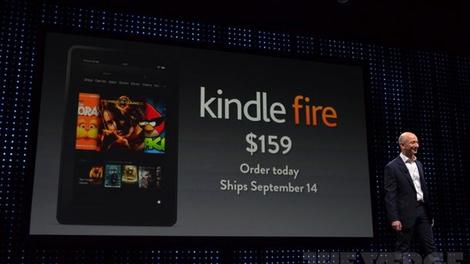
Since Jeff Bezos has built Amazon up from an online book retailer in the late 90s to the behemoth it is today, he probably knows a few things about taking calculated gambles.
"If you're going to take bold bets, they are going to be experiements and if they're experiments you don't know ahead of time if they're going to work," the Amazon CEO told Business Insider in a recent interview.
Bezos went on to explain that he would never have an all-or-nothing play to make a particular product or service the saviour of the business: "I don't believe in 'bet the company' bets. That's when you're desperate. That's the last thing you can do," he states at the end of the interview.
Steve Ballmer famously referred to Windows 8 as a 'bet the company' moment for Microsoft when it was released in 2012. The revamped OS was Microsoft's gamble to stake a claim in the mobile market dominated by Apple and Google. One look at the customer feedback for Windows 8 shows that many weren't convinced by Ballmer's bet.
Fire's not out
Is Bezos having a dig at the original tech giant? It seems that way if you read between the lines. But Amazon hasn't had 2014 all its own way, especially given the spectacular flop of the Amazon Fire Phone.The Amazon boss explains in the interview that his job was to run the company in such a way that the successes could pay for the failures. He argued products like the Kindle ereaders and Amazon Prime subscription service have covered bombs such as the ill-advised pets.com.
Although Bezos doesn't specifically mention the Amazon Fire Phone, the writing's on the wall. The handset was the company's first smartphone venture and, although it didn't go down well, Bezos hasn't faltered. He's previously stated that there will be more Amazon Fire phones on the way.
- However, the Amazon Fire HDX 8.9 is really rather good.

Read More ...
Week in Tech: Week in Tech: Amazon's burnt, PlayStation's old, Google's fixing the web

There's an old saying: "if you're in a hole, stop digging". Amazon's Jeff Bezos clearly hasn't heard it, because he plans to follow the Fire phone fiasco by making more Fire phones. This week we also heard about the decidedly different Yotaphone, caught rumblings of an HTC One M9, noted Acer getting hardcore, met a time-travelling PS4 and caught news of what we really hope is the death of those dreaded Captcha boxes on websites. It's the week in tech!
Hugh's invisible balls
What's white and invisible? That ball! But it's no joke for Hugh Langley, who's been playing catch with an invisible ball. No, he hasn't eaten too much blue cheese. He's been testing the Glove1, a wearable designed to provide haptic feedback in games and which looks like some kind of cybernetic Michael Jackson accessory. "Combine this with an Oculus Rift and we may have already solved virtual reality's input problem," Langley says.Ready, Fire, aim!
Remember the Amazon Fire Phone, Amazon's smartphone with a whizzy 3D display and absolutely terrible reviews? Amazon boss Jeff Bezos admits that it's been a disaster, but that eventually it'll be good. It's nice to see Bezos agreeing with our very own Max Slater-Robins, who wrote that "Amazon strayed from what it knows… phones [are] communications devices, and this is an area of which Amazon has very little knowledge."Specs appeal
Google Glass was the head-mounted computer that we were told would change the world and stuff. Well it didn't change the world and we all forgot about it for a bit, but now it's back! Back! BACK! Or at least, it's nearly back. 2015 will bring a new, improved, Intel-powered Glass, and it's getting a new look too. It's still dorkier than Dorky Dave of Dork Street, Dorktown, but it's sleeker than before and should deliver better performance and battery life as you flee from muggers trying to steal it from your face.HTC's M9 is looking mighty fine
The successor to the excellent HTC One M8 is coming, with the innovative name One M9 - or maybe it'll be called the Hima, because a device with that very name has just leaked all over the internet. "If the specifications are true," Matt Hanson says, "then HTC's next flagship smartphone could be a doozy." How does an octa-core 64-bit Snapdragon, 20.7MP camera and Cat 6 LTE grab you?A phone with two fronts
In years to come people may look back on us and say "imagine! Their phones only had one front!" That's what the newly launched Yotaphone 2 might mean, anyway: it has not one but two touchscreens, one on each side. One's an AMOLED and the other is E-ink, and it goes on sale this week. You just know Samsung's planning one with 3 screens now.Acer gets hardcore
It turns out that Acer has "internal hordes of hardcore gamers" and the firm is picking their brains to help it design the next generation of hardcore gaming products. Speaking to TechRadar, CEO Jason Chen said that the firm was talking to gamers within and without the firm to better understand gamers' requirements ranging from turbo modes to case illumination.20 years of awesome
Can you believe the PlayStation is 20? It is, and to celebrate Sony has made a version of the PS4 in the same colours as the original. We're gutted - we've just bought a black one. The retro model will be a limited edition, and it should be out in time for Christmas.Only Google can save mankind
Bad news for robots and good news for people: Google has found a better way to combat bots than the hated Captcha boxes that infest the internet. All you need to do is click on a checkbox that says "I'm not a robot". You're probably wondering how that'll stop real robots, and the answer is that the box is upstairs and robots can't climb stairs and… actually that's Daleks. The truth is that Google uses "a whole bag of cues" including how you use the cursor, what your IP address is, and what your innermost thoughts are. Er, probably.
Read More ...
Industry voice: The Eternal Life of Your Data

Perhaps the single most significant technological development of the past 25 years is the creation of the web. As we celebrate the web's 25th anniversary, we can look back and laugh about how little we once understood about its possibilities. But, even now that the web is ubiquitous in many of our lives, we're still left with a massive set of questions surrounding what happens to our information online. Who owns our data? How can we get a grip on our own personal digital lives?
With many of us conducting a vast majority of life and business online, digital has come to define our society. Many people under the age of 30 are more likely to send a text message rather than have a phone conversation.
We're more likely to send an email or IM than have a face-to-face conversation with a coworker. The unspoken issue is that we're creating a digital trail of all we say and do. For the first time in history, we're documenting everything without regard to where or how these records are kept and backed up. Our data has an eternal life, with each of us serving as our own personal historians, many times without even knowing it.
The bottom line is: if our digital records live in perpetuity, we need to take more ownership and control over where and how we choose to keep them. We have everything from libraries to museums to cave drawings to store our recorded histories from the past several centuries. But, with the nearly infinite data points we each create daily, why aren't we as concerned with keeping personal information as we have been in the past?
IDC projects that the digital universe will reach 40 zettabytes (ZB) by 2020 – 50 times larger than the digital universe at the beginning of 2010. There are more than 250 billion photos uploaded to Facebook. A typical day averages 350 million photo uploads, more pictures than there are people living in the United Kingdom.
Instagram users post 35 million selfies per day – that's more than 400 selfies per second. Twitter users send more than 400 million tweets per day; the average book has about 64,000 words. Even if each tweet was a single word long (when really, they average 28 characters, which would be a VERY long word), that'd be the equivalent of 6,250 novels per day.
With this newfound data explosion, we have no idea what our data archives will look like in the next 100 years. But one thing is for certain, many consumers aren't aware of the importance of their personal data until its too late. A device is lost, stolen, or damaged (along with the digital trail they've created over time). With data volumes growing, the single best way to preserve our information is to do it invisibly and automatically.
The expanse of information we create, combined with the relative newness of the Internet itself, has given rise to entire industries centered around data: from backup and storage, to sorting the big data we create to the benefit of governments and society at large. Let's focus for a moment on what it would take to make sure each individual's digital record is protected online.
Imagine a world where each of us was able to keep a private, personal record without giving it a second thought. Much like how Internet security software invisibly runs in the background, blocking malicious viruses and other threats from infecting our machines, an automatic backup archive would save time and frustration when inevitably our devices fail. Our individual data would always live on.
If each of us served as our own data historians and archivists, we'd each be able to maintain a personal history in addition to the public histories we put out into the world. It's strange to think that in 2032 the UK Prime Minister will have a Facebook page that chronicles his or her entire adolescence. While this thought raises interesting questions about the information we choose to broadcast, it also creates an entirely renewed sense urgency around storing the digital moments of our lives in a place where only we can access them.
- Nat Maple, Senior Vice President & General Manager, Global Consumer/SOHO, OEM and Online, Acronis.

Read More ...
Updated: Android Lollipop 5.0 update: when can I get it?

Google, HTC, Samsung and Sony
Android Lollipop is now out in the open and it includes a hat full of new features, a visual overhaul and numerous under-the-hood improvements to make if faster, more efficient and lighter on your battery, but while we know all about it, it's not yet available for public consumption.Even once it does launch it will be down to individual manufacturers to port it to their devices, so chances are you'll still be waiting a while to get it on your phone and tablet (unless you've gone full Nexus already) and most companies haven't yet been all that forthcoming with details of when they'll bring it to their phones and tablets.
But we do know some things and we can take educated guesses at others, so read on for all the information and theories on when you might see Android Lollipop on your device
- Read our hands on: Android 5.0 Lollipop review
The Nexus 6 and Nexus 9 are Google's first devices to come with Android Lollipop, but these aren't the only Nexus products which will get the latest sweet treat.

Android 5.0 Lollipop will also be available on the Nexus 4, 5, 7, 10 and Google Play edition devices in the coming weeks.
A recent announcement by the official Android Twitter account revealed that the Android 5.0 Lollipop upgrade is now being rolled out to the Nexus 5, Nexus 7 Wi-Fi (both the 2012 and 2013 versions) and the Nexus 10.
The rolling out of the update will be done in waves, which will take around three weeks to reach every customer.
Asus has announced that Android 5.0 Lollipop will be available right now for both generations of its Nexus 7 tablets, though just the Wi-Fi only models for now.
We've heard rumours that Android 5.0 Lollipop had been delayed until November 12 for the majority of Nexus devices due to the last minute discovery of a few software bugs. With the roll out of the update to Nexus devices now begun, it looks like those bugs have been fixed.
The roll out has not yet begun for the cellular versions of the Nexus 7 2012 and 2013 or the Nexus 4. Those handsets should see an update later on, though Google has not indicated when this will be.
Any Nexus devices older than the ones we've already mentioned are all but guaranteed not to get it, meaning that Nexus S owners are plum out of luck. Google has also confirmed that the Galaxy Nexus will not receive the update.
HTC
HTC has been more forthcoming with its update plans than most manufacturers and it's no surprise given how quickly it plans to bring the update to users. In a statement the company said:"HTC is excited about the new features in Android Lollipop and we can't wait to share them with our customers. We are committed to updating our flagship HTC One family as fast as possible.

"We will begin rolling out updates to the HTC One (M8) and HTC One (M7) in regions worldwide within 90 days of receiving final software from Google, followed shortly thereafter by other One family members and select devices."
Sure enough, on November 4 HTC's Twitter account announced that it has now got the Android 5.0 Lollipop code and that it will make good on its promise to update the HTC One M8 and HTC One M7 within 90 days.

Doing the mathematics that means the company's most recent two flagships should get Android Lollipop at least before February of next year.
After a series of delays it looks like the Google Play Edition of the HTC One M7 will receive the Android 5.0 Lollipop update on Monday December 8. This is according to a report from Techtastic.
It is unclear when the standard version of the HTC One M7 will be updated, but it shouldn't be too long after the Google Play Edition gets Android 5.0.
If you're keen to see what Android 5.0 Lollipop will look like running on the HTC One M8 with HTC's own Sense 6.0 interface, then a recent batch of screenshots leaked by the LlabTooFeR Twitter account could satisfy your needs.

We're going to go ahead and assume that most other HTC handsets released in the last year or so will also get the update at some point.
As a general rule the more recent and high profile a device is the more likely it is to get an update, so the HTC Desire Eye will almost certainly be near the front of the line.
The HTC One Mini 2, the HTC One Mini and perhaps the HTC One Max and some of the other recent Desire handsets are likely to get the update too, though probably not until sometime after the One M7 and the One M8.
According to one leak, the One Mini 2 and Desire 816 will get Lollipop sometime in March or April, while the One Max, One Mini and Butterfly S have an expected Android 5.0 rollout of March-May.
Samsung
Samsung is yet to officially shed any light on when it will be bringing Android Lollipop to its phones, but there are sources saying its sooner rather than later.According to Sam Mobile, the Samsung Galaxy S5 could be in for an Android Lollipop release in December 2014. Given that networks can delay the rollout, there is always the possibility it won't reach devices until January 2015.
This coincides with the recent news that the Samsung Galaxy Note 3, Note 4, Galaxy S4 and the Galaxy S5 (LTE version) will be getting the update to Android 5.0 Lollipop at some point in early 2015.
The Samsung Galaxy Note 4 arrived too early to launch with Android Lollipop, but it will likely be updated quickly, although there's been no word - official or otherwise - on this so far.
The Galaxy Alpha and Galaxy Note 3 are also likely to get the update very shortly after it launches, probably within the same sort of several month timeframe as HTC is operating under.

Other Samsung handsets may have to wait a little longer, however we'd expect that most high profile devices released in the last 18 months to 2 years will get the update, including the Samsung Galaxy S4, the Galaxy S4 Mini and the Galaxy S5 Mini.
Sources close to Sam Mobile suggest that Samsung has confirmed that the Galaxy S4 will be getting an update to Android 5.0 Lollipop, with the Exynos variant (GT-I9500), which runs Samsung's own Exynos 5 Octa SoC, getting the update first.
It is rumoured that the Galaxy S4 will be updated sometime in early 2015, though Samsung has yet to officially announce any plans.
Sam Mobile has also released a video showing how Android 5.0 will look running on a Samsung Galaxy S4, effectively confirming that the latest version of Android will come to Samsung's older flagship handset.
We doubt that the Samsung Galaxy S3 or anything older will get Android Lollipop. It's a device that's already over two years old and some versions of it didn't even get Android 4.4.
Samsung doesn't seem great at updating its tablets either. There's a good chance recent slates like its Note Pro and Tab S ranges and even the Samsung Galaxy Note 10.1 2014 will get Android Lollipop but anything older or low end is iffy.
Sony
Sony has openly declared that it will be "bringing Android 5.0 Lollipop to the entire Xperia Z Series."It's even published a full list of handsets which are in line for Android Lollipop, so here we go...
Xperia Z, Xperia ZL, Xperia ZR, Xperia Tablet Z, Xperia Z1, Xperia Z1S, Xperia Z Ultra, Xperia Z1 Compact, Xperia Z2, Xperia Z2 Tablet, Xperia Z3, Xperia Z3v, Xperia Z3 Compact and Xperia Z3 Tablet Compact.
It's worth noting that the Sony Z Ultra Google Play edition will be first in line, but Sony is yet to reveal an exact date for the update.

As to when Sony will start rolling out the update to its main line of devices, the manufacturer has said "We'll start the upgrade at the beginning of 2015 for the core Xperia Z3 and Xperia Z2 series – continuing thereafter for all remaining devices above."
LG, Motorola, OnePlus, Huawei, Asus and ZTE
LG
It has now been confirmed that the LG G3 will receive the Android 5.0 Lollipop upgrade sometime between late November and early December.
A report published on October 24 by a Dutch website asserts that LG has told its Dutch and Belgian users that they will see an Android 5.0 Lollipop update before the end of 2014.
Before our Dutch and Belgian readers get too excited, there's no specific date mentioned and also no indication of where the information has come from.
We haven't heard anything about LG's other handsets, but we imagine that in time the LG G2 and LG G2 Mini will probably get updated too and the LG G3 Beat is bound to get updated.
Motorola
Motorola has confirmed that Android Lollipop will be coming to a number of its handsets in a post on the official Motorola blog.According to the post Android Lollipop will come to both the first and second generation Moto X, the Moto G, the Moto G 4G and the Moto E.
A more recent blog post has announced that Android 5.0 Lollipop has begun rolling out to second generation Moto X and Moto G devices in the US.
Other Motorola handsets that will get Android Lollipop are the Droid Ultra, Droid Maxx and Droid Mini.
Motorola has launched a helpful website where you can track when your handset will get updated to Android 5.0, which is being constantly updated with information about the upgrade process.

Motorola's UI is very close to stock Android as well so it shouldn't be as much work to get new versions up and running and back when the company was owned by Google it was pretty prompt with updates, unsurprisingly.
Things might be different now that Lenovo's in the driving seat, but we doubt there'll be too long a wait for Android Lollipop on any recent Moto handsets.
OnePlus
The OnePlus One is still bizarrely hard to get hold of thanks to the requirement for an invitation, but if you have managed to get your hands on one you'll be pleased to know that the company plans to upgrade it Android Lollipop (or a CyanogenMod build based on Android Lollipop anyway).
In a statement posted to the OnePlus forums a staff member confirmed that not only would its first and only handset be getting Android Lollipop, but that it would arrive within three months of Google releasing a final build. So the same time frame as HTC in other words.
Huawei
Like most manufacturers, Huawei hasn't yet shared any details on its Android Lollipop plans. Unfortunately it's not always the quickest at updating its phones either as it only fairly recently started rolling out Android 4.4 to the Ascend P6 for example and the Ascend G6 is still waiting for it.
The company's latest flagship, the Ascend P7, shipped with Android 4.4 and we imagine it will probably get Android Lollipop, but possibly not any time soon. We're less sure whether any of the company's other phones will get it, but fingers crossed.
Asus
If you own an Asus ZenFone it looks like you're going to have to wait until 2015 to get the Android 5.0 Lollipop upgrade.Asus has apparently confirmed that the Asus ZenFone 5, along with the rest of the ZenFone line, will be updated in April 2015. The Padfone S will also be updated around April.

In June 2015 Asus will update its Padfone Infinity smartphone. So far there's been no news about Asus' other devices, such as the Padfone mini, and when they will be updated to Android 5.0.
ZTE
If you're one of the relatively few with a ZTE handset you might be wondering if and when Android Lollipop will be arriving for it. Unfortunately so are we and this is one case where it's very much an 'if' rather than a 'when'.
Fairly recent phones like the ZTE Blade V and the ZTE Blade Q Mini launched with old versions of Android and they haven't been updated, so we're not optimistic that they'll get Android Lollipop.
Nvidia
Nvidia might not be high on most people's radars when it comes to Android devices, but gaming fans might be interested in knowing if and when the Nvidia Shield will be getting Android Lollipop.Nvidia told us that "we've worked hard to support every official Android release in the past, as you can see with our SHIELD portable and our software team is always working hard to bring new features and the latest updates with no delay. We try to make sure that updates come as close to their announcement as possible."
So while it didn't go so far as to confirm anything it sounds very likely that the Nvidia Shield will get Android Lollipop and probably quite soon after launch.

Read More ...
Android 5.0 coming to Galaxy Note 3, Note 4, S4 and S5 in early 2015

If you're an owner of a Samsung handset and you're awaiting an update to Android 5.0 Lollipop then you may be in luck, as a number of Samsung devices will be getting the upgrade in early 2015.
The Samsung Galaxy Note 3, Note 4, Galaxy S4 and the Galaxy S5 (LTE version), should be getting the update to Android 5.0 Lollipop at some point in early 2015.
This is according to Seoul-based Reuters tech correspondent, Vincent Se Young Lee, who posted the news on Twitter.
Fancy a lick?
We don't have much more detail to go on, such as if all the handsets will be updated at once or if there will be a slower rollout, updating the newer and more popular handsets before moving on to the older models.We're also still waiting to hear if and when other Samsung devices will be updated to Android 5.0.

Read More ...
Has the Samsung Galaxy S6 just been outed?

According to new benchmark results that apparently show the specifications of an early build of the upcoming flagship, the Samsung Galaxy S6 could be shaping up to be a pretty powerful handset.
A smartphone with the model number SM-G925F, which has previously been identified as a European Galaxy S6 variant, has been put through the AnTuTu Benchmark, with the results posted by Chinese website CNMO.
The benchmark results list a number of specs which, if true, could hint at what sort of smartphone the Samsung Galaxy S6 will be.
What's Samsung got planned?
According to the benchmarks the Galaxy S6 will come with a 1.8GHz Samsung Exynos 7420 octa-core processor – which hasn't even been announced by Samsung – along with 3GB of RAM and 32GB of storage.According to the specifications it will come running Android 5.0. The screen will be 5.5-inches with 2560 x 1440 resolution and it will apparently have a 5MP front-facing camera and a 20MP rear camera.
This is all far from confirmed, and even if true the model is probably an early prototype, so the specifications could change before release.
It still gives us a good idea about what type of smartphone the Samsung Galaxy S6 could be, and we will hopefully find out more at MWC 2015.

Read More ...
Opinion: Ditch the marketing speak, Microsoft, and talk to us like humans

In a move that absolutely, definitely has nothing to do with Apple already being on version 10 of its Mac operating system (Microsoft just hates the number 9, didn't you know?) we're jumping straight from version 8 to version 10 of Windows. What we've seen so far (the technical preview) is only meant to be a tiny glimpse of what the full release will offer, but I like it.
It's been available for download for a month or so now, so I've had plenty of time to get to grips with it. Even as an early version, it's essentially the version of Windows that I wanted Windows 8 to be. It's got the cool tile-based Start screen, which is the default when you're on a tablet, but keeps something sensible in reserve for desktop users - a desktop, Start button and Start menu, which appears when you're using a keyboard, or a traditional desktop PC. Great! This one simple change alone means Microsoft has got a hit on its hands.
At the launch event Microsoft was keen to emphasise that this release was for the enterprise users, and that the consumer (for that read "eye candy") features would be absent. Actually, Microsoft, this stripped back version is probably what most people, including me, actually want in the final release. So, can I just put in a little request now, before it all goes too far? How about you just stop there. There's no need to add all the bells and whistles that so marred Windows 8 - sometimes, less is more.
Simplicity is beautiful
There's another Microsoft Windows event rumoured for the end of January, where the covers come off the new consumer features. But rather than focusing on this, what Microsoft should be shouting from the rooftops is: "Hey, the Start menu is back! All you businesses who are still using Windows 7 - you can upgrade in safety now!" Maybe that won't do much for the share price, or the Google and Facebook-obsessed investors, but it's what people really want to hear.There's something else that Microsoft does that's unnecessary too, and it bugs me no end. The launch of Windows 10 was marred by constant references to its web-first, cloud-first strategy, and how it could run on every different type of device under the sun, from your toaster to your phone. That's all great, but I'd be a lot happier if Microsoft just focussed on the amazing things Windows 10 will help me actually do.
Again, it's great that Microsoft knows where the industry is going, and is committed to being ahead of the curve, but is a "cloud first strategy" at the top of your shopping list when you're looking to buy your next PC or next version of Windows? When I hear talk of how people are consuming content through multiple streams over multiple devices using cloud-first, web-first strategies, I don't feel inspired to make a purchase, I feel like taking a nap.
The age of investor speak
Too many tech companies are doing too much of this kind of talk at the moment. Can't we all just forget this marketing-speak and get back to talking about doing things with our tech? I think a media focused too much on video bloggers, Instagram posters and social networks has made the tech industry lose its focus on the end user. And that's dangerous. By appealing to the digital elite, who make up 5% of the market, we alienate the 95% of us who don't want to tweet their breakfast, be the Mayor of the local Starbucks, or get 100k likes for a photo of their cat.Even Apple, once master of the art of selling, has lost its way recently. Is the new Apple Watch more of a fashion item than something practical? Of course, it looks gorgeous, and if somebody gave me one I wouldn't refuse it, but what will it add to my life? In contrast, the iPod had a simple message - "a thousand songs in your pocket".
When PCs and later tablets first appeared, the emphasis was on what they could do, not necessarily how they did it. I liked that, because I could understand it. I could connect with it. Now it seems to be all about how many different ways there are to do something, not the thing itself, and it's leaving me cold.
Before all the cool new social media sharing features get added into Windows 10, how about we just remember that all we really want for Christmas is our Start menu back.
- Graham Barlow is the Editor-in-Chief for Windows Help & Advice, your essential guide to Windows PCs with advice, reviews and features packed with social commentary. They can post issues direct to your door or fire them digitally through the air straight into your device - they're that good! Why not subscribe today?

Read More ...
Industry voice: The Facebook Conditioning Effect

Here are a few astounding social photo statistics: There have been more than 250 billion photos uploaded to Facebook, with an average 350 million photo uploads every day. The average user has 217 photos uploaded to the site. And that's just Facebook; Zuckerberg's $1 billion acquisition, Instagram, has a ridiculous 55 million snapshots posted to its app per day (for those doing the math, that's more than 600 shots per second).
So what do all these uploads say about us, besides the fact that we all love a good selfie? Recent survey results reveal that when given the choice, 74 percent of respondents would save their personal photos before the device (phone, laptop, or tablet) on which they're stored. In fact, of all the files kept on their devices, consumers overwhelmingly said that their personal photos are the most important.
Photo albums are things of the past; new pictures head straight to the dust-free pages of social networks. But something much more profound and far-reaching is taking place: when we share photos on cloud-based social media, we're actually creating a second copy of that information – a shared copy often now owned by someone else – even if that's not the main intent.
We're calling this the "Facebook Conditioning Effect" – the idea that social media is making the act of backing up more a part of our consciousness. The issue is that the image we see on social media is often a low quality copy of our pictures, even if we're unaware of this fact. And, the ironic part is that even though our selfies and food photos are stored in a second location, many of our much more important documents are left vulnerable. The good news is that the action of uploading and saving a copy of those digital files to an additional location is beginning to condition us to back up and protect more of our data overall.
Why shouldn't we be thinking this way? With recent advances in cloud technologies and user experiences, backing up data is now as simple as pressing "upload." That's how it works with Instagram, right?
But so much of our personal information – the really personal stuff – isn't backed up properly, safely and securely. Why isn't all of our data, not just a few of our personal photos stored safe and sound somewhere out in the digital universe? What's stopping this effect from making the jump from a social trend to a healthy all-encompassing data habit, where everything is backed up and protected?
The easy answer would be that there is no Facebook for say, your taxes. Startups are making enormous strides in creating data storage systems that feature the easy-to-use and easy-to-access formatting of social media sites, yet the two largest combined have less than 20 percent of Facebook's user numbers. So if it's not an issue of simplicity, what's really keeping The Facebook Conditioning Effect from fully transforming our digital behaviors?
The Problem: Privacy vs. Protection
Even though we've become much more likely to save noncritical files in the cloud, many of us haven't backed up our entire digital lives due to a number of recent high-profile data breach cases which have highlighted our chief concern: our data isn't safe when it's not handled directly by us. Snapchat was hacked and suddenly millions of phone numbers were public. Target's much-ballyhooed breach put the personal information of 70 million individuals at risk.So while we continue to upload every adorable puppy pic we snap, we hide away what's really important - our work documents, banking information, health records, and other personal and professional information – into old-school file cabinets and documents marked "personal" on our desktops.
The key is identifying and separating the issue of "data privacy" from the idea of "data protection." While data privacy focuses more on the legal and security issues regarding data use and storage, data protection is about safeguarding that information after it has been created and stored.
All Web-enabled device users should be more aware and on-alert when it comes to data privacy such as carefully reading all privacy agreements on sites and apps, and only sharing information that wouldn't jeopardize anything if leaked, but not at the expense of data protection.
When it comes to protecting data, the safest way is to store it in multiple, secure locations. Just as our photos now live both in our devices and on Facebook, keeping important personal information multiple places (i.e. a hard drive and the cloud, a backup drive, etc.) should come as second nature.
To make it simple, just think of the 3-2-1 rule: keep three copies of valuable data on two different types of media, and one copy at a remote location. Remember though, while basic cloud storage tools are a good starting point, they're not foolproof when it comes to security, so finding the right balance of security and simplicity is a key part of the process.
World Backup Day
World Backup Day was on March 31, 2014, and it was a time for all of us to think about what we're really putting at risk by not backing up our data. Disasters natural and manmade – from water damage due to everything from massive floods to spilled drinks, and fried drives from everyday dangers including sun exposure and destructive malware, occur daily and can put all of our information at risk. If there's one useful thing the 351 minutes we each spend on average on Facebook per month can teach us, it's why not spend just one minute to protect our data by keeping extra copies and backing up, not just March 31st but every day.- Nat Maple, Senior Vice President & General Manager, Global Consumer/SOHO, OEM and Online, Acronis.

Read More ...
Apple wants you to help it fix Maps
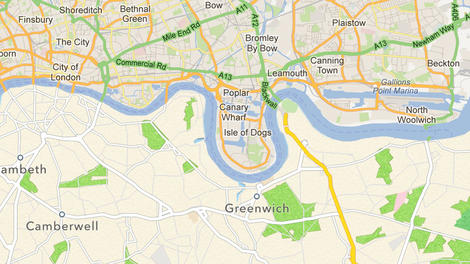
A new job listing on Apple's website suggests the company is planning to use crowdsourcing to improve its Apple Maps app for iOS and OS X.
The job listing is for a Maps Community Client Software Engineer and explains in the summary that Apple is "building and extending the Maps application to allow Apple to crowdsource improvements to the Maps experience."
The new approach will integrate Maps into Siri and Passbook in order to expand user feedback and improve the experience which still falls behind when compared to Google Maps.
"You'll also be working on the frameworks and plugins that enable Maps to integrate deeply and seamlessly with parts of the system such as Siri and Passbook, to extend and enhance the feedback experience," says the job posting.
No problem
So far, Apple has used the 'Report a Problem' feature to allow users to submit corrections as the only form of basic crowdsourcing around the app. Updating the UI and architecture of this feature is listed as the primary responsibility of the new position.Apple hasn't put any deadline on the job posting, so it's difficult to extrapolate just how long the project will take to get going. Perhaps Cupertino will have something big in store for its WWDC event next year.
The popularity of crowdsourcing for real-time information isn't a new idea. Traffic alert app Waze used the strategy to keep people informed of congestion on the road. Google aquired Waze last year and announced it would be incorporating the real time traffic information into Google Maps.
Apple meanwhile hasn't made any public comments on the future of its Apple Maps app. But if you're applying for the position yourself, good luck.
- Need to know about iOS 8? Here's our full iOS 8 review.

Read More ...
Review: Boston Venom 2401-12T

Introduction and performance
The latest addition to Boston's Venom workstation family, the Venom 2401-12T, benefits from an all-new Supermicro motherboard able to accommodate both the recently released Haswell-based Xeon E5-2600 v3 processors and ultra-fast DDR4 memory.Add to that an Nvidia Quadro K6000 to look after the video and you have a high-end professional workstation very much aimed at digital design creatives, engineers and others looking for the ultimate in video processing capabilities.
Tower of power
Housed in the same large and imposing desk-side tower casing as the previous Ivy Bridge Venom, the new workstation is well-built and easy to service via a fully removable side panel. Power comes from a 1200W Platinum level PSU and there's plenty of room for expansion should the need arise.The motherboard sits at the back of the tower and has two sockets able to take any of the new Xeon E5-2600 v3 family, which includes processors with 4 to 18 cores driven at clock speeds of up to 3.5GHz.
Promising to improve performance by up to 90% compared to previous Ivy Bridge Xeons, most of the new chips are aimed at the server market. However, the system we tested was fitted with a couple of 10-core E5-2687W v3 processors, the "W" indicating that the chip is designed specifically for workstation use.
It's easy to work out why as, although clocked at a "mere" 3.1GHz, the E5-2687W is rated at 160 Watt and, as such, would be hard to keep cool in a typical rack-mount server, especially in a dual-socket configuration. Workstation customers also have a habit of over-clocking their processors with the motherboard on the new Venom allowing the clock rate to be boosted by up to 4%.
Cool as a cucumber
Fortunately cooling is far less of a problem in a roomy desk-side tower, but just to be on the safe side Boston has opted for liquid cooling with the added benefit of quieter operation compared to conventional fans.
Support for DDR4 memory has also been added, courtesy of the new Intel C612 chipset, boosting memory bandwidth and, at the same time, reducing power consumption. And you get plenty of it, the Venom shipping with an impressive 128GB of ECC-protected RAM, clocked at 2133MHz and connected to each processor by four separate memory channels.

As might be expected, the big tower case also has a decent amount of room for storage, although the standard specification is fairly modest, starting with a pair of conventional 2TB SATA hard disks configured as a RAID 1 (mirrored) pair plus a 240GB SSD for use, primarily, as a high-speed scratch drive. A Blu-ray re-writer is also included in the base spec which is finished off by six USB 3.0 ports to connect external devices and two Gigabit Ethernet ports for networking.
All about the video
The one thing we haven't mentioned is the video and, in theory, you can have whatever controller you like (GPU in workstation-speak). But, as befits a high-end workstation, Boston has opted for a top of the range Quadro K6000 from Nvidia to put inside this particular workstation.
Equipped with 2,880 CUDA processing cores and 12GB of dedicated video RAM, this beast of a GPU can handle just about any graphics-intensive task you care to throw at it, and display the results on up to four monitors using a mix of DVI and DisplayPort interfaces. On the downside it takes up two expansion slots, and at 225W it adds considerably to the power and cooling requirements, although the Venom certainly has the ability to meet both those requirements and handle additional graphics cards besides
We booted the Venom into Windows 7 for our evaluation and, to be fair, couldn't see much of a difference compared to a well-specified desktop PC when using Office and other standard productivity tools. But then that's to be expected, and it's with graphics-intensive applications that the Venom really shines, the combination of much faster processors, DDR4 RAM and the Quadro K6000 enabling the Boston workstation to turn in some impressive scores using Cinebench R15.

The workstation clocked in at 187.31 FPS in the OpenGL test, and the CPU recorded a score of 3193cb. See the full results in the above image.
Verdict
There's no doubting the capabilities of the Venom 2401-12T which takes full advantage of the performance boost offered by the Haswell Xeon processors and DDR4 RAM. The only real issue is the price tag which at £9,670 (around $15,140, AU$18,090) excluding taxes seems, at first glance, rather steep.However, almost half of this is down to the Quadro K6000 GPU which we found selling by itself for just over £4,000 (around $6,260, AU$7,480). Take that into account and the new processors and all that RAM seems like something of a bargain.
Moreover, design and digital professionals looking for the ultimate in graphics performance are unlikely to be deterred by the price. If they are, they can always opt for a lower spec and/or a cheaper GPU, while others with deeper pockets have scope to add even more to the mix.
We liked
The new Haswell-based Xeon processors are a welcome addition to the workstation world, particularly when combined with high-end GPUs like the Quadro K6000, enabling the end results to deliver a significant step up in performance when running video-intensive design and modelling applications.Boston clearly understand the needs of this market and has opted for the workstation-specific Xeon E5 SKU as well as the Quadro K6000 GPU, all rounded off with liquid cooling to avoid any overheating issues.
We disliked
To our eyes the storage side of the equation seemed to be a little lacking. We would have liked more SSD capacity, and preferably with the operating system being booted from flash too. Still, that's easy enough to fix and there's certainly scope to add more disks inside the roomy tower, although the design aesthetics may not be to every taste.Final verdict
It may seem expensive but you do get value for money with the new Boston Venom which uses the latest Haswell-based Xeon processors to extract the maximum possible benefit from the high-end Nvidia Quadro K6000 GPU.It's not for everyone, but if you're a graphics professional or design engineer this workstation could significantly bolster your productivity and be worth paying extra for, plus there's scope to lower the cost for those with more limited budgets.

Read More ...
Industry voice: Combining Text Technologies: Text Mining & Voice to Text
In 2001, the band Cake released a song entitled "Short Skirt, Long Jacket". It's one of my favorite songs of all time, and is still on rotation in my playlists. I first saw the music video in 2002, and was blown away: it's composed entirely of people listening to the song on headphones and giving the viewer their honest opinion.
Check out the video.
How cool is that?
At the time, I remember thinking it was brilliant. They were getting honest reviews of the song, on the spot. Makes me wonder why more bands don't do stuff like that. Maybe they don't like the criticism?
In any case, the music video stuck with me. And nearly 13 years later, when I saw how far voice-to-text technology had come, the first thing that came to mind was that video.
What if, every time anyone gave you an opinion, it was recorded and transcribed with voice-to-text technology? Then the transcription was subsequently analyzed with text analytics software, and the results were sent back to you? That would be amazing.
For any large company, that information is priceless. Every time someone calls a customer service line, or leaves a voicemail, or is interviewed about a product, that information could be analyzed almost instantly, with few resources.
Rather than hire a team of analysts to listen and transcribe hours of people talk, and compile the information to find patterns, it could all be done by one person equipped with the right software, in a fraction of the time.
The possibilities are endless, but all based on the same model: using text analytics software like Semantria, on top of voice-to-text software like Voci, they could determine how users feel about their latest product (positive or negative), find out what the most common problem they have is (billing? slow service? bad tech support), and chart the progress by running the same analytics on a daily, weekly, and monthly basis.
Let's bring it back to the music. For Cake, at the end of a long day of vox pop style street interviews, they'd go home and run the audio they recorded through the voice-to-text text analytics combination. The software would show them instantly how many people liked their song, how many didn't like it, the most common phrases used to describe their song, and so much more.
- Rami Nuseir, Marketing Director, Semantria.

Read More ...
Should your company switch to Google Inbox?

Introduction and key changes
Making a radical change in email at a large company is a recipe for disaster. Users tend to revolt if you push out a different productivity app, and the support nightmares start arriving in droves. Yet, with Google Inbox, there are quite a few reasons to consider encouraging users to make an upgrade.It's not a wholesale replacement, like switching from Outlook to Gmail. And it's technically a pure consumer play (since it's not part of Google for Work). Yet business users can take advantage of a few key features to pump up their work productivity. As long as you know there are some trade-offs (according to a few experts), it's worth investigating.
Key changes
The key change here is that Google has offered Google Inbox as the first web app to use its new Material Design metaphor. It's really a major overhaul that takes the virtual concepts of flat colour layouts, whitespace, and a trim design structure and puts them into a browser (or a mobile app).The interface looks remarkably less cluttered, and the immediate effect for knowledge workers is that you can think a bit more clearly about what you are doing without so many options on the screen. It's arguably a cleaner interface than what you see on an iPad.
Another critical change is that Inbox borrows many ideas from Google Now, the landing page and search platform you can use on many Android phones and tablets (and in the browser). Google Now "listens" to your email and knows when you are near an airport, standing by a bus terminal, or late for a meeting. In Google Inbox, similar features show reminders about flights and even things you've ordered on the web. This all integrates directly into the interface.
A surprising enhancement has been made with search. When you type anything in the search box, you don't have to wait for a drop-down menu or hit Enter. The results appear "live" in your inbox as you type. This increases productivity tremendously over Gmail searches. It also means less of a reliance on Gmail labels (which still appear on the left in a drop-down menu) because you can trust that you can find your needles in the haystack just by typing a search. It improves workflow because you can search more interactively, spontaneously, and quickly.
"Google seems to be taking Inbox toward what might be called dynamic messaging management – that is, trying to reframe email and related tasks as being truly productive instead of the burdens they often are," says Charles King, an IT analyst. "Some of the features appear based on practical lessons Google has learned from developing and managing Gmail. Others, like airline flight alerts, are likely to blend functionality from services like Google Now."
Productivity issues
An important question to ask before using Google Inbox (and you have to request an invite at http://www.google.com/inbox first before jumping ship from Gmail) is whether these changes will impact your productivity or if they might cause a slowdown. The app certainly does provide some improvements visually and from a technical standpoint, but any change in how you work could have a detrimental effect if the gains do not compensate for the shift.One example of this is that Google has moved the tabs for promotions, forum posts, social networking activity, and non-critical updates over to the left column above the tabs. They cannot be disabled or moved from that spot, so if you rely on labels, you will be scrolling down below these hard-coded buckets. You can decide to bundle them into groups and only view them once in a while, so they don't clutter your inbox, but you can't completely ignore them.
Slow adoption
The IT analyst Rob Enderle says adoption for Google Inbox has not exactly exploded, so business users might want to take a close look at the features and interface changes before committing to using it on a regular basis and on every laptop, desktop, and mobile device."This is an optimised offering for professional users," he says. "Google is not good at marketing or even explaining their decisions so this move wasn't received particularly well. So I think the idea was good, and I expect the actual execution of the offering was well thought through, but because it wasn't presented well and, given Google doesn't focus well either, I expect adoption will be below potential. So a focus on professional users is an excellent idea but an inability to present changes and drive usage by Google will likely cripple this offering."
Sherry Chao, a spokesperson for the company Iterable (which makes an email marketing app) says Google Inbox does lead the charge toward more intuitive email processing. She says the features are designed for power users to get more done. Yet, there are some drawbacks. It only works if you already have a Gmail account, and it only works in Chrome or on a mobile device, and seems to be geared more for speedy individual email work than for teams working on projects.
"I think the bundles feature would need to be skewed more to business than personal," Chao says. "I do like how it is more like a task manager now, so if you're not using something like Asana, then Inbox can help manage your to-do list and to remember specific emails."
Deserves a look
Overall, the experts agreed that Google Inbox deserves a serious look if companies have already allowed employees to use Gmail, possibly as a secondary work email. It's a visual improvement, offers plenty of power user options, and improves workflow.The most serious drawback is that it is not Gmail – users might balk at the redesigned interface, the fact that labels are somewhat hidden in a menu now, and that you have to relearn a few email tricks. If corporate employees get more work done, however, it'll be worth many of those early frustrations.

Read More ...
Aston Martin DB10: James Bond's new ride revealed

James Bond has had more than his share of enviable cars over the half century or so that he's graced our screens, but his next ride sets a new standard for spy car cool.
Having had his classic Aston Martin DB5 spectacularly and heartbreakingly totalled in 2012's Skyfall, Bond was in need of a new set wheels – one that would be impractically conspicuous for a spy, naturally – and Aston Martin has delivered.
The iconic British manufacturer's DB10 will make its debut when Bond returns in Spectre, the series' 24th film, which is scheduled to hit cinemas at the end of 2015.
Live and let drive
The DB10 has been developed specially for the film, although with a production run of 10 we imagine it will find its way into a few collectors' garages.Aston Martin claims the car provides a glimpse at what is in store for the brand's next generation of vehicles, so we can probably expect to see larger grills and a narrowing of the headlights.
We can only hope James Bond takes better care of this Aston than he did his last one.
- Want a Bond-esque car on a budget? The Hyundai Genesis might surprise you.

Read More ...
Xodiom: an affordable and impressive OnePlus competitor emerges

The market for affordable but powerful phones may be about to get even hotter.
Currently the OnePlus One has the lead, but Chinese phone maker Xiaomi might join in early next year with a new flagship at CES 2015.
And now another new competitor has appeared: a company called "xodiom."
Xodiom just launched a phone totally out of nowhere, and it looks like it might be a serious contender.
"Wink"
The xodiom phone is powered by a 2.7GHz Snapdragon 805 chip with a 5.5-inch QHD super AMOLED display, 3GB of memory, a 16-megapixel rear camera with optical image stabilization, a 5-megapixel front camera, and a 3200mAh battery.It runs Android 5.0 Lollipop with a custom UI called "xOS" and is scheduled to launch January 5, 2015.
And the price? just $329 (about £210, AU$390) for a 32GB model and $379 (about £240, AU$450) for 64GB.
The company even takes a dig at OnePlus when you go to buy the xodiom phone, showing a message that reads, "to buy the xodiom you DO NOT need an invite, hooray for freedom," complete with a winking smiley face.
What's the catch?
If there's a catch here, it's not evident - unless the whole thing turns out to be a scam.It's not every day that a totally unheard-of company announces a brand new, almost-too-good-to-be-true smartphone. And for some reason they're only accepting payments via Bitcoin and wire transfer (seriously?).
Either way, we'll know in January, right?

Read More ...
Apple may be working on virtual reality, but it's destroyed the evidence

Update: The job listings previously spotted on Apple's website - including the one described below and another, for a VR hardware engineer - have disappeared.
It's unclear exactly why, but as Venturebeat speculates, Apple may have regretted tipping its own hand too early and removed the ads to mitigate any further damage.
Then again, maybe they simply filled the positions. Either way, they're not likely to comment any time soon (read: ever), so for now we'll just have to keep on guessing.
Original story follows…
Virtual reality is currently the realm of Oculus Rift, Samsung and Sony - with a little Google thrown in - but Apple may soon join the fray as well.
It certainly seems that way based on an Apple job listing for an app engineer with experience with "virtual reality systems."
"This engineer will create high performance apps that integrate with Virtual Reality systems for prototyping and user testing," the ad reads.
It also lists iOS and OS X app development and "VR/AR development" experience (i.e. virtual reality/augmented reality) as requirements.
Read between the screens
Naturally the listing doesn't go into detail beyond these requirements, but it's not hard to see where Apple might be going with it.Virtual reality is still on the cusp of really taking off, but with heavy hitters like Sony (with Project Morpheus), Facebook (which owns Oculus VR) and even Google (which punked everyone with a cardboard headset this year) in the mix there's little doubt that it will.
There are even third-party accessories, like the Pinć, that do for the iPhone what Samsung's and Oculus's Gear VR does for the Galaxy Note 4, turning it into a VR display mounted to your face.
Add Apple in officially and you just might be looking at the next big thing in tech.

Read More ...
Available Tags:Download , PS4 , Xbox , Windows 8 , Amazon , Windows , Android , Galaxy , Samsung , Facebook , Apple , Google ,


No comments:
Post a Comment