

Updated: We're here at PAX Prime 2014!

PAX Prime 2014 show floor
Day two of PAX started off with a light sprinkling of rain which in true Seattle fashion, lasted the rest of Saturday. No biggie though - no PAX attendee is going to let a little water stop the cosplaying, video gaming fun of the convention!Speaking of video games, Deep Silver had been throwing out little teases here and there letting many to speculate that a new Saints Row was coming soon. But alas, the company is only releasing a stand alone add on to Saints Row IV called Gat out of Hell.
It looks like the typical brand of crazy and crazy fun that Saints Row is known for. Check out the trailer below to watch Johnny Gat go after the devil himself.
Saints Row: Gat Out of Hell will sell for $20 (about £12, AU$21) and won't require the original Saints Row IV to play. It launches on January 27, 2015 in North America and January 30 worldwide.
The fourth Saints will also be heading to PlayStation 4 and Xbox One titled Saints Row IV: Re-Elected. The next-gen tailored game will reportedly have slightly improved visuals and all of the previously released and the upcoming DLC for the title. Digitally, Gat Out of Hell will be sold separately.
Intel hearts PCs 4-ever
We went to Intel's panel to see if anything else would be mentioned about the new 8-core, 16 thread i7 Haswell processor.VP of Desktop Lisa Graff led the presentation with much gusto for PC gaming and noted the growing trend of PC gaming. General Manager of Alienware, Frank Azor, CEO of Cloud Imperium Games, Chris Roberts, and CEO Playful Inc, Paul Bettner were brought out to further cement the new Intel tech and tout their own passion projects with relevance to PC gaming.
Azor showed off the new Area-51 desktop while of course, plugging the Alpha Steam Box. Roberts and Bettner spoke a bit about their upcoming games, Star Citizen and Lucky's Tale respectively.
Both also spoke about the incorporation of Oculus Rift into the games and reiterated Graff's earlier sentiments about how PCs will lead to even more virtual reality games.
- Watch the video below of our buddies from PC Gamer interviewing Chris Roberts about Star Citizen
See below for day one highlights ...
Finally, PAX Prime is upon us!
The streets are crowded with costumed attendees and the non-costumed all milling towards the Seattle Convention Center and the various venues for the day's panels.
We arrived early yesterday and now we're set to bring you all the hands ons and gaming news your hearts desire.
So far, Alienware has announced its latest flagship gaming PC - a revival of the Area-51.
It's a giant, well, alien-looking, triangular machine that's meant to be the ultimate PC from Alienware in terms of functionality and performance.
Story time social commentary
We also sat in on a surprisingly emotional story time with Mikey Neuman at the Benaroya Hall. The turbulent and controversial news surrounding women in gaming, and what constitutes a "real" gamer or "real" game led Neuman to tell an anecdote detailing a personal and clearly traumatic experience he had with bullying and friendship when he was in the fifth grade.
Pausing more than once towards the end of his tale, Neuman choked up and expressed that he learned "people who are supposed to protect you won't."
On a lighter note, he explained a bit about his life at Gearbox and finding his voice for Scooter, a character from the Borderlands game.
The charismatic Neuman ended strongly telling the room to spread joy - that saying "do you even movie" sounds just as ridiculous as "do you even game."
We wholeheartedly agree, sir.
PAX Prime 2014: what to expect
Check out what we wanted to see before the show started below.With the hype of E3 behind us, we can now concentrate on the Comic-Con of video games: PAX Prime 2014.
We already had a blast at PAX East and now we're gearing up for the four-day gaming convention in Seattle that runs from August 29 to September 1. It was once a smaller show but it seems to grow in popularity every year; in fact, tickets for PAX Prime sold out in a matter of two hours.
Last year saw the buzz of the next-gen consoles everywhere but what will this year hold? Perhaps it's time for the PC-console Steam Machines to show up and really woo the crowd by letting us play on 'em some more. Alienware's Alpha play-time wasn't enough during E3.
PAX Prime is also all about the awesome panels, and you can be sure there will be a ton to look forward to this year. Will the controversy surrounding Assassin's Creed Unity and its lack of female representation show up? Will we get to hear more about all those next-gen games that have been delayed? What sort of indie games will pop up and wow us this year?
Keep up with us as we update this page with everything we know and everything we want to see at PAX Prime 2014.
1. Killer PAX Panels
Leading the annual story time session this year is Mikey Neumann, Chief Creative Champion of Gearbox Software. Last year we heard from Peter Molyneux about his experience creating Godus after leaving an indie studio and a large studio to once again head another indie studio.We'll hear about a similar tale, or origin story, from Neumann who along with being a writer, podcaster and all around jack-of-all trades, worked on Borderlands 2 and its DLC's.
Another notable panel includes "Women Surviving and Thriving in Games Media" where games journalists like Polygon Editor Megan Farokhmanesh, Nerdist host Jessica Chobot and others will detail their struggles and successes in the industry.
There seems to be a good mix of panels on bullying, gaming with a disability, gaming music and even one from Destructoid called "Video Games Are Stupid: The Inherent Silliness of the Medium."
2. Some more Steam Machines!
The last we heard from Alienware at E3 was to expect more during PAX. So here we are, with the gaming event almost upon us, ready and excited to see more Alpha.
We went to a pre-Gamescom event where the company showed off the Alienware exclusive UI, but didn't get to play with it just yet.
It wasn't entirely finished during our hands on either but it managed to remain an interesting box to look out for when it releases later this year.
Here's hoping we see a more finished version of the Alpha, and perhaps more Steam Machines to see how they're stacking up against Alienware, and even the Nvidia Shield Tablet - which can also stream Steam.
3. PC gaming (of course)
PAX is all about PC gaming, so along with PC specific panels, you can definitely expect a bunch of PC peripherals to come out of the show.Last year, SteelSeries was on the floor with the SteelSeries H Wireless headsets made for the PS4. We're expecting to see a bunch more headsets with console compatibility this year too.
During PAX East, we went hands on with the MSI Ghost Pro laptop and were pretty impressed with this thin, beautiful beast of a machine.
Since that was pretty recent, we may not see anything from MSI but it's possible another powerful gaming laptop will rear its head and make us drool for 3K and 4K gaming.
4. Virtual reality IRL
You wouldn't think VR and PCs would go together so well, but what else has the juice to make these fancy virtual reality headsets work? Not the consoles (yet).So that means we'll definitely be seeing the Oculus Rift again, in full SDK 2 glory showing off the same games from E3 - and maybe a few new ones?
There's a chance Sony's Project Morpheus will pop up too, and you can bet on seeing various other VR wonders all over the show floor hoping to make it big in the growing industry.
5. Indie games galore
Of course, we can't forget about the lifeblood of PAX - the indie game. There will be plenty of indie games all over the convention center.
In fact, you can even check out the PAX 10 already to see what ten games have been chosen as the best of 2014.

Read More ...
Apple is fighting hard to get old Samsung devices banned from sale
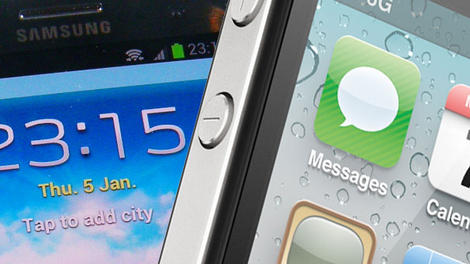
The legal war between Apple and Samsung has been winding down lately, the mushroom clouds finally receding as the two companies cease their bickering in the dozens of cases they'd filed outside the US.
But the war at home isn't over yet, Apple's latest move reveals.
The house that Steve Jobs built recently appealed a US district court's decision not to grant an injunction against Samsung's sale of several devices that were previously found to be infringing on Apple patents.
Judge Lucy Koh, who's been overseeing this case for years, said Apple can't prove that sale of these Samsung devices harms Apple's bottom line, but Apple clearly disagrees.
What is it good for?
The injunction Apple is seeking would permanently ban Samsung from selling devices including the Samsung Galaxy Nexus, Samsung Galaxy Note, Samsung Galaxy Note 2, Samsung Galaxy S2 and several of its variants, Samsung Galaxy S3, and Samsung Stratosphere.Apple won the case years ago that says these devices and others do indeed infringe on some Apple patents, but the two companies have continued squabbling ever since.
Nevertheless Judge Koh isn't convinced that Apple will benefit from a ban on the sale of these devices, thanks in part to the profits Apple posted in the third quarter of 2014.
"Apple has not demonstrated that it will suffer irreparable harm to its reputation or goodwill as an innovator without an injunction," Koh wrote in her previous ruling.
Given both parties' proven tenacity, it's unsurprising that Apple would appeal, but here's hoping that this battle comes to a real end soon.

Read More ...
OnePlus wants to start selling the One like a normal company

The OnePlus One is one of the coolest new phones on the market, perhaps partially because you need an invitation just to buy one.
But OnePlus will prove that exclusivity isn't the One's only appeal when it starts selling the phone normally this fall.
The company said during a Reddit ask-me-anything Q&A session that it hopes to open the phone to pre-orders by October at the latest.
"We are working on a pre-orders system, we were initially aiming for September but it's been slightly delayed, hopefully we'll be ready to launch it in October," the company wrote.
Better than nothing
Obviously that's not concrete, but it's better than the nothing we've heard previously on when the average plebe will be able to purchase the OnePlus One.The One is so desirable because it has top-of-the-line specs, but at a much lower price than similar competitors like the Samsung Galaxy S5, HTC One M8 and Sony Xperia Z2.
We already laid out five reasons the OnePlus One should be your next smartphone - and soon you might actually be able to get your hands on one, depending how pre-orders work and when they begin.

Read More ...
Microsoft is taking a stand in court over email ownership and privacy

Microsoft is taking a stand over email ownership and privacy as the US govenrment continues to demand the company hand over email data stored in an Ireland datacenter.
Microsoft initially had until July 31 to hand over the email data, but a court extended the company's deadline so it could work on an appeal.
Failing that, Microsoft has simply refused to comply, stating that doing so could set a dangerous precedent on a global scale.
No wonder tech companies like Apple, Cisco and others have thrown their support behind Microsoft in this battle.
Responsibility
"This case could have important implications outside the US. Other governments could demand emails held in datacenters outside their jurisdiction," Microsoft Chief Privacy Officer Brendon Lynch wrote in a Microsoft blog post on August 27.He cited a law passed by the British government earlier in August that lets it force tech companies to provide email data no matter where it's stored. "This would include emails stored in the US by Americans who have never been to the UK," he wrote.
Microsoft's current stance on email privacy is a huge improvement over its previous one. Maybe we should have put more faith in the company when it said earlier this year it would no longer read users' emails, even if it suspects they're stealing from it.
"Microsoft is committed to delivering meaningful privacy protections that build trust with our customers, and we know how much you value the contents of your email," Lynch wrote.
He continued, "We believe your email belongs to you, not us, and that it should receive the same privacy protection as paper letters sent by mail - no matter where it is stored."
A judge has given the US government and Microsoft until September 5 to reach an agreement before the court forces a resolution.

Read More ...
Review: Datacolor Spyder4 Elite

The Datacolor Spyder4 Elite is a colour calibration device that can be used to calibrate monitors, projectors, laptops, TVs, iPads and even smartphones using an easy-to-follow step-by-step based process.
Like the X-Rite ColorMunki Display, it works by by measuring a series of colours on a screen and creating a "profile" that can be saved and replicated on other devices. However, the two tools are different beasts in that the Spyder offers a much wider range of calibration tests beyond basic colour correction, making it a more serious option for photographers, video editors, web designers and other professionals who need to calibrate beyond colour accuracy.
The Spyder4 Elite is the most advanced (and expensive) of the three calibration calibration tools in Datacolor's Spyder range, with an RRP of £165, placing it above the mid-range Spyder4 Pro (£115) and low-end Spyder4 Express (£66).
Tangled web
An uncalibrated display can present a number of problems for multimedia professionals. Overly dark monitors, for example, can present shadows on images that aren't really there, and problems with colour accuracy can result in areas of a panel displaying overly warm (yellow) or cool (blue) areas. If you're a photographer, you'll want to make sure the sky is really blue in that set of lucrative client photographs, rather than an ominous shade of toxic green.Setting up the device is simple. We were supplied with two driver CDs but opted to go straight to Datacolor's website where they can be downloaded. It's worth double checking that you've selected the correct drivers (rather than those for the Pro or Express versions), as you won't be notificed of your error until halfway through the installation process.

After firing up the software you're presented with the calibration wizard, which begins by checking that you've carried out a number of steps to help achieve optimal results. They include warming up the monitor for half an hour, checking lighting conditions and resetting displays to factory default settings.
It then asks what type of display you're calibrating, along with specific information that can aid the process - such as its make, model, contrast and brightness levels and kelvin presets (warmth levels). These aren't mandatory, and if you're not sure of them you're better off not chancing your hand as getting it wrong can negatively impact the end result.
As a final step, the wizard requires the calibrator to be inserted into its plastic holder in order to measure ambient light, as too much light shining on the display can skew results.
The calibration process begins once the device has been positioned over a marked area on the display, done by adjusting the device's weighted cord to fix it into position. The software then takes a series of measurements against a series of changing colours on the screen. The process takes around five minutes during which you may be asked to tweak brightness settings manually using the monitor's menu controls.

Advanced calibration
Once complete, a profile is created and saved in a default location on the machine. The results can be viewed and you have the opportunity to "SpyderProof" the results by tweaking them using a series of sliders and checking them against a set of stock images until satisifed. The results may be dramatic or subtle depending on the display's colour accuracy out of the box, and profiles can then be applied to different dispays to ensure a consistent look across devices.Post-calibration you're given the opportunity to then carry out a series of advanced tests to check display aspects such as the gamut (colour saturation), tone response, brightness, contrast, black levels and screen uniformity. They can take anything from five to 15 minutes depending on the level of manual interaction involved. Checking screen uniformity, for example, is one of the lengtheir tests as it requires the calibrator to be moved to nine different sections of the screen by hand.
There's a deep level of depth when it comes to conducting the advanced tests, which are once again accompanied by clear and easy-to-follow instructions. However, aside from a standard help menu that provides an overview of each test, there's a distinct lack of help when it comes to analysis, leaving you to figure out what the results mean on your own. If you're familiar with deciphering aspects such as black levels, gamut and tone you won't run into any problems, but those looking to learn more about colour calibration and learn a thing or two along the way will be left feeling lost.
Verdict
The Spyder4 Elite is one of the most thorough colour calibration tools out there, but it's also one that tends to assume you're comfortable with deciphering its results at the more advanced end of the scale. That said, its picture-led, wizard-driven calibration process is accessible for novices and experts alike, and if you want to "future proof" any purchase of a calibration tool, there's nothing stopping you undertaking the simpler tests and moving onto the more advanced ones when you're ready.On the other hand, if you only want to check and alter a display's colour accuracy, Datacolor's low-end Spyder4 Express and Spyder4 Pro (or X-Rite's ColourMunki Display) devices will do the job for a much lower price.
If you need the absolute maximum level of calibration available and are prepared to put in time to undergo the manual processes required for the advanced tests, the Spyder4 Pro provides an almost exhaustive level of analysis.

Read More ...
Week in Gaming: New 3DS models, Super Smash Bros fever, and Super Meat Boy Forever

Rumour has it that Nintendo president Satoru Iwata is a big Week in Gaming fan. There's nothing he likes to do more on a Saturday morning than chow down on some lovely big bananas and read through TechRadar's pick of the gaming crop.
And rumour has it that, having realised how humdrum the gaming news had been this week, he decided to reveal two new designs for the 3DS and 3DS XL on Friday - just for us. Thanks Iwata!
And what do these new handhelds add? A faster processor, new trigger buttons, a better screen, and most importantly, a new directional nubbin. The only downside is that some new games, such as the upcoming Xenoblade Chronicles, will be incompatible with the existing versions.

Other than that we're pretty damn pleased with Nintendo's new handhelds, but we'll be waiting a while to get our hands on them: the new designs will launch in Japan on October 11, but won't reach here until 2015.
Oh, and while we're on the subject, Nintendo's American president (and TechRadar hero) Reggie Fils-Aime did the ALS ice bucket challenge - and didn't nominate anyone after. Which means the ice bucket challenge is now over for everyone. That's it, done.
Son of a twitch
Ok, we lied, there was some other important gaming news this week. Amazon announced it had bought Twitch, which is kind of a big deal - and a bit of a shock too: following numerous reports, we were led to believe that Google was in the final stages of making a deal with the streaming giant.Why this is good news for gamers
The justin.tv spin-off has rocketed over the years thanks to a thriving fanbase, a lot of which has been aggravated by the Amazon buyout. But Amazon is no longer just an e-tailer, and while selling stuff might still be its bread and butter, the company is betting big on home entertainment and gaming right now. Twitch.tv falls into that plan quite perfectly.
Or is it bad news? Arrrgggh!

The cynic inside us worries that Amazon recommendations might start creeping into the service, but the optimist sees an opportunity to build its presence in gaming alongside its own studio (announced earlier this year), as well as building a serious YouTube rival. And Twitch, in turn, gets access to the Amazon bank vault.
So yes, while it's a shame to see another growing swooped up by one of the big dogs, we'll remain hopeful that Twitch will only be all the better for it.
Incidentally, these 'Twitch plays' are getting really out of hand.
Smash and grab
Super Smash Bros fever is sweeping the office as Nintendo continues to drip-feed us like the hype hamsters we are. This week the treat was a medley of music tracks from the upcoming brawler, including the one below. TUNE.Nintendo also revealed the next character in the lineup of fighters, Shulk of Xenoblade Chronicles fame. This adds more credence to an earlier character roster "leak". We won't spoil anything here, but if you really want to know who else might be joining the party, CVG has the skinny.
Nice to meat you
Team Meat, creators of Super Meat Boy, has been teasing a new project - and it's just revealed that project is an endless runner called A Voyeur for September.All was announced at PAX this week, where attendees were able to play a demo of the endless platformer. The game is actually based on Super Meat Boy, maintaining the same art style and gameplay, but will be available on phones and tablets as well as Steam.
Unfortunately the name isn't an indicator of its release date. A Voyeur for September is just an anagram of Super Meat Boy. The game will be out "when it's done". [CVG]
- We're at PAX Prime 2014 right now - check out what's going down.

Read More ...
In depth: Beyond GPS: The future of location tech will change how you use your smartphone

Beyond GPS: The future of location tech
Having your phone know where you are and what you're doing is one of the creepiest (but most useful) aspects of modern smartphones. From Google Now to location-based notifications on iOS, you probably take advantage of it every single day.But we're still using 1970s technology to make that happen, and when the tech finally catches up with the 21st century, it'll change how you use your phone, for the better. Mostly.
At the moment, your phone uses two main methods to work out where you are – the Global Positioning System (GPS) and Wi-Fi. GPS, as you're probably aware, is a system that uses a global network of satellites to work out where you are.
The status quo
There's a constellation of 24 American military satellites (up until 2000, the rest of us couldn't really use it) that are spread out around the entire world. When your phone wants to know where it precisely is, it tries to acquire the signal beamed out by at least four of the satellites. It then decodes that using some fancy maths invented by Einstein, and can thereby work out where it is in the world, down to an accuracy of around 5 meters.It's an incredibly clever system, and absolutely perfect for applications like sat-nav. But for smartphones, GPS actually kinda sucks. It's hugely battery-intensive to have on all the time, clouds or slightly-too-high buildings can foil it, and it doesn't work indoors.

To try and get around this problem your phone uses an alternative system: Wi-Fi location. Thanks to a couple of vast databases that cross-reference Wi-Fi network data with geographical location, your smartphone can normally work out where you are in the world in under a second. It does so by looking at what Wi-Fi networks you can see, and cross-referencing the network names with where they are on a map.
The data for these databases is collected either through "wardriving" (cars with Wi-Fi antennas driving around, collecting the data) or, more commonly, by using every smartphone on a given platform. So, when you have GPS and Wi-Fi switched on, it's quite possibly gathering data about nearby Wi-Fi hotspots and phoning it home.
It's far less accurate, but because it's using a fairly low-power sensor (the phone's Wi-Fi chip) rather than trying to communicate with satellites in outer space, it's a good option when you only need to know roughly where you are.
Of course, there's one other, even less accurate location-finding method that your phone can use: cellular triangulation, which is the thing referenced in early episodes of 24, with Jack Bauer hunched over a laptop trying to track the baddies.

Cellular triangulation can work out where you are to within a couple hundred metres (or, sometimes, a couple hundred kilometres) by looking at which cell towers your phone is communicating with, and basically putting you in the rough nearby area. It's not a particularly useful tool (unless you're Jack Bauer), but it is somewhat handy for determining initial location, before GPS gets on with the job.
The space race
The most immediate and subtle change to location technology that you'll probably see is the switch away from GPS, towards other satellite-based systems. GLONASS (Global Navigation Satellite System) is the Russian version of GPS, and it too uses 24 satellites to give global coverage.It doesn't really offer any advantages over GPS in and of itself, but having access to two systems doubles your chances of getting a signal quickly.
Which explains why Apple's included a GLONASS chip in every iPhone since the 4S, and most Android manufacturers have followed suit. (Well, that, and the fact that Russia has a 25% import tax on any non-GLONASS-enabled handsets these days, so most manufacturers find it worthwhile to stick the extra chip in.)

Europe's challenge to GPS dominance is a system named Galileo. It works on exactly the same principle as GPS and GLONASS, a bunch of satellites orbiting Earth, but offers a few advantages. It has much better accuracy with altitude, and a function that'll turn your phone into a rescue beacon that can summon Mountain Rescue or the Coast Guard with the push of a button, even if you're out of mobile phone reception. Unfortunately, since Galileo is an EU project, it's running quite a long way behind schedule and over budget, and isn't quite reality yet.
It's not all about the astronauts
But even with this new host of satellite systems on the market, your phone still can't accurately work out where you are indoors. That's a problem, because indoor location services would open up a whole host of possibilities. When you're out shopping, you'd be able to navigate round a giant supermarket to find things or the Tescos app could give you a route, based on your shopping list, to get in and out as fast as possible.Or, when you're at home, smart thermostats and lighting systems could use your phone's location to work out where you are in the house, adjusting lighting and temperature accordingly. The possibilities are huge, and just like with most new tech, it's impossible to predict what developers will do with it. After all, no-one would've predicted that opening the iPhone up to apps would lead, seven years later, to the existence of Flappy Bird.
A magnet and a seismometer walk into a bar…
Thankfully, a bunch of clever start-ups and established R&D labs are already working on making indoor location technology work better, with a whole laundry-list of different approaches.One of the more mature technologies for indoor location tracking is our good old friend, Wi-Fi. With the installation of antennas around a shop (or anywhere else, for that matter), a far more accurate Wi-Fi grid can be built up, which allows phones to be tracked to an accuracy of around a metre. That's good enough for most purposes, like finding items on shelves.
It's also good enough for shops to be able to track customers in store, which is what the technology is currently (and very quietly) used for. A whole host of firms offer "in-store analytics" for retail chains, which basically amounts to tracking unsuspecting customers' phones using Wi-Fi, looking at the path they take around the store and what products they pause over, and then feeds that information to the stores.

However, far less sinister technologies also exist, and also require far less hardware than Wi-Fi solutions, which require dozens of antennas for just one building. IndoorAtlas is a US-based company that maps buildings based on their 'magnetic fingerprint'.
Basically, they use the fact that minor variations in steel structures give buildings a unique magnetic field, which can be used to geo-locate a phone with accuracy of a metre or two, without needing to install any new transmitters.
Even better, most phones already have magnetometers already installed, and they use very little battery power. Once the initial mapping of a building has been done, there's little to stop magnetic location becoming the new standard (unless we all choose to live in mud huts, of course).
Another slightly quirky location concept is the Open Positioning System, which wants to use existing low-frequency sources of seismic noise, things like power station turbines, for example, to triangulate location, without needing an expensive satellite system and without being hindered in the slightest by cities. The idea, developed by a Royal College of Arts student, is still in beta testing at the moment.
With so many different options, however, the most promising solution of all could be some kind of hybrid. BAE Systems, a British engineering firm, has a research project that uses a whole mix of electromagnetic signals from TV broadcasts, to Wi-Fi and cell towers to work out your location. The theory is that whie one single system might not offer universal coverage or great accuracy, bundling them all together probably will.

AlterGeo is a company that already uses this approach for positioning: it uses Wi-Fi, WiMAX, GSM, LTE, IP addresses and network environment based location algorithms to serve location requests. It's not hard to imagine adding in magnetic and seismic data, in addition to the hundreds of location satellites already floating overhead, to work out exactly where you are, indoors or outdoors, with zero effort.
While that might have privacy advocates running for the tinfoil and blackout blinds, being able to work out your location should vastly improve our smartphones in the future. The current generation of smartphones, like the iPhone 5S and Moto X, put "contextual computing" at the forefront of your handset.
They pride themselves on being able to offer relevant information, whether that's the current weather, train times or football scores, and better location information will drastically improve how well they can do that. The end result? Prepare to be even more attached to your smartphone – but don't worry if you lose the damn thing, you'll know exactly where to find it.

Read More ...
Round up: Best of TechRadar Pro: Ballmer's exit, postal SaaS, wearable tech and Windows Threshold

How SaaS has opened new doors for the post and parcel industry

NetDespatch was among the first to develop Software as a Service (SaaS) solutions. The web technology developed by the company had a huge impact on the parcel delivery sector; new business models, such as CollectPlus, could be brought to market quickly, and operators could increase volumes without the heavy investment and operational restrictions imposed by conventional IT systems.
We spoke to CEO Becky Clark, who gave us some insight into the challenges faced by industry players, as well as achievements and future strategies. Continue reading...
Wearable tech: How enterprises innovate with devices like Fitbit and Google Glass

Wearable technology is all the rage these days. From Fitbit to Samsung Gear to Google Glass to rumored impending launches from Apple and Microsoft, wearable devices are top-of-mind for everyone excited about new technology. However, the tech industry and its consumers appear to be more excited about wearable tech as a theory than in practice.
More than half of the consumers who purchased a wearable device in the US have stopped using it, according to Endeavor Partners, a mobile strategy consulting firm. Continue reading...
Standing at the Threshold of Windows productivity enhancements

The iPad has invaded our personal lives, but it also has a place in the business world. Whether you're a large company with employees who have access to iPads for work, or a small business running your entire enterprise from the device – the key to productivity is in the App Store. So, without further ado, here are our top 10 picks for the best business apps which you can get for your Apple slate. Continue reading...
Top 5 best iTunes download alternatives

If you've ever used one of Apple's smartphones, tablets or Macs, you'll likely have come across iTunes, its software for playing music, videos and transferring media onto devices.
Many people have a love/hate relationship with iTunes as it used to be the only program that could sync music to iPhones, iPads and other Apple devices. It's also been criticised for its slow loading times (especially in Windows), lack of features and non-existent support for a number of popular file formats, leading many to seek out an alternative.
Apple's rivals caught on, and it's now possible to perform many of the actions previously tied to the program - such as synching media to iOS devices - using other media players. We've picked out five of the best to tickle your music fancy. Continue reading...
Exit stage right: Steve Ballmer leaves Microsoft for good

Under Steve Ballmer's reign, Microsoft expanded from a company that made and sold software, to an expansive enterprise that grew to almost rule the world, putting software on over one billion PCs and powering all kinds of businesses with their servers and services.
Sure, there were mishaps and failings – how could he be forgiven for missing the boat on smartphones entirely? – but the fiscal results remain: Microsoft swelled to a company with over 100,000 employees on the payroll, a market capitalisation of almost $400 billion (around £240 billion, AU$430 billion) and profits in the billions. Continue reading...

Read More ...
Sprint could get the next Sony flagship, and all signs point to Xperia Z3

Sony hasn't done a great job of getting its Xperia flagships into the US, but it could be trying to get a head start with the next one.
That next one being, most likely, the Sony Xperia Z3, a phone we're expecting to see in September.
Both The Wall Street Journal and Reuters report that Sony has teamed up with Sprint and its parent company, Softbank, to release Sony's next flagship smartphone on Softbank in Japan and on Sprint in the US.
It will be a big step for Sony if the company can actually release a new flagship in the US in time for it to be relevant, so our fingers are crossed.
Guesswork
Granted, these reports don't specify what new Sony flagship they're talking about, but what else could it be?It's also unclear whether this phone will come exclusively to Sprint in the US, or if that's just one of the carriers that will launch the Xperia Z3.
We're still expecting to see the Sony Xperia Z3 and a compact companion phone launch after IFA 2014, so watch out for some announcements next month.

Read More ...
Apple's iWatch might debut with the iPhone 6, but it won't launch until 2015

Apple's iPhone 6 event is just days away, but iFans might have to wait considerably longer than that to get the iWatch on their wrists.
Yes, the Apple wearable will debut on September 9, sources agree - it just won't actually be released until 2015, according to Re/code.
"It's not shipping anytime soon," a source "in position to know" told the site, explaining that the iWatch won't hit shelves for at least "a few months."
That could put it firmly in holiday territory - albeit cutting it a little close for some Christmas shoppers - but this report says that's unlikely, and the iWatch release date will probably fall in early 2015.
Talk about precision
Google may have technically kicked off the smartwatch revolution with Android Wear, but at the same time it feels like the industry is holding its breath to see what Apple will contribute.And the Cupertino giant is taking its sweet time, which is somewhat ironic considering we're talking about watches here.
In recent years Apple's phones and other gadgets have launched in the weeks after their unveilings, with pre-orders usually beginning just days afterward.
But as Re/code points out, six months passed between when Apple debuted the original iPhone and when it actually went on sale. In other words you never know what this company might do.

Read More ...
Hands-on review: Olympus Pen E-PL7

Review
Olympus has received lots of praise for its OM-D series of compact system cameras, such as the OM-D E-M10, OM-D E-M5 and OM-D E-M1, but its Pen series has been a little overlooked in recent times.The new Pen E-PL7 doesn't introduce anything fundamentally different or novel; there's a screen that flips down (yes, down rather than up) through 180 degrees to facilitate selfies for example, and a couple of new Art Filters: Vintage and Partial Colour.
However, what has changed is how Olympus is marketing the camera. The company is talking much less about the technicalities of the specification and much more about the creative potential of the camera. It's also going after the female market, especially bloggers and fashion followers.
Inside the E-PL7, however, is a 16.1-million-pixel Live MOS sensor and a TruePic VII image processor, the same devices as are found inside the OM-D E-M10. This should mean that the new camera is capable of capturing the same high quality images.
Unlike the OM-D series, the Pen series of compact system cameras don't have an electronic viewfinder built-in. The three-inch 1,037,000-dot screen on the back of the E-PL7, however, is still touch-sensitive and it can be tilted up for easier viewing when shooting below head height, or down through 180 degrees to help when shooting selfies.

Build and handling
Olympus has used metal for the E-PL7's construction and it gives the camera a nice solid feel. The hinge mechanism of the screen seems a little clunky until you realise that there's a little arrow telling you to push it downwards before tilting it down for selfie shooting. One of the downsides of the screen tipping down for selfie mode is that you can't mount the camera on a tripod, which limits properly composed selfies to hand-held only.When the camera is in selfie mode the back of the hinge is visible, and it's a little industrial looking, but I'm told that this may not be the final look as the samples I had access to were pre-production.

When the screen is tilted all the way down, a couple of icons appear at the bottom of the screen for selfie shooters. Tapping the Camera icon triggers the camera to take a shot, but tapping the other one triggers the camera to take a sequence of images using the self-timer. The number of images in the sequence and the length of time between each shot can be set by the photographer via the drive mode and self-timer controls.

The screen gives a good clear view both indoors and outdoors, though I have yet to use the camera in bright sunlight. As with previous Olympus cameras, the screen responds quickly to a touch.
The Partial Color Art Filter is well implemented as you select the colour that you want to remain via an on-screen colourwheel. This gives quite a bit of scope for refining the hue that you want to remain in the image.
Performance
We have yet to use a full production sample of the E-PL7, but we have been allowed to publish full resolution sample images, so it can't be that far off readiness.
Naturally we will test the camera fully when we get a production sample, but the early indications are good as the sensor and processing engine are tried and tested. Our initial images indicate that noise is well controlled, but the impact of noise reduction becomes apparent at normal viewing sizes when the upper sensitivity settings (ISO 12,800 and 25,600) are used – there's nothing unusual in that though.
Colour and white balance also look to be well-handled. The Partial Color Art Filter can produce some fun results, but it needs to be used with care to avoid sickly portraits or predictable images.
Early verdict
Although I was initially rather underwhelmed by the Pen E-PL7 (a tilting screen and a couple of new Art Filters is hardly going to start a revolution), it seems to be a good, solid camera that's capable of delivering high quality images.Holding the new camera alongside the Olympus OM-D E-M10, which retails for around £499/US$649/AU$698 body only, I'm struck by how similar they are in size despite the fact that the E-M10 has an electronic viewfinder built-in. The E-M10 also has a tilting touch screen and although it won't tilt into a position for helping with selfies – as with the E-PL7 – there's Wi-Fi connectivity that allows the camera to be connected with a smartphone so images can be composed (and camera settings adjusted) on the phone screen. I wonder if many people will prefer to save a little longer to buy the camera with a built-in viewfinder...
Sample Images

The E-PL7 is all about selfies. Click here to view the full resolution image.

And Art Filters. Click here to view the full resolution image.

The Partial Color option was set to red here. Click here to view the full resolution image.

Switching to continuous shooting makes it easier to capture moving subjects. Click here to view the full resolution image.

Partial Color needs to be used with care. Click here to view the full resolution image.

The Partial Colour effect was moved towards pink rather than red for this shot. Click here to view the full resolution image.

And now blue. Click here to view the full resolution image.

Taken at ISO 1600. Click here to view the full resolution image.

Noise is controlled well at ISO 6400. Click here to view the full resolution image.

And ISO 12,800. Click here to view the full resolution image.

Click here to view the full resolution image.

Click here to view the full resolution image.

Click here to view the full resolution image.

Click here to view the full resolution image.

Read More ...
T-Mobile's next 'Un-carrier' event will shake up Apple's iPhone 6 launch

T-Mobile has announced that it's next "Un-carrier" event will take place September 10, just one day after Apple is expected to unveil the iPhone 6.
The carrier sent out invitations for the Un-carrier 7.0 announcement with the note that this one is "personal."
"We told you Un-carrier 7.0 was coming. We told you we won't stop. And this time, it's personal," TechRadar's invitation reads.
T-Mobile has been hosting these events to announce various surprising policy changes, and they've been well-received by consumers. But this one might be a little different.
Disrupt this
As usual we won't know what part of the wireless business model T-Mobile is shaking up this year until it happens, and it's hard to speculate when there are so many parts that need shaking up.Interestingly this Un-carrier show will take place not in a theater or other large venue, but at a T-Mobile store in San Francisco.
The last Un-carrier event covered Un-carrier 5.0 and Un-carrier 6.0, a free iPhone 5S "test drive" period and its "Music Freedom" streaming services, respectively.
We're eager to see how T-Mobile's upcoming move will relate to the new iPhone's release, especially given that "it's personal" this time around.

Read More ...
In Depth: How Intel's plans to redefine power computing with new Haswell-E CPU

If you follow Intel's tick-tock processor chronology, you'll know that we're due a 'tick' – a die shrink of the current process architecture. Called Broadwell, we'll see most of those parts in very early 2015 (expect a big consumer launch at CES 2015 in January) but Intel's slated timeframe is rather sooner than that.
But by any reckoning 2013's 22nm Haswell is yesterday's news right?
Wrong.
Intel still has one power play to make with the 22nm microarchitecture first seen in late 2011's Ivy Bridge. And that's in the form of Haswell-E – the latest generation of the company's flagship Extreme processor line.
Available in six and eight-core variants (with 12 and 16 threads respectively) these are powerhouse processors that are clocked at speeds up to 3.5Ghz and boast nicely unlocked multipliers. Again they use Intel's TriGate 3D transistor tech.
- The 8-core Intel Core i7 5960X, 3.0 GHz (3.5 GHz turbo), 40-lane PCI-Express support (x16 + x16 + x8) - costs $999 (about £600, AU$1100).
- The 6-core Intel Core i7 5930K, 3.5 GHz (3.7 GHz turbo), 40-lane PCI-Express support (x16 + x16 + x8) - costs $583 (about £350, AU$700).
- The 6-core Intel Core i7 5820K, 3.3 GHz (3.6 GHz turbo), 28-lane PCI-Express support (x16 + x8 + x4) – costs $389 (about £225, AU$450).
These new chips are designed to continue Intel's total dominance of the enthusiast computing market. Also debuting alongside them is the X99 platform featuring the new DDR4 memory standard.

One thing Intel's Extreme processors do less of compared to their lower class brethren is provide extra graphical power. A lot less. In fact, they have none. That's unusual at a time when increasing amounts of CPU die real estate is being given over to graphical grunt.
But no onboard graphics means there's more space for what enthusiast and high end users really want – more processing grunt to use alongside a discrete card (or cards).

And more cores is exactly what you get. These are the most powerful desktop chips around. Finally we also get an eight core version too; despite various improvements in production processes, six core server parts (being several years old now) and rival AMD already having an eight core part, Intel has previously resisted. Until now. The Core i7 5960X, which doesn't stop impressing with the core count, offers 40 PCIe 3.0 lanes plus a whopping 20MB of cache, too.
If you're balking at the price then don't – to upgrade the Mac Pro's 3.5Ghz six core Xeon E5 to an eight core version requires a build-to-order option….and an extra cost of $1,500.
Planning a system with two graphics cards in SLI or CrossFire mode? You probably want the middle or high end version of these for the extra PCI-Express support.
Enthusiasts tend not to care, but it's worth pointing out that one of the main issues with these CPUs is power consumption - 140W TDP is significantly more than even the 88 W TDP of the high end Devil's Canyon CPU even without any graphics capability. But Haswell-E does run significantly cooler than Ivy Bridge-E however, and that can only be a good thing in terms of performance.
So what levels of performance do you get? At a recent Intel demo day, we were shown Haswell-E in action. It ripped through a Cinebench R15 test. If you've used Cinebench, you'll be used to the graphic appearing very gradually. Not so with the Core i7 5960X – it rendered 16 sections chunk by chunk.

Our colleagues at PC Format benchmarked the CPU and initially noted that, "it looks a little off the pace when you compare it with the 3.6GHz/4GHz configuration of the last Ivy Bridge E processor." And that's before you mention the 4GHz clock of the aforementioned Devil's Canyon.
The lower clock is to ensure that sustainable yields of this eight core monster can be produced (do you really think Intel would have resisted clocking it at 4Ghz as well if it was sustainable to do so?) without one or more of the cores throwing a wobbly during the manufacturing process.

But remember one simple thing – Extreme Editions are meant to be overclocked. These CPUs are pretty strong at stock, but they're designed to be strong when you push the boundaries and up the clockspeed. You can see the difference in Cinebench scores here: PC Format found the 5960X achieved 1387 in Cinebench R15 at stock and a huge score of 1719 at peak overclocked performance.

Together with the X99 chipset, PC Format saw a 25% boost in multi-threaded applications compared to the previous Ivy Bridge E champion-chip, the Core i7 4960X and a general performance uplift of over 50%. That's nothing short of stunning.
Intel is also making a big play of the new chips supporting Thunderbolt 2, but until we see PC manufacturers jumping on the Intel/Apple bandwagon, it's somewhat irrelevant.

There are a growing number of performance applications that can take advantage of four or more processor threads including Adobe Photoshop. Lightroom, Premiere Pro and After Effects, Cyberlink Power Director and Power Producer, HandBrake, Nero Multimedia Suite, Roxio Creator, Sony Vegas, Abbyy Fine Reader, Blender, Corel Digital/Video Studio, Magix and Steinberg Cubase.
Once again, Intel has come up with the goods with the 5960X. It's an incredible CPU capable of performing sixteen threads of wonderment. As ever, make sure you actually need this level of performance before you shell out for it – and if you're not going to overclock it then you don't need it. But if you decide to pay through the nose, you'll have one incredible PC.
Read the forthcoming issue of PC Format magazine for full gaming and performance benchmarks for all the Haswell-E processors.

Read More ...
Review: AirWheel Q3

Introduction
Half Segway, half unicycle, the AirWheel Q3 arrived in the TechRadar office at the beginning of August promising a "revolution" in personal mobility.I was intrigued. After all, why walk to work when you can just... stand to work?
The AirWheel is a personal transport vehicle that uses a gyroscope and attitude control stabilisation to stay upright on its wheel without any other supports.
With one foot either side of the wheel, you simply stand up straight and lean forward to move forward, lean back to slow down or go backwards and lean sideways to steer. Easy, right? Well not exactly - but we'll come back to that.
It's certainly not cheap. The AirWheel Q3 we tested is the most expensive in the range and costs all of £799 in the UK and $1333 in the US.
Even the cheapest model, the AirWheel X3 costs £510/$849 - hardly an impulse purchase.
You can see the full range on the AirWheel website but the top-end Q3 model I tested has dual 14-inch wheels because it's so damn big, an 800W motor and a 340W battery that's good for 24 miles of about-town scooting at a maximum speed of 12kph. That range is impressive.
All models will actually go as fast as 16kph if you're moving down hill, but at that point it'll use its motor to start slowing you down.

How the AirWheel works
Concept-wise, the AirWheel is very similar to the Segway, but with a crucial difference. Instead of having a platform to stand on in between two gyro-controlled wheels and a handle to hold on to, the AirWheel has you standing on two pedals either side of a single wheel (two adjacent wheels in the case of the Q3).It's far less stable - there are no handlebars, and you can't just stand still on it - you have to keep moving to stay balanced like a bike.
You have to find this all out for yourself because the 'user manual' you get in the box doesn't even begin to explain how to ride the thing. It tells you how to charge it, store it and maintain it in badly-translated English, but not to actually use it. The most you get is along the lines of "press the on button and the unit is ready to be used". Right. Thanks for that.

Learning to ride
It's no exaggeration to say that when you first begin, the AirWheel appears all but impossible to ride. The videos online make it look easy, but I promise you - it isn't. Just getting on the thing is hard enough at the start, let alone making some distance.You really have to stick with it, put up with the frustration and sink a good few hours of practise into it before you're anywhere near ready to go out and about.
Most models of the AirWheel ship with a pair of auxiliary stabilisers to help you get to grips with the unit's function. Sounds like a good way of learning to ride, but for some reason, with the Q3 you're thrown in at the deep end from the off - no stabilisers included.
Because of this, you'll have to be prepared to take some pain.
Leg bruises come as standard with the Q3. At one point, our test unit was all of a sudden covered in blood - I looked down at my hand, also covered in blood. Still no idea how I slashed my thumb but the pain was nothing compared to the bruises I've got on my shins and the scrapes on my ankles. That's the main complaint I had from everyone who tried it - shin pain. Ouch.
The key to riding the AirWheel Q3 is choosing the right terrain. Anything uneven and bumpy instantly makes the task of riding about ten times harder.
I've had the unit for a couple of weeks now and feel quite comfortable riding on flat, smooth ground. The smoothness is the key - slopes are no problem as long as they're smooth. Taking it over really uneven ground will be a big no-no for all but really experienced AirWheelers.

Turning is also fairly straight forward on nice smooth ground, though still takes quite a while to get the hang of. Go down a curb and onto a road though and it's another matter.
The City of Bath where I live is thousands of years old, and while (most of) the roads are a little bit newer than that, they're not generally in the best nick. We're not talking pot holes, just rough, uneven tarmac. Standard, neglected British roads.
When riding on a surface like that it's so easy for a bump or an uneven/rougher bit of the surface to send you into a wobble, and because there's no handle, when you're about to crash you have two options:
1. Either jump off and save your shins, ankles and feet from being attacked by the AirWheel as it flails around on the ground like a wild animal, or 2. attempt to grab hold of it and risk a pummelling, broken fingers or worse.
Because if there's one thing the AirWheel was designed for, it's self-harm.
When you come off it, or even if you just pick it up while it's switched on, the gyro spins the wheels up to top speed for three or four seconds before deactivating them. If at any point during this period the wheels come into contact with anything at all, ground, walls, feet, it'll give an almighty kick and violence will ensue.
One time, I fell off near a curb, the wheels span and made contact with the curb and the unit did a double somersault before crashing back down into the road.

Now, the body of the unit may be plastic, but the pedals are solid metal. And my ankles were tired of being assaulted by them after about 2 minutes of day 1. So my crash strategy was always to jump well clear. And when that happens, you effectively leave the unit to come to a stop on its own.
Unfortunately this often involves the AirWheel cart wheeling down the road, grazing and scratching itself horribly. Better it take the pain than my shins, but it still hurt to see the unit take such a beating, poor thing.
There is an orange safety strap in the box which is supposed to help with this during the learning phase. But you wouldn't know it because it's hidden so far inside the box I didn't see it at first, and of course there's no mention of it in the user manual. This could effectively help you during the learning process, but I found that even when I was confident, the odd crash was inevitable and with it, damage.
I think it's important to point out at this point that this is, I think, probably much more of a problem with this Q3 unit than any other. My feeling is that this tech was designed for the smaller, slicker X3 and that the Q3 is a compromise to squeeze in better range.
With it's bigger motor, extra wheel and larger battery, it's really quite big and heavy - it weighs 13kg. The X3 is much smaller and sleeker, it's far less bulky and cumbersome, and weighs under 10Kg.

The added weight and bulk give the Q3 far more potential to do you harm, and that is I think its biggest problem. I'd glady sacrifice some range to feel safer in its company. I wish they'd sent us the X3 instead.
What I do know is that, having encouraged plenty of other people to have a go with the Q3 - colleagues, housemates, girlfriend - they all had exactly the same issues. So it's not just me being a fool, at least no more than usual.
Possibly the most annoying thing about the AirWheel, though, is the godforsaken beeping noise it insists on making.
When you come off it, it deactivates the gyro to stop the wheels spinning (after the ludicrous aforementioned spinning-up). And to let you know it's done that, instead of a quick, civilised boop, you get an incessant, high-pitched squealing sound that'll startle any dog within a mile and it won't stop until you pick the unit up again and turn it off and on again. It's so, so annoying.

The good bits
OK so that's the complaining out of the way, and now we can talk about the good stuff. When you've learned to use the AirWheel it really is a lot of fun to use if you can find some space.It feels great to glide across a wide open space, turn around, zoom about, stop, go and so forth. Racing them I imagine being a lot fun too.
In theory, you could absolutely ride one to the shops. Riding over grass is possible but requires far more concentration. And if you're the kind of person who craves the attention of others, just wait until you ride one of these things in public. You will be the centre of attention.
But you really need to think about where and when you'll use it. If you can't think where you would go to learn to ride this thing, you probably shouldn't be buying it. If you can, I can imagine you having plenty of fun with it. But I'd strongly recommend going for one of the smaller models.
Is it possible to ride one of these to work? If that's what you're imagining doing with it, yes it's possible. But you need to think about your route. Will you encounter pedestrians? How many road crossings are there? Is there enough space? Is the route smooth? And will you be able to lift the 13kg unit up to your desk when you get there?

So what is the AirWheel for?
If you go to the AirWheel website, the videos they've posted on YouTube will have you believing you can do almost anything on an AirWheel (most of the videos use the smaller X3). Drive around in office buildings, in and out of lifts, into Costa and out again with a coffee without even hopping off.But these things really aren't that straight forward on the Q3.
The website says the AirWheel is water proof and so can be ridden in the rain. The Q3 user manual tells you not to do that.
All of the company's videos have carefree riders cruising along without any safety gear at all. The user manual demands you don helmets, gloves, elbow/knee pads and "other necessary protection gears".
The AirWheel website shows a video of a ten year old flying around on an X3. The user manual forbids anyone under 15 to ride one.
More promotional videos show the AirWheel being ridden through fields and forests. The user manual insists you don't do that, and also recommends not riding on "packed roads or crowded streets". It doesn't tell you where you should ride it though. The moon, perhaps.
Verdict

For me, what this all amounts to is a bit of a mess. What is the AirWheel Q3 for? I really don't know. It just feels like a prototype, manufactured in China, and put on sale just to see if anyone will buy it. It lacks finesse - a classic 'version one' problem.
I certainly wouldn't ride it to work, despite living only 1.3 miles from the office and walking in every day. And where I live, I can't really think of anywhere that would be appropriate to have fun with it, despite Bath being a beautiful, quiet city.
We liked
Yeah it's pretty fun to ride under the right circumstances. The pedals are responsive and while turning takes some learning, you do get the hang of it. There are also a few 'how to ride' tutorials on YouTube which I'd advise you to check out, but don't expect it start out easy under any circumstances.We disliked
The Q3 is too big and heavy and its potential for violence is too threatening. The idea of riding it around town among other shoppers is just absurd - you could seriously hurt someone.You have to wonder, also, whether the AirWheel will eventually encounter the same legal issues as the poor old Segway. Segways are illegal to ride on pavements and on roads in the UK and many other countries. The law says you can only use them on private property - ignore this and you could be prosecuted, and that's why you never see Segways on British streets.
It's not hard to imagine a legal precedent being set at some point which would condemn the AirWheel to the same, redundant fate.
And what about that price? £800/$1333 for the Q3 model we're testing is a lot of cash - you could buy a car for that much. Second hand, sure. But it'll still be an excellent piece of machinery and it'll only run you over if you're Brian Harvey.

Verdict
Ultimately, and I feel a bit mean saying this, the AirWheel Q3 reminds me a bit too much of the much-maligned Sinclair C5 from 30 years ago. Another white plastic electric vehicle, it was bags of fun for an afternoon, especially if you had more than one. But a serious purchase? Not really, and no one bought it.To that end, I simply couldn't recommend you buy the Q3 unless you've used an AirWheel before and feel comfortable with it. Having said that, many of the issues I have with it relate to its sheer size and weight, so if you fancy getting one, I'd highly recommend looking at one of the smaller, cheaper options.

Read More ...
PAX Prime 2014: Alienware unveils Area-51, newly reimagined gaming PC

Alienware is no stranger to designs that are "out there", but this is perhaps the most functional and unique one yet.
Announced today during PAX Prime, the Alienware Area-51 is a reimagination of previous Alienware designs, and will serve as the company's latest flagship gaming PC.
The triangular Triad chassis is designed to provide a controlled thermal exit environment ideal for when the system is placed directly against a wall.
The panels are also built to be as easy as possible to remove, with the interior promising to provide simple removal and the addition of parts.
Speaking of guts ...
You'll be able to customize the Area-51, but it will ship with the latest Intel Haswell-E Core i7 6 and 8-core processors with up to 16 processing threads and support for up to 32 GB's of 2133 DDR4 memory. Each system also ships factory overclocked and liquid-cooled.The latest Area-51 will also have a brand new update to Alienware Command Center with the introduction of version 4.0.

With 4.0, you'll be able to personalize nine lighting zones on the chassis with 20 colors that can generate up to 512 trillion lighting combinations using AlienFX. The Command Center will also let you monitor your hardware performance and configure profiles for individual games and apps.
There will also be more options when it comes to overclocking the system, adjust CPU clocks, voltages, memory timings and more with better precision than the previous software.
Pricing hasn't been announced yet, but you can expect US shipping to begin in October of this year and globally this holiday season.
- Alienware's been busy with the Alpha Steam Machine too!

Read More ...
PAX2014: Intel unveils a line of 8 core, 16 thread Core i7 Haswell-E processors at PAX
Before the fourth generation of Intel processors fade into the sunset, it's going to have one last hurrah: the new Intel Core i7-5960X, 5930K and 5820K Haswell-E CPUs.
Unveiled today during Intel's keynote at PAX Prime, the Santa Clara-based company's latest line of processors take heavy-weight gaming to the next level by adding an additional two or four cores to the already beefy line of quad-core Haswell i7 CPUs.
According to Intel, machines packing the 5960X will allow up to 20 percent faster 4K video editing and boost in-game physics calculations by a respectable 14 percent over the current reigning champ, the i7-4960X, using Adobe Premier Pro CC and 3DMark Fire Strike to test video editing and gaming, respectively.
Also on the docket for an upgrade is the system's memory processing capability. Expect the line of Haswell-E processors to work seamlessly with the DDR4 2133MHz RAM slowly trickling out of memory vendors Corsair, Kingston and Crucial.
Octo-core has arrived
Admittedly, eight cores may be overkill. With only a handful of applications properly threaded to handle that much processing power it's improbable you'd see a cost-effective increase in the day-to-day use of your PC - though, that's up for debate until we test out a unit for ourselves.However, the 5960X theoretically supports four SLI-enabled GPUs and that latest round of RAM, giving gamers good reason to pay attention to the power-hungry Haswell-E chip. Plus, considering the CPU can be overclocked to a hasty 3.5GHz, it's sure to turn some heads.
That premium speed boost comes at a price. Stateside, the Intel Core i7 5960X will retail for just under a grand ($999, about £600, AU$1,070) while the 5930K and 5820K will get $583 (about £350, AU$624) and $389 (about £235, AU$416) price tags, respectively.
Thinking about upgrading your rig? Haswell-E chips only slot into into LGA 2011-v3 sockets, which, at this point, haven't hit the market. Manufacturers are sure to start rolling them out soon, though, so expect octo-core processors take over the mainstream this time next year.
- Want to get a sneak peek on Intel's upcoming hardware? Check out our Haswell vs. Broadwell primer!

Read More ...
TechRadar Show: Amazon buying Twitch, Facebook's anti-spam crusade, and IFA expectations

It's been a week to get the emotions running. Amazon kicked things off by announcing it will be acquiring Twitch, causing a lot of gamers to uncharacteristically take to the internet to express their disapproval.
And just as we were reaching breaking point with the ridiculous number of spam videos appearing on our Facebook feeds, Zuck has stepped in to announce he's going to fix it.
And with IFA 2014 just hours away, we discuss the biggest things we hope to see at the big bad Berlin show.
Oh, and at one point Marc gets distracted by a fly. This is what happens when he skips breakfast.
Facebook spam: where it's from and how to stop it

Read More ...
Google and Microsoft 'collaborate' to make Docker even more popular

Docker, the popular open-source engine that makes it possible to run almost any app, almost anywhere, has received the backing of Microsoft.
The latter worked on a custom implementation of Google's open-source cluster management system, Kubernetes, that can be deployed on its Azure cloud solution.
As a result, developers will be able to containerize application and publish them on Azure, which eases migration from say, Google Compute Engine to Azure.
The announcement was made on Microsoft's Open Technologies blog by Ross Gardler, Senior Technology Evangelist and is a rare case of how two competitors can effectively work together.
Who's afraid of Docker?
Docker competes with the likes of VMWare and allows developers and sysadmins to "build, ship and run distributed applications". The Docker Engine replaces the Hypervisor and the Guest OS, making it easier to deploy applications regardless of the platform.It currently runs on a number of platforms, (16 at last count), both locally and in the cloud and there's even a customised 24MB Linux distribution called Boot2Docker whose only job is to run Docker containers at start.
Azure's team also developed a dedicated Vizualizer, a dashboard that will make it "much easier to experiment with and learn Kubernetes on Azure.

Read More ...
PC still not dead yet, speculates analyst firm

The bad news first; worldwide PC shipments are shrinking fast and the general outlook for the next five years is not rosy. However the good news is that the west, rather than emerging markets is providing with the necessary boost.
Analyst firm IDC reckons that the number of PC units shipped globally is expected to drop this year by 3.7%, much less than the forecasted 6%. Surprisingly, emerging markets are expected to show a more significant slump compared to more mature ones (down by 10.6% compared to a 5.6% jump).
Overall, PC shipments for 2014 are expected to reach 304 million units but although IDC didn't publish that figure in this particular report, the global revenue for that computing category is likely to be flat or up marginally as PCs usually sell for more in mature market and - good news for Microsoft - usually come with a genuine, original operating system.
A lull before the slump?
Jay Chou, Senior Research Analyst, Worldwide PC Trackers, confirmed that Microsoft's recent decision to sell Windows 8.1 with Bing for cheap or give it away has had a positive impact."Programs to reduce PC prices [...] helped to improve PC shipments in some segments," he said, "Coupled with a shift toward more mobile PCs, the market has seen a quickened pace of innovation and a focus on price points. Nevertheless, the prospects for significant PC growth in the long term remain tenuous, as users increasingly see PCs as only one of several computing devices."
Best laptop 2014: which notebook should you buy

Read More ...
LG is probably going to kill its plasma TVs

Samsung and Panasonic have already announced their exits from the plasma business and now it's LG's turn. The Korean company has hinted that it will production on plasma TVs soon.
The Korea Times reports word directly from home entertainment division lead Ha Hyun-hwoi, stating that LG is carrying out an investigation into the future of plasma production.
"We are studying on when we should suspent the PDP business," he said. The report says that LG will make an official announcement in the near future.
Instead, LG will be hoping to replace LCD technology by investing heavily in 4K curved OLE. "If customers decide the OLED TV is the best, the market for the OLED TV will be established," said Ha.
"I believe our rivals will join the race soon."

Read More ...
Samsung Gear S becomes a proper running watch with Nike+ tie-in

Samsung and Nike have announced a tie in that will see the newly-announced Gear S imbued with the same powers offered only to dedicated running watches.
The new smartwatch from Samsung, which has a larger 2-inch curved screen than its predecessors, is able to offer full integration with the Nike+ app thanks to being one of the first smartwatches to add GPS into the mix.
Other dedicated running watches, like the Garmin Forerunner range or Adidas' MiCoach SmartRun, can manage the same thing but at the cost of size. They also don't have the same connection to the smartphone, whereas the Gear S will be able to show calls, emails and texts on the go.
The Nike tie-in will allow users to connect to the Nike+ community, allowing them to share runs with friends, and get real-time feedback on their speed during the run thanks to the GPS capability.
Curving your runs
This is good news for the more serious runner (or just the newbie that wants more accurate distance measurement) as current Samsung Gear 2 models use the accelerometer to measure distance through steps, and are often wildly inaccurate.Music can be streamed from the watch over a Bluetooth connection if you've chucked MP3 files onto the 4GB internal storage space.
The Gear S also allows users to insert a SIM card to have on the go 3G data without a phone connection – which the Nike+ app can leverage with 'cheers' added in through friends noting you're on a run through Facebook.
Whether you'd want to be 'that person' and smugly tell people you're on a run is another thing altogether. Nor will many people fork out for a separate 3G contract for their watch, so here's hoping shared contracts become a much more popular thing soon.
We still don't have a price for the new Gear S, and we're hoping the GPS addition doesn't make it a chunky beast. That said, it looks like one of the most impressive smartwatches around at the moment, and fingers crossed it will make an appearance at IFA 2014.

Read More ...
Samsung and Nokia gang up against Google to offer Here maps on Android

Nokia and Samsung have announced that they are teaming up to bring the Here map app to Android.
In an exclusive deal, users of Samsung handsets will soon be able to download and use a beta version of Here, which offers offline navigation functionality without having to cache large chunks of a map on to your phone.
According to Nokia's Here blog, its mapping service will be available for a select number of Samsung handsets (the Samsung Galaxy S5 is namechecked) and it will also link up to the recently announced Tizen-toting Samsung Gear S.
This means you will be able to sync routes with Samsung's latest smartwatch and flip between your phone screen and your watch screen, if that sort of thing floats your boat.
The arrival of Here maps on Samsung devices will be welcomed by those who don't want to be completely tied to Google's services - and even if you use Google Maps, there's a number of features available that Google doesn't offer.
Here, there, everywhere
One of these is Glympse, which allows you to instantly tell a friend where you are in the world by sharing your location. That is, as long as you only want them to know where you are for a certain amount of time.The application will also play well with Samsung Car Mode which means only a select number of features will work when you are in the car, so that you can concentrate on the journey rather than fiddle with your handset.
The Here app will be available to download as soon as the Samsung Gear S is released. We still don't really know when that is. We'll look into it, promise.
- TechRadar will be at IFA 2014, where we will get our hands on Samsung Gear S for you to peruse. If there's on there, that is.

Read More ...
Available Tags:Apple , Samsung , Microsoft , smartphone , TechRadar , Windows , Sony , iPhone 6 , iPhone , Olympus , iPhone 6 , CPU , gaming , Intel , i7 , Amazon , Google , LG , Nokia , Android ,


No comments:
Post a Comment