

SnapChat users experiencing World Cup Final fever whether they like it or not

SnapChat users are being inundated with picture messages ahead of Sunday's World Cup Final as the messaging service experiments with a Rio Live 2014 account.
Each of the app's millions of users are receiving a series of SnapChat-curated photos showing Rio from its users' perspectives, despite not being friends with the account.
The "Our Stories" experiment gives SnapChat users a unique opportunity to join in the fun with first person perspectives.
However, the feature, which has been opt-in only during previous Our Stories trials it has let to confusion and even anger from those who couldn't care less whether Argentina or Germany emerges victorious.
Cash money
Whether users welcome the insight or are annoyed by the continued interruption from face-painted footy fans in South America, Our Stories does represent a chance for SnapChat to monetise its service.It could start to charge advertisers for sharing photo stories in much the same way Instagram has integrated sponsored posts and videos.
What are your thoughts on the interruption? Let us know in the comments section below.
Grudge match: Facebook Slingshot vs Snapchat

Read More ...
Apple is working on its first iBeacon hardware, but what could it be?
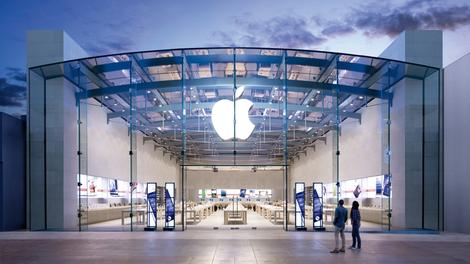
Apple may be looking to bring its location-aware iBeacon connectivity technology into the home.
An unidentified piece of iBeacon-enabled hardware, the first the company has built, has made its way through the FCC in the US, but left few indications of what it is exactly, or what its purpose may be.
Apple currently uses third-party build iBeacon sensors in its Apple Stores to alert iPhone owners of information and offers for its product ranges based on their precise locations within the store.
The tech uses Bluetooth and wireless data in order to track consentin users around the store.
Coming home?
The FCC filing doesn't give a lot away. It appears to be a rounded-hub like device with a USB port and an on-and-off switch, operating on a 2.4GHz wireless frequency, which is within Bluetooth protocol.This unknown device may simply be a case of Apple wanting to replace the third-party built beacons within its stores. It could also be looking to widen the appeal of iBeacon technology to other businesses seeking to get in on the act.
Or, it could be a sign that Apple plans to use iBeacon technology to help power its new HomeKit smart home platform in iOS 8, which will allow users to control connected devices.

Read More ...
Google played down Brazil's 'shame' in its negativity-free World Cup newsroom

The Google-trends powered World Cup social news experiment deliberately avoided heaping more embarrassment on the Brazilian nation, by focusing on happier stories, it has been revealed.
During the experiment, a Google team has been analysing search requests during World Cup games and using the top queries to create easily sharable news items, but with a focus on more uplifting elements.
So, while Brazilians trended towards word 'shame' in their searches following the 7-1 semi-final humbling at the hands of Brazil, Google left that item on the cutting room floor because it was too negative.
In an NPR report from inside the Google newsroom, copywriter Tessa Hewson said: "We might try and wait until we can do a slightly more upbeat trend."
"We're also quite keen not to rub salt into the wounds and a negative story about Brazil won't necessarily get a lot of traction in social," producer Sam Clohesy added.
German pragmatism
Instead of Brazilian shame, Google focused on the pragmatism of German searches by posting: "With Germany leading Brazil 5-0 at half time, Germany searches for "highest score in a World Cup victory" spiked by 370x."The short Google Now card-like posts in the main offer interesting tidbits that viewers are encouraged to share on social channels.
However the experiment's willingness to avoid bad news is interesting, as negative news almost always supersedes the positive, but Google claims is isn't skewing traditional news values.
In a statement, the company said: "Our social channels exist to share interesting and relevant information to the people who want to hear from us. Unlike your average 16-year-old, we don't share every single thing we might have to say. Throughout the World Cup, we've shared more than 150 tidbits in 13 languages looking at Leaping Legends to Waving the Flag and everything in between. If people want more, they can always use google.com/trends to see what topics are trending at that time. Our primary goal, more than anything else, is to share what matters most at that moment to the most people. And, it's good to have that goal, as we don't want to have to rely on penalty kicks."
The question is, would the evening news be a sunnier place if Google were setting the agenda? Share your thoughts in the comments below.

Read More ...
In Depth: 10 Kickstarter projects you will be buying in 2014

Crowd-funding sites like Kickstarter not only offer innovators and idea generators the means to get their project off the ground, it also offers us tech fans to get in on something at the ground level.
Everyone's looking for the next big thing in tech, the chance to be a pioneer for a newfangled gadget, game, service or solution. Kickstarter gives us that chance and lets us get ahead of the crowd.
Over the last couple of years, we've seen Android games consoles like Ouya and smartwatches like Pebble get their breaks on Kickstarter, while thousands of other products are now in development thanks to tech fans clubbing together.
2014 has been no different and projects from the ground-breaking and revolutionary to the 'damn, that's so simple I wish I'd have thought of it' are raking in the currency in cash and belief.
Here are 10 of the best projects coming out of Kickstarter in 2014:
1. The Universim
Price: from $10 (about £6, AU$11)Funding goal: $320,000 (about £186,890, AU$340,412)
Funding achieved: $387,345 (about £226,221, AU$412,053)
Expected delivery: October 2015
Closed

Bored of life on earth? Fancy setting up your own galactic colony and running the show like an omnipotent being? Enter The Universim, a glorious revival the planet-management genre, for Mac, PC and Linux.
The idea is to start a civilisation and help it grow through the ages, guiding it along your chosen path, helping the inhabitants to develop tools, skills and weapons through your own research. If two clans declare war on each other, you can broker a peace or sit back and watch the carnage. If a natural disaster or an alien visitor lands, you'll need to come up with a strategy to deal with it.
Best part? If the civilisation does something that displeases you it generates wrath, which you can unleash on them in the form of a tornado. It's good to be God.
TR says: Kickstarter has a vibrant gaming community and more than a hundred of games funded by campaigns on the site are now playable on Steam. This could be one of the best yet.
2. Earin
Price: £79 (about AU$144, US$135)Funding goal: £179,000 (about AU$, US$)
Funding achieved: £829,673 (about AU$, US$)
Expected delivery: January 2015
Closes 23 July

Meet Earin, the world's smallest pair of earbuds. They're wireless, they're rechargeable, they're Bluetooth enabled and they're really, really tiny. These individual buds comfortably fit in the ear, don't fall out when running thanks to the 'concha' lock and can still manage to produce awesome sound. The battery lasts for almost three hours and can be recharged via its own USB capsule. The price of such audio freedom? £79.
TR says: Earin just reached a $700,000 stretchgoal, meaning there'll be a dedicated app to optimise battery life and a waterproof version. Could they be the ultimate sports headphones?
3. The Micro 3D printer
Price: from $199 (about £116, AU$212)Funding goal: $50,000 (about £29,202, AU$53,183)
Funding achieved: $3.4m (about £1.9m, AU$3.6m)
Expected delivery: January 2015
Closed

3D printing! Everyone's doing it these days. Actually, they're not because the damn things are still prohibitively expensive for most people. The folks behind The Micro, the tenth-highest funded project in the history of Kickstarter no less, aims to change all that with "the first truly consumer 3D printer." It's just 7-inches tall and can print items 4.3-inches in size, making it ideal for figurines, jewellery, small parts and objects. The plug and print device also comes with its own software and filament spools are cheap enough to make this an entirely affordable endeavour.
TR says: Most 3D printers are hulking, great beasts, but we love the Micro. This is your gateway into the wonderful world of 3D printing.
4. Ca7ch Lightbox
Price: from $119 (about £70, AU$127)Funding goal: $80,000 (about £46,743, AU$85,092)
Funding achieved: $207,516 (about £121,249, AU$220,674)
Expected delivery: October 2014
Closes 19 July

The Ca7ch Lightbox is a great little tool for taking mobile photos without touching your smartphone. The impossibly small, 8-megapixel camera clips on to the user's clothing and can sync with Android and iOS via Bluetooth or Wi-Fi. Pressing the only button takes a snap, which syncs it back to the phone, which sends it to the cloud, where you get unlimited storage. You can also use the phone to programme pics and videos at regular intervals, while the powerful clip-on it magnet means so you can attach it to items of clothing like baseball caps without risking loss.
TR says: This is great for capturing memories in those moments you just don't want to be holding your phone, say at concerts, riding on a rollercoaster, paddling in the ocean or holding a pint.
5. Bloomsky
Price: from $99 (about £58, AU$105)Funding goal: $75,000 (about £43,821, AU$79,755)
Funding achieved: $76,736 (about £44,836, AU$81,601)
Expected delivery: December 2014
Closes 28 July

"That bloody forecast!" we hear you cry as you arrive at the office in sodden Bermuda shorts, "My iPhone weather app promised sun!"
The folks behind Bloomsky Weather Station and iPhone app want to end those damp-trousered blues by crowd sourcing the weather for you. The 5-in-1 device measures temperature, humidity, air-pressure, UV and also has a rain sensor. All of the data is fed back to the app in real time.
If you're on the move, the app pulls in real-time data from the nearest basestation or one close to where you're heading. The station also has a HD camera taking frequent pictures of the sky, so you can check out the weather at any time.
TR says: Our only concern with Bloomsky is that the Brits on the TR team will have less to complain about. Otherwise, hyper-local weather data is alright by us.
6. Avegant Glyph
Price: from $500 (about £292, AU$532)Funding goal: $250,000 (about £146,072, AU$265,851)
Funding achieved: $1.5m (about £876,332, AU$1.6m)
Expected delivery: December 2014

If you think this looks like a pair of headphones with a massively thick headband, well that's sort of what it is. However, within that flip-down headband, the $500 Avegant Glyph personal media viewer hosts some pretty mind-blowing display technology.
The Virtual Retinal Display has no screen. Instead it uses 2 million micro-mirrors and patented optics to project sharp, true-to-life, solid images directly into the back of your retinas. It can interface with any HDMI device, making it perfect for immersive VR, console and mobile gaming experiences, while it's also great for video, including 3D. Crucially, it isn't that much bigger than the headphones you're already carrying around.
TR says: Outside of the Oculus Rift it's one of the great hopes for VR thanks to the head-tracking tech. As far as we're concerned, no long flight will be bearable until we have a Glyph in our travel backpack.
7. PocketScan
Price: from $79 (about £46, AU$84)Funding goal: $50,000 (about £29,211, AU$53,170)
Funding achieved: $419,751 (about £245228, AU$446366)
Expected delivery: December 2014
Closes 16 July

It isn't often, but once in a blue moon, we regret chucking away that lumbering flatbed scanner. Although the space was saved, there's still an occasional need to scan in signed documents, photos, book pages, artwork, newspaper clippings and the like.
Enter PocketScan. It allows you to move across any surface (kind of like you're painting it) and instantly see the results rendered on your screen. Beyond that scanned text and tables can be opened and edited in Microsoft Office (astounding!) and printed text can be translated (even better!). Photos appear crisp, bright and colourful, rather than the reflected mess you see when you use a camera to ditigise a printed shot.
TR says: A scanner that fits into your pocket and can move printed text into Microsoft Word? Sorry, Mr Flatbed, I think we're done here.
8. Damson Headbones
Price: from £50 (about AU$91, US$86)Funding Goal: £50,000 (about AU$90,954, US$85,584)
Funding achieved: £95,688 (about AU$174,063, US$163,787)
Expected Delivery: October 2014
Closed

Wouldn't it be great if the experience of using headphones was more like listening to the radio? An experience where you could hear and enjoy your music without blocking yourself off from the outside world or risking death every time you cross the road?
From the British developer of the Damson Twist speaker comes Headbones, which sit not in your ears, but on your temporal bone. The device users bone conducting technology to send the sound directly to the inner ear via vibration, while keeping the ear canal free to experience ambient noise.
TR says: Want to listen to Katy Perry in the office, while still engaging with your colleagues? Become a headboner.
9. KOR-FX gaming vest
Price: from $135 (about £79, AU$144)Funding goal: $75,000 (about £43,817, AU$79,755)
Funding achieved: $138,614 (about £80,981, AU$147,403)
Expected delivery: September 2014
Closes 24 July

With all of the talk about virtual reality gaming at the moment, wouldn't a gaming vest offering haptic feedback that allows you to feel your environment be a nice little accoutrement to that? Say hello to the KOR-FX.
When an enemy tank approaches, you feel it as you do in the real world, when shots are fired, you'd better believe you feel it, as 'acousto-haptic' vibrations generated from the in-game sound echo around your chest cavity. The KOR-FX vest is plug and play and will work with any existing systems via a 3.5mm jack. When combined with a device like the Oculus Rift, it might be one of the final pieces of that fully-immersive gaming world science-fiction has been promising for decades.
TR says: We can't wait to strap on a VR headset and KOR-FX vest and become so fully immersed in our gaming experiences that we scream when being shot by virtual enemies.
10. The Q
Price: from $89 (about £52, AU$95)Funding goal: $100,000 (about £58,422, AU$106,341)
Funding achieved: $64,818 (about £3786, AU$68,928)
Expected delivery: December 2014
Closes 16 July

The first smart lighting system that integrates light and sound, eh? Well, colour us intrigued. Belled Technologies has devised a lighting system that syncs with the music you're streaming from a connected device and puts on a little light show in time with your favourite tracks.
The energy-efficient LED bulbs connect up to the Wi-Fi-enabled Q Station Router. From there you can compose your own lighting designs based on the beat and your mood, via the free app for iOS and Android.
TR says: With home automation from Nest and this party-starting intelligent lighting we're looking forward to living in the home of tomorrow.
Let us know which projects you have pledged pennies to in the comments below...

Read More ...
Roundup: Best of TechRadar Pro: Building Linux desktops, demise of the IT department and perfecting subscription strategies

The demise of the IT department (and the role BYOD, BYOA and BYOW play)

While the industry continues to debate the same topic, my prediction remains the same: the IT department is going to go virtual. Gone will be the days where employees go down the hall to ask their IT department for help or submit tickets to get serviced.
Rather, the IT department is going to play a much quieter role – one where it watches behind the scenes to protect corporate data. The trends that brought the industry to this crossroad are no secret. Things like Bring Your Own Device (BYOD), Bring Your Own App (BYOA) and Bring Your Own Workflow (BYOW) have changed the way companies do business – especially from a technology perspective. Continue reading...
Build the best Linux desktop

Like all things Linux and open source, users are spoilt for choice when it comes to selecting a desktop environment (or DE). But this choice that many perceive as freedom, others may also see as a little bewildering and confusing.
Right after making the soul-shaking decision of switching operating systems and installing an unknown system – by hand no less – a new Linux user is then greeted with weird sounding desktops to choose from with names like Gnome (a mini-desktop perhaps?), KDE (Isn't that a double-glazing firm?) and Xfce (No idea). What veteran users herald as Linux's crown jewels, to the innocent newcomer it's like stumbling into a sci-fi convention where everyone is discussing a new TV series that you've never heard of but apparently it's been around for years. Continue reading...
Samsung 850 Pro 512GB review

The 850 Pro is Samsung's new flagship consumer SSD, and the follow-up to the wildly popular 840 Pro, which was one of the best performing SSDs money could buy when it launched in September 2012. We're reviewing the 512GB model here which is priced at £232 (US$399, around AUD$420).
Apart from a small change from an orange logo to red, the 850 Pro's product packaging and the metallic shell of the drive look just like the older model. It has identical dimensions, including a height of 6.8mm, which ensures it will fit into the smallest of laptops, and a similar diamond-cut chamfered edge. Continue reading...
Lessons from Netflix and Spotify: how to perfect subscription strategies

Netflix and Spotify seek to become the de facto standards in their paid-for video and music streaming services, and this is coming at the expense of profits currently, with Spotify loss making and Netflix loss making outside the USA.
So what is a smart pricing strategy for subscription businesses – both in the digital and non-digital worlds? Here's a handy break-down. Continue reading...
How can you make your meetings more efficient?

Meetings are often regarded by employees as being a major source of inefficiency in the organisation. At the centre of this notion is the meeting room itself that features some kind of presentation technology – be it a PC or laptop and a shared screen.
The reasons for meeting inefficiency range from lack of preparation and poor leadership, to low engagement or participation and technical issues. While technology may not have a role to play in the former, it certainly can assist in bolstering participation and eliminating any hiccups caused by aged or ineffective equipment. Continue reading...
How to cut through 'dirty data' for social media insight

Social media is a difficult thing to manage for many companies. Most high-ranking business people think Twitter is a goldmine, and the best place to find information about their Next Big Thing™.
They hire data collection services to provide them with thousands of tweets, hoping to see a trend that tells them what their clients are looking for. The goal? Identify potential new products, or a new market.Continue reading...

Read More ...
In Depth: Shooting for the future: the hidden challenge of the World Cup final

Shooting for the cup
Today one of the most famous stadia in the world – the Maracana in Rio de Janeiro, Brazil – hosts the biggest game in football, the World Cup final.This significance of this event isn't just about the action that's on the pitch; from the secrecy of past lurking beneath the surface to landmark advances in technology attached, this game has a huge significance that many won't even notice.
From the comfort of your sofa, it seems like any other match, with a few cameras beaming pictures into your lounge in a very similar way to the weekly sporting action.

But in reality it's a huge endeavour which requires hundreds of staff working just to show you 22 sweaty men sprinting around a patch of grass.
"[Broadcasting the World Cup final] is different to a run of the mill football match, because there we're only servicing one customer, maybe two if it's split," said Jeff Coleman, technology manager for Host Broadcast Services (HBS), which provides the TV pictures to the world.
"Here we're servicing the whole planet, and we've got the world's broadcasters here in the compound and at the International Broadcast Centre."

Most will take the main feed from HBS, connecting into a huge buzzing server to get pictures from dozens of cameras and a helicopter – 40 cameras in all, which this year will include Ultra HD (4K) recording for the first time too, all to bring the World Cup final from the iconic Maracana to millions of global eyeballs.
The past supporting the future
This historic stadium looks like many others, a cathedral of plastic seating and clean walkways befitting a modern football ground. But underneath this façade live the old terraces, once home the largest attendance for a single football match: the 1950 World Cup final, when Brazil last hosted the tournament.
These hallowed platforms are being used for this year's final too: they provide the ground over which hundreds of metres of cabling is run below the current stands (stumbled upon by engineers one day who realised the logistical potential of the space), playing a vital role in helping run one of the most complex broadcasting events.
It feels sad to such an historic part of work football reduced to being a cable dumping ground – but at the same time there's a sense of continuity that such an iconic part of the old stadium (which couldn't have been used on health and safety grounds) is still being used in some capacity to entertain millions across the globe.
The Cup in numbers
When walking around the Maracana, even when empty save for a few engineers strolling around, there's an overwhelming sense of the enormous job ahead of this crucial game, one that simply cannot be subject to power outages or other catastrophes.The commentator you hear will be surrounded by 149 doing the same thing in a special media zone, each with power leads, internet connection, lamps and monitors to allow them to beam across the globe.

But problems do arise – for instance, there was a fire in one of the centres in a warm up game – so how do broadcasters cope?
"Nobody noticed [that we had a fire]," said Coleman. "We always have a plan B so that if something catastrophic happens I can get pictures to the world.
"For instance, we have an incorruptible power supply; we've got four generators running but even if three fail we've got enough power to service what we need.
"In fact we only need one camera at the minimum. As long as we've got one, with audio and commentary, you wouldn't really know the difference."
The key is in the redundancy, with backup cameras on the main platforms surrounded by backup cables, making sure there's always something being beamed out from the match.
"Seriously, if we lose one camera out of 40 it would be tough to see it's gone," said Coleman.
But there's an extra challenge here: one where the next generation of TV viewing is being experimentedon, and doing so at one of the most critical sporting events in the world presents its own challenges too, so we took a look to see how that can fit into this well-oiled machine.
The next generation challenge
The next generation of TV is already with us: 4K or Ultra HD is slowly creeping its way into our living rooms, although there's hardly any content to watch on these gargantuan sets yet.This is why Sony is risking an experiment at an event such as this, proving that it can shoot this pivotal game in 4K and broadcast it back in real time to TV networks around the globe.
There are a number of local broadcasters taking the UHD feed, such as the BBC in the UK, but most are using it to see how whether 4K live TV can actually work, such is the technical step up in bringing the crystal clear pictures across.

That explains why there's a separate control centre dedicated just to the 4K signal – a cramped air-conditioned van in the car park outside the stadium.
It might be a tight fit, but inside it will be putting out proof that UHD broadcasting can work from this control centre.
The team might have a wealth of high end equipment to help create the show, but they also have to slip alongside the main broadcasters in the stadium to use the next generation cameras.
And while they'll get help from HBS, Coleman told us that trialling a new tech was understandably far from the main worry: "The world's feed is my priority and I treat 4K as a welcome guest, but low on the list."
Not that that bothers Robert Thorne, Sony's business development engineer. "From Sony's point of view, 4K and HD are equally important. It's on the same level. HBS are providing the HD feed, so that's their priority."

He seems relaxed about the trial despite the enormous importance on the game, and that's partly because he's been here before: Sony filmed the Confederations Cup, a warm-up tournament for the World Cup, last year in 4K too.
"Compared to what we did in Belo Horizonte [for the Confederations Cup] this is a finished product we're producing. That was more of a trial, and was only used internally."
Why can't I watch it too?
But if this show is being produced like any other live event, and TVs capable of showing it are appearing in living rooms across the world, why is it being kept behind closed doors?"No-one is showing it because there's no mechanism," said Thorne. "The issue is the set top boxes; the encoders [to transmit 4K] exist, but it's the global distribution of the content to the home that the tricky part, slowing [adoption] down.
"That's why events like this are needed, as it allows broadcasters – like the BBC – to do tests."

The good news for those itching for a new level of clarity on their TV is there are other ways of getting the content. Netflix is starting to produce some of its shows in Ultra HD, and while it doesn't show live TV it's still an option for broadcasters in the future.
Thorne confirmed it was something Sony had looked at, but said that it still depended on a number of factors.
"There's just so much data, and [viewers would] need a stable bandwidth" he said, before explaining why it wasn't used at this tournament. "With an event like this you start planning four years ago, so not knowing what the technology is going to be like at the cutting edge."

If you want to see the World Cup in 4K, your options are limited. You could have caught the highlights that were sent back to the UK for retailers to show on the new TVs, or you can wait for the official film of the World Cup, which will be shown in 4K.
This mirrors what was done with HD filming a few years ago, and even if 4K does go the way of 3D and fizzle out, this trial will still make the pictures on your current hi-def screen look much better.
Both Coleman and Thorne confirmed that the new lenses and systems trialled for UHD quickly filter down to making the 'normal' HD picture look even crisper.
And don't think 4K is the only advanced trial here: Japanese broadcasters are filming in 8K, which some believe will be an even more futuristic standard, and Fifa is also shooting the World Cup final in 360 degrees, with the intention of using that experience for tablets and phones to give an integrated feel.
So when you're watching the final, remember you're not just seeing another botched penalty decision or welcome offside flag, you're seeing the fruits of years of labour... and quite possibly a pivotal moment in the future of TV.

Read More ...
Microsoft reckons next-gen console momentum is shifting to Xbox One

Look out Sony, because the tide has turned in the next-gen console wars! Well, according to one Xbox marketing executive anyway.
Harvey Eagle, the UK marketing boss for Xbox, claims the launch of Microsoft-exclusive Titanfall game in March was a momentum changer for the console, after the PS4 jumped out to an early sales lead.
"The change started to happen when Titanfall was released in March, it's been a hugely successful title and the start of what I believe to be is the momentum shift," he told CVG.
He says the steady improvements over the last 12 months have helped the Xbox One battle back after a disastrous build-up to launch and a hammering from Sony in the battle for hearts and minds.
Cumulative effect
Eagle believes the doing away of the DRM restrictions and the always-on connectivity, the lowering of the cost after launch, the option to buy the console without Kinect and the monthly software updates has the Xbox One on the right track."It's the cumulative effect of all those things over a period of time that has seen this momentum shift for us," Eagle added.
"We won't stop listening and responding. If that means we have to change in the future based on what people are asking for, then we're completely committed to doing that."
Of course, it's difficult to back up everything Eagle is saying right now as the PS4 maintains a sales lead and, of course, it's his job to big up the console's growing momentum.
Do you think the Xbox One has turned the corner? Let us know your thoughts below.

Read More ...
Has Apple Maps got your address wrong? You may receive a call

Apple's latest efforts to ensure its Apple Maps app gains Google-esque reliability involves reaching out to companies whose addresses it may have gotten wrong, according to reports.
A Reddit user claimed he received a phonecall from the company's HQ in Cupertino seeking to resolve a user-reported location mistake and promising an update within the next week.
"A 408 number called me from Apple Maps and let me know that a user reported my business address as incorrect," the business owner wrote within the Apple Maps subreddit.
"They still had my old address that was listed on Yelp so I gave them the new one. It appears that Apple pulled from Yelp awhile ago but it doesn't actually sync the addresses and other information. Still couldn't believe that they called me to fix up the listing - how awesome."
One day at a time
The report comes after information claiming the firm was acting more promptly to remedy user reported issues.The firm is apparently addressing mistakes every day at 3AM EST, which is up from weekly updates.
Apple has received plenty of criticism after Maps misfired in its early days as the default navigation app in iOS 6, but it has improved considerably in the last two years.
Has Apple maps converted you? Or do you remain a Google Maps loyalist? Share your preferences below.

Read More ...
Samsung drops eye-catching hint, Galaxy Note 4 with retinal scanner on the way?

Samsung is be planning to introduce retinal scanning tech for its future mobile gadgets, judging by a tweet send out by the company on Saturday.
The improved security was hinted within a post from the Samsung Exynos Twitter account and promised features "unique to us," accompanied by a picture showing a mobile display scanning an eye.
"Security can be improved using features unique to us. That's what we envision. What would you use?" the firm wrote, using an ExynosTomorrow hashtag.
The future now?
While the emphasis is probably on the future, the post will prompt speculation the firm may be planning to introduce the feature within the forthcoming Samsung Galaxy Note S4.Recent rumours have suggested the phablet will boast a 5.7-inch QHD display, the new Exynos 5433 octa-core processor, 3GB RAM and a 16-megapixel camera.
Would an eye scanner be the icing on top of an already tasty-sounding cake? Share your thoughts below.

Read More ...
Google Maps app update brings Gmail appointments into view

Google has released an update for the iOS and Android Google Maps apps, integrating appointments made via the company's Gmail webmail service.
The new version, which rolled out on Friday, will automatically show the location of meetings or reservations set through a Gmail chain, saving users from having to navigate in search.
Also, as part of the update, those search results will now appear directly on the Map, which Google claims will allow users to make choices faster.
The firm has also improved the Explore feature, which breaks down attractions, restaurants, amenities and things to do in the users current locale.
Draw something
The app update comes just a few days after Google improved the desktop client allowing users to draw points on a map and measure the exact distances between them.That feature will prove useful for walkers, runners and cyclists aiming to accurately measure their workouts and also for people who just want to draw rude pictures on places they don't like.

Read More ...
Week in gaming: Xbox fights back, PlayStation studiously ignores it

We're not a naturally suspicious lot here at TechRadar towers, but when WiG's normal writer does this one day, and then is so ill he simply cannot drag himself out of his bed the next, we're perfectly okay with blaming Google Glass. ARG indeed.
But, while he's desperately searching for a couple of health packs to get back in the game, we're grumpily climbing down from our sniper's nest and readying a jar of jarate and a machete so we can cut to the chase and bring you the pick of this week's gaming news.
Phoning it in
Apparently kids today are quite into these smartphone things - although we're not entirely sure where the analogue joystick plugs in so we're sticking with our old school gaming for the time being.Microsoft, however, appears to have twigged the fact that Xbox is kind of a big deal with gamers, and smartphones are kind of a big deal with gamers. Thus, at one of the company's brainstorming session, some bright spark has clearly drawn a parallel and blue-sky-thought his way into CEO Satya Nadella's office.
"Boss! This Xbox thing could be more than just a box below your television," he probably didn't intone. To which Nadella almost certainly would have responded by showing off his Smart Glass app and then ploughing on with his company missive where he points to Xbox as kind of a big deal. And also phones. And probably both together at some point.
In an interesting happenstance, TechRadar's own gaming columnist Aoife Wilson has also been doing a bit of mind-showering - and Nadella could do a lot worse than give her 14 features the Xbox One needs to be a kick ass console a thorough read.
We're choosing to assume that 15 would have been 'exclusive built-in copy of Half Life 3' because that's the way we roll.
Arbitrary
Xbox's great friends at Sony are probably getting a bit suspicious that the Xbox One Set top entertainment box is actually a games console in disguise, but while they cast puzzled glances at their erstwhile buddies in Redmond they can also surreptitiously pull out one of those weird party hooter things and toot up the news that 100 million people have now bought a PS4, PS3 or PS Vita.
We're not entirely sure why this is a particularly huge deal. If they included the PS2 they'd have hit the figure back in 1962, but we're all for slightly meaningless stat-driven triumphalism (did we mention that 100 million people have read Week in Gaming if you also count all of our phone reviews towards the total?).
You know what would have sucked PlayStation fans? 2GB of RAM - that would have sucked harder than Dyson's favourite product encountering the particularly luxurious deep-pile shag rug that WiG's normal writer keeps in his love parlour.
We literally have phones with that amount of memory guys, but if the bean counters had got their way that would have been your PS4.
And your shiny hard-drive? Wave that goodbye if the accountants had won. And if the accountants had had their way what kind of gaming machine would they have had to spend their ludicrous bonuses on? Eh? Eh?
Samsung-star
There's this big Korean company you gamers might not have come across called 'Samsung' - who have apparently built up something of a head of steam in those tech backwaters 'television' and 'mobile phones' and 'everything else that isn't consoles'.
But, if you are excited by Oculus Rift, or Morpheus or wearing something that looks like divers goggles - then perhaps you should sit up and take notice, because Sammy's Gear VR mask is apparently close to a public showing.
We can't tell you if this render is accurate, but we can tell you that having those big trendy square spectacles is simply not cool any more - diver masks that completely block out your vision but magic you to another world are clearly the new black.
Want some more proof? Have a gander at Chris Smith's article talking about VR being the future of gaming. And probably life. Why augment reality when you can live in a reality where you don't need to eat*?
So. There we have it. 7 days of awesomeness, wrapped up into a tiny ball and lobbed carelessly into the trashcan of your mind. Next week - this guy will have recovered from Google Glass enabled lurgy. "Google Glass! Call my doctor!"

*Some thrice-daily eating required.

Read More ...
In Depth: Why contextual awareness is about to change the way you use tech

Fed up with constantly staring at your smartphone to accomplish menial tasks? Apps for this, apps for that, all needing to be downloaded, found, then launched at the appropriate time. Siri and Google Now may think they know what you want, but they have no idea where you are or what you're doing - yet.
Step forward contextual awareness: a new breed of app coming to a smartphone or wearable near you. It promises to make use of the data it collects to second guess, and automate, a lot of your daily tasks.
Soon, apps with some degree of contextual awareness will begin to fire up automatically. "While Google Now and Siri may be useful in spotting how the weather may change or how far you are from home, systems where the smartphone instantly enters relevant modes will ultimately prove far more useful," says Jay Karsandas, Digital Manager at Mobiles.co.uk. "This could include GPS in the car, calorie counters when jogging, or distance trackers when on a bike."

When you sit down on your daily commuter train your most-used app will load - be it music, a game or your email inbox. And when you sit down in front of the TV, your second screen will be ready with Facebook, Twitter or eBay without you having to find the app manually.
What will be contextually aware?
Smartphones and tablets will be contextually aware, for sure, but this will benefit wearables especially. Independent research company Smartwatch Group analysed the 20 most relevant application areas for smart watches in 2020, with personal assistance the clear winner."Highly efficient, context-aware management of your calendar, tasks, and information needs" is what we want from a smart watch, apparently, and the example given does sound enticing; your watch tells you when to leave for your next meeting, based on real-time traffic information.

On the back of such contextual awareness, the Smartwatch Group expects half of the estimated 1.6 billion watches that will be sold in 2020 will be connected to the internet.
Why wearables?
Wearable tech will be one of the most important sources of data for contextual awareness platforms. "The sensors in wearable tech can go beyond what sensors fitted in a smartphone can detect, especially when it comes to health and physical data about the individual using wearable technology," says Henrik Torstensson, CEO of health and fitness platform Lifesum."Data accumulates continuously making services become more and more accurate and complex, based on the patterns and idiosyncrasies of human behaviour."How will contextually aware apps help us?
Contextually aware apps could become integral parts of our culture. "The perception will be that they significantly improve quality of life, so that more and more people use them, without a second thought," says Torstensson.
What is contextualised search?
Contextualised search goes beyond the barcode scan and the "search by image" feature on Google Images. It's best demonstrated by the Slyce visual search platform."Slyce uses proprietary developed image recognition to detect products within user-generated mobile pictures," says Mark Elfenbein, President at the Canada-based Slyce. "Slyce assesses the attributes in these images and matches them against the closest comparable match from a specific retail brand's catalogue."
This white-labelled tech will likely be embedded in future apps from retailers. You'll be able to use a smartphone to snap a photo of a pair of shoes in the store and it will take you to the item's website, send you a discount coupon, or show you a demo video.
However, Elfenbein suggests other uses for Slyce. "Snap a photo of a specific hair-style to receive product information on how to 'get that look', or snap a photo of a home fix-it project to get the necessary tools and supplies to complete job," he suggests.

So what's the future of contextualised visual search? "Slyce believes the future of contextual visual search is allowing a user to snap a photo of any item and derive all useful data out of that specific item, from cost, availability, comparables, related items, coupons, product demonstrations," says Elfenbein.
Contextual awareness is about personalisation
The age of big data means that marketeers now have access to a huge range of customer information, but they're not using it. "Until now, personalisation has usually involved using a combination of known profile information and historical data," says John Fleming, Director of Marketing, EMEA & Australia at Webtrends, which works with the companies like Lloyds Bank, Barclays, HSBC and Lastminute.com."What's been missing is the ability to combine these factors with real-time information such as 'in the moment' browsing data, the device a customer is using, their specific location and their stage in the purchase cycle. Bringing all of these factors together is defined as contextual personalisation."
This is about giving people what they want, when and where they want it, but it could also be the catalyst for innovations that marry the online world with the real world. Imagine if a shop knew what you wanted before you even entered – everything from your shopping habits, likes, dislikes and previous purchases.
As an example, Fleming describes how contextual awareness could help Jane while she shops for shoes online and in store. "Modern technology allows us to align what she has looked at previously [on the website] with her current online behaviour and external data such as geo-location and weather," he says. "You can then tailor her experience by providing pages that reflect the sunny weather where she is in Brighton and recommend summer sandals. Likewise if she was in Manchester, where it's raining, you could highlight some of the latest styles in wellies."

Fleming points out that even if Jane doesn't put anything in her basket, the retailer can use the historical and real-time data collated to send her an email within minutes around a deal based on the products she has looked at. The same could apply to cinemas and coffee shops.
"This is what contextual personalisation, combined with new technologies such as Apple's iBeacon, enables," says Fleming. "It uses consumers' known online behaviour data to drive offline sales."
Will contextually aware apps make things easier?
Life is already easier thanks to apps to some extent, with apps like Uber (connects you with a driver) and Venmo (make and share payments) simplifying everyday tasks. but we're in for more intricate apps that gather information on your context – and, therefore, calculate your needs.Tell a future app that you're in the market for a new car, and it will schedule test drives for cars it knows you'll like – from your browsing history – at garages in your area at times it knows you can make. Some apps are already getting close to this; US-only app MyTime lets you instantly book appointments for a haircut/MOT/with a dentist without picking up the phone. In future, apps will be smart enough to know what you need (a year has passed since you last saw an optician) and when you should go (you're driving nearby and the optician just had a cancellation).
Google gets into contextual awareness
Although big data has a huge role to play in contextual awareness, for personal assistants like Google Now to be more aware of the user's interactions as well as geo-location requires much more accurate sensors in phones. Google's Project Tango concentrates on making devices much more aware of its surroundings."Project Tango strives to give mobile devices a human-like understanding of space and motion through advanced sensor fusion and computer vision, enabling new and enhanced types of user experiences – including 3D scanning, indoor navigation and immersive gaming", says Johnny Chung Lee, Technical Program Lead of Google's ATAP (Advanced Technology and Projects) group, one of the technology partners in Project Tango.
Sensor chip's dynamic range and 3D camera modules that measure depth ever more accurately are now in the lab, but the Tango tech – and contextual awareness – could hit the mainstream sooner than anyone thought.
- Thinking of buying a smart watch? You might want to take a look at the Moto 360

Read More ...
In Depth: CES 2015: what we want to see

#1 - #4
The email came a few days ago."Register today for the 2015 International CES," it read. Your first reaction is "not again" as memories of long hours, furious typing, and thousands of people crushing to see the latest and greatest devices flood to the surface.
But the initial wave of dread quickly gives way to a flutter of excitement, a tingling in the fingertips and a pump of adrenaline. This the big dance. The event tech lovers live for. The chance to see what's coming next, even if it's years down the road from reaching consumers.
The ramifications of CES 2014 are still being felt in everything from TVs to processors to wearables. CES 2015 promises to be an even bigger show, full of the innovative, the inspiring and the impossible.
We've put together a list of what we we want to see at CES 2015, so read on for our hopes and best guesses for the show. And don't forget to let us know what you're pining for come January, too.
1. TV innovation beyond the bend and curve
We get it. You can bend and curve (see here and here) a TV. Big whoop. How about revealing some television innovation that truly improves our viewing experience?CES 2014 was all about the curved TV screen for big guns Samsung and LG - who could make it bigger, thinner and curvier without folding? The problem was, was there even a problem for these concave couch curlers to solve?
As Dan Grabham asked in his CES hands on review of the 105-inch curved Ultra HD TV from LG, "do we really need curved TVs?"
The answer, from looking at the market, is no. Yes, there was an awe factor when unveiling these futurist devices in front of ravenous consumer-tech crowds, but when the lights faded and everyone went home, we weren't buying these sets.

Instead of trying to lure us in with more bends and curves, we want Samsung, LG and others to announce more 4K content and a viable system to deliver it to consumers at CES 2015. We know it's not the sexiest subject, especially since we've already seen 4K-and-beyond TVs, but why not give us stuff to actually watch on the growing field of ultra high-res screens?
There's currently no reason for the average person to buy a pricey 4K TV because there simply isn't that much 4K content to watch on them. If Samsung, LG, et al can come up with the content and fast, reliable ways to get it to consumers, we may leave Las Vegas truly impressed and excited for the living room screen's future.
2. More than just more tablets from Samsung
Director Michael Bay's meltdown was the most memorable moment of Samsung's CES 2014 press conference. Unfortunately for the Galaxy tablets also wheeled out during the presser, they were upstaged. Hard.Samsung has unveiled even more tablets since CES, leading us to plea, "Enough!" We're heading into the pre-CES months hoping Samsung can cook up a mobile device (yes, just one) that will hold its own next to celebrity implosions and smart laundry machines.
The Korean firm intrigued with its Youm flexible phone screens during CES 2013 - perhaps it will be ready to unveil a consumer-ready foldable phone or tablet during 2015's dance? With LG revealing roll-up displays (destined for TVs, to be sure), Samsung may be feeling the heat to bring a bendy phone/tablet to market.

3. Steam Machine pricing and availability
No doubt the people's favorite at CES 2014 was Valve and its army of Steam Machine partners, not to mention the Steam Controller.Valve hasn't kept quiet; since January, the company held a developer conference, showed off its VR headset and, in not so good news, announced Steam Machines won't arrive in consumer homes until 2015. It's the last point we want addressed at CES.
While at least one non-Valve Steam Box - the Alienware Alpha - should be out this year, we want the release date and price questions resolved for everyone else. In other words, we want CES 2015 to be brimming with Steam Machine news, including word of a truly affordable one.
Aside from Alienware, the rest of the pack, led by Valve, should get its act together by CES 2015. Of course, anyone familiar with Gabe Newell's crew knows speed is not their calling card, so while we can hope, we won't hold our breath.
4. LG and Huawei deliver standout smartphones
It's a long shot to think LG will actually unveil a smartphone during CES as it hasn't the last two years and typically saves such unveilings for MWC. Nevertheless, this is a list of what we want to see, right?Along with Huawei, LG could use CES to gain massive exposure with a knockout smartphone. The LG G3 isn't chopped liver, but perhaps LG could put its foldable display tech to work bending like a Cirque du Soleil performer?
As for Huawei, the Chinese firm is trying mightily to break into the US market. What better way to re-re-introduce itself to US buyers than with a carrier-backed, affordable and better-than-average phone announced in Sin City? Hell, trot out AT&T CEO Ralph de la Vega or, better yet, T-Mobile CEO John Legere to say a few words. Even better, bring them both onstage and see what happens.

We digress, but the point is CES has become stagnant on the smartphone announcement front. We'd love to see LG and Huawei liven up the proceedings with a phone that makes us drool.
#5 - #8
5. Next-level wearables
Wearables are here, and they're beyond what even Dick Tracy could have imagined. CES 2014 saw its share of fitness and activity trackers, but in the subsequent months the market has exploded (relative to what it was, at least).Android Wear has ushered in a new era of wearable tech, and there's more than a fair chance we'll see the Apple iWatch announced before CES 2015 gets off the ground.
Although wearables are gaining ground, there's always room for improvement. Our wish list for CES 2015 wearables includes waterproofing, more with heart rate monitors, standalone smarties that don't need a mobile device and more full-featured smartwatches that are compatible with different OSes.

The last one is another long shot, but as TechRadar's resident wearables expert Matt Swider explains, it'd be nice to be able to have an Android Wear smartwatch that worked with iOS, and vice versa.
There's little doubt CES 2015 will be filled to the walls with wearables. The question is, will they be much of an improvement of the ones we already have?
6. Virtual reality in Las Vegas
Just like wearables, we're no longer speaking of VR as a far-off possibility. There are a number of big-name contenders that, while not quite ready for consumers, are pretty damn close to being released. Oculus Rift is eyeing 2015, Sony's Project Morpheus is moving along and Samsung Gear VR is looking increasingly ready to reveal itself.That's not to mention the other smaller firms working on virtual reality gear (like the Virtuiz Omni) and the gaggle of developers likely to spring up after Oculus' VR conference in September.

CES is as much about entertainment as it is anything else, so VR-related innovations are well within the scope of the show. We want to see more VR content (games, apps, movies, etc.), more polished products and, if it's not revealed at IFA 2014, Samsung's VR headset.
Gear VR will likely be a serious Rift and Morpheus competitor. Come CES, we hope Samsung and anyone else dabbling in virtual reality are ready to bring it on.
7. Truly good 2-in-1s
It's not CES unless a cacophony of computers make their voices heard. There will be PCs of every stripe at CES 2015, but we're looking specifically at 2-in-1s for right now.HP, Dell, Acer and Asus are just a few of the notable names we're putting money on to unveil new tablet/laptop hybrids, so it's not a matter of if they'll be announced but rather of how good they'll be.
There's a chance Windows 9 will release this fall, which would already be an improvement over Windows 8.1. Even if we don't go all the way up to nine, Windows 8.2 may be ready to rumble come January 2015.

Aside from a souped-up OS (assuming most of the hybrids will run Windows), the advances in processors like AMD's Beema and Mullins APUs and Intel's Core M could make the 2015 crop of 2-in-1s the best to date.
If the build quality matches better internal specs, 2-in-1s may be the sleeper hit of CES 2015.
8. Smarter cars than ever before
Toyota ran away with our Best of CES 2014 awards thanks to its hydrogen-powered car. Part of our reasoning in giving the FCV the top spot was because of its industry-changing position as the first mass-produced fuel-cell vehicle. Its impact, we reasoned, would be far reaching and vastly positive.Next CES, we want more of the same. We want cars that run on next-gen energy sources and we want cars that don't need a driver at all. Google typically doesn't drop by CES, but that doesn't mean automated cars from different venders can't make an appearance.

Speaking of Google, we fully expect automakers to show off their Android Auto as well as Apple CarPlay-equipped models. For those who haven't picked a side, CES 2015 is the perfect time to call shotgun.
Car infotainment systems are in some ways still in their infancy, so we're excited to see what solutions await. Especially if it means going for a test-drive.

Read More ...
Review: Updated: Samsung Gear Live review

Introduction
Face it, your smartphone is getting bigger whether you like it or not, and Samsung's popular, but ridiculously sized, phablets are chief among the super-sized phones.For this very reason, the Samsung Gear Live feels increasingly relevant. Its Google-powered Android Wear software safely relocates our notification-checking addiction to the wrist.
There's no need to fumble around with that 5.7-inch Samsung Galaxy Note 3 screen to see why the device just vibrated.
The smartwatch has the answer too. A simple flick of the wrist solves the notification mystery and keeps your easily breakable and losable smartphone in your pocket more often.

It should be noted that this isn't a smartphone-eliminating device. There's no SIM card and you can't make calls directly from the watch, surf the web or kill time on YouTube.
Like the rival LG G Watch, it still requires toting around an Android phone running Android 4.3, Android 4.4 or, if you're adventurously testing the beta, Android L.
It's a $200 (£170, AU$250) digital convenience for quick glances at texts, emails, Facebook notifications and other apps with the occasional ability to respond with voice commands.

Samsung has been down this same road before with non-Android Wear watches like the maligned Galaxy Gear and its better, square-shaped follow-ups, the Gear 2 and Gear 2 Neo.
But it's Google's work-in-progress software that makes the Gear Live a little more relevant, a little more compatible and a little better priced than Samsung's Tizen-running smartwatches.
Display
Samsung Gear Live ushers in the predictive powers of Google Now in smartwatch form, along with the LG G Watch, but the hardware design is easily the most predictable aspect of it all.The square watch face has a 1.63-inch Super AMOLED display and a 320 x 320 resolution that provides a remarkably vivid 278 pixels-per-inch picture.

It's always-on screen illuminates with the rotation of your wrist or a tap of the touchscreen and it looks best at the highest brightness. Of course, that does compromise battery life considerably.
If all of this sounds familiar, that's because these are the same display specs as the Gear 2, Gear 2 Neo and Galaxy Gear. Samsung hasn't rocked the boat at all in ten months time.
There's actually little reason for it to update the specs. Look at the Pebble Steel. It sports a monochrome e-paper screen that is dated and doesn't feature a necessary touchscreen.

The LG G Watch, meanwhile, has an inferior 1.65-inch LCD IPS display that's 280 x 280 with 240 pixels per inch. The difference is noticeable in a side-by-side comparison.
Gear Live gets away with last generation watch display specs, at least until the forthcoming Moto 360 with its circular watch face emerges as the potential flagship Android Wear smartwatch.
Design and comfort
Donning the chunky, but solidly-built Samsung Gear Live is a comfortable enough experience, but the company hasn't refined its smartwatch formula much at all.That means the watch design is not only unoriginal, it's beset by the same pros and cons we found when we first latched the Galaxy Gear onto our wrists.

Gear Live returns things to a cleaner look thanks to a right-side-located button that matches the one on the Galaxy Gear. Gone is the tacky home button that was front-and-center on the Gear 2 and Gear 2 Neo.
You won't find a similar power switch on the irritatingly button-less LG G Watch. It has to be turned off in the settings menu and be plugged back in to turn on again.
Samsung's single physical button doesn't get in the way, thankfully, even when bending your wrist and hand at a right angle. It's flush with the side of the watch face.
This button is actually non-essential for illuminating the watch. Tapping the screen or flicking your wrist wakes the display, while palming it with your hand puts the device into a dimmed always-on mode.

Adjacent to the power button is a tiny microphone that picks up "Okay Google" initiated commands. There's no micro USB port for charging on the side.
Instead, a proprietary Pogo charging terminal is around back, directly above the heart-rate monitor. There are also the "presto pins" that release the watch straps.
I made use of these spring-loaded pins right away, as if someone at Samsung curiously designed the Gear Live for left-handed shoppers at Ned Flanders' "Leftorium" store by default.

Switching the straps around wasn't difficult, though the four miniaturized pins holding them in place look as if they could be prone to failure one day.
There is also a lack color options at the moment. The LG G Watch at least offers a white and gold option to brighten up the watch bands a bit and a softer, traditional watch clasp.
Samsung designed the Gear Live to be compatible with watch 22mm bands, so a variety of alternative straps are already possible – just very few out-of-the-box options.
For now, the default straps are either black or wine red, and though Gear Live is lighter at just 2.1oz (59g) vs LG's 2.2oz (64g), it inherits its predecessors' stiff rubber material and the Gear Fit's two-pronged clasp.

It's more of a premium build compared to the similarly shaped and hard-to-button Fitbit Flex and Fitbit Force clasp, but can be just as annoying to fasten in a rush.
The troublesome clasp could actually be a deal breaker for some folks who struggle at first. Even though it gets easier with practice, it's been an immediate turn off when we showed others the watch.
Internal specs
Samsung Gear Live sticks with the 512MB of RAM, 4GB of non-user-replaceable internal storage and a 300mAh battery, all of which is like its still-available Tizen-powered watches.However, it bumps up the processor from a 1GHz dual-core chip to a slightly faster 1.2GHz Qualcomm Snapdragon 400, which handles the simplified Android Wear without delay.
It does this while actually dropping some weight. Gear Live's 2.1oz (59g) fits in between the Gear 2's 2.9oz (68g) and lighter Gear 2 Neo's 1.9oz (55g) configurations.

This is due in part because the Gear Live is not rigged with the Gear 2's unnecessary outward-facing camera. And we're specifically calling an outward-facing camera unnecessary.
We're not going to argue if manufacturers one day turn their camera sights on us. No, not for selfies, but for Dick Tracy-style video calls via Google Hangouts. For now, the camera equipment is thankfully "Over and out!"
Samsung Gear Live still retains a discrete heart rate monitor on the opposite side of the watch face. Gyro, compass and accelerometers are tucked into this watch along with Bluetooth 4.0 for that all-important connection to your compatible phone running Android 4.3 or above.
A different sort of compatibility, the specs are safe from water damage to a point. It's not quite waterproof, but it is water resistant with a rating of IP67. That means it's safe at a depth of 1 meter for 30 minutes.

That's far short of the sensors and antennas found in the Samsung Simband prototype and actually less than the IR and NFC-included Gear 2 and Gear 2 Neo.
However, the Samsung Gear Live specs only serve to power Android Wear, the interface that's the real star of this familiar smartwatch design.
Interface
Android Wear is a simplified version of Google's increasingly inescapable mobile operating system, and it's meant for wearables like the Samsung Gear Live.Sliding through its card-based interface, it's clear that the software borrows heavily from Google Now and the Google Glass UI, which is a modified version of Android KitKat.
The contextually-aware intelligent personal assistant often lays out commute times based on events in your calendar or places you commonly visit at certain times of the day.

Google also knows which sports teams are your favorite based on search and automatically displays them with real-time score updates.
The same applies to appointments, friends' birthdays, stocks you're interested in, tracking of packages and so on. It all sits right under the current time without you needing to set anything up.

Swiping up and down moves between the different notifications, while flinging them to the right dismisses them like a bad Tinder match.
Landing on a notification card and moving your finger to the left allows you to explore more choices within the notification. Often times, the options are generic with "reply," "delete" or "open on your phone."
Voice recognition, initiated by saying "Okay Google" any time the screen is active, handles everything from text message dictation to calling up apps.

For the most part, Google's software picks up the right words, but there are glitches. It also doesn't wait long enough before cutting off your sentence. There's no time to think.
This is extra annoying when, instead of the "Take my heart rate" command opening the Google Fit app, the Gear Live hears "Take my heart" and displays search results for a music video you can't open.
The errors are just as common as we previously experienced with Google Glass and require a lot of quick canceling, repeating and methodically speaking sentences in quasi-noisy environments.
Apps and fitness
Right now, Android Wear is more like "Android Where?" with a lack of apps. It's to be expected. Gear Live and other smartwatches need to latch onto developers first.There are approximately 35 apps within this subsection of the Google Play Store, though this is far from the full list of Android Wear apps. A few are missing.

Evernote for Android Wear and Flappy Bird-clone Flopsy Droid, for example, are compatible, but for some reason didn't make the cut in the official subsection.
Some apps in the list are better than others. Google Maps is incredibly handy when asking the watch, "OK Google, navigate to..." The route appears on the phone and turn-by-turn directions populate the watch.
That's convenient when driving. Normally, the phone interface is dangerously complex and takes too many presses to get the route to show up. Not here.

Voice recognition also makes it easy to send Google Hangouts and texts and the same technology can be used to call a driver when logged into Lyft.
Dropcam, a recent Google Nest acquisition, turns its small security cameras off and on as you enter and exit your home's WiFi fence. "Welcome back. Camera is off" and "See you soon. Camera is on" messages let you know everything is safe.
Gear Live doesn't contain a speaker, but calling up a song with "Play: Turn Down for What?" pushes the track to your phone thanks to Google Play Music. That's great for the gym.
Also practical when working out are Runtastic and Runkeeper, allowing you to start running, biking and tracking other exercise sessions without fiddling with the phone.

Google Fit is built into the smartwatch and tracks daily steps and, when asked, your heart rate. My steps score was inflated compared to the far more accurate Jawbone Up24, a problem I have experienced with Fitbit's line of wearables.
The heart rate monitor was all over the place too, jumping more than beats per minute with each reading. As Samsung contends, the heart rate monitor is not for medical purposes.
While Lyft is here, Uber is late to this smartwatch platform party. We're hoping that it and other notable apps are on the way to the expanding Android Wear platform.
Compatibility and battery life
Samsung Gear Live is compatible with phones running Android 4.3 and above, a requirement it shares with the LG G Watch and forthcoming Moto 360.It's easy to pair with your device via Bluetooth and the required Android Wear app. But we weren't able to connect on our Nexus 7 2013 tablet. This is strictly a phone affair.

We also have no way of syncing the Gear Live or any Google-powered smartwatch with an iPhone 5S, even when running the iOS 8 beta.
Android Wear watches aren't compatible with Apple's closed ecosystem just yet, which isn't surprising. The Cupertino company is expected to launch an iWatch later this year.

Plus, Google has run into issues trying to bring Google Glass up to speed when tethered to an iPhone. Some features still don't work as well as when using an Android.
The fact that iPhone isn't compatible with Android Wear isn't a problem right now, but it may be a sticking point for Apple fans when that stylish Moto 360 finally releases.
Battery life
Samsung Gear Live has a lot going for it, but it doesn't last long enough between recharges. The battery life is about a day max with a decent brightness setting.Its 300mAh battery is actually smaller than the 400mAh size found in the LG G Watch, which can last a safer day and a half.

Contrast that to the Gear 2 and Gear 2 Neo, which could triple Gear Live's battery life with a the same 300mAh battery, but 2-3 days on a full charge.
All of this is especially inconvenient because of how Gear Live charges. It comes with a small proprietary travel charger that is just begging to be lost.

Keeping the Pogo charger with you even if you're taking a day trip is a must since there's no way to insert a micro USB like one might expect.
By contrast, the Moto 360 is set to include Qi inductive wireless charging. It's still likely to require toting around a different set of cables, but at least it's an open platform that could charge the Qi-compatible the Nexus 7.
Verdict
Owning a smartwatch may become essential given the pace at which our smartphones are growing in size, and the Samsung Gear Live is the best Android Wear out of the gate.That doesn't necessarily mean it's recommended for everyone. There are several Google-powered watches still to come.

HTC, Asus and even Fossil have products in the pipeline in addition to Motorola, and may prove better with more time in the oven.
But Samsung does a good job at fulfilling the needs of early adopters and claiming another "world's first" co-championship, like it enjoys doing with every product category in tech.
We liked
Samsung Gear Live is a "convenience gadget" that allows you to quickly glance at predictions from Google Now and see notifications pushed from your smartphone whenever the watch vibrates.All of your notifications beamed to the wrist may sound like overkill, but truthfully, you're always tempted to look at your smartphone every time it beeps and buzzes anyway.
This always-on device just makes things easier to deal with, whether it's something you can dismiss or an important message you need to act on.
Gear Live gets the better of the LG G Watch with a higher resolution 1.63-inch screen that's slightly lighter and less boxy, though still square-shaped. It's marginally the better of the two.

We disliked
Samsung's smartwatch design isn't very original when compared to the similar Galaxy Gear and Gear 2, and it won't turn heads like the Moto 360.Couple that with the facts that the clasp is hard to fasten and the battery life is abysmal, and you've got a gadget built for early adopters and very few other people.
The app list needs to grow so that its usefulness isn't so limited. By that time, we may have a cheaper or even second round of Google-powered smartwatches from Samsung and LG.

Final verdict
Android Wear early adopters should go with the Samsung Gear Live over the less elegant LG G Watch, but know in advance that it's far from perfect. Everyone else should wait for the Moto 360.The hardware has its hiccups with straps that are annoying to clasp together and, to make matters worse, you'll be taking the watch on and off a lot because of its terrible one-day battery life.
There's also the fact that the display and most of the internals haven't changed since Samsung introduced the Galaxy Gear last year. It's still toeing the line.
Android Wear, while in its infancy, takes Samsung's hit-and-mostly-miss smartwatch experiences and gives it some practically. Without it, Gear Live would be the same smartwatch we got ten months ago.

Read More ...
Sony Xperia Z3 shown of in litany of leaked images

The long work week may be drawing to a close, but Sony smartphone fans have a little something extra to get excited about in the months ahead thanks to images of a next-gen Xperia handset now making the rounds.
Chinese message board Weibo lit up like a Christmas tree earlier today with a handful of leaked photos purporting to be Sony's Xperia Z3, the next flagship Android smartphone from the Japanese electronics giant.
The images quite clearly depicts the Chinese variant of a handset bearing the model number L55t, and according to a shot displaying the detailed settings menu, also running the latest version of Android 4.4.4 KitKat.
Late last month, a front panel leaked out which matches the newly posted images, and the aforementioned model number also checks out considering the current Xperia Z2 bears the model number L50t.
Say cheese
The latest spy shots also appear to confirm the Xperia Z3 will be powered by a quad-core, 2.5GHz Qualcomm Snapdragon 801 MSM8974PRO-AC processor alongside Adreno 330 graphics.Mobile shutterbugs may not see much in the way of improvements however since the report claimed Sony plans to use the same 20.7MP Exmor RS optics already found in the Xperia Z1 and Z2. (Hey, if it ain't broke...)
The handset pictures looks like it will fit in nicely alongside its predecessors, and the pictured firmware version 23.0.G.0.98 appears to be pretty fresh, with a build date of July 2.
That's all we have to go on right now, but Xperia fans should stay tuned - there's likely to be plenty more details creeping out between now and the time Sony officially launches this device.
- Sony who? Check out our review of the Samsung Galaxy S5!

Read More ...
PS Vita's future is very murky outside of Japan

The head of Sony Computer Entertainment has admitted the future direction of the PS Vita console is uncertain outside of Japan as it struggles to find its niche in other territories.
SCE CEO Andrew House told IGN the handheld's status as a 'AAA' console has been secured in Japan by the strong uptake and the differing marketplace dynamic.
However, in Europe, the Americas and Australia, where console gaming is more dominant, it means there's work to do on selling consumers on other benefits, such as Remote Play and indie games, House intimated.
"I certainly think you'll still see Vita as a triple-A machine in Japan where it has a different function with the console dynamic of the marketplace," he said. "That, for me, is a given.
"It's hard to say in terms of the other markets. I think Remote Play is still in its nascent stages. I think we need to have better understanding. We know a lot of players are embracing it and using it and seem to like the experience a lot, but necessarily that changes the dynamic."
Difference maker
House's comments suggest the dwindling number of AAA, first-party titles would probably continue to diminish as Sony focuses on finding another niche, such as Remote Play.Remote Play allows PS Vita owners to play their PS4 games on the handheld rather than on the TV when both devices are connected to the same Wi-Fi network.
At the beginning of the next-gen console war, many observers felt Remote Play could be a huge advantage for the PS4 over the Xbox One. The PS4 has established all of the early momentum, but not necessarily for that reason.

Read More ...
Scrapped Samsung Z launch yet another halt on Tizen

Things are not looking up for Samsung's self-made Tizen smartphone operating system, as the Samsung Z hit delays in Russia.
The South Korean electronic firm's first Tizen-powered smartphone was supposed to launch on July 11. However, reports from The Wall Street Journal claim that the launch of the Samsung Z was scrapped in Moscow just a few days before its scheduled debut.
Samsung didn't provide an updated launch date for the device, though the company noted that the device is still on track to release in the Russian market just as soon as it can offer users the "fullest portfolio of applications."
A sad state of affairs
Despite the canceled launch, Samsung still held an event in Moscow with roughly 150 developers, nearly half of the attendees to originally show up at the venue. At the sparsely filled non-launch, Samsung used the time to show off prototype devices.Later, Dmitry Anosov, an executive from the Russian arm of the company, took to the stage to tell the audience that the "most obvious advantage" of developing for Tizen was that developers will get a spot towards the top in a "half empty store" on a "decent premium device." We're not sure if we're missing some sarcasm from Anosov's statement, but it reflects the depressing state of the operating system.
In light of all this, somehow developers attending the event weren't too disappointed with the delay as it was just the latest in a long string of setbacks. This isn't the first time Tizen has met with a setback. The OS was expected to debut several times, including Samsung's Unpacked 5 event at MWC 2014.
TechRadar asked Samsung Russia about the Samsung Z's next projected release and whether this has any effect on its release on TVs this month. We will update this story when we hear back.
- Could Tizen ever come to the Samsung Galaxy S5?

Read More ...
Star Wars in VR? Disney head is game for immersive entertainment

Facebook isn't the only big company excited about virtual reality; Disney is now coming out in support of the immersive medium.
Disney CEO Bob Iger shared his vision for the modern entertainment world with the Wall Street Journal. In the interview, Iger described a future filled with customized experiences and what he calls technology-enabled leisure:
"Mobile storytelling, and mobile entertainment, will dominate our lives, and offer rich, compelling experiences well beyond what is available today," Iger said. "[When] [w]here [...] will no longer be a barrier to being entertained; the geography of leisure will be limitless."
The Disney honcho went on to say both virtual- and augmented-reality experiences will transport users immerse entertainment worlds. Although Iger didn't name any specific headset technology, we've seen a few pop up in the last few years including the Oculus Rift, Project Morpheus and, more recently, Google's Cardboard.
Future of media
"Bringing us into created worlds and bringing created worlds into our world will fundamentally explode the boundaries of storytelling, unburdening the storyteller in ways we can't yet imagine," Iger continued.Disney, of course, owns many properties from its illustrious background in animation. Disney of course also owns Pixar and Marvel, plus the Star Wars universe.
It'll be interesting to see where the Mickey Mouse company takes VR and augmented reality technology with both its media storehouse and revamped Star Wars series.
- Virtual reality could be the third wrinkle to the future of TV

Read More ...
Salesforce agrees to acquire RelateIQ to bolster intelligence automation

Salesforce.com has agreed to acquire CRM startup RelateIQ for $390 million (around £228 million, AU$415 million). RelateIQ pulls data from email, smartphones, social media and calendar entries to provide sales teams with customer information.
The Palo Alto, Calif.-based company was founded in July 2011. Unlike other CRM companies, which require users to manually input today for later use, RelateIQ automatically culls information and inserts it into the CRM database. This is intended to allow sales teams to focus less on data entry and more on using the information to perform sales-related tasks.
Salesforce continues to dominate an industry that continues to show impressive growth. The global CRM software market grew by almost 14% last year, according to Gartner Research. Revenue reached $20.4 billion (around £12 billion, AU$22 billion )in 2013. Salesforce strengthened its position as market leader, with an increase in revenue of 30.3% year-on-year.
Integration and acquisition
Part of the reason for its success is the company’s willingness and ability to engage and innovate to form data-enabling partnerships.In April, Salesforce and LiveHive integrated systems in order to provide engagement analytics and sales insights for Salesforce users "to share, track and monitor," Salesforce said at the time.
Last year, Salesforce and Evernote collaborated on a tool that allows users to add sales information, customer research, contacts, meeting notes and email exchanges stored in Evernote Business directly to customer records in a single click.
The same month, Workday announced it would work Salesforce.com's Customer Relationship Management (CRM) applications into its Human Capital Management (HCM), Financial Management and Big Data Analytics services.
If the RelateIQ acquisition is approved, it would be Salesforce’s largest acquisition since it acquired ExactTarget for $2.5 billion (around £1.5 billion, AU$2.7) in June of last year.

Read More ...
The Phone Show: Is the Lumia 930 the Nokia flagship we've been waiting for?

The Lumia 930 is yet another attempt by Nokia to push its Windows Phone-packing smartphones into the same league as Apple and Android: a lofty goal which, despite its best efforts, the company has as yet been unable to achieve.
The Finnish firm's latest flagship is certainly the most promising attempt so far. With a 5-inch full HD screen and quad-core processor, the Lumia 930 boasts a spec sheet that wouldn't be amiss on a high end Android flagship…if that flagship happened to be a device from 2013.
In this week's Phone Show, Gareth Beavis and John McCann take an in-depth look at Nokia's latest efforts to discuss why the Lumia 930 falls just short of smartphone stardom. Watch it in full below, and as always, be sure to leave us your thoughts.

Read More ...
Industry voice: Legal advice: how to protect your brand's reputation online

Here's a round-up of the key things to consider when managing the reputation of your brand.
Monitoring & capturing
From a practical perspective, to protect your brand from damaging comments you need to know when they occur.There are a range of tools (from setting up a Google alert to more sophisticated software) that allow you to keep track of what is being said about your brand on social media, review sites, blogs and forums. If you are alerted to a damaging comment, the evidence should be captured either by taking a screen shot or printing the page where the comment appears.
Legal ammunition
Broadly speaking the law offers protection against unfair criticism, to the extent that such comments are damaging, misleading and untrue, and there are three main causes of action that can come into play.Defamation
In order for a comment to be defamatory, the comment must lower the individual or the company in the estimation of right thinking members of society generally.The comment must also cause (or be likely to cause) serious harm to an individual or a company's reputation. In the case of a company, 'serious harm' means demonstrating actual or likely serious financial loss.
If these elements can be proved, there are defences that also need to be negotiated. For instance, a statement cannot be defamatory if it is true, or if it is an honest opinion based on fact.
Additionally, the defence of privilege arises in certain situations, such as parliamentary or court proceedings and reports on the same, as a matter of public policy.
Malicious falsehood
To succeed in a claim for malicious falsehood, it must be proved that the statement in question is false, caused financial loss and was published maliciously.Proving malice can be difficult and, unlike in a claim for defamation, the burden of doing so is on the part of the claimant. Defamation is, therefore, a potentially easier claim to bring.
However, as the law of defamation seeks to protect the reputation of individuals and companies, it is less well suited to false statements that refer exclusively to a particular product or services and it is in this situation that claim for malicious falsehood are most common.
Unfair comparative advertising
Comparative advertising arises when an advert identifies a competitor or the goods or services offered by a competitor.In order to comply with the law, the advert must compare goods or services meeting the same needs or intended for the same purpose, and if the advert is misleading, or takes advantage of or discredits a competitor's trade mark or name, it will be unlawful.
In addition to bringing a claim against the company that published the misleading advertisement, a business can make a complaint to the Advertising Standards Authority (ASA).
Following an investigation, an ASA decision can lead to a range of advertising sanctions and adverse publicity against the unlawful advertiser. The ASA can also make a referral to bodies such as the Office of Fair Trading, to initiate further action.
Removing the material
Individual posters can be operating online anonymously or under a pseudonym, making them difficult to identify or contact. In the first instance, consider reviewing any of the website operator's applicable policies on the site and whether there is an online form that can be used to request a takedown of the comment.If the author is identifiable, depending upon the particular set of circumstances, it may be preferable to contact the author informally, at least at first as this may lead to the comments being removed quickly at little expense.
It should be noted that it is a requirement of the ASA to liaise with a competitor in advance of making an advertising complaint. The Defamation Act 2013 sets out a detailed process whereby a website operator is compelled to liaise with the author of a post and obtain contact details of the author if none are available.
A website operator can become liable for the defamatory comments if they do not follow the process in the Defamation Act 2013. If no dialogue with the author is forthcoming, the website operator can suspend or disable the offending web page.
Bringing proceedings
If statements are not removed and it is decided that they are sufficiently damaging, there may be no alternative but to issue proceedings against the author and/or website operator.However, once proceedings are started both sides are likely to start incurring legal costs and the comments, which might otherwise have "blown over" will potentially receive much more publicity.
In relation to damages, while defamation may conjure images of multi-million pound sums paid to celebrities, in practice even if defamatory statements have been published in the national press, the level of damages recoverable may not be as significant as the costs of bringing a claim.
Conclusions
There are a range of steps that can be taken to protect your brand from the consequences of false and damaging online reviews. However, it is important to think strategically and consider all the potential consequences.Heavy-handed threats (even if based on perfectly justifiable legal principles) can generate their own negative publicity, which could be more damaging than the original statements. It is, therefore, important to bear in mind the overall objectives and follow a clear strategy that is appropriate to each particular case.
- Tom Lingard is a partner at Stevens & Bolton. Tom advises his technology clients on all aspects of intellectual property and technology law. He has extensive litigation experience and regularly advises businesses on the protection, exploitation and management of IP and technology.

Read More ...
Acer beefs up the C720 Chromebook with Intel Core i3 Haswell CPU

Acer aimed to balance specs and price when its C720 Chromebook landed back in December, and now the company has announced two beefed-up models for those seeking a step up in the power department.
Both are available with Intel Core-i3 processors, which should provide a healthy performance boost over the original version's Celeron-flavoured chip.
The lower-priced C720-3871, which sports 2GB RAM, enters the fray at $350 (around £204/AU$372) - around $150 more than the original C720, which still stands as one of the most affordable Chromebooks on the market.
i3 of the tiger
The more powerful C720-3404, which packs an Intel Core i3-40005U processor (1.7GHz, 3MB L3 Cache) and 4GB of memory, will set you back $380 (around £222 / AU$404).That processor brings the C720 closer to the power of the Chromebook Pixel, which remains the most powerful Chromebook on the market thanks to an Intel Core-i5 processor, and a wallet-thumping price tag to match (£1259 - around $2,184 or AU$2,327).
Both of the new variants come with an 11.6-inch HD display toting a 1366x768 resolution and tote HD4400 integrated graphics. Connectivity options include 802.11 a/g/b/n Wi-Fi, HDMI and USB (2.0 and 3.0) ports, and they also get 32GB SSDs that allow the devices to wake up in an instant.
Of the two, only the C720-3871 is currently listed on Amazon's US website. No word yet on global availability and pricing.
- Come on, show me the best Chromebooks

Read More ...
Available Tags:Apple , Google , TechRadar , Linux , Microsoft , Xbox , Samsung , Galaxy , Gmail , Sony , Nokia , Acer , Intel , CPU ,


No comments:
Post a Comment