

Samsung Begins Tizen Rollout for Original Galaxy Gear in the US
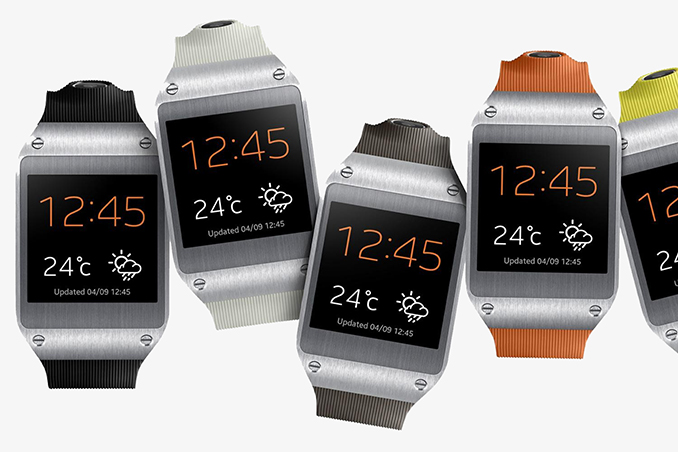
The move to Tizen brings new features and additions to existing features. Many of these lie in the fitness and lifestyle capabilities of the Galaxy Gear. On Tizen the Galaxy Gear can keep track of a user's sleeping patterns using Sleep Mode, and it can keep track of workout routines in exercise mode which is an improvement over the original Android firmware which could only go as far as tracking footsteps. Unfortunately due to hardware limitations, features that utilize the heart rate monitor on the Gear 2 have not been brought over to the original Galaxy Gear
Samsung is also including a built in music player with the ability to store tracks right on the smartwatch. This is an interesting feature because it allows the Galaxy Gear to function on its own to some degree, which is a different smartwatch strategy than Google is taking with their Android Wear operating system which acts purely as an extension of your current smartphone. Another new app is the Controls application which acts as a settings app for changing brightness and volume as well as setting custom fonts, wallpapers, and icon sizes.
Beyond new apps and features, Samsung is promising that the move to Tizen brings significant increases in battery life which is great news for Galaxy Gear owners as battery life is one of the biggest concerns with smartwatches and the original Galaxy Gear running Android definitely struggled in this regard.
The update is rolling out in the United States starting today. Users will need to connect their phone to their computer and use Samsung's Kies software to download and install the update. While this isn't likely to be an issue for most users, Samsung makes a point of noting that there is no way to return to Android once the Galaxy Gear has been updated to Tizen.
Read More ...
6 TB NAS Drives: WD Red, Seagate Enterprise Capacity and HGST Ultrastar He6 Face-Off
Western Digital launched the first NAS-specific 6 TB drive today. In expanding their Red portfolio, they have brought 6 TB drives suitable for 24x7 operation into the hands of home consumers. Some enterprise-specific 6 TB drives have been around since late last year. Today's introduction provides us an opportunity to see how the WD Red compares against those offerings. Read on for our evaluation of the currently available 6 TB drives suitable for NAS units.
Read More ...
Western Digital Updates Red NAS Drive Lineup with 6 TB and Pro Versions
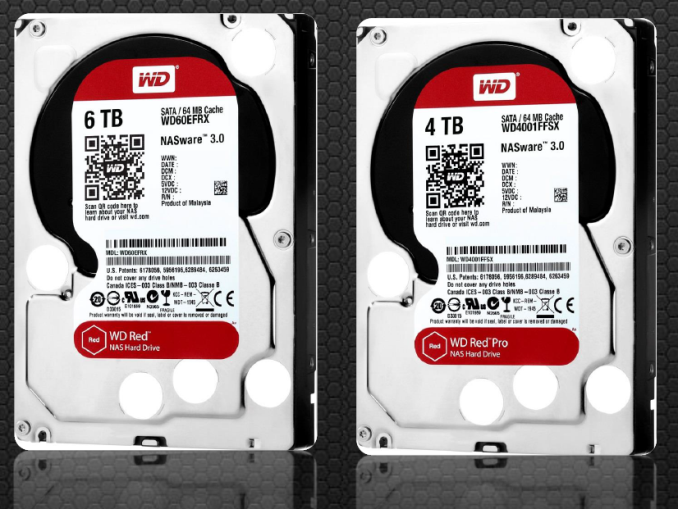
Today, Western Digital is making updates to their Red lineup for the third straight year in a row. The Red lineup gets the following updates:
New capacities (5 TB and 6 TB versions)
New firmware (NASware 3.0)
Official sanction for use in 1-8 bay tower form factor NAS units
WD Red Updates
Even though 6 TB drives have been around (HGST introduced the Helium drives last November, while Seagate has been shipping Enterprise Capacity and Desktop HDD 6 TB versions for a few months now), Western Digital is the first to claim a NAS-specific 6 TB drive. The updated firmware (NASware 3.0) puts in some features related to vibration compensation, which allows the Red drives to now be used in 1 - 8 bay desktop NAS systems (earlier versions were officially sanctioned only for 1 - 5 bay units). NASware 3.0 also has some new features to help with data integrity protection in case of power loss. The unfortunate aspect here is that units with NASware 2.0 can't be upgraded to NASware 3.0 (since NASware 3.0 requires some recalibration of internal components that can only be done in the factory).The 6 TB version of the WD Red has 5 platters, which makes it the first drive we have seen to have an areal density of more than 1 TB/platter (1.2 TB/platter in this case). This areal density increase is achieved using the plain old Perpendicular Magnetic Recording (PMR) technology. Western Digital has not yet found reason to move to any of the new technologies such as SMR (Shingled Magnetic Recording), HAMR (Heat-assisted Magnetic Recording) or Helium-filling for the WD Red lineup.The 5 TB and 6 TB versions also have WD's StableTrac technology (securing of the motor shaft at both ends in order to minimize vibration). As usual, the drive comes with a 3 year warranty. Other aspects such as the rotation speed, buffer capacity and qualification process remain the same as that of the previous generation units.
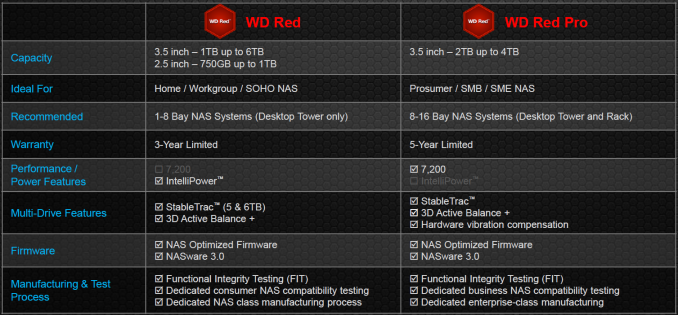
WD Red Pro
The Red Pro targets medium and large business NAS systems which require more performance by moving to a rotation speed of 7200 rpm. Like the enterprise drives, the Red Pro comes with hardware-assisted vibration compensation, undergoes extended thermal burn-in testing and carries a 5-year warranty. 2, 3 and 4 TB versions are available, with the 4 TB version being a five platter design (800 GB/platter).The WD Green drives are also getting a capacity boost to 5 TB and 6 TB. WD also specifically mentioned that their in-house NAS and DAS units (My Cloud EX2 / EX4, My Book Duo etc.) are also getting new models with these higher capacity drives pre-installed. The MSRPs for the newly introduced drives are provided below
WD Red Lineup 2014 Updates - Manufacturer Suggested Retail Prices |
||
Model |
Model Number |
Price (USD) |
WD Red - 5 TB |
WD50EFRX |
$249 |
WD Red - 6 TB |
WD60EFRX |
$299 |
WD Red Pro - 2 TB |
WD2001FFSX |
$159 |
WD Red Pro - 3 TB |
WD3001FFSX |
$199 |
WD Red Pro - 4 TB |
WD4001FFSX |
$259 |
Read More ...
Manual Camera Controls and RAW in Android L

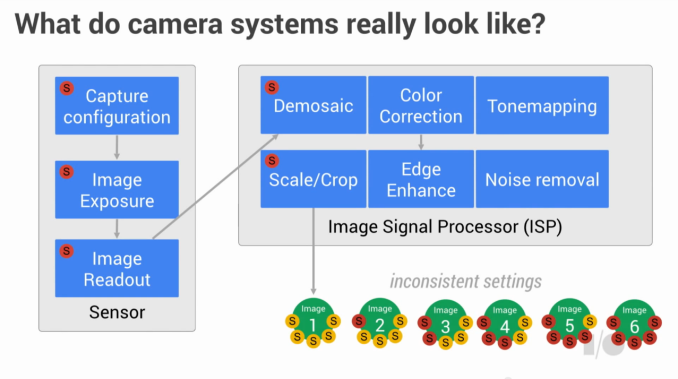
With Android L, this will change. Fundamentally, the key to understanding this new API is understanding that there are no longer distinct modes to work with. Photos, videos, and previews are all processed in the same exact way. This opens up a great deal of possibility, but also means more work on the part of the developer to do things correctly. Now, instead of sending capture requests in a given mode with global settings, individual requests for image capture are sent to a request queue and are processed with specific settings for each request.
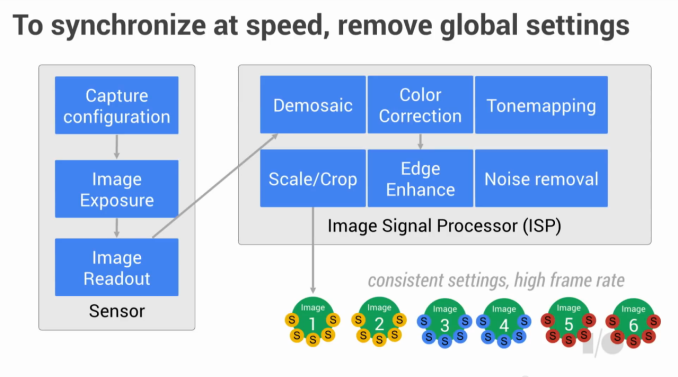
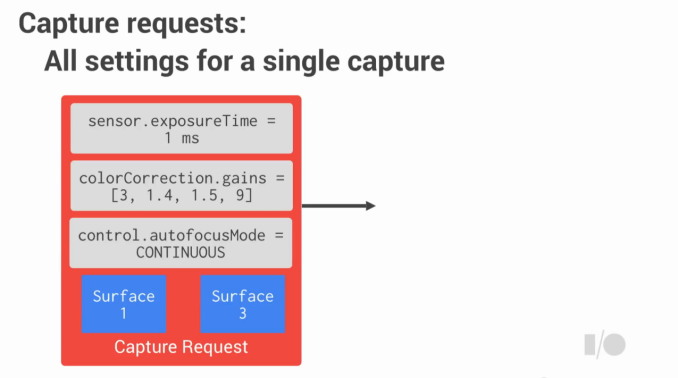
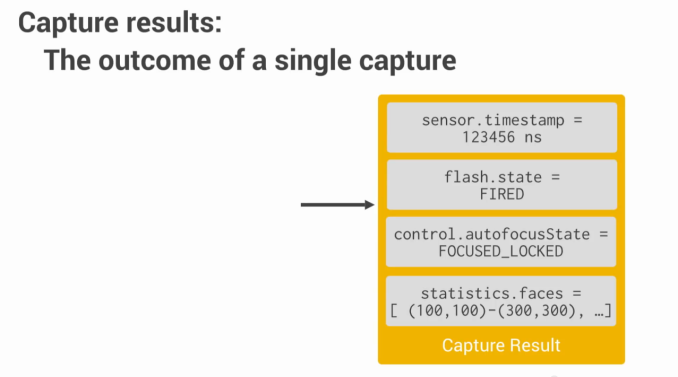

Read More ...
ECS LIVA Review: The Nettop Rises Again
Nettops and netbooks, as a class of products, have been on the decline over the last few years. However, the introduction of SoCs based on the new Silvermont Atom cores has given the segment a chance to reinvent itself. ECS is trying to take the lead here with their LIVA mini-PC kits. Read on to find out more about the ECS LIVA and how it performs in our evaluation.
Read More ...
ASUS ROG Maximus VII Formula Released
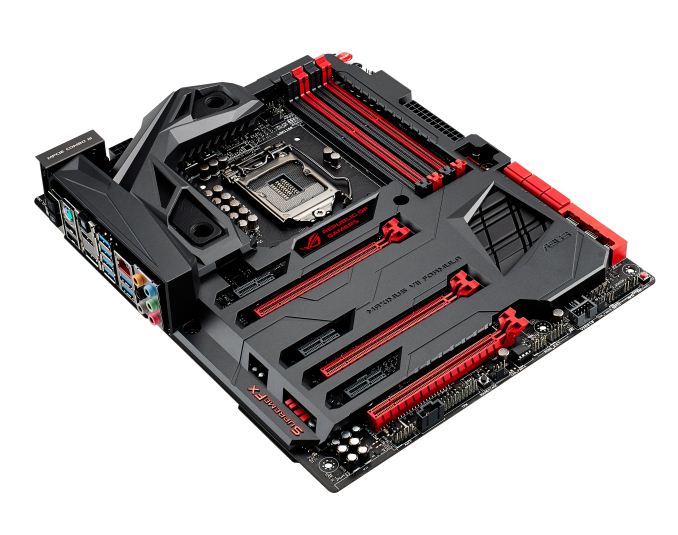


Initially the Formula will be available as a bundle with Watch Dogs from Newegg and Tiger Direct for $369 from next week, with a standard edition available shortly after for around $319.


Read More ...
Google Maps Updated to Version 8.2 With Voice Actions and Elevation for Bike Routes

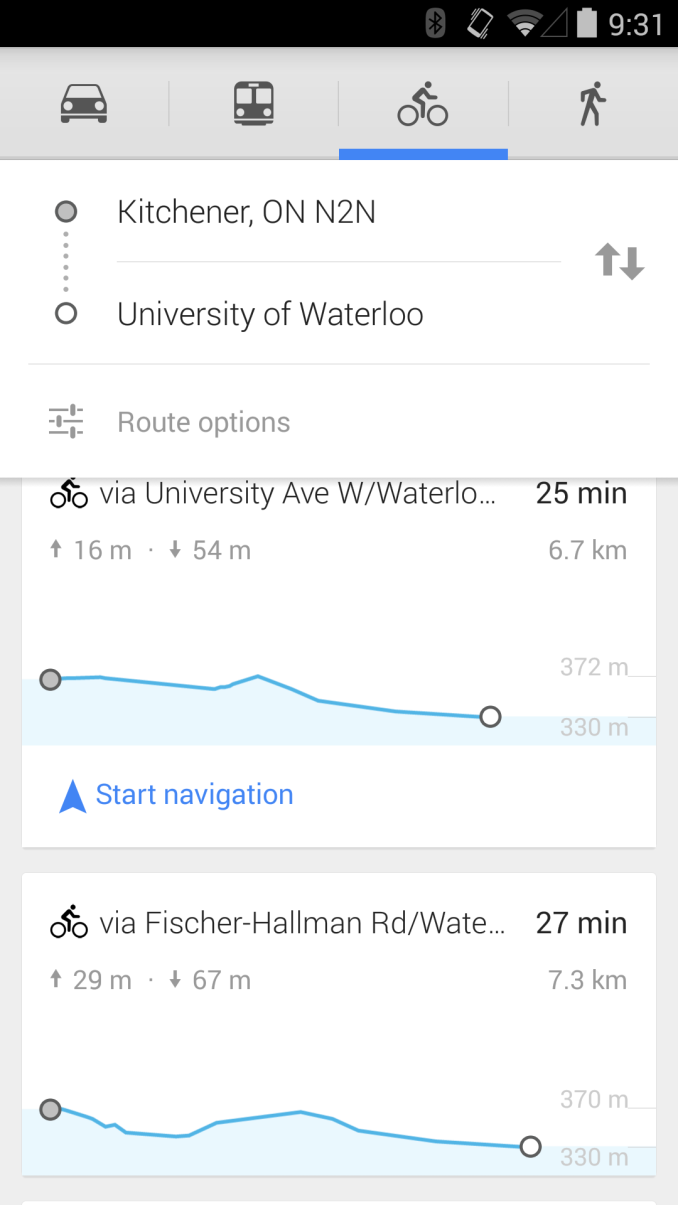
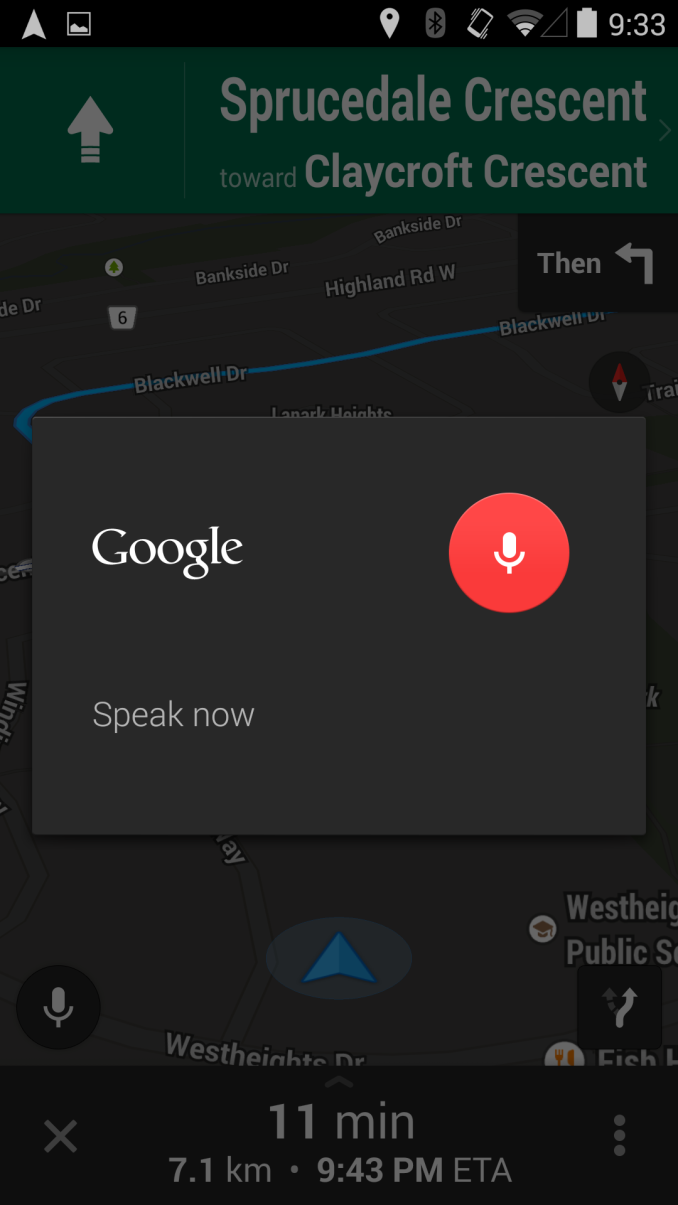
The other major improvement comes in the form of voice controls for vehicle navigation. A microphone button in the navigation interface brings up the voice input card, and the user can say various commands to control the application without having to directly interact with their device. Based on my time with the voice control you are able to ask it to direct you to different locations, to check the traffic along your route, and to show alternate available routes. It's not yet clear what the limitations of the in-app voice controls are and Google is sure to expand the available commands and the flexibility of the user's wording of a statement with further updates.
Google Maps 8.2 for Android is rolling out to Android users now. Like most of Google's update rollouts, it may take some time before your device receives the update. At the moment there is no sign of an update to Google's iOS version of Maps but Google has recently been rolling out updates to both apps in the same timeframe so it is likely that Google Maps for iOS will receive these features in the near future.
Read More ...
AMD Q2 2014 Quarterly Earnings Analysis
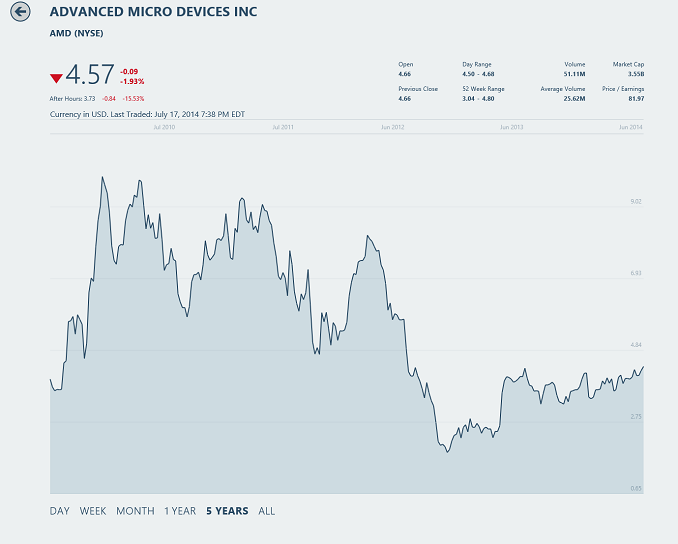
AMD Q2 2014 Financial Results (GAAP in USD) |
|||||
Q2'2014 |
Q1'2014 |
Q2'2013 |
|||
Revenue |
$1.44B |
$1.40B |
$1.16B |
||
Operating Income |
$63M |
$49M |
-$29M |
||
Net Income |
-$36M |
-$20M |
-$74M |
||
Earnings per Share |
-$0.05 |
-$0.03 |
-$0.10 |
||
Non-GAAP operating income was $67 million, with a net income of $17 million or $0.02 per share which missed analyst’s expectations of $0.03 per share.
AMD Q2 2014 Financial Results (Non-GAAP in USD) |
|||||
Q2'2014 |
Q1'2014 |
Q2'2013 |
|||
Revenue |
$1.44B |
$1.40B |
$1.16B |
||
Operating Income |
$67M |
$66M |
-$20M |
||
Net Income |
$17M |
$12M |
-$65M |
||
Earnings per Share |
$0.02 |
$0.02 |
-$0.09 |
||
Once again, the Computing Solutions segment of AMD performed poorly, with a revenue decrease of 1% from Q1, and 20% from Q2 2013. AMD attributes this to a decrease in microprocessor unit shipments. However higher margins and an increase average selling price (ASP) meant that the increased the operating income to $9 million for the quarter, up from the $3 million loss last quarter, and also up from the $2 million in income at the same time last year.
AMD Q2 2014 Computing Solutions Division Financial Results |
|||||
Q2'2014 |
Q1'2014 |
Q2'2013 |
|||
Revenue |
$669M |
$663M |
$841M |
||
Operating Income |
$9M |
-$3M |
$2M |
||
AMD Q2 2014 Graphics and Visual Solutions Division Financial Results |
|||||
Q2'2014 |
Q1'2014 |
Q2'2013 |
|||
Revenue |
$772M |
$734M |
$320M |
||
Operating Income |
$82M |
$91M |
$0M |
||
AMD is expecting a 2% revenue increase plus or minus 3% for the 3rd quarter this year.
AMD still has some work to do in order to get to profitability, but so far 2014 has been a lot easier on them than the last couple of years.
Read More ...
Microsoft Announces Significant Cuts to Workforce

The last large round of layoffs at Microsoft came in 2009, after the stock market crash. That round of layoffs was the previous largest ever at 5,800 positions, and today’s announcement dwarfs that number substantially. But not all departments will share this burden evenly, with the recently acquired Nokia employees getting the brunt of the cuts. In April, Microsoft closed the acquisition of the Nokia mobile phone business, and in the process added 25,000 employees to its payroll. Nadella announced today that 50% of those employees will be let go. Some will be factory workers from some of the in-house manufacturing Nokia owned, and the remainder will be from the handset business itself.
The remaining 5,500 employees to be laid off will therefore come from within Microsoft itself, as it attempts to concentrate on some of its more successful offerings. Excluding the Nokia losses, which are often expected after a merger of this sort, the total number of Microsoft employees being affected is not significantly different than the 2009 cuts.
Former Nokia CEO, now Microsoft Executive VP of Devices and Services, Stephen Elop laid out some of the upcoming changes in his own letter to his employees. Elop promises a focus on Windows Phone, with a near term goal of driving up Windows Phone volume by focusing on the affordable smartphone segments. With that announcement comes the death of the strange Nokia X series of AOSP phones, which debuted at MWC 2014 and were updated with a new model only a couple of weeks ago. While I would make the argument that there was little need for the X series at all, it is doubly frustrating to anyone who bought into the platform to find it killed off so quickly. The X series would be easy prey for cuts like these, because it didn’t really offer anything new to Android or to Microsoft. While it promised to be low cost, retail pricing for the X line was often more than the low cost Lumia phones. The X series had no place in a Microsoft owned Nokia, and should have been killed a while ago.

The remainder of the Nokia feature phone lines appear to be immediately canceled. This is a segment that has been rapidly shrinking in recent years, with the consumer push towards smartphones, so this is likely a good strategic move by Microsoft. The work done on Windows Phone to allow it to work well on low cost hardware is also likely another big reason for this.
Another major announcement was the closure of the Xbox Entertainment Studios which had a goal of providing original content for Xbox Live members. Several projects such as “Signal to Noise” and “Halo: Nightfall” that were mid production will be completed, but after that content is delivered the studio will be closed.
The full ramifications of these job cuts won’t be known for some time, but it seems fair to say that Nadella wants to put his own stamp on the company. Removing the Nokia X line, the Asha and S40 lines, and an entertainment studio seem like reasonable things to cut if you want to focus your company. Nadella speaks about flattening the organization out, which should help them be quicker to execute on ideas. These kinds of steps, though painful for the employees, can be better for the company in the long run. For quite some time, the perception is that Microsoft is not agile enough to respond to new markets, and it appears that Satya Nadella is trying to focus his company on its strength and that should have a net positive for the company. Microsoft’s next earnings call comes on July 22nd, at which point we may get more details about upcoming plans.
Read More ...
Imagination Posts PowerVR Rogue Specification Summary

With that lack of detail in mind and as part of their continuing efforts to reach out to end users this year, Imagination has sent word this afternoon that they are setting up a new Rogue GPU specification summary page for end users and developers alike. With the Rogue architecture spanning over a dozen different GPU designs and being trifurcated over 3 product lines – Series6 (original), Series6XT, and Series6XE – there are subtle but important feature differences between the 3 product lines that Imagination wants to more clearly communicate, along with the more obvious performance implications of larger and smaller GPU designs.

Finally, while it’s not posted on Imagination’s summary page, in the press announcement Imagination also included a current list of publicly announced SoCs that are utilizing Rogue GPUs. Like the specification summary this isn’t secret information but isn’t normally information that Imagination keeps in one location, so it’s handy to have.
Allwinner UltraOcta A80 (PowerVR G6230) for tablets, set-top boxes, portable game consoles and many more
Intel Atom™ Z3460/Z3480 Merrifield (PowerVR G6400) and Z3560/Z3580 Moorefield (PowerVR G6430) for smartphones and tablets
LG H13 (PowerVR G6200) for smart TVs
MediaTek MT8135 (PowerVR G6200) for tablets and MT6595 (PowerVR G6200) for smartphones
Renesas R-Car H2 (PowerVR G6400) for automotive
Read More ...
MSI GE60 Review: Mainstream Mobile Maxwell
When NVIDIA launched their first Maxwell GPU, the GM107, back in February, they ushered in a new level of performance efficiency for desktop PCs. Given these improvements in efficiency, Maxwell appears to be perfect for modern mainstream gaming notebooks. With MSI's GE60 in hand, we can now provide details on how the GTX 860M Maxwell variant performance when compared to other laptops, but the sum of a notebook is often much more than the raw performance. Read on for our look at GTX 860M as well as MSI's GE60 mainstream gaming notebook.
Read More ...
WiGig Startup Nitero Launches NT4600 802.11ad Solution for Mobile Platforms

Nitero, a fabless semiconductor company, is launching the NT4600 802.11ad solution today. Instead of starting off with the PC as a target platform, Nitero has designed this in Samsung's 28nm RF process to achieve 10x lower power consumption numbers compared to currently existing WiGig solutions for PCs. The implication is that the NT4600 can be directly used in tablets and smartphones.
The NT4600 supports TX/RX beamforming for operation even in non-line of sight conditions. It supports data rates up to 4.6 Gbps and provides a PCIe host interface for connecting to the app processor. Nitero also has Android drivers ready for their platform. The company is demonstrating the NT4600 to prospective customers now, with mass production expected in early 2015.
Read More ...
Google Updates Chrome To Version 36

Rich Notifications Improvements
An Updated Incognito / Guest NTP design
The addition of a Browser crash recovery bubble
Chrome App Launcher for Linux
Lots of under the hood changes for stability and performance
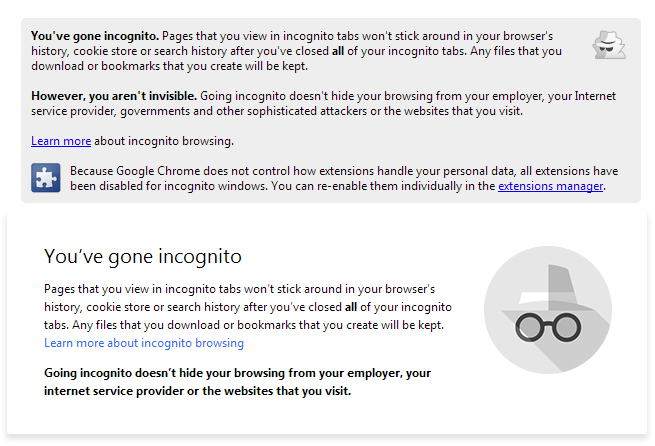
Update: Google is now rolling out the same 36.0.1985.122 update to Chrome for Android. The specific changelog for that update is listed below. In addition to these changes, the update contains some security fixes specific to the Android version of Chrome.
Improved text rendering on non-mobile optimized sites.
Doodles return to the new tab page.
Lots of bug fixes and performance improvements!
Read More ...
ASUS Z97-Pro WiFi AC Review
The initial set of Z97 reviews demonstrated that most motherboard manufacturers were implementing at least one the new storage options offered by the chipset: SATA Express and M.2. The motherboard we are testing today, the Z97-Pro, uses both but incorporates a switching system so only one is active at the time. Similarly to the Z97-Deluxe which we have reviewed, ASUS’ new brushed metalling gold design is here on the Z97-Pro as well. Read on for the full review!
Read More ...
Evaluating Samsung's QHD AMOLED Displays

In terms of the resolution itself, the GS5 Broadband LTE-A doesn't seem to hold a significant advantage over the original Galaxy S5. While it's still possible to see the difference, once again I don't find it to be significant. It may be of value to others, but I think the PPI race needs to stop here, as I find it hard to justify the relatively minor resolution increase over the potential battery life gains and opportunity cost of pursuing higher pixel density over other display characteristics. Going to 4K would make even less sense at this display size, although there may be value to 4K in a tablet display. In the case of this display, I only see around a 10 nit reduction in brightness as the maximum luminance in auto brightness is around 430 nits, while on the older Galaxy S5 it was 440 nits. When set manually, the display has a peak luminance of 368 nits, a minor improvement over the previous model.
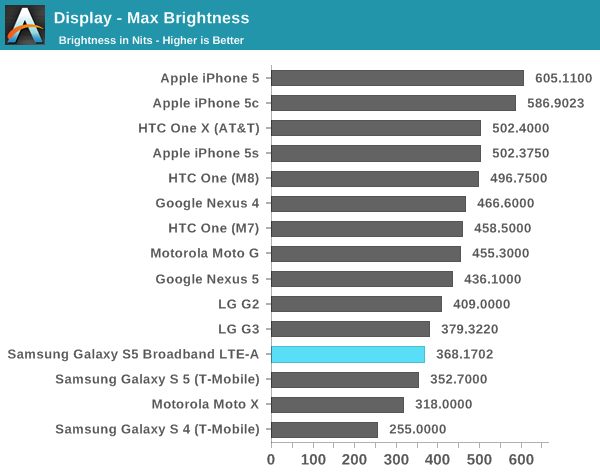
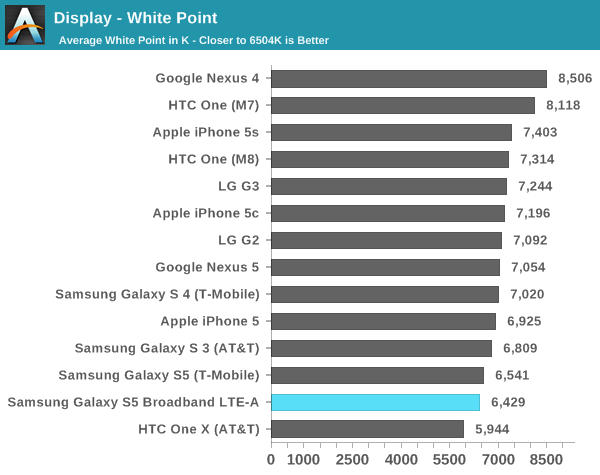
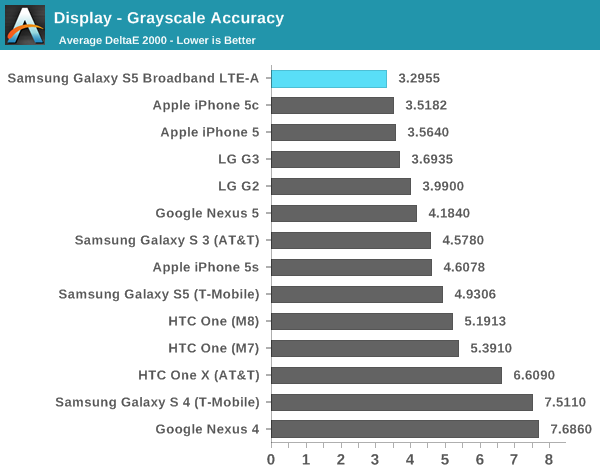
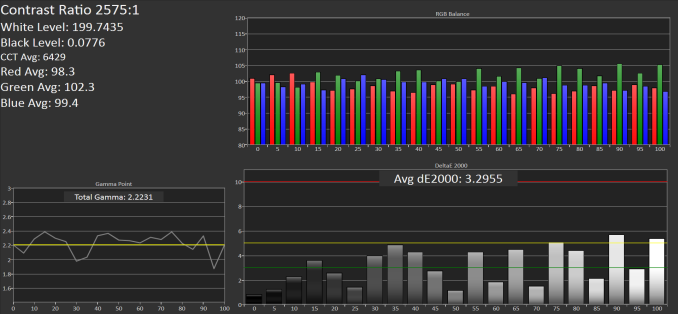
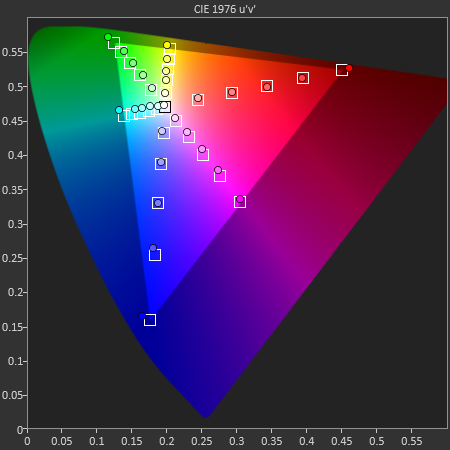
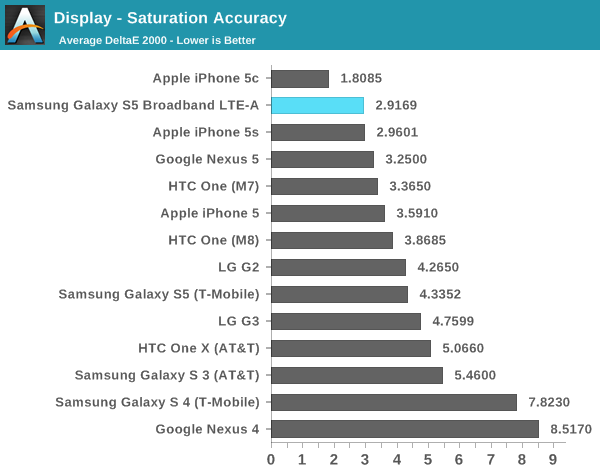
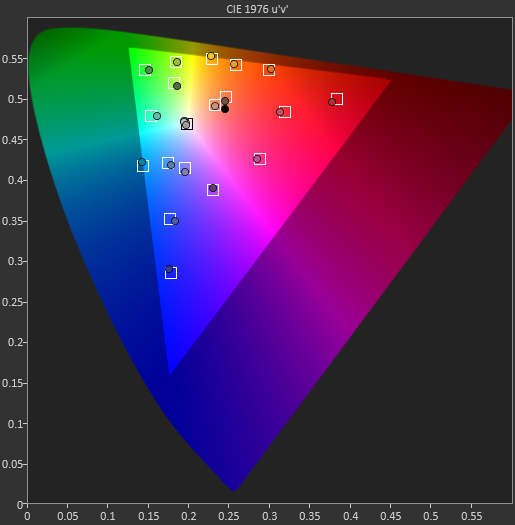
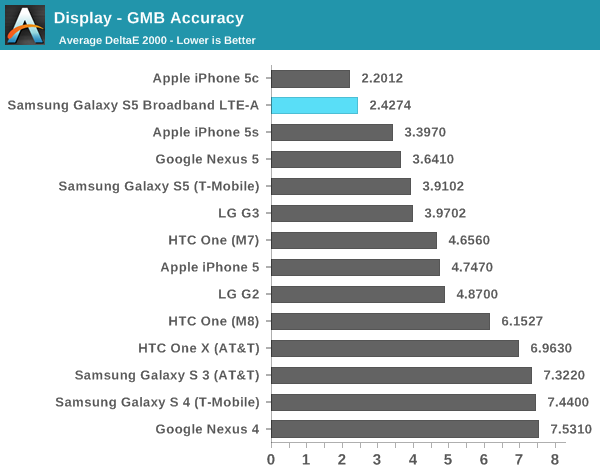
Based upon this initial evaluation of Samsung's first quad HD AMOLED display, things are looking good. There is a small drop in the maximum luminance but nothing significant. The next critical piece of the puzzle is whether power draw is significantly worse on the Galaxy S5 Broadband LTE-A, although those results and the full review aren't quite ready yet. While only one aspect, things are currently looking up for the GS5 Broadband LTE-A, even if the name is a bit long. This may also represent a change in the future of mobile displays, as AMOLED increasingly seems poised to supplant LCD technologies. Unfortunately, as Samsung seems to be the sole supplier of such displays other OEMs are unlikely to adopt AMOLED until other vendors catch up with equivalent technology.
Read More ...
AT&T Launching HTC Desire 610 On July 25
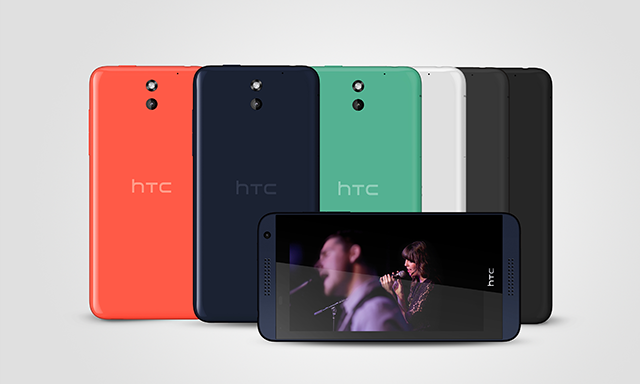
HTC Desire 610 |
||||||
SoC |
Qualcomm Snapdragon 400 (MSM8926) 4 x Cortex A7 at 1.2GHz Adreno 305 |
|||||
Memory and Storage |
8GB NAND + MicroSDXC, 1GB LPDDR3 |
|||||
Display |
4.7” 854x480 Super LCD at 199ppi |
|||||
Cellular Connectivity |
2G / 3G / 4G LTE (Qualcomm MDM9x25 UE Category 4 LTE) |
|||||
Dimensions |
143.1 x 70.5 x 9.6 mm, 143.5g |
|||||
Camera |
8 MP Rear Facing, 1.3MP Front Facing |
|||||
Battery |
2040 mAh (7.75Whr) |
|||||
Other Connectivity |
802.11 b/g/n + BT 4.0, USB2.0, GPS/GNSS, NFC |
|||||
SIM Size |
Nano-SIM |
|||||
Operating System |
Android 4.4.2 KitKat with HTC Sense 5.5 |
|||||
The Desire 610 will be available for purchase on July 25 for AT&T customers. It will be available for $199 with no carrier contract, or for $10 or $8.34 a month on AT&T's 12 and 18 month financing plans respectively.
Source: AT&T
Read More ...
Intel Q2 2014 Quarterly Earnings Analysis

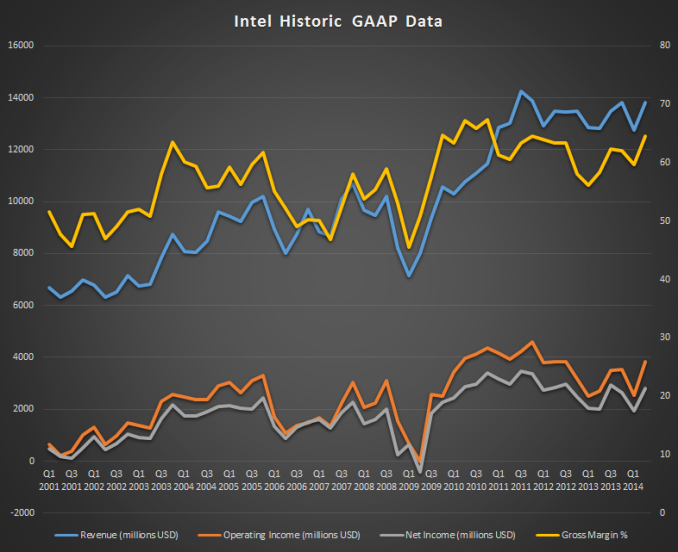
GAAP revenues for the quarter came in at $13.8B which is up almost a billion over Q1 2014, and also up a billion on Q2 2013 for a strong 8% increase.
Earnings Per Share was $0.55, up a substantial 41% year-over-year, and beating analysts’ expectations of 52 cents per share.
Intel Q2 2014 Financial Results (GAAP) |
|||||
Q2'2014 |
Q1'2014 |
Q2'2013 |
|||
Revenue |
$13.831B |
$12.764B |
$12.811 |
||
Operating Income |
$3.844B |
$2.533B |
$2.719B |
||
Net Income |
$2.796B |
$1.947B |
$2.000B |
||
Gross Margin |
64.5% |
59.7% |
58.3% |
||
PC Group Revenue |
$8.7B |
+9% |
+6% |
||
Data Center Group Revenue |
$3.5B |
+14% |
+19% |
||
Internet of Things Revenue |
$539M |
+12% |
+24% |
||
Mobile Group Revenue |
$51M |
-67% |
-83% |
||
Software and Services Revenue |
$548M |
-1% |
+3% |
||
All Other Revenue |
$517M |
-5% |
+16% |
||
Data Center revenue was up an even more impressive 19% over Q2 2013, and 14% over last quarter. Data Center volumes were up exactly the same as the PC Client volumes – 12% over the previous quarter and 9% over the previous year, but ASP for the Data Center platforms was up 3% over Q1 2014 and 11% over Q2 2014.
The recently formed “Internet of Things” group continued its strong growth, up again another 12% over last quarter and 24% year-over-year. This group includes embedded segments such as retail, transportation, and consumer focused things like home automation.
The one sector at Intel which continues to struggle is the Mobile and Communications group which was down 61% Q1 2014 versus Q1 2013, and once again in Q2 2014 it was down again 67% compared to Q1 and 83% year-over-year. The silver lining on this is the relatively small amount of revenue this is for Intel with this group only having $51 million in revenue, but in a world where the number of mobile devices is skyrocketing, Intel is struggling to capitalize on the new market. Intel is still not price competitive with the Bay Trail SoC business and are working on a low cost platform for Bay Trail. In the meantime, Intel is subsidizing the platform cost for the time being in order to not be shut out of this market. It’s not something that would be sustainable forever, but it seems to be allowing them a toehold in the mobile market while they continue to push towards lower cost silicon for partners. We’ve seen a lot of mobile devices coming with Bay Trail in the last couple of months, including a $110 Toshiba tablet and this contra revenue is driving that, but hurting the short term results for the Mobile group.
The last sector at Intel to report was the Software and Services, coming in at $548 million in revenue which is pretty much flat quarter-over-quarter and year-over-year. This segment includes McAfee which was purchased by Intel in the not so distant past.
The forecast for next quarter and the rest of the year has been upgraded, with Q3 2014 being forecast for $14.4 billion plus or minus $500 million. The board has also approved an additional $20 billion in share repurchases, with an expectation of $4 billion in shares to be repurchased in Q3. Looking back historically, Intel is once again getting close to record revenue and incomes, having almost fully recovered to 2012 levels.
Read More ...
Synology Expands Evansport Arsenal with 4-bay DS415play
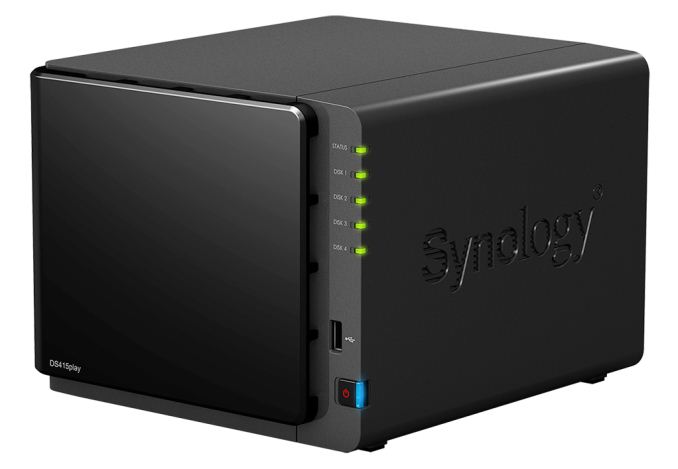
Synology's approach to Evansport is unique, and we have covered it in detail in our DS214play review. The transcoding capabilities are quite useful and work great for a lot of devices. There are still a few rough edges, but, given Synology's commitment to firmware features, we are sure things will continue to get better. In addition to the Chromecast support that was a great feature while using the DS214play, Synology's PR for the 415play also talks about support for Android TV (not surprising, given that they were already working great with Chromecast).


On the hardware side, users not quite satisfied with 2 drives in the DS214play had the option of adding a DX513 to the mix (no option for volumes spanning the two units, though) to get 7 bays in total using the available eSATA port. The DS415play does away with the eSATA port, so there is no possibility of adding in an enclosure to increase the number of drive bays. That said, four bays is probably enough for a large majority of the consumers (considering that 5 TB and higher capacity drives are already in the market).
At $540, it is a bit costlier compared to the Asustor AS-304T. However, the transcoding features and app ecosystem probably warrant the increase in price. QNAP's TS-451 is already quite close to launch, and I think that will be the main competition for Synology's DS415play.
Read More ...
Microsoft Begins Rollout of Windows Phone 8.1 and Lumia Cyan Update

In addition to the improvements made in Windows 8.1, the update rolling out to Nokia devices also includes Nokia specific improvements in what is being called the Lumia Cyan update. The Lumia Cyan update includes a handful of audio equalizer features like enabling equalizer settings for audio played over the phone's speaker and a "dialog enhancer" to boost the volume of human speech in videos played on the device. On some of the higher end Lumia devices the update enables the option to record Dolby Digital Plus 5.1 audio in the camera app which does audio processing to emulate multi-channel audio recording.
The Lumia Cyan update also brings a couple of improvements to the display settings. The first is support for brightness profiles which was originally introduced on the Lumia 630. This introduces a slider in the brightness section of the settings application for finer control over the desired brightness than the default fixed settings of low, medium, and high. The other new display related feature is what Nokia calls color profiles. In essence these are just settings that allow the user to shift the display toward a brighter more saturated image or toward a cooler less saturated image. Along with the three presets of standard, vivid, and cool, there is also an advanced mode which allows the user to manually change settings labelled color temperature, tint, and color saturation using three sliders.
While Windows 8.1 is an update that will roll out to the entire range of Windows Phone 8 devices with all features included, the Lumia Cyan update may have certain features tailored only to specific devices. More information about other features included in the Lumia Cyan update can be found in Nokia's announcement post below. Both updates are beginning their rollout today and Nokia has updated their update status page to reflect the beginning of the Lumia Cyan and Windows 8.1 rollout. The update will be rolling out to Nokia Lumia phones as well as Windows Phone devices from other manufacturers like Samsung and HTC in the coming weeks.
Source: Nokia Blog, Nokia Update Status
Read More ...
Seagate Reboots Network Storage Offerings with Rangeley NAS Pro and ARMADA NAS Lineups

Seagate is introducing two new network storage lineups today, the Marvell ARMADA-based NAS and the Intel Rangeley-based NAS Pro. The NAS comes in 2-bay and 4-bay varieties, while the NAS Pro comes in 2-bay, 4-bay and 6-bay varieties. While diskless models are available, Seagate expects most customers to take advantage of the bundled offers with NAS HDDs filling the bays. Various NAS HDD capacities from 1 TB to 5 TB are available (the 5 TB versions will ship late August, but other capacities are shipping today). Both lineups target the SMB market, with focus more on data security and ease of use rather than all the bells and whistles that home users tend to want. Within the SMB market, Seagate heavily plays up their remote access / private cloud technology - The SDrive app (for Android & iOS) along with a corresponding desktop program enables remote access to the Seagate NAS seamlessly (no port forwarding to worry about). Keeping up with the needs of this market segment, the SDrive app ensures encryption with the user credentials before data is transmitted either from the NAS to the device or vice-versa.
Seagate NAS Family
The NAS 2-bay and 4-bay solutions target SOHOs with up to 25 employees. It uses a Marvell ARMADA 370 platform (single core ARMv7 CPU at 1.2 GHz) and comes with 512 MB of DRAM. Hot-swapping is supported and the rest of the hardware specs are pretty much the same as the competition in this price range. The warranty and included drive class are the aspects in favour of the lineup. On the 4-bay side, Seagate adopts the same SoC platform as that of the 2-bay version. The competition in this price range is a bit more varied with respect to the hardware platform (ARMADA XP, Marvell 6282 etc. are common), but the advantages held by the 2-bay hold true here also.We have the NAS 4-bay version in-house for review and should get a better idea of the competitive performance in our testbed towards the end of the week.


Seagate NAS Pro Family
The NAS Pro family is much more interesting, targeting workgroups of up to 50 employees. While the NAS lineup goes head-to-head with last year's models from the competition, the NAS Pro lineup stands unique for now. This is the first announced off-the-shelf NAS that we have heard of to sport the new Intel Atom processors. In the case of the NAS Pro, the particular SoC is the Intel Atom C2338, a dual-core Atom (new Silvermont architecture) CPU running at 1.7 GHz. The awesome aspects of this Rangeley part are obviously the 6 integrated SATA ports and 8 available PCIe 2.0 lanes. Up to 4x 1 GbE ports (or 4x 2.5 GbE) are supported in the Intel Atom C2338. AES-NI is available for accelerated encryption capabilities.The NAS Pro family consists of 2-bay, 4-bay and 6-bay versions. Current Atom-based units from the competition (the Atom D270x-based ones) run at more than 2 GHz. But, make no mistake about the 'lower-clocked' Intel CPU in the NAS Pro. This is the real deal as compared to the previous generation Atom-based units, as it is based on a much improved microarchitecture and platform structure. We should get better performance and lower power consumption with the NAS Pro as compared to the competition (in addition to whatever can be gathered from the comparison tables).


NAS OS 4
Seagate's NAS OS has been hitting all the right notes in its evolution since LaCie got acquired. I have been using it for the last few days in the NAS 4-bay and I am very happy with the much cleaner interface. The isolation of the device management pages from the the apps section is welcome for the target audience. The companion SDrive app also works without issues. One must remember that the more full-featured NAS operating systems such as Synology's DSM and QNAP's QTS were not built in a day. I am quite sure with the focus that Seagate has on the NAS OS, it will reach those points of perfection eventually. For now, the third-party application support as well as the user experience is more than good enough for the target SMB market.Coming to the business end of this coverage, the questions on the minds of most readers are probably related to why consumers should choose Seagate for their NAS needs. As I was getting briefed by Seagate on this announcement, I was reminded of my interaction with a few IT administrator friends of mine (they handle IT support for 100 - 500 employee companies in the Silicon Valley, handling NetApp filers and other such high end equipment). As the trend of working remotely catches on, it has apparently become necessary to equip the homes of some employees / individual contributors with a fast NAS to ensure data availability locally, as VPN access becomes too slow for some use-cases. When asked for suggestions, I immediately responded with a few from my experience reviewing NAS units. Unfortunately, none of my first-tier suggestions worked out - the top most requirement in their mind was a one-stop shop for the whole package including the disks. After exploring various options, they finally went with either Seagate or Western Digital Windows Storage Servers. I believe this is exactly the sort of situation where hard drive vendors have a very obvious advantage - particularly for the SMB market. Seagate already has a strong brand name, and, with products like the NAS and NAS Pro, they are creating everything - the drives, the chassis and the hardware/software design - in-house. Given the price point advantages over Windows Storage Server-equipped units, SMBs / SOHOs would do well to consider the NAS / NAS Pro units for their network storage needs.
Read More ...
Thread Group Moots New IP Wireless Networking Protocol for IoT

IEEE 802.15.4 is a standard for low bandwidth personal area networks. It defines the PHY and MAC layers, leaving the upper layers open for development. ZigBee is one such specification with a custom upper layer. 6LoWPAN (IPv6 over Low Power Wireless Personal Area Networks) is yet another specification which defines the upper layers in such a way as to allow IPv6 packet transmission over 802.15.4 networks (creating a wireless embedded Internet).
The recent security vulnerabilities found in the LIFX connected light bulbs (which use the 6LoWPAN mesh network) stress the importance of having a secure IPv6 communication mechanism for connected devices that use the 802.15.4 standard. In order to improve compatibility while also ensuring that the wheel is not reinvented, some companies have come together to form the Thread Group and develop a new networking protocol to sit on top of the 802.15.4 PHY and MAC layers.
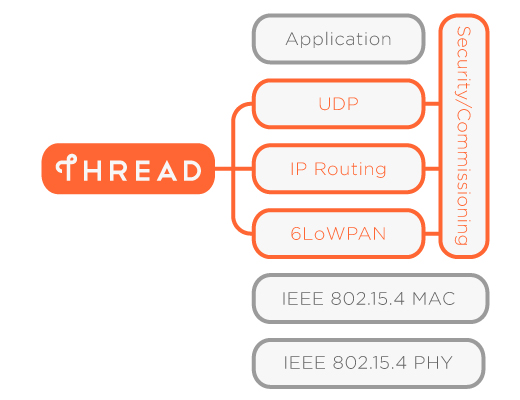
The Thread Group claims that their new approach provides advantages (both technical and certification-wise) over all the other approaches / certification programs currently in the market (including ZigBee PRO / Z-Wave / AllSeen / AllJoyn / Open Interconnect Consortium etc.). There is no denying the fact that a more secure protocol for mesh networks is the need of the hour. It is definitely an advantage that it can work on existing 802.15.4 hardware. That said, in our opinion, 802.11ah (which is being pushed heavily by all current Wi-Fi silicon vendors) will be a force to reckon with. Whether it will form a backhaul network for 802.15.4, or completely obviate the need for it in home automation applications remains to be seen.
The Thread Group is backed by ARM, Big Ass Fans, Freescale Semiconductor, Nest Labs, Inc., Samsung, Silicon Labs and Yale Security. It is a not-for-profit group primarily aimed at educating developers and consumers through a product certification program for its mesh network technology. New members (in addition to the seven founding ones) will start to get accepted in Q3 2014 and the first set of specifications are expected to release later this year.
Read More ...
Report: The Chevy Volt’s European Twin, Opel Ampera, Gets the Axe
Only 332 Amperas were sold through the first five months of 2014
Read More ...
Motorola Moto G Sucessor Reportedly Uncovered, Moto X Discounted by up to $75
Moto G2 to feature mostly the same innards, but will include an upgraded camera
Read More ...
JJ Abrams Unveils X-Wing Starfighter for New "Star Wars" Movie
It's not a Z-95 Headhunter
Read More ...
Edward Snowden Presents Tech to Stop Government Spying
He gave a lecture at the HOPE conference
Read More ...
UK Government Considering Tesla Model S Purchases
The UK government put together 5 million pounds ($8.6 million USD) for the program
Read More ...
Airbus Shows Off All-Electric E-Fan 2.0 Airplane, Plans Production in 2017
The two-passenger E-Fan 2.0 will be followed up by the four-passenger E-Fan 4.0
Read More ...
Report: NVIDIA Shield Tablet Coming July 29 for $299/$399 USD
There's a 16GB wi-fi model and a 32GB LTE model
Read More ...
Verizon FiOS Network Upgrade Brings Symmetrical Upload/Download Speeds
500 Mbps uploads, 500 Mbps downloads are now a reality on FiOS
Read More ...
Microsoft Kills Entertainment Unit, May Shelve Flagship Lumia "McLaren"
Neither Halo series will be affected by cuts
Read More ...
Following Lowered Earnings Guidance, 200 Samsung Managers Return a Portion of Their Bonuses
Total value of returned bonuses is pegged at $2.3 million
Read More ...
Toyota Scientist: Autonomous Vehicles May Lead to Increased Fuel Consumption, Pollution
“We’ve created an entire culture and economy based on the notion that transportation is cheap."
Read More ...
Despite Doubling Sales, Xbox One Still Gets Beat in June Sales by PS4
Sony, Microsoft, and Nintendo all had a relatively good month, all things said, though
Read More ...
"I'll Be Back" -- After Reviving Meego Dreams, Jolla Preps for India Launch
Jolla's Sailfish OS-powered "Jolla Phone" is overpriced though, so its success in India is in jeopardy
Read More ...
Amazon Launches First Fire Phone TV Spot, Spends 30 Seconds Promoting Prime
Amazon Prime takes center stage in the first Fire Phone commercial
Read More ...
Google Promises to Fix 4-year-old Chrome Browser Battery Draining Bug
Google didn't take action until Ian Morris' story gained traction
Read More ...
Amazon Launches $9.99/Month Kindle Unlimited eBooks Service
Unlike Prime Instant Video and Prime Music, you'll have to pay extra for this one
Read More ...
Update: Lenovo Pulls Plug on Small, Windows-based Tablets for North American Market
Lenovo says that 10.1" Windows tablet sales are strong
Read More ...
No Power? No Problem, $75 P2P goTenna Lets You Text w/out Cell Network
GoTenna is intended for both recreational use (backpacking, etc.) and emergency use
Read More ...
Boeing 777 Malaysian Airlines Flight 17 Crashes in Ukraine
Large passenger jet was reportedly shot down, no one is believed to have survived
Read More ...
Quick Note: Xbox One Sales Doubled After Introducing Kinect-less Bundle
Who knew? Lowering the price results in a sales increase
Read More ...
LG G3 Beat -- King of the Budget Androids?
Mid-tier device packs a rather weak hardware spec, but some nice software features
Read More ...
Apple’s iPhone 6 to Reportedly Feature 1810 mAh Battery
The current generation iPhone 5S features a 1500 mAh battery
Read More ...
Microsoft to Cut 18,000 Employees, Phase Out Nokia X Android Smartphones
Nadella's headcount reduction is larger than expected
Read More ...
Google Signs Controversial Deal With Pharmaceutical Giant Novartis
Diabetes-monitoring contact lens should be sped to market, thanks to licensing deal
Read More ...
BlackBerry Assistant Aims to Take on Siri, Cortana; Will Launch with BlackBerry 10.3
BlackBerry steps into the virtual digital assistant space
Read More ...
HTC One M8 Finally Gets Wi-Fi Calling on Sprint
T-Mobile users have enjoyed the flawed, but promising feature for some time now
Read More ...
FBI Report Suggests That Self-Driving Cars Could Be Used as Rolling Bombs
The report also see self-driving cars as a boon to law enforcement surveillance
Read More ...
Quick Note: Sling Media Jettisons Slingbox 350, Replaces it with Cheaper Slingbox M1
Slingbox M1 will retail for $149.99
Read More ...
Tesla Confirms “Model III” EV with 200+ Mile Range, Blames Ford for Missed "SEX"
Ford cockblocked the Model E name
Read More ...
Apple, IBM Announce Strategic Partnership in Enterprise Mobility
Apple and IBM join forces in mobile
Read More ...
Available Tags:Samsung , Galaxy , Seagate , Western Digital , Android , ASUS , Google , AMD , Microsoft , MSI , Chrome , HTC , Intel , Windows Phone , Windows Phone 8 , Windows , Wireless , Motorola , UK , NVIDIA , Tablet , Toyota , Xbox , PS4 , Meego , India , Amazon , TV , Amazon , Kindle , Lenovo , Xbox , LG , iPhone 6 , iPhone , Nokia , BlackBerry , BlackBerry , Ford , IBM ,


No comments:
Post a Comment