

700MHz support comes to Telstra's new pre-paid Wi-Fi hotspot

Telstra has a new Wi-Fi hotspot on offer, the Pre-Paid 4G My Pocket Wi-Fi Ultimate, future-proofed with support for the 700MHz spectrum band that the telco will be able to switch on next year.
Telstra won the 700MHz spectrum as part of the Digital Dividend auction, and following the final shutdown of analog TV this year, telcos Telstra and Optus will be able to switch on the 700MHz band for use beginning early 2015.
Telstra says that the new spectrum will be used for its "network evolution and will offer customers wider regional and deeper in-building 4G coverage, improved speeds and more capacity."
"Owners of the My Pocket Wi-Fi Ultimate will be among the first to benefit when we switch this new spectrum on," Telstra said.
But until the 700MHz spectrum band is switched on, the Pre-Paid 4G My Pocket Wi-Fi Ultimate hotspot, which has dual-band Wi-Fi support, will be using the 2.4GHz band and 5GHz band for range and speed.
Wi-Fi goes Ultimate
Beyond the 700MHz support, the Telstra's new hotspot also offers a data usage-meter integrated with Telstra's billing system allowing for better live monitoring of your data usage.The hotspot supports up to 10 devices, with Netgear, the manufacturer of the device, stating that it has a a 10 hour battery life.
You also have the option for a "guest" connection, and along with using the web portal, you can also use the Netgear AirCard App for iOS and Android devices to manage the status, connection and settings of the hotspot.
The Telstra Pre-Paid 4G My Pocket Wi-Fi Ultimate is available now through Telstra stores and online for $149, and includes 5GB of data.

Read More ...
E3 2014: Razer's CEO fills us in on new shades for Kraken, Junglecat and more

The E3 press conferences are finally behind us which means we've been scoping the show floor for the latest and greatest in tech and gaming.
We visited Razer's E3 booth to check out the new products and snagged a quick chat with Razer CEO Min-Liang Tan.
So far, the popular company has revealed a brilliant set of new Kraken headphones with color accents appropriately called Neon. Razer also debuted a brand new PC case, the NZXT H440. Finally, the Junglecat is Razer's answer to mobile phone gamepads. This kitten is purring onto the iPhone 5 and iPhone 5S starting in July.
Check out our video below for more on the Kraken Neon headphones, the freshly announced NZXT H440 PC case and the Junglecat.

Read More ...
Ready to hire local plumbers and babysitters through Amazon?

Amazon is planning to expand its ever-growing empire to connect customers with local tradespeople according to reports on Tuesday.
Reuters brings word from sources claiming a forthcoming breed of Amazon local services will allow users to call in babysitters, painters, plumbers and more.
According to the report, the firm plans to test out the scheme in certain markets before it goes nationwide across the US, in much the same way it has with the Amazon Fresh grocery delivery service.
The program would muscle in on the turf of services like Yelp as well as traditional brick and mortar stores that are able to earn kickbacks by hooking customers up with local businesses.
Schmoozing
The Reuters sources claimed Amazon has already started schmoozing with startups in the San Francisco and Seattle areas who're currently connecting customers with such services.An Amazon spokesperson declined to comment on the story.

Read More ...
E3 2014: PS Vita TV to head outside of Japan as PlayStation TV later this year

You may recall the PS Vita TV system that was seemingly never going to make it off the island of Japan?
Sony just delivered some liberating news during E3 2014: It's rebranding Vita TV as PlayStation TV and bringing it to North America, Europe and Australia.
The black slab (the color is new, too) lets users play PS4 games through Remote Play, PS3 games via PlayStation Now, and select PS Vita, PSP and PS One titles as well.
The PlayStation TV will sell for AU$149.95 in Australia (it'll be US$99 in the US, as shown in the picture above). A bundle has been announced for the US that includes a DualShock 3 controller, an HDMI cable, an 8GB memory card and a copy of the Lego Movie video game, however we aren't yet sure if this will be available Down Under.
Due later this year, the PlayStation TV may not be the most vital piece of hardware you ever own, but at least it won't take up too much space in your living room.

Read More ...
LG G Watch specs reportedly emerge, release date tipped for July 7

It's been a rather busy day of speculation relating to the forthcoming LG G Watch, set to be the first device to run the new Android Wear operating system for wearables.
A purported spec sheet was leaked by relatively unknown Twitter account, but not before MoDaCo claimed the device would be launched in the UK on July 7, with a price-tag to undercut Samsung's Gear watches.
Firstly, a spec sheet courtesy of @UpLeaks claimed the wrist watch will arrive with a 1.6-inch 280 x 280 display, a 400mAh battery and 4GB of storage.
The chart shows the watch as having a 36-hour standby and 2-hours charge time. As Android Authority points out, the sheet also mentions users will be able to dictate texts and memos with their voice.
I/O, I/O, it's off to Google we go
Away from the spec whispers, the July 7 release date mentioned above would come less than two weeks after the Google I/O conference in San Francisco, which starts on June 25.The G Watch is set to be officially unveiled during the annual event as an example of the Android Wear software's capabilities. Reports earlier on June 10 claimed all attendees at the conference would receive a free LG G Watch.
While the potential release date seems plausible, we're taking the rumbles that it'll undercut the £169.99 Galaxy Gear 2 Neo price-tag with a grain of salt right now.
Previous reports have suggested it'll retail for £180 (about US$301, AU$322), so we'll wait to see what LG has to say on the matter in a couple of weeks.

Read More ...
E3 2014: A new Doom is coming, but you'll have to wait till QuakeCon

A new Doom is coming, but you won't see it at E3 2014.
A smoky, creaky and gooey teaser appeared on the Bethesda Softworks YouTube channel earlier today. In it monsters lumber about, teeth are gnarled, and whoever opened the door should be the first one destroyed.
Gripping graphics aside, the trailer delivers the message that the new Doom's reveal is coming at QuakeCon 2014, going down in Texas July 17 - July 20.
The event, spearheaded by Doom maker iD Software, seems like the perfect place to unveil the next installment of a game that's been around for over two decades.
Check out the teaser below:

Read More ...
The Internet of Things will cause IP traffic to skyrocket 300% by 2018

Global Internet Protocol (IP) traffic will reach 1.6 zettabytes annually by 2018, an increase of almost 300% compared to 2013, according to a new report by Cisco. Projected annual IP traffic in 2018 will be greater than all IP traffic that has been generated globally from 1984-2013 - during which 1.3 zettabytes of IP traffic was created.
Global IP traffic will reach 132 exabytes per month by 2018, the report states. This amount of data is equivalent to 4.5 trillion YouTube clips or 940 quadrillion text messages.
The study suggests that the majority of the traffic will originate on devices other than PCs and that wireless traffic will exceed wired traffic for the first time. By 2018, 57% of IP traffic will come from devices other than PCs. Wi-Fi and mobile-connected devices will generate 61% of IP traffic in five years, with Wi-Fi encompassing 49% of that traffic.
The study also says that by 2018 there will be nearly as many machine-to-machine connections (7.3 billion) as there are people on earth (7.6 billion).
Internet of Things is the future...like it or not
Research firm IDC projects technology and services revenue for the Internet of Things will increase from $4.8 trillion (£2.9 trillion, AU$5.3 trillion) in 2012 to $7.3 trillion (£4.4 trillion, AU$8.2 trillion) in 2017, with a compound annual growth rate of 8.8%. The GSMA, an organization representing 800 mobile networks, expects machine-to-machine connections to grow from 195 million connections to 250 million by the end of 2014.Cisco recently projected 50 billion things will be connected to the internet globally by 2020, creating a $19 trillion (around £11 trillion, or au$11.9 billion) ) opportunity for businesses around the world.
Cisco is betting heavily on these survey results. The company recently said it would invest $1 billion (about £605 million, or au$1.1 billion) to build what it said would be the world's largest Intercloud network to tackle the Internet of Everything.
Or not.
Unfortunately, IT decision-makers at small-to-mid-size businesses aren’t as bullish on the Internet of Things. Seventy percent of IT decision-makers at small-to-mid-size businesses do not believe the C-Suite will increase IT spending to provide them with the resources necessary to tackle additional security problems created by the Internet of Things.The Cisco VNI Global Forecast and Service Adoption for 2013 to 2018 relies upon independent analyst forecasts and real-world mobile data usage studies, Cisco said in the report.
Here’s everything you need to know about the Internet of Things.

Read More ...
Honeywell Lyric smart thermostat could lure folks away from the Nest

Home thermostat maker Honeywell has fought back against the Google-owned Nest company with a smart, Wi-Fi and GPS enabled-model of its own.
The Honeywell Lyric was announced June 10 and will allow users to control the temperature in their homes via smartphone apps for iOS and Android, just like the groundbreaking Nest device.
However, where Nest uses a motion sensor to determine whether owners are home, Lyric utilizes a fencing system to enter an energy-saving mode when users are a certain distance away from the property.
Owners can tinker the distance between 500m and 7 miles away from the home before the mode kicks in, meaning the device will know when you've gone far enough away for energy-saving to kick in and will know when you're on the way home so it can get the place nice and cool/warm in time for your arrival.
Fine Tune
The wall-mounted device can be configured to recognise all family members' smartphone apps so it won't turn the heating off when mum or dad heads to work on a Monday morning during the school holidays.The Lyric also uses a built-in Wi-Fi-based Fine Tune feature.
When enabled, the thermostat goes searching for the local weather forecast and will modify the temperature settings based on the conditions outside.
The Lyric can also be controlled manually using the dial, while there's also Home and weather forecast buttons on the face.
Lyric goes on sale in August for cost $279 (around £166, AU$297) - slightly more expensive than the Nest - and is the first in a series of Honeywell devices to go under that name.

Read More ...
First search, now the skies: Google looks to conquer it all
Although Google is well known for providing satellite imagery to consumers and businesses, the search giant doesn't actually own the technology behind them. That is, until today.
Google has announced an agreement to acquire Skybox Imaging, the 5-year-old satellite provider responsible for keeping Google Maps up-to-date with high-resolution pictures of the world in which we live.
The search giant intends to use the $500 million (about UK£298m, AU$534m) cash deal to "be able to help improve internet access and disaster relief," suggesting Google may be eyeing another of its infamous "moonshots" in the wake of the acquisition.
Only two months ago, Google scooped up Titan Aerospace from the prospective clutches of Facebook, a move that put Mountain View soaring into the business of high-altitude, solar-powered drones.
Reach for the sky
Founded in 2009, Skybox began in Co-Founder John Fenwick's living room prior to raising its first $3 million (about UK£1.79m, AU$3.2m) and setting up shop in a 3,000 square-foot office in Palo Alto, California.As the company explains in its own blog post on the Google acquisition, Skybox's lofty goal was to "revolutionize access to information about the changes happening across the surface of the Earth."
Such ambitions line up nicely to Google's own, which includes plans to design Skybox satellites from scratch much in the same way the company's new bosses have forged ahead with driverless cars.
As always, the Google acquisition is subject to US regulatory approvals and other customary closing conditions, so for now Skybox Imaging will carry on business as usual - once the champagne bottles are empty, that is.
- Check out our up-to-the-minute review of Google Glass!

Read More ...
E3 2014: Hyrule Warriors, Super Smash Bros. and Zelda lead Nintendo's game pack

Nintendo, in the face of financial turmoil, needed a big showing at its E3 Digital Event today. While some titles like a new open-world Legend of Zelda and Xenoblade game fulfilled those desires, most of Nintendo's announcements were smoke without a fireflower.
Done in collaboration with the team at Robot Chicken, Nintendo used the event to unveil its plans for the NFC figures, continue the Super Smash Bros. hype train, and show off some of its agenda for the coming year.
Actual release dates were few and far between, as most of the demos shown were for late 2014 or early 2015 - with the exception being Hyrule Warriors, which will hit store shelves worldwide on September 26.
Read on for the full breadth of games coming out of the House of Mario at this year's E3.
Super Smash Bros. for Wii U / 3DS
Wouldn't it be interesting to pit Mr. T against Spock and see who comes out on top? (The answer here is "yes.") Good. Nintendo thinks so too, that's why they're including Mii support to the upcoming Wii U and 3DS games.Miis will follow one of three move sets - brawler, gunner, or sword master - and will be able to choose from a pool of 12 special moves. Also announced was a new character, Palutena from Kid Icarus. The 3DS version will come out first on October 3, while the Wii U version is still slotted for a holiday 2014 release date.

Nintendo NFC … er, Amiibo
Following in the footsteps of Activision and Disney, Nintendo officially announced the NFC figure technology, now officially called Amiibo. Amiibo characters will store data that will impact games like Super Smash Bros. and, soon, Mario Kart 8.Ideally, these characters will learn from previous matches and grow in skill. What they exactly do, however, and - more importantly - when they'll come out, are however still a mystery.

Yoshi, Kirby and Toad, a.k.a. the B-Team
Not every rumor was revealed before this year's event. Yarn Yoshi or as it's now called, Yoshi's Woolly World, was one of such game that avoided the limelight.In the brief, 5-minute demo, we saw up to two Yoshis terraform the string-laden landscape with their tongues and heard about the ability for the green dinosaur to transform into different objects just like he did in Yoshi's New Island earlier this year.

Not to be outdone, Kirby will make a debut in 2015 with Kirby and the Rainbow Curse. It looked similar to Kirby: Triple Deluxe, but with improved graphics that almost undoubtedly shouts "hey, this is on Wii U."
Also revealed was Captain Toad Treasure Tracker, based off the eponymous fungi helper's levels from Super Mario 3D World. While the game looks like a simple puzzle game based off recycled gameplay, it's nice to see the hardworking royal helper getting a game of his own.

Hyrulean Renaissance
The star of this year's show, however, was the green-hatted hero of Hyrule as The Legend of Zelda for Wii U was finally shown in glorious full HD. While buzz words like "open-world" and non-linear got more play time than actual gameplay, the cut-scene sequence we did see was incredibly well-scripted. But, like most of the games shown on the stream, no release date has been announced other than the ambiguous "2015."
But to tide us over until then we've got Hyrule Warriors coming to the Wii U on September 26. Sporting Impa, Link, Zelda, and some of the more obscure heroes of Hyrule, the game blends the staple hack-and-slash of the Dynasty Warrior series with the thoughtful bosses of the Zelda universe in a crazy, frenetic brawler.
Po-ke-mon plus Bayonetta
Pokemon is going to evolve later this year with Pokemon Omega Ruby and Pokemon Alpha Sapphire. While no new news came out of the event regarding a release date, we did find out that the basic starters, Treecko and Mudkip, and legendaries, Kyogre and Groudon, will get a mega-evolution and join Torchic in the select group.Bayonetta 2, the mature action game from Platinum, is officially slated for an October release date and will be a Wii U exclusive. While it's unlikely to move consoles by itself, Bayonetta shows Nintendo has a variety to their roster, even if said variety is only a single game.

Everything from Mario to Xenosaga
The rumor mill turned out a diamond with Mario Maker, a Super Mario level builder. While not much is known about the goals of the game, it looks like an interesting community run title that could rival Sony's LittleBigPlanet 3.Debuting in true anime fashion, Xenoblade Chronicles will show us what would've happened had Gundam been made into a triple-A title when it comes out in 2015.
Splatoon, Fantasy Life and the Professor
Call of Duty may be a little too mature for Nintendo audiences. In its stead we'll get Splatoon, a third-person shooter that pits teams of squid/human hybrids against one another to cover the map in paint. It's strategic shooter that uses the gamepad - making it a shoo-in on Nintendo's console in 2015.
Announced at the tail end of the show was Fantasy Life, a role-playing game coming to the Nintendo 3DS on October 24.
Also coming to 3DS August 29 is a mash-up title: Professor Layton vs Phoenix Write Ace Attorney.
Feelin' Foxy?
Finally, the last blockbuster title to get an E3 mention was Star Fox on Wii U. It's in development now and was shown as a tech demo to a select group of journalists, but was strangely absent from today's presentation. At a Nintendo Treehouse event, project leader Shigeru Miyamoto said it should be ready in about one year. Which means Star Fox will likely be getting the limelight this time next year.It would've been nice to see a few more big names in the Nintendo family this year to reassure those of us with Wii Us that the proper choice was made, and wish that the semi-plausible rumor about a price drop was more than just hear-say.
Nintendo shows a lot of promise with the next class of games coming to their systems and with new Nintendo Directs coming every month, there's nothing stopping the company from debuting a big title this time next month.

Read More ...
E3 2014: Roccat brings first Steam Machine keyboard and mouse combo

Despite there being so many Steam Machines from various manufacturers, we've only seen one controller to rule them all.
Breaking with this single-controller convention, Roccat is rolling out a new Sova lapboard to bring mouse and keyboard control to Steam Machines. The hardware maker describes Sova as a solution for PC gamers who need more than a controller to play games like StarCraft II and DoTA.
Sova combines a somewhat miniature mechanical keyboard with a gigantic mouse pad. The lapboard is being billed as an extremely durable and modular accessory with a mouse pad that can be expanded and retracted.
As the name might suggest the lapboard rests on your legs with a padded underside and ergonomic palm rest to make sure the device remains comfortable to use, even after extended 15-hour gaming sessions.
Aside from connecting with Steam Machines and regular PC gaming towers, users will also be able to sync Sova to their smartphones. The keyboard integrates with Roccat's Power-Grid software, which allows for full-remote control of your PC by communicating commands from a smartphone using the keyboard as an intermediary.
Control, control, you must learn control
Although lapboards and other PC gaming accessories have tried to make keyboard and mouse easier to use from a couch before, this is the first device made specifically for Steam Machines.
There's nothing too novel about the Sova, but it goes against Valve's attempts to distill PC gaming into an accessible living room experience with its Steam Controller and Steam Boxes. The Roccat Sova could be just the first in a long series of peripherals to bring keyboard and mouse control to Steam Machines.
Roccat has yet to announce a price or release date, but stay tuned for our hands-on with the lapboard at E3 2014.
- Want a headset to go with that lapboard? Check out Turtle Beach's new lineup

Read More ...
Hands-on review: Updated: LG G3

Introduction and key features
With the LG G3, we're seeing a brand release a phone ahead of time in order to grab a foothold in an industry that could be spiralling away from its grasp.It's an odd thing to say considering we're talking about a manufacturer that launched one of the critically acclaimed phones of 2013, with the LG G2 impressing far more than most expected.
But that was months ago, and LG has realised that with Samsung, Sony and HTC all bringing out far superior models it can't wait until later in the year to catch up, so it's tried to race to the front of the pack with a previously-unseen step forward in screen technology.
- The best phone in the world right now is the HTC One M8 - but will the iPhone 6 be a massive threat?

So with that in mind, is the LG G3 the perfect smartphone?
This isn't TechRadar's full review – just yet. The reason is I've got the pre-production Korean version of the LG G3 on test, which still has a number of kinks rattling around.
With that in mind, plus the fact some of the interface won't be coming to rest of the world, this is an extended hands on review, with the final version bringing a more comprehensive look at the key features and a star rating with full verdict.
Key features
There are a number of key features that LG is touting as new and improved this year with the G3, but none sticks out as prominently as the QHD screen. Some might think that this is four times the pixel count of an HD screen, and you'd be right to a degree.But only if you're talking about 720p screens – if you're comparing the G3 to something like the Galaxy S5, that packs in two million pixels to the G3's 3.6 million. It's a lot sharper, sure, but anyone thinking it's going to be mindblowing will be disappointed
LG told me that it had done some research and had realised that Steve Jobs was wrong. While they agreed that he was right there was a limit to what the human eye can see in terms of sharpness, it's clear that a 1080p screen trounces a Retina Display on the iPhone 5S – something that is true.
But apparently there's another level to attack, and that's just what it's done with the QHD screen. Where Samsung's offering 440ppi sharpness, the G3 has 538ppi, which is equivalent to high end glossy art books, which LG used as the benchmark of sharpness to aim at.
Now, here's the quandary: the screen is brilliant, no question. Internet browsing, looking at pictures, watching high-end video, is all awesome. But that's the exact same feeling I had with the G2, which also had a simply stunning screen.

It feels like the QHD screen is great to look at because LG knows how to make an amazing display, rather that offering a next level of sharpness that blows me away.
I didn't feel that I was looking at something superior to the G2 in terms of screen quality, and with the larger heft and hit on battery life, it seems a bit like LG has jumped too early with the technology.
Or has it? Perhaps we just don't need QHD screens in our phones. The display isn't without problems either: tilt it left or right and the brightness drops off sharply, which makes sense when you consider how many pixels are packed in there.
It's unfair to criticise the QHD screen on the G3 – there's no doubt all high end smartphones will be using this technology in a year or so. But as a headline spec, it doesn't seem to add a huge amount to the G3, which is a shame as I was hoping to be looking at the next generation of picture quality on a phone.
New interface
When it came to listing the criticisms of the LG G2, the biggest problem was the interface. It was so cluttered that if you had the remote activated and received a message you had to scroll down to see it.Compare that to the HTC One M8, and you've got nothing but the missive to check. On top of that, the G2 went for a really garish and cartoony look too, meaning it was hard to evangelise on a phone that was otherwise brilliant.

The new interface on the LG G3 is a big improvement. Gone is the skeumorphism in favour of a new flat tile look. The icons are redesigned. The different applications have their own colour scheme for easy recognition and the colour palette is more muted than before.
It's a much more fluid system that shows LG has grown up, taking the problems of before and making it into a more intuitive way of navigating through the handset.
LG has definitely taken touches from HTC, Samsung and Apple with the new interface.
The home screen features a separate section for the pedometer and tips videos (where Samsung's pointless magazine option is on the Galaxy S5), the colours are very similar to HTC's on the M8 and the flatter design owes more than a tip of the hat to Apple.
The interface is still a little cluttered, but overall it's a tick for LG updating something that sorely needed a new look.
Metallic shell
As mentioned the other big problem with the G2 was the fact it had a really glossy plastic shell. The phone was well packaged, but still didn't offer the same premium quality as the HTC One, iPhone or Sony Xperia Z1.So with the LG G3, the South Korean brand has gone for the best of both worlds. It's created a 'metallic skin' that supposedly looks and feels premium, but offers the lower weight and added connectivity benefits of polycarbonate.
The problem is, LG hasn't really managed this lofty goal. The G3 certainly looks the business, bringing a more iconic look of brushed metal and some cool colours (black, silver and gold) to make it stand out on the shelves, which makes sense given it's mostly screen otherwise.

But the second you pick it up, the plastic nature jars with the look of the phone, which is a disappointment. It actually feels cheaper than the G2 thanks to packing a removable back, which lowers the tightness of the packaging and makes it feel more hollow.
The upside of this is you've got a removable battery and microSD slot, both of which are a big win for a certain section of the customer base. I think design is more important than functionality in a smartphone when it comes to things like a removable battery, and a microSD slot can be easily offered through a side-loaded tray.
So again, LG has stepped forward with the G3 – but it's still not enough.
Simple camera with laser autofocus
The 13MP camera on the LG G3 is also another big talking point, both in terms of the new look to the interface and the additional technology on board.I'll start with the latter point: the laser auto focus, which is designed to make it the fastest-focusing smartphone on the market. It seems to be true at times, but a) I'm not sure shaving another 100 milliseconds off makes that much of a difference and b) it doesn't work perfectly on this early sample.

It's possibly a bit unfair to say that the extra speed isn't warranted – if the system worked perfectly, chances are you'd take 10-20 more high quality pictures that capture the moment compared to the competition, but without being able to fully test the system it's hard to comment.
The laser works by sending out a conical infra-red signal (using technology nabbed from a robo-vacuum cleaner from LG's home appliances division) and the time taken to register paints an instant and clear picture for the camera to use.
This means it doesn't have to look for contrast shifts like before, and offers a sharper image.
The interface is really scaled back too: it's nothing more than a back button, a menu icon and the viewfinder. Tap the screen and it focuses and takes the picture… again, this is supposed to be superfast but the pre-production software isn't up to the task at this point.
It also doesn't let you focus to check the shot composition before taking the photo, which would be nice – but then again, tap that menu icon and you get all you need in terms of shutter, options and video recording.
The G3 is all about simplification, and this kind of technology really works. It's a little too scaled back for the camera, but it's the right idea.

The front 2.1MP camera is now cringingly called the 'selfie' camera – it seems that dreaded word is here to stay, at least for a few years. The lens is a wider angle, so you can get more friends into the photo (or more actors at the Oscars) and features clever gesture recognition to take the photo.
Hold your hand out, make a fist and it'll start the G3 self-portrait timer. It's a clever system and it works, which is great for those moments when you can't use both hands and don't want to tap the screen.
Another cool feature is the ability to have a front-facing flash, although it's not an LED light. Instead, part of the screen goes white, which illuminates faces and takes better pictures. LG has even white balanced this screen to correct skin tone imperfections – and it really gives some nice front facing snaps.
Design and camera
The design language of the G2 was fairly muted, a glossy anonymous phone that only was differentiated from the rest of the competition by the rear-mounted power and volume buttons.The LG G3 is a step forward in nearly every way – from the overhauled 'Floating arc' design to the updated user interface LG thinks its found a solution to a number of the problems that have prevented it being as critically acclaimed.
And the result: it's fallen somewhere in the middle. The G3 is a much better phone than anything LG has put out before, but it's still favouring function over ease of use in a number of cases.

It should be noted that the sample I was given was from the Korean pre-production line; as such the performance is not at the level LG will ship with in June.
As mentioned above design is updated in a big way – the back is now a fusion between metal and plastic. LG is calling this a 'metallic skin' – a film within the polycarbonate shell that allows it to have a premium feel with the connectivity power of a plastic casing.
The G3 partly achieves this. It's a definite evolution over the G2, and it's much more premium-feeling than the likes of the Samsung Galaxy S5.
However, it's not in the same league as the HTC One M8 in the design stakes, and still feels as chunky and heavy in the hand, so it's only in terms of connectivity that the design is a win.

The rear-mounted buttons are something that most will need to get used to – but if you've used a G2 for any amount of time then you'll feel this is a much better design. A rounded power button and more smooth volume keys are welcome and do enhance the premium feel, but overall it's still got a slightly lightweight feel compared to the cool sensation metal offers.
I get the feeling that the design of the LG G3 is going to attract more users to the brand than ever before, but in terms of out and out 'premium' feel there's still more that could be done.
LG tells me that the metallic skin is designed to be the ultimate fusion between plastic and metal, combining form and functionality, but in reality it's a little too skewed towards the latter. Picking it up without knowing the backstory, someone would likely think it's a well-made, but plastic nonetheless, phone.
Don't get me wrong, it's not a bad thing. It's along the lines of Nokia's efforts, if a little more flimsy feeling, and is scratch resistant and comes with a removable back as a result. However, if you're after something that has the aesthetic power of a luxury car, something the One M8 does very well, this isn't the phone for you.

Camera
The camera on the LG G3 is one of the headline features of the new phone, with the same 13MP snapper as seen on the LG G2 - albeit with some upgrades.The main difference is to the autofocus, where the G3 is able to take things from blurry to sharp in 0.276 seconds, compared with over 0.3 for the competition.

If that's not a reason to buy a phone, I don't know what is.
The system uses a laser detection system, one that actually came from a chance meeting on a coffee break with the LG Home Appliance system. That team had developed a laser which could see how far objects were ahead, thus stopping a mobile vacuum cleaner from lobbing itself down the stairs.
A few tweaks later, and the system is in the G3. The result is a (sadly invisible, although probably safer) cone of light spreading out when you press the shutter and getting a crisp image each time.
LG is touting 'simplicity' as the big selling point of this phone, and as such has made it so there's only one button on the camera - and that's not even the shutter. Like the Moto G, you press anywhere on the screen to take the snap... but this also focuses the image on the same point.
Generally this is a fine thing to do, but sometimes you'll want to do it a little differently. You then have to activate the older UI that includes things like the ability to activate the improved selfie camera and the 'Magic focus' mode (which is really the same old background defocus feature that's all the rage at the moment).
But while there are plenty of little things to play with on the camera, the main question revolves around the quality; thing is, it's oddly poor.
This needs a massive caveat: this is a pre-production sample from South Korea, so it's unfair to read anything into the performance. As such, the fact the snaps come out even muddier than those from the LG G2 (which itself had a real problem with over-processing) doesn't need to raise alarm bells... yet.
The pictures can be clear and sharp, but zoom in even a tiny amount and you'll see that things start to get very blurry indeed - as you can see with the waterfall picture below.
The camera isn't exactly as fast as I thought it would be either, but once again I'm going to out that down to early software, so await our full review before panicking.


User interface and verdict
The user interface update is probably the best part of the LG G3, which has moved from a convoluted mess to a sleek, flat icon design.The notification area has been massively stripped back with a thinner typography used (which is prevalent throughout the phone) and the icons used throughout are much nicer to look at – both as a result of the re-design and the sharper screen.
LG has added in a few Google Now-esque tweaks to the process in order to give you the info you need apparently when you want it. This means that the weather won't just be a 'Partly Cloudy' with a temperature, it will let you know when it's windy and whether an umbrella will be needed later.

Similarly, if someone calls and you send a message promising to call them back and you DON'T, the phone will recognise that and gently poke you later to do so.
And it's also an adaptive system - at the start, it will flick you helpful how to videos, then later on the LG G3 will alert you about apps that can do cool stuff which you've not used. After a year, the phone will tell you about new stuff coming out, meaning you're never too far away from the chance to buy a new LG.

The slightly confusing thing here is that part of this information is stored to the left of the home screen (along with LG Health, which allows you to keep track of your steps as most other handsets allow you to do nowadays) and others are part of the dropdown on one of the homescreens.
It's not the biggest problem having them split, but you don't always have new notifications to to check out with this Smart Notice system, so it could easily get quite quickly ignored.
But the new UI is an excellent addition, and scratches an itch that I had with the G2 - along with the effort put into design, two of the biggest problems have been sorted in a big way here.
Early verdict
The LG G3 is a phone that's a real step forward and sends LG charging to the front of the pack when it comes to smartphone features – mostly because it has the most advanced screen out there with the new QHD option.The internal specs are largely similar to the rest of the competition – nowadays this is less of an issue, as we're running with phones so powerful that the performance is impressive no matter what, so not being the first with the Snapdragon 805 CPU isn't as big a deal as it could be.
The LG G3 has a better design, uprated internals and all the things people look for in a smartphone: microSD support, a removable battery and upgraded design.
A faster camera, less of a focus on health and a better UI is exactly what we need from most phones today, and LG has offered that well in the G3.
However, it still doesn't wow as a phone in the same was as the HTC One M8 or even the Sony Xperia Z2 in terms of first impressions - this could be due to being a very early sample indeed, but both the design and the performance leave a little something to be desired.
That said, the raw power is there and the 'simplicity' promised looks like it will offer a phone that really does make it better to use – so here's hoping a longer amount of time spent with the phone yields a more impressive result.
LG has given us this pre-production unit to review - but as per TechRadar's review guarantee I won't be giving it a score and verdict until our final sample lands. However, check back in a few days to see our massively updated hands on with many of our in-depth tests run.

Read More ...
E3 2014: Nintendo's Mario Maker lives!

Leaked not too long ago thanks to a bold pre-E3 worker, Nintendo Direct has confirmed there will indeed be a Mario Maker.
The Digital Event showed players making their own Mario levels in the fashion of Little Big Planet and Project Spark - but Nintendo style of course.
It looks like you can drag various materials and objects to create your course then play when you're done.
The game is coming out in 2015 at an unspecified date probably on the Wii U and DS platforms.

Read More ...
E3 2014: Oculus hires Naughty Dog co-founder Jason Rubin as head of content

After founding Naughty Dog and a short stint as THQ president Jason Rubin next job is with Oculus VR as the company's head of worldwide studios.
In his new role Rubin will take the reins on all of the first-party content developed for the Oculus Rift virtual reality headset. Oculus VR states that this includes content coming from studios in Seattle, San Francisco, Menlo Park, Dallas and Irvine.
"There have only been a handful of times in my life where I saw something that I knew would change everything," Rubin said in a blog post. "The awe-inspiring tech Oculus is building is a portal into an incredible world that my daughter will one day consider to be normal."
To cap off its announcement, at E3 2014 this week we will see several immersive experiences through the Oculus Rift including Eve Valkyrie, Alien Isolation, Lucky's Tale, and Superhot.
Storied past
Rubin is perhaps best known for co-founding Naughty Dog and creating several of the studio's most notable properties including Crash Bandicoot as well as Jak and Daxter.More recently in 2012 Rubin was brought on as president of THQ in hopes of leading the ailing game publisher back to profitability. Ultimately his efforts to salvage the company were unsuccessful and THQ eventually closed down in 2013.
Rubin joins just one of the many high profile hires at Oculus VR. Last August year the father of Doom and Quake, John Carmack joined the VR entertainment company as Chief Technology Officer.
- We've got all the latest news from E3 2014

Read More ...
E3 2014: Zelda Wii U release date isn't till 2015, but it features an open world Hyrule

Don't expect the Legend of Zelda Wii U release date to be until 2015, as Nintendo is greatly expanding the series' open world environment seen in its E3 2014 presentation.
Today's Nintendo Direct video gave us our very first look at the still-far-off Zelda as well as a redesigned and bow-carry Link character.
The blue-eyed Link is riding through a forest on his trusty horse while battling it out with a familiar-looking giant, tentacled enemy.
This threatening creature meets his end at the water's edge when Link whips out his bow and lodges a magic-tipped arrow in its direction.

Skyrim, anyone?
The Nintendo Direct E3 video also revealed that players won't have to follow a set path and scenario thanks to Zelda Wii U's open world environment, according to Nintendo designer Eiji Aonuma.It seems as if Nintendo's legendary franchise is taking cues from sandbox games like Skyrim, much to adventure genre fans' delight.
The final second of today's short Zelda Wii U video flashes its vague 2015 release date, so in addition to seeing it at E3 this year, we may see it next year as well. The wait is on.
Read: Check out Mario Maker from E3 2014

Read More ...
E3 2014: Amiibo arrives as Nintendo's answer to Skylanders

Nintendo announced a new product called Amiibo, little figurines players place on their systems to import characters into games, during its E3 2014 Digital Event.
They're similar to Skylanders, and seem to be Nintendo's answer to the popular gaming statuettes. In fact, Nintendo of America President Reggie Fils-Aime said Amiibo follows in the trend of Skylanders, so there you have it.
Fils-Aime announced the Amiibo holding a Mario version, and Nintendo plans to create different Amiibo for varying characters, games and series. Look for your favorite Nintendo characters - from Link to Princess Peach - to be Amiibo-ized.
Amiibo support will first on the Wii U, specifically for Smash Brothers on Wii U. The game is due in the holidays, along with the first Amiibo series.
Nintendo also plans to release a peripheral next year that lets players use their Amiibos with the 3DS.

What Amiibo can do for you
Special chips in the figures let character data download into the gaming system when they're touched to the gamepad, but that's not all. It's a two-way street, so as you play, your character evolves. Extra power and prowess is added to your figurine. The next time you play with your Amiibo, it's better than before.In a video post-Digital Event, Bill Trinen, senior product marketing manager of Nintendo of America, explained that battling in Super Smash Bros. for Wii U will help level-up your Amiibo as well as increase its attack and defense powers. It can also learn tactics to become stronger opponents, Trinen said.
Trinen noted that even if you and a friend both own a Link Amiibo, they can be vastly different because players can train and customize their special moves.
"You get to breathe new life into each figure as you watch them evolve and witness their personality take shape," Trinen said.
Nintendo says it's up to developers how they want to integrate Amiibo into their games, so Amiibo is more flexible than the hard plastic bodies would have you believe.

Read More ...
Salesforce launches a developer toolkit for Google Glass, Fitbit and other wearables
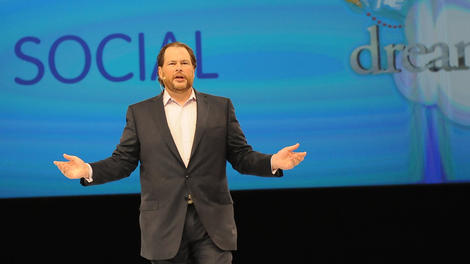
Salesforce.com has launched a tool designed for businesses looking to connect with customers and customer data via wearable devices. The Salesforce Wear Developer Pack allows businesses to create applications on wearable devices such as Fitbit, Google Glass and Samsung Gear 2, among others.
The Wear Developer Pack allows businesses to build applications that can adapt to different device architectures, user experiences and data flows, Salesforce said in a statement. Philips Healthcare Information Services & Solutions is listed as a launch partner for the Wear Developer Pack, which can be used to create service apps, data analytics apps and real-time alert apps, among other uses.
Salesforce says the tool will enable businesses to connect to customer data on wearable devices in order to deliver customized journeys while consumers are within a physical location. The CRM company also said developers can create alerts that go directly to a wearable device, which will allow employees in meetings to avoid inelegantly checking smartphones or laptops mid-conversation.
Salesforce1
As of today, more than 1.5 million Salesforce1 developers will now have access to the Wear Developer Pack. Salesforce is building support for the following devices:- Android Wear
- ARM
- Fitbit
- Google Glass
- Myo from Thalmic
- Nymi from Bionym
- OMsignal
- Pebble
- Philips
- Samsung Gear 2

Read More ...
Review: Sony Xperia M2

Introduction
Given the critical acclaim that the newly launched Sony Xperia Z2 has received, it is vital that Sony follows up with equally impressive mid range handsets if it is to compete with Apple and Samsung. Enter the Sony Xperia M2.Not too long ago it seemed that Sony might have been out of the mobile running. Shoot forward to 2014 and Sony has established itself at the top, although the Japanese firm has yet to firmly prove itself with a truly decent midrange handset. Could things be about to change with the Xperia M2?
At first glance the Xperia M2 seems like a respectable proposition; a quad-core processor, 8MP camera and 4G LTE support, wrapped in a chassis that looks oddly familiar all for £230 (about $385, AU$415) or free on two year contracts starting at around £13 per month.
This means that the Sony handset has a tough fight on its hands, facing off against the newly relaunched 4G Moto G, as well as the Samsung Galaxy Ace 3, EE Kestrel and the OnePlus One, all of which come in with a similarly low price tag.
The competition is fierce then, but with the same Sony Omnibalance design aesthetics that has graced its recent flagships the Xperia M2 certainly stands out. This could really help the M2 succeed where the Xperia SP failed.
Sony could be criticised for its almost minimalist approach, but I have grown fond of the more industrial design nature that accompanies Sony handsets.

The large 4.8-inch screen dominates proceedings, packed with 540 x 960 pixels. This seems a little disappointing as the 229ppi pixel desnity is by no means razor sharp, although I never found the lack of pixels to be too much of a sticking point.
It should be noted though that the 4.5-inch Moto G comes in with a HD 720 x 1280 screen, so would be a better choice for those intent on watching a lot of movies or for heavy mobile gamers.
Back to the design I feel that the language of the Xperia M2 is far more reminiscent of the original Xperia Z flagship, albeit one fashioned out of plastic rather than glass and metal.

The plastic construction helps to keep the weight of the 139.7 x 71.1 x 8.6mm frame down to only 148g, although the M2 still has a reassuring heft behind it.
Over the course of my time with the Sony Xperia M2 though, I found that the shiny plastic back was extremely prone to fingerprints and it wasn't long before minor scratches became noticeable.
Along the base of the M2 you'll find the external speaker in the same place as on the Xperia Z. Those with a good memory will remember that this was a bit of a problem for the Z, especially when watching movies.

Although Sony has taken note of this and corrected it on the Xperia Z2, the problem persists here. Being seated at the bottom means that holding the M2 in landscape for movie watching causes the sound to feel distorted coming in just one ear.
While in portrait for gaming I found that my thumb was covering the speaker giving a heavily muffled sound.
Elsewhere the Sony design is evident with the large power/lock key sat in the middle of the right side of the Xperia M2, with the microSIM and microSD slots hidden at the top end behind a small plastic cover. The volume rocker and dedicated camera button sit towards the bottom.

Hiding the SIM and SD slot might appear to be a hint that the Xperia M2 has taken notes from its bigger brother in terms of water and dust resistance, although this isn't the case. I found this very disappointing, as it would certainly have given the M2 an edge over its nearest rivals.
On the other side of the handset is an uncovered microUSB port leaving the headphone port to sit along the top.
Interestingly there is a notification light that shows up just to the left of the speaker. This illuminates while the M2 is on charge, as well as when you have a text message. However I found that it only lit up once rather than repetitively and is so small it's almost unnoticeable.

At the base of the screen is another light, very discretely hidden. This light seems even more pointless as the only time I saw it light up was when a call was coming in, and given that the M2 spent most of its time in my pocket it wasn't seen.
Packed behind the screen is a 1.2GHz quad-core Snapdragon 400 processor backed up with 1GB RAM and 8GB of internal storage.
Despite the microSD support I was disappointed to find that only 5GB of the internal space was accessible. A 2300mAh battery is also included to power the M2.

An 8MP camera has been fitted to the back, carrying the same app features that can be found on the Xperia Z range. Round the front is a far more modest VGA camera for those desperate to take a self-portrait.
On paper the Sony Xperia M2 paints an interesting picture for itself, but the specs can only ever paint half the picture. Can the M2 live up to these high expectations?
Key features
Unsurprisingly Sony is marketing the Xperia M2 as a cut-down version of its Xperia Z2 flagship, retaining all the key features but at a much more acceptable price tag.This includes the camera, although heavily cut down from the 20.7MP offering that graced the Xperia Z1, Z1 Compact and Xperia Z2. Instead Sony has put in an 8MP sensor, backed up with an LED flash.
The big talking point I have found with Sony Xperia cameras is the app itself. Sony has clearly given the camera a lot of attention, making it a much nicer and more complete app than that offered by its Samsung rivals.

This is about where the compliments stop though, as I found that the images captured by the 8MP sensor weren't anywhere near as crisp as I expected.
On the surface they look clear and crisp, but any amount of zooming in highlights some pixilation and noise that I wouldn't expect from such a sensor.
Sony is also keen to talk about the 4.8-inch qHD screen, highlighting not only the inclusion of Sony's TV expertise but also the size. It seems odd that Sony would call 4.8 inches the perfect size for entertainment given that the more expensive flagship is actually 5.2 inches.

I agree with Sony on the size though. For those that are finding the rise of phablets to be a little daunting the 4.8-inch screen is perfectly sized. You are able to hit the entire screen one handed with relative ease while also making the M2 the right size to sit in your pocket.
As for the resolution, I am a little more sceptical. Given that Motorola has been able to pack in a HD screen for the same price tag I was a little disheartened. The lack of pixels became a little more apparent while texting, as the text felt a little fuzzy throughout, with movie watching also slightly hampered.
That said viewing angles are certainly impressive.

Finally Sony is also keen to point out the inclusion of Qualcommm's Snapdragon 400 SoC, with its quad-core CPU clocked at 1.2GHz.
I found this meant that the Sony Xperia M2 ran very smoothly throughout. When swiping between home screens or gaming I never felt the Xperia M2 was struggling.
Given that this is the same CPU that sits behind the EE Kestrel, a handset that I found to be a little sluggish at times, I was impressed by the work that Sony has put into ensuring the M2 was smooth throughout.
Interface and performance
When it comes to choosing an Android phone, the interface can prove to be as important as the specs. First and foremost is the version of Android, currently Android 4.3 Jelly Bean on the Sony Xperia M2, although an update to KitKat is thankfully on the cards.
Sony's UI doesn't come with any particular name, where Samsung has TouchWiz, HTC has Sense and Huawei has Emotion UI, it's something that Sony might want to look at.
It's hardly important, but makes it easier to talk about to friends. I'm voting for Sony Superawesome UI.
That's because the Sony UI is a highly polished interface, one that doesn't feel overbearing at any point, being far subtle in its implementation than Sense and TouchWiz. This allows the Android OS to shine through.
Moving around the Sony Xperia M2 was easy, unsurprisingly not as fast as the higher end flagships but at no point did I feel that I was left waiting.
The GeekBench 3 scores averaged at around 1060. This means that it comes in slightly slower than the Moto G, and oddly lower than the EE Kestrel that ships with the same internal power.
From the notifications bar, with its minimalist approach to the quick power toggles, to the app drawer and its menu located to the far left, it's clear that Sony has given the UI a lot of thought.

Themes can be applied to give the Xperia M2 a new feel, changing the background as well as the accent colours throughout the device.
Should you feel that none of the ones on the M2 are to your liking, you can always download more. I found the Spider-man one particularly tempting.
The lock screen has an interesting shutter effect as you swipe up and down, and also houses the ability to turn widgets on/off. This is something that is becoming popular among manufacturers, and while I can see the appeal it isn't something that I found myself using an awful lot.
Side swiping the top of the lock screen accesses these widgets, with a swipe right bringing up widgets and a swipe left loading up the camera.
I found this particularly confusing as the Sony Xperia M2 comes with a dedicated camera button that instantly loads the camera. This space on the lock screen could definitely have been used more efficiently.
One area that I think Samsung has gotten it right with TouchWiz is the ability to launch into a multi window view, allowing the easy copying of text between, for example, an internet browser and the SMS app. Sony has implemented a similar idea, but it feels a little less useful.
By pressing the multi-tasking Android key you're greeted at the bottom with the ability to load up floating windows. These include a browser, screen shot key and a calculator. More apps are available to download from the Google Play Store should you desire them.
Battery life
The batteries that currently sit behind smartphones are always under heavy scrutiny, with the minimum expectation of a day's worth of use.In order to make sure that this target is achieved, Sony has given the Xperia M2 a 2300mAh battery. This sits within the sealed chassis so there is no way to swap out the battery when it dies.

This shouldn't prove too much of a problem though given the availability of portable power packs.
Sony appears to have been very generous with its battery here, given that the Moto G ships with a 2070mAh battery and the EE Kestrel with only 2000mAh. The Samsung Galaxy Ace 3 lags even further behind at only 1800mAh for the LTE version.
I am pleased to report that the battery held up very well during day-to-day use. Due to the novelty of the camera app I found that I kept pulling the Xperia M2 out of my pocket to show people and snap silly photos.
The Sony Xperia M2 was also connected to rather patchy Wi-Fi signal meaning that the drain was also a little higher, yet I was able to make it through a full day of work with about 35% left.
This is backed up further by our battery tests of mobile gaming and video watching, two of the biggest battery drains.

Putting the Xperia M2 through its paces during gaming gave only a 2% drain after 10 minutes. This was tested with both the BBC's Top Gear Race the Stig game (a game based heavily on Subway Surfers or Sonic Dash), as well as running the more traditional Temple Run 2.
This is in stark comparison to the EE Kestrel. Given that the Kestrel has the same resolution screen, the same powered internals and a relatively similar battery size it was shocking to see that the Sony managed to outperform the Huawei built handset.
Even running the standard TechRadar battery test of a 90-minute HD video (run at full brightness of 320 LUX) showed some really impressive results. Where the Kestrel drained by 30% and the Moto G by 33%, the Xperia M2 lost a mere 17% battery life.
Sony helps push the battery even further with its quick toggles in the notifications bar, as well as its stamina mode found within the settings menu.
The essentials
When it comes to using the Sony Xperia M2 in day-to-day use, there are certain things that you just want to know work properly.Like many I have found that the phone function of smartphones now seems to have taken a back seat, meaning that I consider the keyboard to be one of the most important features. It runs throughout the entire phone being used in every single app that requires even the most basic of text input.

This is one area that Sony really excels in, with one of the best pre-installed keyboards that I have come across.
Turning the device on from the beginning and firing up the keyboard immediately gives decent results, although take a second to hit the little magic wand key and you'll be presented with the ability to personalise how you want the keyboard to operate.
Of all the options my favourite is the ability to long press to get symbols up, as it makes typing a lot faster and a lot easier.
You can also personalise your corrections by connecting the Xperia keyboard to your Gmail, Facebook and Twitter accounts so it can learn your writing style. Swype style messaging is also supported.
This keyboard is likely to be used most prominently within the SMS and email apps, the latter of which is handled ably by both the Gmail app and a native email app. Both email apps come well stocked with every feature that you can expect, providing nothing extra of note.

The SMS app is slightly different though. I'm a big fan of the SMS app as it makes the most of your contact's pictures, putting them beside the messages. This makes the app very visually appealing and is a big step up over the stock offering.
Of course the Xperia M2 still doubles up as a more traditional phone. The main things to make the phone a success are call quality, signal holding and contact integration.
The former was very good; I was able to hear what was being said and vice versa.
The nifty feature of being able to text or recall a contact after hanging up if you've forgotten something if unfortunately not present here, but there is nothing that ultimately lets the M2 down.
Signal holding was also equally impressive, picking up signal in every area that it was expected although still suffered from the same network black spots that I am used to.
In terms of contact integration I was also pleased with Sony's efforts. Smart dialling is available through the phone app, the main way that Sony wants you to locate contacts. To access the contacts app you have to navigate to the app drawer.

Here you're presented with a list of contacts in much the same way as HTC Sense, with the same alphabet on the right as found on TouchWiz. Integration with social media is handled well, pulling in contacts from WhatsApp, Facebook and Twitter and combining them well, although I feel HTC handles this slightly better.
The other major area that needs to be looked at while checking out a modern smartphone is the browser. This is an area where I must applaud Sony as the Japanese firm offers only one app; Google Chrome.
This not only makes the most of the 4G speeds, but also doesn't suffer thanks to the quad-core CPU underneath making sure that even the TechRadar site fully loaded in 6 seconds, having been visible after only 3.
In all the Xperia M2 handles everything that you would expect from a smartphone very well, not leaving you wanting for something any more powerful.
Camera
The camera app is one that Sony has given a lot of attention, perhaps because of the massive sensors that are packed into the high-end Xperia flagship devices like the Xperia Z2.When it comes to camera apps Sony's is one of, if not the best, app currently sitting on a smartphone. Samsung has undoubtedly put a lot of effort into its camera app, but Sony trumps it here thanks to a variety of impressive features.
The auto mode focuses fast, easily recognising the level of focus needed for each particular shot. This means that for general day-to-day snapping you won't have to fiddle throughout the various settings menus, although that option is there for those that want to take a little more control.
Unfortunately I can see those that will want to take a little more control opting for a different camera phone.
This is in part due to the fact that the Sony Xperia M2 only comes packing an 8MP camera. Although it is important to remember that the Moto G, EE Kestrel and Galaxy Ace 3 all come with 5MP sensors.

Selecting a different mode from the button in the bottom right gives the option to select a few different apps. These include the Social Live app, Timeshift Burst, AR effect, Picture effect, Sweep Panorama and Portrait retouch. You can even add more apps from the Sony Select store by tapping the plus icon.
Of these, Social Live is perhaps the most interesting although the one that I see being used the least. It allows you to broadcast live video on Facebook, holding a live web chat that allows interaction with your friends.
Timeshift Burst is far more useful. This allows you to swipe through a whole raft of photos taken when you've only snapped the button just once. The Xperia M2 starts to record photos before you hit the shutter allowing you to go through and choose the one that is most in focus, helping to negate effects of motion blur.

AR and Picture effects are less useful although more fun and will certainly appeal to a younger audience. That's not to say an older audience won't enjoy them though, with Sony phones fast becoming known as the dinosaur amongst friends thanks to the dinosaur AR mode.
The Xperia M2 layers different scenes or image effects over your images, with the picture effects being the ones that are likely to populate Instagram or Facebook. Portrait retouch is also there to help produce better selfies, although the real time effects it produced were less than negligible.

This could possibly be attributed to the poor camera that has been placed on the front of the Xperia M2. I hate to be the bearer of bad news but a VGA camera just won't cut it in the modern smartphone market, especially amongst younger users that have taken to Snapchat as a primary means of communication.
Things are a little better round the back, with the 8MP sensor dwarfing the aforementioned 5MP sensors on the current competition.
Motorola, Samsung and Huawei can breathe a little easier though as the photo quality of the Xperia M2 is nothing short of abysmal.
For those that have read the Xperia Z Ultra review, this shouldn't be too much of a surprise. Despite its 8 million pixels, the Xperia M2 only operates well in perfect lighting conditions. Taking the M2 into a small walled garden in overcast conditions really left the camera struggling.
Camera samples

Click here for the full res image

Click here for the full res image

Click here for the full res image

Click here for the full res image

Click here for the full res image

Click here for the full res image

Click here for the full res image

Click here for the full res image

Click here for the full res image

Click here for the full res image
Media
Given Sony's impressive background in media, Betamax aside, it should be no surprise that the Sony Xperia M2 has a rich media centre built into it.
Before I move onto the apps that Sony has provided, I feel it's important to quickly point out the hardware on offer here, the first of which is that 4.8-inch screen that dominates the front of the Xperia M2.
As I have mentioned a few times, the screen delivers a decent performance but is by no means the best screen on the market. The Moto G comes packed with a 720p screen that easily bests the Xperia M2 thanks to a much higher resolution.
Secondly is the position of the speaker. This is something that I commented on earlier as it suffers from the exact same problems that beset the original Sony Xperia Z.
With the Xperia M2 sat on the side blasting out audio it isn't a problem, but fire up a movie and with all the sound reaching one ear it is very off putting.
Hold the handset in portrait to play a few games and the L shape I make with my thumb and index finger to support the M2 perfectly cover up the speaker.

Playback through the external speaker also offered a few problems, suffering quite badly from a lack of bass. ClearAudio+, located behind a settings menu, helped a little to solve the problem and I was a little surprised to find that it wasn't turned on by default.
Looking at the apps and it's a different story. Just like the camera app, Sony has clearly given the media apps a lot of thought. They are, again like the camera, perhaps the best native apps found on a smartphone.
Within the Walkman app there is a rather obvious push towards Sony's own media services, the Music Unlimited app coming built in rather than operating as a standalone app.
This might prove a little annoying to users that just want to be able to fire up the app and select their music but I didn't find it too intrusive.
A small icon in the lower right of the tile denotes the Music Unlimited services. For those that really don't want to see them, a quick look in the settings menu allows you to hide these tiles.
DLNA streaming is also available, allowing you to "throw" media to an enabled device such as a smart TV.

The movies app has also had a decent look although there is a lot less emphasis on Sony's Video Unlimited app, something that baffled me a little bit.
One of the greatest features of the app is that it plays a small snippet of the last video that you were watching. It's only a small touch but the movement makes the app feel a lot more interactive and alive. Sound settings can also be toggled.
For gaming, the majority of games can be downloaded from the Google Play Store. Sony is keen to push the PlayStation connection thanks to a PlayStation mobile store, although strangely I found that there wasn't a single app or game on the store. Hopefully this is just a glitch with the review handset rather than the store as a whole.
The PlayStation store connection is also furthered with the ability to connect a DualShock 3 controller, the same one found on the PlayStation 3, in order to get a better mobile gaming experience.
This isn't something I see being used a lot, although could really take off given a decent variety of apps and TVs to connect to.
Comparison
Moto G 4G
In terms of high-end yet affordable handsets there has been one stand out in recent times, the Motorola Moto G. To take it one step further the newly purchased mobile manufacturer has recently added a 4G version that comes complete with a microSD slot.Inside the Motorola handset is another Qualcomm Snapdragon 400 SoC meaning the same quad-core 1.2GHz CPU and Adreno 305 GPU to keep everything running smoothly. It also comes with a pure Android KitKat experience, with the Xperia M2 currently sitting on Jelly Bean.

Motorola's handset also has the Sony beaten hands down on the screen, packing in a HD 720p screen with a pixel density of 326ppi. In terms of specs the camera is a little worse off in the Moto though, coming only with a 5MP rear sensor although the forward facing snapper does come with 1.3MP rather than the VGA resolution of the Sony.
In a final battle the Sony wins hands down with a battery test, outperforming the Motorola. Where the Motorola recorded an average 33% drop the Sony achieved a mere 17%.
EE Kestrel
Perhaps one of Sony's biggest rivals in the UK is the EE Kestrel. Contract prices are remarkably similar, although PAYG and SIM-free prices differ quite considerably with the Sony coming in about twice the price.This makes the Huawei built Kestrel a much better alternative for those after a cheap second or festival phone, as well as a more ideal handset choice for a much younger audience.

Internally there is little difference between the Kestrel and the Sony Xperia M2; both come with a quad-core CPU clocked at 1.2GHz, both have a 540 x 960 qHD screen and both run Android 4.3 Jelly Bean.
That said, the lower cost means a smaller 5MP camera, a lower build quality and smaller battery that drained 3 times faster than the Sony while mobile gaming.
Samsung Galaxy Ace 3
Despite the fact that the Galaxy Ace 3 is now almost a year old, it is currently on sale at a very similar price tag to the Sony Xperia M2.Like the other two comparison handsets the Galaxy Ace 3 comes packing 4G LTE technology inside, although with less overall power. Samsung's offering comes packing a dual-core rather than quad-core CPU although is also clocked at 1.2GHz, but does come with the same Adreno 305 GPU.

Elsewhere is a smaller 5MP camera, lower res 480 x 800 4-inch screen with a density of 233ppi and Android 4.2 Jelly Bean. There have been hints that the Galaxy Ace 3 will get KitKat, although that is looking unlikely.
The smaller screen does mean that the Ace 3 is much smaller than the other handsets here, as well as coming in a lot lighter at only 119.5g.
Verdict
Given the critical success of Sony's Xperia Z2 flagship it is vital that the Japanese mobile firm maintains momentum with a strong showing in the mid range market, exactly where the Xperia M2 rolls up.We liked
The design of any phone will always be entirely subjective but I am a big fan of the way Sony has taken its flagship Omnibalance design and carried that down to the cheaper end. The curved sides make the Xperia M2 easy to hold, and the plastic chassis felt fitting of the lower price tag.The battery was also really impressive. It could be a mixture of a bigger battery and lower screen resolution but to beat the Moto G by almost double in the standard battery test is outstanding.
Gaming tests also showed a minor drop. I'd feel very confident that I'd not miss a thing due to dead batteries with the M2 in my pocket.
Finally comes a shout to Sony's UI, complete with the impressive camera and media apps. Each manufacturer puts its own stamp on Android, with Sense and TouchWiz both being impressive in their own rights but Sony's UI feels very polished. Its minimalist approach will appeal to many, feeling far subtler than others. All it needs now is a catchy name.
We disliked
One of my biggest fears with the Sony Xperia M2 is just how easy it seemed to scratch the back of the handset. Despite not being thrown around, with just the one drop off the arm of the sofa onto a carpeted floor and being kept in my pocket, a number or minor scratches have appeared. It's by no means a deal breaker but a brand new phone shouldn't be this scuffed.The speaker should also get a look at. Sony did so well to move the base mounted speaker on its Xperia Z2 handset but it hasn't changed this design flaw on the Xperia M2. It makes watching movies feel very disjointed and when holding the M2 in portrait I found that I was all too often covering it up.
Finally is the camera. I heaped a lot of praise on the app itself because Sony has clearly taken a lot of time and given a lot of thought to it. However, the sensor behind it doesn't back it up. This is a real shame as it is a complete let down to the phone. The front facing sensor is also a massive let down; VGA just doesn't cut it anymore.
Verdict
Sony has launched its Xperia M2 handset into a very crowded market, one populated with ageing flagships and some already impressive new handsets. Can it build upon the success that the Xperia Z2 has brought though?In short, yes, but that is the really short answer. I can't help but feel that Sony's impressive flagship offering sets a very high standard, and will leave consumers expecting a little more from Sony's midrange offering.
Strong competition from the cheaper EE Kestrel in the UK and the slightly better equipped Moto G will leave many looking elsewhere but Sony has given the Xperia M2 more than enough to warrant a second look, especially if you're going to be signing up to a two year contract.

Read More ...
Samsung's foldable tablet could be in our hands early 2015

Earlier this year, Samsung took TechRadar behind the scenes to show us some of the bendable tablet and phone prototypes that it's currently toying with.
Among those was a particularly intriguing tablet that could be folded twice thanks to its flexible display. A Samsung spokesperson told TechRadar at the time that the company was aiming to get some of its foldable portfolio on the market by the end of 2015, but it now sounds like it could be even earlier than that.
A new report by Daum (spotted by Android Authority) states that Samsung is aiming for a commercial launch of a folding tablet in early 2015.
The tablet will feature a full HD OLED display that's between 8 and 9 inches and will indeed fold twice, leaving us to suspect this was the very device we played with.
Beyond the gimmick Galaxy
The flexible screen market is an unproven ground, but a fully foldable tablet obviously has a lot more sense behind it than the Galaxy Round, the latter of which doesn't really seem to serve a purpose.There's a very good chance that Samsung could launch this tablet in limited numbers to start with so as to not gamble too much on a flexible future.
- Meet the middle child in our Galaxy Tab Pro 10.1 review

Read More ...
Updated: Samsung Galaxy Note 4 release date, news and rumors

Note 4 release date, screen, power and camera
As inevitably as summer follows spring the Samsung Galaxy Note 4 will follow the Samsung Galaxy Note 3.The Note 3 came out last year and the Galaxy S5 has already broken cover, so it seems safe to assume that the Samsung Galaxy Note 4 will arrive before too long.
So far news and rumors about the device are pretty slim on the ground. We expect they'll pick up steam once the dust has settled on the Galaxy S5, but we have heard a few things, from the possibility of a 64-bit processor, to a curved screen and more.
Cut to the chase
What is it? Samsung's fourth gen phablet
When's it out? Probably September
What will it cost? A lot, even more than the pricey Galaxy S5
What is it? Samsung's fourth gen phablet
When's it out? Probably September
What will it cost? A lot, even more than the pricey Galaxy S5
Samsung Galaxy Note 4 release date and price
So when will the Samsung Galaxy Note 4 be released? Apparently Samsung mobile chief Lee Young Hee told Bloomberg that it would be launched in the second half of 2014, while the Korea Times claims it has been told the Note 4 will arrive at the IFA show in Berlin. Android Geek's sources get even more specific, claiming it will arrive on September 3.The previous three Galaxy Note smartphones were announced in the first week of September at the IFA show in Berlin, so there's a fair chance we'll see the new one then too. In fact with no conflicting rumors we'd say that IFA will almost certainly be used as a platform to launch the Galaxy Note 4.
There's been absolutely nothing about the price yet, but this is a premium phone so expect it to be at least £550 / $800. Better start saving.
Samsung Galaxy Note 4 screen
First up, screen size. The original Note rocked 5.3 inches, the Note 2 showed up with a 5.5-inch display and the Note 3 pushed things to 5.7 inches.Going by this logic the Galaxy Note 4 should come with a 5.9-inch display, which would see it match the HTC One Max and LG G Pro 2, while still falling short of the 6.4-inch Sony Xperia Z Ultra.
Samsung's done well with Super AMOLED, but there's a suggestion that it might ditch the technology for the Galaxy Note 4 and use PLS LCD instead.
A report by ET News claims that Samsung is "considering" using the technology in future as it could apparently cut costs by as much as 20% by doing so. But Samsung is apparently only considering it in any case, so there's hope for Super AMOLED yet.

A more positive potential change is that the Galaxy Note 4 might have a curved screen, but not in the way we've seen on the Galaxy Round. Instead the bulk of the display would be flat but it would curve off at the edges so that there'd be no visible bezel.
This particular rumor stems from a patent filed by Samsung late last year, which shows a very Note-like device as the subject.
Surprisingly that rumor is gaining some steam, as ZDNet Korea is reporting that the Galaxy Note 4 might have a flexible display and that "industry insiders" claim it will have a three-sided screen, presumably allowing you to read notifications and the like from side on.
A new Samsung patent also shows a device with a curved, multi-sided screen and interestingly it looks as if certain apps or on-screen buttons, such as camera, email, settings and the back button will be lined up down one of the sides, giving you easy access to them without taking up valuable screen real estate on the front of the phone.

If this pans out then it will be a big change for Samsung's phablet flagship, but that's not necessarily a bad thing.
Recently a Samsung executive confirmed that the company is thinking about a flexible display. So in other words nothing is set in stone one way or another, but there is at least a chance that we'll get a curvy screen.
As for the resolution, nothing's known yet, but with 2K (Quad HD) displays starting to emerge we wouldn't be surprised if one found its way onto the Galaxy Note 4, especially as it's likely to be one of the few phones with a screen big enough to benefit from it.
Samsung Galaxy Note 4 power
So far Apple is the only mobile phone maker that's using 64-bit chips, but Samsung is set on joining the party. Kyushik Hong, vp of marketing for Samsung's LSI business told CNET that Samsung is "very actively working" on 64-bit right now.So, while we didn't see one in the Galaxy S5 there's a chance that 64-bit chips might make their Android debut in the Galaxy Note 4.
The Note series is usually where we see a bump up in RAM from Samsung, and with the Note 3 packing 3GB we could well see the Galaxy Note 4 rock up with a tasty 4GB under the hood.
Both the Note 3 and Galaxy S5 sport the Adreno 330 GPU, which leaves the door wide open for the Samsung Galaxy Note 4 to enter the fray with a beefed up graphical processor - could this be the best gaming mobile to date?
Samsung Galaxy Note 4 camera
The Galaxy Note 4 might be in for quite the camera upgrade, as a report from ET News claims that Samsung is developing a 20MP sensor, due for release in the second half of the year.
With the Galaxy Note 4 also due to be released later in the year it seems a prime candidate to benefit from the lens.
The Galaxy Note 3 only has a 13 megapixel camera and even the Samsung Galaxy S5 has just a 16 megapixel sensor, so the Note 4 could be Samsung's best camera phone yet.
Note 4 OS, S Pen, chassis and what we want
Samsung Galaxy Note 4 operating system
The Samsung Galaxy Note 4 will almost certainly run the latest version of Android, which is likely to still be Android KitKat.Presumably it will also be overlaid with some version of Samsung's TouchWiz interface, likely to be very similar in form to the new version which adorns the Galaxy S5.
Samsung Galaxy Note 4 chassis
Samsung is still banging the plastic form factor drum with its latest flagship, the Samsung Galaxy S5, arriving clad in the not-so-premium material.With this is mind we're not holding out too much hope for an all-metal body on the Galaxy Note 4, although Samsung has reportedly promised a "new form factor" for its next phablet offering.
We'd put money on the Samsung Galaxy Note 4 being dust and water proof (or at least resistant). It's a key feature of the Galaxy S5 so it's unlikely that Samsung would remove it for the Note 4.
Besides which Samsung has reportedly ordered a large batch of High performance In-Mold antennas, which are easy to waterproof. They didn't arrive in time to be used in the Galaxy S5 but Samsung must be planning on using them in something, so the Galaxy Note 4 seems likely.
Samsung Galaxy Note 4 wirerless charging
Wireless charging is starting to pick up steam but it's yet to hit the big leagues. That could all change with the Samsung Galaxy Note 4 as ET News reports that Samsung is working on an improved resonance charging solution.Magnetic resonance charging is a kind where the device doesn't even need to be in contact with the charger, so it could have some extremely versatile applications.
There's no confirmation that Samsung's take on the technology will make it into the Galaxy Note 4 but according to the report it might be ready to go by the middle of the year, which would make the Galaxy Note 4 a good test bed for it.
S Pen improvements
It's the S Pen which makes the Galaxy Note series stand out from the rest of the supersized smartphone crowd and with every iteration we see Samsung upgrade its capabilities in some way.The inclusion of a stylus with a fully touchscreen smartphone is still a little hit and miss, but we're coming to accept the S Pen and the additional features it provides.

The image filed with the application shows it being used to 'call mom' by, well, writing 'call mom' on the lock screen, but it's easy to see how it could be used to open apps, send text messages and more.
What we'd like to see
As rumors are pretty thin on the ground at the moment here are a few things that we'd like to see from the Samsung Galaxy Note 4.1. A premium build
Samsung has stubbornly refused to move away from plastic handsets and the faux-leather of the Galaxy Note 3 just doesn't cut it.The perforated skin of the Galaxy S5 is a little better but we want to see a truly premium design from Samsung. Something which would make even HTC and Apple look twice.
2. Less bloatware
Sometimes less is more and that's a lesson which Samsung could do with learning. A cleaner, stripped back interface with less half baked features and more focus on the important things would suit us fine.Or the option to just hide/delete any of theunnecessary apps like you can in HTC's Sense overlay - it's not much to ask.
3. A better battery
Samsung is leading the way with battery technology and the Galaxy S5 in particular looks like it should have a lot of staying power, but there's still room for improvement.It might not be realistic to expect all week battery life from the Galaxy Note 4 but we want it to at least be able to last several days of moderate use between charges.
4. A QHD display
We're seeing smartphones boasting 1440 x 2560 resolutions over in China, but on screens ranging from 4 to 5 inches the improvements aren't exactly easy to see.The big winner when it comes to Quad HD (also dubbed 2K) displays are phablets as their increased screen size makes the result appear a lot more impressive - and let's face it, we'd all much rather watch a movie on a Note rather than an iPhone.

Read More ...
In Depth: 10 games from E3 that will make you want a PS4 AND an Xbox One

The games we can't wait to play on PS4
Microsoft, Sony, Ubisoft and EA have all taken to the E3 2014 showfloor, which means that, with just Nintendo left to fire, we're over the biggest hump of the LA gaming convention.The battle between Xbox One and PS4 was always set to be fierce and both Sony and Microsoft have come out guns blazing, but whichever of the two titans comes out on top at the end of the day, the gamers are the real winners.
This year's lineup has been strong, but there's a good chance that many of you are still holding back on making that leap into the promised land of 'next-gen'. We've rounded up 10 games from this year's E3 that should finally persuade you to make the upgrade.
Uncharted 4: A Thief's End (PS4)
The Uncharted series has become one of the biggest reasons to buy a PlayStation - the lure of Nate and Naughty Dog has created one perfect game (Uncharted 2) and two effortlessly playable ones. Uncharted 4: A Thief's End's teaser was a lot darker in tone, acting more like a showcase of the PS4's graphical talents than a glimpse into what we can expect, but it was still packed with gorgeous graphics.
Question marks remain over the franchise due to the loss of its head writer Amy Hennig but with the team behind The Last Of Us at the helm, it's still in great hands.
When to expect it? end of 2015
Destiny (PS4, Xbox One)
There's always a bit of oneupmanship with E3 and this time it was Sony getting one over Microsoft with Destiny - a game Activision Blizzard has confirmed will come out on the PS4 before Xbox One.
The alpha version of Destiny will be available to PS4 owners as soon a 12 June, while Xbox One users will have to wait until 17 July for the beta version.
Destiny has so far cost $500 million to develop and is a first-person shooter set in a sci-fi open world that is said to be 'alive' by its makers - in that events will happen that haven't been planned by the developers. And that doesn't include the inevitable crashing of servers when Destiny finally goes live.
When to expect it? September 2014
LittleBigPlanet 3 (PS4)
LBP was a breath of fresh air when it was released for the PS3 way back in 2008. Since then it has spawned an excellent sequel, a brilliant PS Vita port and a Mario Kart rip-off.
The third installment looks to be more of the same, offering up new characters to help in SackBoy's adventures - each with their own special moves to help you get through the thousands of user-generated levels. SackBoy may look worn out, but the PS4 is set to breathe new life into the cute and ever-customisable character.
When to expect it? November 2014
Grim Fandango (PS4, PS Vita)
LucasArts may have bit the dust but its legacy remains thanks to news that Grim Fandango is coming in remastered form to the PS4 and PS Vita, courtesy of original game project leader Tim Schafer.
His studio Double Fine Productions is adding spit and polish to one of the strangest and most iconic games of all time. In short: if you haven't yet got a PS Vita, this is the game that will change your mind.
When to expect it? TBC - Schafer is unfortunately being the ultimate tease
No Man's Sky (PS4)
Hello Games' sci-fi title looks stupidly ambitious, which is why we can barely believe that most of the development was done by a team of just four people. No Man's Sky offers a procedurally-generated 'infinite' universe packed with a vast variety of planets and wildlife, and you can jump from one world to the other, via spacecraft, with no loading times.
Every player will start on a different planet, from which they'll begin their journey of exploration through some gorgeous-looking environs. Think Proteus but with guns and dinosaurs. And spaceships. Awesome, awesome spaceships.
When to expect it? TBC
The games we can't wait to play on Xbox One
Halo Master Chief Collection (Xbox One)
Ok so it's not a new game, but this restoration of the Halo franchise just did the Xbox One a huge favour.
The Master Chief Collection contains remastered versions of the first four Master Chief games - that includes Halo 2 Anniversay Edition - so if clinging onto the past was your reason for not putting down money for an Xbox One, you now have four fewer excuses to make the leap.
When to expect it? November 11, 2014
Rise of the Tomb Raider (Xbox One, PS4)
Do the movie and gaming industries have some insider bet where they try to slip "Rise" into as many titles as possible? Rise of the Tomb Raider might not have the most inspired name but it's promising greatness nonetheless.
The trailer shows Lara in therapy after the events of 2013's Tomb Raider, a nice touch that keeps in check with the more character-driven direction of Crystal Dynamics' reboot. But it's not long before we're being chased by bears, shooting people with crossbows and loitering in caves - all the usual Crofty stuff. Lara will be schlepping the globe big time, exploring locations that are described as some of the "most beautifully hostile places on earth."
When to expect it? End of 2015 for this one. Sorry.
GTA V (PS4, Xbox One)
We all knew it was coming but few would have predicted just how beautiful GTA V remastered would look. The trailer was a perfect reveal, beginning with lush fields filled with deer and eventually panning to a near-nude Trevor waking from his stupor in the long grass.
GTA V is already a brilliant game and the fact that existing saves will port over to the redux means there's all the more reason to drop into Los Santos once more.
When to expect it? Fall / Autumn 2014
Sunset Overdrive (Xbox One)
Mutants, grunge rock, and a tongue firmly lodged in the cheek - Sunset Overdrive has the makings of a great game. Insomniac Games' title is perhaps best described as Tony Hawk Pro Skater mixed with Ratchet and Clank and a few more guns.
It wasn't hard for Sunset Overdrive to grasp our curiousity amid all the doom-and-gloom shooters, but it was when the words "eight-player co-op" were uttered that Insomniac had our full attention.
When to expect it? October 28, 2014
Inside (Xbox One, others TBC)
Microsoft made sure to go big on the indies this year, but the entry from Limbo developer Playdead eclipsed all others. In fact, eclipsed is the perfect word for this dark and moody platformer which puts you in control of a boy through an eerie world of, well, we're not quite sure.
Perhaps it's a little too Limbo-esque in some ways, but we suspect we'll be eating those words when Playdead starts raking in the awards. The game will be an Xbox One timed-exclusive, so expect to see it on PC (and probably PS4) further down the line.
When to expect it? Early 2015 for the Xbox One, other platforms to follow later

Read More ...
Tech savvy firms urged to switch to .uk as Stephen Fry leads the charge

UK domain registry Nominet has rolled out a new .uk top-level domain (TLD) for people and businesses wanting a "shorter, sharper" domain.
More than 10 million .co.uk domain holders will be given five years to decide whether they want to sign up for a .uk address or stick with what they have.
British actor and Twitter extrordinaire Stephen Fry is one of the first to have made the switch from .com to .uk.
In a statement, Nominet said it expects that the new domain, which will coexist with the existing .co.uk address, will appeal to UK-based "tech-savvy entrepreneurs and start-up businesses".
Its launch brings the UK in line with other countries including Ireland, France and Germany, which have launched the TLDs .ie, .fr and .de respectively.

Read More ...
Industry voice: 3 security considerations for transferring files

In 2013, the average cost of cyber-crime in the U.S. was $11.6 million (per company, per year), primarily due to the loss or misuse of information assets, with companies across the US falling victim to an average of two successful attacks per week, according to the Ponemon Institute.
With cyber-threats constantly evolving and becoming more sophisticated, one word can shift the balance of power when it comes to file transfer. The difference between file transfer and managed file transfer is critical for businesses.
The challenge in applying advanced technology to manage file transfers lies in distinguishing between document-centric, collaborative file sharing and automated or partially-automated file transfer to support business processes, often in a compliant fashion.
So what do businesses need to know when managing and transferring information today?
When it comes to the flow of information across an organization and between business partners, end user expectations are being set by the likes of Apple and Amazon for great user experience, while a company's IT staff is expected to deliver high availability, off-hours support, security and compliance enablement in addition to the exceptional user experience, on budget.This expectation vs. reality tension leads to larger security challenges when employees, including IT staff, start using unapproved applications that don't meet the security requirements of the organization or the industry. Further, for information associated with critical business processes, using these unapproved methods often create holes in these systems.
Regardless of efforts to enhance security, Enterprise File Sync and Share (EFSS) services, are still end-user focused, resulting in enterprise IT managers often blocking EFSS services from corporate domains to maintain control of their networks and business processes.
Managed File Transfer (MFT) solutions on the other hand can support file sharing with added security, visibility and integration with business processes, and excel with automated system-to-system file processing capabilities. Some MFT solutions don't have explicit transfer size limits, whereas EFSS solutions have file size limits that often don't support many large file types, including high definition videos and design files.
To manage information securely and address the balance between end users and IT, organizations need to consider these three foundations for file transfer processes:
1. Automation: The adoption of automation into file transfer processes with a centralized MFT system eliminates the time and costs involved in manual file transfer processes and maintain efficiency across the organization.2. Security: Generating links to shared documents, as EFSS vendors have done in the past, can put sensitive data at risk through several basic flaws. Once a link is generated to only be accessible by trusted sources, it can actually be viewed by unintended third parties. MFT solutions that rely on scalability, reliability, failover and disaster recovery will strengthen the security posture of IT processes.
3. Compliance: The management of file transfer processes on a DIY basis is no longer viable for most organizations, given the increasingly vast amount of data transferred within mid-size to large companies. File transfer is also just one part of the equation for companies conducting business internally and with partners. If they have to demonstrate compliance for all exchanges and interactions, there could be hundreds of configuration controls they would need to manage and monitor on an ongoing basis to do so. Compliant service providers reduce the complexity and maintain security within the organization.
Managing information is a legacy IT headache and can expose businesses to security threats. Organizations should consider a comprehensive system in which a broad range of end-user and system-to-system workflows are supported, with tools that connect trading partners, empower mobile workers, automate local and remote transfer processes, and intelligently and securely control the flow of content.

Read More ...
Review: Toshiba BDX1500

Design, performance and picture quality
One of the cheapest Blu-ray players around, we spotted the BDX1500 selling as little as for UK£49 (only in the UK). For that kind of money, you don't get much.What you do get is a disc spinner that only plays, err, discs, which is increasingly unheard of. There's not a single nod to the modern age of 'smart' Blu-ray machines, save for a less-than-sophisticated media player that plays digital music, video and photo files from a USB stick.
Measuring 270 x 39 x 200mm and weighing in at 930g, the BDX1500 is a truly tiny Blu-ray deck. The front hosts a pop-out tray in its left-hand half, while the rest of the gloss black plastic front panel is taken up by a USB slot and buttons for disc eject, stop, pause/play and a great big standby switch. It glows as a red ring when the BDX1500 is in standby, and in green when it's on.
It's a nice, flat, simple, traditional design that is compact and easy to slot into any home entertainment scenario. The majority of the product is finished in matte plastic, so it doesn't soak-up quite as many fingerprints as rival decks so often do.

Around the rear is a sole HDMI slot and a coaxial digital audio output, which is a nice bonus for anyone with a slightly older AV amplifier or home cinema system that doesn't include HDMI inputs.
The basic menus are easy to live with, but the way they're controlled is not. The remote control, which runs off a single AAA battery, is a flimsy affair and its buttons are both too small and in many cases don't depress properly. The result is that some commands need to be repeated, so much so that we wondered whether the (brand new) battery was dead.

It goes without saying on a £49 Blu-ray player that the BDX1500 doesn't spin 3D Blu-ray discs, though it can handle – and upscale at least to a basic level – DVDs.
It also plays CD, while Blu-ray-grade surround sound codecs cover only Dolby Digital Plus, Dolby True HD, and the rumbly DTS Master Audio codec.

The BDX1500 is one of three Toshiba Blu-ray decks in the UK market in 2014. Just above the BDX1500 sits the BDX2500, which sells for around UK£76 (US$58, about $62) and adds the basic Toshiba Smart service. With apps including YouTube, BBC iPlayer and Netflix, the BDX2500 gets online – and even trades files with smartphones and tablets – but doesn't have Wi-Fi.
For that you'll have to head for the BDX5500 (UK£150, US$169.99), which also includes touch-sensitive controls and 3D disc playback, though it's more notable for its unique square design. Looking more like a router than a Blu-ray player, the light silver BDX2500 has a slot-in drive for discs and the choice of either horizontal or vertical positioning.
Performance
With no apps or online dimension, the BDX1500's user interface is bare bones indeed. Set against a blue screen with a carousel of icons, options include just photo, music, video, disc and settings menus. This is simple stuff indeed.
Though it's built around rudimentary software that necessitates choosing either the photo, music or video options from the main menu before selecting a source (disc or USB), file support is good. PNG, GIF and JPEG photos are displayed – including the option for a simple slideshow – as well as MP3, M4A, WMA and WAV music files, which ought to be OK for most users. Video files played by the BDX1500 include MKV, AVI, Xvid, AVC HD, MPEG, MP4 and MOV.
Picture quality
For all of its basic build and lack of apps, the BDX1500 provides mostly impressive images from Blu-ray discs. Images from our test disc The Wolf of Wall Street on 2D Blu-ray are highly detailed with an overall very clean presentation. There's no suggestion of picture noise or polarisation in block of colours, while skin tones are natural-looking with a colour palette that's a touch on the warm side.
However, there are slight issues with image quality. As Belfort drives away from his estate during the The Wolf of Wall Street the trees in the background visibly judder, and another sequence sees a yellow taxi streak through a shot. These are giveaways that BDX1500 lacks a dedicated 1080p/24p playback mode.
Digital files suffer from the same slight issues in an otherwise good all-round treatment that sees DVDs upscaled reasonably well – and certainly enough to fit a bigscreen TV.
Verdict
Without 3D, apps or an online dimension, the BDX1500 is about as simple as it gets in the world of Blu-ray. Is there a place for a Blu-ray that does nothing except spin discs and play files from a USB stick? Yes, there is – and the BDX1500 manages a respectable performance for a small spend.We liked
Perhaps the most simple Blu-ray player of all – and so cheap that there now doesn't seem any point investing in a DVD player – Toshiba's BDX1500's no-fuss design is one we like; its compact size is practical and its matte black finish sensible. Picture quality, too, is pretty reasonably and certainly good enough for most living rooms. The BDX1500 plays myriad files from a USB stick, too, including AVI, MKV, JPEG and MP3.We disliked
The remote control is a little flimsy, with very small buttons that don't depress properly. This results in having to repeatedly press commands, leaving you wondering about whether the battery is dead.Sadly, there's no way around that problem because there's no virtual version available on an app.
Without support for 3D Blu-ray discs and lacking nay kind of online dimension, there's little to get excited about on the BDX1500.
Final verdict
Can a 2D-only Blu-ray player with no hint of streaming video apps really cut it in the 'smart' market? It has no apps, no networking, the remote is poor and it can't play 3D Blu-ray discs, yet there's something about Toshiba's bare bones BDX1500 – other than its low price – that we like. It's not for avid streamers nor videophiles after the perfect picture, but as a small and easy to house disc spinner for a bedroom, the BDX1500 won't disappoint.
Read More ...
TechRadar Deals: Wolfenstein: The New Order for PS4 down to just £32.95, plus get a 100W sub for only £32.99

If you've been waiting to get your hands on Wolfenstein: The New Order for PS4 then now's the time: it's reduced when you buy it from The Game Collection via their eEbay outlet.
As yet we haven't seen any similarly deep discounts on other platforms but we'll keep our eyes peeled for the next best deal.
Next up, if you're looking for an economical way to boost your TV's bass then this Vibe Optisound TV 6 100W subwoofer is reduced to just £32.99, also at Ebay. It works with your existing TV speakers or any set-top box via optical and RCA inputs.

Read More ...
Available Tags:CEO , TV , TV , LG , Google , Steam , keyboard , other , Sony , tablet , Samsung , Galaxy , rumors , PS4 , Xbox , security , Toshiba , TechRadar ,


No comments:
Post a Comment