

AMD Lists New Kaveri Desktop Processors
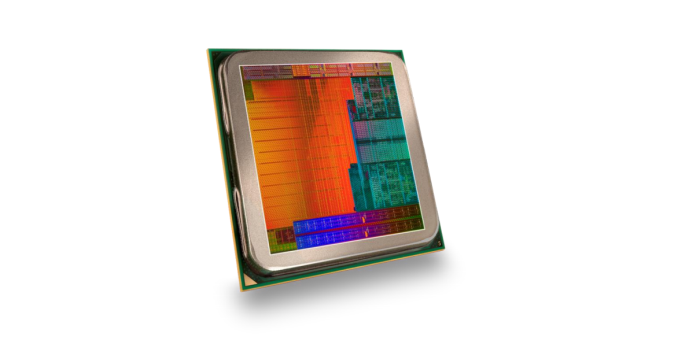
AMD Kaveri APUs |
|||||||
New |
Model |
Modules/ Threads |
Base MHz/ Turbo |
L2 Cache |
GPU |
Memory |
TDP |
A10-7850K |
2 / 4 |
3.7 / 4.0 |
4 MB |
R7, 512 @ 720 MHz |
DDR3-2133 |
95W |
|
New |
A10 PRO-7850B |
2 / 4 |
3.7 / 4.0 |
4 MB |
R7, 512 @ 720 MHz |
DDR3-2133 |
95W |
New |
A10-7800 |
2 / 4 |
3.5 / 3.9 |
4 MB |
R7, 512 @ 720 MHz |
DDR3-2133 |
65W / 45W |
New |
A10 PRO-7800B |
2 / 4 |
3.5 / 3.9 |
4 MB |
R7, 512 @ 720 MHz |
DDR3-2133 |
65W / 35W |
A10-7700K |
2 / 4 |
3.4 / 3.8 |
4 MB |
R7, 384 @ 720 MHz |
DDR3-2133 |
65W / 45W |
|
'New' |
A8-7600 |
2 / 4 |
3.1 / 3.8 |
4 MB |
R7, 384 @ 720 MHz |
DDR3-2133 |
65W / 45W |
New |
A8 PRO-7600B |
2 / 4 |
3.1 / 3.8 |
4 MB |
R7, 384 @ 720 MHz |
DDR3-2133 |
65W / 35W |
New |
A6-7400K |
1 / 2 |
3.5 / 3.9 |
1 MB |
R5, 256 @ 756 MHz |
DDR3-1866 |
65W / 45W |
New |
A6 PRO-7400B |
1 / 2 |
3.5 / 3.9 |
1 MB |
R5, 256 @ 756 MHz |
DDR3-1866 |
65W / 35W |
There are some interesting trends – the dual module APUs all support DDR3-2133 natively, compared to the single module members that are only DDR3-1866. Similarly the dual module versions have 384-512 GPU cores and are classified as R7 series graphics, whereas the single module APUs have 256 cores and are labelled R5. These latter APUs do have a higher GPU frequency however.
All of the APUs will turbo around the 3.8 GHz to 4.0 GHz range, with varying base frequencies. The consumer APUs will be able to configure TDP from 65W to 45W, whereas the PRO models also have a 35W selection point, which will decrease the maximum turbo frequency.
Exact release date and pricing has not yet been announced. Read our Kaveri launch review with the A10-7850K and A8-7600 here.
Source: CPU-World
Read More ...
The Intel SSD DC P3700 Review Part 2: NVMe on Client Workloads
Last week we reviewed Intel's first NVMe drive: the DC P3700. Based on a modified version of the controller in Intel's SSD DC S3700/S3500, the P3700 moves to an 18-channel design, drops internal latencies and sheds SATA for a native PCIe interface. The result is an extremely high performance enterprise SSD that delivers a combination of high bandwidth and very low latencies, across a wide span of queue depths.
Although Intel's SSD DC P3700 is clearly targeted at the enterprise, the drive will be priced quite aggressively at $3/GB. Furthermore, Intel will be using the same controller and firmware architecture in two other, lower cost derivatives (P3500/P3600). In light of Intel's positioning of the P3xxx family, a number of you asked for us to run the drive through our standard client SSD workload. We didn't have the time to do that before Computex, but it was the first thing I did upon my return. If you aren't familiar with the P3700 I'd recommend reading the initial review, but otherwise let's look at how it performs as a client drive.
Read More ...
Corsair Vengeance K70 Keyboard Review
Mechanical keyboards are far from a new technology; they are decades old and some of the first mass produced personal computers came with mechanical keyboards back in the 1980's. After a transition to lower cost keyboards during, however, many users have rediscovered the benefits of high quality mechanical switches, and today they are among the most widely promoted type of keyboard. Today we have Corsair's latest Vengeance K70 in for testing. Note that this is not the version with RGB LED backlighting, but it is the same core design; read on for our full review.
Read More ...
Computex 2014 ADATA Booth Tour: 2TB SX930 SSD, Micro SSDs, Power Banks, Wireless Chargers and More
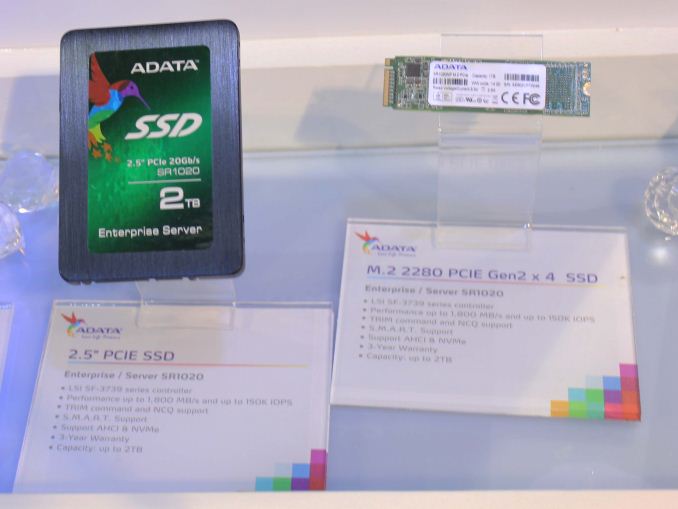
ADATA didn't announce any new SSDs at Computex but they had all their existing products along with some unreleased drives shown at the booth. The most interesting drive was the SR1020, which is an SF3700 based enterprise drive that comes in capacities of up to 2TB and is rated at up to 1,800MB/s and 150K IOPS. Both 2.5" and M.2 2280 versions will be available with similar specs (yes, 2TB in M.2) but ADATA couldn't really share much details due to LSI's strict policies with the SF3700. I'm guessing the drive uses 128Gbit Micron NAND to achieve the high capacity but we will have the full details once the release gets closes (should still be Q4).
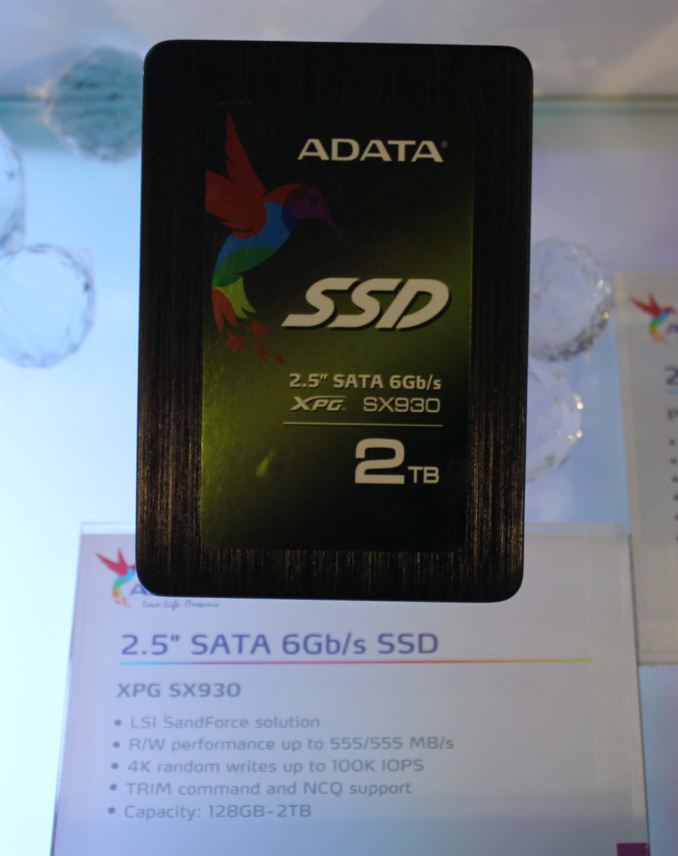

ADATA also had a working SF3700 sample in one of their demo systems but they were not allowed to run any benchmarks on the drive. Looks like LSI has been able to tune down the power consumption as the drive no longer needs a heatsink for the controller.


Thats it for the ADATA booth tour. I'll be covering ADATA's plans for DDR4 and SSDs in more detail over the next couple of weeks because I had a meeting with their president along with the directors of their memory and SSD departments, so stay tuned for more content!
Read More ...
Computex 2014: Kingston Announces V310 & HyperX Fury SSDs, Shows SF3700 And Marvell PCIe SSDs
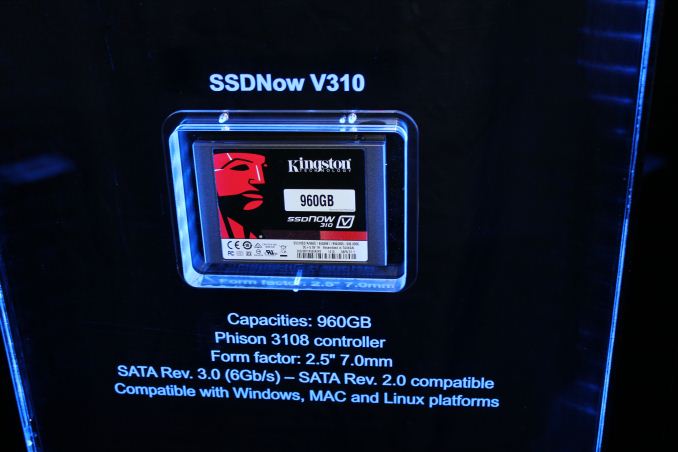
Unlike many manufacturers, Kingston didn’t have a booth or suite at Computex but instead they held a one-day HyperX gaming event on the top floor of one of Taipei’s many skyscrapers. In addition to the gaming event, Kingston had several upcoming products to show, ranging from Phison based V310 SSDs to PCIe 2.0 x4 SSD with a brand new Marvell controller.
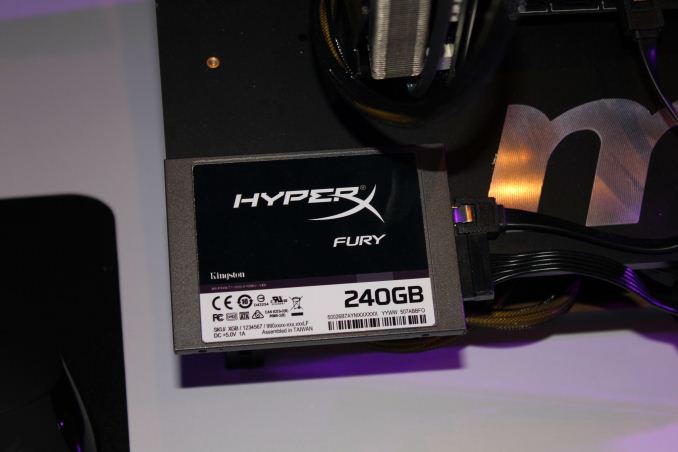
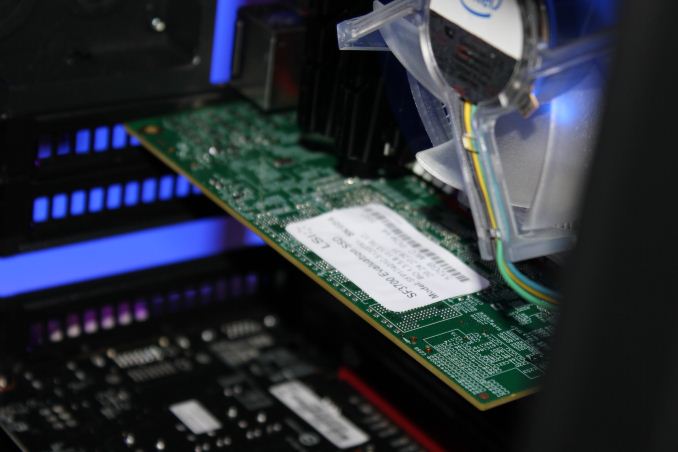
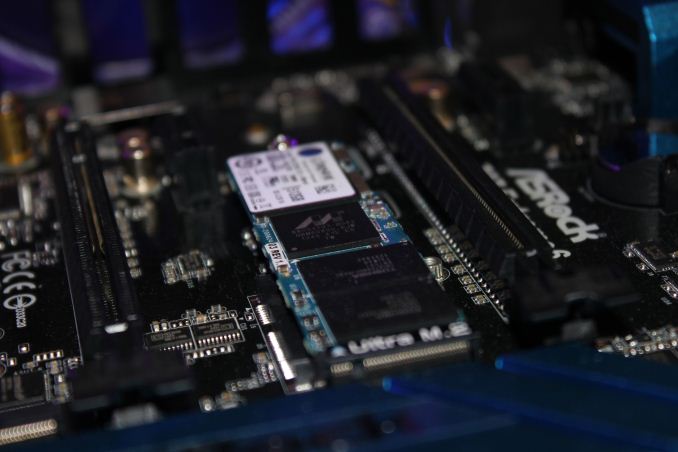
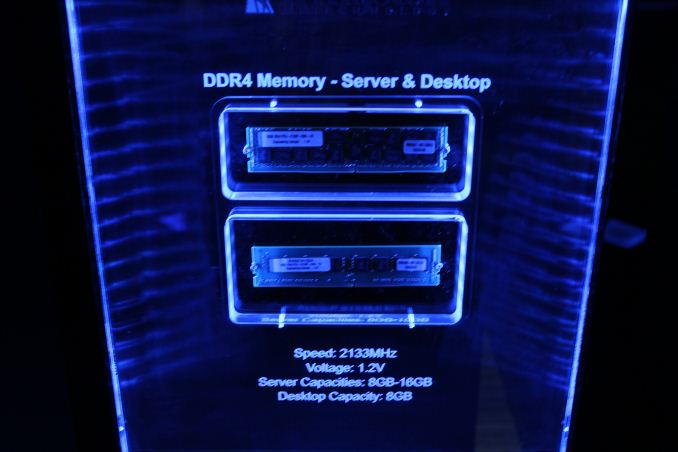
Read More ...
Computex 2014: Plextor Announces M6 Pro SSD & PlexTurbo Software

In addition to just re-showing the CES products, Plextor also had something new to demo. PlexTurbo is software similar to Samsung's RAPID function and it leverages system RAM to increase transfer speeds. The key difference to RAPID is that PlexTurbo uses RAM as a write-through cache, which means that the data is written to both RAM and the SSD simultaneously. Samsung's approach is write-back based, which is more vulnerable to data loss as initially the data is only written to the cache and is not written to the SSD until the data in the cache is about to be modified. Both RAPID and PlexTurbo are limited to 1GB of RAM to ensure that the system still has enough RAM for standard operation.
Plextor showed me a video of their internal testing comparing PlexTurbo with RAPID in case the drive is disconnected right after writing something. In the test Plextor used a Word file that they modified and unplugged the drive after saving the file. With RAPID the modifications were lost, whereas thanks to Plextor's use of write-through cache the modifications remained intact. Of course this test was designed to promote PlexTurbo’s approach and we will have to run our own tests to confirm the results but it looks like Plextor’s approach might be a bit more reliable than Samsung’s.
PlexTurbo also appears to provide better performance as I saw speeds of up to 10GB/s when the settings were optimised for the software. Plextor did admit that the first generation of PlexTurbo was mostly designed for high benchmark scores, so I would take the results with a grain of salt, but the next version should focus more in actual real world performance. Either way, it’s certainly interesting to see how PlexTurbo stands up with RAPID. With SATA 6Gbps it’s getting very hard to differentiate in the market and providing software like PlexTurbo is one of the only ways, even though the real world gains are debatable.


Read More ...
Google Buys Skybox, Nets HD Imaging Capabilities
Satellites could one day double to provide internet and self-aware algorithms to Google's customers
Read More ...
FAA Issues First Commercial License for Unmanned Aerial Vehicles
BP secure the first license for its AeroVironment Puma AE drone
Read More ...
Study: Video Will Account to 84 Percent of U.S. Internet Traffic by 2018
New study by Cisco suggests the need to include net neutrality exemptions for medical and industrial traffic
Read More ...
Honeywell Responds to Nest with Its Own Stylish, "Lyric" Thermostat
Honeywell's new Lyric thermostat takes direct aim at Nest
Read More ...
Stop-Gap "Halo: The Master Chief Collection" Drops in Nov.; Halo 5 in 2015
Collection will include Ridley Scott produced live-action short series and HD makeovers of Halo 1-4
Read More ...
Developer Finds iPad "Split Screen" Code in iOS 8 Beta
Feature was left out of the WWDC keynote, but could find its way into the public release of iOS 8
Read More ...
Windows Phone 8.1 Update 1: Making Touchless Gestures More Than a Gimmick
Windows Phone 8.1 updates are expected to roll out by August, but what comes next is even more exciting
Read More ...
Following Verizon's Lawsuit Threat, Netflix to End ISP “Speed Warnings” on June 16
Netflix says that its “transparency campaign” will end later this month
Read More ...
Report: Start Menu Revival is Delayed Until Windows 9
Microsoft's reenvisioning of the classic Desktop Mode Start Menu may be taking longer than expected
Read More ...
64GB Moto X Now Available for $449
Motorola introduces a 64GB variant of the Moto X
Read More ...
Microsoft's $399 Xbox One Goes on Sale Without Kinect
Xbox One leaves the Kinect camera accessory behind in exchange for a lower price tag
Read More ...
Quick Note: Buy an Android Smartphone, Tablet from AT&T and Get $50 Google Play Credit
New promotion isn't available to those who buy a phone off contract
Read More ...
Available Tags:AMD , Intel , SSD , Keyboard , Wireless , Kingston , Google , iPad , iOS , Windows Phone , Windows Phone 8 , Windows , Xbox , Kinect , Android , Tablet ,


No comments:
Post a Comment