

EVGA Supernova 850 G2 Power Supply Review
Diversification is an important strategy for any company that wants to continue to grow, especially if their initial market segments become saturated. We've seen motherboard, memory, and now graphics cards manufacturers all look to diversify into other markets, and while some results have been less impressive than others, it's critical for companies to look for additional revenue streams. Today we're reviewing EVGA's effort to deliver a high performance power supply, the Supernova 850 G2. This isn't EVGA's first PSU, as they first started shipping PSUs over a year ago, but they're still a relative newcomer to the PSU scene. They have a competitive product on paper, so read on to find out more about the quality, performance, and features of the Supernova 850 G2.
Read More ...
Humble Bundle Weekly: RPG Maker

Pay What You Want ($1)
RPG Maker VX Ace (~75%, 03/2012): not a game as such but a tool that can be used to create games. The graphics created won’t be cutting edge, but you can still have a lot of fun regardless.
RPM Maker DLC Bundle #1 (N/A, 2012): more assets – tiles, music, sound effects – to use in the games you create. Includes Royal Tiles Resource Pack, Adventurer's Journey (music), Tyler Warren's First 50 Battler Pack (50 monsters), and Modern Day Music Mini Pack.
Skyborn (N/A, 03/2012): only two reviews have been submitted, but both liked this JRPG-style game.
Sweet Lily Dreams (N/A, 12/2011): created with an earlier version of RPG Maker (I think?)
RPG Maker Free Games Bundle #1 (N/A): includes four games – In Search of Immortality, Legionwood: The Tale of Two Swords, Star Stealing Prince, and The Reconstruction. These games are all free downloads so basically this is a collection of “best of” games built with RPG Maker.
RPG Maker XP (N/A, 09/2005): an earlier version of the RPG Maker software. Why do you need this if you have VX Ace? Don't ask me!
RPG Maker - Exclusive Resource Pack (N/A, 05/2014): exclusive content just for the Humble Bundle – 21 new songs as well as reworked RTP town tilesets.
RPG Maker DLC Bundle #2 (N/A, 2013): more DLC packs for content creators – includes High Fantasy Resource Pack 1, High Fantasy Main Party Pack 1, Futuristic Tiles Resource Pack, Inspirational Music Pack Volume 1, Tyler Warren's Second 50 Battler Pack, and the Humble-exclusive Steampunk/Western Preview (for an upcoming DLC).
To The Moon (81%, 09/2012): fulfill a dying man’s last wish as you travel through his memories.
Deadly Sin 2 (N/A, 05/2014): from the same team that created Skyborn (Dancing Dragon Games), this 20-30 hour epic has you trying to save the Empire. Note that this is not a direct sequel to Deadly Sin and can be played on its own.
RPG Maker Free Games Bundle #2 (N/A): as above, there are four games here that are available elsewhere for free, specifically Homework Salesman, I Miss the Sunrise, Aetherion, and Visions and Voices.
Game Character Hub (N/A, 05/2014): a software package to help you manage and edit 2D art assets.
RPG Maker DLC Bundle #3 (N/A, 2014): four more DLC packs with two Humble exclusives – Zombie Survival Graphic Pack, Rural Farm Tiles Resource Pack, Joel Steudler's All Music Sampler (mix of tracks from his RPG Maker releases), and Best of Member+ Resource Sampler (a Humble exclusive providing a collection of resources normally only available through the Member+ program).
Legionwood 2: Rise of the Eternal's Realm (N/A, 05/2014): a brand new release and the sequel to the earlier free game.
You can even create commercial games using the various tools, though I’m not sure how viable it is to sell such games unless you invest a lot of time and effort into creating your own assets – otherwise, it’s just new stories with the same graphics and music that numerous other RPG Maker games have used. Another complaint I have with the created games is that the support for different resolutions appears limited (or perhaps non-existent), so many of the games look like they're 1024x768 affairs.
If I were 25 years younger I’d probably be a lot more interested in trying my hand at RPG Maker, but as a grumpy old man I’m more content to see what others have created. To that end, if you’re just looking for free RPGs, you could skip this bundle and instead check out all of the free content on RPGMaker.net. The quality of user-created content will vary greatly, naturally, and the best games will likely end up turning into commercial products I suspect. Even if you just want games, though, at $12 for the entire bundle you still pick up more than $50 worth of games (i.e. not counting the free games), so that’s not bad. Now if I just had about 500 hours to spend playing nothing but classic-style RPGs, I’d be set!
On a similar note, if you’re looking for tools to create your own games, Bundle Stars has a similar deal running for Axis Game Factory Premium for $9.99 with ~13 days remaining.


Read More ...
AMD AM1 Kabini Part 2: Athlon 5350/5150 and Sempron 3850/2650 Tested
While there is a lot of focus on the mainstream desktop market, we hastily reviewed the new entrant to the low-end socketed desktop from AMD, the AM1 Kabini platform back in April. Since then we have acquired all four members of the family, the two quad core Athlon APUs and the two Sempron APUs, for testing. AMD’s movement into the upgradable tablet/desktop crossover arena is an interesting one for sure.
Read More ...
Best Video Cards: May 2014

All things considered, the month of May has been extremely quiet in the land of video cards, even more so than April was. There have been no major product announcements from either NVIDIA or AMD this month – not that we were expecting any – so the video card market hasn’t shifted very much this month compared to the bigger shake-ups of earlier this year.
The biggest change for the month of May is of course yesterday’s launch of NVIDIA’s GeForce GTX Titan Z. NVIDIA’s dual-GPU flagship was originally scheduled for release in April but was held back to this month, leaving a two month gap between announcement and release. The GTX Titan Z is NVIDIA’s most powerful card yet, packing a pair of GK110 GPUs and all functionality/features that have come to define the Titan family, including uncapped (1/3rd rate) double precision performance and 6GB of VRAM per GPU. However at a price tag of $3000 it’s twice the price of AMD’s dual-GPU R9 295X2 and NVIDIA’s more conservative power consumption and clockspeeds means that they face an uphill battle when it comes to performance. Consequently the GTX Titan Z is being treated as more a compute card than a gaming card by NVIDIA, though if money is no object then it can certainly be used as a gaming card and should turn in some impressive numbers.

Meanwhile in the AMD camp, AMD engaged in a small amount of price shuffling among their product lineup. The Radeon R9 280, AMD’s 200 series analogue to the venerable 7950, received a price cut from $279 to $249. This is in reflection of the fact that the R9 280X has been back to its MSRP for several weeks now, and as such the R9 280 was overpriced for the performance it delivered. At $249 it’s now much more competitive against AMD’s other cards while capable of putting the squeeze on NVIDIA’s GeForce GTX 760.

Anyhow, market summaries behind us, let’s look at individual recommendations. As always, we’ve laid out our ideas of price/performance bands and recommendations in our table below, with our full explanations and alternative options to follow. As always, in the case of the sub-$200 market it’s worth pointing out that there’s a video card for roughly every $10, so picking a good video card is as much about budgets as it is finding an especially strong card.
May 2014 GPU Performance Guide |
||||
Performance Band |
Price Range |
Recommendation |
||
1080p (Low) |
$99-$149 |
AMD Radeon R7 250X |
||
1080p (Med) |
$149-$199
|
|||
1080p (High) |
$199-$289
|
|||
1440p (Med) |
$289-$399
|
|||
1440p (High) |
$399-$649
|
|||
1440p (Max) |
$649+
|
|||
4K/Multi-Monitor (High) |
$1000+
|
|||
Meanwhile for gamers looking for high quality 1080p gaming or better, that will start at $199. Going above that will find cards that are good for 1440p, 4K, and multi-monitor, while going below that will find cards that will require some quality sacrifices to stay at 1080p.
Finally, this guide is by its very nature weighted towards price/performance, based on the passionate feedback we've received from our readers. For these purposes we consider AMD and NVIDIA to be equal from a functionality and compatibility perspective, but it should be said that both parties have been building out their ecosystem in the past year, and this will only continue to grow as the two companies try to differentiate themselves. So if you need or want functionality beyond the core functionality a video card offers, it may be worthwhile to familiarize yourself with the NVIDIA and AMD ecosystems, including Gameworks, Eyefinity, Mantle, GeForce Experience, and more.
Budget (<$100): AMD Radeon R7 250X
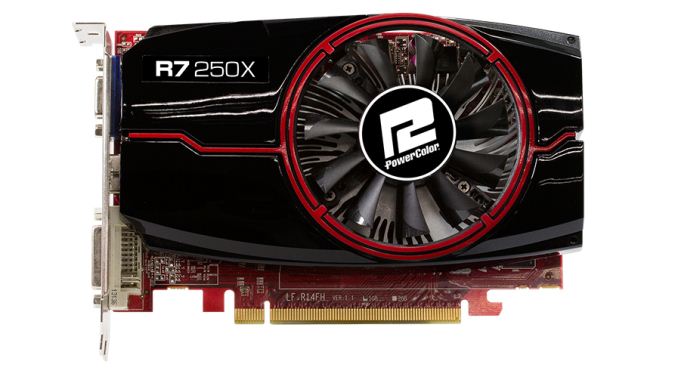
From a performance perspective the R7 250X isn’t going to quite hit the sweet spot we outlined earlier, but for those gamers on a strict budget it will get the job done. In the long run it should be able to run most games even at 1080p with medium-to-low settings, along with keeping texture quality down a notch to account for its 1GB of VRAM. Battlefield, GRID 2, and even Total War: Rome 2 can easily hum along on this card at decent settings at 1080p.
Mainstream Sweet Spot ($149): AMD Radeon R7 265
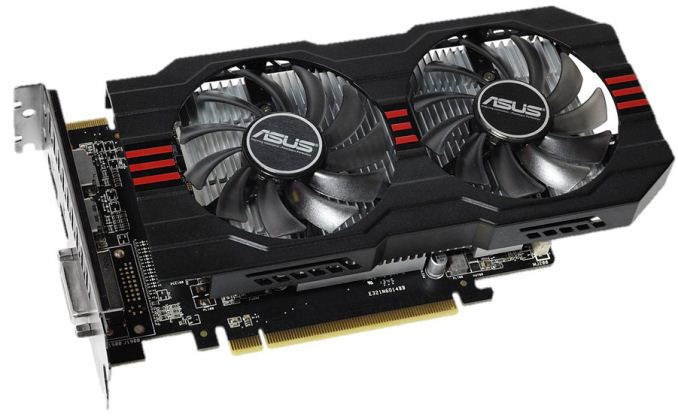
From a performance standpoint the R7 265 not going to be able to play every game at 1080p at high settings, but it will be fast enough for medium-to-high depending on the game, which will be a couple of notches higher than what the $99 cards can do. Meanwhile the 2GB of VRAM will mean that future games shouldn’t bog down the card quite as badly; higher graphical fidelity games will slow it down like any other card, but there’s enough VRAM to keep up with the demands of higher resolution textures and heavier use of intermediate buffers.
Runner Up: NVIDIA GeForce GTX 750 Ti
Since our guide is written on the assumption that most buyers are looking for the best performance at a given price, our performance recommendations are going to favor AMD, as they’re more willing to throw out larger, more powerful cards at these sub-$200 price bands. NVIDIA on the other hand isn’t going to be able to directly compete with AMD on price/performance, but they do have an interesting technological advantage for gamers who are looking for a different set of tradeoffs.
Powered by NVIDIA's Maxwell architecture, at a price these days closer to $139 NVIDIA is able to offer the GeForce GTX 750 Ti, a card that offers performance approaching the R7 265 with much lower power consumption. The GTX 750 Ti is a sub-75W card – no external PCIe power connector required – allowing it to work in cases and systems where the near-150W R7 265 cannot, while also offering the improved acoustics that come with lower power consumption. So for OEM upgrades, or buyers just looking for something even quieter, the GTX 750 Ti is an interesting alternative. Just keep in mind that from a performance standpoint it trails the R7 265 by about 16%.
There are also a pair of options between here and the R7 250X that bear mentioning. The R7 260X resides at $119 and goes up against the GTX 750, with AMD holding a performance advantage similar to R7 265 vs. GTX 750 Ti. We’re fans of stepping up to the greater performance of the $149 cards, but it does offer something between $99 and $149.
1080p Gaming ($199): AMD Radeon R9 270X

To that end there is no better card at this price than AMD’s Radeon R9 270X. Based on a fully enabled Pitcairn GPU, 270X easily offers the most bang for the buck, keeping its distance from NVIDIA’s GTX 660 while getting rather close to NVIDIA’s more expensive GeForce GTX 760.
Runner Up: NVIDIA GeForce GTX 760: The GeForce GTX 760 offers a small but respectable performance lead over the Radeon R9 270X. On a pure price/performance basis it doesn’t make sense, and at $239 sits in an odd gap between the $199 270X and the more capable $300 cards, but for buyers looking for an NVIDIA option for 1080p gaming around $199, it’s as close as one can get.
Reaching For 1440p ($289): AMD Radeon R9 280X
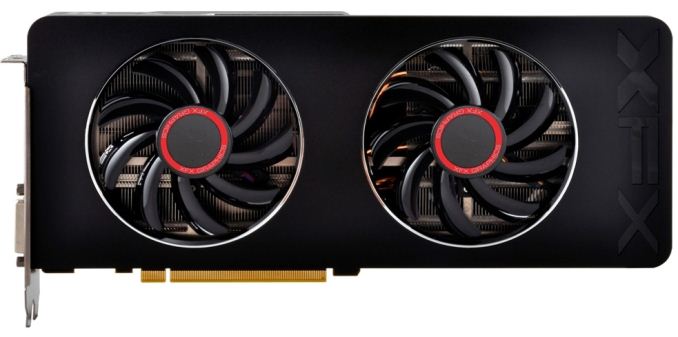
For the 280X we’re looking at a card that will straddle 1080p and 1440p. It’s not quite fast enough to work in every game at 1440p with high quality settings, but it’s fast enough for many of them. Alternatively, it’s fast enough at 1080p that it has no problem at that resolution with everything cranked up, including high levels of MSAA and even SSAA in some games. Plus the 3GB of VRAM will give it some leg room if future games demand more VRAM.
On a competitive basis the R9 280X performs very similarly to NVIDIA’s GeForce GTX 770, generally trailing by a few percent. However with AMD making the conscientious decision to undercut NVIDIA on pricing here, it gets our nod for this bracket.
Runner Up: NVIDIA GeForce GTX 770
NVIDIA’s counterpart to the R9 280X is the GeForce GTX 770. With the cheaper GTX 770 cards now available for around $319 it still holds a price premium over AMD, but less than it once was. The GTX 770 is ever so slightly faster than the 280X – leading by a few percent on average – which generally isn’t enough to offset the price difference, but it goes without saying that it leaves the two cards close. The GTX 770 is a perfectly practical alternative to the 280X in this case, trading a slightly higher price tag for entry into NVIDIA’s ecosystem, something that may become more important as G-Sync monitors are scheduled to become available next month.
Extreme Performance for Cheap ($399): AMD Radeon R9 290

As the vast majority of reference-style cards have gone out of circulation by now, there is thankfully a good selection of superior semi-custom and fully-custom cards at $399 (and sometimes on sale for even less). These cards offer all of the fantastic performance of the 290 without the noise or throttling drawbacks of the reference 290. Just keep in mind that all of these cards will be open air cooled cards that will want a case environment that can dissipate the additional 250W-300W of heat.
Extreme Performance with Refinement ($499): NVIDIA GeForce GTX 780
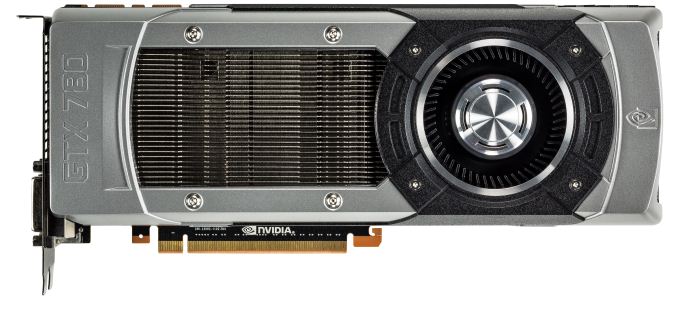
As an added bonus, even at the $499 base price this gets access to NVIDIA’s impressive metal shrouded blower, which in our tests is enough to keep noise levels under 50dB. So for gamers looking for a balance between performance, cooling effectiveness, and noise, the GTX 780 is a star. Meanwhile for gamers looking at open air coolers, GTX 780 cards with alternative coolers such as EVGA’s ACX cooler will find that the GTX 780 can be even quieter for the usual tradeoff between a blower and an open air cooler.
Runner Up: Radeon R9 290X
With prices on the R9 290X falling as low as $499 these days, the 290X has shifted over to being direct competition for the GTX 780. Like the R9 290 the supply of reference cards is nearly gone, so everything from top to bottom is an acoustically superior semi/fully-custom open air cooled card. Looking primarily at the cheapest cards – what are essentially near-reference in clockspeeds and features – the R9 290X puts up a good fight with the GTX 780, capable of edging it out at the same retail price. The only issue the 290X faces is that the 290 is so close in performance that it doesn’t have much of a lead here, making it harder to stand apart from the 290 and the GTX 780.
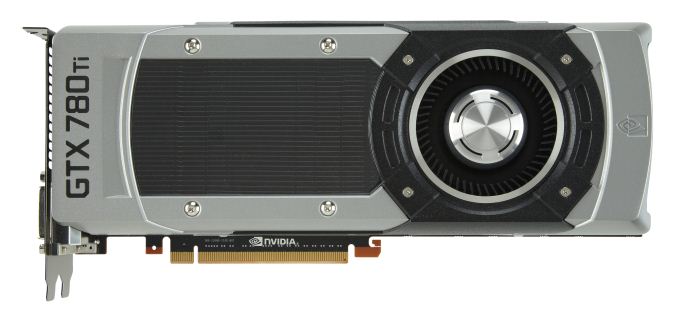
Taking the Single-GPU Crown For Gaming ($649): NVIDIA GeForce GTX 780 Ti
4K for Me ($1000+): 2x AMD Radeon R9 290X

Of course the Radeon R9 295X2 deserves a mention here. As we discussed in our recap of April, AMD’s recently launched dual-GPU flagship card offers all of the performance of the 290X in Crossfire with much better acoustics and in a smaller package. Since our guide is based first and foremost on price/performance our primary recommendation for this bracket is going to be the 290X CF, but if you can make the steep climb to $1500 the 295X2 and its liquid cooler is a very impressive product whose vastly improved acoustics make 295X2 a superior option to 290X CF.
Meanwhile the GTX 780 Ti in SLI is also going to be a viable alternative here. From a performance perspective it will trail the AMD setups by 5% or so at 4K, so while it can’t match the AMD setups hit-for-hit it doesn’t significantly fall behind, making it practical to get similar performance in the NVIDIA ecosystem. The catch is that at $1300 for the dual card setup it’s closer to the 295X2 than the 290X CF in price, so it doesn’t have a distinct sweet spot on price or acoustics like either AMD configuration. But unlike either AMD option, the GTX 780 Ti is available in a high quality blower configuration, allowing a 3rd option between the widely spaced open air cards of R9 290X and the unconventional CLLC of the R9 295X2.
Read More ...
AMD Posts Mantle Whitepaper

At 11 pages long the Mantle whitepaper offers a solid high level overview of the technology. In it AMD delves into further detail about several aspects of the API, without getting buried in the minutia of an API in a way that only seasoned programmers can appreciate. Among the subjects covered are Mantle's memory model, execution model, pipeline model, and the basic tenet of where low-level APIs can reduce overhead and improve performance over high level APIs.
The bulk of this information is a repeat from AMD’s earlier developer presentations, so we won’t spend any time going over the materials in-depth here, but for a more approachable look at the API from AMD’s perspective this is a great start.

Read More ...
Seagate Acquires SandForce From Avago/LSI

For Seagate this deal is a steal. Back in 2011, LSI paid $370 million ($332m in cash and $48m in stock) for SandForce alone and now Seagate is getting LSI's flash accelerator business for only $80 million more. Since Seagate doesn't have any SSD controller technology, this acquisition is huge for them because so far they have been relying on third parties for controllers and NAND. Without controller IP, it's relatively hard to be competitive in the SSD market because you can't differentiate your product. With SandForce Seagate will be able to become a serious player in the SSD space and I'm sure one of the reasons why Seagate had to act quickly is WD's recent acquisitions in the SSD industry (STEC, Virident & VeloBit).
It makes sense from Avago's angle too. I've been hearing that LSI/Avago hasn't been very happy about the SF3700 delays, so that might explain why the price seems a bit low. I'm also thinking that Avago was never interested in LSI's flash business in the first place and that's why Avago decided to liquidate it so quickly after the acquisition.
At this point it's too early to say what this means to the SSD industry as a whole. SandForce's licensing model has been one of the corner stones for the industry as it has allowed OEMs with no controller or NAND technology to easily enter the market. The press release doesn't directly disclose whether Seagate will continue to license SandForce controllers to other OEMs but I'm fairly sure they will as Seagate expects the enterprise SSD and SSD controller lineup to generate at least $150 million in revenue next year.
All in all, this is certainly very interesting news. I'm trying to get in touch with Seagate/LSI to get more details about this acquisition and it's details, so stay tuned for more news and analysis.
Read More ...
JMicron JMF667H Reference Design (128GB & 256GB) Review
Back in 2008 and 2009, JMicron was a relatively big name in the SSD industry. Many OEMs were using their controllers as there weren't many alternatives and JMicron had very alluring pricing. However, as soon as SandForce entered the market in late 2009, JMicron faced issues. Their controllers had major problems with performance compared to SandForce, and that ultimately lead to many OEMs switching to SandForce's controllers. Now, five years later, JMicron is looking to make a comeback to the market with their new JMF667H SATA 6Gbps controller. We got reference design samples straight from JMicron with a brand new firmware, so read on to see how JMicron stands today!
Read More ...
Reading Rainbow Blows Past Goal, Raises $2.8M+ for Children's Literacy
Next goal is to provide free service to 7,500 schools nationwide
Read More ...
Leak Claims HTC Axes One M8 Prime, Successor to HTC One Max
Phone was supposed to feature bleeding edge components
Read More ...
Motorola's Moto X Assembly Plant in Texas to Close by the End of 2014
The facility first opened in May 2013
Read More ...
Clippy Would be Proud: Ex-Microsoft CEO Ballmer Reportedly Buys Clippers for $2B
Deal is still tentative, must be approved
Read More ...
Latest Samsung Galaxy Gear Smartwatch Update Ditches Android for Tizen
Moving to Tizen will bring battery life improvements for the Galaxy Gear
Read More ...
Quick Note: AT&T Announces Shock-resistant Samsung Galaxy S5 Active
Samsung's Galaxy S5 Active is available for $199 on contract from AT&T
Read More ...
Google's Self-Driving Cars are a "Threat" Says GM
GM is taking the project seriously
Read More ...
SpaceX Unveils 7-Passenger Dragon V2 Capsule, Hopes to Blast Off in 2017
Who needs Russia when we have SpaceX?
Read More ...
Quick Note: Microsoft is Reportedly Working on a Smartwatch with Built-in Heart-rate Monitor
Microsoft doesn't want to be left out of the wearables market
Read More ...
Possible Moto X+1 Flagship Smartphone Seen in Chicago
Shell disguised much of the body, but screen looks large -- 5+ inches
Read More ...
Consumer Reports: Honda's Accord Hybrid Falls Short of EPA Figures
Honda's Accord Hybrid records 40 mpg overall instead of its rated 47 mpg figure
Read More ...
Amazon Flexes Its Muscles to Punish Unruly Publisher Hatchette
Amazon insists it's still all about the customer; unruly publisher bucked Amazon's model, tried to charge more
Read More ...
Apple SVP Eddy Cue: Our "Best Product Pipeline" in 25 Years Coming in '14
Apple will have some big shoes to fill with that statement
Read More ...
BlackBerry CEO John Chen: “We have a lot of problems, but [we're] not dead”
When it comes to Blackberry, there’s honesty… and then there’s CEO John Chen
Read More ...
Available Tags:EVGA , AMD , Seagate , HTC , HTC , CEO , Samsung , Galaxy , Android , GM , Microsoft , Smartphone , Amazon , Apple , BlackBerry ,


No comments:
Post a Comment