

LG G3 appears in white and gold ahead of official launch on May 27

The LG G3 won't be officially revealed until later this month, but pictures claiming to show the device in all it's golden glory have emerged online.
That ever-so-prolific Evleaks has been at it again this weekend, posting press renders of the device from multiple angles and in fancy shades of gold and white.
The sleek and super-thin looking handset has appeared in multiple leaks up until now, including a similar render revealed earlier this week showing the G3 from the same angles, but in a more familiar titanium.
The firm is expected to launch the phone at specially convened events in San Francisco, New York, London, Istanbul, Seoul and Singapore on May 27.
Tough act to follow
The G3 is the follow up for to the surprise smartphone hit of 2013, the LG G2.It is expected to boast a more streamlined design alongside a 5.5 inch 2560 x 1440 display with a pixel density of 538 pixels per inch, making it the first high-end handset with a qHD display.
It is also thought the smartphone will boast LG's own Odin processor technology and will come in quad-core and octo-core flavours. All will be revealed in 10 days.

Read More ...
Rumour: Google to drop Nexus brand in favour of Android Silver

Google has no plans to launch a Nexus 6 smartphone, according to rumours this weekend.
Seasoned Twitter leak artist Evleaks is at it again, claiming Google plans to ditch the own-branded devices in favour of the forthcoming Android Silver initiative,
Android Silver, first rumoured in April, would see Google work more closely with select manufacturers in order to provide a premium Android experience with few software mods and regular updates.
Over the course of three separate tweets on Friday, Evleaks wrote: "There is no Nexus 6. Farewell, Nexus. Don't worry, there's a silver lining to this cloud... Android Silver, circa February 2015."
Silver lining
The Android Silver handsets are likely to be high-end devices, much like the current crop of Google Play Edition phones like the HTC One and Samsung Galaxy S4.So the rumour goes, If the OEM's agree to scale back the amount of in-house apps pre-installed on the phones and agree to roll-out timely Android updates, then Google will help to promote the devices.
This, apparently is Google's solution to the longstanding problem of Android fragmentation, while also hoping to keep manufacturers like Samsung from forking the open source OS to such a vast extent.
Of course, the end of the Nexus era would be a blow to those who've become accustomed to the option of an affordable high-end handset like the Nexus 4 and Nexus 5 over the last couple of years.

Read More ...
All Wireless Workplace

We all dream of a that serene office environment free of clutter, cables and confusion, but just how realistic is implementing the so-called 'wireless workplace'?
Thanks to advancements in mobility, cloud and other areas, the wireless dream is looking more achievable all the time. In fact, Chris Kozup, senior director at Aruba Networks, believes organisations should be implementing wireless operations right now, insisting we have all the tools ready for the change.
To hear more on how this works in practice, we sat down with Kozup for a Q&A on the matter.
TechRadar Pro: The wireless workplace; haven't we heard it all before?
Chris Kozup: The concept of the wireless workplace has been discussed for years, but as we see a new breed of super-connected employee emerge, it's now becoming more necessary than ever.
With smartphones, tablets and other mobile devices becoming increasingly common in the workplace, employees are demanding constant mobility in order to be productive. They demand to stay connected to everything all the time and dislike the constraints of the traditional workplace.
While some offices have gone part of the way towards meeting these demands, in many cases the office is still using legacy fixed network solutions or may have a best-effort Wi-Fi network in place, which can't keep up with these hyper-mobile employees. This creates a poor user experience and excessive helpdesk calls.
Businesses now need to build truly, 'all-wireless' workplaces that accommodate these new employee needs and enable enterprise IT to meet the growing demand for mobility.
TRP: Is the modern workplace really ready to put mobile first?
CK: This new generation of workers (we call it #GenMobile) is putting mobile devices at the centre of everything they do, connecting online at every pause in the day for work and personal use. They do not want to be wired to a desk (80% indicated a preference for wireless in a recent study) – so there has to be provision for employees to work wherever and whenever they feel most productive.
Which all means IT departments must now consider this most cherished of all buzzwords - the wireless workplace.
TRP: What effect can an all wireless workplace have on productivity, could it be a negative one?
CK: It's likely to have the opposite effect. The University of Bristol, for example, will tell you that the simple act of moving about the office has dramatic effects on concentration and mental sharpness. But an increase in productivity, motivation and competitive edge are fairly intangible benefits. Difficult to put into a budget plan.
Sometimes it comes down to money, too. And it's here that the wireless office can show definite advantages over the preceding fixed wired offices.
TRP: Going wireless can be expensive and time-consuming, is it worth it?
CK: We know that a wireless office means a reduction in wired ports – but the consequence of this is a huge drop in power and cooling costs. Some large American firms embraced the All Wireless Workplace recently –and the results show an immediate return on investment.
Around $800k for a major University, $700k for an insurance firm, and $1 million saved by one of the country's largest professional services firms. Across the world, firms are making similar changes and seeing similar benefits.
TRP: With the rise of flexible working, do you think we will even need an office in 5 years?
CK: An office allows for a company's values to be reinforced under one roof. I believe there will always be offices in one form or another as there is no technology that can match face to face interaction. With this said, these offices do need to be able to accommodate flexible working hours, which is likely to become increasingly common as mobile devices keep us connected 24/7.
TRP: How do you think the all-wireless workplace might improve productivity versus working remotely?
CK: We do not believe that the office will need to compete with working remotely – rather it's about how to enable a seamless work experience in the office or remotely. The goal for IT should be to improve employee productivity in both locations.
To do this, an all wireless workplace will satisfy employee needs for flexibility while delivering reduced cost and complexity to the IT organisation. Ultimately employees will spend time in the office as well as working remotely – every location needs to be optimized to ensure the greatest benefit.
TRP: Can any office go wireless?
CK: Yes, given the correct Wi-Fi set up, any office has the opportunity to go wireless. And with mobility such a big part of everyday life for today's employee, it will almost become a necessity. By designing an all-wireless workplace to meet employee needs, enterprises can boost employee satisfaction, increase productivity and drive down IT costs.
TRP: OK, so if I want to give this wireless thing a go, what do I need to do?
CK: The best way to accommodate these needs is literally up in the air. That's why mobility-defined networks address four critical requirements to ensure success – stable air, secure air, simple air and smart air.
Stable air allows a constant level of availability, secure air provides authentication, encryption, and policy-enforcement capabilities, simple air allows work apps, printing and projecting to be mobile-device friendly and smart air optimises mobile app performance over Wi-Fi.
Mobility-Defined Networks such as this offer the best solution for the all-wireless challenge, by creating a personalised Wi-Fi experience that everyone can rely on and trust.

Read More ...
Week in Gaming: Halo 5 announced, Mario Kart 8 rated, Kinect disconnected

We don't think we were the only ones who had high hopes for Xbox One Kinect. Straight out the gate, Microsoft was convinced that Kinect 2 would not only change the way we game, but also the role of its console in the living room.
But we've now had six months of Xbox One action and not a lot of Kinect to go with it, which is why we weren't exactly surprised by this week's big announcement from Microsoft: you'll soon be able to buy an Xbox One without Kinect.
If you feel like Microsoft's reneging on its promise to transform our living rooms, you're not alone. But this isn't an admission of its failure so much as an acknowledgement that it was probably a bad idea to force Kinect on Xbox One buyers in the first place.
So starting from June, Microsoft will sell a Kinect-less Xbox One for the price of the PS4, which has probably set some alarm bells ringing at Sony HQ.
Not only because of the price parity but because dropping Kinect leaves open the possibility of tapping into the extra processing power reserved for Microsoft's sensor (about 10%).

The silent guardian speaks
But that's not all Sony should be worried about. Microsoft quickly followed up the Kinect debacle with the best damage control it could think of - Halo 5.We weren't expecting to hear about the next Halo instalment until E3, but this week Microsoft fired early and announced that Halo 5: Guardians will be arriving "fall" 2015.
343 Industries general manager Bonnie Ross was light on details but promised E3 will bring more details about the Halo 5 "journey", which is set to kick off this year.
What does that all mean? Search us, but it sounds like there could be some sort of pre-release beta in the pipeline.
Reinventing the wheel
Few game franchises have defied the law of diminishing returns quite like Mario Kart. Just when we think we've had enough of the same formula, Nintendo somehow manages to pull us back in.Mario Kart 8 is out on May 30 (May 31 if you're in Australia) and the verdicts are already in. Surprise, surprise, they're glowing brighter than sun glare on Rainbow Road.
CVG said: "This is a multiplayer event showcasing Nintendo doing what it does best: bashing your expectations (which should already have been lofty) into dust and then rebuilding them anew into something bigger and better than you had imagined."
While Official Nintendo Magazine gave it a 96%, concluding: "Mario Kart 8 steps boldly out of the shadows of its predecessors, using their systems, ideas, even tracks, but adapting them to fit its own vision of a truly skilful game that people will obsess over, learning lines, kart set-ups and tricks, but never abandoning what it is people loved about the series. Perhaps calling it the first Wii U game isn't quite right: Mario Kart 8 is so far beyond its competition that it'll make you feel like you're playing a whole new console."
The Wii U might be in a tough place right now, but the quality titles are starting to line up. To round things off, here's our updated Wii U review for 2014. Will this be the year that makes or breaks the U?

Read More ...
In depth: Who's watching you, online and how to stop them

Whenever you do something online, somebody is watching you. That somebody isn't just the owner of the site or service you're connecting to; it could be your ISP, your favourite social network, one of many advertising companies or the security services.
You don't need to be paranoid or hiding from the NSA to worry about how much information you're sharing online, though. A few minutes with the Lightbeam extension for Firefox will give you plenty to worry about. For example, on a typical newspaper website we said hello to some 31 different third party sites and services: analytics firms, advertising firms, social networks, advertising firms, font providers and advertising firms.

Those sites aren't necessarily doing anything wrong or worrying, in many cases they're just interested in dull but useful detail such as how people arrived at the website and what browser they're using. But if you'd rather not share your non-Facebook browsing with Facebook, or have airline sites or retailers adjust their pricing based on your recent browsing, it's relatively easy to cover your tracks.
In some cases there's an extra benefit too, because blocking the various trackers can also disguise where in the world you are - which means you can bypass geo-blocks to see content that isn't supposed to be available in your country.
Watching the watchers
In an ideal world your web browser's private browsing mode and do not track toggle would stop firms from tracking you, but the web doesn't work that way. Every social media share button, every advert, every embedded video has the potential to contribute towards a very detailed picture of your online activities, and if you don't want that to happen you need to block them.One of the most effective blocking tools is Ghostery, a free plugin for Safari, Firefox, Opera and Chrome as well as Android and iOS. Once installed Ghostery detects known trackers - it knows of more than 1,900 - and enables you to block them. You can customise the kind of trackers it blocks, so for example you might block ad networks but keep social media sharing buttons, and where useful content such as video is blocked you can enable it with a click.
What makes Ghostery particularly good is the information it provides - so rather than just telling you that a site connects to X Network, it tells you what X Network is, what data it collects and what it does with it. That can be quite eye-opening: for example Google's DoubleClick ad network collects not just anonymous data such as hardware type and browser information but IP addresses, search histories, device IDs and phone numbers.
Tor and Tails
Ghostery is very good at what it does, but its powers are limited to web browsing: it doesn't protect other kinds of connection and it doesn't encrypt your traffic to prevent others from intercepting it. For that you'll need a VPN (Virtual Private Network), and there are plenty of options ranging from simple and free to paid-for products that come with enterprise-level security.One of the most popular free options is Hotspot Shield Free (Windows, Mac, iOS and Android), which offers unlimited use in exchange for advertising. If the ads annoy you can get and annual subscription to the ad-free Elite version. VPNs are particularly popular with business users who don't want their top-secret plans falling into the wrong hands.

A VPN is probably more than adequate to protect most people's privacy, but if you're wanted by the NSA, like whistleblower Edward Snowden, then you might want to go for his preferred operating system, Tails. The acronym stands for The Amnesiac Incognito Live System, and it's designed to facilitate perfectly private online browsing. It runs from a USB drive, DVD or SD card and won't leave any traces online or on your computer unless you explicitly tell it to.
Tails is based on the Tor network, which in turn is based on a project by the US Naval Research Laboratory. It uses a technique known as onion routing - Tor stands for The Onion Router - to create a distributed, anonymous network that's very good at keeping data private. If Tails seems a bit excessive you can just download the Firefox-based Tor Browser Bundle for Windows, OS X or Linux, or the Orbot app for Android.
One word of warning: we know from the Snowden reports that using Tor is seen by the security services as a reason to check someone out. If you don't have something to hide, the reasoning goes, then why would you want to keep your communications private? If you're an international man or woman of mystery you might want to bear that in mind.
Not so smart phones
There isn't much point in securing your home or business network if you tote a smartphone around: phones' basebands, the software that controls the radio hardware, is notoriously insecure - and that's before you start installing apps that in many cases turn out to be leakier than a sieve.There are some exceptions, though, and those exceptions include Silent Circle's apps for encrypted texting, phone calls, video calls and file transfers: the firm's founders include Phil Zimmermann, creator of PGP, and Jon Callas, one of the world's top cryptographers. The service starts at $9.99 per month for personal use.
We know what you're thinking: wouldn't it be even better to run secure apps on a secure phone? Silent Circle has thought of that too, and its Blackphone runs a new, Android-based OS called PrivatOS as well as the Silent Circle apps. Dubbed the world's first spy-proof smartphone, the $629 Blackphone sold its first batch in a heartbeat and the first customers will receive their phones in June 2014.

Read More ...
Apple and Google give peace a chance as all patent lawsuits dropped
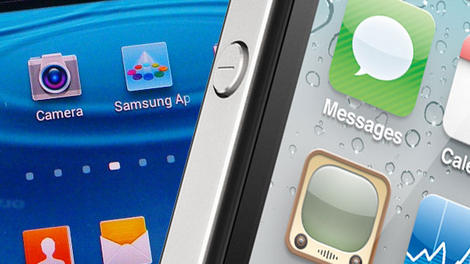
Apple and Google have agreed to cease all patent lawsuits pursued against each other.
The rival firms have set aside their legal differences in a landmark agreement, that represents a major step towards ending the intellectual property suits that have dominated the tech headlines in recent years.
The iPhone vs Android battle had seen both firms issue countless writs around the world, but now the Silicon Valley giants have vowed "to work together on some areas of patent reform."
The agreement also settles the Apple vs Motorola lawsuits Google inherited when it purchased Moto back in 2011. Moto is now in the hands of Lenovo, save those disputed mobile patents.
Sorry, Samsung...
The twenty ditched lawsuits do not include Apple's continuing claims against Samsung over allegations the Korean firm copied innovations patented in Cupertino.Earlier this month, in the second patent trial between Apple and Samsung, a California judge imposed a $119.6m (£71m, AU$127m) fine on the latter for violation two of the former's patents.
That comes after the billion dollar fine levied against Samsung in the first trial.
While the Apple and Google peace accord does little to settle the beef with Samsung, it may represent the beginning of the end for the tiresome patent suits which many observers suggest have led to a downturn in tech innovation.
Via Wall Street Journal

Read More ...
Roundup: Best of TechRadar Pro: this week's best articles and hottest reviews

Oculus Rift could one day let you train as a firefighter

To help Gloucestershire's Fire Services College prepare new recruits for service while keeping them clear of danger zones, Capita's G2G3 unit developed a series of 14 increasingly challenging simulation exercises for the Oculus Rift.
After strapping on the headset, which is hooked up to a Windows 8.1 aptop or Surface Pro 2 tablet running the simulation software, trainees are beamed Matrix-style into a real-world emergency scenario. But instead of bullet-time martial arts sequences, they could come up against anything from burning buildings to chemical spills or head-on vehicle collisions... Continue reading...
Microsoft Surface 2 4G review

If you're tempted by the Surface 2's slim dimensions and productivity potential but wish it had a little more in the way of connectivity options, Microsoft's Surface 2 4G may be what you're looking for. There's little to differentiate between the two models apart from a micro-SIM card slot along the Surface 2 4G's left-hand edge that lets you connect to a speedy 4G LTE network... Continue reading...
Why 4K displays make sense for businesses

4K has been hailed as the big next thing for entertainment and AV in the consumer arena. All big television manufacturers have one or more 4K television sets in their portfolios and as such components prices (including the panel) are dropping fast. Consumers are becoming increasingly aware of the technology too. 4K essentially allows more pixels to be shown on any given display, up to four times full HD; which means going from about 2-megapixels to 8-megapixels... Continue Reading...
Post-Heartbleed, is it time to kill OpenSSL?

The Heartbleed Bug (and it's definitely a bug - not a virus) has ignited a debate around the security and reliability of open source software in recent months. Discovered by researchers at Google and Codenomicon, the vulnerability was found in the open source OpenSSL cryptographic software library that provides Secure Sockets Layer (SSL) and Transport Layer Security (TSL) protection for anything from emails and web browsing to internet banking... Continue reading...
Securing everything: the risks posed by the Internet of Things

Every once in a while, a hot new topic hits the security industry and works its way into the media; cloud computing, big data, Facebook scams, and Android malware are all recent examples of such topics that have mutated into buzzwords.
These buzzwords transform into common, everyday realities that can offer both major advantages as well as pose very real and present danger. Right now, there are two key technology topics that are both thought-provoking and headline-worthy: the Internet of Things and connected homes... Continue reading...
Cloud will make on-premise software perform better, faster says Microsoft

At first glance, Microsoft's annual TechEd conference has been all about cloud this year, with the announcements being new features and services on Azure rather than new versions of its server products. But many of the new Azure services are designed for companies who are still using on-premise servers, Azure technical fellow Mark Russinovich told TechRadar.
The new ExpressRoute service where you can connect your servers directly to Azure via an MPLS provider like BT rather than going over the public internet is only useful when you have servers in your company that you want to have connected to Azure over a fast link... Continue reading...

Read More ...
Xbox '13 Days of Blood' docu-drama will be like 'playing TV'

Microsoft's steps into original programming will look to combine television and gaming with a fully interactive show that will be "like playing television"
The forthcoming Roman Empire history show from the series 13 Days Of Blood will arrive in 2015 with the producer Stephen David promising "true interaction with real history."
Microsoft has yet to explain the technology it is using to usher in this new televisual era, but did say the new interactive tools will ensure fight scenes are more life like than ever before.
"The series will weave interviews with scripted scenes, and will also introduce a new, interactive technology that will bring fight scenes to life in a way never before seen in television," a Microsoft spokesperson told Deadline Hollywood.
Kinect involvement?
The first episode of the series will be told "through the lens" of the 'gladiator emperor' Commodus, which suggests the show may be shot from a first person perspective.That could, perhaps, enable viewers to shift the perspective of the protagonist using the Xbox controller or Kinect's motion sensing or eye-tracking skills.
Each hour long episode in the series will focus on a different civilisation.

Read More ...
UPDATED: Google IO 2014: 10 things we expect

Upgrades to existing Google hardware products
Google IO 2014 is officially scheduled to kick off at 9 a.m. Pacific on June 25 and, coincidentally, the search engine giant snapped up 25 cutting-edge tech companies since its last conference.That means intimidating-looking robots, smart home technology and smartwatches are among the rumors for the Google IO keynote. The developer schedule also hints at a strong gaming and wearables presence.
You won't be able to see this year's surprises in person if you missed registration. Google IO tickets were sold in a lottery and exorbitantly priced for average Android user, but cheaper than Apple's WWDC 2014.
The good news is that there will be a Google IO live stream to watch the most popular events on both the June 25 and June 26 dates. Hangout sessions are also scheduled for in-depth developer broadcasts.
Even better for the overly-anxious Android community, we have a list of Google IO rumors and predictions before the event gets underway next month. There's no ticket lottery or registration fee required.
1. Android 4.5 or 5.0 lollipop to lick iOS
Google is overdue for an L-themed Android 4.5 or 5.0 update, and there's reason to believe its name will be a Google logo-appropriate "lollipop" on a stick. Google IO happens nine months after KitKat 4.4 was announced, and we're in the mood for something non-chocolatey.
The timing is right. Android updates happen every five to eight months; Ice Cream Sandwich came out eight months after Honeycomb and Jelly Bean 4.1 came out eight months after ICS. Jelly Bean 4.2, 4.3 and KitKat 4.4 averaged five months between them.
New features could include better cross-platform messaging integration and new apps that take into account Google's forthcoming line of smartwatches.
Google merged SMS and Hangouts into one, but the texts still don't appear on computers. Apple pulled it off seamlessly with iMessages on Mac and iOS 7, and there needs to be an Android-Chrome equivalent.
Google Voice is also long overdue to be rolled into Google Hangouts, an app that has gobbled up text messaging, instant messaging and video calls into one location in recent months.
The native Android dialer is also reportedly due for an upgrade, but that change may come with a minor Android 4.4.3 update ahead of Google IO.
2. Updates to Nexus 10, Chromebook Pixel 2
Google likes to introduce Android updates with new hardware. That's perfect because it needs a new larger Nexus tablet to compete with the redesigned 9.7-inch iPad Air.The Nexus 10 2014 would do the trick, but it may not come from Samsung. The South Korean electronics giant is doing its own 10-inch thing with the Galaxy Tab 10.1.

Asus and LG could easily fill that role and have provided Google with Nexus hardware before. In fact, Asus may already be making a Nexus 8 tab to replace its popular Nexus 7 later this year.
New Chrome OS features at Google IO could be delivered through a Chromebook Pixel refresh even though the laptop's existing specs are strong. It's the price that needs to come down.
A Chromebook Pixel 2 could be why the Google Play Store is currently out of stock of select models of Google's premium notebook with a square-shaped screen.
3. It's time for a Google watch
Smartwatches powered by Google's Android Wear platform are expected at the conference, but we don't foresee an official Google watch being announced just yet.Instead, both the square-shaped LG G Watch and the even more fashionable circular Motorola Moto 360 are due for their first on-stage appearance at Google IO.

The difference between these two Android Wear watches and the equally sophisticated-looking Pebble Steel and Samsung Gear 2 comes down to predictive Google Now-like alerts.
The company's intelligent software delivers relevant information to your wrist - from counting down the stops before you exit a public bus to Jellyfish warnings before entering the ocean.
The rumored Apple iWatch is said to focus on fitness with Nike in tow, so expect Google to tout activity tracking features too.
The Moto 360 and LG G Watch have summer release dates, right on top of Google IO, while Samsung, HTC and Fossil are expected to announce Android Wear watches in the near future.
4. More Google Glass, fewer skydiving stunts
Google Glass isn't any less controversial than it was last year, but curious beta testers are still snatching up invites and paying its wild $1,500 (about £892, AU$1,618) price.That's good news for Google but it doesn't really bode well for its fans who want a Google Glass consumer version at a more affordable price coming out of the conference.
Think about it. It'd be a slap in the face to everyone who bought Glass during April's much-hyped one-day sale and this month's open enrollment if a newer and cheaper version came out in June.
This only this would work is if Google gave all Explorers the consumer version for free. It would account for the steep built-in price when analysts have pegged the consumer edition at as little as $300 (about £178, AU$324). But that may be wishful thinking among Explorers.

Instead, we expect more apps via Google's open Glass API to be announced along with a demo of what the new Android KitKat upgrade means for the wearable tech's future.
The international rollout of Google Glass would please everyone in the UK and Australia, and it's a distinct possibility now that Google has dropped invites and its silly timed-sale teasing altogether in the US.
Anything more than a consumer version preview or a release date is unlikely, but a free Explorer Edition as a giveaway to attendees isn't a long shot given the cost of Google IO tickets.
5. More reasons to tune into Chromecast
Google has sold a bunch of Chromecast dongles, but it doesn't mean much if there aren't more apps available for the inexpensive media streaming device.The company has a long way to go before it catches up to the app lists of the Apple TV, Roku 3 and similarly shaped Roku Streaming Stick.

The new Amazon Fire TV set-top box is also hot on its trail thanks to Amazon Instant Video. It's an app that Google's device lacks along with a majority of sports apps. So far it has one: MLB.TV Premium.
That could change at Google IO. We fully expect more app announcements and a personalized main menu with the weather and photos to come to the thumb drive-sized smart TV device.
It's also a wonder why Chromecast doesn't fully support Android device mirroring, a trick that makes us love the iOS-projecting Apple TV. We could be in for a true AirPlay rival at Google IO.
The New Class: Cars, robots and smarthome innovation
6. Google to rev up a CarPlay rival?
Google beat Apple's iWatch to the punch with Android Wear, but their positions are curiously reversed when comes to in-dash car technology.It certainly seems to be taking a backseat to Apple CarPlay, an iOS-based infotainment system that was announced two months ago. Where exactly is "Android in the Car?"

Google's infotainment system is still expected to be unveiled in 2014, which makes the June Google IO conference the appropriate rollout vehicle, if you will.
The company doesn't have to do much to catch up. Just saying "We have Google Maps," should do the trick given its navigation track record and the performance history of Apple Maps.
An all-in-one system for maps, messages and music could alleviate distracted driving and end up making the Android port to cars Google's most important new product category for 2014.
Doubly, Google's infotainment system could potentially support Android and iOS devices, which would contrast with the iPhone-only Apple CarPlay.
It'd be a bummer to have a friend unable to pipe a playlist through the stereo because they own a rival phone. This is where Google usually succeeds and Apple's walled-garden lets us down.
The far-off Google self-driving car may also have us all sucked into the company's car ecosystem eventually, giving Google a trifecta: Maps, autonomous cars and device compatibility.
7. An army of robot inventors for a robot army
Larry Page and Sergey Brin may not be the only headline-worthy names to grace the Google IO stage. The co-founders' army of robots may be ready for their big debut.The company bought proven robot maker Boston Dynamics at the end of last year as well as six other robot manufacturers over the course of just eight days.
Google is clearly building an army of brainy robot designers in advance of building its real-life Android army, and it's tasking Android inventor Andy Rubin as their overseer.
Are we in for a Jetsons-style future or are Google robots intended for manufacturing? The IO conference could give us a sense of why they're such an important talent-driven moonshot.
8. Building another Nest
Also part of Google's "new class" is Nest Labs, the inventive home automation company that is bringing age-old appliances up to speed in our app-driven world.Google just started selling its intelligent Nest thermostat in the Google Play Store, and we could see its availability reach beyond the US, Canada and UK. It technically works in other countries.

The Nest Protect smoke and CO2 detector, on the other hand, doesn't work 100% of the time in any country. An alarm feature can be disabled accidentally so sales have been suspended.
A fix could be announced at Google IO along with more long-forgotten homes inventions that are in serious need of a tune up.
How about a sink with a digital temperature setting so I don't burn my fingers when I want to wash my hands with warm water? Or a microwave that doesn't beep seven times late at night when I'm quietly re-heating leftovers?
9. More to the Project Ara LEGO phone
Phone upgrades could happen piecemeal thanks to Google's Project Ara, an initiative to create a modular phone with upgradeable parts.It's an ambitious idea that doesn't exactly make room for ultra-slim form factors, but could save users money and reduce cell phone waste.

It also doesn't have to stop at mod-friendly smartphones, either. The term "Internet of Things" was thrown around at the first Project Ara conference.
Project Ara could lead to customizable tablets, smartwatches and laptops in the future, much to the delight of PC builders everywhere.
10. A healthy dose of Fiber
The Google IO conference may fulfill our daily Fiber requirements when the company updates us on its rollout of Gigabit internet throughout the US.Google's broadband network is touted as being 100 times faster than what most Americans currently experience, but so far it's limited to three cities: Kansas, Austin, and Provo, Utah.

Google is in early discussions with 34 cities in 9 metro areas that want a piece of its fiber-optic network. Atlanta, Portland, Nashville and San Jose in Google's own backyard may be next.
Implementing Google Fiber in America's largest cities may require cable-laying alternatives like city-wide WiFi. It's an idea other companies and governments have tried and failed to deliver.
Google has the pipes to make it happen. Its investment in drones and Project Loon could bring Gigabit internet to your town or at least pressure cable providers into offering something similar.

Read More ...
Tegra K1-equipped 'Mocha' could be a Nvidia Shield tablet for gaming

A mysterious new Nvidia-made tablet that popped up on a benchmarking site this week could be a Nvidia Shield tablet meant for gaming.
The device, which appeared on GFXBenchmark with the name "Nividia Mocha," was pegged with a 7.9-inch 2048 x 1536 display and Nvidia's impressive 2.1GHz quad-core Tegra K1 chip.
Not much else is known about the unannounced tablet, but a site called Fudzilla claimed this week to have "confirmation" that it's actually a Nvidia Shield tablet.
The tablet will reportedly join the ranks of the Android-based Nvidia Shield gaming handheld and, assuming that, we can begin to guess at its feature set.
Guesswork
The Tegra K1 processor, with its 192-core GPU, would alone make a possible Nvidia Shield tablet an impressive gaming slate.But assuming this tablet follows in the original Nvidia Shield's footsteps, the Shield branding brings at least one more important feature for gamers: GameStream.
GameStream lets users with specific chip sets in their gaming PCs stream titles to Shield. This doesn't quite let players take triple-A PC games on the go, but it does let them take those games over to the couch.
Of course if it's anything like the existing Shield, this tablet will also be able to play Android games, making it a versatile little gaming gadget.
Besides those guesses, the Nvidia Mocha was originally benchmarked with around 2GB of memory and 16GB of storage.
It's anyone's guess when we might hear more about this device - assuming there's more to hear - but E3 2014 is right around the corner.

Read More ...
Google throws a year-long lifeline to Chrome OS devices

No matter who manufactures them, Chrome OS-based notebooks and desktop boxes tend to make decent inexpensive computers, and now Google guarantees the software that keeps them running will be supported for a minimum of five years.
Google has updated its Chrome OS End of Life Policy, effectively tacking on an extra year's worth of software support for 16 different Chromebook and Chromebox products manufactured by Acer, HP, Samsung and others.
"EOL [End of Life] dates may be pushed later than the initial date published, but will never be sooner than listed, which will be at least a minimum of five years from launch of the hardware," an updated footnote on Google's policy page reads.
Chrome OS is essentially an operating system built around Google's web browser technology. It made its debut in 2010 as a potential contender to more expensive Windows and Mac OS X platforms.
Long live Chrome
The change of policy extends the life of Chrome OS products into late 2018 or even early 2019 in most cases, with only Google's original Cr-48 notebook facing imminent extinction come December 2015.That's quite a good deal, considering the Cr-48 lived fast and died young following its December 2010 release as part of an estimated 60,000-unit pilot program then effectively discontinued the following summer to make way for the first official products from Samsung and Acer.
One of those Chromebooks, the Samsung Series 5, has a firm End of Life date in June 2016, while Google appears to be leaving the door open with "unofficial" EOL dates for the remaining devices.
With more schools and businesses finally taking a chance on Chrome OS, the extension will likely be music to the ears of those tasked with purchasing such devices, which currently receive software updates like clockwork every six months.
- Chrome OS goes for broke in our Chromebook Pixel review!

Read More ...
Windows 9 preview release date tipped for early 2015

The preview version of Windows 9 may be in the hands of consumers early next year, according to the latest train pulling in at speculation central.
Corroborating previous rumours suggesting Microsoft will launch its next desktop and touchscreen OS next spring, one leaker has found evidence that the preview will arrive in February or March next year.
The leak's supplier, known as FaiKee, claims to have obtained an internal Microsoft screenshot displaying the preview release date, which he posted on the My Digital Life forums.
The screenshot bears text reading: "Windows 9 Windows Preview Release @ 2015 02-03."
Scrap all other rumours
"If it's real (couldn't see why it isn't), then you could scrap all previous Win9 release speculations," the leaker wrote.Currently, little is known about Microsoft's plans for Windows 9, although it is thought the company is embarking on a rapid development schedule with a view to a swifter release than with previous versions.
Any brand new version may see further evolution of the modern UI, greater emphasis on cloud-based features, Cortana integration and, of course, the reinstated Start menu.

Read More ...
Photos reveal NSA tampered with Cisco router prior to export

For years, the US government has accused Chinese companies of placing surveillance equipment inside routers being exported to America, but this week evidence suggests the exact opposite may be happening.
New photos implicate the US National Security Agency (NSA) in planting "beacons" into servers, routers and other network gear prior to being exported worldwide.
The Guardian originally published details May 12 of how the covert operation works, part of bombshell allegations from the new book "No Place to Hide" by Glenn Greenwald, who claims the US is doing exactly what it's accused Chinese telecommunications manufacturers of in the past.
The same book features a pair of photographs (shown below) which allegedly show the NSA's Tailored Access Operations (TAO) unit intercepting a Cisco router and installing some form of "Trojan horse" into the hardware prior to export.

Beacon implants
The images were pulled from an internal newsletter dated June 2010, showing NSA employees opening the shipping carton for a Cisco-branded router after the package was "redirected to a secret location."According to Greenwald, one image shows a so-called "load station," where TAO employees install "beacon implants," then seal up the package and route it to the original destination.
Once installed at the destination, the router silently phones home to the NSA, allowing the covert agency to not only survey the network it's connected to, but also "further exploit the device."
An unnamed NSA manager called the operation "some of the most productive" in TAO because of the agency's ability to "pre-position access points into hard target networks around the world."

Read More ...
Review: Falcon Northwest Tiki

Introduction and design
When Falcon Northwest turned 20 years old, the builders at the O.G. boutique PC reseller celebrated the company's anniversary in style. They custom-built the Tiki, an intriguing blend of power, looks and stealth-like silence.Let's step back for a second. In the early '90s, no one – literally, no one – believed that a PC vendor could survive for five years, let alone twenty, with a business built around high-end systems for gamers and flight simulator nerds. Falcon NW proved to be ahead of the curve, and has carried on assembling custom, premium systems for geeks like us. This alone is worth celebrating.
With the Tiki, Falcon NW enters an interesting category. Thin, quiet, and loaded with the latest high-end silicon, this is a versatile gaming system that would fit right in the living room (or just about anywhere else). And the rig has one unique, signature touch that I've never seen before in any PC.
OK, this is beginning to sound a bit like a love letter. So, I'll stop with the googly eyes and get on with the review. (Sorry for that.)

Design
Aesthetically, the Tiki is one of the more intriguing high-powered PCs you'll ever see. At first glance, that sleek, modern design will fill your eyes. That's thanks to a custom case that is a little bigger than an Xbox One, but with room for standard parts, including a mini-ITX motherboard and a 12.5-inch graphics card. Measuring 13 inches tall by 4 inches wide, this is an elegant little system – particularly considering how much muscle lies inside.
Not surprisingly, given Falcon Northwest's track record, the paint job stands out as top notch. TechRadar's system came in a stark candy blue, but other options, including a hand-painted flame kit and a pewter-looking Hematite paint job, are on offer.
Naturally, these custom paint jobs cost a pretty penny, with solid colors costing an extra $375 (about £222, AU$400), and the more exotic coatings running up to $900 (around £534, AU$961). Thankfully, the default black chassis – which is free – also looks sharp.
The highlight of the Tiki's chassis design is the smoothed granite block that the rig rests on, which gives the whole system a unique and classy vibe. Frankly, I've never seen anything like this before, and while it adds considerable weight to the system, I appreciate the extra stability it provides.
Because the Tiki is meant to stand upright, and because it is fairly narrow, our initial fears were that it would be easily knocked over in a living room environment. That is not going to happen, thanks to such a heavy base. The only downside is that the granite protrudes out in such a way that you can't lay the system on its side.
Specifications, performance and verdict
Given Falcon's elite reputation, it's no surprise that the Tiki's innards are immaculate, with all cables neatly tucked out of sight, and plenty of open space to allow for more air circulation and more efficient cooling. This is an important consideration, given how quietly the system runs. (Four conveniently placed grills help greatly in this regard.)For such a small box, the Tiki packs plenty of power. And as configured for TechRadar, this Tiki costs a cool $3,061 (about £1,819, AU$3,268). While this is no small amount of money, it does seem like a fair value given the top-shelf components detailed below.

Here is the Falcon Northwest Tiki configuration sent to TechRadar:
Spec sheet
- CPU: 3.5GHz Intel Core i7 4770K (quad-core, 8MB cache, up to 3.9GHz with Turbo Boost)
- Motherboard: Asus Z87i Deluxe
- Graphics: EVGA GeForce GTX 780Ti (3GB GDDR5 RAM)
- Cooling: Asetek 120MM liquid cooling loop
- Memory: 8GB DDR3 (1866MHz)
- Storage: Crucial 512GB M550 SSD; Western Digital Green 3TB, 7,200 rpm HDD
- Optical drive: Lite-On DVD-RW (8X, slim slot-loading)
- Operating System: Windows 8.1
- Power supply: 450W Silverstone ST-45B
- Ports: 2 USB 3.0, audio/mic jack (top); 6 USB 3.0, 4 USB 2.0, 2 DVI, 2 HDMI, 3.5mm audio/mic jack, SPIDF-out
Credit Falcon's decision to go with the Z87 chipset for that. For a fairly small form-factor rig, Z87 is a no-brainer, given Haswell's thermal efficiencies. The beauty of the Asus Z87i Deluxe in our test rig is that it is a no-compromise motherboard, providing an obscene number of USB 3.0 ports as well as some extra features like a BIOS flashback button. This allows PC nerds to flash the firmware using a USB thumb drive and dual-channel, 802.11ac Wi-Fi signal.
Like all Falcon NW systems, buyers can choose from a number of configuration options. For the motherboard, there's the option of either the default Asus Z87I deluxe or you can upgrade to the Asus Maximus VI Impact. (Both are Z87 chipset motherboards.)
CPU options scale from the default 3.2GHz Core i5 4570 to the 3.4GHz Core i5 4670K to the high-end 3.5GHz Core i7 4770K featured in TechRadar's test rig. The 4770K is a great choice for a high-end gaming PC for its unlocked multiplier, which allows for more extreme overclocking. You can, as expected, choose to have Falcon overclock your PC for no extra charge. (We did.)

Video card options are similarly robust, allowing for everything from the default 2GB GeForce GTX 750 Ti all the way up to workstation-caliber Nvidia Quadro cards – at 12GB, no less.
The system comes with either 8GB or 16GB of RAM, which may disappoint buyers looking for 32GB of memory. At default, the Tiki comes loaded with a Crucial M550 256GB M550 SSD and no mechanical drive. While you must choose solid state for the primary drive, the chassis can fit up to two additional drives for extra storage. SSD options range up to 1TB, and HDD options include Western Digital's 7,200 rpm, high-performance Green drives (between 2 and 4TB). Sadly, no RAID options are available.
If the relatively high-end price-tag makes your checking account feel bad, it is encouraging to know that at the low-end, you can get into a Tiki at $1,888 (about £1,122, AU$2019). That will net you an Intel Core i5 4570, the same Asus Z87i Deluxe mobo, 8GB RAM, 256GB SSD and a 2GB GeForce GTX 750 Ti video card.
Performance
Given the specifications above, it will probably come as no surprise to TechRadar readers that, in this configuration, the Tiki absolutely blew through our benchmark tests. Here are the results:Benchmarks
- PCMark 8 Home: 4,876 ; Creative: 5,569
- Cinebench: 28,084 (7,231 with 1x CPU)
- 3DMark: Ice Storm: 147,696; Cloud Gate: 24,520; Fire Strike: 9,910; Fire Strike Extreme: 4,955
- BioShock Infinite: 120 fps
- Metro Last Light: 132 fps (medium quality)
And, while I won't say I'm surprised by the Tiki's 3D performance – our Nvidia GeForce GTX 780Ti review left me fairly breathless – the sheer might of this rig was nevertheless impressive. One of my primary gaming systems is a massive, $5,000 full-size tower PC with a 4770K CPU, 32GB of RAM and a 6GB GeForce Titan card. To date, no system had bested it in neither synthetic nor gaming benchmarks. Across the board, the Tiki bested it by 8 to 10%.

What does all this mean in terms of real-world performance? The long and the short of it is that I was able to play any game I wanted on my ultra-wide 2560 x 1080 display at maximum detail levels, and was constantly rewarded with high, smooth frame rates.
Even more impressive is that, despite all this power, I had to try to produce any noticeable fan noise whatsoever. Even under peak performance loads, this is one seriously stealthy PC.
We liked
For starters, the Tiki packs an impressive amount of power and performance into a small, elegant-looking system. Its near-silent profile and relatively low power draw make it a fairly versatile system, equally capable of serving as a media center and gaming system in the living room or as a dedicated gaming PC.Falcon offers a wide set of configuration options that allow for a nice (and not outrageously expensive) range of price versus performance – a major plus. Frankly, the choices are much broader than I would have expected, given the chassis' size.
At a higher level, the Falcon Northwest's willingness to experiment with a new form-factor is admirable. The custom chassis and the granite base are bold design touches, and fully embrace the notion that PCs can and should be exciting to look at. That this system is capable of out-gunning much bigger machines makes it all the more interesting.
We disliked
The only significant beef I have with the Tiki is that the custom chassis prevented me from laying the system on its side. This could make the PC tough to squeeze into a living room media center.I fully admit that some people may find the granite base to be a bit much. I love it, though it does add a little too much weight to consider this a portable PC suitable for schlepping to LAN parties.
One final nit to pick: Hardcore PC aficionados may be disappointed in the Asus Z87i motherboard's 16GB memory ceiling. Truthfully, most people don't need any more than this, unless they are running multiple virtual machines or working with humongous graphics and media files.
Final Verdict
No surprise here: Falcon Northwest's Tiki is a fantastic high-end system that quite elegantly sums up everything that is great about gaming PCs. It is extremely fast, tiny and looks gorgeous in almost any setting. Plus, even when fully loaded and running the latest games at maximum settings, this machine whispers. What more can you ask of a premium gaming machine?
Read More ...
Alleged iPad Pro dummy shows its face, and yes, it's bigger

Chinese social network Weibo is a constant source of leaks and rumors, and the latest adds credence to the claim that Apple is working on a bigger iPad Pro.
The iPad Pro is rumored to be a few inches larger than your run-of-the-mill iPad at around 13 inches, and this photo from Weibo may back that up, according to Nowhereelse.fr.
The image purportedly shows a "dummy model" for the iPad Pro, and judging by the hand that's holding it, the Apple logo and the camera, it seems to be quite a bit larger than the iPads we're used to.
The same source also posted a photo supposedly of an iPhone 6 dummy (keep scrolling).

Listen up, dummy
Dummy models are created so that device accessory makers can craft cases and other peripherals that will fit with final products before those gadgets are publicly available, among other reasons.The latest to show up before these photos was an alleged iPhone 6 dummy model that appears to show a larger and slightly curved iPhone.

Like the iPad Pro, the iPhone 6 is expected to come in at least one variation that's larger than any past iPhone.
But even if the iPad Pro really is in the works, analysts predict it won't arrive until 2015 at the earliest.
Meanwhile rumor has it Apple it working on split-screen iPad apps in iOS 8 - a feature that, incidentally, would work quite nicely on a larger iPad.
- Sometimes smaller is better, says the iPad mini 2

Read More ...
Google Translate to become more fluent with Word Lens on board

Google is about became more fluent in reading foreign languages thanks to its purchase of Word Lens app maker Quest Visual.
The biggest gain is going to be for Google Translate, as Word Lens' camera magic can make sense of seven different languages in real-world environments.
The innovative translation app overlays the language of your choice on everything from road signs to menus when you're peering through a smartphone screen or Google Glass.
In effect, a stop sign in French changes from "Arrêt" to the "Stop" or "Halt" right before your eyes. It's the kind of tool that could make Google Translate everyone's default translation app.


Quest for the future
Quest Visuals use of augmented reality always had more noble ambitious compared to the AR games we've seen from other app makers.That said, Google could pull the Word Lens from the iOS, Android and Google Glass app stores in the future once it finds its way into Google Translate.
Expect to hear more about this at Google IO 2014, which kicks off on June 25.
- Buy now or wait for iPad Air 2? Check out our updated iPad Air review

Read More ...
HTC One Mini 2 given £360 SIM-free pricetag ahead of June release

The newly-announced HTC One Mini 2 smartphone will be available for £360 off contract from one UK retailer.
Phones 4U is pledging to deliver the device on June 13, which is on track with HTC's promised June release date.
Also on offer is a £25 a month contract through Vodafone, while folks can also snap up deals on rival networks like EE, O2 and Orange, with a free handset.
The high street retailer also plans to offer the device on pay-as-you-go deals, but hasn't revealed pricing yet.
Scaled back
The HTC One Mini 2 is the somewhat scaled back version of the highly-rated, flagship HTC One M8.It offers a 4.5-inch 720p display, a quad-core 1.2GHz Qualcomm Snapdragon 400 processor and 1GB RAM. That's well below the 5-inch 1080p, quad-core 2.3GHz CPU and 2GB RAM offered by big brother.
Beyond that, there's a 13-megapixel camera, but there's no sign of the second lens that allows One M8 users to shift focus of photos after the fact.
In better news, the HTC Zoe and HTC Blinkfeed software will be present, as well as the latest version of Android 4.4 KitKat software and HTC Sense 6 too.

Read More ...
Review: Updated: Alienware 17 review

Introduction and design
Update: We were able to get the gigantic Alienware 17 on video. Check out AlienFX and some games in action on the rig below in our video review.The 17-inch laptop is a unicorn these days. But in the gaming world, the arguably huge form factor is alive and well. Alienware has doubled down on its colossal clamshell, simply known as the Alienware 17, with an AMD-powered variant.
With an AMD Radeon HD R9 M290X pushing the pixels behind its 1920 x 1080 anti-glare screen, this version of Dell-owned Alienware's notebook comes in $350 (about £207, AU$373) cheaper than its Nvidia-toting counterpart. Given that AMD's latest mobile GPU houses twice as much video RAM – 4GB to the GeForce GTX 860M's 2GB – that's not a bad deal at all.
Aside from that, nothing about the Alienware 17 has changed, including its gigantic frame. Both the MSI GS70 Stealth and Asus G750JX are thinner and cheaper, but fall on different ends of the spectrum in terms of hardware, design and overall focus.
[Editor's note: Since I have yet to test the latest Nvidia GeForce GTX 800M series versions of either of these Asus and MSI machines, I will continue to compare the Alienware 17 to the 700M series editions of these products. This review may be updated after testing MSI, Asus and even Alienware's most current Nvidia-equipped products.]
Design
If you're familiar with Alienware's latest design ID, then none of this will be a shock. But for those coming from the Alienware M17x 2012 perhaps, plenty has changed. The pronounced curvature of the old has given in to a more angular silhouette throughout.Not only did that make more custom lighting zones a possibility, but it allowed for an all-aluminum lid and magnesium alloy base. This grants the Alienware 17 an even more premium look and feel than before, one that's slightly more subdued – a much welcome change, frankly.
Alienware says that these and other revisions have increased the system's weight in metal materials considerably, while overall the unit comes in nearly 0.25 pounds lighter. Regardless, this is still a notebook that warrants its own line of custom-made backpacks and shoulder bags.

The keyboard and its lighting received a welcome change as well, moving on from chiclet keys to a more mechanical, switch-based board sitting on an aluminum plate. And in place of the garish, front-facing speaker lights, the entire base is now wrapped in slim, sleek strips of light. Plus, the entire touchpad now illuminates – not just its border.
Flaunting it with AlienFX
Unique to Alienware's laptops is the wide variety of lights that line their chassis and illuminate their keyboards. The company calls this AlienFX, and it returns in full form on the Alienware 17 with incredibly deep customization, thanks to an app of the same name.AlienFX allows for specific color profiles for each zone of lighting. For instance, if you wanted the Alienware logo and strips of light on the lid in a crimson red, with the lights lining the base shining a cool blue, there's nothing stopping you. Furthermore, four zones of the keyboard can be illuminated in different hues. (And that's not even close to all.)

Digging even deeper, the Alienware 17's lighting scheme can cycle through multiple themes at a certain tempo. And, through the AlienAdrenaline tool, you can create special themes for different games and apps.
The options are nigh limitless, and aesthetically set the Alienware apart from the lot of boutique gaming laptops. More importantly, AlienFX brings a bit of the custom flair of gaming PCs to laptops. Now, let's see what else about the PC gaming experience Alienware manages to emulate.
Specifications
Save for the latest and greatest mobile GPU from AMD, there is nothing different between this version of the Alienware 17 and its Nvidia-toting counterparts. So, its bag-bulging dimensions and weight should surprise exactly no one.You're looking at one beast of a mobile gaming rig here, measuring 16.3 x 11.8 x 1.8 1.9 inches (W x D x H) and weighing a hefty 9.15 pounds. The Asus G750JX comes in at an equally wide (but thinner) 16.15 x 12.5 x 0.66 1.9 inches, but tips the scale at 10.5 pounds. Naturally, the MSI GS70 Stealth is the slimmest of the bunch, at 16.5 x 11.3 x 0.85 inches and 5.7 pounds.
Keep in mind that the MSI model lacks the Blu-ray drive found in both the Alienware and Asus units. But lets see what Alienware manages to squeeze into such a bulky 17.3-inch laptop, compared with the slightly slimmer competition.

This is the Alienware 17 configuration sent to TechRadar:
Spec sheet
- CPU: 2.4GHz Intel Core i7-4700MQ (quad-core, 6MB cache, up to 3.4GHz with Turbo Boost)
- Graphics: AMD Radeon HD R9 M290X (4GB GDDR5 RAM); Intel HD Graphics 4600
- RAM: 16GB DDR3L (2x 8GB at 1600MHz)
- Screen: 17.3-inch, 1920 x 1080 WLED, Anti-Glare Display
- Storage: 256GB mSATA SSD; 1TB HDD at 5400 rpm
- Optical drive: Slot-loading, Blu-ray reader (9.5mm, dual layer)
- Ports: 4 USB 3.0 ports (one with PowerShare), HDMI 1.4 (1.3 input), RJ-45 Ethernet, mini-Display Port, 2 ⅛-inch audio out ports (one compatible with inline mic headset), ⅛-inch line-in Microphone port (available for 5.1 analog audio output), Kensington security lock slot
- Connectivity: Broadcom 4352 802.11ac Wi-Fi; Bluetooth 4.0
- Camera: FHD, 2-MP webcam
- Weight: 9.15 pounds
- Size: 16.3 x 11.8 x 1.8 1.9 inches (W x D x H)
Alienware crafts one of the most premium builds in the gaming laptop world, and offers one year of phone support – plus in-home servicing – for its machines. Asus supplies a year of 24/7 phone support, whereas MSI provides neither (though, it does throw you a 2-year warranty).

Both the GS70 Stealth and G750JX are Nvidia-based systems, but since AMD isn't terribly common in the mobile PC gaming world, I'll have to make due. (Plus, it makes for an interesting comparison.) First up is Asus, which can sport comparable components for $2,274 (about £1,353, AU$2,455) – or $175 less than this Alienware 17 – on Amazon.
That gets you a near-identical 2.4GHz Intel Core i7-4700HQ chip, a whopping 24GB of RAM and a similar 128GB SSD coupled with a 1TB mechanical drive alongside an Nvidia GeForce GTX 780M with 4GB of video memory behind an FHD panel. This setup also nets you a Blu-ray drive for parity with the Alienware at hand, but you're also stuck with Windows 8.1. (Alienware offers the choice of either Windows 7 or 8.1; this unit came running the former.)
As for MSI, a similarly configured GS70 Stealth – also available on Amazon – goes for even less at $1,805 (around £1,074, AU$1,948). That price nets the exact CPU found in this Alienware, 16GB of RAM, a lower-power GeForce GTX 765M with 2GB of video RAM, and a similar 256GB SSD (two 128GB units in RAID) and 1TB, 7200 rpm HDD combo. This is all behind an FHD screen as well, but again, no Windows 7 option.

What the Alienware 17 has above both of these systems is 802.11ac networking, which could prove vital in the coming years, especially in online gaming. But let's see how well this Alienware fares pushing the present's pixels first.
Performance
One reason folks buy Alienware is guaranteed premium performance, and this AMD variant generally delivers on the pedigree (but not without a few hurdles). The synthetic tests we run on gaming laptops say as much, and so do the games. Here's how it fared:Benchmarks
- 3DMark: Ice Storm: 89,348; Cloud Gate: 17,444; Fire Strike: 4,727
- Cinebench CPU: 627 cb
- Bioshock Infinite: (1080p, Ultra): 47.08 fps; (1080p, Low): 146.38 fps
- Metro: Last Light: (1080p, Ultra): 14.33 fps; (1080p, Low): 36.67 fps
- PCMark 8 Battery Life: 2 hours and 15 minutes

As for the games, the machine trounced the best of Bioshock Infinite at a smooth 47 frames per second on average, while the GS70's GTX 760M clocked a still-playable 42 fps. However, Metro: Last Light brought this Alienware to its knees – a reality check for those hoping for top- tier performance from a mobile GPU. (The Asus model was not tested on either game.)
Don't bother bemoaning the battery
Discussing the battery in a 17-inch gaming rig is almost moot, but the power-friendly Haswell chip inside did all it could to keep this monster alive. In my own test, the Alienware lasted a bit longer than on PCMark 8: 3 hours and 6 minutes. That was on the "Balanced" Windows power setting with the AlienFX lighting turned on, the volume at 10% and screen brightness at 50%. That also included streaming high bitrate audio via Spotify, running Google Chrome with 10 to 15 tabs, a heavyweight chat app and TweetDeck.Cutting the lights and dimming the screen even further could eke out another 30 minutes or so, maybe, but that's not the point. The Alienware 17 wasn't designed to follow you from outlet to outlet, but rather for raw performance. (The included power brick weighs a pound or two on its own for a reason.)

Don't even bother trying to game on this laptop while on its battery. AMD's Enduro graphics switching technology will instantly turn the graphics chip off in favor the integrated Intel GPU, anyway. Speaking of which, how does AMD's latest handle, say, the Call of Duty makers' latest?
Driving me up a wall
There is one area in which Nvidia is clearly far ahead of AMD: drivers. Updating drivers on an Nvidia GPU, whether it's a mobile or desktop chip, happens with a single button press through the company's GeForce Experience app.Given that Alienware equipped this laptop with AMD's best yet, naturally I fired up the latest major PC shooter, Titanfall. It was immediately noticeable that performance wasn't nearly where it should be for a graphics chip this powerful, even for mobile.

So, I attempted to update the driver through AMD's Driver Autodetect tool, which mistook the Radeon HD R9 M290X for the Radeon HD 8970M and overwrote the driver with an incorrect version. This led to a host of performance and detection issues that eventually forced me to reinstall the graphics adapter entirely.
The confusion is somewhat understandable, considering the only difference between these two GPUs is that the M290X packs double the video RAM. Nevertheless, AMD has plenty of work to do in simplifying this process for players.
Performance to match the panache?
After the dust settled on the driver debacle, the R9 M290X more than lived up to its $2,000-plus asking price as I stomped through the war torn streets of Titanfall. However, this was only after settling some nasty switchable graphics issues.
I've found that AMD's Enduro graphics switching requires some serious massaging, from flagging games in AMD's Catalyst Control Center (to guarantee that the GPU is active during play) to restarting to system. You know, just to make sure things are really in order – and it works.
While using FRAPS to read frame rates, I locked Titanfall's texture settings to "high" at 1920 x 1080 resolution, with vertical sync and 2x anti-aliasing enabled. The result was me staring down the boots of various robots at a buttery smooth 60 frames per second. Only in particularly chaotic scenes did the frame rate drop to 45 fps, but I'll take it.
As for MMOs with vast vistas and deep draw distances, World of Warcraft and Final Fantasy XIV ran at a silky 60 fps at high to maxed detail settings. With marquee shooters like Destiny on the horizon, this Alienware 17 should be able to keep up, so long as AMD gets Enduro in order.
BYOK (Bring Your Own Keyboard … and mouse)
The Alienware 17 keyboard, closer to the mechanical gaming keyboards of old than the membrane keys found on most laptops, offers near-perfect travel and spacing. However, typing on a surface raised nearly an inch off the desk was a struggle, especially in games that rely heavily on the WASD keys.
My fingers and wrist quickly cramped while conquering the dungeons of Azeroth, if only due to the extra height I had to lift my arm to reach the number keys. If your desk is tailored to typing at a certain height, put the Alienware 17 on a stand and pick up a gaming keyboard.
And while the backlit touchpad offers smooth scrolling and tracking throughout Windows 7, it's nothing to game on. That said, with comfortable, soft-touch palm rests, this keyboard should serve you well in a pinch. Plus, the lighting is simply brilliant.
Bundled software
Alienware is visibly aware of the stigma against bloatware, and as result only includes its own proprietary software. Collectively known as the Alienware Command Center, this suite of apps controls all of the system's unique features:- AlienFX: Control all of the lighting zones on the unit, giving each a unique hue and intensity. It's all done through intuitive color wheels for simplicity.
- AlienTouch: Tweak the Alienware 17 touchpad's sensitivity and other features. You can disable the touchpad automatically upon using a mouse too, though I had trouble getting the touchpad to turn back on after resuming from sleep.
- AlienFusion: Here, you can adjust how certain components, like the GPU and Wi-Fi adapter, behave under certain conditions or when running certain apps.
- AlienAdrenaline: Temporarily get rid of extraneous Windows processes in one step upon launching a game with this tool, though the effect on performance is minimal.
- Alienware TactX: Here is where users can program the four dedicated macro keys on the Alienware 17 keyboard. Users can also share profiles tailored to specific games.

Verdict
Before even opening the lid, it's crystal clear that this Alienware 17 is just as premium of a machine as the first edition that released summer 2013. The sole difference here is that shiny Radeon GPU, which is no doubt a powerhouse … after fiddling with switchable graphics and driver issues for hours.But the onus is on AMD to fix these problems, and it's tough to knock this product down a peg for bugs that could easily be fixed by the time you read this very review. (Though, they're not yet on AMD's list of known issues for its Catalyst software.)
Price per part is the real roadblock that this gaming laptop faces. Sure, you're getting a premium product for that price. But at a back-bending 9.15 pounds, you won't be carting this rig around all too much. Plus, if you're ready to drop over $2,000 on PC gaming, and space is a concern, you might want to consider whether a micro gaming PC is a better path to get there.
We liked
Make no mistake, this is undoubtedly the complete package and then some, offering the glitz and glamor of a boutique gaming PC in the laptop form factor. Not to mention that this AMD graphics chip inches dangerously close to desktop-level performance.Once past AMD's switchable graphics and driver issues, the differences between this mobile GPU and comparable desktop chips are negligible at 1080p. And that 1920 x 1080 anti-glare panel is a colorful dream of a screen. Set at 300 nits, the panel's brightness came in great handy while hiding from far better pilots in the darkest corners of Titanfall.
Alienware not only designed a gorgeous (if a bit gaudy) machine, but put its immense dimensions to excellent use. On top of a vast selection of inputs, the Alienware 17 keeps its cool quite well while gaming. Thanks in no small part to two massive vents placed in the rear of the device's base, I only felt the area closest to the hinge flare up during play.
We disliked
At the high end, this Alienware 17 will be the most affordable by a long shot for some time, with the GTX 860M-toting model starting at $2,499. Yet I can't help but question the asking price amidst the myriad space-saving desktop options, including Alienware's own X51 desktop. Also, there's a incoming legion of Steam Machines to consider.While they're issues that are up to AMD to resolve, the company's switchable graphics and driver support solutions are simply not competitive. But again, because they're fixable, in theory, it's tough to punish this device too harshly for that.
Finally, the laptop's gargantuan size makes it tough to type on. Unless you somehow tweak your desk or chair to compensate for the inch-high keyboard deck, you'll be stuck bending your wrists uncomfortably to hit those WASD keys. Slap this laptop on a stand and hook up your own keyboard and mouse if you value your hands.
Final verdict
Save for some nagging (but ultimately fixable) problems, the Alienware 17 is one of the best gaming laptops money can buy. From its sharp metallic and soft-touch build to a host of powerful components, this is a one-stop shop for getting into PC gaming with a single click.That said, over $2,000 is a fat wad of cash to put up in hopes of avoiding the perceived hassles of PC gaming. And again, if space is a concern, there are plenty of options that offer more power for less, given this isn't a laptop you'll want in your backpack for long.
Given that a 17.3-inch laptop, gaming or not, is a terribly niche product, consider every path before paying over two grand for the toll. Regardless, it's undeniable that this is the best-built mobile gaming PC around. If the fast lane to high quality PC gaming is what you seek, then the Alienware 17 will not steer you wrong.

Read More ...
Cortana could be preparing to bring its AI smarts to Windows and Xbox One

Cortana, Microsoft's voice assistant feature, could be coming to Windows and Xbox, not just Windows Phone.
A recent job listing posted by Microsoft hints at the virtual assistant working across the wider Windows platform, in a move that would, frankly, make a lot of sense.
"Bring part of the Cortana team you will have the opportunity to push the frontier, redefine the personalization experience on Windows," reads the posting.
Makes sense to us
It's the use of the word Windows, not Windows Phone, that's got us interested. It could just be a matter of semantics - but if you think about it, why wouldn't Microsoft spread the Cortana love?It's worth noting that initial rumours (which got most of the details correct) claimed that Cortana would be coming to Xbox One and Windows.
Right now, the main thing we're waiting on Microsoft to get the full version of Cortana out to all Windows Phone users.
- Cortana vs Siri vs Google Now - Fight! Fight! Fight!

Read More ...
The Phone Show: The LG G3 is aiming for smartphone stardom, and it may just achieve it

If you've been left underwhelmed by the Samsung Galaxy S5, Xperia Z2 and HTC One (M8), then don't fret: there's another Android flagship set to arrive in the next couple of weeks, and it could turn out to be a blinder.
The LG G3 is set to touch down on 27 May, and if what we've heard is anything to go by, the spot at the top of the smartphone tree may be even tighter come June.
Last year's LG G2 was one of the unsung heroes of 2013. It was hands-down one of the best phones on the market, but was ultimately let down by a cluttered UI and mediocre design that failed to capture the imagination of buyers.
But things could be different this year. We've heard whisperings of a QHD screen and caught peeks at what may or may not be aluminium bodywork. Of course, that's not the only reason we think this phone is set for stardom: check out this week's Phone Show, where Gareth Beavis and John McCann are bringing the hype for the next Android big-hitter.
Oh, and also we have more design info on the iPhone 6, if you're still interested.

Read More ...
Elderwood zero-day toolkit is in more widespread use

Research by security firm Symantec has shown that the Elderwood platform is a more widespread threat than previously believed.
The zero-day exploit toolkit first surfaced in 2012, but 2014 has seen its adoption by a larger array of hackers, with three zero-day vulnerabilities detected in one month alone.
Symantec said in a blog post that it initially believed Elderwood was used by just one group, but newer findings suggest it is either the work of a major hacking organisation, which has developed it for numerous in-house attack teams, or it is being sold to a wider range of outside groups.
'Serious threat'
Elderwood has been used to attack important sectors like defence, manufacturing, IT, and human rights.There have been some recurring trends, such as the use of Internet Explorer and Flash, and the attacks can also be reverse-engineered by other groups to produce new ones.
Part of the threat of the Elderwood toolkit is that it is user-friendly, making it usable by even someone who is not technically proficient. It is this same approach that has made DDoS toolkits so popular, and so disruptive.
Symantec labelled Elderwood as a "serious threat," and that groups using it are well-resourced and highly motivated hackers.
Via Computer World

Read More ...
TechRadar Deals: TechRadar Deals: Save £150 on a Samsung Galaxy S5 16GB

Right now, you can buy the brilliant Samsung Galaxy S5 16GB for just £419.99 - a saving of £150 on the RRP of £569.99.
The phone is new, boxed, provided SIM free and unlocked, and ships from the UK.
Both the Charcoal Black and Shimmery White models are available for purchase at this price but numbers are limited so act now to avoid disappointment!

Read More ...
Samsung Galaxy S5 Prime nabs Bluetooth certification, must be out soon

Ever since the Galaxy S5 and its plastic back went on sale we've been hearing whispers that a better, more luxurious iteration of the handset - the Galaxy S5 Prime - is on its way.
The Bluetooth SIG, which signs off every Bluetooth-toting smartphone (that's all of them, folks) has just put its rubber stamp on a Samsung phone with the model number SM-G906L - that's the model number associated with the Galaxy S5 Prime, fact fans.
It looks as though the device will come running Bluetooth 4.0 but beyond that the listing doesn't give any specs away.
Never fear - we've had plenty of leaks to date. We're expecting to see a QHD screen, metal chassis and a release date of sometime in June/July when it'll be available in relatively limited quantities.
- Forget the S5, here's what we want to see in the Samsung Galaxy S6

Read More ...
Updated: Surface 3 and Surface Pro 3 release date, news and rumors
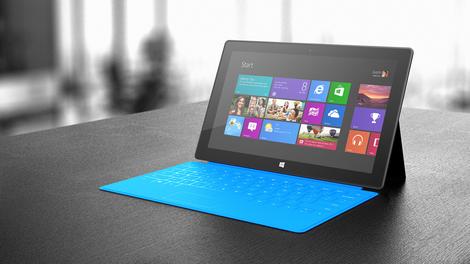
Microsoft will be hoping that three is indeed the magic number as it gears up to pull back the curtain on its third generation of Surface tablets.
The road so far has been rocky: in the two years since Windows chief Steven Sinofsky unveiled the Surface RT and Surface Pro, Microsoft has lost said Windows chief, squandered almost $1 billion on unsold Surface RT stock and replaced its brash and bullish CEO, Steve Ballmer.
Yet, somehow, whatever Microsoft is doing is working - albeit slowly. Numerous reports say overall Surface usage went up over the festive period in late 2013.
Steve Ballmer's replacement Satya Nadella has already made progress in evolving Microsoft's mobile and cloud computing strategies (hardly a surprise considering his former position), but the ex-Sun Microsystems engineer still has to earn his hardware stripes.
A batch of new Surface tablets presents a huge opportunity to do so, leaving the question: is the new face of Microsoft going to go all out by supercharging the Surface, or will he iterate on what has gone before like his predecessor?
Check back here for all of the latest rumours on the Surface 3 and Surface Pro 3. Alternatively, catch up on everything we know about the Surface Mini.
Surface 3 and Surface Pro 3 release date
Microsoft recently sent out invitations to a "small gathering" in New York on May 20. Due to the wording, it's highly likely that the Surface Mini will make an appearance, but it could also be used to show off the next versions of Microsoft's full-sized Surface tablets too.If the company has a Surface 3 in the works, it's doing a good job of keeping quiet about it. We've not heard a thing about any potential successor to the Surface 2, though the Surface Mini is rumoured to run Windows 8.1 RT and as such could take its place.
Plus, Microsoft only released the Surface 2 4G in recent weeks, so it would little sense for a Surface 3 to steal its thunder so soon.

That said, we wouldn't bet against a full-sized Surface 3 entering the fold. The last time we thought 10-inch tablets running RT had gone the way of the dodo, the Nokia Lumia 2520 sprang from behind the curtain to remind everybody otherwise.
If Microsoft does stubbornly stick with Windows RT, then perhaps a Surface 3 line-up will offer more hardware options.
Or we might see an even larger device that takes its cue from Sony's VAIO Tap 20. A 'Surface Maxi' would move Surface into all-in-one desktop PC territory, although it would require ditching Windows RT in favour of the full-fat Windows 8 OS. A Surface Pro 2 XS or XL would be ideal.
The cat that is the Surface Pro 3 has been let out of the proverbial bag. Sort of. Microsoft recently uploaded a support article that said that an update for Windows 8.1 "adds support to the Surface Pro 3" camera.
According to reports, Microsoft has since confirmed that that the error was indeed a typo, but whether you believe it is another matter.

Surface 3 and Surface Pro 3 specs
Keeping in line with the Surface Pro and Surface Pro 2, Microsoft is expected to opt for an Intel processor (of the Haswell variety) for the Surface Pro 3.Rumours of an Intel model first appeared on Bloomberg, and later a chip industry source confirmed to CNET that there will "definitely" be a new Surface model powered by an Intel processor.
It means that any new model should offer battery life comparable to the Surface Pro 2, depending on other factors such as graphical performance and display resolution.
According to an IHS Technology analyst who spoke to CNET, a larger 12-inch Surface Pro may also be on the way and could launch at the same time as the Surface Mini in the guise of the Surface Pro 3 or another device altogether.
We can imagine a bigger touchscreen model. Rumours point to Apple experimenting with 12- and 13-inch iPad displays and where Apple leads, the other manufacturers are sure to follow. Except for Samsung, that is, which beat the competition to the punch with the Galaxy Tab Pro.

Should a Surface 3 make an appearance, it may feature an Nvidia Tegra chipset like its predecessor, or a Qualcomm-based variant as is rumoured to be included in the Surface Mini.
There's arguably nothing wrong with the Surface hardware. We like it. The Surface 2 looks good and feels good. It's smartly, stylishly designed and the two-stage kickstand makes it easier to position the device comfortably for work. Although not including one of the iconic click-in keyboards as standard is frankly criminal.
A Surface 3 tablet should look fundamentally the same, albeit with a customary millimetre shaved off its magnesium alloy waistline and a few grams shifted from its chassis.
Surface 3 and Surface Pro 3 price
The Surface 2 is affordable but hobbled by its Windows RT software; while the Surface Pro 2 has all the versatility of a Windows PC but, in tablet terms, costs way too much.Surely any Surface 3 machine needs to hit the sweet spot between the two - full Windows functionality at an affordable and competitive price point?
Surface 3: Is there a smartwatch in the works?
With wearable tech all the rage, it must surely have occurred to Microsoft that the touchy-feely Surface brand could be extended into smartwatch territory. Like the Galaxy Gear, a 'Surface Watch' with a small screen and obligatory built-in fitness tech could be launched as a companion device for its Windows-powered tablets and smartphones.Then there's Surface gaming to consider. Gamers have long hankered after a portable Xbox and devices such as the Razer Edge give us glimpses of how this idea could work. Yet Microsoft barely touched on the gaming potential of its Surface 2 hardware at launch, choosing instead to focus on productivity and business.
But with reports of Microsoft cloud-streaming Halo 4 to a low-end Windows PC and a Windows Phone, a future Surface 3 device could easily evolve into a portable games console.
- Now read our complete lowdown on Windows 8.1

Read More ...
Available Tags:LG , Google , Android , Wireless , Kinect , Apple , TechRadar , Xbox , TV , Nvidia , tablet , gaming , Chrome OS , Chrome , Windows , Cisco , router , iPad , HTC , smartphone , Samsung , Galaxy , Samsung , Galaxy , rumors ,


No comments:
Post a Comment