

'OK Google' voice commands to go universal across Android?

Rumours suggest Google has big changes afoot for its Android operating system, which could involve expanding voice command functionality beyond the search.
Android Police has word the 'OK Google' feature within the Android Google Search app may become universal across core apps.
The site, which doesn't say where it came by the information, believes users one day be able share photos in the Gallery app, or reply to Gmail messages by summoning the 'OK Google' commands.
The presence of the functionality would be represented by a red lower case 'g,' the site claims, showing off the feature in a series of images produced base on its information.
The development is still in the early stages of development and may only appear on Nexus and Google Play Edition devices, the site says.
New Google button too?
Beyond that AndroidPolice believes another big UI change is on the way, with the introduction of a new Navigation Bar.According to the report, the new ever-preset on screen controls would now feature a 'Google' button, rather than the traditional Home button.
Hitting that would "trigger a search wherever you are" according to the report. How users would get back to their homescreen, if the change was made, was not revealed.
The site has some fantastic, and super-professional looking mock ups of how it believes the feature may end up looking (such as the one we've borrowed). Follow the source link above for a closer look.

Read More ...
Industry voice: The birth of data recovery

When data loss happens to us, recovering data is pretty much all we can think about. Suddenly, data is no longer about lines of code.
Data is personal and real. Data is something valuable. It's a picture of your new-born child or the text with the phone number of the potential customer. The CV and cover letter you've spent three hours writing. The blueprint of a new innovation that will change the world!
The feeling of losing something is terrible and we try to find ways to protect things that are valuable. Yet we are always very close to harm's way when it comes to losing all the content that defines us or our businesses.
Just imagine for a second how many people across the UK have currently fallen victim to the floods sweeping across the country.
They are not only facing the agony of dealing with a flooded home, but also the headache of repairing a lot of damaged equipment like smartphones, PCs, tablets and iPods- devices that store everything from business contacts to term papers to wedding videos.
Natural disasters like these hit us hard and it's never a laughing matter.
Data loss disasters
Of course, there's always been and always will be problems with the weather – not to mention accidents like fires or human errors like deletions. But things have changed massively in that we've entered a period in history where there are heightened data-related risks both in the real world and virtual cloud.It's no surprise that more individuals and companies need assistance when their technology lets them down and suddenly data is lost, stolen or destroyed.
We've seen our fair share of disaster scenarios since Kroll Ontrack was born nearly 30 years ago. People have cried and panicked, while others have stood in silence in the hallway or prayed for a miracle. Data loss, as we see it, is an emotional experience that's hard to bounce back from if the data isn't recovered.
At Kroll Ontrack, our job has grown in complexity over time, but what remains constant is the initial shock and fear of losing a life's work or a personal piece of memorabilia like priceless photos. Data loss matters on many levels and that will never change.
We didn't get into this business with the purpose of recovering data. Ironically, we, like the data that's lost, are the result of an accident!
Kroll Ontrack performed the world's first commercial data recovery in 1985- the year a business called Ontrack Computer Systems built a software programme that made it easy to install a computer hard disk.
At the time, due to operating system and BIOS constraints, computers couldn't maximise the entire capacity of hard drives. The software programme, called Disk Manager, was attractive to disk manufacturers because of its capability to override a computer's BIOS.
For the first time ever users could install a drive in their computer, and, with a click of a button, obtain full storage capacity for the hard drive. The manufacturers were delighted with the innovation and began to include Disk Manager with their products, and the software went on to sell millions of copies.
It was a partnership that was made in heaven, and helped to create a new career path for Ontrack Computer Systems in the world of data recovery.
New data problems to solve
Working closely with disk manufacturers gave the engineers at Ontrack Computer Systems the chance to become experts in how all disk drives read and write data to their platters and how different operating systems use storage. It was this expertise that prepared them for the world's first commercial data recovery in 1987.That year, a US firm approached Ontrack Computer Systems after it lost the CAD drawings of a rubbish truck. The business had spent all its time and money designing the new product when suddenly the server hard drives crashed. The founder of the company was in despair. His whole vision for the future was now blurred by the prospect of never recovering the months of work they'd completed.
Accidental data recovery experts
In a panic, the CEO contacted the hard drive and the operating system manufacturers for help but their attempts to get the data back failed. His panic turned to fear. If the actual disk makers and platform manufacturers couldn't recover data, what hope did the entrepreneur have left?Keen to maintain strong customer relations, the manufacturer suggested that the company contact Ontrack Computer Systems for help.
Being the first time it had ever attempted a recovery, the engineers were naturally worried about the prospects of getting the data back. And, it took time to see any progress, which only added to their fears.
In fact, they spent weeks on the crashed drive before they finally had a tiny breakthrough and a few weeks after that before the files- all of them- were recovered.
The CAD drawings were restored, a business was saved and Ontrack Computer Systems became Ontrack Data Recovery® – the world's first data recovery business.
Long distance troubles
Since that first project Kroll Ontrack has saved many business and ideas from becoming victims of data loss. Some are memorable and life changing for companies.For example, a few years back, the employees at Kroll Ontrack's US HQ came to work one morning to find a businessman waiting in the parking lot. The gentleman had flown directly from Japan and had turned up unannounced. He was told by his company to not come back until the problem they faced was solved by Kroll Ontrack.
The man worked for one of the world's biggest automotive multinational. The blue print for a new sports car they had spent a lot of time and money designing had disappeared in a terrible data disaster.
Without the information, the company would lose a lot of money as well as its market position as other competitors prepared for the launch of their new sports cars that same year.
Kroll Ontrack went straight to work on the files the man brought from Tokyo. Not only were they burdened with retrieving the lost data, but also worried about saving the man's job!
Like many complicated recoveries, this one took some time to find a solution, and fortunately for the car company, there was a happy ending. After hours of careful analysis and several painstaking attempts, all the data was restored.
The manufacturers were thrilled and the sports car was launched. It quickly became one of the most successful Japanese cars of all time.
You are probably wondering how a car firm could ever repay Kroll Ontrack for restoring their data? The Japanese execs kindly offered all who had worked on the project a complimentary car.
In compliance with corporate regulations, however, Kroll Ontrack's staff had to politely refuse the kind offer. Alas, they were left dreaming about what it would be like to drive the sports car they helped bring to life!
Data disasters here to stay
Times have changed and so have the types of storage devices that manage data. Things like solid-state drives in business computing, desktop virtualisation and BYOD are new innovations that present recovery challenges that didn't exist 30 years ago.Data recovery is also a lot more difficult to perform because of the complex nature of data storage within today's devices, but Kroll Ontrack is up for the challenge.
The great relationship formed between Kroll Ontrack, the manufacturers and the OEMs nearly 30 years ago keeps the company close to the technology and innovations that are reshaping data forms.
It also ensures that Kroll Ontrack is always prepared to deal with new recovery issues- whether they are corporate or personal matters.
If there's one thing that experience has taught us it's this: disasters will continue to come and go, but Kroll Ontrack and the need to recover data is here to stay.
- Stefan Schnettler is the Global Marketing Director at Kroll Ontrack.

Read More ...
LG G3 reportedly appears in the wild with redesigned rear volume rocker

The impressive LG G2 was the surprise smartphone hit of 2013, but the decision to place the volume buttons on the back of the device wasn't so popular with everyone.
Judging by a leaked snapshot, unearthed by GSM Arena, LG plans to keep the design feature in place for the forthcoming LG G3, but with some refinements.
However, changes may be afoot. The shot appears to show flatter volume buttons, which will please potential buyers who swerved the LG G2 because of the protruding design and the inability to it flat.
While the photo doesn't show an awful lot more, there does appear to be an undefined, additional sensor next to the camera lens. The sensor's purpose isn't clear at this time.
Key specs
Beyond the handset itself, the photo also features a notepad appearing to outline a couple of key specs.It mentions "OIS+" which we presume means optical image stabilisation, while also mentioning 16GB and 32GB storage options, while the presence of the text 2GB and 3GB surely makes reference to on-board RAM.
Previous speculation has suggested the LG G3 will offer a tremendous array of top-line specs, including a 1440 x 2560 2K display, an octo-core Odin processor, built by LG itself, a 13-megapixel camera and Android 4.4 KitKat.
Is the LG G3 on your gadget wishlist this summer? Let us know why in the comments section below.

Read More ...
Apple pledges to replace faulty iPhone 5 sleep/wake buttons

Apple has offered to replace malfunctioning or broken iPhone 5 power buttons for free.
Affected users in the US are able to submit their claim through Apple's support website, while iPhone 5 owners around the world can get in on the action from May 2.
Users will need to enter their phone's serial number through the replacement programme's website and then drop the handset off at an Apple retail store or mail it in order for it to be repaired.
Apple has specified that if there is any damage to the phone that impairs the replacement - such as a cracked screen - that must be addressed before the new sleep/wake button is fitted.
Recalls
Replacement programs are rare, but not unprecedented for Apple. Other recalls have seen iPod nanos brought in due to overheating concerns and problems with flash memory drives on MacBook Air laptops.The only prior instance for the iPhone is the infamous 'Antennagate' iPhone 4 issue, which saw signal fall when the device was gripped in a certain way. In that case Apple offered 'bumper' cases for all affected users.

Read More ...
In depth: Never mind the trolls: it's time to fear the internet tolls

Never mind trolls: it's time to fear tolls
Imagine if the Mafia got hold of the internet. You'd still be able to do what you do today, but you'd have to do it via the Mafia's chosen suppliers - and those suppliers would have to pay their protectors if they wanted to stay in business, passing on the costs to their customers."Nice streaming business you've got there," thick-necked goons might say to them. "Shame if something happened to it."
That's pretty much what the US is proposing.
The US isn't handing the internet over to the Mafia, of course, but critics of proposed new rules believe they will have much the same effect. They believe that the system the FCC is proposing to "better serve the market" will make the internet worse and result in significantly higher costs for consumers.
Why you might end up paying more
Anything that needed a decent quality of service, critics say - gaming, video streaming, music - would have to pay extra for it, and those costs would be passed on to us.It's all about net neutrality; the idea that all data should be treated equally whether it's an email from your gran, a download from iTunes or a stream from the BBC. It's one of the fundamental principles of the internet as we know it, and critics say that the FCC is proposing getting rid of it.
The FCC is proposing a new set of regulations for the "last mile", the final stretch of the internet between the ISP and the customer, under which ISPs would be able to charge "commercially reasonable" terms for prioritising particular kinds of content.
Networks won't be allowed to degrade the experience for, or block the websites of, services that don't pay, but they won't be under any obligation to ensure that those services get the bandwidth they need either.
The giant US ISP Comcast is already demonstrating the issues that might raise. Its Xfinity On Demand service for the Xbox is handled differently from other services: video comes from Comcast's own network, not the wider internet, and the data it uses doesn't come out of customers' monthly data allowances.
Comcast says it isn't prioritising Xfinity traffic, which is technically true, but in its own words it does "provision a separate, additional bandwidth flow into the home for the use of this service - above and beyond, and distinct from, the bandwidth a customer has for his or her regular Internet access service." That means Xfinity has a clear advantage over rival services such as Netflix.
Netflix, as you might expect, isn't very happy about that - but that hasn't stopped Netflix from paying Comcast for preferential treatment of its own content.
Pay to play
In February, Netflix signed a deal with Comcast to deliver smoother streaming of its video. As The Economist explained at the time, the agreement "effectively re-draws the model for internet provision in the US," paving the way for ISPs to "divide what is essentially a single internet pipeline into 'fast' and 'slow' lanes (bestowing ISPs with more monopoly power)."Netflix CEO Reed Hastings may have signed the deal and enjoyed a massive speed increase on Comcast's network as a result, but that doesn't mean he's happy about it. In fact, he sees it as a warning of the internet's future.

In a recent letter to shareholders, Hastings writes that "the internet faces a long term threat from the largest ISPs driving up profits for themselves and costs for everyone else." It is these "costs" that perhaps influenced Netflix's decision to up its subscription fees this month. Comcast, naturally, says he's talking out of his hat.
Netflix can afford it, but that isn't really the point. The worry is that under the proposed new regime, the next Netflix - and the next YouTube, and Vimeo, and Skype, and so on - won't get off the ground because they won't be able to afford the same fast lanes the big names use.
The next generation of online services could be held to ransom by ISPs doing a pretty good impression of the mafia goons we described earlier.
Europe vs the US
In Europe, the EU is going in the opposite direction from the US, with legislation enforcing net neutrality currently going through the European Parliament.As the BBC reports, MEPs feared that "unless new rules were put in place, internet providers might threaten to slow down traffic from data intensive services - such as video-on-demand and cloud storage - unless the firms behind them paid a fee."
Mobile and cable firms have objected to this because it "would prevent them from… charging a movie site a fee to ensure that their 4K ultra-high definition films played smoothly on consumers' devices".
In the US, the concern is that the FCC's proposed consumer protection is too weak. Firms will have to offer a "baseline" service and wouldn't be able to indulge in "commercially unreasonable" practices, but that's open to all kinds of interpretations.
Deliberately hobbling a site or service would no doubt be "commercially unreasonable", but what about neglect, latency issues or prioritising rivals? And given the slow speed at which regulators operate, would "commercially unreasonable" behaviour be stopped and punished quickly enough to prevent startups from being suffocated?
No such thing as a "fast lane"
The big worry here is that you can't prioritise some content without having a knock-on effect on other kinds of content. Much of the publicity over the FCC proposals has talked about "fast lanes", but they don't exist: internet data comes to your house via the same pipes whether its providers pay extra or not.
Think of it in terms of a budget airline introducing speedy boarding: it doesn't add more seats to the plane to accommodate the speedy boarders; it just makes everybody else wait while they get on board. That becomes self-perpetuating, because the more people pay for speedy boarding, the longer everybody else has to wait - so before long the only way to ensure you don't spend your day queuing is to stump up the extra cash like everyone else.
The good news is that that particular vision might not come true just yet: the UK has the EU in the consumer's corner, and in the US the FCC proposals have caused a massive storm of negative publicity - much of it focusing on the fact that the boss of the FCC is a former cable and wireless industry lobbyist, which casts doubts on whether the man in charge of net neutrality is neutral himself.
It's quite possible that the negative publicity will force the FCC to backtrack again - for a while, at least - but this issue isn't going to go away. The struggle between content providers and ISPs has been raging for years (remember when ISPs were furious at the original iPlayer?), and this is just the latest skirmish in what's already proven to be a very long war.

Read More ...
5 reasons the OnePlus One could be your next smartphone

5 reasons to buy the OnePlus One
The OnePlus One could well be the surprise smartphone of 2014 with its low, low price and headline specs.There's a lot to get excited about with the One, and we've highlighted the main reasons why you might want to think about parting with your cash and pick one up at the first opportunity.
It's not all good news though, as you'll find out later, as this budget blowout also has a few issues, so put that money back in your wallet... for now.
- Read our hands on: OnePlus One review
The price is right
The OnePlus One is cheap. Really cheap. Seriously - $299, £229 for a handset which has better specs than the Nexus 5 and matches the Samsung Galaxy S5, HTC One M8 and Sony Xperia Z2 in a number of areas is an absolute steal.OnePlus has also put the rest of the market to shame with the pricing of the 64GB model, which is just $50, £40 (around $AU70) dearer than the 16GB variant - that really sticks it to the likes of Apple where you'll find a $200 (£160, AU$260) discrepancy between the 16GB and 64GB iPhone 5S.

You can feel the power
As we've alluded to, the OnePlus One comes very well equipped with a 2.5GHz quad-core Snapdragon 801 processor, 3GB of RAM, Adreno 330 GPU.That puts it on a par with the Galaxy S5 and Xperia Z2 - handsets more than double the price of the humble OnePlus One - and it beats the One M8 which sports 2GB of RAM and a 2.3GHz 801 chip.
It's Android Jim, but not as you know it
At the heart of the OnePlus One you'll find Android 4.4.2 KitKat - the latest version of Google's platform. That in itself is good news, but this isn't your standard version of Android.No, this is CyanogenMod 11S - a community driven program which embraces pure Android and enhances it with various additional features.
There's no heavy overlay like HTC's Sense or Samsung's TouchWiz; instead CyanogenMod is far more subtle in its implementation.

From app shortcuts integrated into the unlock mechanism and double tap for wake/sleep to a whole host of additional settings and greater personalisation options you really can tweak and tinker to your heart's content - something which will please those fed up with the more intrusive skins from the main manufacturers.
Something for your eyes
One of the main features that usually suffers when a manufacturer attempts to roll out a low cost, yet "high-end", handset is the screen. That isn't the case on the OnePlus One.You get a 5.5-inch full HD display on the handset which gives a high level of detail, making your movies, games and even emails look splendid.
It's not quite as defined as its flagship rivals as their slightly smaller screens (ranging from 5 to 5.2 inches) allow for a higher pixel density, and colours can look a little washed out on the OnePlus in comparison. On its own though you're unlikely to have any complaints.

Check out this package
With a price this cheap we're obviously looking for areas where OnePlus has had to compromise on the One, but we're still at a loss.As well as the power, screen and operating system you can also add a 13MP rear camera, 5MP front facing snapper, 4G, NFC, Bluetooth 4.1 and 3100mAh battery to the growing list of impressive specs.
The back cover comes off too - albeit with a bit of difficulty, and you have to remove the SIM tray first - allowing you to swap it for a different colour or texture.
OnePlus has promised a range of different covers for the One later this year and finishes include denim, wood, bamboo and kevlar. Make of that what you will.
4 reasons to avoid the OnePlus One
But it's not all roses and magic gravy with the OnePlus One, as the pre-production sample we've been playing with does still pack one or two issues that raised eyebrows when we delved a bit deeper.The storage
The OnePlus One will no doubt pique the interest of many developers, tech enthusiasts and power users thanks to its CyanogenMod interface, and these are the type of users who will want as much storage as possible.Plump for the 16GB "Silk White" One Plus One though and you actually only get 12GB of internal storage after you've taken the operating system into account.

That in itself wouldn't be an issue if there were a microSD slot - but alas you'll have no such joy on the One.
Of course there is always the 64GB "Sandstone Black" model, which is just $50/£40 dearer, but it still doesn't provide the flexibility of expandable storage. You could always get a USB-on-the-go adaptor to plug in a microSD card through the charging port, but that's not integrated into the phone.
The battery
The OnePlus One is lining up to be the go-to power handset on a budget, but anyone who wants a phone they can really hammer won't be too impressed at the fact you can't swap the battery out.You can remove the rear cover of the One, but that's purely to swap it for a different colour. The 3100mAh battery may look removable, but it's not, so don't go trying to pry it away from the chassis. It'll end badly.
The size
It may be cheap, but the OnePlus isn't exactly small. That's hardly surprisingly considering it's packing a 5.5-inch display, but it does mean it can be a little unwieldy in the hand.Those with smaller palms may struggle to properly manipulate the OnePlus One using a single paw, and even those with larger limbs will find two-handed typing far more secure.

The unknown
Who the hell is OnePlus? Well, okay, we know the answer to that one. It's a Chinese firm set up by ex-Oppo employees (another Chinese phone manufacturer).The thing is, with such a low price tag and top end specs, the profit margin on each handset is likely to be minimal. Can a fledgling mobile manufacturer really sustain itself in the cut throat mobile market with such fine margins?
We fear for the longevity of the company, and the subsequent support of the OnePlus One. It's certainly more of a risk than buying from an already well established brand, although we've no reason to suspect this could happen with OnePlus at this stage.

We're currently awaiting our full review sample of the OnePlus One to see if it can be a real winner from left-field - the negative points we've outlined above are currently far outweighed by the positives, and if it can sustain this challenge then the likes of Samsung, Sony and HTC could have a real contender on their hands.
At the very least it will ask some questions as to why these larger brands are charging so much more for a flagship handset, and anything that keeps the smartphone market shaking is a good thing in our eyes.

Read More ...
Industry voice: The data centre Is not constrained by processing power
Data centres used to be generalised compute hubs where racks of servers would be deployed to meet various workloads, from front-end web hosting to database services. That has changed, with workloads defining the type of hardware that gets deployed, the way data centre are designed and, most importantly, the way hardware hosted in them is interconnected.
Despite popular belief, today's data centres have an abundance of processing power. It is the interconnect and the ability for the compute to access storage that are proving to be the biggest challenge in maximising system-level performance.
Enterprises today require bigger memory capacity and the ability to store and retrieve data faster, as well as fabric compute systems, where interconnects are a critical part of total system performance.
The one-size data centre of yore
During the dot-com boom of the 1990s, the challenge was deploying enough processing power to meet the rapidly growing web audience. It's interesting to note that in 1997, x86-based servers didn't exist. Within a decade, x86 processors were in the majority of servers being deployed in data centres.The boom was served by dynamically generated web pages using technologies such as Active Server Pages and PHP, combined with processor-heavy databases. This required massive, data-intensive infrastructures to be built quickly.
Such was the abundance of compute power after the growth spurt that in the mid-2000s, enterprises turned to virtualisation to increase CPU utilisation and consolidate hardware. Virtualisation provided enterprises the ability to run multiple virtual machines on a single physical machine, effectively the first generation of software-defined dense compute platforms.
Virtualisation highlights both enterprises' demand for flexibility and the excess of processing power, because the hypervisor that is part of all virtualisation platforms comes with performance overhead.
However, due to the relentless pursuit of processor performance improvement, symbolised by Moore's Law, the performance overhead has become a negligible cost for system-wide flexibility and higher resource utilisation.
New workloads demand a different data centre
If processing power was the challenge in the late 1990s and early 2000s, today the challenge has moved on to the task of efficiently ferrying data within the data centre. Interconnecting the various systems within the data centre is a difficult task that combines performance, energy efficiency and budgetary challenges.While Ethernet will continue to play a significant role in the data centre, the new breed of workloads will require some new technologies to be deployed. Therein lies the need for attention to detail when deploying interconnects at data centre scale rather than sticking to a one-size-fits-all paradigm.
It is neither feasible or an efficient use of resources to use highest performance interconnect throughout the entire data centre.
Scale-out workloads such as Hadoop drive the demand for high-density compute such as the SeaMicro SM15000, a server that can accommodate dozens of processors in a single chassis. This technology is only viable with an efficient interconnect, the Freedom Fabric, that links all of these processors together.
However, interconnect must do more than just connect processors together within a single chassis. Within a single rack, there can be multiple dense compute chassis running hundreds of processors.
Mastering interconnect
This is especially true with the introduction of low-power ARM-based processors, such as AMD's Opteron A 1100 later this year. The focus then shifts to interconnecting these servers -- something that has traditionally been done with top-of-the-rack Ethernet switches.Storage will also prove to be a significant driving force behind specialised interconnects. Taking the example of a tiered storage platform, the interconnect between hot and cold storage does not require the same performance characteristics as that of the PCI-Express based flash storage.
In a bid to increase overall system performance, flash memory that makes use of the PCI-Express bus will be used to feed processors with as much data as possible. The performance of this storage capability requires significantly higher bandwidth than what is currently available on the most widely deployed 1Gb/sec and 10Gb/sec Ethernet connections, meaning the latest generation of storage can easily saturate interconnects.
Deploying the highest performance interconnect throughout the data centre is neither a feasible or efficient use of resources. In the aforementioned tiered storage platform, the interconnect between hot and cold storage does not require the same performance characteristics as that of the PCI-Express based flash storage.
This once again highlights the need for attention to detail when deploying interconnects at data centre scale rather than sticking to a one-size-fits-all paradigm.
Energy efficiency
Interconnects are not only defined by the bandwidth they provide. Like most things in the data centre, interconnects, through equipment such as switches and routers, have an energy footprint. Therefore, energy efficient interconnects that minimise the amount of equipment necessary are key at the data centre scale.One possible solution is to eliminate the need for top-of-the-rack switches with high port counts. Designing a dense compute chassis with an integrated switch such as the SeaMicro SM15000 is more power efficient and reduces the amount of cabling within a rack.
All of these challenges combine to form the notion of fabric compute, where the interconnect is an integral part of the overall system's performance. A well-designed interconnect allows compute and storage to efficiently work together to feed processors with data.
The interconnect has gone from being a copper patch cable from the back of a server to a switch, into a vital component in overall system performance.
Due to the combination of relentless processor development and new workloads, the data centre is no longer constrained by processing power.
Going forward, system performance will be determined by the performance of the processors, along with the interconnect that is used to link processors, servers and storage, requiring intelligent system design.
- Lawrence Latif is technical communications manager at AMD. He has extensive experience of enterprise IT, networking, system administration, software infrastructure and data analytics.

Read More ...
Updated: Samsung confirms Galaxy S5 camera issues

Update: Well, straight from the phone maker's mouth, the Galaxy S5 camera is indeed leaving some users SOL.
In a statement, Samsung has said it's "learned a limited number of Galaxy S5 devices may have an issue that causes a 'Camera Failure' pop-up error message."
The issue appears to affect Verizon and Sprint Galaxy S5s, and the Korean firm suggests getting in touch with your carrier or Samsung itself for a replacement.
Verizon acknowledged the camera failure in a tweet, saying that S5 owners who see the "Warning: Camera Failed" message should contact @VZWsupport.
Original article below...
Verizon Galaxy S5 owners have a lot to be excited about when it comes to their choice of smartphone, except one thing: the camera.
For some reason, the Galaxy S5 on Verizon has a wonky camera - and by wonky, we mean it doesn't work.
After a few days of perfectly fine function, the camera app stops and gives the error message, "Warning: Camera Failed," as noted by XDA developer forum members.
This is definitely frustrating, as the camera is one of the biggest used features of a smartphone if Instagram and Facebook are good indicators.
What to do?
At the moment, there doesn't seem to be a fix for the issue. Restarting and factory resetting the Galaxy S5 doesn't seem to help the problem, either. At this point, your best bet is to exchange your device at a Verizon retail store (or wherever you bought your S5) and hope you don't get another troubled unit.If or when this problem becomes more widespread, we can expect Samsung to issue either a software fix, or a hardware recall. Some Galaxy S5 owners on Verizon are saying it's a hardware problem, so we'll soon find out.
Until then, how is your Verizon Galaxy S5 holding up? Are you affected by the camera issue? If so, how long did it take before the problem hit, and do third-party camera apps help? Let us know!

Read More ...
Review: Logitech G502 Proteus Core gaming mouse

In case you didn't learn it in grade school Geology, it bears repeating: The earth has a liquid metal core. Looking for another fun fact? Logitech's wired G502 Proteus Core mouse has a solid metal core - up to five to be exact. As the replacement to the G500s as Logitech's flagship wired mouse, the Proteus Core has quite a legacy to live up to. Sporting a handful of great new features, it most certainly does.
The first and by far the biggest of which is an almost ludicrous dpi range. DPI, for those who don't keep track of all these crazy buzzwords that pop up all over the industry, means dots per inch. It's a measure of how sensitive a mouse's sensor is.

Setting a mouse at, say, 12,000 dpi (the Proteus Core's highest setting) means you don't have to move the mouse far for your cursor to travel further across the screen – or screens if you have a multi-monitor setup. It's powered by a 32-bit on-board microcontroller and can be changed by pressing the nifty dpi up, down, and shift buttons that raise and lower the sensitivity on the fly.
But the disgustingly high dpi begs the question, "why do we need something that sensitive?" The answer is we really don't. At a certain point, the high dpi becomes unwieldy.
At the mouse's maximum setting I was forced to turn down the sensitivity in the system settings to compensate, returning the mouse to reasonable tracking speed. This is an excessive, likely non-essential feature to the average gamer.
Gaming software
While a staggering dpi is by far the biggest change in Logitech's flagship wired mouse, it's not the only one. Another challenge mice of all breeds face are texture changes. For instance, if a mouse is calibrated for a hardwood surface (or soft mouse pad, realistically) and is then brought somewhere, say to a friend's house, and used on a different surface, its ability to be tracked is greatly impaired.The fix? Logitech suggests the Logitech Gaming Software. In it you'll find a way to use your mouse to scan a surface and calibrate it to work just as well as if it were on a mouse pad. It's cool technology, and in practice works fairly well.

Testing on the Logitech G440 hard surface pad, the mouse feels responsive and precise. This is perhaps unsurprising considering its 1,000hz refresh rate. The real test came when, after taking for a test run on a Roccat Sense mouse pad and running the scanning software, it worked just as well before.
The surface calibration combined with the aforementioned addable weights - stored in the underside of the mouse and come in 3.6g increments, giving it a maximum weight of 138 grams - make for a very customizable experience. And that's before we talk about the G502's 11 macro buttons…

Macro buttons
Using the Logitech software with the G502 you're given two options for macro preferences: either set them on a per-game basis or make a custom setup in one of three on-board profiles.While setting it on the former, I found commonly used commands for games like Counter Strike, Guild Wars II, and Skyrim, and though the software doesn't map anything for you, the setup process only takes a few minutes. Next, start up the .exe and the associated macro profile will go into effect.
Setting a custom macro profile may take a bit more time to get going, but is the preferable option if you're going to play the same three games every night.
That, however, is all the good news.
Design
Where the G502 falters is by radically shifting the aesthetic of the rounded, comfort-fitting G500s to a more angular, cramped design. It's gorgeous to look at, but not as nice to use.A rubberized thumb rest on its left side should've offered comfortable respite. Instead, you'll have to uncomfortably wrap your hand in a claw-like fashion around the mouse putting pressure in the base of the wrist.

Where the design becomes problematic is with the close proximity of the left-mouse and dpi up/down buttons. Accidentally click the latter while you're in a life-or-death situation in Battlefield and I can assure you "life" won't really be an option.
The rest of the mouse's features will offset the dissatisfaction you feel when these accidents occur, but they are frequent minor inconveniences.
Lastly, the dual mode scroll-wheel offers "click-to-click" and smooth scrolling options, changed using a mechanical micro switch located just south of the scroll wheel.
While smooth scrolling may be the preferred choice while browsing the web, the click-to-click option gives gamers switching weapons in games like Team Fortress 2 an audible and tactile confirmation that their action was registered.
Verdict
The Logitech G502 Proteus Core is a solid gaming mouse that has some added quirks like a maximum dpi of 12,000, custom surface mapping, and five removable 3.6g weights that may - or may not - be of interest to you. Regardless, it's versatile enough to be used in Battlefield 4 one minute and browsing the web the next. For $79.99 (£69.99) the price is right for this overhauled gaming mouse and is recommended for the stubborn gamer that knows exactly what they like.
Read More ...
IN DEPTH: Google IO 2014: 10 things we expect

Upgrades to existing Google hardware
Narrowing Google IO 2014 predictions to ten is no simple task. The search engine giant snapped up several companies in the last 12 months and unveiled just as many new products.That means intimidating-looking robots, smart home technology and smartwatches are among the rumors for the Google IO keynote. It's officially scheduled to kick off on June 25.
You won't be able to see any of this year's surprises in person if you missed the now-closed registration. Google IO tickets were sold in a lottery and exorbitantly priced, the same as Apple is doing with WWDC 2014.
The good news is that there will be a Google IO live stream to watch the events on both the June 25 and June 26 dates. Hangout sessions are scheduled for in-depth developer broadcasts.
Even better for anxious fans of the Android company, we have a list of Google IO rumors and predictions before the event gets underway. There's no ticket lottery or registration fee required.
1. Android 5.0 to get the lemon or limelight
It's about time we see an L-themed Android 5 update. The Google IO dates fall nine months after KitKat 4.4 was announced and we're in the mood for a summer-appropriate citrus name.
Whether the next Android firmware name has us snacking on lemonade, lime or liquorice treats is unknown. We do know that Google announces Android updates every five to eight months; Ice Cream Sandwich came out eight months after Honeycomb and Jelly Bean 4.1 came out eight months after ICS. Jelly Bean 4.2, 4.3 and KitKat 4.4 averaged five months between them.
New features could include better cross-platform messaging integration and new apps that take into account Google's forthcoming line of smartwatches.
Google Voice is long overdue to be rolled into Google Hangouts, an app that has gobbled up text messaging, instant messaging and video calls into one location in recent months.
The native Android dialer is also reportedly due for an upgrade, but that change may come with a minor Android 4.4.3 update ahead of Google IO.
2. Updates to Nexus 10, Chromebook Pixel 2
Google typically introduces Android updates with new hardware. That's perfect because it needs a new larger Nexus tablet to compete with the redesigned 9.7-inch iPad Air.The Nexus 10 2014 would do the trick, but it may not come from Samsung. The South Korean electronics giant is doing its own 10-inch thing with the Galaxy Tab 10.1.

Asus and LG could easily fill that role and have provided Google with Nexus hardware before. In fact, Asus may already making a Nexus 8 tab to replace its popular Nexus 7 later this year.
New Chrome OS features at Google IO could be delivered through a Chromebook Pixel refresh even though the laptop's existing specs are strong. It's the price that needs to come down.
A Chromebook Pixel 2 could be why the Google Play Store is currently out of stock of Google's premium notebook with a square-shaped.
3. It's time for a Google watch
Smartwatches powered by Google's Android Wear platform are expected at the conference, but we don't foresee an official Google watch being announced just yet.Instead, both the square-shaped LG G Watch and the even more fashionable circular Mototola Moto 360 are due for their first on-stage appearance at Google IO.

The difference between these two Android Wear watches and the equally sophisticated-looking Pebble Steel and Samsung Gear 2 comes down to predictive Google Now-like alerts.
The company's intelligent software delivers relevant information to your wrist - from counting down the stops before you exit a public bus to Jellyfish warnings before entering the ocean.
The rumored Apple iWatch is said to focus on fitness with Nike in tow, so expect Google to tout activity tracking features too.
The Moto 360 and LG G Watch have summer release dates, right on top of Google IO, while Samsung, HTC and Fossil are expected to announce Android Wear watches in the near future.
4. More Google Glass, fewer skydiving stunts
Google Glass isn't any less controversial than it was last year, but curious beta testers are still snatching up invites and paying its wild $1,500 (about £892, AU$1,618) price.That's good news for Google but it doesn't really bode well for its fans who want a Google Glass consumer version at a more affordable price coming out of the conference.
Think about it. It'd be a slap in the face to everyone who bought Glass during April's much-hyped one-day sale to have a newer and cheaper version come out two months later.
This only this would work is if Google gave all Explorers the consumer version for free. It would account for the steep built-in price when analysts have pegged the consumer edition at as little as $300 (about £178, AU$324). But that may be wishful thinking among Explorers.

Instead, we expect more apps via Google's open Glass API to be announced along with a demo of what the new Android KitKat upgrade means for the wearable tech's future.
The international rollout of Google Glass would please everyone in the UK and Australia and so would open enrollment that dropped all of the silly invite and timed-sale teasing.
Anything more than a consumer version preview or a release date is unlikely, but a free Explorer Edition for attendees isn't a long shot given the cost of Google IO tickets.
5. More reasons to tune into Chromecast
Google has sold a bunch of Chromecast dongles, but it doesn't mean much if there aren't more apps available for the inexpensive media streaming device.The company has a long way to go before it catches up to the app lists of the Apple TV, Roku 3 and similarly shaped Roku Streaming Stick.

The new Amazon Fire TV set-top box is also hot on its trail thanks to Amazon Instant Video. It's an app that Google's device lacks along with a majority of sports apps.
That could change at Google IO. We fully expect more app announcements and a personalized main menu with the weather and photos to come to the thumb drive-sized smart TV device.
It's also a wonder why Chromecast doesn't fully support Android device mirroring, a trick that makes us love the iOS-projecting Apple TV. We could be in for a true AirPlay rival at Google IO.
The New Class: Cars, robots and smarthome innovation
6. Google to rev up a CarPlay rival?
Google beat Apple's iWatch to the punch with Android Wear, but their positions are curiously reversed when comes to in-dash car technology.It certainly seems to be taking a backseat to Apple CarPlay, an iOS-based infotainment system that was announced two months ago. Where exactly is "Android in the Car?"

Google's infotainment system is still expected to be unveiled in 2014, which makes the June Google IO conference the appropriate rollout vehicle, if you will.
The company doesn't have to do much to catch up. Just saying "We have Google Maps," should do the trick given its navigation track record and the performance history of Apple Maps.
An all-in-one system for maps, messages and music could alleviate distracted driving and end up making the Android port to cars Google's most important new product category for 2014.
Doubly, Google's infotainment system could potentially support Android and iOS devices, which would contrast with the iPhone-only Apple CarPlay.
It'd be a bummer to have a friend unable to pipe a playlist through the stereo because they own a rival phone. This is where Google usually succeeds and Apple's walled-garden lets us down.
The far-off Google self-driving car may also have us all sucked into the company's car ecosystem eventually, giving Google a trifecta: Maps, autonomous cars and capability.
7. An army of robot inventors for a robot army
Larry Page and Sergey Brin may not be the only headline-worthy names to grace the Google IO stage. The co-founders' army of robots may be ready for their big debut.The company bought proven robot maker Boston Dynamics at the end of last year as well as six other robot manufacturers over the course of just eight days.
Google is clearly building an army of brainy robot designers in advance of building its real-life Android army, and it's tasking Android inventor Andy Rubin as their overseer.
Are we in for a Jetsons-style future or are Google robots intended for manufacturing? The IO conference could give us a sense of why they're such an important talent-driven moonshot.
8. Building another Nest
Also part of Google's "new class" is Nest Labs, the inventive home automation company that is bringing age-old appliances up to speed in our app-driven world.Google just started selling its intelligent Nest thermostat in the Google Play Store, and we could see its availability reach beyond the US, Canada and UK. It technically works in other countries.

The Nest Protect smoke and CO2 detector, on the other hand, doesn't work 100% of the time in any country. An alarm feature can be disabled accidentally so sales have been suspended.
A fix could be announced at Google IO along with more long-forgotten homes inventions that are in serious need of a tune up.
How about a sink with a digital temperature setting so I don't burn my fingers when I want to wash my hands with warm water? Or a microwave that doesn't beep seven times late at night when I'm quietly re-heating leftovers?
9. More to the Project Ara LEGO phone
Phone upgrades could happen piecemeal thanks to Google's Project Ara, an initiative to create a modular phone with upgradeable parts.It's an ambitious idea that doesn't exactly make room for ultra-slim form factors, but could save users money and reduce cell phone waste.

It also doesn't have to stop at mod-friendly smartphones, either. The term "Internet of Things" was thrown around at the first Project Ara conference.
Project Ara could lead to customizable tablets, smartwatches and laptops in the future, much to the delight of PC builders everywhere.
10. A healthy dose of Fiber
The Google IO conference may fulfill our daily Fiber requirements when the company updates us on its rollout of Gigabit internet throughout the US.Google's broadband network is touted as being 100 times faster than what most Americans currently experience, but so far it's limited to three cities: Kansas, Austin, and Provo, Utah.

Google is in early discussions with 34 cities in 9 metro areas that want a piece of its fiber-optic network. Atlanta, Portland, Nashville and San Jose in Google's own backyard may be next.
Implementing Google Fiber in America's largest cities may require cable-laying alternatives like city-wide WiFi. It's an idea other companies and governments have tried and failed to deliver.
Google has the pipes to make it happen. Its investment in drones and Project Loon could bring Gigabit internet to your town or at least pressure cable providers into offering something similar.

Read More ...
Motorola looks poised to +1 the next Moto X's specs

It's been just a few weeks since the Moto X+1 branding first showed up, and already we're seeing what could be a benchmark of the unannounced phone.
The Moto X+1 could come with a 5.2-inch 1080p HD screen, a Snapdragon 800 processor, 1.7GB of memory (likely actually 2GB), 24GB of internal storage, and Android 4.4.3 KitKat, according to stats that appeared on GFXBench.
That's not to mention a 12-megapixel back camera with auto-focus, HDR, touch focus, and face detection, as well as a 2-megapixel front camera with HD video capabilities.
These specs are for something called the Moto X XT912A, a model number that points in two possible directions.
Model confusion
The most obvious is for the new Moto X, since the original Moto X actually had the exact same model number.On the other hand, Motorola's Droid Razr used XT912, an almost identical model number to this device. But it's been a while since we heard any murmurs on the Razr front as Moto X+1 rumors are just now heating up.
If this is the new Moto X we're looking at here, it's a step up from the original, which had a 4.7-inch display, a 10-megapixel camera, and other slightly lesser specs.
It's unclear what the next Motorola phone will ultimately be called or when it might arrive, but given the evidence that's piling up it's probably safe to say it's coming soon.
And now that Lenovo's in charge, it will be interesting to see where the brand heads.
- Here's what TechRadar thinks of the Samsung Galaxy S5

Read More ...
Gaming Spotlight: Death of the handheld: Why there'll never be a Game Boy 2

The Nintendo Game Boy turned 25 this week, marking a significant milestone in the handheld saga while also making us all feel rather old.
The Game Boy marked a golden era for Nintendo, a far cry from the much greyer outlook the company faces today. With the rise of mobile gaming killing off the handheld console and the Wii U tanking, Mario might need to rethink his strategy. So what's the next step for a company that gave so much to the gaming world?
In this week's Gaming Spotlight, resident gaming geeks Hugh Langley and Patrick Goss address the uncertain outlook for the dedicated handheld console and speculate over the possibility of - wait for it - a Nintendo smartphone. Intrigued? Hit the play button below and all will be revealed.

Read More ...
Nike CEO 'excited about what's to come' in partnership with Apple

Even though the Nike FuelBand SE is at the end of its hardware run, the sneaker maker's CEO has confirmed that it'll continue its partnership with long-time running buddy Apple.
"I will say the relationship between Nike and Apple will continue," said Nike head Mark Parker in a CNBC interview today.
"I am personally, as we all are at Nike, very excited about what's to come."
He stopped short of confirming Nike's involvement in the rumored Apple iWatch or what could be called the iBand, a fitness-focused wearable that may be be powered by Nike's software.
"We've been working with [Apple] for a long time," he pointed out. "We're excited about where that relationship will go forward."
Nike's 100 million goal points to iWatch
Nike's activity tracking FuelBand and FuelBand SE were once teased for Android, but only sync with iOS devices, and that's likely to remain the case.
Interestingly, Parker mentioned that there are "about 30 million FuelBand users" right now and the company "wants to push that over 100 million."
There's really no way to reach that ambitious number without either branching out to Android phones or, more likely, being deeply integrated into Apple's iWatch plans.
Nike may be rewarded for its loyalty to iOS, Tim Cook's presence on its board of directors and the fact that the FuelBand has only sold within the Nike and Apple Stores.
- Android Wear smartwatch could rival iWatch, especially the Moto 360

Read More ...
Designer responsible for the HTC One departs, leaves questions in his wake

Scott Croyle, the head of design at HTC and the person who you can thank for the HTC One and HTC One (M8)'s stunning design, is leaving his post.
HTC confirmed Croyle's plans to leave the smartphone firm. Having led HTC's industrial design and user experience teams since 2008, Croyle says he's exiting to work on his own projects.
However, the former HTC head of design won't sever ties with the company immediately. HTC described the move as a "long-term transition," and Croyle will stick around to help consult on product development for a few more months.
Projects we imagine him assisting with include the rumored Nexus 8 tablet and HTC smartwatch, as well as the future HTC One (M9).
Passing the baton
With Croyle moving on, Jonah Becker will likely assume responsibility of the studio after standing in as the head of design's right-hand man.Over the past year many members of HTC's executive team have jumped ship, but Croyle's departure could represent a tonal shift for the company's products. Croyle was responsible for not only the machined industrial design of the HTC One line but the continued use of the Ultra Pixel camera.
Both the HTC One and HTC One M8 have earned rave reviews for their look and feel, and while we're likely in for more Croyle-inspired products for the next few launches, where HTC is headed design-wise is a mystery. Will the company stick to its now-signature handset aesthetic, or take a radical new direction in 2-3 years?
In another design team shuffle, Drew Bamford is now in charge of all of HTC's software and services, a jump from his work simply overseeing the Sense user experience.
- Will this corporate shake up be a boon for the Samsung Galaxy S5 and future devices?

Read More ...
In depth: Surface Mini release date, news and rumors

Is a smaller Surface tablet about to land? That's the word on the street, and with Microsoft's Surface revenue increasing more than 50 per cent during the first quarter of 2014 (according to its latest financial report), it would be make sense to build on that momentum with a new model soon.
That said, no new Surface is guaranteed success: Microsoft is still sore from writing off $900 million of unmoved Surface RT stock back in 2012, and new CEO Satya Nadella will be keen to avoid repeating Ballmer's missteps.
One area where a Surface Mini could excel that's been central to the product line's appeal is productivity. From the start, all Surface tablets have come with excellent keyboard accessories, a chunk of free OneDrive cloud storage and a free copy of Office Home & 2013, giving any new product a solid base to build on.
No small task
But let's not get carried away: Microsoft still has its work cut out, and then some. A need to diversify the Surface product line to include devices smaller than the current 10.6-inch category is important for the company to remain competitive.Apple has enjoyed a lengthy head start with its iPad Mini and iPad Mini 2 with Retina tablets, which now run Microsoft's capable Office for iPad suite. Even Microsoft's own hardware partners including Acer, Toshiba and Dell and Lenovo have been putting out 8-inch devices running full-fat Windows 8 for almost a year at a price that by far undercut even the cheapest Surface on the market.
The question is: what areas will Microsoft focus the Surface Mini's strengths? Will it go down the predicted productivity route, or could it throw a curveball by outing a miniature rottweiler of a gaming and entertainment machine?
Surface Mini release date
Just when will you be able to clasp a cold hard Surface Mini in your palms? In short - we don't know - but after almost a year of guesswork, the rumors are getting louder.A date of May 18 reared its head after an Amazon product listing for a Surface Mini appeared online. Posted by electronics wholesale Vostrostone (VSTN), the listing, which is still online, says that the case has "Specifically designed cutouts for Microsoft Surface Mini tablet". Whether it's the real deal is yet to be seen, but it certainly sounds convincing.
The Surface Mini was widely expected to land by the end of the 2013 to launch in tandem with the Surface 2, but was pushed back to 2014 due to a combination of business strategy and supply chain issues, according to Neowin.
Surface Mini specs
Microsoft's more powerful Surface tablet, the Surface Pro 2, is a little thicker than the Surface 2 due to housing higher-powered Intel Core-series chips, so it would take some feat of engineering to pack similar power into an even smaller, more portable Surface.As such, it's more likely that the Surface Mini will pack an less powerful Intel Bay Trail CPU, which would allow it to run full-fat Windows 8.1 without being a bloater. That's a likely possibility in the view of Chinese website WPDang, which reckons an ARM-based version running Windows RT may also be in the works.
Surface head Panos Panay kept us guessing by saying that the division is working on devices with "multiple aspect ratios and sizes", opening the possibilities to a Surface device with a 16:10 aspect ratio, which is used by Apple's iPad range. All of Microsoft's Surface tablets have so far featured a 16:9 aspect ratio, which is more suited to multimedia and gaming in landscape mode.
When rumours of a Surface Mini first emerged from the mill, talk centered around the possibility of a seven-inch Xbox Surface tablet. According to a leaked document, the new tablet would be 1280 x 720 pixel resolution, which seems a little low considering competing eight-inch devices have offered a slightly higher 1200 x 800 pixel-resolution throughout the past year.
Surface Mini software
In term of software, will the Surface Mini run full-fat Windows 8, or its much-maligned cousin, Windows RT? Many will be hoping for the former, but we're not brave enough to completely rule out a return of the operating system that seemingly refuses to die. (Hey there, Nokia Lumia 2520.)Whichever version of Windows it rocks, the Surface Mini is reportedly going to land as a note-taking device, according to Neowin, which reckons that it'll come with proper pen support using something like the Surface Pro and Surface Pro 2's Wacom digitizer.
It's also possible that the Surface Mini could take advantage of the Xbox's Kinect-like motion capture tech. Sure, Windows 8's Charms and touch-sensitive commands work better on smaller devices, but they're no substitute for a keyboard and mouse, and the ability to control the OS using your limbs may go some way to helping out.
According to WPDang, the Suface Mini will track face and hand movements using gesture-based controls similar to those found on the Samsung Galaxy S4, which will let you swipe through screens using your hand movements and dims the screen when not being looked at.
Surface mini price
It would make sense for Microsoft to follow Apple's lead by pricing the Surface Mini at a lower cost than its larger Surface models, much as the Cupertino-based company did with the iPad Mini.Eight-inch tablets running Windows 8 initially hovered around the £340 mark but have dropped considerably in the past year. Acer's Iconia W4 now costs in the region of £240, and Dell's Venue 8 Pro starts at £249, and Lenovo's Miix 2 starts at the same.
The good news is that even if Microsoft does load Windows 8 onto the Surface Mini, it won't likely be doing so at a premium (compared with Windows RT). The company announced in April that it'll be offering Windows 8.1 with devices under nine inches for free, which means you won't be paying a premium to experience full-fat Windows.

Read More ...
Flip to the Netflix channel: streaming service comes to cable Monday

Netflix has eaten a sizable chunk of traditional TV cable television viewership, and soon it will invade the space with its own channel.
Netflix announced it inked a deal with RCN, Grande Communications and Atlantic Broadband that will integrate its internet streaming app directly into certain set-top boxes.
Starting April 28, customers of the three cable companies who also have a Netflix subscription will be to access streaming on a Tivo cable box. The added functionality will give cable subscribers the ability to watch movies and TV shows from the box just as they would be able to access Netflix on their PCs, tablets and phones.
The Tivo connection
The program requires users to have a cable-provided TiVo box. Although TiVos bought at retail come with a built-in Netflix app, the same functionality has been stripped out of cable sets.Thanks to deals Netflix has negotiated with its content partners, switching to House of Cards is now as simple as switching the channel and it doesn't require launching a separate app.
The ripple effect
For now this is but a small win for Netflix. According to Variety, RCN counts a viewership of about 333,000, while Atlantic Broadband has 230,000 customers and Grande serves around 140,000 users.While these cable operators might be comparatively small fish to big names such as Time Warner Cable and Comcast, it's a first for Netflix subscribers to watch their streaming video service as though it were an ordinary cable channel.
As Netflix continues to bulk up its own stock of original series, we could see the service become its own channel similar to FX and HBO.
- Streaming video wins again, where else will the future of TV go?

Read More ...
Google Wi-Fi may deploy in cities feted with Fiber

Newly uncovered documents reveal that Google may be considering launching Wi-Fi networks in cities that get Google Fiber.
Google has approached 34 different cities about the possibility of installing Google Fiber next year, and according to Computer World the company is discussing Wi-Fi networks with these municipalities as well.
The site obtained documents sent to cities that say Google will be "discussing [its] Wi-Fi plans and related requirements with your city as we move forward with your city during this planning process."
That's as descriptive as the documents get, so it seems Google's plans may be vague, even internally.
Worse than college applications
The company did send out a statement, saying, "We'd love to be able to bring Wi-Fi access to all of our Fiber cities, but we don't have any specific plans to announce right now."The 34 cities being considered currently include Phoenix, San Jose and Mountain View, Calif., Atlanta, Portland, Ore., Salt Lake City and others.
But not all these cities will make the cut, and to be considered it seems they must go through a rigorous application process.
Google has reportedly asked these cities for lists of all addresses with descriptions of building types, a huge range of data on everything from pavement conditions to locations of utility poles, and possible locations where Google might set up 12- by 30-foot "utility huts."
"This process will take some time, but we hope to have updates on which cities will get Fiber by the end of the year," Google says in the document.
Will your city be next to get Google's ultra-high-speed fiber internet (and maybe even Wi-Fi)? One can certainly hope.

Read More ...
New iPad, iPad mini 3 may reach out and Touch ID

Fingerprint recognition is fast becoming ubiquitous on smartphones, but there are indications that Apple might be planning to introduce the same technology into its line of tablet products.
Clues have turned up that look promising for iPad owners hoping to see Apple's Touch ID fingerprint recognition sensor make the leap from iPhone 5S to their favorite tablets.
According to the Twitter account of iOS developer @bp_unicorn, fragments of code from the Biometric Kit included with iOS 7.1 appear to reveal several references to the iPad.
"I've just found a reference to the iPad family in Touch ID's resources ... #TouchID on the new #iPad?" the tweet reads.

Nothing new?
Rumors have circulated about the addition of Touch ID to the iPad lineup, with many expecting Cupertino to offer just such a feature with the latest iPad Air and iPad mini 2 with Retina display models introduced late last year.That speculation didn't quite pan out, but the UIDeviceFamily references in iOS 7.1 clearly define two families: The first covers iPhone and iPod touch devices, while the second, clearly noted in the screenshot above, covers the iPad family.
But not so fast: 9to5Mac scribe Benjamin Mayo tweeted earlier today that iPad-related biometric code has "been around for several iOS updates," potentially throwing cold water on the idea of Touch ID's imminent arrival on an iPad Air 2 or iPad mini 3.
Be that as it may, if Apple history tells us anything, it's that features new to one device more often than not do eventually make their way to others - so it may just be a matter of waiting until Cupertino is good and ready.
- TechRadar digs deep to discover the best tablet for your money!

Read More ...
Mythical Amazon Phone may come with its very own data plan
We're still not sure if an Amazon Phone actually exists but there's word that if and when it launches, the device will come with a special data deal called Amazon Prime Data.
In a similar way to the 3G Kindle giving you free 3G to download books and browse the web, sources kind of familiar with Amazon's plans told BGR that the data bundle could see users able to use certain Amazon apps for free.
Prime rib
That could potentially include Kindle downloads, Prime Instant Video streaming and access to your music and films in Amazon's Cloud Locker, although we wouldn't be surprised to see a cap on some of these.Either that, or Amazon may have negotiated a subsidised contract rate with networks which gets you a lower monthly fee along with the handset.
All that BGR's sources know for sure is that something called Amazon Prime Data exists: at this point, it could be anything.
Except, perhaps, something that's likely to be available outside the US at launch.

Read More ...
Fighting Talk: How I learned to stop worrying and love my smartwatch

Just last summer, I was pleading with Samsung's Mr Shin and Co not to screw up the first edition Galaxy Gear. It hadn't even been announced at that point, but we knew it was coming, and I was scared that Samsung would ruin it.
So what did they do? They screwed it up. Good one, Samsung. You brought out a smartwatch that tells you to look at your phone when anything happens.
Ridiculous. There was no way on God's green earth I was going to get one.
But that's changed now – Samsung has headed to Tails R Us, bought the most expensive model there, and placed it squarely between its legs, coming back with a good, re-booted model. No, not even a model: a really great range of devices.
For the first time, we have a smartwatch that isn't pants. I've tried a load of them over the years, with the best being the Pebble (nice, niche but a bit boring) and they've always left me a bit flat.
Changing times
Just six months after urging us to spend hundreds on a turkey of a smartwatch, the Gear 2 and Gear 2 Neo were announced along with the Gear Fit. And you know what – something changed. I tried them both out and I'm sold.The first Gear, for all its many, many flaws, looked decent, and I'm so glad Samsung has kept that design ethos.
Wearing the Gear Fit for a few days, I got so many admiring looks. I kid you not - even a woman on security at Heathrow saw it, asked about it and then asked me on a date. She might have been 40 years my senior, but at least the Fit was living up to its name in a slightly different way.
I will say the Gear 2 is a misstep. I had to move onto the Gear 2 Neo. The 'big brother' is too expensive for what it is as Gareth pointed out a few weeks back, but the Neo really hits the sweet spot.
It's more affordable, just as functional and I CAN MAKE CALLS ON IT! Seriously, don't underestimate that. Do you realise how many cool points that earns? You'll never need a chat up line ever again.
I know I don't need it
Yes, the whole smartwatch concept seems a bit gimmicky, but I've found myself using it when my phone's on charge in another room or when I'm just too lazy to reach all the way into my pocket. It's become second nature to change the tune using my watch instead of the headset remote.I've turned to it several times this last week to locate my phone which has been hiding like a rascal under cushions and in bags.
Sure, it's not 100% there. The Gear line is a bit of a niche one when you consider it will only work with Samsung devices. And it's hardly cheap.
Plus, while it's great being able to reply to texts and emails via the wrist, not being able to do so with things like WhatsApp messages is a bit of a ballache.
This isn't the first smartwatch we've seen. But it's the first good one.
Hopefully Apple will join the party this year - we've been waiting long enough - and the crop of Google Gear watches on their way is enough to make me beam from ear to ear. Wrist action has never been this much fun.

Read More ...
Industry voice: Debunking the three most common flash myths

Flash is becoming pervasive in today's digital economy. In our personal lives, flash helps ensure we are never waiting for websites to load, never waiting to play our favourite games, watch movies or listen to music on our computers and on our mobile devices.
Flash memory also powers many of the data centres that deliver content to our devices, whether we're banking online, or checking in on our friends and family on social networks.
Flash memory makes applications run faster – up to 10 times faster, or more – compared to systems relying on hard disk drives for performance. This helps companies find the business opportunity and intelligence in their data at the real-time speeds of our digital economy.
However, as flash has become more readily adopted by the enterprise, a few misconceptions have arisen about this powerful technology. Let's take a look at the three most common myths around flash.
Myth #1: Flash is expensive
With the introduction of flash to the data centre, system architectures are changing. Traditional data centre solutions were often priced by cost-per-gigabyte.This is something which worked well in the era of hard drives and storage capacity, but in the modern datac entre, a more appropriate metric is needed when architecting solutions for application acceleration.
For example, a business running an OLTP database will architect for performance. Capacity will be allocated accordingly and is often over-provisioned due to the need for multiple drives to meet workload demands.
By recognising this and pricing a storage solution based on cost-per-transaction, companies can architect systems that are designed to meet their goals.
If flash can deliver 10 or 20 times more transactions, it becomes simple to see that flash is as affordable as it is invaluable.
The shift to focusing on processing power, instead of capacity, allows companies to improve the customer experience, save money, consolidate data centres and better utilise infrastructure.
In addition, the lack of moving parts in flash solutions means they generate less heat, further improving reliability while reducing operating costs. Savings of this nature help reduce the total cost of ownership in the data centre.
Many of the world's largest hyperscale companies have found that spending a little more to architect customised, flash-powered data centres up front allows them to save much more over the life of the datacentre by saving on energy consumption and licensing costs.
Myth #2: Flash is unreliable
When flash found its foothold in the marketplace, it was primarily used in consumer electronics. As companies started adding flash to cameras, laptops, MP3 players and hundreds of other devices, it was never really considered for the data centre because it was viewed as unreliable and not fit for enterprise environments.This reputation was fairly justified, as flash found its way into laptops, workstations and servers, the failure and wear-out rate was high.
Now, thanks to software optimisation, applications can be given direct memory access to flash without requiring legacy storage controllers and protocols.
By treating flash as a persistent memory tier, today's solutions are more reliable than those based on legacy disk architectures, whilst minimising latency and maximising application throughput.
The mechanical parts found in disk drives, like platters and heads, decrease reliability and increase latency. Because flash solutions have no moving parts, they are inherently more reliable than HDDs when paired with the right software.
However every flash device is different, so it is important to choose solutions that are proven to be enterprise-ready.
Myth #3: Flash wears out quickly
Just like rubber on the tires on your car, individual NAND blocks can wear out over time. In the early days, flash endurance was around 10,000 writes per cell, however, software optimisations have grown that number exponentially over the years. Today, NAND flash solutions are now capable of write life cycles into hundreds of thousands.Many enterprise flash memory vendors incorporate software features that improve the longevity of flash memory solutions. Called wear levelling, these techniques incorporate powerful algorithms to better manage capacities and ensure every portion of the device receives approximately the same amount of usage.
While every data centre is different, modern flash memory solutions that are enterprise-ready deliver more than enough endurance to outlive the lifetime of your server, even in the busiest of data centres.
Where to begin your flash deployment
Once you have decided to incorporate flash into your data centre, the next step is finding the right solution. Whether you are upgrading your existing architecture or building out a new data centre, speak to your preferred technology partner to find a solution that easily integrates into your design to deliver the acceleration you need, exactly where you need it.Today, there are a wide variety of flash solutions available that can accelerate your data centre to keep up with business opportunity.
Whether your business is a Fortune 500 company or a local business, leveraging flash memory in your server, shared storage or virtualisation infrastructure can help you grow your success, across all of the applications you depend on.
- Niall Macleod is the technical director for Fusion-io in the UK, overseeing the deployment of flash memory solutions for customers throughout EMEA.

Read More ...
Mozilla promotes Gal to CTO, no word on a CEO replacement
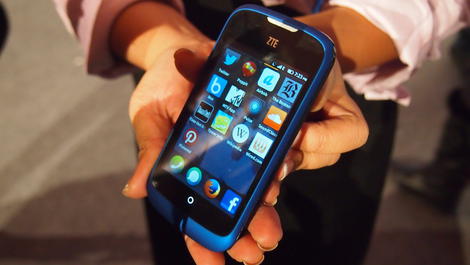
Mozilla has named Andreas Gal its new Chief Technology Officer, the company said in a blog post. Gal will replace Brendan Eich who transitioned from the CTO role to become Mozilla's new CEO, only to step down after 11 days.
Gal joined Mozilla in 2008 to work as a part of the Javascript team. He has also overseen the Firefox OS, Rust, Servo, pdf.js and Shumway initiatives. He will be responsible for leading technical decision-making, representing Mozilla externally on technology, and managing R&D. He will continue to serve as VP of Mobile indefinitely. Gal co-founded the Boot to Gecko open mobile ecosystem. Previously, he worked as a project scientist at the University of California, Irvine, where he holds a Ph.D. in Computer Science.
"Mozilla's goal is to accelerate the advance of mobile by tirelessly pushing the boundaries of what's possible with the Web," Gal said in a personal blog post after the appointment was made.
The anti-gay executive
Eich replaced Jay Sullivan back in March. He is a Mozilla co-founder and the creator of JavaScript. He quit the post after 11 days at the helm following a backlash over a 2008 donation in support of a ban on gay marriage in California. Half of the Mozilla board quit their positions at the company following his appointment.
Read More ...
In Depth: The 5 phones that made Nokia worth buying

It's official: Microsoft has bought Nokia's phone and services division for £3.2 billion, taking on the development of its Windows Phone series and giving the company a stronger foothold in the fight against Google and Apple in the mobile marketplace.
While Nokia's star may have waned in recent years (though the latest batch of Lumias have made at least a few sit up and take notice again), this is a company responsible for a galaxy of classic handsets.
So we've looked back and picked the devices, past and present, gave Nokia the power and momentum that saw it manage to stagger on through some tricky times, and expertise that Microsoft couldn't resist getting its hands on.
1. Nokia 3310

Cast your mind back to late 2000: Bush and Gore were battling for the keys to the White House, and Nokia replaced its hugely successful 3210 with the 3310, which went on to scale even greater heights.
Not everyone had a mobile phone in the early 2000s, but if you did, chances were it was a 3310 or its immediate predecessor.
It made Snake II the most popular game of the age, came in a variety of colours and all-encompassing cases, let you customise the ringtone and even let you send texts above the 160-character limit.
It was one of the first phones to match the blueprint for any successful handset: powerful, versatile, and a pleasure to use.
2. Nokia N95

This was the most feature-packed feature phone in existence before the iPhone turned up, offering cutting-edge capabilities such as GPS and online mapping, an MP3 player, Wi-Fi and 3G support (something the first iPhone lacked), and a 5 megapixel camera that was ahead of its time (recording both images and video).
It had a big, bright, colourful screen and a slide-out design that meant you could hide away the keypad when you didn't need it – in short, it was everything that the iPhone wasn't and caused throngs of users to fly all over the globe to pick it up.
Sadly, it was also the start of the downward trend for Nokia, as the brand failed to recognise that consumers would become less interested in power, and more about ease of use… but it still remains an iconic phone nonetheless.
3. Nokia 1110

The Nokia 1110 remains the company's best-selling phone of all time. In fact, at 250 million units shifted, it's the best-selling handset in history (unless you want to lump all the editions of the iPhone together), so keep that in mind for your next pub quiz trip.
Like most of the classic Nokias, it was user-friendly and simple to operate, and it helped the company expand worldwide into developing countries that it previously hadn't touched.
You didn't get much besides the basic functions with the 1110, and it ran out of juice after five hours or so, but it remains one of Nokia's most important devices in terms of spreading the company's influence and getting its name recognised across the globe.
4. Nokia N9

The N9 wasn't the most successful mobile phone handset that Nokia ever launched — its chassis was stolen from it in the UK market to be used for the Windows Phone-powered Lumia 800 — but it provided evidence that the company could still innovate and provide fresh ideas of its own given half a chance.
The MeeGo mobile OS appeared just as Nokia switched focus to Windows Phone and actually had a lot going for it (including intelligent multi-tasking, a really slick UI, decent Web browsing and a combined notifications system), and it was all wrapped in a stylish-looking chassis that gave a few nods to where Nokia would be heading next (from the brightly coloured casing to the high-spec Carl Zeiss integrated camera).
We doubt Microsoft is going to ever want to fragment its mobile phones operations at all, but at least is shows that Nokia knew how to make a decent OS, and that's going to be gold dust when it looks to polish Windows Phone.
5. Nokia Lumia 925

Back to the present day, and while Nokia has been caught out by the explosion of iOS and Android devices, the Lumia range — and the Nokia Lumia 925 in particular — shows clear signs that Nokia is ready to fight back.
Impressive build quality, a great camera and a top-notch suite of integrated apps (particularly for managing your contacts and social media accounts) makes it the best Nokia phone of the moment.
The only piece of the puzzle missing is third-party app support, and if Microsoft can solve that problem, then hardware like the Lumia 925 and its successors should give it more than half a chance of making Windows Phone a mainstream mobile operating system.

Read More ...
Video: Clean, clever and colourful: this is what iOS 8 needs to look like

Alleged leaked shots of iOS 8 have been coming in thick and fast recently, showing off fresh additions to the app lineup and revealing some tantalising hints around new hardware that might soon fall from the Apple tree.
Provided said images hold water, the new "Watch Utility" icon is our biggest indication yet that an iWatch or something similar is on the cards. Adding weight to this theory is the presence of the new Healthbook app, which we've speculated would require an additional wearable from which to gather the core of its data.
Keen as ever to envision how all this could come together into the full iOS 8 experience, we've put together the following concept video. Feast your eyes on it below, then grab a towel and mop up all that drool.

Read More ...
Available Tags:Google , LG , iPhone 5 , Apple , iPhone , smartphone , Samsung , Galaxy , Logitech , gaming , Motorola , CEO , HTC , his , rumors , iPad , Amazon , Mozilla , Nokia , iOS ,


No comments:
Post a Comment