

Dedicated YouTube channel coming to Roku devices

Using backdoor workarounds to get to YouTube on aging Roku devices has gone the way of the dodo thanks to an update from the set-top box giant today.
An official YouTube app will finally release on all "current gen" devices - i.e. any Roku product that launched post-July 2011 - instead of limiting the channel to Roku 3 and Roku Stick-using streamers.
The only problem is that the update only affects users who live in either the US or UK. Unfortunately those not in the aforementioned geographical locations will just have to wait to an undisclosed time in the future get their Keyboard Cat fix.
This isn't a big threat to streaming rival Amazon who had a dedicated channel on their latest set-top device, the Fire TV, since its launch earlier this month.
Has the inclusion of YouTube swayed you to buy a Roku 3? Check out our review here!
News via techcrunch

Read More ...
Google on the hook for some costs, damages in Apple vs Samsung trial
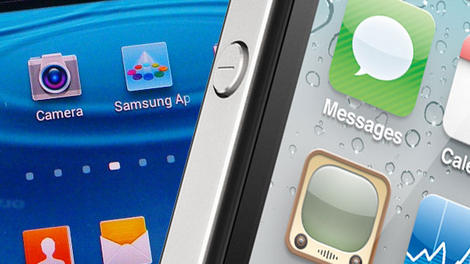
The court battle between Samsung and Apple has long been considered a proxy fight for a larger war between the iPhone maker and Google. Now, we have concrete evidence the Android purveyor is playing a key role behind the scenes.
Emails between Google and Samsung were dissected and authenticated, revealing Google agreed to help the firm behind the Galaxy S5 defend itself against patent infringement claims related to its technology.
The 2012 emails show Google was prepared to "defend and indemnify" Samsung in the use of its tech (specifically two patents related to universal search), of which Apple claims rips off its patents. As it stands, only one of the patents Google agreed to help defend is still on the table in this trial.
Google would not only pay for some of the defense costs, but it would also help cover any damages Samsung was ordered to pay Apple, according to the emails.
It's all in the fine print
The agreement to pay for some defense and damage costs stems from a "Mobile Application Distribution Agreement" between Samsung and Google.Samsung agreed to stick Google apps on its Galaxy devices, and in return Google signed on to help Samsung in cases, such as this one, where the legality of the use of its technology was called into question.
Google patent attorney James Maccoun provided a taped deposition regarding the emails and agreement, and he outlined the set-up between Google and Samsung as one where Google would supply apps as well as backup in case a legal issue - such as this one - arose.
It's not apparent how much if any help Samsung has received or will receive from Google.
Apple is seeking $2 billion (about £1b, AU$2.1b) in damages from Samsung, while Samsung has countered Cupertino owes it $6.2 million (about £3.6m, AU$6.6m) for infringement on its own patents. Unlike the 2012 trial between the two hardware behemoths, this go-round deals with more recent devices, including the iPhone 5 and Galaxy S3.
More than a tussle over devices, the court proceedings are about seeing who will dominant the mobile landscape in the years to come. If one can keep key features from making it to the other's future phones as well as cease sales of old and current devices, then it's one less fight that has to play out in the market.
That is, if the appeals ever end.

Read More ...
Twitter's pretty, yet strangely familiar profile pages are now available to all

Twitter is through testing its redesigned profile pages and is now offering them up to all users.
The revamped profiles, which some users have had access to for a couple of months, feature larger profile and header photos much like those on Facebook and Google+ pages.
Like Facebook's love-it-or-loathe-it Timeline profiles, Twitter has also adopted a well-defined, mosaic style approach to displaying tweets, biography details, trends and photos.
While the firm has said it is in the process of rolling the profiles out to all users, anyone can skip the queue by firing up this link.
Amping up the awesomeness
As well as the enlarged photographic identifiers, users can also pick a particular tweet they wish to pin to the top of their feed to "amplify your awesomeness," as Twitter puts it.Interestingly, tweets that have more interactions will appear larger within the feed than those that were largely ignored by your peers.
Twitter is also offering a new toolbar that brings quick access to all of the tweets containing photos and videos, as well as one-click access to all of the tweets they've favourited down the years.
Finally those adopting the new profiles can choose to view their tweets in one seamless timeline or complete with all of the replies your popular and chatty self garners.
What are your thoughts on the new profiles? It's definitely growing on us, but is it too similar to Facebook for your liking? Share your thoughts below.
Opinion: Gary Marshall asks 'what's the point of Facebook if it's just like Twitter?'

Read More ...
Sony Smartwatch 2 app update makes time for custom watch faces

Sony is fulfilling its promise to continue to update its Android-based Smartwatch 2 instead of jumping ship to Google's promising new Android Wear platform.
The official Smartwatch 2 app has been updated today to bring a customizable watch face editor to the company's wrist-worn wearable.
At a glance, you'll be able to see custom widgets for the date, weather, calendar, Bluetooth, notifications, battery life and alarms set.
The list doesn't stop there. Because Sony has made its smartwatch open to outside developers, you can expect to see new widgets and watch faces from third-party developers.
New apps and UI improvements
Going forward, you'll always have a calculator on hand thanks to the built-in calculator app that's a part of today's SmartWatch 2 update.Email and social media messages are also easier to keep track of. Gmail is now more reliable between the phone and watch and the Facebook app is now more "scrollable."
The Smartwatch 2 backgrounds have been spruced up with six fresh wallpapers options, and a new low light double tap mechanic conveniently increases light by 30% when the display is touched.
Sony teases "new options" and "all sorts of exciting developments" from its wearables team in the future on its official blog post.
Whether that means additional updates to its existing smartwatch, a Sony Smartwatch 3 or an Android Wear device remains to be seen.
- Read our take on the other Android wearable in our Google Glass review

Read More ...
LG G3 may be the host with the most thanks to 'concierge' feature

With the advent of Siri, Google Now and Cortana, users are clearly looking for more than search results when it comes to the information their smartphones provide.
Leaked info slipped to Digital Trends suggest the still-unofficial LG G3 is taking a page from these personal assistants' play books with a new "concierge" service. The name, mercifully, isn't final, but the feature is said to offer contextual information to help you better plan and experience your day.
For example, when checking its AccuWeather weather forecast, the G3 will chime in, "You may want to take an umbrella, since rain is expected this afternoon."
Sure, you probably could have come to that conclusion yourself by looking out the window, but concierge reportedly isn't limited to the obvious. It will tune into data "from various sources" and learn how you use your G3, going on the recommendation rampage from there.
Some sort of advanced personalization tool is also apparently part of concierge, but details on this facet are sketchier.
That's not all
Aside from its rumored assistant powers, the G3 is expected to receive a hearty UI overhaul, something we've heard before and was made obvious once again in today's leak.Circular icons, a flatter, brighter look and a rejiggered pull-down Notification menu all look to have made the G3 cut. In the Notification menu, users will find shortcuts to turn on NFC, Bluetooth, Wi-Fi and cellular data, and the Q Remote button.
The phone may feature a Favorite Contacts window, where bubbles of the people who you like to chat with most live.
Side-by-side comparisons with the LG G Pro 2's interface show a sharper, more sophisticated turn with the LG G3.
Finally, it's important to note the leaked screenshots come in at a resolution of 2560 x 1440, all but confirming the next LG phone should have a stunner for a screen.

Read More ...
WhatsApp adds 50m users since Facebook buyout, surges past half a billion

Facebook's recently-acquired WhatsApp messaging service can now boast an active user-base of half a billion people, little over five years after its inception.
Since the blockbusting $19 billion (£11.2bn, AU$20.2bn) acquisition in February, which was the second largest in tech history, the app has gained an additional 50m users.
In a blog post on Tuesday the firm said a whopping 700 photos and 100m users are now being shared every day, while international growth is at its highest in territories like Russia, Brazil, Mexico and India.
"We could go on," the firm boasted, "but for now, it's more important that we get back to work – because here at WhatsApp, we're just getting started.
Voice calling coming soon?
Ironically, WhatsApp has proved such a phenomenon that it has been able to reach the landmark before its new masters, which took six years to reel in as many members.If growth continues at this pace, not only will WhatsApp fulfil Zuckerberg's billion user prophecy, but it will do so fast than Facebook.
The rumoured addition of voice calling should spur further adoption, while WhatsApp is central to Zuck's Internet.org plans to bring connectivity to the billions around the world without access.
Could we someday see an eventuality where WhatsApp has more users than Facebook?

Read More ...
Review: Acer Aspire AZ3 review

Introduction and design
If Windows 8 deserves credit for anything positive, it's that the operating system spurred an era of touchscreen desktops. With that comes the challenge of producing a touchscreen system with a strong spec sheet and features that remains relatively affordable. Acer enthusiastically takes up this task with the Aspire Z3-605-UR22, an all-in-one PC that sports a large touchscreen and an impressive set of features.The Aspire Z3's minimalistic design downplays its front-facing hardware, which includes an adjustable webcam, a sound bar-style speaker, headphone jack, USB 3.0 port and SD card reader. Located discreetly on the right side is a DVD drive. On the back are additional audio jacks for an external microphone and speakers. You'll also find an Ethernet jack, three more USB ports (one being 3.0), and a handy HDMI-in port.
Underneath the hood are built-in 802.11a/b/g/n Wi-Fi, Bluetooth 4.0 and a 1TB, 7200 rpm hard drive. Sadly, that's about where the impressive specs end. Powering this system is a 1.9GHz, dual-core Intel Core i3-3227U processor with Intel HD Graphics 4000 for video and 4GB of RAM. This all-in-one PC is essentially a large Windows 8 tablet dressed up as a desktop system, trying desperately to keep up the act.

To be clear, this is not an actual tablet-desktop like the Dell XPS 18, but it sure wants to be, minus the convenience and portability. Acer had to trim the specs down somewhere to keep the computer affordable. Unfortunately, it chose to skimp on the heart and soul of the system to bring the price tag down to $799.99 US (about £477, AU$851).
A sensible design
Offering its own PC-centric spin on the Apple 21-inch iMac design, the Aspire Z3 shares a lot with the Lenovo IdeaCentre B540p. Both have 23-inch, 1920 x 1080 screens set in minimal black frames that prop it up, making them appear more like super large digital picture frames than desktop computers. This system practically invites you to forget about the little wireless keyboard and mouse that come packed with it. If it weren't for the somewhat schizophrenic nature of Windows 8, maybe you could.The Z3 looks great on an office desk, where it has a relatively small, albeit wide, footprint. It would also be just as fitting in the living room or kitchen in place of a TV. There's even a convenient handle on the back for easy transport, and it has a sturdy frame. Despite all this, the machine's design doesn't fully commit to the living room entertainment PC spec.

Pictures and videos look great on the Z3's bright LED screen, and sound booms from the built-in speaker, making it ideal for streaming media and looking at photos. I plugged a Sony PS3 into the HDMI port to watch Blu-ray movies and play games, which looked fantastic. I was also pleasantly surprised to discover that I could still use the display through the HDMI after shutting down the computer. However, past this point, many of the unit's flaws started to show.
Specifications and performance
The Z3 is designed for light everyday use and entertainment, but the all-in-one feels like it's missing a few pieces. Here's the Acer Aspire Z3 configuration sent to TechRadar in detail:Spec sheet
- CPU: 1.9GHz Intel Core i3-3227U (dual-core, 3MB cache)
- Graphics: Intel HD Graphics 4000
- RAM: 4GB DDR3
- Screen: 23-inch, 1920 x 1080 IPS, LED backlit display with 10-point multi-touch control
- Storage: Seagate Barracuda 1TB, 7200 rpm hard drive
- Ports: 2 USB 3.0 (1 front facing) ports, 2 USB 2.0 ports, 1 HDMI, 1 headphone jack (front facing), 1 microphone jack (rear), 1 line out jack, 1 SD card reader
- Connectivity: 802.11a/b/g/n Wi-Fi, Bluetooth 4.0
- Camera: 1280 x 720 HD webcam
- Weight: 19.84 pounds
- Size: 22.3 x 17.4 x 2.1 inches (W x D x H)

Performance
The Acer Aspire Z3 certainly isn't a powerhouse. As these benchmark scores show, the system is best used for non-intensive tasks that won't tax the processor or video:- 3DMark: Ice Storm: 20,656; Cloud Gate: 1,789; Fire Strike: 185
- Cinebench Graphics: 5.97 FPS; CPU: 167 points
Nice to watch, but tough to touch
Despite some glaring shortcomings, Acer was spot-on in other ways with the Z3 display. It's big, bright, and usually responsive when browsing and launching apps from the Modern UI. Tasks like browsing a photo gallery, reading news feeds, and messing around with different touchscreen apps worked smoothly.
Things got a little sticky in the desktop UI, where buttons for closing and maximizing windows are tiny in comparison. There is also a significant delay when using the touchscreen to resize windows.
Sometimes the response time would take a dip and I had to swipe more than once, at varying speeds, to close and switch between applications. Even worse is that the glossy touchscreen is rather reflective and lights produce a noticeable glare.
The built-in 720p webcam can tilt up and down using a lever on the back. It is acceptable for video calls, but with a considerable amount of graininess. It's also terrible in low light, as the picture goes completely dark. Lastly, the DVD tray feels quite flimsy and fragile, so it's best to stick with digital formats.

Sounds like a mess
Another bummer: although loud, the speakers pump out weak bass, which produces a lot of distortion. There is no physical volume control on the system, nor is there a remote control. Whatever you plug into the device's HDMI port must have its own independent volume settings. You can adjust the Windows sound using the task bar or the wireless keyboard, but neither have any control over the HDMI audio.Speaking of which, the HDMI input can also be finicky. Switching to the input wasn't a problem at first, but then I started getting a black screen, and it would continually revert back to the main PC screen. Eventually, both the picture and sound were corrupted. The input appeared broken after a day of use, but miraculously started working again.
As for wireless connectivity, I tried numerous times to connect the Z3 with a punchier Bluetooth speaker, but was unsuccessful. It didn't matter if it was a Samsung AirTrack soundbar or a tiny Jawbone Mini Jambox – devices would pair, but wouldn't connect. This was due to a Bluetooth audio driver, or lack thereof, that might point to a Windows 8 issue, but Acer doesn't supply driver support for this problem. No matter the reason, the inability for something as simple as Bluetooth audio was disappointing.

A widely weak machine
There's no shaking the feeling that the Aspire Z3 is designed to be an oversized tablet, and not a very good one at that. The system is hamstrung by its dated processor, with problems that manifest in different ways.This PC did a good job at either performing one medium task, or a number of small tasks that aren't processor intensive. Performance took a severe hit when something as straightforward as a system update or app installation happened in the background. Streaming video stuttered, touch gestures wouldn't register, and nearly every application had fits and starts until the background process finished. Even typing and web browsing became annoyingly slow.
Making matters worse is how the only system light is the power button. There's no way to know if the hard drive is in heavy use. While it's bad enough that the Z3 is pretty much a mono-tasking computer, it gets worse when you further consider what it can actually run.

The computer comes pre-installed with the PointGrab Hand Gesture software, which lets you navigate and perform basic commands using the webcam. Think of it as the layman's Kinect controller. Granted, it's silly to wave your hands at a touchscreen that's within arm's reach, but it could come in handy in the kitchen for hands-free navigation. Unfortunately, this CPU struggles to power the app. After constant stutters and stalls, I was forced to leave it shut off. Just as well, since the software often confused me generally waving my hands for control gestures.
If you want to game on this PC, stick to those with relatively simple graphics and designed for Windows 8. Even then, finding what works well is largely guesswork. Halo: Spartan Assault played well, but Asphalt 8: Airborne displayed noticeable stuttering.

In testing Civilization V's touch controls, I had to tone down the graphics quite a bit. The game started off well, but slowed to a crawl as it progressed. It reached a point where there was a five second delay after pressing the "End Turn" button, even after I stopped using the touch controls and stuck with the included mouse.
Verdict
It's clear that we live in a world where tablets and Ultrabooks are in while big, while heavy desktops are steadily becoming less relevant. An all-in-one PC that looks more like a work of art than a desktop computer is a good start. Having the most features for the lowest price is also a solid strategy. However, in the quest to create a sort of desktop that feels like a tablet, the designers lost sight of what makes a desktop worthwhile.We liked
That 23-inch, 1920 x 1080 screen is so beautiful that I could almost forgive some of the computer's problems. Movies like Gravity look positively stunning, especially if you hook a Blu-ray player into the system. If only there weren't performance hang-ups that completely drag down the user experience. The pretty, responsive touchscreen actually serves to highlight the computer's other shortcomings.We disliked
The weak CPU is not the only issue here, but it's at the root of many of this PC's worst problems. The dated chip drastically limits the computer's capabilities, and thereby its overall usefulness. While most of the Z3's features look impressive on paper, they're rather poor in reality – from an HD webcam that records grainy video to a built-in speaker that's loud, but lacks depth. Even worse is that unreliable HDMI-in port with zero volume control.Final Verdict
The concept behind the Acer Aspire Z3 sounds wonderful: a budget-minded, all-in-one PC designed for light, everyday use. The machine's large, attractive screen is an added bonus that makes video and images pop. It's as if most of Acer's resources were funneled into crafting an attractive system, at the expense of what's inside. It's not until you use the Z3 at length that its flaws come to light. And after adding them up, it's easy to feel misled, the victim of a bait and switch.Furthermore, this PC is barely useable until Window 8 completes its initial updates; all but the most simple tasks are a hassle. Even afterward, be wary of automatic system updates and background processes that could gobble up what little processing power this machine holds. Considering the mounting disappointments, even when the bar was set pretty low, the Aspire Z3 is a gorgeous PC that difficult to recommend.

Read More ...
Apple's iOS 7.1.1 update aims to fix fingerprint fallacies

iPhone 5S users have complained for months that the phone's fingerprint sensor tends to lose accuracy over time, and Apple has finally released an update to iOS 7 that addresses the issue.
The iOS 7.1.1 update purports to improve Touch ID's accuracy, which hopefully means making sure it doesn't forget what your fingerprints look like.
Reports of that issue began arriving last December, and Apple to this day has not tackled the problem directly.
But in February rumor had it Apple was working on a software-based solution, and this could very well be the fix that users have been waiting for.
Breaking the mold
This certainly won't address all of Apple's Touch ID problems, as there are still some handy workarounds for crafty hackers.The rubber mold that fooled the iPhone was recently found to work equally well on Samsung's Galaxy S5 - but at least Samsung recently opened its fingerprint sensor up to third-party developers too, a step in the right direction.
Anyway, remember when you had to plug your iPhone into your computer and open iTunes just to update it? Yeah, just head to the settings menu to update to iOS 7.1.1.
iOS 7.1.1 also makes the official iOS keyboard more responsive and fixes a conflict in the software between Bluetooth keyboards and the VoiceOver user accessibility feature.
- Here's everything TechRadar knows about the iPhone 6

Read More ...
Chief Justice Roberts To Aereo: Drop Dead

Aereo was met with a chilly reception from Chief Justice Roberts during its Supreme Court outing today. "Your technological model is solely based on circumventing," Roberts said of Aereo, making a case for overturning a 2013 appeals court ruling that found in favor of allowing the company to stay in business.
Aereo, which rents out tiny antennas that pick up over-the air TV signals, then streams the results to customers via the Internet, has said that it may be out of business if the case does not go their way. As Aereo founder and CEO Chet Kanojia told the Associated Press, "We don't have a Plan B." Aereo maintains that from a legal standpoint their operation is identical to a perfectly legal scenario wherein a user sets up an antenna in their home and hooks up to a DVR to record shows to watch later.
But Roberts seemed unsympathetic to Aereo's line of reasoning, saying "There's no reason for you to have 10,000 dime-sized antennas except to get around the Copyright Act."
Bear in mind, of course, that Roberts is just one justice and that the Supreme Court is not due to rule on the issue until June. Other justices may well have differing opinions of the company's business model. Justices Sotomayor and Breyer were particularly inquisitive today, and all justices except Thomas asked questions. Interestingly, Justice Alito, who had previously recused himself has decided he will take part after all, eliminating the possibility of a tie (which would uphold the lower court's ruling in Aereo's favor).
Kanojia was in court today to see arguments as was key Aereo backer Barry Diller. Filling out the opposition's ranks were Fox co-COO James Murdoch, Fox Television chief Peter Rice, as well as MPAA CEO Christopher Dodd. If the ruling goes Aereo's way, executives from CBS and Fox have pledged to remove their most popular primetime shows from over-the-air broadcasts, restricting them to customers who pay to receive them via cable or satellite.

Read More ...
VMware announces sunny Q1 revenue bolstered by cloud launches

VMware increased revenue 14% to $1.36 billion (about £810m or au$1.45b) during Q1 2014, compared with the same quarter last year, the company revealed in a written statement ahead of its earnings call. Operating income for Q1 was $241 million (about £143m or au$257m), an increase of 51% from the same quarter last year.
The virtualization technology company's Q1 2014 net income increased 14% to $199 million (about £118m or au$212m), compared with Q1 2013. The company generated $799 million (about £475m or au$853m) of its $1.36 billion (about £810m or au$1.45b) in revenue from services during the quarter. It generated $561 million (about £333m or au$599b) in licensing agreements with clients.
International revenue accounted for 52.3% of the US-based organization's business in Q1 2014.
Q1 highlights
During the quarter VMware completed its $1.54 billion (about £920m or au$1.64b) acquisition of AirWatch, an enterprise mobility management and security company.VMware cited its partnership with Google to provide cloud access to Windows apps and data on Google Chromebooks as one of its quarterly highlights. During Q1 VMware also launched VMware Horizon DaaS, a cloud desktop virtualization solution, VMware vCloud, the organization's hybrid cloud platform, and Virtual SAN, an application-centric storage solution for virtualized networks.
Last week, VMware made available a cloud-based disaster recovery service that is geared toward providing virtualized data centers with continuous protection and uptime.

Read More ...
Nest Learning Thermostat spreads its wings on Google Play

Add smart thermostats to the items you can buy on Google Play.
The Nest Learning Thermostat has made its debut on Google's online store, joining the likes of the Nexus 5 and Chromecast on Mountain View's virtual shelves.
Google bought Nest in February, and this marks the first time a product from the $3.2 billion (about £1.9, AU$3.4b) company is available from Google directly.
Don't look for Nest's other digital home item - the Nest Protect smoke detector - in Google Play any time soon as a glitch that could silence the device halted sales earlier this month.
If the Learning Thermostat's $249 (about £147, AU$265) price tag isn't enticing enough for would-be buyers, consider Nest's promise to plant a tree for every unit sold a little Earth Day-motivation. Rock on, hippies.

Read More ...
Video: Hearthstone arrives on the iPad, but is it better on the tablet or PC?

The free-to-play digital card game Hearthstone: Heroes of Warcraft has skyrocketed to success ever since its first release on the PC in March earlier this year.
With its interactive maps, various decks and straight-forward gameplay that anyone can quickly grasp, it's not hard to see why Hearthstone has become so popular.
Fans of the game have been teased that a mobile version of the game would be out, and now it's finally in the Apple iTunes Store for everyone.
The two different versions had me wondering if there is anything actually different between playing on the iPad version versus on the computer.
Find out in the video below as I discuss a few of the major points with PC Gamer to figure out what makes each experience better, or worse.
Hearthstone for all, with few caveats
There are definite wins and losses with the current two platforms but for the most part, the introduction of the iPad has only increased the player pool. The actual game itself remains the same on both PC and tablet but whether you want to stay wired to a monitor or feel like sitting in bed to play is up to you.Along with the points made in the video, if you happen to shut your iPad Air off randomly, your game won't disappear - but it will in practice mode against the AI and you'll have to start another match. So far in my gameplays, if you lose internet connection, you're simply shown as offline but your human opponent will still be there waiting.

Hearthstone seems like its fast eclipsing other digital card games and the increasing availability is really just Blizzard's way of saying "hey, you liked our game so we're going to turn you into an addict," in the best way possible. With a single player game coming out soon, it will likely grow in popularity.
Currently, you can play on the iPad 2, 3rd and 4th generation iPad, iPad Air, iPad mini and iPad mini with Retina Display.
Hearthstone will be also be out on iPhones, Android devices and Windows 8 tablets later this year.
- Check out our complete list of the 10 best tablets of 2014 while you're at it!

Read More ...
Amazon's smartphone looks to favor tilting gestures over button pushing

The long-rumored Amazon phone will reportedly sport enough sensors to rival Microsoft's Kinect - and those sensors will enable some unique forms of interaction.
The Amazon smartphone will feature four infrared cameras on its face so it can effectively track the position of users' faces in relation to the display, according to BGR, which reportedly spoke with "multiple trusted sources."
Perhaps even more revolutionary, though, will be the Amazon handset's tilt controls, which may aim to make the large phone (4.7 inches, according to rumor) easier to use with one hand.
It seems these tilt controls will not only replace existing essential functions, but also will create new features, like revealing extraneous but helpful information without requiring touch interactions.
Tilt to live
For example, the site's sources said, tilting the Amazon phone in the maps app might reveal Yelp ratings for any visible restaurants.Or tilting the phone could reveal labels beneath icons in apps where they aren't normally present, in case you forget what a button does.
The tilt gestures would be present in Amazon's included first-party apps, of course - tilting in Amazon's video store could reveal IMDB ratings, and moving the phone on Amazon.com product listings might flip between photos.

However the new controls might also cause menus that would previously have been accessed with a tap to slide in on the left or right side of the screen when the phone is tilted in the corresponding direction.
Tilting could reveal the X-Ray menu in the Kindle app, or a photo pane in the messaging app, or extended forecasts in weather. And really obvious functions - like scrolling up and down in books and websites when the phone is tilted - will be possible as well.
Read the signs
There's one more new feature of note, the sources said: the Amazon phone will have special optical character recognition software that can interpret and convert text captured using the rear camera.Using this function you might snap a photo of a business card to have the phone automatically add information to your contacts, or be able to quickly translate signs written in a foreign language.
There's plenty more we'd like to know about the Amazon phone, but for now there's no official word. That could change any time, though, so keep watching for more info.

Read More ...
Google weighs end-to-end encryption for Gmail service

Nearly a year after Edward Snowden revealed to the world just how far the US government was willing to go with its surveillance initiatives, companies like Google continue to explore methods to shore up the security of user data.
VentureBeat reported Monday that Google is researching new ways to keep Gmail missives away from prying eyes, and the answer could lie with an open-source standard more than two decades old.
According to an unnamed Google source, the search giant is seeking ways to make its decade-old Gmail service work seamlessly with existing Pretty Good Privacy (PGP) encryption utilities currently used on text messages, emails, files or even entire disk partitions.
With more than 425 million global users, Gmail is technically already PGP compatible, but could benefit from end-to-end encryption the Google source called "the best defense for message protection" despite a "considerable cost in functionality."
Who holds the keys?
In the consumer world, such end-to-end encryption tools are most notably used with Firefox Sync, which the Electronic Frontier Foundation (EFF) explains offers a decryption key-based approach which ultimately places more responsibility on end users.Likewise, third-party services such as GPG Tools and Mailvelope have gone a long way toward making PGP encryption more approachable, but have yet to crack into what the report calls a "mainstream audience."
Considerable security benefits aside, Google will likely stop short of site-wide adoption, given that Gmail messages must first be scanned in order to create targeted advertising, the company's bread and butter.
The report also doesn't offer any clues as to how Google might integrate PGP into Gmail, suggesting that any such solution could ultimately "end up buried behind a settings menu" where users could wind up simply ignoring it.
- Find out what iPad Air has to offer in our full review!

Read More ...
Win for broadcasters as London cops shut down Sports Torrent Network
A popular sports streaming site has decided to shut down operations after threats from London police.
The Sports Torrent Network, believed to have over 20,000 users on both sides of the Atlantic, closed its doors after jail threats gave the proprietors no choice.
The site, which had its own capping team, had become one of the more popular options for those seeking to circumnavigate the need for Sky and BT Sport subscriptions in order to watch top sport.
"We are sad the site had to go but feel it was the only option," a staff member reportedly told the Torrent Freak website.
Hunted down by the fuzz
According to the report, the threats came from the Police Intellectual Property Crime Unit (PIPCU), which has been given government funding to go after unauthorised downloads and streaming sites.The unit is said to have resumed its direct approaches to sites, after overtures to registrars and advertisers proved less successful. The Sports Torrent Network's closure is the result of those efforts.
The closure of the STN network follows the blocking of the FirstRowSports site in the UK, another site that offered access to top sporting action via dodgy streams.
Is the battle being against illegal streaming of content being won, or will another site simply emerge to fill the gap? Let us know your thoughts in the comments section below.

Read More ...
PlayStation Gamer: Why NBA 2K14 is the PS4 RPG to beat

Flick open the gaming section of Writing for Film and TV for Lazy Hacks, and find the chapter on RPGs. You'll recognise the description instantly: man in late twenties sits in mother's basement, his face illuminated in an otherwise pitch-black room by the glow of his LED gaming keyboard.
He's either painfully thin or morbidly obese, and his on-screen character is a grubby, throbbing mess of manliness in ebony armour carrying a sword bigger than Peter Crouch (the book recommends making the most of this reality-game disparity for maximum lols). He clatters at his keyboard and mouse like a concert pianist while a dragon gets hosed by magical abilities in a forest.
Just before the mighty beast's health bar is fully depleted, in comes the guy's mum to tell him dinner's ready. The dozy cow! Doesn't she realise the whole realm's at stake? And scene.
In short, RPG gaming doesn't have a tremendously glamorous or likeable image. Perhaps part of role-playing's PR problem is that it implies a lack of investment in reality. It's associated with spending massive amounts of time pretending to be somebody you're not. You want to escape into a fantasy world, so you must be lacking IRL. Poor you.
It's a massive generalisation to make, but it doesn't stop movies, TV shows, internet comments and even me from making it pretty regularly. I very rarely introduce myself to girls by telling them how I carried over my saves from Mass Effect 1 all the way through to 3 because I'd been so successful at keeping my crewmates safe, even though that's the most responsible and committed thing I've ever done.
Which is why it's so important to establish that NBA 2K14, with LeBron James on the cover and Robin Thicke on its soundtrack and its MyCareer mode (the singleplayer epic that takes your created player from entry draft to Hall of Fame) is absolutely an RPG. A glamorous, sexy RPG that will never garner such condescending looks as its Elven-eared, kobold-slaying brethren.
Hoop dream
RPGs are about playing a role, being someone you couldn't otherwise be. For me, a 5'10", 70kg games journalist from Askham Bryan in the Vale of York, being a starting power forward for the Phoenix Suns is just as far into the realm of fantasy as being Cthulu.You love Skyrim so much because if you like you can just chill out in Riften all day watching people mill around, pop into the Bee and Barb at dusk and then go to bed, comforted by the sense of an entire ecosystem living all around you. In any decent RPG, the lore (a word that instantly summons our basement-dwelling friend from the opening) is extensive enough to hold your disbelief suspended over long periods.

So where's the lore in NBA 2K14? 2K's sport sim actually better at supplying the illusion of a world around you than most dungeon-dwelling RPGs. You see yourself flying in private jets with team-mates to away games. You vent your frustrations with coach about the lack of minutes you're getting, and the exchange has repercussions.
Commentators debate your career prospects while you play. Players, fans and pundits tweet you daily to slate or celebrate your performances. At no point, on the court or off it, do you have any reason to zoom out mentally and remind yourself that you're controlling some polygons and watching some cut-scenes. You're living an NBA player's life - at least, the bits you've fantasised about.
+1 swagger
And, of course, RPGs are about stats. Call it "character progression" if you like, but essentially you're doing what you need to do to make the numbers go up in a particular menu until it feels like you're God. And holy damn, if you've played a second of NBA 2K you know how important, how all-consuming those stats are.Not just your base stats - speed, 3-point shooting, blocking - but perks too, like warming up quickly in front of a home crowd, or being more likely to pull of flashy dunks. Your time on-court is the combat of NBA 2K. Sure, the controls are a little different, but the principles are identical: you're using the advantages of your class (7ft center with blocking perk, or lithe 3-point specialist PG) to prevail on the field of battle.

This is a game that ensconces you in a fantasy world, encourages you to grind at stats, gives you dialogue options, and requires tens or even hundreds of hours of play to get the most from. And it pulls the rug out entirely from under that stereotype we began with. There's much less stigma attached to striving for hall-of-famer status in NBA 2K than there is in shouting a talking dragon to death in Skyrim, yet they require just as much time investment.
It's time to kill all the stereotypes. Dragon Age veterans: put aside your preconceptions about sports games and shoot some hoops, you'll love it. Sports game jocks: no-one will laugh at you for giving Dark Souls II a go, and you'll love that too. And ladies, did I ever tell you about the time I was drafted sixth overall by the Phoenix Suns and led the league in offensive rebounds in my rookie year?
Phil Iwaniuk is games editor at Official PlayStation Magazine UK. In his teenage years, he spent a whole summer trying to dunk on a 10-foot rim. He still can't.
Gaming on TechRadar

- Is Sony's Driveclub PS4 delay the death knell for a genre?
- PlayStation games are coming to PC
- Real gamers appreciate the joy of player limits
- Why Virtual Reality is the future of PlayStation 4
- How technology shapes the future of gaming
- Will the PS Vita Slim be Sony's last handheld console?
- Has Gears of War killed this hot new Xbox One game?
- 5 best PS Vita Slim games
- Lara Croft in Final Fantasy makes me want to smash things
- It's time for the Xbox 360's last great adventure
- The amazing game that proves resolution isn't everything

Read More ...
Updated: LG G3 release date, news and rumors

LG G3 release date, OS, screen and camera
LG surprised us all with last year's LG G2. It combined top flight specs with innovative features and alongside the Nexus 4 and Nexus 5 it really put LG back on the mobile map.But the company faces a bigger challenge now as it's got to keep that momentum going with an even more impressive successor - the LG G3.
Little is known about that successor, though a number of rumors are starting to bubble up. We've scoured the web for all the juicy gossip and put it in one place to start to paint a picture of the LG G3.
First of all, to get the completely unsurprising bit out of the way, it looks like the handset will indeed be called the LG G3, as LG has applied to trademark 'G3'. With that said, let's get down to business.
Cut to the chase
What is it? The sequel to 2013's excellent LG G2
When is it out? Between May and July 2014
What will it cost? It may be slightly cheaper than direct rivals
What is it? The sequel to 2013's excellent LG G2
When is it out? Between May and July 2014
What will it cost? It may be slightly cheaper than direct rivals
LG G3 release date and price
One release date doing the rounds is May 17, a date which comes from Korean site asiae.co.kr, which in turn heard it from "industry sources."The LG G2 didn't arrive until September, so a launch as early as May seems a little unlikely, but reportedly it's being done to allow the G3 to better compete with the Samsung Galaxy S5, Sony Xperia Z2 and new HTC One.
For what it's worth the same source claimed the LG G Pro 2 would be launched in February, which it was right about, so there could be something to its LG G3 claims.

On the other hand German site Giga Android is claiming a "source close to the matter" has quoted a June launch, while an anonymous user of the ortud.com forum claimed the device will probably launch in July.
The most recent date also points to July as ZNet Korea spoke to a 'senior company official' who claimed it would be announced in late June and released in early July. Whatever the case it looks like it might arrive earlier in the year than the LG G2 did.
There's no word on what it might sell for yet, but this is a flagship phone we're talking about, so it will cost a lot. However LG's flagships have tended to slightly undercut Samsung and HTC rivals, so keep your fingers crossed.
LG G3 display
The LG G3 will apparently have a 1440 x 2560 QHD display, according to the same "industry source" as the May release date rumors. It's said to be 5.5 inches in size, which if true would amount to 534 pixels per inch.We were a little skeptical about this at first as it felt like wishful thinking rather than anything grounded in reality.
The rumors surrounding the high-res display have since ramped up with LG telling PC Advisor that it will launch a Quad HD smartphone in the second half of 2014. Could it be referring to the LG G3? Quite possibly.
A user agent profile leak listed a QHD display on a handset sporting the LG D850 model ID and a "source at LG" told Phone Arena we'll see a 2K screen on the G3.
As if all that wasn't enough, some potential LG G3 specs have been spotted on US carrier Sprint's website, with a screen resolution of the LG LG990 quoted at 1440 x 2560.

We've also caught our first glimpse of what is supposedly the LG G3 itself and it handily had a benchmark up on the screen, which listed a 1440 x 2560 resolution. Ubergizmo, which received the image, also claims to have got confirmation from LG that it will indeed have a 2K screen and The Verge has now received a similar confirmation.
So a QHD display is certainly looking likely at this point, but the most recent rumor casts some doubts. AnTuTu seems to have two versions of the LG G3 listed in its benchmarks, one of which does indeed have that ludicrously high-res display, while the other has a more standard 1920 x 1080 resolution.
Weirder still the Quad HD version only has 2GB of RAM, while the 1080p one is listed as having 3GB, which seem odd pairings. Whether this means that buyers will have to choose between RAM and resolution, or that different markets will be stuck with one or the other, or indeed whether one of these phones is a different handset entirely, remains to be seen.
1080 x 1920 is the current go-to resolution for flagship phones such as the Samsung Galaxy S5 and Sony Xperia Z2, but if the LG G3 intends to stand out from the crowd a QHD screen could certainly help, and based on the rumors so far a Quad HD screen looks all but guaranteed, at least on one version of the handset.
LG G3 processor and RAM
The LG G2 has a 2.26GHz quad-core Snapdragon 800 processor, which is still pretty impressive, but early rumors hinted at LG using its in-house Odin processor and an octa-core version of it is tipped for the LG G3.The existence of that processor has recently been confirmed by the Korea Herald, which spoke to a representative of LG and learnt that the company's Odin processor would launch "soon", so the timing could certainly work for an LG G3 debut.
While the speed of the processor hasn't been confirmed, reports claim that the octa-core version will have four cores clocked at 2.2GHz and the other four clocked at 1.7GHz, which should give it a sizable boost over the LG G2.

It's worth noting that most new flagships get tipped for octa-core processors at the moment and it doesn't always pan out, while it could equally be that only certain variants of the handset will get octa-core power, as we've seen in the likes of the Samsung Galaxy S4.
Indeed that could happen again here as other recent reports have been toned down to a more believable 2.3GHz quad-core offering, although reports of the G3 only using the Snapdragon 800 chipset and not the 801 which appears in the Galaxy S5, Xperia Z2 and One M8 are a little disappointing.
In terms of RAM the LG G3 is being tipped to come with 3GB, up from 2GB in the G2 and keeping it inline with its direct rivals. Though what might be a variant of the phone has now appeared on AnTuTu with just 2GB of RAM. Apparently it'll also sport 32GB of internal storage and a microSD slot.
That G3 variant has cropped up again, this time in a UA Profile from American network Sprint, which originally pegged the LG G3 as having 3GB of RAM, but it's now been amended to say 2GB.
LG G3 operating system

A benchmark for a mystery Android handset believed to be the LG G3 due to its model number of LG-D830 (which is similar to the G2's D802 model number) showed that it ran Android 4.4 KitKat. No surprise there, this is a flagship after all.
It seems a safe bet that the G3 will use LG's Optimus UI and include recent innovations like Knock Code, which takes KnockOn to the next level by allowing users to tap a pattern on the screen when it's off, to both turn it on and unlock it.
LG is tipped to be overhauling its smartphone UI especially for the G3, with a screenshot appearing online claiming to be the firm's next generation interface.
If legit, you can expect the LG G3 to sport a flatter user interface which looks less childish than the overlay on the G2, while the clock and weather widget has an air of Samsung's TouchWiz about it.
According to a Phone Arena source the new LG G3 will have advanced personalization features, allowing it to learn your usage patterns and adapt the interface based on your needs at any given time.
That sounds similar to features we see on Samsung, Sony and Motorola handsets which can trigger certain settings at particular locations or time of day, but perhaps LG is going to take things a step further on the G3.
LG G3 camera
Initial rumors coming out of ZDNet Korea pointed towards a 16MP sensor, but more recent leaks suggest a 13MP one.What will probably be the first of many photos supposedly taken on the handset appeared the other day. The picture was an impressively detailed image of a cat and had a resolution of 4260 x 2342 according to the EXIF data.

That equates to 9.6MP at a 16:9 aspect ratio, which would mean the camera should be capable of taking 13MP photos at a 4:3 ratio.
The photo was posted on the ortud.com forum by someone going by the name 'Geek'. The poster claimed their friend was testing the phone and that it had a 13MP camera with optical image stabilization plus (OIS+) and that it's very similar to the snapper in the LG G Pro 2.
The posters megapixel claims match those revealed by the EXIF data, but that's something that's very easy to fake. Not to mention the fact that the device is listed as an LG-D972, which isn't a model number that we've ever come across.

If it does turn out to be real then it will have the same number of megapixels as the LG G2, but given the quality of the leaked image it looks like it could still be capable of taking significantly better photos.
Phone Arena also received a User Agent profile from an anonymous source which showed a device going by the name LG D830 (the same device as appeared in benchmarks) as having a 13MP camera along with support for 4K video playback and 120fps slow motion video.
An anonymous source who apparently got a hands on look at the phone also reported to the Bulgarian blog Nixanbal that the LG G3 will have a 13MP camera, along with a dual-LED flash.
Meanwhile the front-facing camera is being pegged at 2MP, based on information found in an AnTuTu benchmark. The same benchmark listed a 13MP main snapper, matching most previous rumors.
While the majority of the rumors are pointing towards a 13MP snapper on the LG G3, there have also been reports that it may match its Korean rival - the Galaxy S5 - with a 16MP offering on the rear.
This comes via an updated UA Profile on US carrier Sprint's website, which also cites a 2.4MP front facing camera.
Chassis, security and what we want
LG G3 chassis
LG did a fairly good job of keeping the design of the G3 quiet, but information is finally starting to slip out. According to an anonymous source the LG G3 will have a polycarbonate back, just like the LG G2.But while the G2's back had a glossy finish, this time it will be matte and look a lot like the brushed metal exterior of the HTC One (M8).
The back cover will also apparently be removable and the handset will retain its rear keys, with no buttons on the front or side. There will be a slight change though as apparently the buttons have been shrunk in size and the power key now has an LED in it.

Moving on to the front of the handset it will apparently have very small bezels, allowing LG to fit that rumored 5.5 inch screen into a body no larger than the Samsung Galaxy S5. A separate rumor points to the LG G3 launching in a choice of black, white or gold.
It also looks like the LG G3 might have a water and dust proof body, according to a source who spoke to ETNews.
It's a feature that seems to be all the rage these days, with both Samsung and Sony building flagships that can withstand the elements, so it wouldn't be surprising if LG did the same. Beyond that you know as much as we do.
That LG G3 mockup above starts to look a little more legit after @evleaks posted pictures of another LG handset dubbed the LG isai FL.

The original LG isai launched in 2013 and sported almost identical specs to the LG G2, so this could be a taster of what's to come in the G3.
According to the leak the isai FL will sport a 2.5GHz quad-core Snapdragon 801 chip, 5.5-inch LCD display, 2GB of RAM, 32GB of internal storage with a microSD slot, 3000mAh battery, water-resistant body and Android 4.4 KitKat.
LG G3 fingerprint or eye scanner
Back in January we heard from South Korean site ETNews that the LG G3 might have a fingerprint scanner.It would make sense, as the iPhone 5S, HTC One Max and Samsung Galaxy S5 all sport one and you'd think LG would want to be part of the club.
Still, we'd take the rumor with a pinch of salt as the same report claimed that the LG G Pro 2 was likely to feature a fingerprint scanner and it didn't.

But the rumors don't end there. More recently ZDNet Korea reported that LG was considering biometric authentication (specifically either fingerprint or iris scanners) in its future products.
Expressing interest in something is hardly a confirmation that it's happening, but that hasn't stopped certain corners of the internet from concluding that it will be a feature of the LG G3.
5 things we want to see
That's all we've heard so far, but while we wait for more rumors to emerge here are five things that LG really should include in the G3:1. A metal chassis
There was a time when it was only Apple making truly stunning smartphones, but now HTC and Sony have got in on the act too.Samsung might be stubbornly sticking to plastic but then it's got enough market share that it can pretty much do whatever it wants. LG doesn't have that luxury and if it wants to turn heads an all-metal LG G3 would be a good start.
2. An iris scanner

There's the ghost of a whisper that this might happen, but we're far from convinced. It should though.
If done well it could be an even slicker alternative to the fingerprint scanners that manufacturers are currently going mad for and it would put LG ahead of the game, rather than playing catch-up.
3. A beastly battery
The LG G2 has pretty great battery life as it is, so we're hopeful that the LG G3 will follow suit. Battery life is one of the last remaining hurdles manufacturers need to overcome, but it's a big one.We'd take a battery which can last several days between charges over increased power or screen size in a heartbeat.
4. A 64-bit processor
There was talk that Samsung might include a 64-bit processor in the Galaxy S5, but that didn't happen, which now gives LG the chance to beat Samsung to the punch.It's debatable how useful a 64-bit processor would even be right now, but it would help to future proof it at least.
5. Bulked up storage
We're not too sold on microSD cards, but we are fans of plenty of storage space, so a bigger hard drive would be great. The iPad Air comes with up to 128GB, as does a phone in China, so why not the LG G3?- Like LG but want something a little smaller? Check out the LG G2 mini

Read More ...
In Depth: Amazon Kindle Fire HDX 2 release date, news and rumors

Amazon has gone from retail giant to unlikely tech powerhouse, with first the Kindle ereader, then the Kindle Fire tablet and now a whole host of products, such as Prime Instant Video and Fire TV set top box.
Clearly Amazon is serious about making it big in the consumer technology market and the Kindle Fire was one if its early successes, going a long way to popularising the - inch tablet market.
Amazon has since brought out a few similarly successful follow-ons, but the most recent two, the Kindle Fire HDX 7 and the Kindle Fire HDX 8.9, were both released back in November 2013, so we're expecting at least one new Kindle Fire slate in 2014.
That said, so far Amazon has managed to stay very quiet about it indeed, to the point where there isn't a single leak or rumor doing the rounds, so for now all we can do is speculate.
Cut to the chase
What is it? Amazon's next generation low cost tablet
When is it out? Late 2014 is looking likely
What will it cost? Not a lot, sub £200, $230 for the 7-inch slate
What is it? Amazon's next generation low cost tablet
When is it out? Late 2014 is looking likely
What will it cost? Not a lot, sub £200, $230 for the 7-inch slate
Amazon Kindle Fire HDX 2 release date and price
We've heard absolutely nothing about a possible release date for the new Amazon Kindle Fire HDX 2 (if that's even what it ends up being called), but the Kindle Fire HDX was released in November and the Kindle Fire HD came out in October of the previous year.Going on past form we'd expect a new Kindle Fire release date in either October or November, but certainly towards the end of the year.
That's a good few months away yet which would also explain why we haven't heard anything about the slate so far.
We can also take a good stab at roughly what the price might be based on the current models. The 7-inch version of the Kindle Fire HDX launched for £199 / $229 while the 8.9-inch model started at a rather more premium £339 / $379.
We'd expect Amazon will stay roughly around those prices for the new Kindle Fire HDX versions, assuming it launches in those sizes.
The main USP of the Kindle Fire range is arguably its low price tag married to decent specs, so we can't see any Kindle Fire tablet costing more than about £350 / $400 and the 7-inch model won't want to go much above £200 / $230 for a 16GB version if it wants to stay competitive with the similarly priced Nexus 7.
Amazon Kindle Fire HDX 2 display
As the Amazon Kindle Fire HDX and HD both launched in 7-inch and 8.9-inch size points we'd expect the Kindle Fire HDX 2 will do the same.
It's possible that Amazon will throw a curve ball and ditch a size point or add a different one, but there's no reason to think so. 7 inches and 8.9 inches cover the small and large end of the tablet scale pretty well.
We may not see any change in resolution, as Amazon's latest slates already boast full HD displays and it's unlikely the Quad HD (3840 x 2160) technology will be in a cost effective position for the new Kindle Fire HDX range later this yet.
Amazon Kindle Fire HDX 2 processor
The current Kindle Fire HDX uses a Snapdragon 800 quad-core processor, but a report from late last year claims that Amazon has ordered shipments of MediaTek's MT8135 quad-core processor for delivery in 2014, suggesting that we might see a MediaTek powered Kindle Fire HDX 2.If so then it may not be quite as powerful as its Snapdragon equipped competition, but on the other hand MediaTek processors tend to be cheaper, so Amazon could be saving some money and planning to pass that saving on to customers. If the Kindle Fire HDX 2 can undercut other quad-core tablets then that could work in its favour more than having a bit of extra power.
On the other hand, if this is even true, it could be that Amazon is working on multiple new slates and that there'll be a budget MediaTek option alongside a more premium Snapdragon one.
What we want to see
The Kindle Fire HDX is a great tablet, with fairly high end specs, an affordable price tag and some handy Amazon features, like Mayday and access to Amazon Instant Video.It's not perfect though, so here's what we'd like to see this time around from the new Kindle Fire HDX 2.
1. Google Play access
The Kindle Fire HDX range runs Android, but its a heavily forked version that Amazon has locked down. As a result users have to get apps and other content from the Amazon App Store.That's not the end of the world as it's actually pretty well stocked, but Google Play has it beat, not to mention the fact that on most Android devices you can use Amazon or Google for apps, rather than just being locked into one. It would be great if the Kindle Fire HDX 2 had this functionality too.
It's pretty unlikely to happen though because of course Amazon wants you to buy things from its own store and if it ever did add Google Play access it may end up raising the price of its slates to compensate.
2. A greater app selection
This ties into the first want, but if Amazon isn't going to let us use Google Play then it needs to improve the selection in it's own store.It's not bad at all but it's got a far smaller selection of apps than Google Play or the Apple App Store, particularly when it comes to games and productivity software.
3. A more premium design
The Kindle Fire HDX range is focussed on value for money and when it's undercutting it's competitors you can forgive things like an underwhelming build, but that doesn't mean we wouldn't prefer a better one.Not only is the Kindle Fire HDX heavy on the plastic, it's also just a little bit dull, so a more eye catching, inspired and ideally premium design on the Kindle Fire HDX 2 would certainly be a welcome change.
4. A water and dust proof build
Phones are increasingly becoming water and dust resistant and Sony has even packed the tech into its Xperia Tablet Z and Xperia Z2 Tablet, so we'd love to see Amazon follow suit and make the Kindle Fire HDX 2 water and dust resistant.Sure, you're not likely to take your slate swimming, but you probably will sometimes want to put a cup of coffee down next to it and it would be nice not to have to worry about bricking it with an accidental spill.
5. A microSD card slot (or more built in storage)
Amazon isn't especially stingy with storage, as the company sells its Kindle Fire HDX with up to 64GB built in, but tablets are all about media and with a mix of films, games and music you could quickly fill even that up. So we'd love to see the company up the storage size to 128GB in the next model, or add a microSD card slot. Better yet, do both.6. A bigger screen
Amazon has the 7 inch tablet market covered, but the larger Kindle Fire HDX comes in at a slightly awakward 8.9 inches rather than the 10.1 inches favoured by most of its rivals. We're sure there's a big market for an 8.9 inch slate but if we want a big tablet we want, well, a big tablet, and 10.1 inches is tried and tested as a nice balance between size and portability, so a 10.1 inch Kindle Fire HDX 2 would be a good addition to the range.7. Front-facing speakers
The audio quality on the Kindle Fire HDX is pretty good, but the speakers are on the back, which just doesn't make any sense to us despite it being the normal place for tablets to have them.Think about it, if you're listening to music it doesn't much matter which side the speakers are on and if you're watching a video or playing a game it makes more sense to have them on the front so the sound is coming towards you. It might make the front of the tablet look a little messy but we can live with that.
- Looking for a larger tablet on a budget? Consider the Google Nexus 10.

Read More ...
Video: Picture perfect: how to take better photos with your phone

Smartphone camera tech is as impressive as it's ever been. Today, a mobile phone can be a more than adequate replacement for a mid-range digital camera, with Sony, Samsung, Nokia and HTC all pumping top dollar into their handsets' picture-taking prowess.
Unfortunately, top dollar is exactly the amount said companies will expect you to cough up for their latest and greatest. So if you're going to drop a small fortune on a phone with top-notch camera credentials, you should probably know your way around it.
TechRadar's no-nonsense guide is packed full of easy-to-follow tips and tricks to help you get the best from your smartphone camera. Check it out below, then get out there and start snapping.
- Read Marc Flore's in-depth guide here

Read More ...
Industry voice: Security demands to drive innovation in cloud storage

The 'cloud' has struggled through a turbulent year: its name was slandered when Nirvanix closed its doors and Snowden's escape to Russia did little to ease concerns over information security. The next 12 months will bring with it a shift in customer demands as security in the cloud becomes a top priority.
First and foremost, customers will increasingly change how they choose what to store and where to store it. Security, flexibility and trust will become ever more important, giving rise to a new market of tools and services that protect information.
Additionally, smaller service providers will emphasise their proximity and personal service to woo customers and differentiate themselves from larger, more dominant cloud service providers.
I'm looking forward to seeing a number of innovations in 2014 that will have a positive impact on the cloud storage world for years to come. Below, I've compiled my top three predictions in the cloud storage market for the rest of 2014:
Rising emphasis on security
After living through a year of PRISM and other Snowden-like disclosures, consumers and businesses will be much more aware of what data and information they are willing to upload to off-premise, potentially non-secure servers.Keeping that in mind, many companies will take steps to increase their security measures and better protect sensitive information. Despite Dropbox's high prospects and valuation, we'll start seeing more companies blocking access to services like Dropbox and shift from public clouds toward private, more secure clouds hosted on their premises, allowing data to remain under their own control.
New tools and services to protect data in the cloud
As more and more people choose to store their business-critical workload in the cloud, issues of business continuity will become front and centre. With larger volumes of data being stored, the likelihood of a significant disaster or failure increases.Due to increased risks, we will see a demand in the market for new, innovative solutions to combat downtime and data loss in the cloud. Companies will utilise different ways to back up cloud-based data, and migrate machines to other clouds quickly and seamlessly.
Increased focus on physical location of cloud servers
Customers will now opt to use cloud providers who store data in a geographically proximate location-most importantly within their own country. I believe this will be far more evident in Europe than other regions, but present throughout the globe.This 'data nationalism' will provide perceived protection from foreign governments. At the same time, it will give smaller, local cloud service providers an edge over giants like Amazon.
These smaller providers will be able to devote significant time and energy to offering personalized, local services that better fit to an individual customer's needs. Get ready for the rise of smaller cloud providers in 2014.
- Sergey Kandaurov is the Director of Product Management at Acronis. Sergey leads strategic management and Acronis' portfolio of backup and disaster recovery tools and solutions.

Read More ...
Cisco's 'Managed Threat Defense' solution is designed to detect and prevent attacks

Cisco introduced a security solution geared toward attack detection and prevention, the company said in a statement. “Managed Threat Defense” is designed to leverage real-time, predictive analytics to ensure attacks that aren’t detected by antivirus solutions are caught in real time.
The new tool is an on-premise combination of hardware and software. Cisco’s team will be responsible for monitoring activity that occurs within the service network in order to attempt to detect incidents, provide response analysis, monitor incident escalation, and provide remediation recommendations. Incident tracking and reporting is available via a subscription.
Managed Threat Defense will be integrated with Hadoop 2.0 in order to attempt to apply predictive analytics to identify anomalous patterns in order to detect oncoming attacks. The solution is also designed to find vulnerabilities using pattern analysis and community threat intelligence data.
DDoS attacks
Cisco recently released patches for six flaws in its Internetwork Operating System. At the time Cisco said that the vulnerabilities were serious and could have been used to mount DDoS attacks on customers.A recent Akamai survey reported DDoS attacks were 47% more frequent in Q1 2014 than they were during the same quarter last year.
The Internet of Things
In addition to investments in security solutions, Cisco has recently focused on helping clients construct an Internet of Things.In March, Cisco said it would invest $1 billion (£605 million, AU$1.1 billion) to build what it says will be the world's largest Intercloud network to tackle the Internet of Everything. The two-year investment will see Cisco and its partners develop an open network of clouds with APIs for rapid application development to serve the enterprise market.
In February at Mobile World Congress, Cisco hosted a number of demonstrations on how to transform user experiences with heterogeneous access, how to capture new markets with elastic mobile networks, and how to monetize and optimize with experience-aware networks.
Cisco also unveiled plans to connect the Internet of Things to cloud data centers using “fog computing” solutions, which the company says will be a "highly virtualized platform that provides compute, storage and networking services between devices and cloud computing data centers.”

Read More ...
Verizon finds nearly all cyber-threats are made up of nine 'patterns'

A study by US telco Verizon has found that nine basic "patterns" make up 92% of Internet security threats.
Furthermore, almost three-quarters of threats (72%) in any given industry are made up of three basic patterns. The study analyzed 100,000 security incidents that took place over the past 10 years.
The 2014 Data Breach Investigations Report identifies the nine main threat types to businesses as user errors (such as sending an email to the wrong person), malware aimed at gaining control of systems, insider / privilege misuse, physical theft / loss, Web app attacks, denial of service attacks, cyber-espionage, point-of-sale intrusions and payment card skimming.
Misused credentials
The report found that the use of stolen or misused credentials is the top way to gain access to information and that two-thirds of breaches exploit weak or stolen passwords. It also found that distributed denial of service attacks (DDoS) have grown stronger year-over-year for the past three years.Wade Baker, principal author of the Data Breach Investigations Report series, stressed that the report showed no organization is immune from a data breach and that the increasing difficulty in identifying attacks is compounding the issue.
"After analyzing 10 years of data, we realize most organizations cannot keep up with cybercrime - and the bad guys are winning," said Baker. "But by applying big data analytics to security risk management, we can begin to bend the curve and combat cyber-crime more effectively and strategically."

Read More ...
Nvidia Shield 2 promises some hefty firepower

The original Nvidia Shield was a neat way of getting PC gaming onto a handheld and, although it didn't quite set the world alight, it looks as though Nvidia is determined to push ahead with a sequel.
A new Shield device has been spotted being tested over at AnTuTu. This one runs a meaty 2.5GHz K1 processor with 4GB of RAM and a Kepler graphics unit.
The resolution of this Shield is 1440 x 810 pixels, while the original sits at 1280 x 720. As G for Games points out, it's possible that the extra height is to accommodate the Android nav bar.
Finally, it looks like the Shield 2 will arrive running Android 4.2.2 KitKat and will have a 0.3MP front-facing camera. All in all it sounds decent, but we hope it looks a bit sleeker than the original. And a global release would be nice too, yeah?
- We've been wrapping our hands around the Shield, and this is what we think

Read More ...
In Depth: The future of TV: social networks, recommendations and Chromecast

The future of TV explained
It used to be that the television was the centre piece of your living room. An influx of smaller screens in the home, though, has meant that the TV has had to fight a lot harder in recent years for your attention.One way it has done this is with new technology. While 3D fell by the wayside, due to gimmickry, smart TV functionality has finally started to shine through and then there is 4K - a technology that has quickly changed from an out-of-reach luxury to a near affordable one.
The biggest change arguably though is web connectivity. The internet has transformed into the most powerful tool for the broadcast industry. Whether it is the like of Netflix streaming its wares, smart TVs taking advantage of the internet to bolster their features or app manufacturers tuning into the needs to TV watchers, the web is where the future of television resides.
To understand more about this, TechRadar asked Anthony Rose his thoughts of where he felt things are going for television.
Rose was an integral part in the creation of the BBC iPlayer, the flagship on-demand platform that showcased the power the web has on television and vice versa. He is now the CTO of TV social network Beamly, formally Zeebox.
Here are Rose's thoughts on what the future of television looks like - as well as the features he feels just won't make the cut.
Smart TV manufacturers aren't the future of TV...
"Smart TVs in the past have been made by television manufacturers who haven't really looked to change the model greatly. For example, you are not going to change your TV just so you can get another application - you won't carry it to the dump if you can't get Netflix on it. You would rather spend £30 on a box to plug into the TV."...but Chromecast just might be
"Smart TVs haven't reached a tipping point where consumers know they are connected to Wi-Fi. But these new devices, like Chromecast, are easy to use and will prove to be the tipping point. Chromecast in this iteration isn't quite there yet but what is interesting is the idea of Android TV - that could change TV."
Controlling on-screen graphics is the future...
"Today you have got the television that plays as it always did but you also have these smart tech guys trying to come up with relevant second screen apps. What you really want to do it take that second screen output and put it back on to the TV. We at Beamly are working with companies that make on-screen overlays to make this happen. So you could interact with a poll on the phone, then this interaction goes back on to the TV."...but individual apps definitely are not
"Broadcasters at the start of the second screen push decided to make an app for each show. In the US they call this the app graveyard. Some of major broadcasters have over 200 apps that are simply not supported as the shows aren't on all the time, only an hour a week for say 13 weeks. It just didn't work."Tapping into communities is essential to television...
"One of the things with binge watching is spoilers. House of Cards has been seen by some as the most anti-social show ever because everyone is on a different episode and you can never talk about it. When House of Cards season 3 comes out we will tap into the show, and have a community and whichever episode you are on you can join that community."...but the second screen is not
"The first and second screen will be a short period in TV history. The reality is the video will play on any convenient screen. In bed it may be your tablet and at home in your living room this will jump to your television. It is really any screen. But the place where you interact, unless your TV is a touchscreen, is your mobile."
http://cdn3.mos.techradar.futurecdn.net///art/features/2ndscreen/TVSync-180-80.jpg
Recommendations and personalisation are TV's future...
"We have been pushing more recommendations in Beamly. People are looking for a few things: a new class of content of shows to follow and what to watch on TV right now. Recommendations are super important. What we have got on the Beamly app is My TV week. It is Channel Me. We will correct the TV schedule for you and soft recommend anything."...but bad recommendations are a problem
"The problem with recommendations is that they aren't always right. If you look to your partner at home, they know you well but even then it is impossible to give a right recommendation. So, we have put in the ability to dismiss a recommendation. If they aren't right then just dismiss it. It turns the whole thing into a game - getting rid of the ones that you don't like and keeping the ones that you do like. It trains the app."Social apps are the future: TV just needs to catch up
"Everyone is challenged with the current desire and future aspirations which is active participation with television shows. Because of this, second screen apps are slightly ahead of the curve and television hasn't changed as fast as the app makers are innovating. I see this in ourselves where we have dialled down some of our app.We always wanted to be the social network for TV but when we got started we were faced with broadcast television. This has changed: we are calling this second screen 2.0. There is no doubt in anyone's mind that we will be watching television in a vastly different way in 5-10 years. Viewings will be where and when we want on any device and we will be speaking to our friends and go back into the show and we have to resonate that - and offer what people want."

Read More ...
Available Tags:YouTube , Google , Apple , Samsung , Sony , LG , Facebook , Acer , iOS , VMware , tablet , smartphone , Gmail , PS4 , rumors , Amazon , Kindle , Security , Nvidia ,


No comments:
Post a Comment